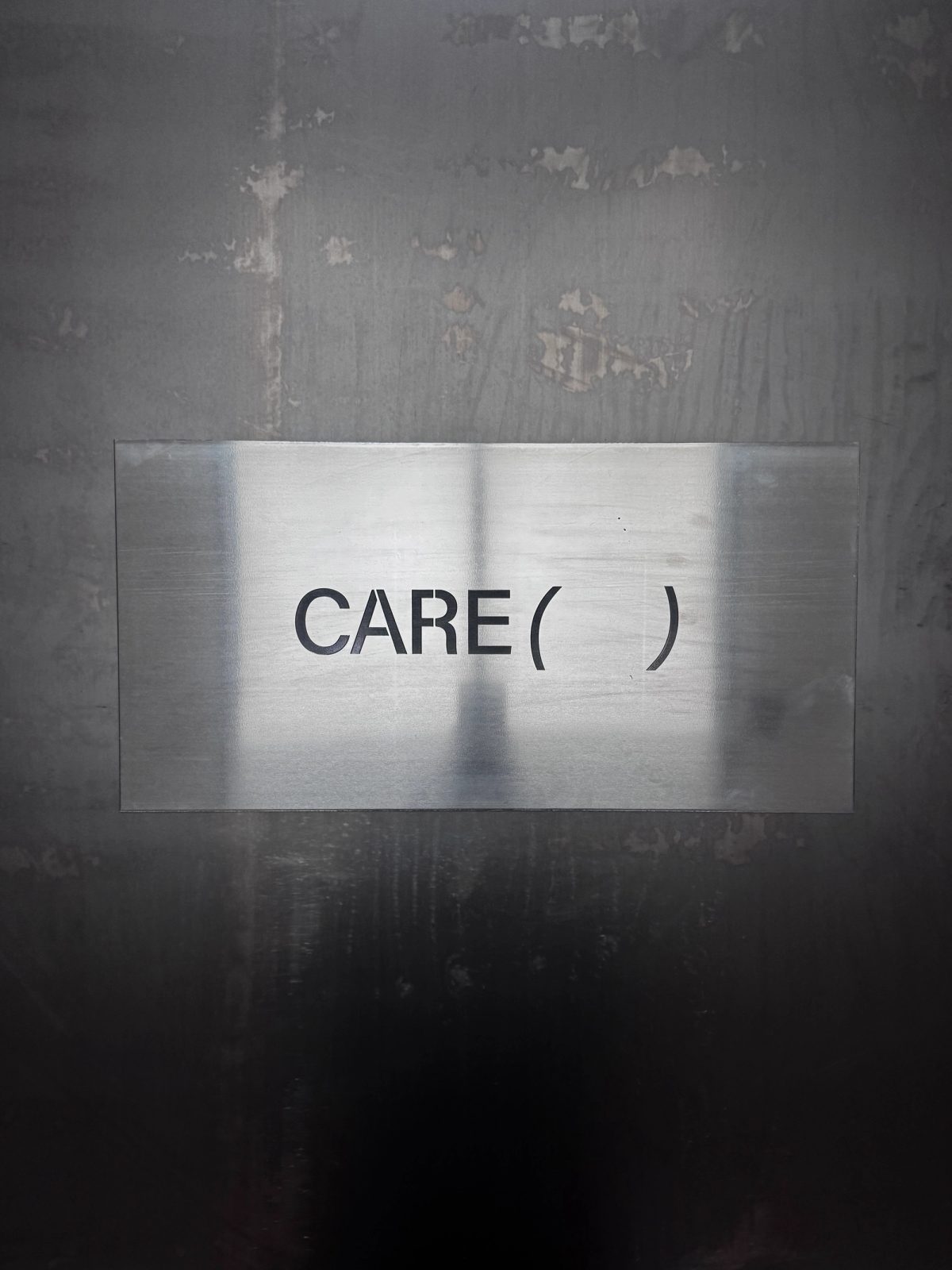
WHEN SPACE STARTS CONTROLLING THE BODY: REVIEW ON CARE ( ) — STUDY 00 AND STUDY 01
ART REVIEW BY CAROLYN CHANG
12 APRIL 2026 — LONDON, UNITED KINGDOM
CARE returns to structure, calibration, and material honesty, showing that the ways we build perception are never neutral.
Founded and directed by LINX (@linx.cw) , CARE (@care_____e) defines itself as a spatial methodology studio centred on time, space, and perception. Rather than producing singular works, it is more usefully understood as constructing a perceptual framework: through the orchestration of sound, light, material, bodies, and spatial arrangement, it gradually alters how an audience senses and inhabits space. In this sense, CARE is concerned less with what happens within a space than with how space itself can be organised as a perceptual condition. CARE proposes space not as backdrop but a method; time is no longer merely duration, but the structure through which a work is experienced, tested, and recalibrated.
The work does not rush to explain itself. At first, it can leave the viewer without a clear grip on what exactly is being built; yet it is precisely through that uncertainty that its structure slowly comes into view. Repetition, transition, pause, threshold, and material shift are not secondary effects, but the very means by which the work generates curiosity, thought, and projection. This also helps explain CARE's recurring vocabulary: architecture, structure, calibration, and material honesty.
CARE does not seem interested in smoothing out the differences in how people perceive. If anything, it is trying to build a field in which those differences can emerge, collide, and even intensify. But this is also where the difficulty begins: when a work deliberately foregrounds ambiguity, openness, and negotiability, how is a viewer meant to tell whether they are encountering a tension that has been carefully sustained, or a method that has not fully landed?
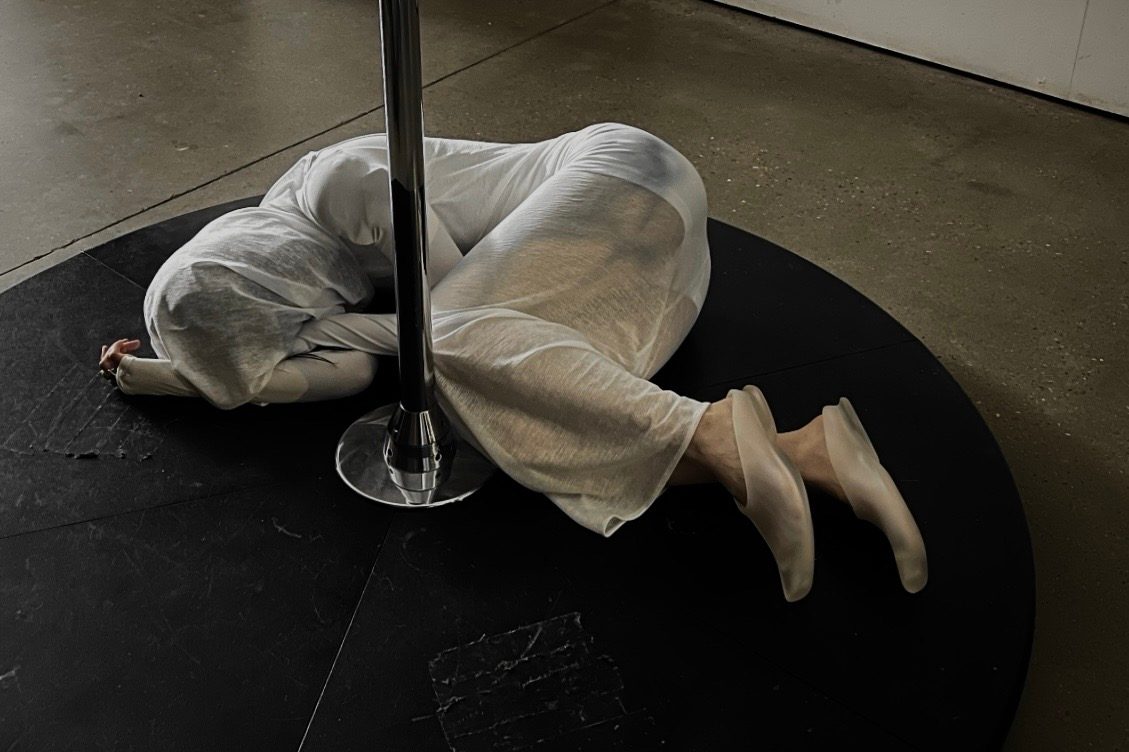
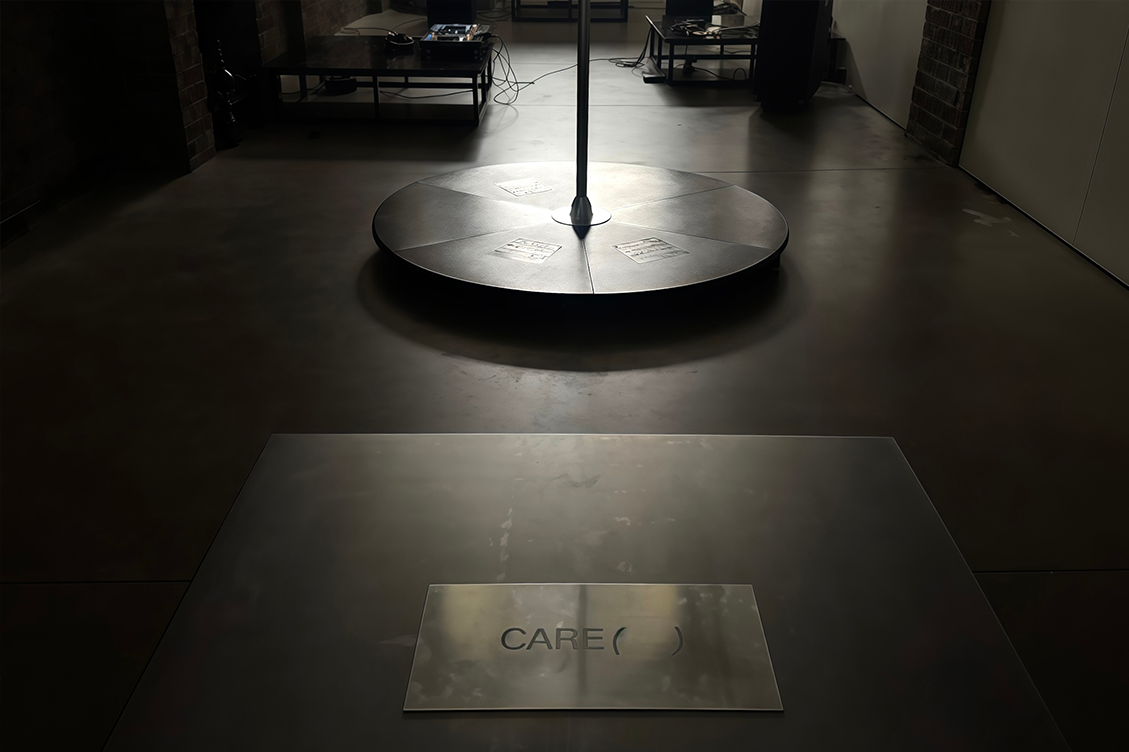
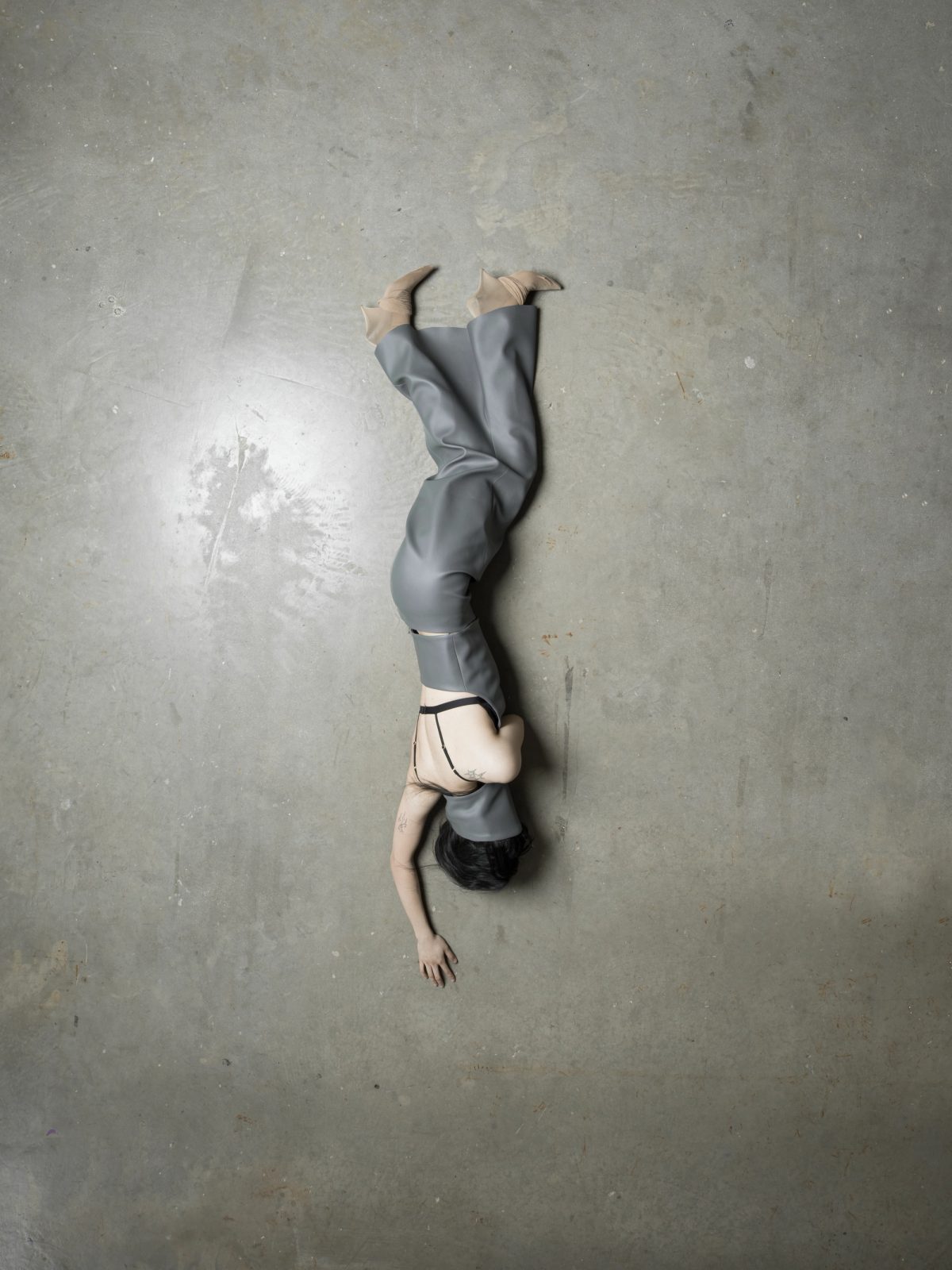
Left: Study 01, Intervention View. Right: Study 01, Space View. Courtesy of LINX, Peng_0.
“CARE returns to structure, calibration, and material honesty, showing that the ways we build perception are never neutral.”
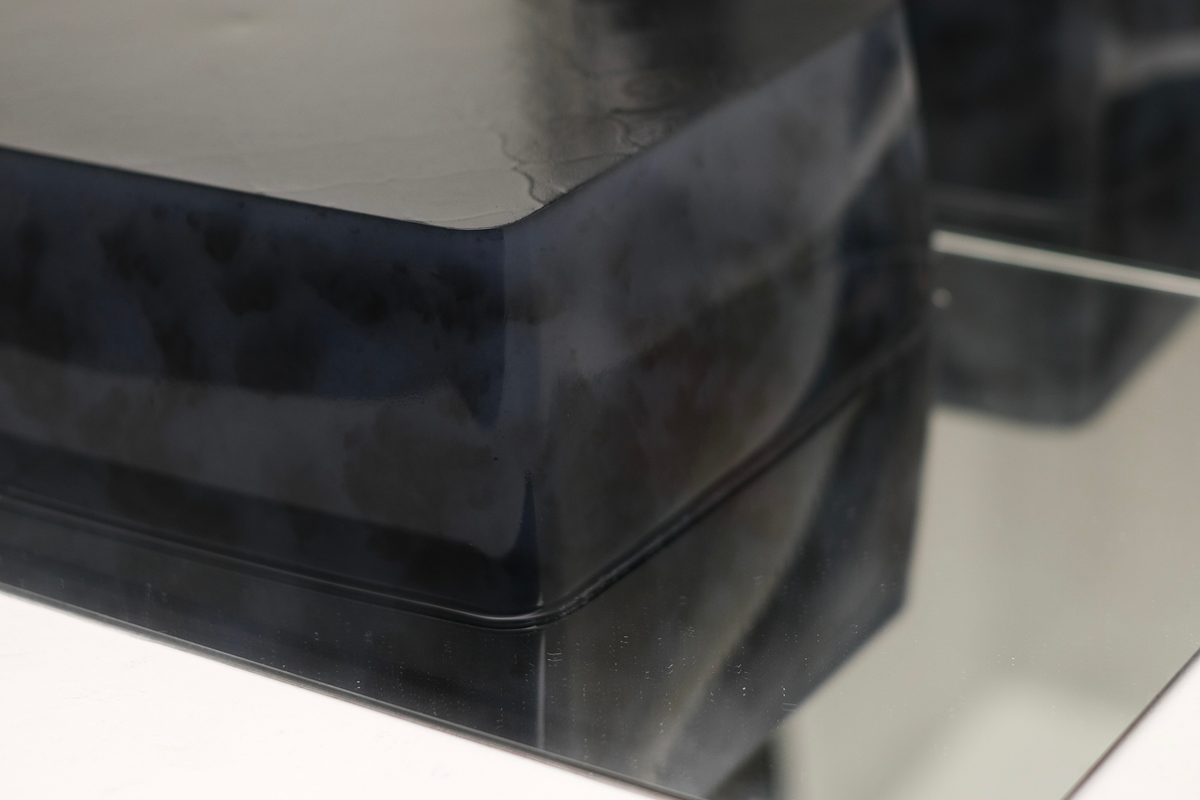
Canapés and Food Design. Maisongb, Jellyfication. Photography by Elisa Corbetta.
From LINX's responses, CARE's practice appears to unfold along two primary lines. The first is an engagement with architectural and spatial theory. She repeatedly invokes brutalist clarity, structural logic, and spatial design, and in speaking about Study 00, directly references Antony Gormley's Blind Light: a structure that appears transparent, stable, and measurable, yet in lived experience produces disorientation, loss of scale, and perceptual recalibration.
CARE frames this less as a metaphor than as a direct experience of how the body is arranged, pressured, and calibrated by structure. This line of inquiry means that CARE's works are not simply placed in space; they use structure itself to rewrite the terms of looking and orientation.
The second line concerns how bodies are read, regulated, and translated within contemporary media environments. In discussing Study 00, LINX refers to Roy Ascott's notion of "Moist Media," understanding the body as something continuously modulated by signal, feedback, and mediation.
What becomes legible here is that CARE's spatial methodology is not merely formal, but disciplinary. The body no longer appears as a stable subject moving freely through space, but as something continuously read, modulated, and calibrated by it. What LINX calls "gentle violence" is therefore less a metaphor than a way of naming how structure works on the body: not through overt force, but through conditions that teach it how to enter, dwell, and adjust itself from within.
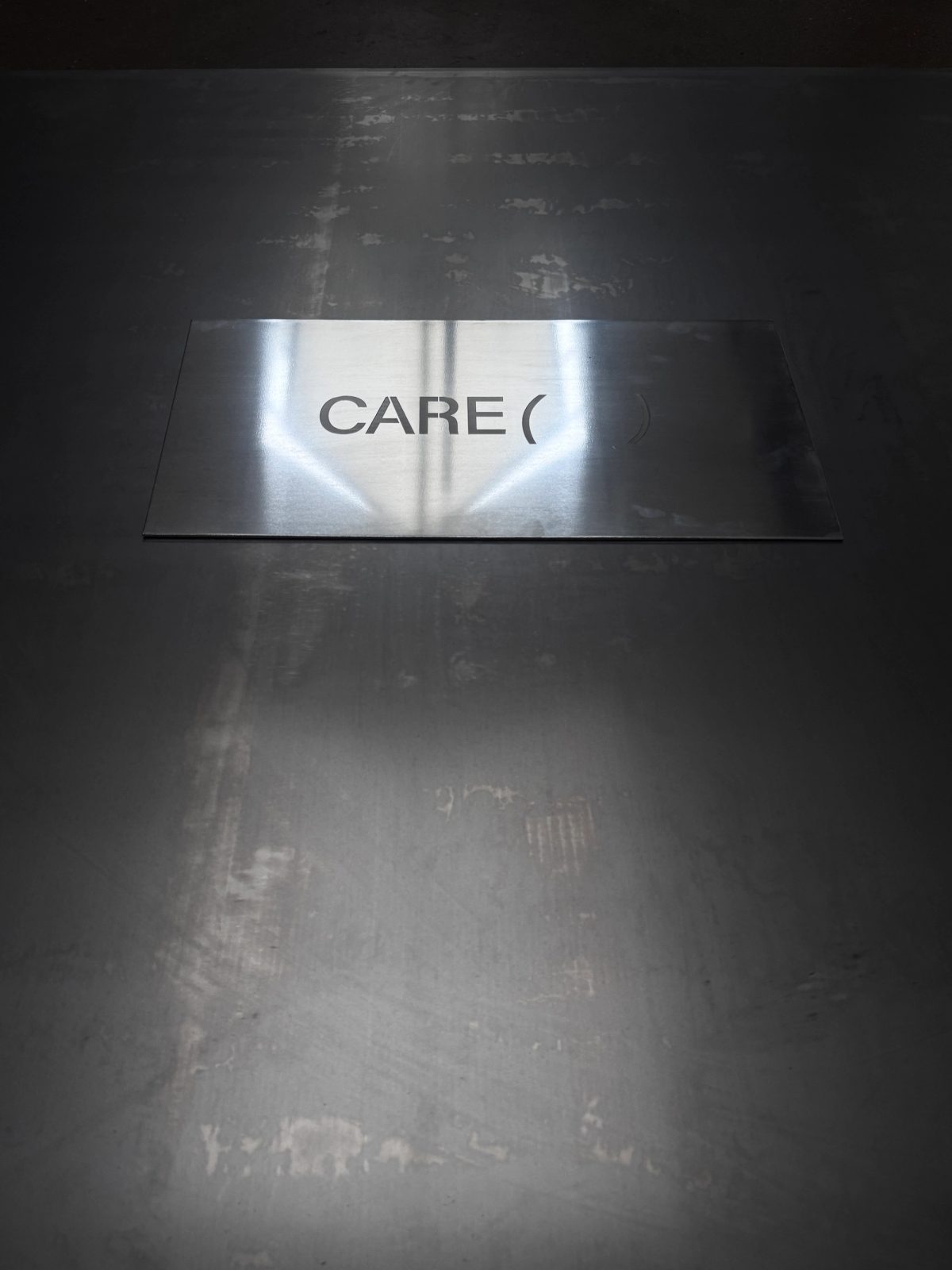
Left: Concept Image. Right: CARE.
Study 00 and Study 01 offered two very different modes of entry into CARE's practice. I found Study 00 the more immediate one, precisely because its spatial logic was easier to grasp. Within the context of LUmkA's Privacy Index, it provides a relatively legible grammar through which power and embodiment can be read. Upon entering the space, the glass partition at the centre of the exhibition establishes a clear model of spectatorship: transparent yet restrictive, visible yet untouchable. It does not literally reproduce Foucault's panopticon, but it clearly mobilises its central mechanism, in which a body persistently exposed to visibility begins to regulate itself in anticipation of being watched.
The most striking part was the shift in LINX's bodily state. Inside the glass enclosure, her gestures felt constrained, compressed, and visibly strained; once she moved beyond it, her body opened, stretched, and seemed to release itself into space. That transition gave the work its force, making surveillance legible not as an abstract theme, but as a condition acting directly on the body. The glass partition, compressed movement, audience interaction, and abrupt shifts in sonic rhythm together produce a spatial syntax of discipline and visibility. The work became especially powerful in the moments when LINX turned toward the audience through eye contact, physical proximity, and embrace. These exchanges unsettled the one-directional logic of spectatorship and made intimacy feel less like comfort than like a brief reclaiming of agency within a surveilled field.
From this perspective, Study 00 addresses not only the erosion of privacy but also the unequal distribution of transparency and opacity: some are compelled to expose their bodies, affects, and everyday lives, while others remain able to conceal the structures of power and interest that determine the conditions of visibility in the first place.
Study 01, by contrast, is more open and more explicitly methodological. It reads less as a discrete work than as a statement about method; LINX describes it as a temporal architecture generated through material shift.
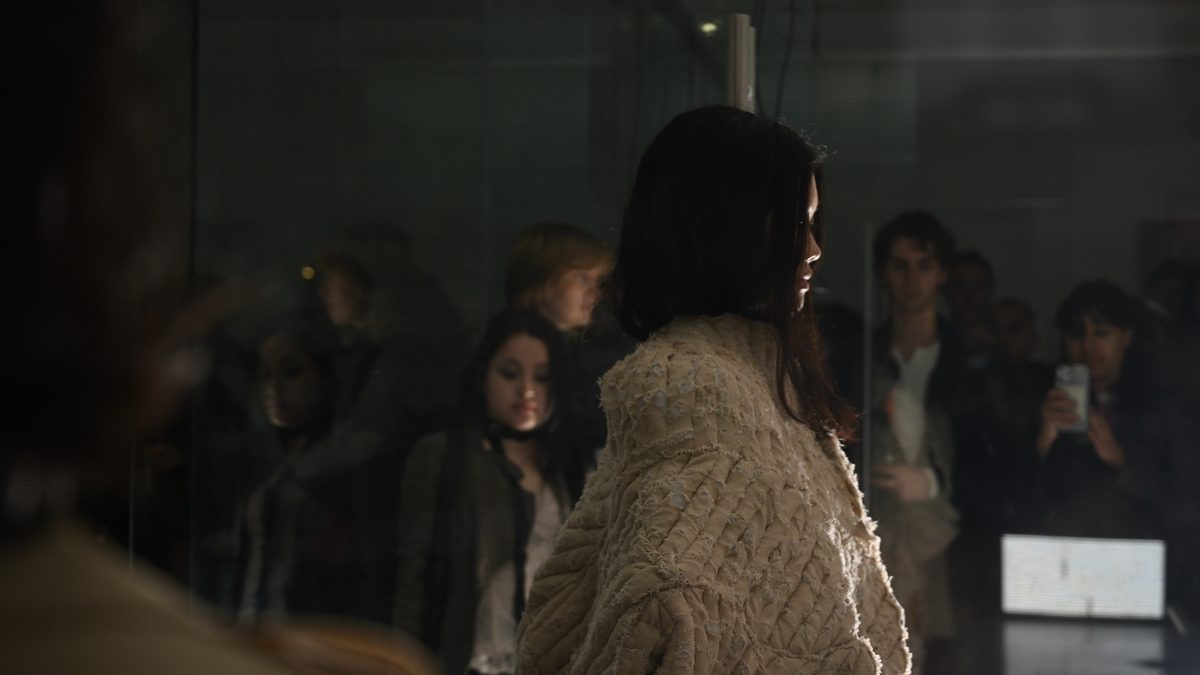
Study 00, Still Image. Video by Ben Woodhouse and Vince Holden. Courtesy of LUmkA.
“Rather than producing singular works, it is more usefully understood as constructing a perceptual framework: through the orchestration of sound, light, material, bodies, and spatial arrangement, it gradually alters how an audience senses and inhabits space.”
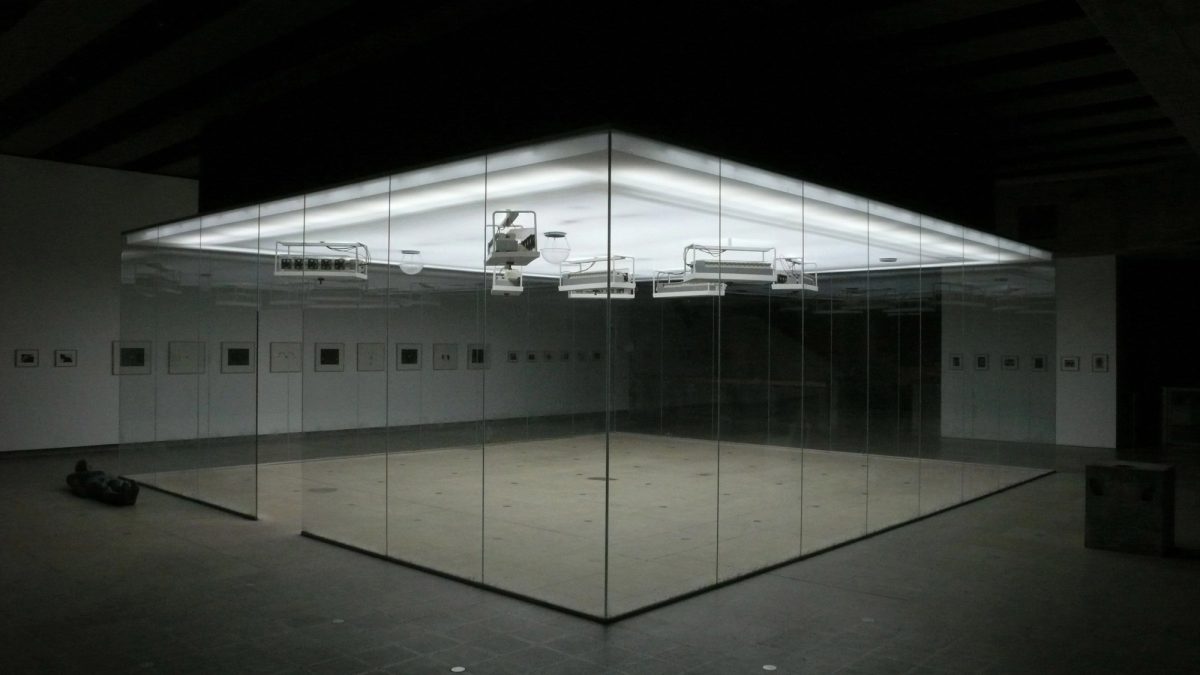
Blind Light. Antony Gormley, Hayward Gallery, 2007. Reference image.
How was the one-hour structure composed? In Study 01, how did you think about the sequencing of sound, bodies, pauses, movement, and duration? What kinds of shifts in attention or spatial awareness were you hoping to produce?
I believe experiencing any art form is temporal. As a spatial methodology studio operating through temporal architecture, the structure is generated according to a single guiding principle: the repetitive shift in material. Duration is the medium. Each iteration acts like a modular element, establishing rhythms, thresholds, and layering within the space. The architecture of time, in this sense, mirrors the principles of brutalist and structuralist design, where clarity of logic and material honesty govern the way space is inhabited and experienced.
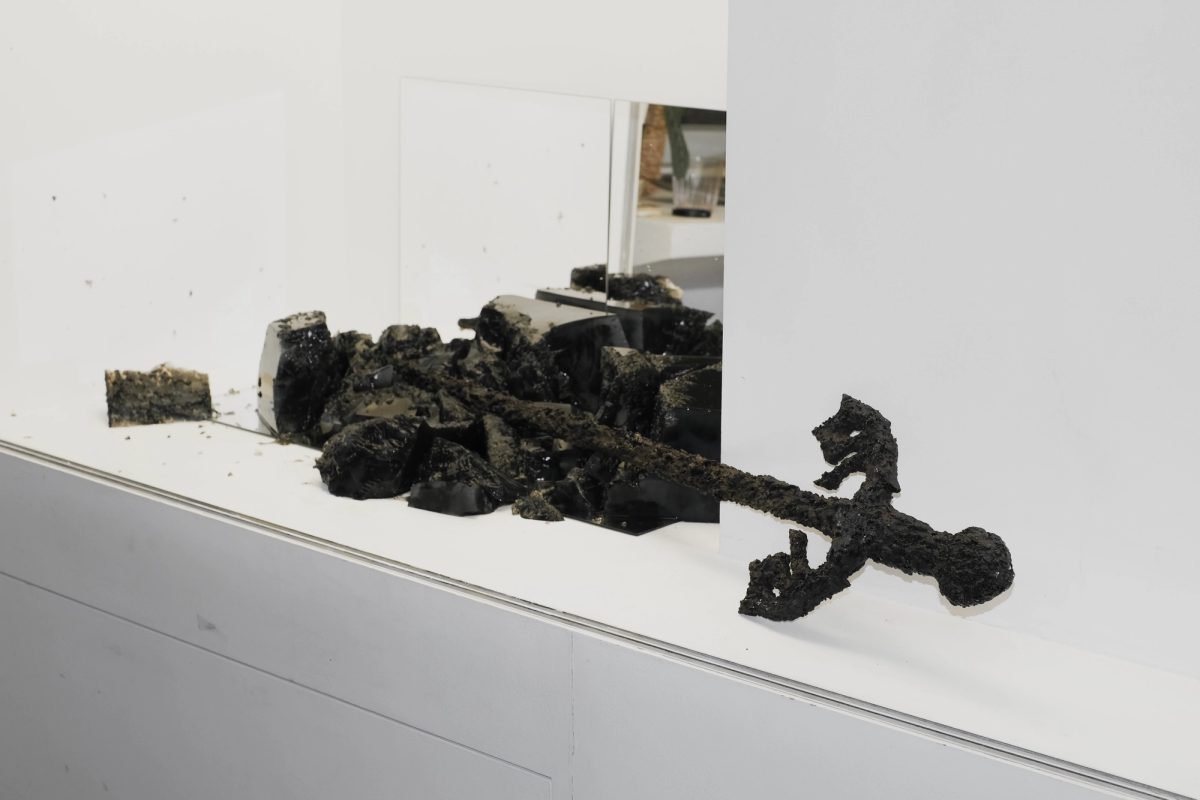
Canapés and Food Design. Maisongb, Jellyfication. Sword by Sophia. Photography by Elisa Corbetta.
If the work was not organised through narrative, what organised the experience instead? My experience of Study 01 was one of suspension and ambiguity rather than narrative progression. Was that indeterminacy a deliberate perceptual condition? If so, what was intended to hold or guide the audience's experience in place of narrative?
Rather than being organised through narrative, the work is structured through a logic closer to architecture, specifically one informed by brutalist clarity and minimalist reduction. What holds the experience together is not a sequence of events, but a set of material and spatial conditions that repeat, shift, and accumulate over time.
Instead of asking "what happens next," the work asks "what persists, and how does it transform?" The organising principle is therefore not narrative progression, but controlled variation within a constrained system.
The sense of suspension and ambiguity you describe is absolutely intentional. It operates as a designed perceptual condition, where resolution is withheld to heighten attention. In this way, the work aligns with certain minimalist strategies, where meaning is not delivered but emerges through duration, repetition, and proximity. The audience is not guided by plot, but by their own recalibration of perception over time.
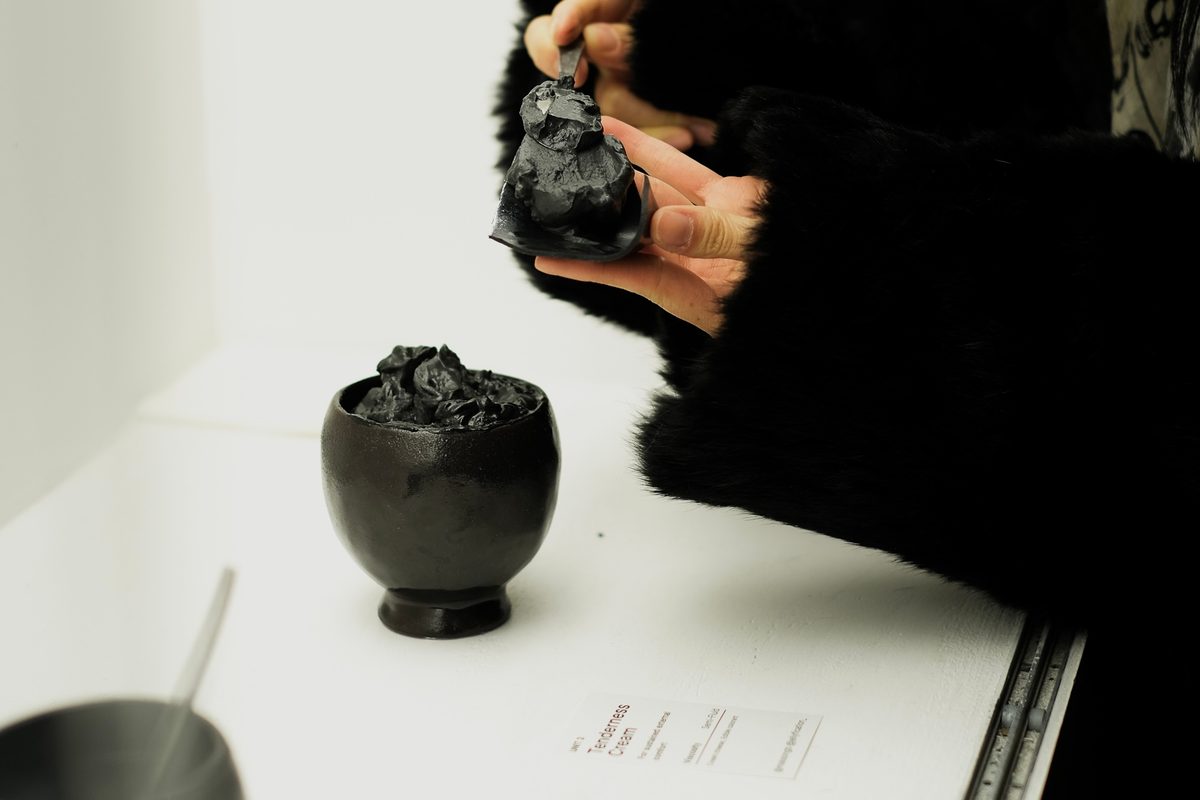
Canapés and Food Design, Maisongb; Jellyfication; Photography by Elisa Corbetta
“CARE proposes space not as backdrop but a method; time is no longer merely duration, but the structure through which a work is experienced, tested, and recalibrated.”
Here, the duration becomes more than a container: it becomes a pressure that reorganises attention. Study 01 asks the audience not to follow a sequence of events, but to remain within a field of repetition, delay, and gradual transformation. The question, then, is whether this suspended mode of perception is structured precisely enough to function as a method, rather than settling into an atmosphere alone.
One of the clearest and most tangible translations of spatial thinking into sensorial form was Giuseppe Burdo's ( @giuseppib , @ maisongb ) food intervention, developed in collaboration with Marianna Fontana ( @jellyfication ): moving from mist, syrup, and cream to fabric, soft solids, and harder matter, it created a gradual tactile gradient that compelled participants to relearn how to approach material and to recalibrate their relationship to touch, texture, and bodily expectation. Likewise, the two intense white lights positioned at the back of the space were not neutral illumination but part of the perceptual structure itself. They redefined depth, direction, and visual hierarchy, placing the body not in a natural or direct environment but in a filtered and mediated visual field. In moments like these, CARE moved beyond atmosphere as mood and toward atmosphere as a constructed perceptual condition, even if one is left wondering whether greater shifts in lighting, scent, or performative interaction might have sharpened this structure into a more forceful disturbance.
And yet it is also in Study 01 that the internal tension within CARE becomes most visible. On the one hand, it describes itself as a carefully calibrated system; on the other, it constitutes its research through open invitations, archives, and participant responses.
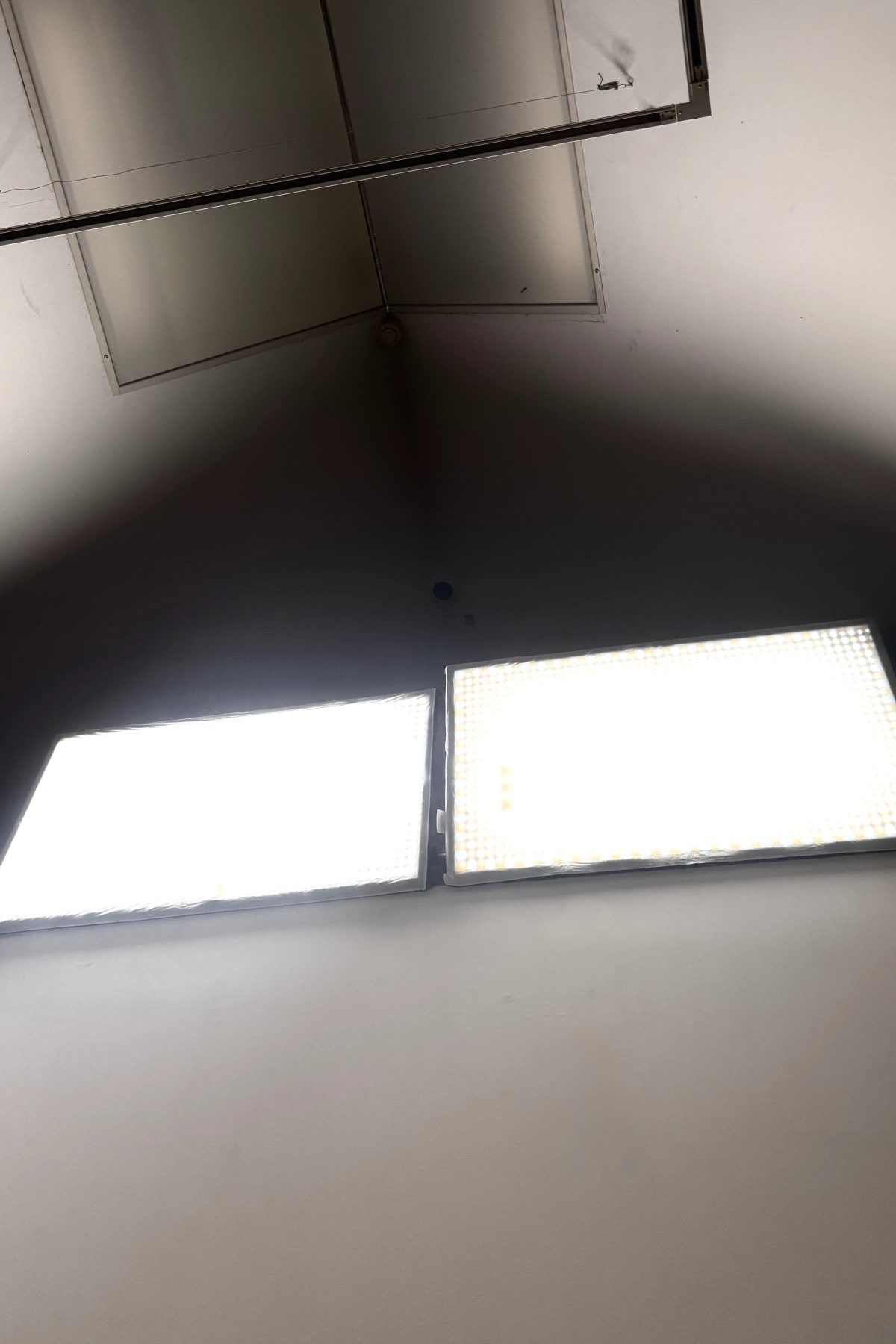
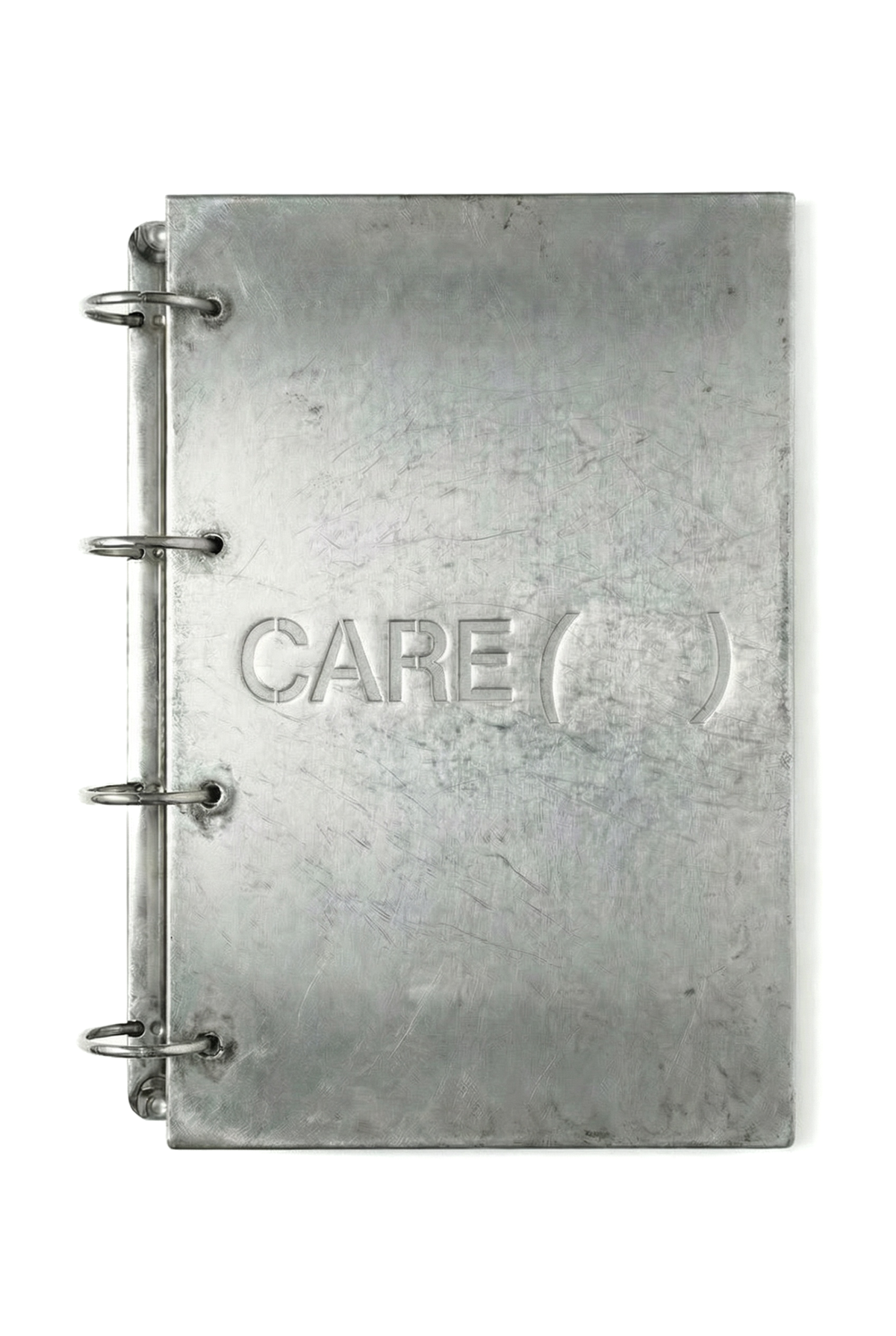
Right: Study 01, space view, courtesy of LINX Peng; Right: Symbol
How do you define "research" within CARE? Does it function primarily as a designed methodology, as an experiential field generated by participant responses, or both? If both, what is being most carefully calibrated: the method itself, or the perceptual environment participants move through? And in that context, why is the open invitation part of the research itself, rather than simply a way of gathering participants?
I believe CARE is an evolving structure that is continuously recalibrated through both intention and encounter.
Recently, I have been thinking through this in relation to Imagining the Future Museum: 21 Dialogues with Architects by András Szántó, which describes how contemporary museums are shifting toward socially engaged, open systems. What resonates with me is the idea that such institutions must remain open to conflict, capable of listening to multiple voices, and willing to "unlearn" even as they are being built. In that sense, research in CARE is not about producing stable knowledge, but about constructing conditions where perception and meaning remain negotiable.
The book notes that "museums are complex buildings, architecturally speaking. They demand highly controlled spaces to exhibit and conserve collections, but at the same time they desire to be open, generous, and inviting."
CARE Studio operates within the same context and paradox. What is most carefully calibrated is the tension between control and openness. The structure is precise and deliberate, yet it is designed to hold ambiguity rather than resolve it. To invite openly is to introduce variability and difference into the work, embedding the possibility of "unlearning" into its structure. Participation does not complete the work, but continually tests and reshapes it.
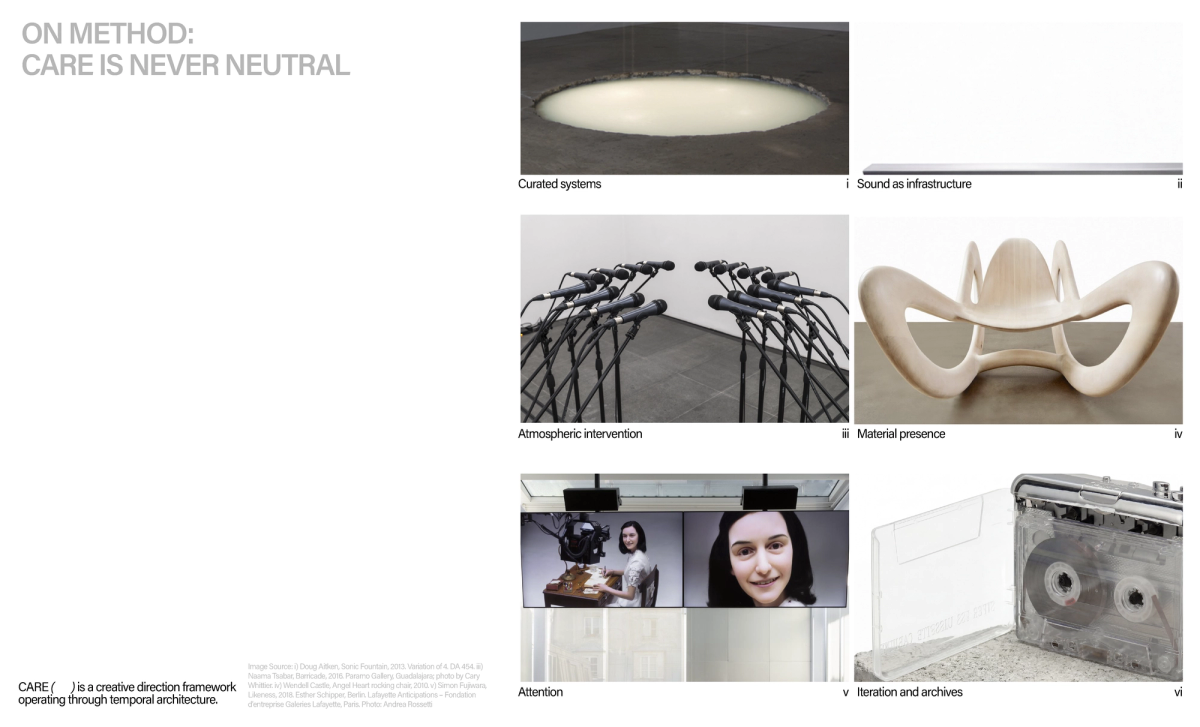
On Method
Why does a practice that emphasises openness and indeterminacy continue to rely on the language of control and calibration? If ambiguity is to remain negotiable, can it still be claimed as something precisely held in place? What this seems to reveal is less a productive paradox than an unresolved attachment to an architectural impulse to organise experience. CARE's appeal to the museum is telling, but a little unstable: museums do not become open by abandoning structure or knowledge, but by staging openness through institutional forms of interpretation, organisation, and control.
One person closed their eyes; another read the food as if it were exhibition material. For LINX, such divergent responses were evidence that the work was "there": that it was functioning. Yet the question is not simply whether Study 01 is sufficiently clear, but whether this recalibration of attention is, in itself, enough to count as evidence of success. Almost any sufficiently open, non-narrative, durational performance can prompt viewers to redistribute attention. The real issue, then, is whether Study 01 gives its ambiguity a sufficiently precise methodological direction, rather than leaving it suspended. For that reason, it feels less like a resolved proposition than a site to keep watching. It already exposes both the ambition and the tension within CARE's method, but whether that ambiguity can become a genuinely directional perceptual structure remains for future projects to prove.
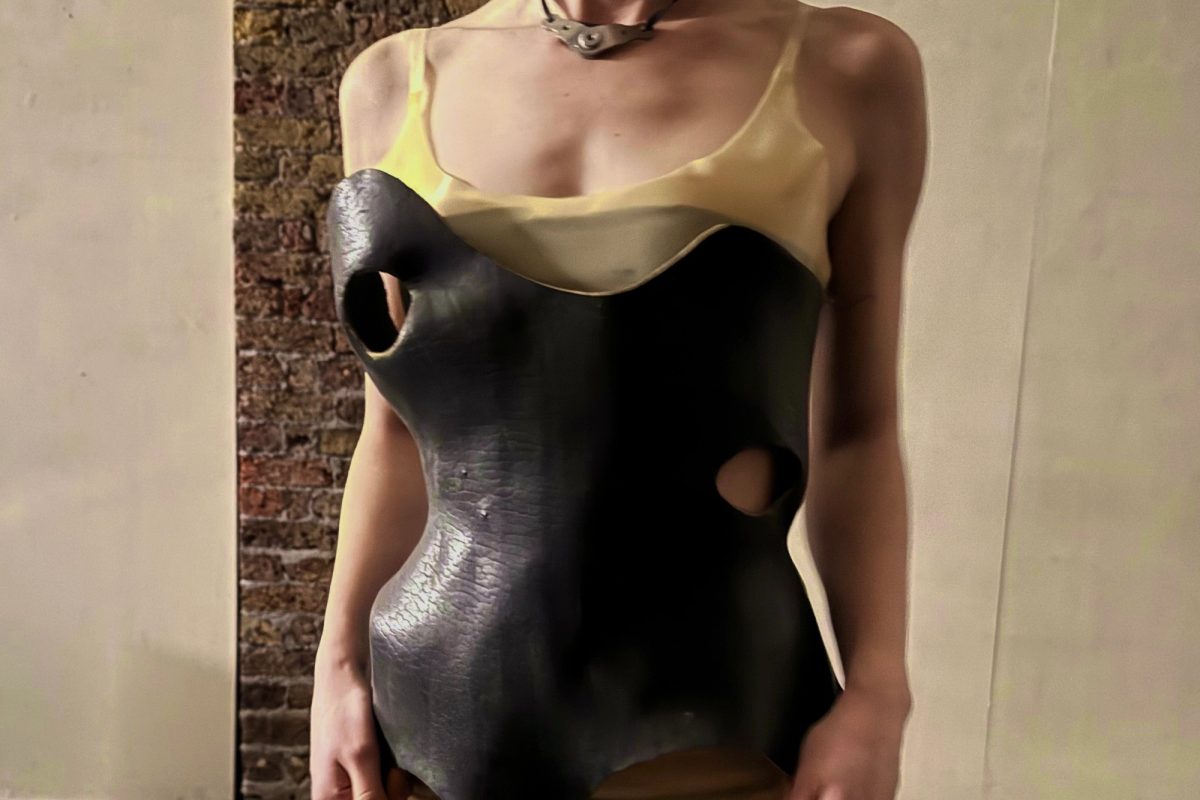
Ania wearing costume material, designed by Feyza Berca.
At the moment when attention is increasingly organised by platforms, interfaces, and algorithms, we become accustomed to instant response, immediate resolution, and ready-made habits of judgement. It is as though, once we enter digital space, the body withdraws from experience, leaving behind only reactions that can be read, computed, and predicted. Both of CARE's studies return the question to the body: Study 00 through glass, restriction, and spectatorship; Study 01 through time, materiality, and co-presence. As more of our attention is structured by external systems, do we gradually lose the capacity to sense the world directly? And if so, might hesitation, touch, pause, and presence be precisely what is easiest to neglect today, and most urgent to recover?
Study 01, Short Video. Presented by Ania, Oxhy, Vince Holden, and LINX. Video produced by LINX Peng.
Cover Image: Study 01, Space View. Courtesy of LINX, Peng_1.