FLOWERS, INTUITION, AND THE STORIES THEY CARRY: IN CONVERSATION WITH CROCO
CONVERSATION BY SELIN KIR
CO-FOUNDER, CURATOR
28 MARCH 2026 — UNITED KINGDOM
There is a particular kind of intelligence that operates through the hands. For florist Giulia Rinaldi, also known as CROCO, flowers have never been simply a medium. They are a language, an archive, a way of thinking about memory, impermanence, and the quiet rituals that mark a life. Trained in London and shaped by an Italian childhood, her practice moves between the instinctive and the deeply researched: Victorian flower codes, the sudden fall of a camellia at the height of its bloom, the stillness she is learning from her eighty-year-old ikebana sensei. Hers is a practice that accumulates: found objects, borrowed gardens, half-remembered landscapes, and arranges them into something that feels less like decoration and more like evidence. We sat down with her to talk about what flowers carry when no one is asking them to be beautiful.
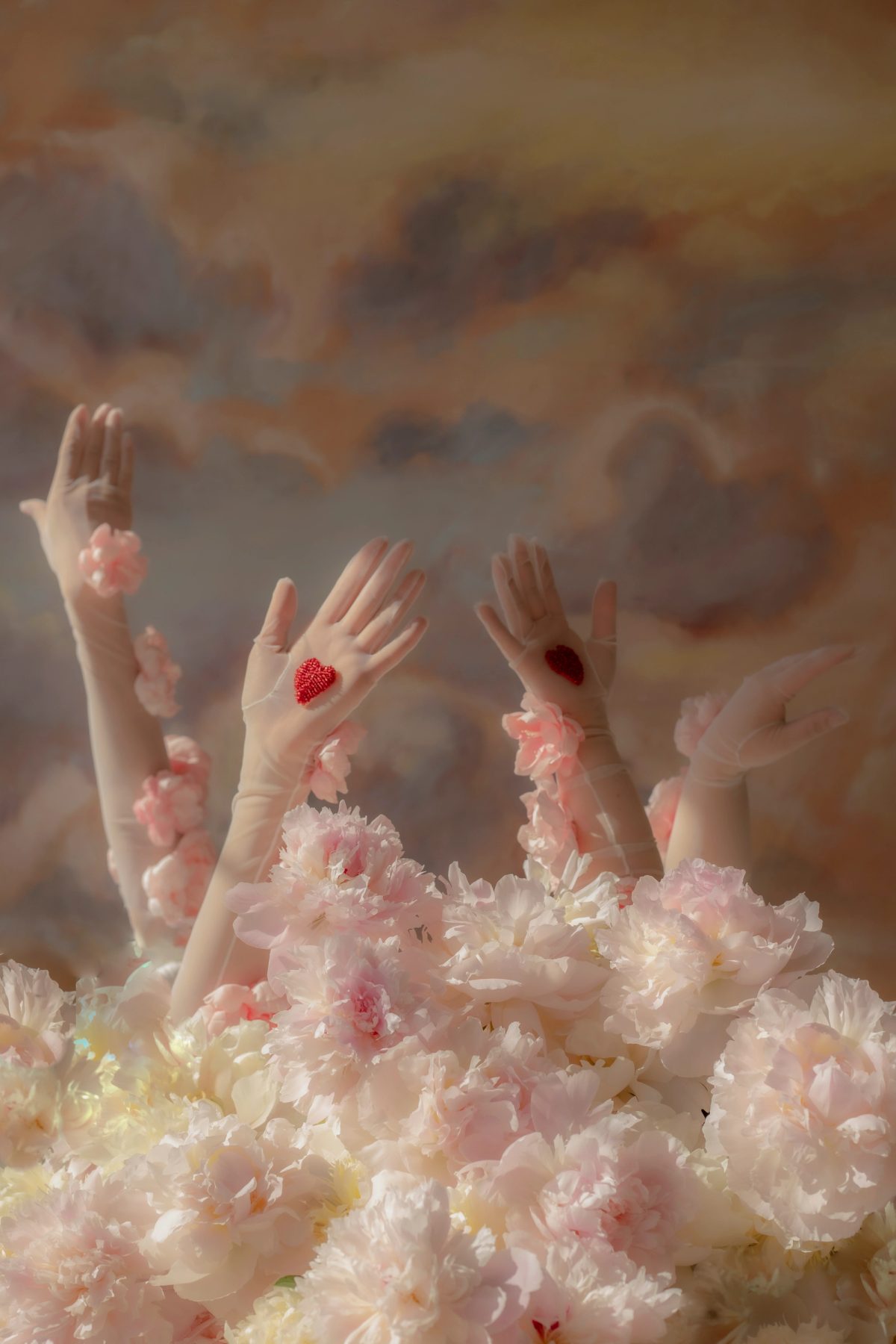
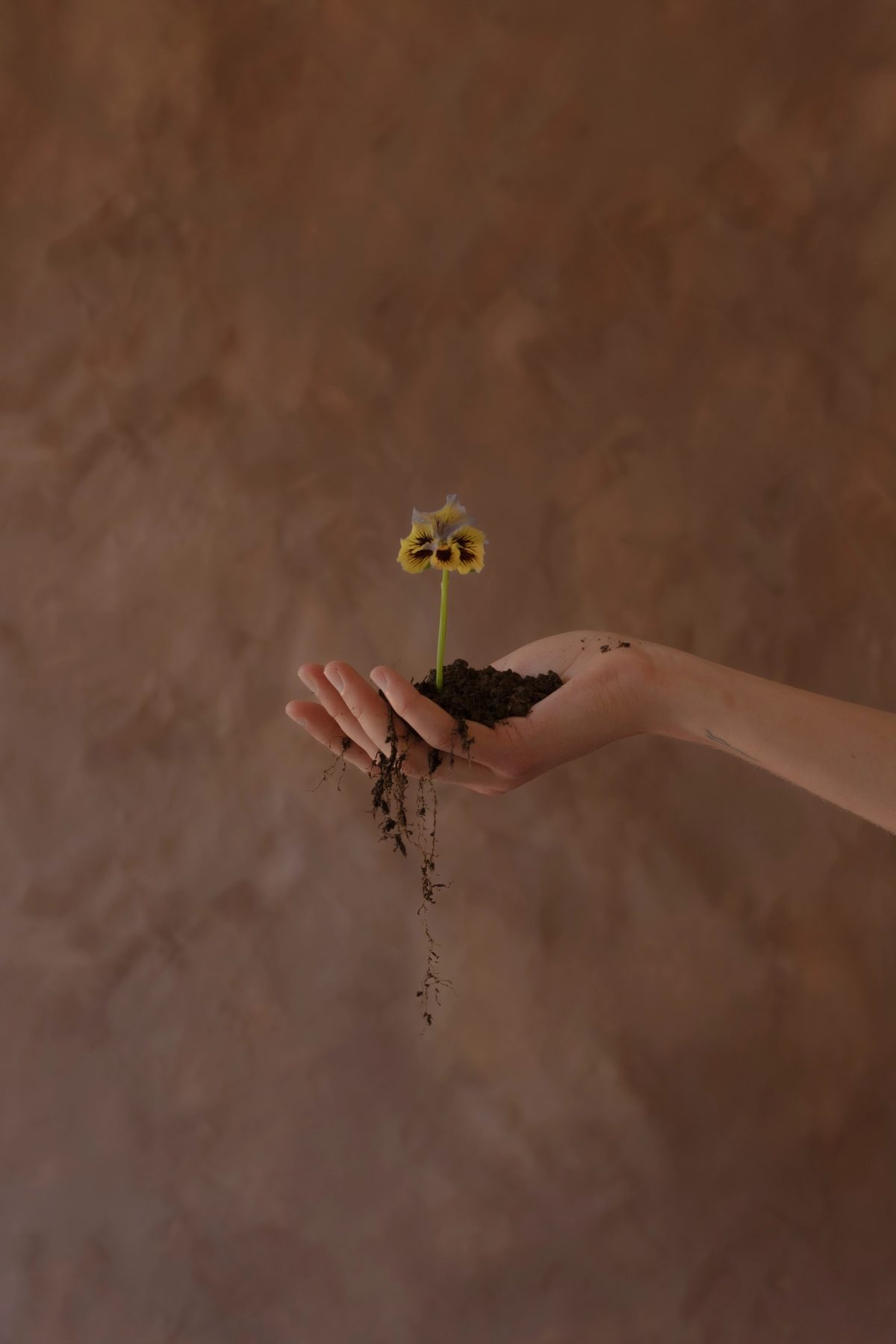
Acarna Natura — Photography: @hana.snow | Model: @josieamassey
Flower arrangement often moves between craft, styling, design, and art. Whatwas your path into working with flowers, and how would you describe the instincts or references that define your style today?
I believe working with flowers was a kind of destiny for me. While working in a photography studio, I was once asked to source flowers for a shoot. I remember how much I loved the process of choosing them, touching them, and smelling them. Something about it felt instinctive, almost familiar.
After that moment, I decided to pursue proper training and applied for a scholarship programme at McQueen’s Flowers. For my project, I was inspired by the gardens of my neighbours. I have always loved walking around London and quietly observing the flowers growing behind garden gates and along small front gardens.
I asked people in my neighbourhood to donate a single flower from their garden. Bringing these flowers together into one arrangement felt like bringing together fragments of many small stories. I was selected as one of ten finalists and awarded a partial scholarship.
I would describe my style as rooted in storytelling, nostalgia, and memory. What I love most about flower arranging is its ability to evoke a feeling or awaken a memory through a composition of flowers. For me, flowers are never simply about beauty; they are about emotions and stories.
I think this sense of storytelling and memory is the thread that connects all of my flower arranging. At the same time, I wouldn’t want to define my work within a single style. I’m always reaching toward something new, always learning.
Although there is something that makes my arrangements recognisably mine, I prefer not to be too strict about style. Working with flowers feels like a continuous process of discovery. We develop, we learn new skills, we encounter new flowers and new teachers. Because of that, the work is always evolving as we are.
For instance, at the moment I’m thinking about a project centred around bamboo. When I was a child, my grandmother had a beautiful garden with a large bamboo grove. My cousin and I created a small passage inside it, and whenever we stepped into that space, it felt as though we were entering another world, almost like a small fantasy landscape.
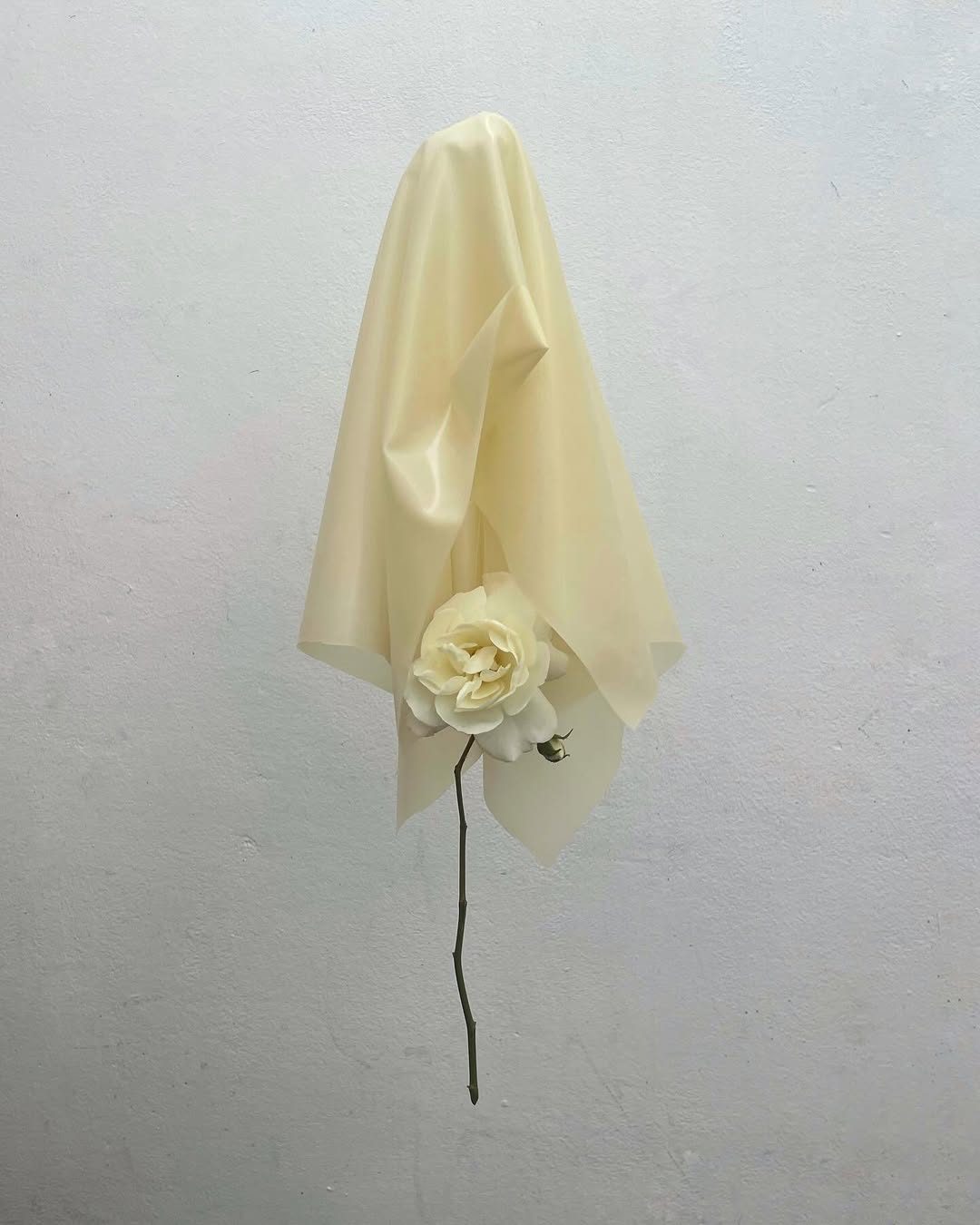
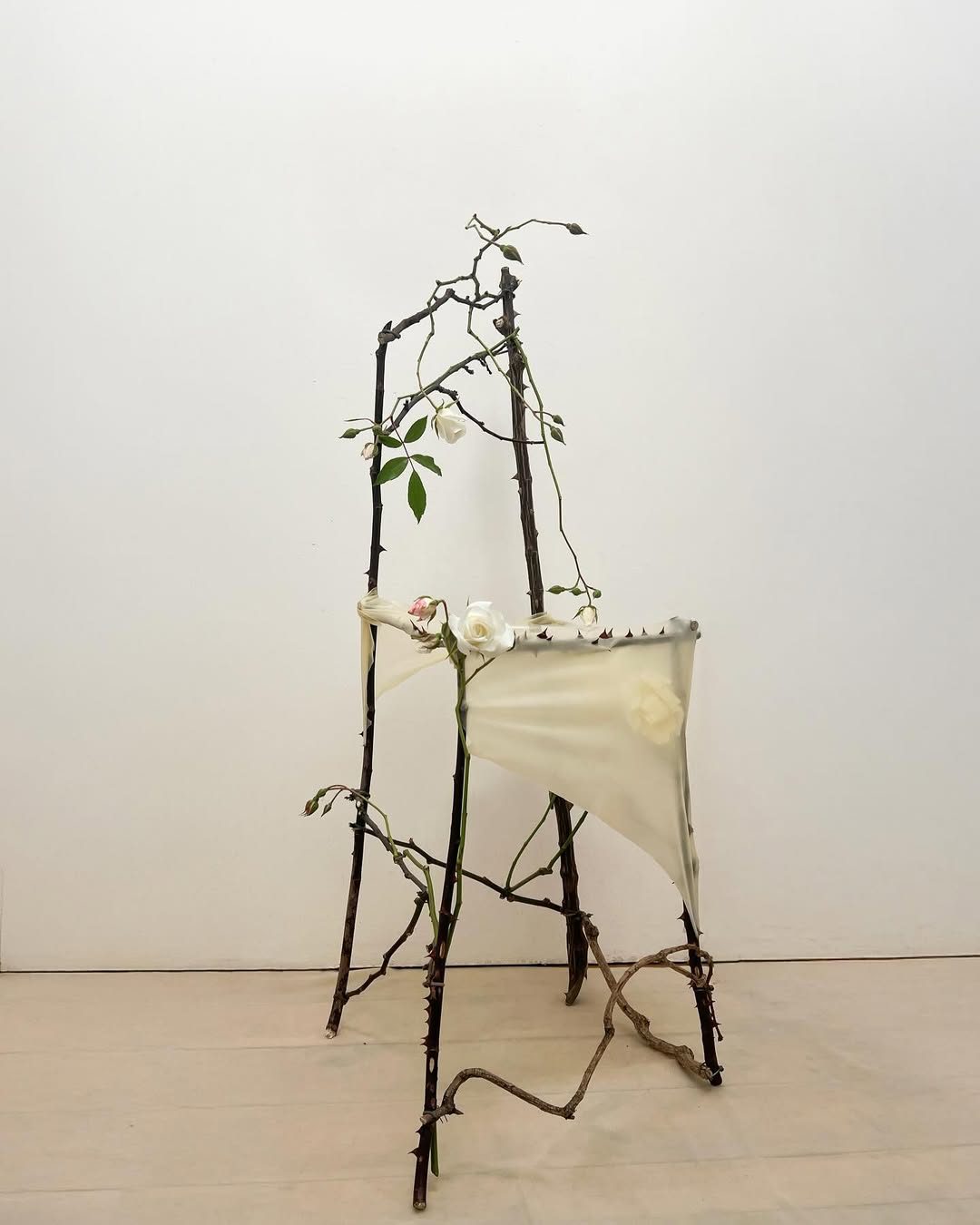
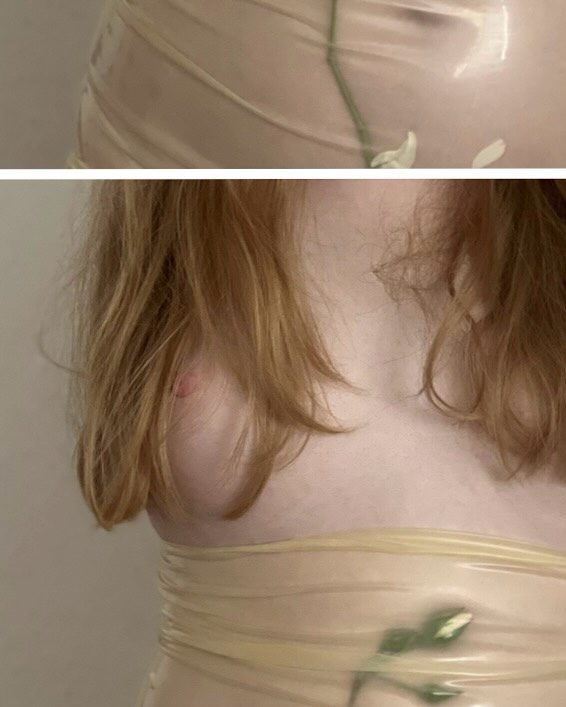
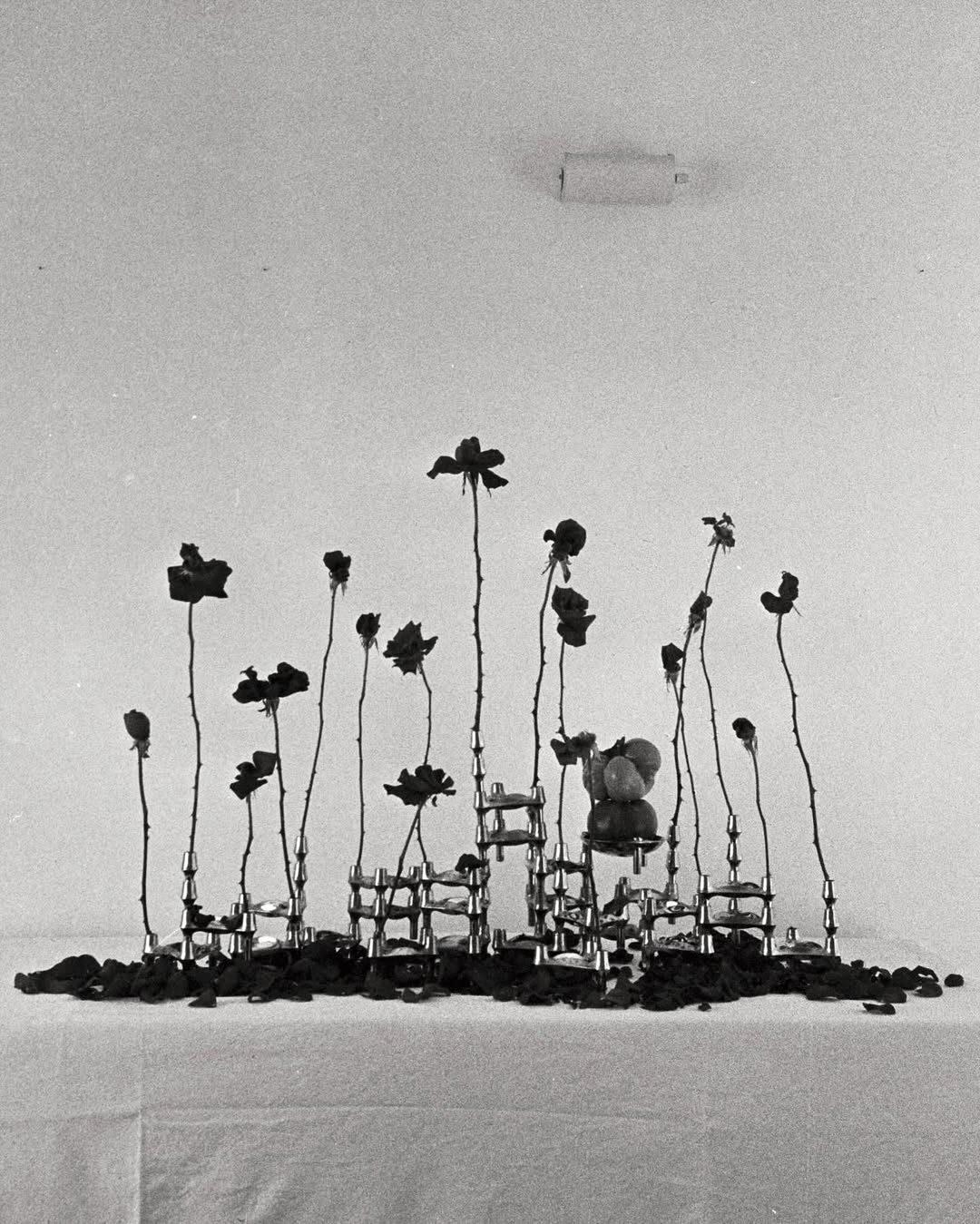
The Matter — Garden roses & latex chair, in collaboration with @karinarikun
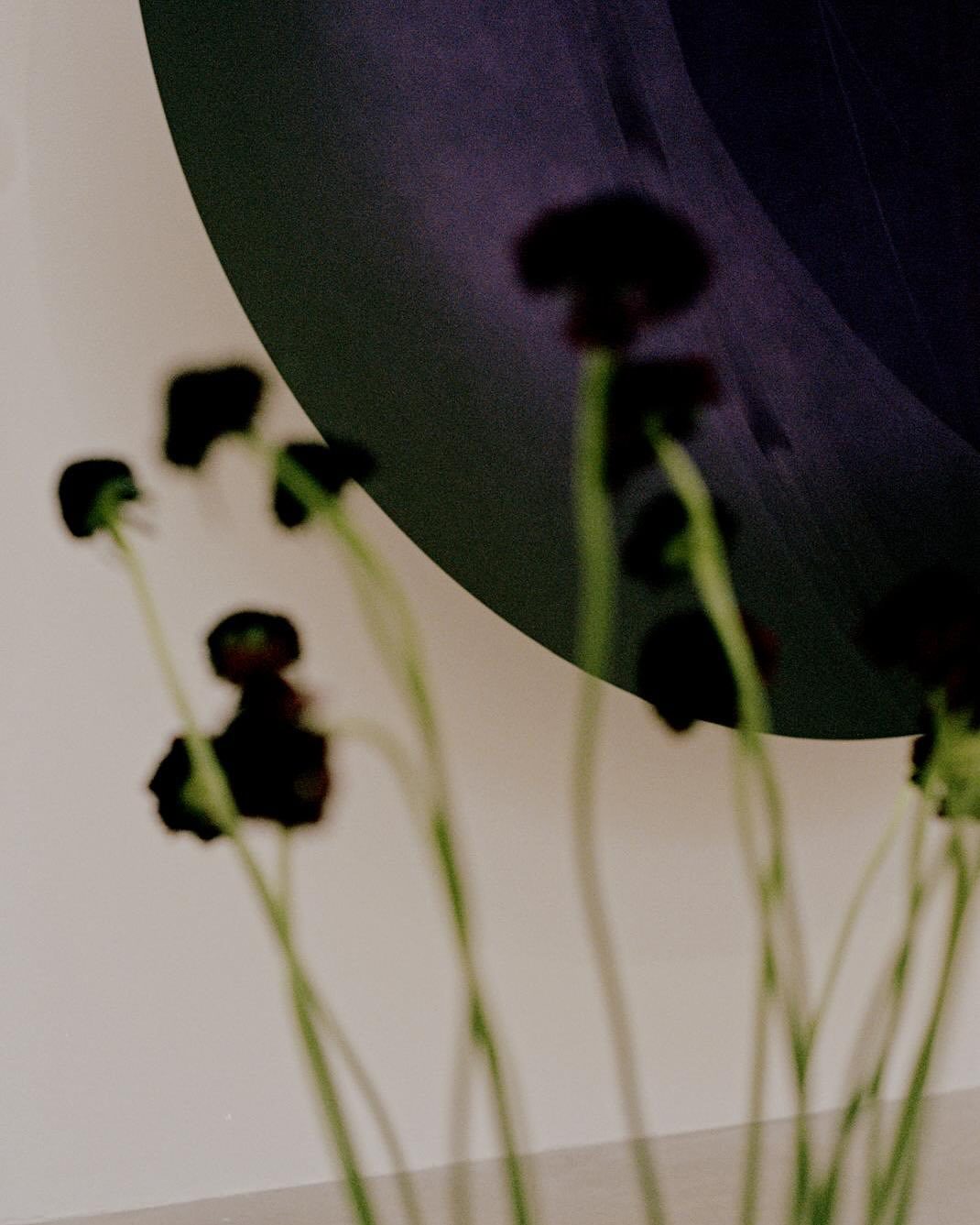
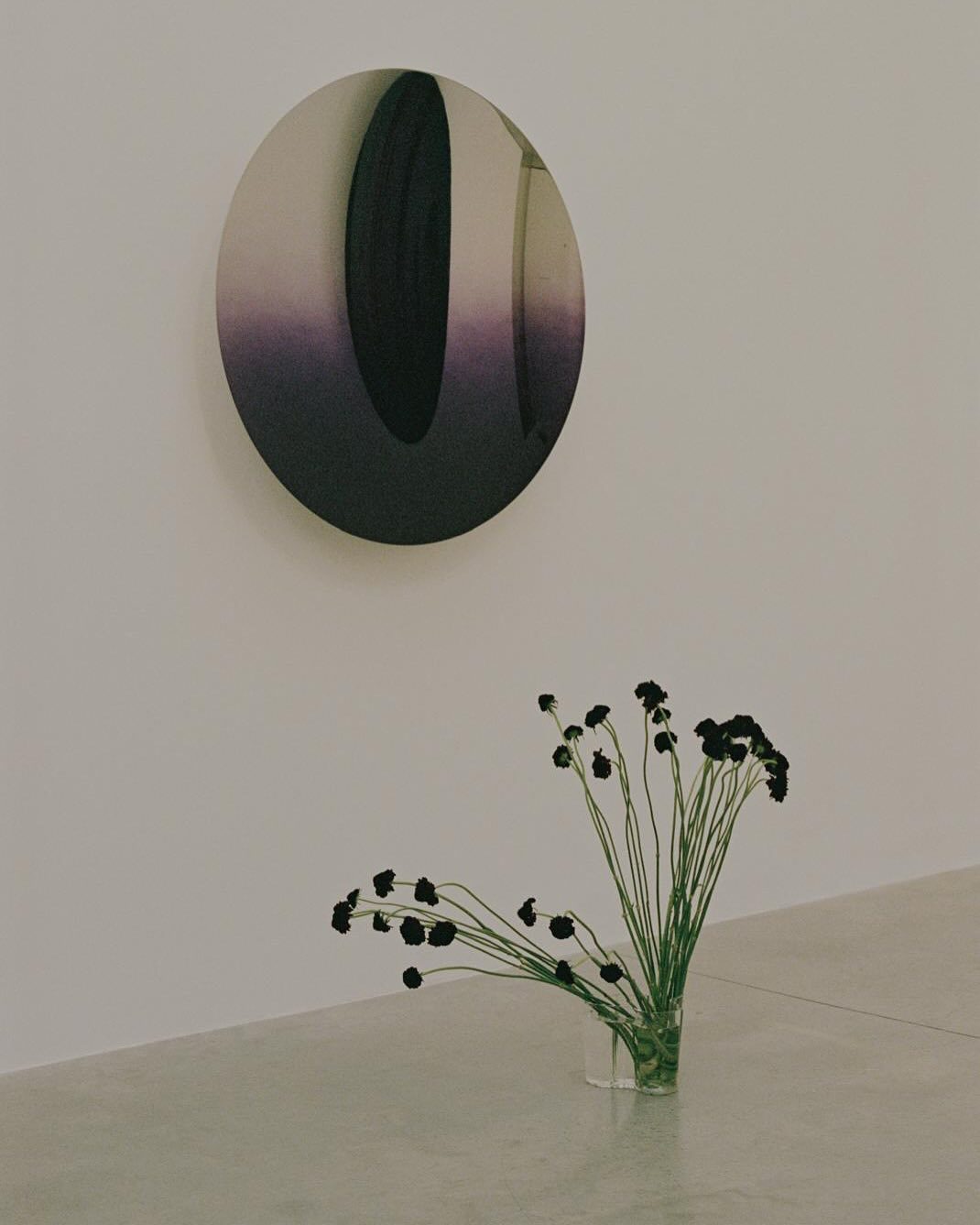
Flowers for Anish Kapoor — Lisson Gallery. Photography: @theasnevelovstad
“For me, flowers are never simply about beauty; they are about emotions and stories.”
Your work is clearly shaped by seasonality, sourcing, and material limits. How do constraints, what is available, perishable, or locally grown, actively shape your compositions?
I love working with seasonality, and I enjoy the fact that certain flowers are only available for a short time. It means we never grow tired of them, and there is something quite magical when they return each year.
When I was a child in Italy, whenever a new fruit came into season, we were told to make a wish. I have always loved that idea, the sense that the arrival of something seasonal carries a small moment of hope.
Working with flowers also teaches you to accept uncertainty. There is never a real guarantee: sometimes flowers you order don’t arrive, sometimes the colour isn’t quite right, or they simply aren’t what you expected. You always have to be ready with another possibility.
In a way, though, I think that unpredictability is part of the beauty of it. Many times I have panicked when things didn’t go to plan, sometimes even cried (I’m a bit dramatic!), but then I would discover something unexpected at the market, something I hadn’t originally considered that worked even better than what I had imagined.
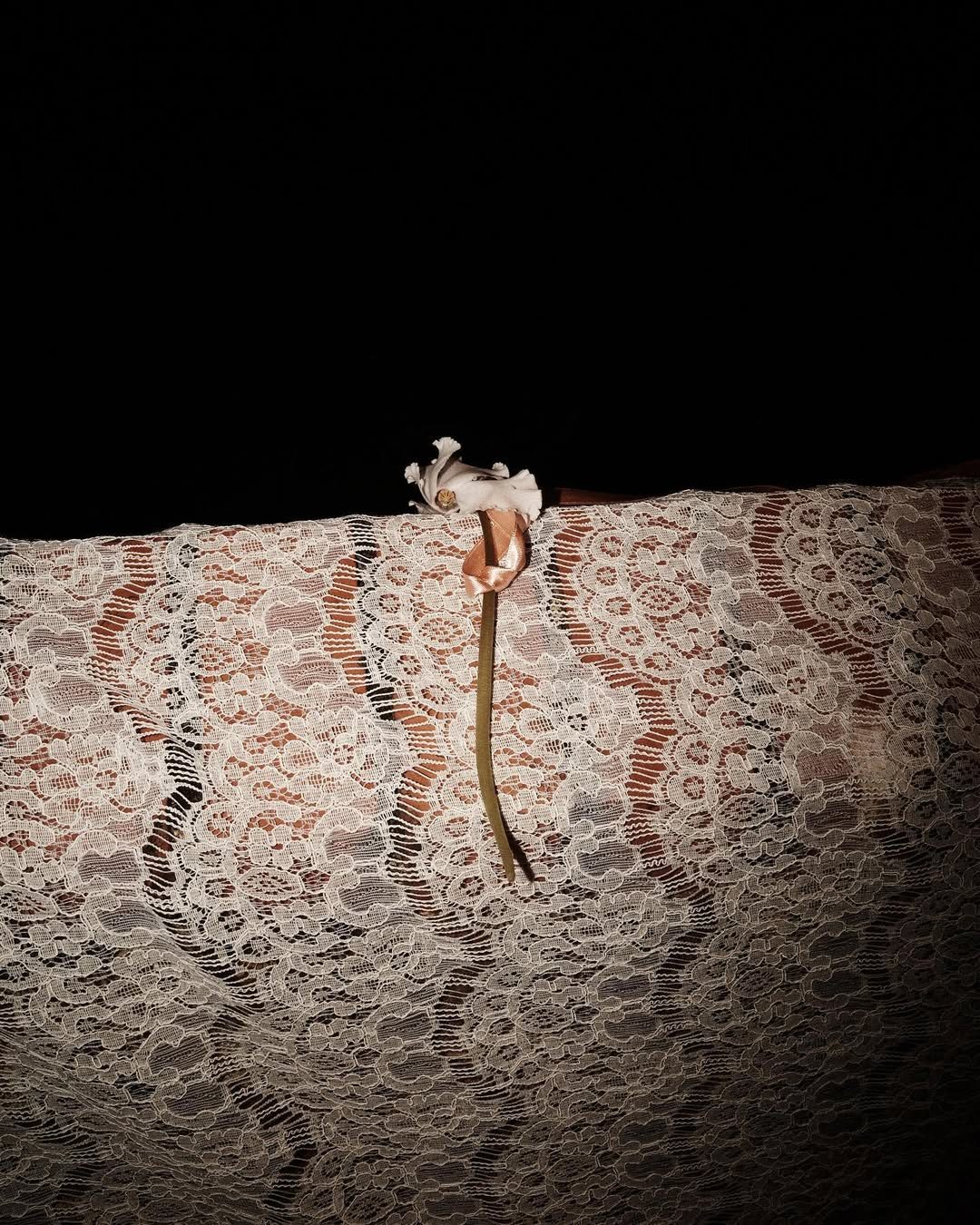
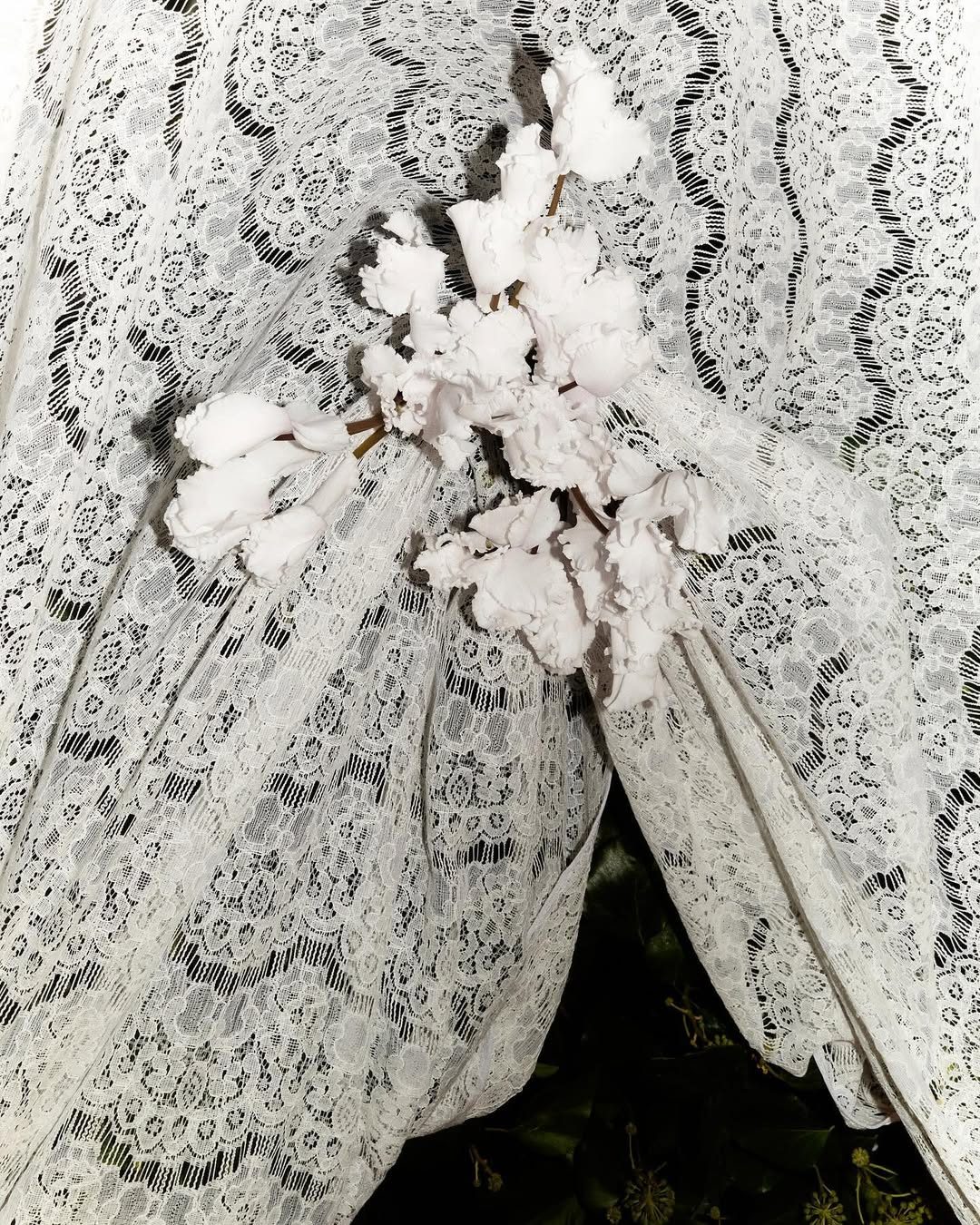
Lace as a spider web — shot outside in the dark with @robinsonbarbosa
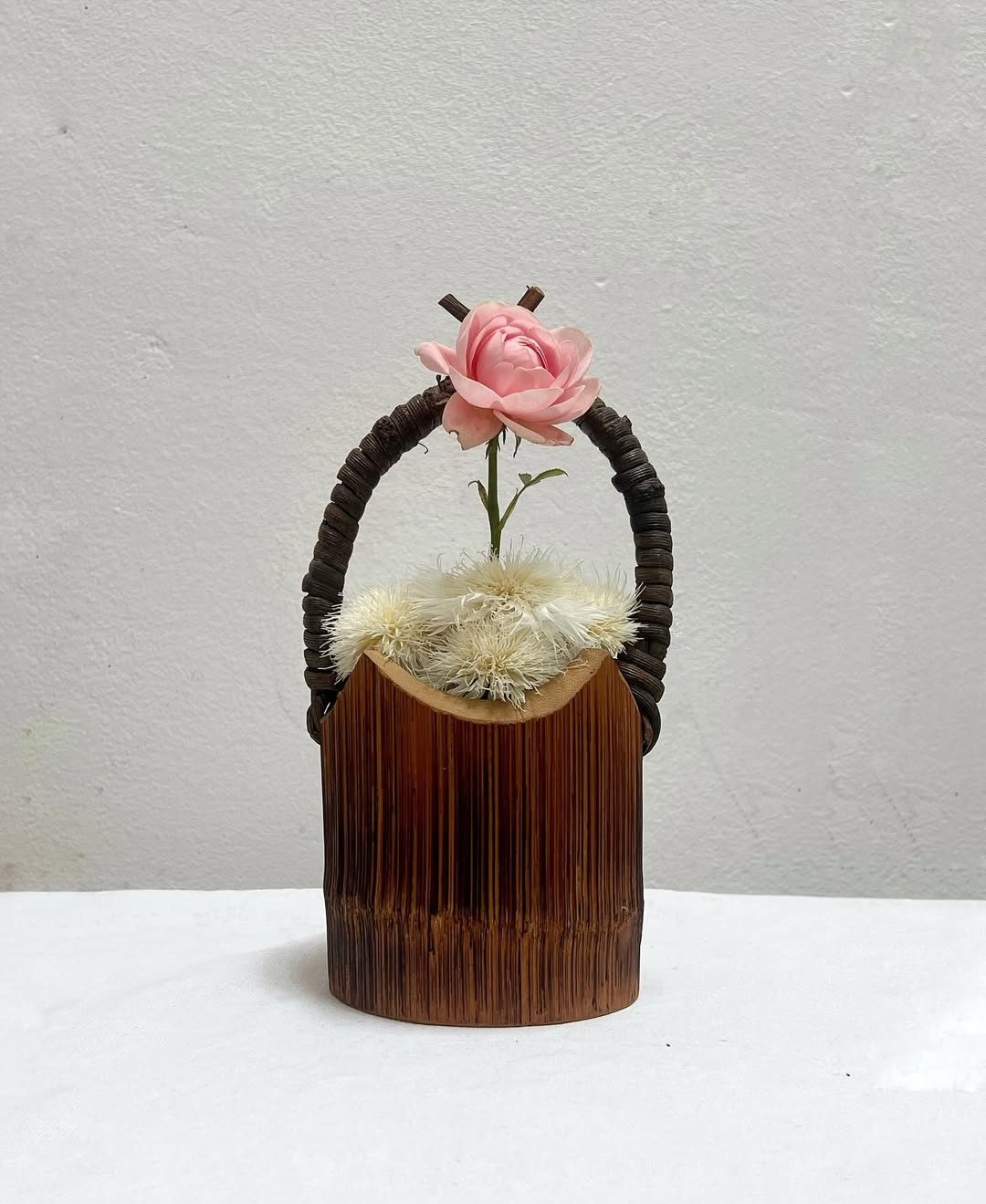
Amberboa Moschata & Garden Roses — Antique Japanese Burnt-Bamboo Hand Bucket
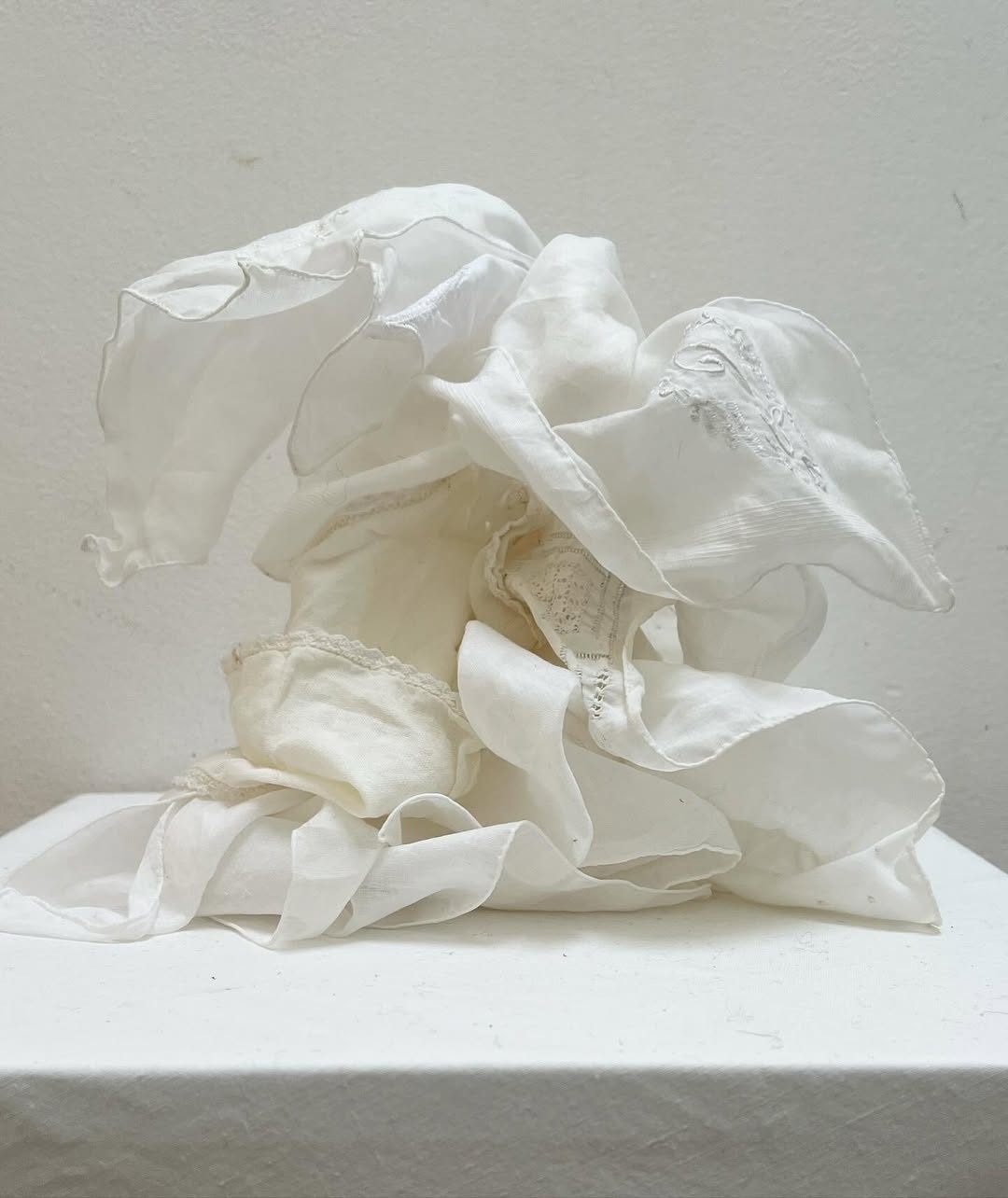
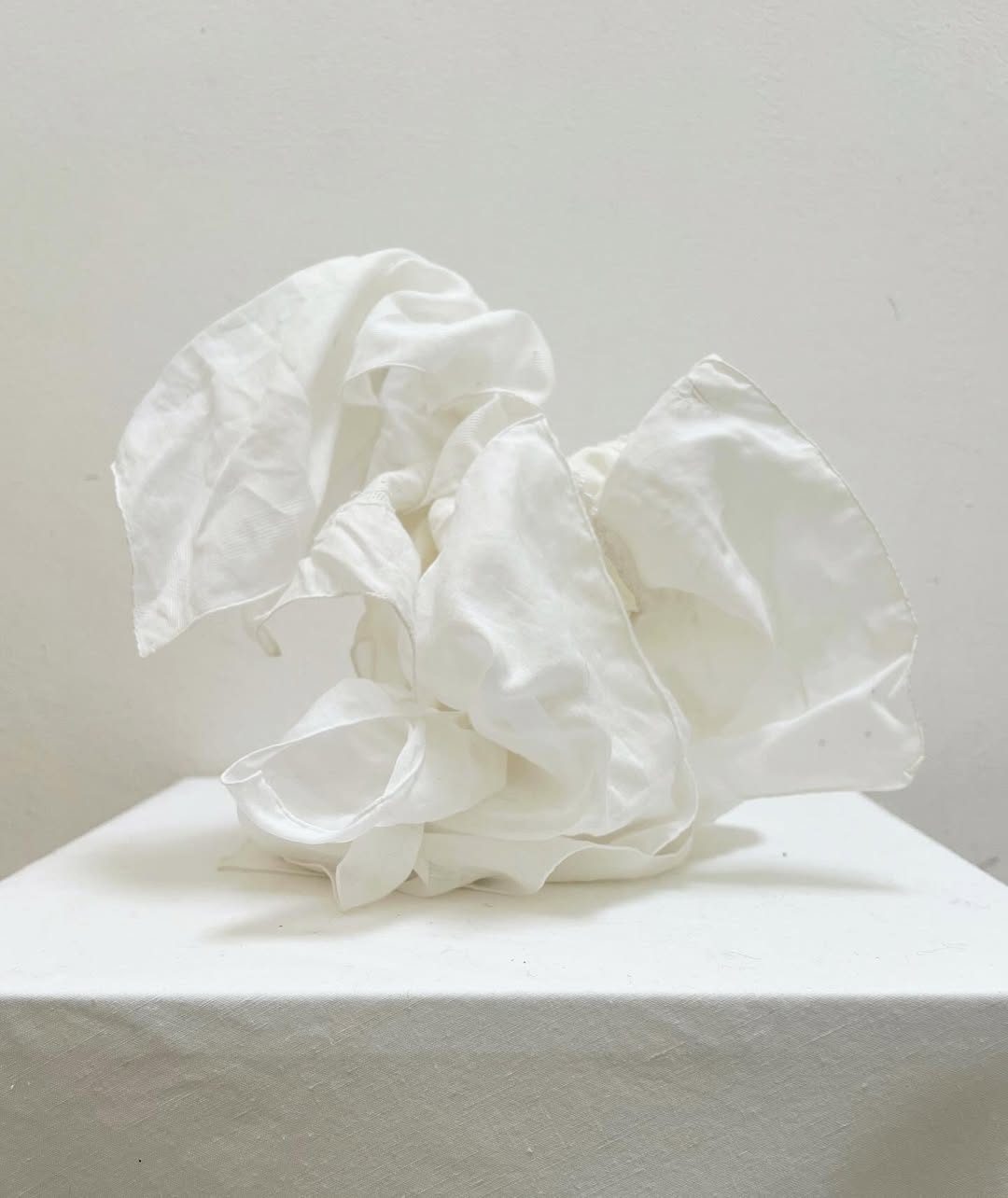
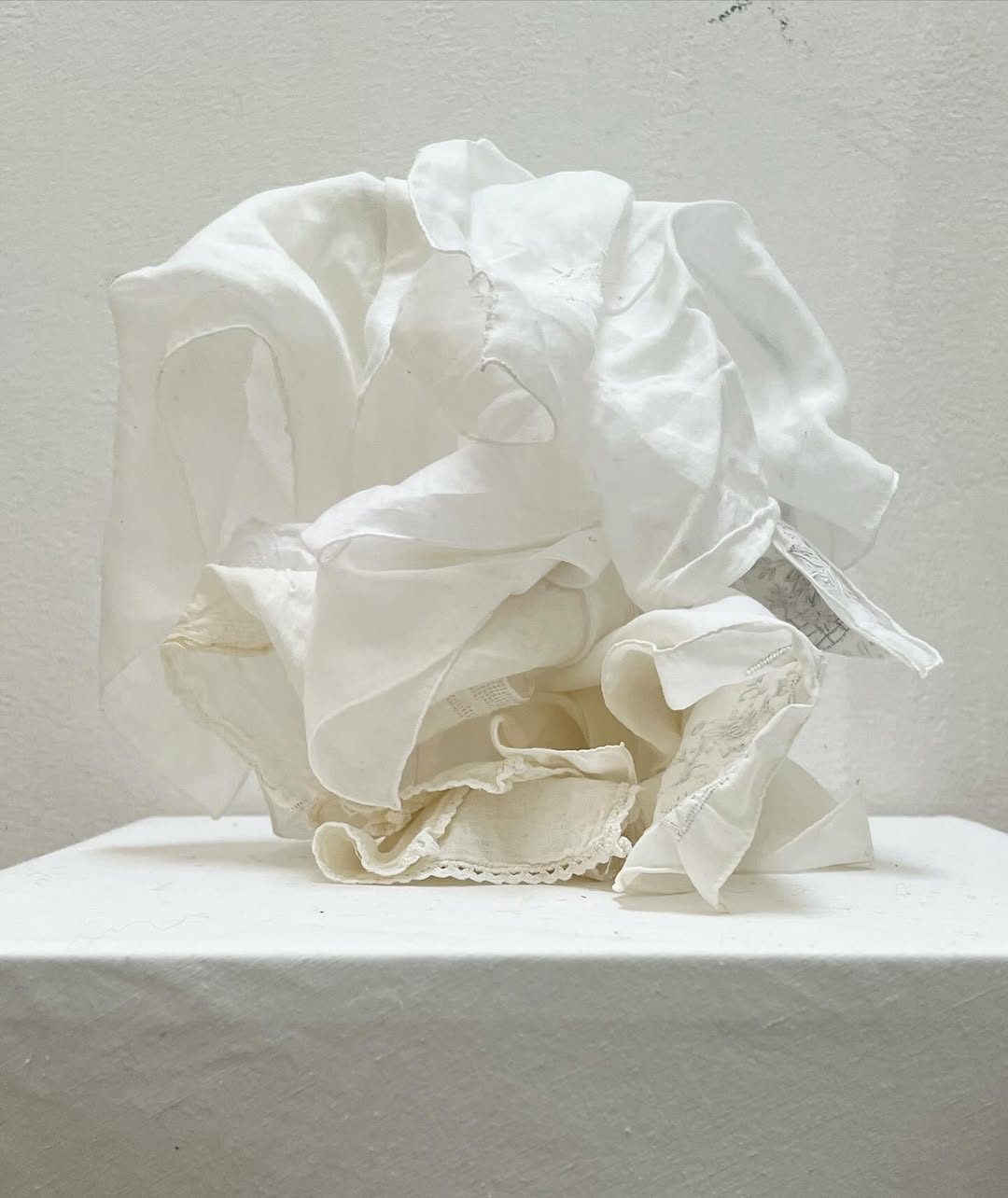
Shapes of Lost Love — Arrangements with Antique Wedding Napkins
Your work moves between commercial commissions and more exploratory, artistic projects. How do those two modes inform one another, and how do you protect a sense of care and intention when working to tight timelines?
I think I’ve developed a strong visual language that feels very much my own. Early on, I had to say no to a few projects because they were far from my aesthetic. At the time, it was difficult, but I believe it helped shape my work. Now, the projects that come my way tend to align more naturally with my style.
I also think it’s important to educate clients. Sometimes people arrive with mood boards filled with other florists’ work, and while those references can be inspiring, I believe it’s essential to stay true to your own voice. I’m happy to create arrangements inspired by the feeling or flowers in a mood board, but my role is not to replicate someone else’s work. It’s to interpret it through my own style.
I truly enjoy choosing flowers and creating arrangements just for myself. Alongside working for clients, I think it’s important to keep that personal space for experimentation and intuition.
Sometimes an idea appears almost like an urge, an impulse to create something purely for myself. When that inspiration comes, I feel the need to translate it into a floral composition. Keeping that practice alive is very important to me, because it’s where my ideas begin.
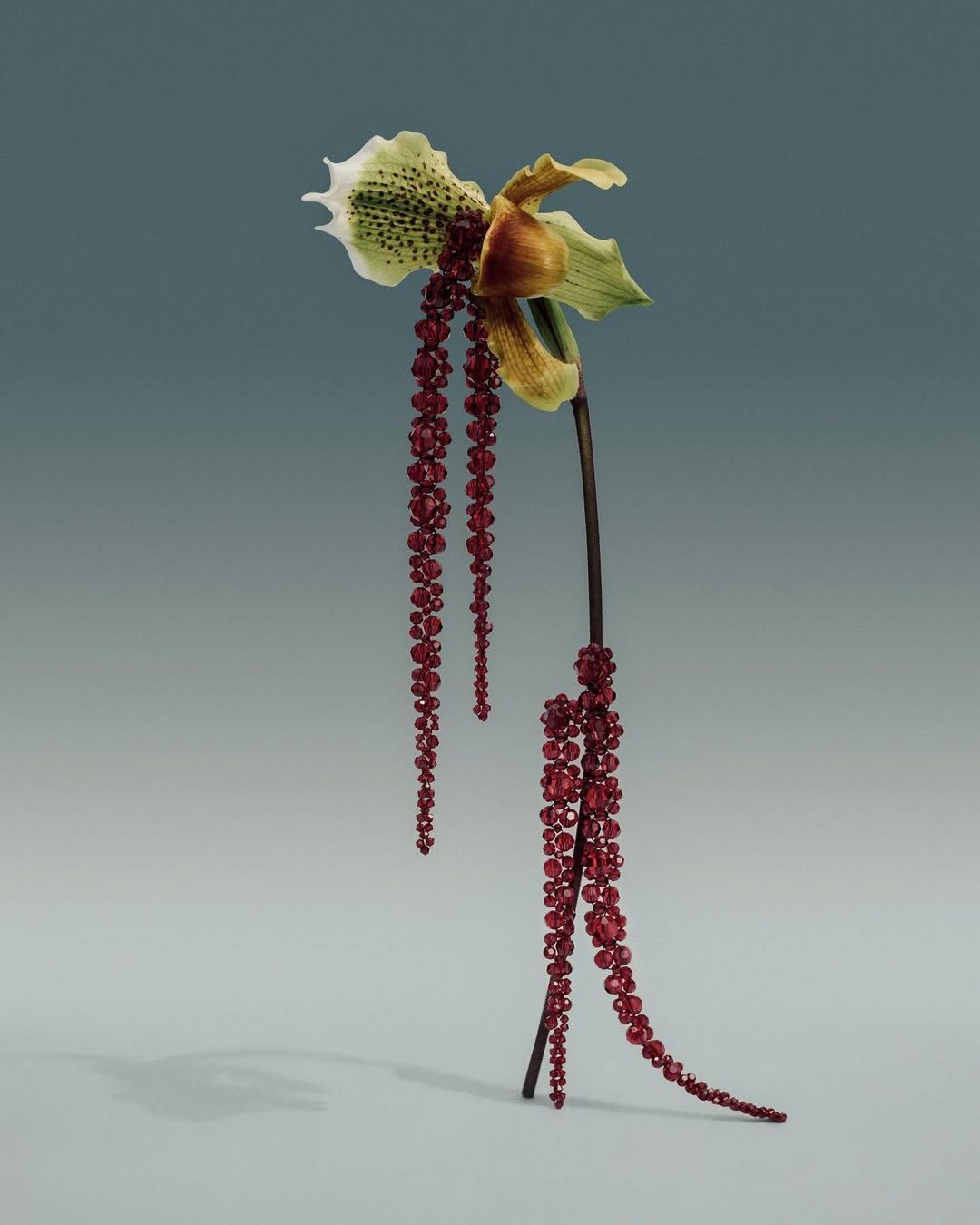
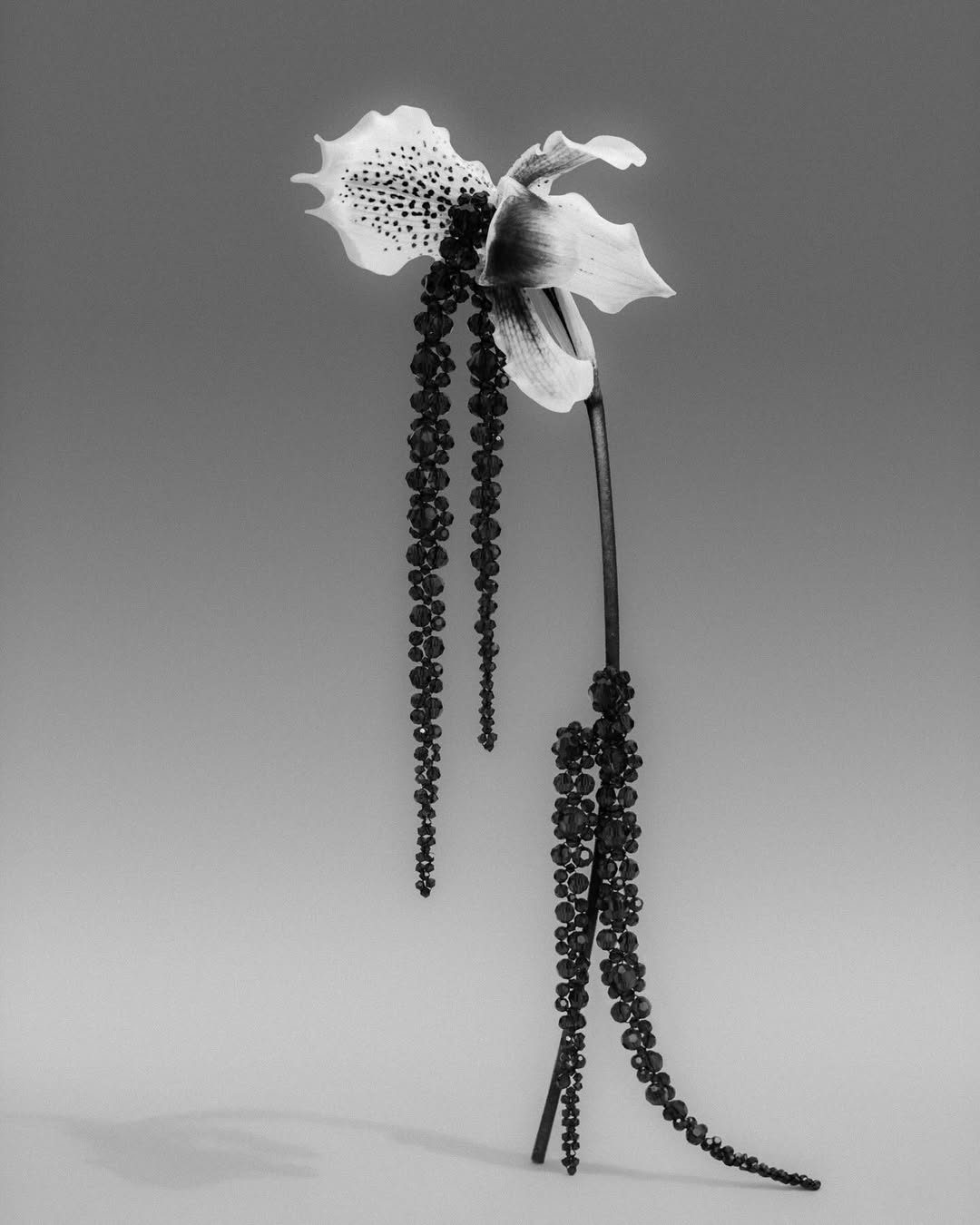
For @britishvogue — Earrings: @simonerocha_ | Photography: @plusiaroms | Set design: @alfieditrolio | Photography assistant: @alexjohnsonstudio
“Working with flowers feels like a continuous process of discovery. We develop, we learn new skills, we encounter new flowers and new teachers.”
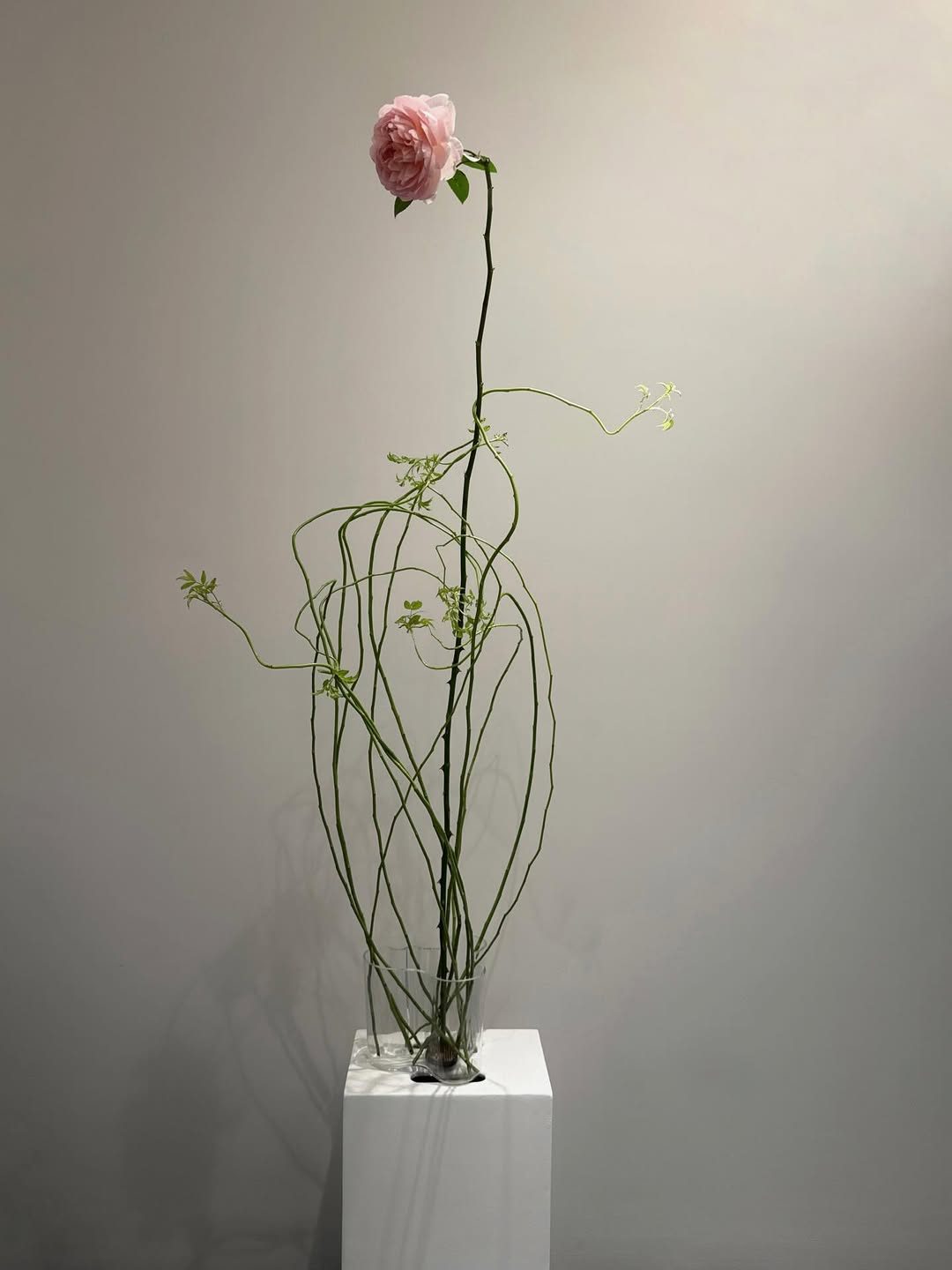
For @erdem — @erdem.moralioglu
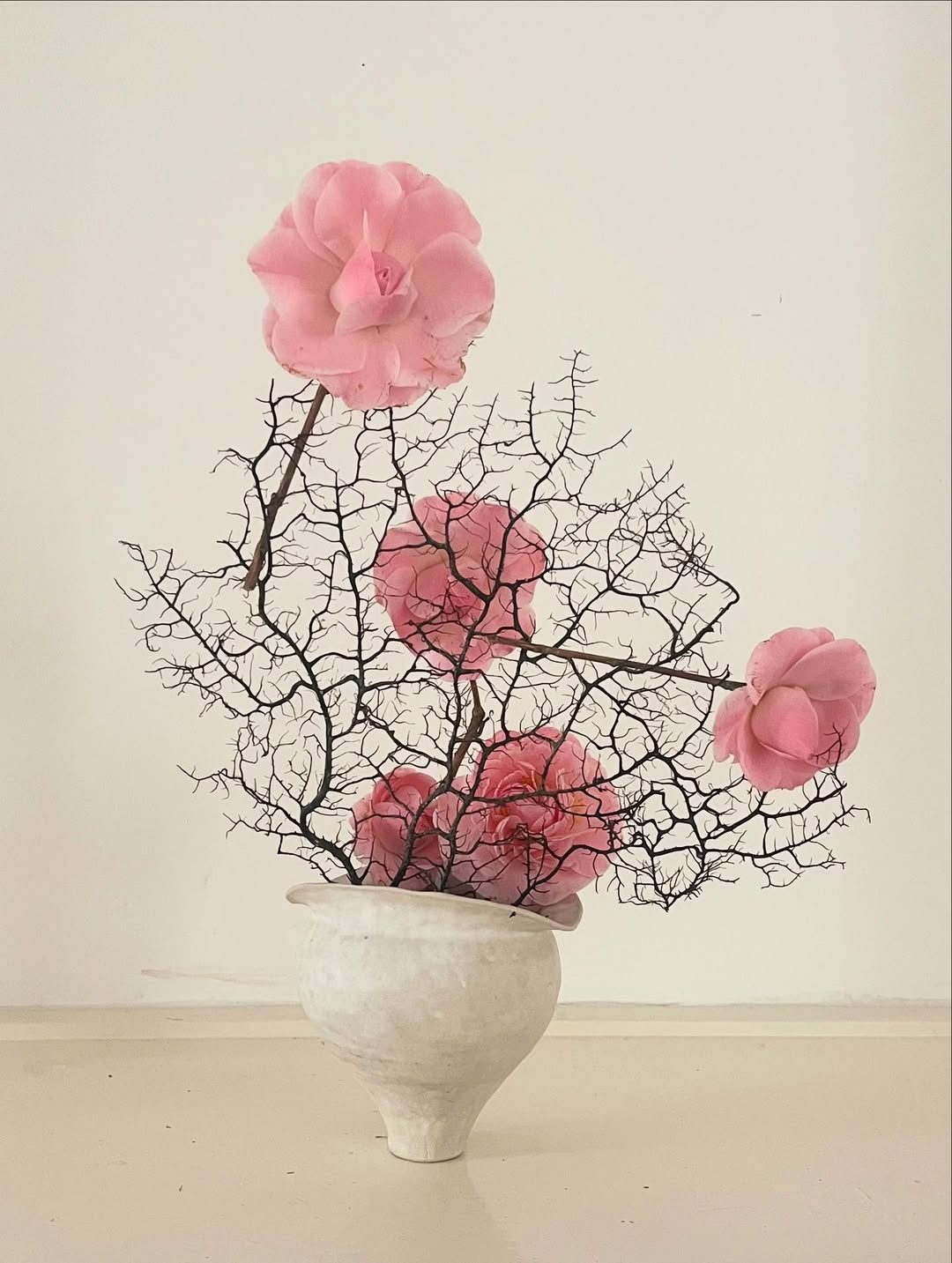
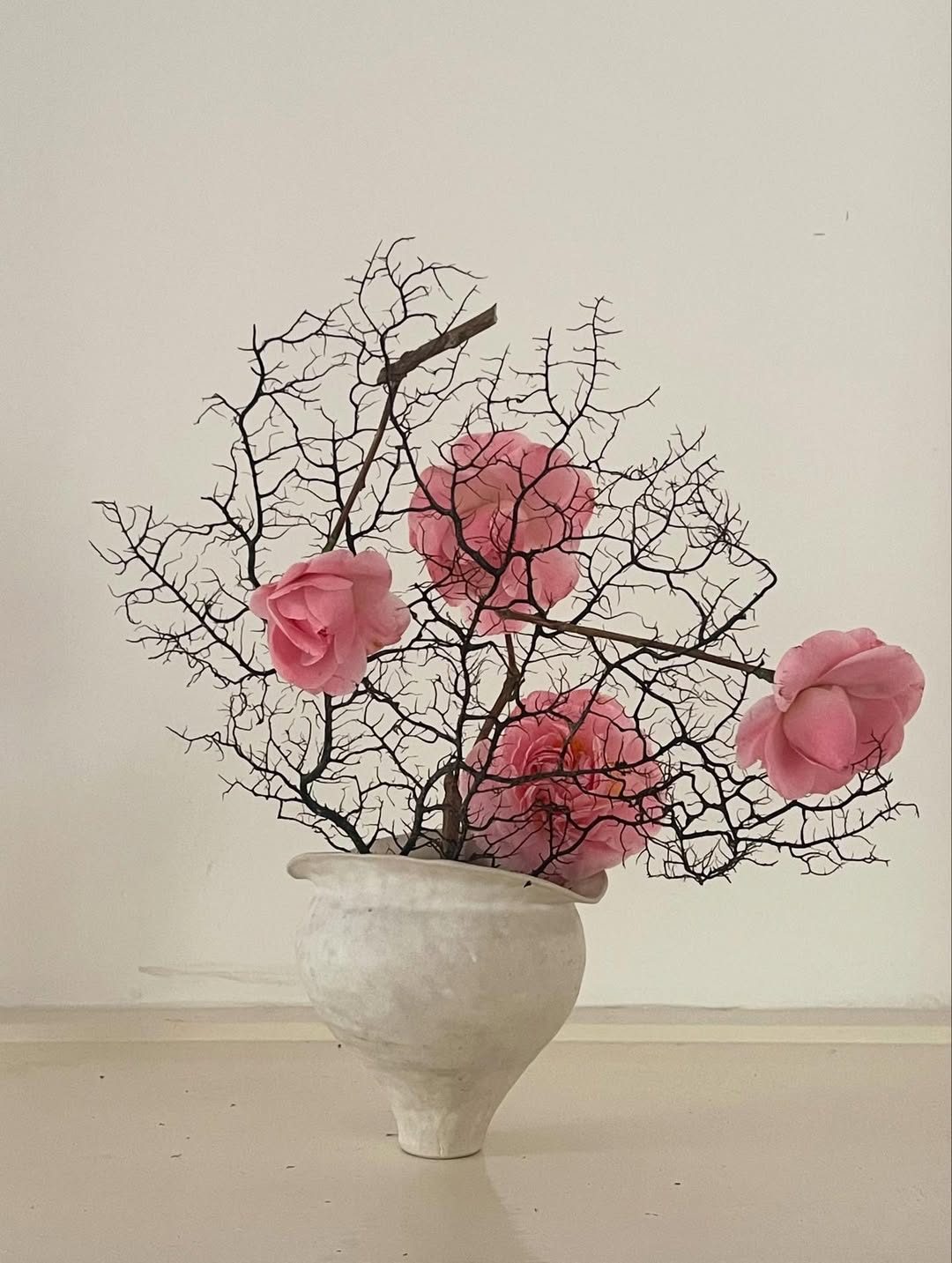
Camellia & Black Coral
There’s a strong sculptural and spatial sensibility in your arrangements, often treating flowers as volume, structure, or gesture rather than decoration. What does your process look like from concept to installation, and where do intuition and planning meet?
For me, every arrangement begins with an idea, sometimes a small image I want to recreate, sometimes a story or something I’ve read about a flower that stays with me. From that starting point, I try to translate a feeling into the arrangement, letting the flowers carry the atmosphere of that inspiration.
I have to admit that I’m not someone who plans everything in advance. I can plan the ingredients, the flowers, the materials, the objects I might want to work with, but the arrangement itself is very much guided by intuition.
Once I begin, it becomes a process of responding to the materials and working in the moment. Sometimes flowers seem to have their own direction, and it’s important to follow them rather than force them into the idea you originally had.
That’s usually how I work. It can sometimes feel a little stressful, because there isn’t always a completely clear plan. But I’ve learned to trust that intuition, because it’s through that process that my best arrangements emerge.
Once, while I was back home in Italy, I wandered into a small charity shop and discovered a box filled with delicate vintage organza napkins. They had been used for weddings. I kept thinking about the lives they had once been part of, tables set for celebrations of love and how they were now simply folded together in a forgotten box.
I bought a few of them and brought them back with me to London. Later, I used them in an arrangement, shaping the napkins into soft forms within the composition. I titled the piece Shapes of Lost Love, a reflection on love, memory, and nostalgia.
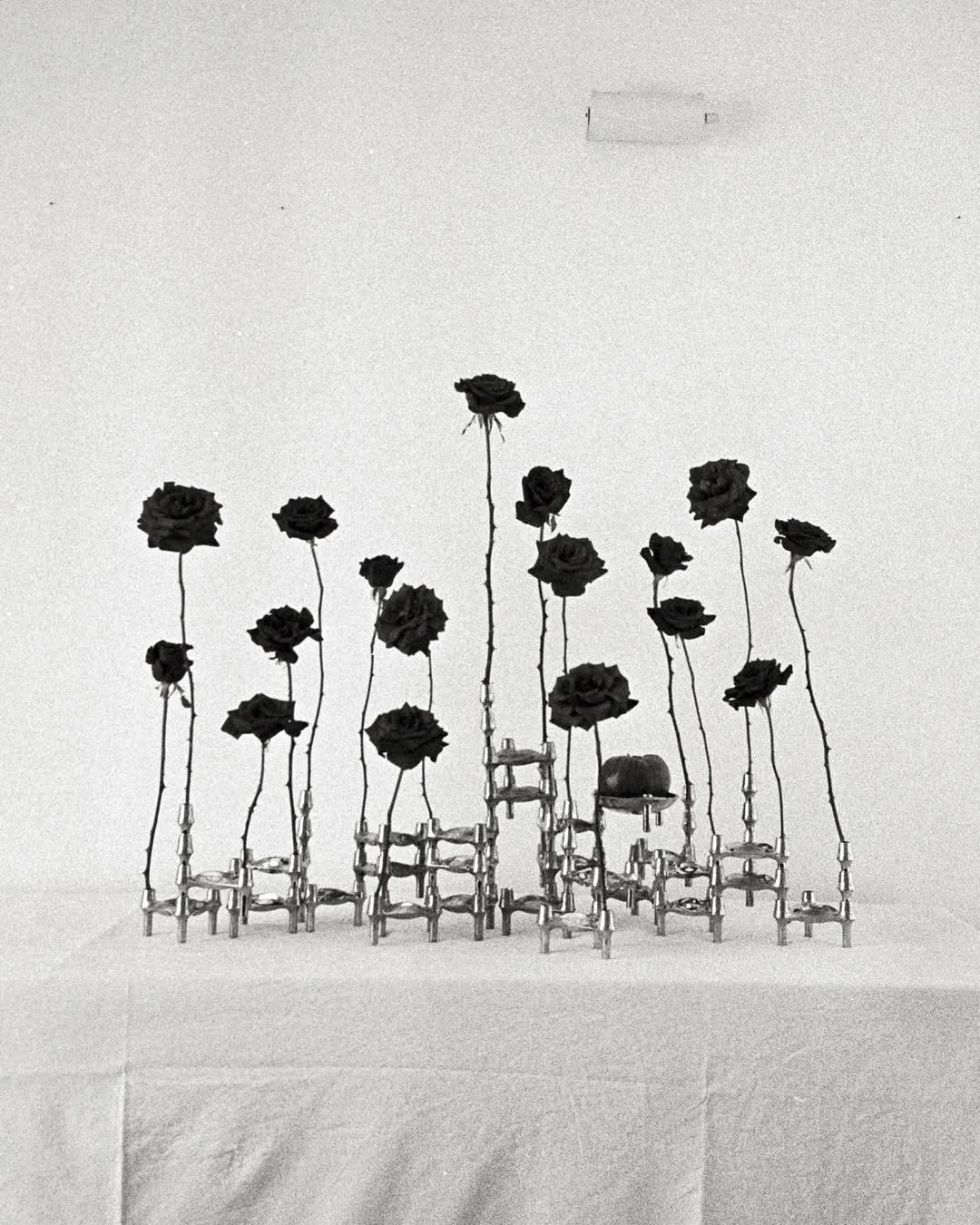
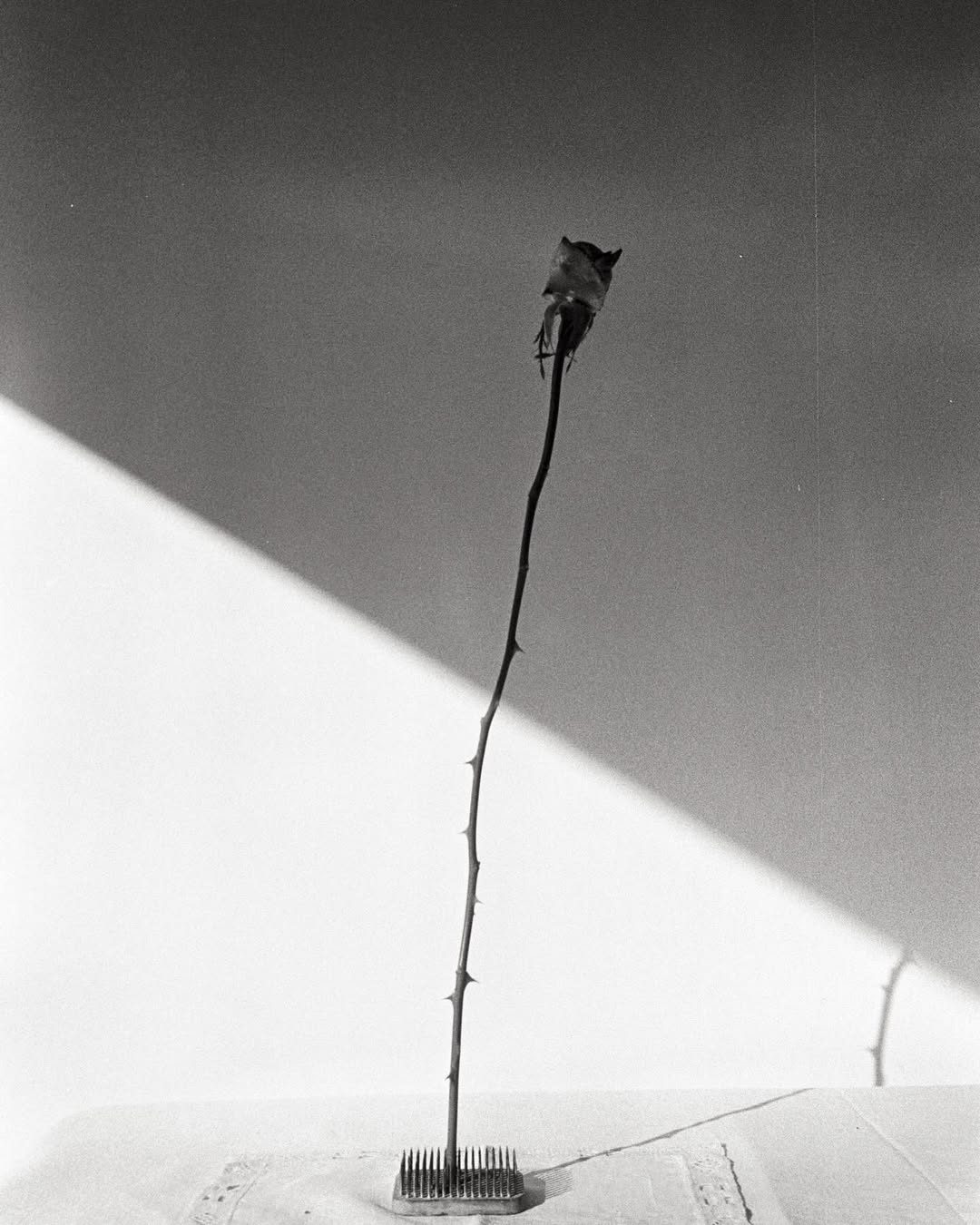
Meeting Laszlo — Paris | With: @cantinelaszlo | Objects: @stoffnagel | Assistance: @ferdia_x
“Sometimes flowers seem to have their own direction, and it’s important to follow them rather than force them into the idea you originally had.”
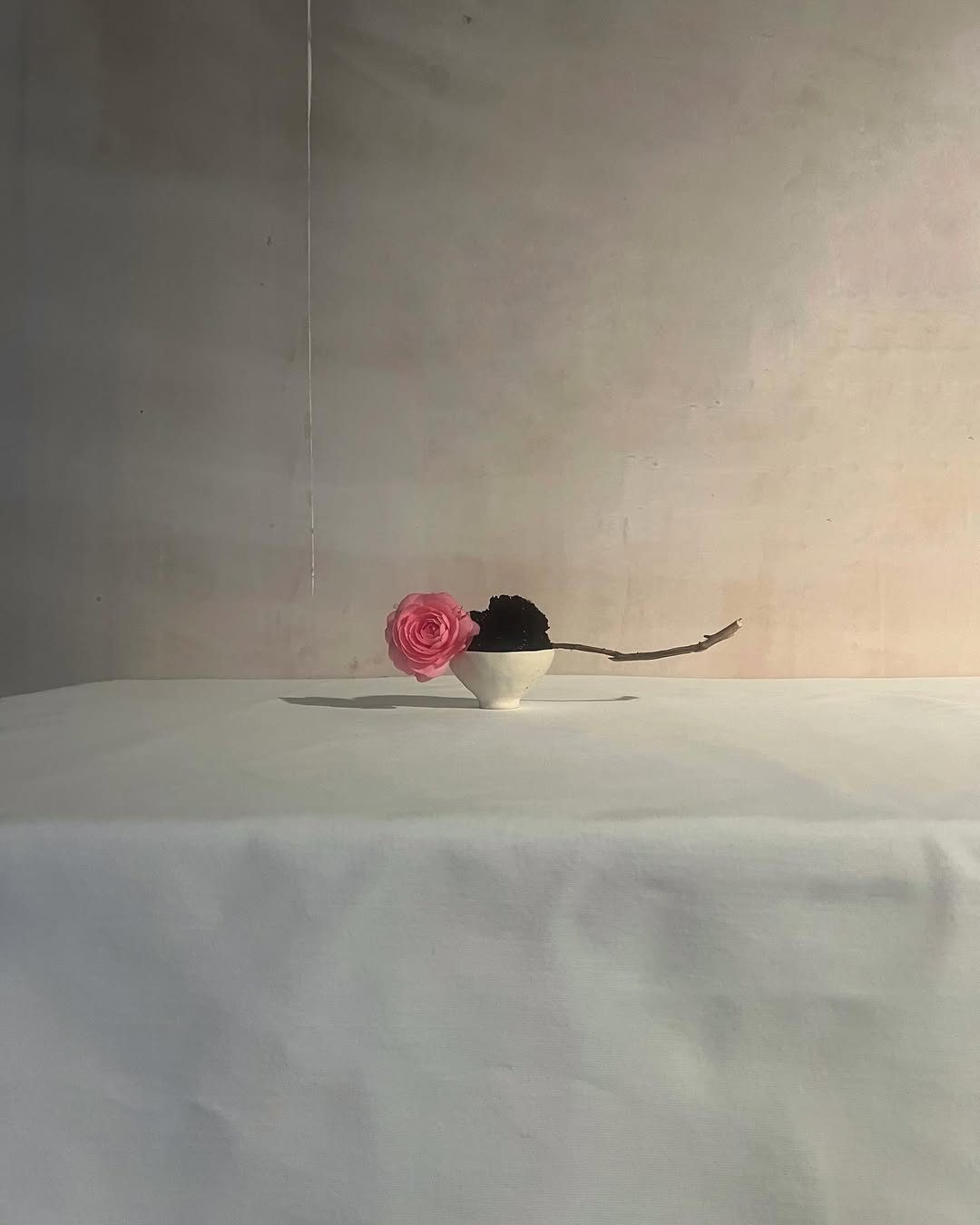
For @gabrielomoses — @180.studios | @ikoyi_london | @katjahorvat | @cunningham_thc | @whenpressed
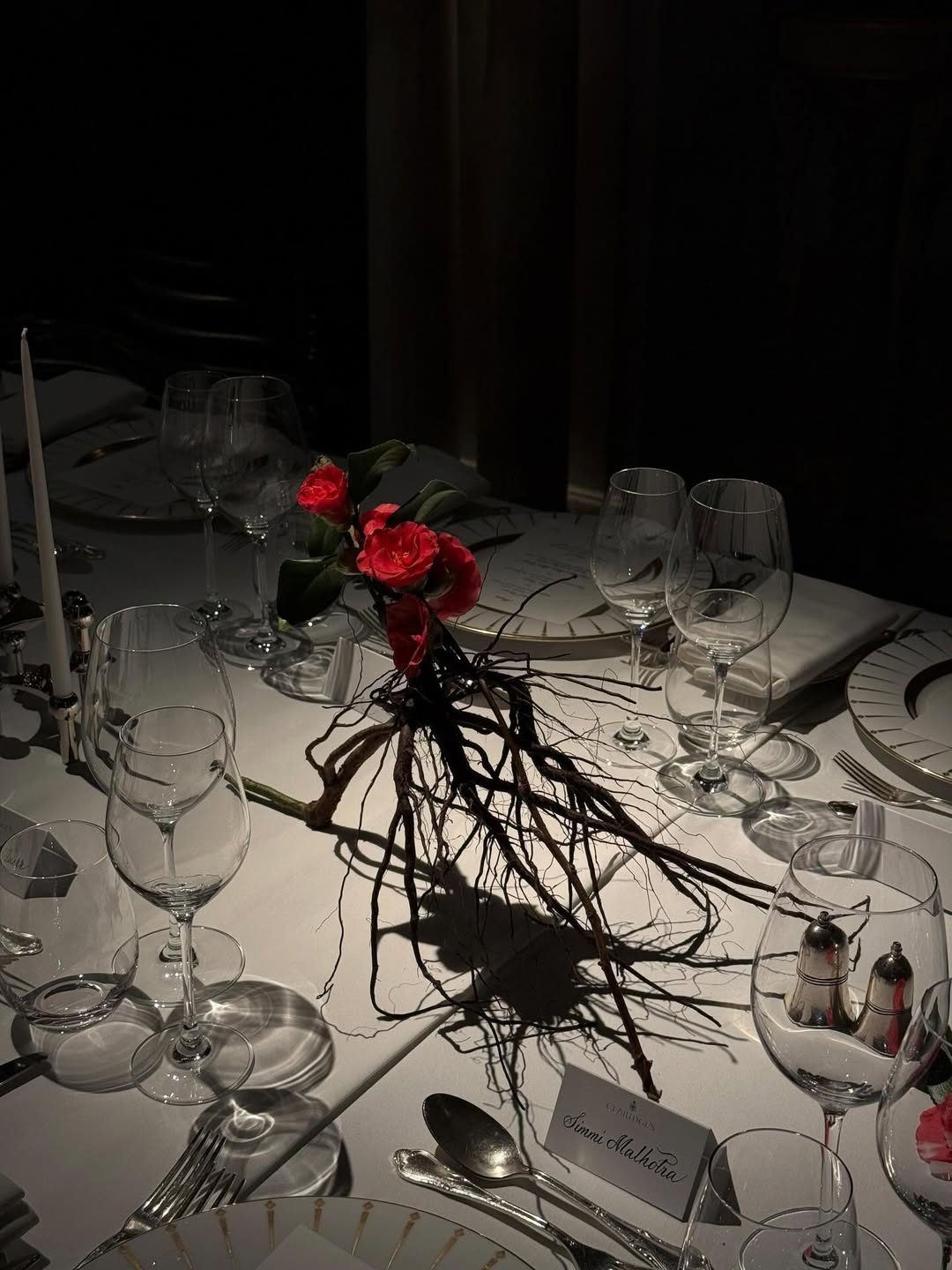
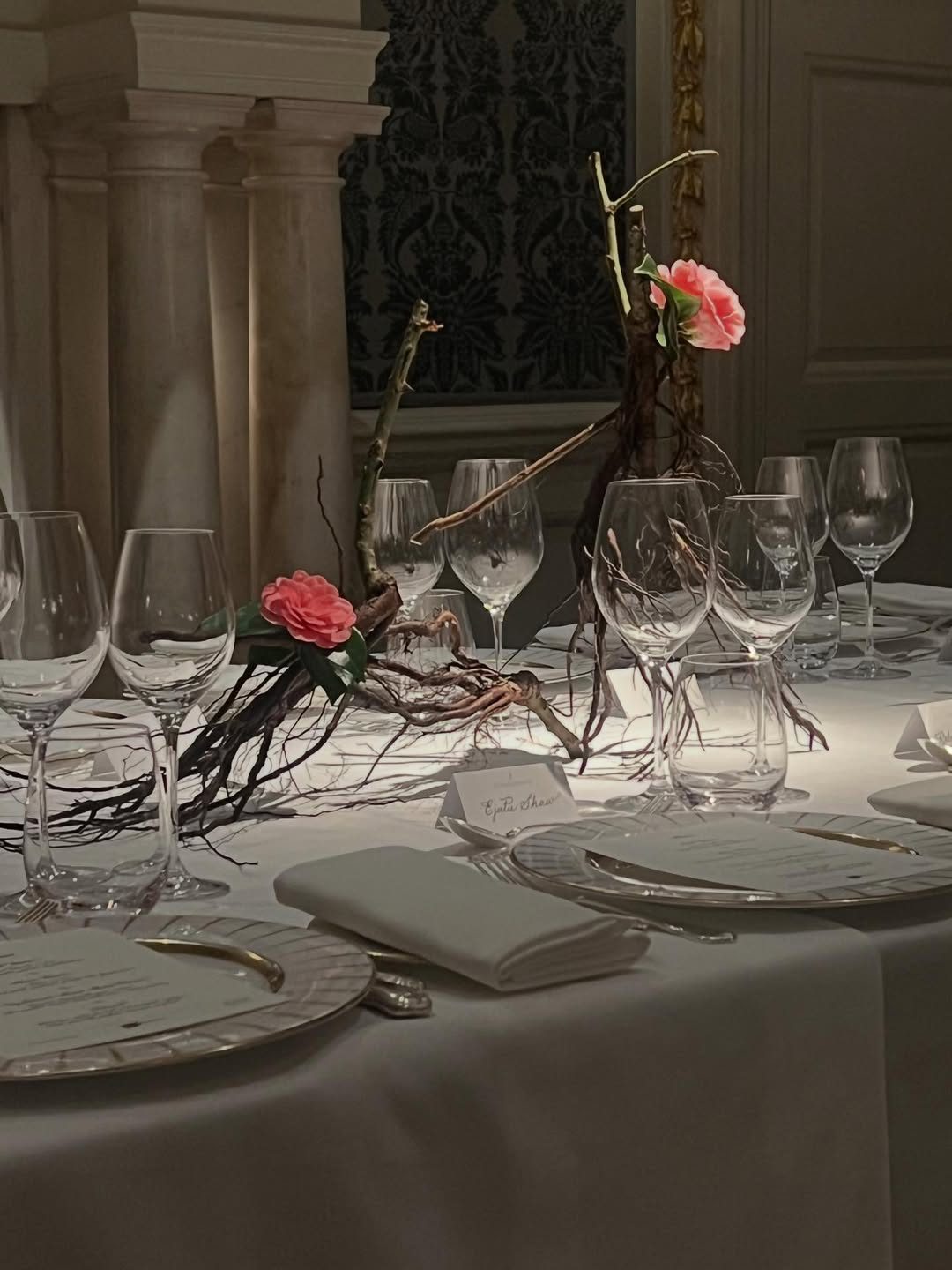
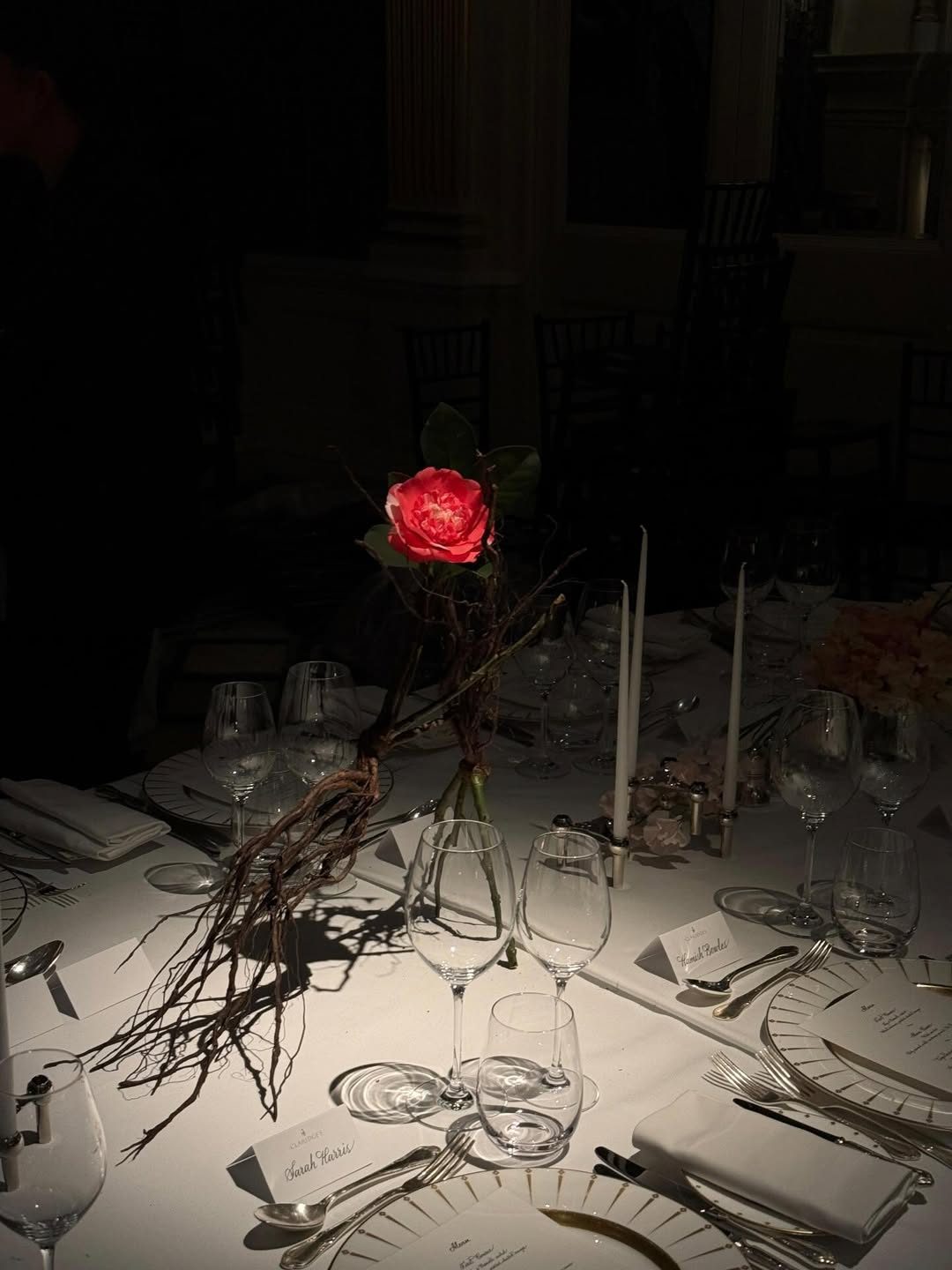
Camellia, Bare Root Roses — For: @roksandailincic @britishfashioncouncil | Location: @claridgeshotel | With: @_cynthiafan @whenpressed | Support: @cunningham_thc
Flowers carry heavy cultural expectations: romance, femininity, luxury, celebration. How conscious are you of these associations when working, and do you ever deliberately lean into or resist them?
I find something almost sacred in the way flowers accompany the most important moments of our lives. They are always present in our celebrations, when we are born, when we achieve something meaningful, on our birthdays, and at funerals. I find flowers to have a ritualistic role.
I enjoy learning about the symbolism of flowers, although I try to move away from the more obvious or sentimental associations. For example, recently I’ve been researching camellias, and I’m fascinated by the meaning they hold in Japanese culture, where they are associated both with beauty and with sudden death.
This symbolism comes from the way camellias grow. When they bloom on a tree or a bush, the flowers open fully and remain almost perfect. They don’t slowly wilt. Instead, at a certain moment, often when they are at their most beautiful, the entire bloom simply falls to the ground. Because of this, they have come to represent a kind of fleeting beauty and sudden ending.
I’m very drawn to these deeper, poetic, and slightly dramatic associations with flowers.
I also enjoy the idea that, historically, flowers were worn to communicate messages. During the Victorian era, for example, flowers formed a kind of silent language. A white violet could symbolise innocence, while a purple violet suggested that someone held sentimental thoughts for another person.
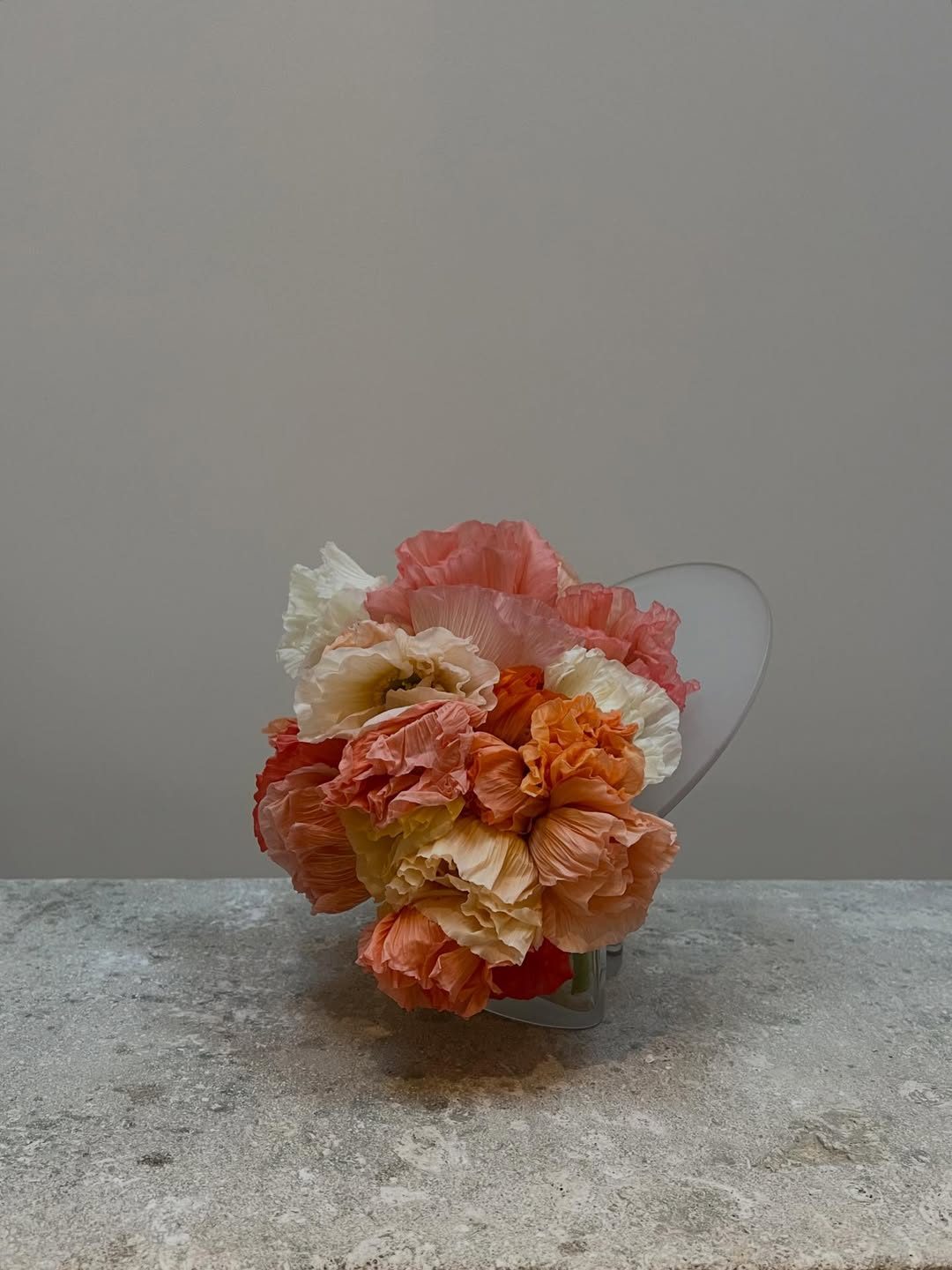
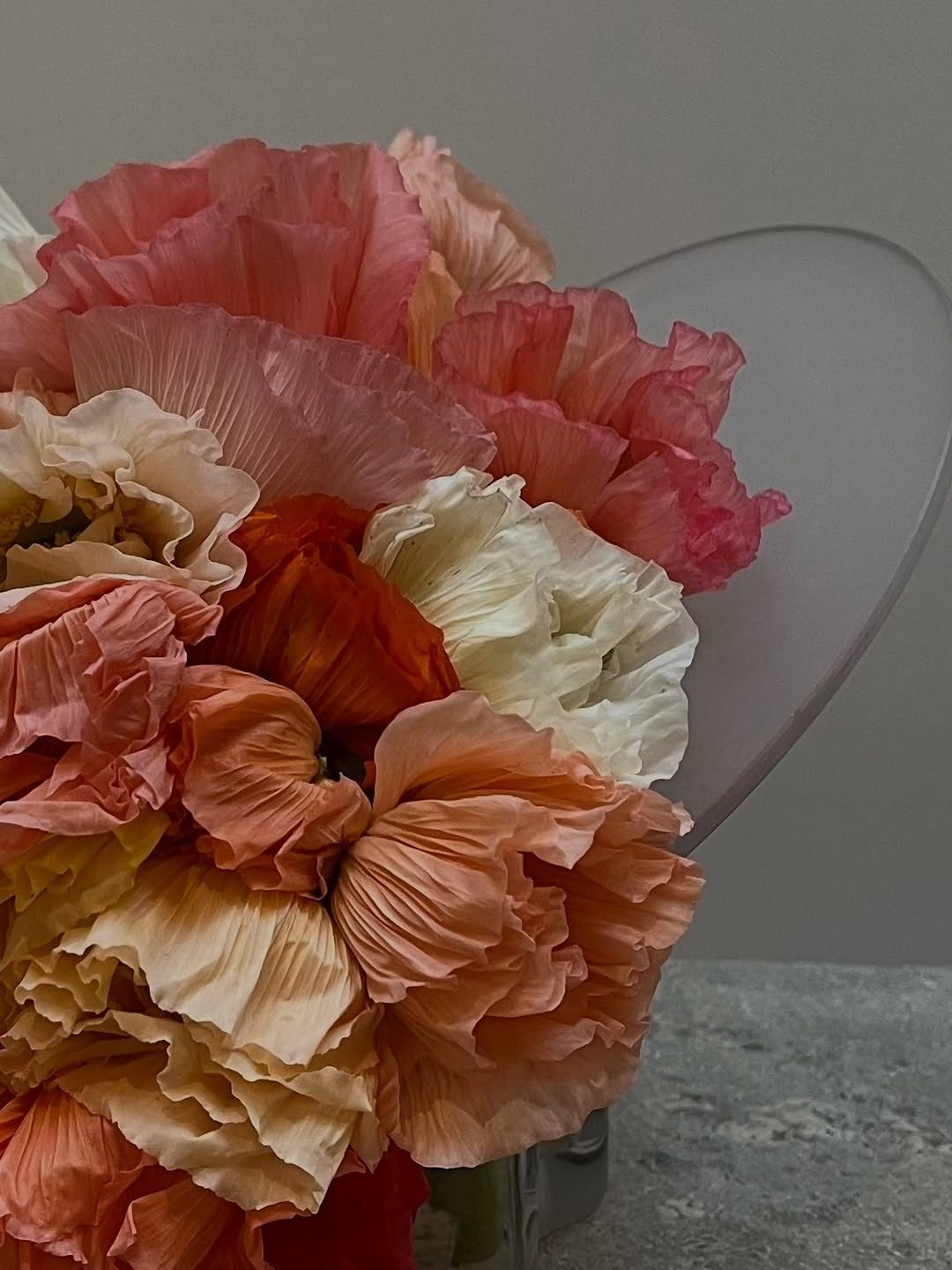
Icelandic Poppies — For: @pjohnsonworld | With: @tamsinjohnson
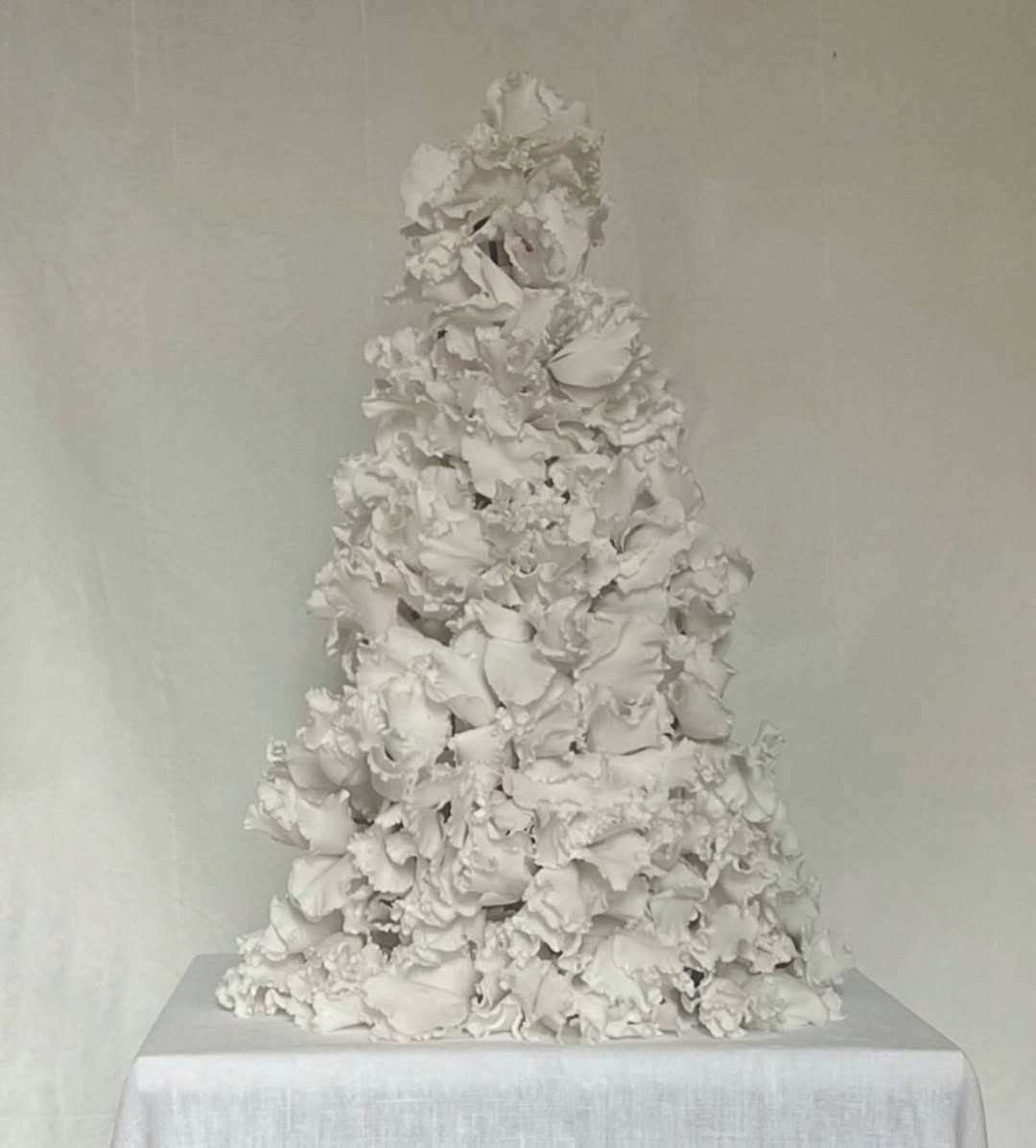
Frilly Cyclamen
Looking ahead, how do you imagine the role of floral practice evolving, both in relation to sustainability and to its position within contemporary visual culture, and where do you see your own work pushing against current industry norms?
In the coming years, I’m looking forward to continuing my studies with my Japanese sensei, Ikuyo, and deepening my understanding of ikebana. What I value most is the opportunity to spend time with someone who has dedicated her entire life to flowers. My sensei is eighty years old, and learning from her through her experience, her techniques, and the beautiful books she shares feels incredibly meaningful.
In our society, we are often used to staying within our own age groups, but there is something very special about learning from someone older. They bring a sense of depth, strength, and calm that is incredibly grounding.
I’d also love to connect with other creatives, not only florists, but people from different disciplines who are interested in collaborating and creating together. Sometimes the creative world can feel very individualistic, but flowers have allowed me to meet many people and work alongside them.
What I enjoy most about collaboration is the opportunity to build something together, to share ideas and processes. There is something very special about creating collectively, in a way that feels open and generous, without being driven by ego.
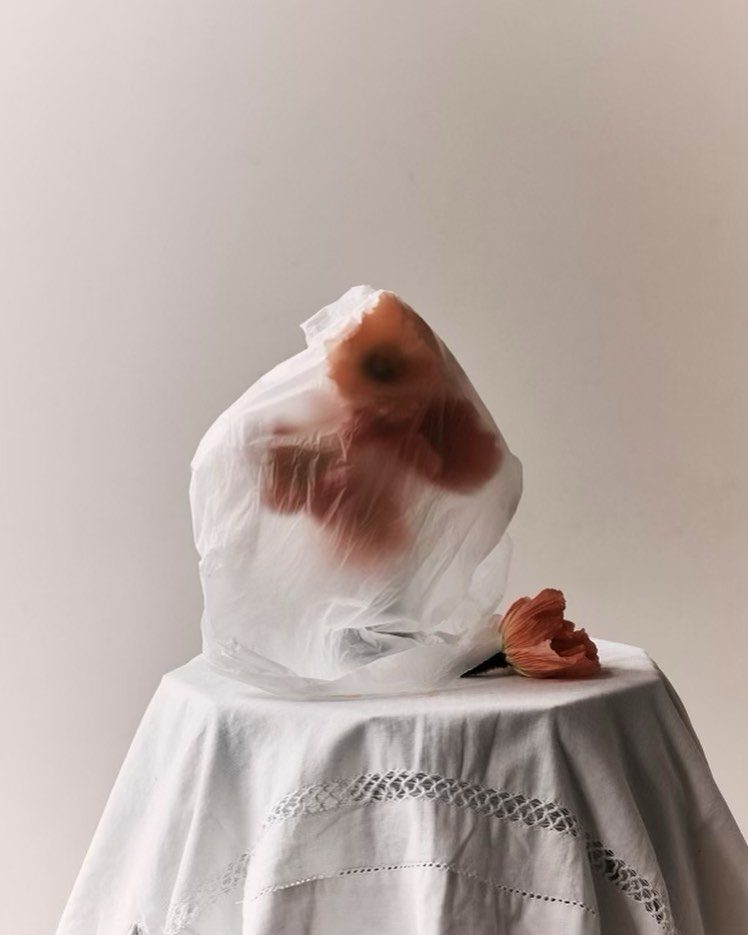
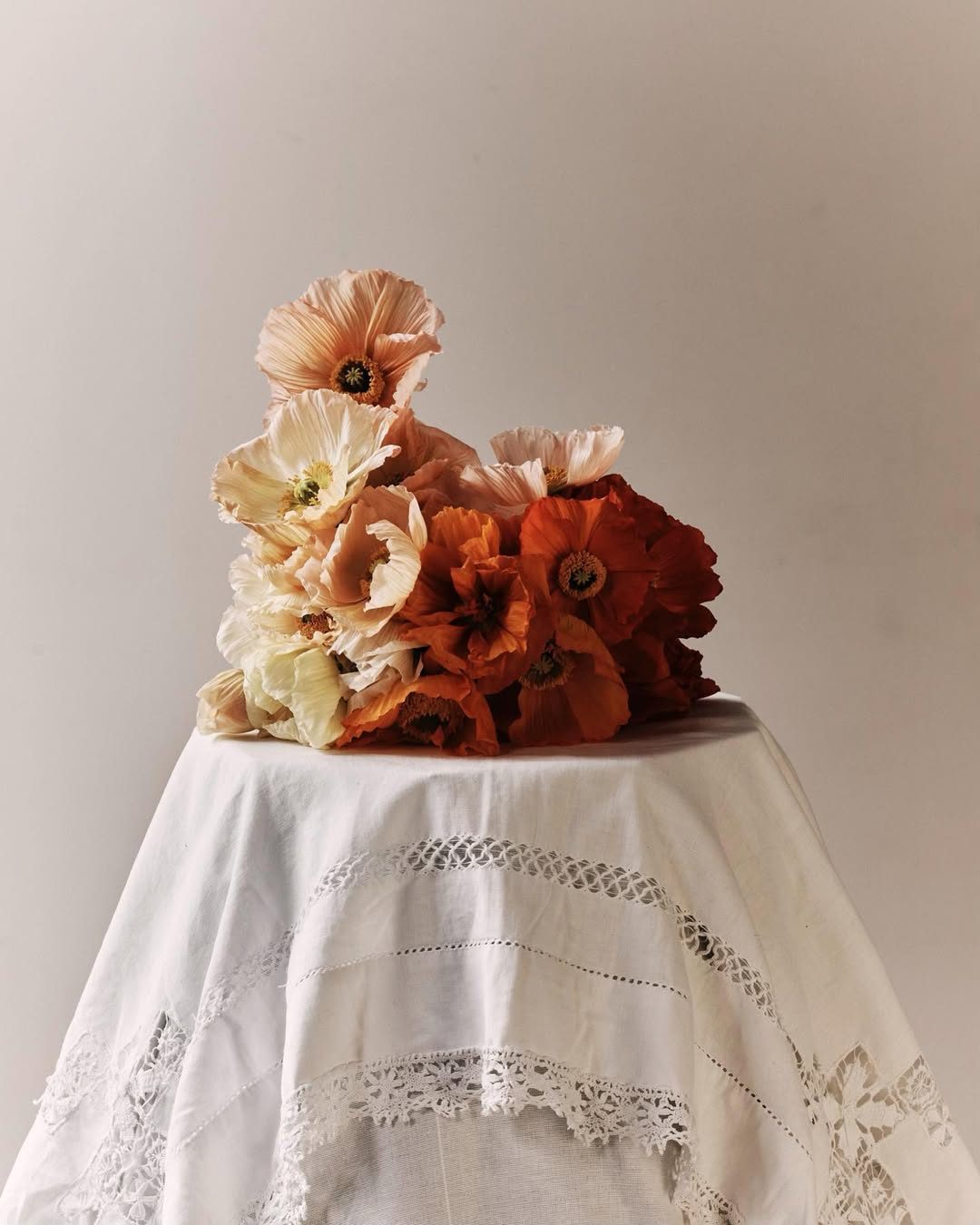
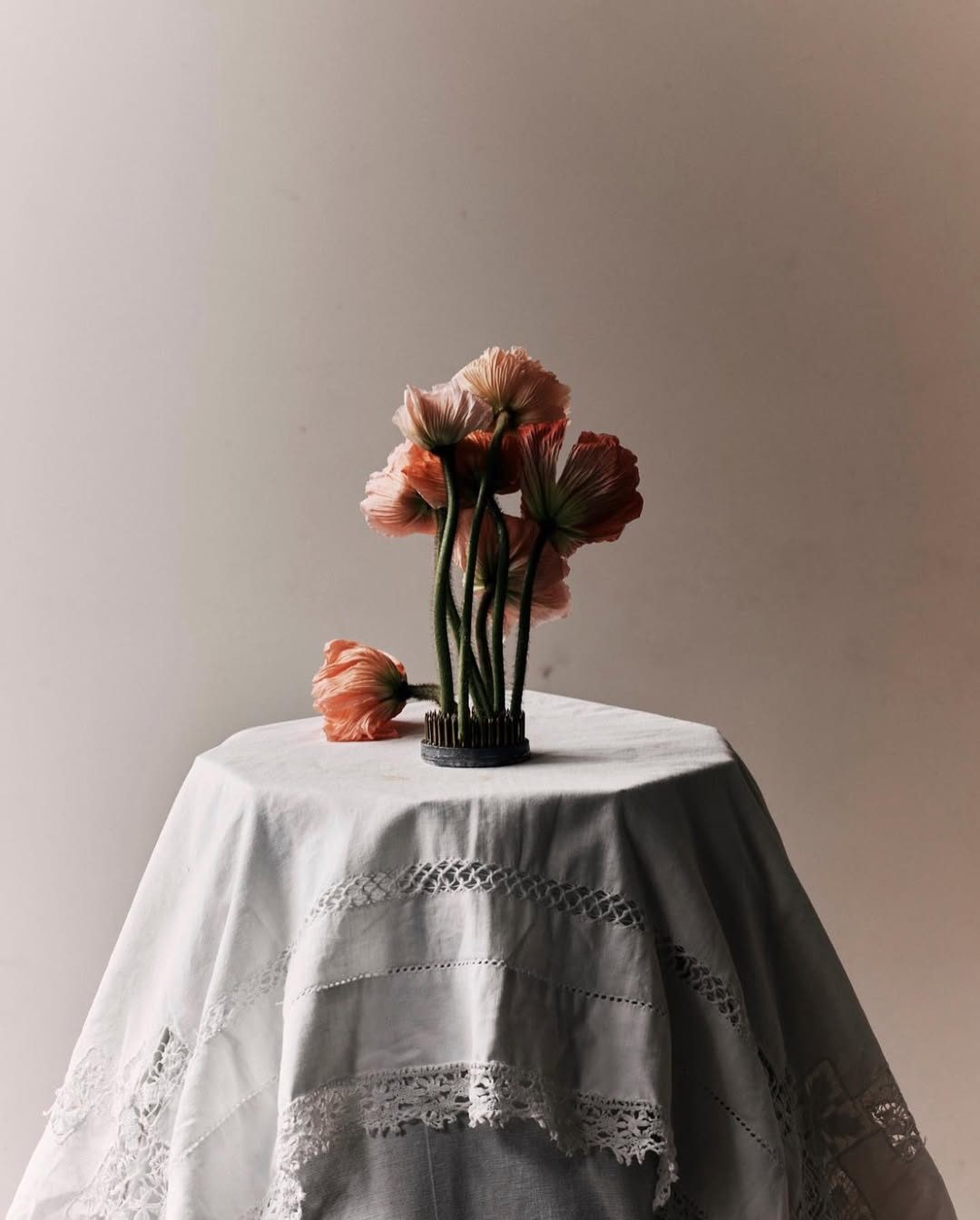
Shooting poppies — @barbosawilliams_ | @robinsonbarbosa | @jamiewilliamsstudio | @ferdia_x
Cover Image: Meeting Laszlo — With: @cantinelaszlo | Objects: @stoffnagel | Assistance: @ferdia_x