UNMESHED AND UNDECIPHERABLE: IN CONVERSATION WITH DYLAN NG
CONVERSATION BY YANGRUNG CHEN (MOCO)
CO-FOUNDER, ART DIRECTOR
24 AUGUST 2026 — NEW YORK CITY, UNITED STATES
Dylan Ng paints people before they know it. Family, friends, a partner standing just out of frame, all captured mid-gesture and later revealed as finished paintings, the process kept deliberately hidden until the opening. It's an approach that says as much about his temperament as his technique: impatient with resolution, suspicious of the polished image, more interested in the moment a stroke goes wrong than the moment it goes right. His canvases move between extremes, from a 10x12 inch study small enough to hold to a 68x91 inch canvas that meets the viewer body to body, and his figures rarely appear alone, choosing instead to cluster and overlap until it's unclear where one person ends and another begins. In this conversation, Ng talks about painting as something closer to a verb than a noun, the discipline of working from a life that leaves him little studio time, and what years of dancing under low light have taught him about bodies in proximity.
You described your thesis show A Demonstration of Care as thanking everyone who "let me paint them knowingly or unknowingly." What does it mean to paint someone without their knowledge?
Haha, my thesis feels so long ago now. I forget now what the ideas actually felt like, what I was thinking and feeling. I remember painting constantly during that period. I remember my final year of school, I could only think about my family and friends. I think it was coming from a place of gratitude, and having no idea what I wanted to paint at the same time. The most immediate and physical visual and subject I had were the people around me.
I don't think you can really tell from the final result of the painting, but I clung very hard to the reference images I took of my subjects. I think because of my proximity to them in my personal life, but also because in image-making, the stakes feel very high, there is a sense of urgency to visually translate the image onto the canvas, especially when the subject is a person. Maybe I was just impatient, but I felt this immediacy to capture my subjects' likeness in the first or second rounds of painting. I would scrap it the second I lost their gaze or posture, I was rushing to reach the end.
I think painting someone without their knowledge was just the fact that I didn't really show anyone my progress besides my partner while painting my thesis. My parents and brother had no idea what I was painting, I didn't let my friends visit my studio, I kept it very hush-hush. It was quite funny and awesome to see their reactions during the opening.
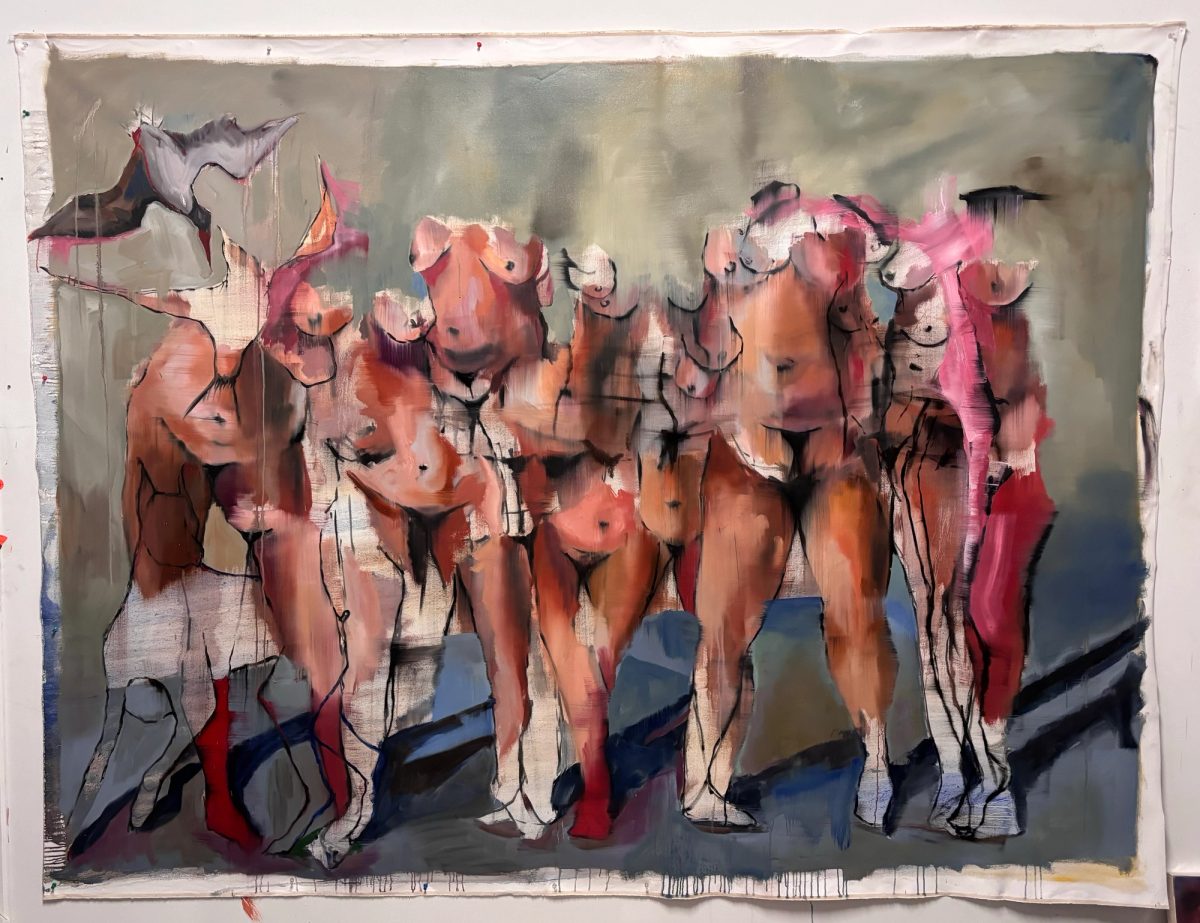
Dylan Ng, When the Dancefloor Turns Blue, 2025, oil on canvas
You wrote that the exhibition is "an exploration of "paint" as a verb," to define, to attack, to love, to complete. Where does that list come from, and does it change painting to painting?
Painting has always been a practice of responding. Painting will always be a push and pull, an action and then a smart reaction. As I said earlier, I clung very hard to the reference imagery I was using in the beginning of my thesis. But there was this point in each piece where I put down the piece and let the painting guide me. I became more obedient to my mark-making. I came to terms with the fact that I didn't need to paint the whole composition in a similar manner, that it often is more powerful to realize parts of the canvas and leave other parts unfinished. I became more aware of the colors and how they reacted with each other. My economy of brushstrokes became smarter and more sensitive.
Painting will always be a verb. The act of painting will always come before the image. My understanding of painting has changed since I painted those paintings. I care less about image-making than I did before.
"Under the lights, bodies become unmeshed and undecipherable."
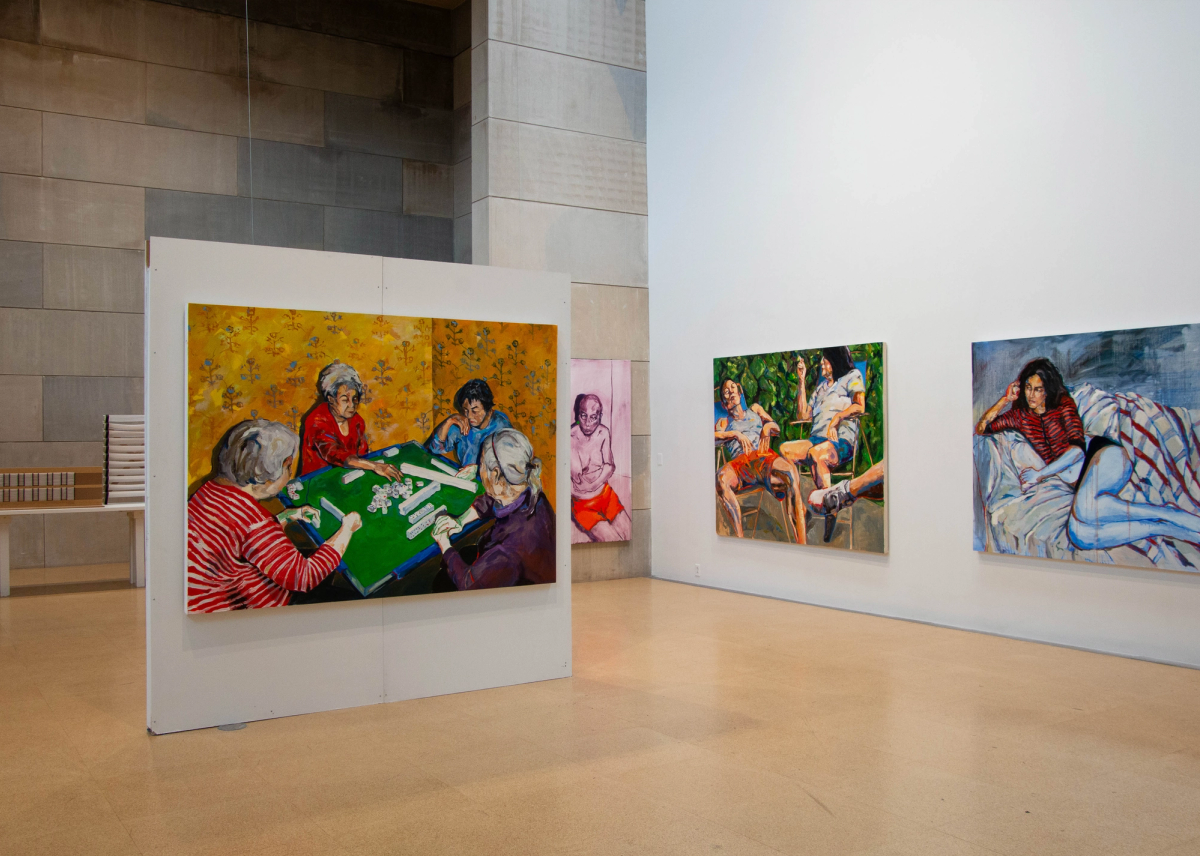
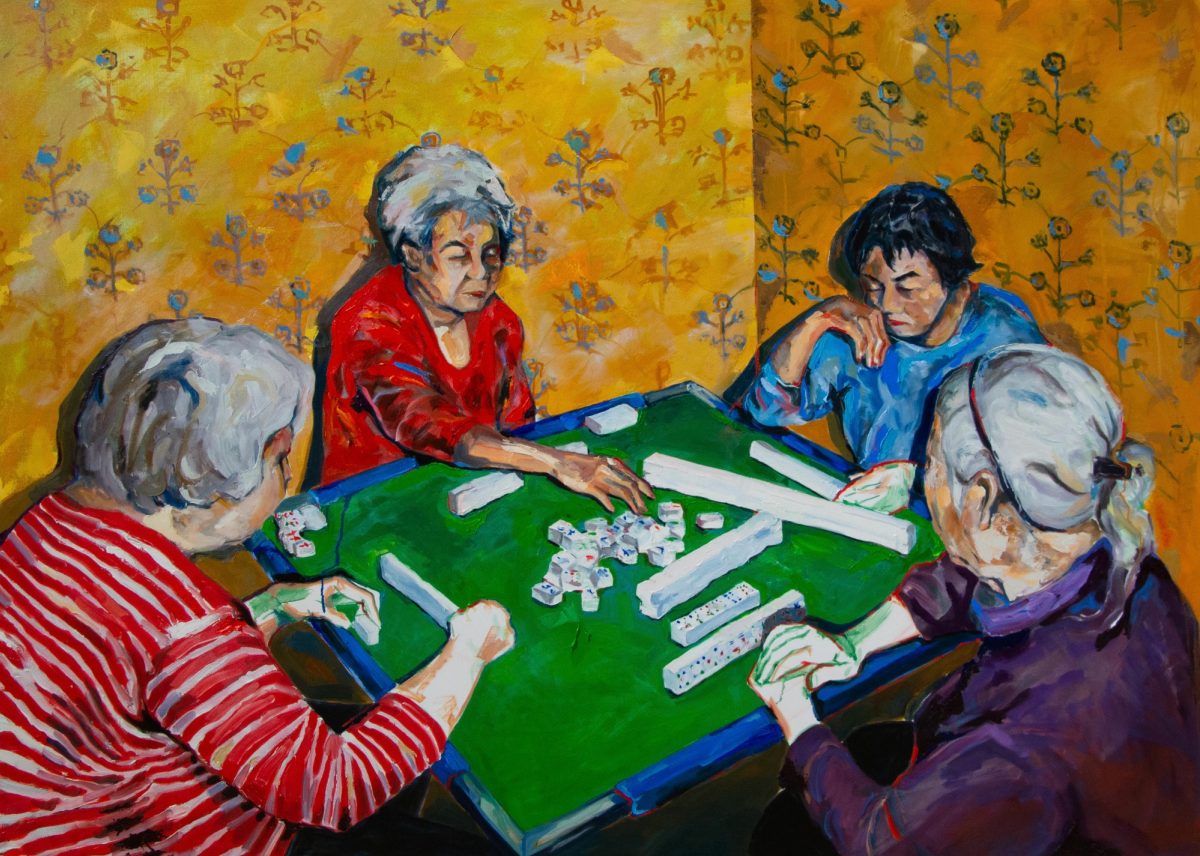
Left: Installation view, A Demonstration of Care, Zilkha Gallery, Middletown, Connecticut, 2024
Right: Dylan Ng, Paw Paw and Friends, 2024, oil on canvas
Your works swing dramatically in scale, from a 10x12 inch untitled piece to a 68x91 inch canvas. Does the size of the work change your relationship to the body you're painting?
Oh, definitely. I'm just getting somewhat comfortable painting smaller. Throughout school I was painting as large as I could go because I was given so much space and time to paint. In New York, I have way less of both, my studio is quite small and I work full time at an art gallery. Painting small was less of a decision and more of a solution. I've come to really enjoy it, though. I do treat painting small and large almost as two different mediums, though. It engages the body and mind very differently, the problem sets are completely different, the way I hold my brush and mix my paint is different. I am looking very differently while I paint. In smaller paintings, each stroke matters a lot more. The economy of marks is smaller, the colors matter more. The physicality of the paint becomes more important. I'm more in my head than in my body.
In larger works, my body moves a lot more, constantly stepping backwards to see the whole image. Strokes become more gestural, there's more immediacy. I have to be more patient with larger works, the surface of the painting takes time to develop. Honestly, working smaller recently has made me forget how to paint larger, or is making me rethink the way I paint on larger surfaces.
It also changes the way people view my work. Both small and large engage the body very differently. There is an intimate and vulnerable closeness with a small painting. Your body naturally moves forward when looking at a small piece, you can see every stroke, every brush hair stuck in the paint. Larger paintings will always be impressive. The 1:1 ratio of a painted body to your own will always make you physically react. The surfaces of my larger works are often more terpenoid and alchemic, which has a different quality to it than my smaller works.
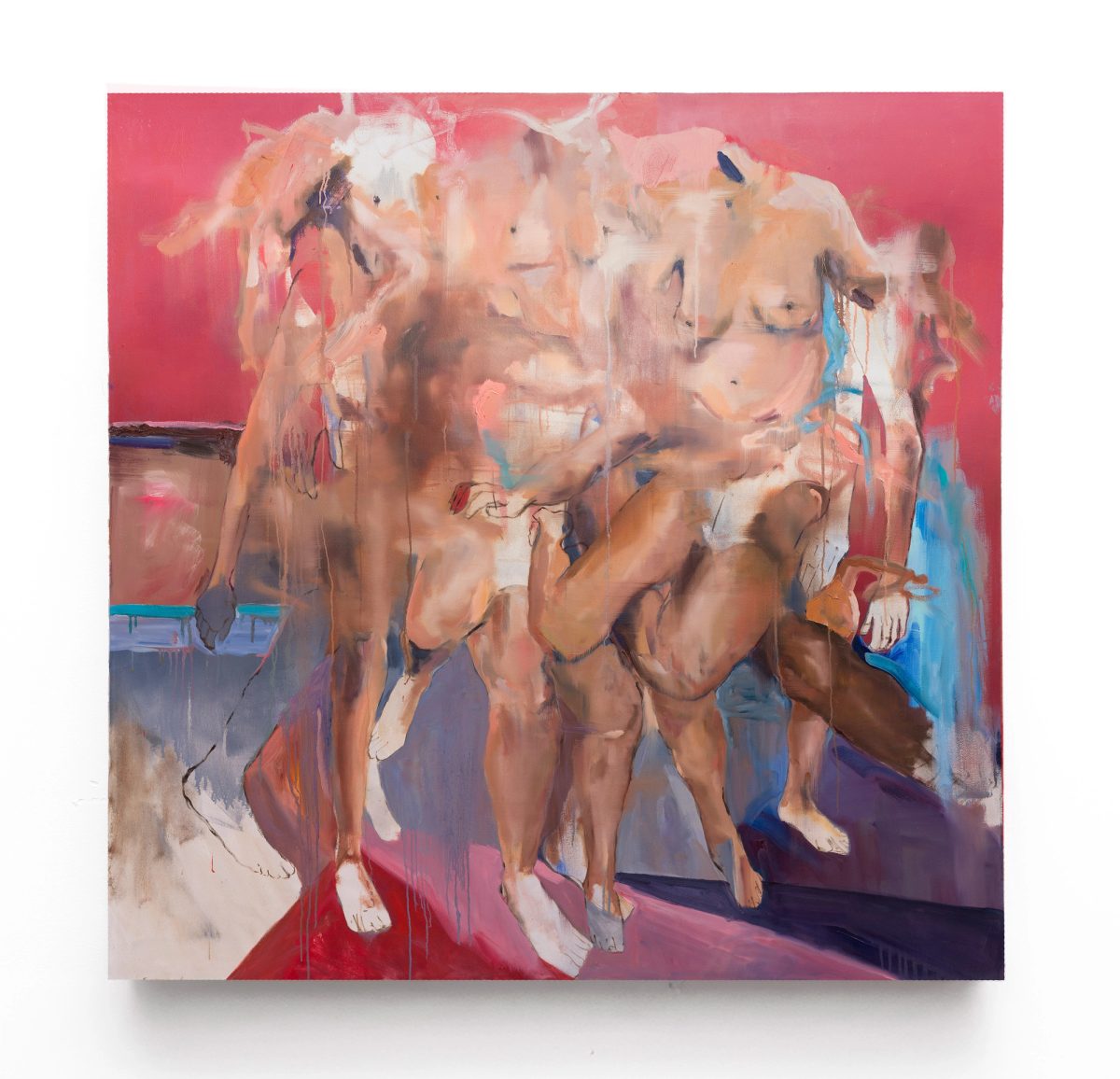
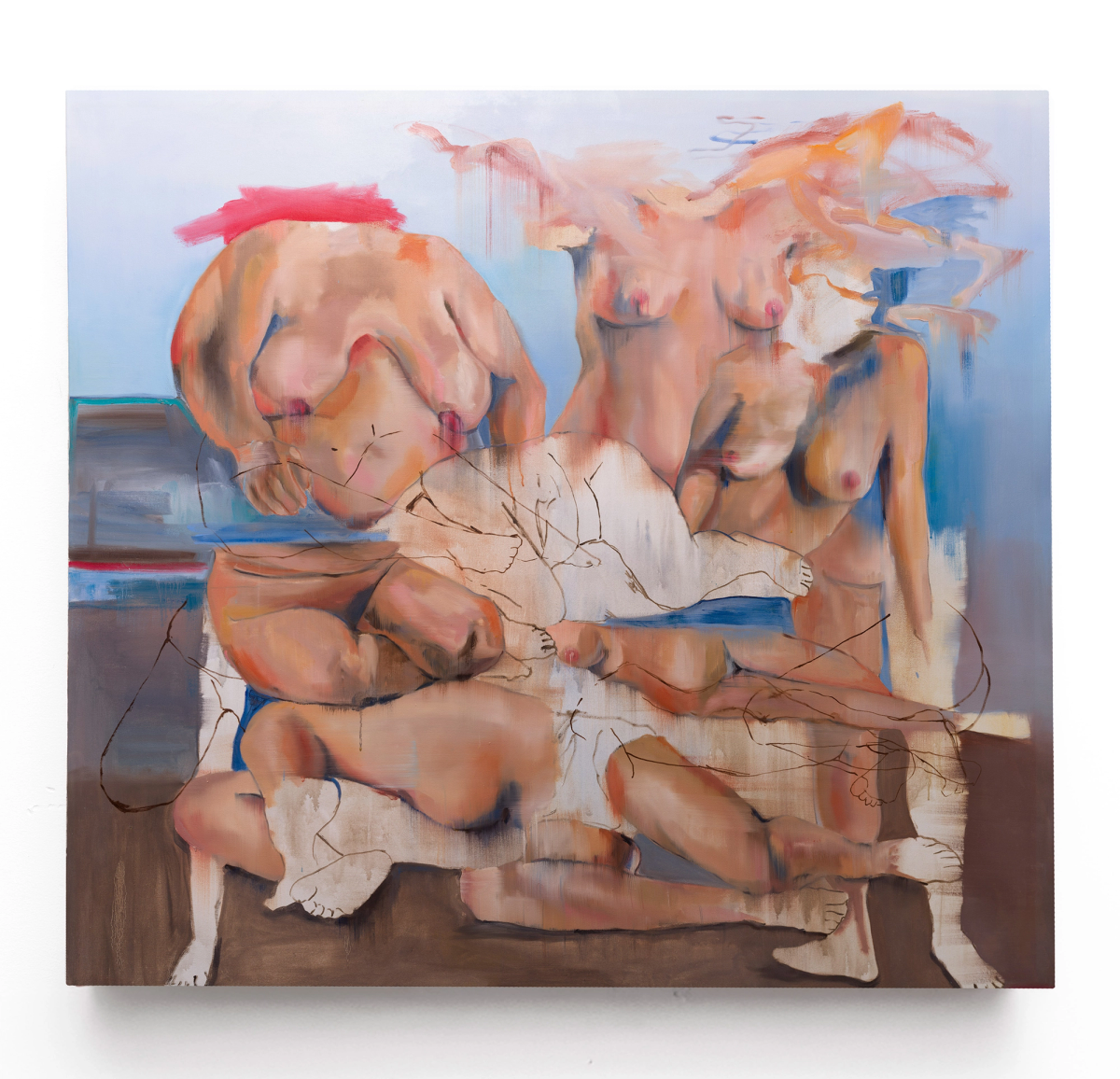
Left: Dylan Ng, Untitled (Get Lost), 2025, oil on canvas
Right: Dylan Ng, Untitled (Return), 2025, oil on canvas
"The act of painting will always come before the image."
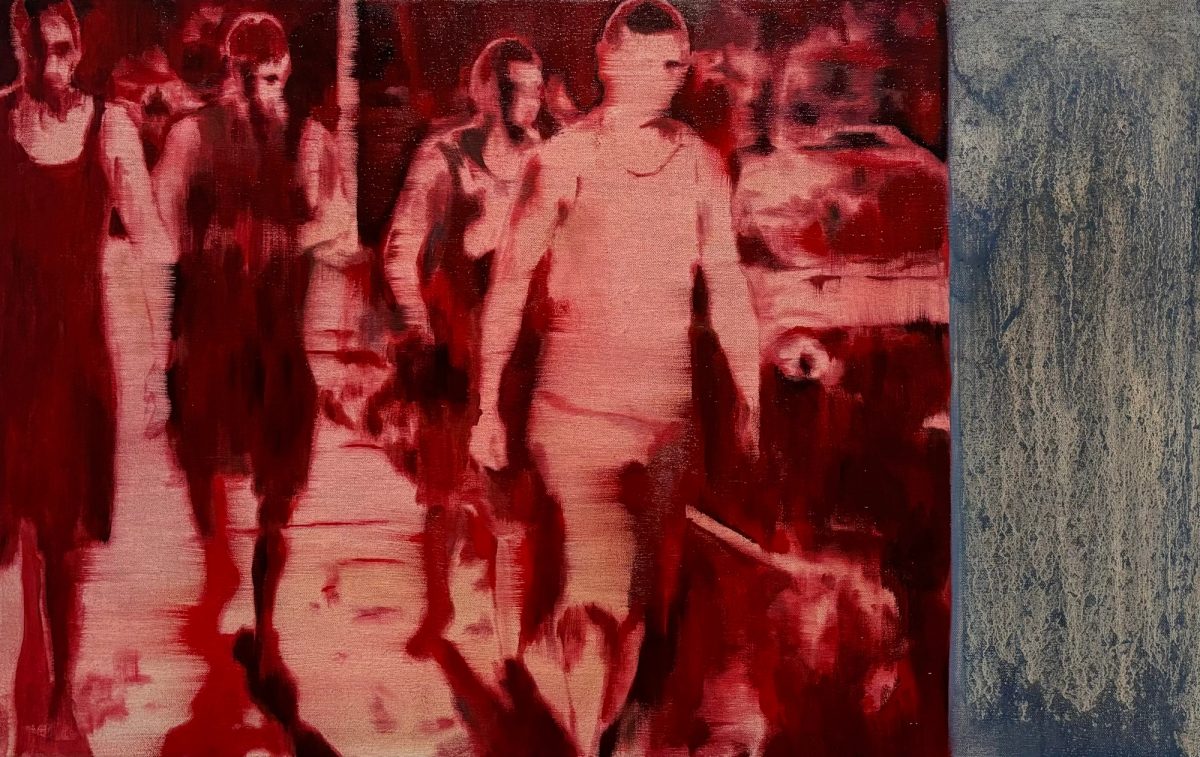
Dylan Ng, On the Prowl, 2026, oil on canvas
You wrote of one work in progress, "Less is more? (Will probably keep working on this)." How do you know when a painting is finished?
Haha! I never do. The hardest part of a painting is knowing when to stop. One stroke can completely change how the painting reads. Knowing when to call it quits is a skill in itself. I'm still figuring it out.
Your figures are often in groups: crowds, clusters, bodies pressed together. What interests you about proximity rather than solitude?
I think I first started doing it as a tactic to not get so bored with a painting. With multiple subjects in a composition, there is always a place to develop a painting further and a place to come back to. The hierarchy of the piece is easier to establish with multiple figures.
I think I also used it as a way to abstract my work further. I was questioning how to develop space in a painting without resolving the background to read as a physical space. I'm not really interested in space as a place where the body is necessary. I'm more interested in how space is created when bodies come together. I'm interested in these moments of collision and crashing. I think that idea comes out in some paintings more than others, but these moments where bodies and people come together are fascinating. Where does one person end and another continue? In my thesis it was about the subject, the individual as a sole person, now it's less about the individuality of the person and more about the creation of the person. The person I am, the person you are, is a result of the people around you.
I have also been going out to dance a lot, and literally nothing matters on the dance floor besides your body and the way you move in it. Bodies coming together in that moment to experience something together. Under the lights, bodies become unmeshed and undecipherable. How blessed I feel dancing, knowing I can move my body in any way I want. It's been informing a lot of my work, especially my larger work. It goes hand in hand, as larger works are a lot more physically demanding, the reactions and the gestures are almost like dancing in itself.
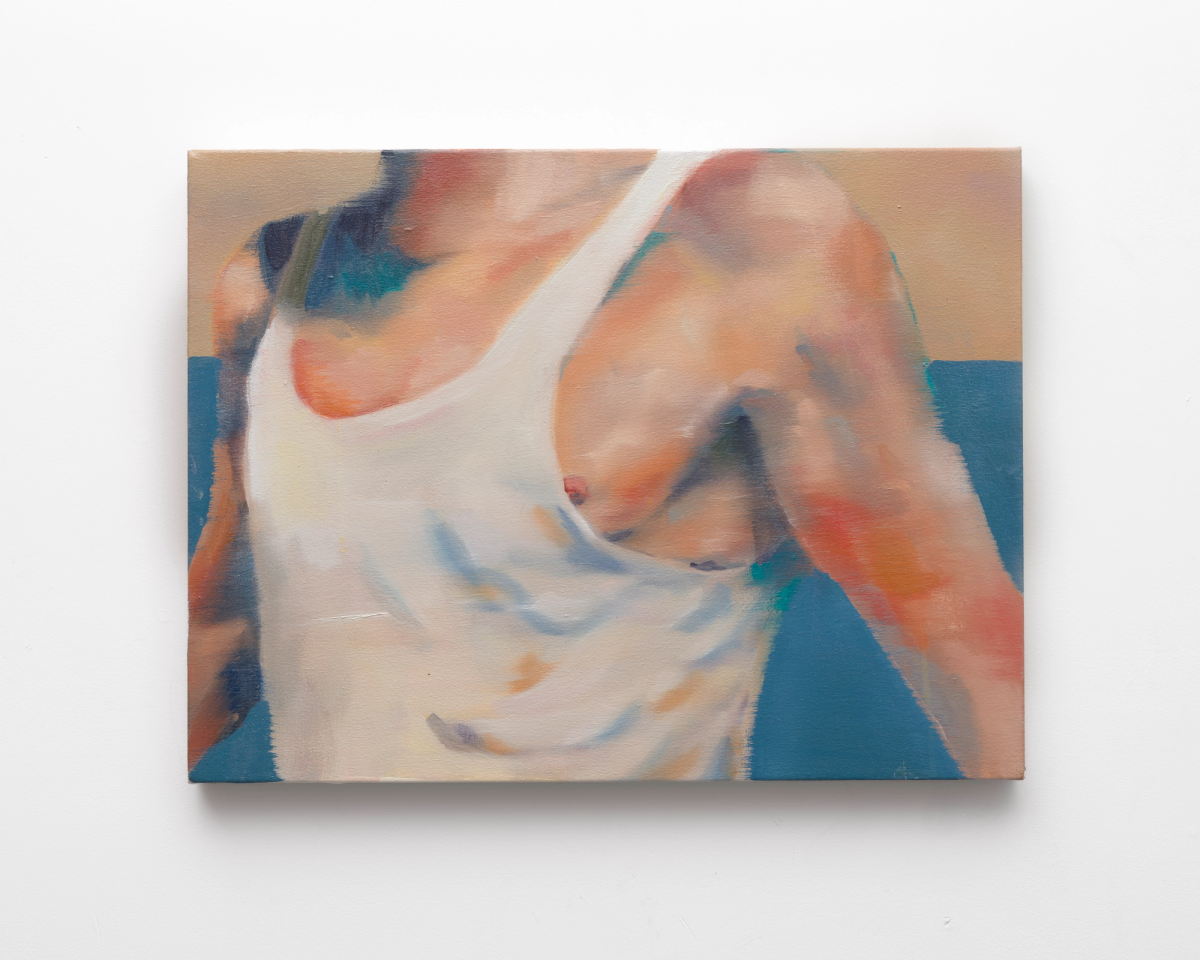
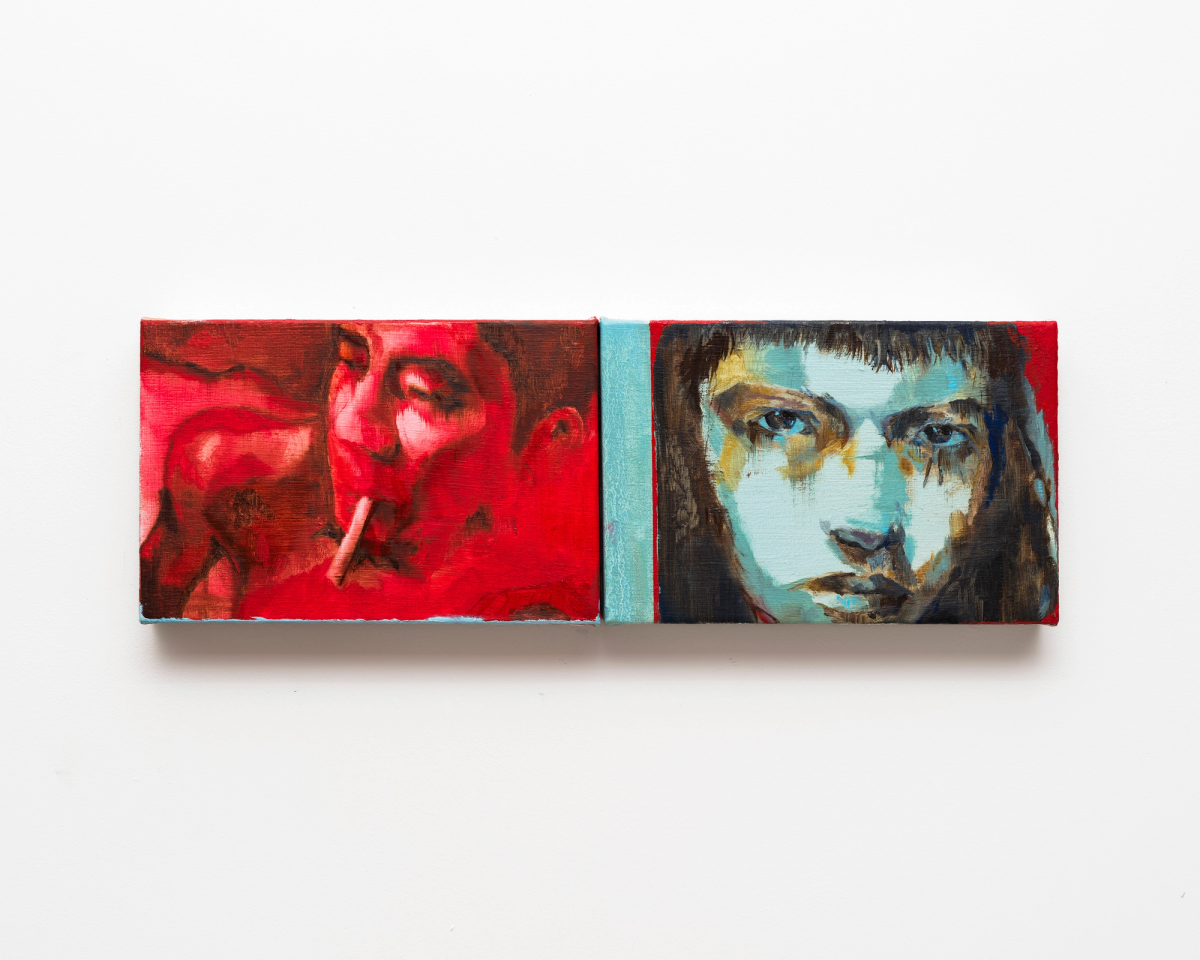
Left: Dylan Ng, Sweet Sweat, 2025, oil on canvas
Right: Dylan Ng, Untitled (Red), 2026, oil on canvas; Untitled (Blue), 2026, oil on canvas
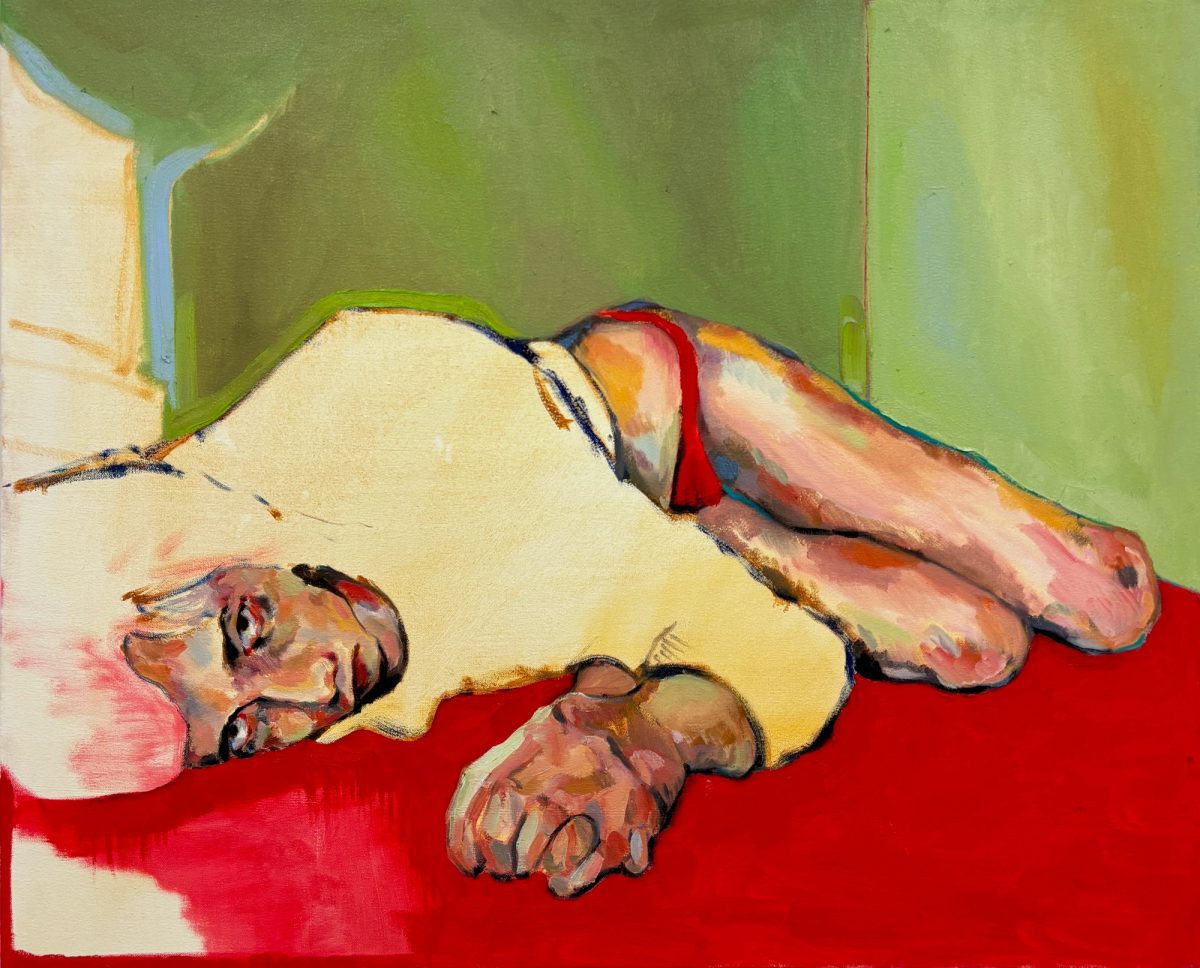
Dylan Ng, It's Drawn Out, 2025, oil on canvas
You work exclusively in oil on canvas, from what's visible. Is that a commitment, or just where you are right now?
Right now I only paint in oils. I don't really show my sketches or my acrylic studies, it's not really what I am interested in. The sketches and studies are more just tools to get the result I want, or to test different color relations and to practice a certain gesture or mark that I can't seem to get right.
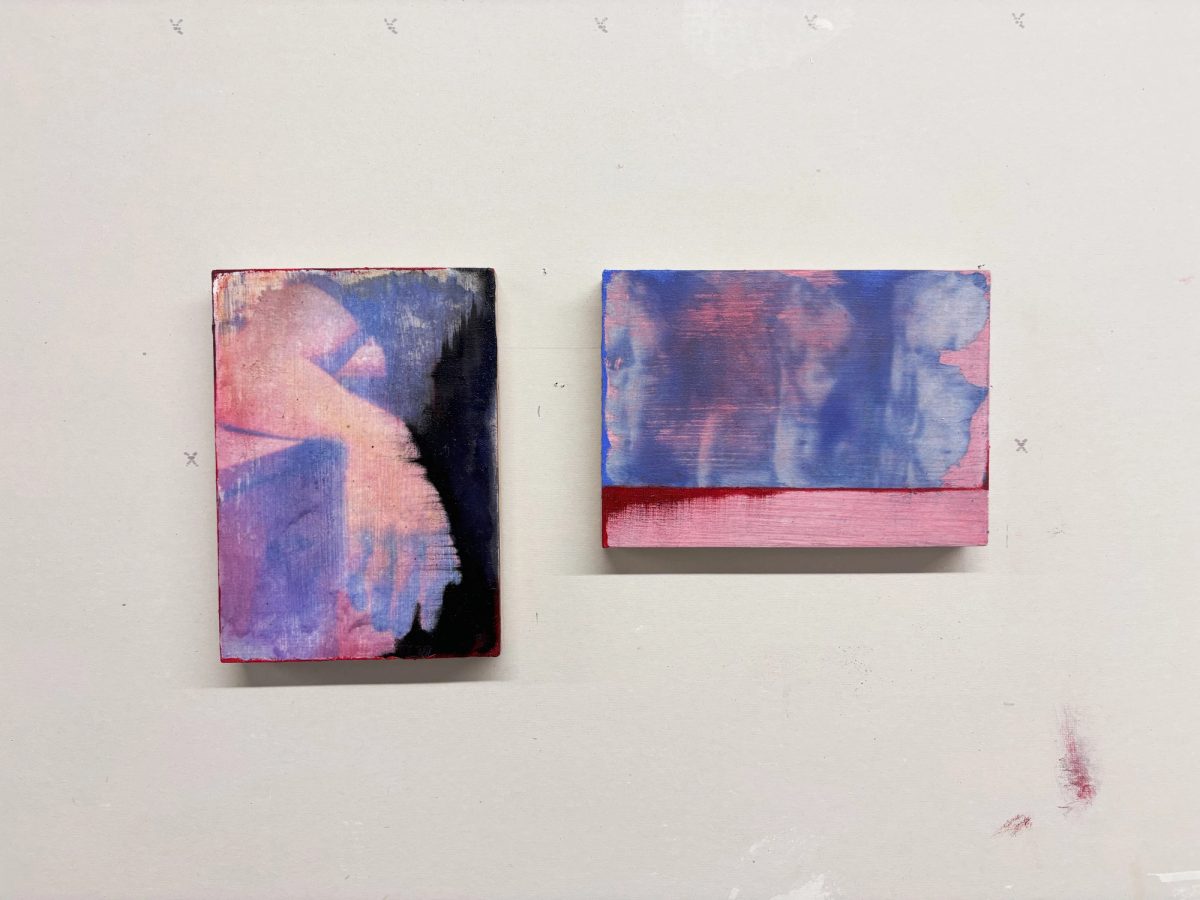
Perhaps I'm scared to experiment more these days. Time feels very valuable these days. I only have a certain amount of time in the studio because of work and other responsibilities I have. The amount of freedom I have to play and experiment feels limited, even though I know it is not. Right now, I'm at a place where I like to stick to what I know. Also, what I already have the materials for. I've been starting to get into image transfers and interweaving that within paintings. I will keep you posted on how it turns out!
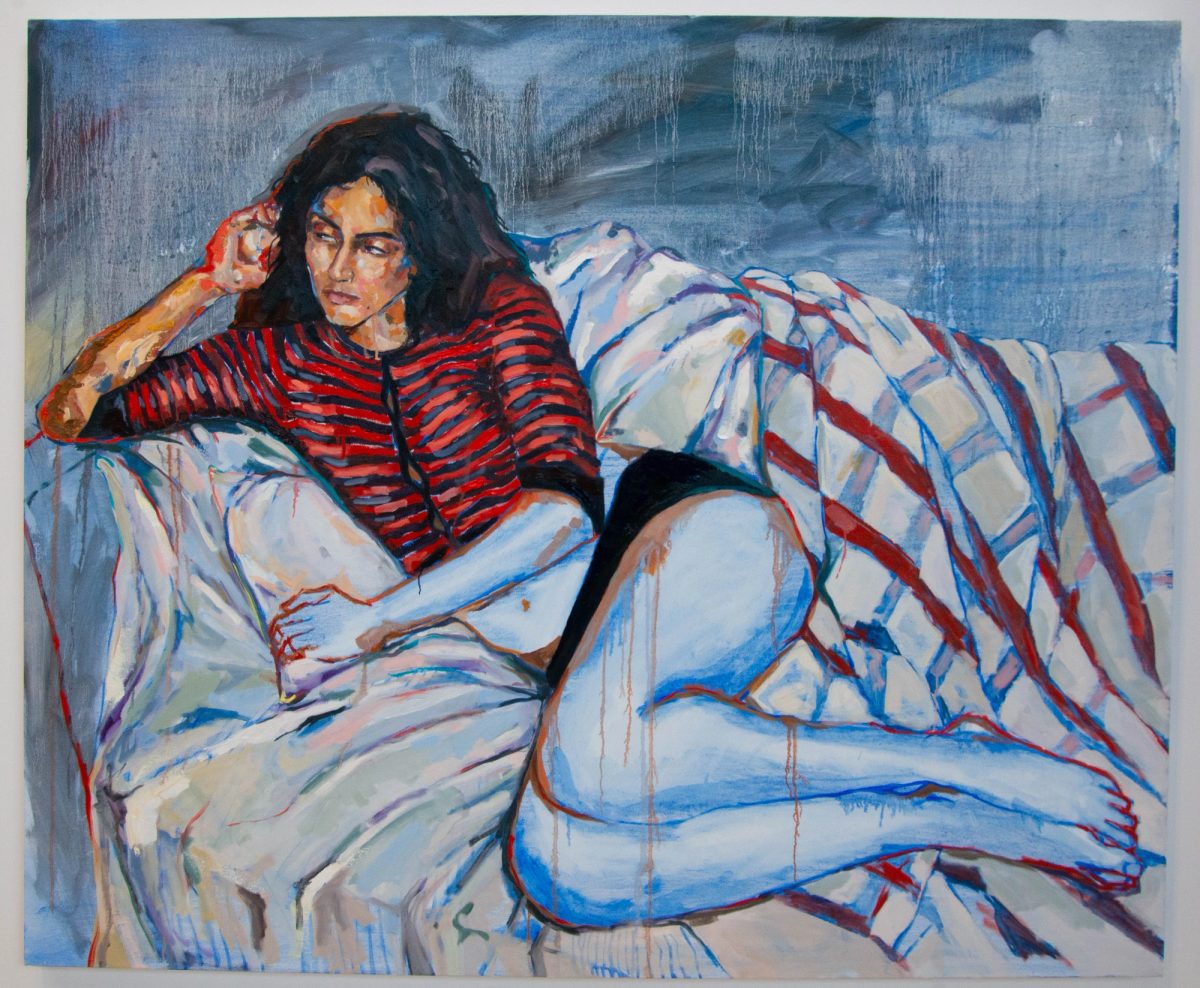
Left: Dylan Ng, Noor, 2024, oil on canvas
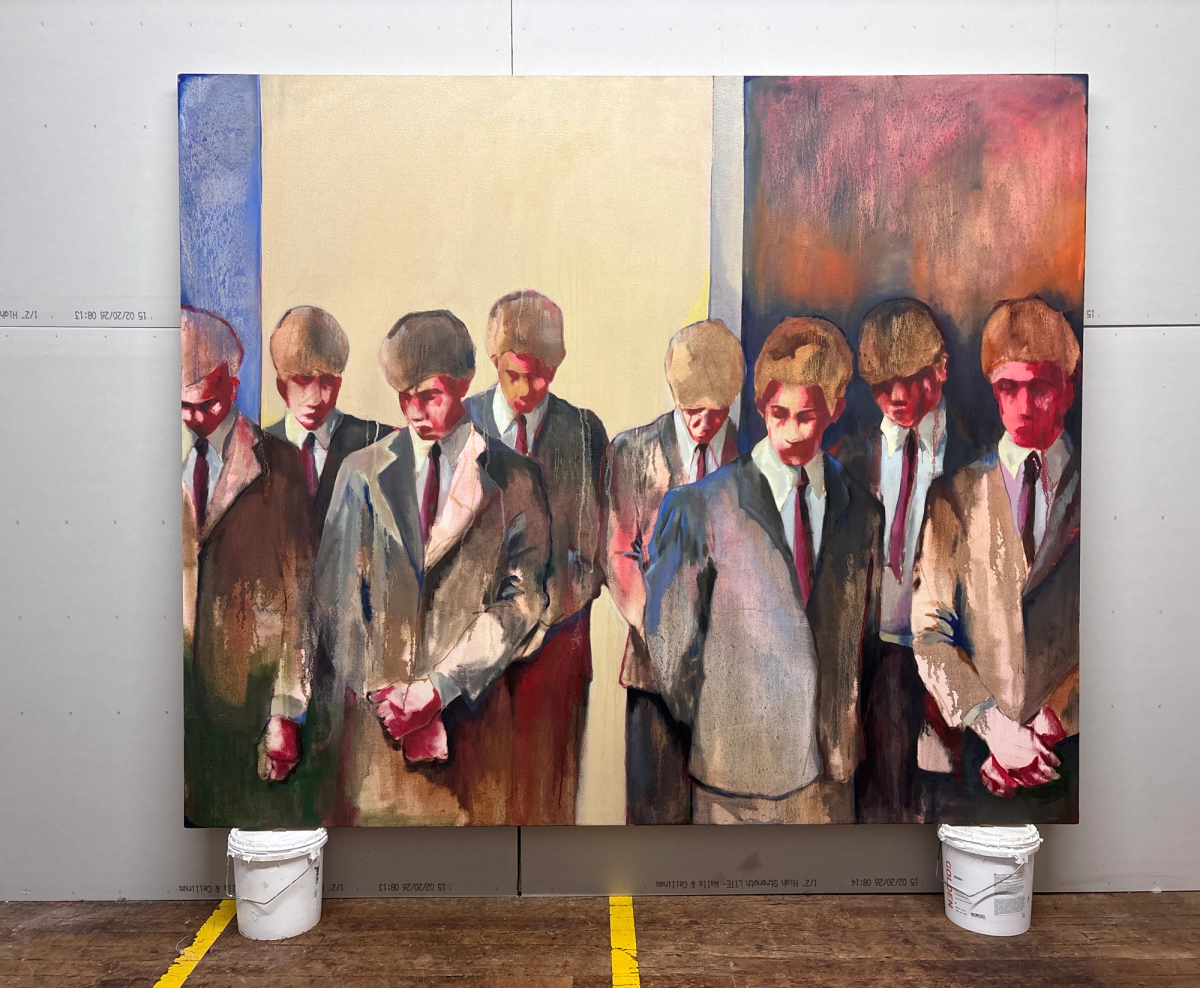
Right: Dylan Ng, Fit for Battle, 2026, oil on canvas
"Where does one person end and another continue? ... The person I am, the person you are, is a result of the people around you."
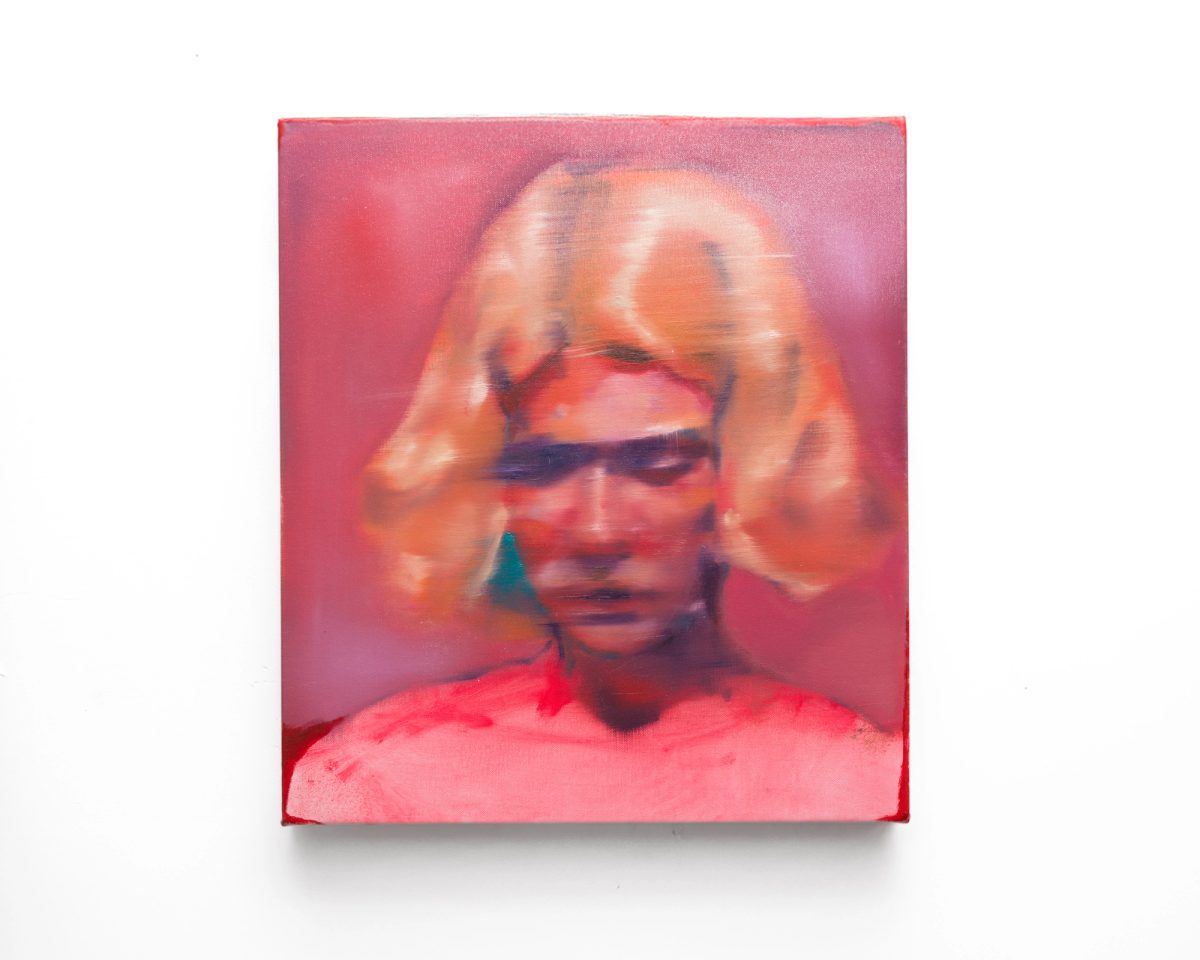
Dylan Ng, Little Red, 2025, oil on canvas
You're based in Brooklyn, showing in Brooklyn. How much does the specific social world you're inside, the people you know, the places you go, feed directly into the work?
I grew up in New York City. The only time I haven't lived here is when I was in college for four years, and I moved back right after I graduated. It has definitely shaped my art and the people I surround myself with. I think after I graduated, I hit this wall where I didn't really know what I wanted to paint (I still feel this quite often). I realized after a while that I not only had to develop my studio practice but develop my person more. I think NYC really has shaped who I am and how I approach life, and it definitely affects the way I approach my studio practice. I've met people who believe in my work when I didn't believe in it myself, I've met people who have pushed me and my work further, I've met people who make me a better person.
You've had two solo shows, a thesis exhibition, and multiple group shows, all within two years of graduating. The work keeps getting bigger and looser. Where is all of this going? What's next?
Haha, I have no idea where it is going! I'm just trying to still have fun with it and not put pressure on myself. My only goals are to keep exploring, keep pushing myself, and keep finding new ways to create.
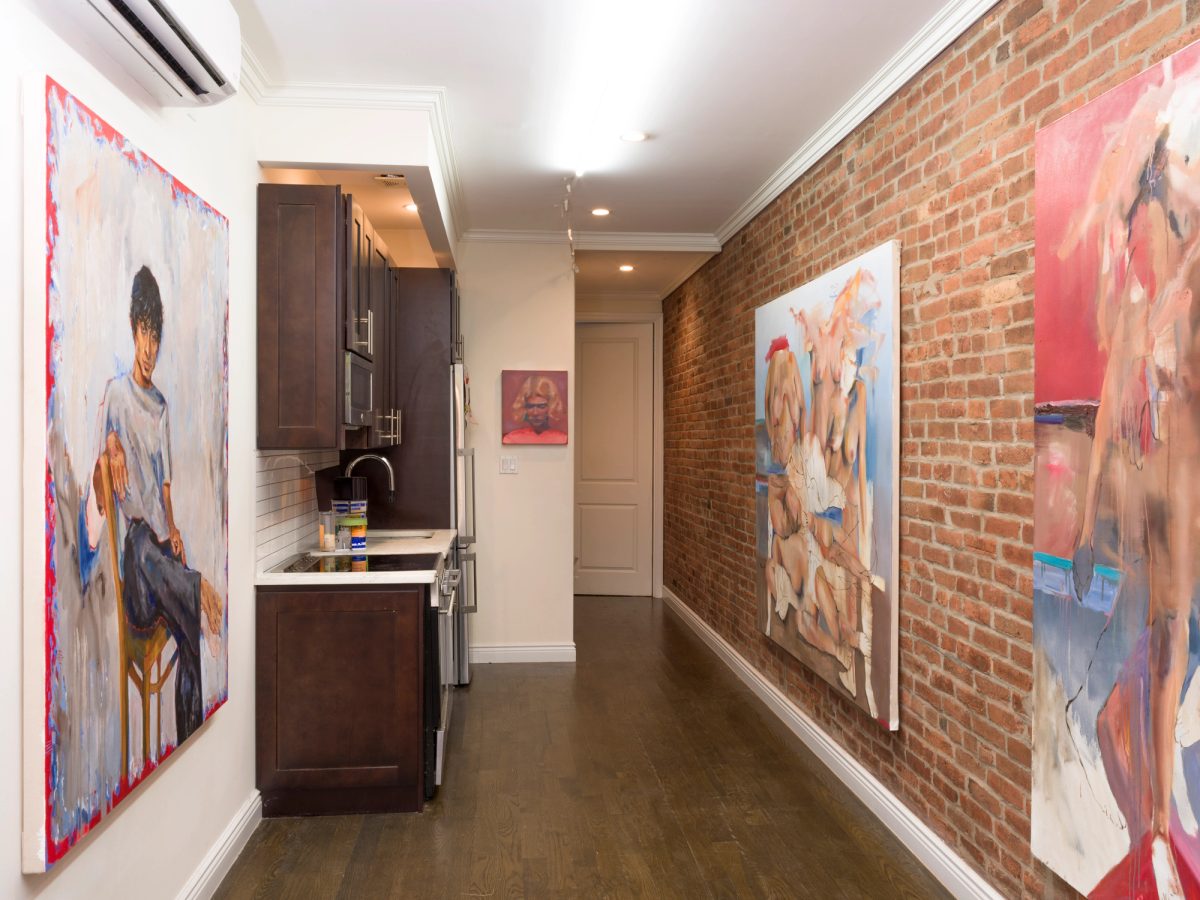
Left: Installation view, Dancing on My Own, KB, Brooklyn, 2025
Right: Dylan Ng, Untitled, 2026, ink transfer and oil paint on wood panel
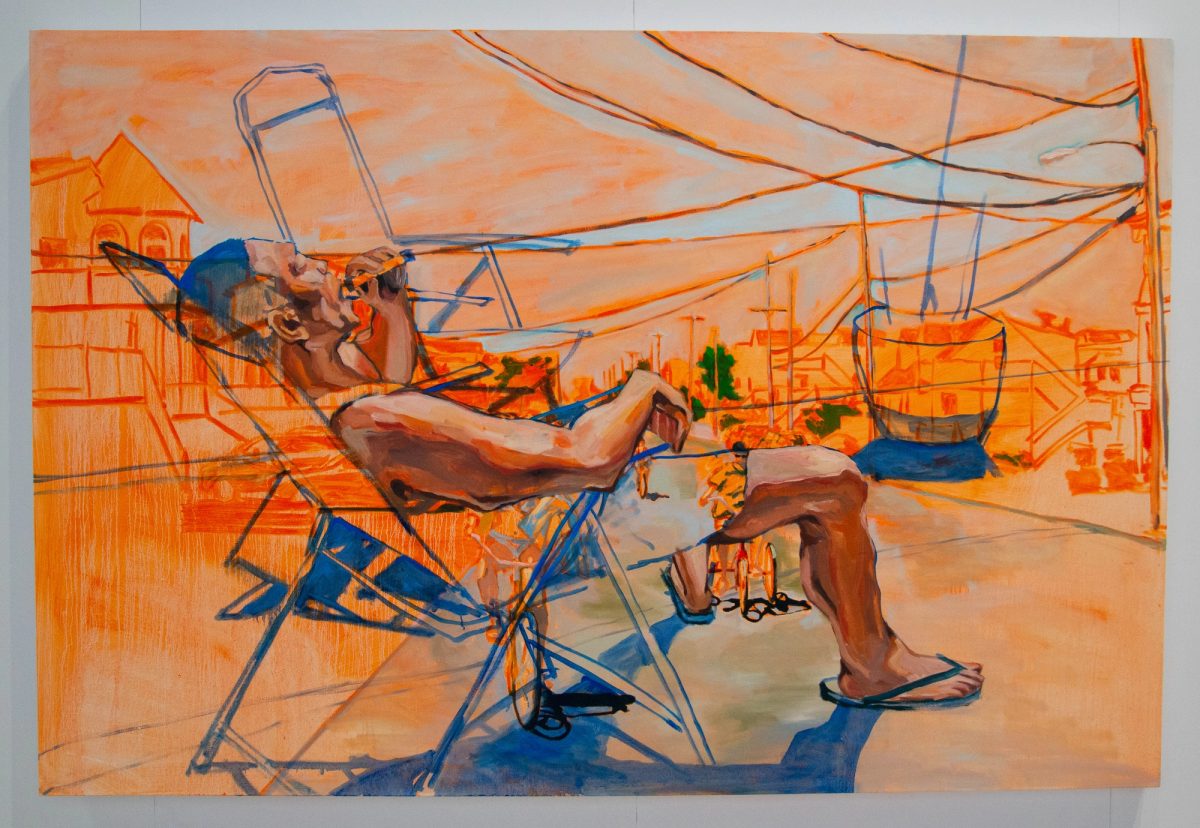
Cover Image: Dylan Ng, Uncle Joe, 2024, oil on canvas