TRY FINDING A DOG IN HERE: IN CONVERSATION WITH ALEX SEE
CONVERSATION BY SELIN KIR
CO-FOUNDER, CURATOR
23 AUGUST 2026 — BERLIN, GERMANY
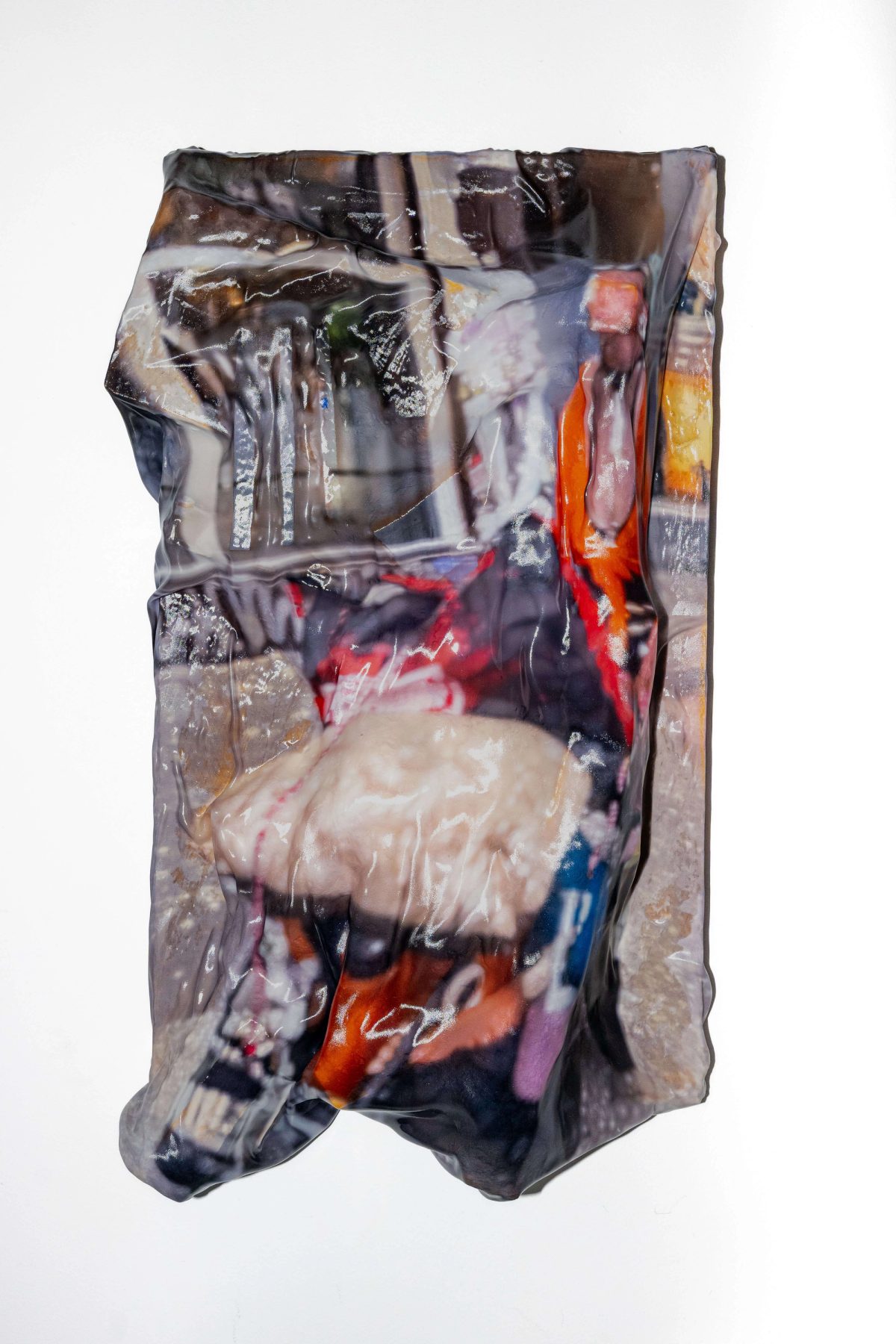
Alex See makes objects out of things that were never supposed to have weight. Trained as a graphic and interface designer, he grew interested in the opposite of what the job asked for: how far an image could be pushed before it stopped working, and whether it got more interesting once it did. His answer involves custom shaders, pixel sorting, fabric, fibrefill, and a great deal of resin, a photograph goes in, something closer to an organism comes out, the body or face that gave it its title still technically in there, if you're willing to look for it. The work stays close to the infrastructures it draws from: he pulls imagery straight from Copernicus satellites for his Membranes series, treating planetary-scale surveillance as a material source no different from a found photograph or a shader glitch, less a statement on technology than genuine curiosity about what happens when something this ambient and disembodied is made to hold still, take up space, and resist being copied.
You describe your material vocabulary as image bodies: objects made from photographic, found, and instrument-mediated imagery. Before anything else: how did you personally end up here, working between a camera and a vat of resin? What was the path?
I think it all started with a computer. I grew up with it, spending most of my time on early imageboards and forums, collecting images, and later coding, photographing, and working in Photoshop. Somehow I found it fascinating that an image on a computer, like most other files, is infinitely reproducible and ephemeral. Later I spent years working as a graphic and interface designer, working with images most of the time.
As a designer expected to make 'beautiful' images which must sell something, I became interested in images that are off, and I had an urge to see how far an image can be pushed. So I started exploring alternative editing techniques: datamoshing, glitch, shaders, and other weird forms of image manipulation. After some time I got to a method I liked, a combination of pixel sorting and shaders that leaves an image barely recognisable and gives it a dream or memory-like feel.
But it was still an ephemeral set of pixels, and I started looking for a way to make an image physical: something produced, but not infinitely copyable. Also, I was honestly tired of the digital screen. From there, my choice of material was rather practical. I needed something that isn't two-dimensional but 3D-like, so that the processed image and the form could play against each other, and that was fabric. Resin came after a lot of trial and error; I was looking for something that would let me solidify the object and control what happens on the surface. I can keep it glossy and digital against the shape and the image, or make it murky.
I started my practice four years ago, and have been making these objects for the last two.
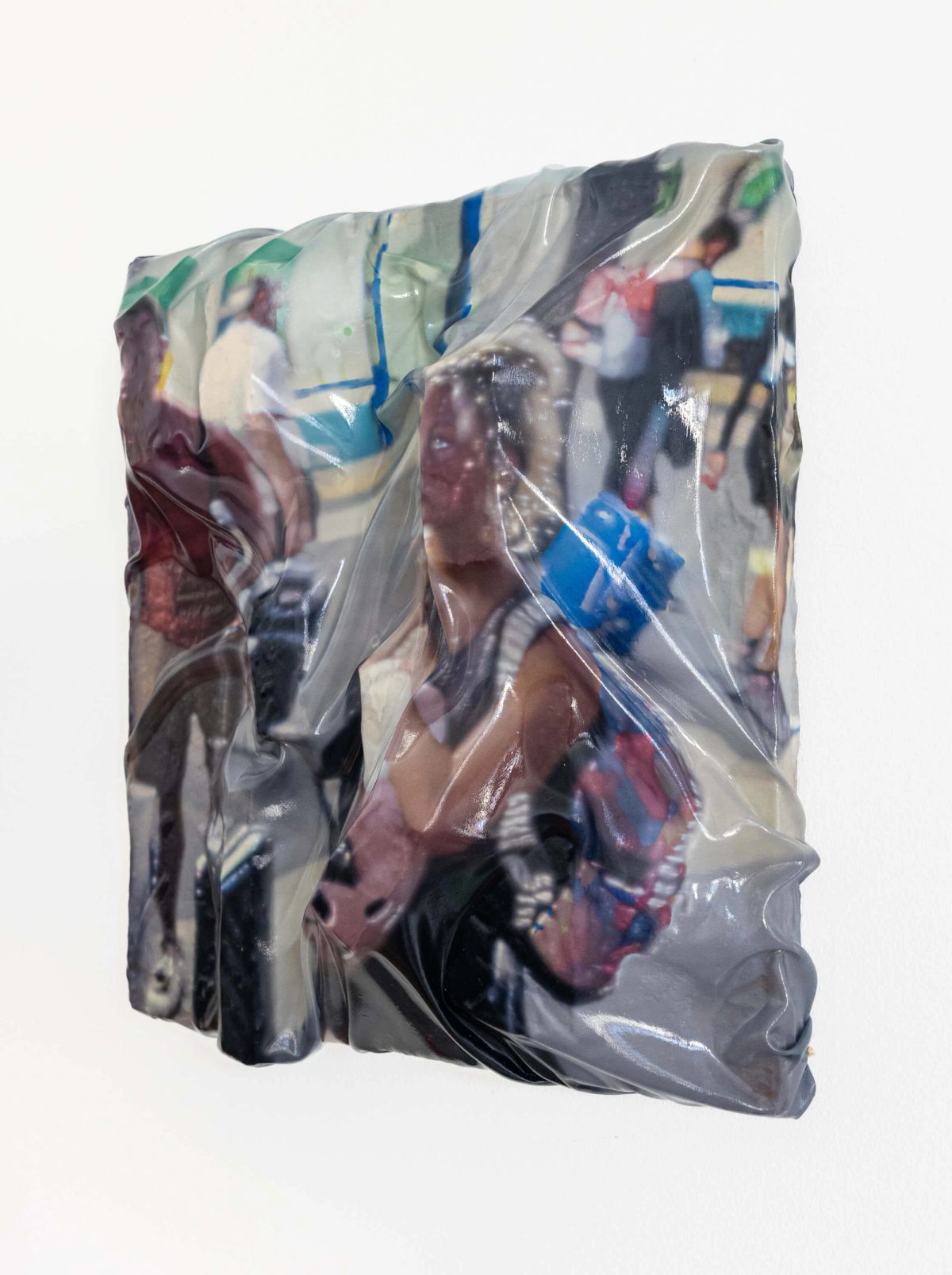
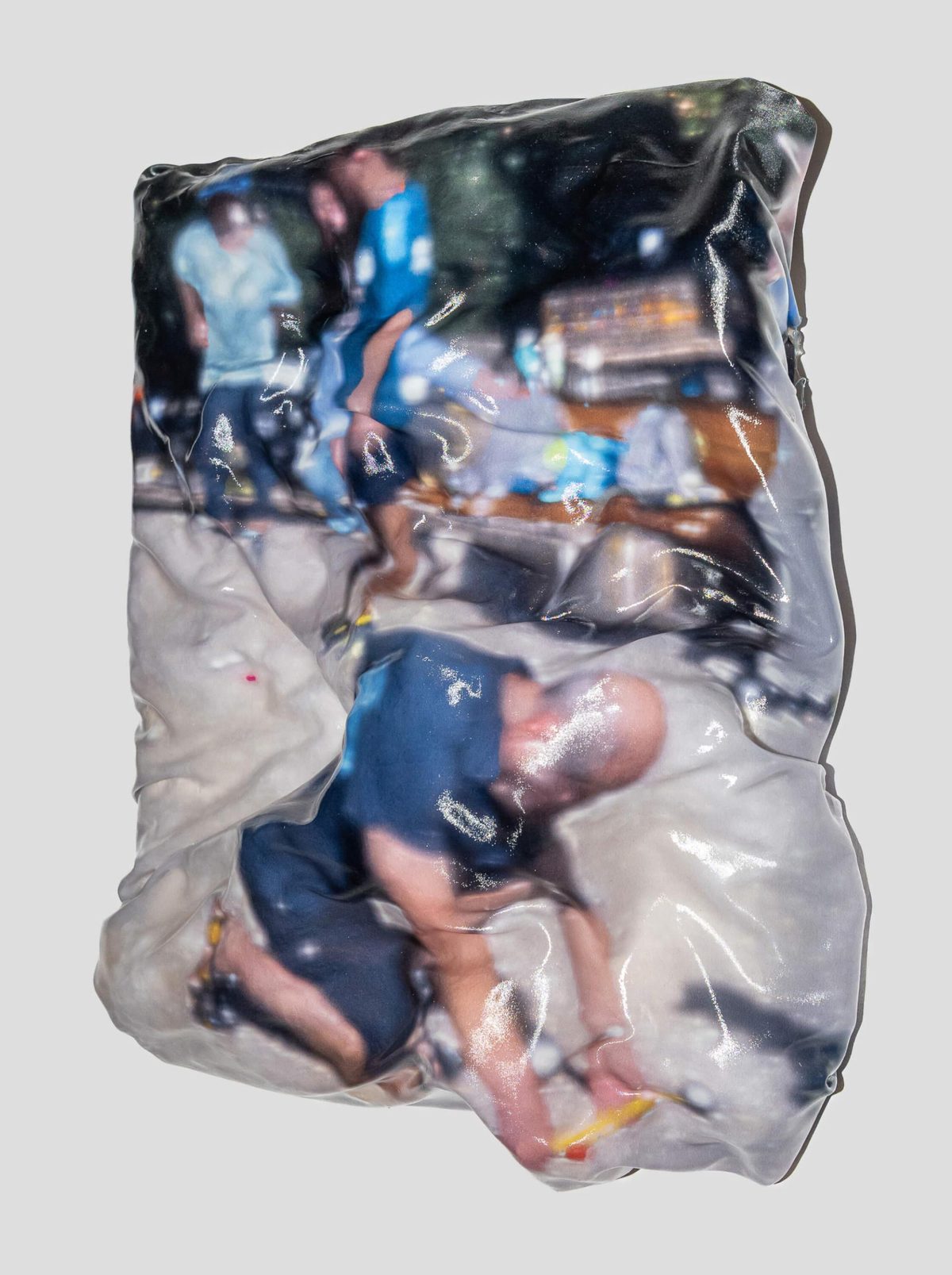
Left: Alex See, Traveller, 2026. Textile, resin, fibrefill, plaster, 37 × 39.5 × 12 cm
Right: Alex See, Player, 2026. Textile, resin, fibrefill
Your process involves printing an image onto fabric and then physically manipulating it: folding, crushing, and casting in resin before it sets. At what point in that process does the piece stop being "your" decision and start being the material's? Is there a moment you let go of control?
I love the material resistance. Fabric is super fluid and flowy, so it suggests the shape. In some works I love exploring exactly that. My spatial pieces are usually made on site, around architectural features of a space. Here, gravity matters: the objects naturally flow towards the earth, and in combination with some sculpting, it creates an organic shape with inner tension, something I like a lot.
The part where I have more control happens earlier. I process my source images with custom shaders using VDMX (which is actually a VJ software, but I found it really handy even for static images). And here I can control overall recognisability, do geometry adjustments, or run it through pixel sorting algorithms to give some randomness.
So the character of my work emerges from the interplay between the already manipulated image and the material resistance that fabric gives.
You've said your work responds to "planetary-scale infrastructures that increasingly mediate perception": a phrase that could describe anything from satellite imaging to social media algorithms. What's the actual infrastructure you're thinking about when you say that, concretely?
By planetary-scale infrastructures, I mean the sum of the technological layers whose scale and logic exceed any human or national one: cloud platforms, automated capture, interfaces, algorithmic distribution, and so on. Roughly what Benjamin Bratton calls the Stack.
I respond to this in a couple of ways. Firstly, I'm just fascinated by the amount of ephemeral data made by machines for machines, processed and passed on with no one looking at it directly. Making physical objects from digital images grounds me somehow in this context. At the same time, I can use some of that data in my work. In the new series called Membranes, I'm imagining some organisms which are made of data, plastic, image, and other products of these infrastructures functioning, half alive, half constructed. In these objects, I used imagery from the Copernicus Sentinel-2 satellites, which map the Earth's surface for agriculture and monitoring, so I can use some data from these systems as well. I think I'm generally interested in the technology and how it changes the notion of life.
Another layer is that I used to work in startups and IT tech companies as a designer, and my role was, in a way, to support these infrastructures and make them more effective. Glad that I'm not there now, and I'm gaining more and more distance to reflect on that.
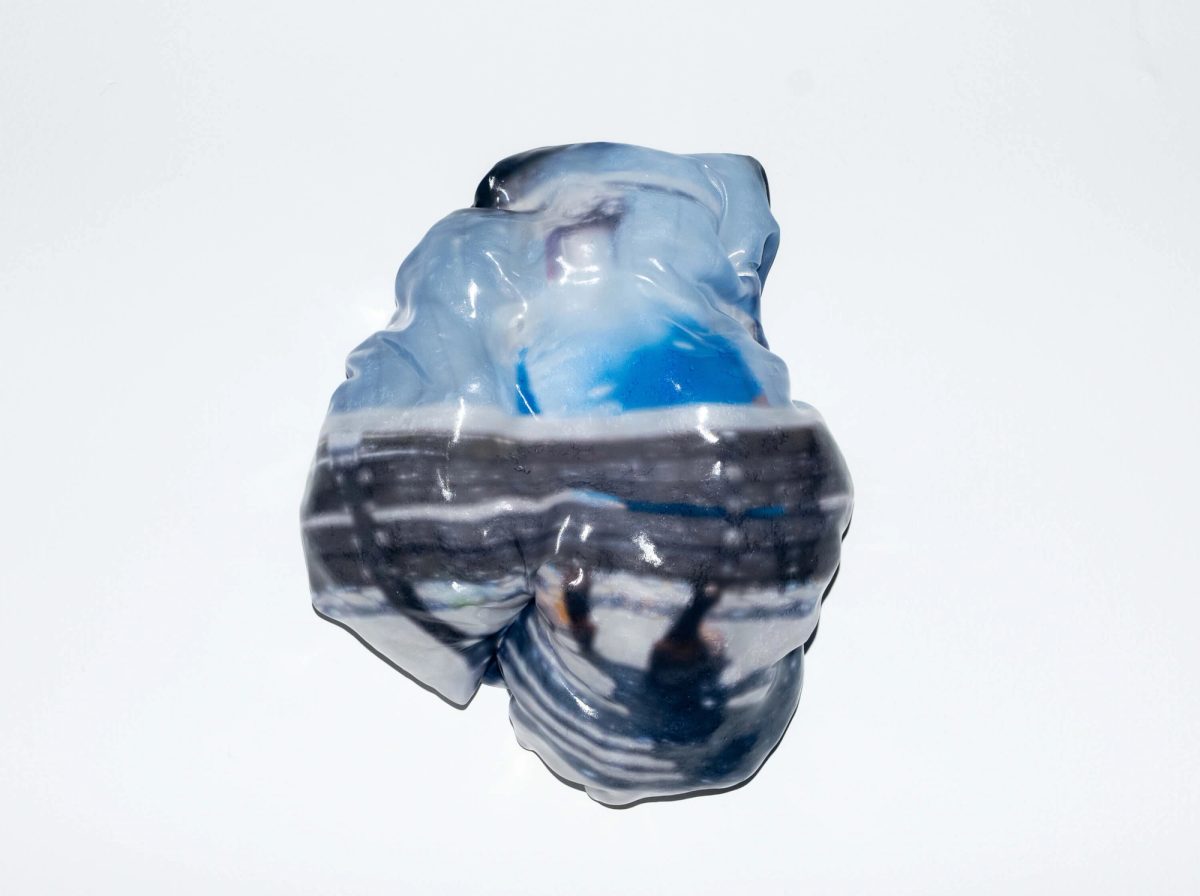
Alex See, Bench, 2025. Textile, resin, fibrefill, XPS, 29 × 35 × 12 cm
"I wanted a riddle-like thing: try finding a dog in here."
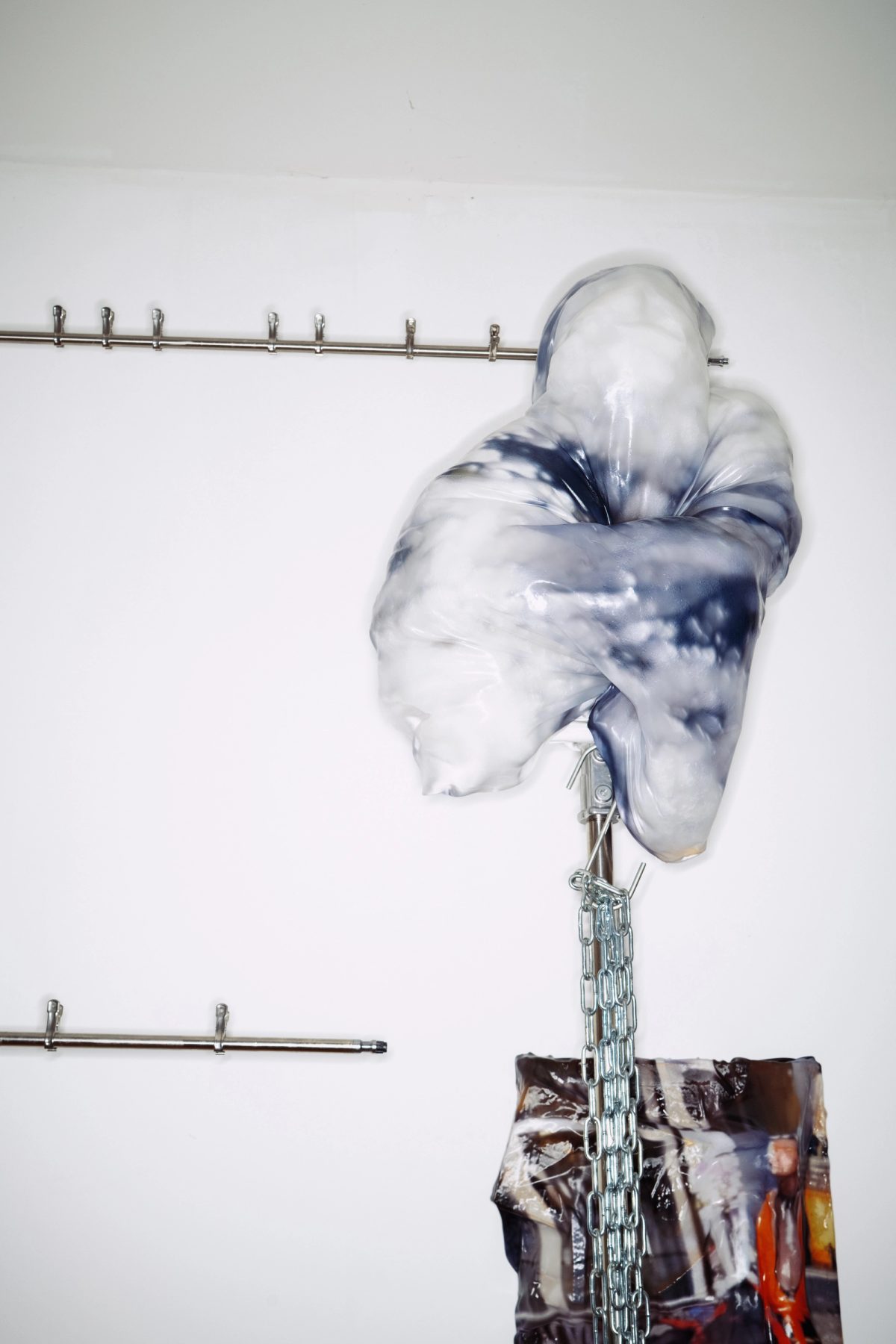
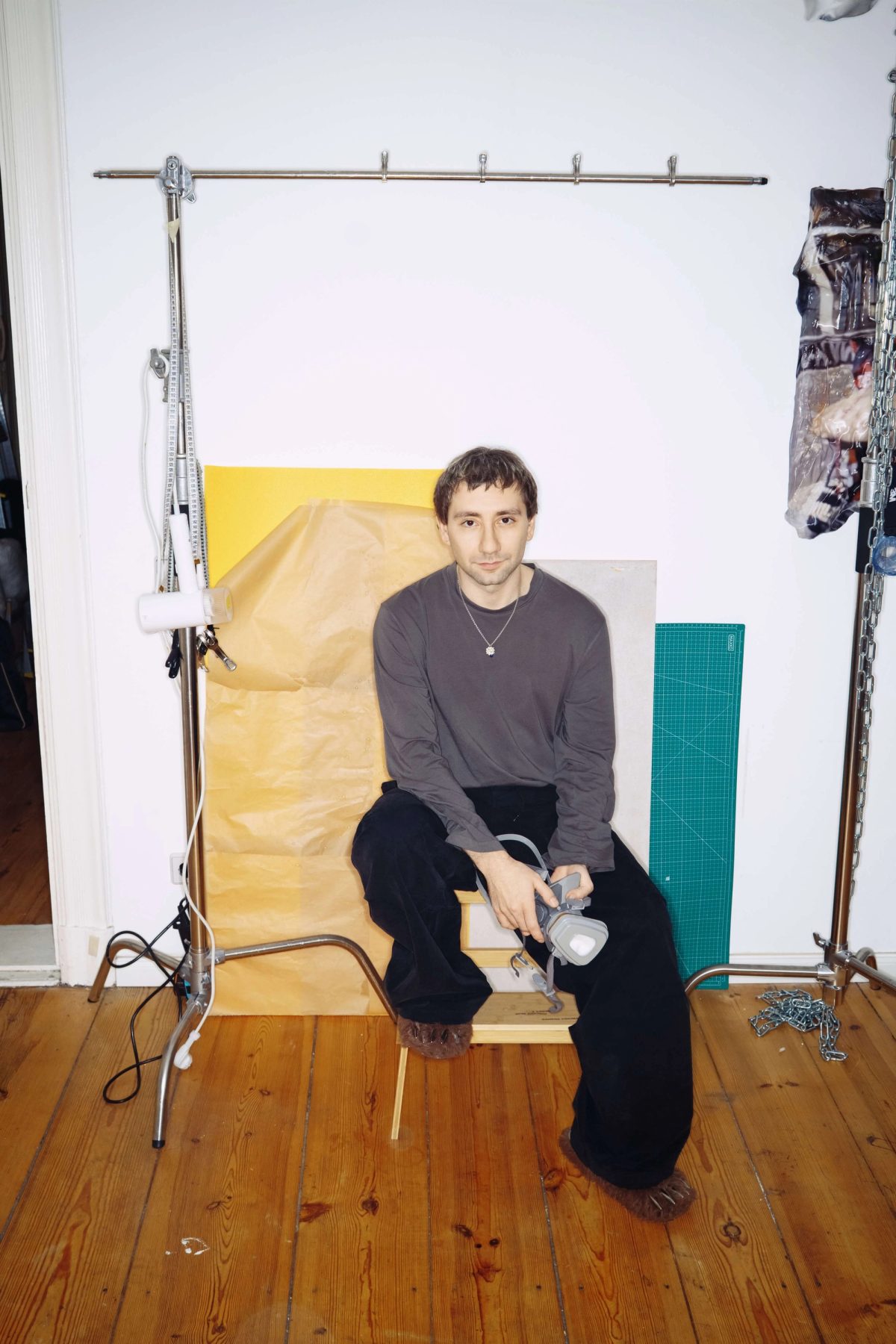
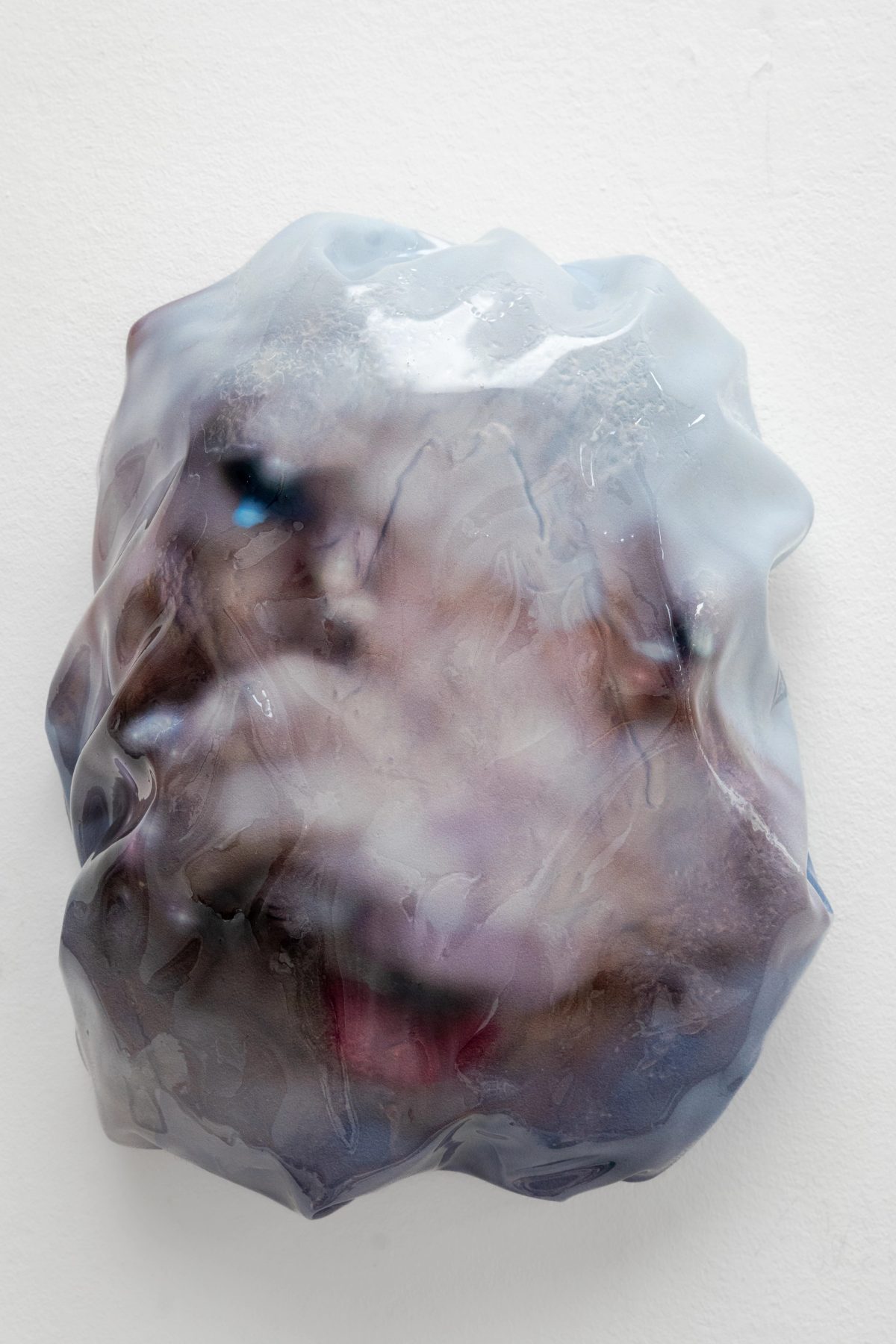
Left / Middle: Photography by Alexander Anufriev, Right: Untitled
Fibrefill is a strange material to work with. It's soft, associated with stuffed toys and cheap furniture padding, and here it's structuring what are essentially frozen photographs. Why that material specifically, rather than something harder or more "sculptural" in the traditional sense?
Fibrefill pushes the fabric from the inside, so the surface is under tension and the folds come out of pressure. I also kind of liked that it's industrial and impersonal. Now it's only necessary when I make a work that grows out of the architectural features of a space; I love the plasticity it gives. In other formats, I'm slowly moving away from it, using it only as an intermediate step in the process: afterwards, I remove it and keep the objects like shells, or use more traditional materials like plaster to fill the inside.
Some of your pieces use human figures as source imagery, but by the time resin and folding are done with them, the bodies are barely legible. Is the illegibility a byproduct of your process, or is obscuring the figure actually the point of using it in the first place?
It's the point. I use figures because a body (and a face) are the fastest things humans recognise. But the image is processed, then folded, and then coated, and it makes it resist recognition. The most successful work, to me, is the one which you could read as an image, and as a body, and as something organic, and in the next projects maybe something technological.
Making the viewer feel their own effort of recognition is essential. I want the work to oscillate between the familiar and the other, a spark of doubt about what you're actually seeing.
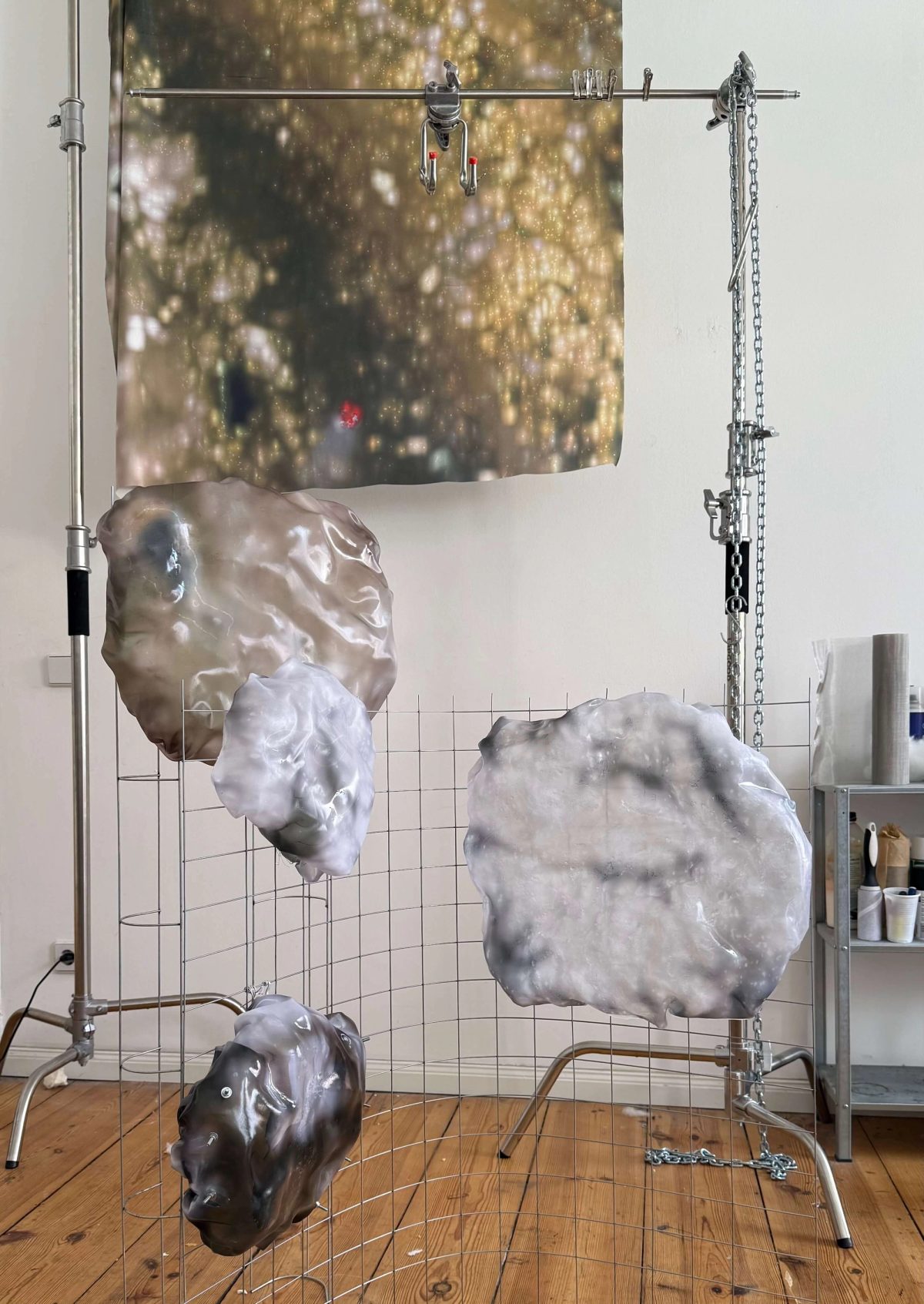
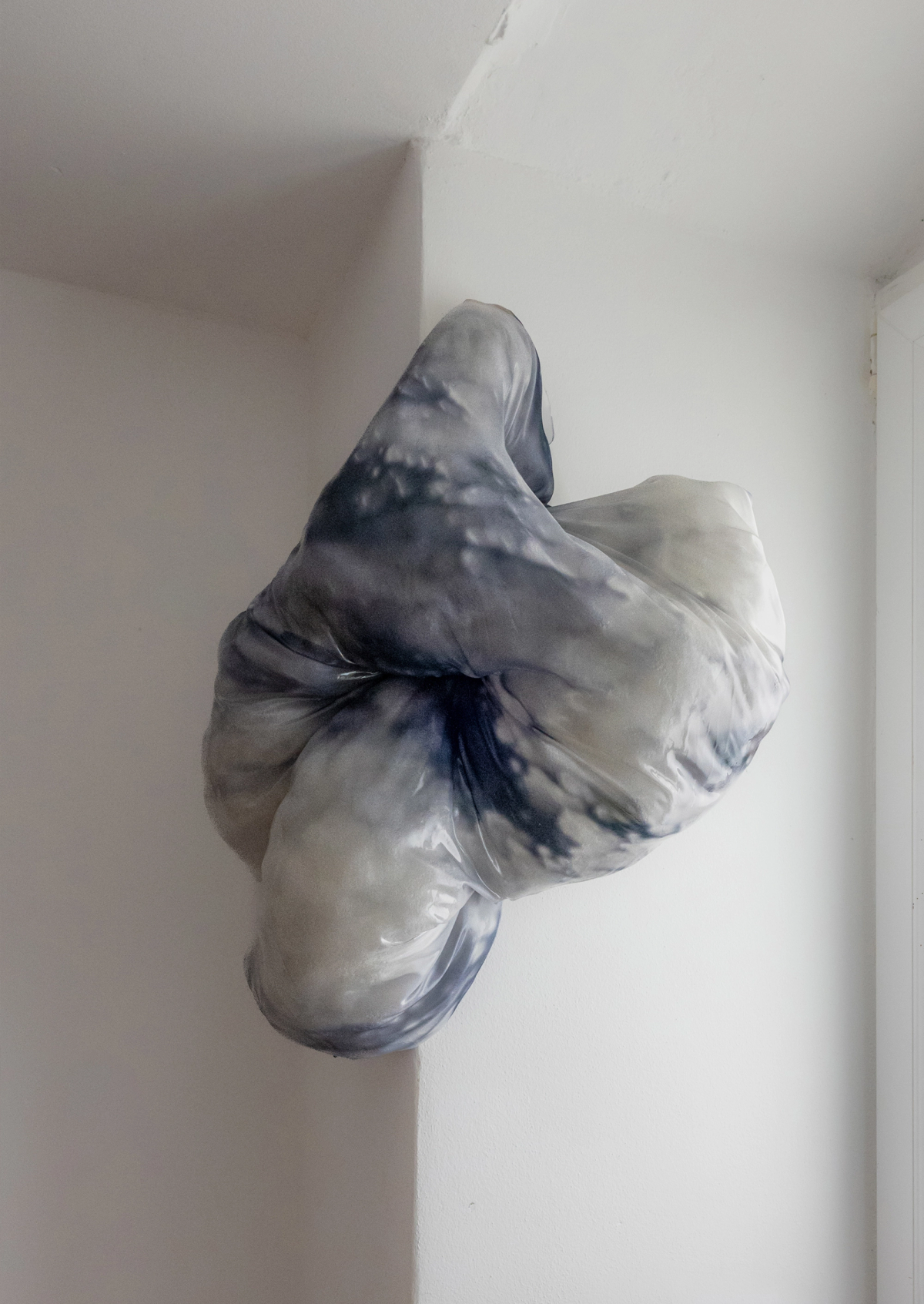
Left: Alex See, Membranes
Right: Alex See, Touch Escape 2
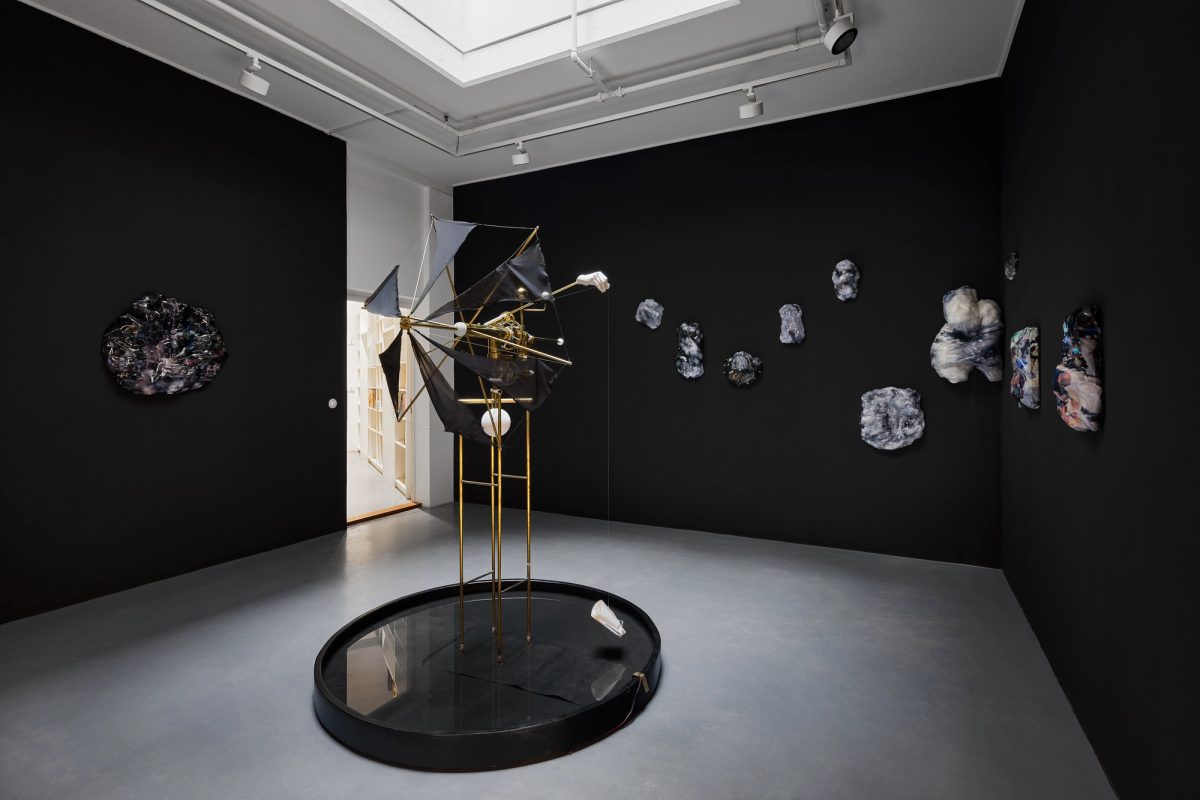
Genius Loci XIII, with artwork by Lara Koch: Joe Clark / Courtesy SETAREH
You work between solo studio practice and highly collaborative AV performance. The project with XI-N involved building a shared visual language for someone else's music in real time. Does working to serve another artist's sound change how you think about your own images, or do you approach it as a completely separate skill?
It definitely informs the way I make the physical works, and the other way round. Sometimes I use the same source material and mess with the same qualities: recognisability, vagueness, making one thing look like something else entirely, blending in and out. But because video is time-based, it gives me a different perspective, and sometimes ideas for new work come out of the video jams.
It would also be wrong to say the visuals serve the sound. The way we work is collaborative: we jam together, sound on his side, image on mine. We're informed by each other's output, and new audiovisual pieces come out of exactly that.
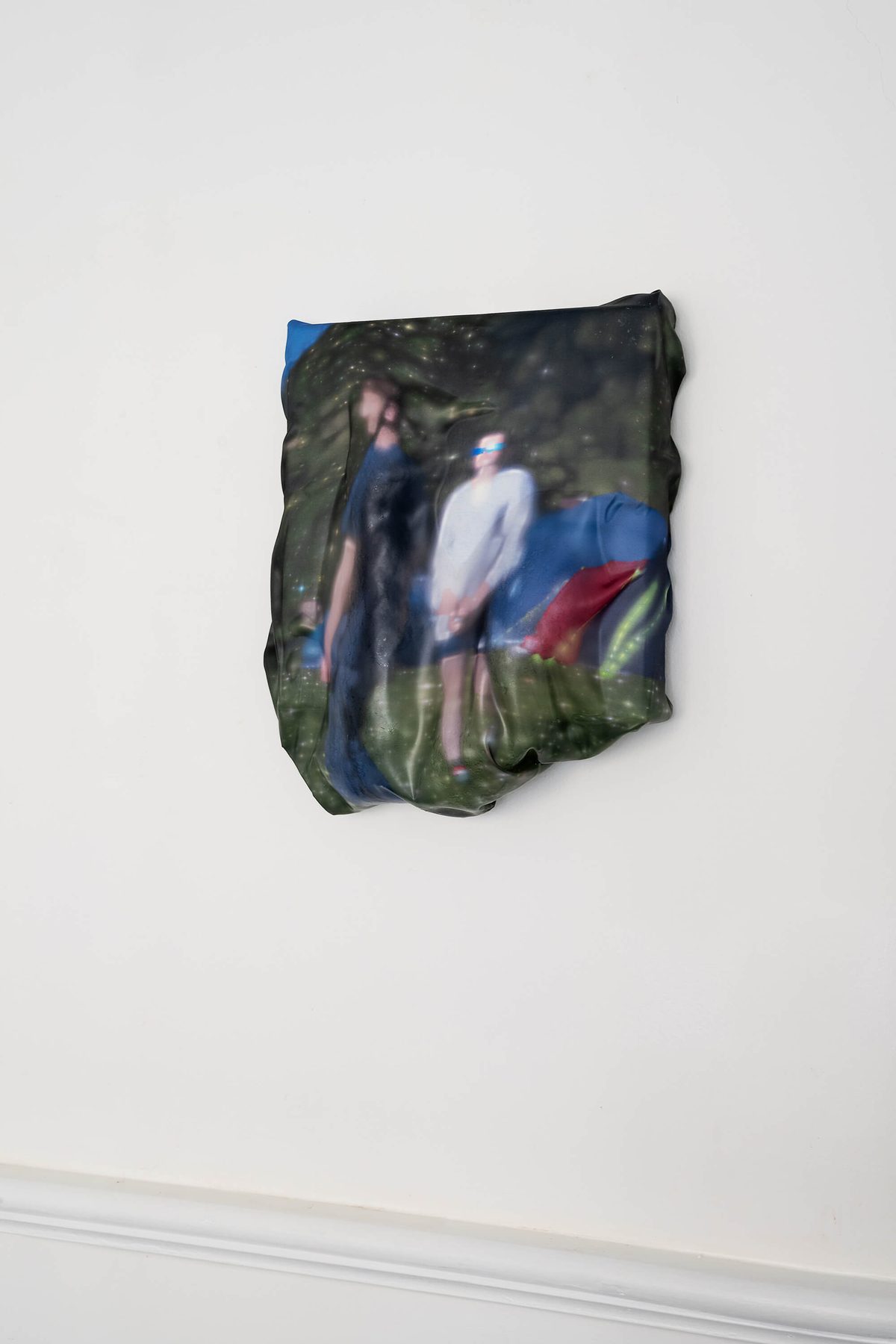
Left: Alex See, Friends, 2025. Textile, canvas, resin, fibrefill, 38 × 35 × 10 cm
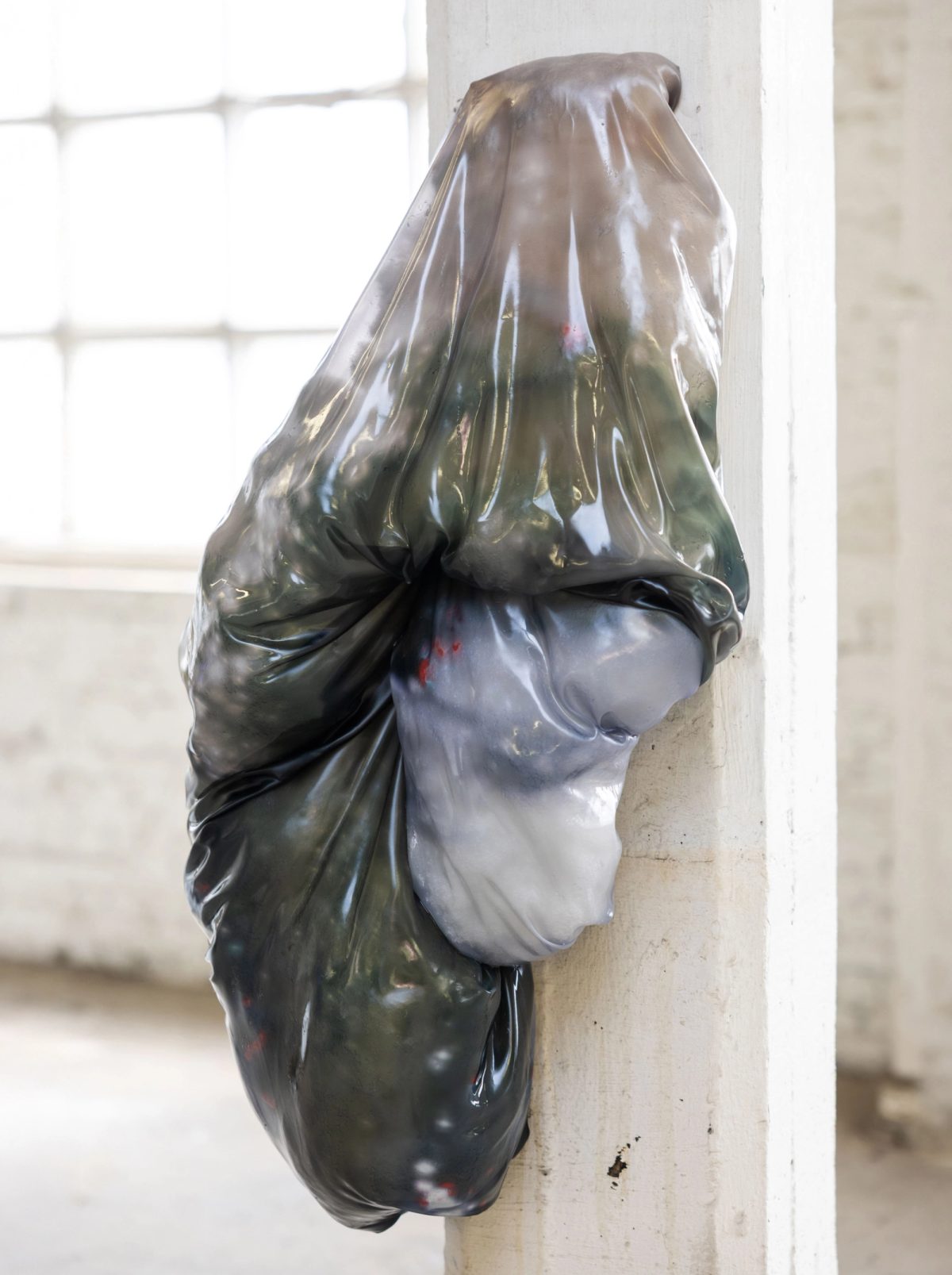
Right: Alex See, Wildfire I, 2025. Textile, resin, fibrefill, 80 × 40 × 41 cm (Photography by Bogdan Hoyaux)
"Making the viewer feel their own effort of recognition is essential. I want the work to oscillate between the familiar and the other, a spark of doubt about what you're actually seeing."
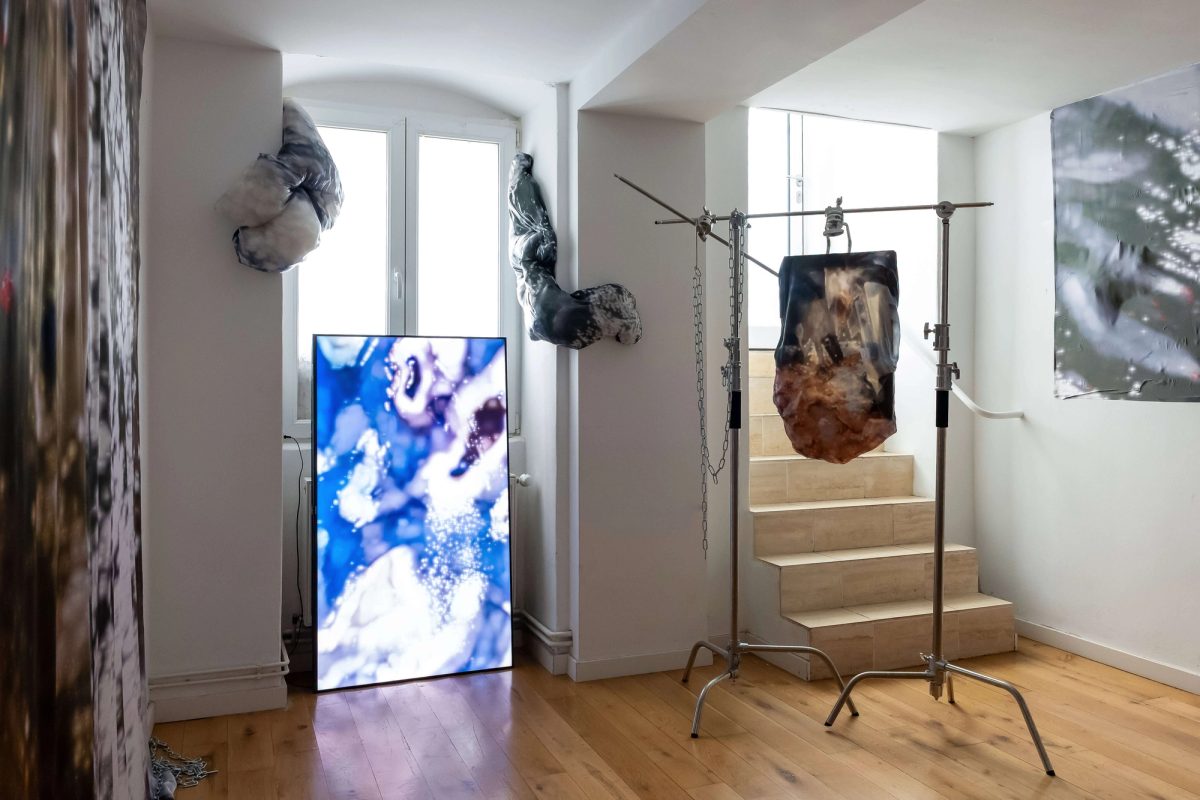
Alex See, installation view. TOUCH//ESCAPE, group show, 2025. Stil vor Talent, Berlin
Looking at your recent activity: a stockist placement at APOC, a residency at GlogauAIR, and group shows like Stil vor Talent, Erratum, and Feelium, you're moving through a specific mix of spaces rather than, say, commercial galleries. Is that a deliberate choice about where this work belongs?
I'm trying to work with people and institutions I'm actually close to, aesthetically or ethically. But I'm still figuring out my way through it. Smaller, community-based spaces give you more freedom and less pressure, but the resources are usually limited. Sometimes it goes the other way round, though; it's hard to tell.
With APOC especially, I kind of loved that my objects were sitting next to fashion pieces and functional objects. I think there's an interplay between something wearable and a wall object of mine, which is also made of fabric but isn't functional. It also feels closer to a community than a large gallery does. But I'm not against commercial galleries, it's just another frame.
Some of your pieces are wall-mounted and static, others exist only as projected, audio-reactive visuals that disappear when the set ends. Do you think about the temporary, performance-based work as less permanent than the sculptures, or is impermanence just a different kind of material to you?
I like that the performance is temporary; it's every time different, even if I use the same source material. The image of it can only survive as memories, impressions, or as fragments people shot on their phones, and those keep changing in memory. My objects do something close to that, from the other side: I can think about some of them as what's left of a moment.
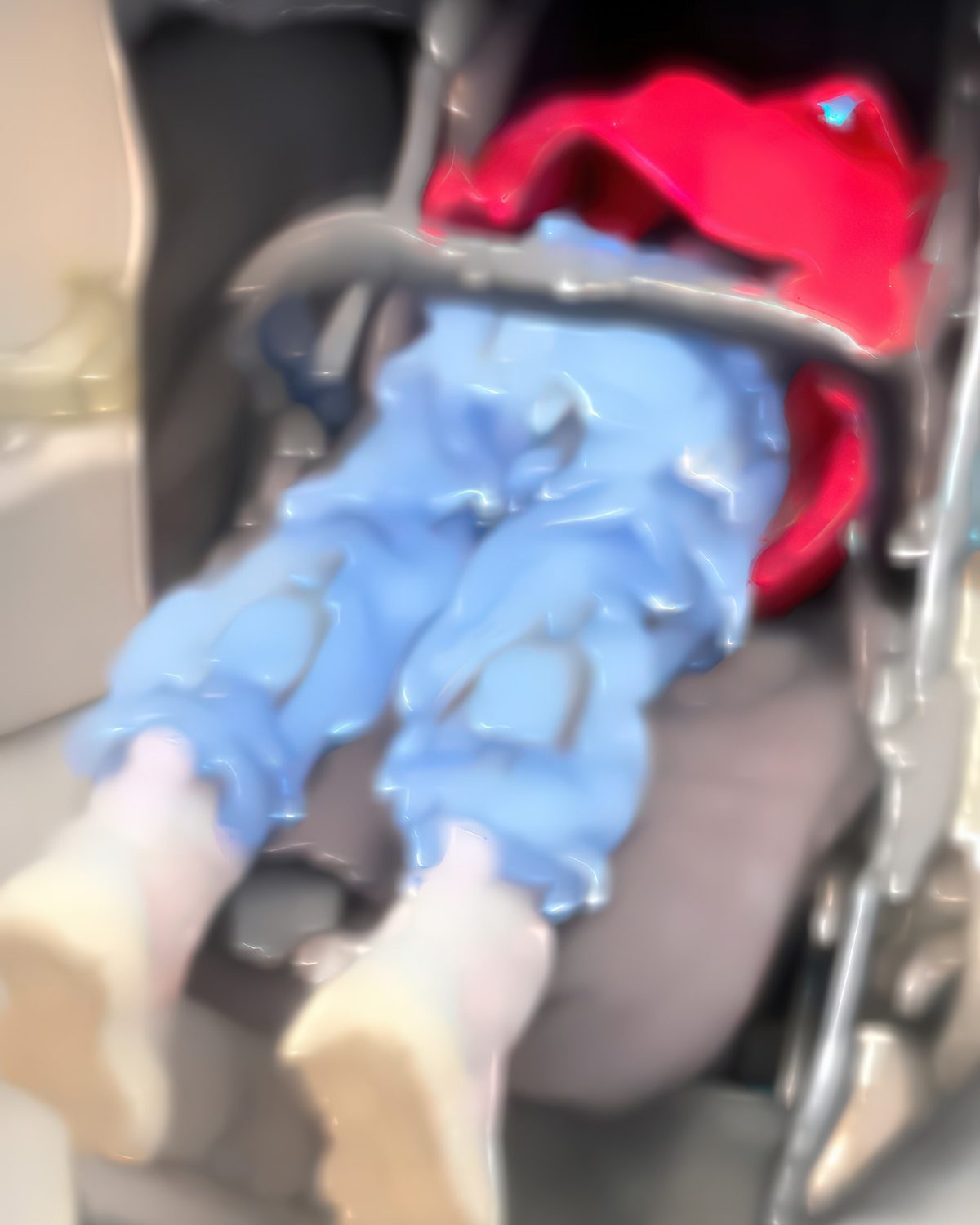
Left: Situation at Balenciaga store, KaDeWe, Berlin
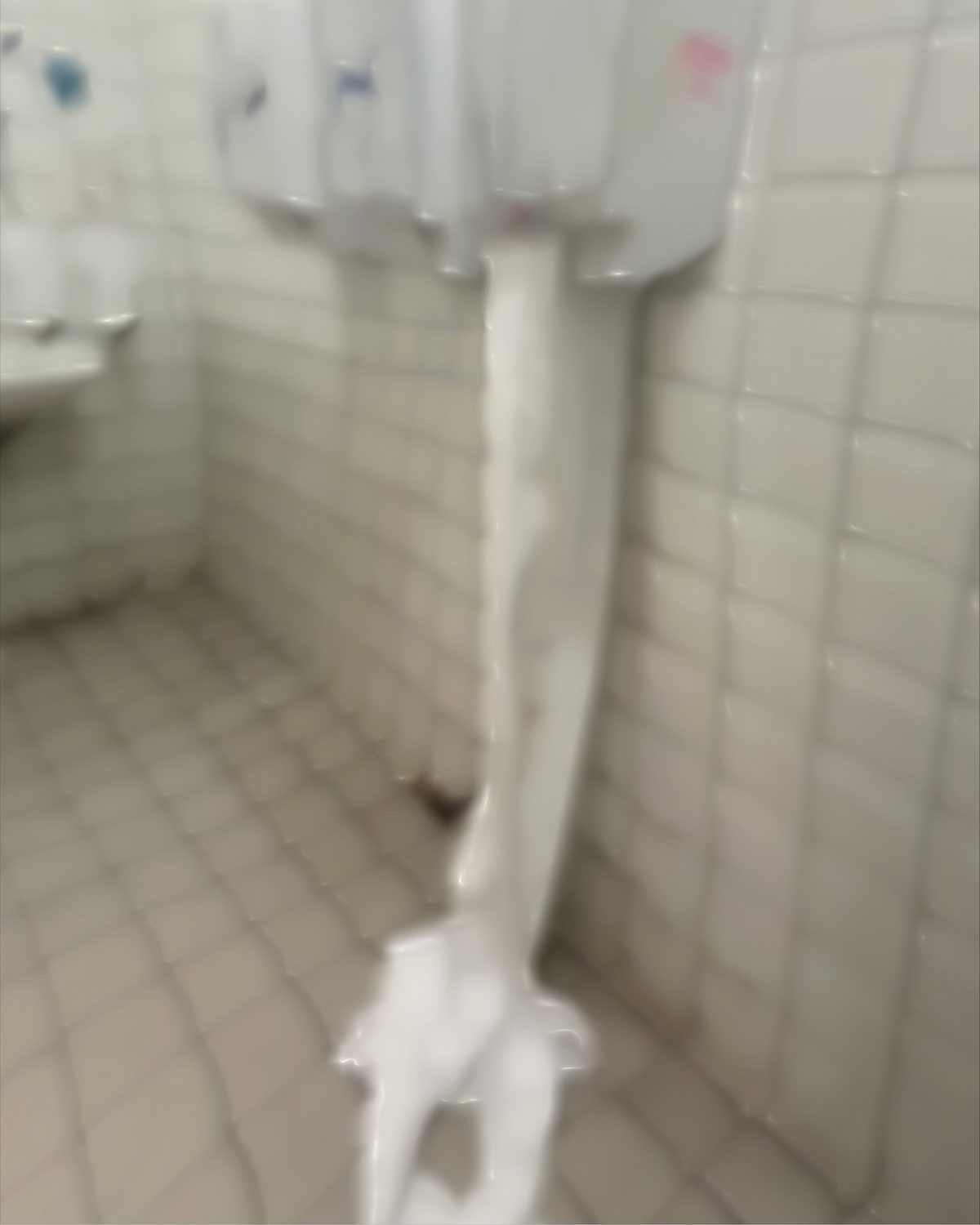
Right: Situation at Technische Universität Berlin toilet.
A lot of your titles are ordinary nouns (Bench, Rider, Dog, Traveller) but the objects themselves look closer to geological or biological forms than anything domestic. Is there a specific photograph behind each title that we'd recognize if you showed us the source image?
Yes, there's a photograph behind each one, and I had this idea of simply naming them after it. I wanted a riddle-like thing: try finding a dog in here. But I might move away from titles like that, to keep the interpretation as open-ended as possible: no clues, maybe just raw data instead, like the date, time, and place the original image came from.
The titles (Bench, Rider, Dog, Traveller) are italicized here since they're being cited as specific artwork titles, consistent with how Stil vor Talent, Erratum, and Feelium were treated earlier.
You've mentioned wanting to know "is it possible to create an image that has never existed before." Now that you've made a substantial body of work around that question, do you think an image can actually be new, or is everything you make secretly a variation on images that already existed somewhere?
To me it was something poetic rather than an actual research question, but the work led me to some new thoughts around it. I definitely see my objects as images that have never existed before, because they were given materiality and physical presence, and they aren't manufactured. Each one exists once.
As for a digital image that has never existed before, I love how the Library of Babel answers that. It's a project based on Borges' story about a library containing every possible book. And there is an image version . It generates every possible arrangement of pixels, so every photograph that has ever been taken and every one that never will be is already sitting in there, somewhere in the noise. Everything is already there. But the archive is so vast that finding any image is effectively impossible.
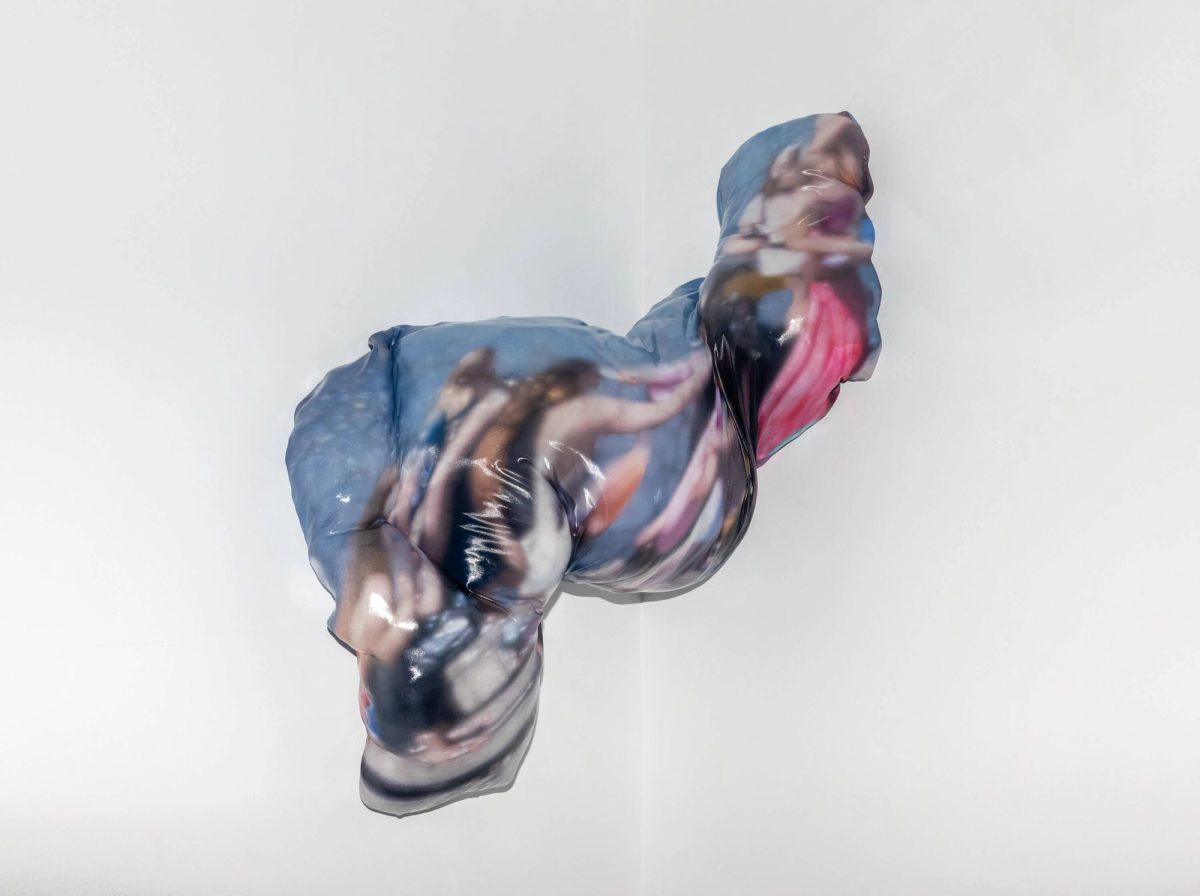
Left: Alex See, People, 2025. Textile, resin, fibrefill, 83 × 52 × 27 cm
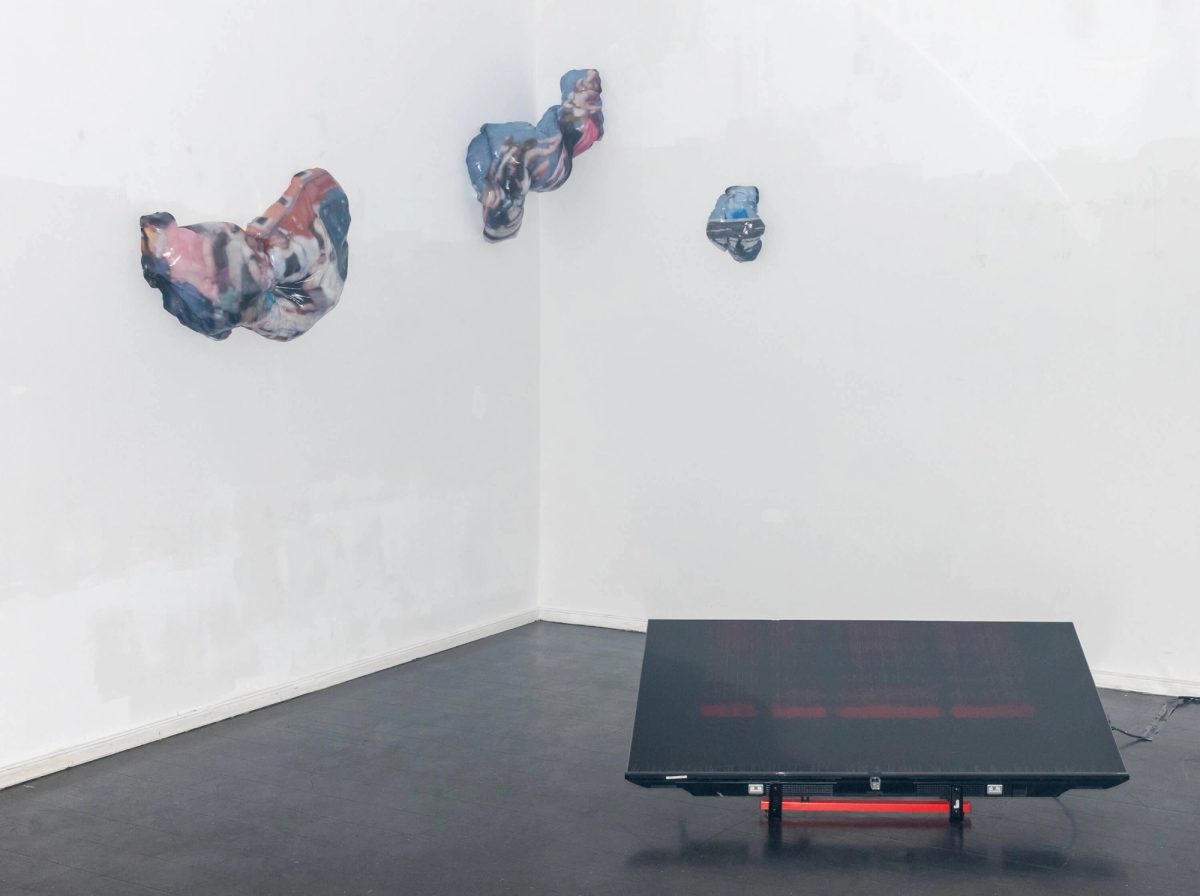
Right: Alex See, installation view. SUGARFREE EYESCREAM, group show, 2025. Untitled, Berlin
"I definitely see my objects as images that have never existed before, because they were given materiality and physical presence, and they aren't manufactured. Each one exists once."
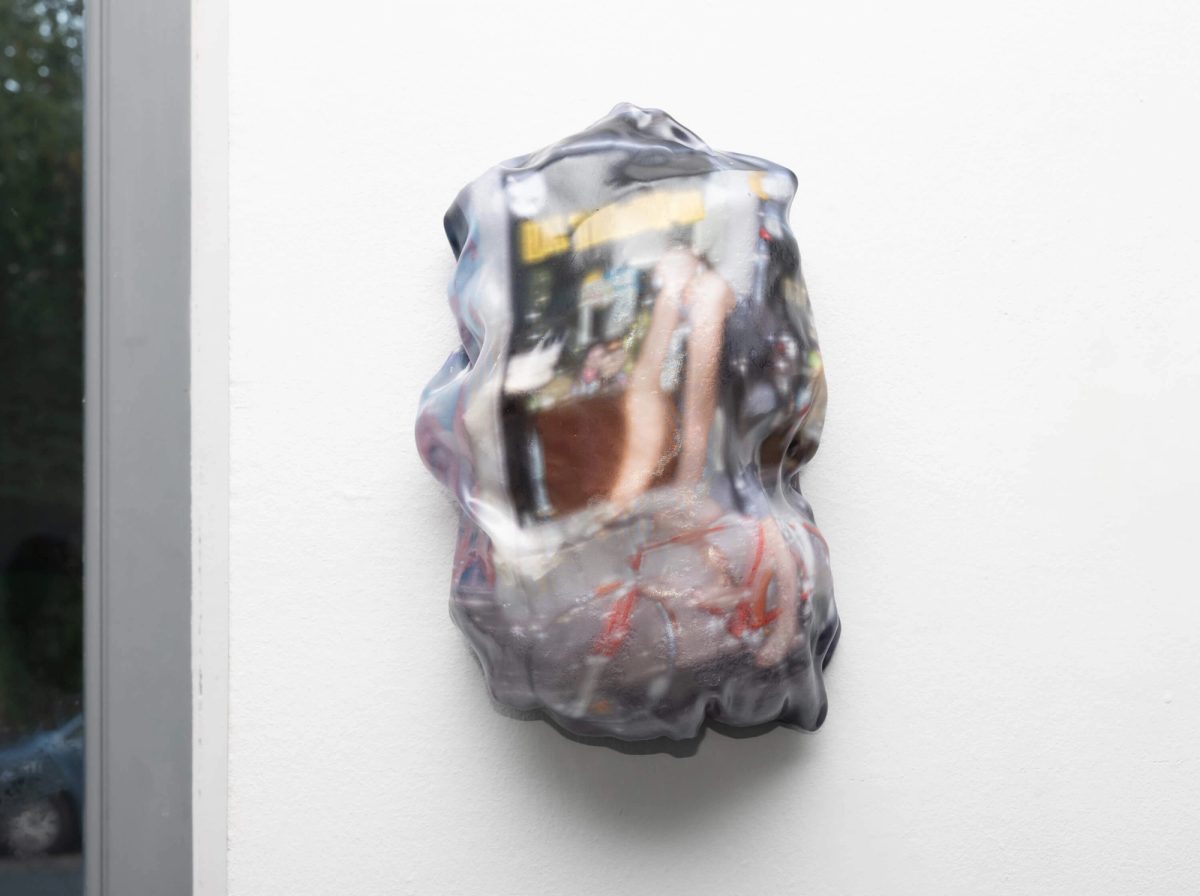
Alex See, Rider, 2025. Textile, resin, fibrefill, XPS, 21 × 34 × 8 cm
Between gallery objects, wearable-adjacent pieces at APOC, and live AV work, your practice keeps changing its container. What haven't you tried yet? Is there a scale, format, or context you're actively trying to get access to next?
I love watching where it goes; it's almost as if I'm an observer. Every new opportunity, person, or piece of inspiration can plant an idea that pulls me in some direction, and I like staying open to that. But I do have a few things in mind.
Firstly, I'll definitely be introducing new materials. I'm slowly doing it with metal, and glass will be next. Honestly, I'm tired of resin; I want something that requires heavy processing.
I also want to introduce motion and robotics, so the works can respond to the presence of a viewer, or even live on their own, like organisms. Sound belongs here too. I think my work will naturally move towards environments and experiences rather than static objects.
Also, I'm very curious about the physical processes we can't directly feel: hidden parts of the spectrum, or particles flying through everything. Right now what matters in my work is the moment of effort before you recognise something. That effort is the point; it's my way of talking about reality being wider than what reaches us. So science is probably a way of approaching that wider reality on a more fundamental level, using instruments to get at those forces and approach them from the artistic side.
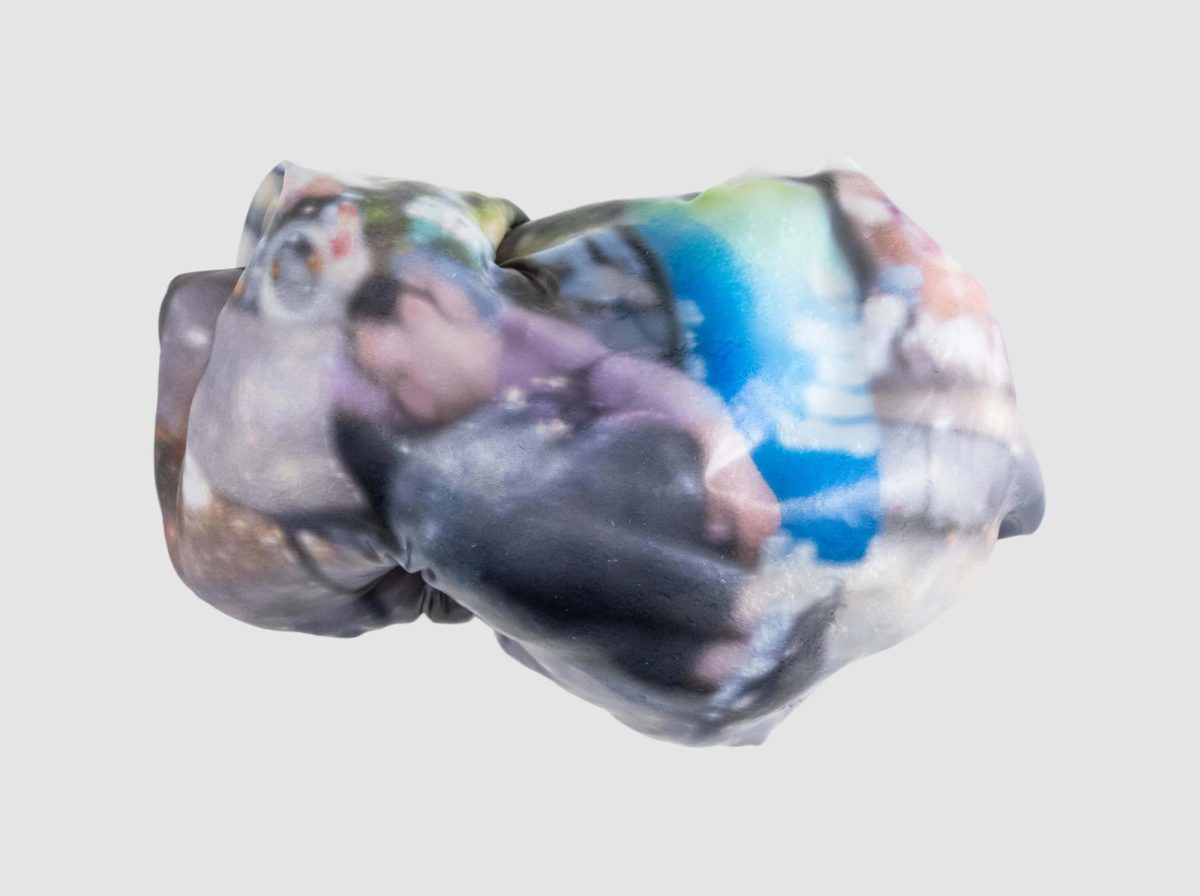
Alex See, Daydream, 2025. Textile, resin, fibrefill, XPS, 30.5 × 18.5 × 11 cm.
Cover Image: Alex See, Stroller, 2026, textile, resin, fibrefill, plaster, XPS