TRACES OF ILLUSIONS: EIGHT IMMORTALS RECAST, A MYTH REASSEMBLED IN DUST AND DOUBT
VISUAL ESSAY BY HONGJI ZHU
15 OCTOBER 2025 — UNITED KINGDOM
What remains of a myth, when it is carved, cast, shattered, and reassembled?
This research and artistic casting experiment investigates the symbolic afterlife of the Eight Immortals, once egalitarian figures rooted in vernacular belief, now hollow motifs reproduced in China’s ornamental heritage. Symbols in the urban landscape, which once carried the hopes of ordinary people, have been transformed into elite projections, stripped of their political intimacy and repurposed as aesthetic currency.
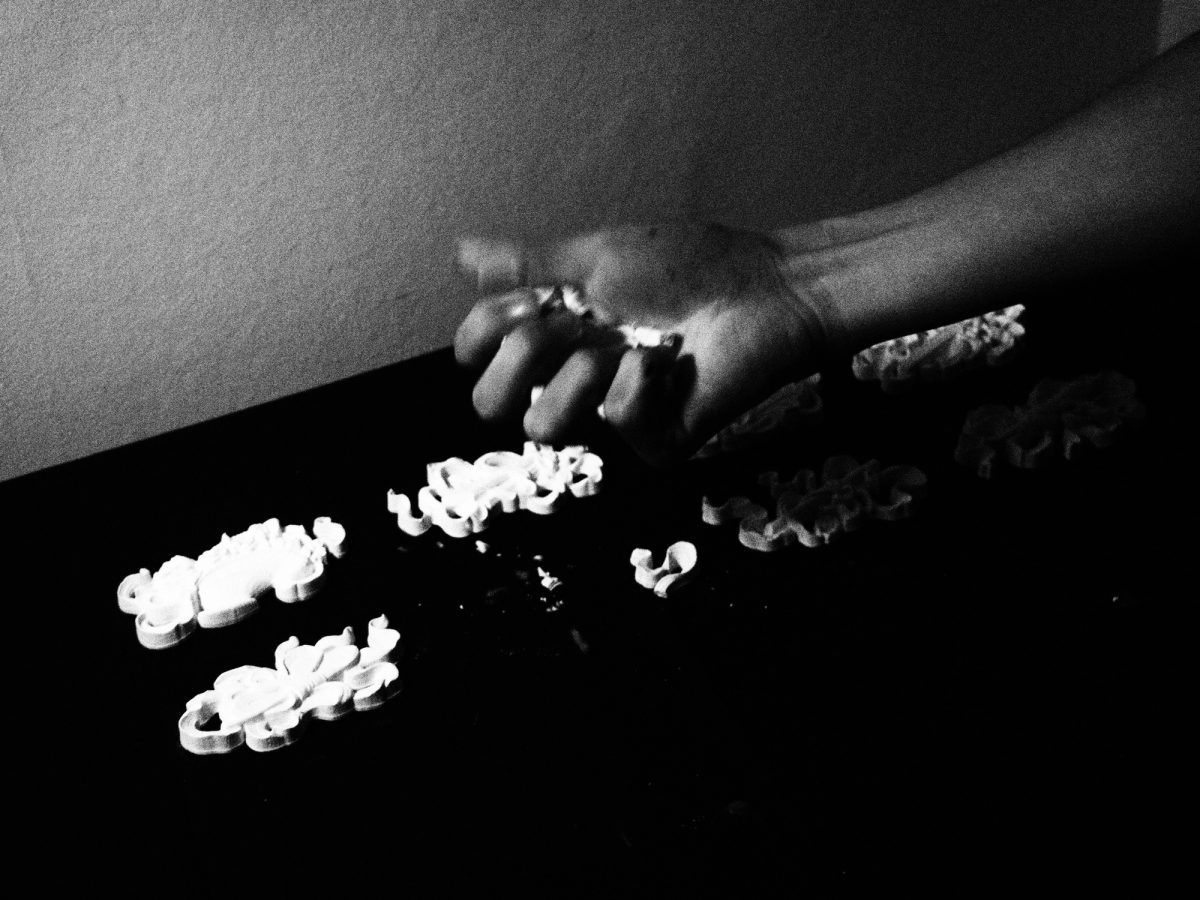
Through a critical process of hand-carving, intentional destruction, plaster casting, and reassembly, the project reactivates these symbols, not to restore them, but to confront the violence inherent in their restoration. The resulting fragments are not mere replicas: they bear the scars of erasure, repetition, and the false promise of visual coherence.
Traces of Illusions proposes casting not as reproduction, but as resistance, a way of reassembling identity through the labor of brokenness. Rather than longing for a purified past, it offers the possibility of a new myth, grounded in loss, doubt, and the lingering materiality of what refuses to disappear.
Act 1.
The Eight Immortals
Ornamentation
This act pays particular attention to the relationship between symbols and the political identities of marginalized groups. By analyzing the evolution of immaterial material practices, using the application of the Eight Immortals motif in China as an example, it seeks to uncover how political identities undergo transformation. Additionally, it explores how these changes in identity are reflected in broader social phenomena.
The Eight Immortals
The Eight Immortals are eight deities in Taoism, each representing different groups of people: men, women, the elderly, the young, the poor, the rich, and so on. Since all of the Eight Immortals were once mortals who attained immortality, their personalities are quite relatable to the common people. In recent times, they have become significant figures in Taoism. The stories of the Eight Immortals are interwoven with a variety of fantastic legends. Not only are their mortal lives rich and captivating, but their journeys to immortality and their subsequent deeds are also diverse and fascinating. Unlike the typical solemn deities, the Eight Immortals are a reflection of everyday Chinese life, representing different layers of society: men and women, the old and the young, the rich and the poor, and even the disabled. People from various groups can see themselves in the Eight Immortals, which is a key reason for their widespread popularity across different social strata.
In traditional paintings and carvings, the Eight Immortals are often depicted to symbolize good fortune. When the Eight Immortals themselves are directly shown, they are referred to as the “Visible Eight Immortals” (明八仙). When their magical items are used to represent them, they are called the “Hidden Eight Immortals” (暗八仙). Each of the Eight Immortals has one or two magical items, commonly known as the “Eight Treasures” (八宝), which symbolize good luck and vary depending on the scene.
The transformation of the Eight Immortals from human figures to symbolic patterns is essentially an unconscious process of simplifying symbols to make them easier to recognize and spread. This simplification allows craftsmen and artists to carve or cast them more conveniently, enabling quicker dissemination across all social strata. Additionally, folk beliefs are widely practiced in these subalterns of society.
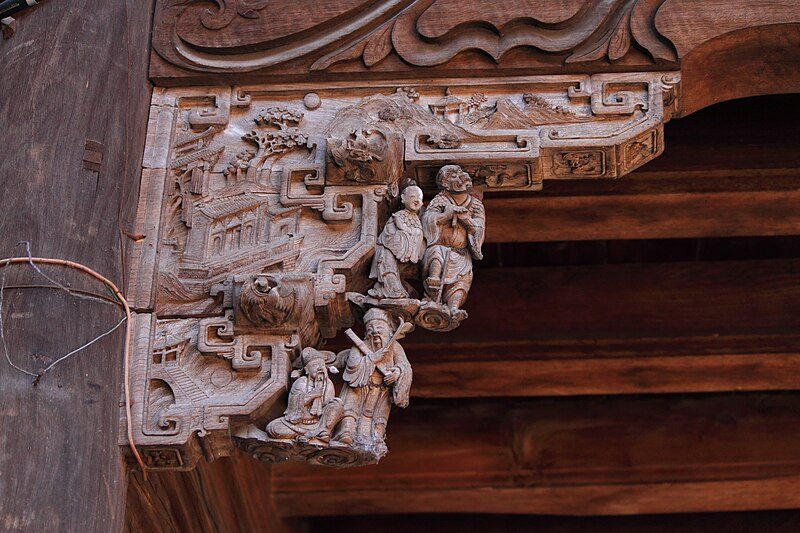
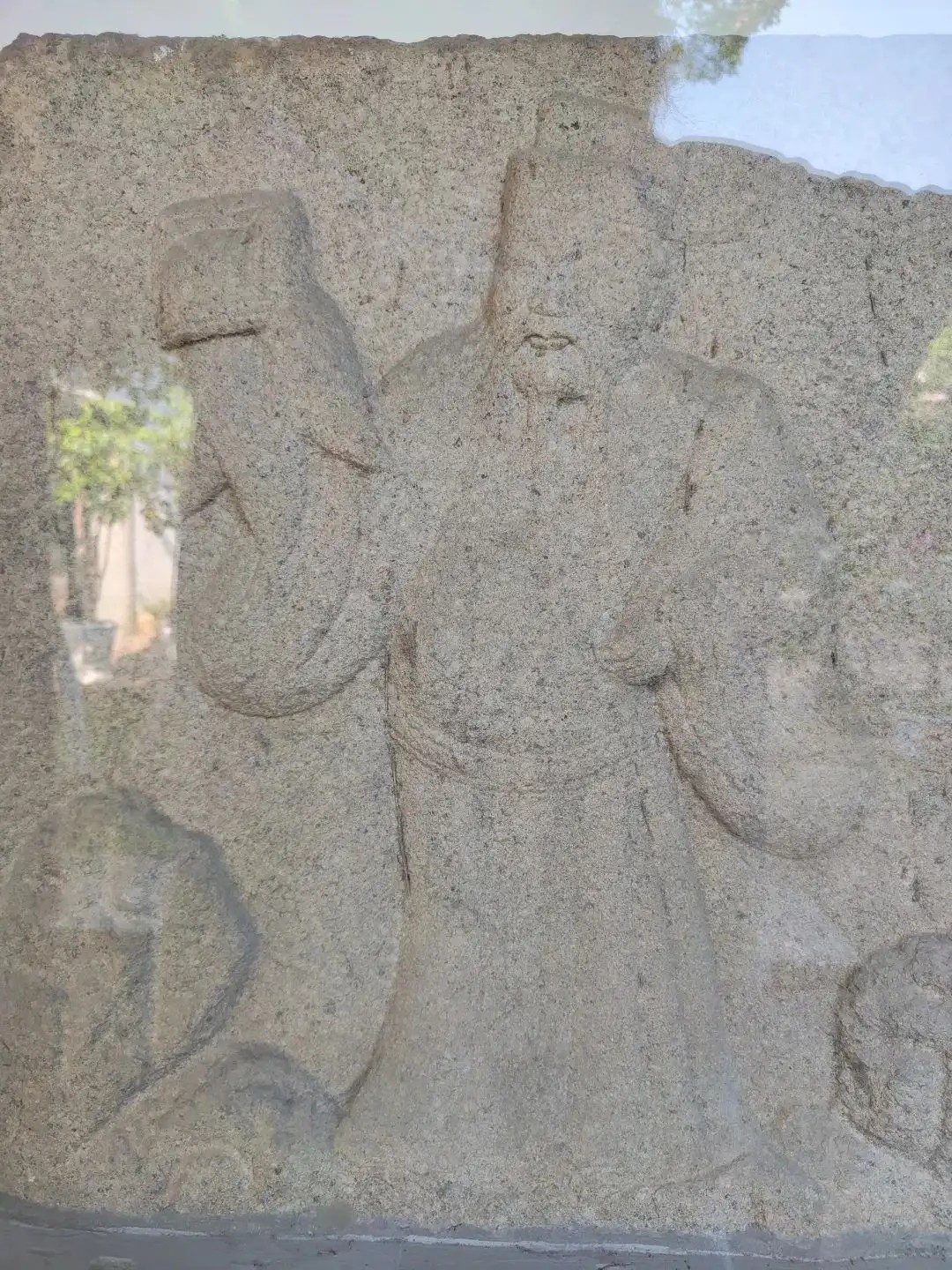
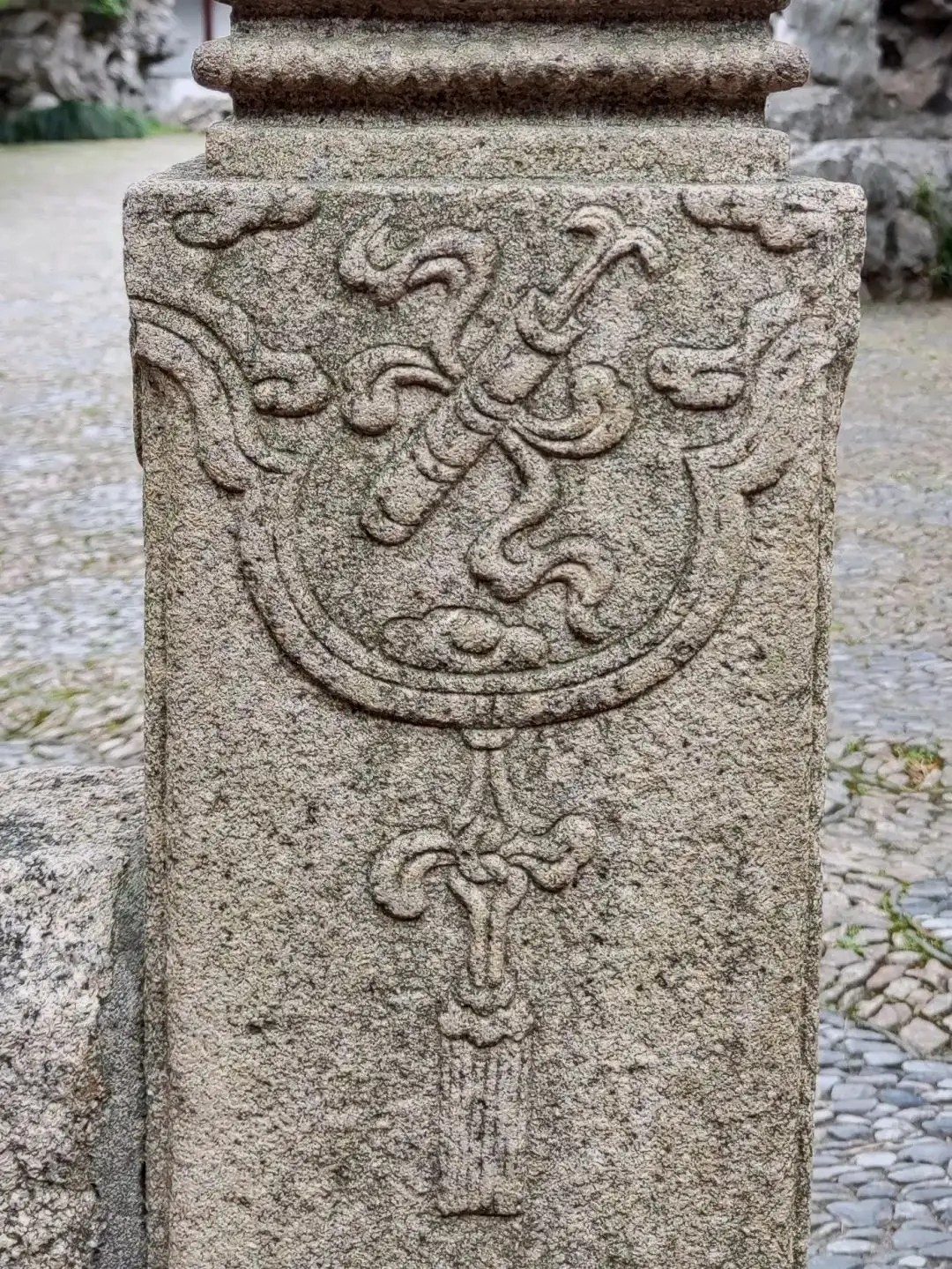
fig. 2, Human figures wooden carve in traditional architecture.
fig. 3, Human figure vs. symbolic patten, photoed by author
The Fallen Immortals
The Eight Immortals still exist today, albeit in the form of deceased bodies. Along with the social and cultural structures overturned by the Cultural Revolution, they have become artifacts of the city.
Between 1940 and 1976, the Chinese government initiated a series of social and cultural reform plans within the context of socialist construction. In the early stages of these reforms, the government overthrew the bourgeoisie and dichotomized political identities, categorizing everyone into the working class and the ruling class. This created a conceptual equality that, in reality, resulted in the complete deprivation of the lower class’s discourse.
Starting in 1966, the Cultural Revolution viewed traditional culture and folk beliefs as obstacles to social development. It asserted that the proletariat should dominate the superstructure, including various cultural fields. Historical traditional culture and symbols were seen as the exploitation class’s poison over the lower class for millennia. During the revolution, numerous ancient buildings, traditional cultural artifacts, statues, and components were destroyed and burned. Temples and statues of deities were demolished, with only a few surviving. Concurrently, the social structure was further simplified by persecuting scholars and seizing the capital of small capitalists, leading to the proletarianization of society. This process was radical and traumatic, ignoring the role of folk beliefs in shaping individual cultural identities and their suppressed status in the lower class’s dissemination and consumption.
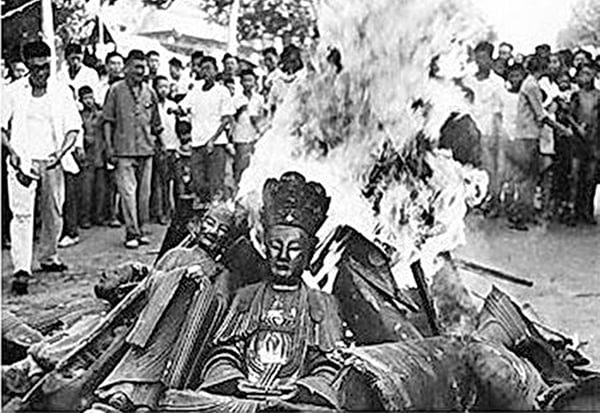
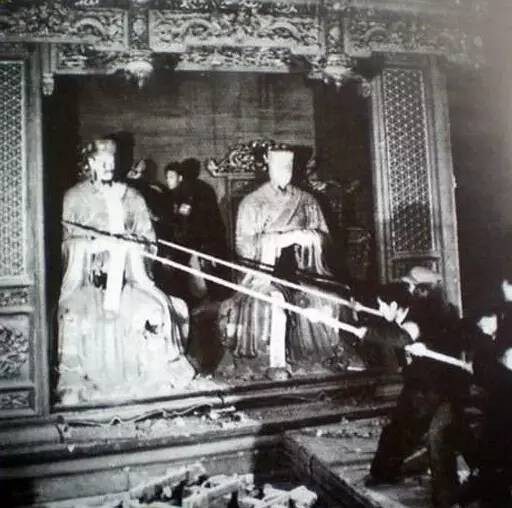
fig. 4, Destory the past, 1968
False Resurrection
Some members of the proletariat, having lost their gender, age, capital, memory, and power, attempted to rebuild their political identities after the ten-year cultural catastrophe. However, the method of healing cultural wounds was to deny their existence. Some ancient architecture of China in some cities like Suzhou and the Wu-speaking region in Southeast China survived extreme urbanization campaigns and the Cultural Revolution. These structures stand as monuments amidst unrecognized cultural scarcity, representing a unique regional aesthetic while also serving as a bitter remedy to the ongoing dilution of local cultural identity and recognition.
After China entered the global market and began rapid urbanization in 1978, even though my hometown of Suzhou (almost the origin of Chinese ancient architectural techniques and decorative cultural symbols) retained the colors and roof shapes of Suzhou’s ancient architecture, it excluded informal daily life as much as possible (Fig. 5). It removed the originally rich folk decorative symbols and spatial constructions, providing only a rough visual consistency. The classical gardens and ancient buildings in the city, now open as tourist attractions, do not participate in any cultural production practices but rather in the dissemination of cultural symbols, constantly reminding everyone that we are in a city with deep roots, and that’s all. The silent subaltern can only remind themselves of their identity through repeated visits to these cultural memorial halls open to the public, then return to their communal housing, an identity that can be forgotten again.
The symbols and images of the Eight Immortals on China’s ancient buildings are forever fixed at this moment, in a form that is worn and pieced together like a corpse. This also serves as a farewell to the equality symbolized by the diverse social identities of the past. Even though intangible cultural heritage inheritors repeatedly carve these patterns and artifacts, and restore or imitate the remaining ancient buildings, they ultimately remain at a superficial aesthetic level, completing one false resurrection after another.
Thus, the symbolic death of the Eight Immortals becomes both the conceptual groundwork and the material prelude for the subsequent casting experiment.

Fig. 5 Hand-Drawn Summary Diagram of Housing Infrastructure Types in Suzhou and Southeast China, by Author, 2024

fig. 6, Eight Immortals human figure Manuscript, by author, 2024

fig. 6, Eight Immortals symbolic Manuscript, by author, 2024
Act 2.
Recast The Eight Immortals
This act seeks to materialize the aforementioned historical processes through casting and to project potential future outcomes under current policies, using the Eight Immortals as an example.
The Casting Proposal
The proposal for Eight Immortals symbols casting serves as both a reconstruction and a speculation on the course of history. It encompasses the process from "hand-carved creation" to "fragmentation and reassembly," representing a dual approach: a reverence for and appreciation of the original historical forms, while simultaneously revealing the inherently "destructive" nature of human intervention in history. By juxtaposing restored pieces with their originals, this study critiques contemporary institutionalized "restoration culture." While these efforts claim to revive tradition, they often amount to superficial imitation and mass reproduction, lacking a genuine understanding of their origins , ignoring the desires of subaltern.
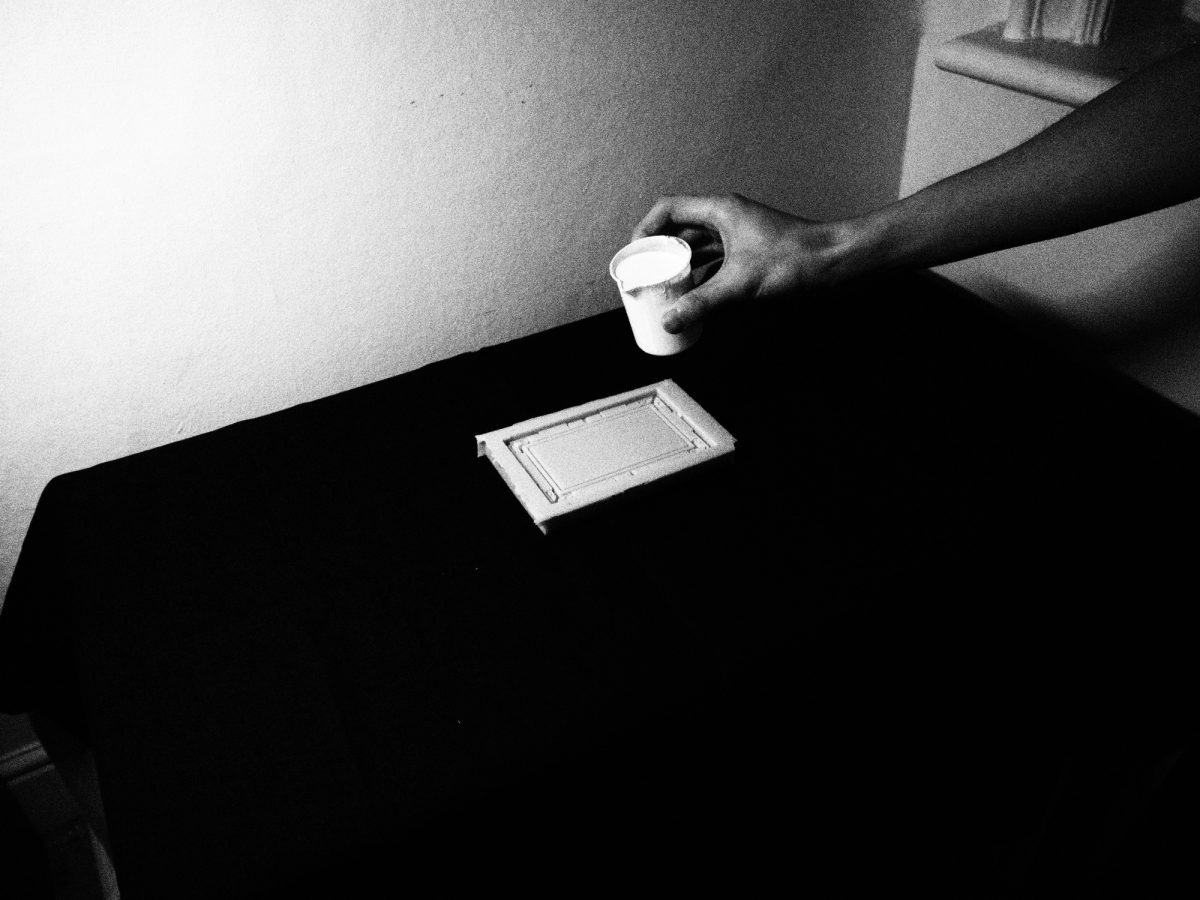
fig. 7 Casting by author
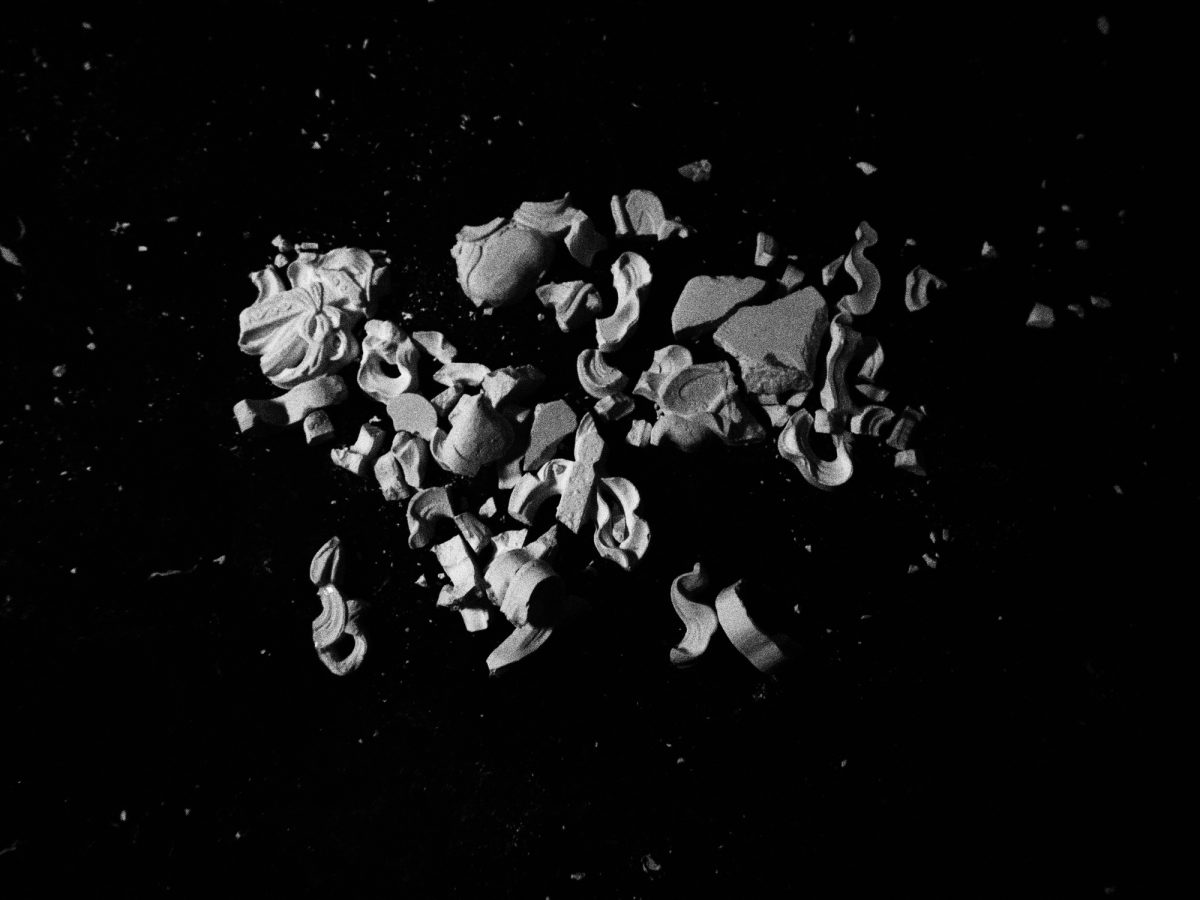
Fig. 8, The Destruction Pieces.
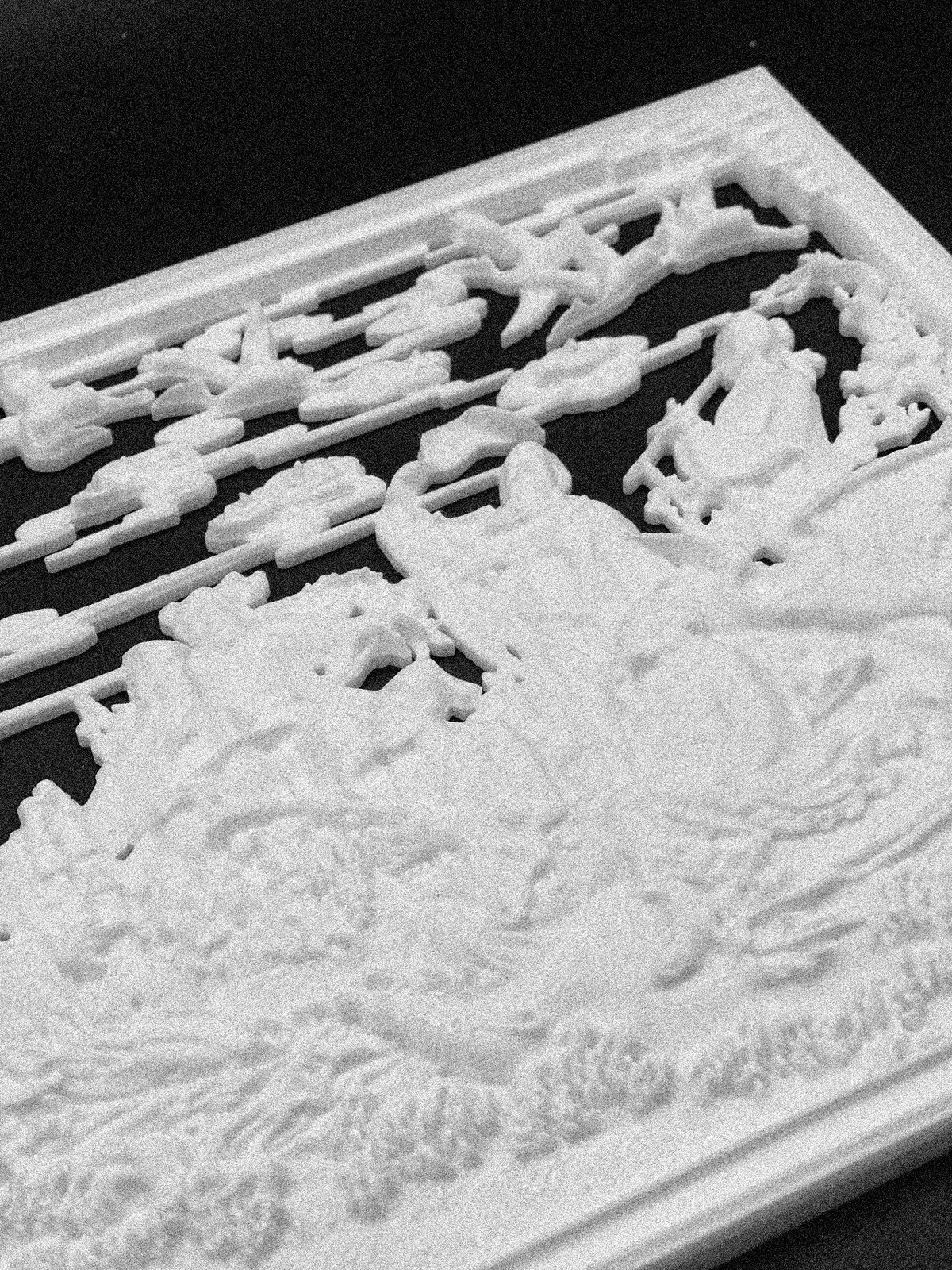
Fig. 9, Prototype Carving
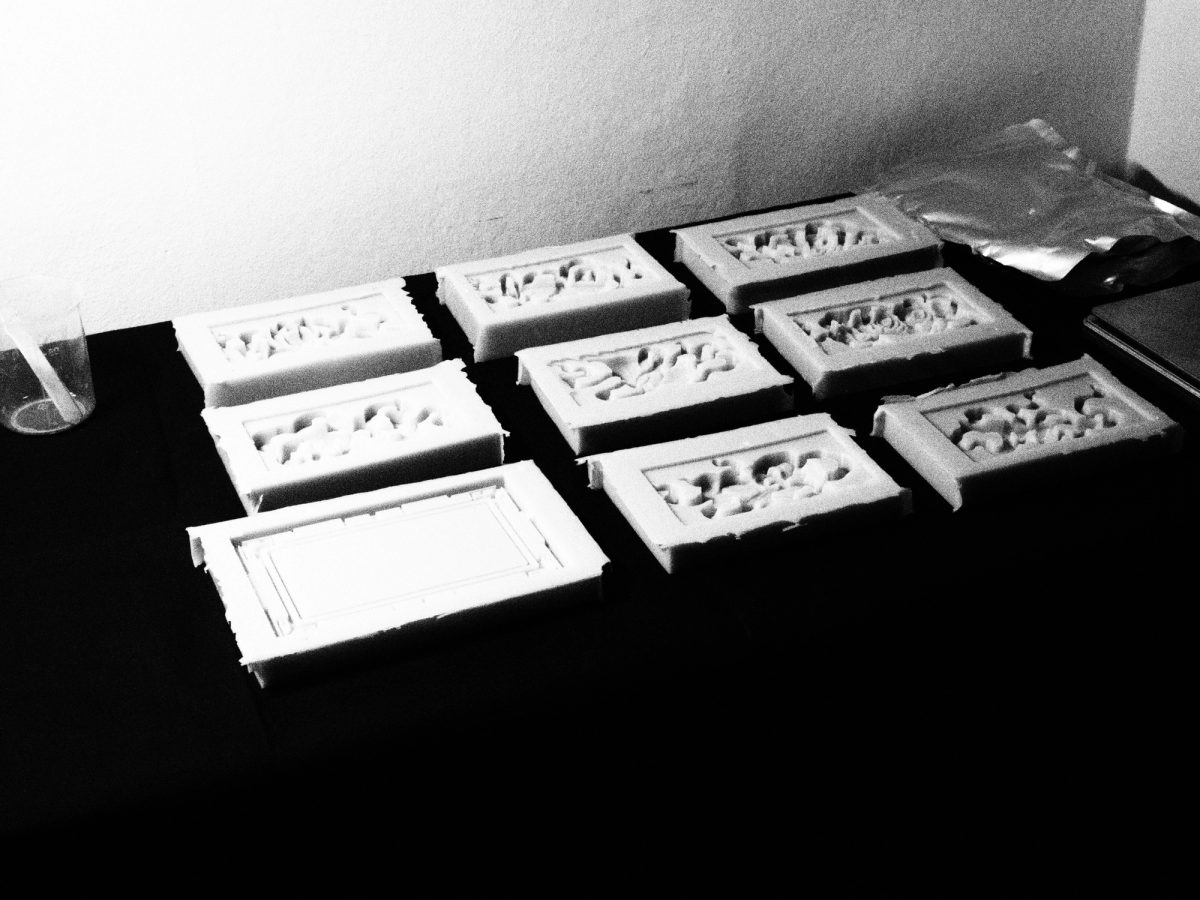
Fig. 10, Simple Mould Making after Carving
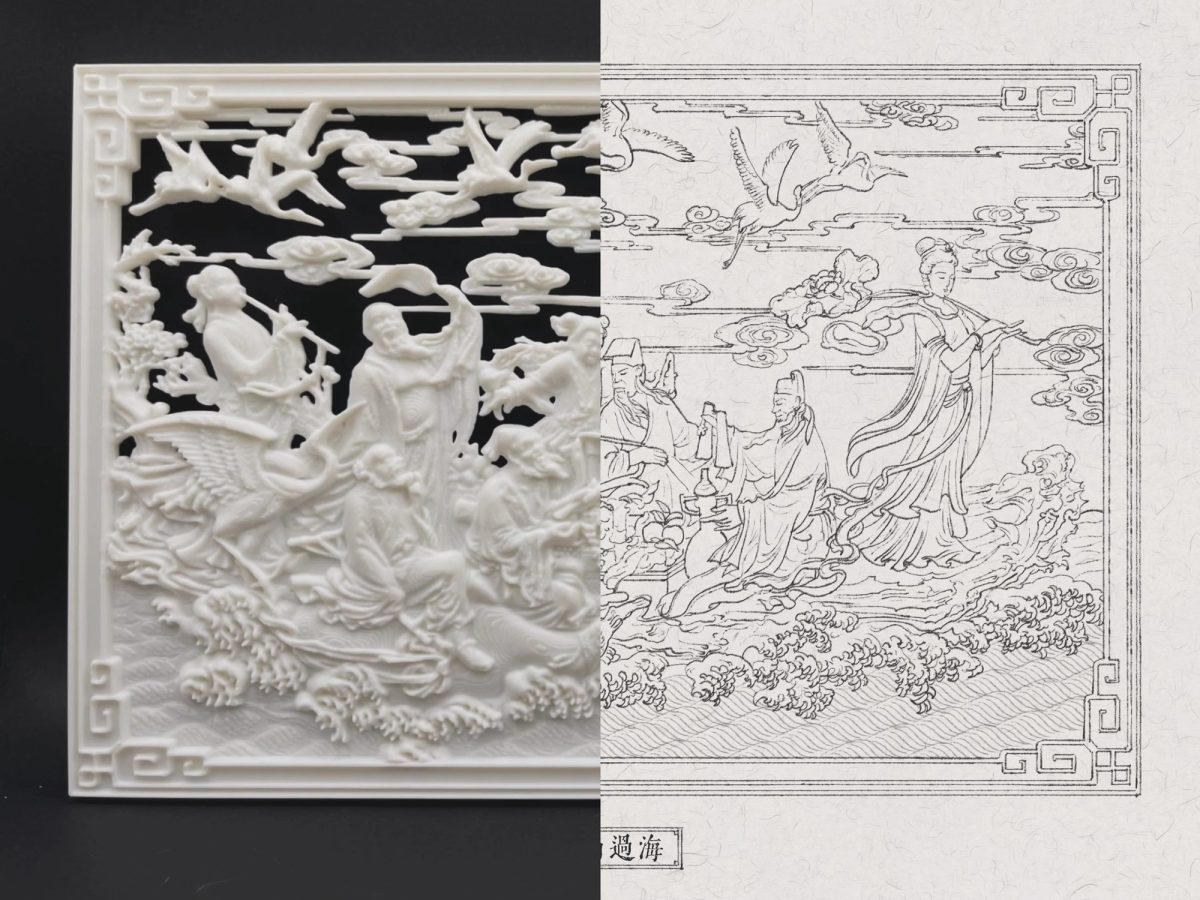
Fig. 11, Based on Manuscript
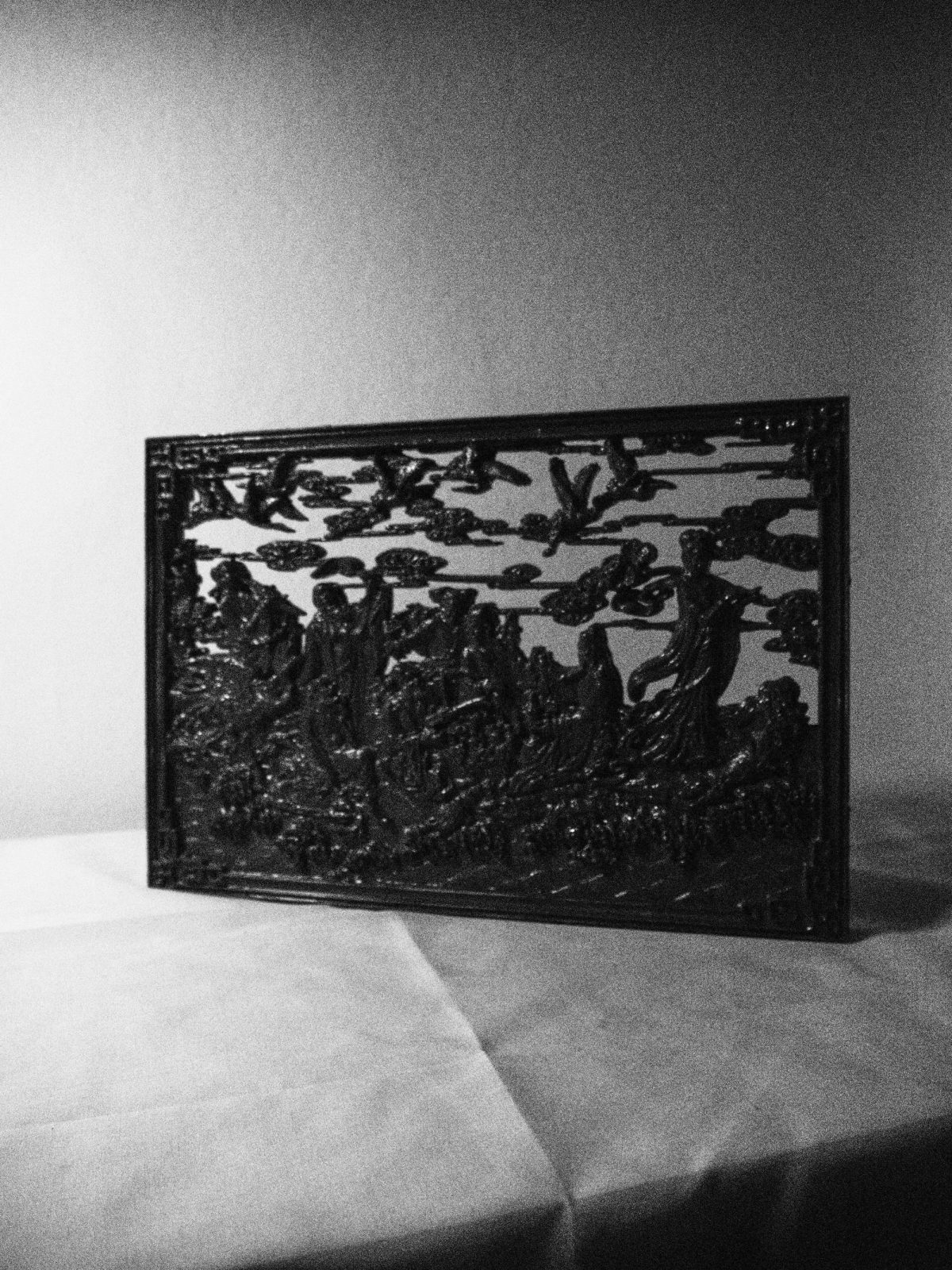
Fig. 12, Chinese Lacquer version.
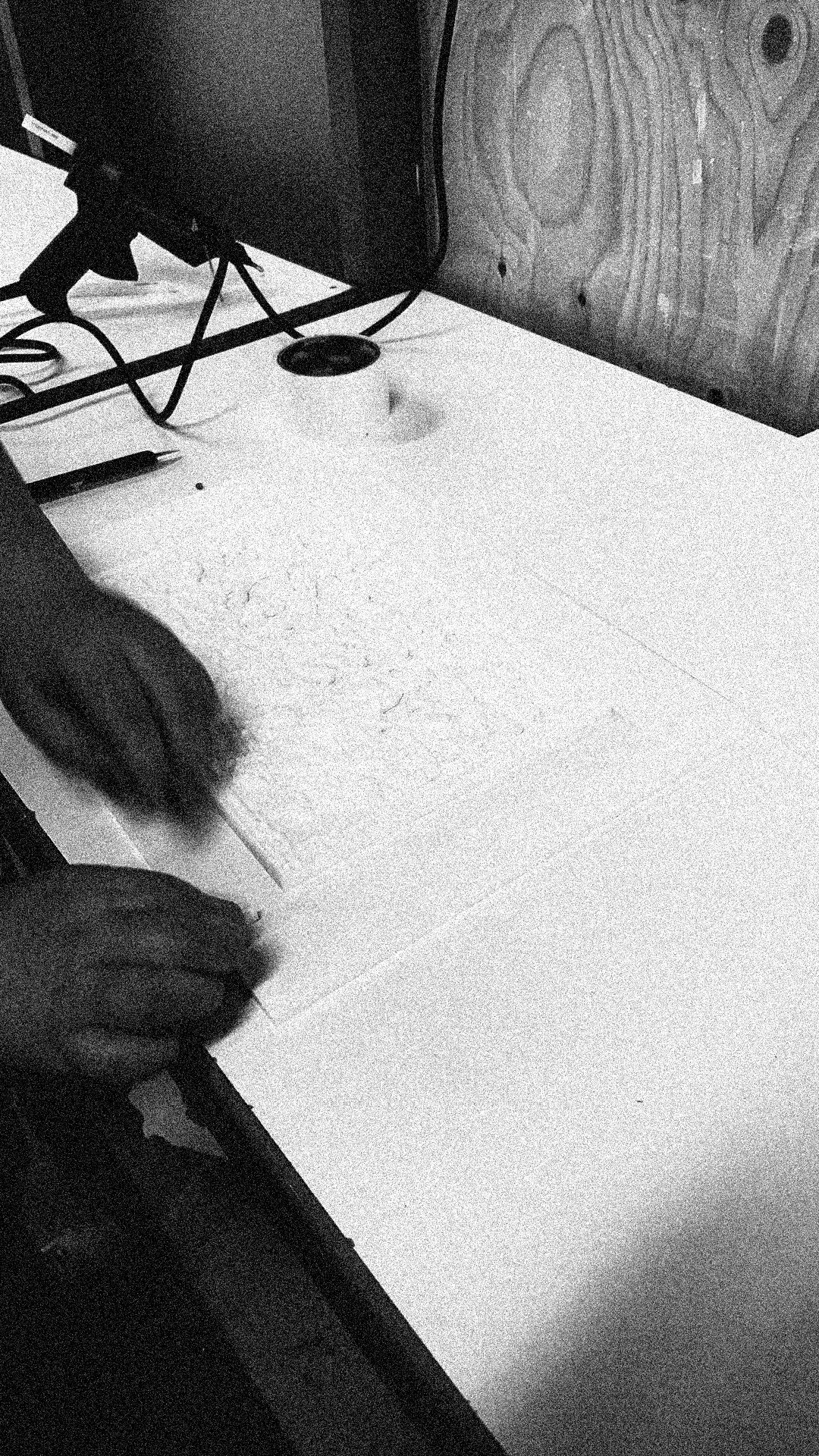
Fig.13, Prototype Casting step1
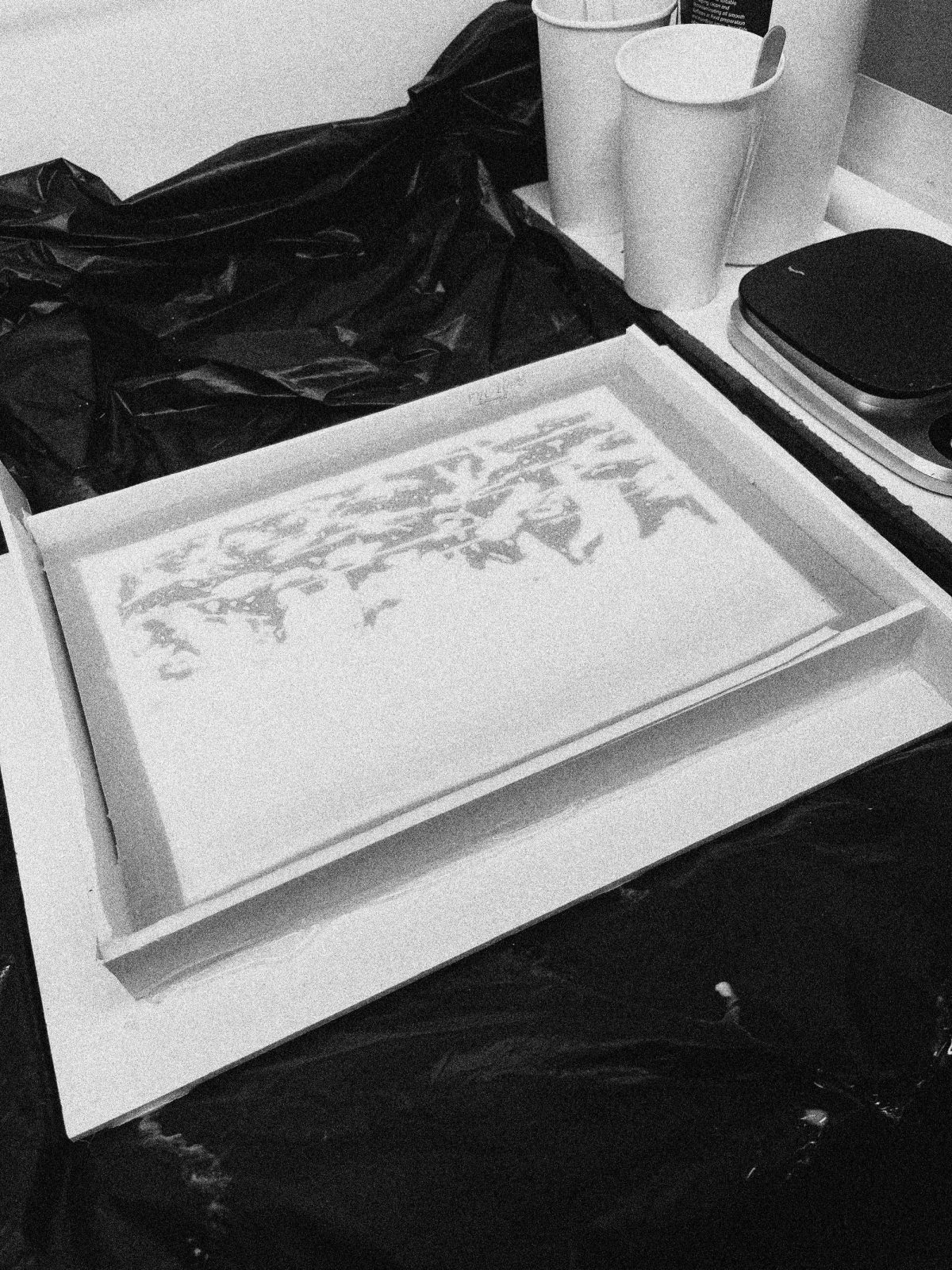
Fig. 14, Prototype Casting step2
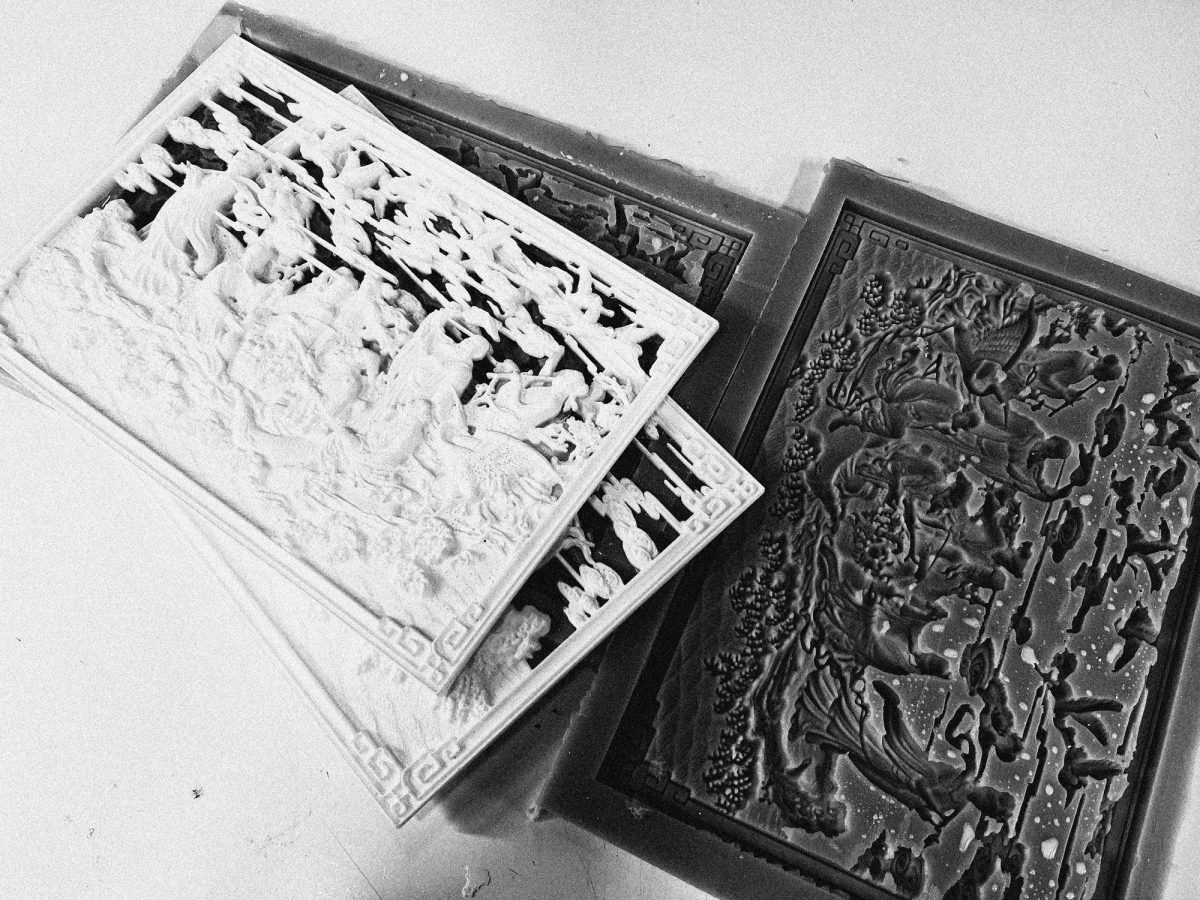
Fig. 15, Prototype Casting step3
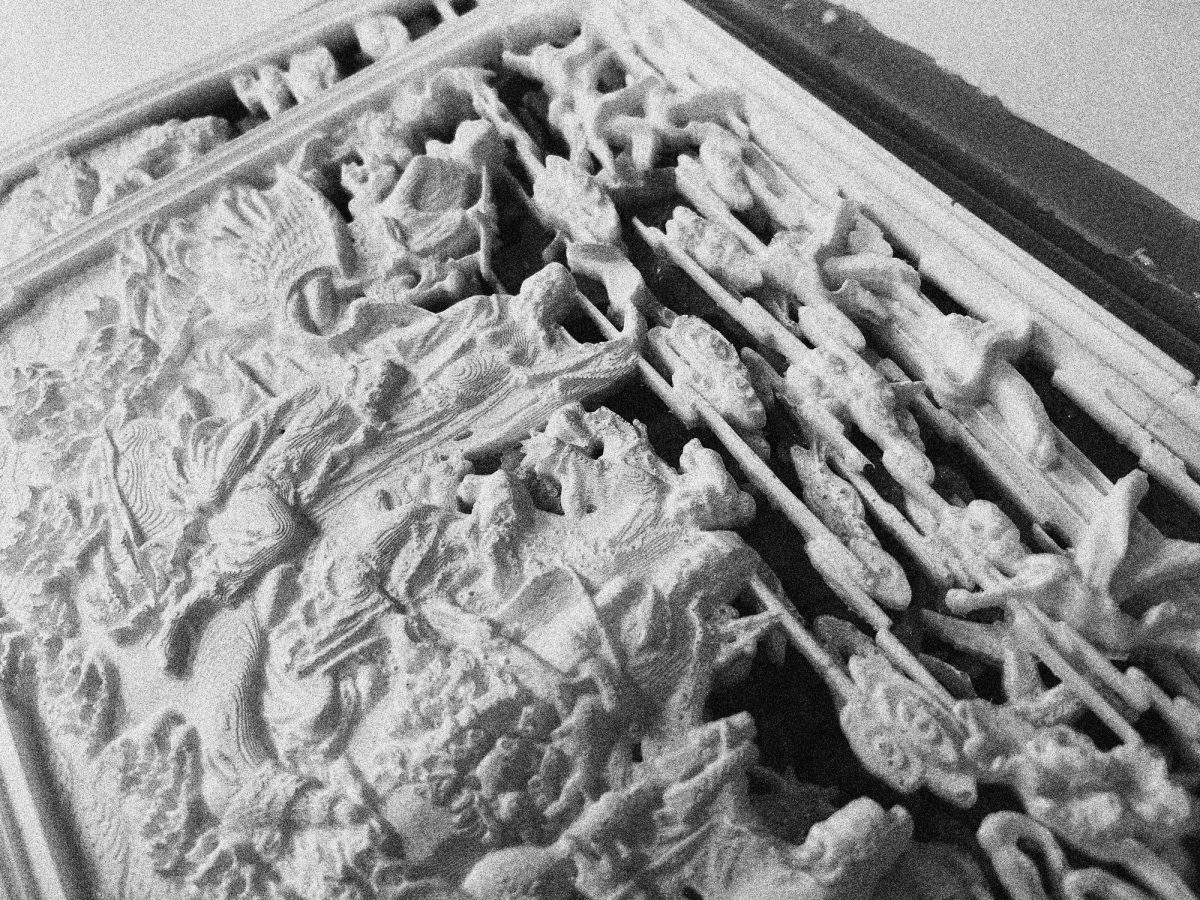
Fig. 16, Zoom in the repelica
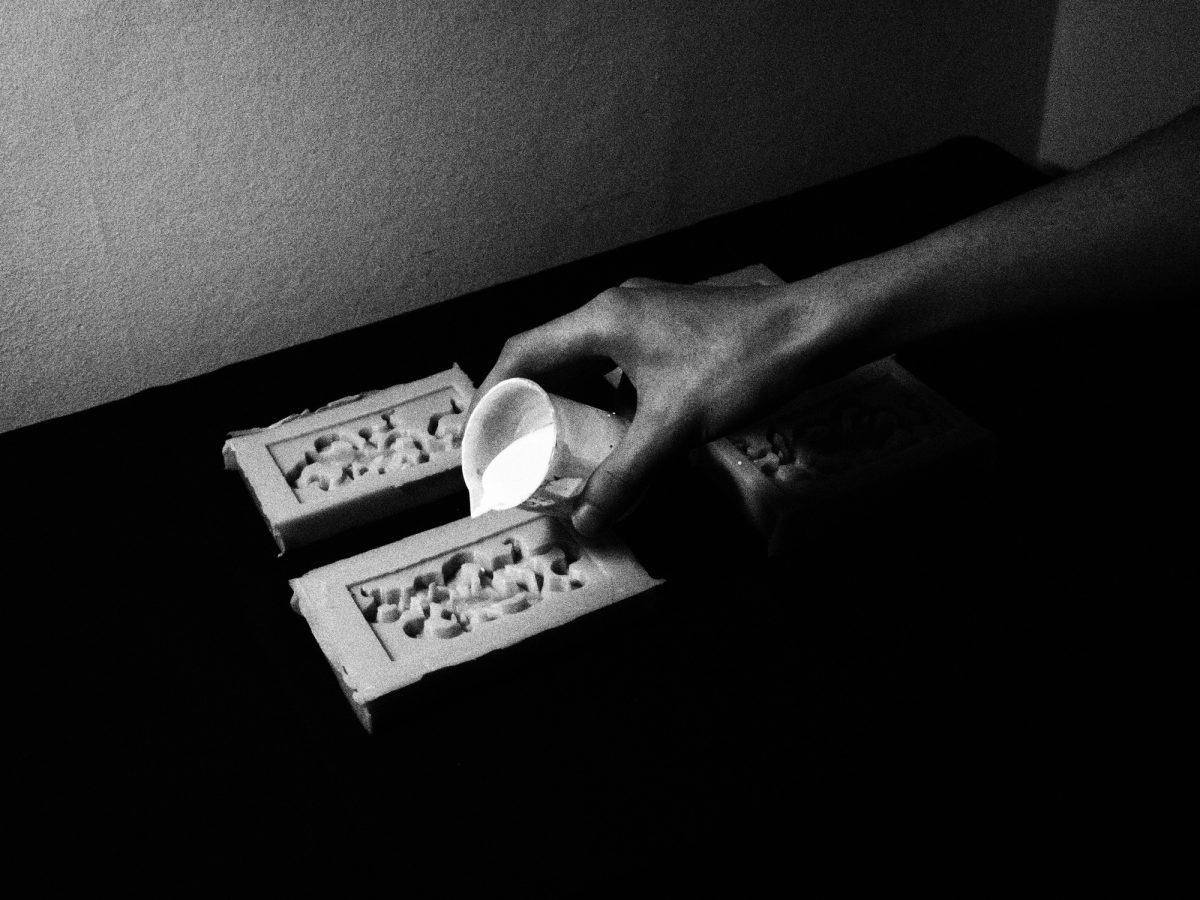
Fig. 17, Simple Prototype Casting step1
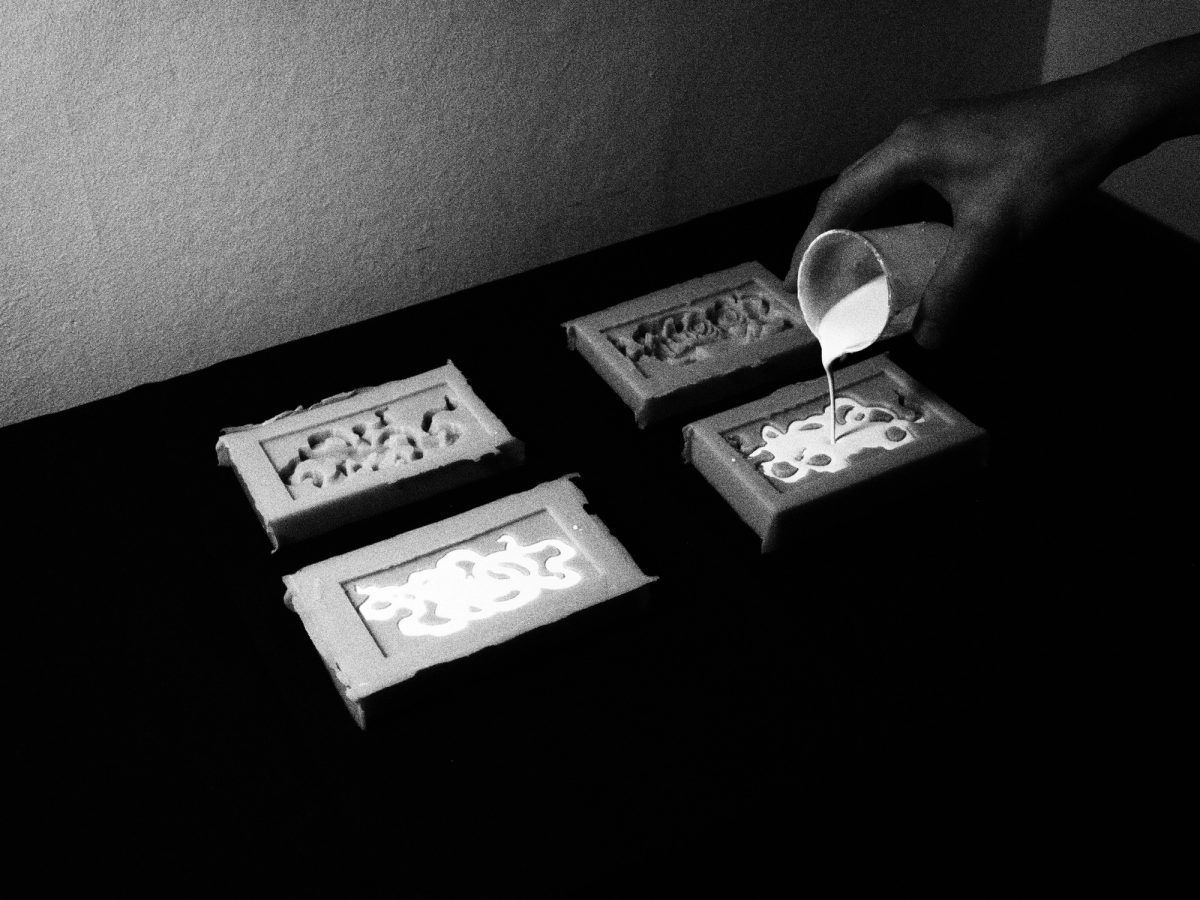
Fig. 18, Simple Prototype Casting step2
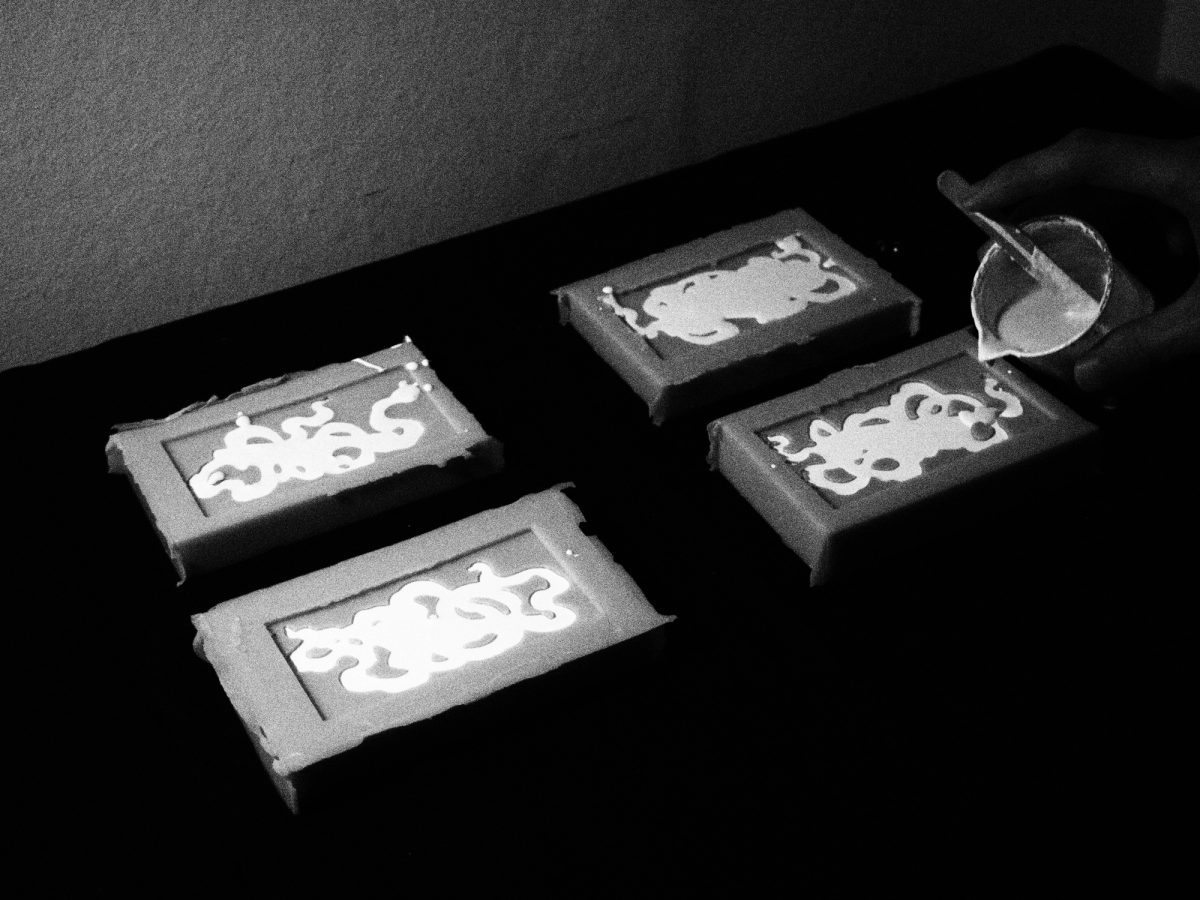
Fig. 19, Simple Prototype Casting step3
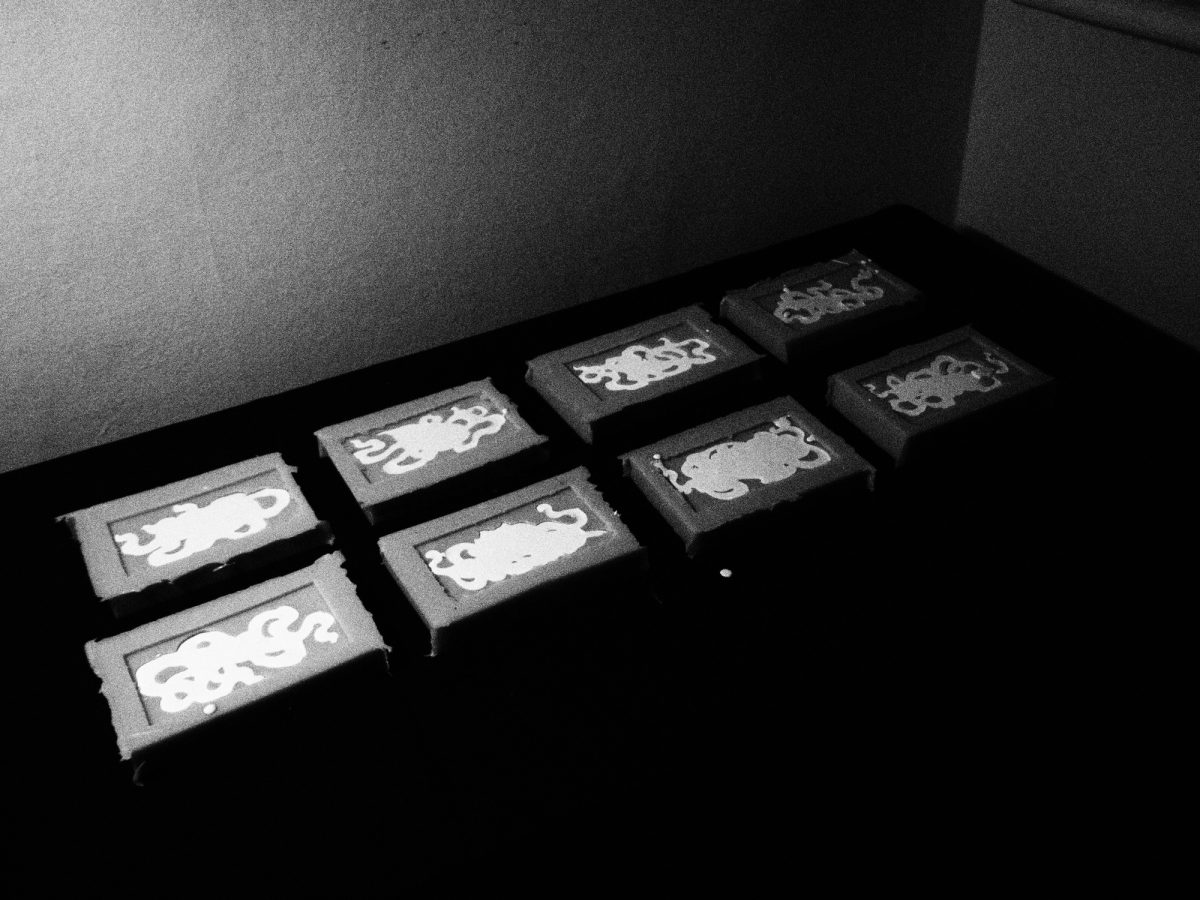
Fig. 20, Simple Prototype Casting step4
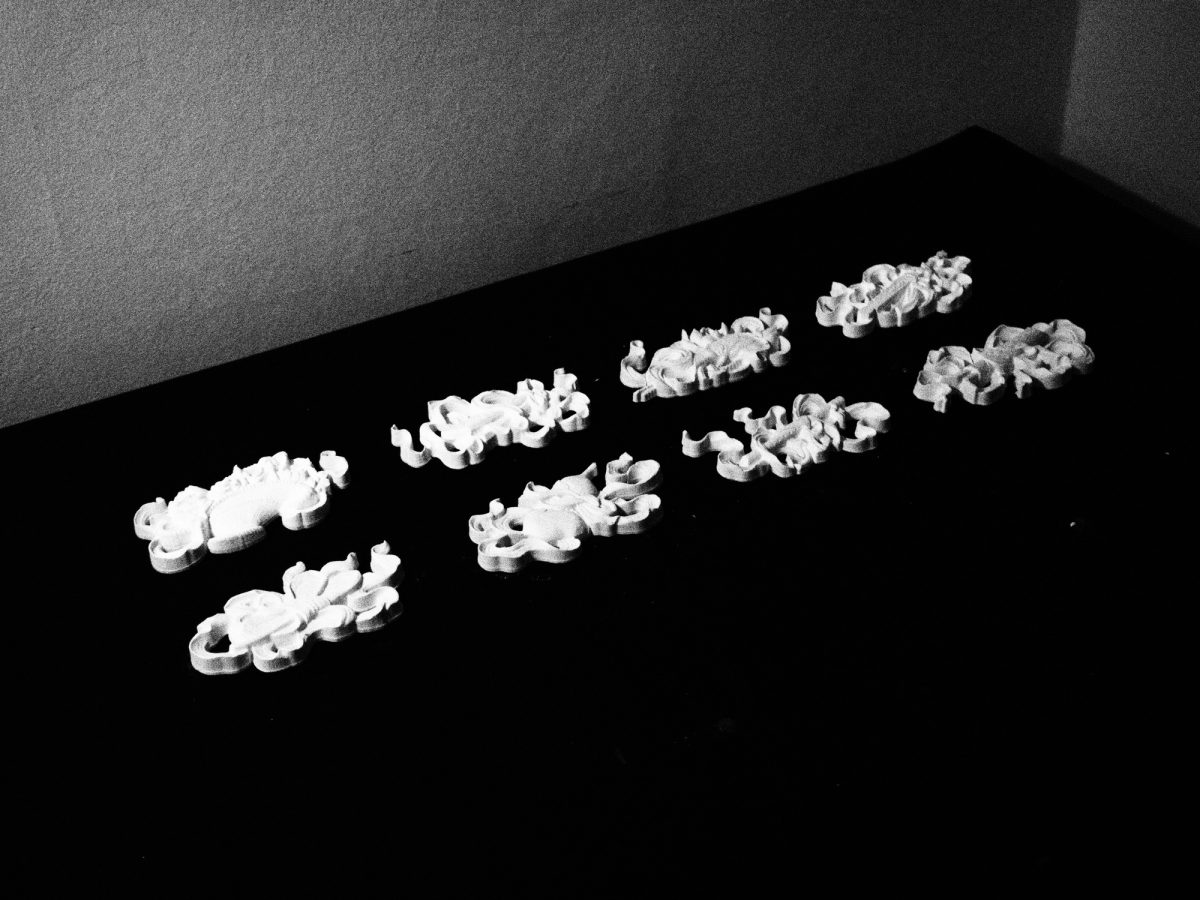
Fig. 21, Simple Prototype Casting step5
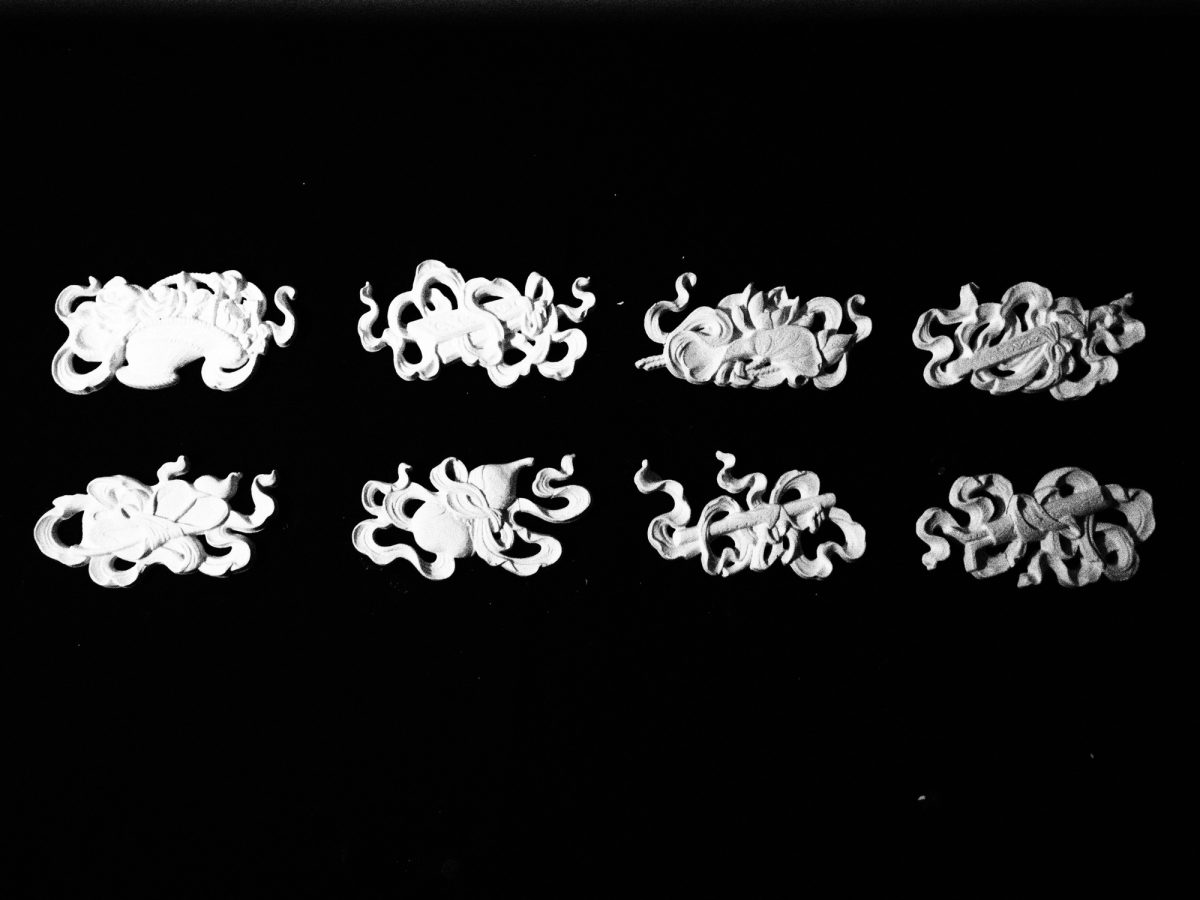
Fig.22, Simple Prototype Casting step6
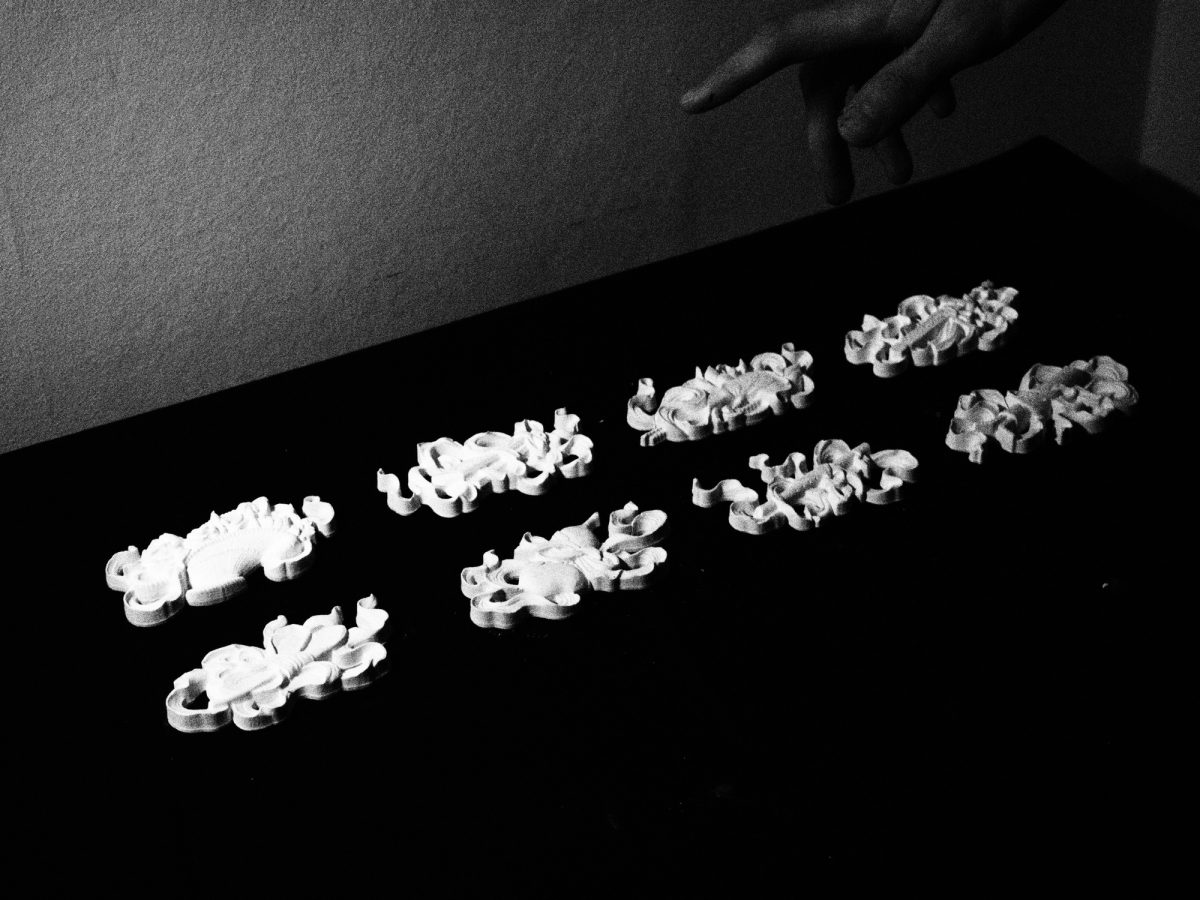
Fig. 23,Destruction step1
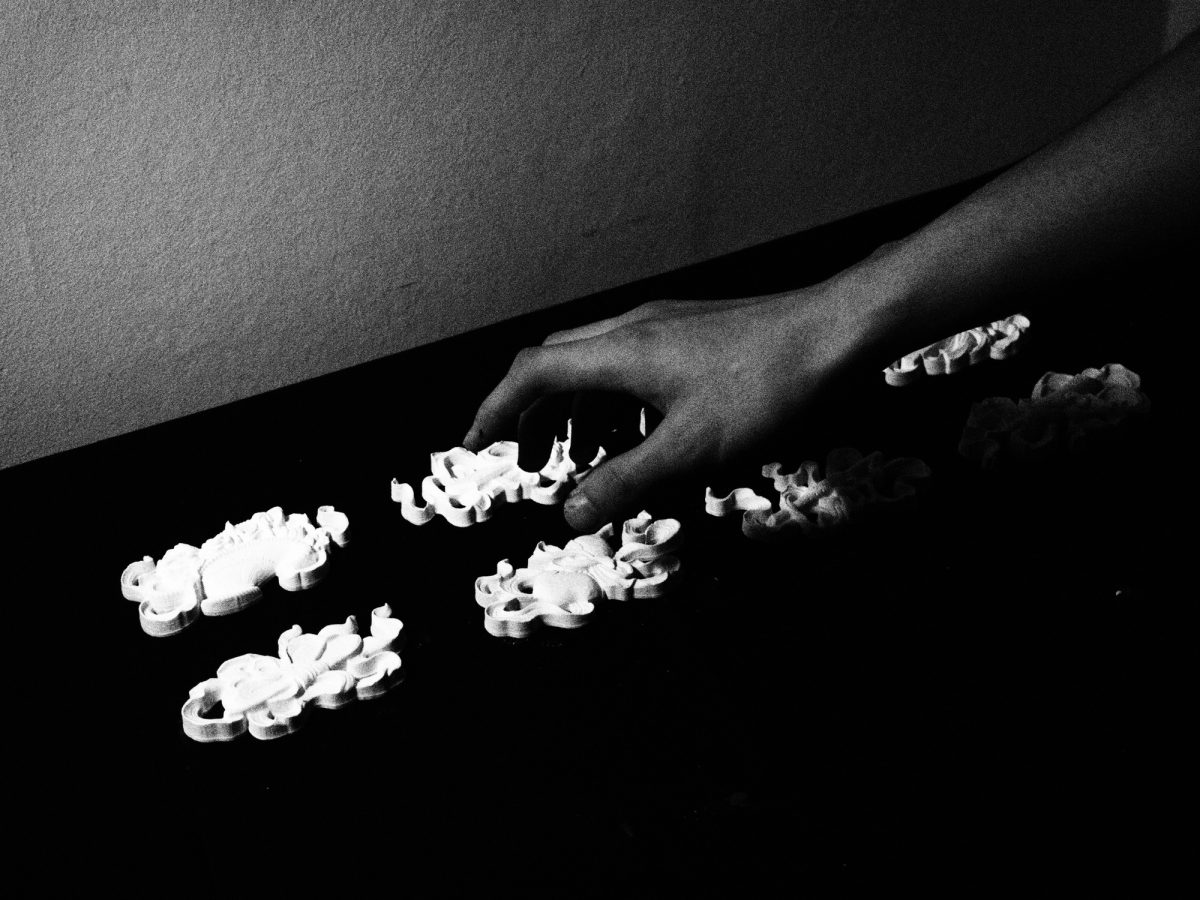
Fig. 24,Destruction step2
Fig. 25,Destruction step3
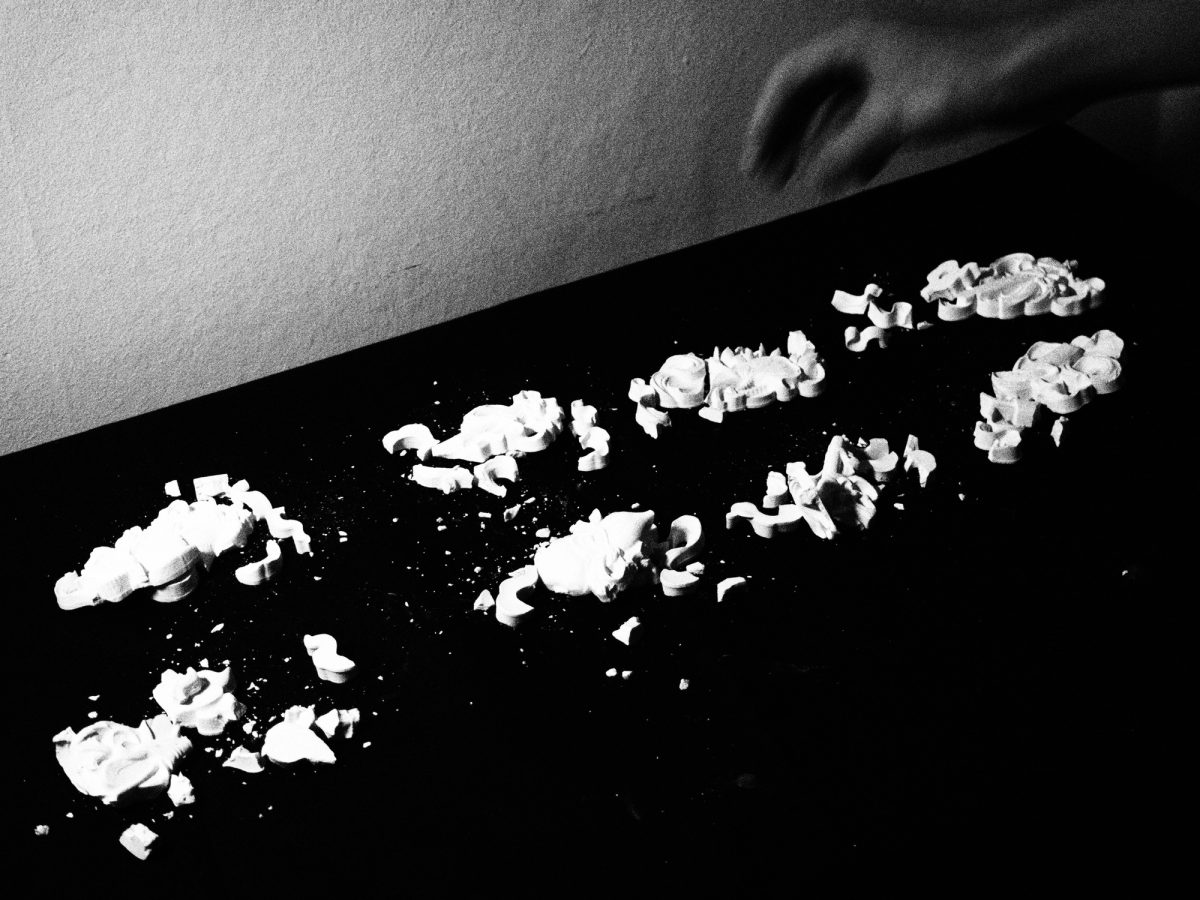
Fig. 26,Destruction step4
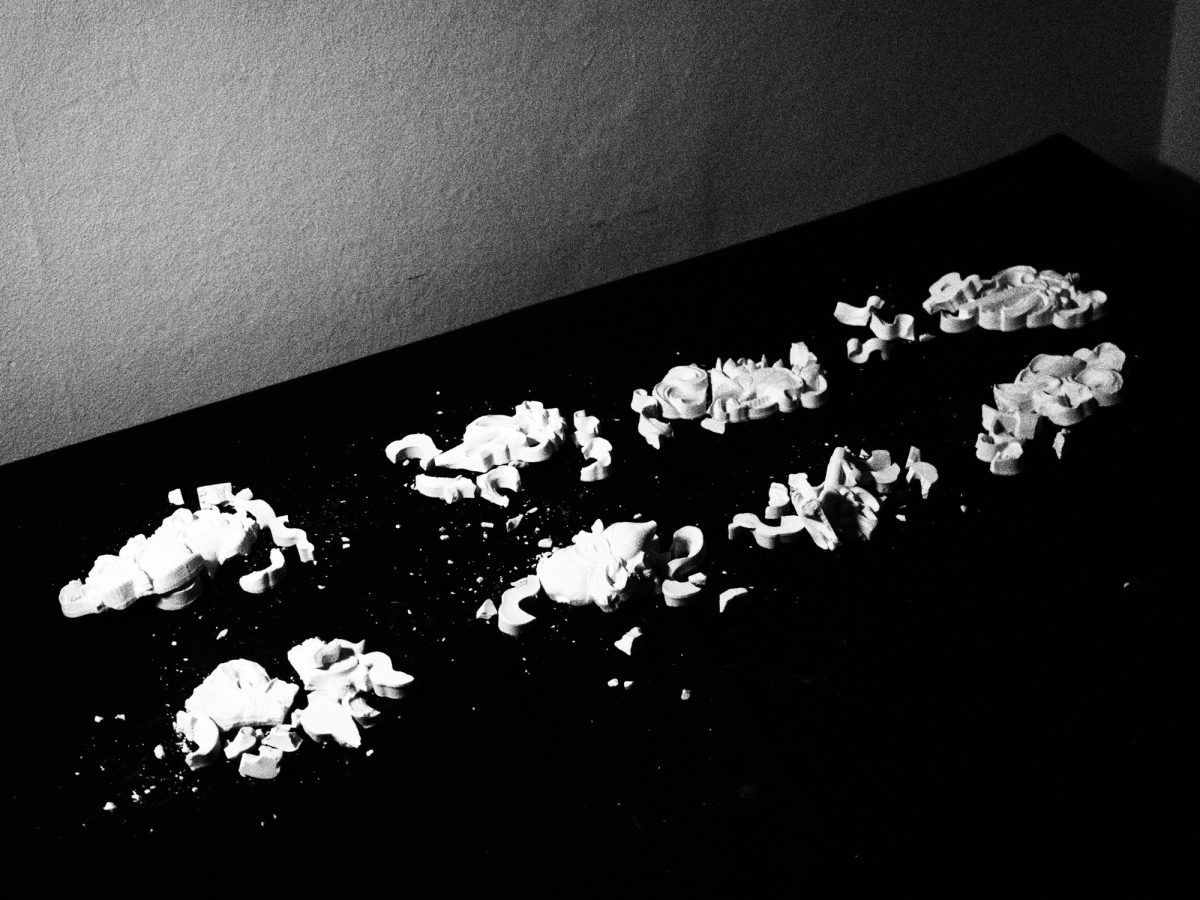
Fig. 27,Destruction step5
Fig. 28,Destruction step6
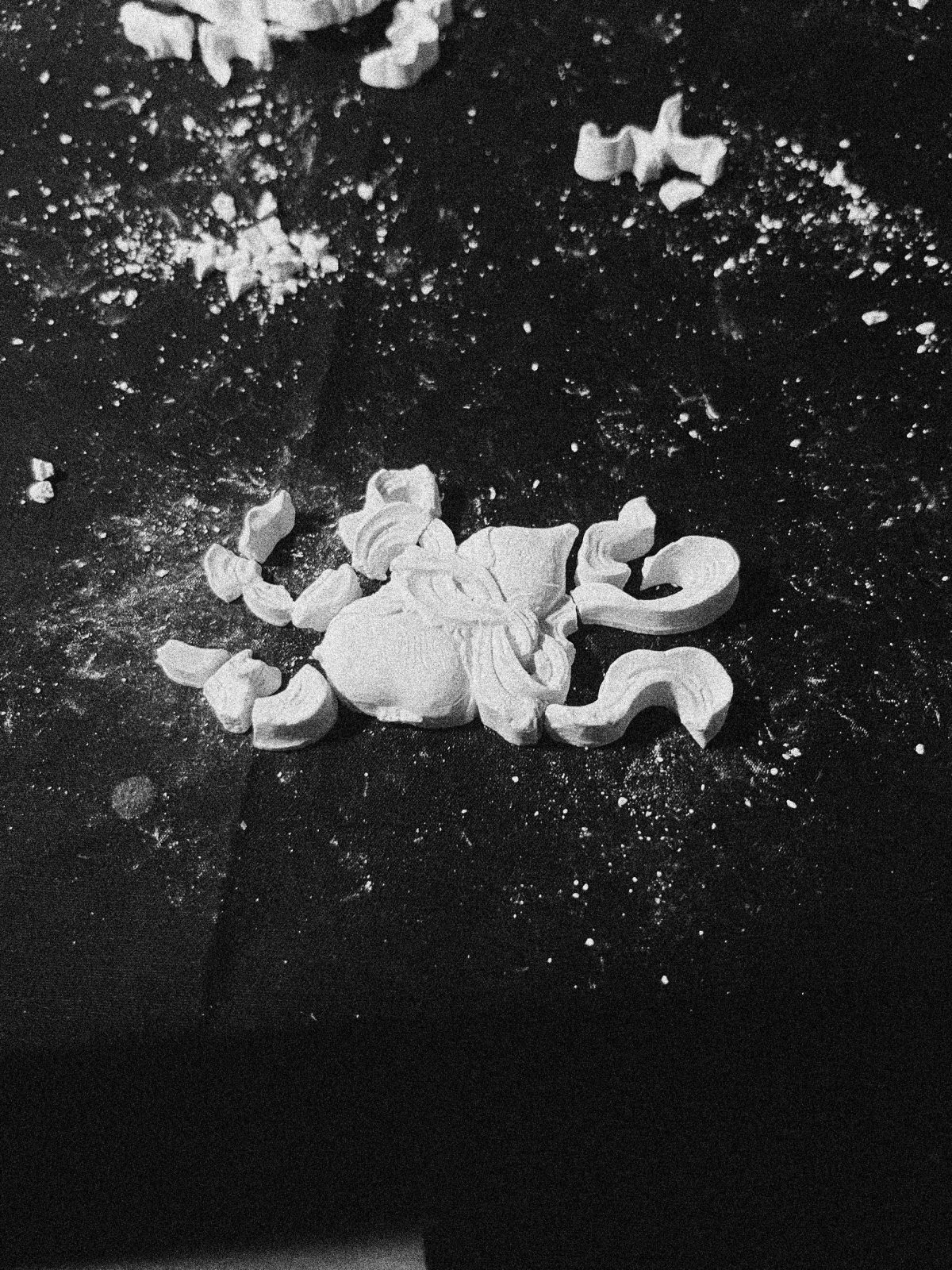
Fig. 29 Restore step1
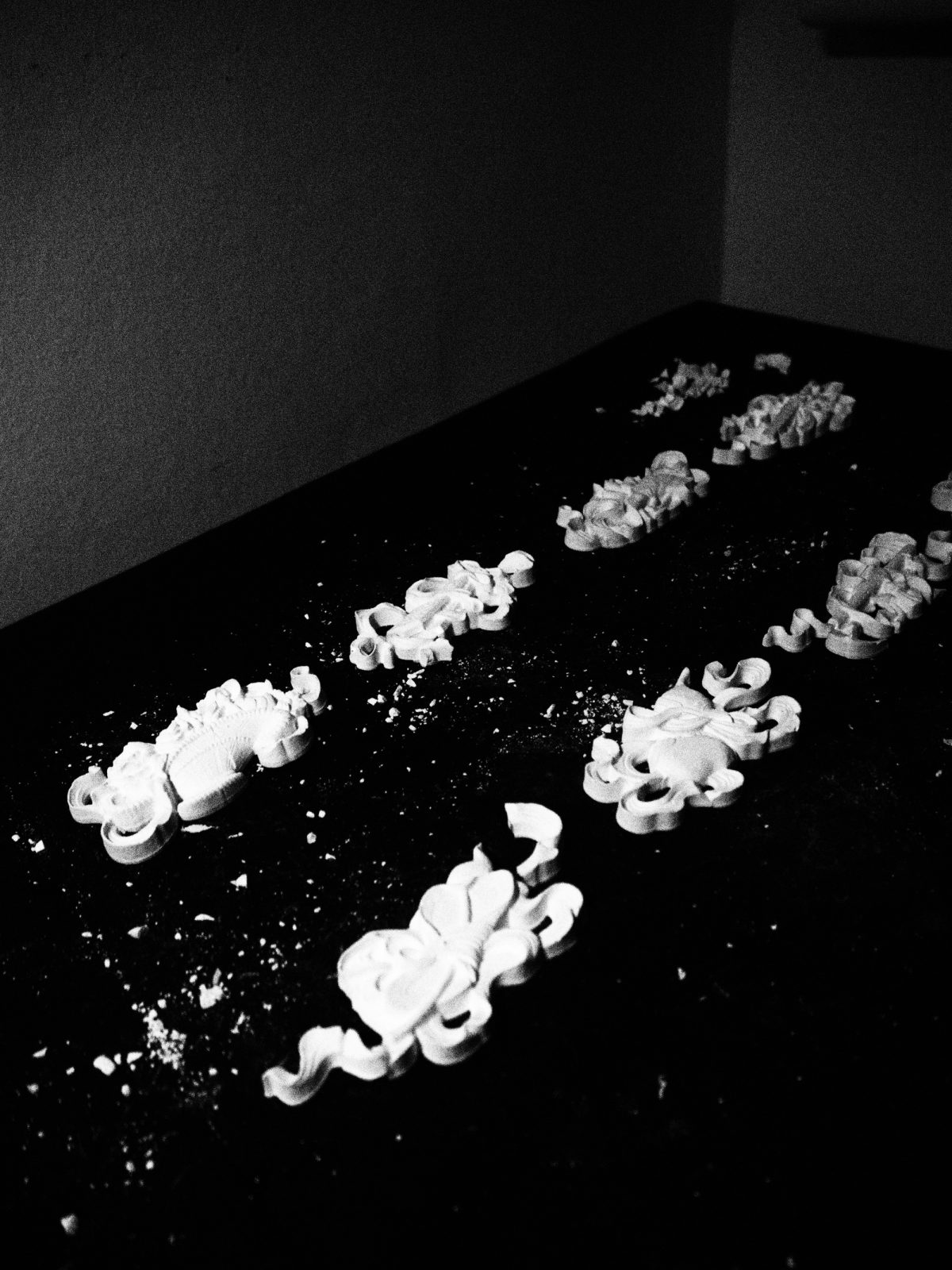
Fig. 30, Restore step2
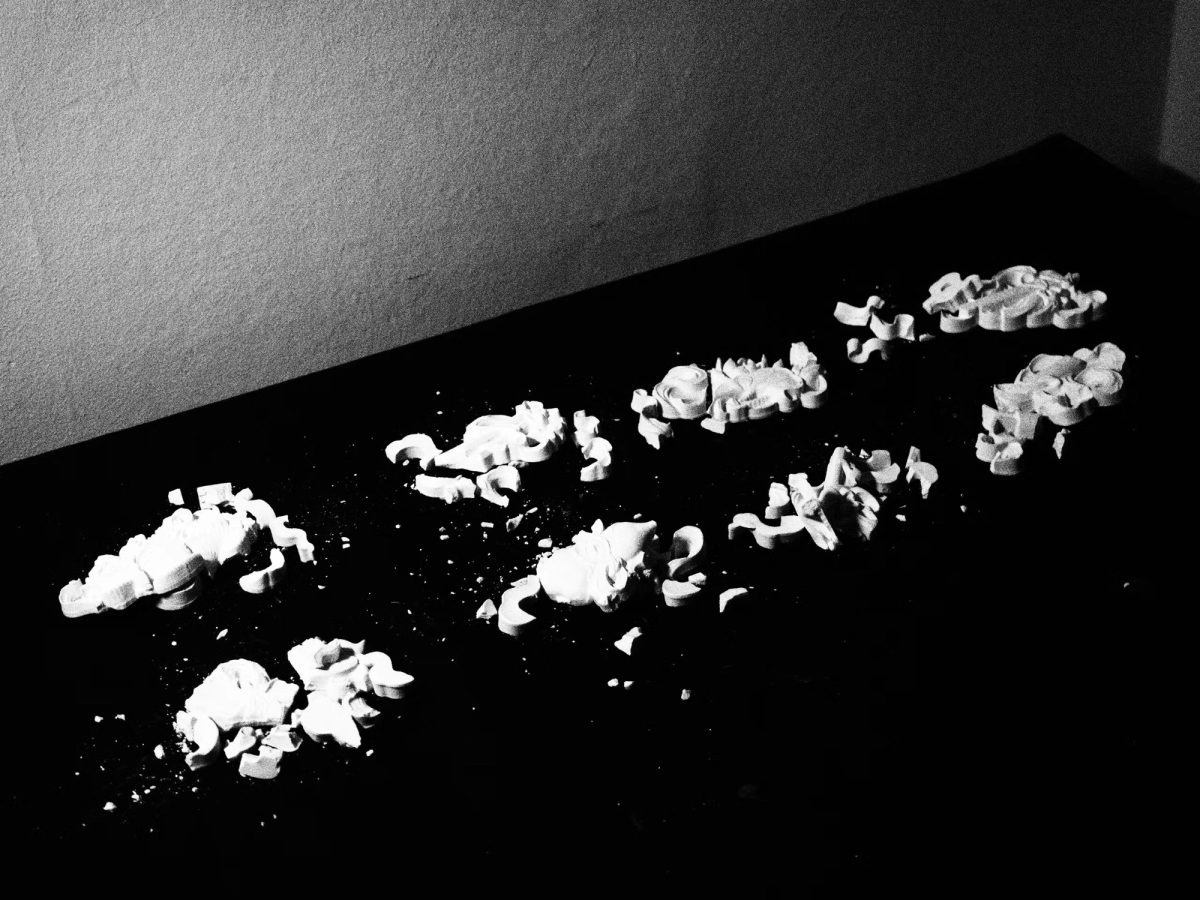
Fig. 31, Final Restore.
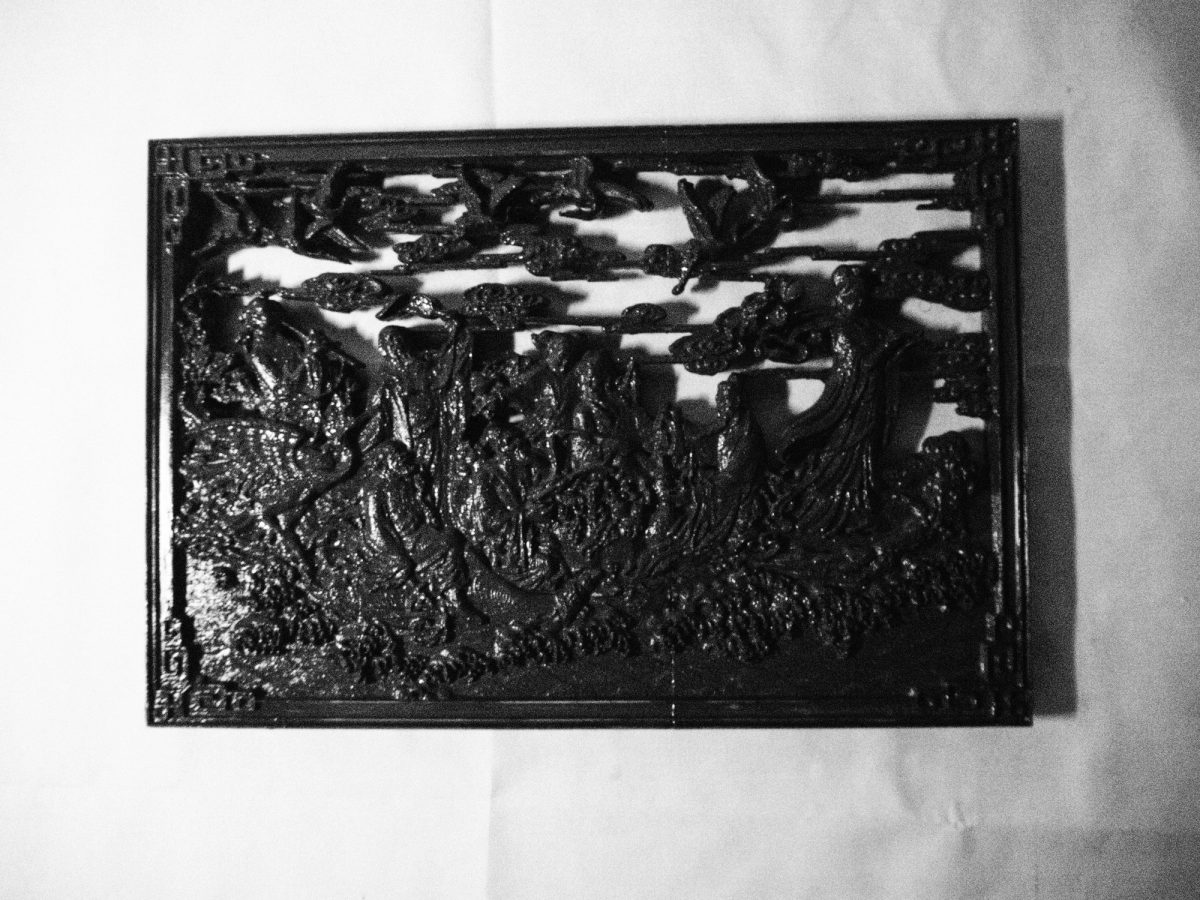
Fig. 32, Prototype
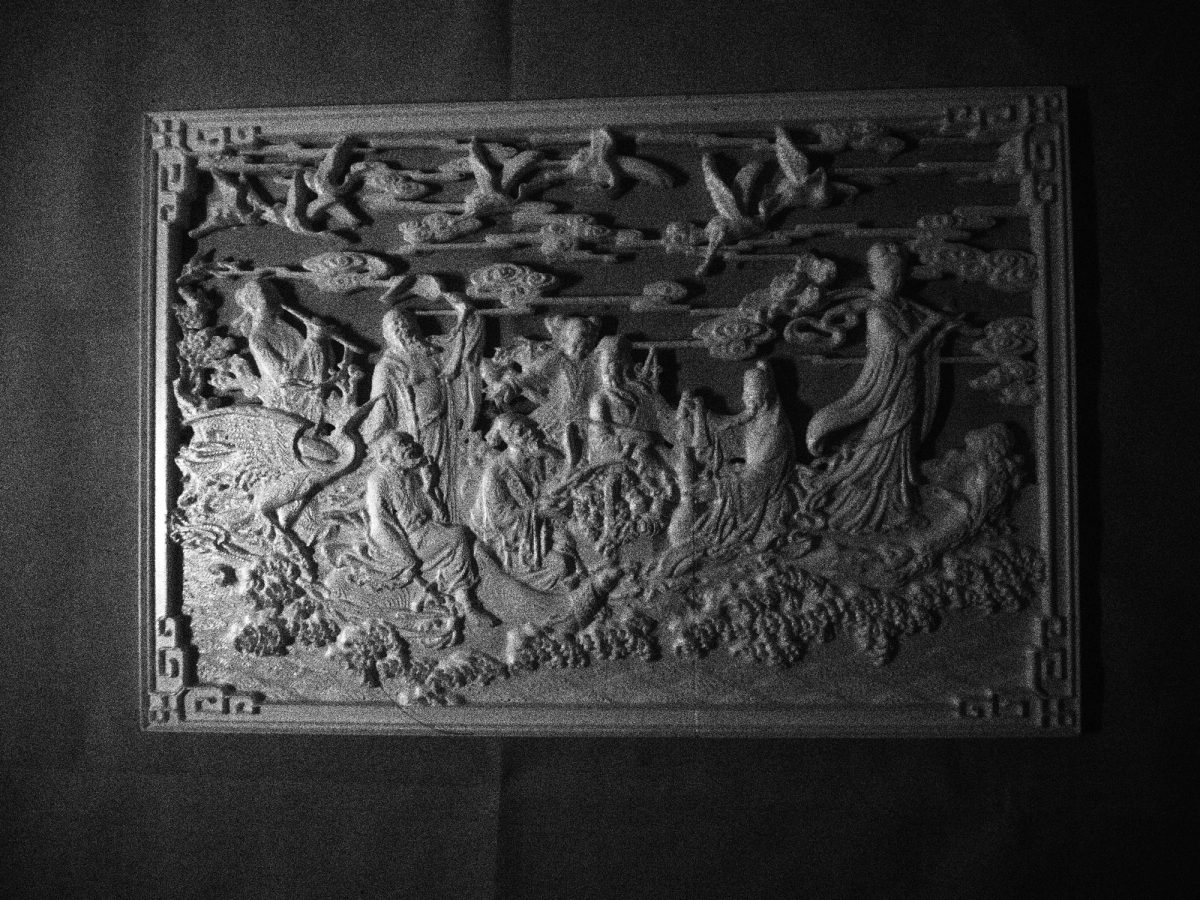
Fig. 33, Copy
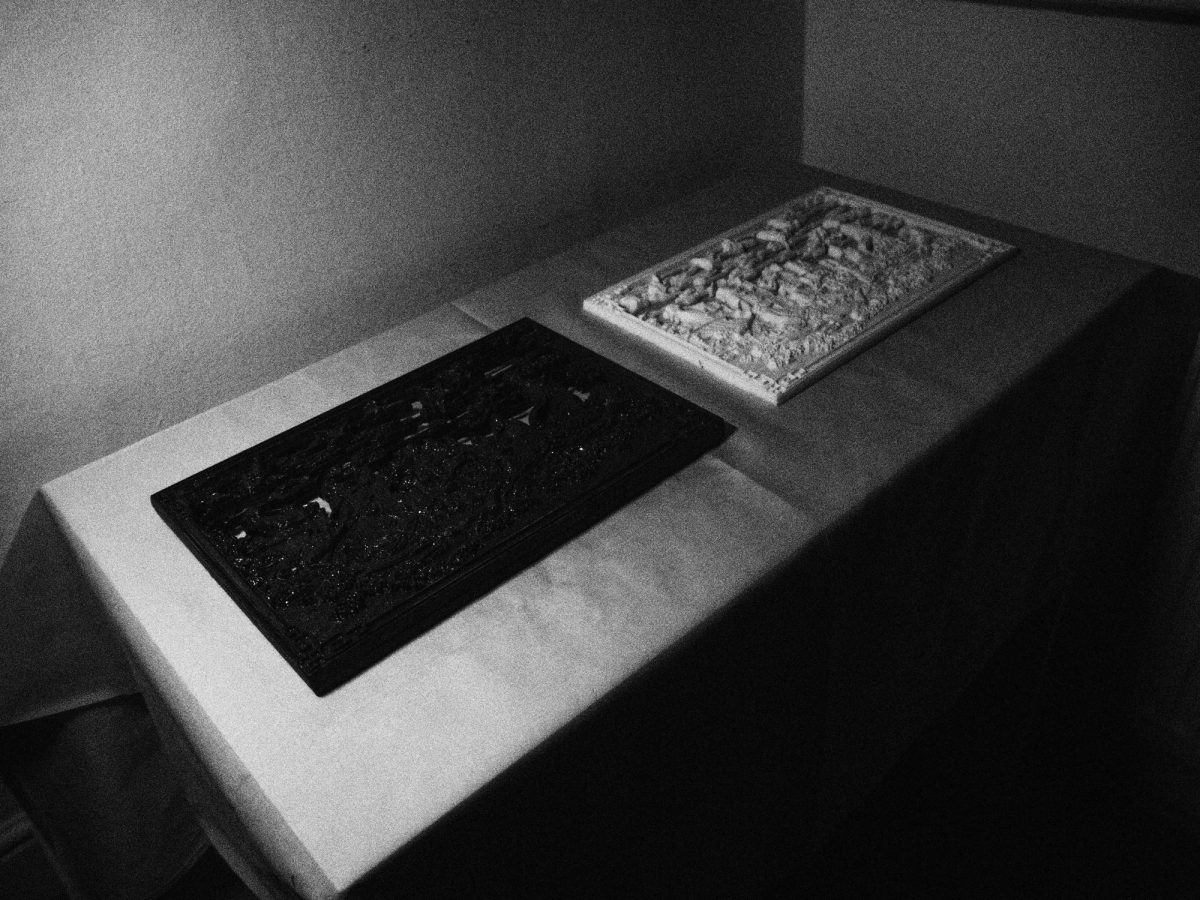
Fig. 34, Comparsion-Prototype
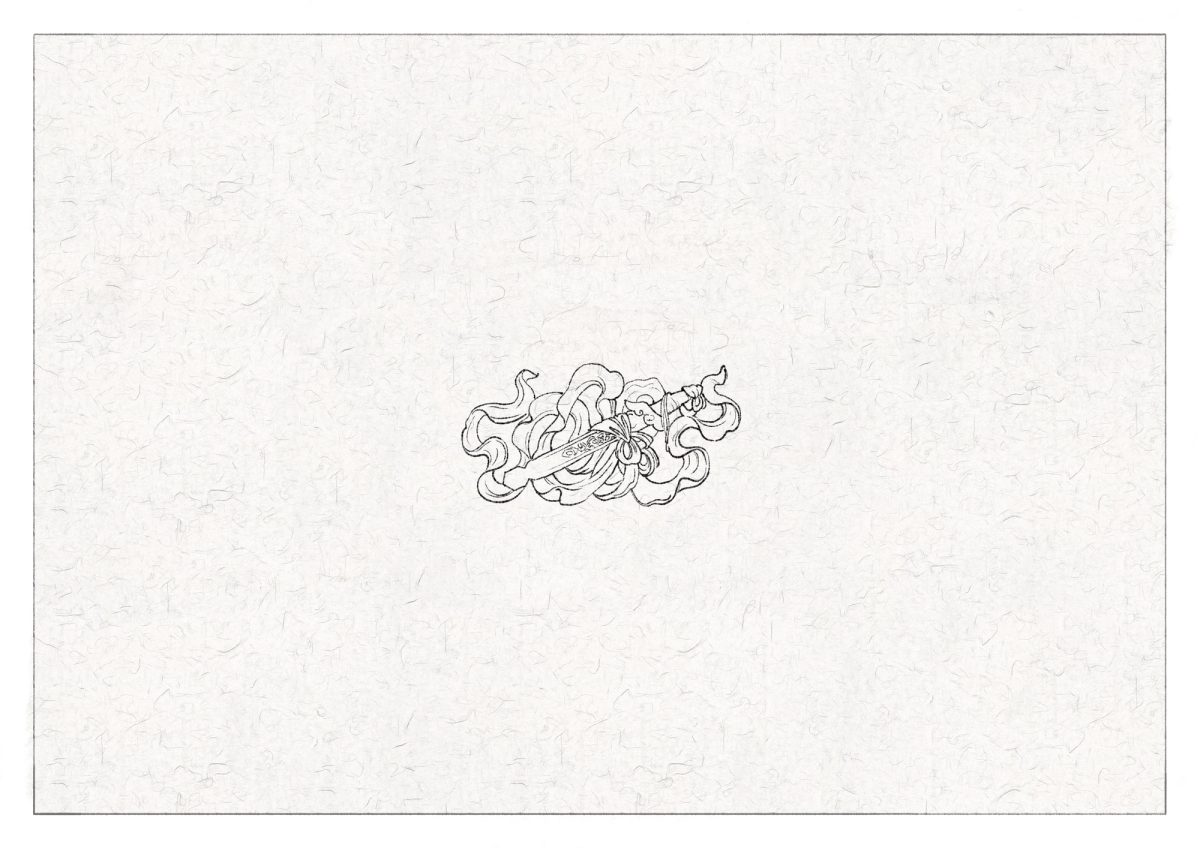
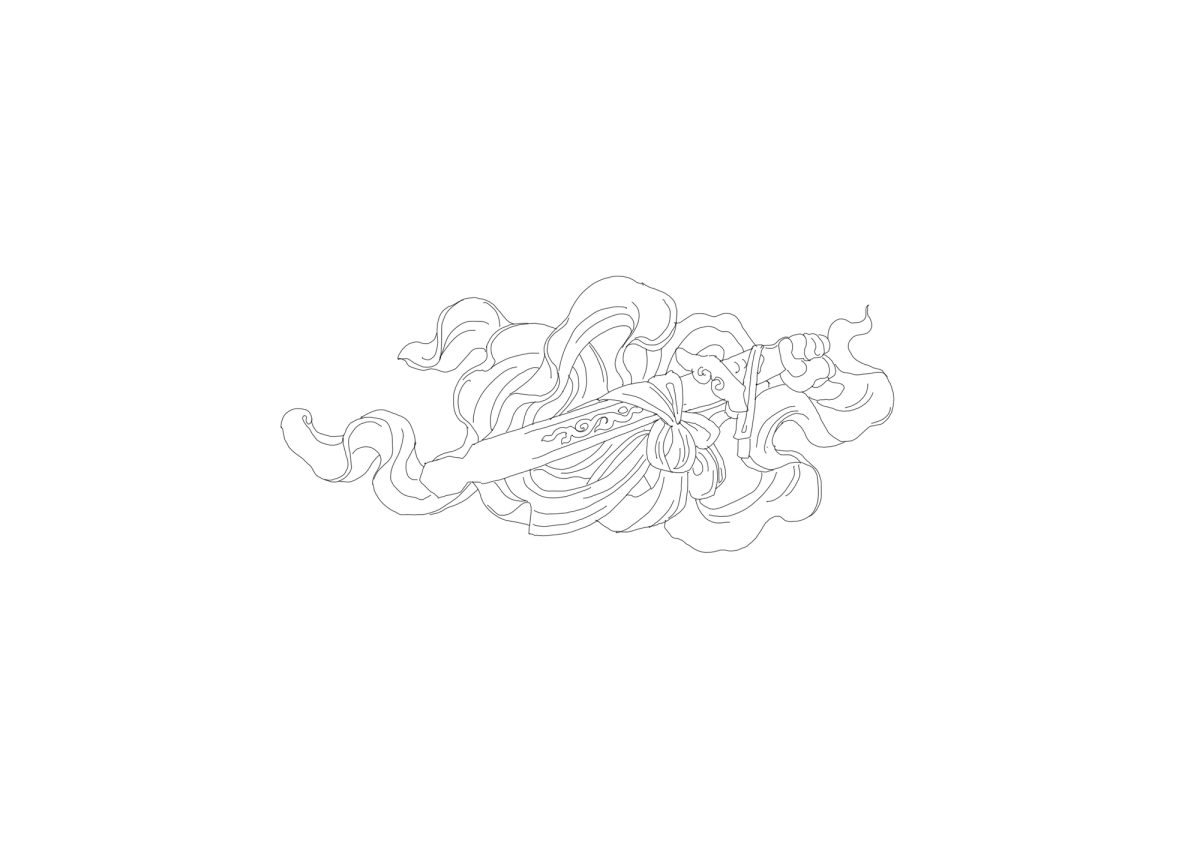
Fig. 35, Original Piece Drawing
Fig. 36, Repaired Piece Drawing
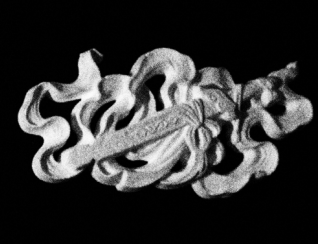

Fig. 37, Original Piece
Fig. 38, Repaired Piece
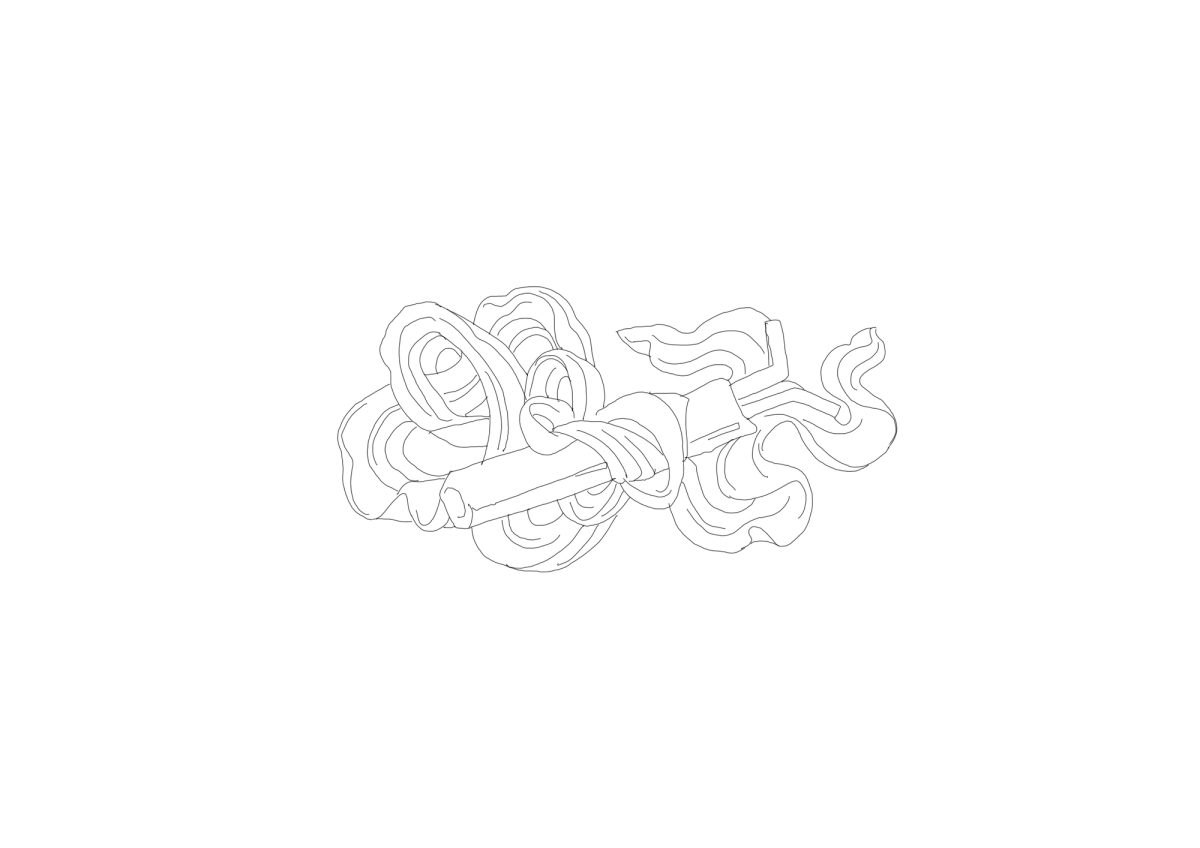
Fig. 39, Original Piece Drawing
Fig. 40, Repaired Piece Drawing
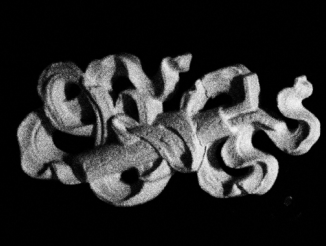
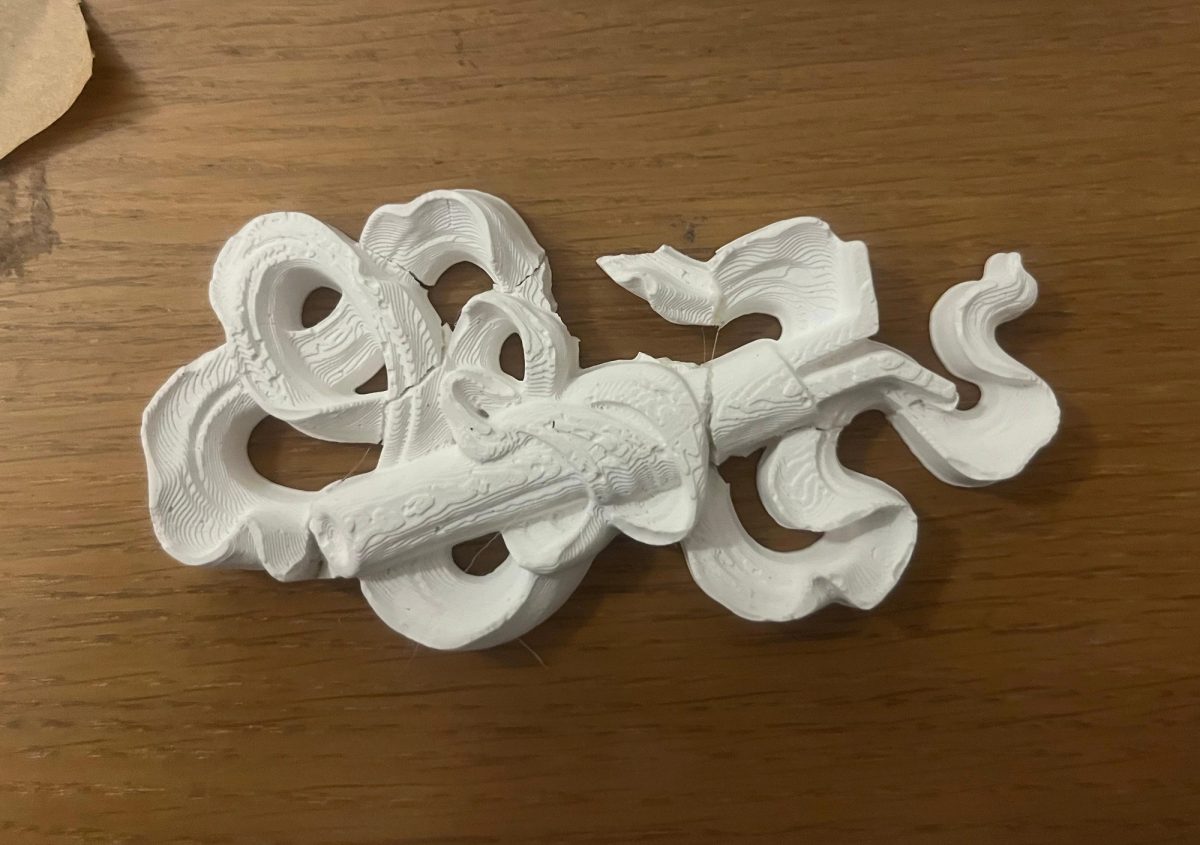
Fig. 41, Original Piece
Fig. 42, Repaired Piece
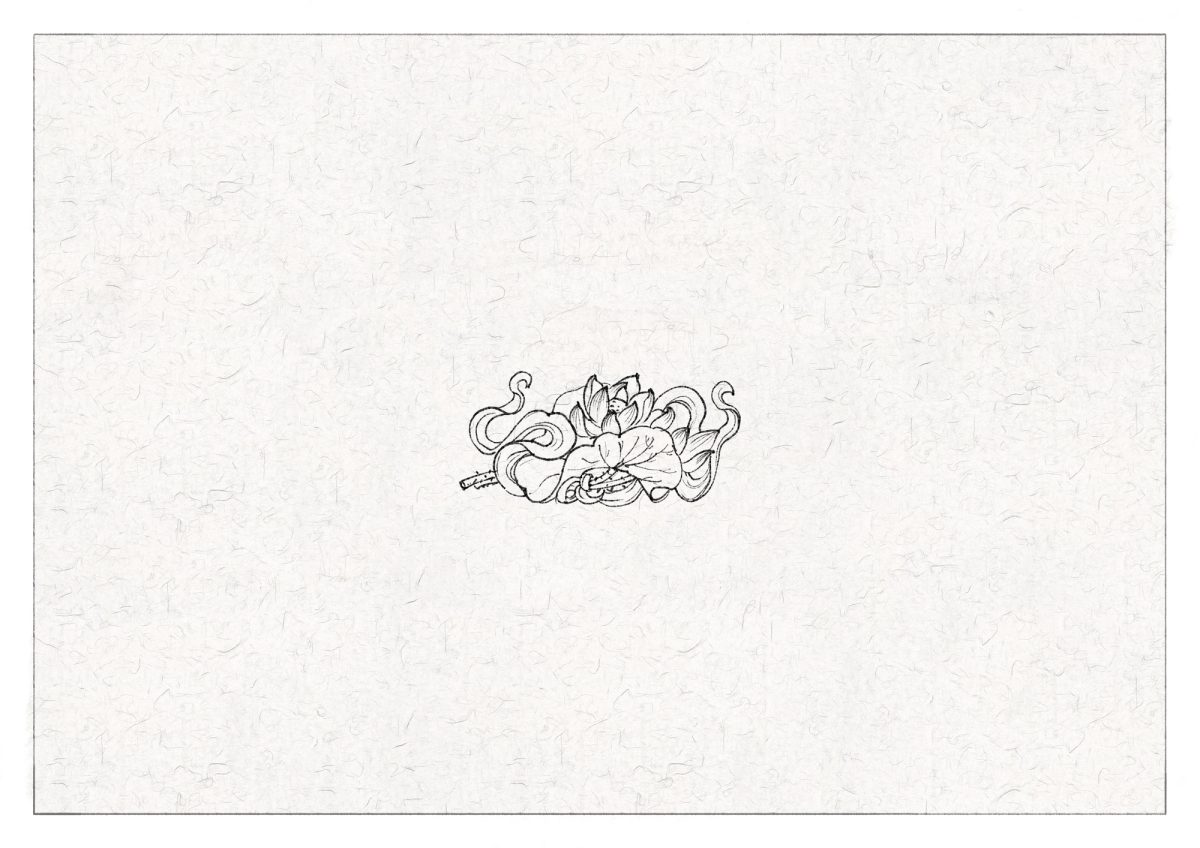
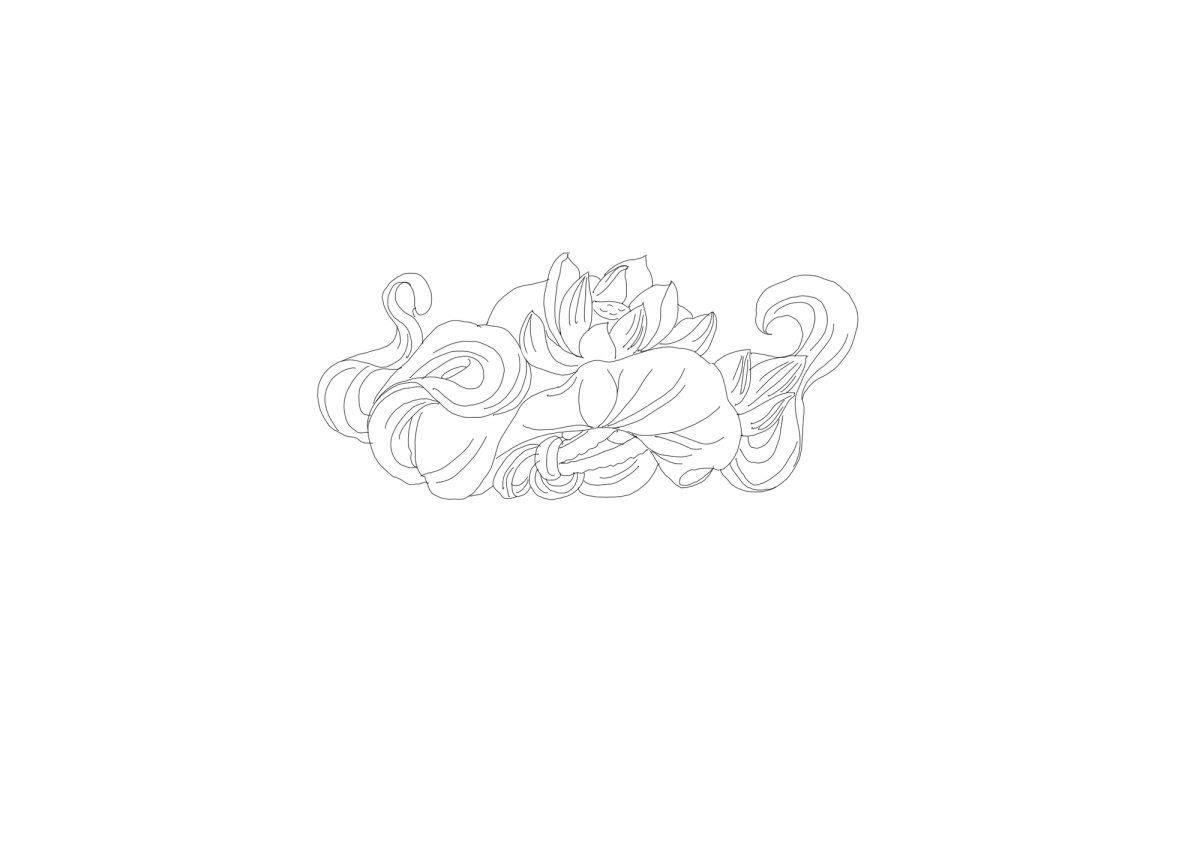
Fig. 43, Original Piece Drawing
Fig. 44, Repaired Piece Drawing
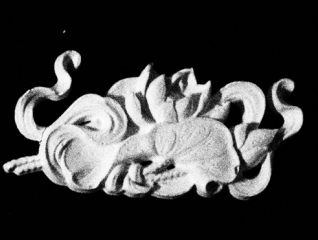
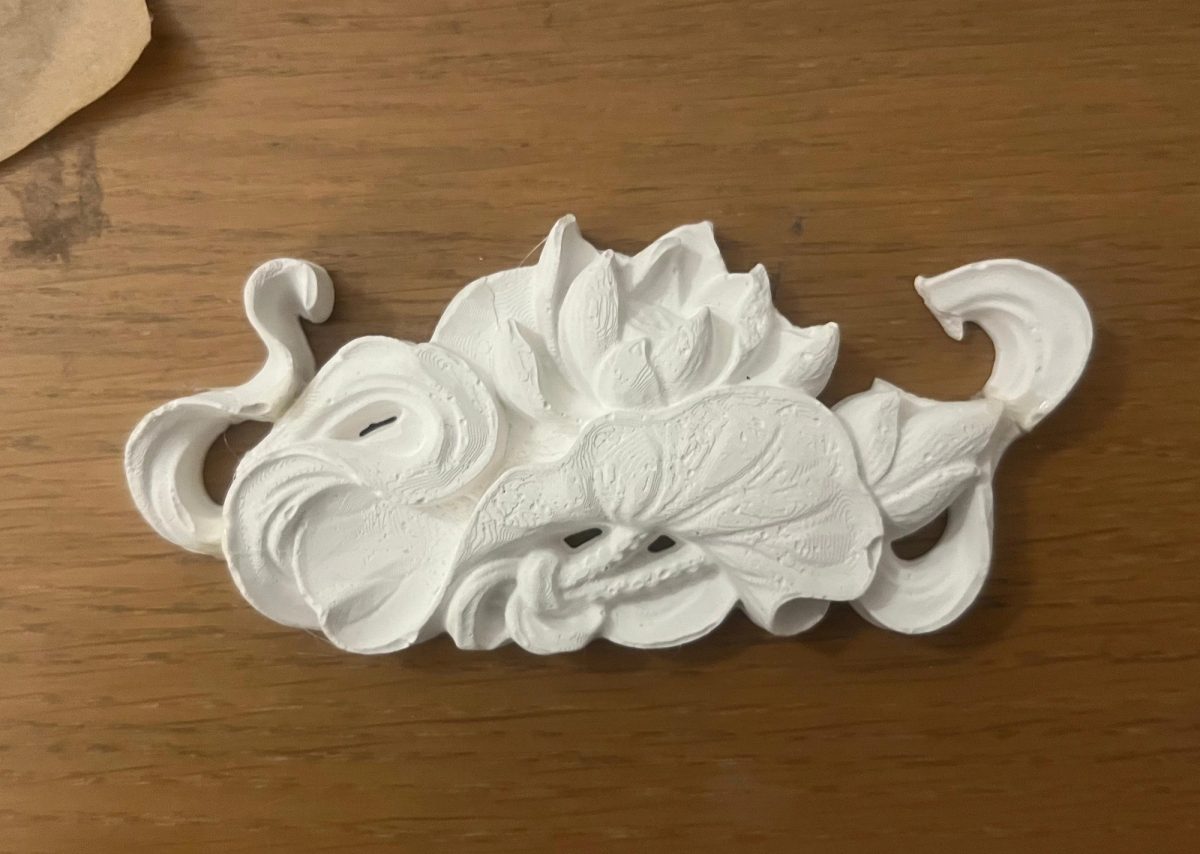
Fig. 45, Original Piece
Fig. 46, Based on Repaired Piece
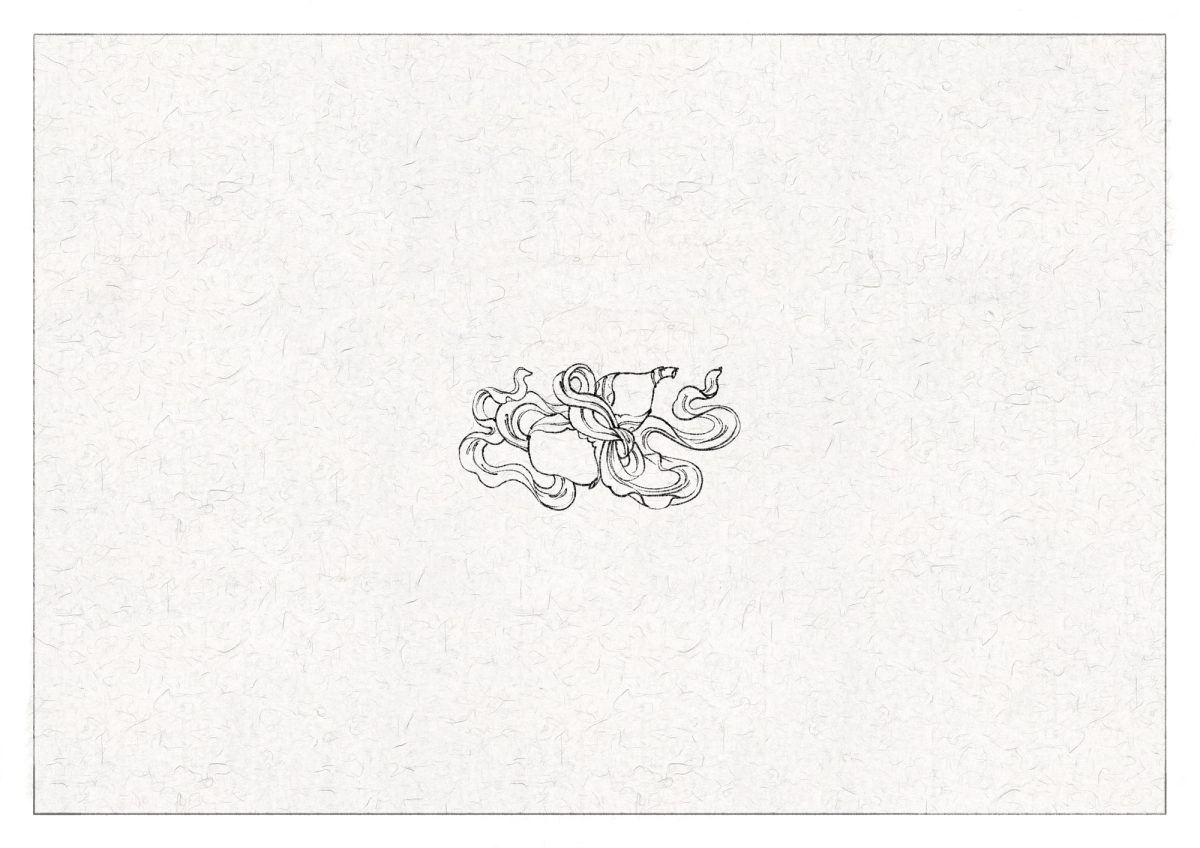
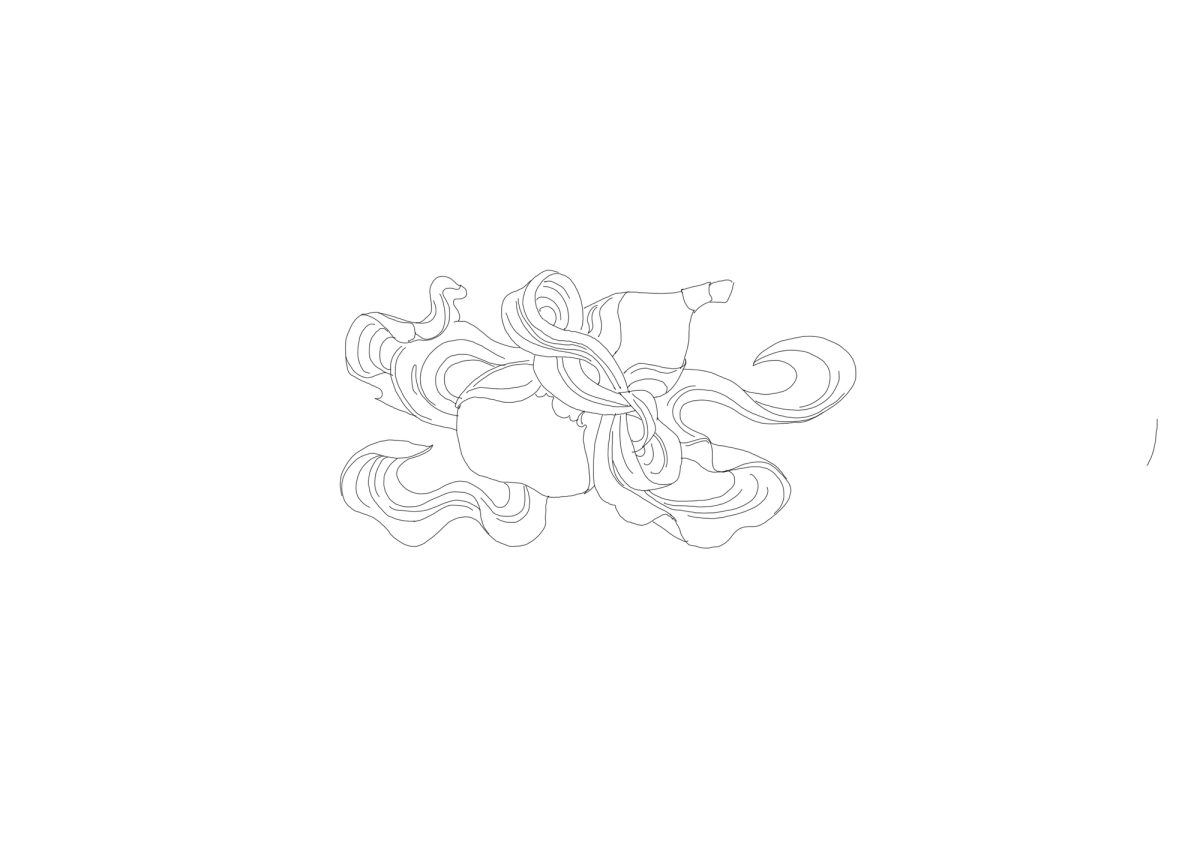
Fig. 47, Original Piece Drawing
Fig. 48, Repaired Piece Drawing
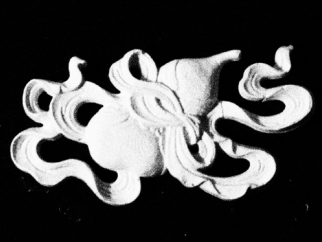
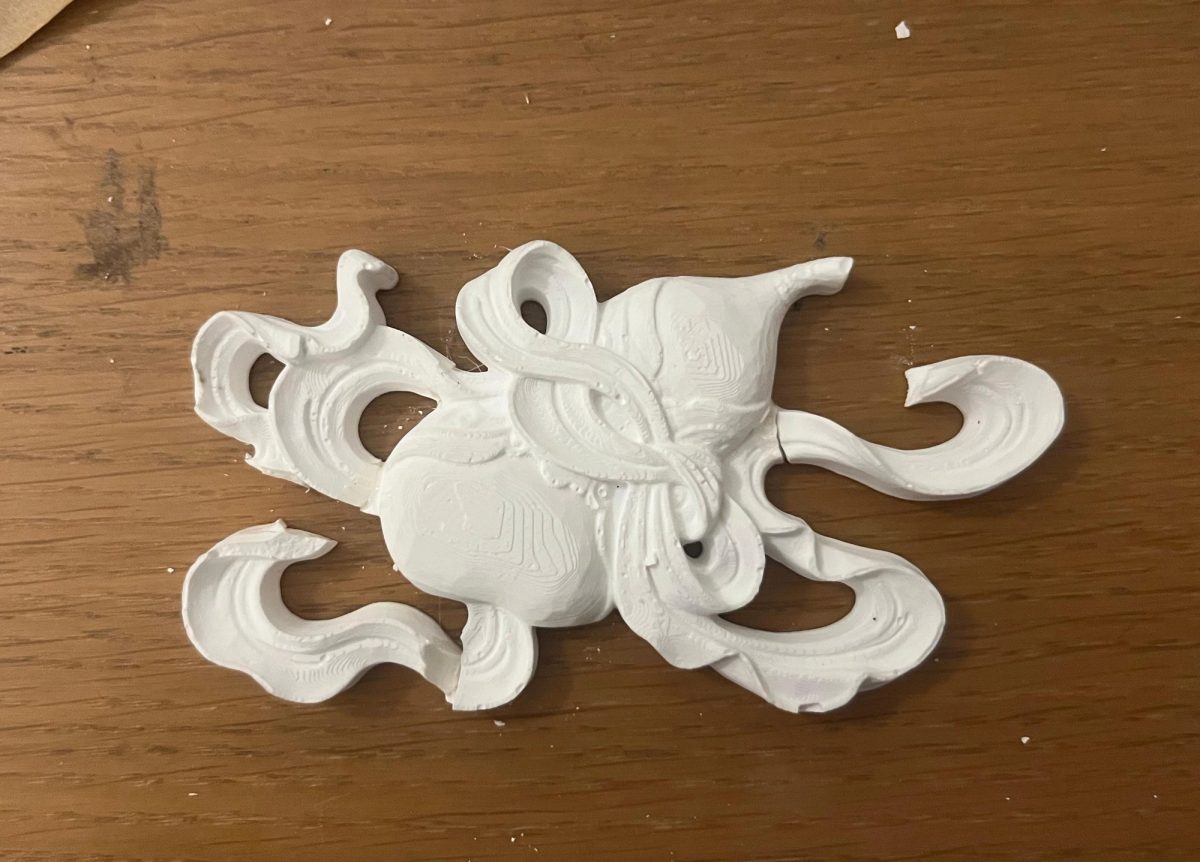
Fig. 49, Original Piece
Fig. 50, Repaired Piece
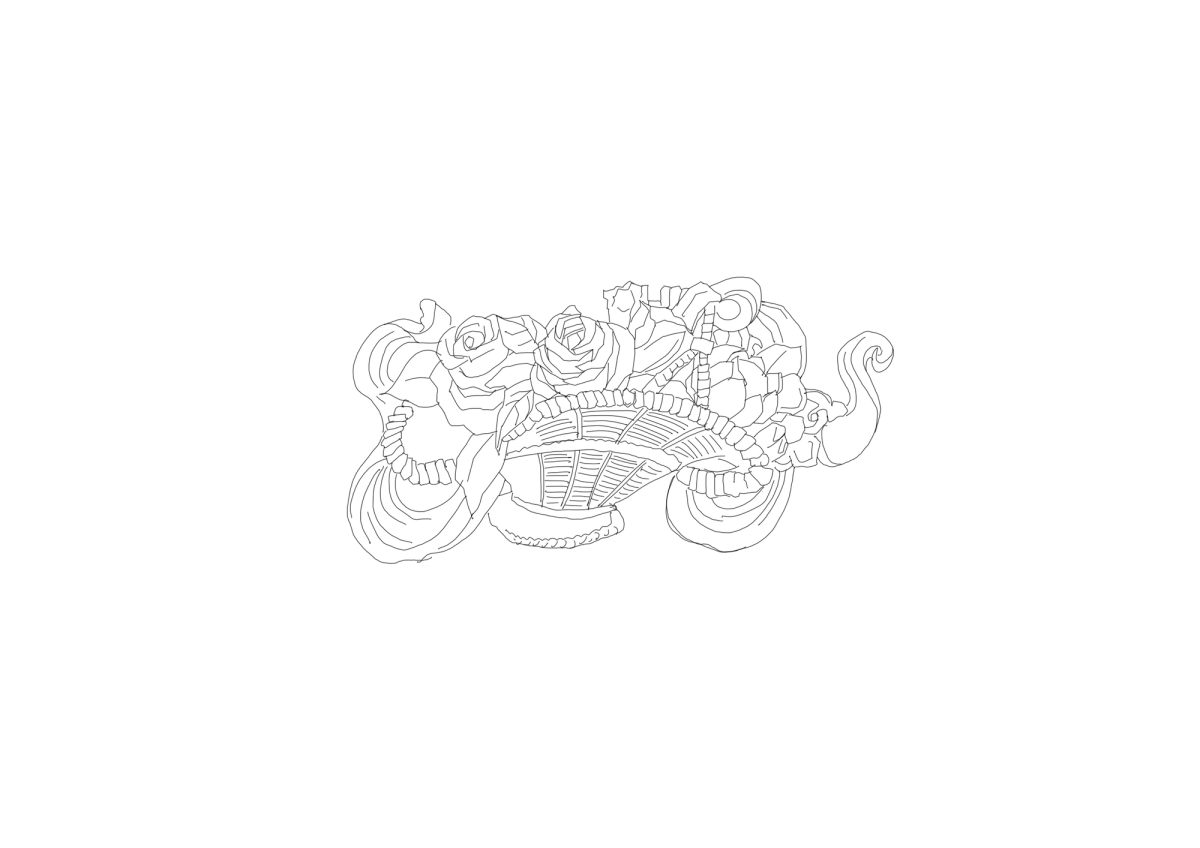
Fig. 51, Original Piece Drawing
Fig. 52, Repaired Piece Drawing
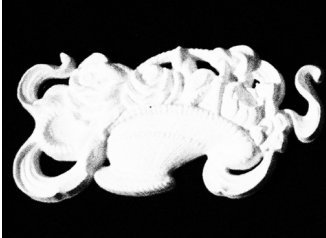
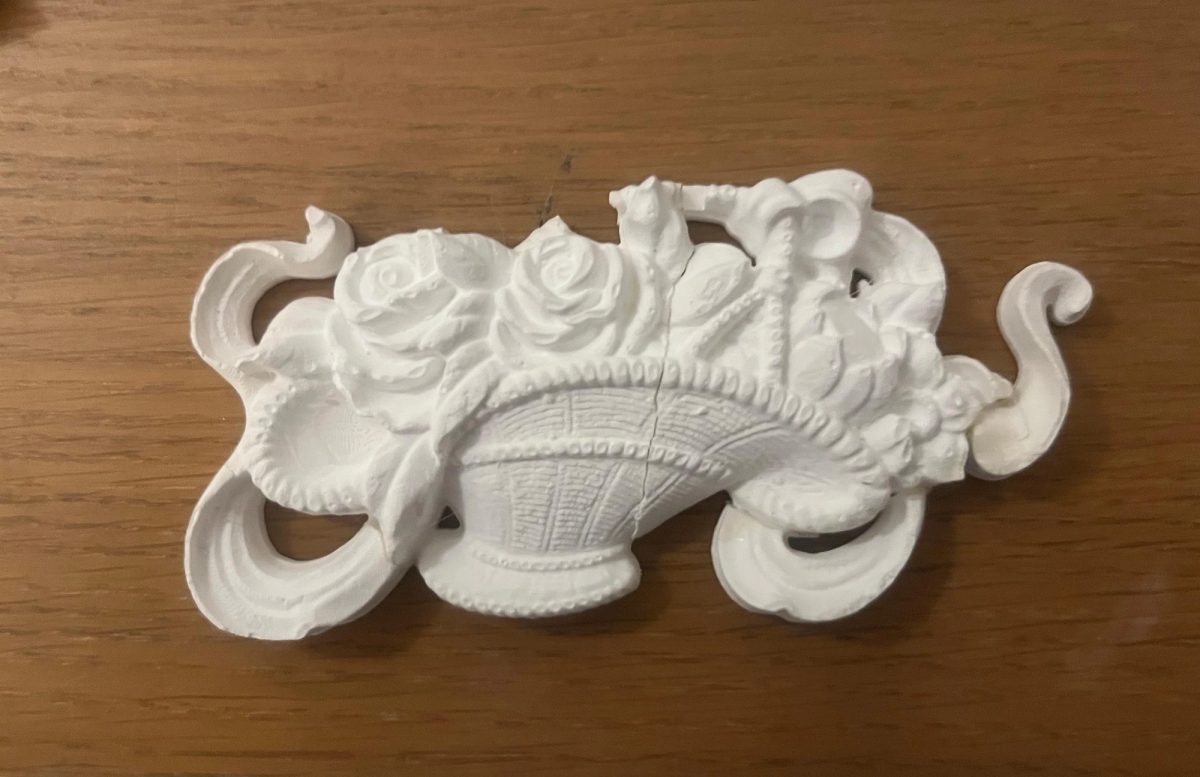
Fig. 53, Original Piece
Fig. 54, Based on Repaired Piece
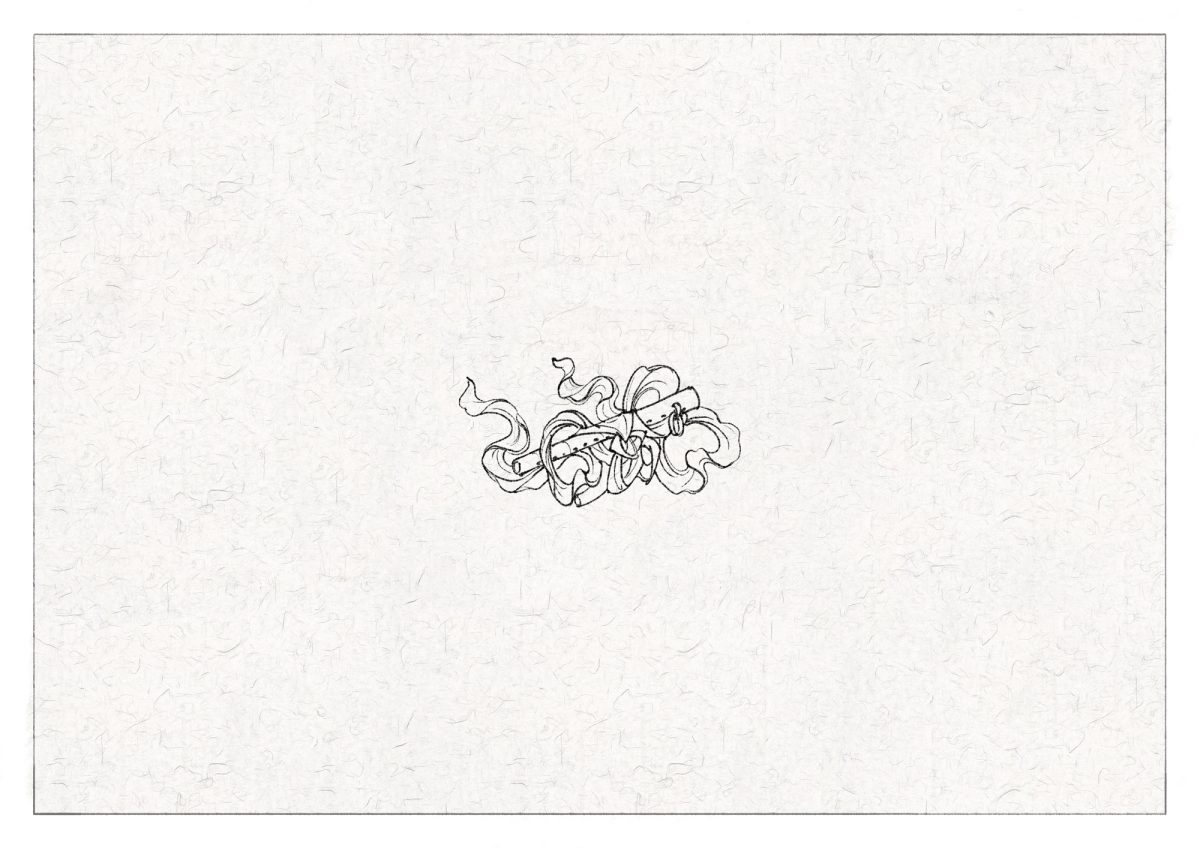

Fig. 55, Original Piece Drawing
Fig. 56, Repaired Piece Drawing
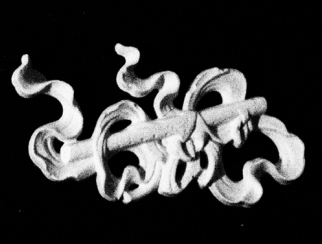
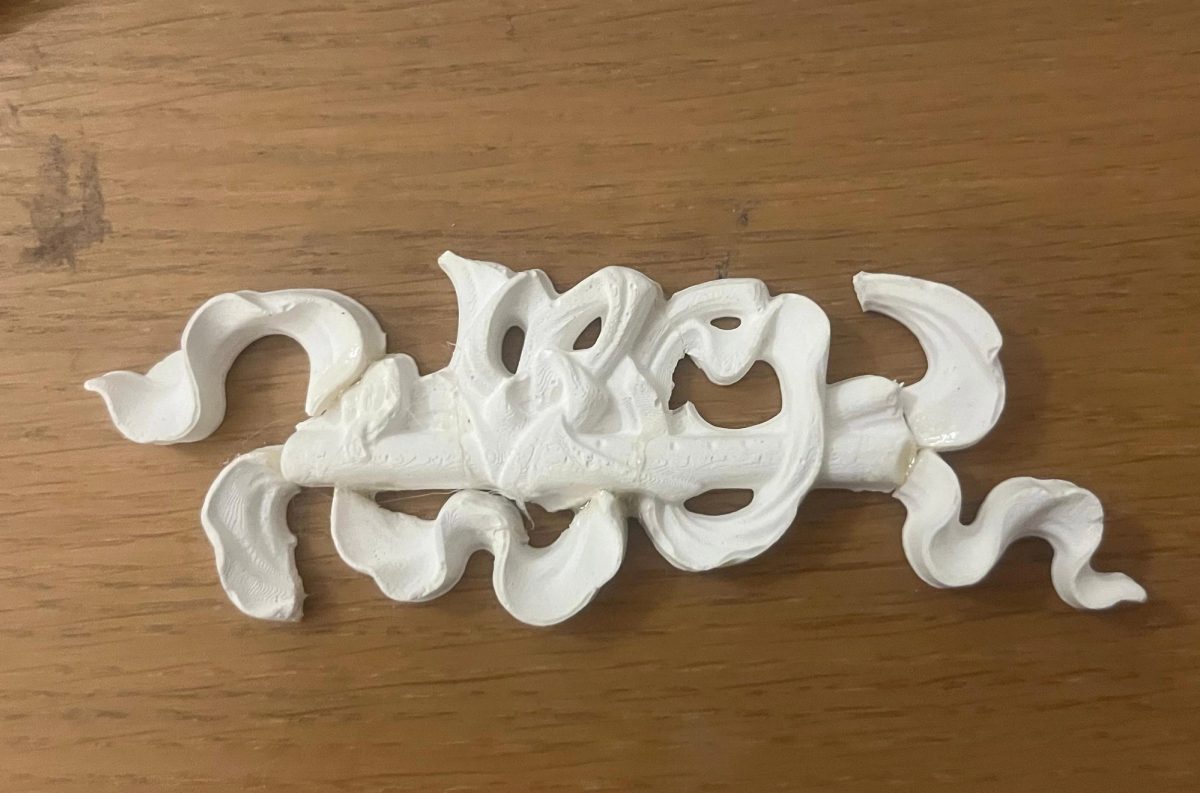
Fig. 57, Original Piece
Fig. 58, Repaired Piece
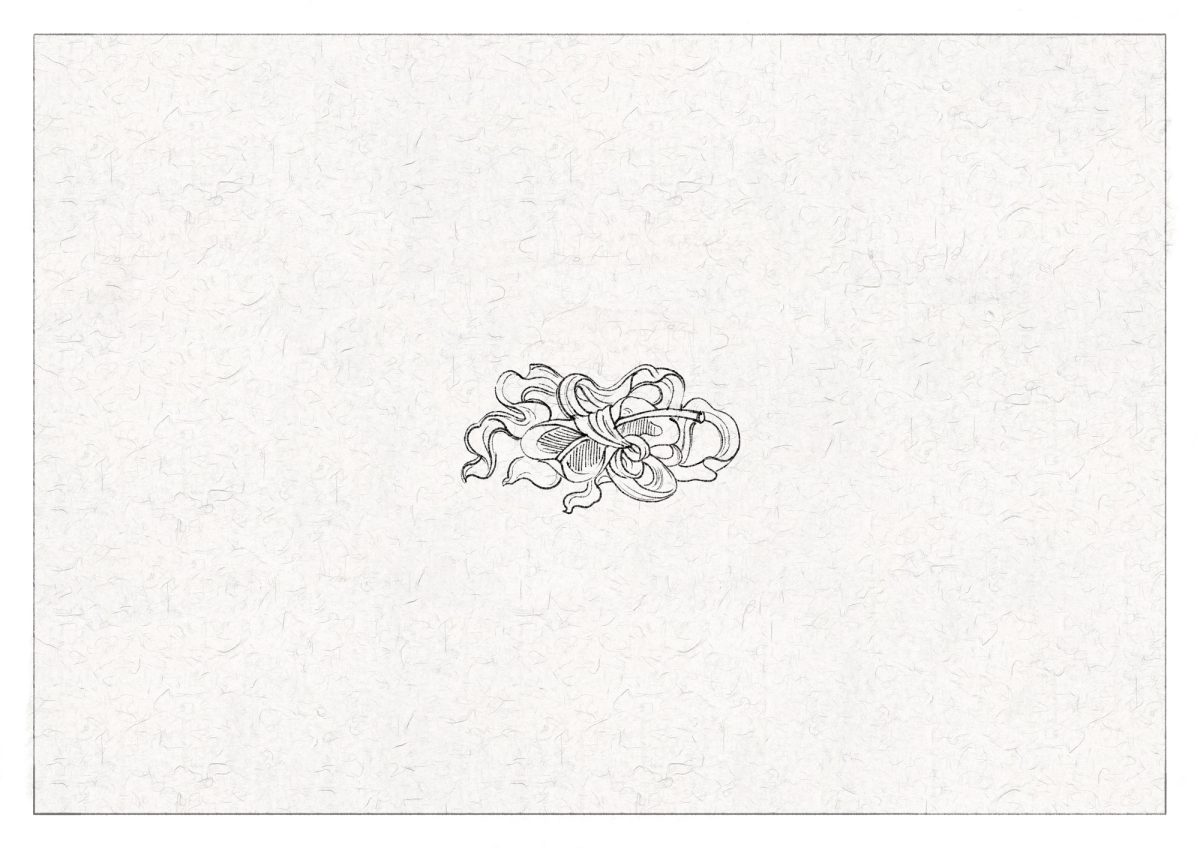

Fig. 59, Original Piece Drawing
Fig. 60, Repaired Piece Drawing
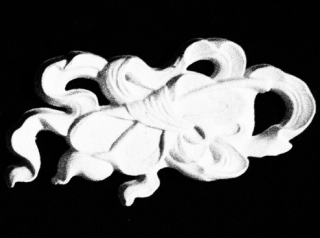
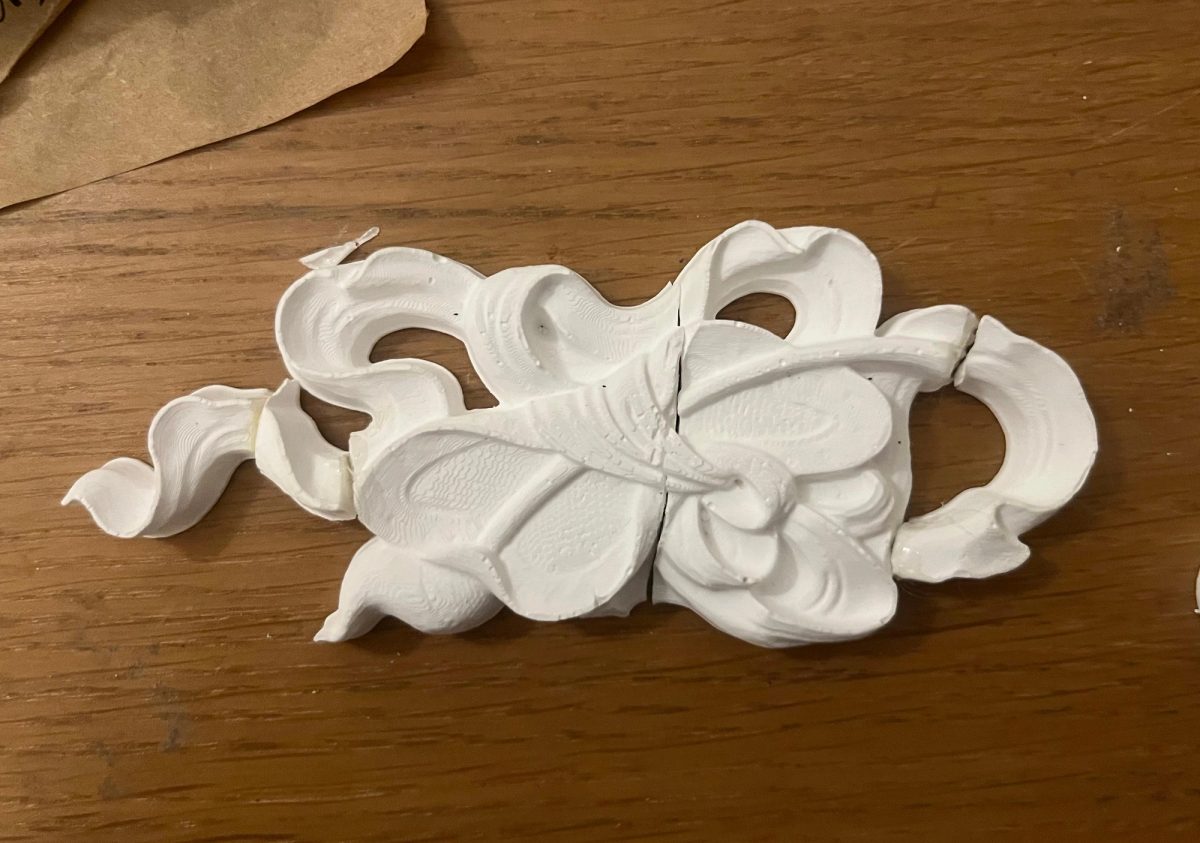
Fig. 61, Original Piece
Fig. 62, Repaired Piece
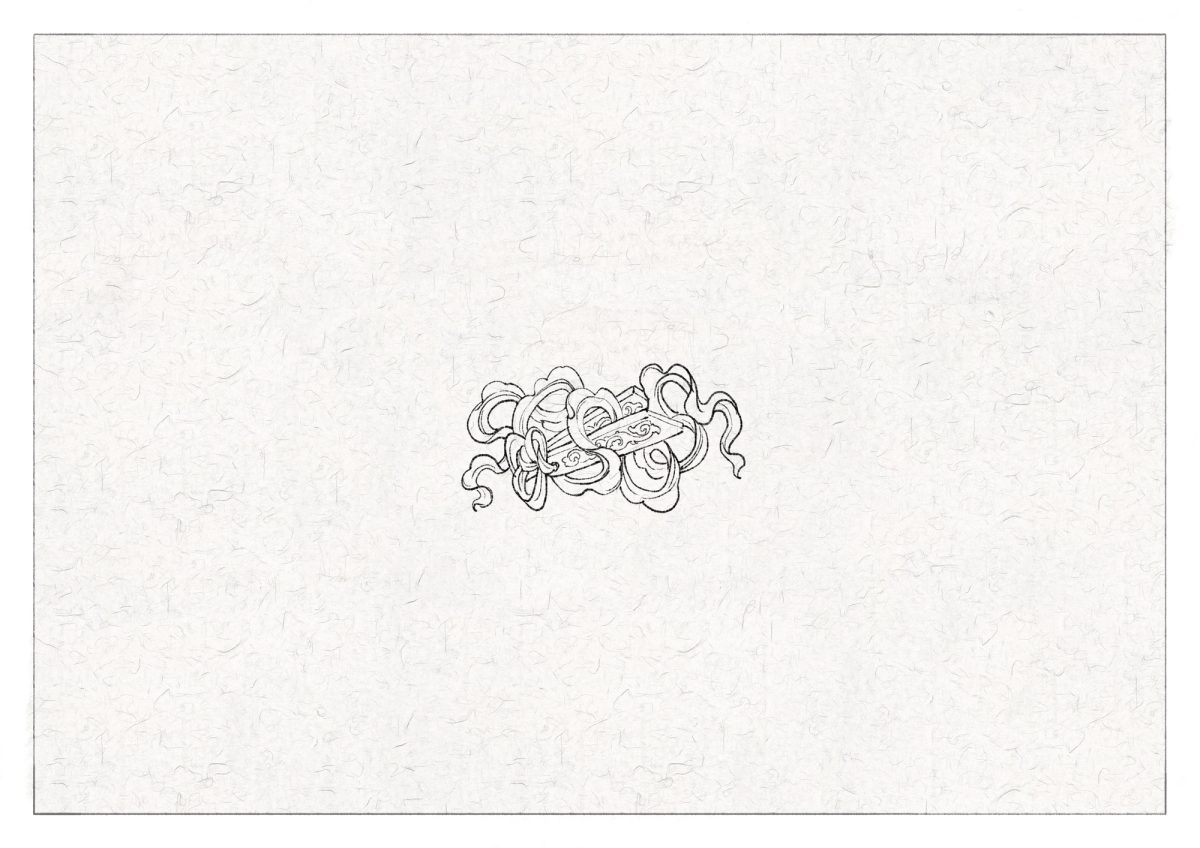
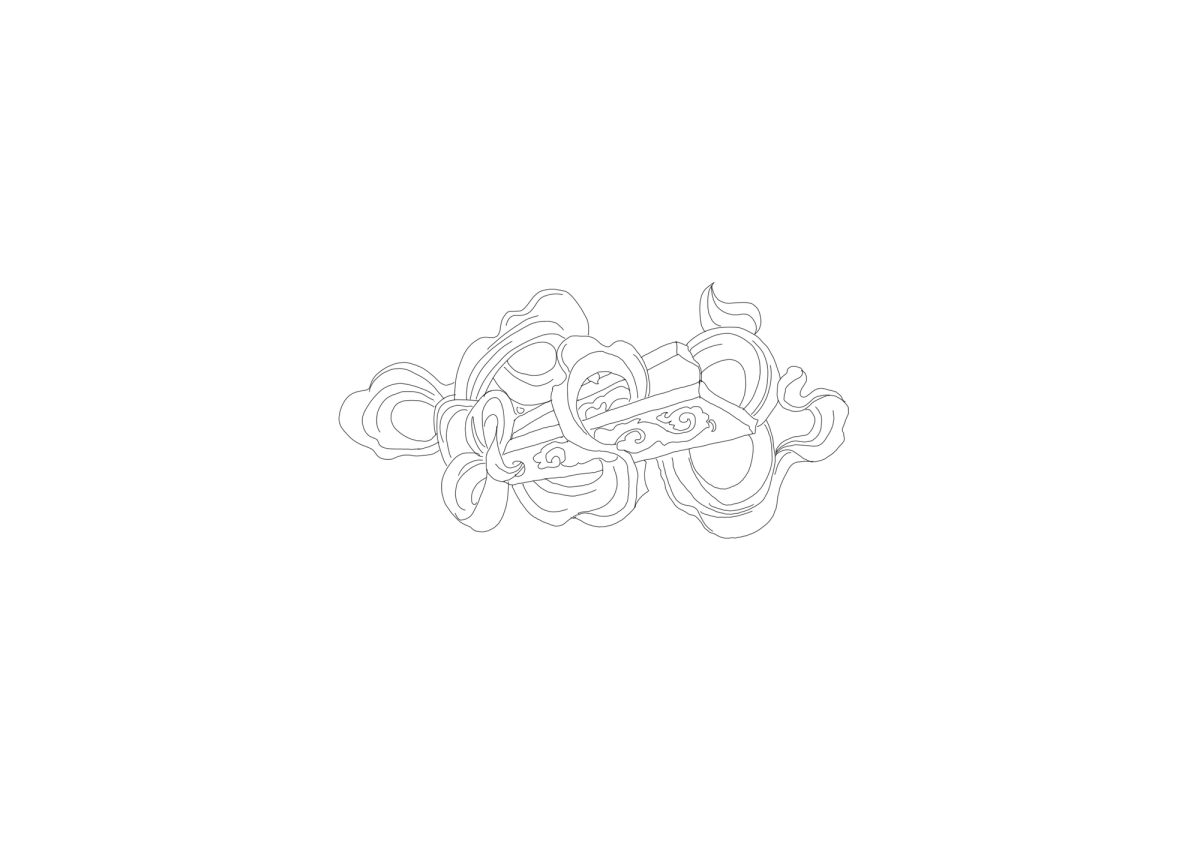
Fig. 63, Original Piece Drawing
Fig. 64, Repaired Piece Drawing
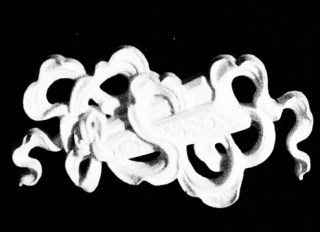
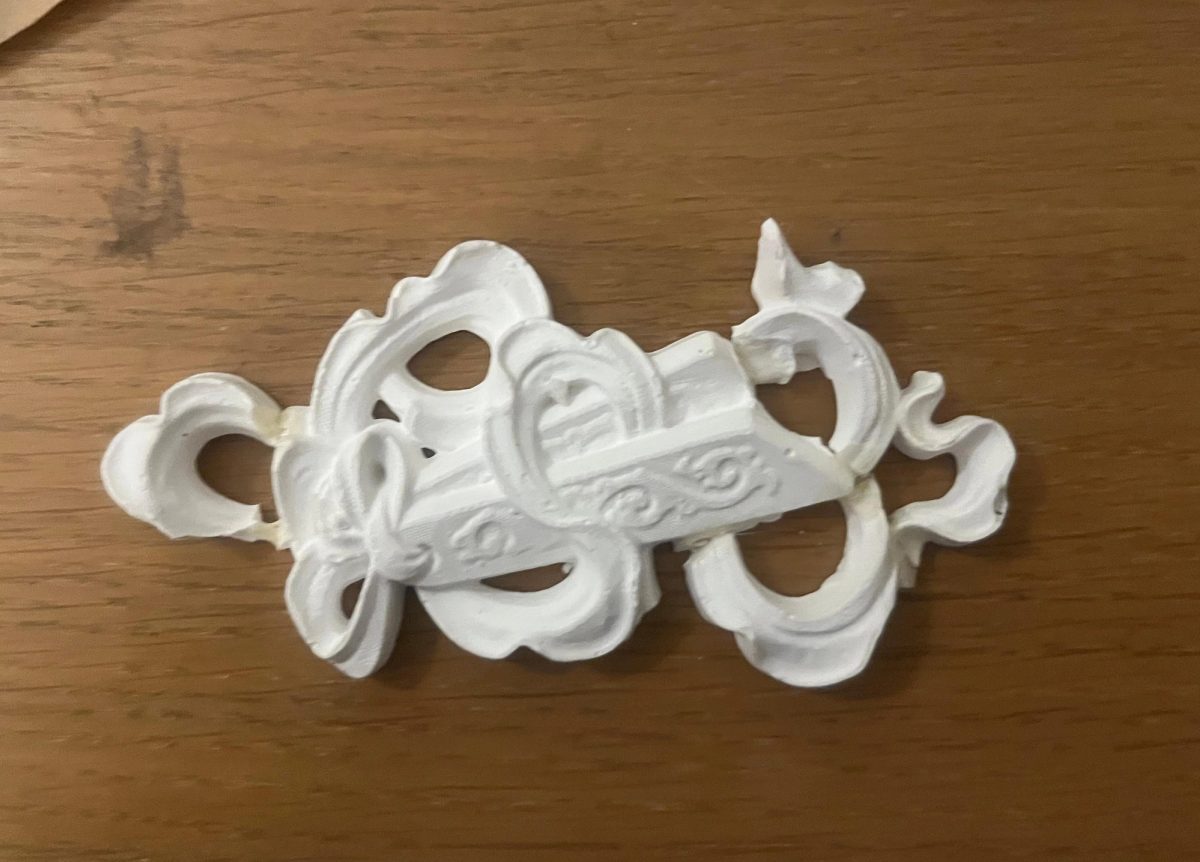
Fig. 65, Original Piece
Fig. 66, Repaired Piece
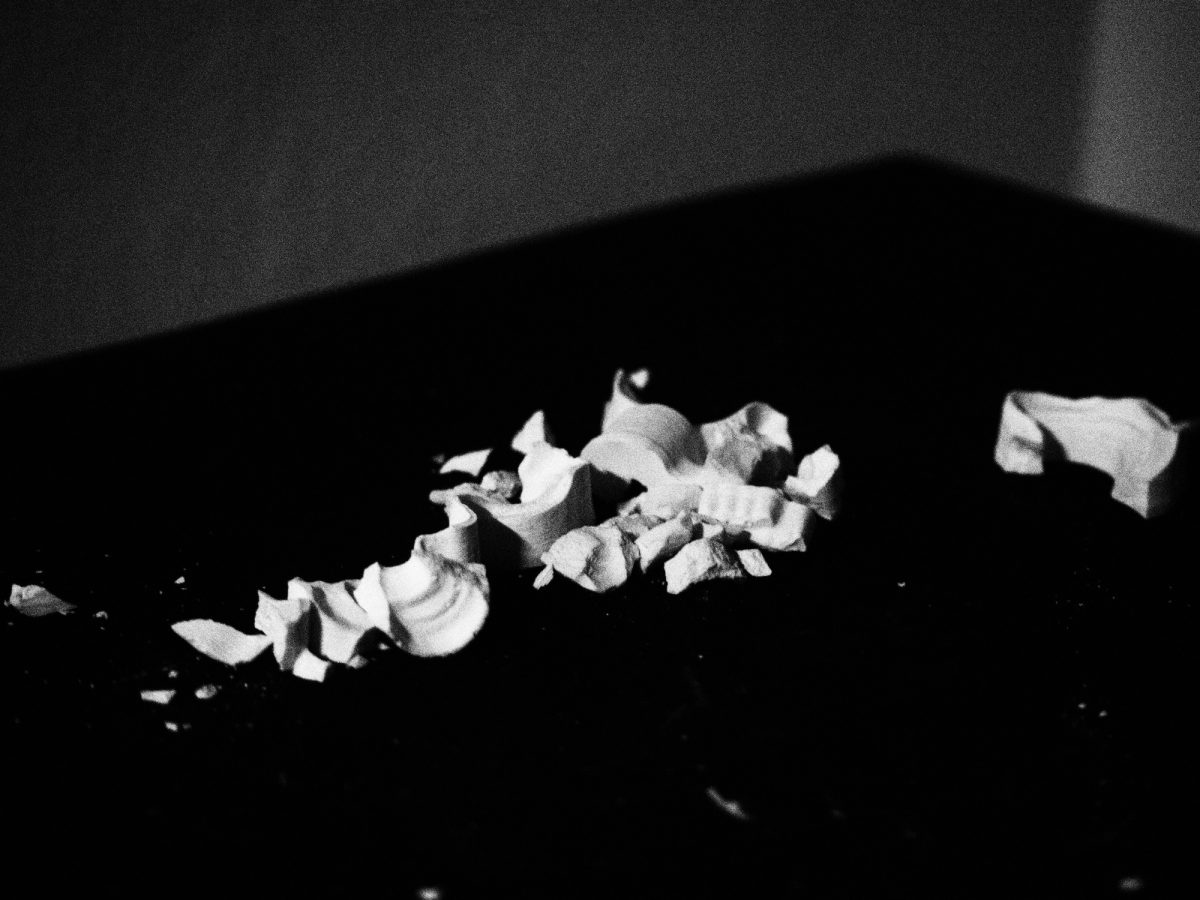
Fig. 67, The Forgotten Pieces
Failed Restoration Strategy
Casting, in this project, is not merely a way of representing cultural history in material form, it also serves as a critical lens through which current restoration strategies are evaluated.
The symbolic manuscript paintings presented here embody a longing for equality. Within the Eight Immortals, different political identities, each tied to specific social positions, once coexisted across regional cultures through symbolic forms. These symbols, when originally crafted, carried what Walter Benjamin called an aura: a presence embedded in material context and human touch. Even when their aura shifts, the symbolic meaning persists, so long as that symbolic life remains rooted in social practice.
Yet over time, external pressures, colonial ideologies, modernization campaigns, and political upheaval, disrupted these conditions. Egalitarian aspirations froze in the turbulence of history, and both culture and ornamentation became suspended in a moment just before collapse. What was once a living language of symbols became a rigid set of templates, made only to be copied. Symbols that once encouraged collective participation were turned into tools reinforcing new hierarchies.
These shifts were not passive. Political identity was forcibly restructured through campaigns of destruction: ancient belief systems, visual symbols, and modes of transmission were violently erased. Restoration today claims to revive these lost forms, but in reality, it often reduces them to sanitized images aligned with a neoliberal vision of cultural continuity. The past is rebranded as a “product,” stripped of its complexity and pain. As Fredric Jameson argues, such acts transform history into a commodified spectacle, disconnected from the inequalities that shaped it.
Moreover, true restoration is rendered nearly impossible by two layers of absence: the absence of original knowledge, and the ongoing inequality in contemporary social realities. In this context, restoration becomes not a recovery, but a hollow performance, a “false resurrection” that masks cultural loss under the guise of heritage.
As shown in the casting experiment (pp. 10–31), restored symbols remain at the level of superficial recognition. In the worst cases, these attempts yield grotesque distortions: forms that resemble the original only in outline, devoid of detail, spirit, or use. Even the most careful replicas, meticulously carved and cast, eventually degrade into copies of copies, caught in a loop of visual repetition. Their “meaning” is dictated not by lived cultural practice, but by market logic.
In this loop, forgotten knowledge is frozen once again, this time in plaster. What emerges is not a reawakened memory, but a new illusion: something called the past, but fundamentally divorced from it. These fragments, though shaped in the name of history, create the conditions for new alienation. The more we restore, the further we drift from what we claim to remember.
Act 3.
The Frame Toward Reality
What appears whole may be deeply fractured. This
stage asks: can meaning survive within imposed
coherence? Can symbolic debris still speak, when
the frame demands silence?
Theoretical Speculation From Casting
To further explore how aesthetic symbols operate under structural constraints, a casting experiment was conducted using a conceptual framework, a kind of visual grid. This framework served as both a methodological tool and a symbolic test. Within it, different versions of the Eight Immortals were placed: original replicas, restored figures, failed restorations, and pure fragments. The question was simple, but profound: Can broken symbols form a coherent visual system once placed inside a rigid frame?
Thus, the next casting experiment not only tested the adaptability of symbolic forms within predefined paradigms but also critically interrogated the limitations imposed on aesthetic systems when subjected to structural constraints.
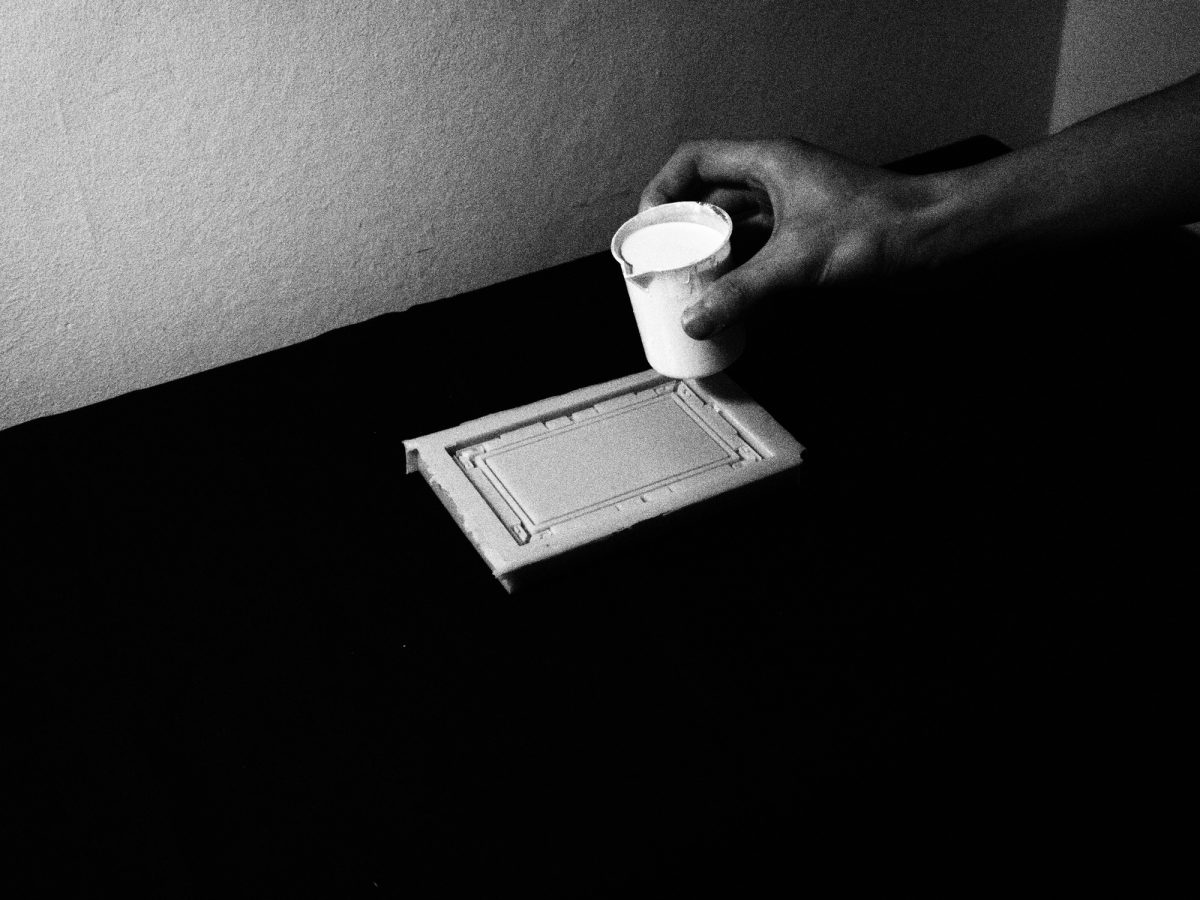
Fig. 68, Paradigm Casting step1
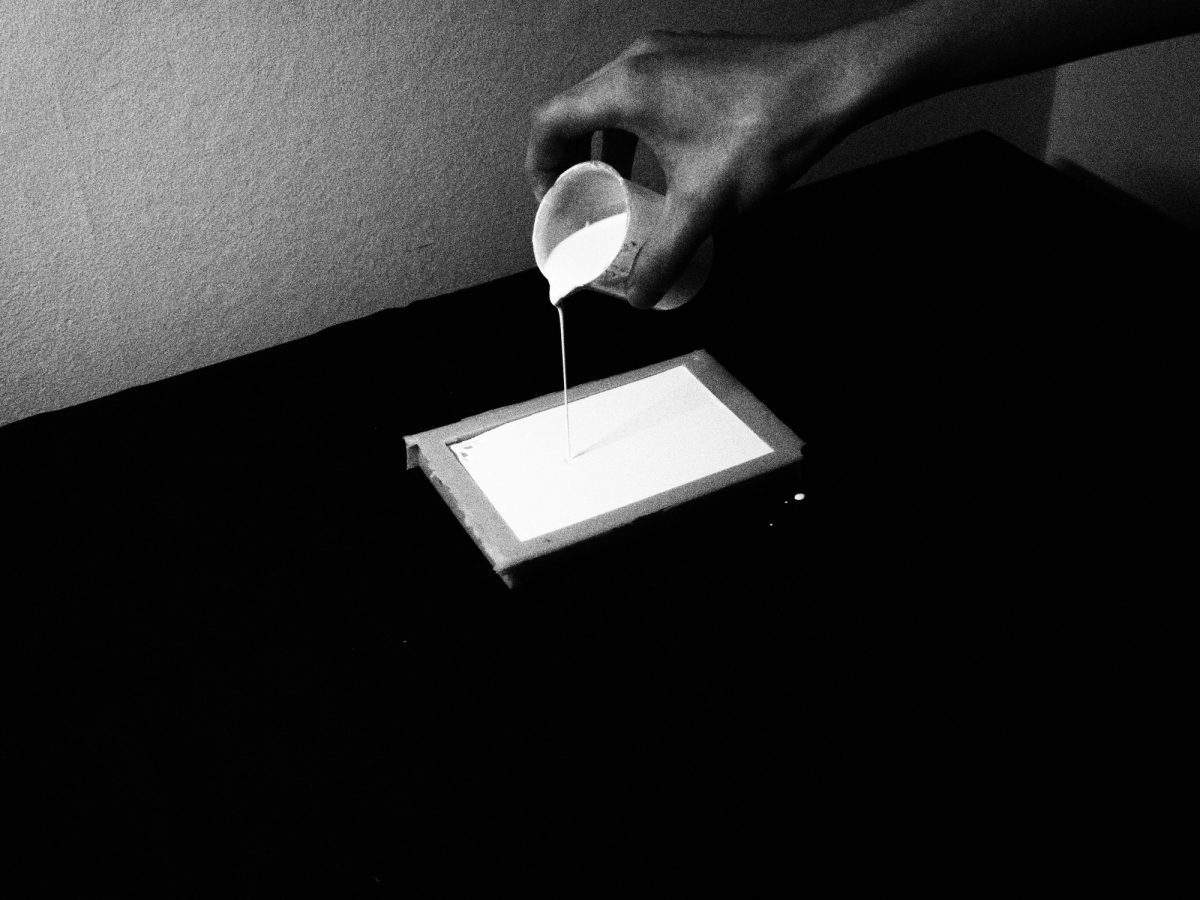
Fig. 69, Paradigm Casting step2
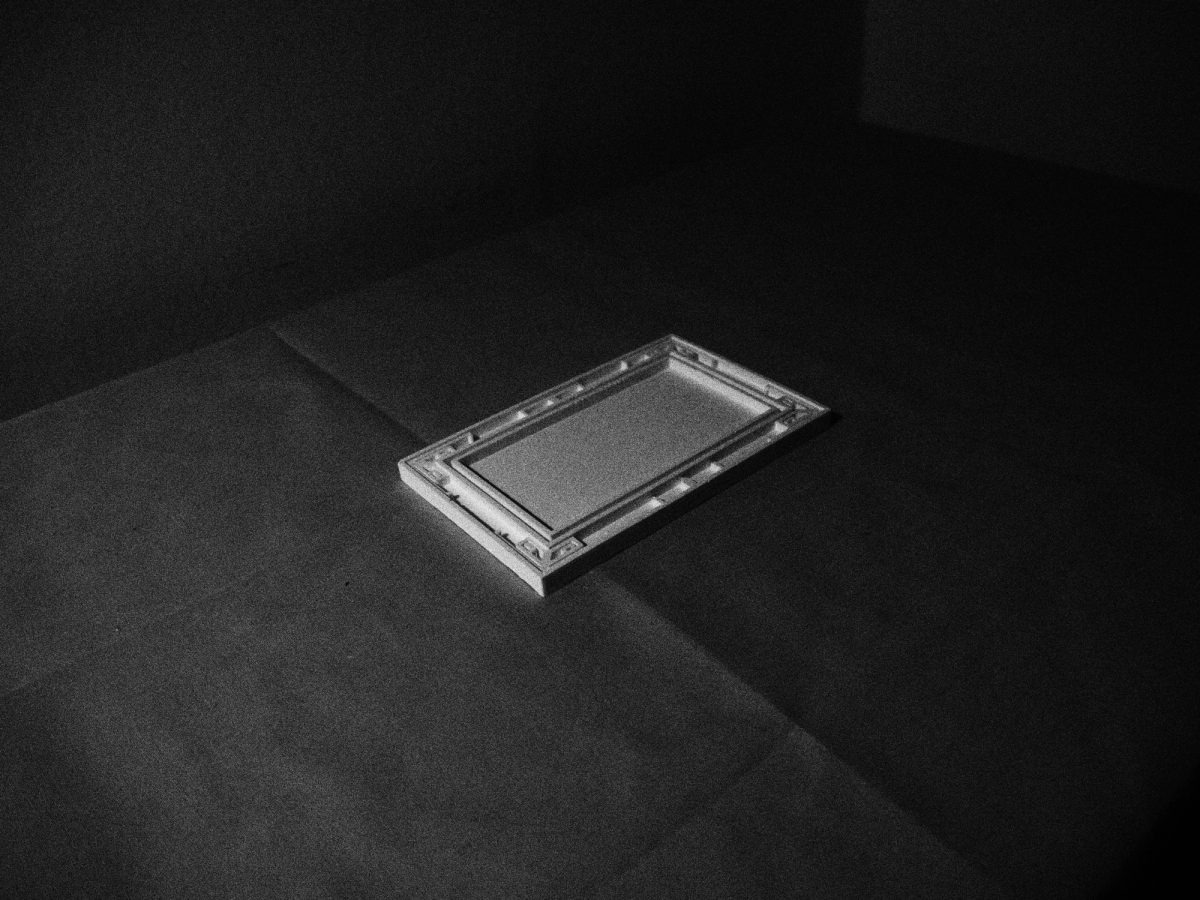
Fig.70 , The Paradigm Frame-
work
Experiment
What emerged was a metaphor for China’s spatialized aesthetic control strategies. Just as the city’s visual identity is shaped by the controlled repetition of ornamental forms (See Fig. 5), the casting experiment revealed how coherence can be manufactured even when meaning is lost. Symbols placed inside the frame gained surface-level consistency. But that harmony was fragile, artificial. The framework itself imposed an aesthetic order that masked the underlying fragmentation.
This dynamic reflects the way heritage strategies often work: creating the illusion of cultural unity, while stripping symbols of their history and political charge. As Roland Barthes once observed, myth becomes a second-order sign, detached from its origin, yet ideologically charged.
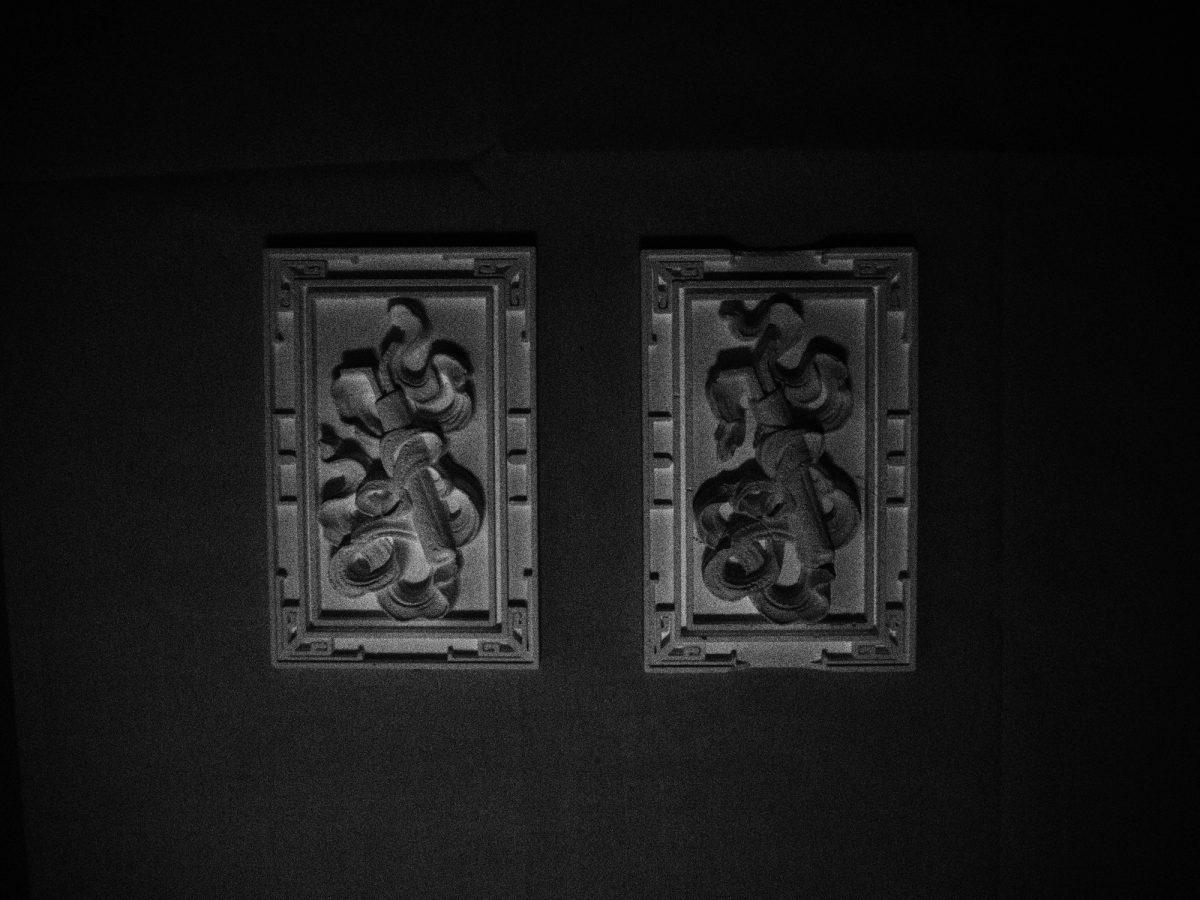
Fig. 71, Original Replicas - Restored
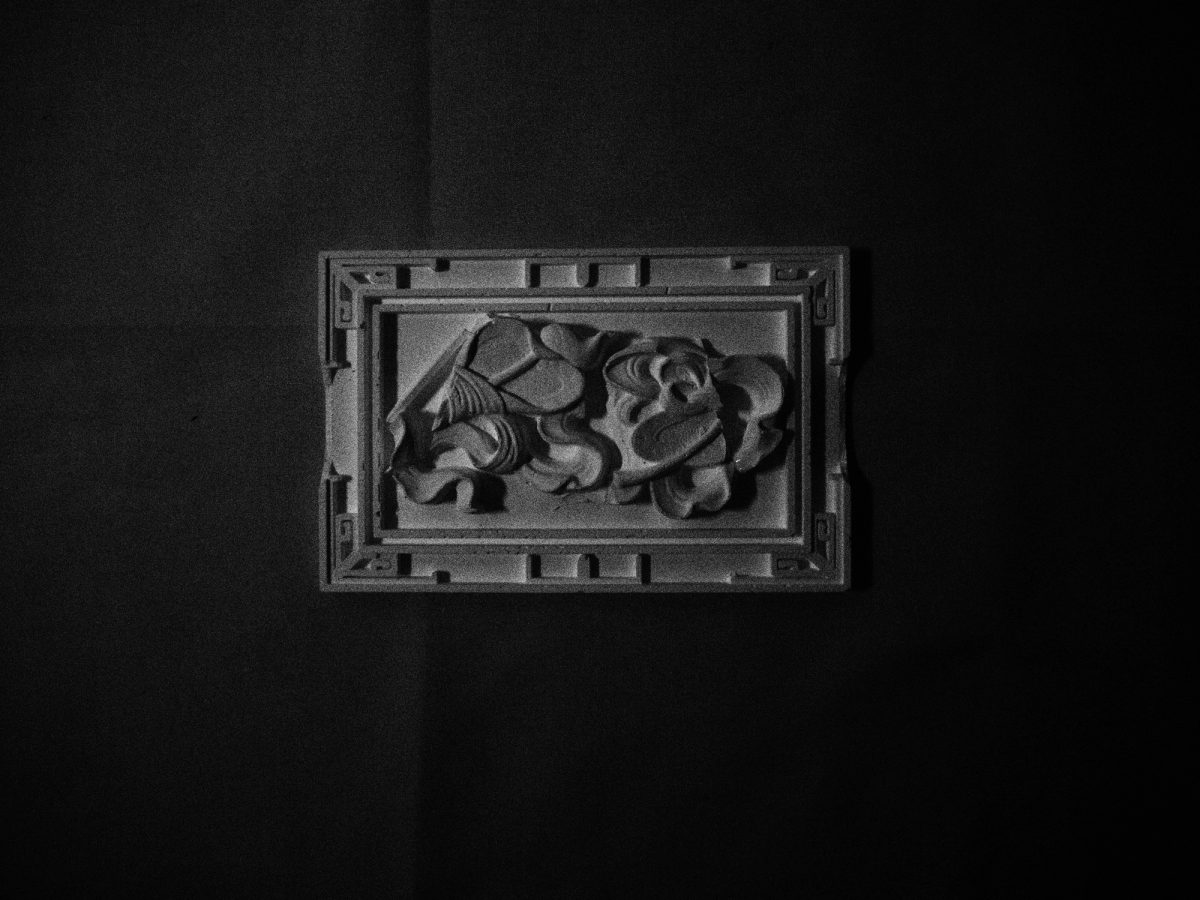
Fig.72 , Failed Restoration
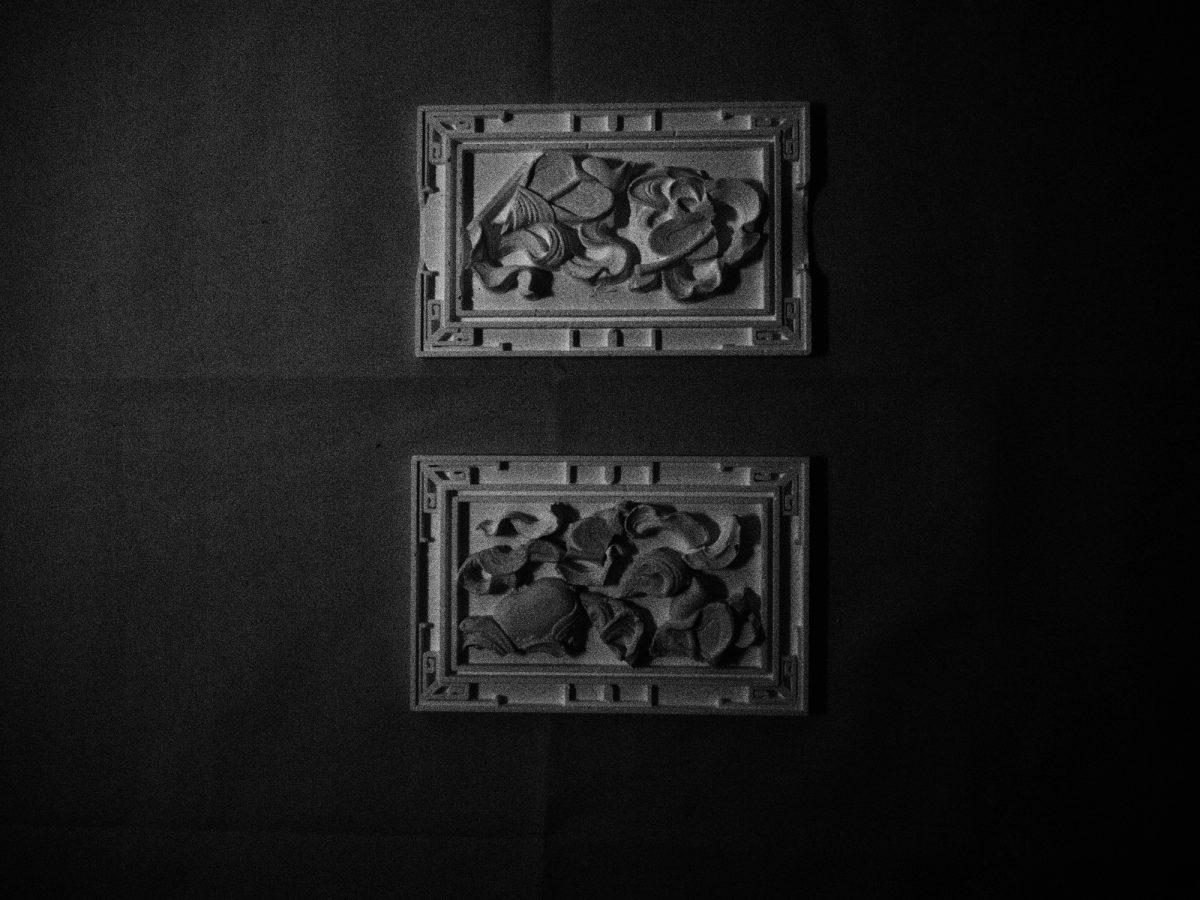
Fig. 73, Failed Restoration - Pure Fragments
The experiment also revealed a second layer of critique. The labor and material consumed in casting, the repetitions, the failed forms, the waste, mirror how cultural restoration often demands material sacrifice without symbolic depth.
The result points to what Jean Baudrillard calls a simulacrum: not a copy of the real, but a copy with no origin, sustained only by the framework that contains it. The visual order created by the frame grants symbolic legitimacy, regardless of whether the object inside still carries meaning.
Yet despite its rigidity, the framework also revealed a possibility. Its ability to hold fragments, no matter how broken, offered a subtle form of openness. It hinted at a paradox: that within even the most closed visual systems, there remains a space for negotiation, for resistance, for reassembling meaning from ruins. As Rancière would argue, aesthetic regimes distribute not only the visible but also the thinkable, and that distribution is always political.