EVERYTHING HAS ITS OWN SPIRIT AND RHYTHM: IN CONVERSATION WITH HSIN HWANG
CONVERSATION BY SELIN KIR
CO-FOUNDER, CURATOR
15 OCTOBER 2025 — UNITED KINGDOM
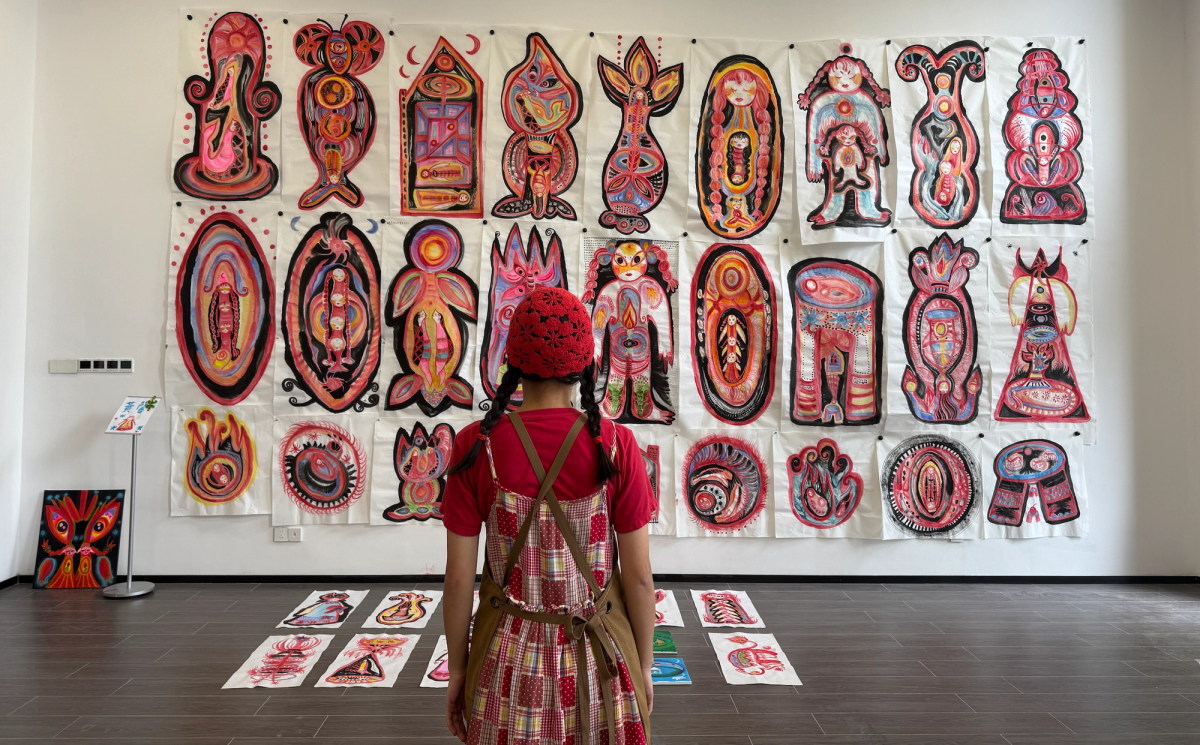
Hsin Hwang’s paintings drift between myth and memory, where symbols inhale, colors ache, and emotion performs its own quiet rite. Guided by intuition and ancestry alike, her work listens: to soil, to breath, to the pulse beneath form. What begins as study dissolves into invocation: a devotion shaped through pigment, spirit, and the trembling persistence of remembrance.
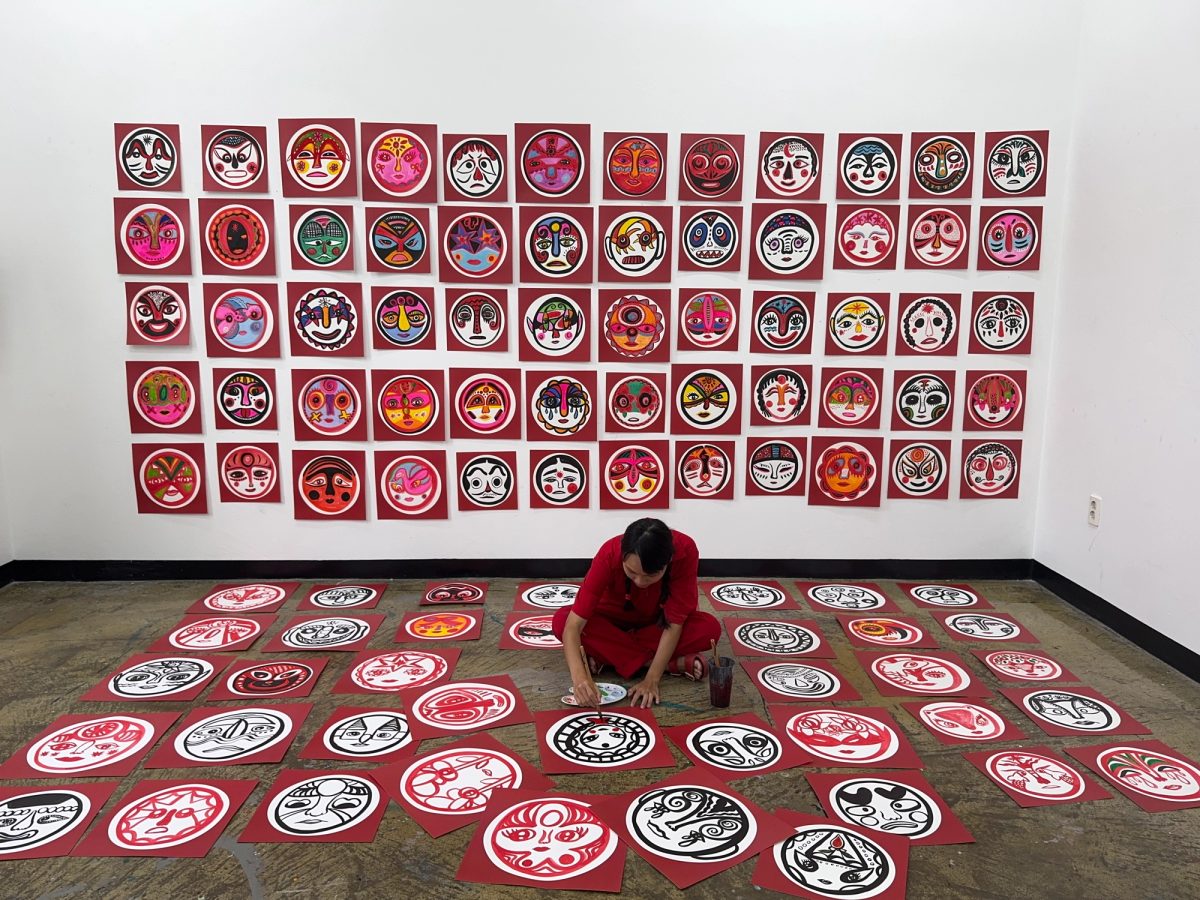
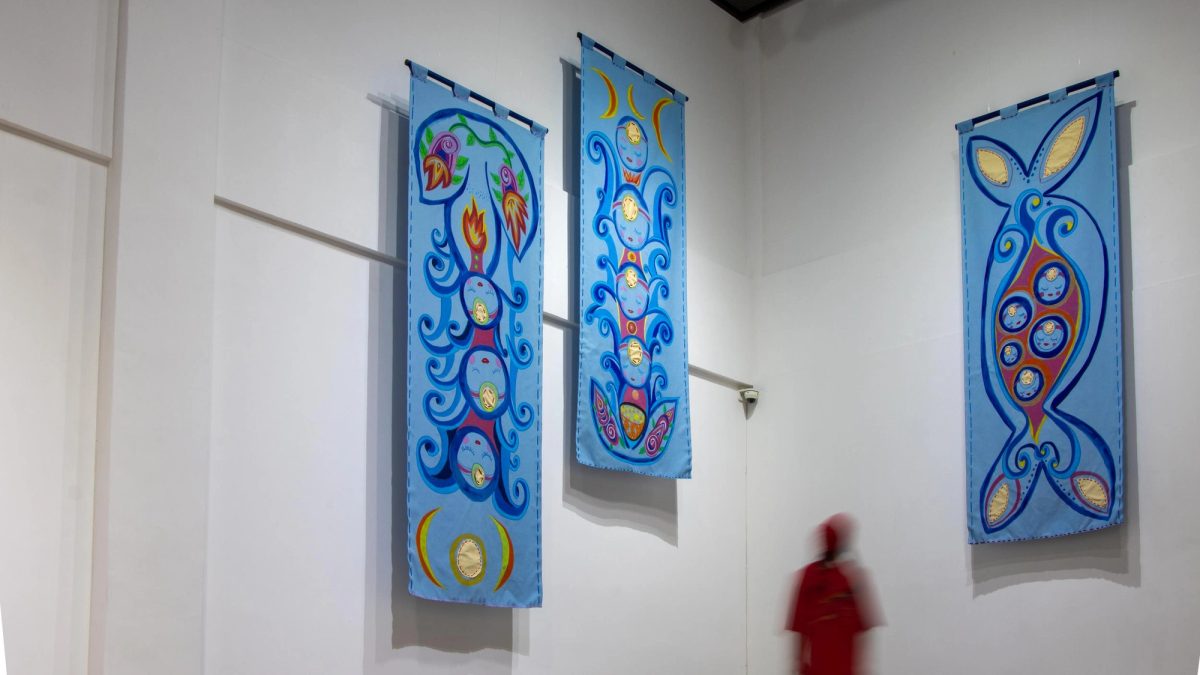
Korea Studio (left)
The Prayer of the Haenyeo Banners (right)
Your work seem to come from somewhere between consciousness and inheritance as if passed down through generations of emotion rather than memory. Do you collect symbols before painting, or do they emerge through the act itself?
I often collect symbols before painting, drawing inspiration from books, travel journals, and field research during residencies. These experiences allow me to gather visual and cultural fragments such asmotifs from folklore, rituals, and local beliefs that later reappear in my work in transformed ways. However, even though I begin with research and collected imagery, the act of painting remains intuitive. During the process, new symbols often emerge unexpectedly, as if guided by memory or emotion rather than logic. I see this balance between research and intuition as essential as it allows my work to carry both cultural depth and a sense of spiritual immediacy.
You often borrow from folk myth, animism, and childhood memory, stories told before language was fixed, when belief could still shape reality. There’s a sense that your work remembers a time when everything (object, animal, star) was alive and communicative. What draws you to these pre-modern, pre-verbal ways of knowing?
I’ve always been deeply drawn to ancient things. To stories, objects, and beliefs that carry the traces of time. When I was a child, I often interacted with Indigenous communities in Taiwan, and their rituals and way of seeing the world left a strong impression on me. From them, I learned to sense that everything: mountains, animals, even stones has its own spirit and rhythm. This way of perceiving the world feels very close to how I paint today: through empathy, intuition, and the belief that materials and symbols are alive. I think my attraction to these pre-modern and animistic perspectives comes from a longing to reconnect with that primal way of knowing, where imagination and faith were inseparable.
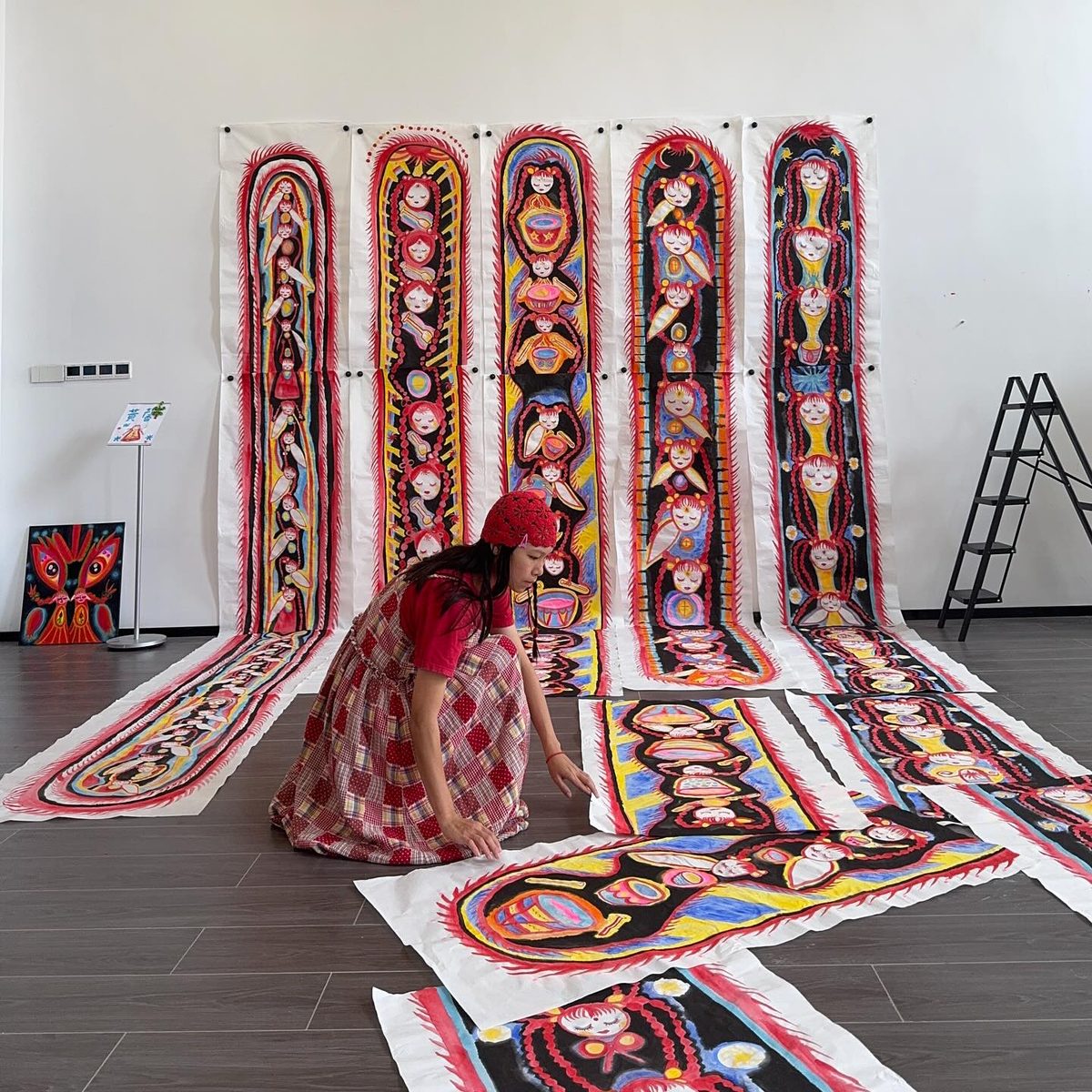
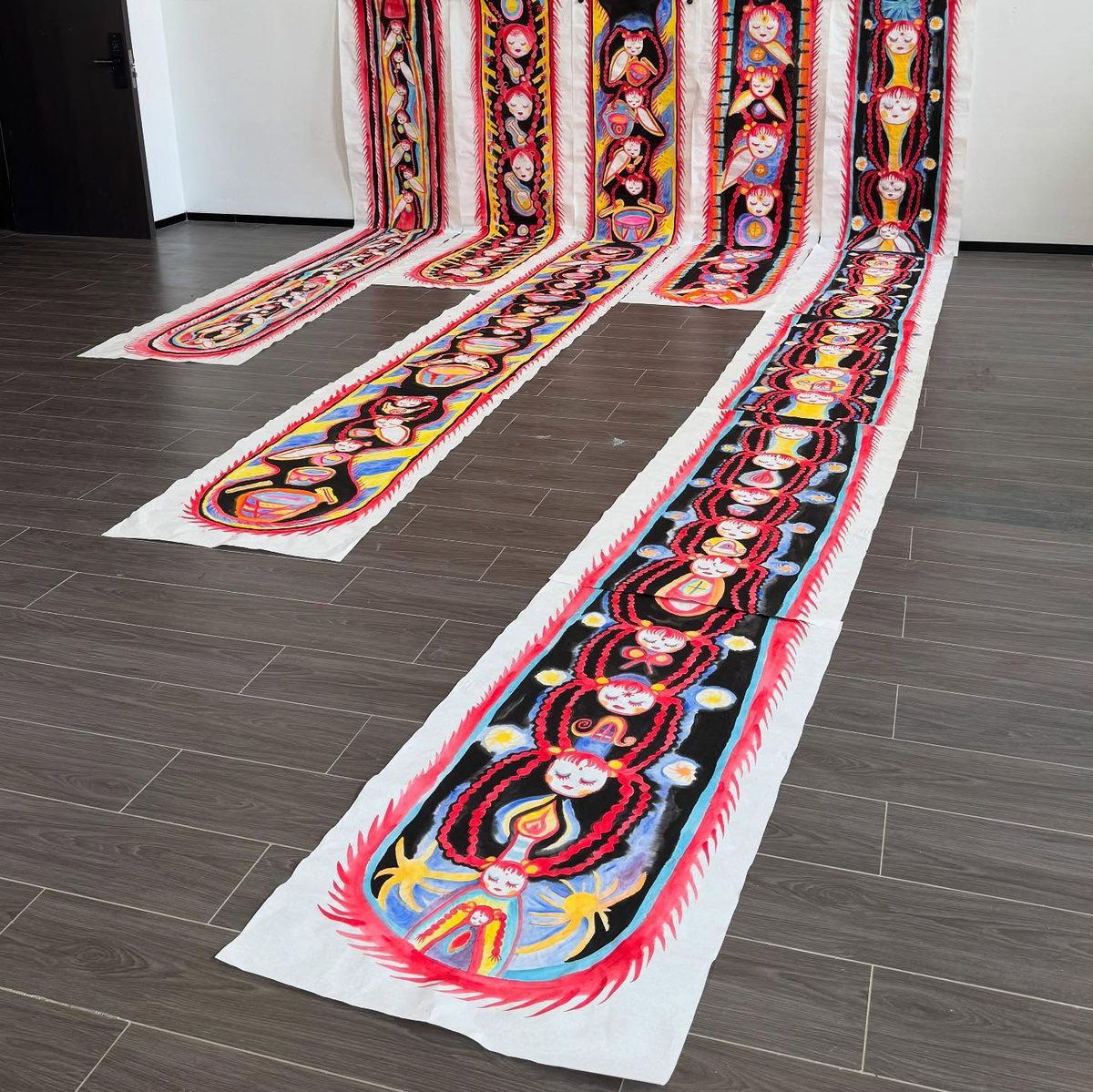
Residency in Fosha
“I TRY TO PRESERVE THE WARMTH OF MY CHILDHOOD AND EXPRESS GRATITUDE TO THE LAND THAT RAISED ME.”
Red, flame, thread, your palette feels alive, almost breathing. Do you see color as something symbolic, or something embodied, a temperature rather than a code? How does the material body of paint and colour shape your work?
For me, red carries both passion and solitude. It is the color of the sun and of fire... an ancient, elemental color that feels alive. When I paint, red is more like an emotion than a symbol. My use of color, like my creative process, is deeply intuitive. I see color as something embodied, a temperature rather than a code. The material body of paint... its texture, density, and flow shapes how the work breathes. Through color, I try to express energy that is both spiritual and emotional. Color is not just visual, it carries emotion, memory, and breath. Through it, I try to connect body, spirit, and the act of making itself.
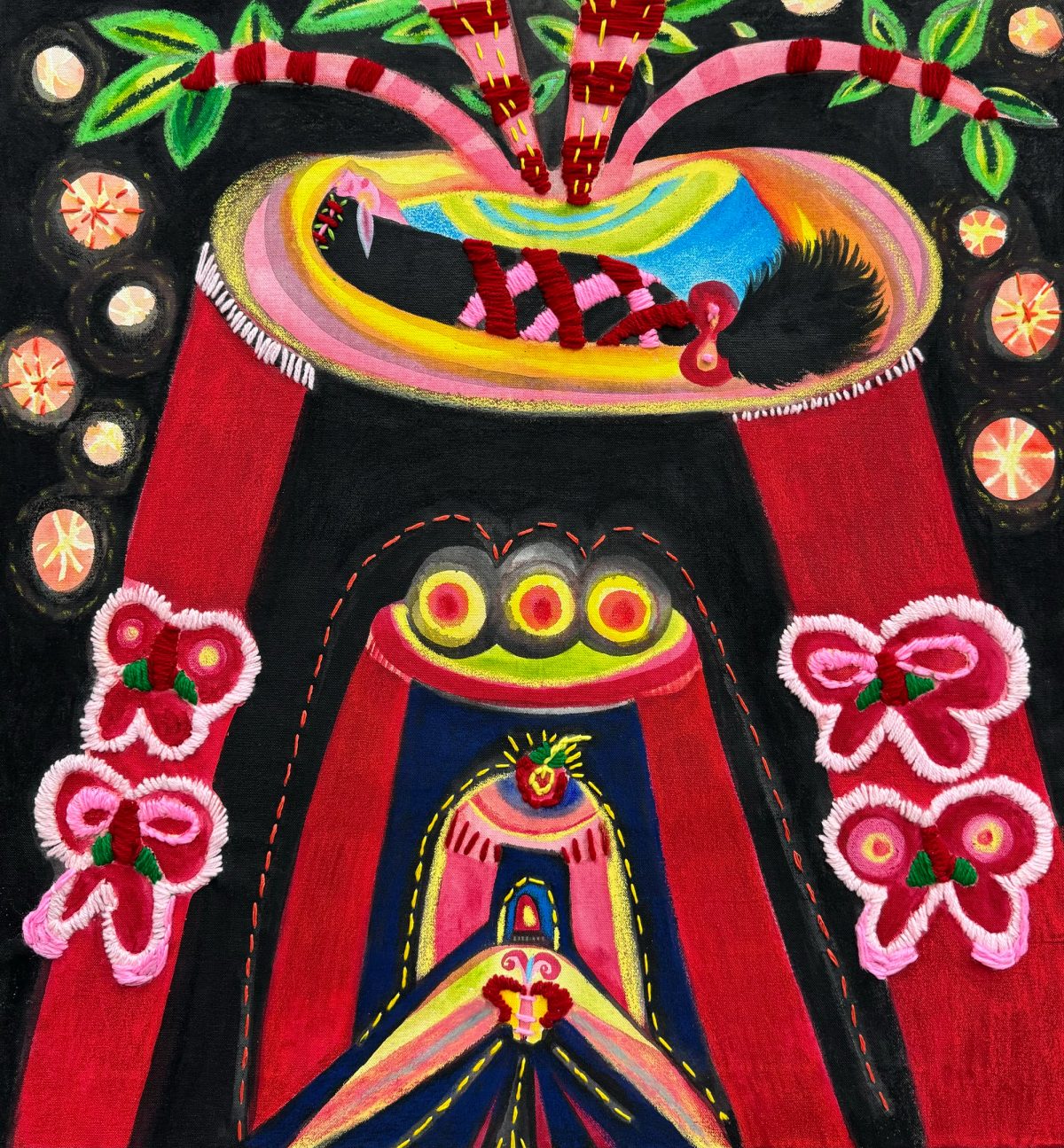
God Wants to Grant Life to My Mortal Body
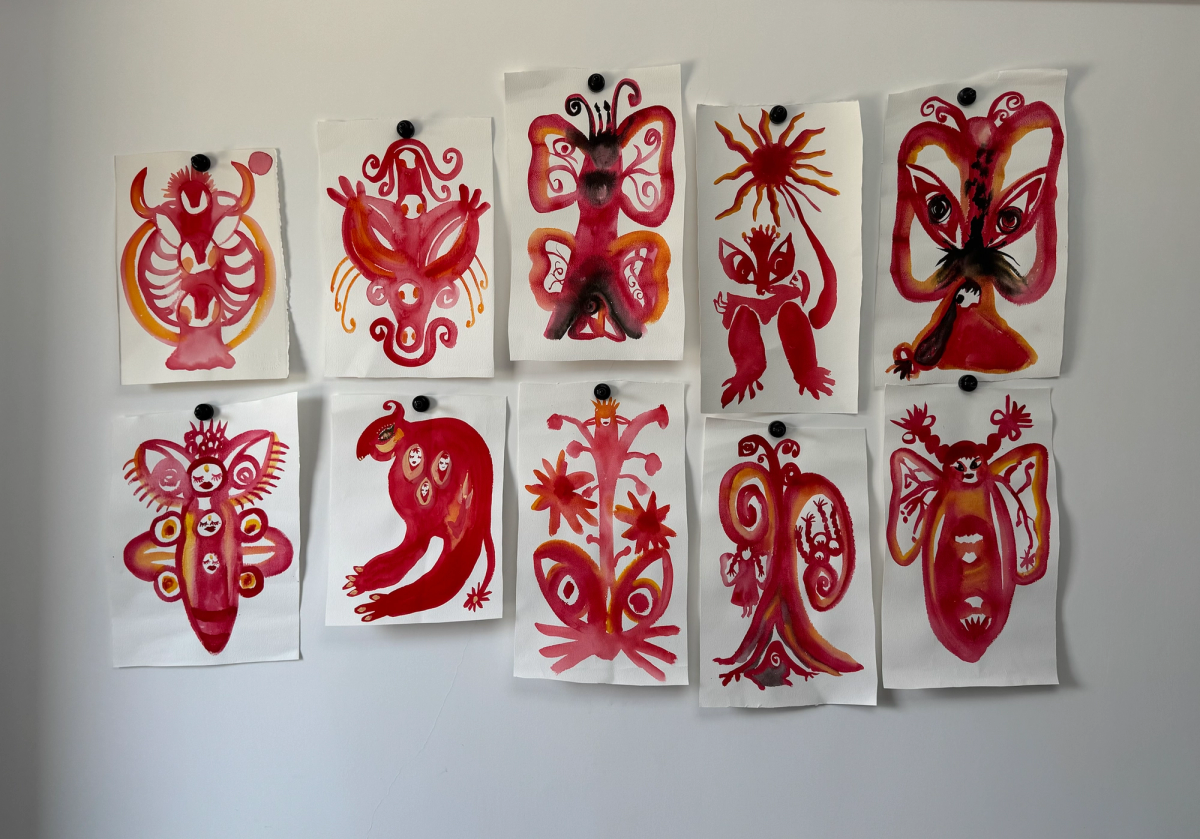
Foshan Residency
“THROUGH COLOR AND MEMORY, I BUILD A HOME THAT NO LONGER EXISTS, BUT STILL REMEMBERS ME.”
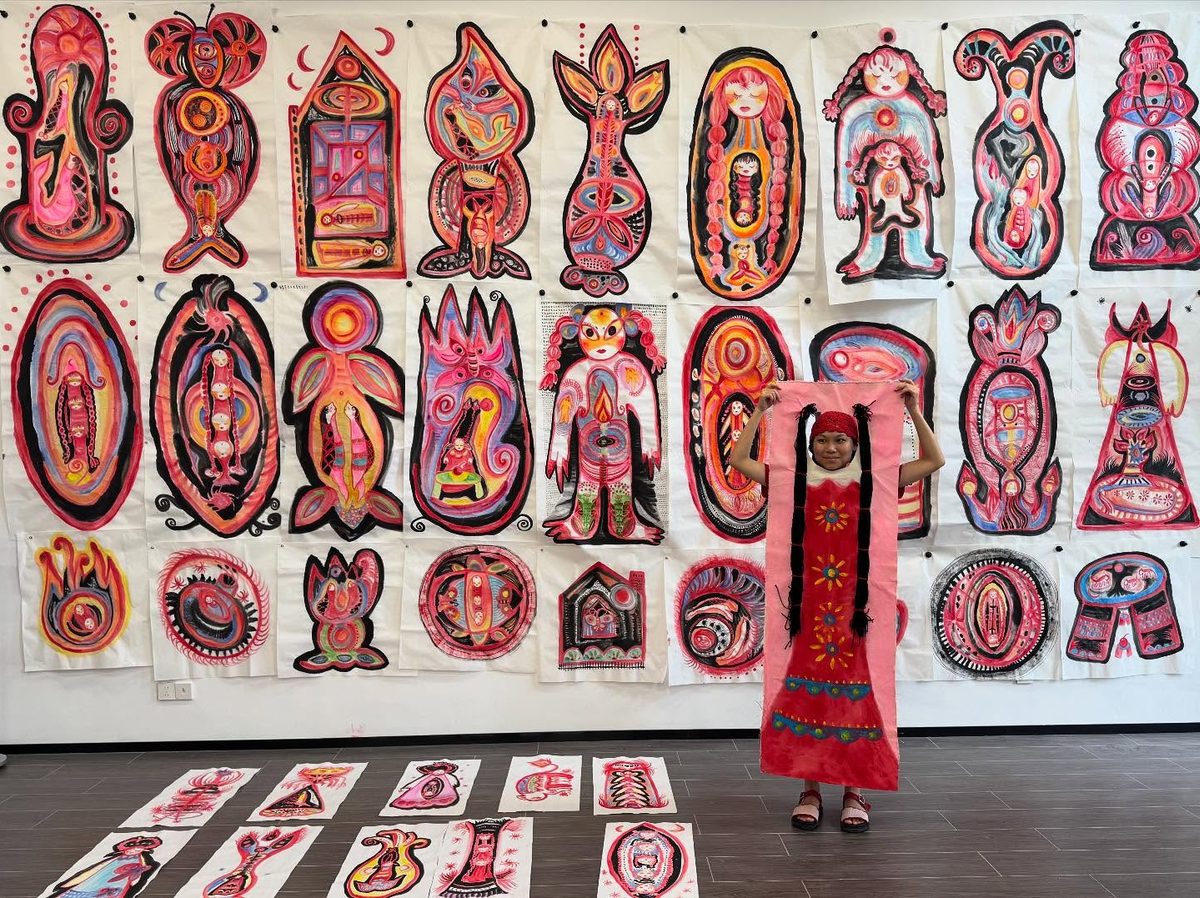
Guangdong Foshan Residency
Your installation ‘A Red Love Letter to My Home on a Hill’ shown during your MA at the Royal College of Art and later at Saatchi Gallery felt like both a house and a body: protective, fragile, and radiant. How did that work take shape? Did it feel like you were building a memory, a shrine, or a home away from home?
That installation is closely connected to my childhood memories. I grew up in the hills of Chiayi, surrounded by nature, Indigenous communities, and local rituals. Although I no longer live there, that landscape continues to shape me. It taught me about resilience, spirituality, and the quiet harmony between humans and nature. 'A Red Love Letter to My Home on a Hill' is exactly what its title suggests, a love letter to my homeland. The installation was my way of rebuilding an emotional space rather than a physical one, a place made of memory, color, and spirit. Through it, I tried to preserve the warmth of my childhood and express gratitude to the land that raised me.
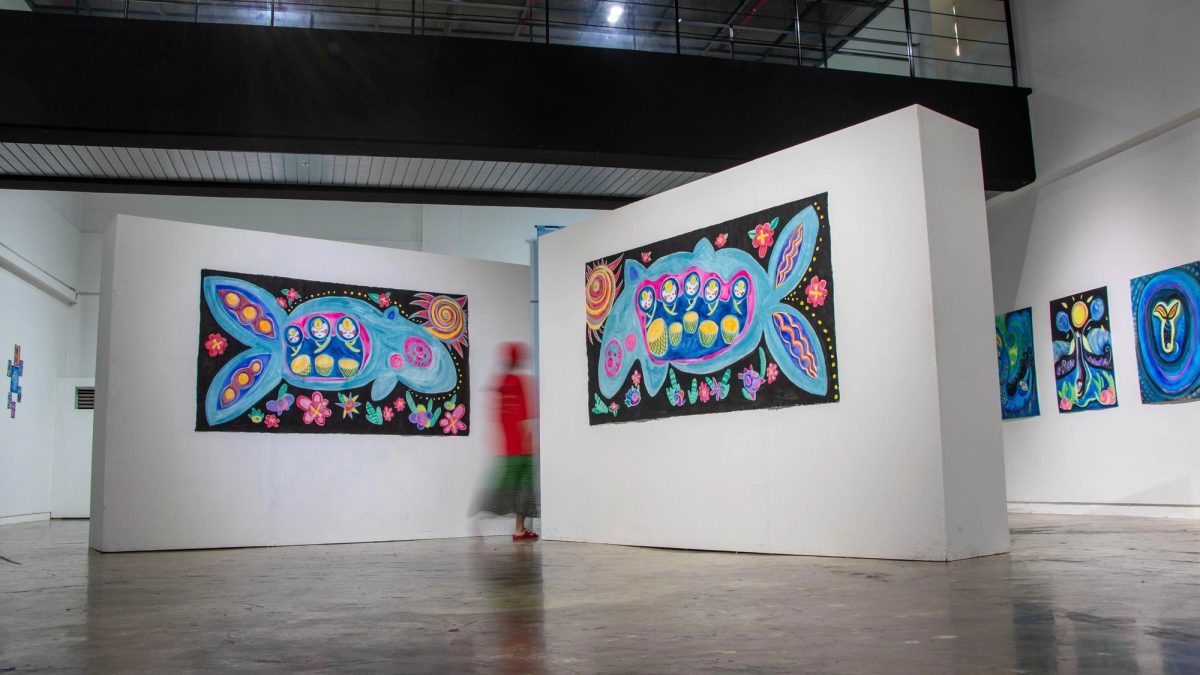
The Tears of Stars in a Sea of Flames (Korea)
The Saatchi Gallery exhibition ‘Narratives of Identity’ brought together artists exploring heritage, storytelling, and belonging. Your work stood out for its intimacy and color, both joyful and aching. What was it like to see 'Red House' within that context? Did the physical space, the scale, the light, the proximity to viewers, change the way you understood the work, or how others responded to it?
Seeing 'Red House' within the context of 'Narratives of Identity' was a very special experience for me. The exhibition gathered artists from diverse cultural backgrounds, all reflecting on where they come from. Within that dialogue, my work became a bridge to Taiwan. Many viewers were curious about Chiayi, the small city where I grew up, and the cultural stories behind my imagery.It was also wonderful to see the work presented in the spacious environment of the Saatchi Gallery. The open layout allowed the installation to breathe. When 'Red House' was first shown at the RCA graduation exhibition, the space was much more crowded and the movement of visitors felt quite compressed. At Saatchi, the scale, light, and distance gave the work a new sense of quietness and presence. It finally felt like the house had room to exist on its own.
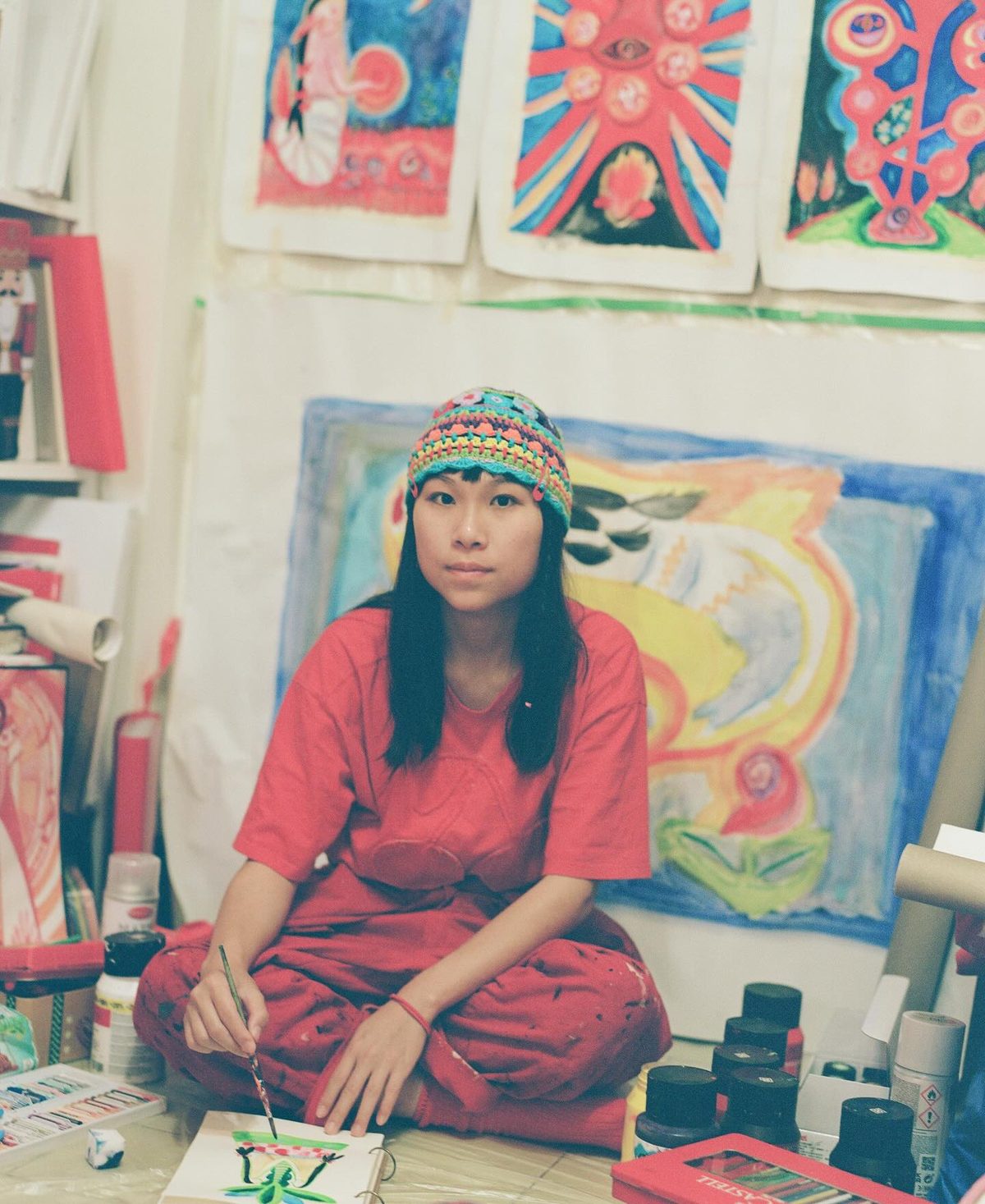

image credit @fangyuchophoto
“EVERYTHING, MOUNTAINS, ANIMALS, EVEN STONES HAS ITS OWN SPIRIT AND RHYTHM.”
You’ve spoken about Jungian psychology shaping your understanding of images and symbols, especially the idea of the collective unconscious. Do you see painting as a form of dialogue with that deeper, shared psyche, or as a kind of self-healing?
Jungian psychology has offered me a way to understand how images live within us, how they move between the personal and the collective. When I paint, I feel I am in quiet conversation with something deeper than myself, a space where emotion, memory, and archetype intertwine. For me, painting is a healing process. It allows emotions to surface slowly, through the rhythm of brushstrokes and layers of color. This process is not about escaping or resolving, but about observing and transforming what I feel. Through painting, I begin to recognize connections between my inner world and a wider human story. It becomes a way of listening, of giving form to what usually remains unspoken.
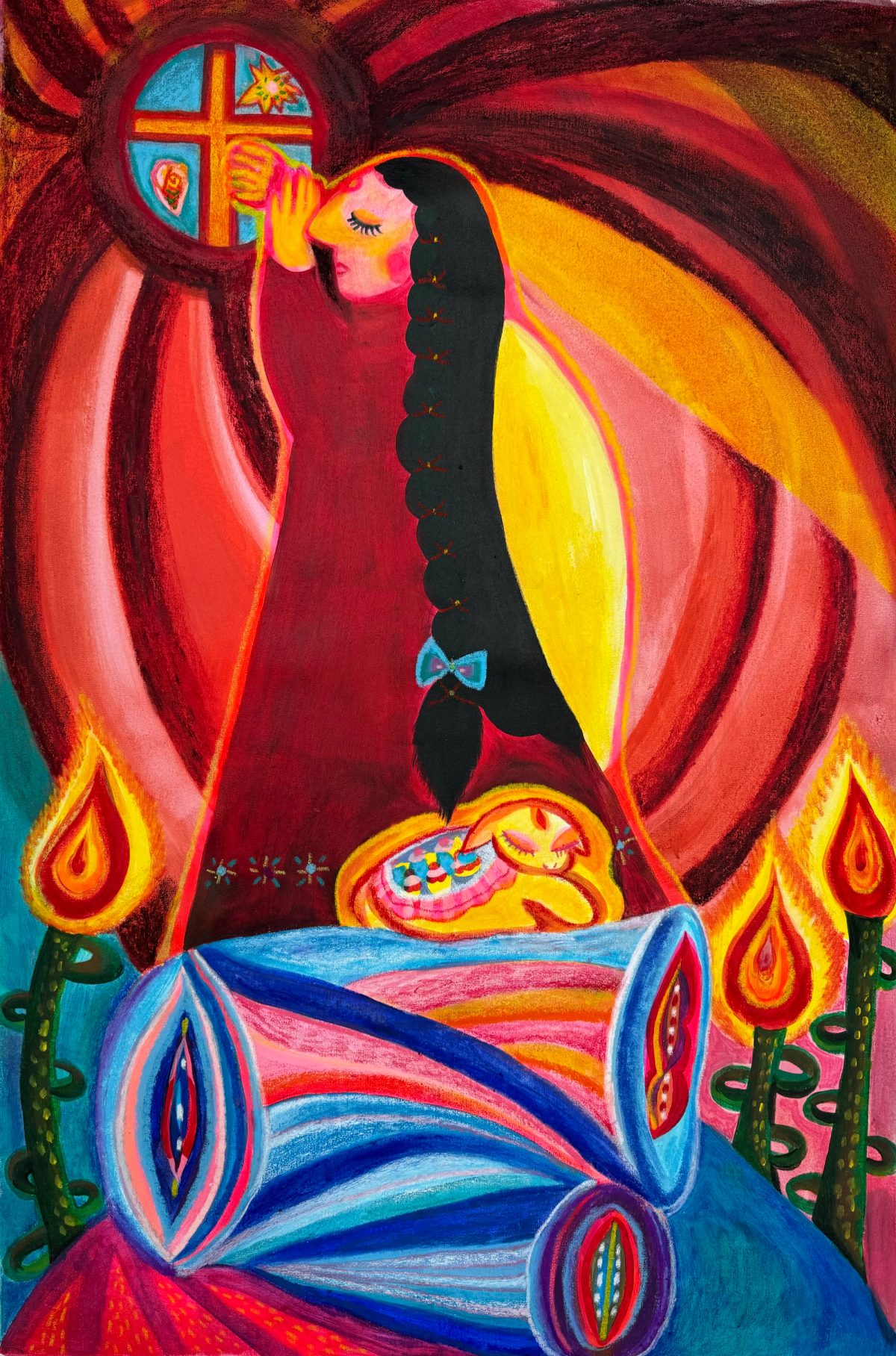
Prayer in the Spinning Sun and the ong of Seashells (left)
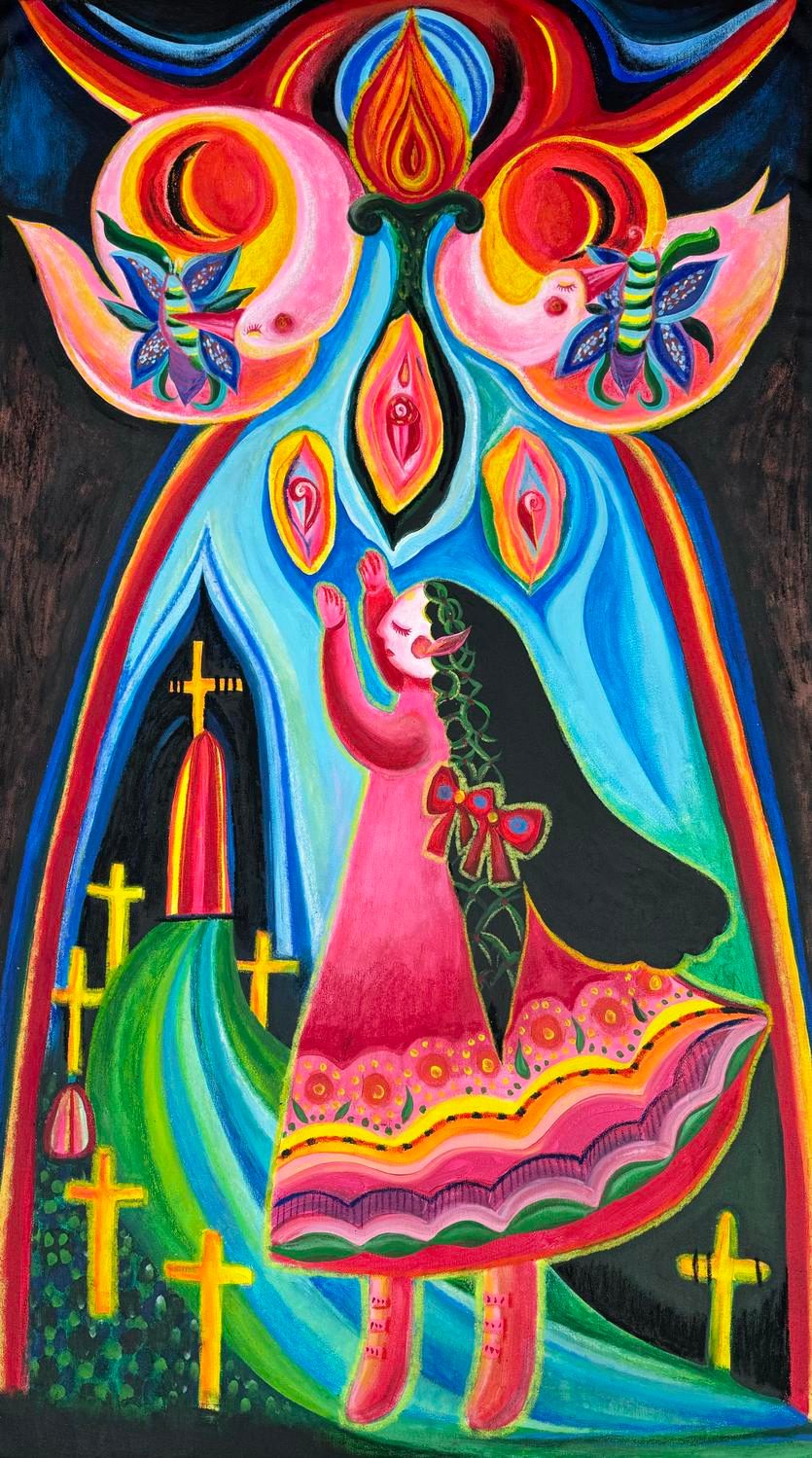
When You Hear My Prayer, I Am Able to Find the Way Home (2024) — acrylic and crayon on canvas, 100 × 162 cm (middle)
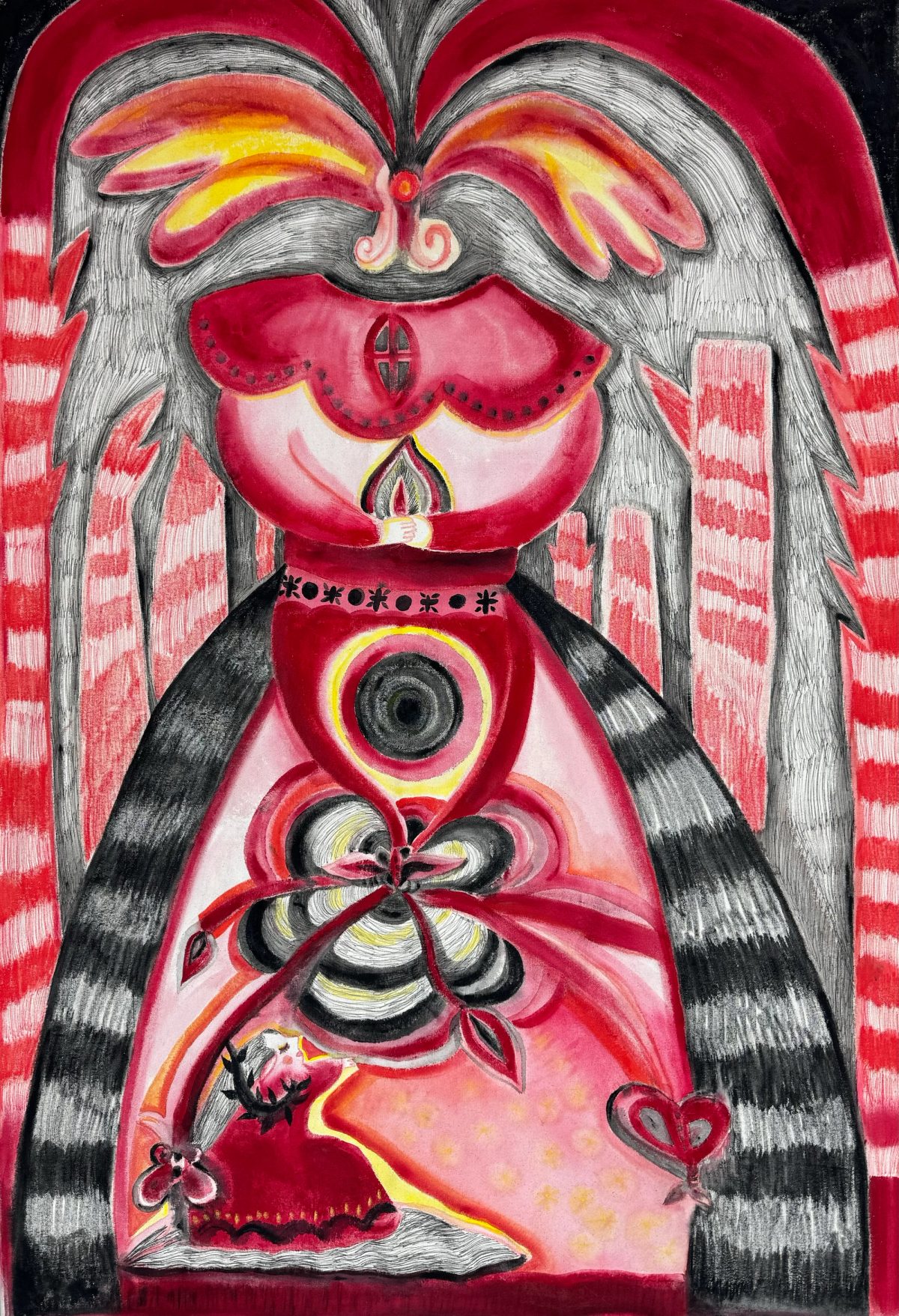
The Flames in Memories and the Calls of Childhood (right)
Your recent work draws from Taiwanese folklore but also weaves in myths from other cultures, from Korean haenyeo divers to global nature deities. How do you navigate between reverence and reinvention when translating these narratives into your own visual language?
My work is often inspired by myths and goddess beliefs from different cultures. When I engage with these stories, I approach them with both respect and curiosity. I never try to reproduce the narratives literally; instead, I focus on the emotions, symbols, and spiritual connections that resonate across traditions. Whether drawn from Taiwanese folklore, Korean haenyeo divers, or other nature-based myths, I’m interested in how these narratives express women’s resilience and their relationship with nature. Through my practice, I translate these stories into my own visual language, where cultural boundaries become fluid and symbols from different worlds begin to communicate with one another. I also try to uncover the shared essence between cultures, their common dreams, fears, and rituals that remind us of our interconnection as human beings.
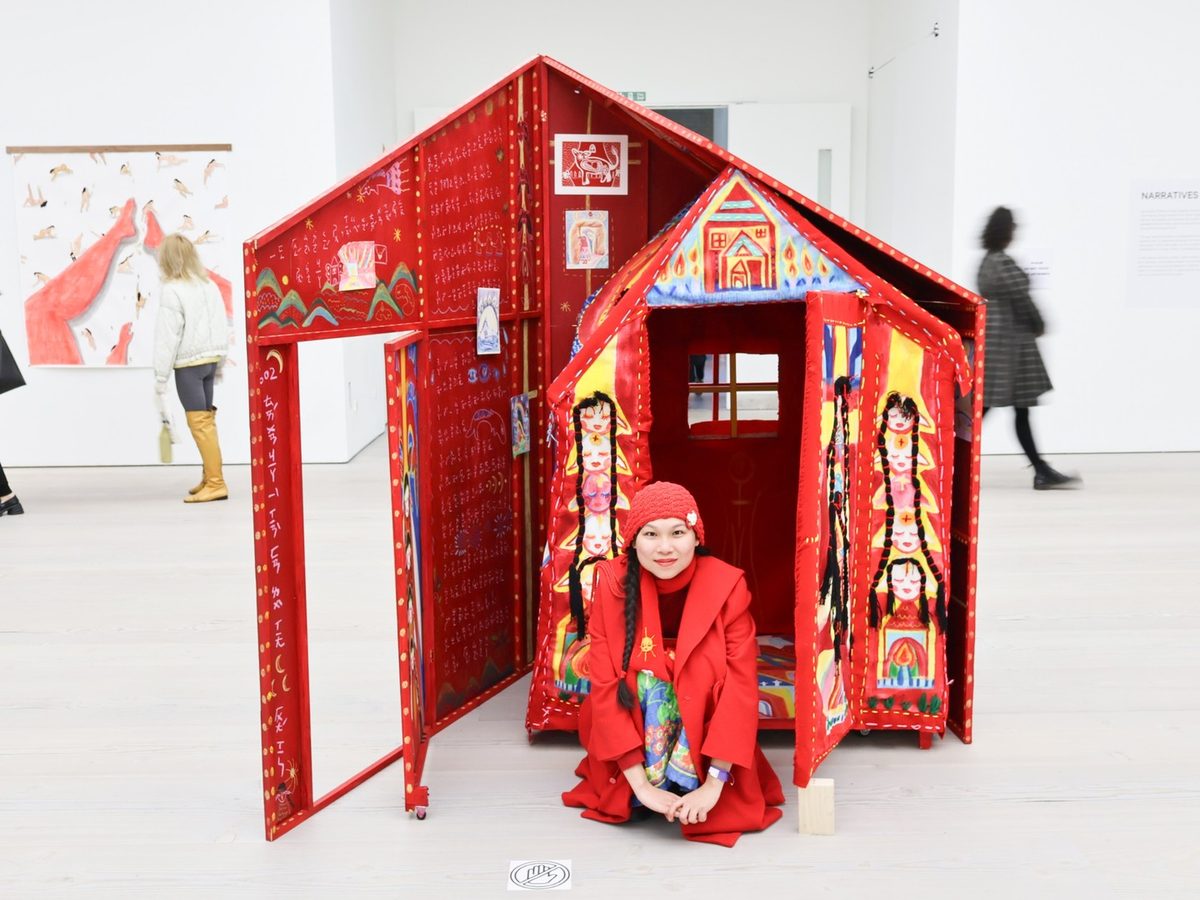
A Red Love Letter to My Home on a Hill in Taiwan (left)
Fire, water, blood, and thread repeat across your work, elemental and cyclical, like stages of rebirth. They recur almost like companions. What compels you to return to these motifs? Are they emotional anchors, or do they reappear like recurring dreams, changing shape each time they resurface?
Fire often appears in my work, especially through the image of candles. I’m fascinated by candles because they hold both light and emotion, they burn gently, carrying warmth, prayer, and celebration at once. A candle can mean so many things: a birthday wish, a quiet hope, or a moment of farewell. For me, the flame becomes a symbol of blessing and transformation. It connects the everyday and the sacred, something fragile, yet full of spirit. Each time it reappears in my paintings, it takes a different form.
And finally, what direction is that movement pulling you toward now? Are there new materials, myths, or emotional terrains you’re beginning to explore?
After my residency experiences in Foshan, China, and Busan, South Korea, I feel inspired to continue traveling and working in different places to explore local myths and cultural narratives. Each residency allows me to understand how belief and imagination are shaped by landscape and community. Next, I will return to Taiwan to begin new research in Tainan, focusing on the self- taught artist Hung Tung, whose visionary and intuitive approach deeply resonates with me. Through this project, I hope to continue expanding my exploration of mythology, spirituality, and the connection between art and place.
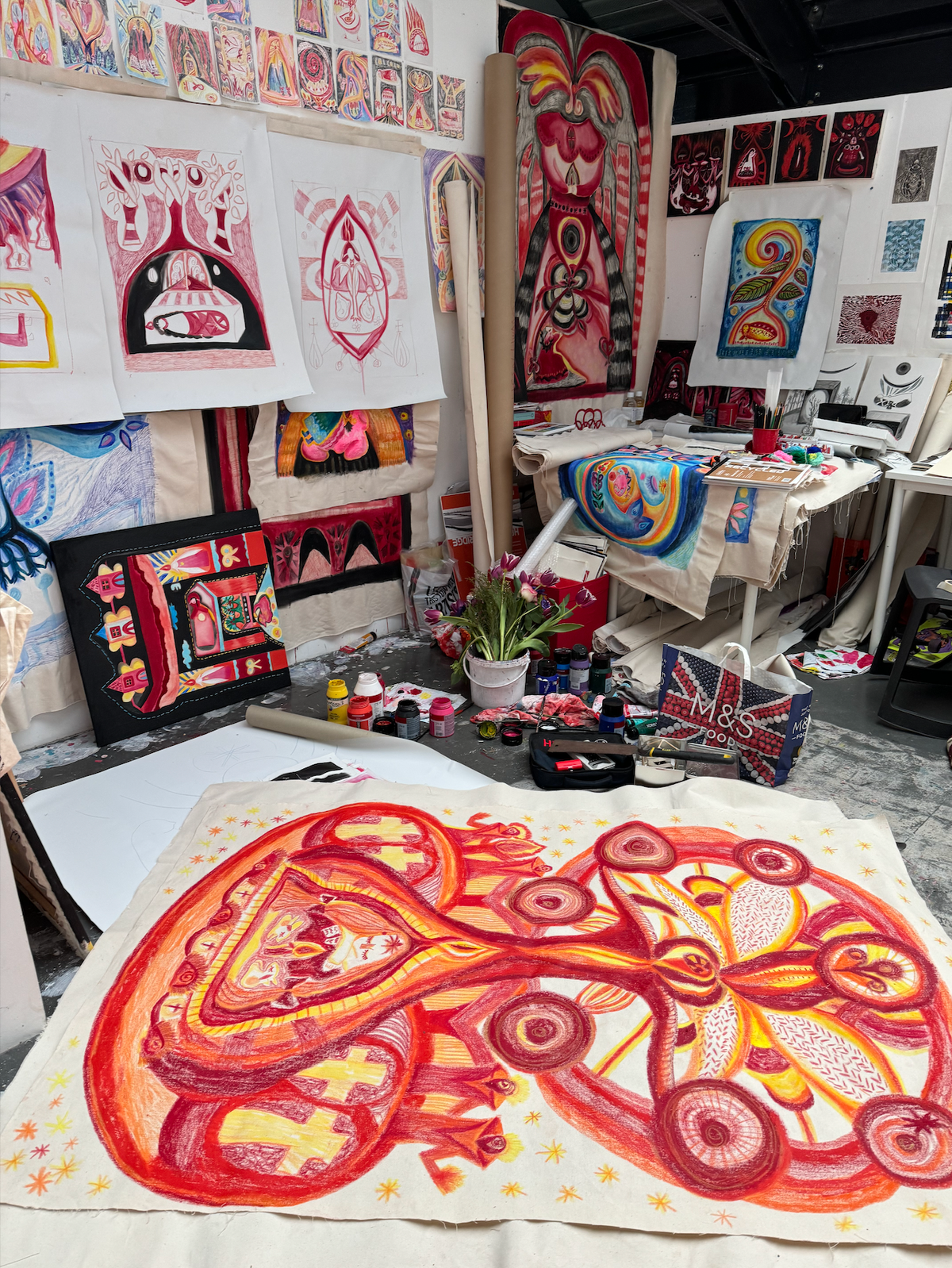
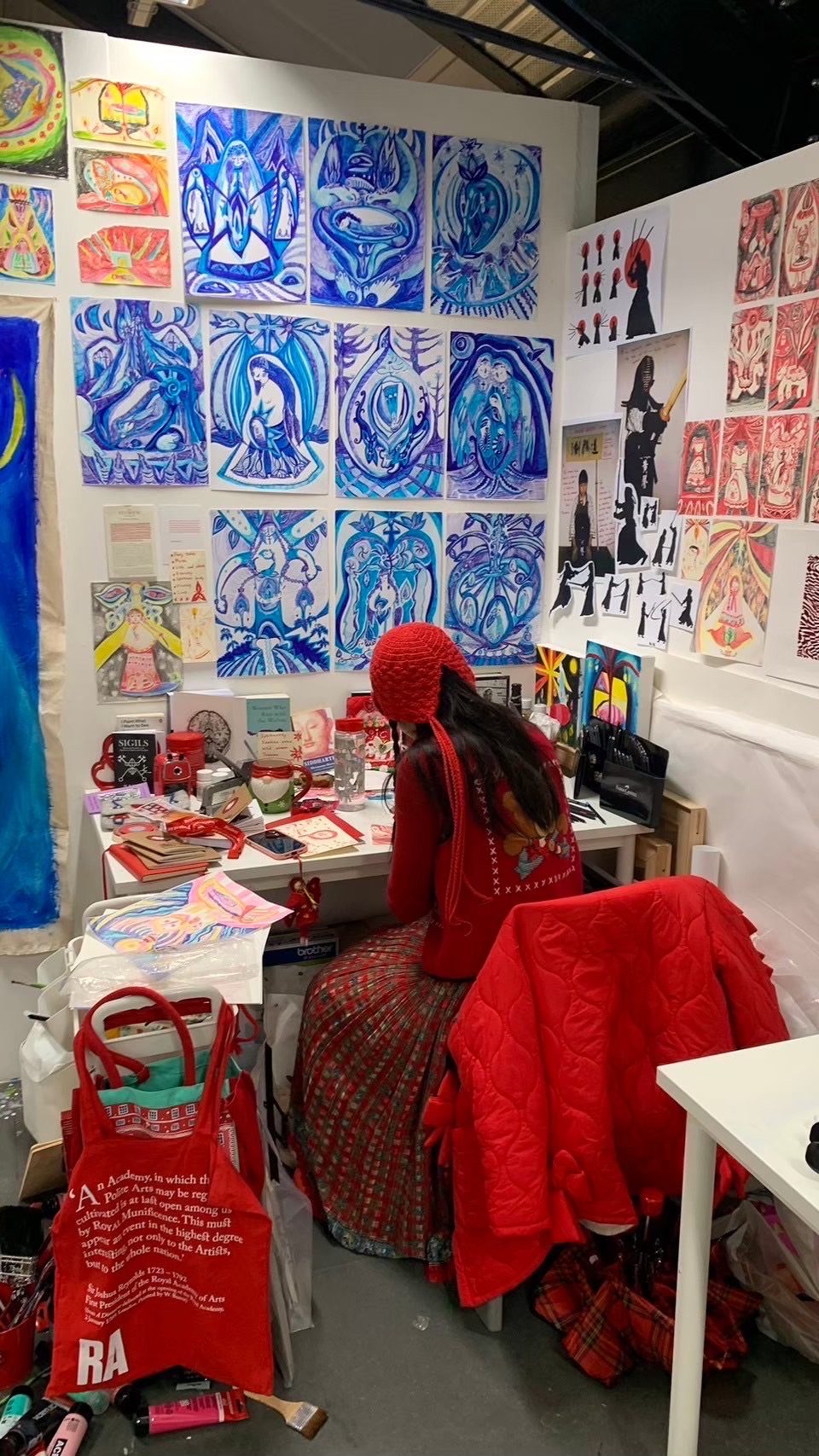
RCA Studio