THOUSANDS OF INDIVIDUAL CUTS: IN CONVERSATION WITH JR CHUO
CONVERSATION BY YANGRUNG CHEN (MOCO)
CO-FOUNDER, ART DIRECTOR
10 AUGUST 2026 — LONDON, UNITED KINGDOM
There is a peculiar violence to the paper cut: a single, unrepeatable incision that cannot be undone, only built upon. It is this irreversibility, repeated across thousands of individual gestures, that forms the quiet architecture of the Jr Chuo's practice: coral reefs, cities, and ecological systems rendered through accumulation, each work a slow negotiation between control and emergence. Trained in the systems-thinking of academic research yet drawn instinctively to a medium older than any theory he might apply to it, he works at the friction point between permanence and fragility, speed and patience, the instantly consumable image and the object that only yields itself over time. In this conversation for Obtuse Archive, he speaks to the discipline of making by hand in an increasingly frictionless world, and to what it means for an artwork to hold, quite literally, the shape of its own making.
To begin, your works are primarily created through highly manual, hand-made processes. At a time when digital art is becoming increasingly dominant, your practice feels especially distinctive. Could you share what drew you to this format of making? How did this way of working begin, and how has it developed over time?
I think my relationship with paper cutting actually began before I knew it existed as an artistic tradition. As a child, I was always cutting paper, making collages and constructing images through removal rather than drawing. Looking back, I think I was instinctively drawn to that way of making.
The turning point came during a trip to Japan in 2012. In Kyoto, I came across the traditional paper-cutting practice of ise-katagami, and for the first time I realised there was a much broader history behind something I had been doing intuitively. That led me to explore paper cutting more widely, from Japanese kirie to the Chinese tradition of jianzhi.
At first, I was fascinated by the craftsmanship. The level of precision was extraordinary. But over time, my interest shifted away from technique itself and towards what the process could communicate.
What interests me now is that every work is built through thousands of individual cuts that gradually accumulate into something much larger. That feels closely connected to the subjects I explore. Coral reefs, cities, and ecological systems all develop through countless small actions rather than singular events, so the process and the concept become inseparable.
I've also become increasingly aware of the importance of working by hand. In a culture that often prioritises speed and immediacy, I'm interested in slowing things down. Every cut is irreversible. It captures a decision, a movement of the hand, and a moment in time. The finished work becomes a record of that accumulated time and attention.
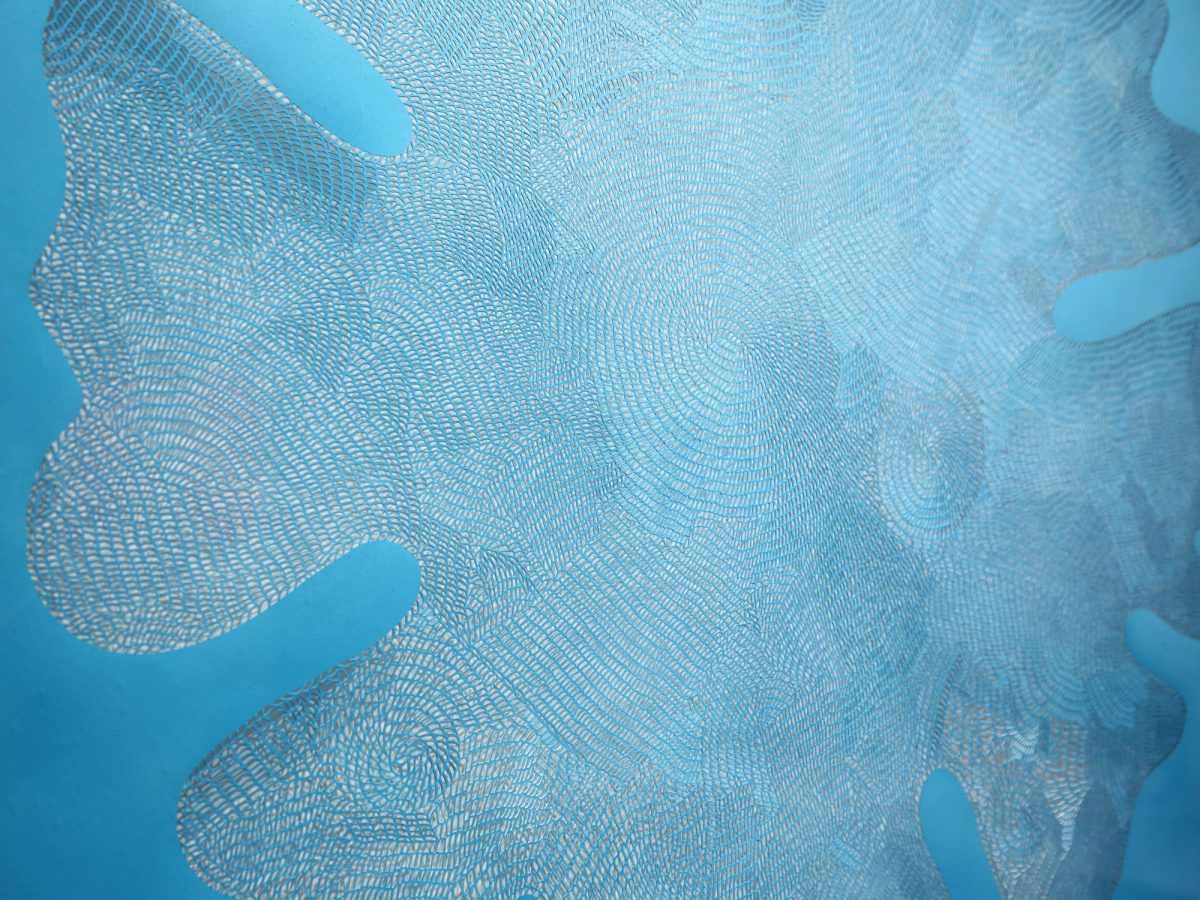
EoTL, light blue details, hand-cut paper, JR Chuo.
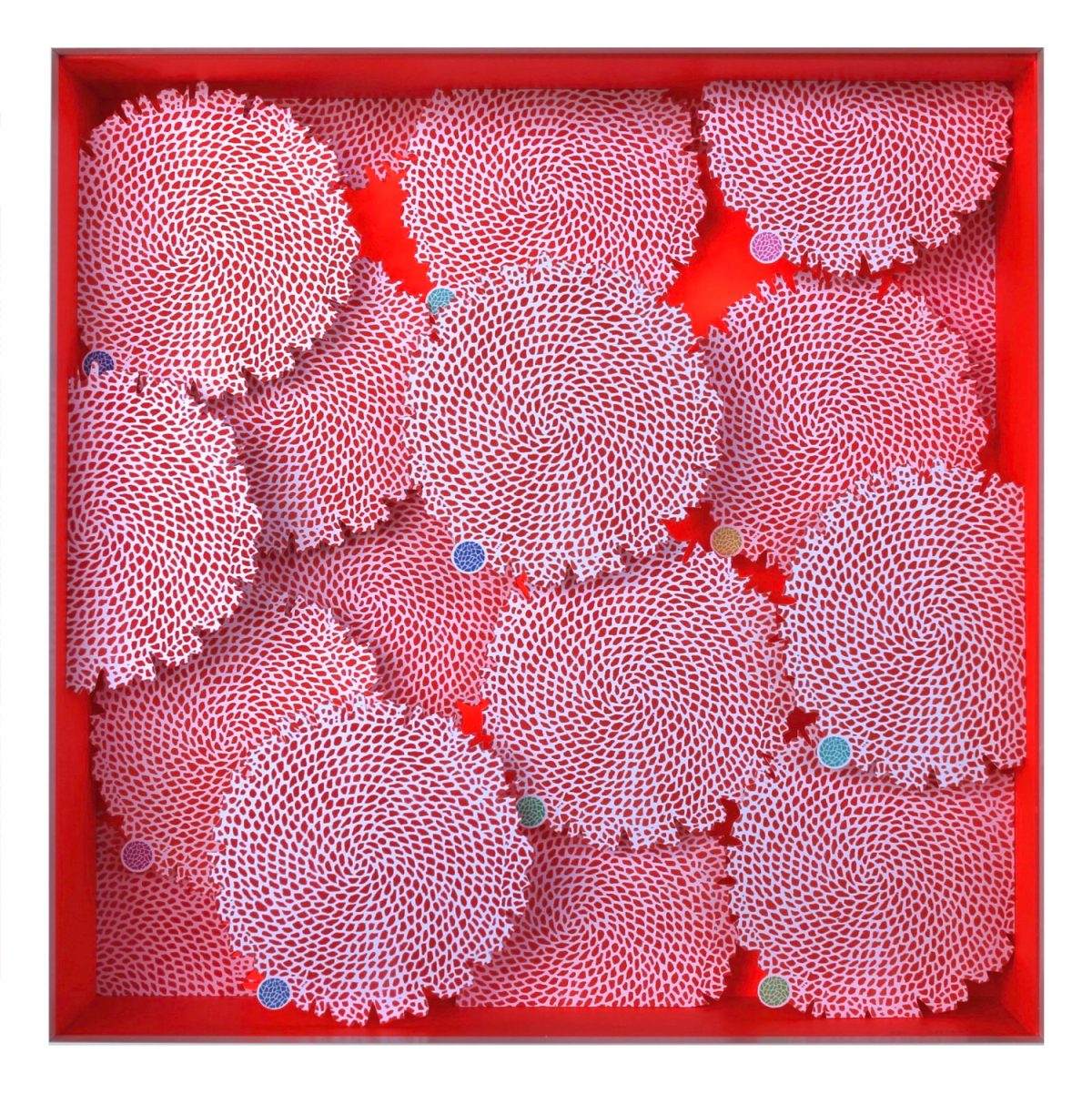
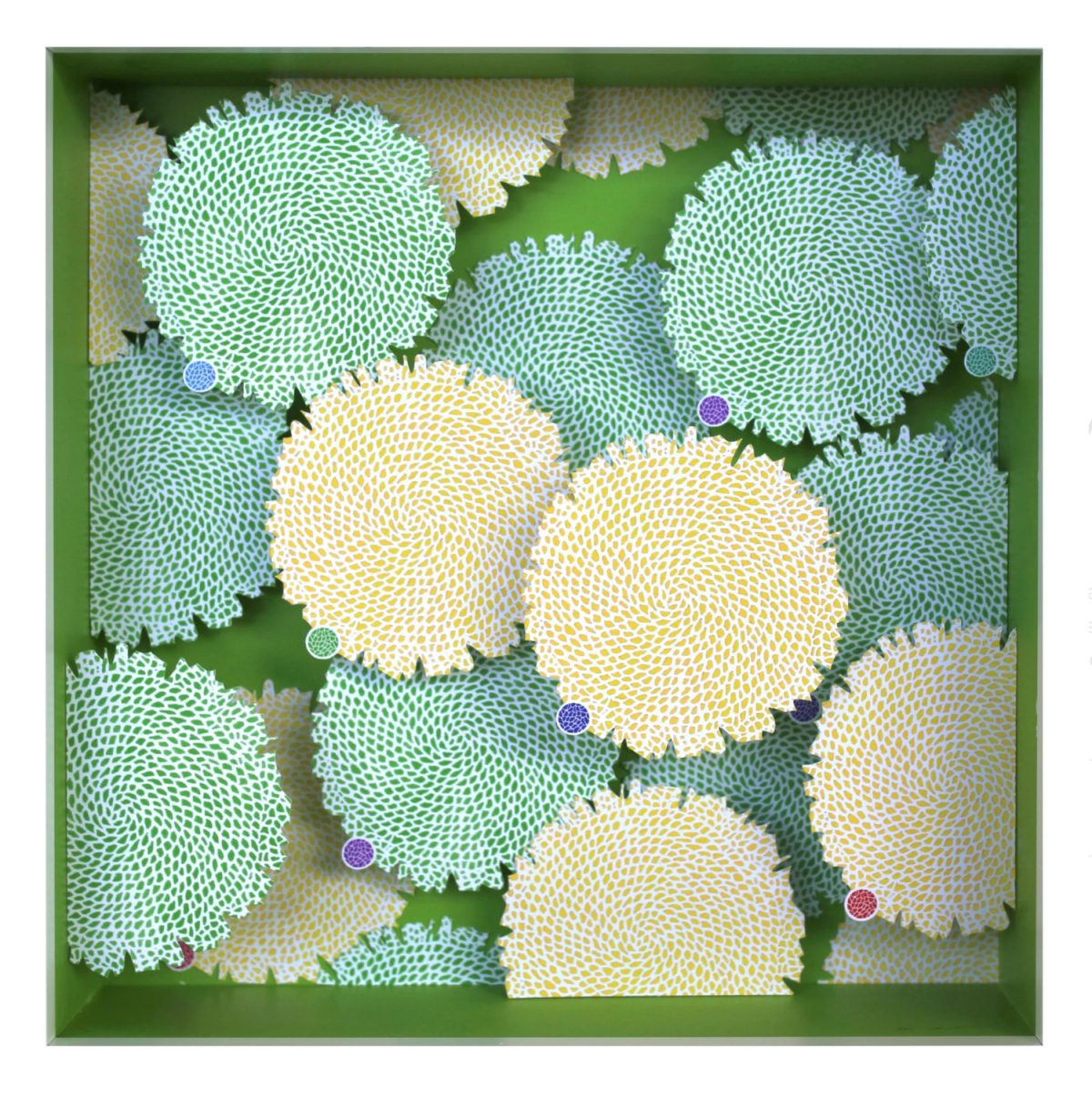
Left: Mini CHUO Reef: Next Stop Daikanyama, 2021, hand-cut archival paper raised on canvas, 21 × 21 cm, JR CHUO.
Right: Mini CHUO Reef: Next Stop Mitaka, 2021, hand-cut archival paper raised on canvas, 21 × 21 cm, JR CHUO.
Given your strong academic background, how do you translate theoretical inquiry into artistic practice? More specifically, it would be insightful to consider how your academic background has shaped the way you develop a body of work, construct meaning, and negotiate the relationship between concept, form, and interpretation.
Studying at Cambridge taught me to think less about objects in isolation and more about the systems that shape them. My dissertation examined the role of public art in the regeneration of communities following the 2011 Tōhoku earthquake and tsunami. It led me to think more broadly about the ways landscapes, politics, memory, and material culture continually shape one another.
I don't approach coral reefs solely because of their visual beauty, but because I'm interested in how these living systems emerge through accumulation. Millions of individual organisms, each acting independently, produce structures that appear stable and permanent, yet remain vulnerable to change. I'm interested in cities for much the same reason. Both are complex systems that emerge through countless interconnected relationships, constantly adapting while existing in a state of underlying fragility.
My process mirrors that logic. Every artwork is constructed through thousands of individual cuts, each carrying its own weight while contributing to a larger, interconnected structure. Rather than being imposed onto the paper, the image gradually emerges through the same cumulative process that shapes the systems the work references.
Ultimately, I'm interested in creating work that encourages people to recognise how systems that appear stable and permanent are often held together by delicate relationships, making them far more fragile than they first appear.
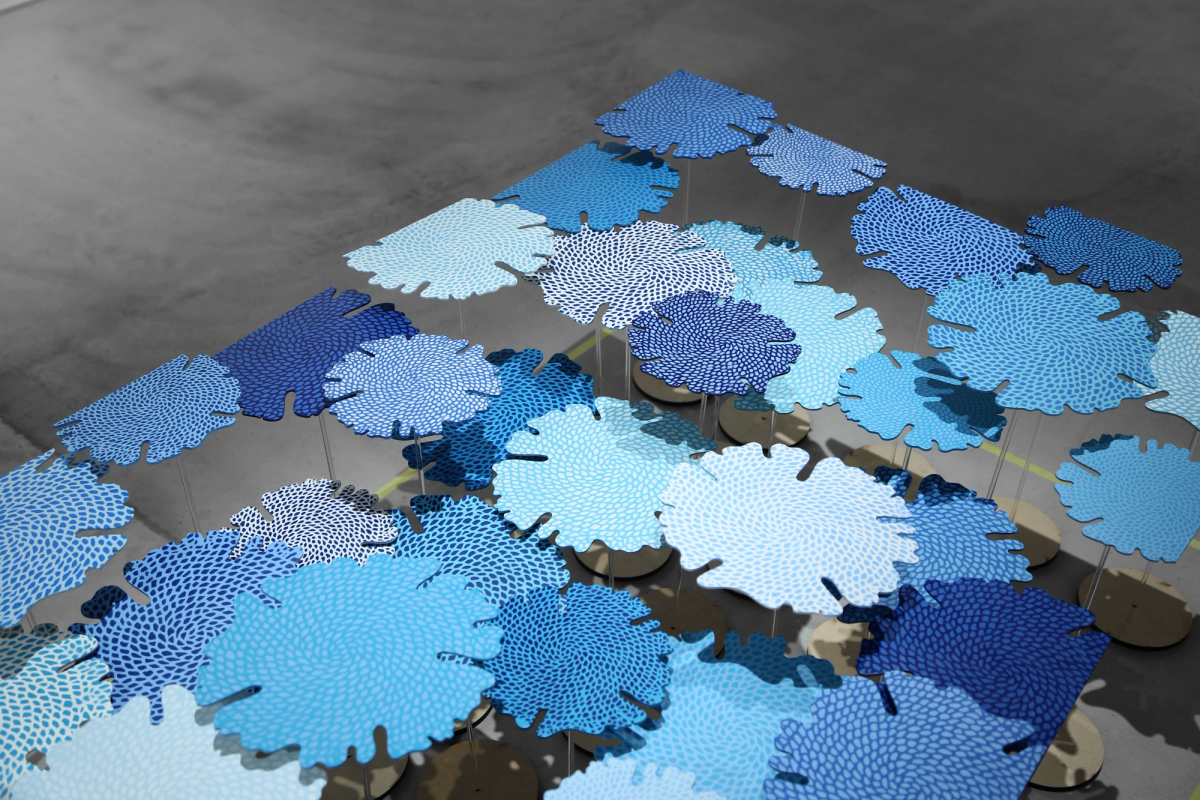
Detail of Tokyo Reef, hand-cut paper, JR Chuo.
"Every cut is irreversible. It captures a decision, a movement of the hand and a moment in time. The finished work becomes a record of that accumulated time and attention."
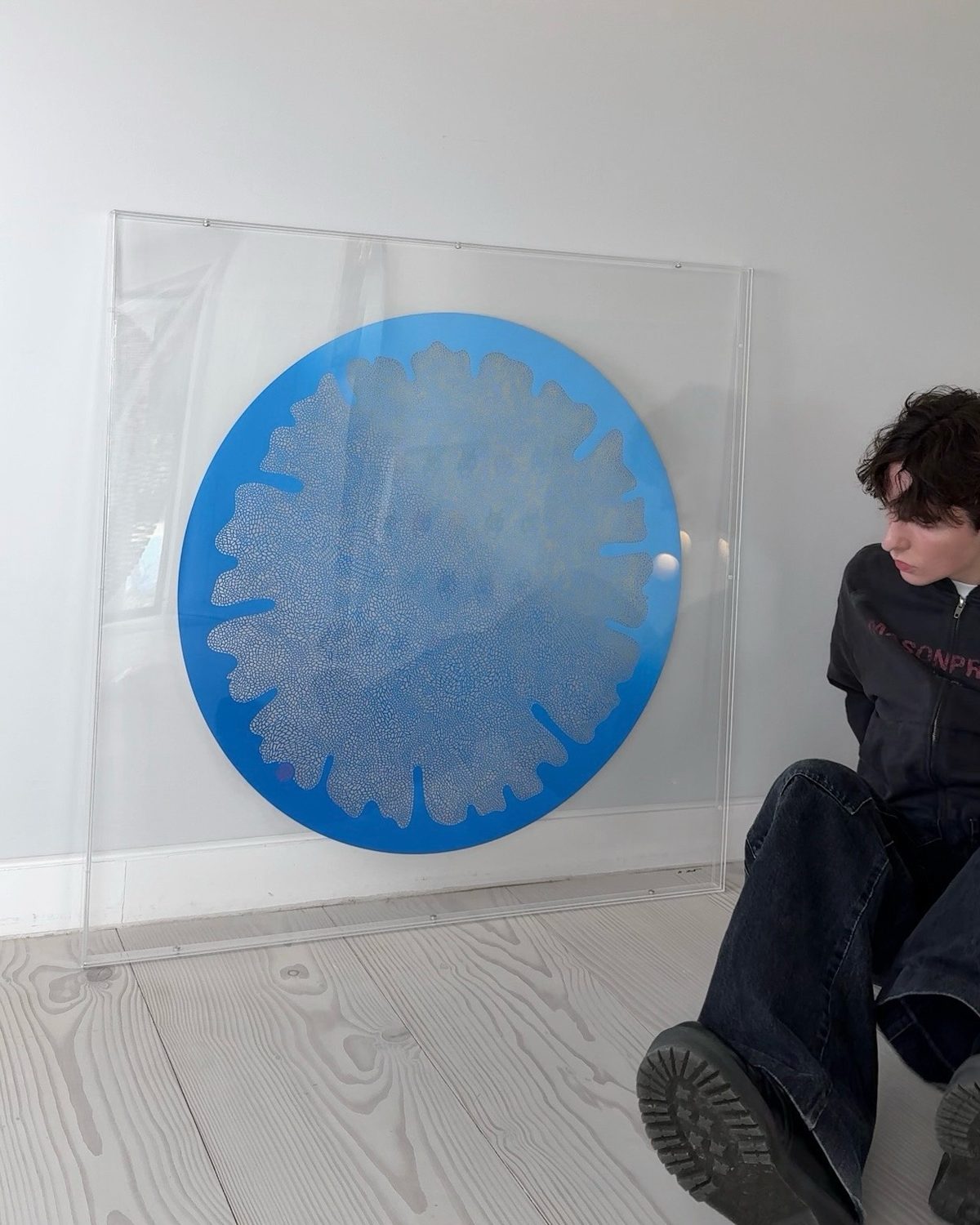

Left: a recent commissioned work by JR Chuo, 2026.
Right: JR Chuo, Fluoro Blue Shibuya, 2023.
How would you like viewers to approach your work, and what kinds of emotional or sensory responses do you hope it might evoke?
I don't expect viewers to understand the work immediately. In many ways, I hope they don't.
From a distance, my works are often experienced through their overall structure and colour. It's only by spending time with them that the density of the cuts, the fragility of the paper, and the physical process behind their construction begin to emerge. I like the idea that the work reveals itself in layers.
That gradual process of discovery is important to me because I think we experience the world in much the same way. The complexity of cities, landscapes, and ecological systems isn't immediately visible. It's only through closer attention that the relationships holding them together begin to emerge. I want the work to encourage that same way of looking.
Rather than directing viewers towards a single interpretation, I'm interested in creating space for reflection. If someone leaves thinking differently about complexity, fragility, or our relationship with the systems that shape the world around us, then I feel the work has done what it set out to do.
Paper-cutting is often perceived as a medium that requires patience, repetition, and an intimate relationship with process. What has allowed you to remain committed to this practice over time, and what do you see as the deeper source of that commitment?
People often assume patience is the defining characteristic of paper cutting, but I don't think that's necessarily true.
What really sustains me is curiosity. Every body of work begins with a system I don't yet fully understand and ends with one I understand slightly better. Repetition is simply the mechanism through which that understanding develops.
The same action repeated thousands of times can construct something extremely delicate, but repetition also underpins erosion, extraction, and environmental collapse. I'm fascinated by the fact that the same gesture can both create and destroy. Every cut is almost identical, yet together they produce something that could never exist through a single gesture.
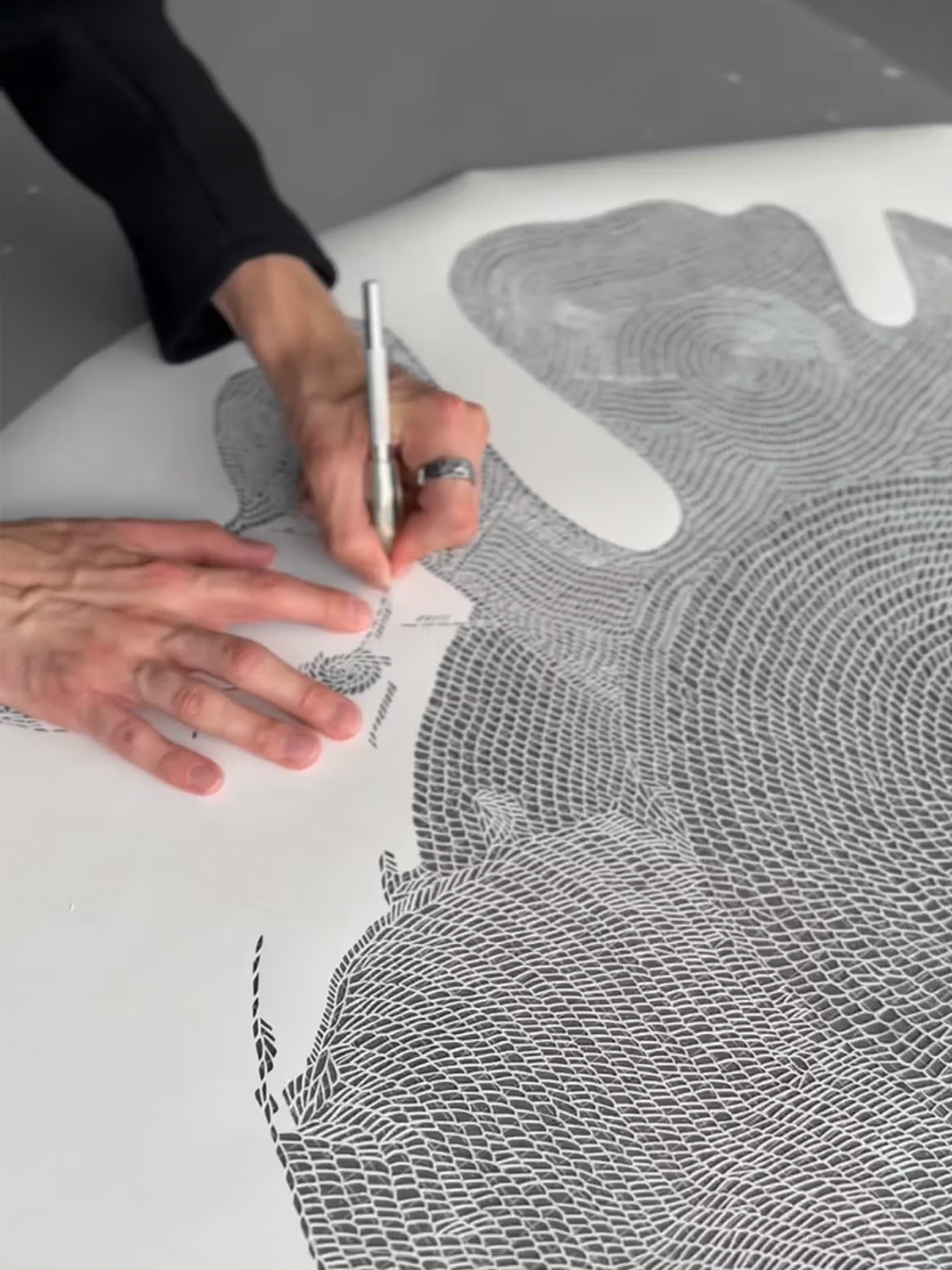
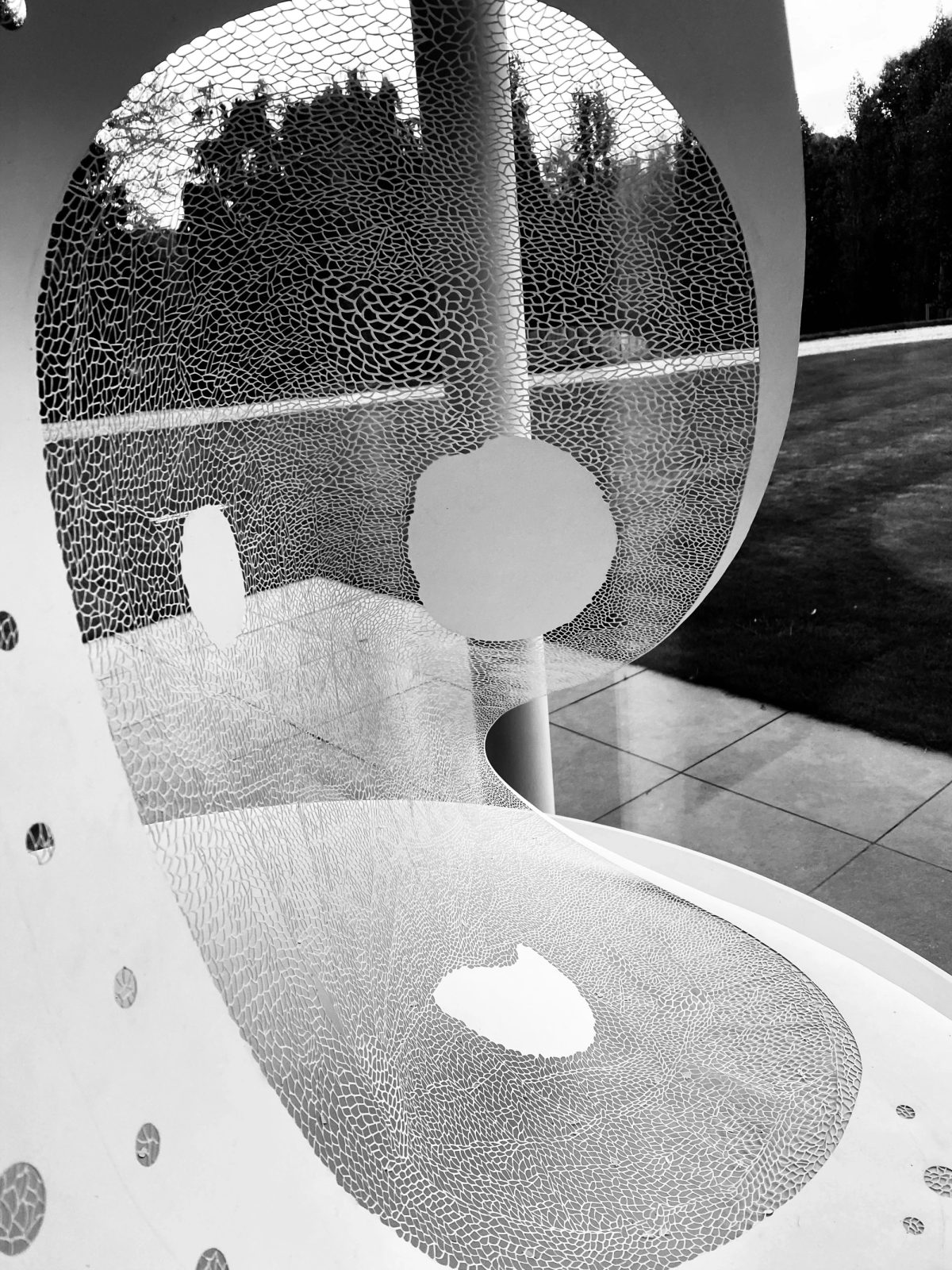
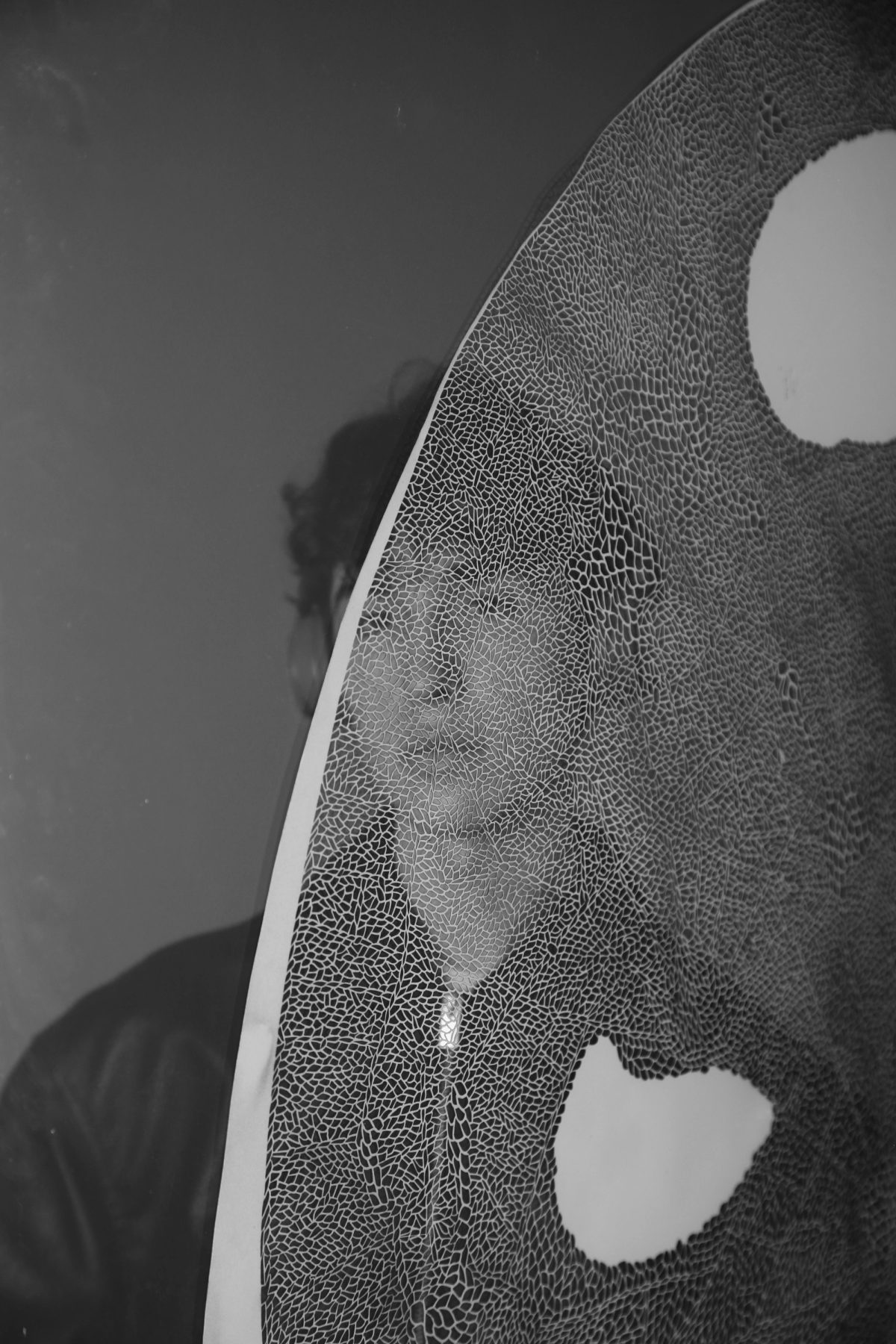
Paper-Cutting Process, JR Chuo.
At a time when artworks are constantly produced, consumed, and forgotten within accelerated cycles of visibility, how do you understand the position of your work in relation to the contemporary art world?
I don't see slowness as nostalgic or oppositional to contemporary culture.
We live in an image economy where artworks are often encountered first through a phone screen, sometimes for only a few seconds. My work inevitably participates in that economy, but it also resists it.
The finished piece embodies months of accumulated labour that can't be compressed into the speed with which it is consumed. Rather than seeing that as a contradiction, I'm interested in the tension it creates. The work exists simultaneously as an instantly circulating image and as a physical object that only fully reveals itself through proximity, duration, and attention. In that sense, time becomes another material within my work.
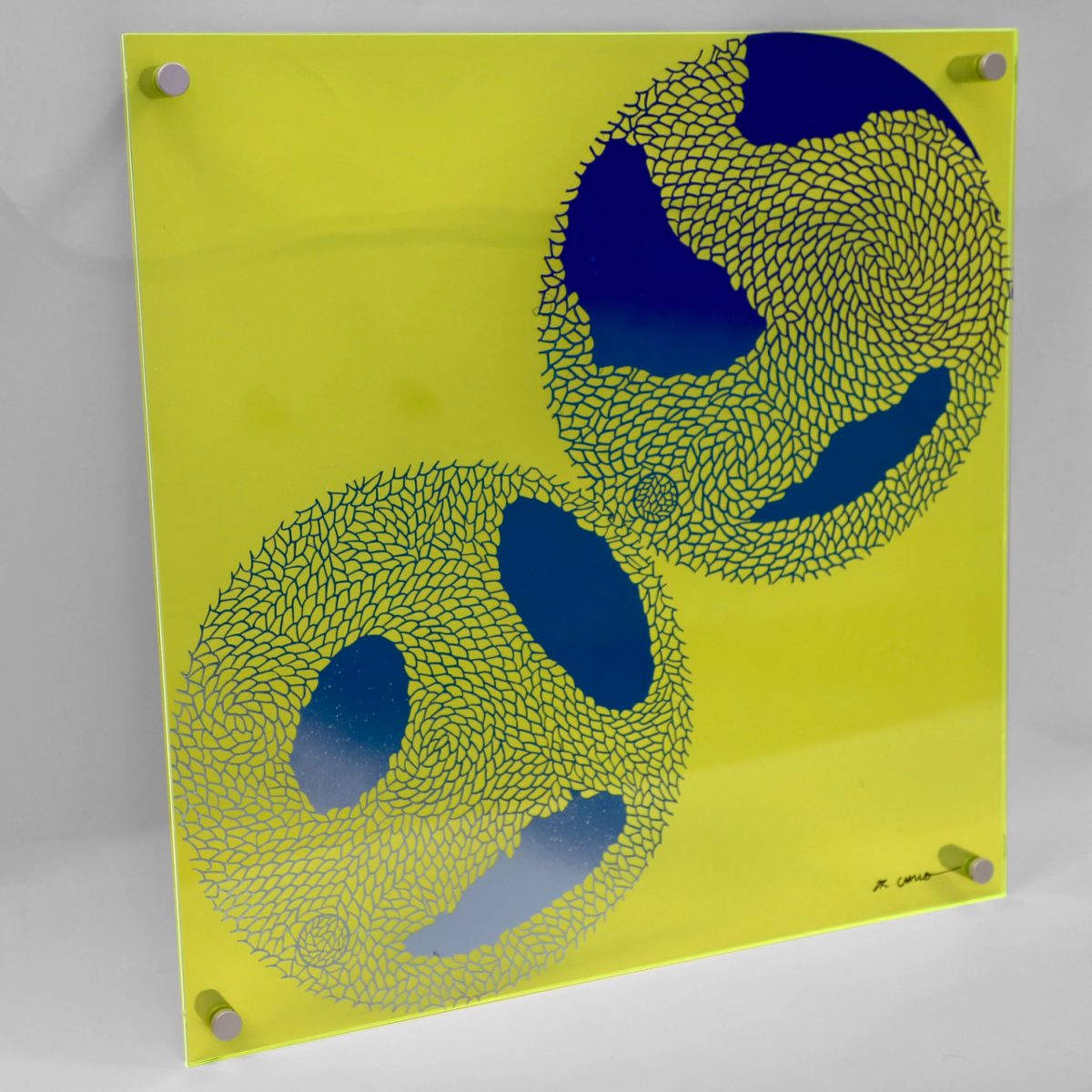
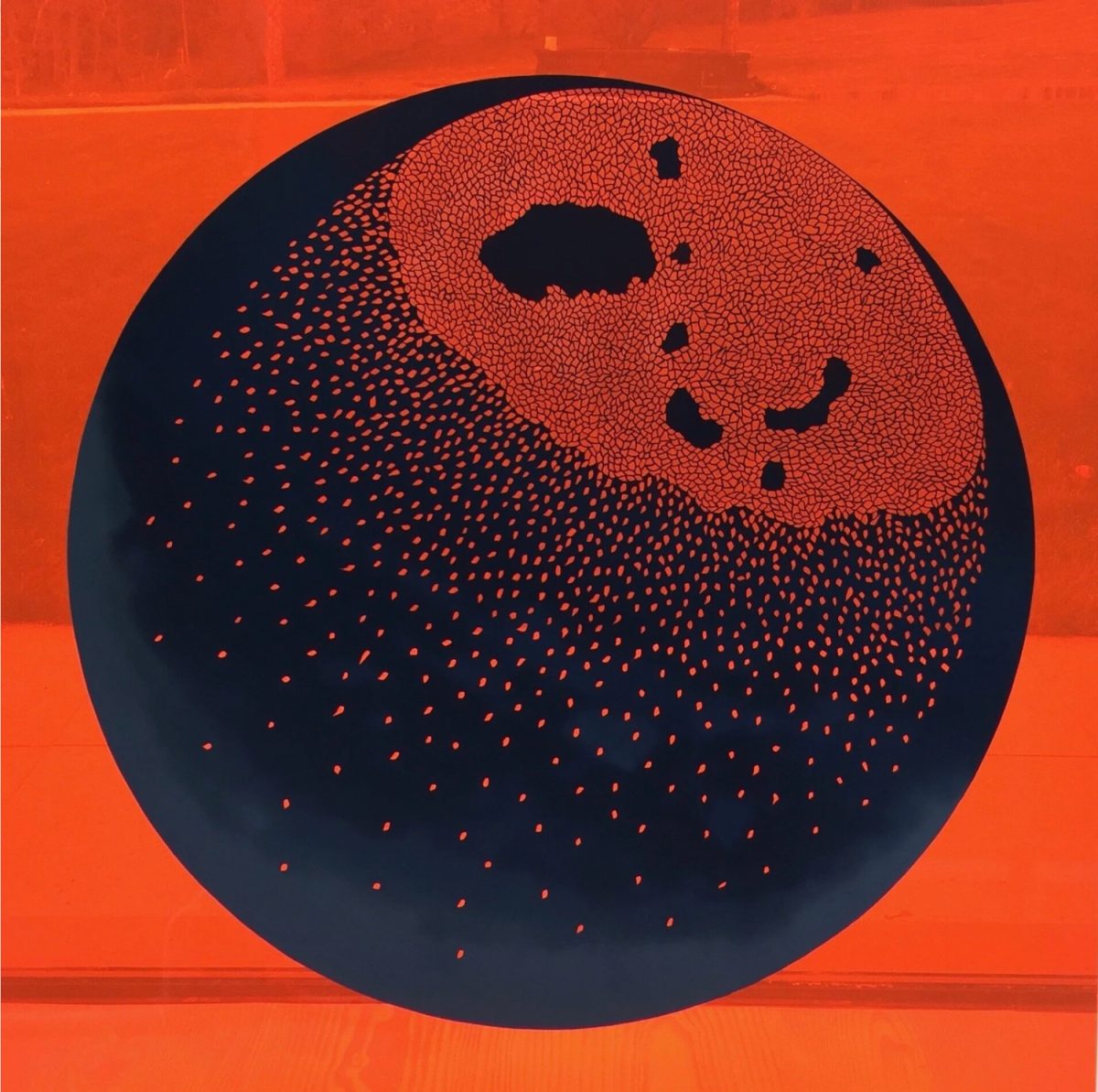
Left: Tatemae, 2019, hand-cut archival paper mounted on acrylic, hand-cut paper signature, 50 × 50 cm, held in private collection, JR CHUO.
Right: Swansong, 2018, hand-cut archival paper mounted on acrylic, hand-cut paper signature, 120 × 120 cm, held in private collection, JR CHUO.
"The same action repeated thousands of times can construct something extremely delicate, but repetition also underpins erosion, extraction and environmental collapse."
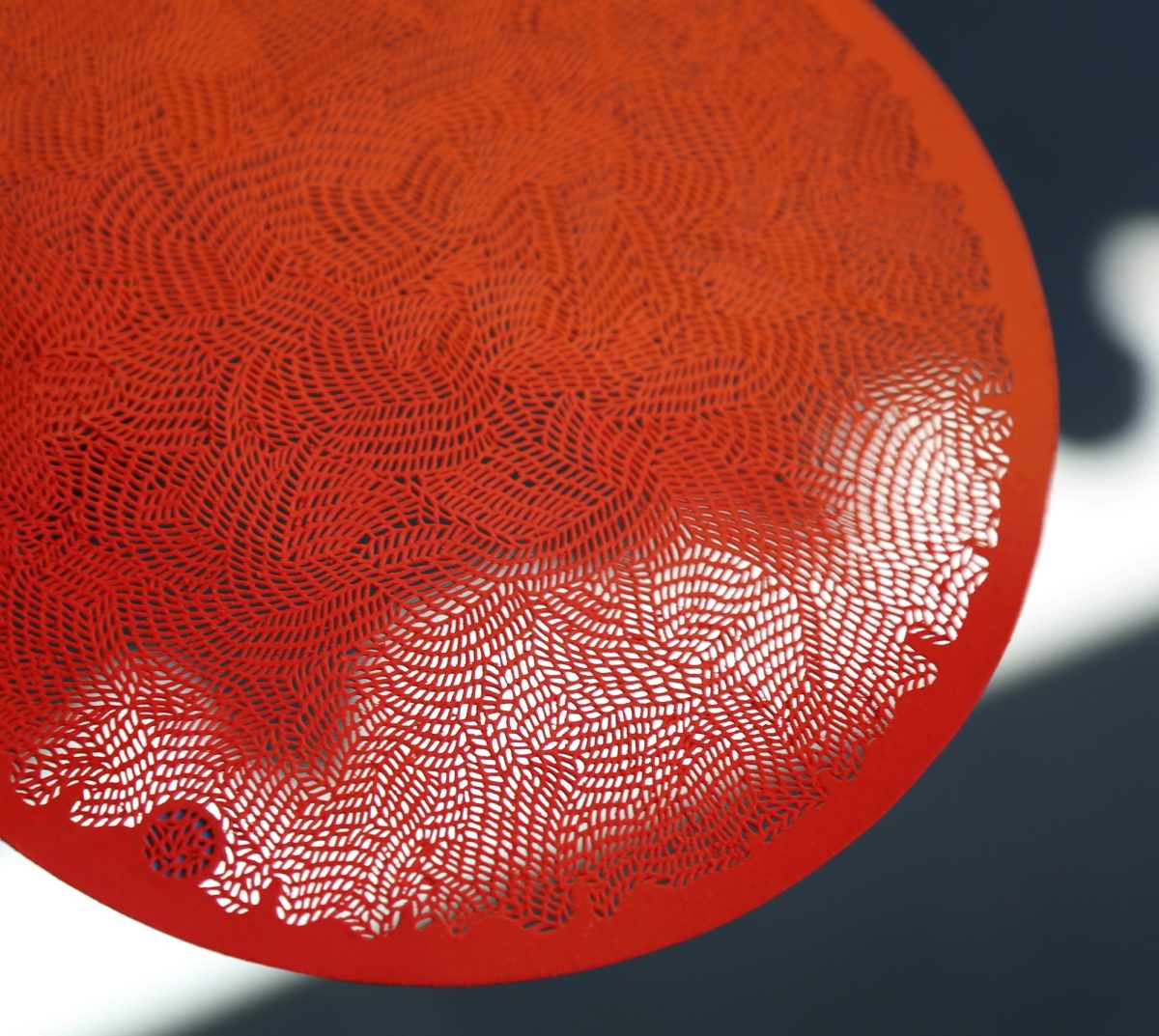
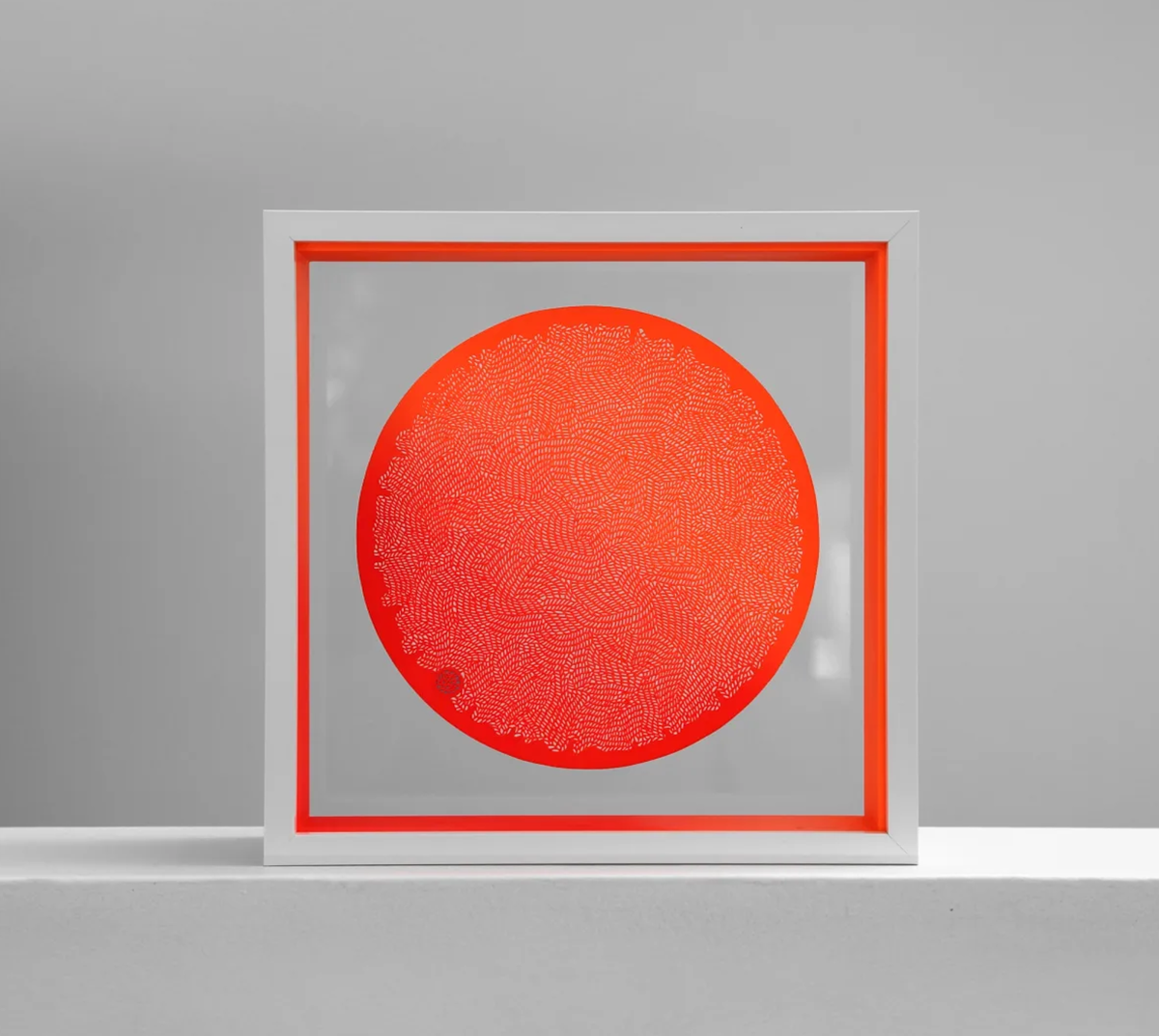
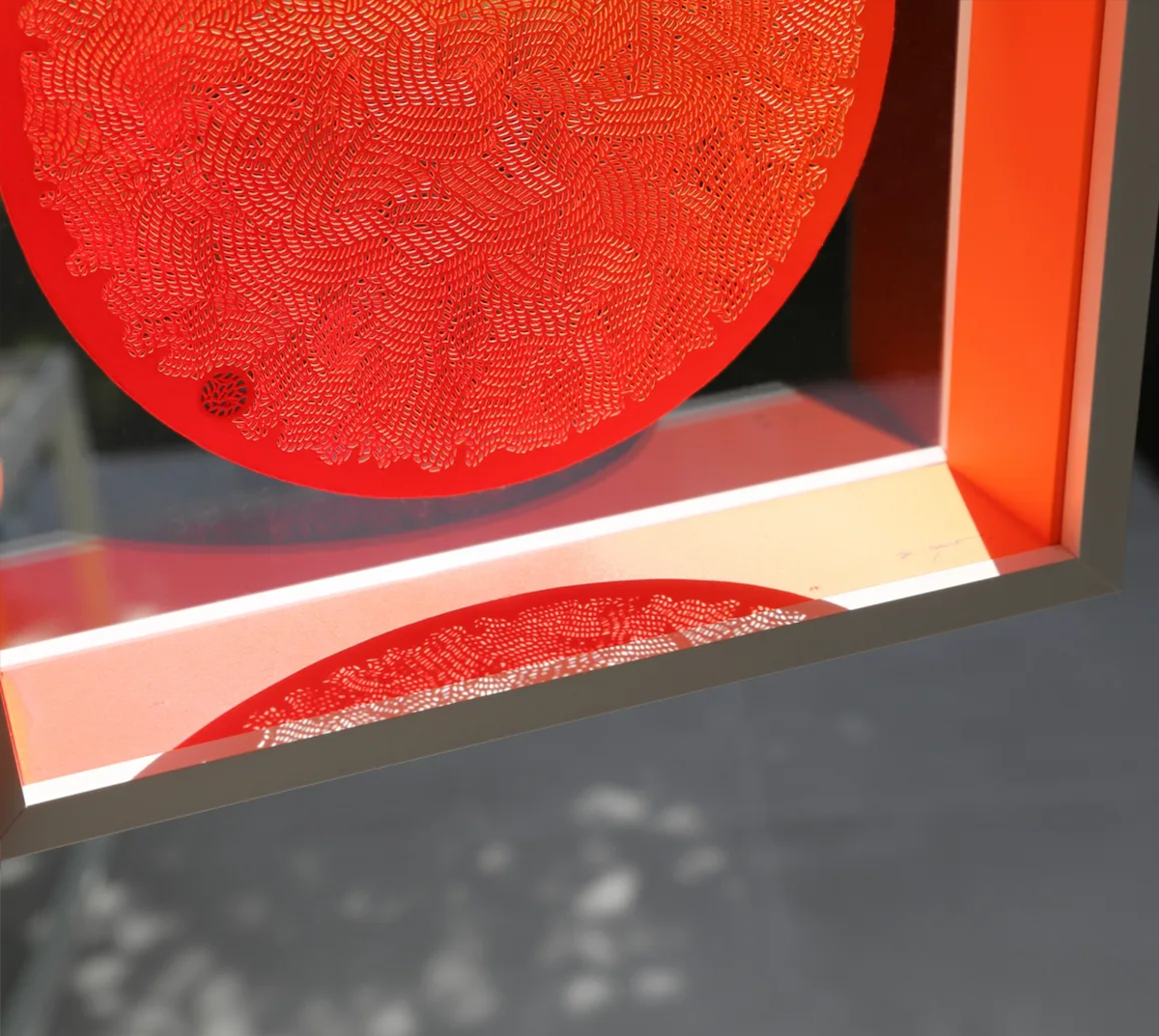
Mini CHUO Lines Commission, 2025, JR CHUO.
As an emerging artist, being named to the Forbes 30 Under 30 list in the Arts & Culture category in 2022 is a meaningful recognition and a distinction that carries weight for any artist. How did you receive this acknowledgement at the time, and in what ways did it shape, affirm, or perhaps reshape your understanding of yourself and your position as an artist?
Being named to the Forbes 30 Under 30 list was an incredibly meaningful moment for me, particularly as it came relatively early in my career. Up until that point, I had spent years developing a very specific practice, often working independently and without knowing where it would lead. To receive that kind of recognition was really encouraging.
It also opened doors that would have been difficult to access otherwise, introducing my work to new audiences and creating opportunities that helped accelerate my career. I'm very grateful for that.
At the same time, the experience reinforced the importance of thinking long-term. Recognition can provide momentum, but it's the work itself that sustains a practice. It encouraged me to keep challenging myself, to remain curious, and to continue developing the ideas that first drew me to making art. I see it as an important milestone, but also as the beginning of a much longer journey.
Your work seems to carry a material immediacy in which each gesture holds weight, particularly because the process does not easily allow for reversal or correction. Before you begin, do you already imagine a completed form, or is the work developed through a more open and evolving process of composition?
Before I begin cutting, there's usually a long period of reading, drawing, mapping, and looking during which the conceptual framework gradually becomes clear. By the time I make the first cut, the work already possesses its own internal logic. What remains open is how that logic unfolds materially.
Although the compositions are carefully planned, paper has its own behaviour. Small decisions accumulate, and unexpected relationships begin to emerge. I'm interested in allowing those discoveries to become part of the work rather than treating them as mistakes or departures from an original plan. I think natural systems behave in a similar way. They follow underlying structures, but their final form emerges through countless interactions rather than complete control.
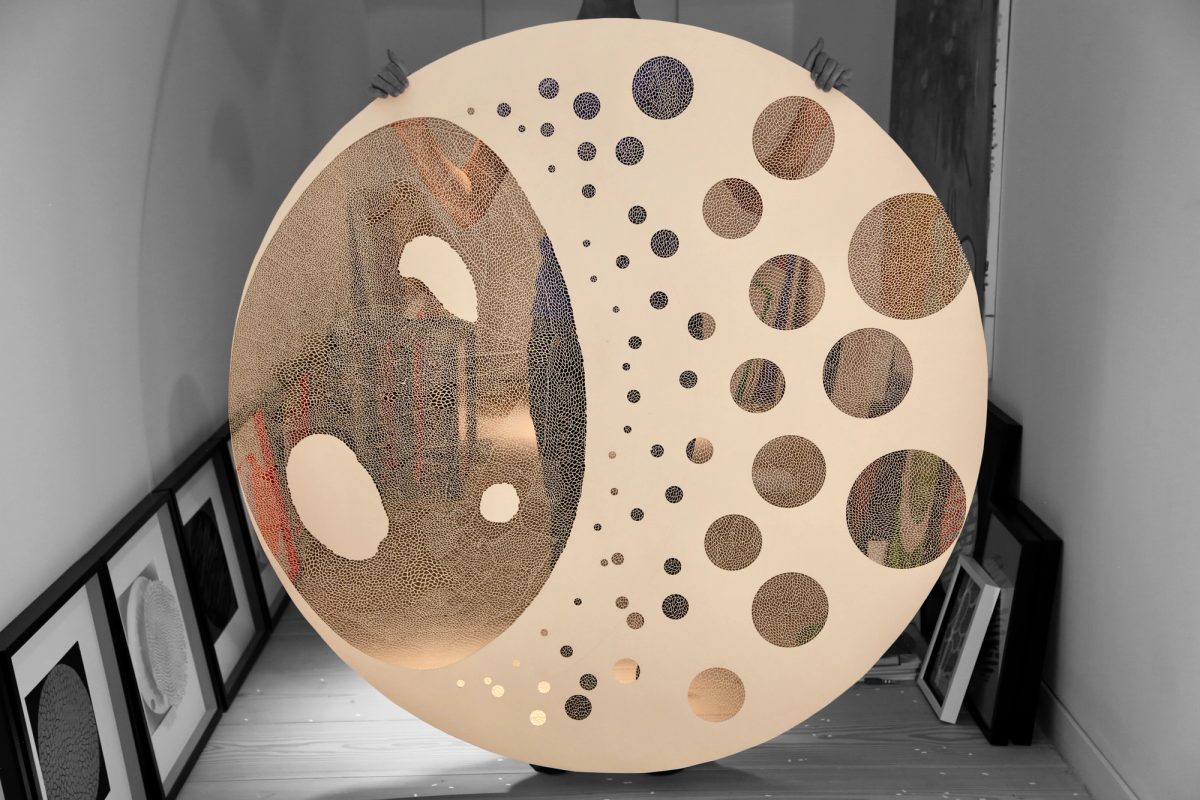
Shinjuku, 2020, hand-cut paper, 180 cm diameter, JR CHUO.
"The work exists simultaneously as an instantly circulating image and as a physical object that only fully reveals itself through proximity, duration and attention. In that sense, time becomes another material within my work."
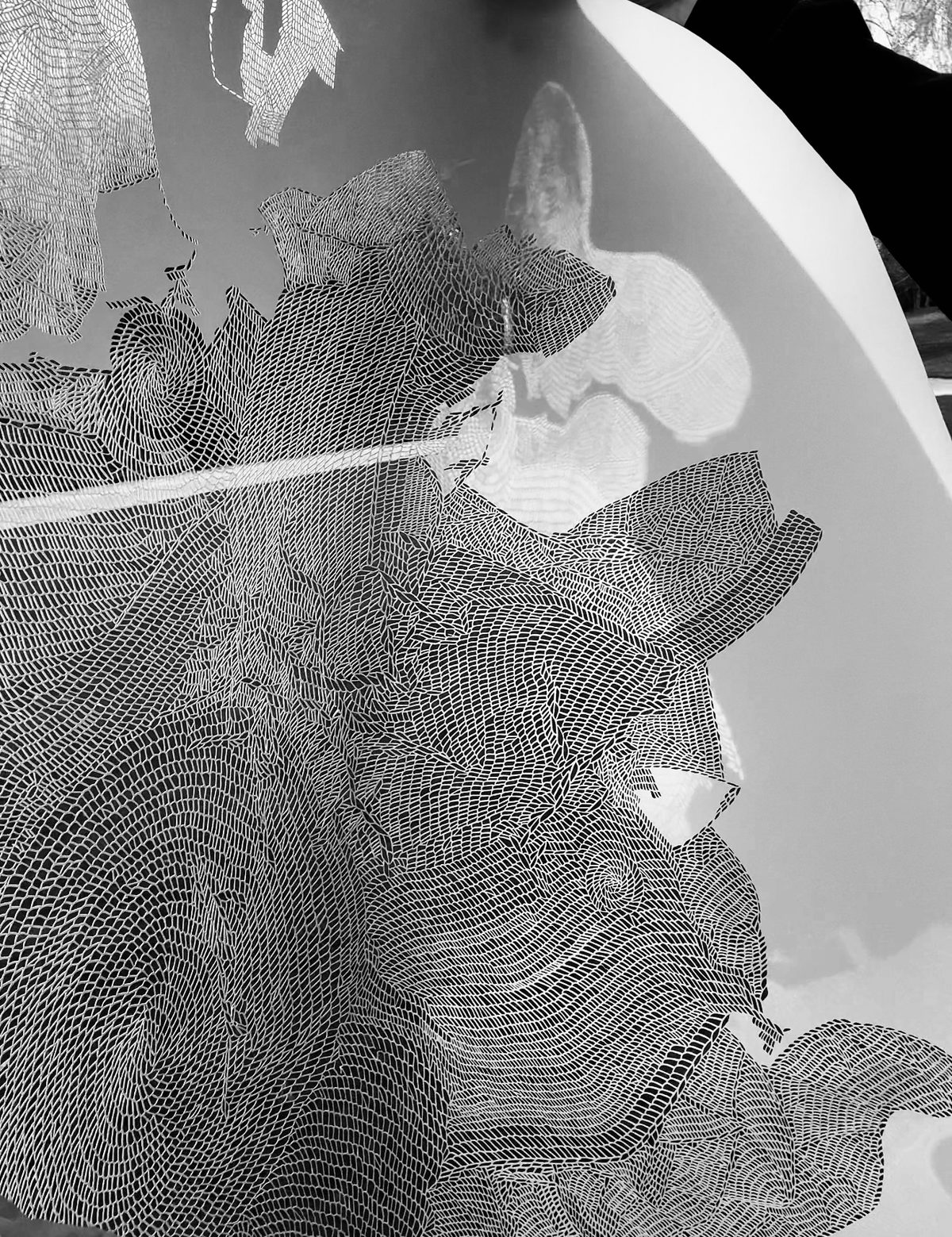

Paper-Cutting Detail 2, JR CHUO.
Finally, what are you drawn to at the moment? Are there any new works, ideas, or places that are currently shaping your thinking?
Lately, I've been thinking a lot about scale, both physically and conceptually. Much of my recent work has explored coral reef systems through hand-cut paper, but I'm increasingly interested in expanding those ideas into larger, more immersive installations. I want viewers to feel as though they're moving through these interconnected structures rather than observing them from the outside.
At the same time, I'm continuing to develop my research into coral bleaching and the migration of reef systems as ocean temperatures rise. It's an issue that feels more urgent than ever, and I hope my work can contribute to a broader conversation around the fragility of these ecosystems. Rather than illustrating climate change directly, I'm interested in creating experiences that encourage people to reflect on what's at stake.
More generally, I keep coming back to the idea of how complex systems change through countless, almost imperceptible actions. Whether they're ecological, urban, or social, lasting change rarely arrives all at once. It accumulates. I feel like I'm only beginning to explore that idea, and I imagine it'll continue to shape where the work goes next.
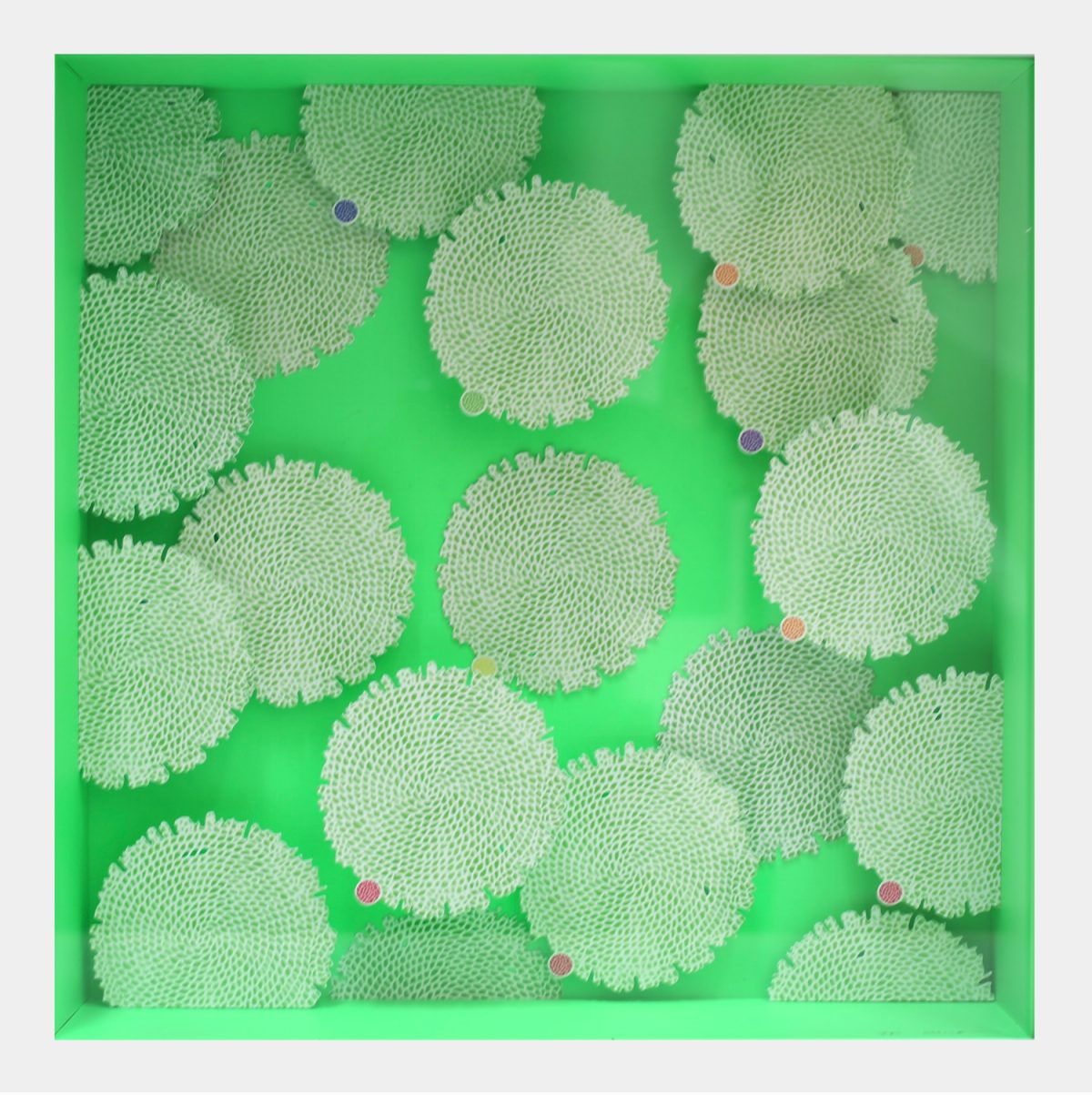
Left: Yushima Baby Reef, 2023, hand-cut archival paper raised on canvas, 21 × 21 cm, JR CHUO.
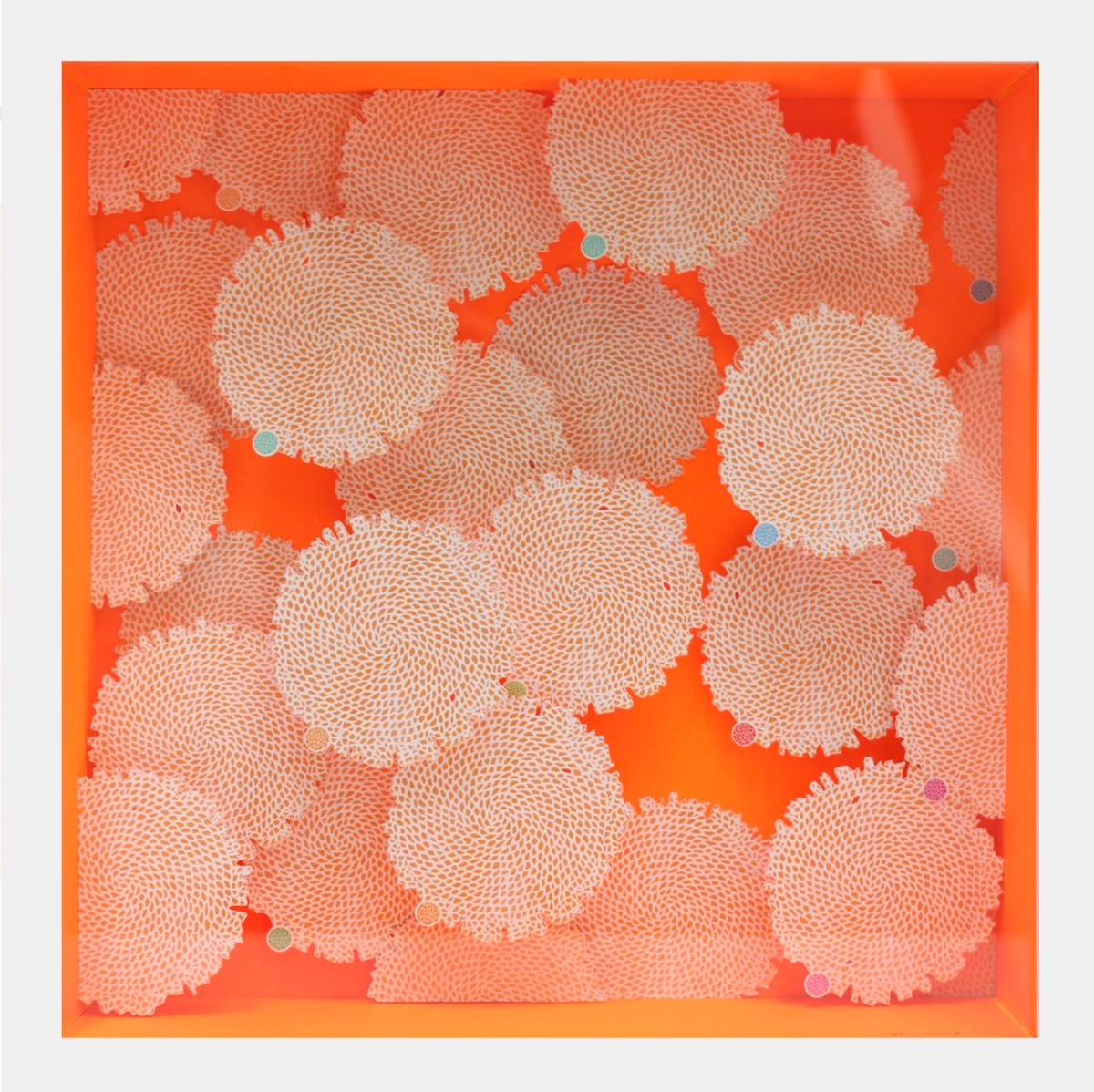
Right: Inaricho Baby Reef, 2023, hand-cut archival paper raised on canvas, 21 × 21 cm, JR CHUO.