FRAGMENTS OF PERSONAL HISTORIES BY HELENA PARYS
VISUAL ESSAY BY HELENA PARYS
9 AUGUST 2026 — ANTWERP & WARSAW
Helena Parys makes things that shouldn't hold together and insists that they do: a coat that opens onto a wound, a headful of miniature trucks, thirty metal skulls counting down the days until the roots show. Working out of Antwerp across painting, sculpture, and whatever fabrication process the object demands of her, she treats identity as a substance to be handled, cut, cast, dyed, glued, mishandled. This visual essay is Parys turned inward, an artist picking through her own inventory the way she picks through a bin of second-hand buttons. What surfaces is the residue of a practice: its recurring compulsions, the objects that keep coming back changed, the private material that keeps insisting on being shown.
My practice develops through painting, sculpture, and mixed media, combining traditional techniques with contemporary processes such as 3D printing and digital fabrication. I often begin with personal experiences, memories, dreams, or objects that become significant to me over time. Through transforming these elements into artworks, I explore how my identity is constructed, performed, and continuously reshaped. Through self-portraiture, altered figures, and staged environments, I explore the tension between how we experience ourselves and how we present ourselves to others. Many of my works exist somewhere between intimacy and artificiality, looking at ideas around femininity, beauty, consumption, and contemporary image culture. A recurring element in my work is collecting and transforming objects. I am interested in how things become connected to specific moments, places, and experiences, and how they can begin to reflect something about the person who keeps them. Found objects, clothing, accessories, and fabricated elements appear throughout my practice as fragments of personal histories.
My Buttons
Gouache, oil, buttons, and cotton thread on linen
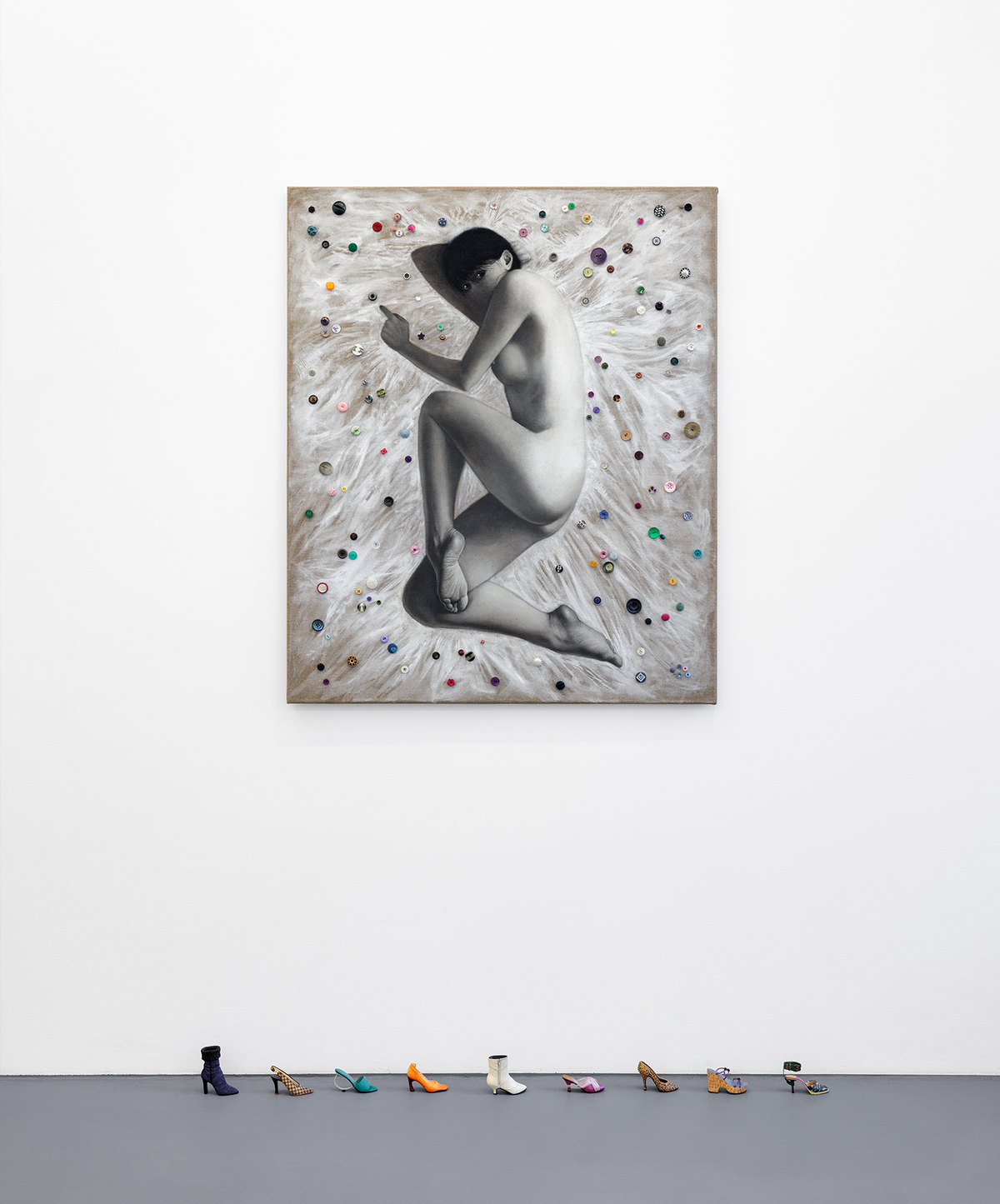
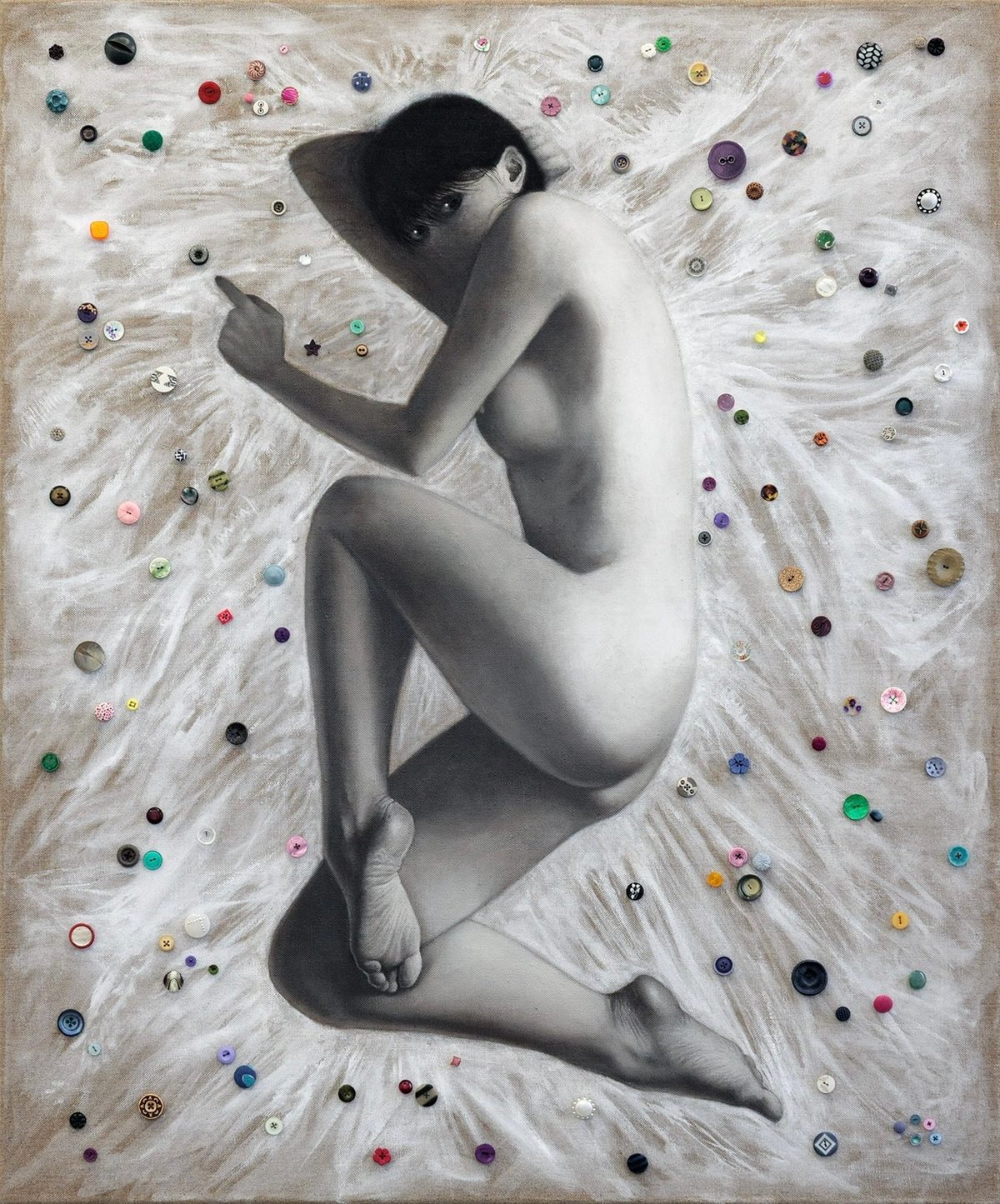
I started working on My Buttons after spending two months in Hong Kong, where I accompanied my partner at the time, during his artistic residency. Although I was fascinated by the city and its culture, I also found the experience overwhelming and felt isolated. I spent a lot of time walking around Sham Shui Po, a district known for electronics, fabrics, and accessory markets. Among many local shops, I became fascinated by the huge selection of second-hand and handmade buttons. Searching through them became something I returned to repeatedly, a few times a week. Despite being seen as unmeaningful objects, collecting them became a way of navigating the unfamiliar environment. It also slowed down the pace of life there for me. When I left Hong Kong, I returned to Belgium with one kilogram of buttons. In the painting, the buttons are not only souvenirs from a specific place. They become part of the image itself, moving from collected objects into sculptural material, beginning to exist somewhere between memory, decoration, and the body.
Exhibitionist
Concrete, acrylic, synthetic hair, cotton cloth, chicken wire, steel, aluminium, silver, glue, found buttons, metal objects, and rhinestones
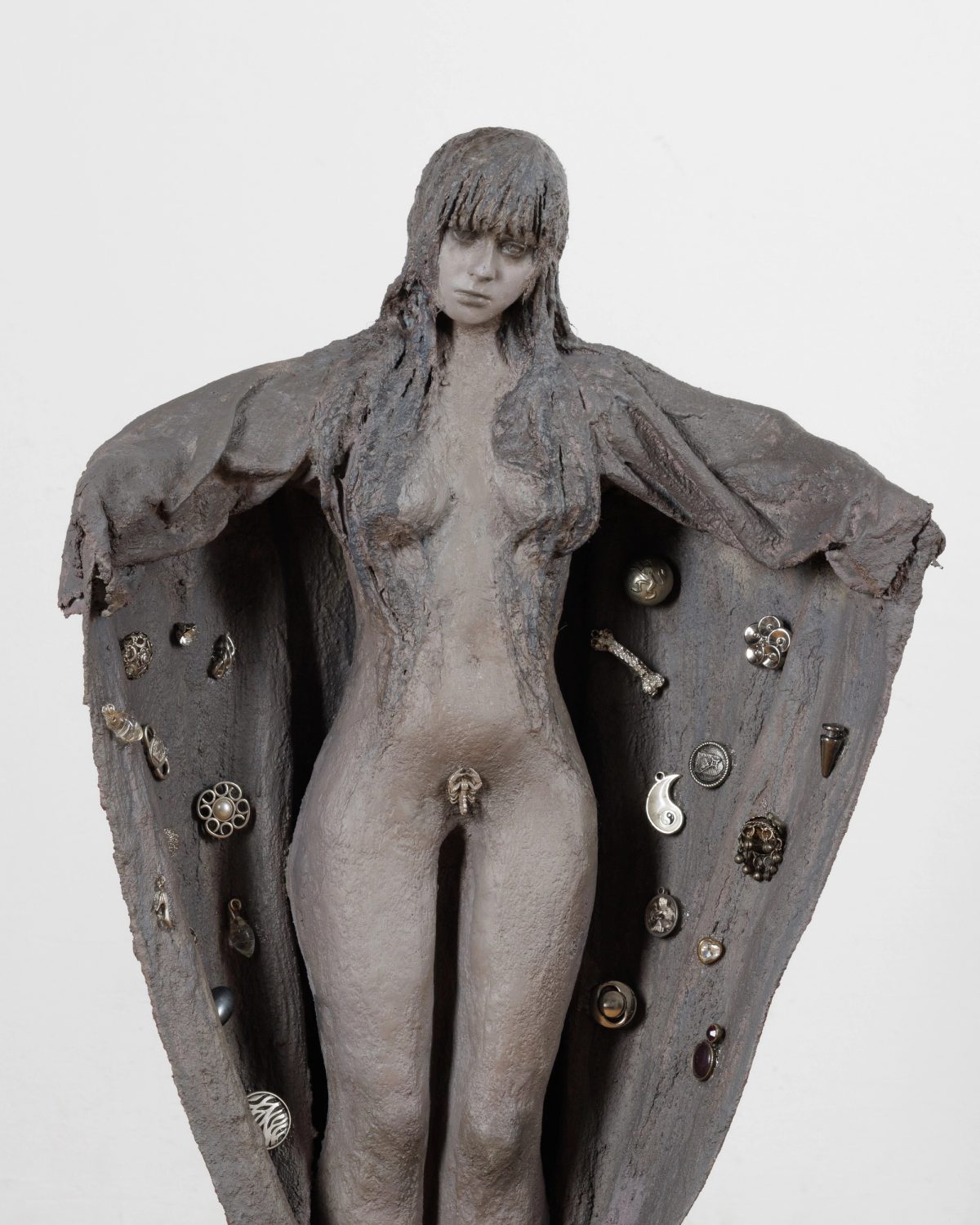
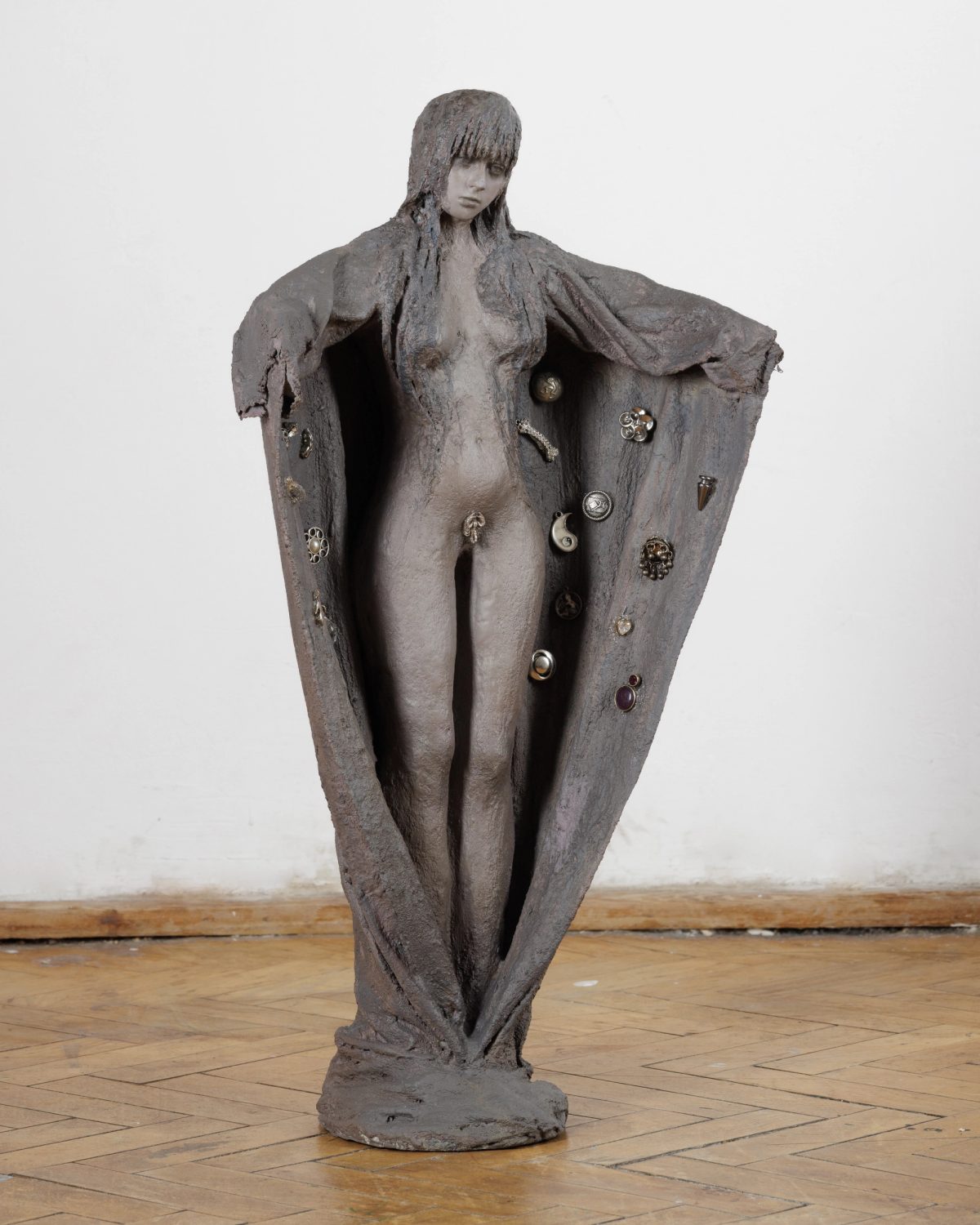
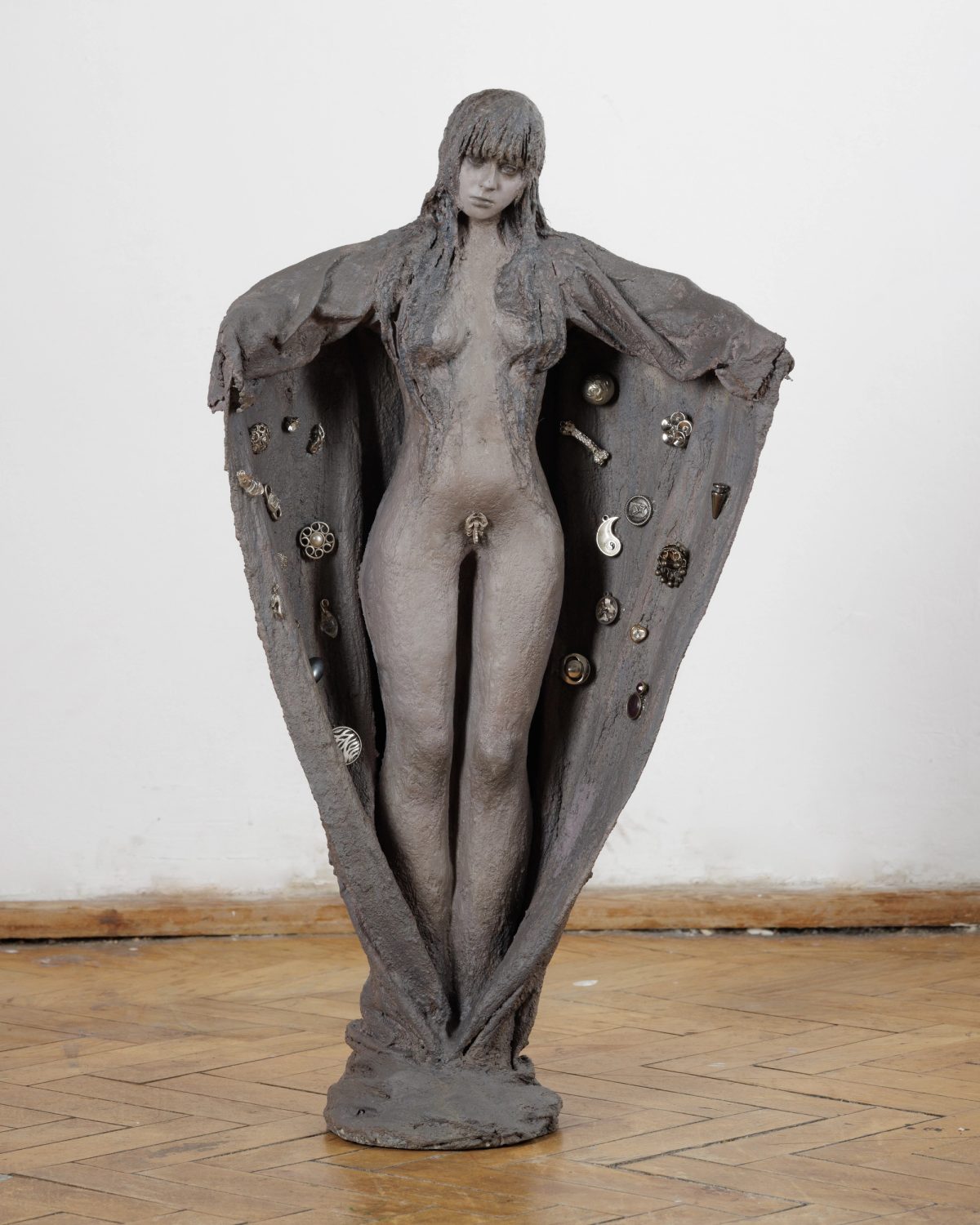
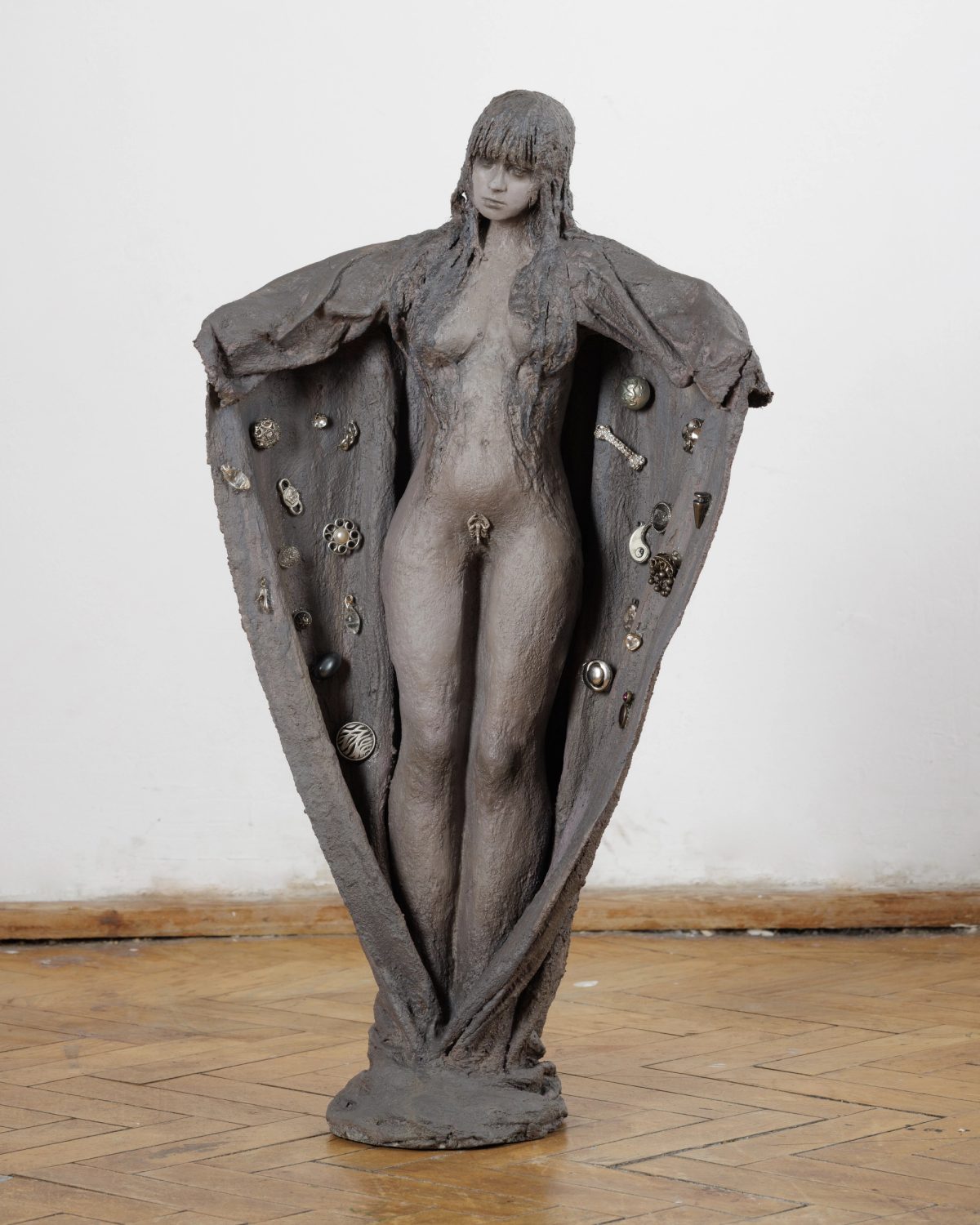
This relationship between objects and the body continues in Exhibitionist. The sculpture comes from a story my mother used to tell me when I was a child. She warned me about exhibitionists in parks and described them as men wearing overcoats who would unbutton them and expose their genitals. Although I never encountered one, the image remained with me. To gain back some control over the narrative, in the sculpture, I place myself in the role of the exhibitionist. The figure opens the coat and reveals a nude body, but the act of exposure is interrupted. The breasts are covered by hair, while the genitals are hidden behind a scorpio pendant. Inside the coat, found accessories, metal buttons, and other decorative elements create an alternate form of attracting the viewer.
"I am interested in how things become connected to specific moments, places, and experiences, and how they can begin to reflect something about the person who keeps them."
Cycles
Oil, rhinestone, and pencil on canvas, artist-made purple heart wood frame
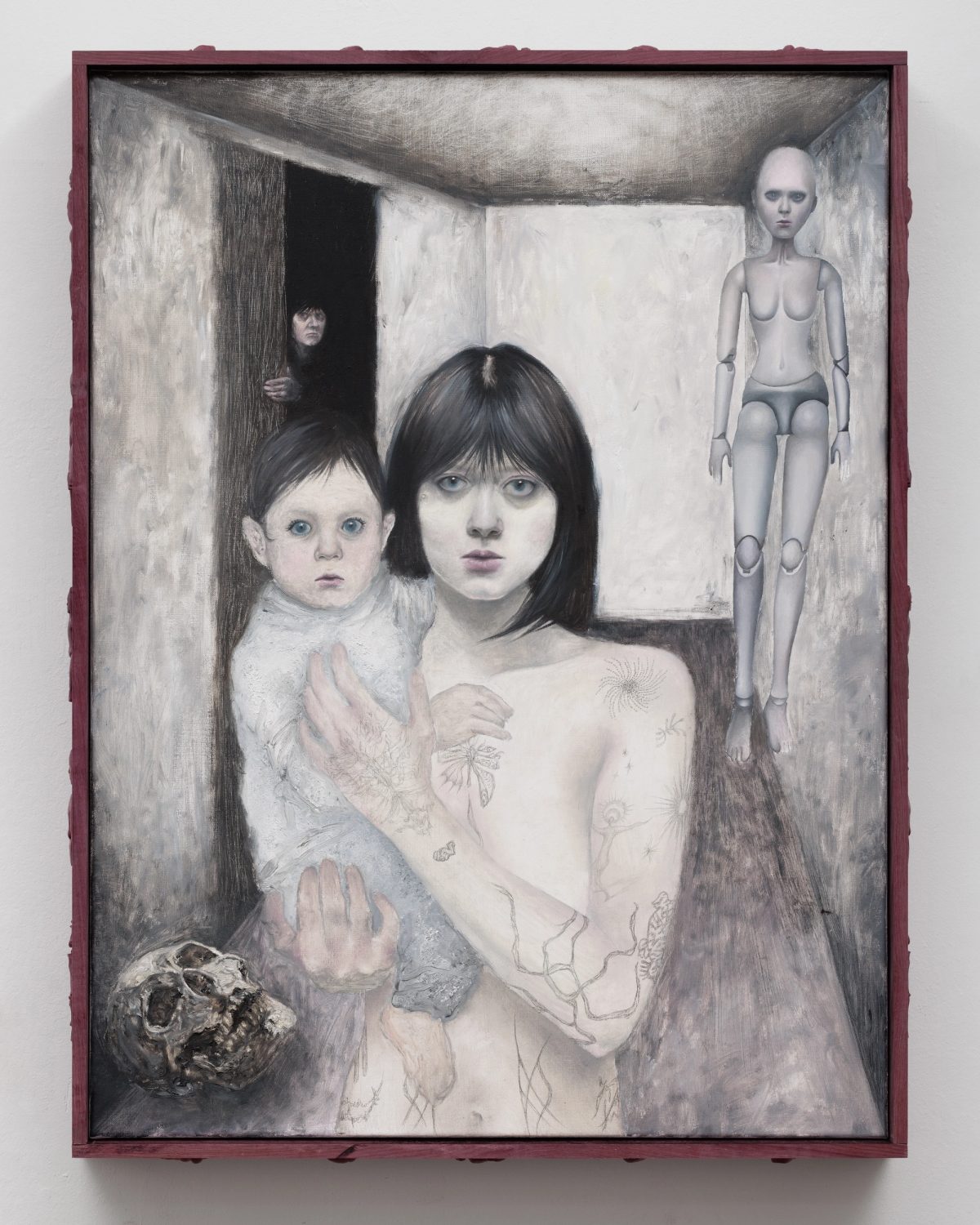
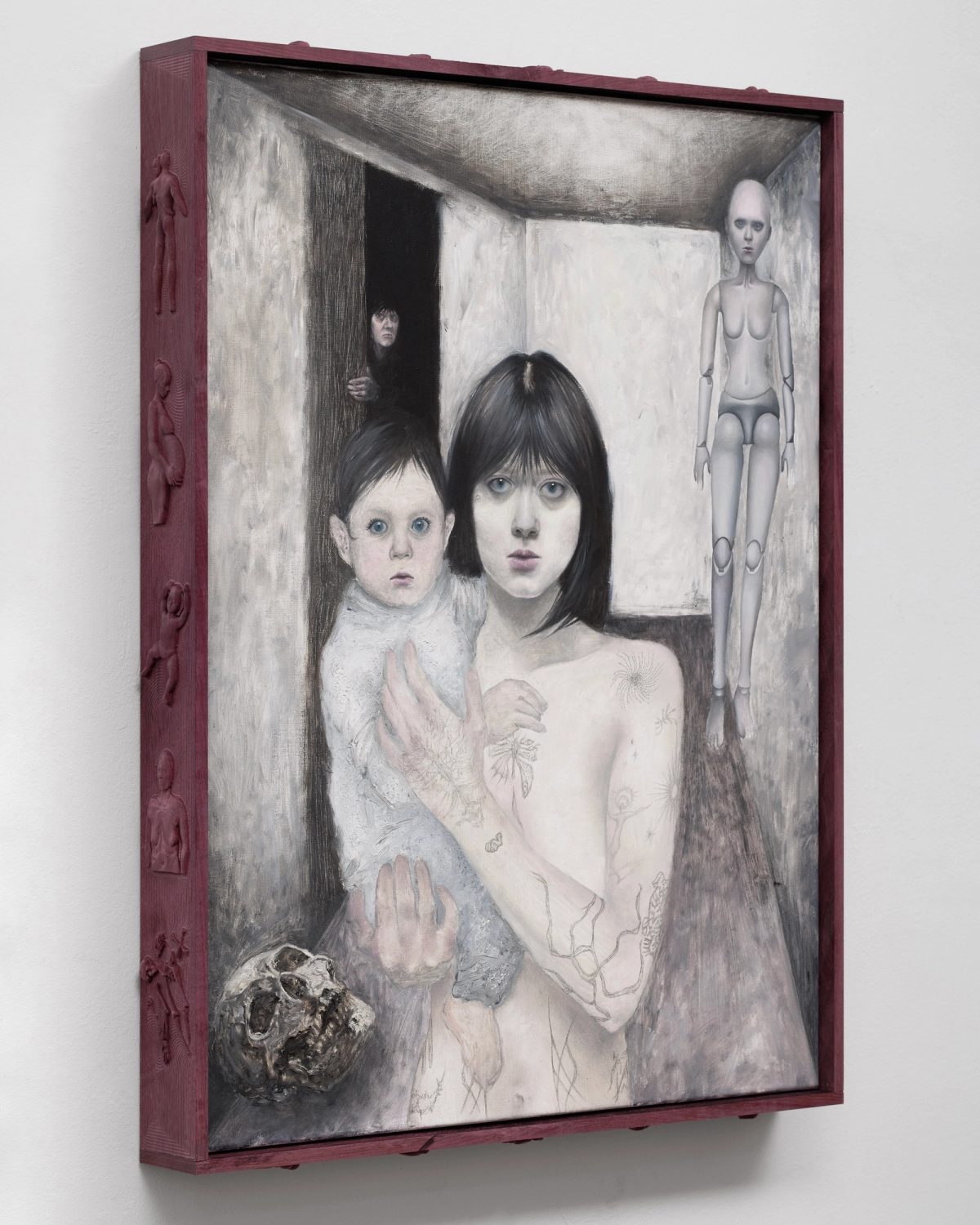
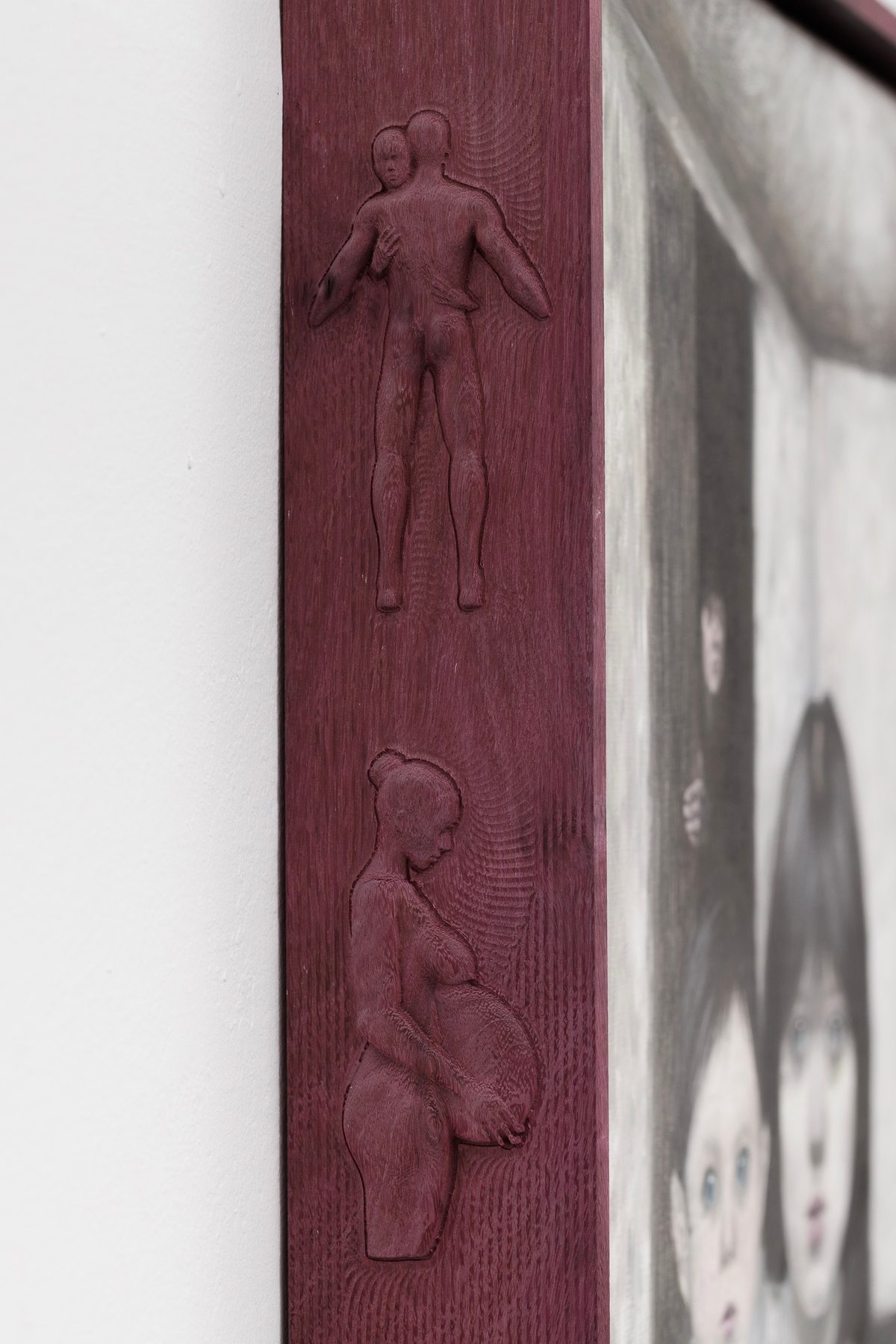
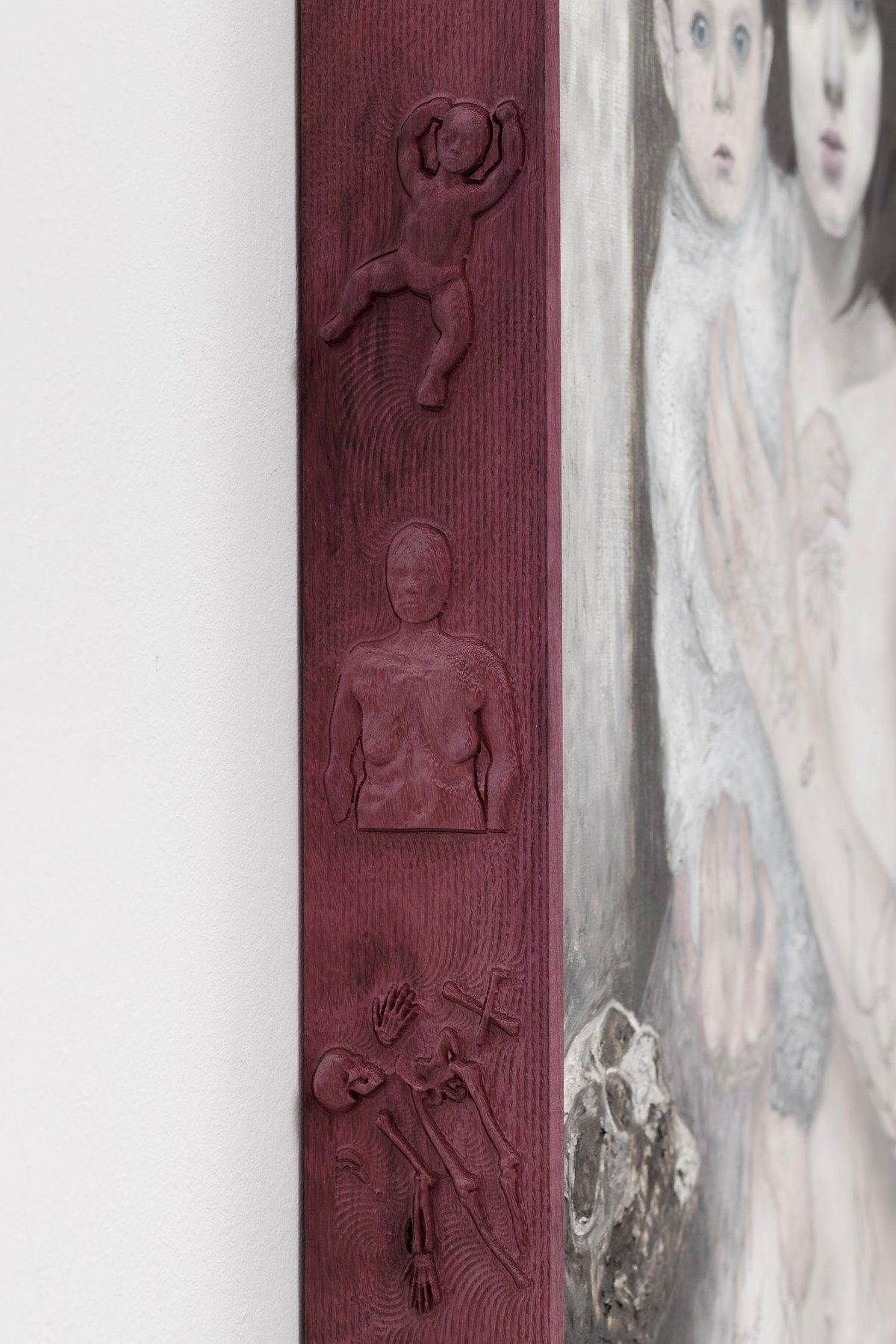
Cycles explores ideas around womanhood, pregnancy, and the expectations connected to the different stages of life. Both the painting and the CNC-milled purple heart wood frame depict cycles related to experiences often associated with women. The work emerged from my own fears around pregnancy and motherhood. My thoughts about maternity are not connected only with ideas of care and creation, but also with anxiety, uncertainty, and the feeling of entering a path that is often presented as inevitable. The slightly eerie atmosphere of the work reflects the tension between something considered natural and something that can feel frightening or imposed.
Headcount
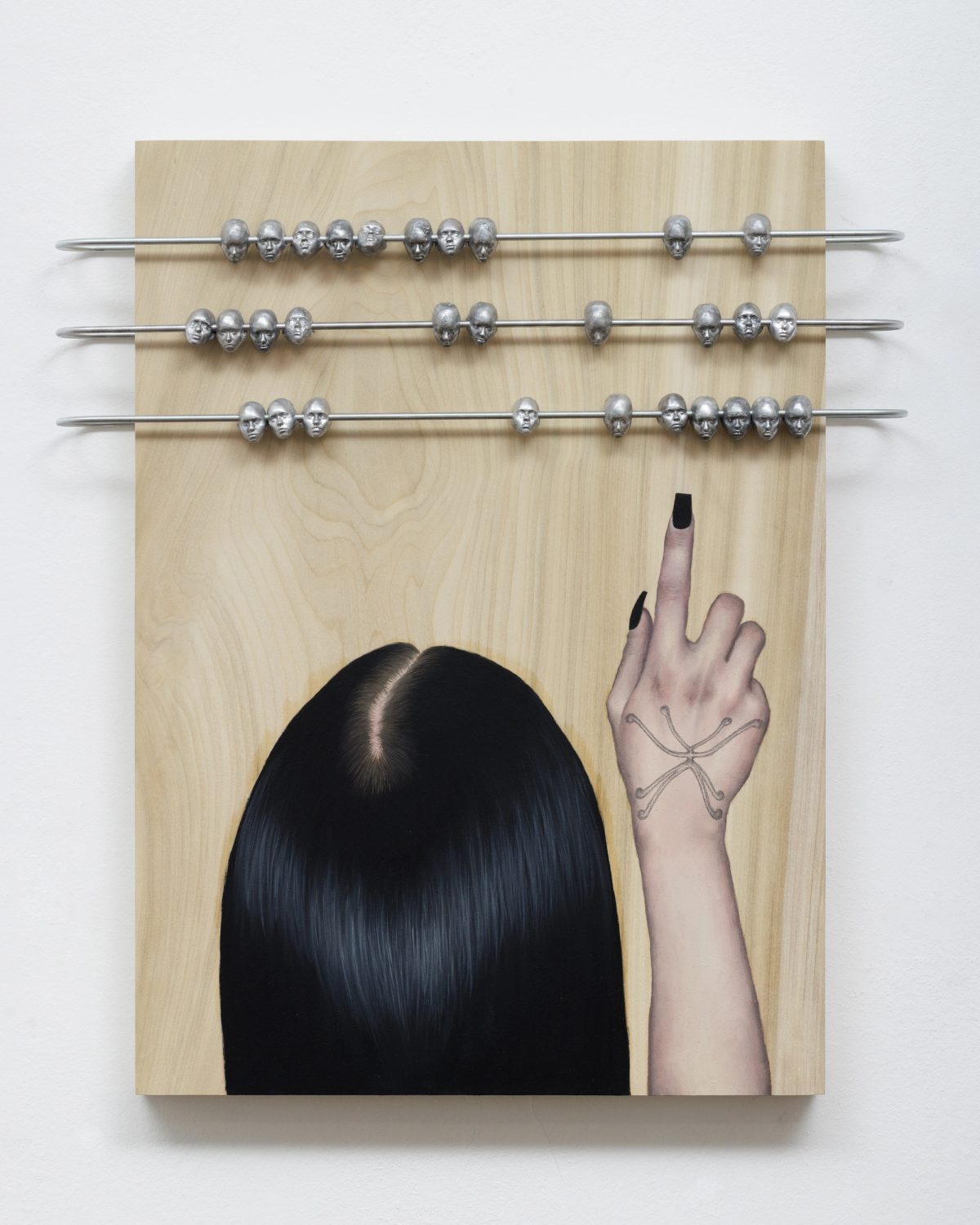
Oil, pencil, aluminum, and steel on tulipwood
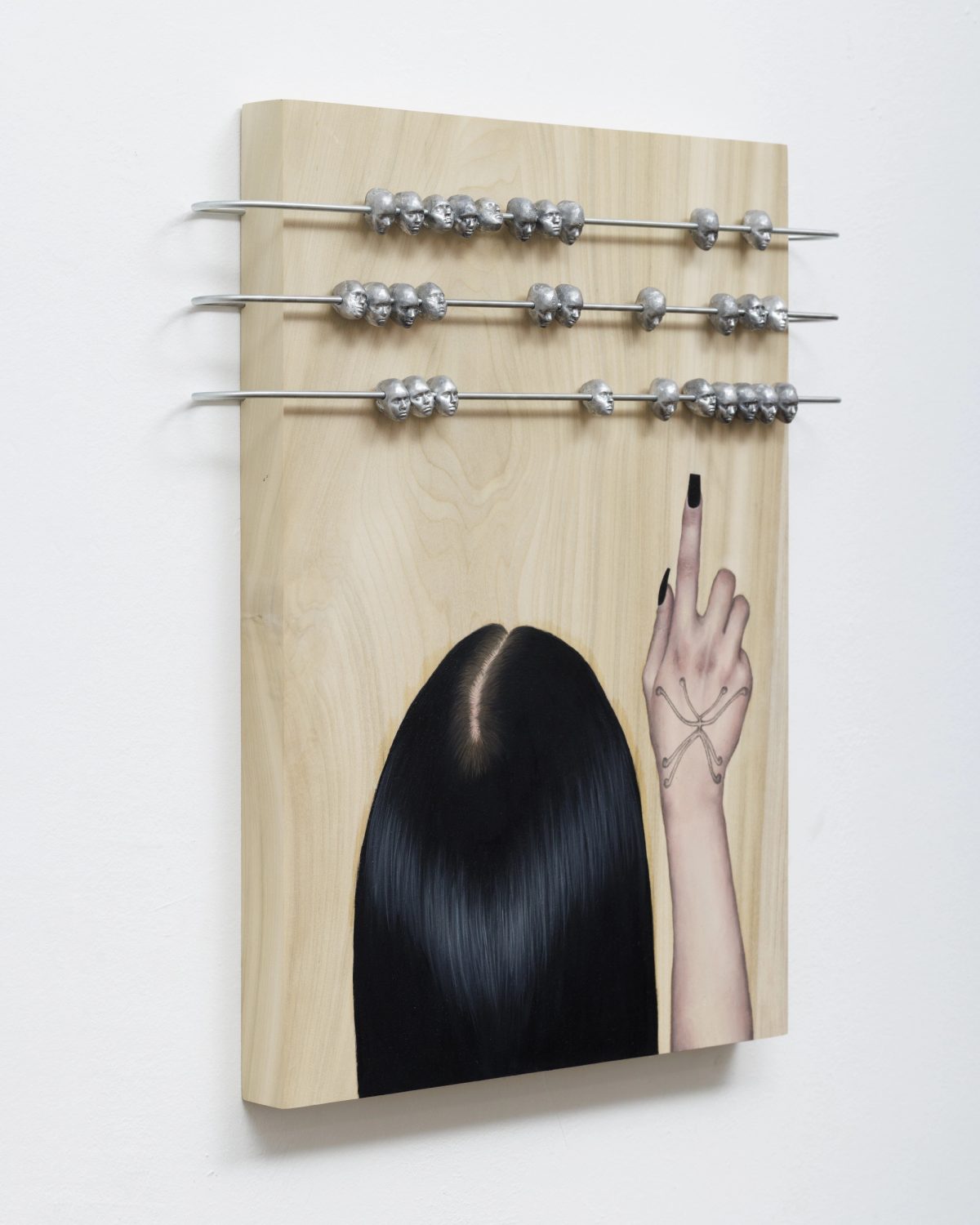
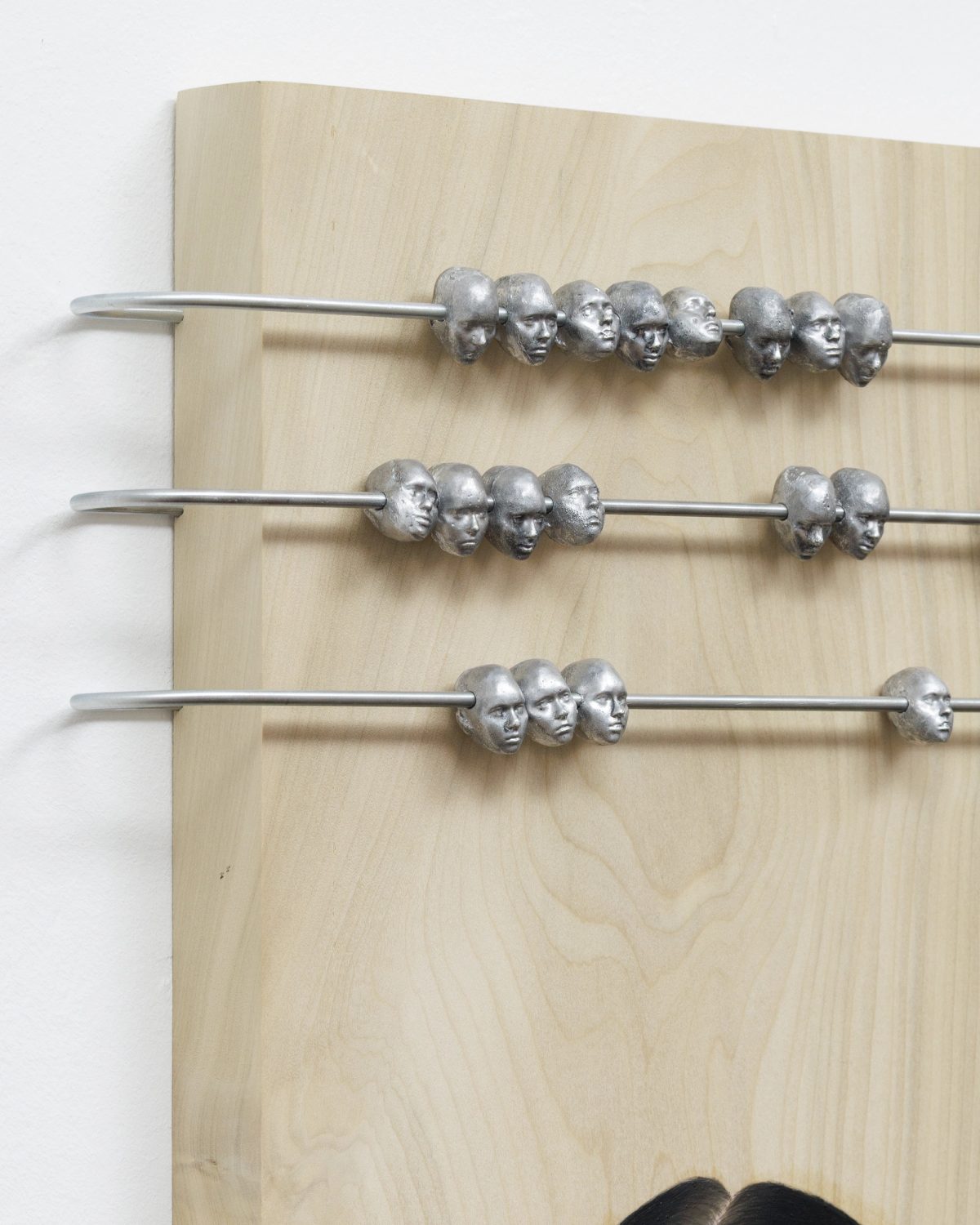
Headcount is based on the relationship I have with my hair and the monthly routine of maintaining it. The sculpture shows my head and hand counting thirty small metal heads placed above it. The number refers to the days between my root touch-ups. I feel strongly connected to my hair. Dyeing it, conditioning it, and allowing it to grow long are actions connected to my sense of identity and the way I recognise myself. By turning this repetitive action into a sculpture, I wanted to make visible something that usually remains private. While Headcount focuses on maintaining and controlling my appearance, Home approaches hair from a different perspective, as something vulnerable and connected to the fear of losing a part of myself.
"The slightly eerie atmosphere of the work reflects the tension between something considered natural and something that can feel frightening or imposed."
Home
Oil on linen
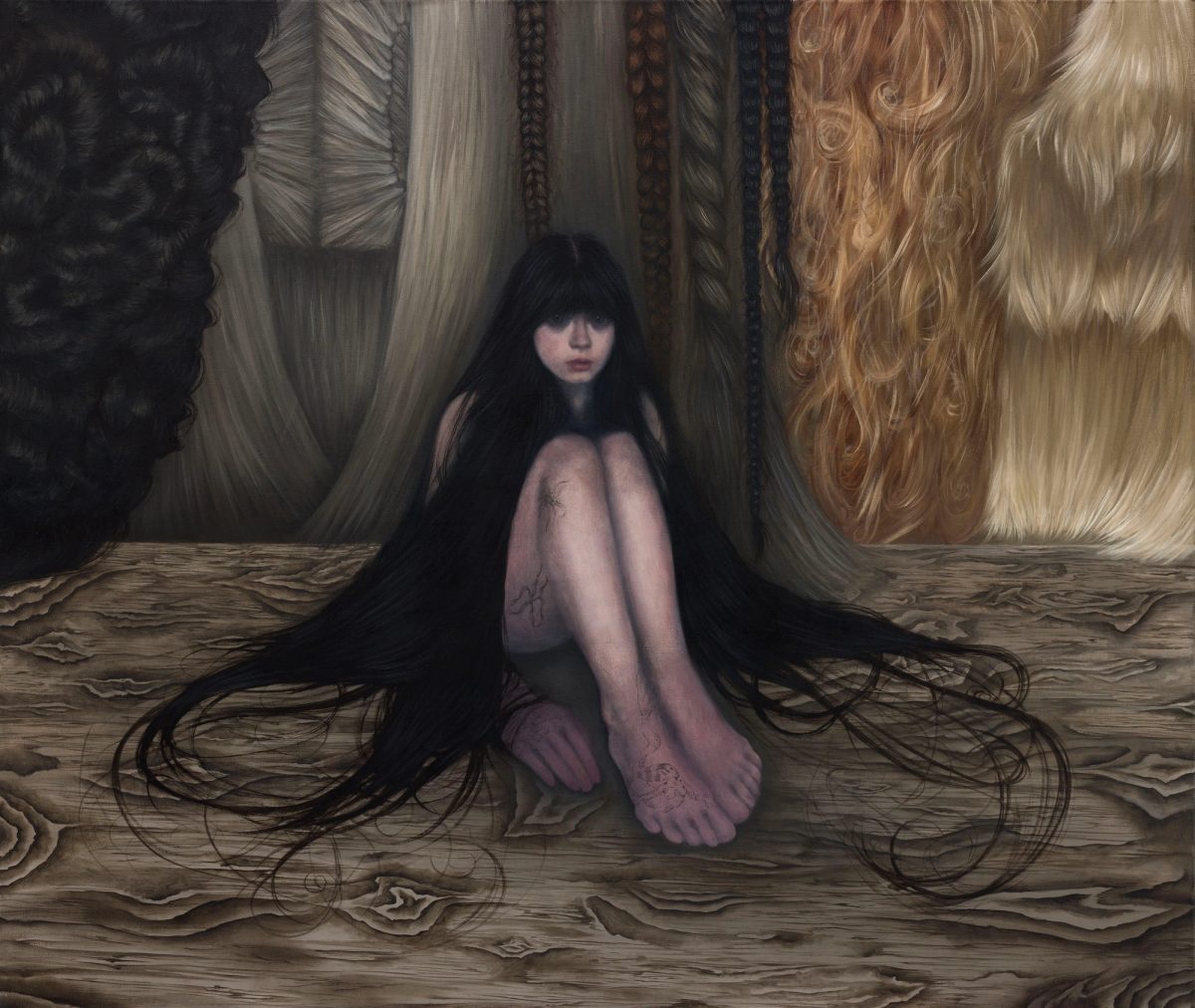
Home developed from recurring nightmares in which my hair would fall out or someone would cut my hair while I was asleep. The painting shows me sitting in the centre of the composition, surrounded by a wall of hair. Within this mass are references to fashion pieces by Maison Margiela, Kimhekim, Junya Watanabe, and Alexander McQueen, where hair becomes a main subject and material. For me, hair is closely connected to identity and self-image. The fear of losing it in these dreams felt connected to a fear of losing control over my own appearance and sense of self. In Home, the wall of hair becomes something ambiguous, both protective and overwhelming.
Infatuated with Trucks
3D-printed resin, acrylic paint, coloured pencils, graphite, UV clay, and Micro Machines
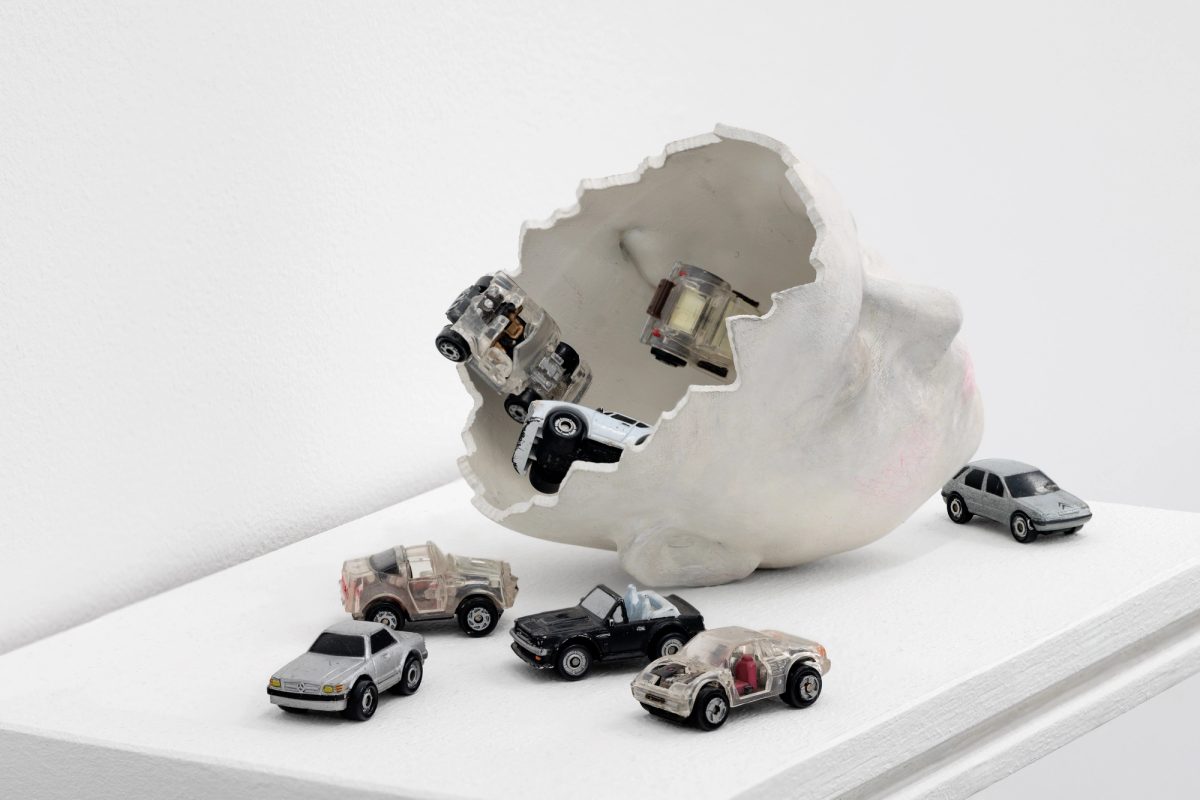
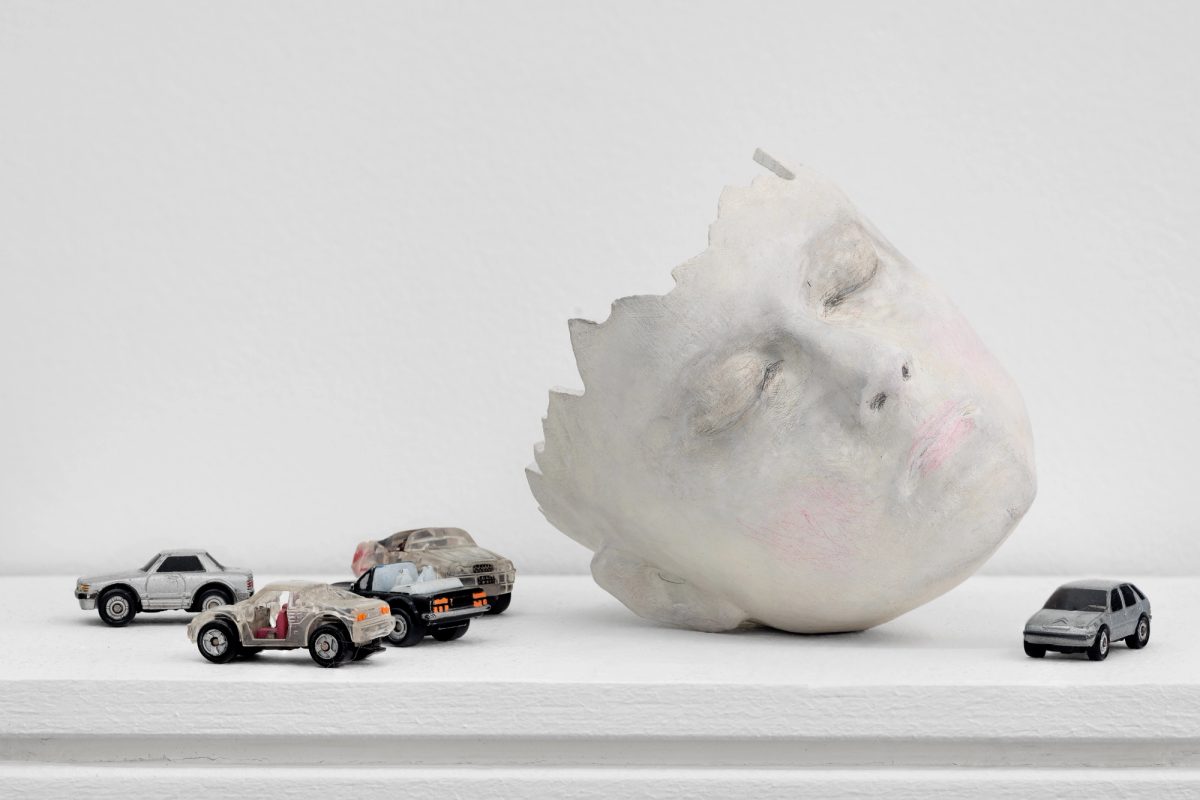
This sculpture started from a failed 3D print. The top part of the head did not print correctly, leaving the form looking like a cracked egg. Inside the head and around it are collectible Micro Machines trucks. The title comes from a line in Chief Keef's song Treat Myself, where he describes a woman who loves cars and is infatuated with trucks. I found the line quite funny and imagined it in a very literal meaning, inside a head filled with miniature cars.
"The fear of losing my hair in these dreams felt connected to a fear of losing control over my own appearance and sense of self."
Emo Drawings
Pencil on paper
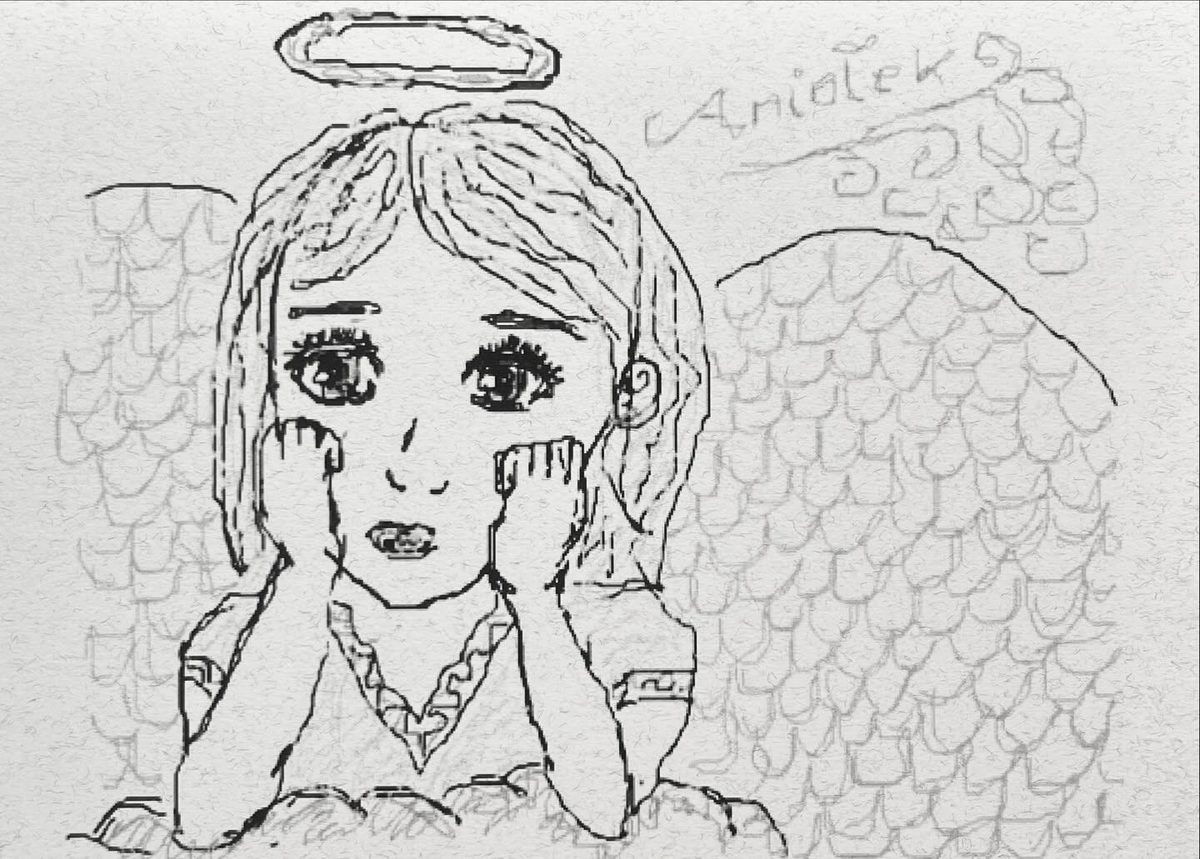
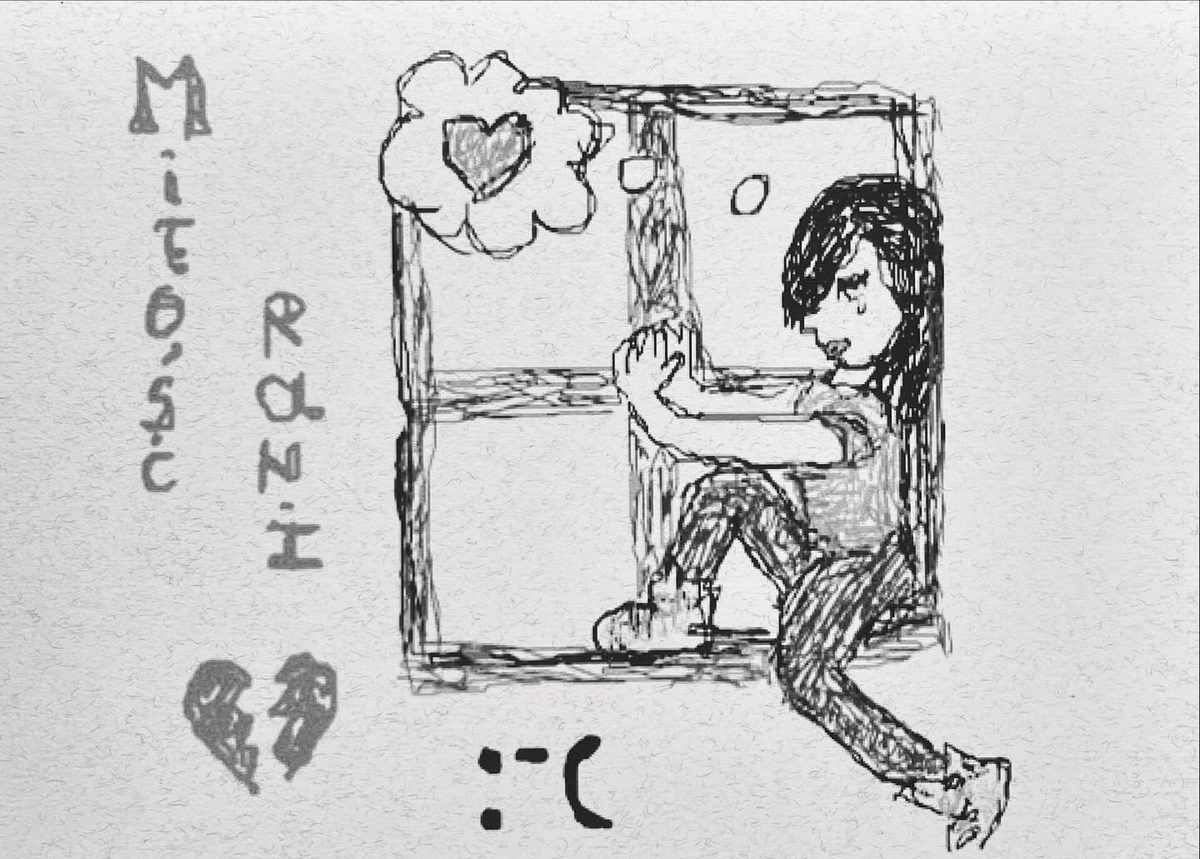
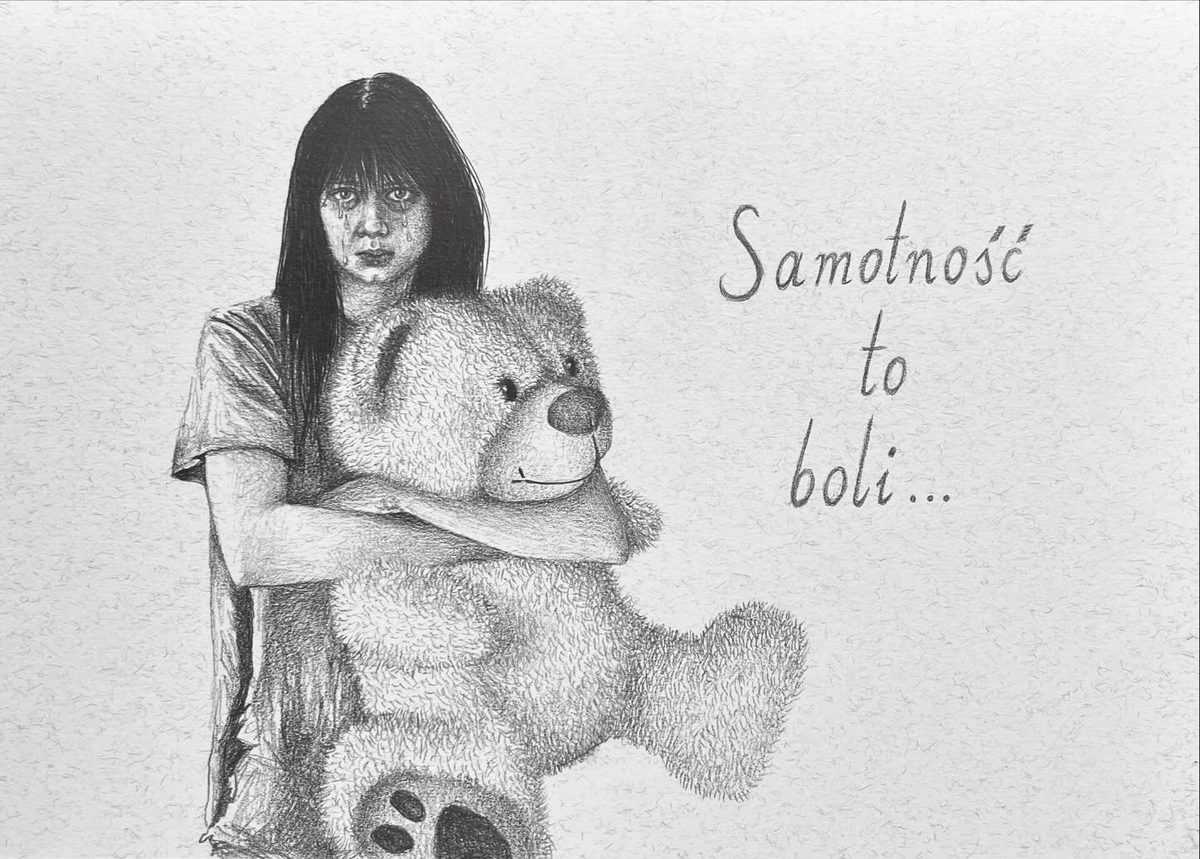
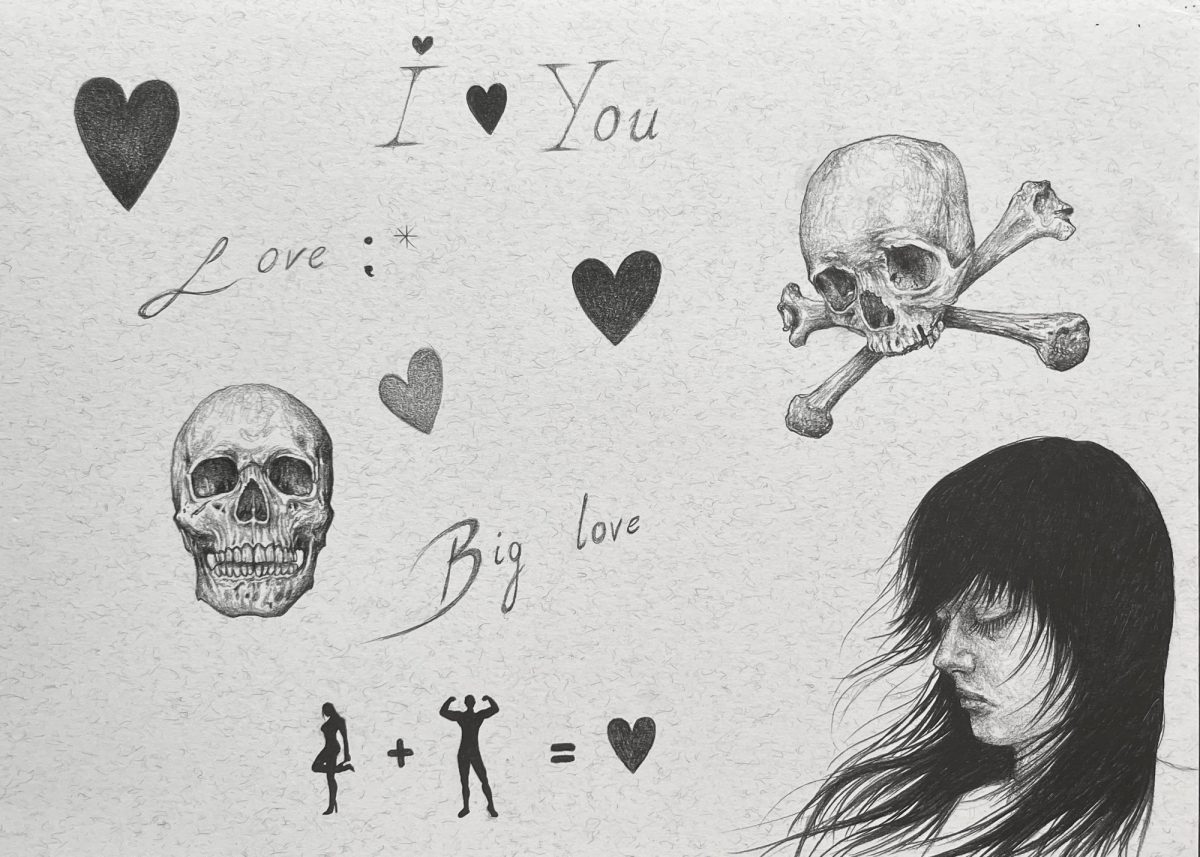
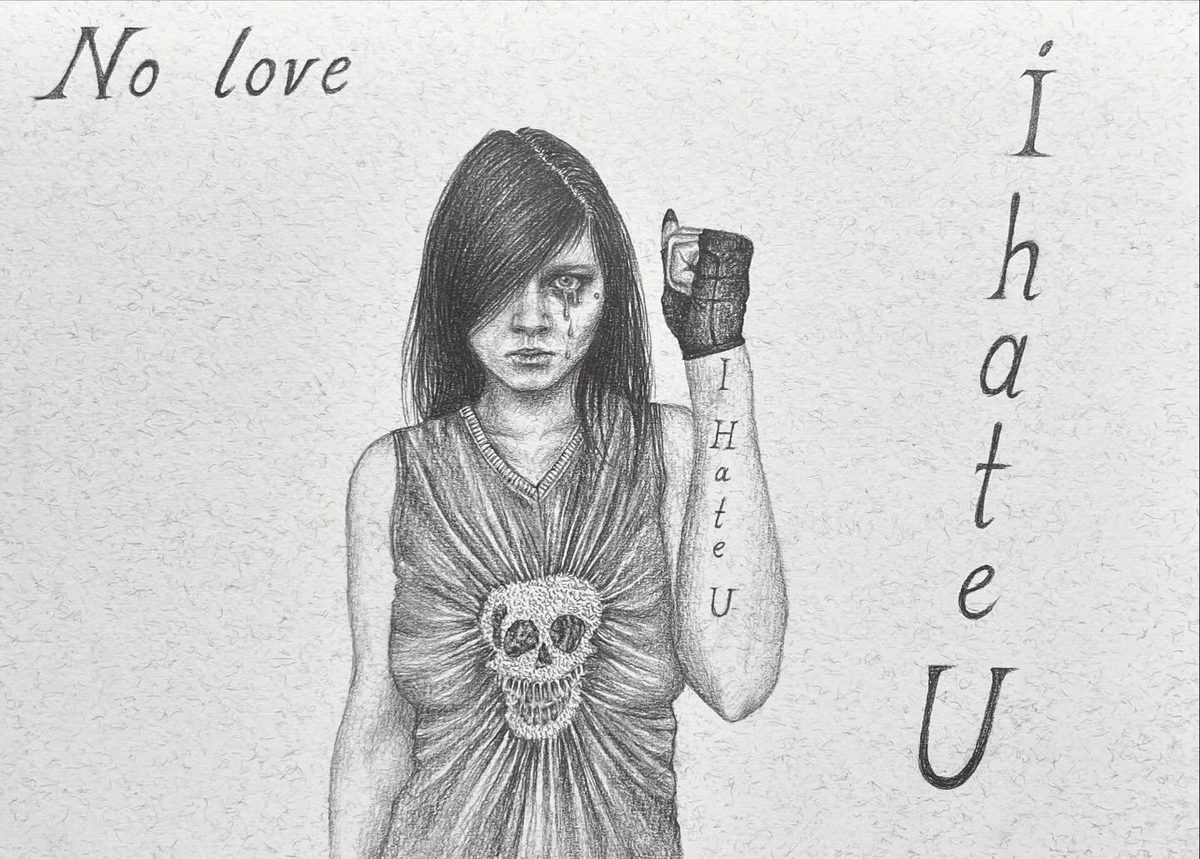
This series goes back to some of my earliest experiences with making images. When I was around 9 years old, I spent a lot of time on the Polish website gry.pl , where I became known for the emo drawings I made in a game called My Daily Scrapbook. The program worked similarly to the Paint app, where pixel images were created with a computer mouse; the main difference was that in My Daily Scrapbook, images were uploaded for other users to rate. I started receiving my first free "commissions" from the other users there, drawing characters in their imagined scenarios. The more emotional and dramatic the drawings became, the more attention they received. Last year, I rediscovered screenshots of these drawings on my mother's old laptop. I selected images that together tell a story of heartbreak and recreated them as new pencil drawings. Looking back at these works, I became interested in how ideas around self-image, performance, and the desire to be seen were already shaped by my early online activities.