DOWNLOADING FROM MIND'S REALM: IN CONVERSATION WITH ISABELLE ZETTERSTRÖM
CONVERSATION BY SELIN KIR
CO-FOUNDER, CURATOR
6 AUGUST 2026 — LONDON, UNITED KINGDOM
Isabelle Zetterström has been painting, drawing, and making since she first held a crayon. What emerged over time is a practice built on ambiguity as method: paintings and ceramics that hover between dreamscape and landscape, specimen and invention, refusing to resolve into either. Titles like Aerial Rot and Fluttering Pulse read as diagnoses because Zetterström treats the canvas as a body under observation, one she approaches with clinical curiosity, directed toward volcanic greys, noctilucent pools, and veins mistaken for branches. Her ceramics, meanwhile, are less made than excavated: pulled, she insists, from an internal atlas that expands with every object she "downloads" into clay. Across mediums, the work insists on holding awe and unease in the same breath, trusting contradiction as the closest thing to an honest description of being alive.
Your path ran from a Fine Art Foundation at The Art Academy into 3D Effects for Performance and Fashion at University of Arts London, before landing in Painting at the Royal College of Art. Prosthetics and costume before it ever reached canvas. What did that background in building things for bodies leave in the way you construct a painted surface now?
Well, to be honest, I didn't stay very long on the prosthetics BA, and my lack of interest in the course was reflected in my attendance. Initially, I chose it believing it would lead to a creative job, although it later became clear it was a job I didn't want. I was also struggling a lot with my dyslexia. I missed painting. So I left the university and went on to spend several years painting on my own, with very little knowledge of the art world or its history. My drive was simply seeing what could be done in paint. In hindsight, I believe this became a huge blessing. It gifted me the opportunity to figure out where I was visually, free from external opinion and from the weight of comparison to either peers, contemporary artists, or the greats. I think as a direct result of this time I developed a very strong faith in my own inner voice, in my own opinion. It's funny how things at one point in time can seem one way, and then later down the line could have a totally different impact on your life.
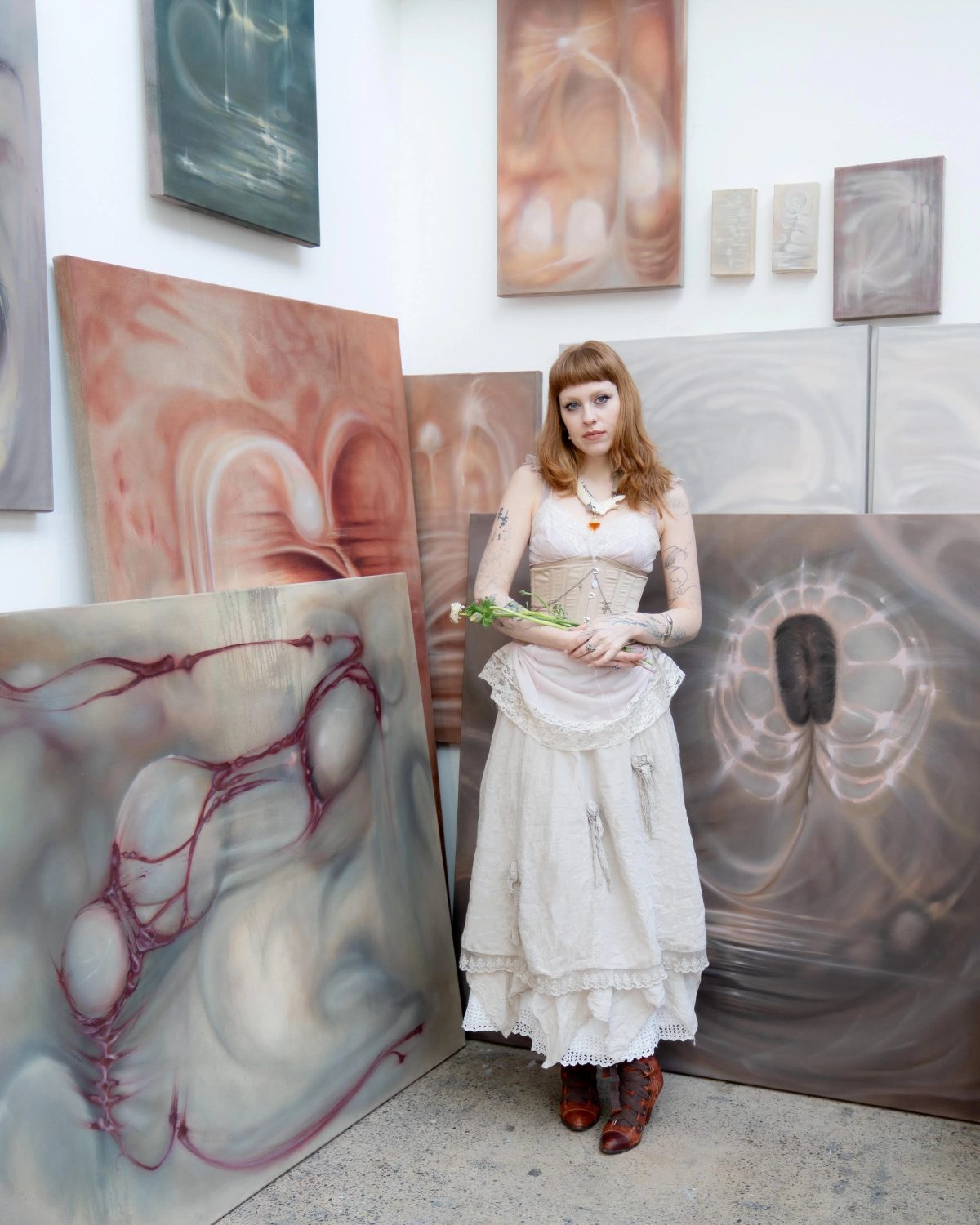
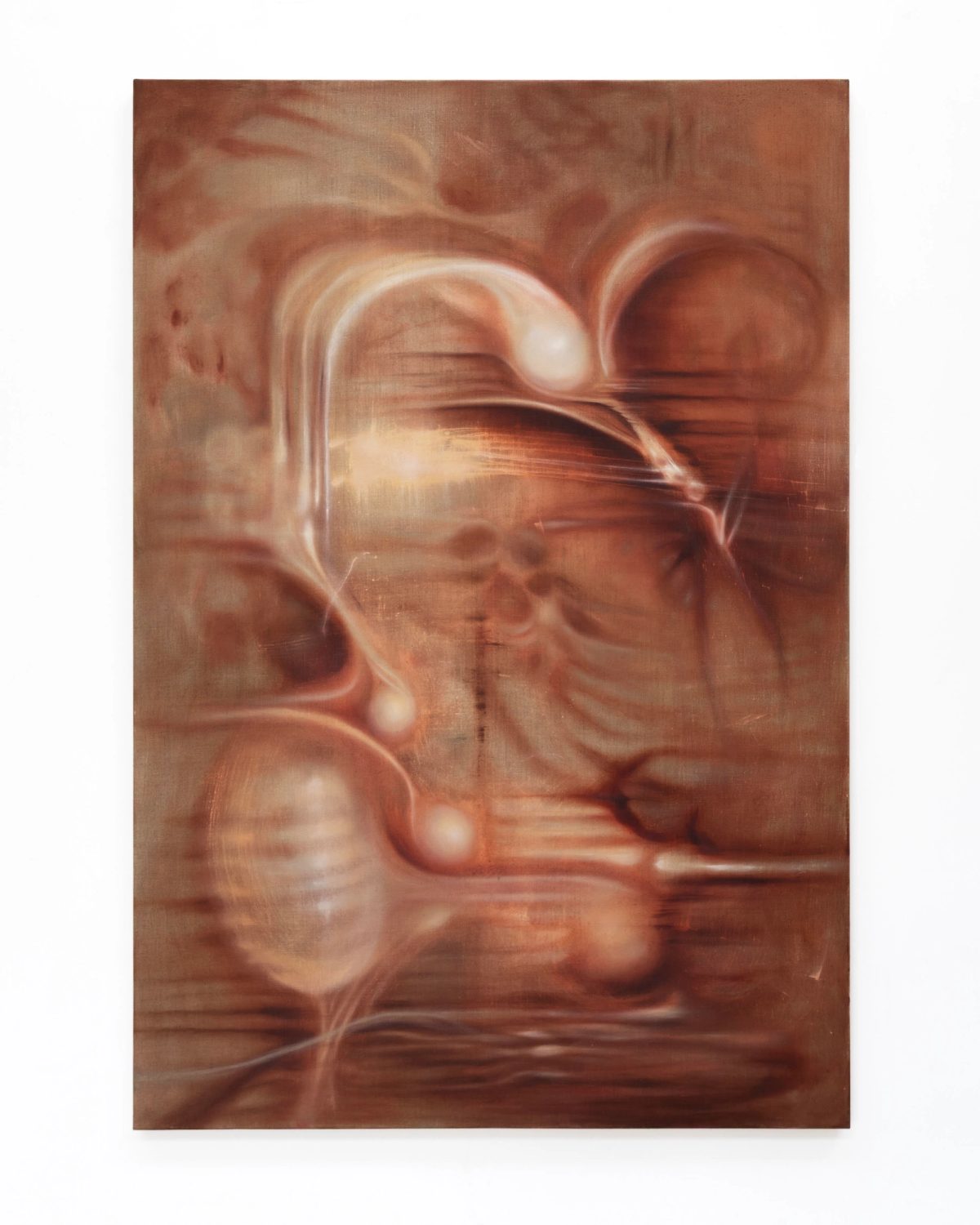
Left: Isabelle Zetterström.
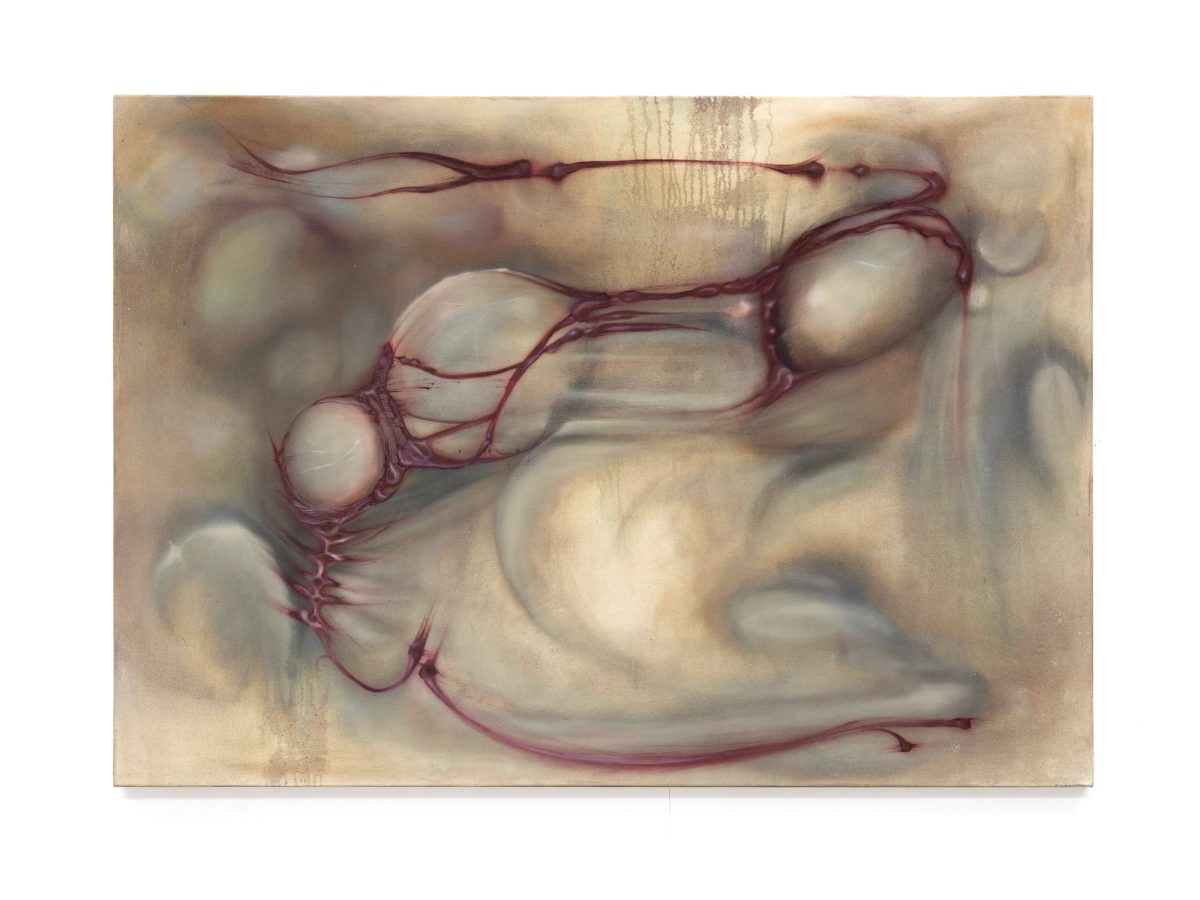
Right: Luteal, Lucid, 2026. Oil on linen, 190 x 130 cm.
Your bio describes your paintings and watercolours as opening “portals into ambiguous terrains”. Not land-scapes, not dreams, something adjacent to both. When you’re in front of a blank sheet, do you know which of those terrains you’re heading toward, or does the place only reveal itself once the pigment is moving?
I've referred to them as dreamscapes before, a blend of the two. The landscape and the dream aspects of my paintings don't exist in separation for me, but occupy something closer to a spectrum. There have been many times where I've leant more in the direction of a landscape, perhaps I'm experimenting with a technical enquiry; how to depict a rolling sense of depth that is untethered from earth. Using traditional methods of creating space and atmosphere and applying them to my realms.
Other times I lean more towards the essence of a dream. The painting Were You Born In Heaven? was created specifically to process a nightmare I had experienced, alongside a long series of horrific nightmares I was having at the time, this one was particularly bad. In this process, I found the experience of reliving the nightmare too disorienting and disturbing, so in the end I decided to do what I had done in real life when I woke up: I rewrote the nightmare in my head, giving myself an ending with an escape. This is something I mimicked in the painting, adding into it a radiant beacon of hope. These are both examples of me leaning further one way or the other, but all my paintings are at their core both.
Dreams depict the surreal, the surreal is the familiar turned upside down. The sense of the unknown seeming somehow familiar is how I see the landscapes of the deep sea, the internal body, and the micro- and macrocosms. As the universe mirrors patterns, it's my belief that forms and terrains we faintly recognise will appear in worlds far away, flickering in and out of familiarity in the way dreams do.
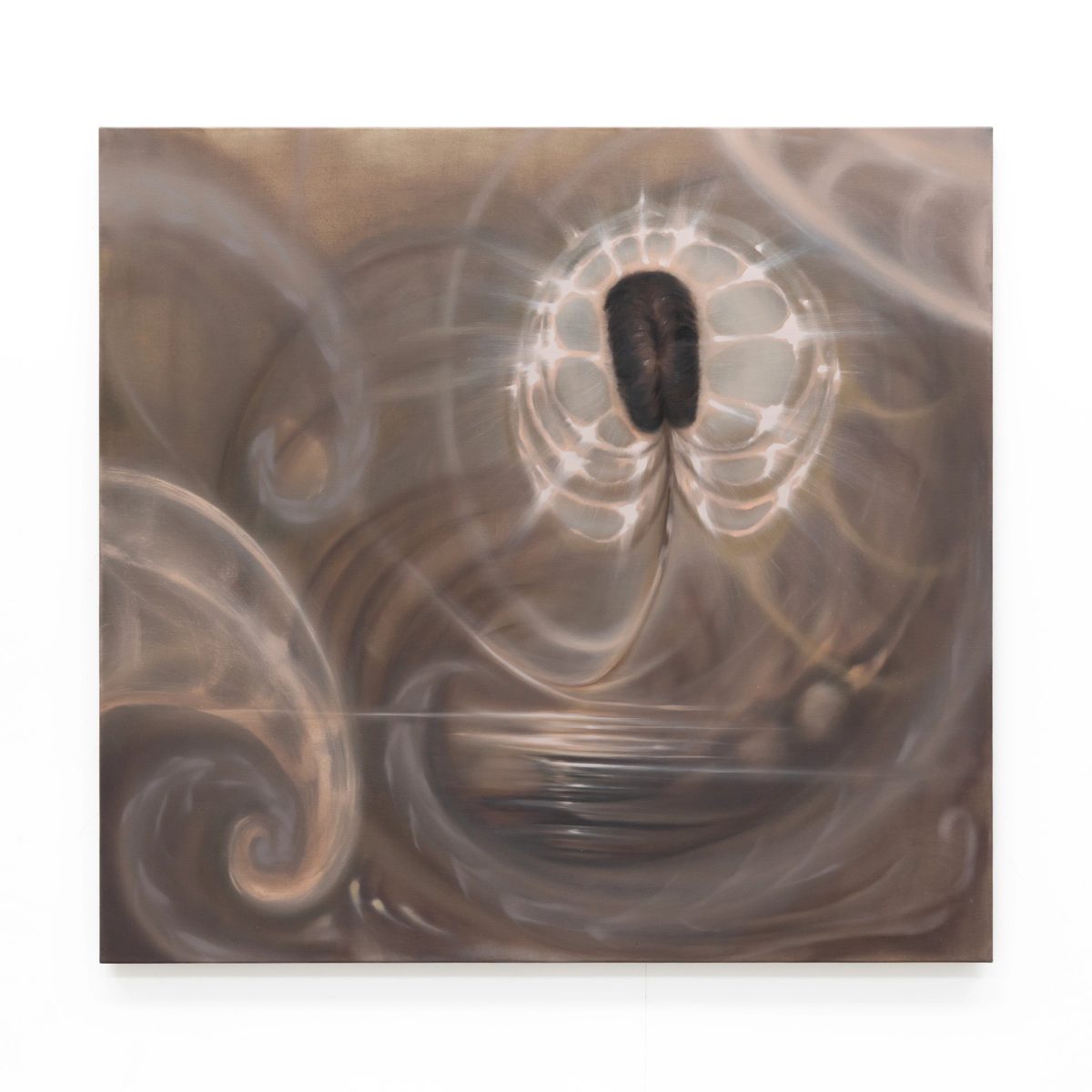
Isabelle Zetterström, Were You Born in Heaven?, 2025. Oil on linen, 140 x 150 cm.
You move between deep-sea pressure and celestial distance in the same body of work: volcanic greys next to noctilucent pools, veins that were branches a moment ago. Is that shift in scale something you plan into a composition, or does it happen the way perspective slips in a dream, without you choosing it?
There is a dance that happens between me and fate when it comes to decisions in scale. Then yet another interaction happens as it meets the perception of other people. What might be seen as microscopic to one person may seem colossal to another. I like to think of my paintings as the scene from Alice in Wonderland where she eats the biscuit and shrinks, then drinks the drink and grows, perspectives shift over and over again in a single second. So if I did set out with the intention to depict either a micro or macro perspective, something as fleeting as my own mood would affect how I interpreted the form in the moment. The painting opposite me right now, that I'm currently working on, in my mind at this moment depicts a microorganism living within a liquid atmosphere deep in a celestial, starlit environment, perhaps I will see it differently in the morning. This fluidity and not-quite-anythingness is something I welcome into my practice.
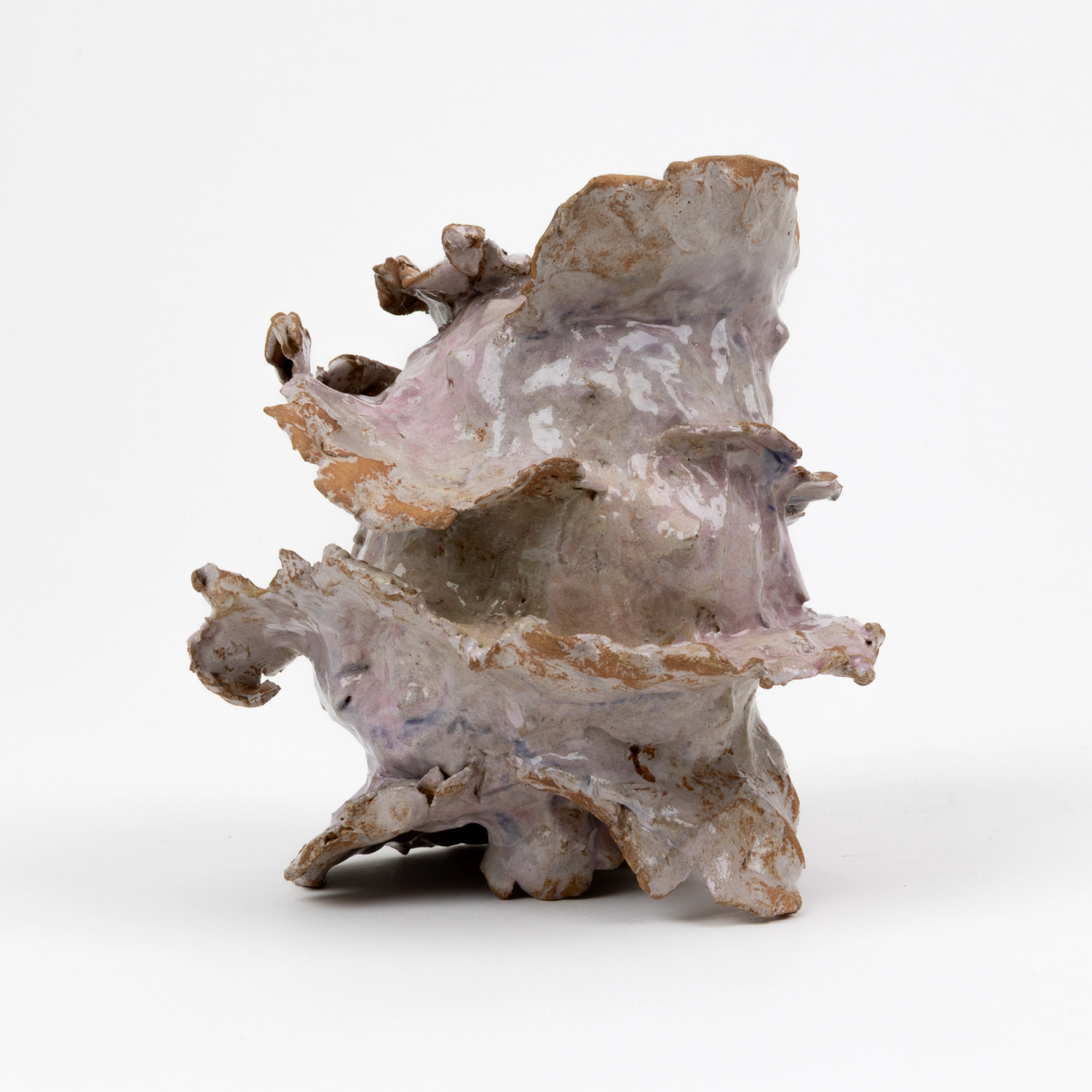
You've described your ceramics as if they were "gathered from within these imagined realms" rather than made, and pieces like Sphinecus or Undulating Opsinium read more like specimens than objects. Do you think of yourself as making the ceramics, or excavating them?
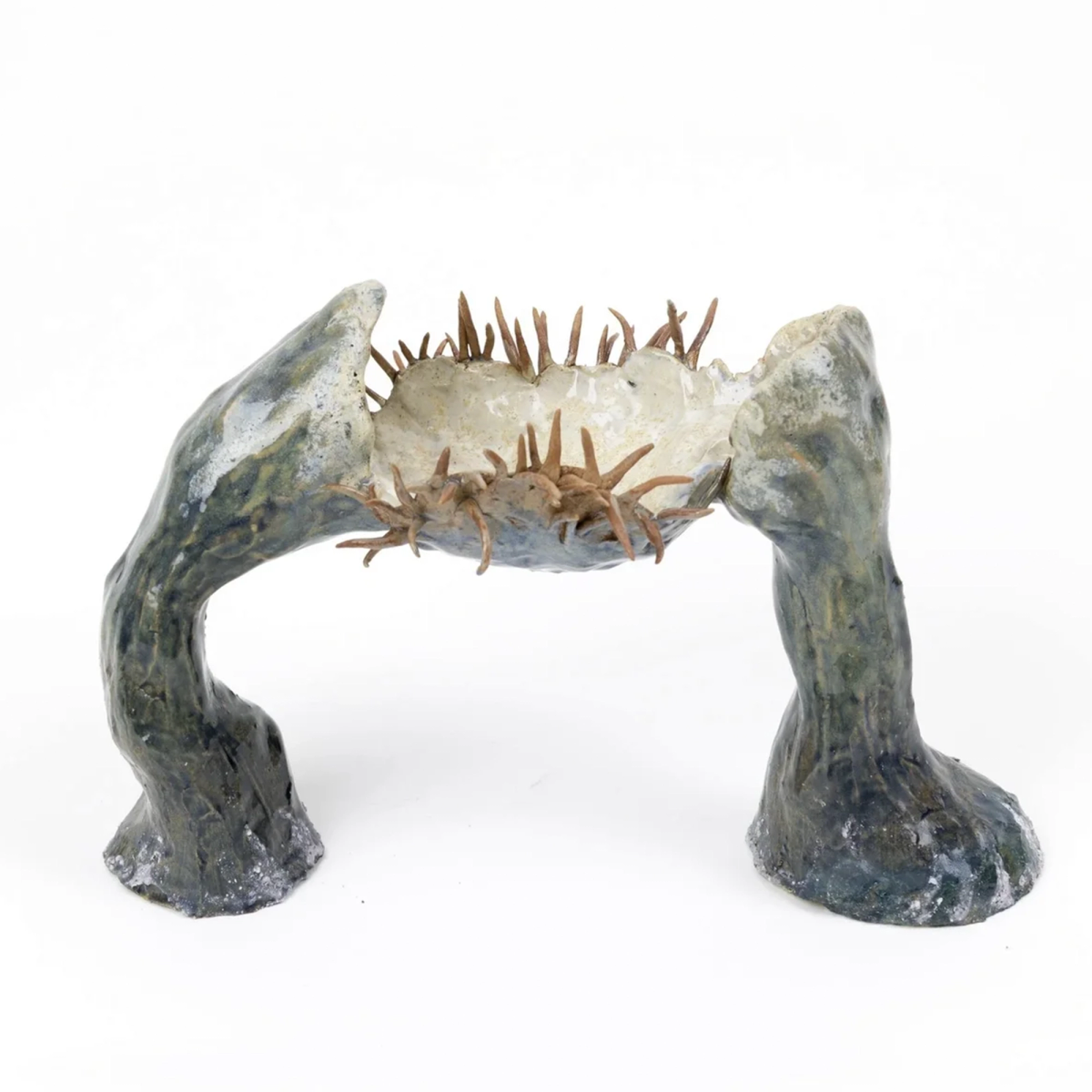
During the process of sculpting my ceramics, I feel as though I am downloading them from my mind's realm. Sometimes I begin with a vague idea I'm inspired by, for instance, an egg, spikes, coral, or plant nodes. Most of the time this inspiration will shine through until the end, other times I'm led elsewhere. Although I'm conscious I'm the person making the ceramics, in a way that feels similar to when I paint or draw, it's also like something is revealing itself to me instead. With each thing I make, my mind's world is getting bigger, clearer, and more complex. It's like I zoned out during the process of sculpting, and then when I'm finished, I exhale, and to me it felt like a dream. I can see the specific environment this specimen was gathered from, and can visualise myself picking it from the ground, uncovering it between rocks, or lifting it out of a body of liquid, only now it's on earth and in front of me.
When I've finished sculpting the clay, I wait until it's ready to be glazed. In this in-between time I think about what colour the form might be. As I glaze, I mix so many colours together so am never quite sure what it is going to look like out of the kiln. This is freeing to me, as painting is so opposite, you can see what you're doing in real time. With ceramics, the unknown and waiting adds an element of suspense that I really enjoy.
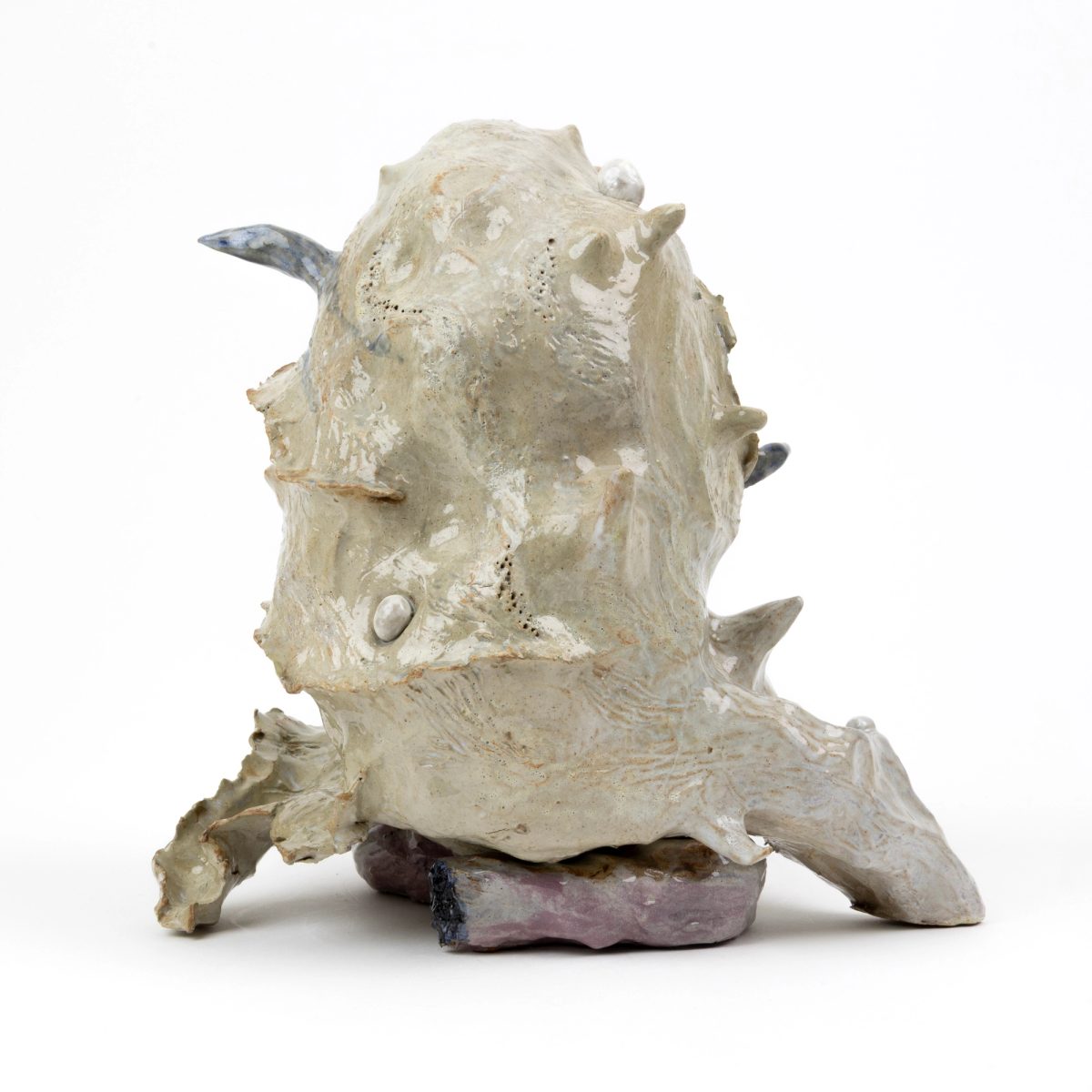
Left: Isabelle Zetterström, Sphinecus, 2026. Glazed stoneware, 23.5 x 24 x 21 cm.
Right: Isabelle Zetterström, Undulating Opsinium, 2026. Glazed stoneware, 13 x 23 x 12 cm.
"I want my work to hold feelings of both awe and unease, how much of each is required for balance is individual to each painting."
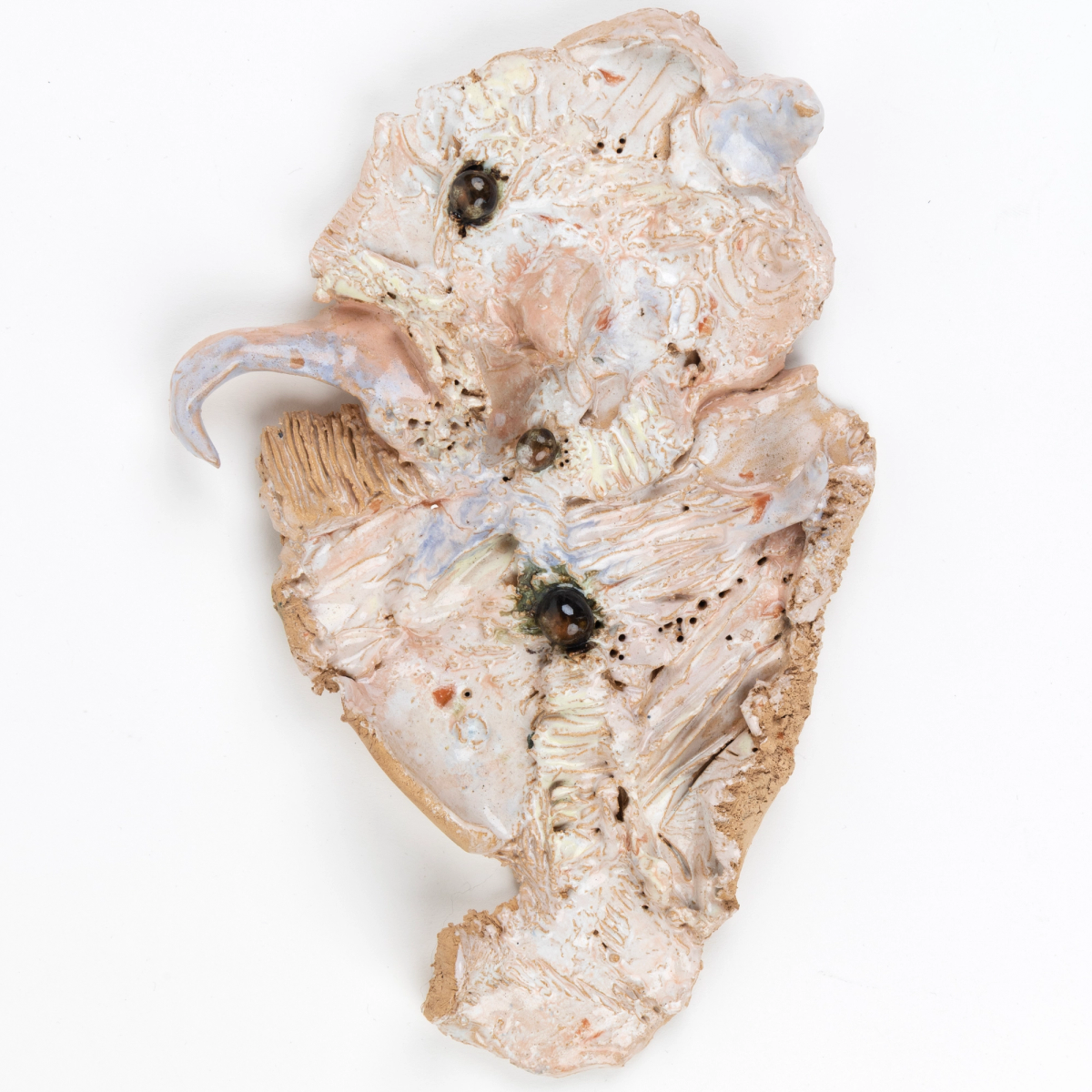
Left: Isabelle Zetterström, Terrain I, 2025. Glazed earthenware, 3.5 x 13 x 20.5 cm.
Right: Isabelle Zetterström, Lamellae, 2026. Glazed stoneware, 14.5 x 15 x 15.5 cm.
You've said painting is a spiritual act for you, a dance with the subconscious where you "escape" into the work and find your own reflection there. What does that escape actually feel like while it's happening?
The escape is to somewhere very familiar to me. It's somewhere I've gone my whole life. It feels like a void-type environment, life paused, yet it is a space that holds so many contradictions. For instance, although life is paused, my mind can also focus on a specific thing that is currently on my mind. This space is almost like a friend or a lover. You talk to them about what's happening in your life, processing life with them, but can also exist in silence together. It feels both safe and sensual, exciting and calm. Time passes strangely, simultaneously sped up and slowed down. Music is distorted as my connection to the outside world drifts further away from the surface. It feels like a spiritual place, a trancelike state. I also visit this place in everyday life; when I'm in a gallery, or if I'm waiting, or on a walk, although while walking I need to keep reminding myself of earth because of traffic.
Motion Flow and Trash Princess put your body directly into the act of painting, in front of an audience. What changes about the subconscious dance you describe when there are people in the room watching it happen?
During my painting in these performances I went to the place I go when I paint, only these times when I came back from it, it felt as if I had woken up from a nap in a public place. Disoriented and slightly vulnerable, not quite sure what the outside world had seen from their perspective. But I don't particularly mind, I'm used to being watched when I paint. For years I was living in a communal living artist live-work accommodation, and in those years had more than a hundred housemates, who on occasion would quietly sit and watch me paint. The paintings would dry between sessions in the main space, meaning people saw the continuous stages.
Although, now having experienced being completely alone in a studio, I've realised there's nothing quite like it. For instance, if I slept on a train there would be something in the back of my mind that somehow knows not to sleep too deep or too long. I might even wake up somehow magically right before my stop. When there is someone watching me paint, or even just someone else in the room, although I may not be actively thinking about it, there is that slight tie to earth in the back of my head. When I'm completely alone in a studio, that tie is gone, I feel truly and totally free in my own mind.
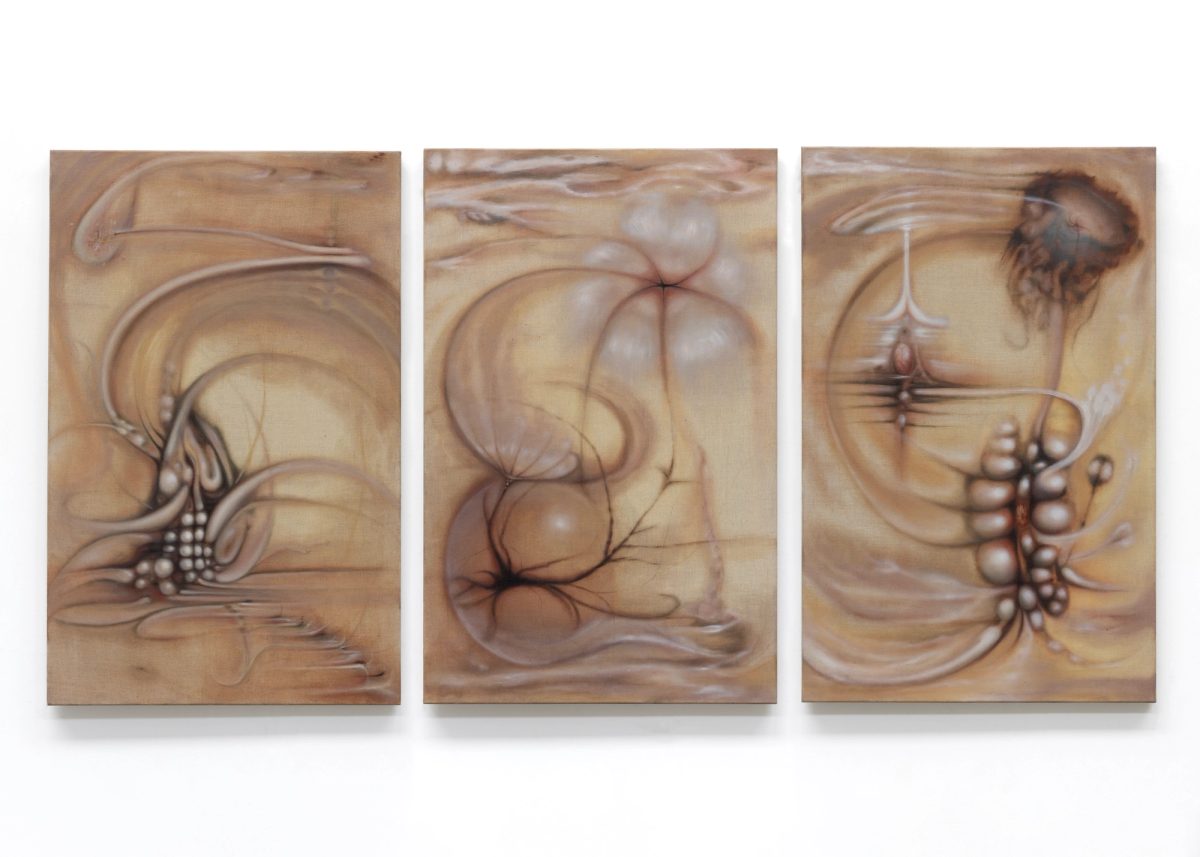
Isabelle Zetterström, Membronic Secretion, 2026. Oil on linen, triptych, 110 x 70 cm each, 110 x 210 cm overall.
Titles like Aerial Rot, Lingering Opia, Fluttering Pulse read almost like diagnoses or field notes. Where does the language come from? Before the image, after it, or somewhere in the middle of making it?
This scientific language that finds its way into some of my titles comes from that aspect of my works, whether it's the cosmological, botanical, or bodily that's presenting itself the strongest. Sometimes I want the titles to feel poetic, other times I want that clinical sterility to contrast, or compliment, the work. The same way as in a museum, these are objects or portals gathered from another realm and brought back to earth, this distance between us and the object creates a sense of sceptical and scientific curiosity. I can lead or mislead the thoughts of the viewer with titles; perhaps I want you to see the bodily in the magical, in which case a title that reads as a diagnosis is well suited.
Titles come when I can see where the painting has arrived, almost always at the end. This allows me to see not only the journey the painting has taken but clearly where it landed. During the painting process, I write poems, draw little thumbnails, and take practical notes about each work, documenting the shifts in direction over time. Sometimes these become or inform the title.
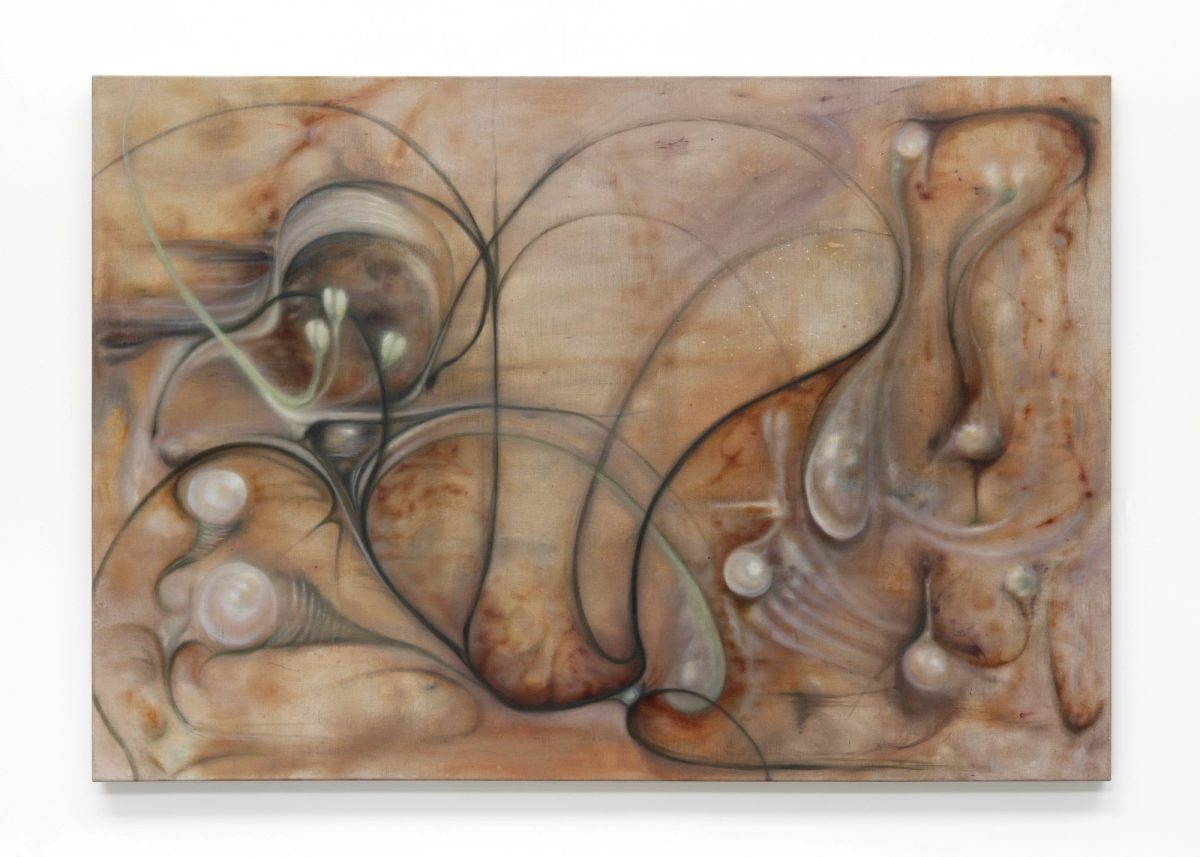
Isabelle Zetterström, Airborne Ember, 2026. Oil on linen, 130 x 190 cm.
"The landscape and the dream aspects of my paintings don't exist in separation for me, but occupy something closer to a spectrum."
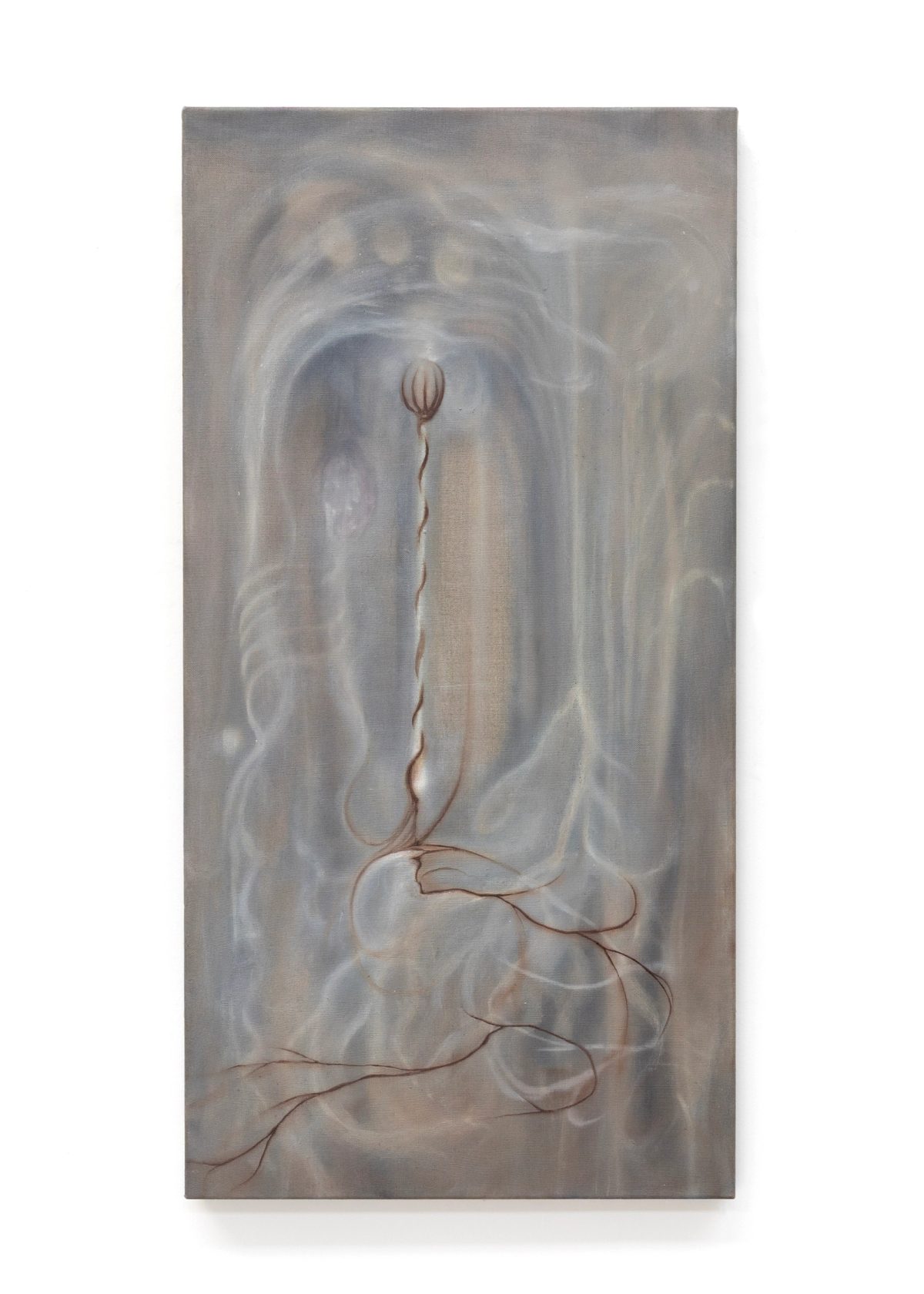
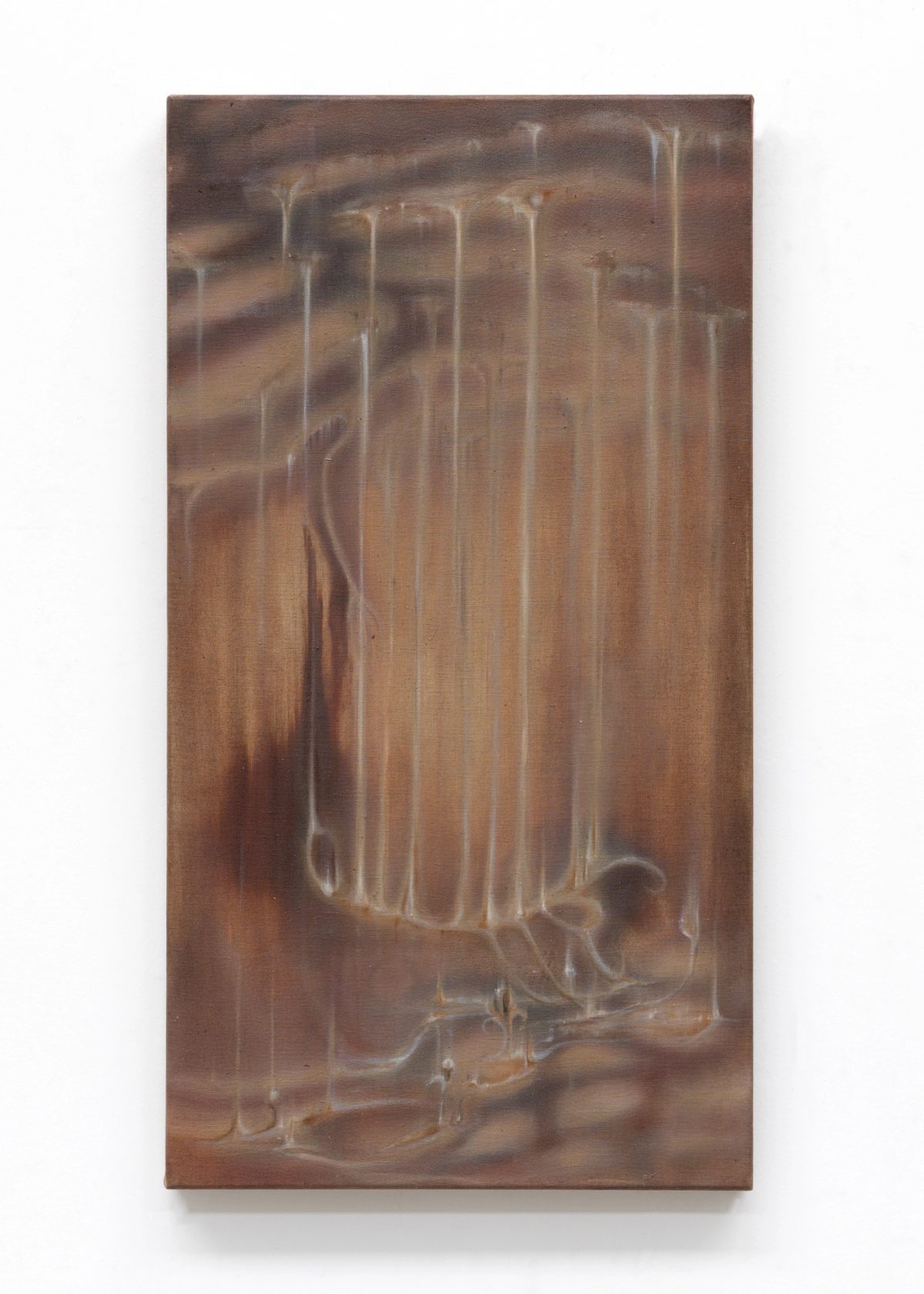
Left: Isabelle Zetterström, Hatch, 2026. Oil on linen, 100 x 50 cm.
Right: Isabelle Zetterström, Perilous Trance, 2026. Oil on linen, 75 x 40 cm.
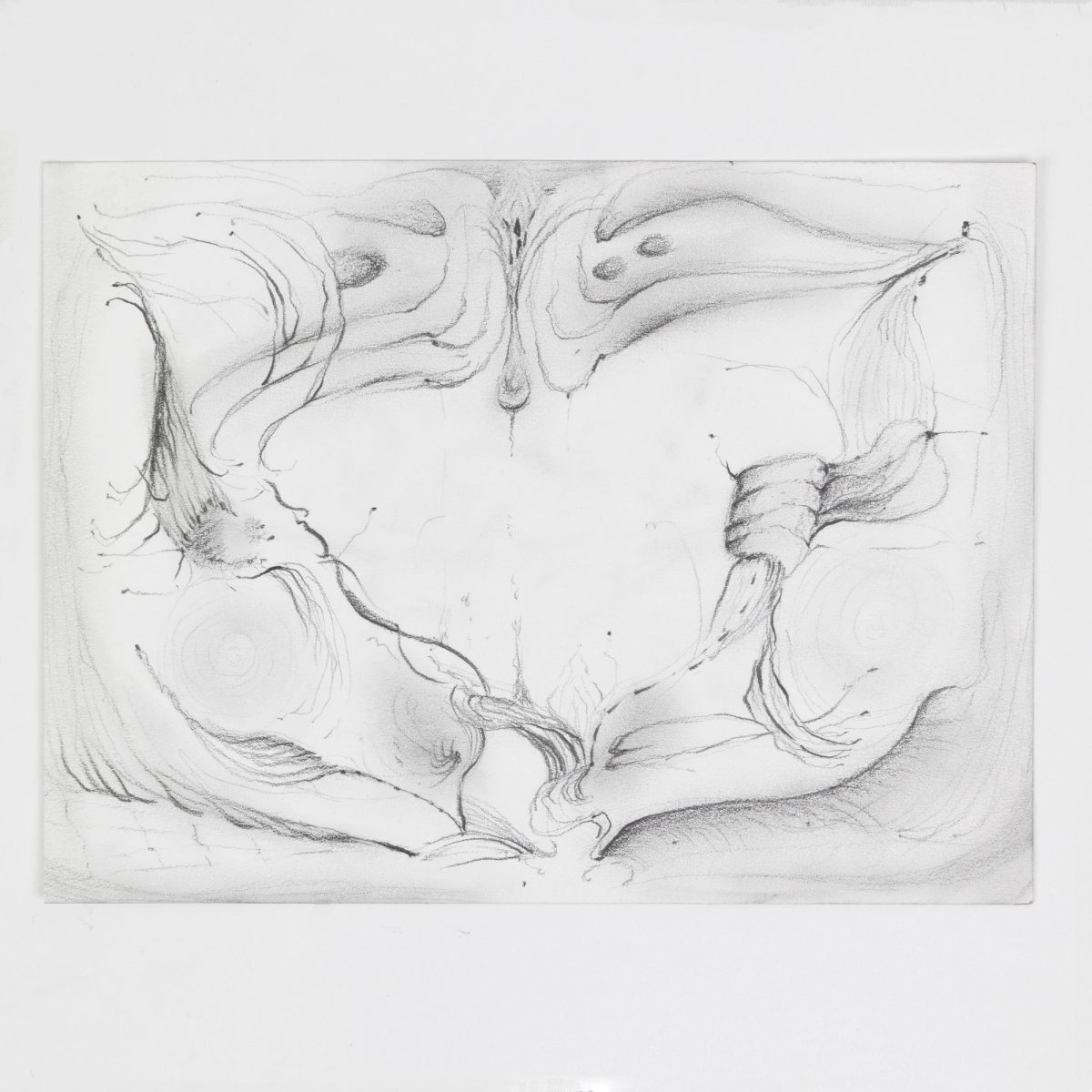
You walked Go With Yamo through your image atlas using Aby Warburg's Mnemosyne as the framework, pairing retinal scans with paint, bone specimens with pencil studies. What is actually in your reference library day to day, and how much of it is deliberately non-art, closer to medical or biological source material?
I see my daily reference library as a bucket. Everything I like, dislike, and experience goes into this bucket. I don't paint from reference images but am carrying everything I see, hear, feel, touch, and think with me into the painting. I find clouds and bodies of water to be a consistent inspiration, and am always observing the way light and shadow interact with the things around me. This all goes in the bucket. I also like to keep strange flowers in my studio. I usually find them on my walk in to the studio, but sometimes at the florist. These flowers often creep their way into the paintings I'm working on at the time.
On occasion there is a specific form of inspiration I want to use as source material. this goes into a special place in the bucket, a place where I can easily access it. Or maybe it is the idea of a specific artist who I feel I am writing a letter to as I'm painting. Currently I'm painting a letter to William Blake. There are also many bodily references and imagined ways of experiencing a body in the bucket. How might the microorganisms living inside our organs perceive the world around them? Maybe the organ belongs to an alien being. To figure out how to paint that, I would search inside my bucket.
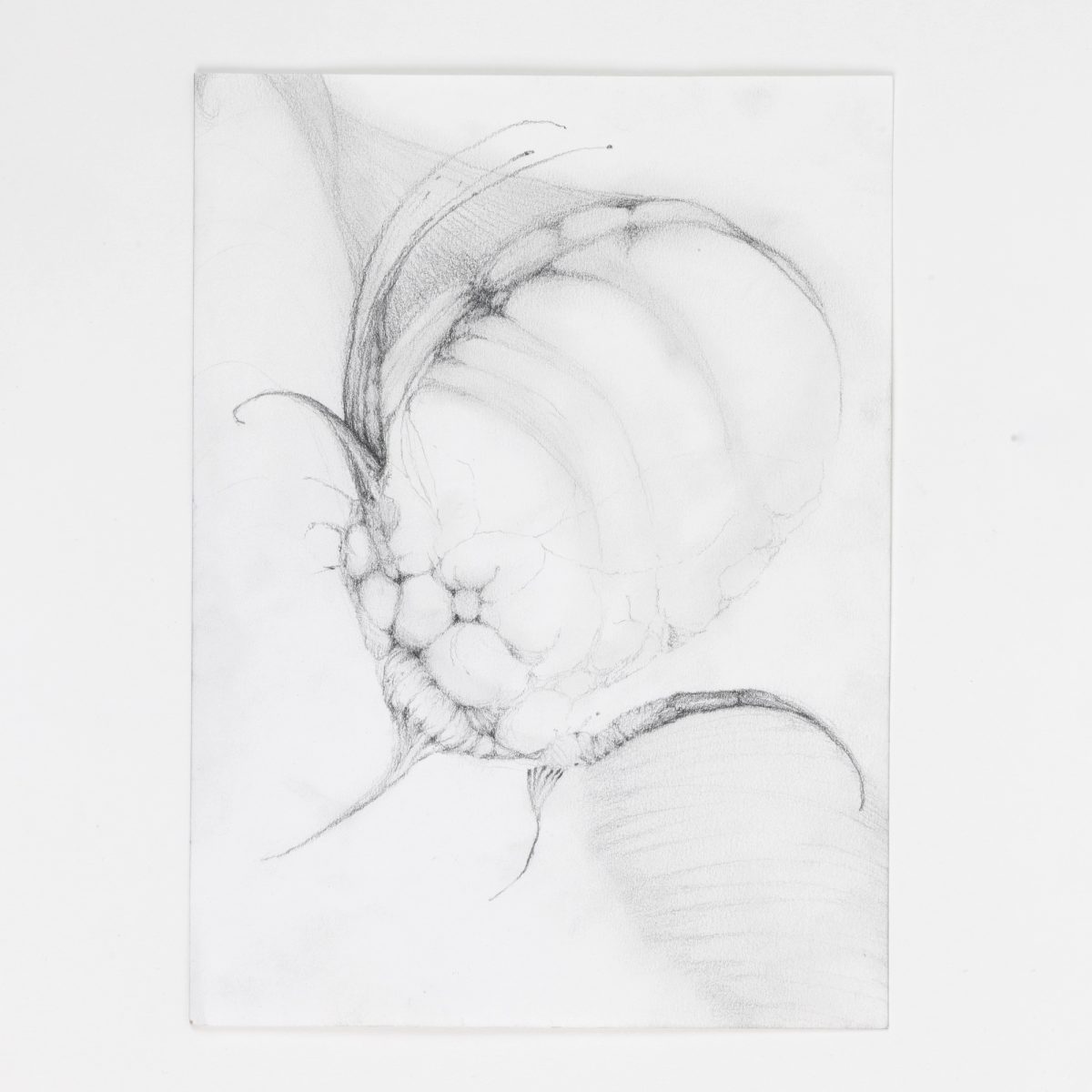
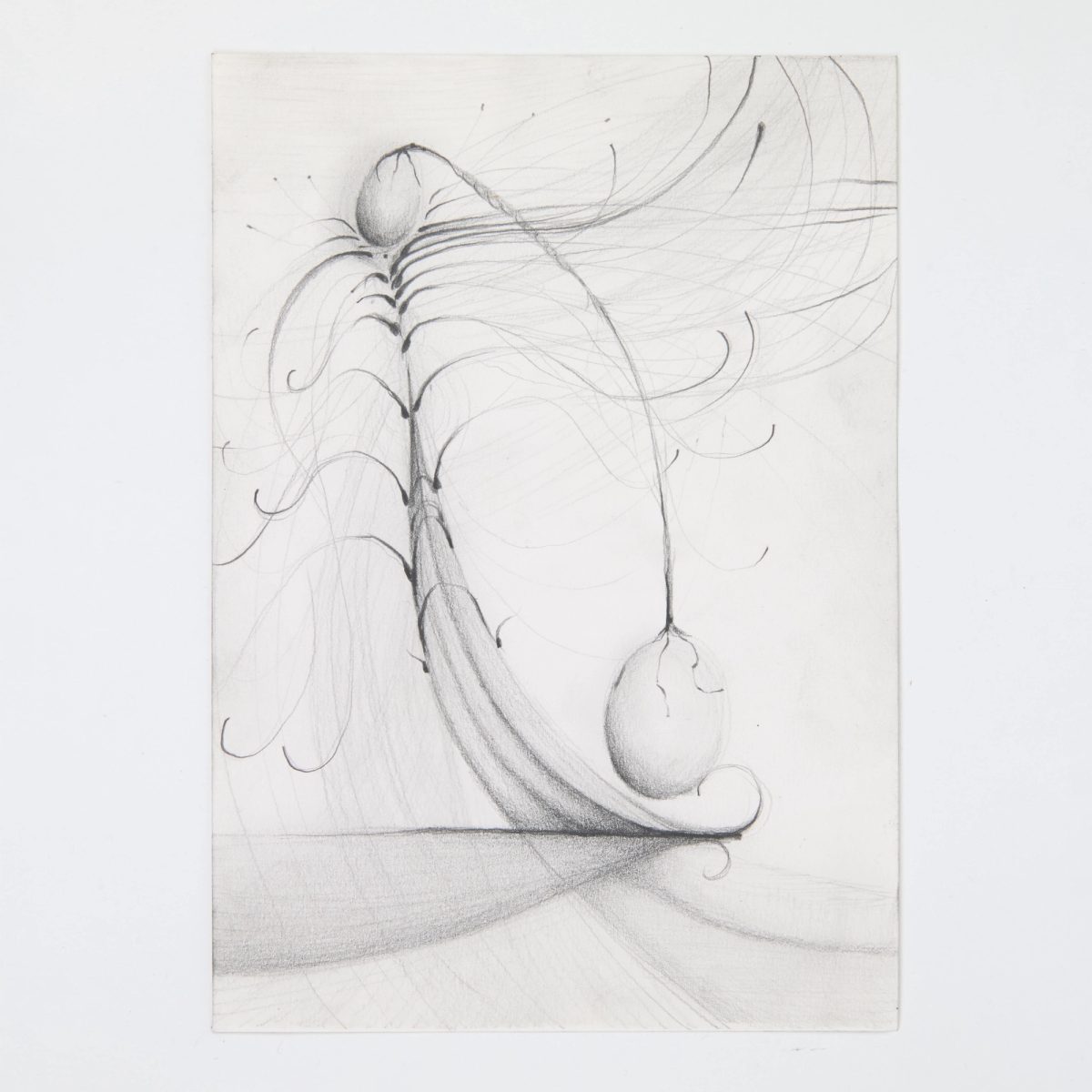
Left: Isabelle Zetterström, Crystalline, 2026. Pencil on paper, 21 x 14.8 cm.
Middle: Isabelle Zetterström, Down the Symbiosis, 2026. Pencil on paper, 14.8 x 21 cm.
Right: Isabelle Zetterström, Feeding, 2026. Pencil on paper, 21 x 14.8 cm.
You've described wanting the work to hold awe and unease "in equal measure." Is there a point where a piece tips too far into one and you have to pull it back, or do you trust the two to hold each other in balance without your interference?
I want my work to hold feelings of both awe and unease; how much of each is required for balance is individual to each painting. I find this balance is something that happens organically without much intervention, but there are times where one or the other has taken over the composition a bit much for my liking. This happened in a recent painting, Unbodied. There came a point where I found it to be too beautiful, too calm, there was nothing in it challenging me. So I added tendrils reminiscent of insect skeletons crawling around the canvas, weaving in and out of the gas clouds. In this specific painting I wanted the overwhelming first impression to be alluring and inviting, and the creeping elements to be gently, ominously lurking in the background.
Conversely, in the painting Beneath The Veins Of Desire, there were many moments where I had to reel it back as it went too far into the uneasy, too directly bodily, it was simply too bloody. I did want there to be a tension between the two panels and for it to feel anatomical and unsettling, but it still needs the magic that lures you closer. Each painting always contains its own personal contradiction. The dreamy, the gentle, the sensual is contrasted by a distant shriek, the smell of blood, or a feeling of not being safe. To me, this mirrors what life is: an eternal series of contradictions.
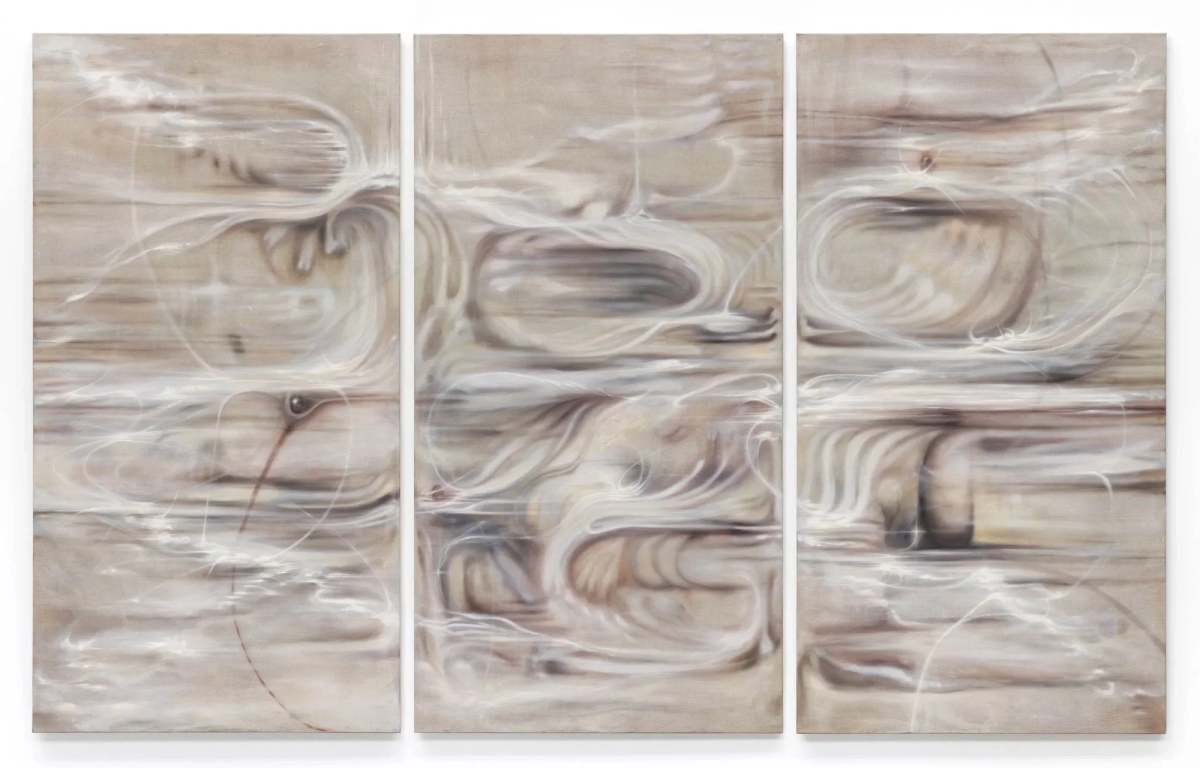
Isabelle Zetterström, Unbodied, 2026. Oil on linen, three panels, 200 x 105 cm each, 200 x 315 cm overall.
"As the universe mirrors patterns, it's my belief that forms and terrains we faintly recognise will appear in worlds far away, flickering in and out of familiarity in the way dreams do."
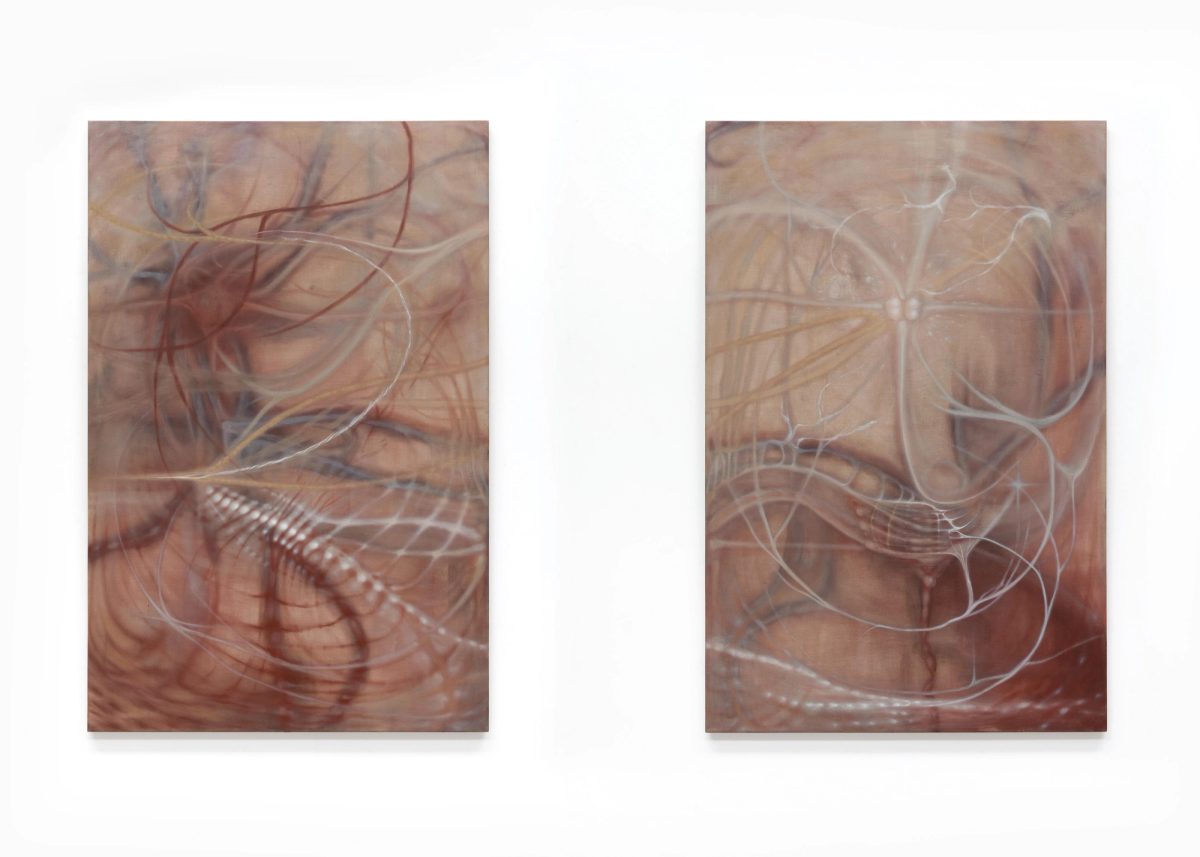
Isabelle Zetterström, Beneath the Veins of Desire, 2026. Oil on linen, two panels, 200 x 130 cm each, 200 x 260 cm overall.
You're moving from studio-made ceramics and one-off paintings into a landscape of stockists, gallery representation, and group shows with international platforms. Does the industry side of things feel like it's shaping what you make, or have you managed to keep those pressures at a distance from the actual work?
This shift and the opportunities I've been receiving have been very exciting for me! For many years I was painting with myself and for myself. I've loved the experience of sharing what I do with a wider network of people, and am genuinely so interested in how they experience my work. Having said this, I don't let people's feedback, good or bad, influence how I feel or want to make. To me, the opinions of others, whether industry professionals, fellow artists, or conversations with people at private views, are always valuable, and can be deeply inspiring.
But as far as the pressures or any advice, I'm the only one who can visit my mind's world. I believe everyone can do their own personal vision best, and mine belongs to me. If, or more likely when, I feel overwhelmed or pressured in the industry, I can always turn to my work to process these feelings. But ultimately, I don't always consciously get to decide what I make, let alone someone else.
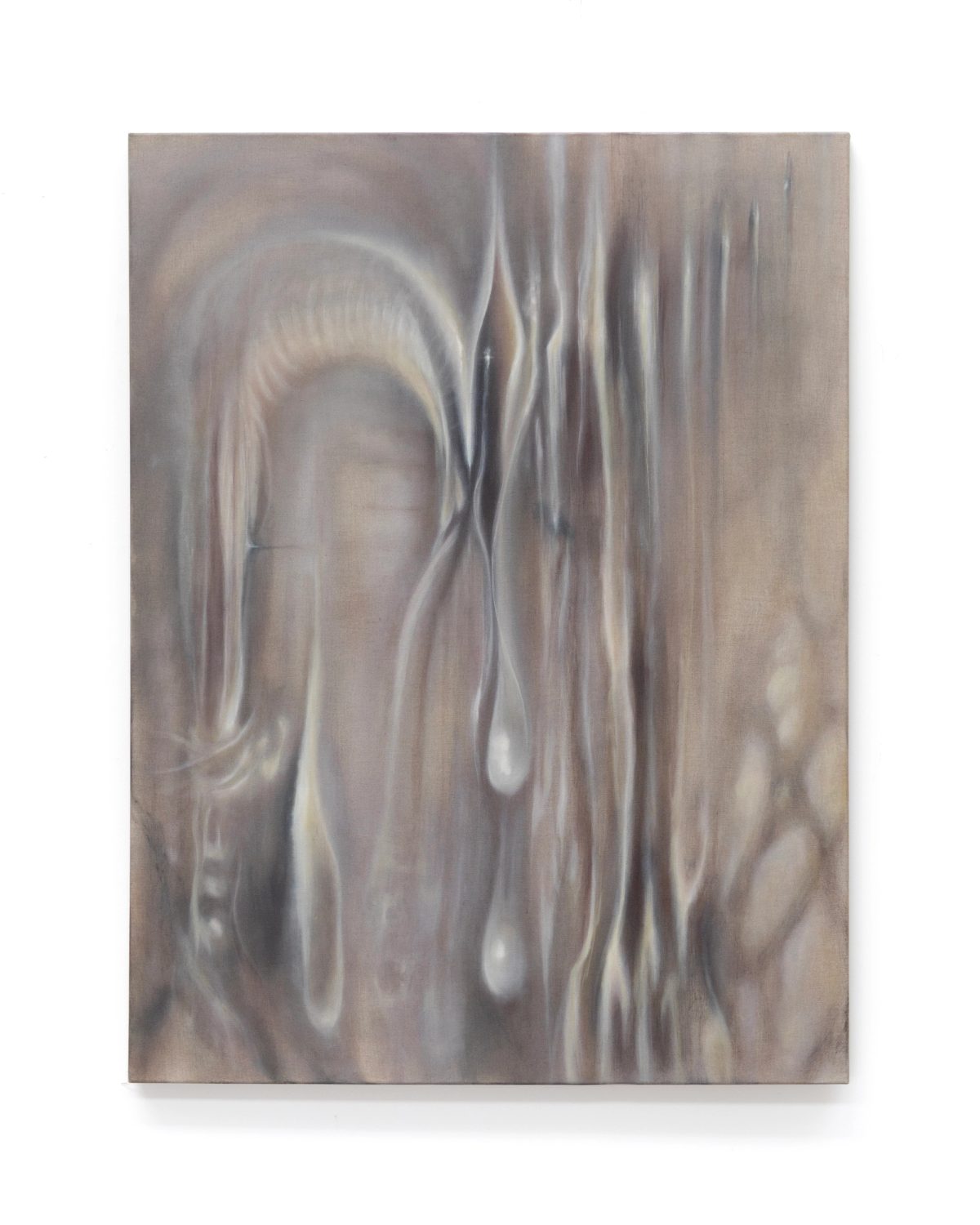
Isabelle Zetterström, Mycelial Frequency, 2026. Oil on linen, 130 x 95 cm.
With Pending Response opening this August, what's pulling at you that hasn't found its way into the work yet? A material, a scale, a form you haven't let in?
There are so many things pulling at me at any given moment. Techniques, forms, and inspirations that are waiting to get into the works, not so much because I haven't let them in, as that other ideas have gotten there first. I'm currently thinking and writing very regularly about a two-panel painting I'm making for an upcoming show. I want to depict multiple contradictions at once in a way that feels dizzying, like being lightheaded from standing up too fast but with an almost tunnel-like sense of clarity. I want to depict a light that lures you in, but too bright, so that it almost hurts. I want it to hold a sensual appeal, a lustful desire, one that scares you, leaving you feeling trapped. I want the paint to sing a very sweet song, only to tempt you into a darker, unsettling place. I want it to feel as though it exists across multiple times, simultaneously ancient and eternal.
It is rare I have such clear thoughts as I do with these canvases; I'm beginning with a plethora of ideas. Mostly my ideas are loose, other times it is just me and my intuition to start with. Either way, it's important to me that every painting is something that I've never experienced before. A place to try what I haven't yet. If it doesn't contain something new and exciting to me, I find that flatness persists until the end. This curiosity is what keeps me interested, keeps me wanting more.
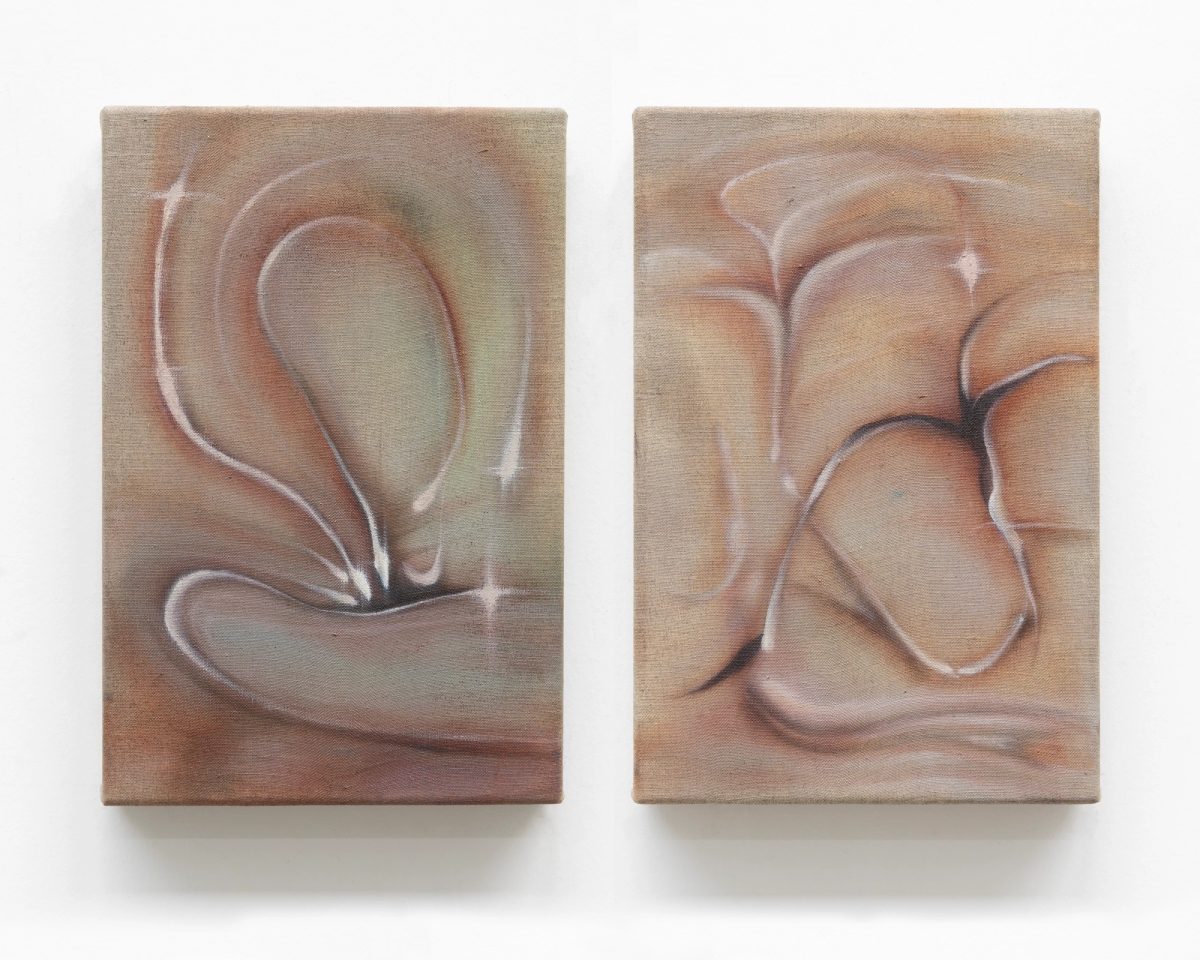
Left: Isabelle Zetterström, Seedlings, 2026. Oil on linen, two panels, 35 x 25 cm each, 35 x 50 cm overall.
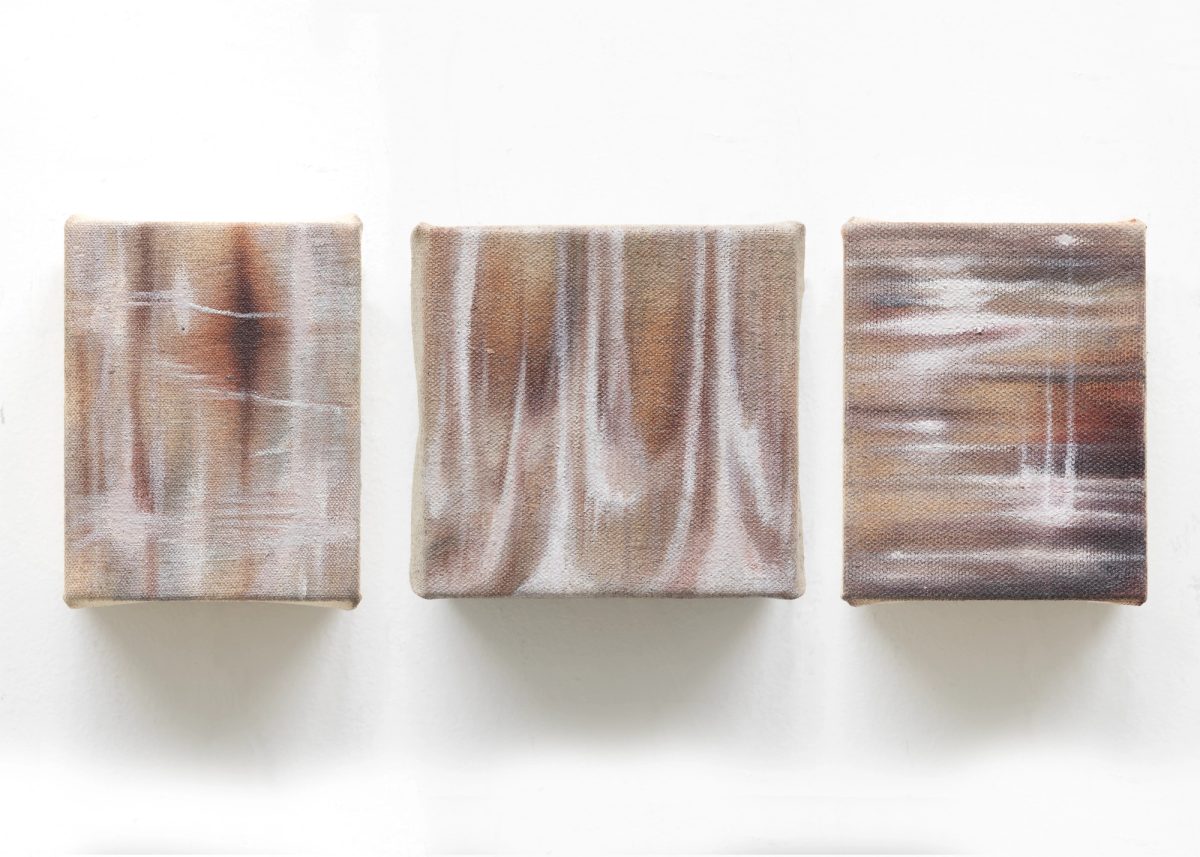
Right: Isabelle Zetterström, Giant Matter III, 2026. Oil on cotton, linen and cotton canvas, three panels, 10 x 8 cm, 10 x 10 cm and 10 x 8 cm, 10 x 26 cm overall.
Cover Image: Isabelle Zetterström, The Fertile Ossuary, 2025. Oil on cotton canvas, 125 x 170 cm.