IN LONGEVITY AND UNOBSERVABLY EXPIRING TENURE BY LOLA-ROSE PEDERSEN
VISUAL ESSAY BY LOLA-ROSE PEDERSEN
28 JULY 2026 — LONDON, UNITED KINGDOM
This recent body of work is a culmination of material and conceptual threads that I have been orbiting for the past seven years or so, and I finally feel like I am addressing it directly. My practice is highly responsive to its environment, and I tend to adapt to whatever is available or in excess, whether that be time, space, or materials. Rather than beginning with a fixed process or aesthetic, I begin with the conditions around me. Availability becomes both a practical constraint and an intentional methodology.
My early education heavily included traditional craft practices, so I was fortunate to build a strong relationship with my hands and labour from a young age. My ancestors worked in textile mills in the United States after emigrating from Sicily, and my mother worked in garment manufacturing. I think those histories continue to surface in my practice, even when I'm working with seemingly unrelated materials and processes.
I have become increasingly interested in what I think of as material sensitivity: the ways people unconsciously reveal themselves through their relationships to stuff, and what those relationships are informed by, whether that be psychological, emotional, economic, cultural, or shaped by domestic habits, labour, systems of value, and conditions of abundance or scarcity.
For the past several years, my practice has centred around cross-stitch embroidery. It originally emerged as an adaptation to restricted resources and a way of maintaining a making practice whilst commuting. Embroidery was ideal for trains and buses; I carried it everywhere. The discipline of slow, repetitive labour continues to be embedded in how I think through making and what types of work I value.
"Embroidery was ideal for trains and buses. I carried it everywhere."
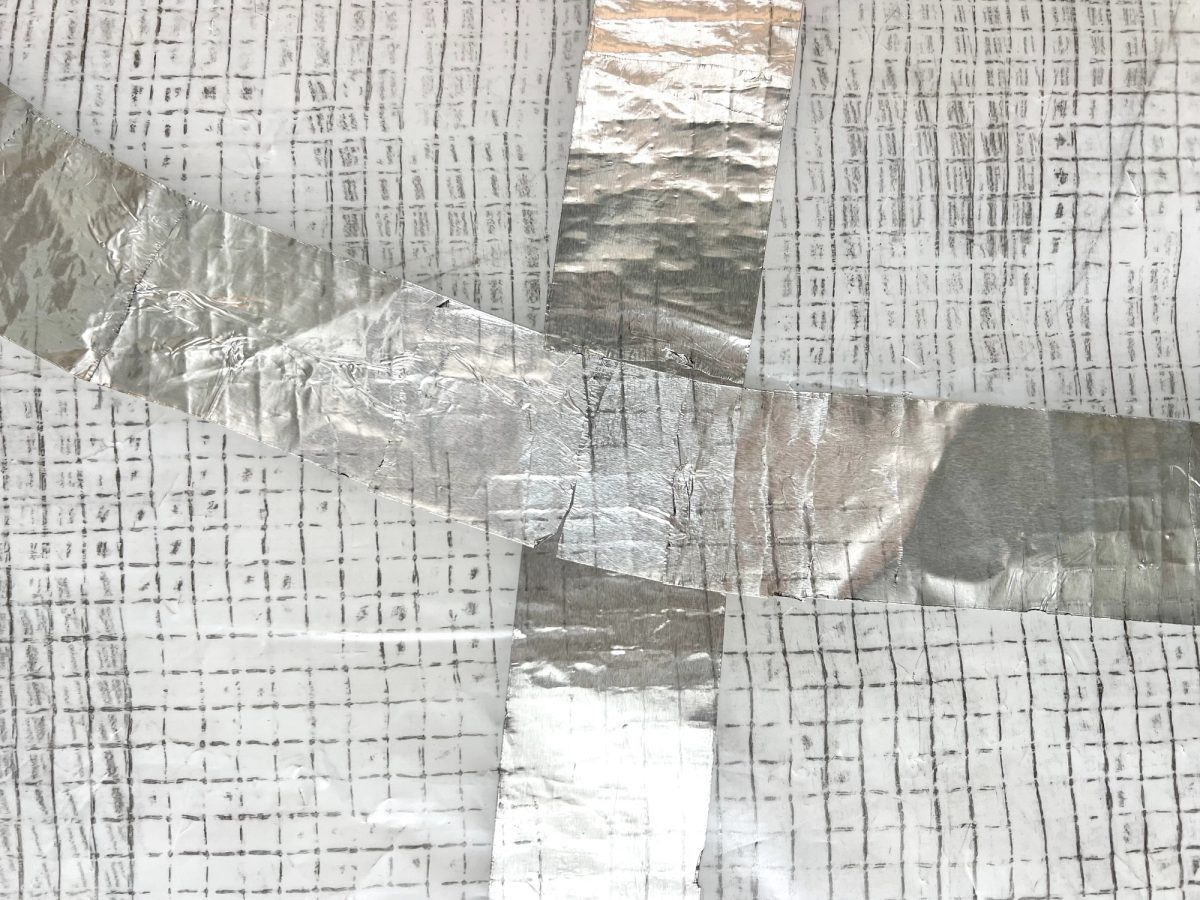
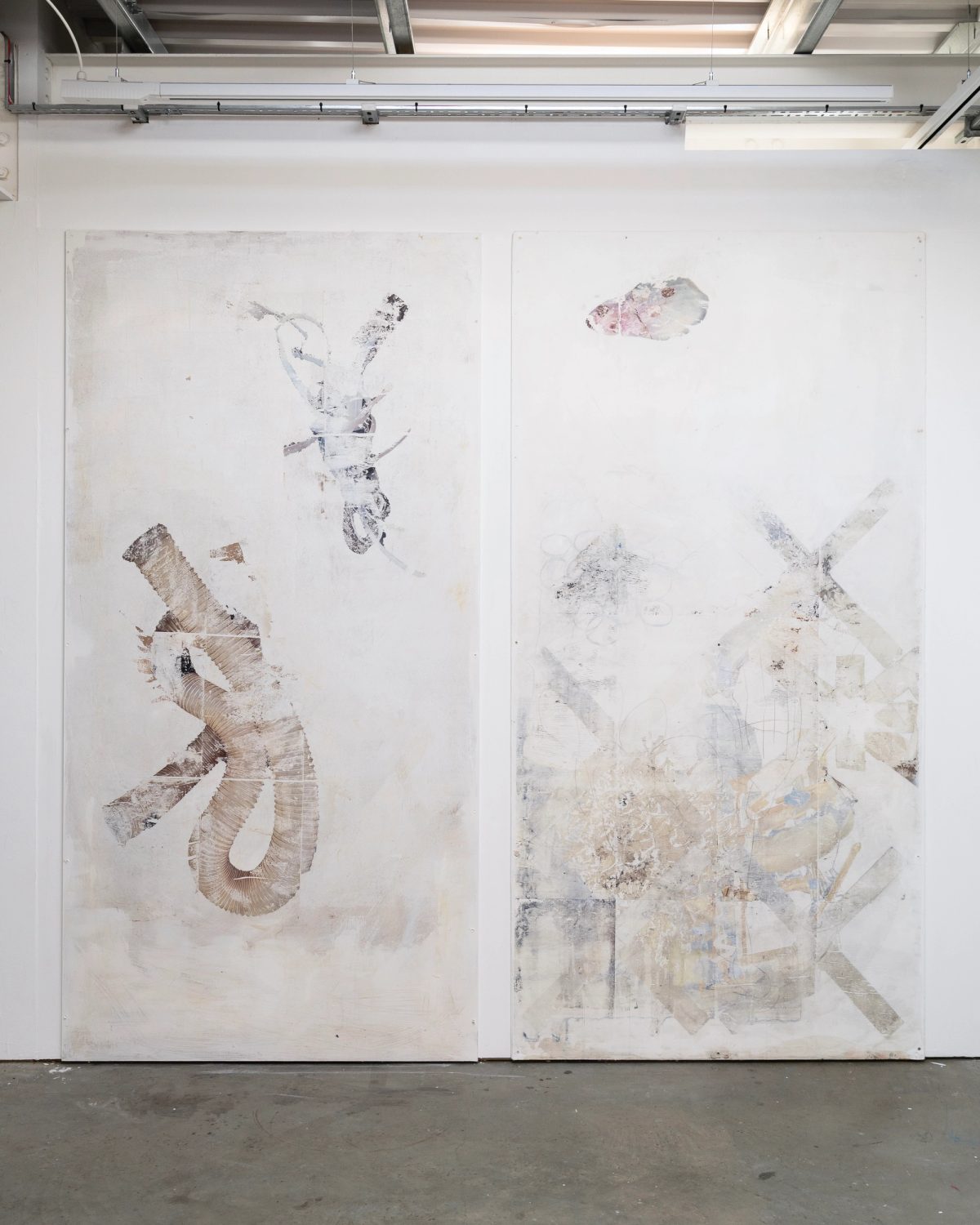
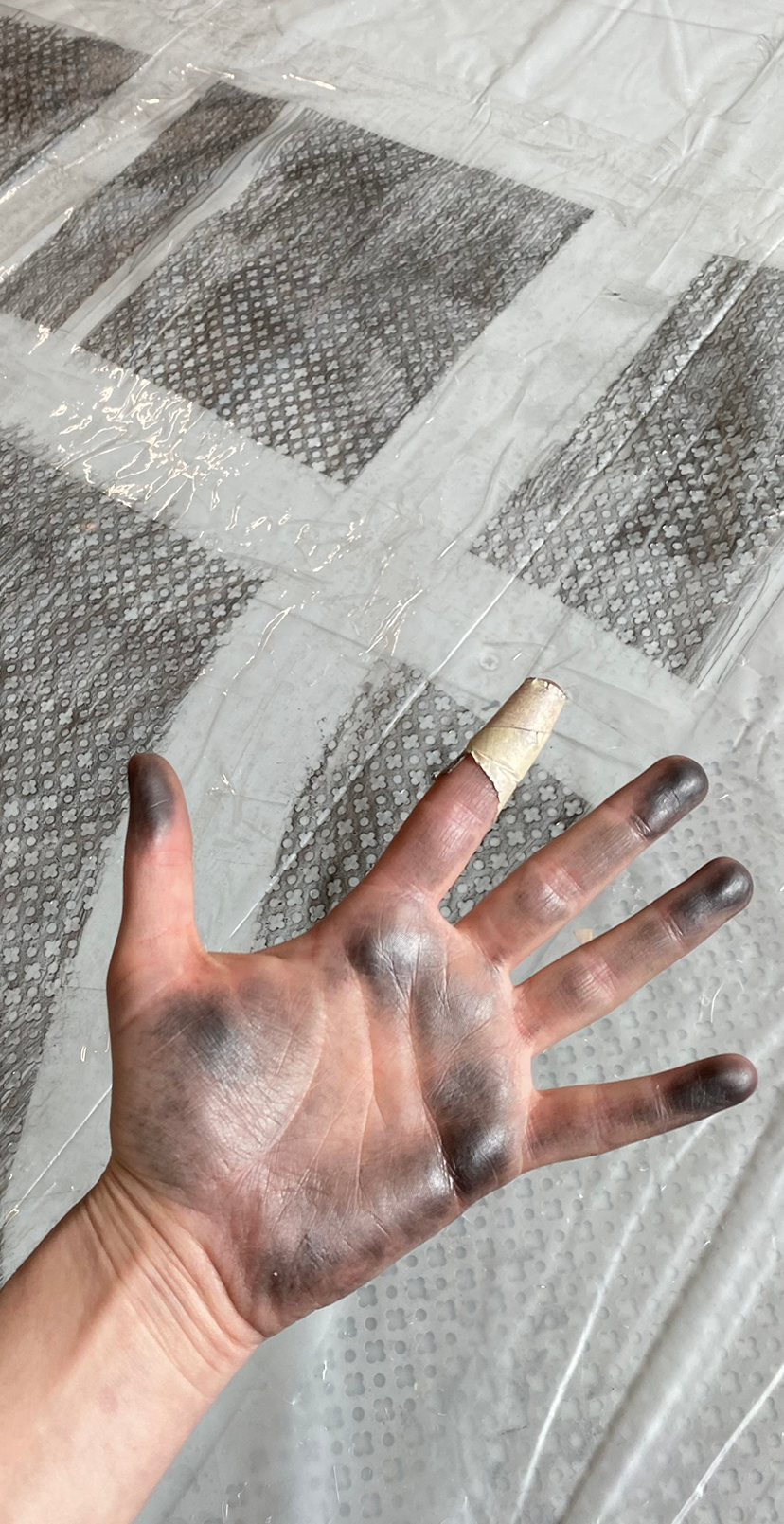
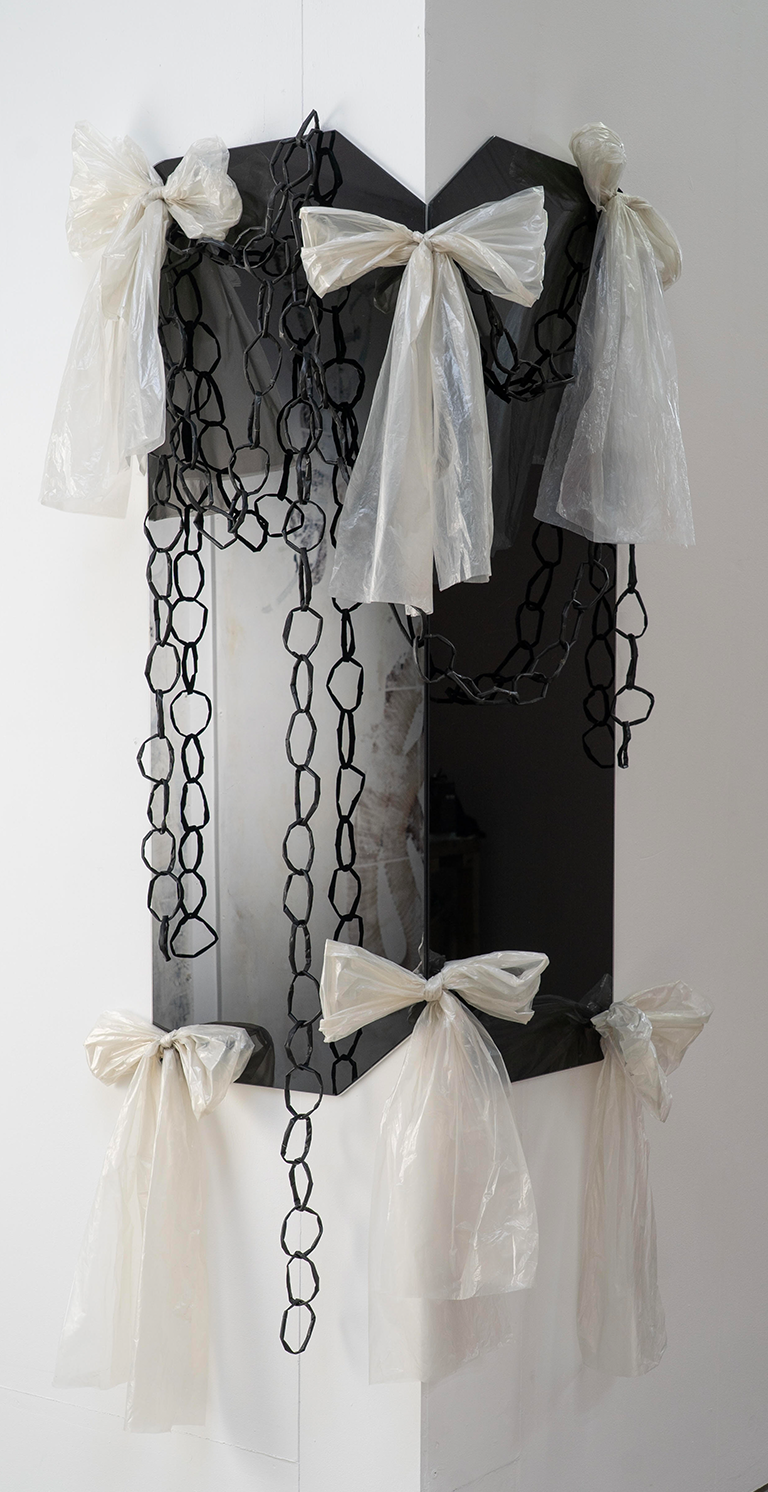
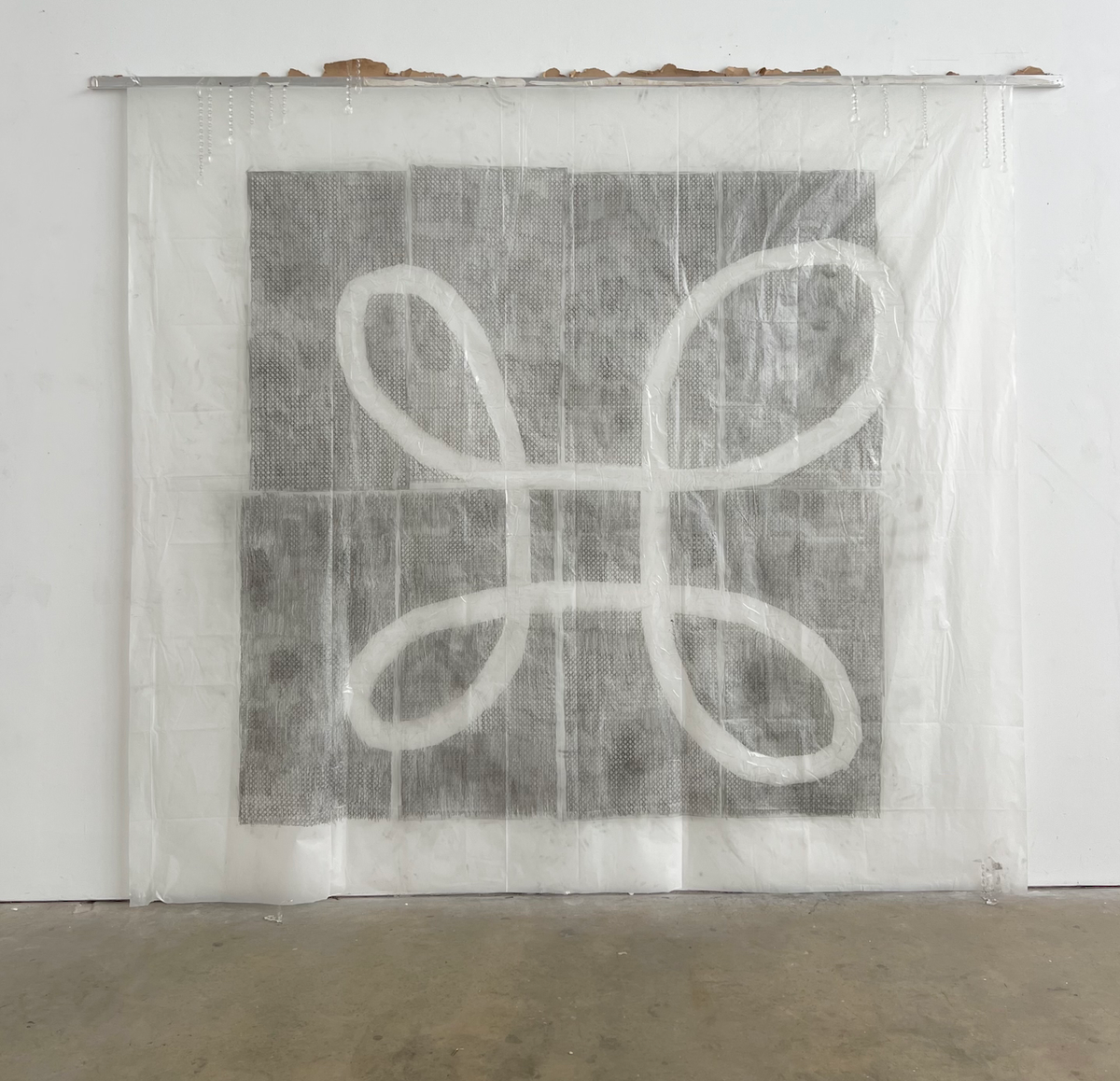
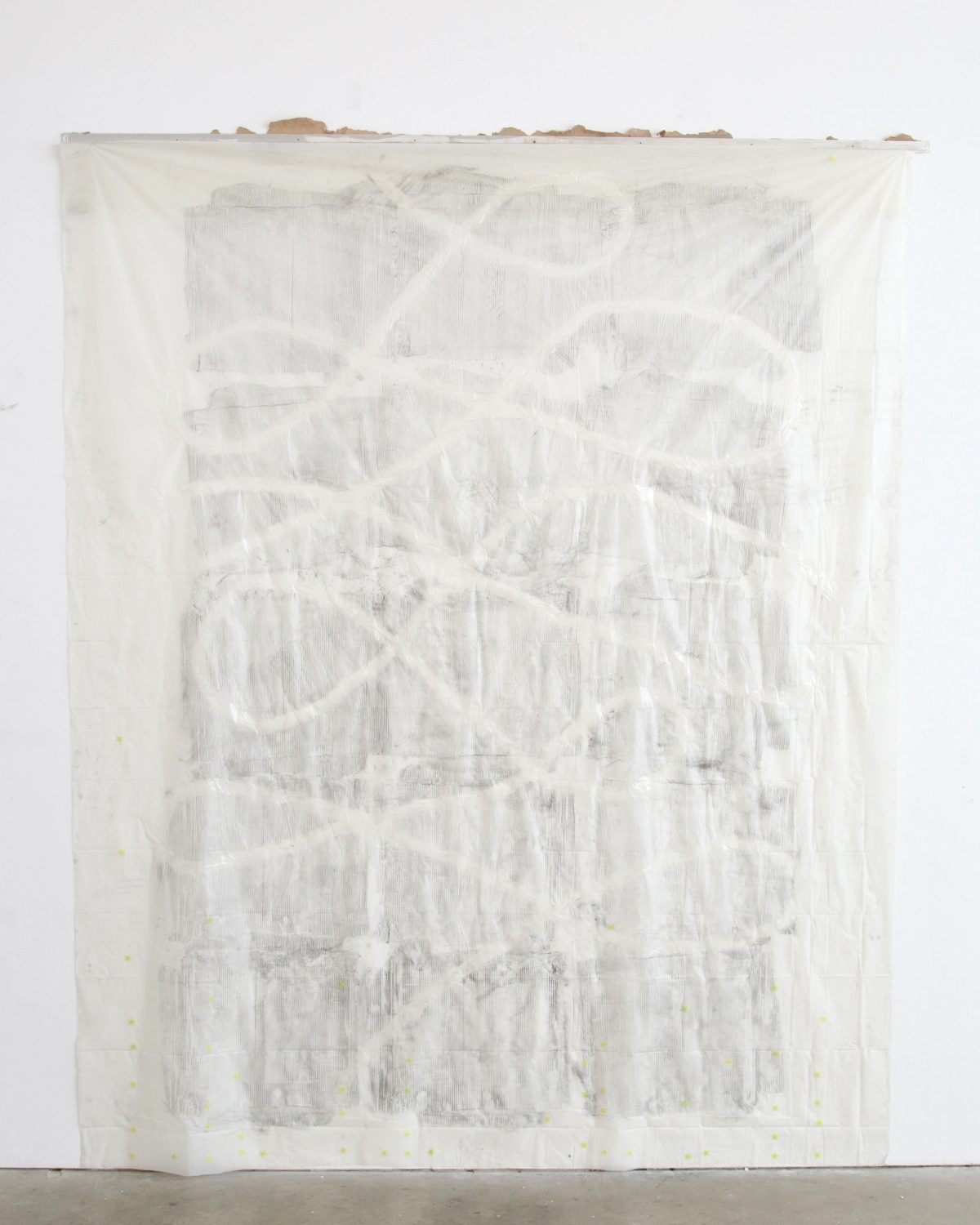
Having recently completed my MFA at the Ruskin School of Art, University of Oxford, I spent the last nine months working in a studio, allowing these ideas to expand physically for the first time. Graphite drawings on dust sheets with packing tape, sculptures assembled from found objects and plastic bows, sealed bags containing words gathered from the internet, and traditional quilt motifs all began to occupy the same material conversation.
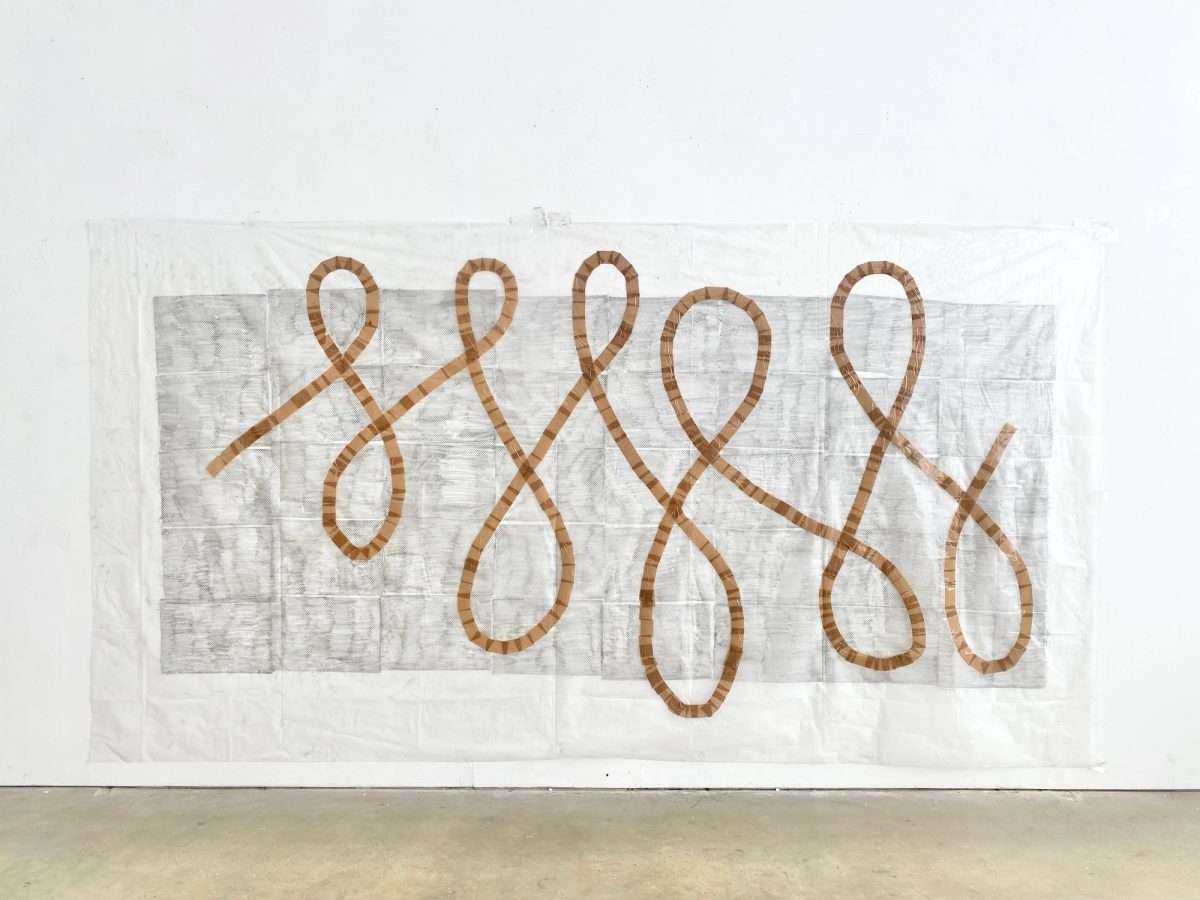
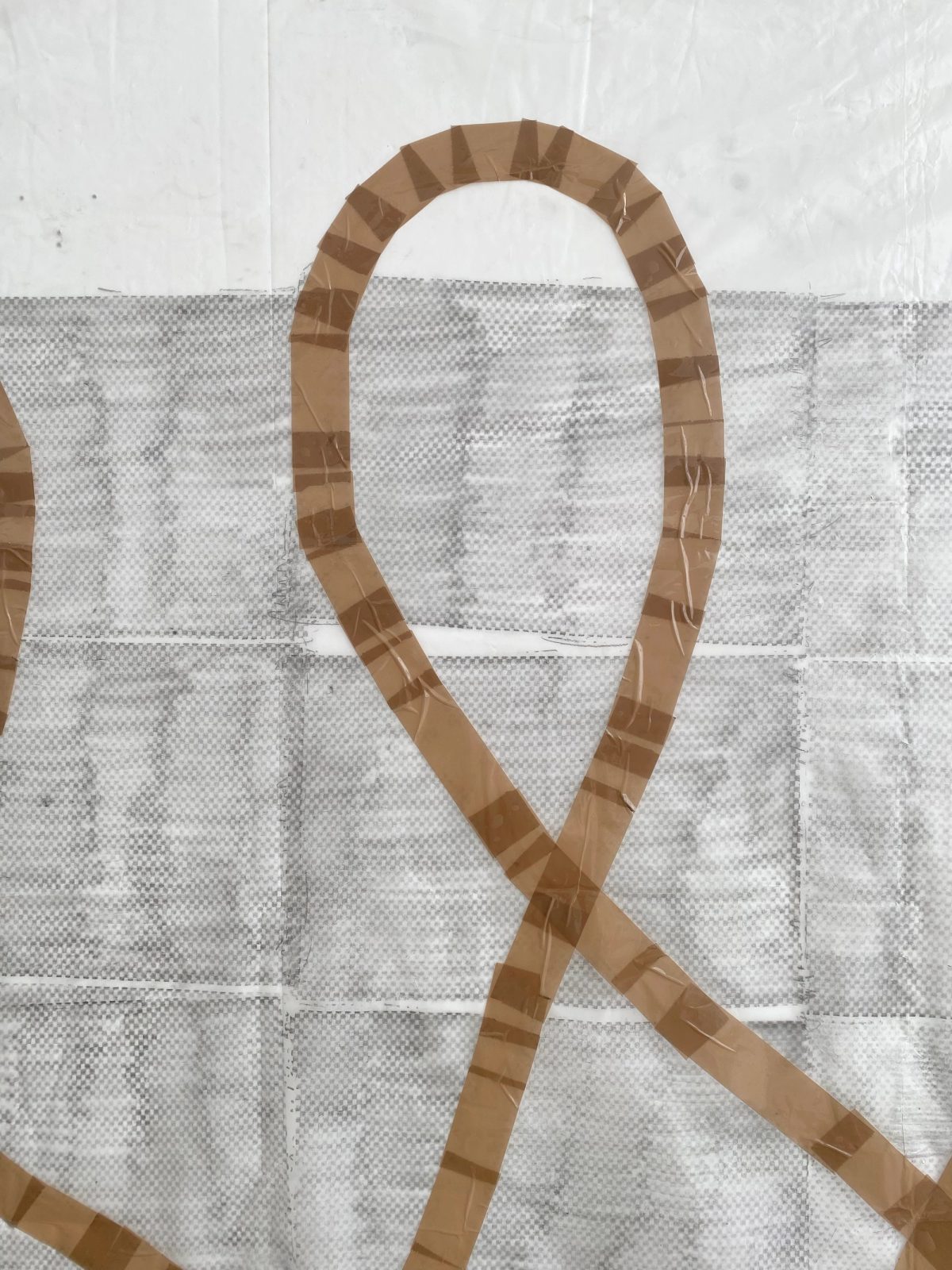
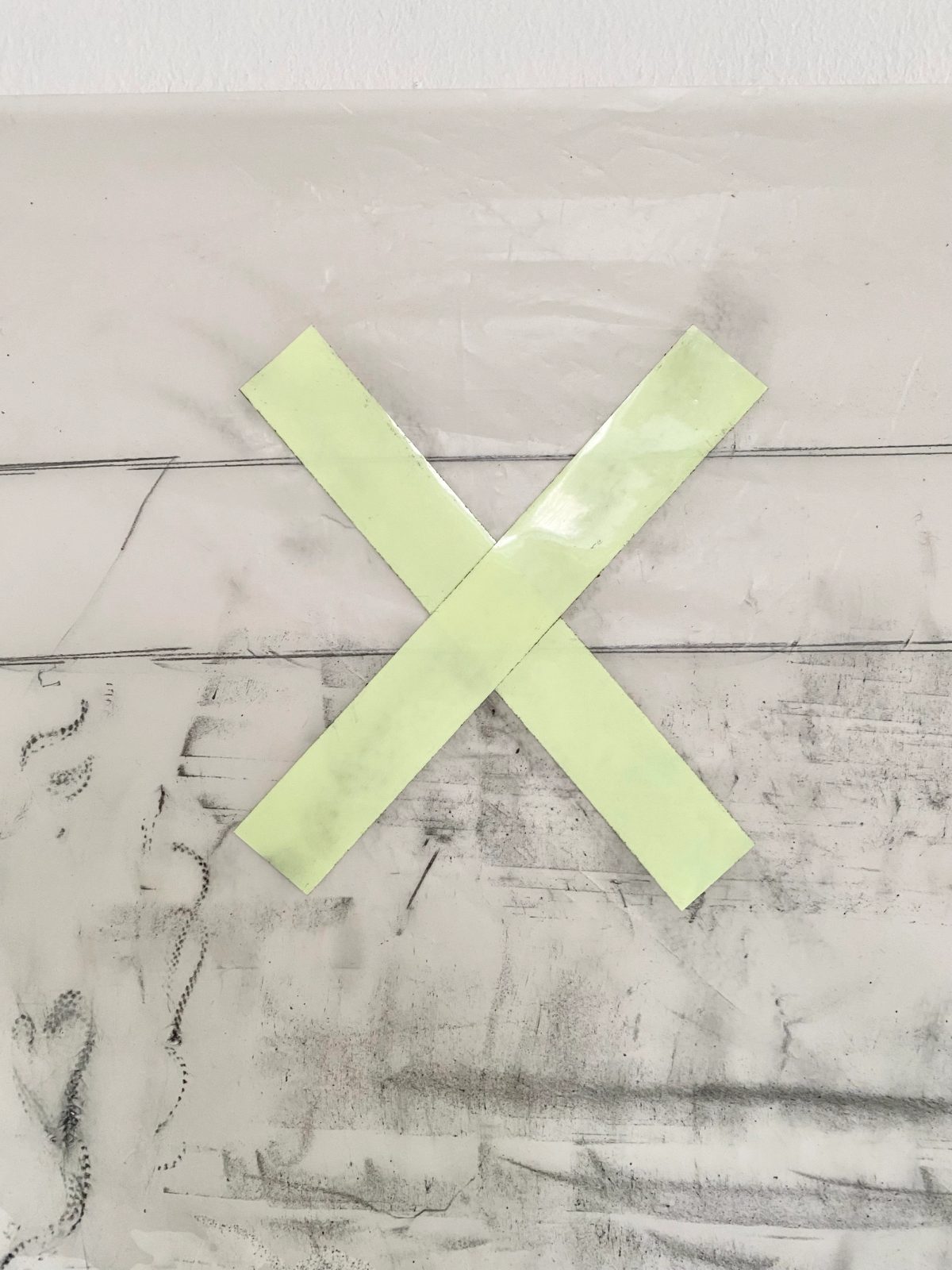
Although tape appears materially distant from embroidery, I continue to think through the visual language of textiles. The tape crosses function like stitches, layered strips like threads, and the overall scale begins to approach that of tapestry. The lines loop back on themselves, forming loose ends, knots, and tangles that suggest methods of mending or decoration.
Tape carries an urgency of action. It speaks to speed, efficiency, and immediacy: a type of labour that feels almost opposite to embroidery. It is also mundane, inexpensive, and ubiquitous, encouraging me to apply it directly, generously, and intuitively. With this material relationship, I am intentionally loyal to the conditioned mode of relation; I want to use it how it exists in the world and not adopt it in the studio differently, as something precious.
"With this material relationship, I am intentionally loyal to the conditioned mode of relation. I want to use it how it exists in the world and not adopt it in the studio differently, as something precious."
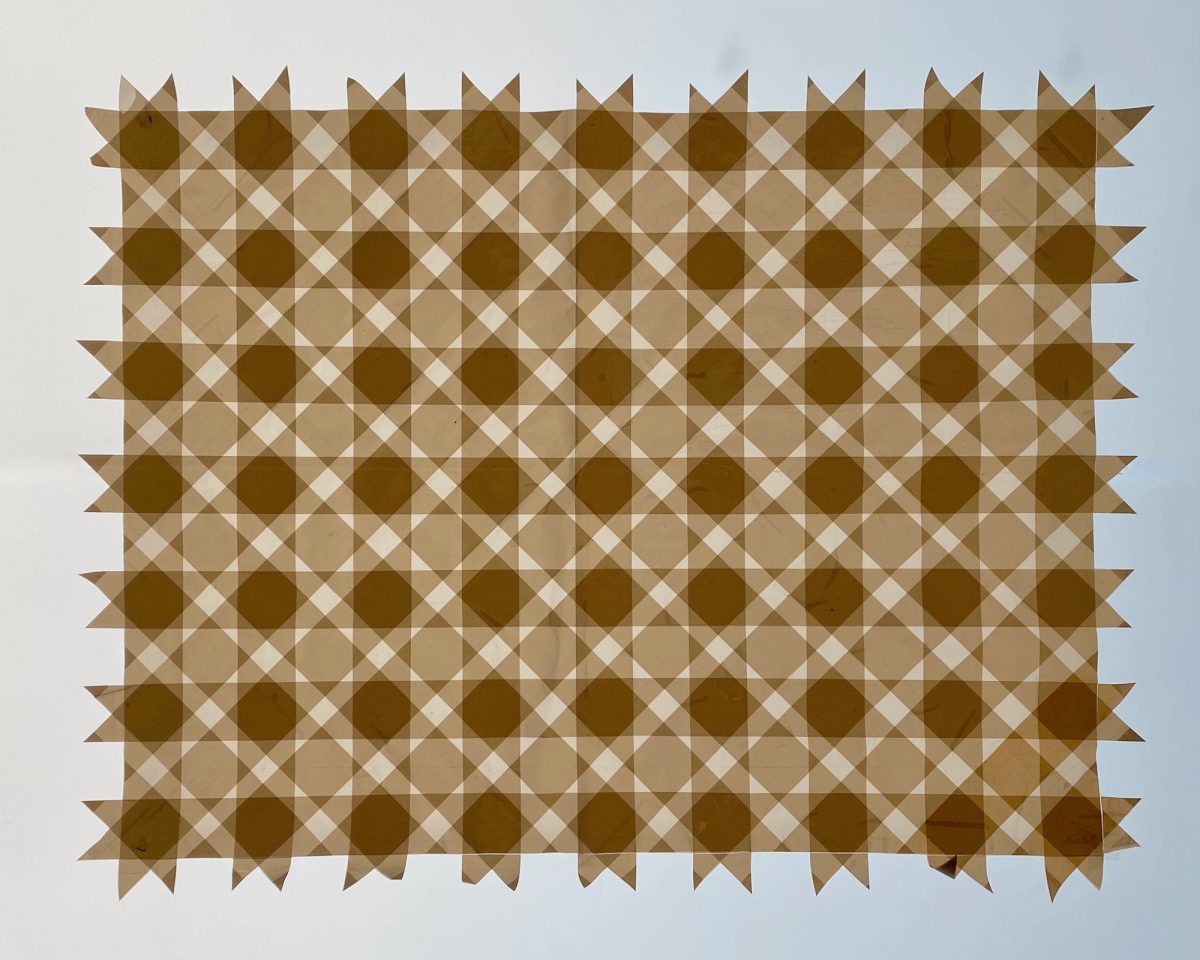
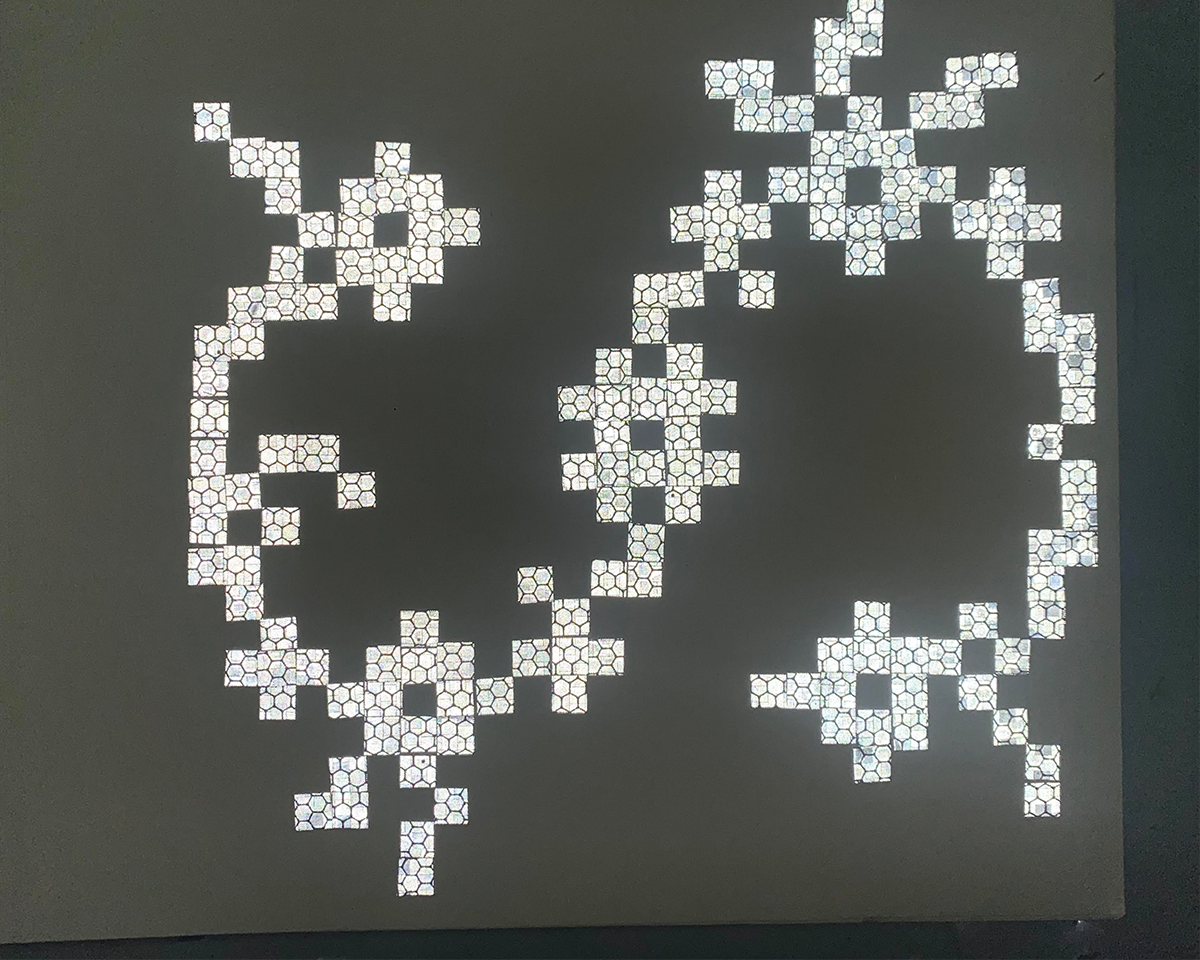
Can information about a stranger be excavated by the way they've taped your Vinted order? Jewellery received in cream cheese tubs and t-shirts in oven-pizza cardboard. The parcel as a conceptual container containing multiple politics and ideas, pseudo-psychoanalysis, and, for me personally, a site to fictionalise a stranger's position on the material sensitivity scale.
At my previous office job, I eventually developed a specific material sensitivity that afforded me the ability to recognise a parcel's sender by the position of tape, or absence, layering, or shade of brown, silver, or clear. An inter-subject formation at a material scale where my attention was trained on logistics of efficiency and national distribution as a proxy for trust, familiarity, and relational value. My perception was calibrated by the materials of this specific system, and it leaked out from the office training ground into my daily life. Or perhaps it was always there, dormant, reactivated by labour.
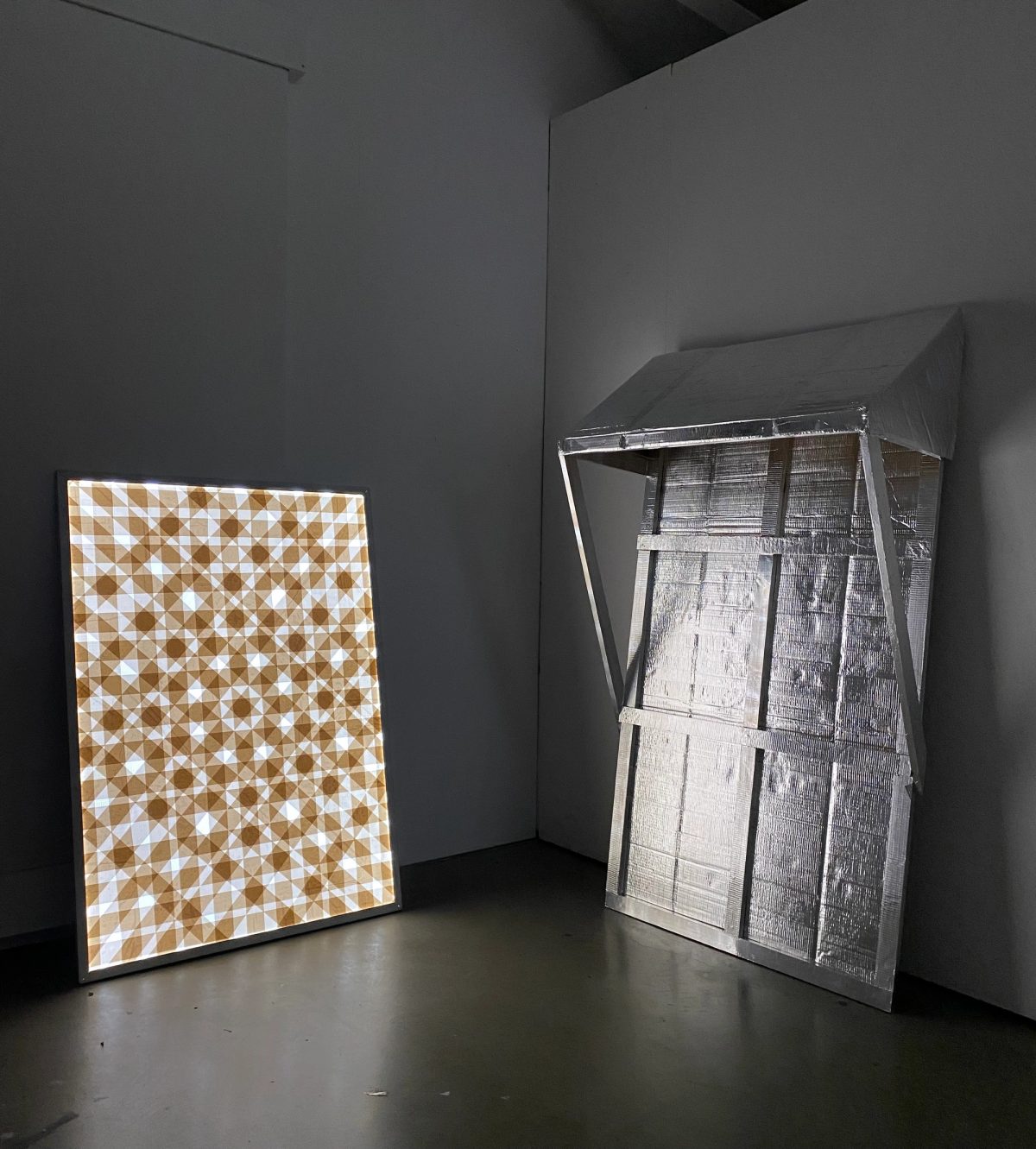
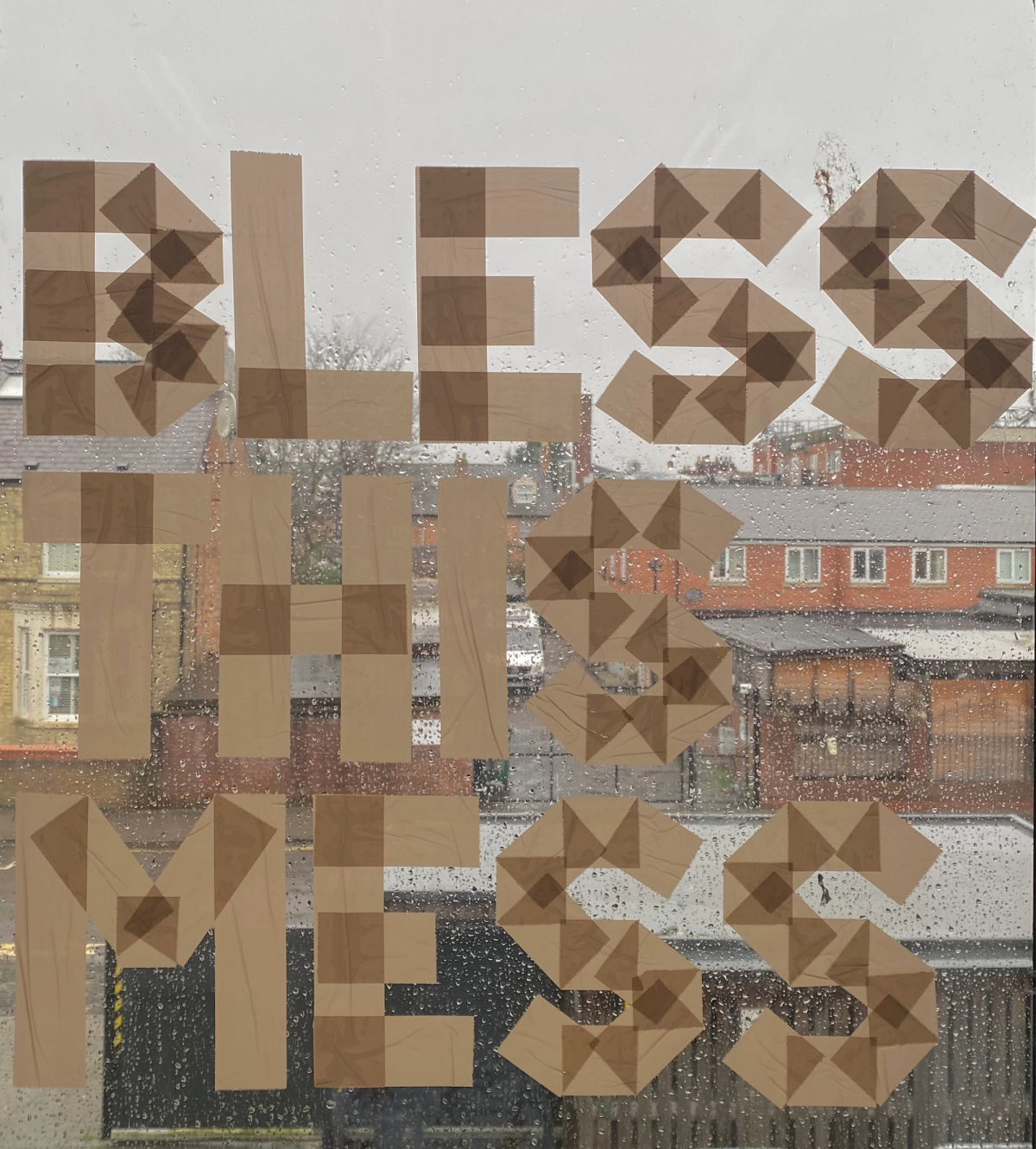
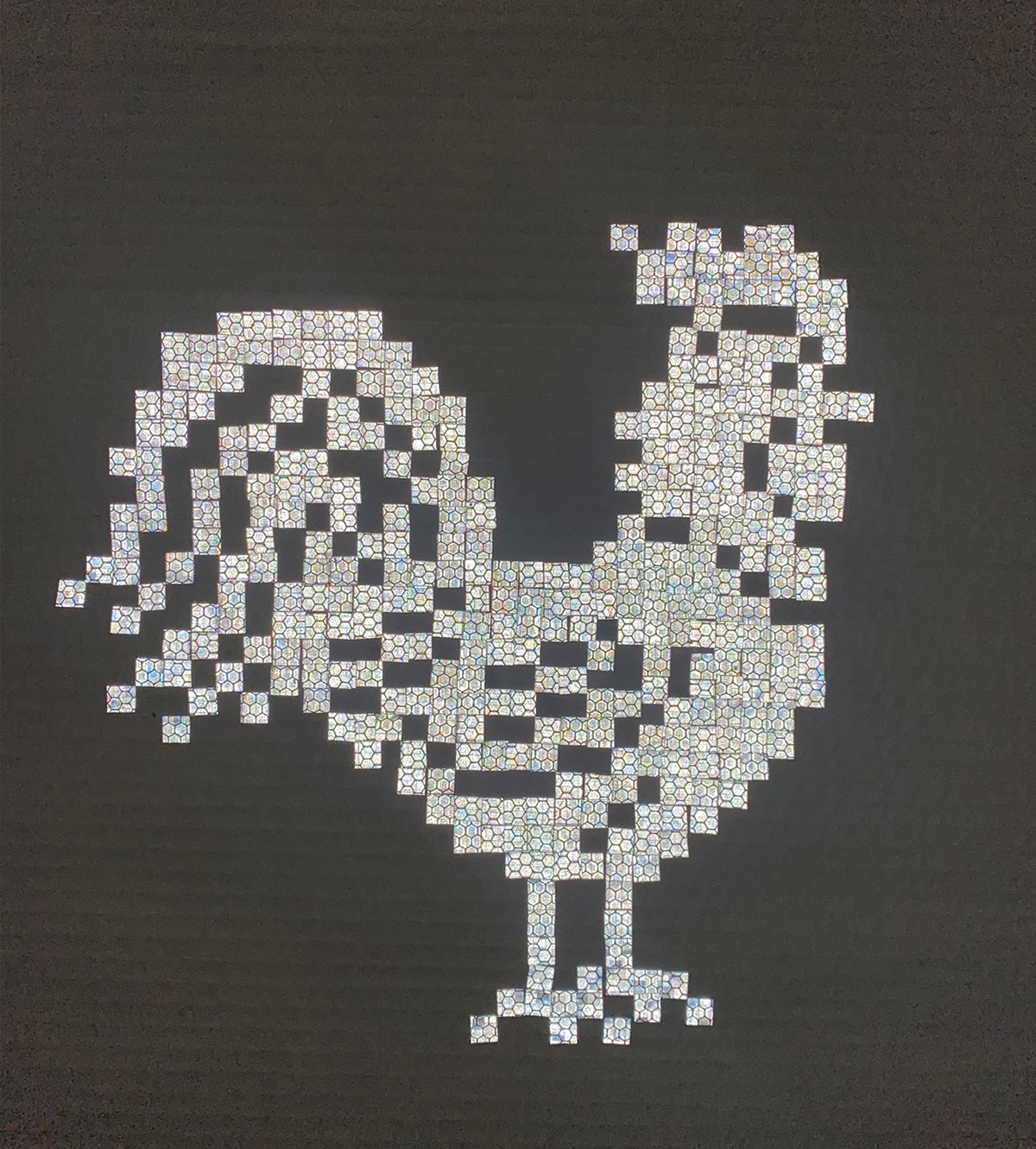
The persistence, its presence, this tenacity of tape to exist in domestic and industrial systems fascinates me. If we were to imagine tape as a species with its own evolutionary motivation, we would probably consider it remarkably successful, much like wheat or chickens.
Chickens and aesthetic emblems of self-sufficiency also appear throughout this body of work, emerging from a parallel interest in the politics of cottage-core; not simply as an internet aesthetic, but as an identity and cultural symptom. It romanticises self-sufficiency and imagines escape from capitalism but often remains within the frameworks that currently prioritise a certain type of individual, family unit, or way of life. Cottage-core is saturated with contradictions and fundamentals related to self-actualisation, domesticity, and community. I'm really interested in how aestheticization can operate as a mask, a tool, or even a weapon, and how nostalgic imaginings of the past become entangled with imagined futures. Somewhere between these positions we find survivalists documenting meticulously organised pantries, homesteads, and bunkers on Instagram, hobby tunnelists, and gorp-core.
"I'm really interested in how aestheticization can operate as a mask, a tool, or even a weapon, and how nostalgic imaginings of the past become entangled with imagined futures."
I'm currently still working on how this specifically features beyond sketches and research, but it also links to the occupational activity of sewing, which I'm curious about.
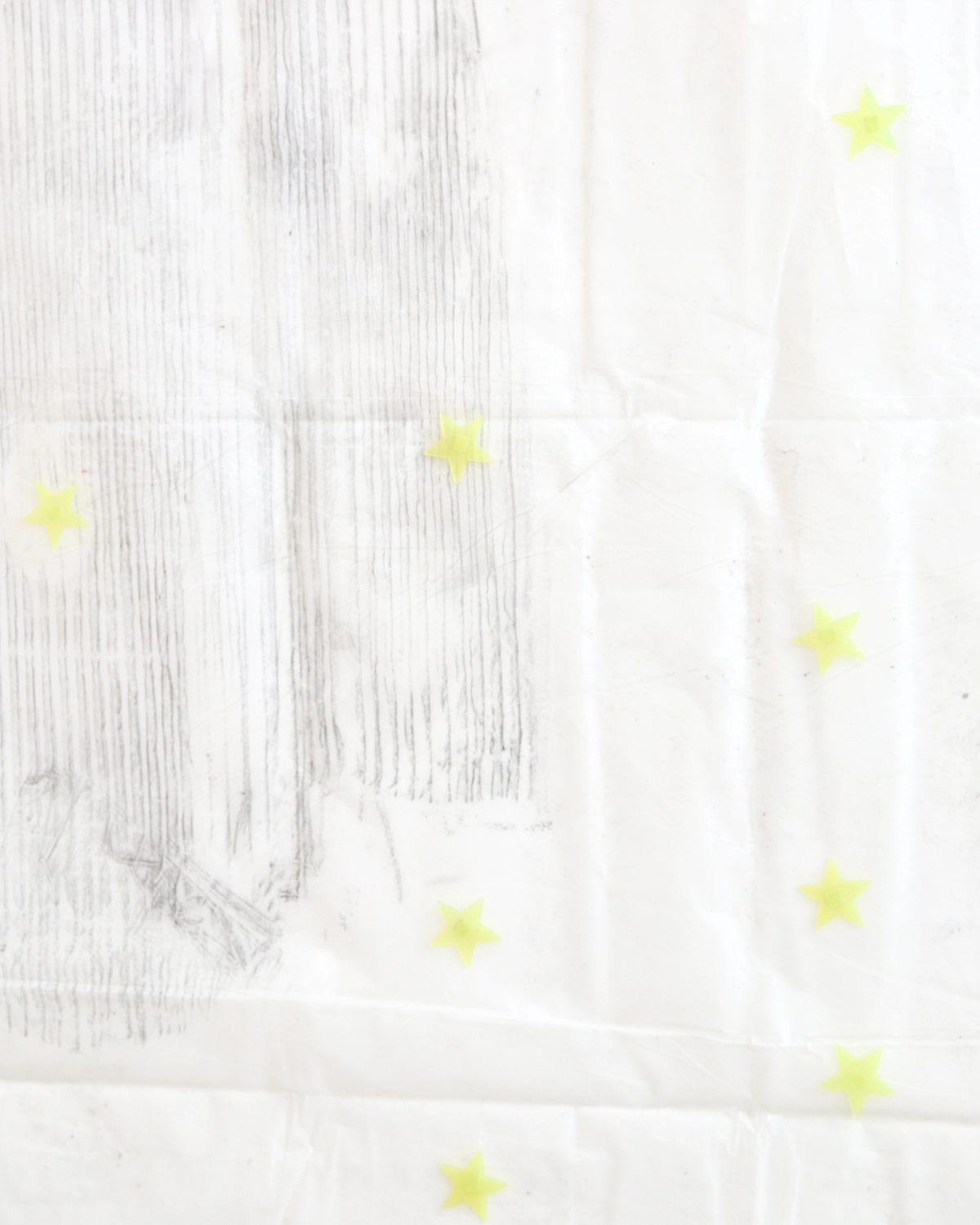
Dust sheets became equally important because they occupy an ambiguous position between the domestic and the industrial. Across construction sites and DIY (do it yourself!) they protect possessions whilst change takes place, preserving value through the process of modification. Cheap, readily available, and usually disposable, they are designed to mediate transition.
This wonderfully milky, translucent material holds the graphite drawing robustly, aiding evidence of contact with another surface and the gesture of the labouring hand. These drawings are made by lifting the textures of ordinary domestic objects like radiator covers, dish-drying mats, cardboard, fans, and yoga mats through repetitive, pressured rubbing. This activity is operative and durational; it's laced with a desperate energy, but simultaneously kind of meditative.
This series of works employs tape and dust sheets as marginal materials that exist out in the world in an intermediary position. Here, in my practice, they come together in their more fundamental material potential; in longevity and unobservably expiring tenure.
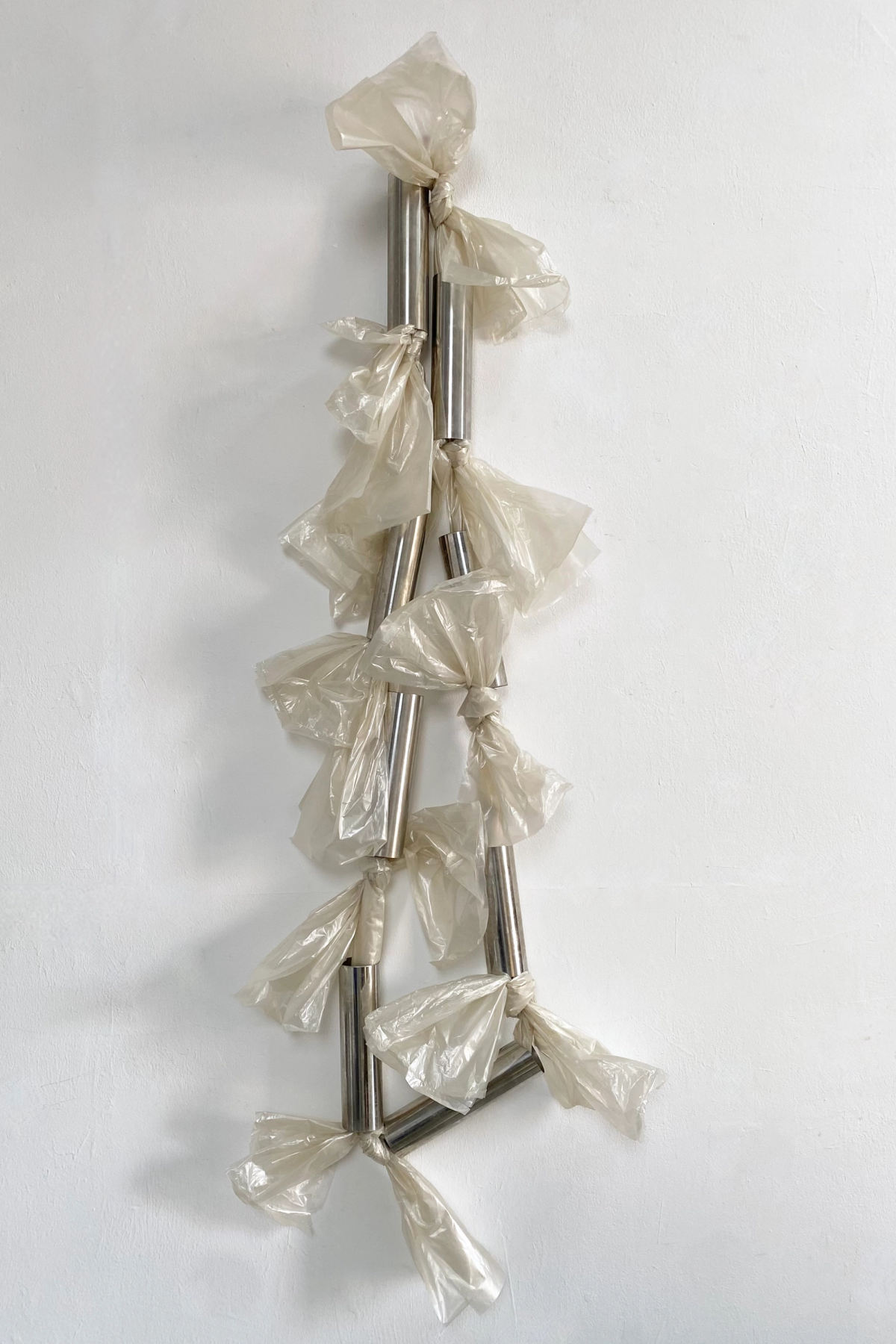
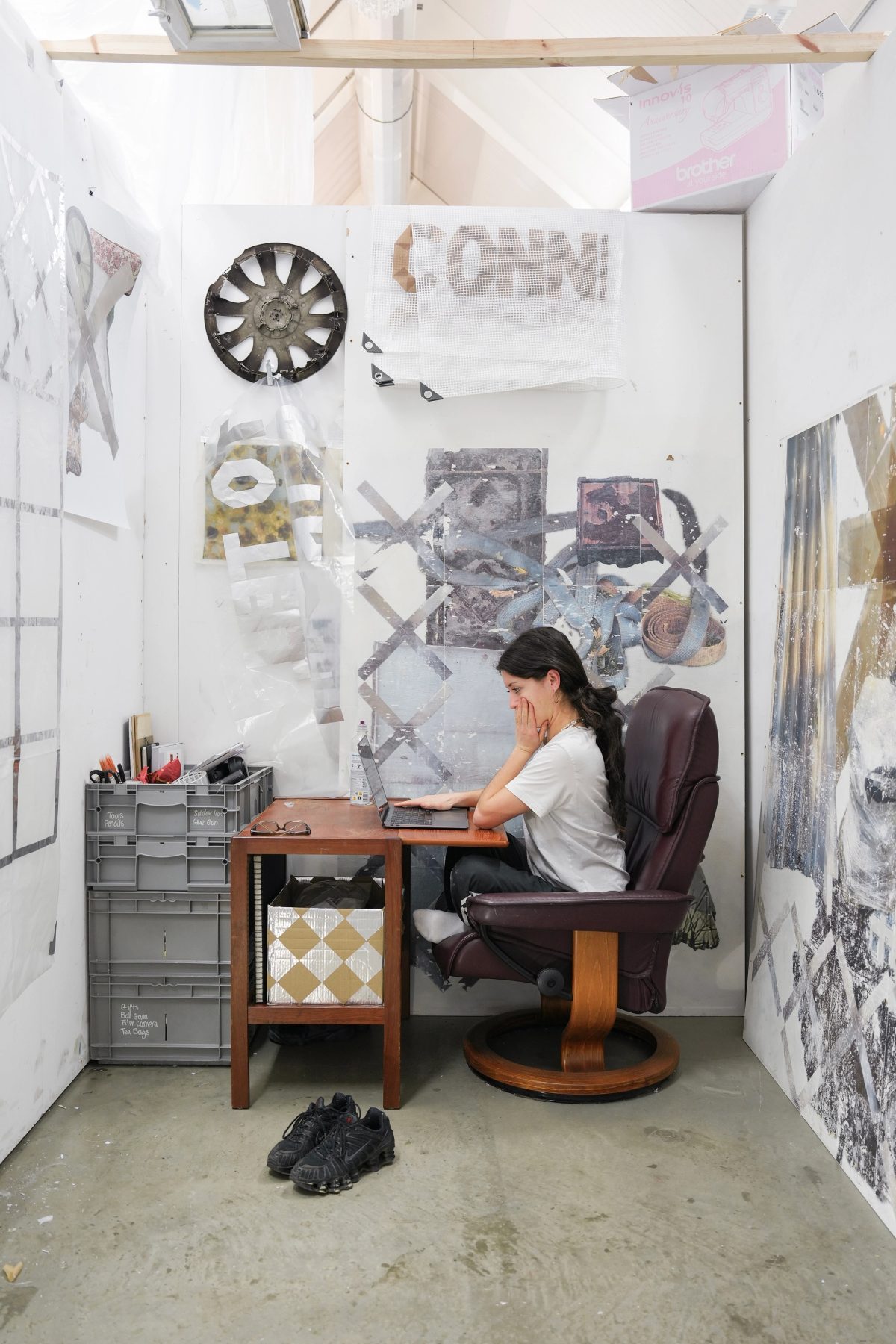
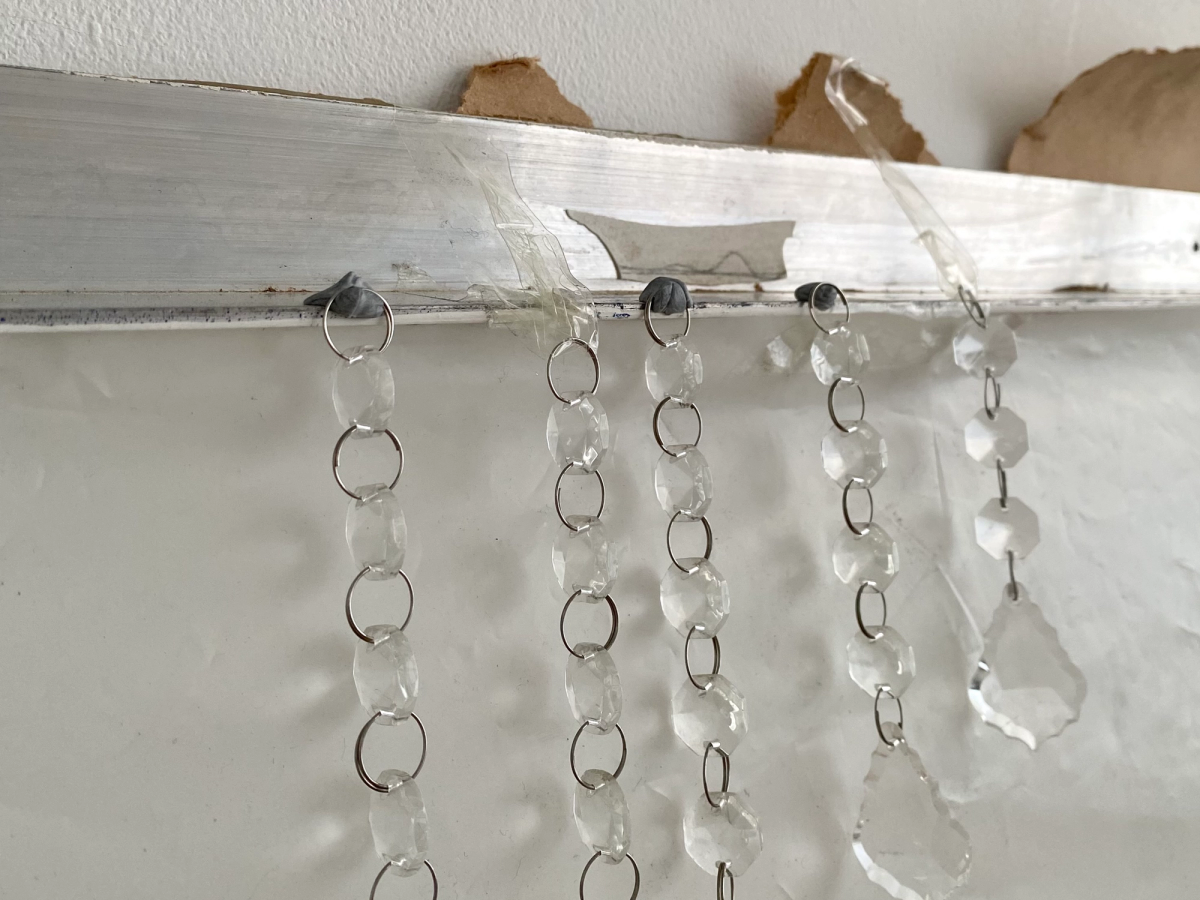
The found-object sculptures develop these ideas spatially. I collect materials according to availability rather than predetermined intention, allowing the existing qualities of discarded objects to direct the work. Plastic becomes another temporary fastening device, much like tape, holding things together like stitches or laces. I also really love how this aspect of the practice has this kinda runway quality to it, but that's a conversation for another day.
Much of this work developed during a period when I became increasingly immersed in self-directed research, online archives, and alternative systems of knowledge. What began as an intellectual curiosity gradually altered how I encountered everyday objects. Domestic materials started to feel less stable, becoming evidence of larger systems of labour, value, and belief. I noticed how the way information circulates destabilises understanding, rather than being informative, and consequently sabotages our internal barometers for meaning-making. I became interested in the structures of conspiracy thinking: the desire to connect disparate fragments into a coherent model of reality. Fredric Jameson describes conspiracy as "the poor person's cognitive mapping of the postmodern age— a desperate attempt to represent the otherwise incomprehensible logic of late capitalism". That yearning for coherence feels familiar, even outside conspiracy itself.
"I noticed how the way information circulates destabilises understanding, rather than being informative, and consequently sabotages our internal barometers for meaning-making."
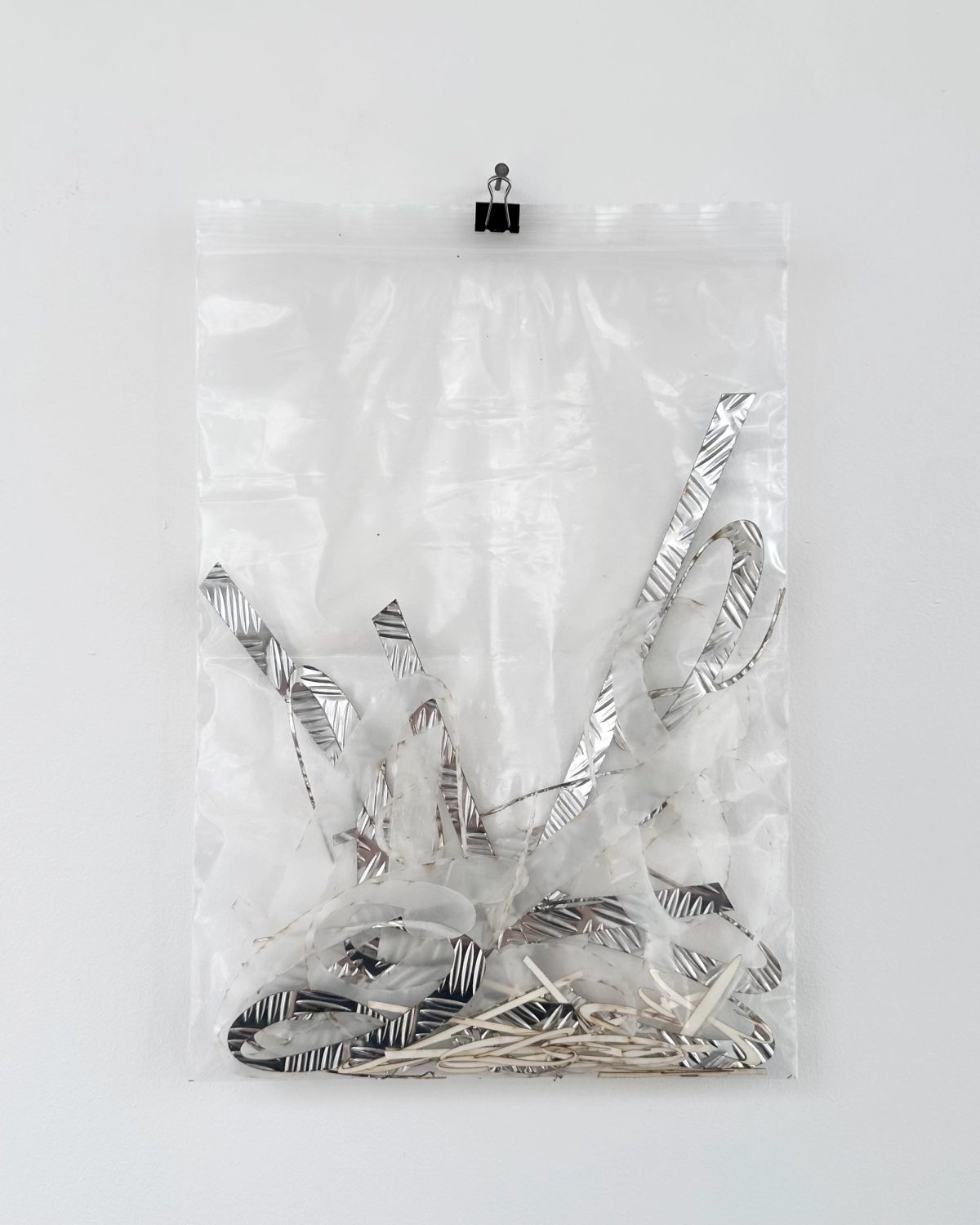
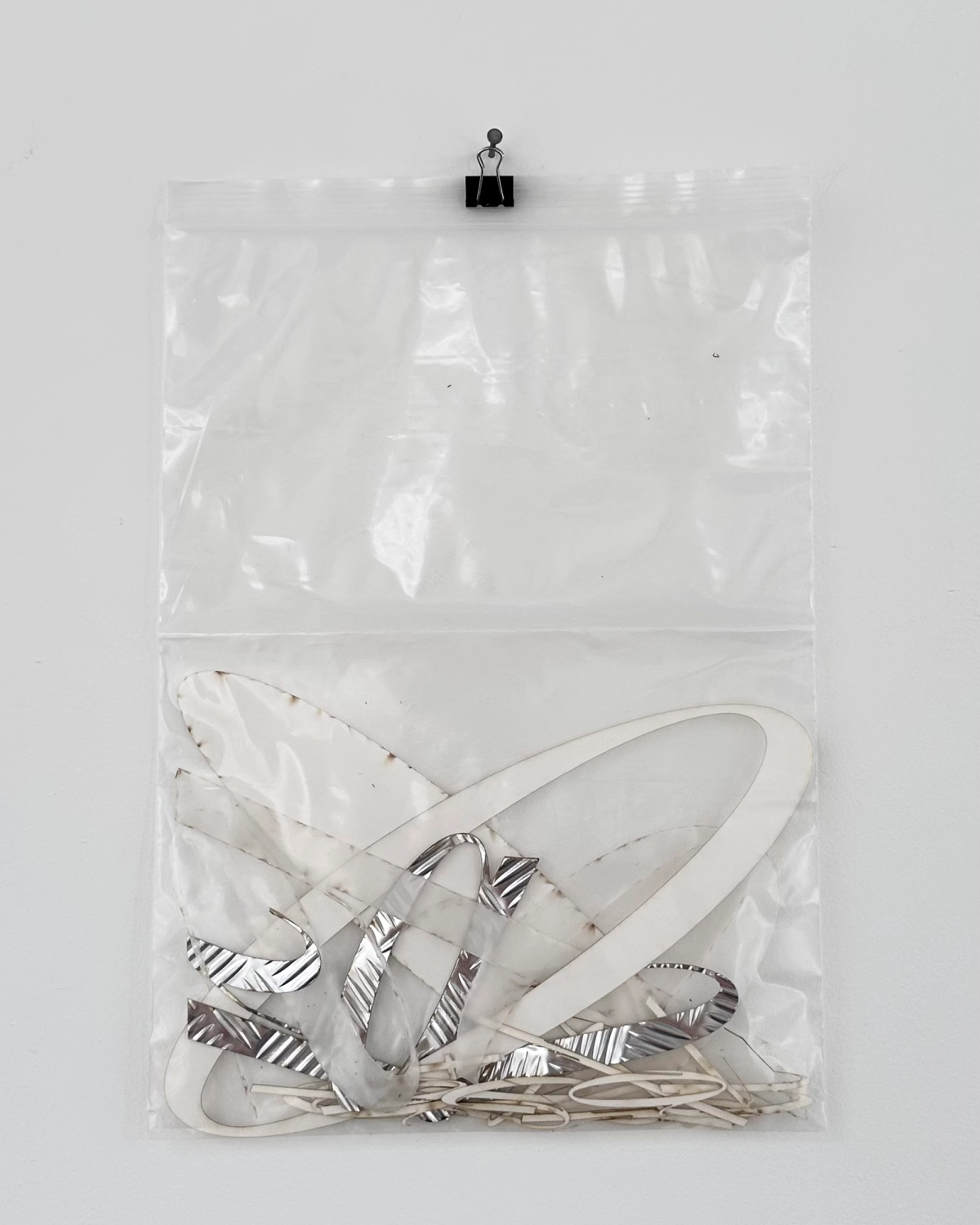
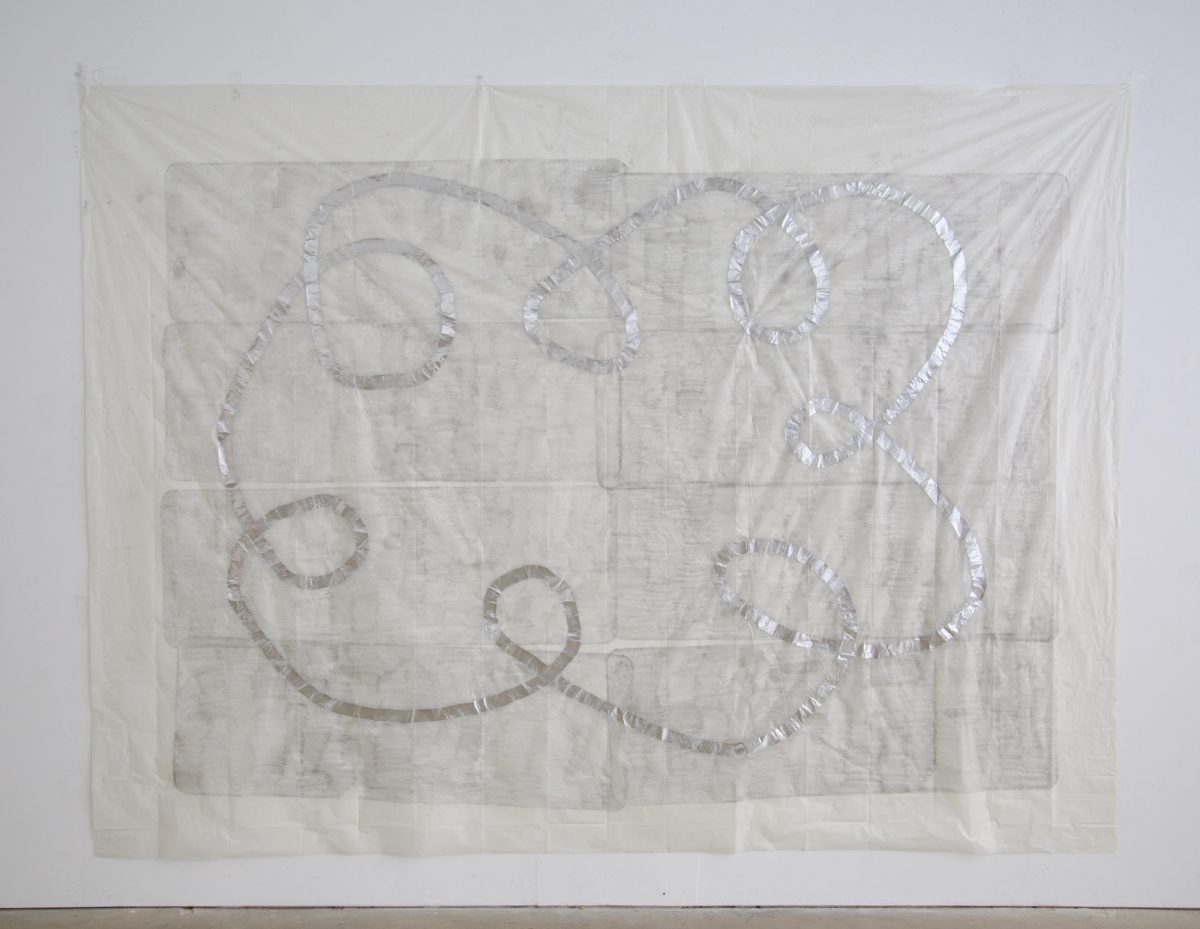
The tape lines mirror this impulse. They circle back on themselves, overlap, spiral, and knot. They remain only partially legible. I am interested in our desire for neat explanations. Why do we feel compelled to construct complete worldviews? What forms of certainty are we searching for?
Salvaged objects, tape, dust sheets, plastic refuse sacks, and embroidery all emerged because they were accessible within particular circumstances. Their availability does not simply determine the work materially; it structures how I think. Making becomes a process of negotiating with the conditions that already exist rather than overcoming them. In that sense, the work is less about transforming discarded materials back into usefulness than about paying sustained attention.
I once witnessed a mother swan attempting to repair her nest as the river flooded. So gently she extended her neck to reposition the sticks as the rising tide rearranged. The eggs were cold and already dead. With such grace and delusional persistence, it feels a bit like how I aim to be in my practice, enduringly resolute and hopeful in unconditional care.