THE SYMBIOSIS OF MATERIAL AND SKIN: IN CONVERSATION WITH DASHA TAIVAS
CONVERSATION BY SELIN KIR
CO-FOUNDER, CURATOR
8 JUNE 2026 — UNITED KINGDOM
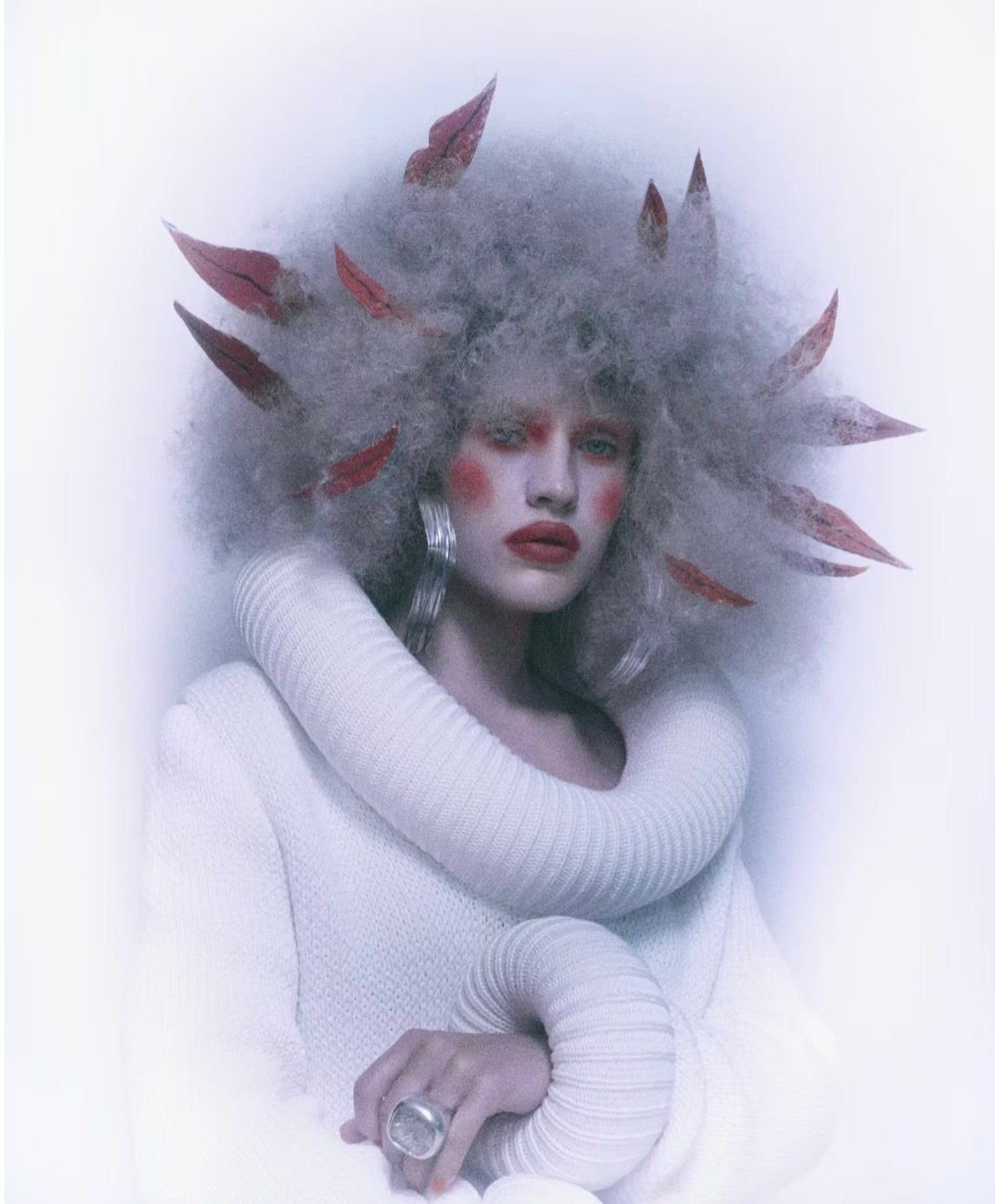
There is a particular kind of eye that forms outside of institutions, outside of curricula, outside of the idea that beauty is something to be studied and correctly reproduced. Dasha Taivas grew up in Kyiv in the nineteen-nineties, in a world that had not yet been flattened by the internet, where culture arrived through feeling and direct encounter rather than through an endless scroll of images telling you what things should look like. That formation left a mark. Now based in London, working across editorial, music, and narrative projects, her practice is defined less by what makeup can enhance and more by what it can propose, disturb, or make strange. Flowers pressed into skin. Spikes emerging from faces. Paint that reads closer to wound than cosmetic. Hers is a vision shaped equally by Eastern European rawness, by displacement, and by a refusal to treat the face as a problem to be solved. We sat down with her to talk about where that vision comes from, and what it costs to keep it intact.
You grew up in Kyiv and now live and work in London, two cities with very different relationships to beauty, fashion, and what it means to make something visually ambitious. Before we get into the work, tell us a little about yourself and how you got here. How did Kyiv shape your eye, and is there something you carry from that formation that London hasn't been able to replace?
I was born in Kyiv, Ukraine, and lived there for 30 years. As a child of the nineties in Eastern Europe, I experienced a world without the internet, where everything was discovered through pure feeling and through direct interaction with culture and nature, shaped by personal perception. It was a time before the internet constantly influenced our consciousness and overloaded us with endless visuals.
I think this gave me a very pure foundation for the future development of my style and visual perspective. I moved to London because of Russia's full-scale invasion of Ukraine, and that experience deeply affected the way I see the world as well. I feel like I have preserved the raw vision and raw feeling of life that I grew up with in Eastern Europe.
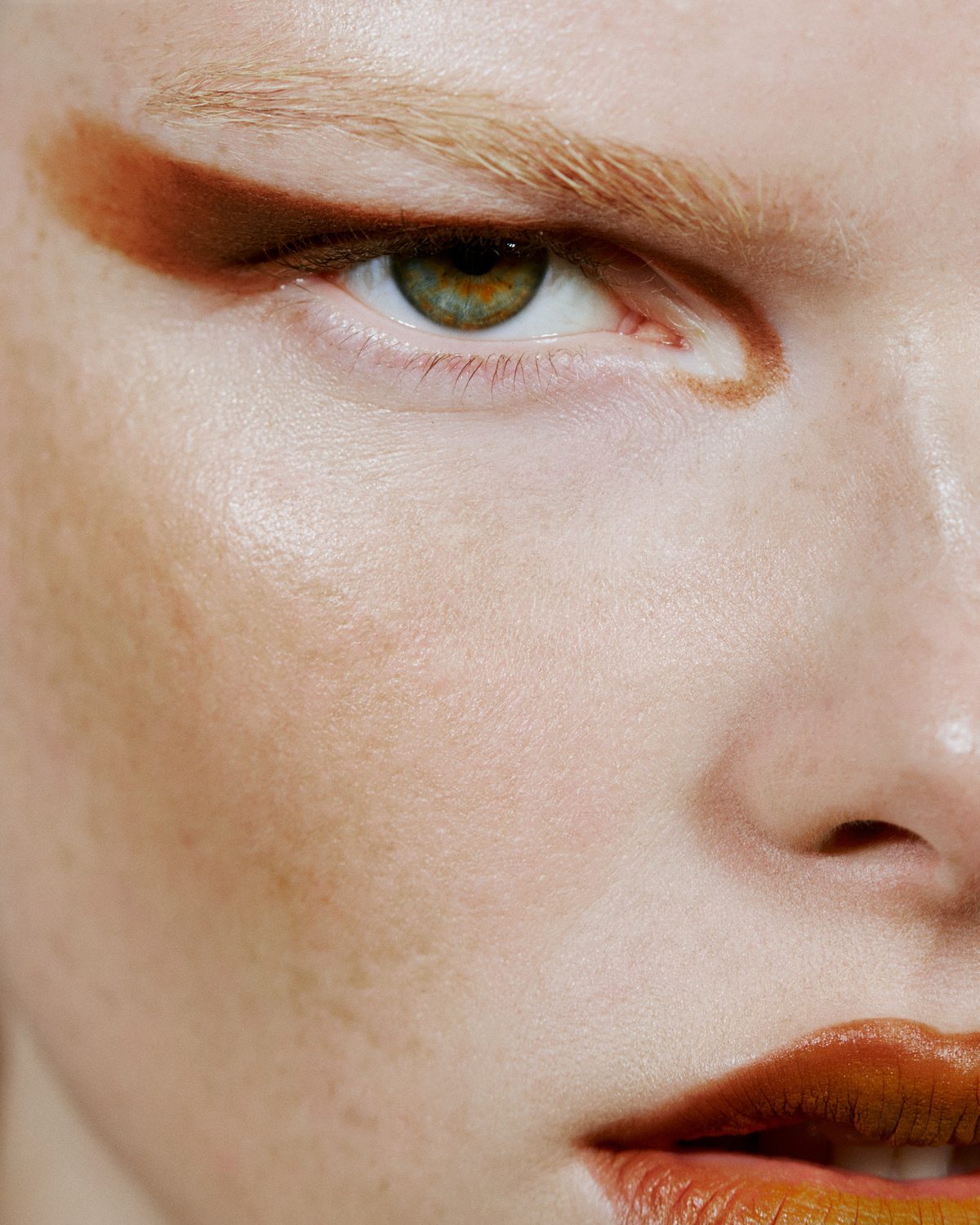
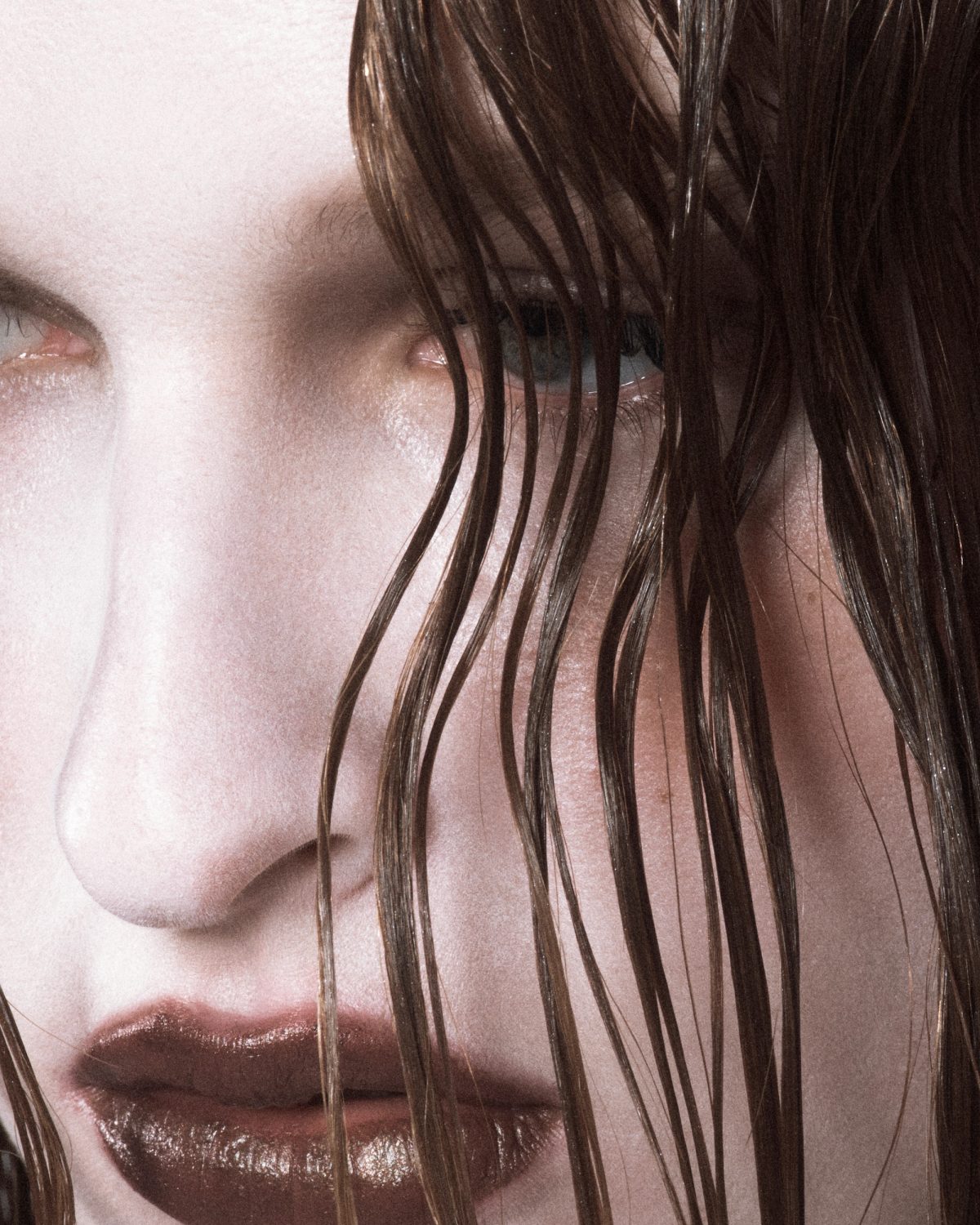
Left: Makeup Dasha Taivas Photography Maria Takes Pictures / Model Elise Swain
Your work has been described as surreal, dark, and visually ambitious; a combination that suggests you are less interested in enhancing what is already there and more interested in proposing something entirely other. Where does that impulse come from, what are your inspirations for your style, and when did you first understand that makeup could be a way of making something rather than perfecting something?
I never had any formal art education, art school background, or makeup training. My vision grew naturally alongside me and was shaped by the world around me, by music, and by cinema. Because of that, ideas of perfection, proportion, and the traditional rules of makeup were never really my priority or the foundation of how I saw beauty.
When I first started, I experimented a lot, exploring and developing my style while going through phases influenced by glamour makeup, contouring, and the pursuit of the "perfect face" that was everywhere around 2017. But over the years, and probably especially after the beginning of the war and a complete rethinking of life in general, I started to feel my own style much more clearly. It was as if the understanding that none of us are permanent, and that tomorrow is something fragile and uncertain, brought me closer to a more honest way of seeing. I began to see the face as part of a larger picture rather than simply a canvas, if that makes sense.
Now, when I study the concept of a shoot and its overall mood, I try to find the element that completes the whole image, how the face can become part of the visual language rather than simply something beautiful to look at.
With over ten years of experience, you have worked across editorial, commercial, music, and narrative work. Each of those contexts asks something different of makeup, different speeds, different relationships to the final image. Which context do you find most generative for your own thinking, and which has pushed you the furthest outside your instincts? And is there a project coming up that you are particularly excited about?
I enjoy every type of shoot, and I love finding depth and subtext within each makeup look. I especially love the pace and energy of music videos, and the way you can build an entirely new world together with the director and the artist. I enjoy experimenting with different materials and moving away from traditional ideas of beauty.
In general, I really enjoy working with artists. I love understanding their established visual identity while also helping to reveal something new within it.
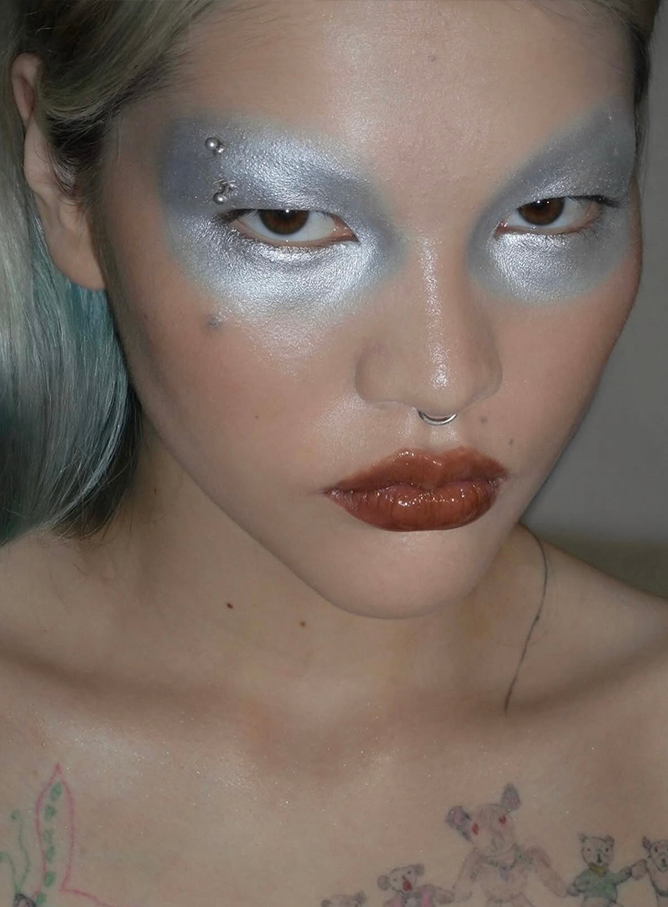
Left: Makeup Dasha Taivas. Photography Giovanni Fedele / Model Nowhere Girl
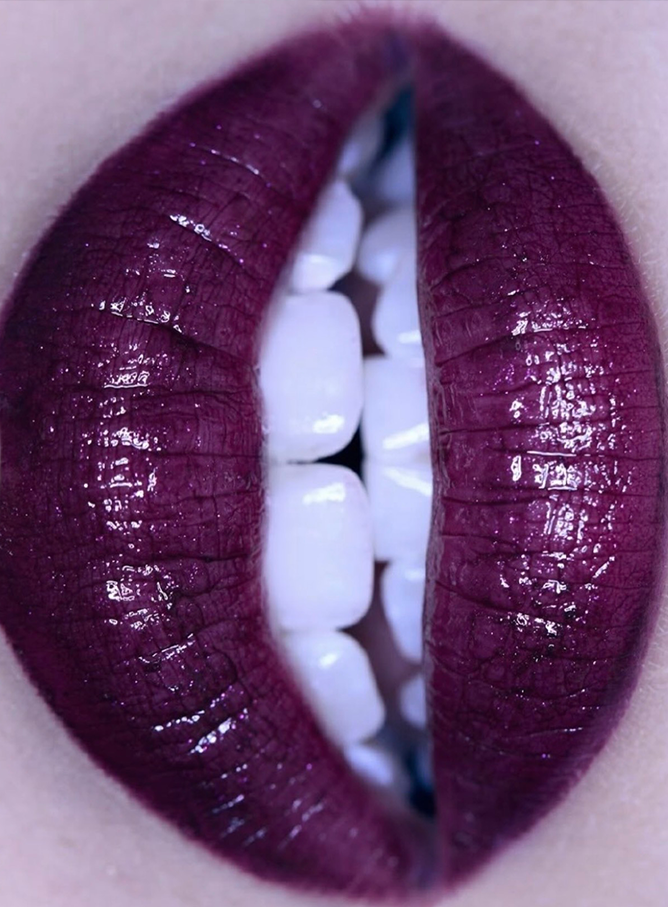
Middle: Makeup Dasha Taivas, using Isamaya Beauty Metal Lip in Acid Cherry. Photography Agnes Strawczynska / Art Direction Rosie Bess / Talent Alt-J
"I began to see the face as part of a larger picture rather than simply a canvas."
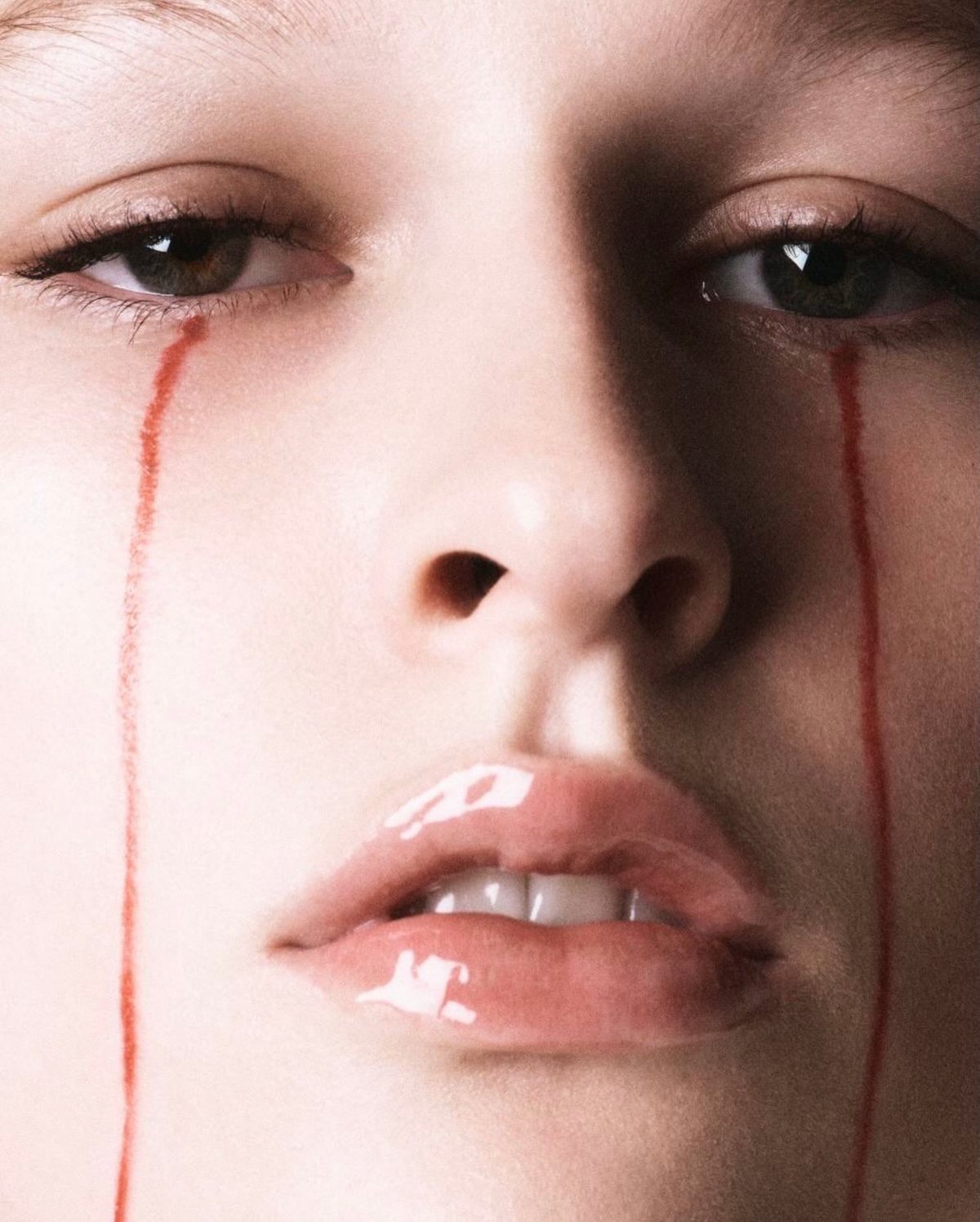
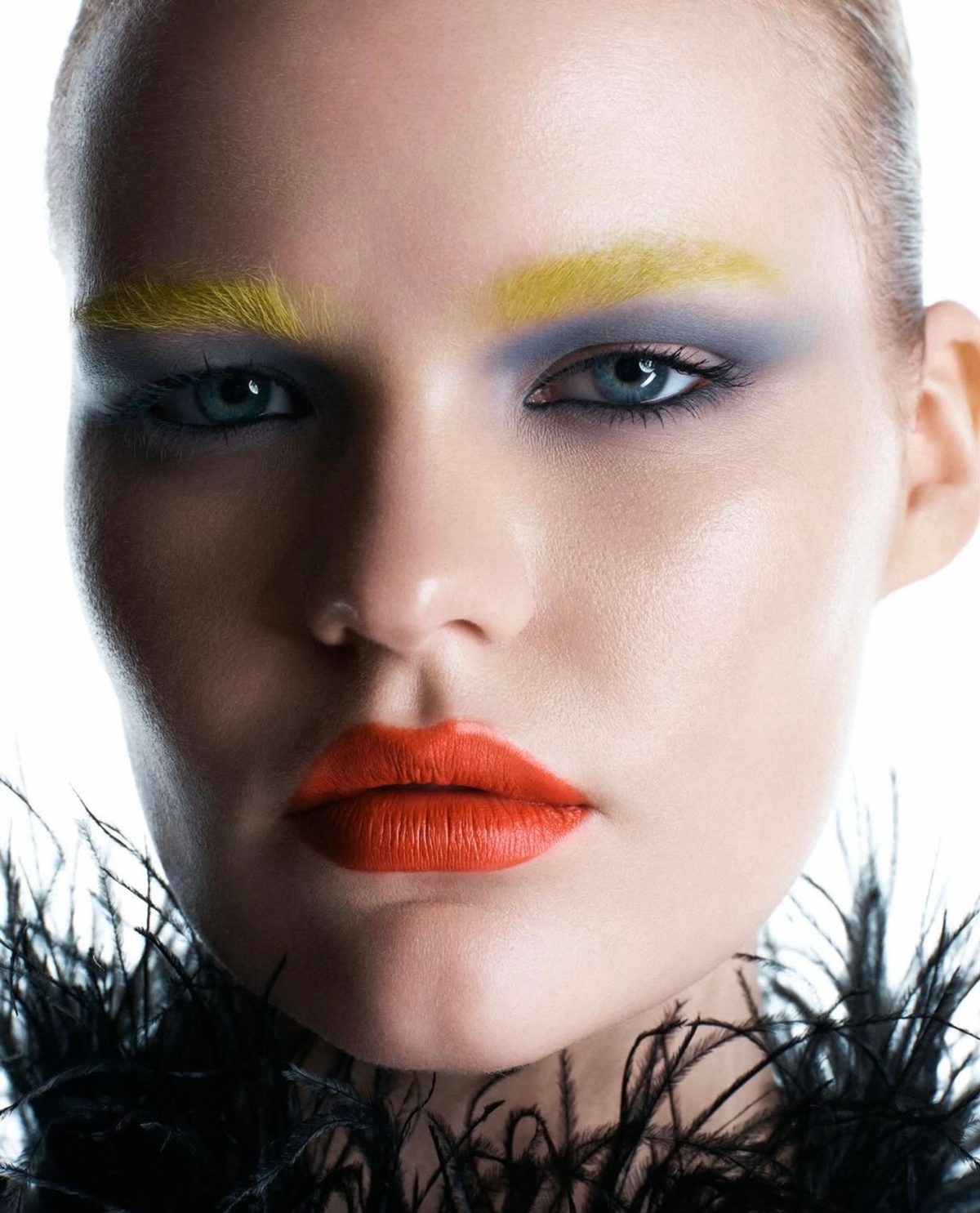
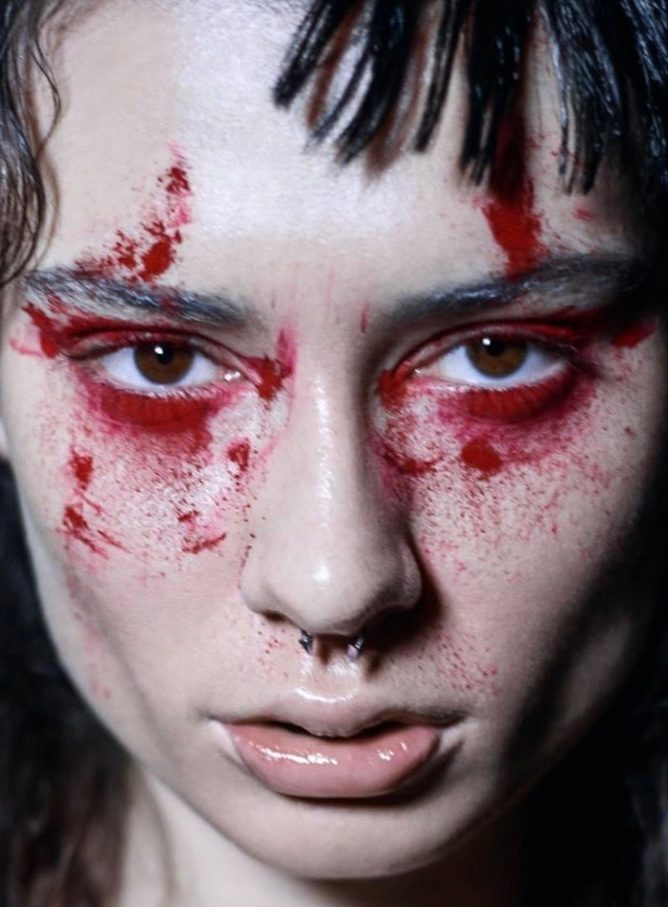
Left: Makeup Dasha Taivas / Photography Hristo Hristov / Hair Francesco Cannatella / Casting Sharon Rose / Model Alyssa at PRM Agency / Edrea Magazine "Made in England" Issue
Right: Makeup Dasha Taivas / Photography Hristo Hristov / Styling Angelica Stenvinkel / Hair Daniel Dyer / Mojeh Magazine
Makeup has historically sat at the contested edge between craft and art, between service and authorship. Institutions have been slow to take it seriously as a practice with its own intellectual and aesthetic ambitions. Do you think that is changing, and does the question of whether makeup is art matter to you personally, or is it a distraction from just making the work?
Makeup has always had a place in people's lives. From tribal rituals to seasonal celebrations and cultural traditions, it has always been an important part of human cultural identity. For me, makeup is art.
Beauty standards are not neutral. They carry the history of who has been centred and who has been made invisible, and they shift in ways that often have more to do with markets than with any genuine expansion of what is considered beautiful. How do you think about your relationship to beauty standards in your work, and is the darkness and surrealism in your practice a response to them, a refusal of them, or something else entirely?
I think there is a beauty in the surreal, and within darkness. For me it is about finding that and framing it with an elegance. Traditional beauty standards are more homogenised. I think there is beauty in the individual and the idiosyncratic. That is where true artistry and beauty can be found for me, in the hidden and the unexplored. Imperfection is what we see in reality, there is a poetry in that, and it is something I love to explore.
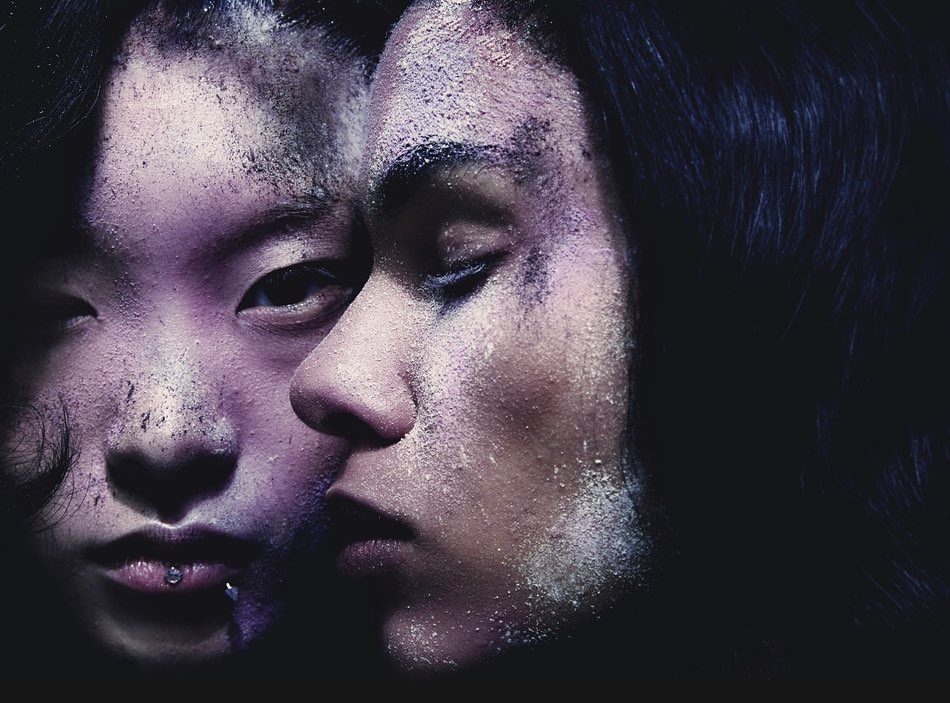
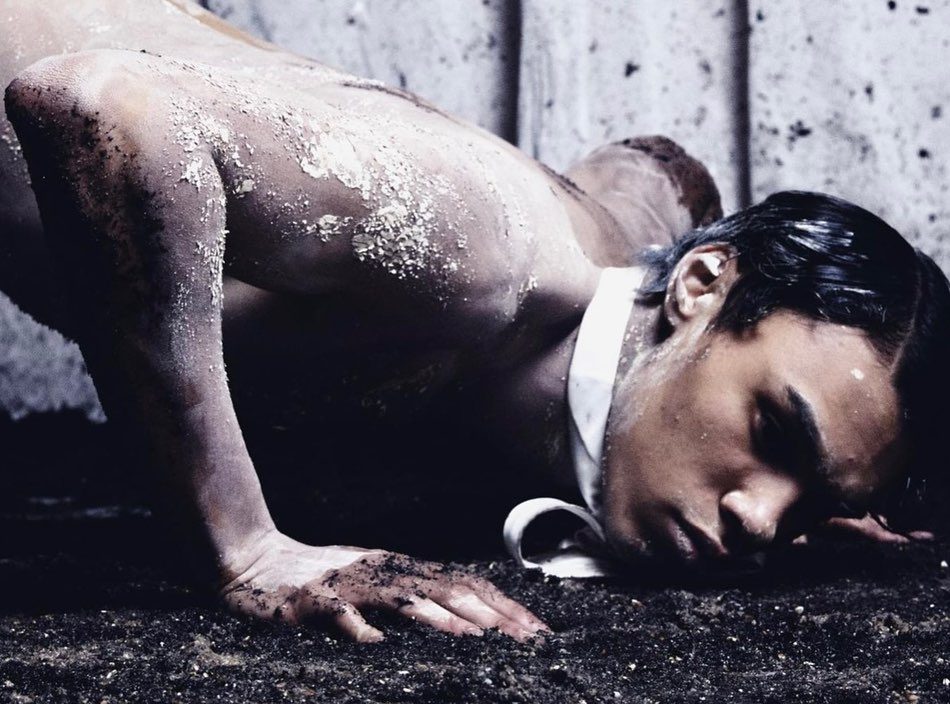
Makeup Dasha Taivas, using only natural clay masks Photography Nicole Chen / Styling Feranmi Eso / Hair Captin Nigeria / Movement Direction Joe Grey Adams / Set Design Filippo Cocca / Models Jiang Cheeng, Ellen Borges, Leo Rise, Shaden / King Kong Magazine Issue 17
Your personal work and your commissioned work seem to share a quality of physicality; an attention to texture, material, and the body as something that can be transformed rather than simply decorated. Flowers pressed into skin, spikes protruding from faces, paint that reads more like wound than cosmetic. What is the relationship between transformation and discomfort in your work, and how far are you willing to go?
Textures, layers, chaos, and finding an aesthetic drive in novel materials is something I love to do. I personally don't think there is a limit to transformation, there is no limit to what can be used. It is about how you use them. There is a symbiotic relationship between the result upon someone's skin and the material you use to achieve it, and it is about exploring that.
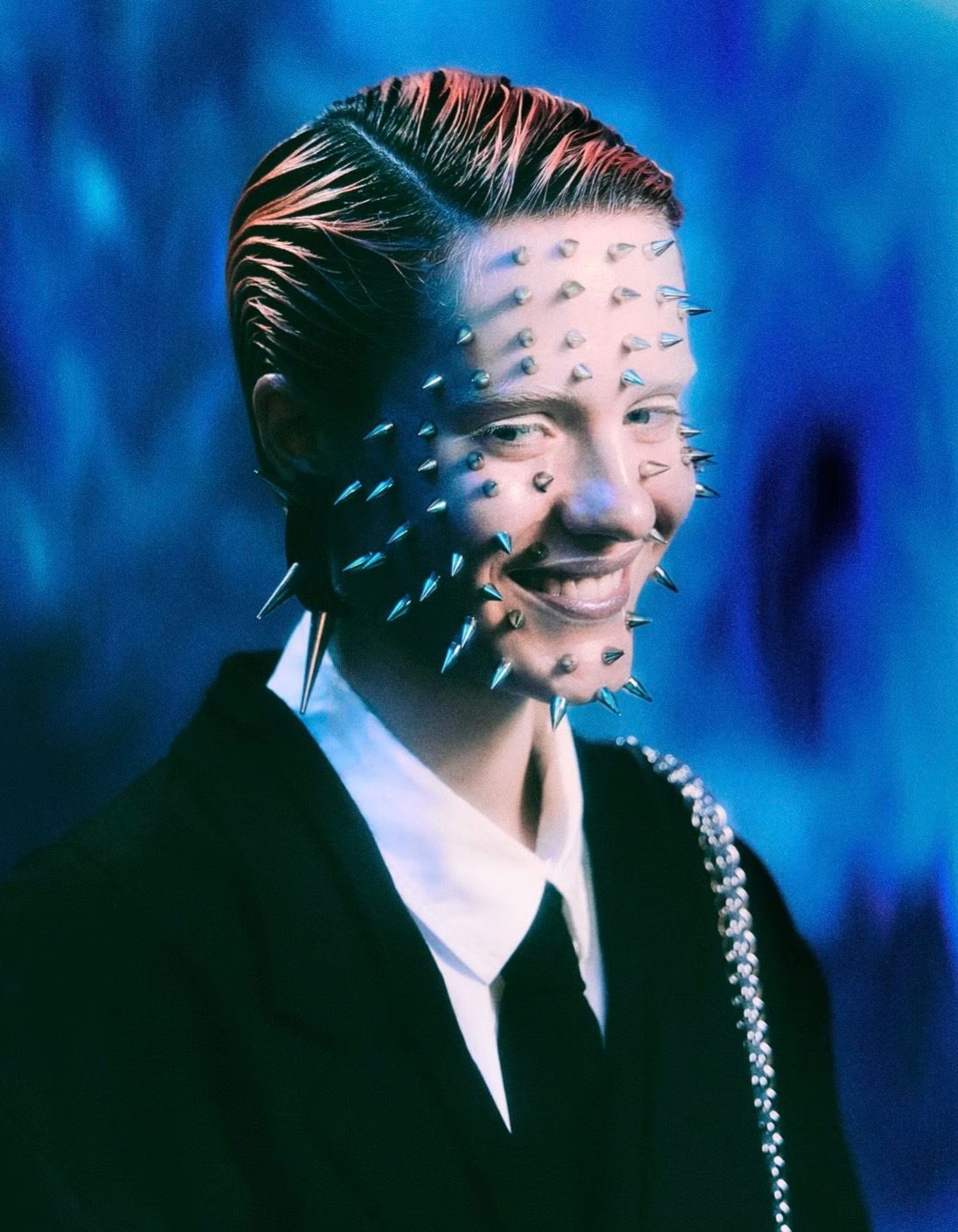
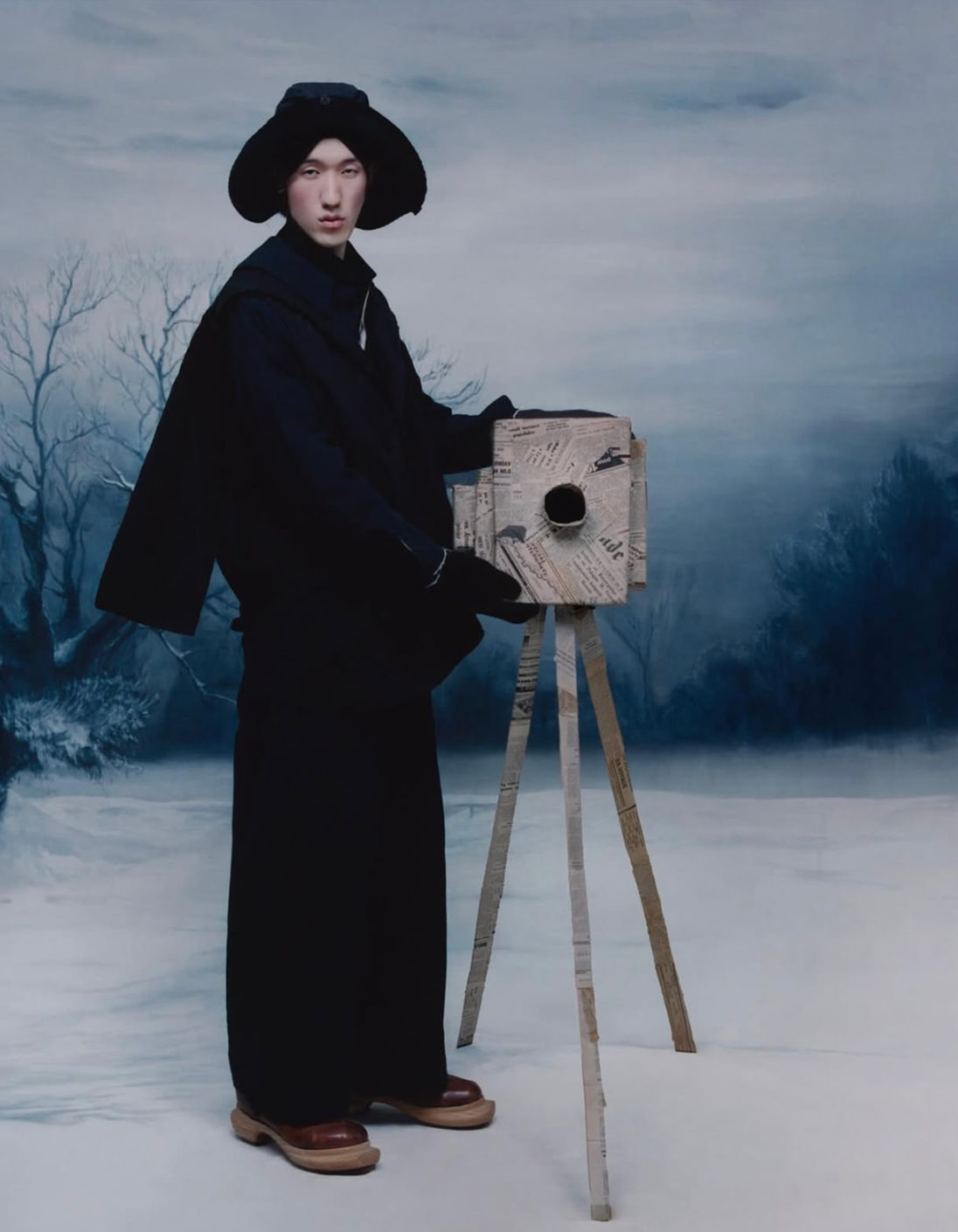
"There has never been a more important time for the human touch. For the real. For the texture and knowledge that something has been crafted by a person."
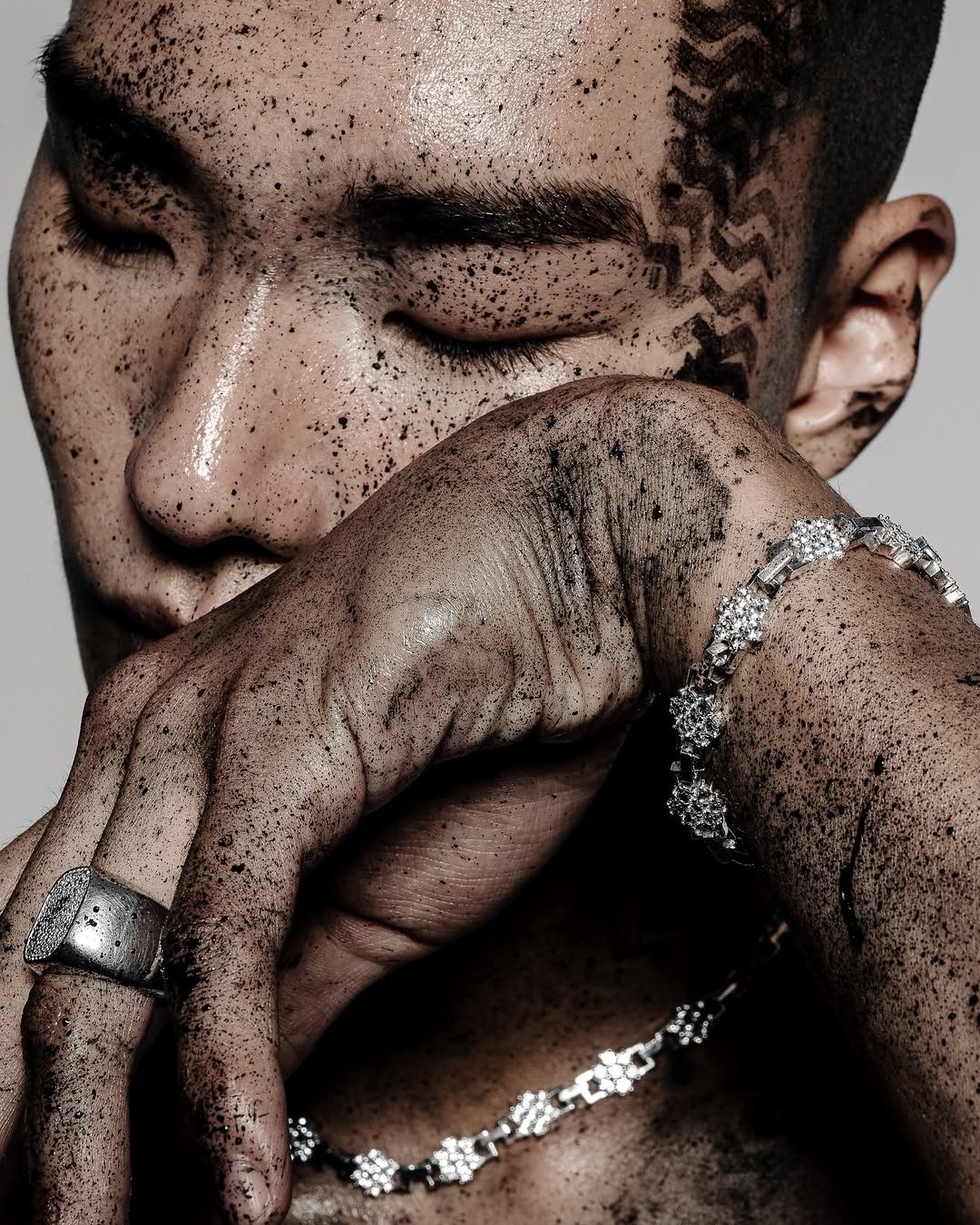
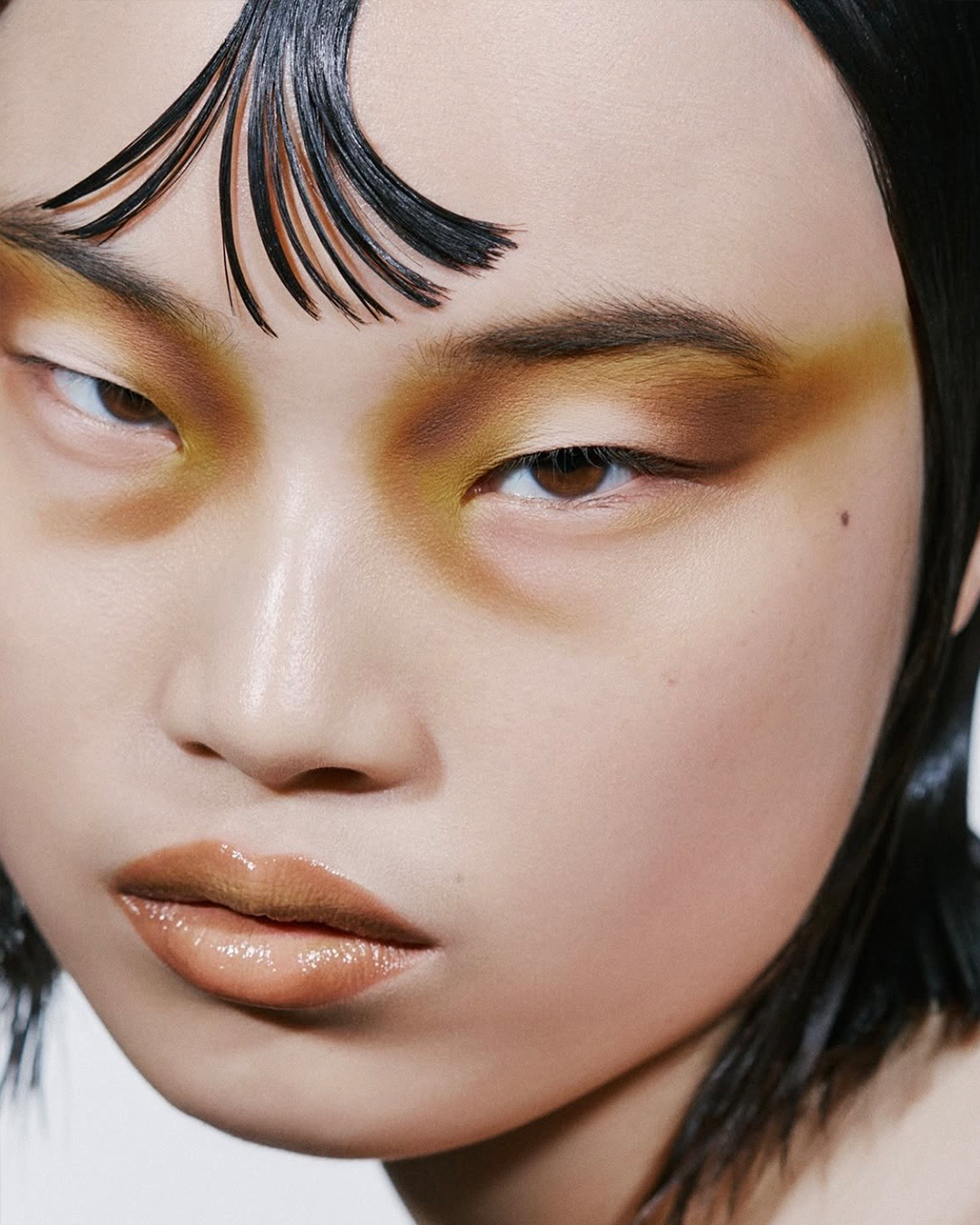
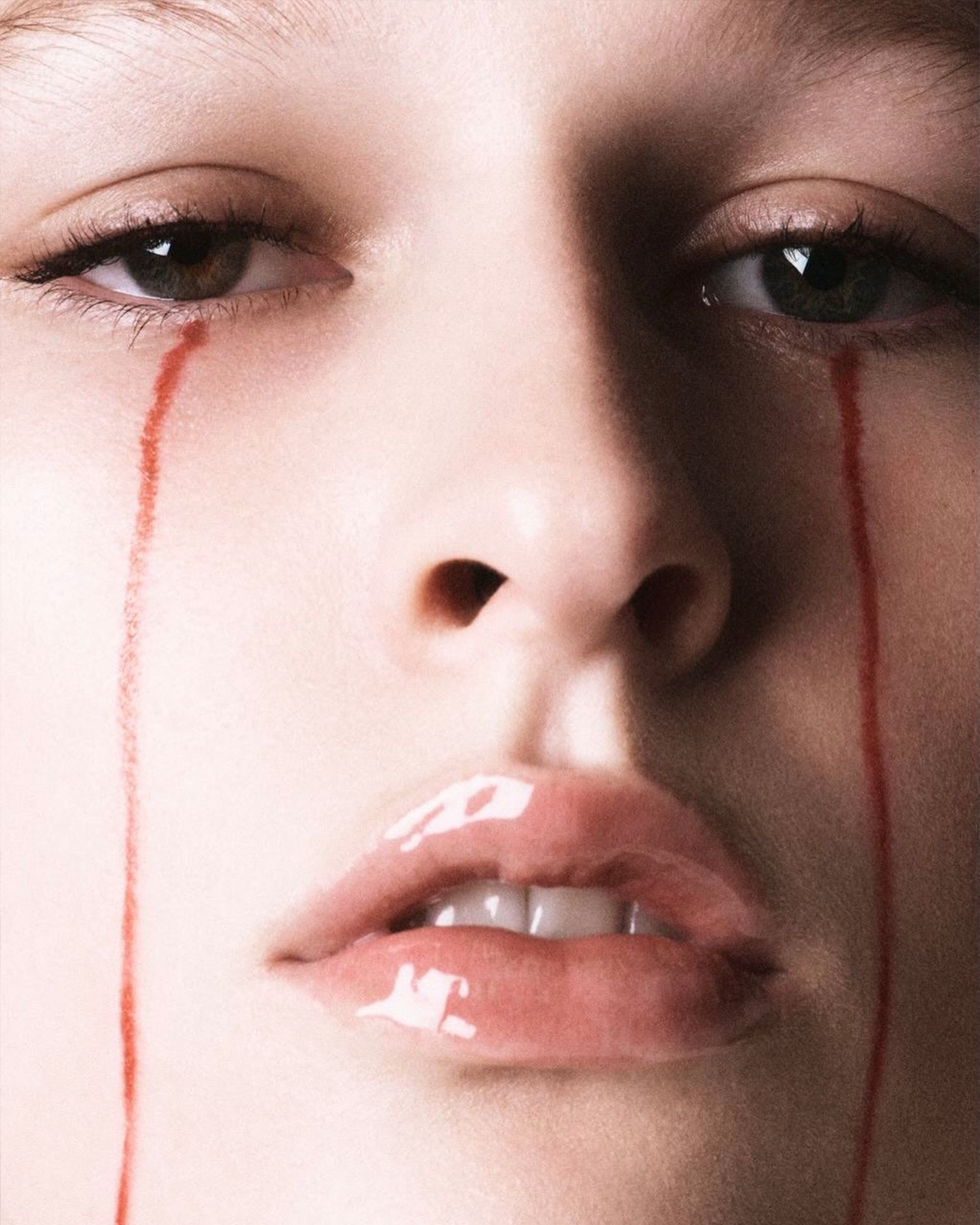
Left: Makeup Dasha Taivas Photography Jack Chipper / Creative Direction Ignacio de Tiedra / Hair Lauraine Bailey / Models Dave Chow and Yeanhoo Kim at PRM Agency / Nwave Magazine
Middle: Makeup Dasha Taivas Photography Maria Takes Pictures / Hair Yui Ozaki / Light Neil Payne / Model Wenli Zhao at Next London
Right: Makeup Dasha Taivas Photography Hristo Hristov / Hair Francesco Cannatella / Casting Sharon Rose / Model Alyssa at PRM Agency / Edrea Magazine "Made in England" Issue
You are working at a moment when AI-generated imagery is producing faces and looks that would have been technically impossible or financially prohibitive before, and when filters have made the digital transformation of the face banal and ubiquitous. What does it mean to do this work by hand, in real time, on a real body, in a world where the image can be constructed entirely without you?
There has never been a more important time for the human touch. For the real. For the texture and knowledge that something has been crafted by a person. I love working with raw materials, with strange elements. It is a conversation between myself, the materials, and the face I am working on.
AI is a tool that I can see the benefit of, but not in what I do. Machines don't have the understanding that you gain through being in the presence of a model or talent, and through knowing how materials can be applied to create something beautiful or strange. They are trained through homogenisation. They don't create the new, they feed on the past.
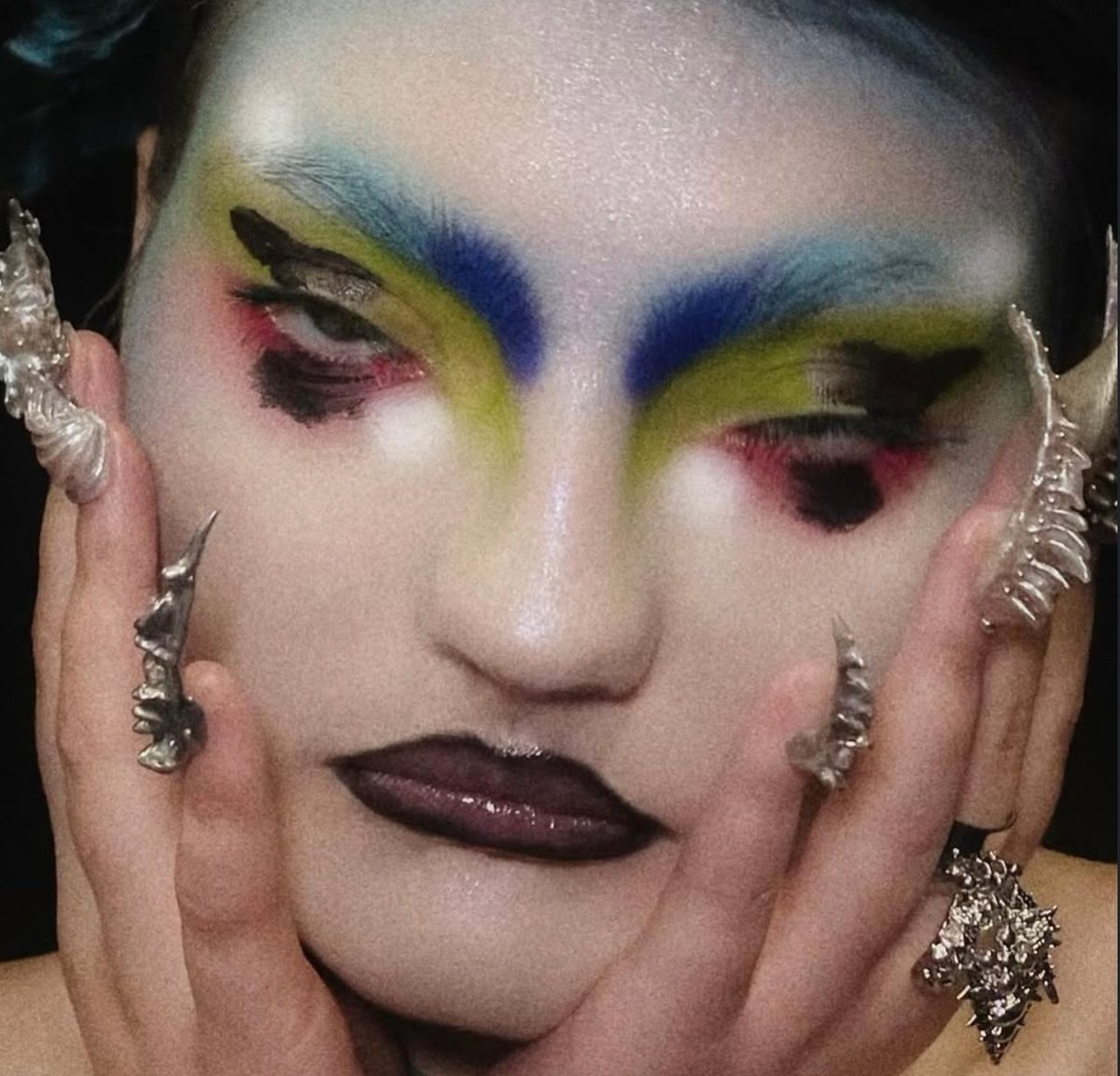
Makeup Dasha Taivas / With Angel Gorn / Nails Patina Place
"Imperfection is what we see in reality. There is a poetry in that."
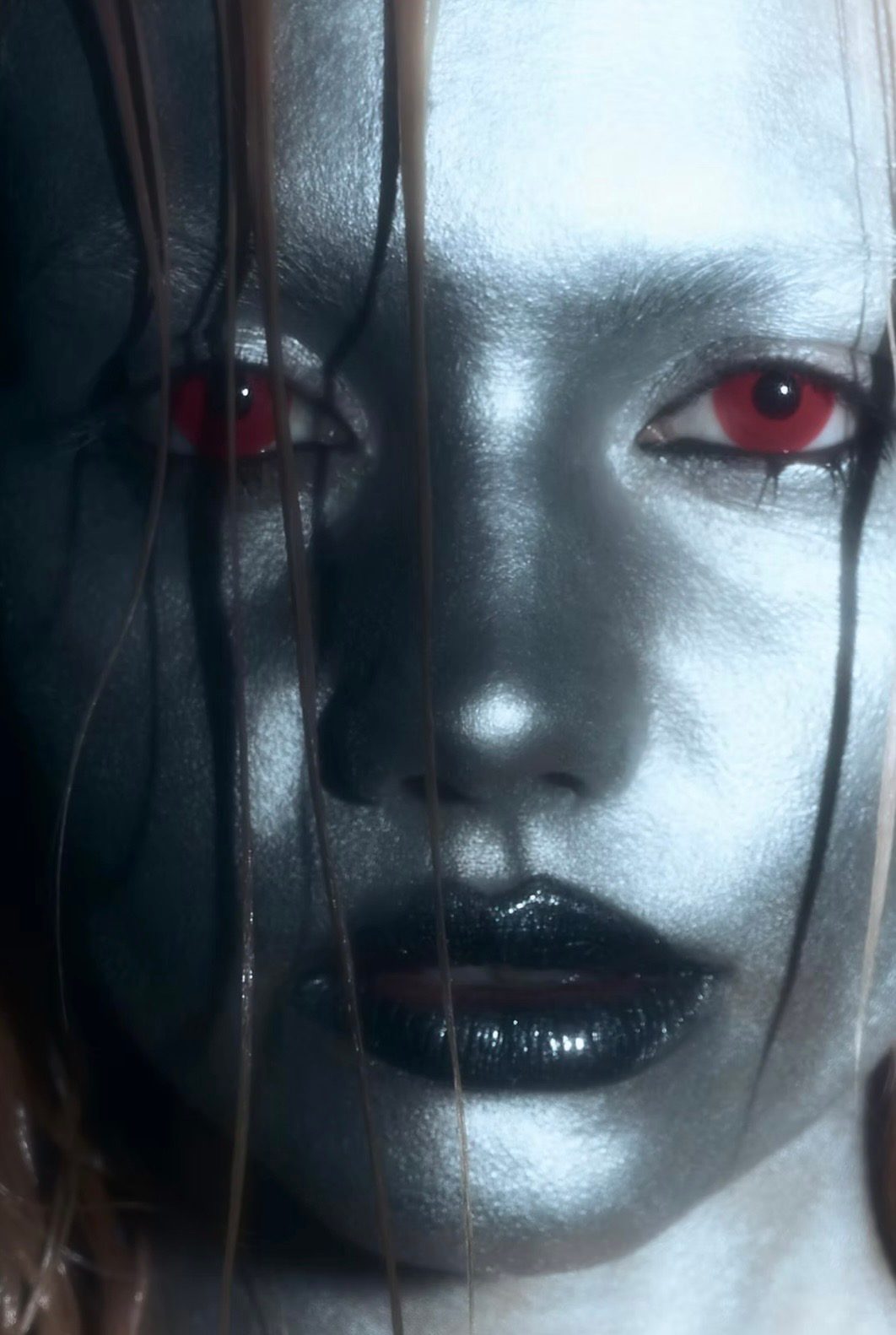
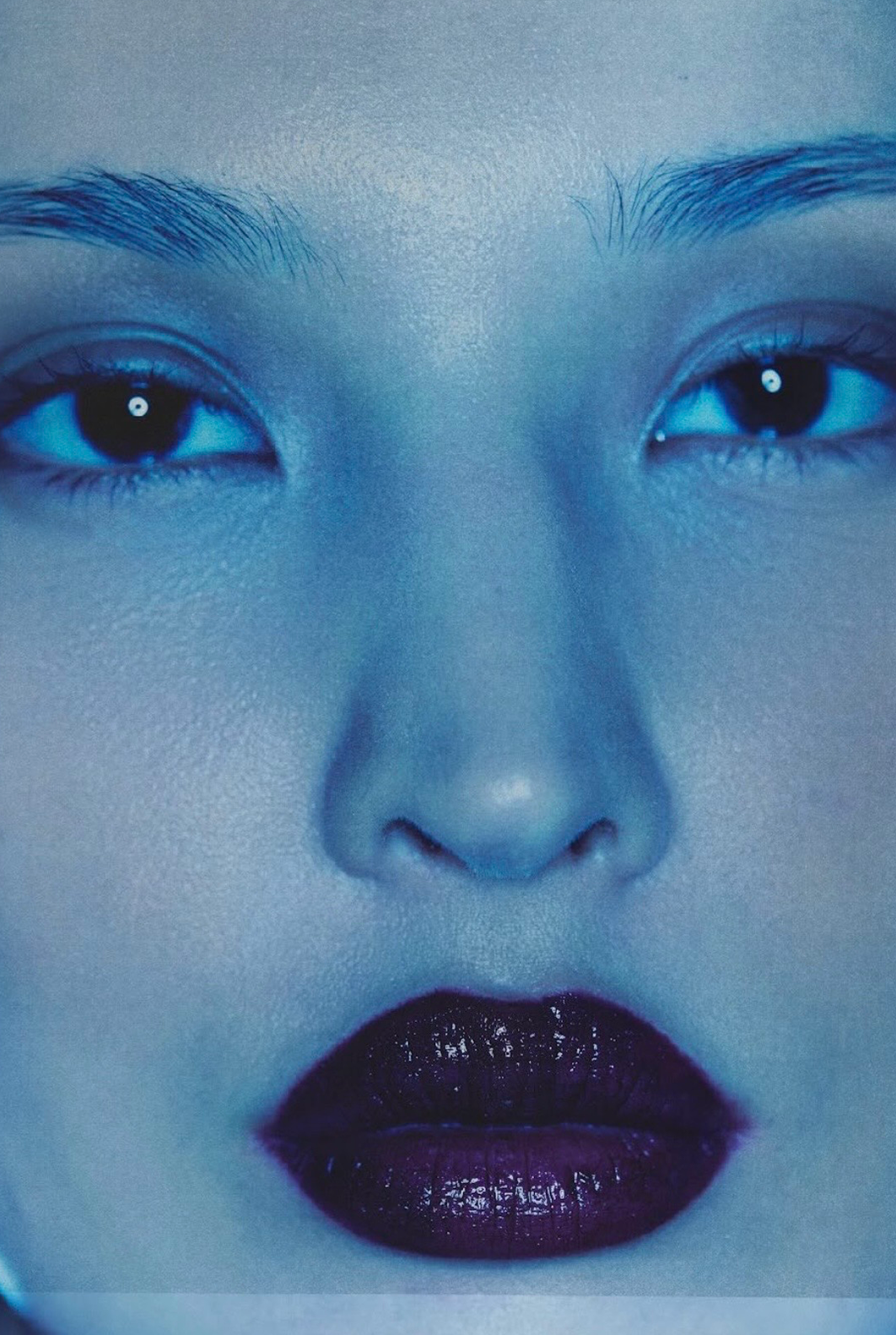
Left: Makeup Dasha Taivas / Photography Morrigan Rawson / Hair Misery Cuts / Styling Nini Barbakadze / Model Florence Rose / Nasty Magazine / Using Mehron Makeup and Isamaya Beauty
Right: Makeup Dasha Taivas / Photography Agnes Strawczynska / Art Direction Rosie Bess / Talent Alt-J / Using Isamaya Beauty Metal Lip in Acid Cherry
Empera described your approach as intuitive, shaped by instinct and emotion, and you yourself have said makeup for you is beyond aesthetics and rooted in raw feeling. That is a different claim than most makeup artists make about their practice. What does raw feeling look like on a face, and how do you know when you have found it?
I think all makeup artists are different, and each has their own approach. I think because I don't have formal training as such, my vision of beauty is based on feeling and intuition, and a self-taught tactility. For me, I don't think you ever truly find it as such. You just slowly take steps towards your own vision and hope you get to where you want to be.
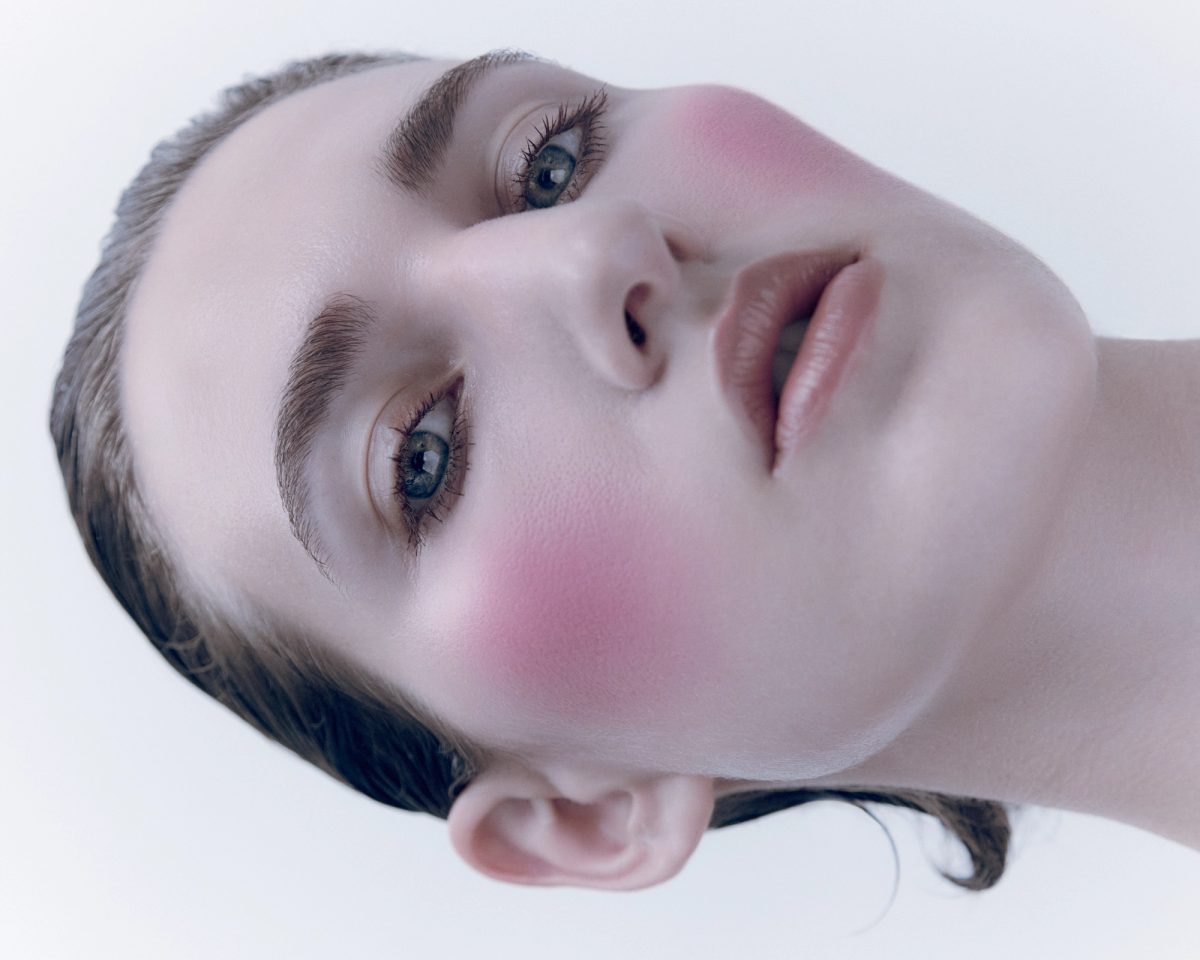
Makeup Dasha Taivas / Photography Agnes Strawczynska / Art Direction Rosie Bess / Using Glossier
Cover Image: Makeup Dasha Taivas
Photography Maxime de Sadeleer / Styling Enrica Miller / Hair Reiss Alexander / Set Design Kiara Gourlay / Movement Direction Akti MK / Metal Magazine