FUNCTIONAL INTUITION, DIGITAL MEMORY, AND THE LOGIC OF MAKING: IN CONVERSATION WITH TAYLOR MAKI
CONVERSATION BY SELIN KIR
CO-FOUNDER, CURATOR
13 JUNE 2026 — UNITED KINGDOM
Taylor Maki makes rugs, though that framing undersells what is actually happening. Working from Vancouver by way of Montreal and Kelowna, she produces objects that sit at the edge of graphic design, craft, and interface logic: surfaces organised by the same instincts that once led her to spend hours building websites as a kid. Her visual references bypass art history in favour of topographical maps, circuit boards, and the quiet coherence of everyday functional objects. The compositions that result resist literal interpretation while insisting on a kind of order that is, as she puts it, balanced at every angle, designed to be rotated, walked on, lived with. We spoke with Maki about place and displacement, the intelligence embedded in functional objects, what craft can hold that fine art sometimes cannot, and what it means to design a surface for someone else to navigate.
You grew up in Kelowna, spent a decade moving through different Canadian cities, including Montreal, and then returned. What did distance do to your relationship with Kelowna, and do you think you could have become the artist you are without first leaving?
I moved to Montreal wanting to explore a new city and meet new people, and I was quickly adopted into a super like-minded, supportive community of artists. I got to collaborate with friends through shared studios, new mediums, and art shows. Eventually I felt the need for some quiet, so moving back to Kelowna to caretake for my grandma and be close to my family gave me space to focus on growth in both my work and myself. Montreal and Kelowna offer very different things that were hugely beneficial to me at the time. Now I'm in Vancouver and it's been a nice mix of the two energies.
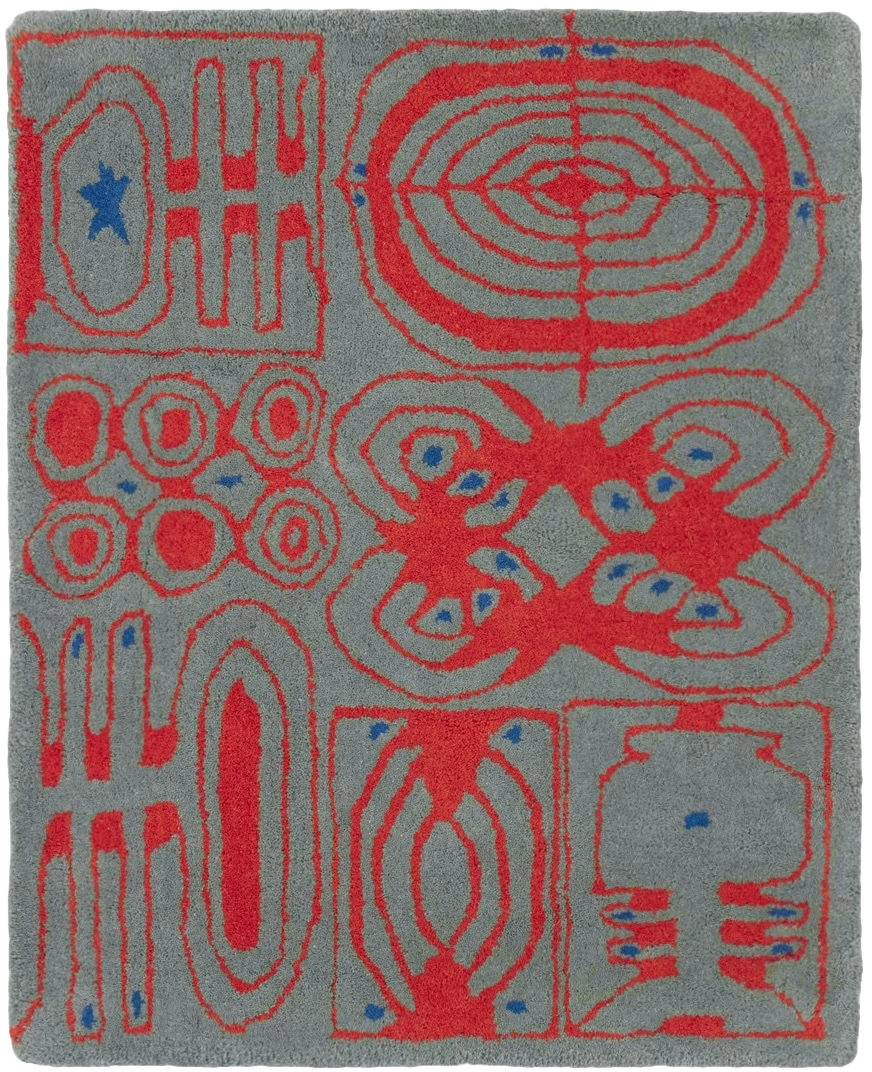
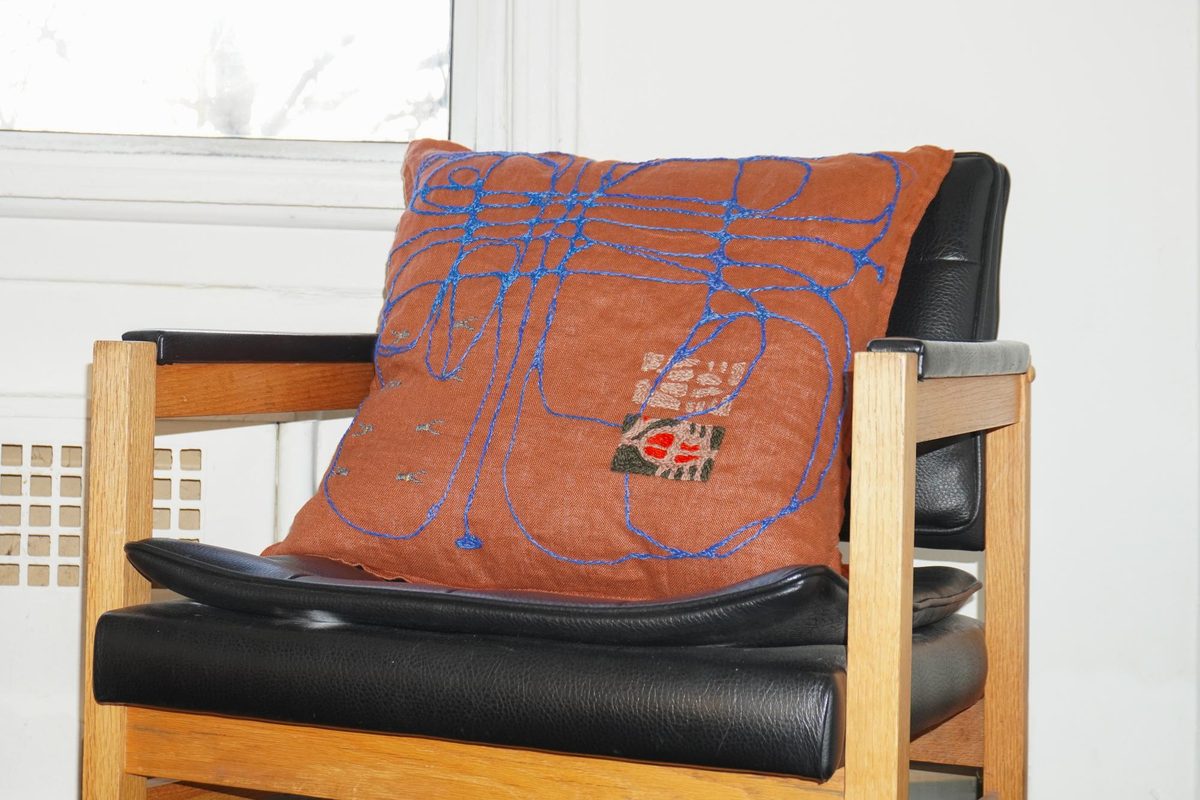
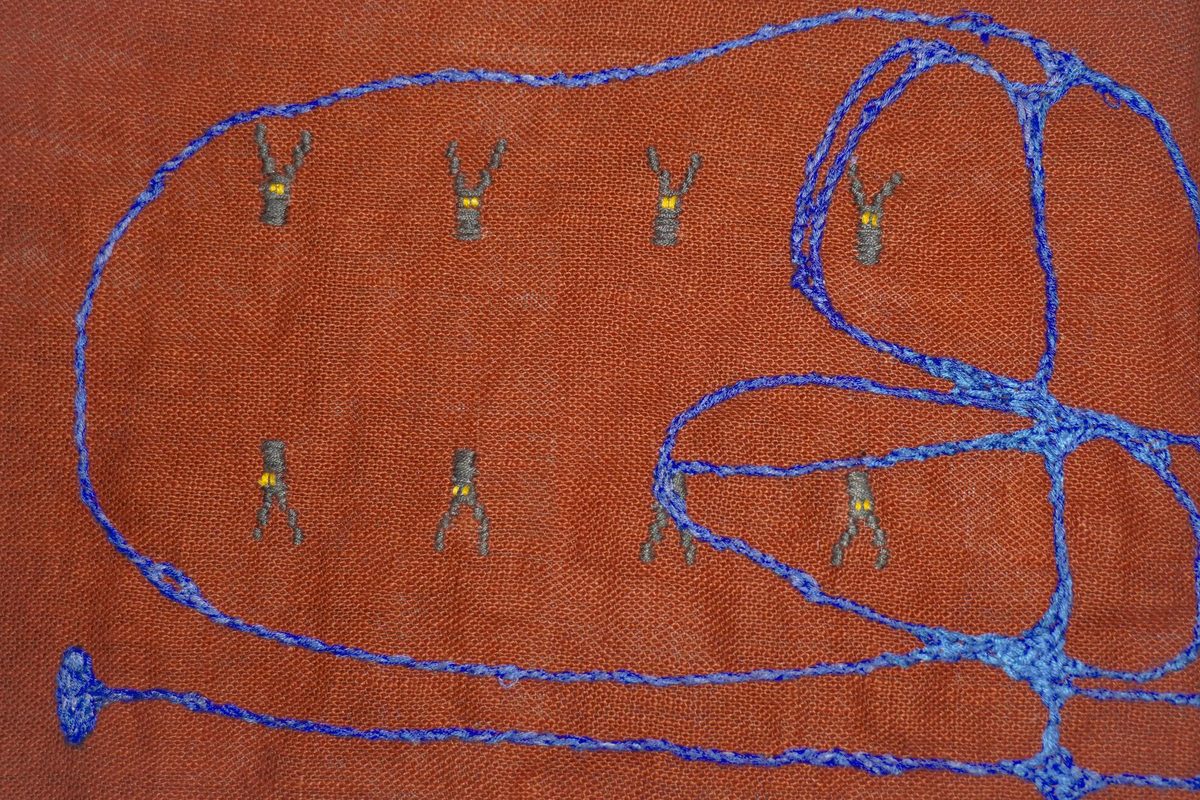
Left: Taylor Maki, Memory, 32" x 25" rug in wool, grey blue, orange, cobalt blue, pink, dark grey, and red.
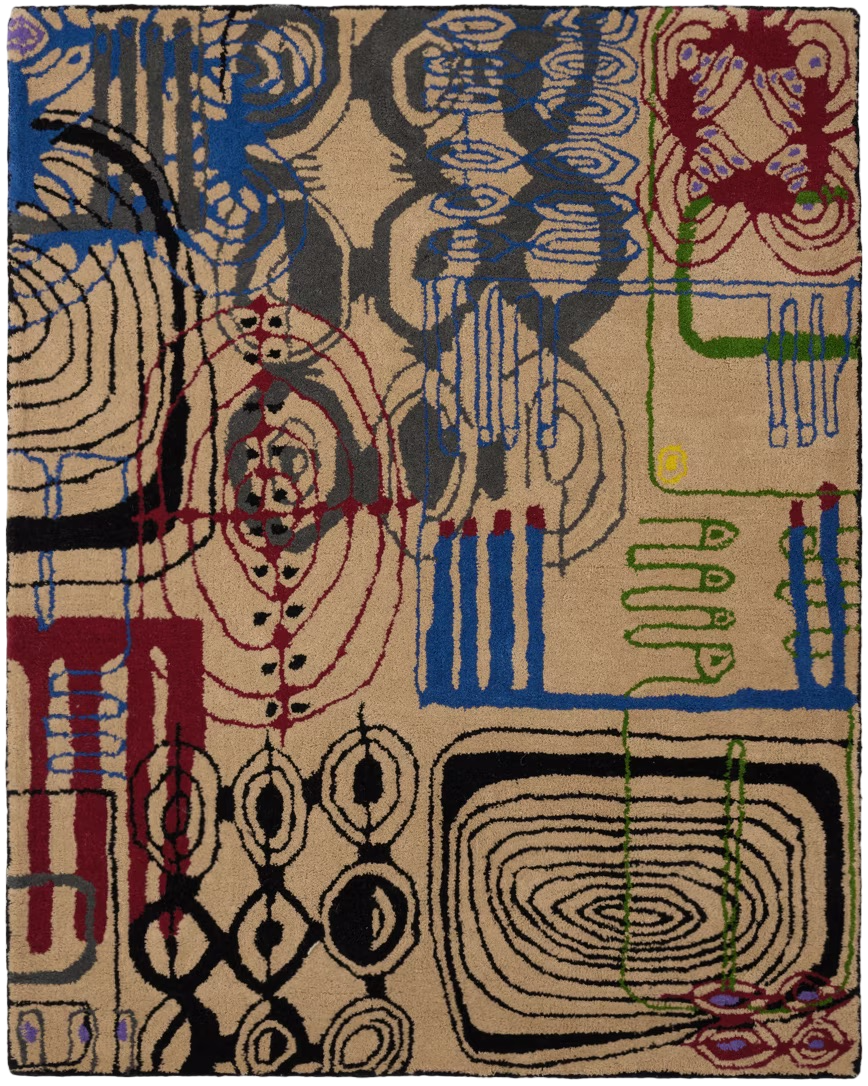
Right: Taylor Maki, Entirety, 52" x 40" rug in wool, black, cream, cobalt blue, deep red, olive green, yellow, grey, and lavender.
You describe spending hours as a kid building websites, learning HTML and CSS to customize layouts and add graphics, essentially designing visual systems from scratch before you knew that was a thing artists did. How much of that early experience with the logic of interfaces and layout do you see living on in the rugs? Is the rug in some ways a kind of interface? A surface you've designed for someone to navigate?
I haven't thought about this connection a ton, but that makes me realize how much that computer-obsessed period of my life relates to both my interest in interior design and the way I approach rug design. Curating a real space and a digital space, rug design feels like a mixture of those worlds. In my designs there's definitely a relationship to graphic design principles: composition, layout, balance, and I think digital landscapes and interfaces have influenced the way I organise shapes and movement.
Your visual references are very specific: topographical maps, sci-fi interfaces, circuit boards, Oakley ads, PlayStation ads, Japanese utilitarian design. These aren't art historical references; they're closer to the visual language of everyday functional objects. Why do you trust that material more than fine art references, and is there something those sources give you that gallery culture can't? And how do you think about the relationship between craft and fine art in your own practice, and does that distinction matter to you at all?
I'm such a visual, learn-with-my-hands person with an attention deficit that I take from what I see and use every day, and definitely nerd out on "stuff" and "how-tos" rather than the process of creating fine art. I didn't grow up in a space that urged formal education to succeed, and it wasn't for me. I have to shout out my mom again because I grew up watching her make everything herself: clothing, paintings, home renovations, garden, felting, refinishing furniture, you name it. To me, value was placed on creativity and practicality. Maybe that influence swayed me into designing functional pieces. Also, a blank canvas is daunting. Too many open doors = decision paralysis.
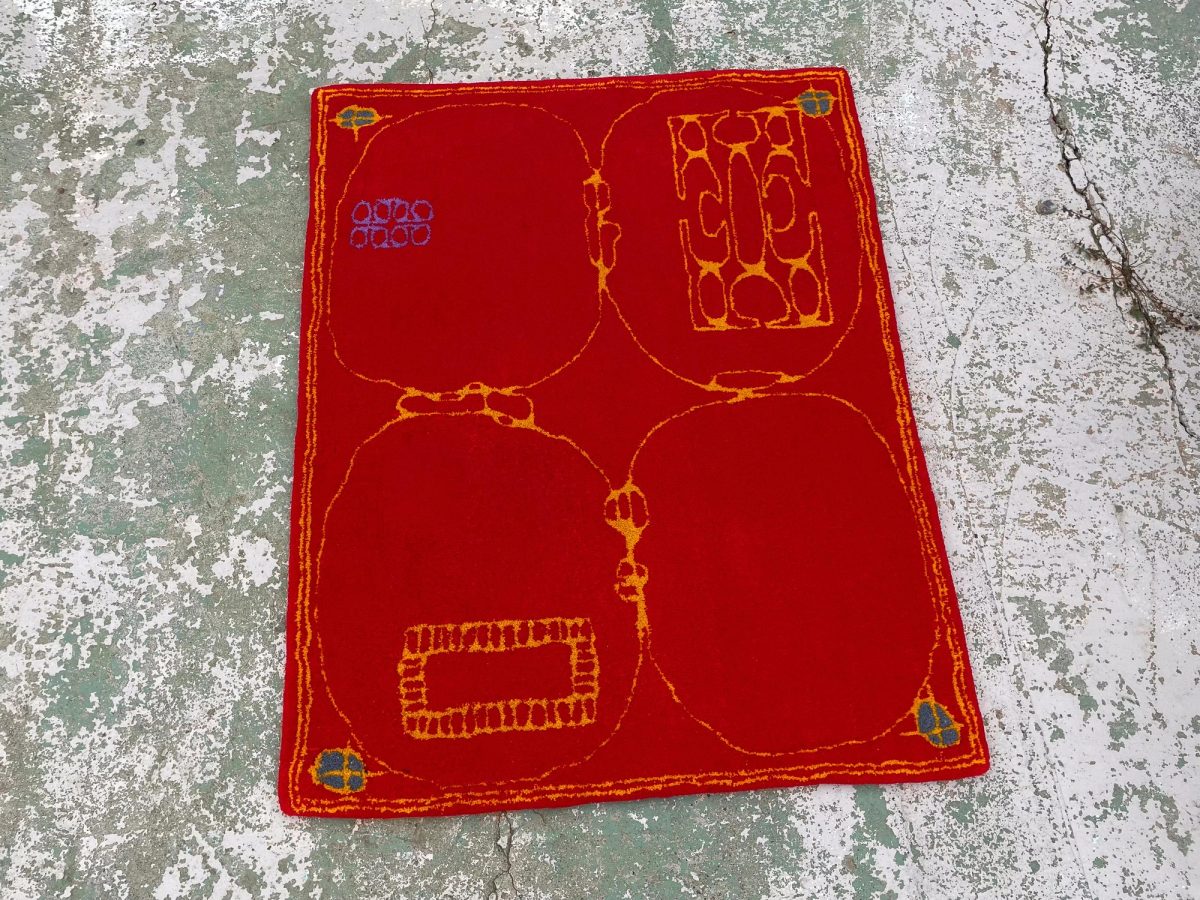
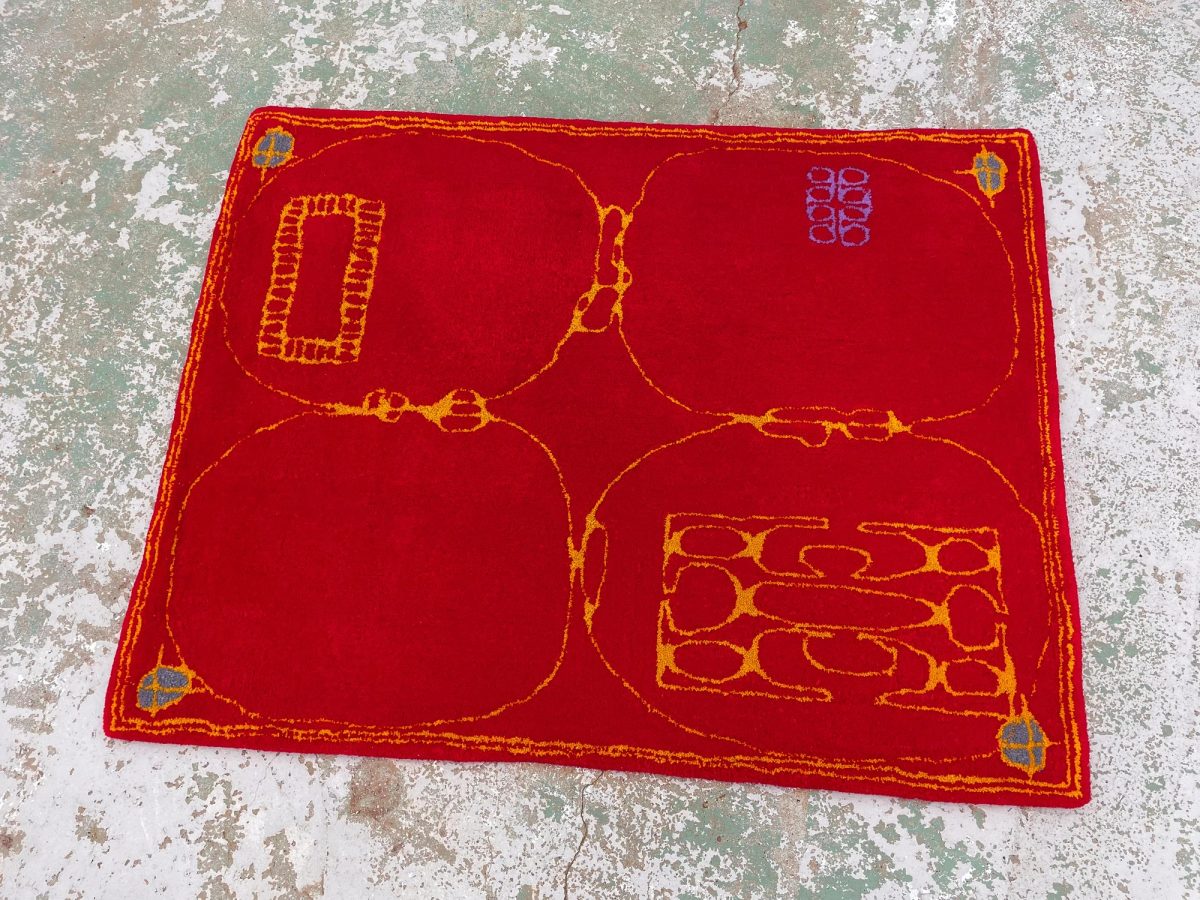
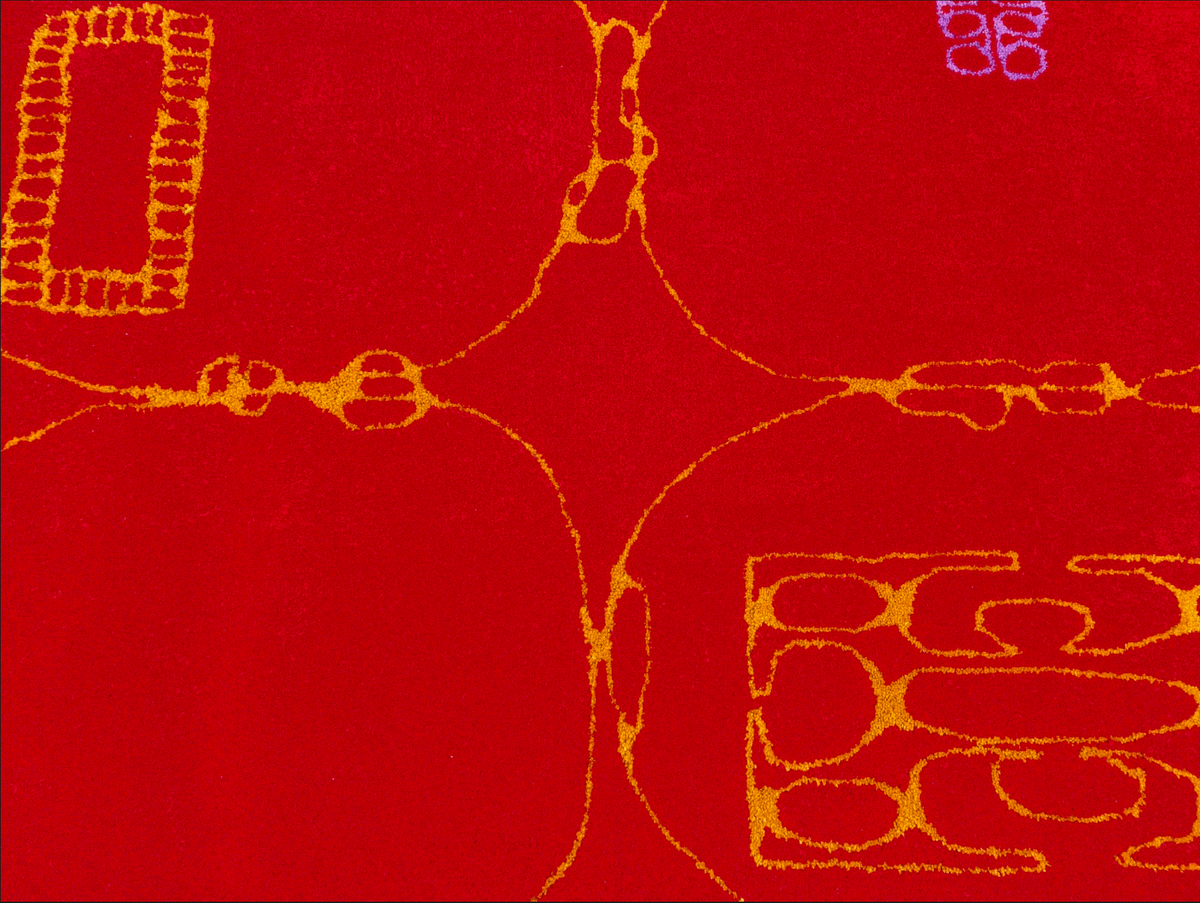
Taylor Maki, Moth, 38" x 48" rug in wool, brightest red, gold, blue/gray, and lavender
"To me, value was placed on creativity and practicality."
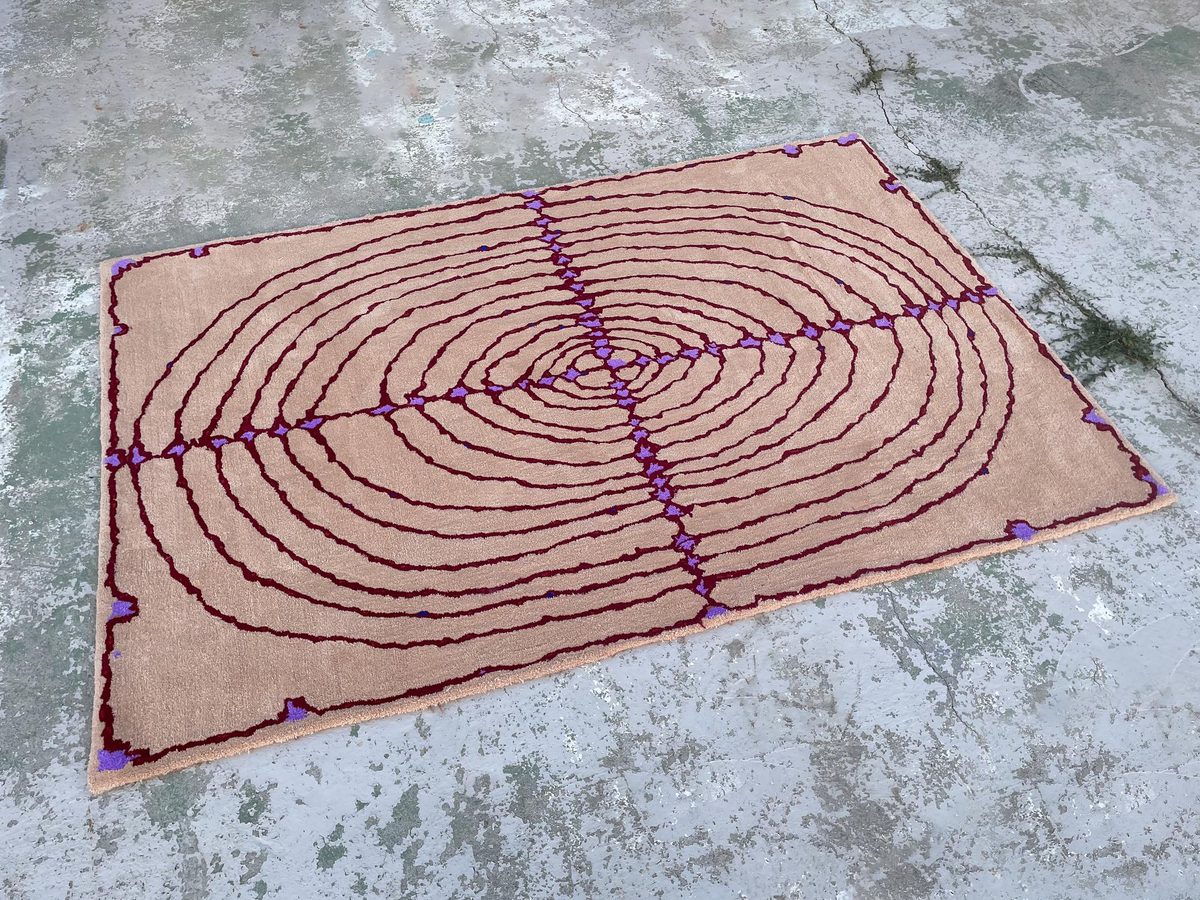
Taylor Maki, Moth, 6' x 9' rug in wool, pink-beige, maroon, brick red, and lavender.
Your design process moves from paper sketches to Procreate, layering and collaging until something reaches what you call "some sort of order or organisation." That language of order and organisation seems to recur when you talk about your work. What does order feel like when you find it, and how do you know when a composition has it versus when it's still unresolved?
It's hard to explain, but I try to keep things simple and add carefully. It's about reaching a visual balance. It's a lot of adding and taking away, kind of like collaging. A big part of functionality in area rugs is making sure the rug looks balanced at all angles so they can be rotated to suit the space.
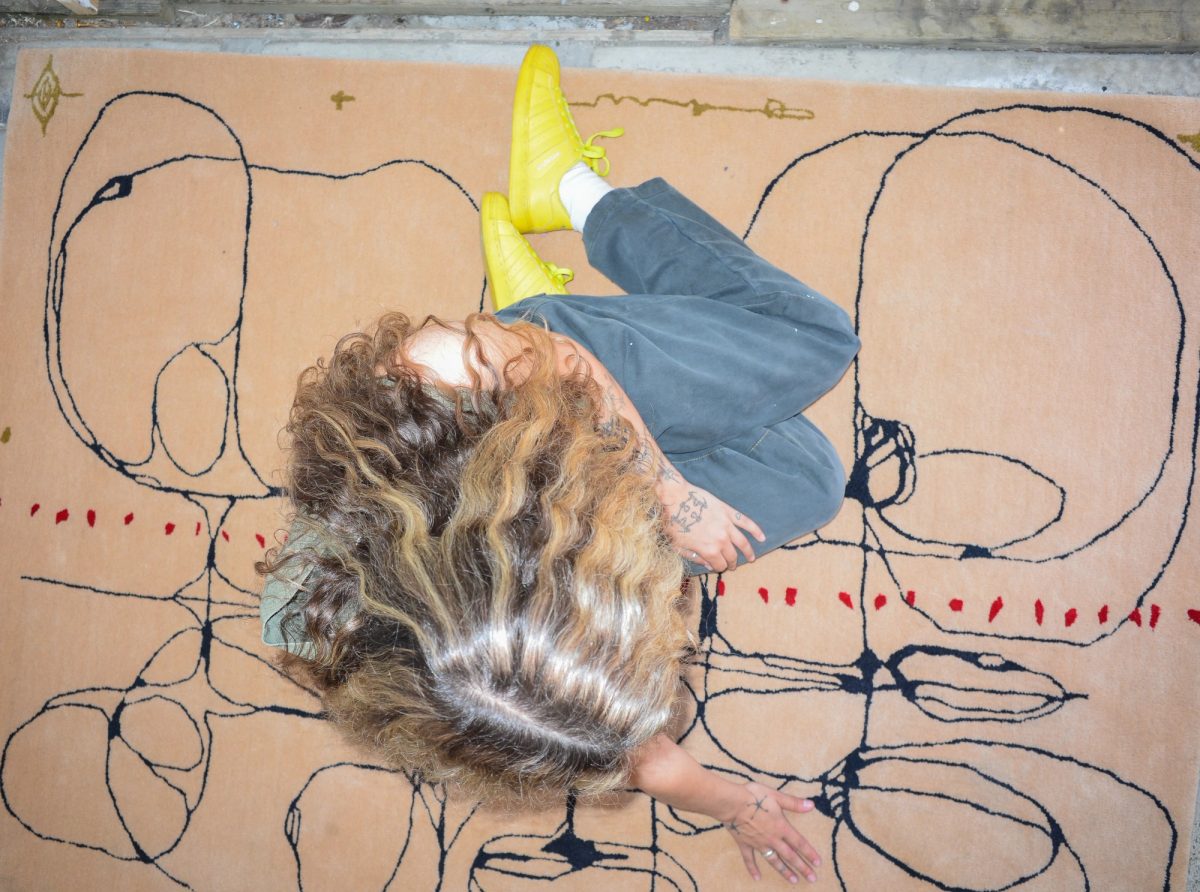
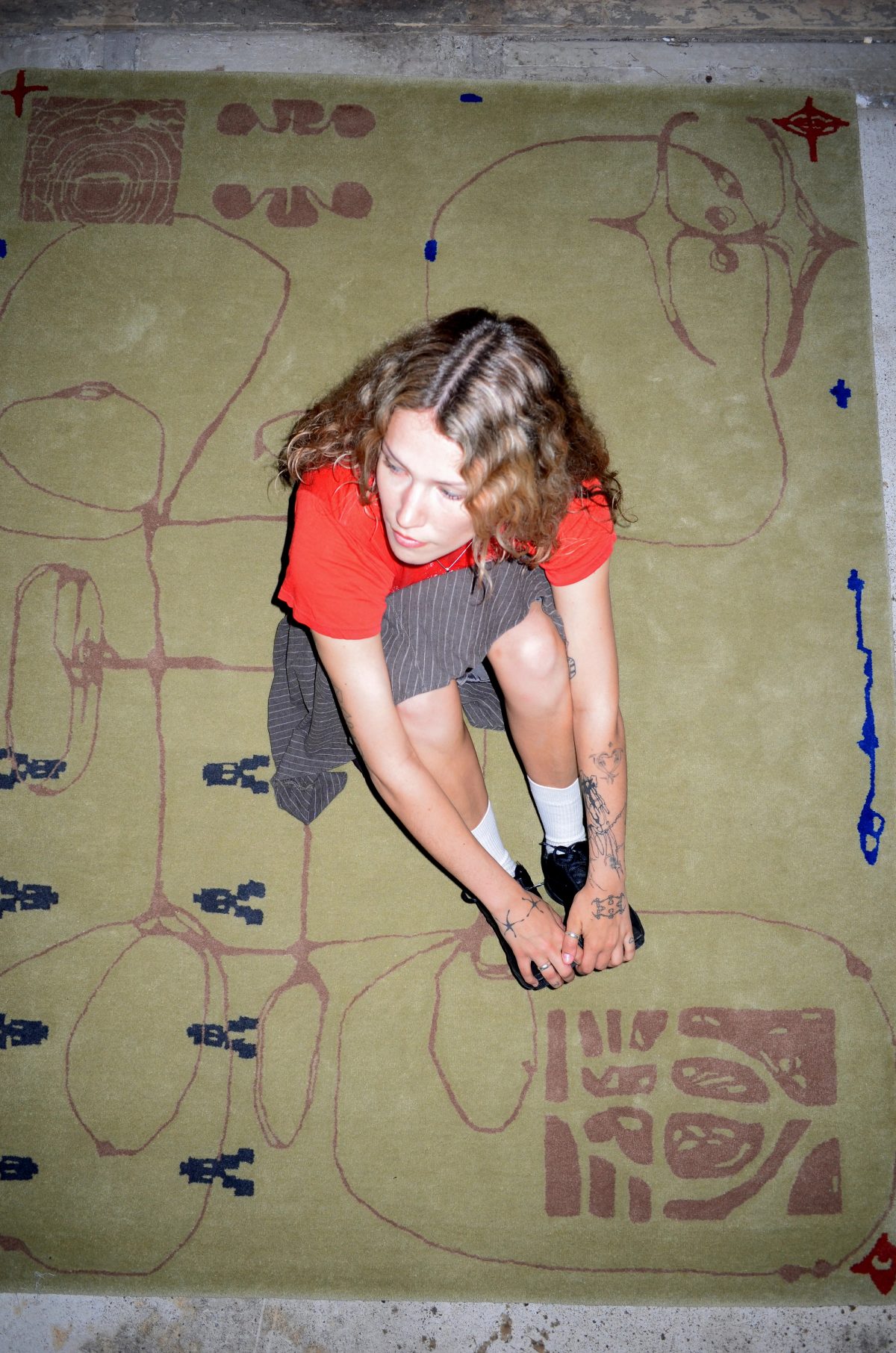
Taylor Maki, photographed by Mikaela Kautzky
Your compositions are full of shapes that feel like they mean something. Symbols, connectors, meeting points yet resist literal interpretation, and often feel like they are mapping systems that suggest function without being readable. Do you know what they mean, or is the not-knowing part of how you work?
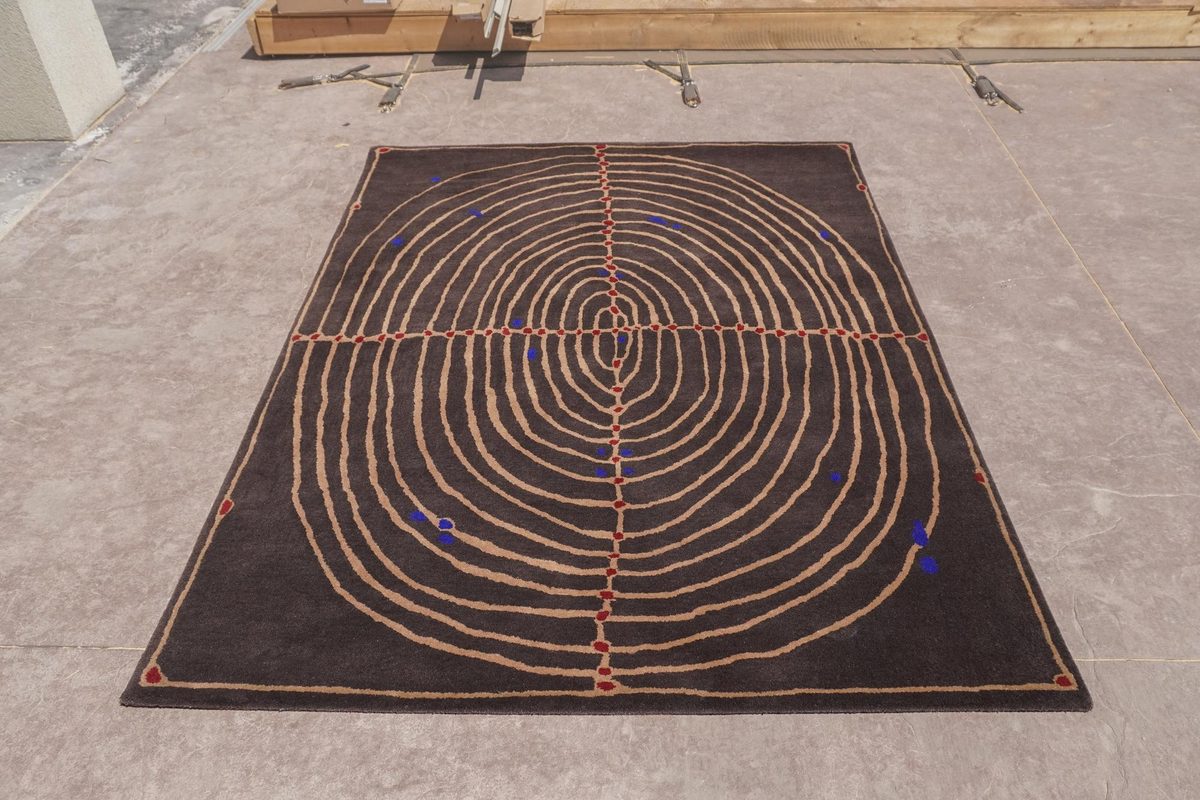
There are truly no hidden meanings or metaphors in my designs, but some may be calming or energetic visually. The Bullseye speaks higher energy to me like a race track or a maze while it may remind someone else of a mini zen garden or a crop circle. It's totally up to the next owner and what they see and feel when they look at it. And maybe it's just nice shapes!
Your work is sold through an international set of stockists: SSENSE, Wondering People in London, Moanin' Store in Tokyo, yet you make the work in your grandma's spare room and your mom's basement in Kelowna. Does that gap between where the work is made and where it ends up feel strange, meaningful, or just logistical?
It's hard to process the fact that my work exists in people's homes all over the world, but it's all three of those things. It's incredibly cool to me. The logistics of it all were super intimidating at first, but you just have to figure out a system and it all becomes routine.
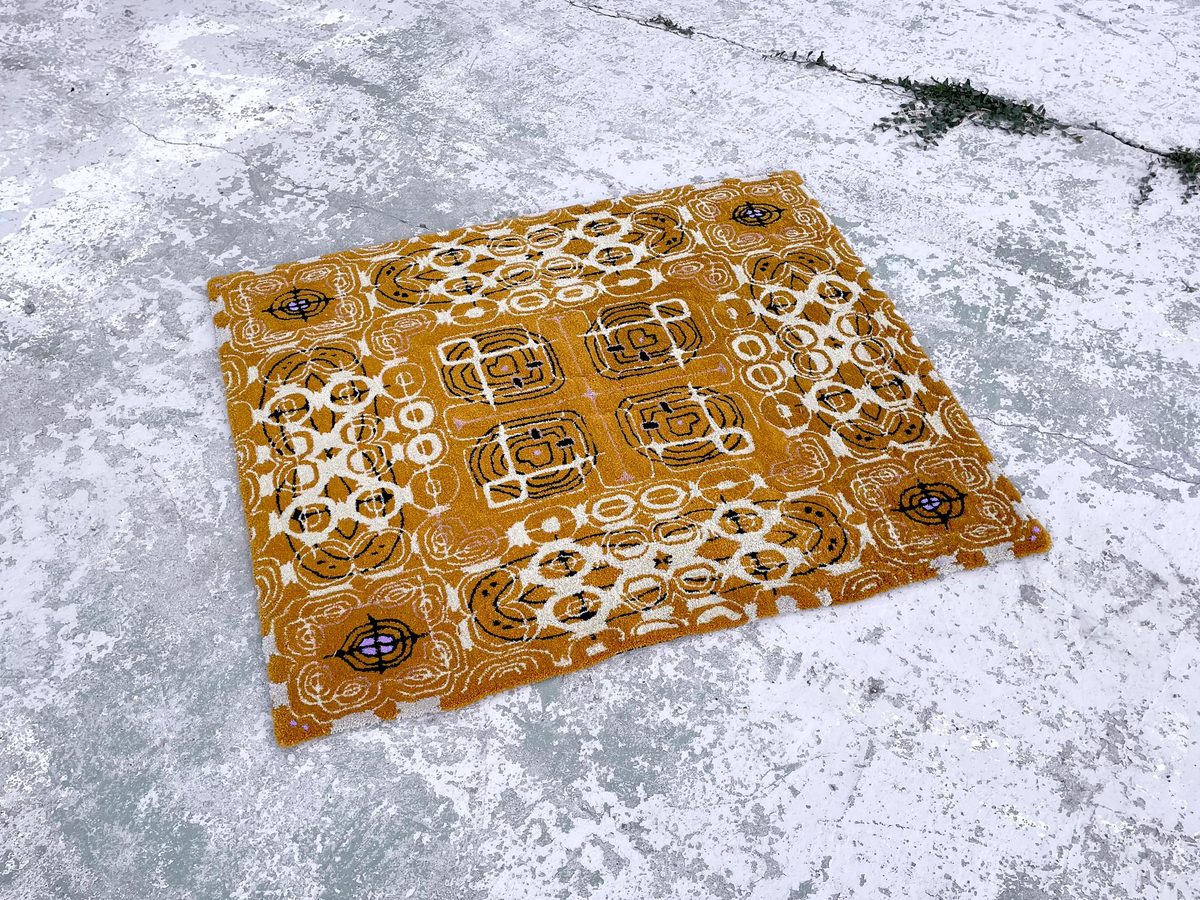
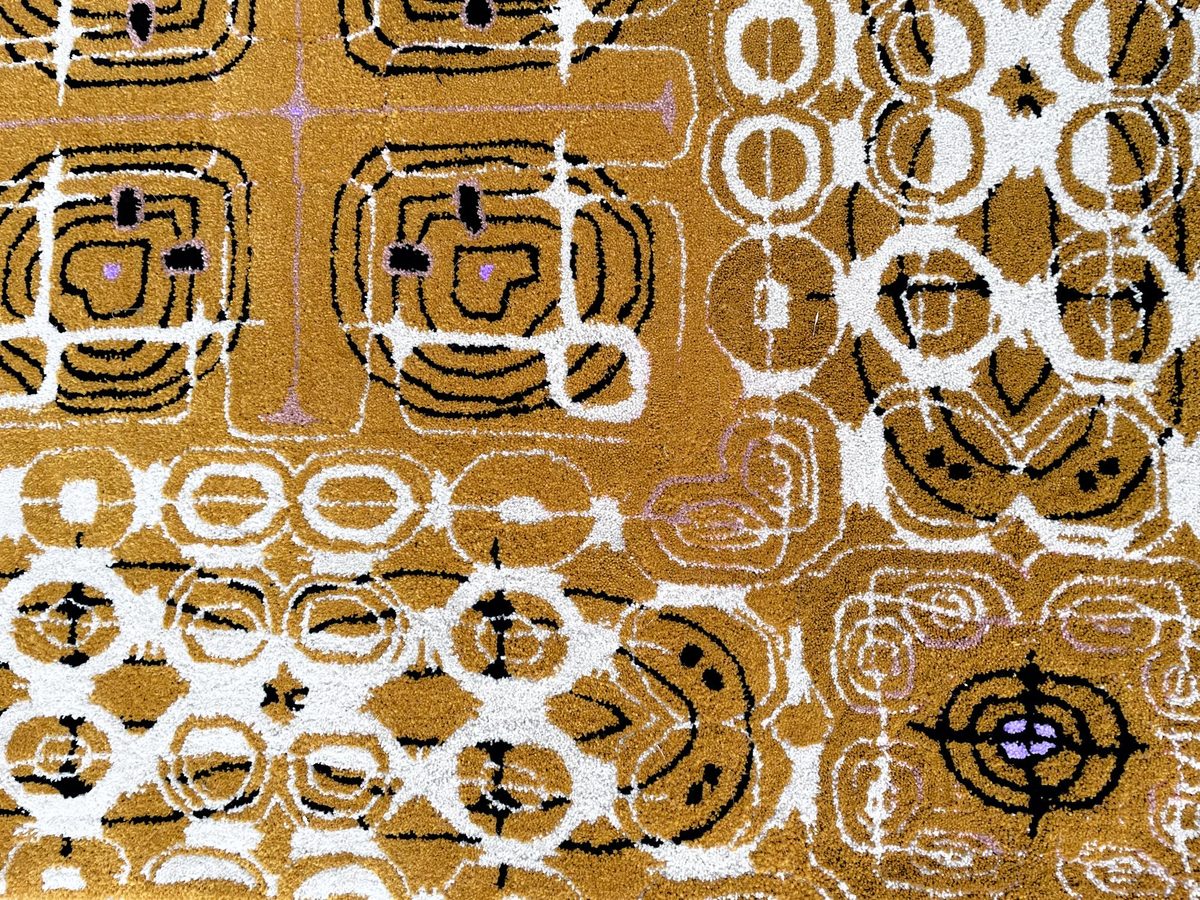
Taylor Maki, Moth, 50" x 40" rug in wool, gold, cream, black, and lavender
"I'm just dragging my brain wires through a comb to get there."
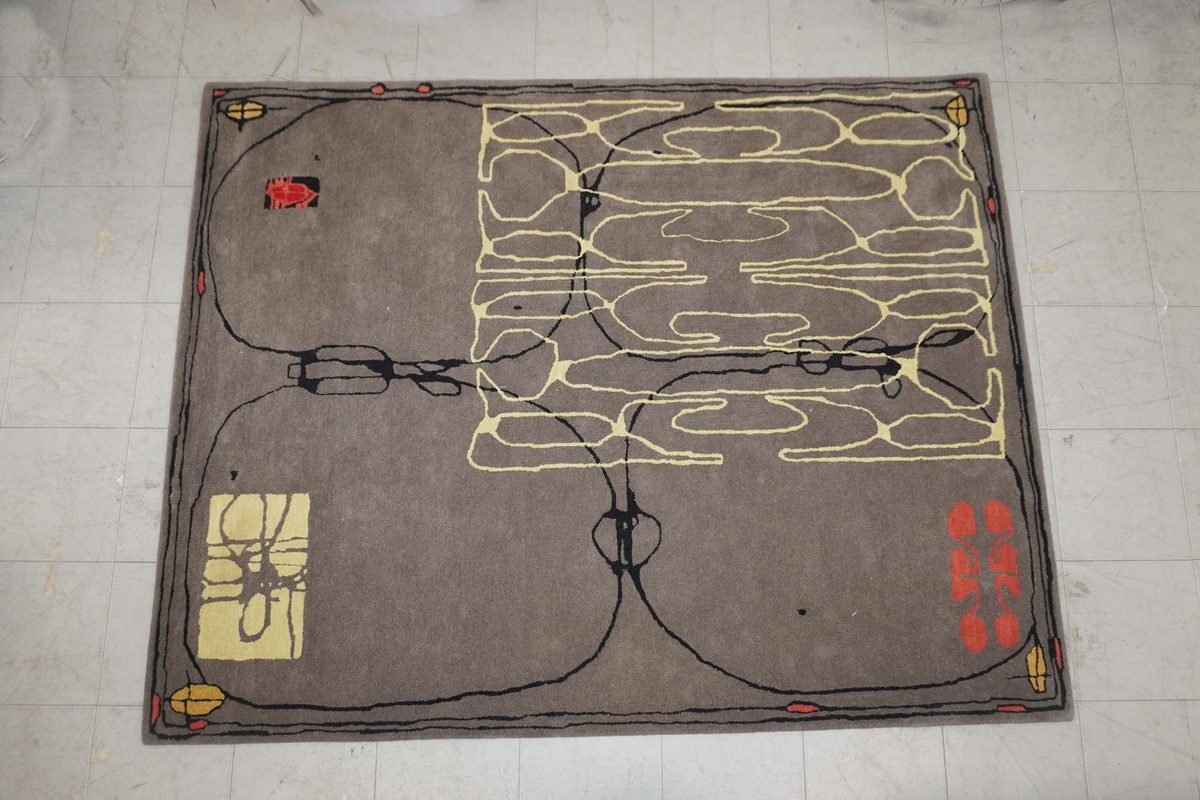
Taylor Maki, Moth, 5 x 6.5 ft rug in wool, warm grey, pastel lime, black, brick red, red, and mustard.
You describe pairing natural and unnatural colours together, and across your work the combinations feel simultaneously wrong and completely inevitable. Where does a colour decision start for you, and how do you know when a pairing is right?
There's a little bit of a formula when it comes to choosing colours and the "amounts" of each that are used. But sometimes I need to hit a randomizer button when I'm stuck. It's hard to break out of something that works. A rule of thumb of mine as well is that one small addition of a new colour can really complete a design. "A lil pop of red" as the girls say.
You've started splitting your workload with a small manufacturer so you can focus more on designing and growing. That's a significant shift, from making every piece yourself to separating design from production. What does it change about the work, and was there anything you had to let go of to make that decision?
The actual creative part was such a small percentage of the work. For a few years I commuted by bicycle or transit to gather supplies like yarn, fabric, and 15L tubs of glue, hardware and equipment to bring to my studio. It took days of prep just to get to actually making the rug. Sourcing wool yarn itself is very expensive and limiting in terms of colour and stock. Since 2024, my rugs are exclusively made in Bhadohi, India with a family-run company. They custom dye the yarn and use sustainable practices. The quality is beyond anything I could manage myself. It's been a massive positive change in my day to day.
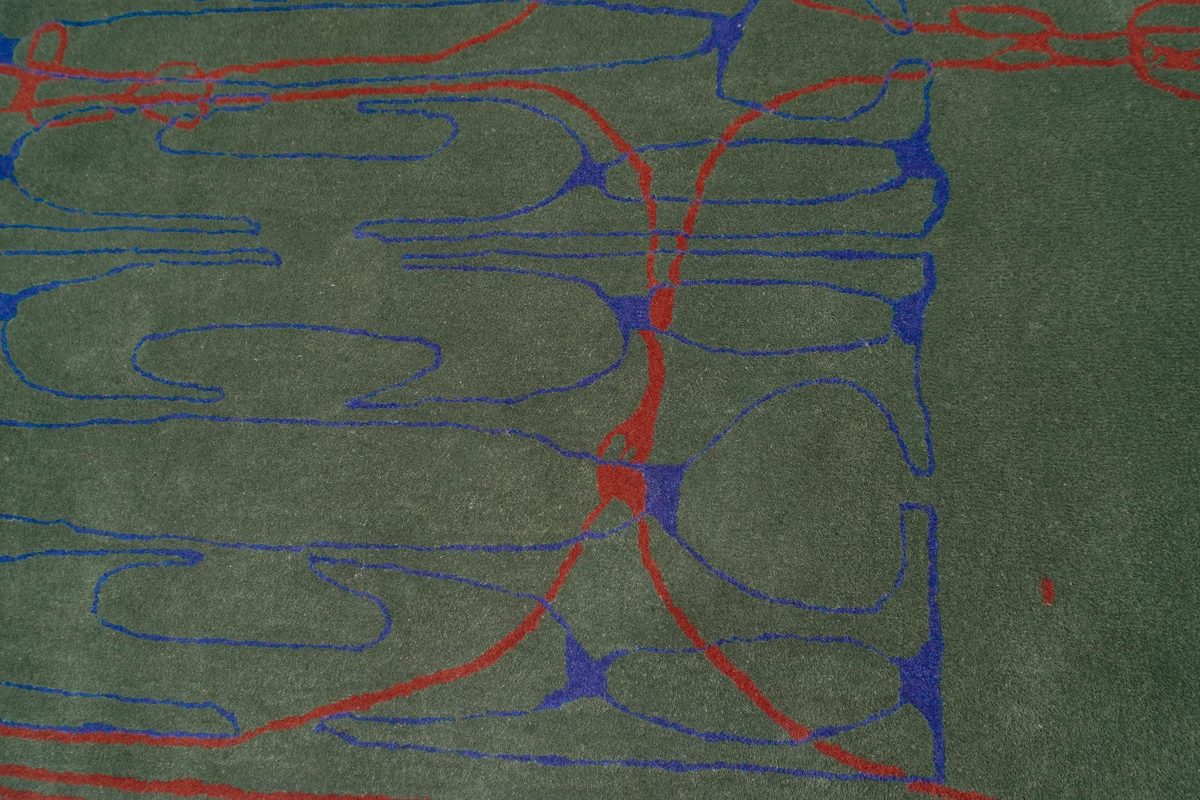
Left: Taylor Maki, Brick, 5' x 6.5' rug in wool, forest green, brick red, cobalt blue, and magenta
Right: Taylor Maki, Bullseye, 5' x 6.5' rug in wool, charcoal, tan, red, and cobalt blue
Tufting is physically demanding. You describe a lot of breaks and lying flat on the floor. There's a bodily cost to the work that isn't always visible in the finished object. How does the physical experience of making the rug affect what ends up in it?
When I was tufting all of my pieces myself, I wouldn't factor in the design and how it would affect me physically, but I should have. The less open space and more curves in a design, the more you're moving your body in weird ways while keeping pressure on the tufting gun and tensing your body to keep control. I wouldn't change the design to help with that though, but it definitely affected the quantity of pieces I could make in a huge way. A 6x8ft rug would take me at least two weeks to make comfortably and ship out.
Your recent collection with Ap0cene leaned into rounded, archaeological-inspired shapes and cooler, moodier tones. You also mention preferring to evolve an existing design rather than start fresh. What is it about evolution over reinvention that appeals to you, and where do you feel the current body of work is heading?
Drawing the shapes, collaging, and colour selection all happen entirely at different times. I am so happy to design a brand new rug for a client on a tight deadline, I'm just dragging my brain wires through a comb to get there. Evolving past designs helps me see a concept all the way through, and the order of that helps me not get overwhelmed by all the possibilities. Taking these designs and evolving them into pillows and throws is what I'm excited about next!
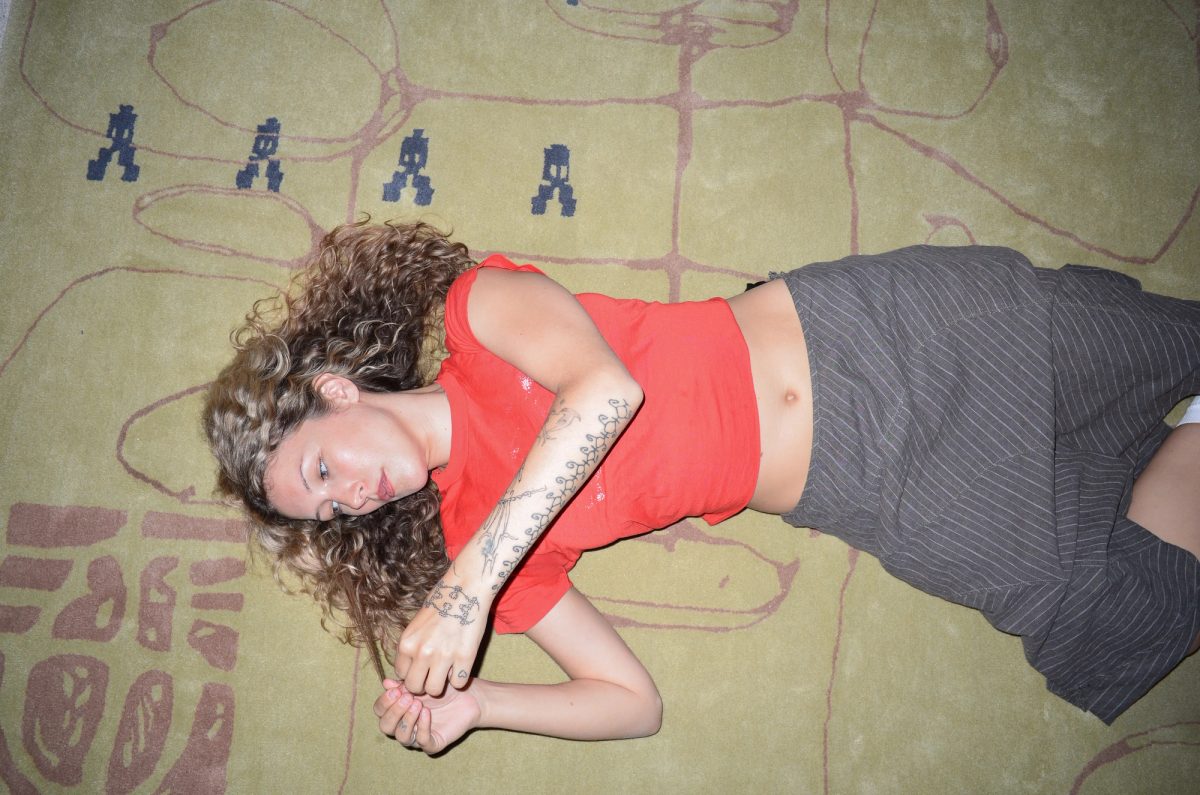
Taylor Maki, photographed by Mikaela Kautzky
"And maybe it's just nice shapes!"
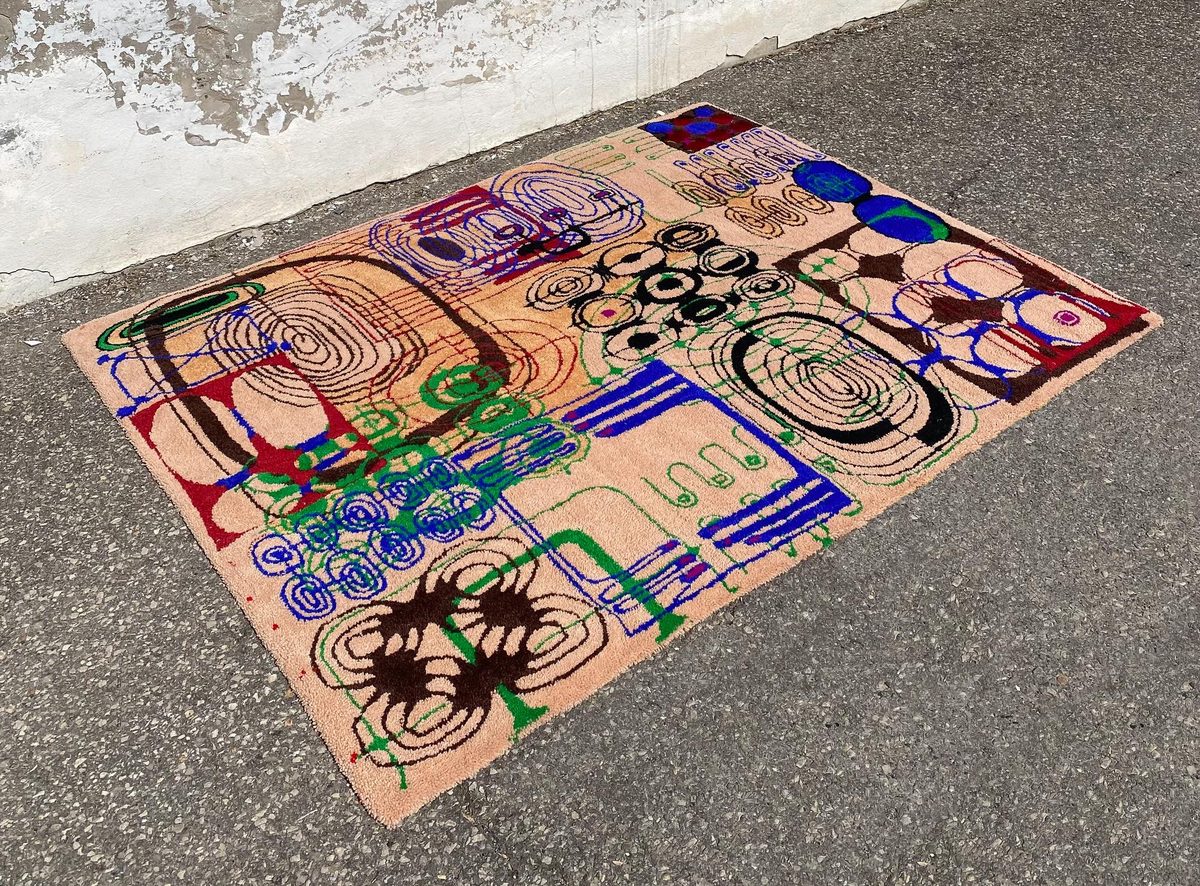
Left: Taylor Maki, Moth, 5' x 6' rug in wool, beige, black, blue, red, green, and brown.
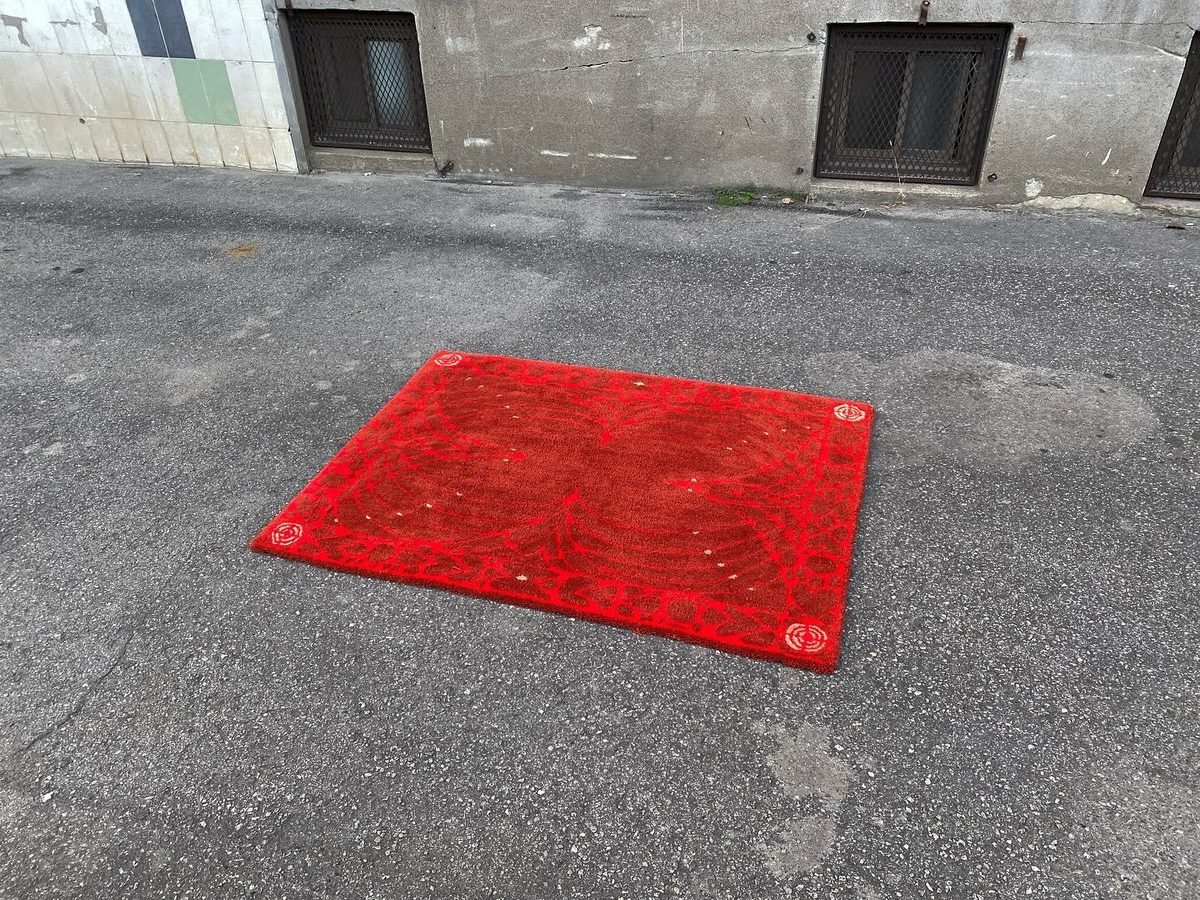
Right: Taylor Maki, Moth, 56" x 41" rug in wool, brick red, bright red, and beige.
A rug is one of the most functional objects a person can own. It lives on the floor, under furniture, walked on every day. Yet yours are clearly not just floor coverings. How do you think about use? Do you want people to walk on them, and does it change what the work is if they do?
One of the reasons I started outsourcing my designs was because I wasn't able to fully reach the quality and quantities I needed to sustain. To have the security of knowing that these pieces will last a lifetime makes a huge difference in my confidence when communicating with clients. Whether they're treated very delicately or living under pets and shoes, that's totally up to the owner, and I can feel confident knowing that the piece will endure.
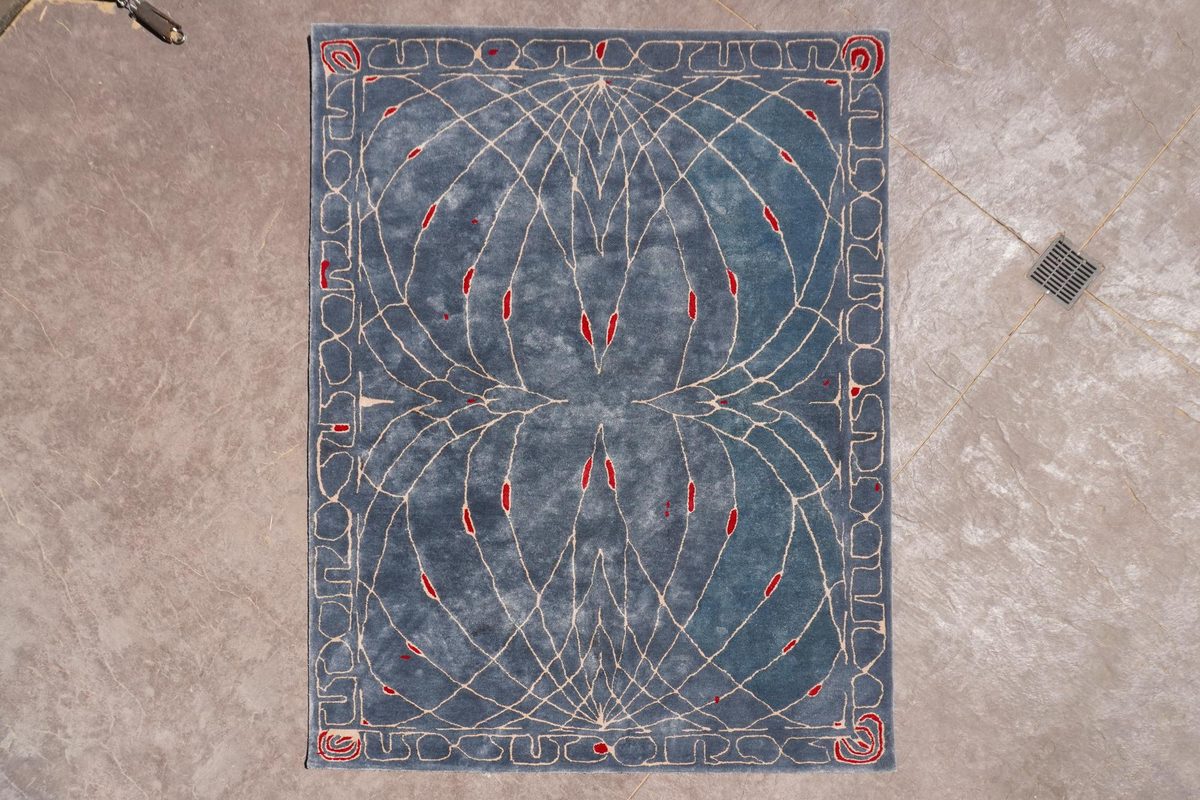
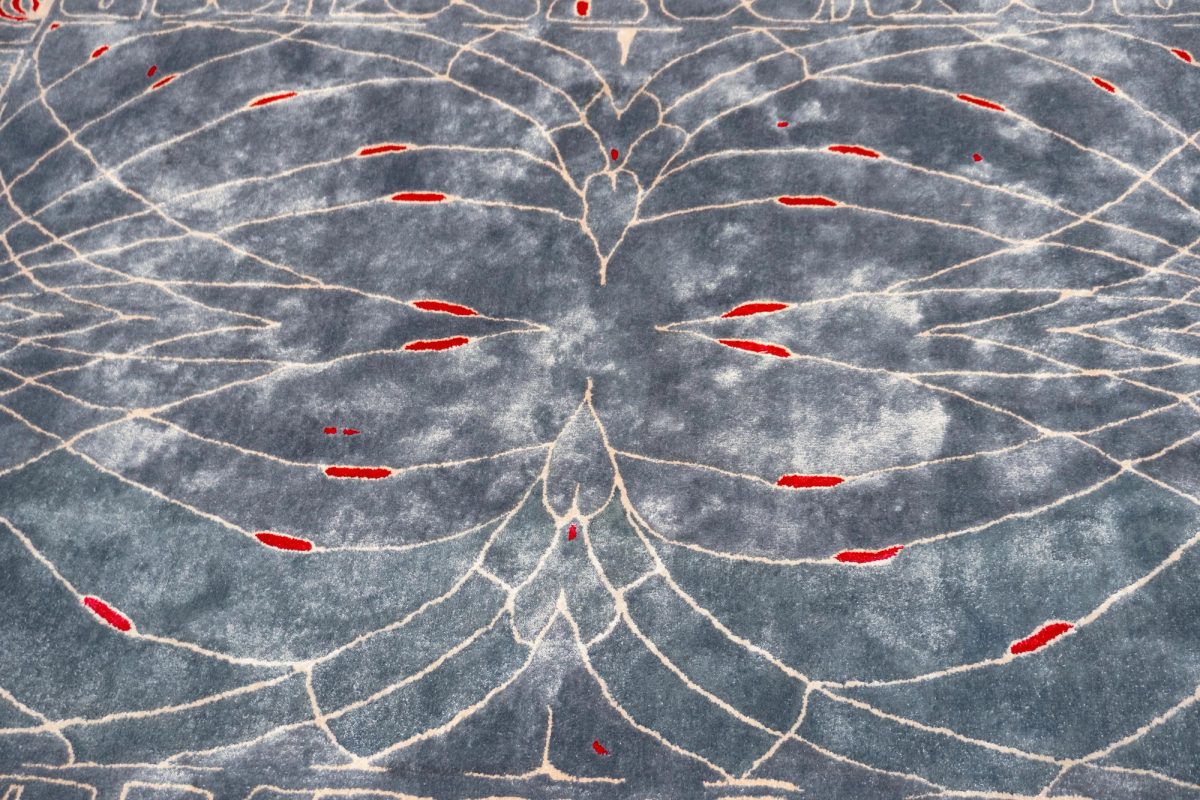
Taylor Maki, Moth, 5' x 6.5' rug in bamboo silk, dusty blue, cream, and brightest red
Maki rugs are available through the following retailers worldwide.
Wondering People / London, UK
Ap0cene / USA
SSENSE / Montreal, QC
Moanin' Store / Tokyo, Japan
Seconde Vintage / Montreal, QC
Maison Singulier / Montreal, QC
Lost Together / Kelowna, BC
Lois Lane Warehouse / Kelowna, BC
The Letter Bet / Montreal, QC
Follow Taylor Maki on Instagram at @makirugs .
Cover Image: Taylor Maki, photographed by Mikaela Kautzky