MAXIMUM MEANING IN THE SIMPLEST POSSIBLE FORM: IN CONVERSATION WITH ALEJANDRO JAVALOYAS
CONVERSATION BY SELIN KIR
CO-FOUNDER, CURATOR
18 JUNE 2026 — UNITED KINGDOM
Alejandro Javaloyas builds a practice spanning drawing, painting, photography, and installation around the same recurring concerns: time, decay, memory, finitude, and the human need to give form to what cannot be fully understood. Dreams become notes. Notes become AI-generated images. Images become colored-pencil drawings on cotton paper. Each step recalls and misreads the last. What remains is a chain of faithful mistranslations. Javaloyas works with rigorous economy: reduced palettes, humble compositions, small formats that ask the viewer to lean in. The scale is pressure. The work carries a precise attentiveness to how images hold loss inside them, how meaning accumulates slowly, through fragments, repetition, and proximity. Most of it happens, as he describes, before anything is touched, in silence, in the long period of conception that precedes execution. When the making finally begins, the intelligence has already moved into the hand.
You were trained classically in drawing and painting from the age of six, spent years in filmmaking, and returned to visual art through expanded painting and experimental photography. Did the path choose you, or did you choose the path?
I think it was both. I chose certain paths consciously, but the need to make things has always been there, almost before I could name it.
I was not only trained in classical drawing and painting until I was 18, but also in ballet and piano. Then I went to film school and spent a large part of my early twenties writing and shooting short films. Later, I went to culinary school, and cooking professionally is still my day job, what pays the bills. I also sing, paint, make photographs, and write often.
For people who have only known one project, it can seem surprising when I suddenly change gears. But it doesn't feel that way to me. All these disciplines use the same creative part of my brain. I approach them with the same curiosity, excitement, passion, and self-demand. When I have an idea, the shape, form, or medium usually derives from what the project itself needs.
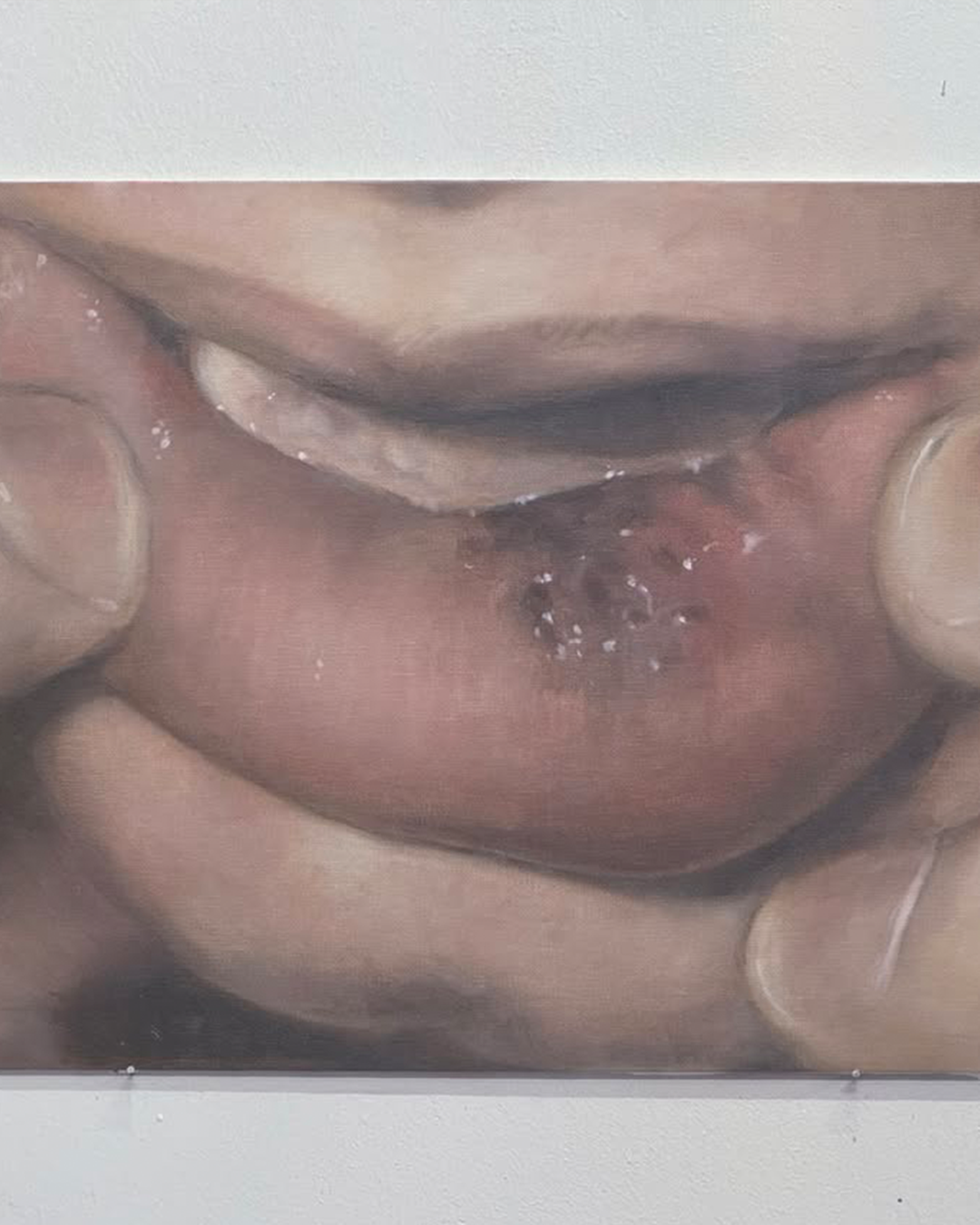
Left: Alejandro Javaloyas, Pondré mi mano sobre mi boca II, 2026, oil painting on cotton canvas board, 30 x 40 cm.
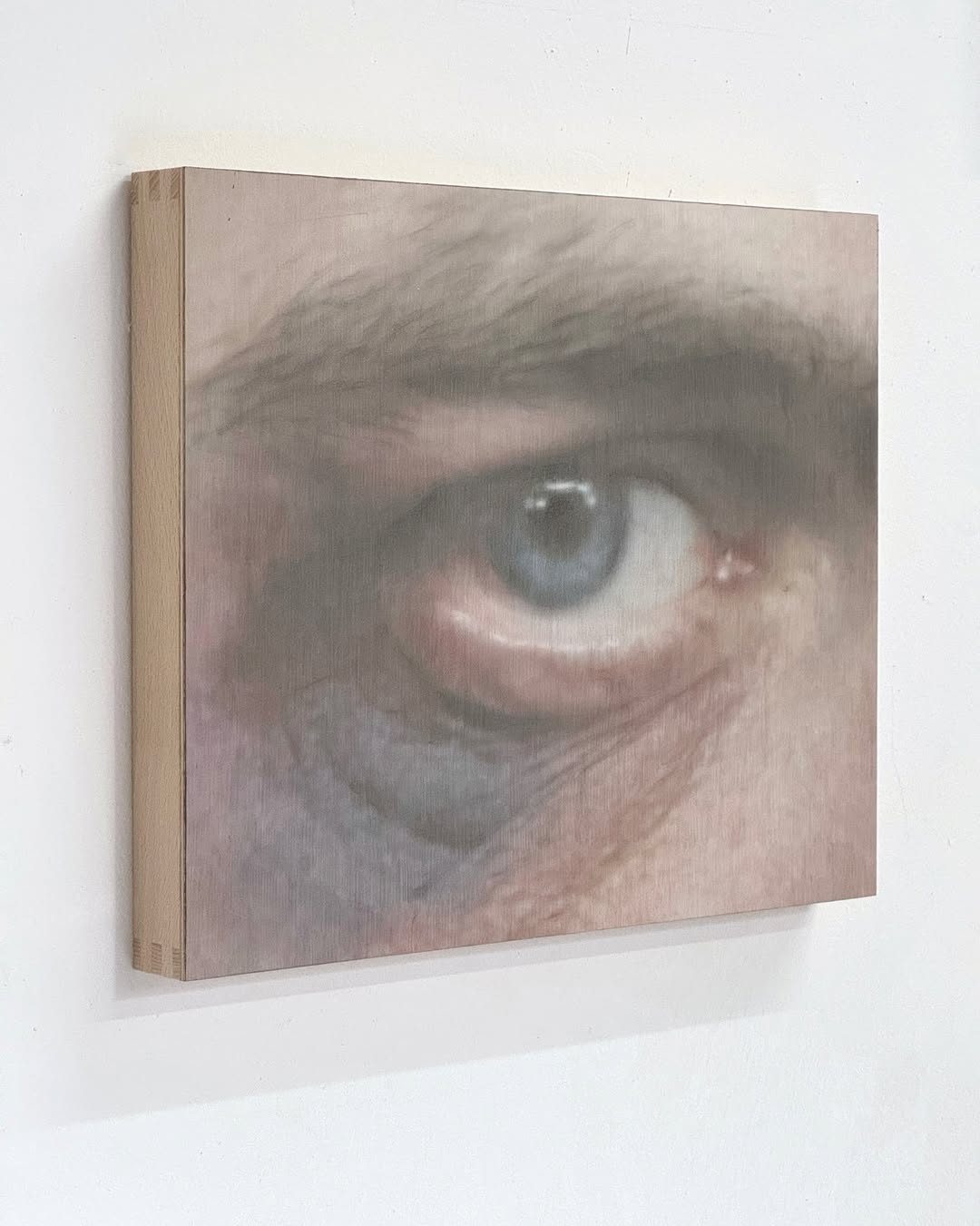
Right: Alejandro Javaloyas, Turn to him the other also (Matthew 5:39), 2026, colored pencil on cotton paper mounted on board, 30 x 25 cm.
You've described your practice as guided by a "principle of least action," the search for maximum resonance through minimum means. Do you think of the work as a system that finds its own most efficient form, or is that a framework you've placed over something that's actually more instinctive?
I would say it is closer to the latter. I have a natural tendency to overthink and overdo almost everything. That comes partly from insecurity, from the fear of not having achieved enough or not having pushed something far enough. But as a viewer, I find excess extremely distracting.
I am drawn to songs, films, paintings, and images where everything seems to be there because it needs to be there. I remember reading Arvo Pärt as a teenager. "I had to get rid of everything unnecessary... in order to save myself" and thinking: this is it. Anything accessory often feels like noise to me.
So I try to move toward essentialism: reduced visual language, clean images, humble compositions, muted palettes. Anne Truitt put it beautifully: "I have struggled all my life to get maximum meaning in the simplest possible form." That sentence feels very close to what I am trying to do.
The figurative drawings carry marks of Northern European devotional painting and Spanish religious iconography. The expanded paintings engage with Minimalism and Concrete art. The photographic work references Conceptualism and vanitas painting simultaneously. You're based in Toulouse, represented by a gallery in Palma, and you've shown across Europe and Latin America. Where does the work actually come from culturally, and does that question matter to you?
The eclecticism of the work is probably a reflection of my own curiosity and my personal journey. I was born and raised in Mallorca, then lived in Barcelona, Berlin, Helsinki, and now Toulouse. That already creates a kind of layered cultural identity.
On a daily basis, I speak Spanish with my parents and family, Catalan with many friends from Mallorca and Barcelona, English with most of my expat friends, and French at home with Loïc, my boyfriend. So even language is not fixed for me. It shifts depending on intimacy, context, and geography.
I am also gay, Catholic, ADHD, OCD, and a compulsive consumer of music, films, books, series, and art. I probably enjoy seeing art even more than making it. I am curious to the point of excess, and that inevitably enters the work.
So yes, the question matters, but not because the work comes from one stable cultural place. It comes from accumulation, displacement, contradiction, and appetite.
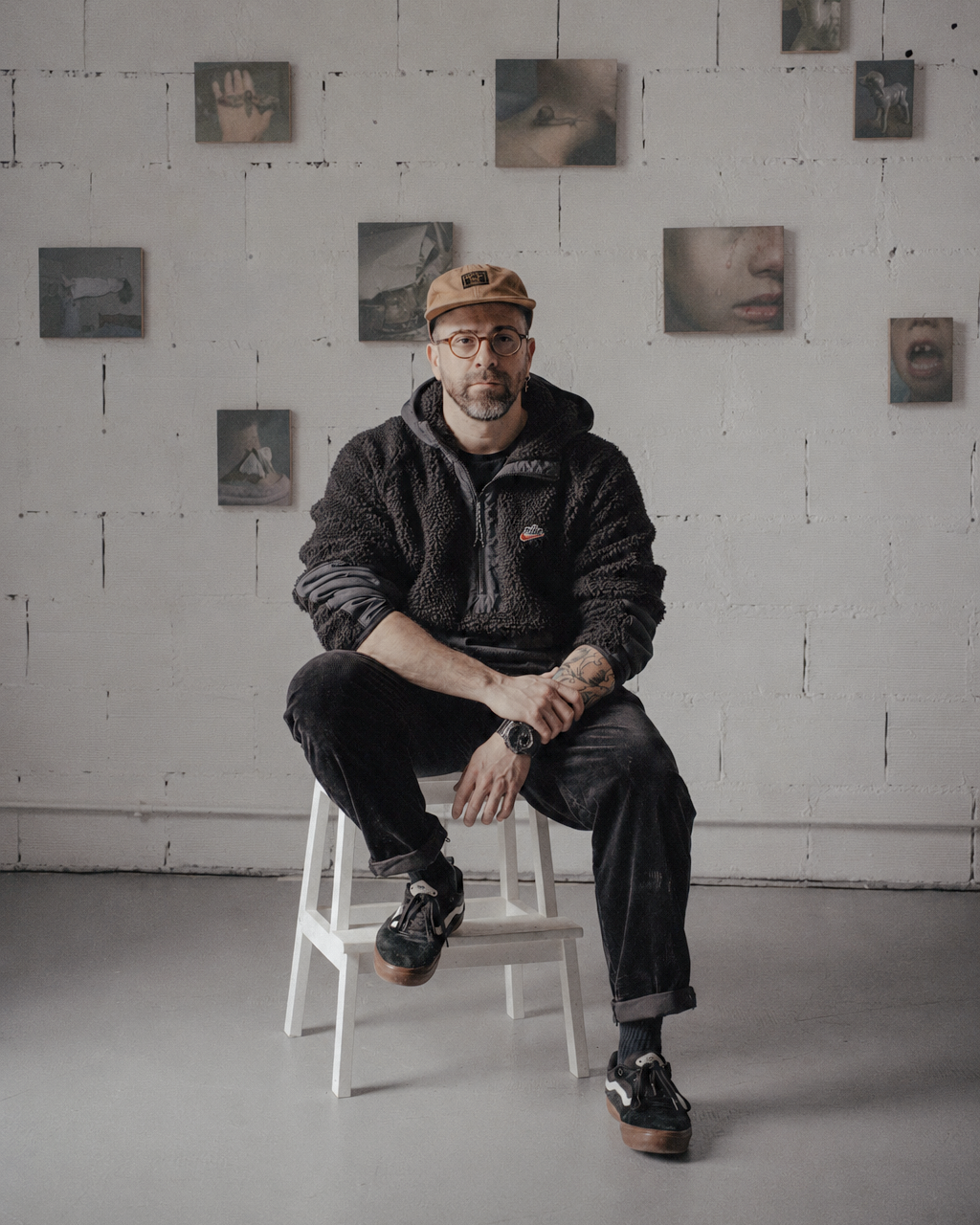
Alejandro Javaloyas in his studio.
"When I have an idea, the shape, form, or medium usually derives from what the project itself needs. All these disciplines use the same creative part of my brain. I approach them with the same curiosity, excitement, passion, and self-demand."
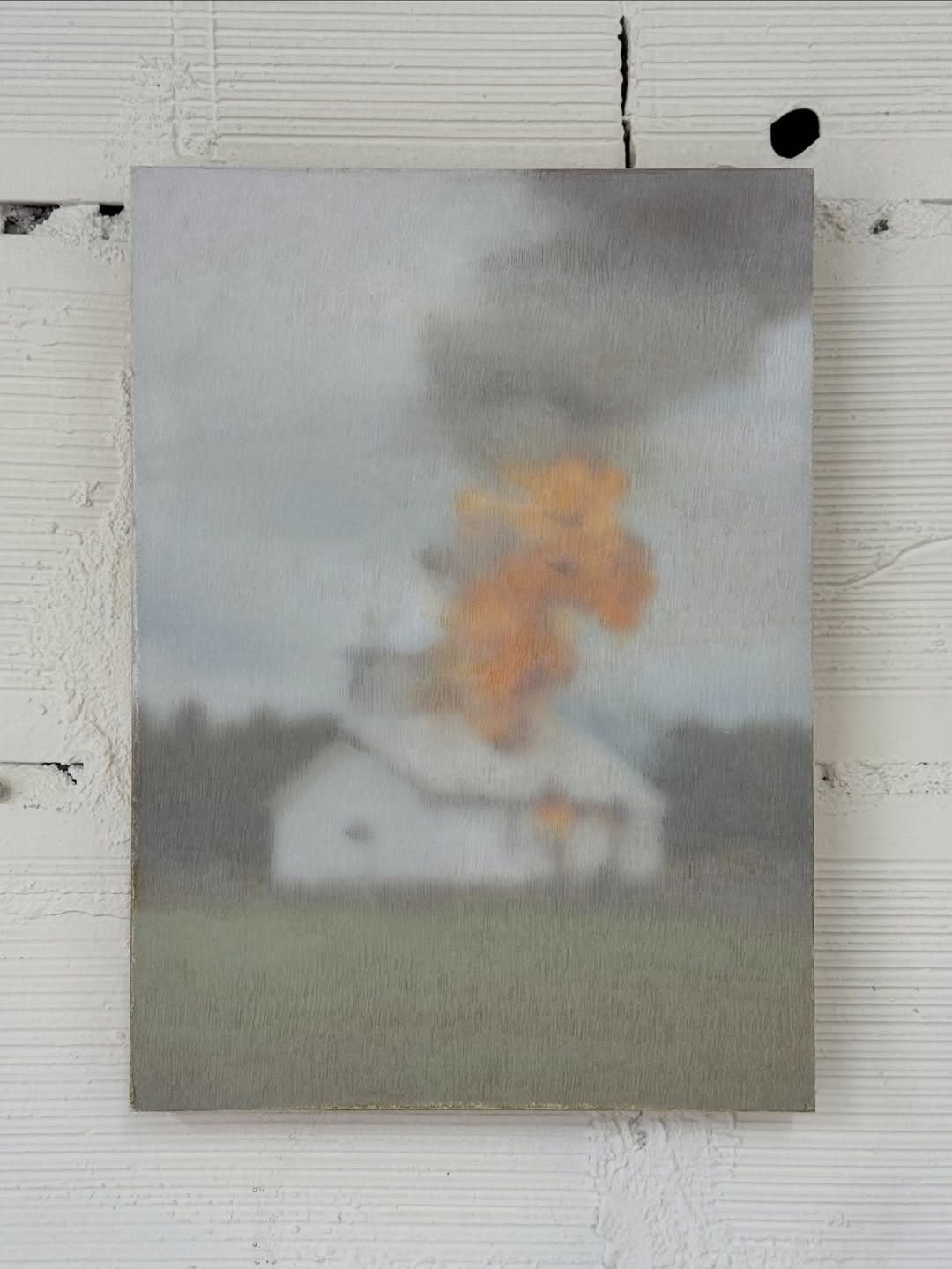
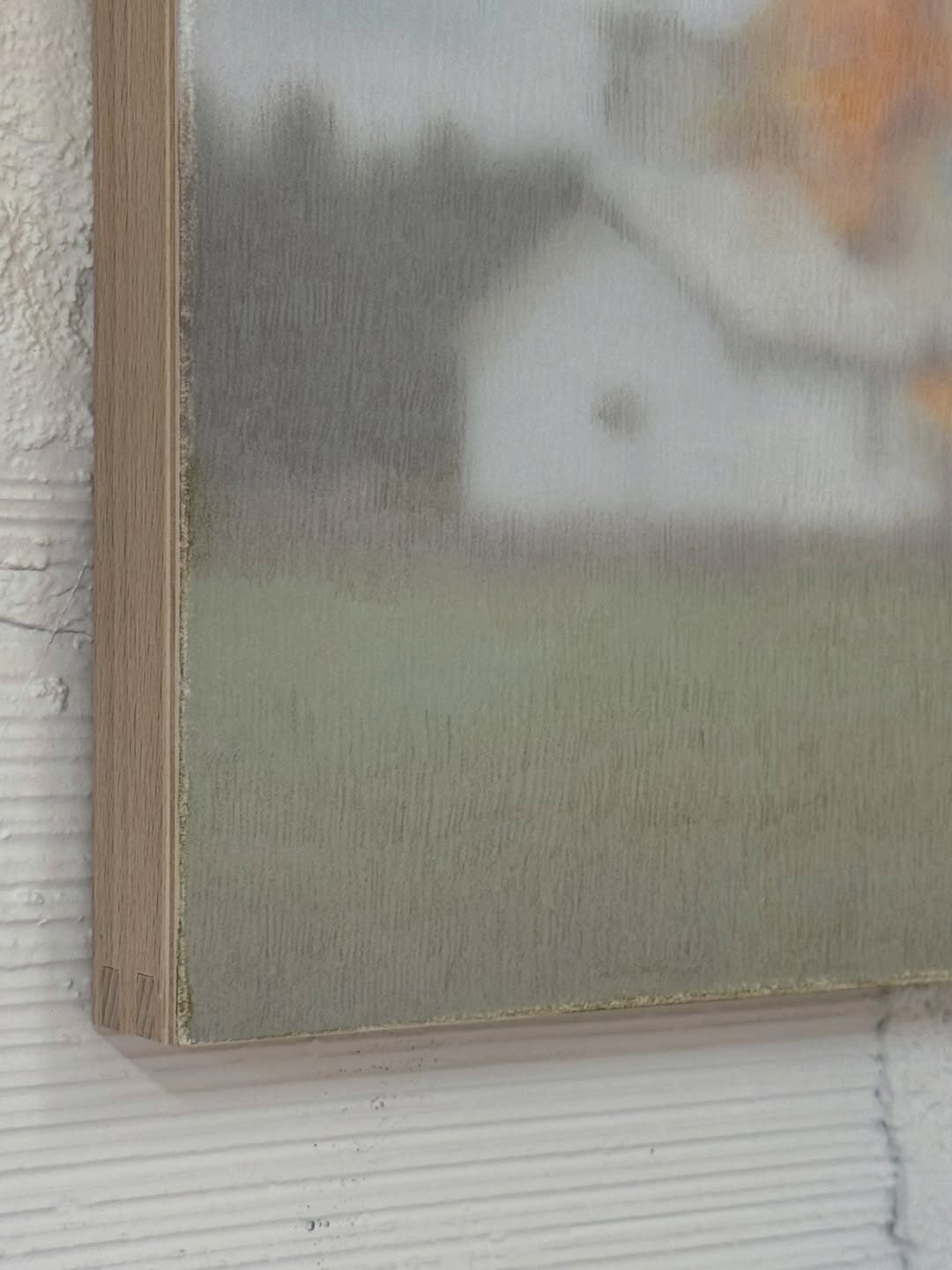
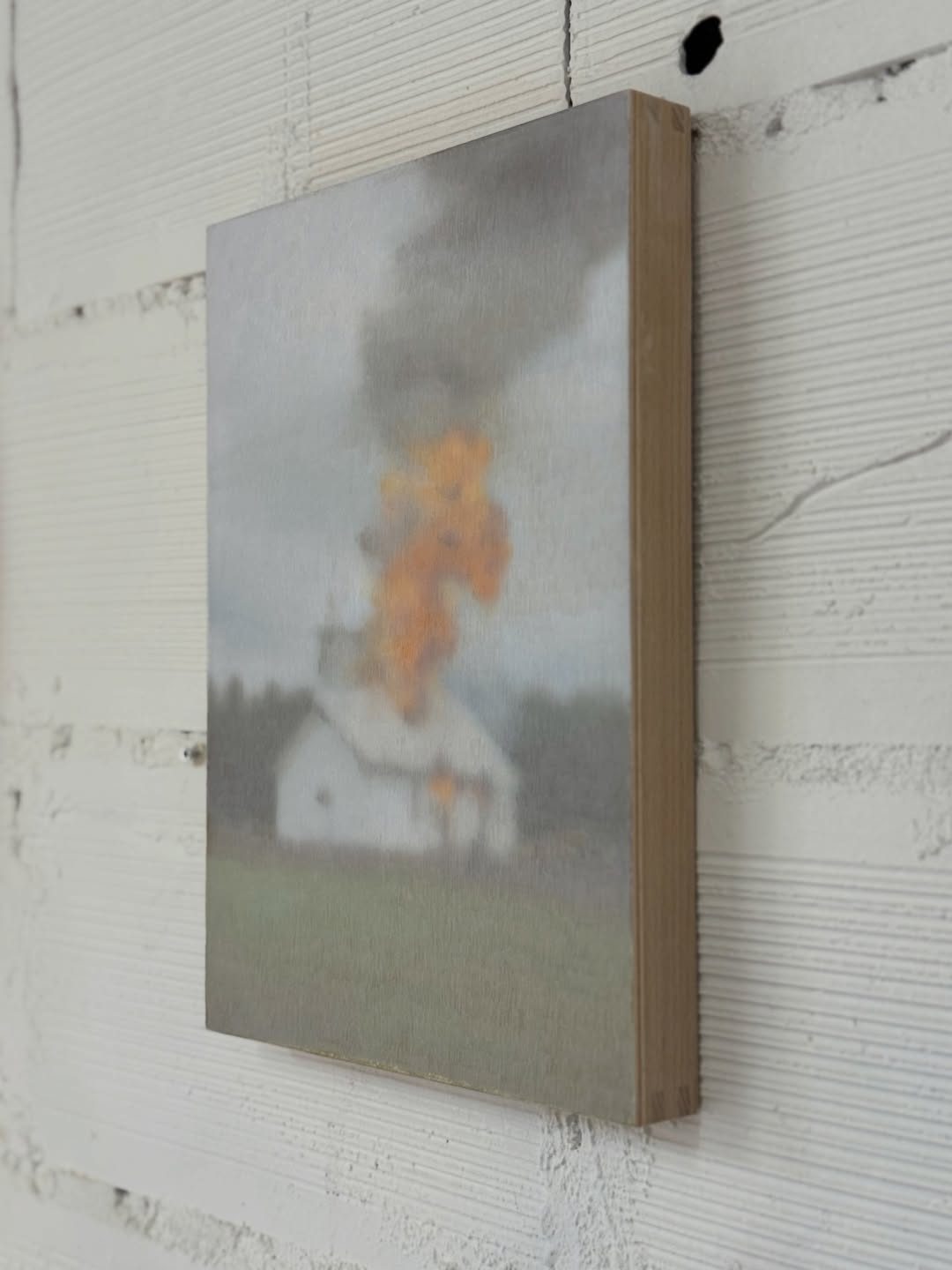
Alejandro Javaloyas, Alexander: Which of you have done this?, 2025, colored pencil on cotton paper mounted on board, 25 x 30 cm.
Your colored pencil pieces are small, almost secretive: wounds, rosaries, a burning window, a mouth held open. Is smallness a formal choice or something closer to a moral position about how certain images should be encountered?
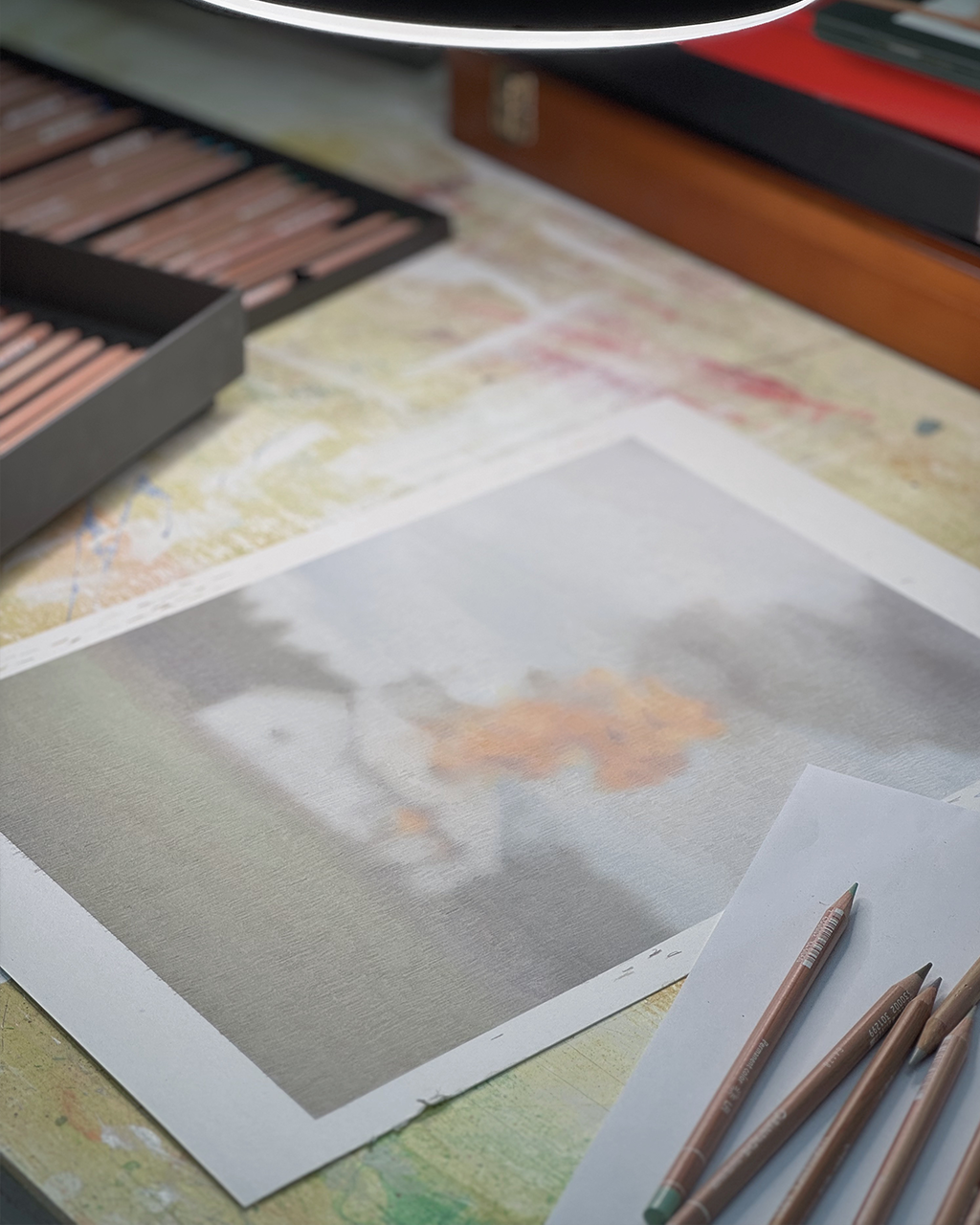
The initial reason was practical and came from the medium itself. These works are made with colored pencil on 100% cotton paper mounted on wood. Colored pencil covers a very small surface at a time, so building an image is extremely slow and labor-intensive. Compared to oil painting, where you can cover much more surface much faster, it almost forces a smaller scale. Most of the pieces were conceived between 14 × 20 cm and 25 × 30 cm.
Later, I tried to move into larger formats, but the results kept failing. They lost the intimacy, fogginess, and ethereal quality that the small pieces had. For Un cuchillo que no corta, I decided to let go of the larger works because the atmosphere created by the small pieces was much stronger.
Their size asks the viewer to come close, almost physically enter the image. It creates a private encounter. It also connects to cinema: close-ups, fragments, lost still frames from different scenes of one same film. Meaning appears through accumulation.
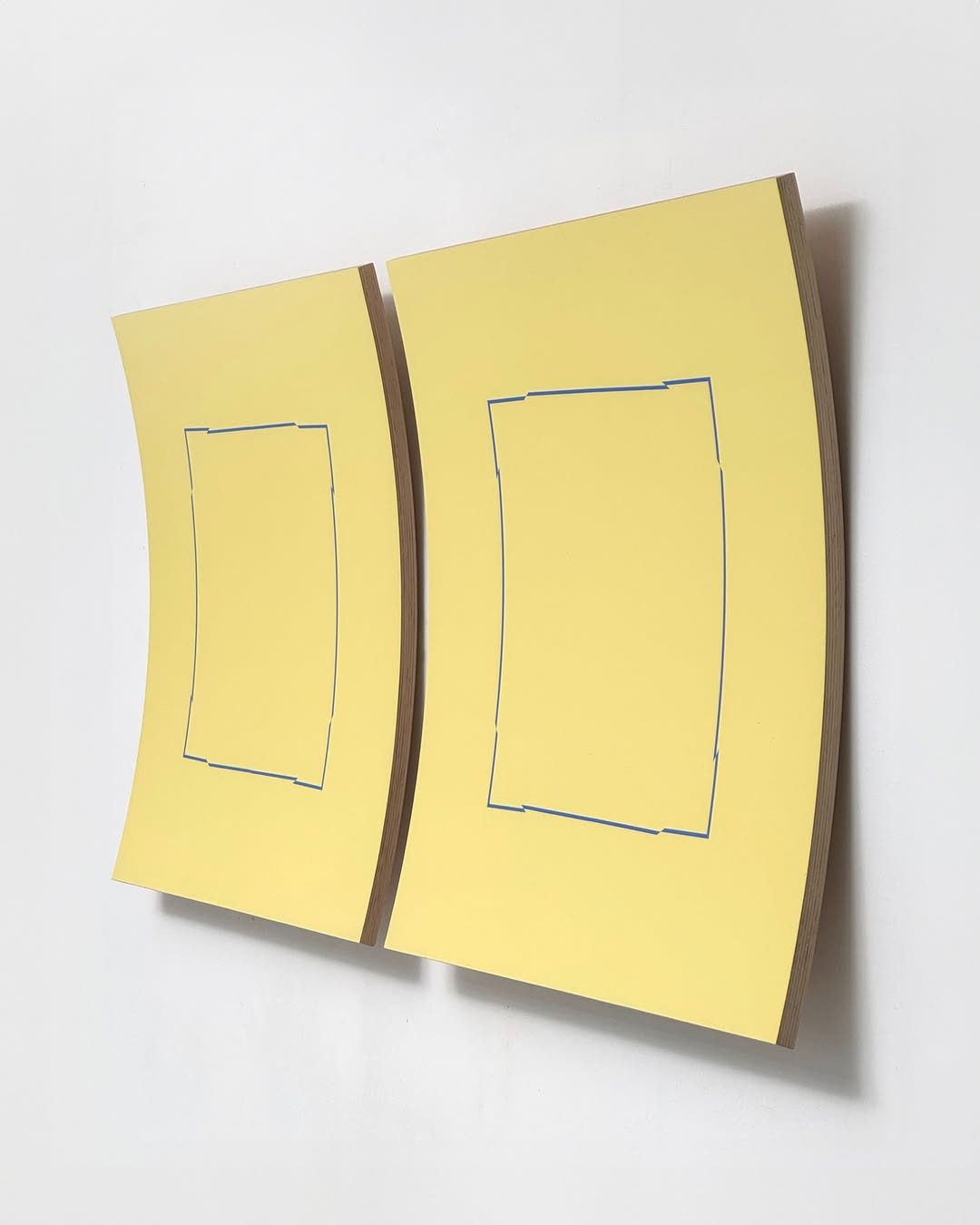
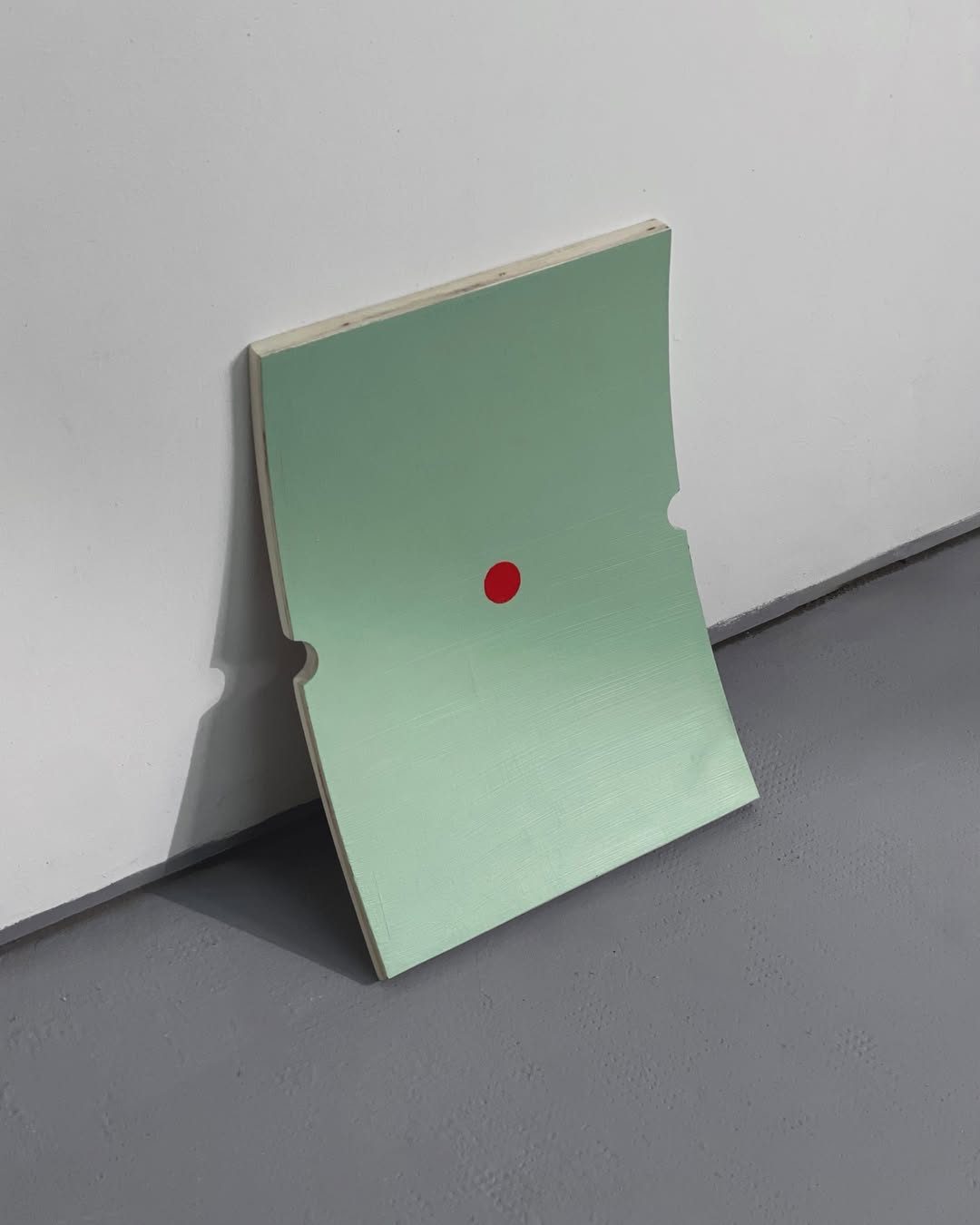
Left: Alejandro Javaloyas, 7200 Secondes II, 2025, bent plywood, gesso, acrylic paint, pencil, universal fixative, matte medium, and matte varnish, 60 x 60 cm each (diptych).
Right: Alejandro Javaloyas, Naphthol Red Circle Against Oxide Green Background, 2023, bent plywood, acrylic paint, gesso, and pigment, 40 x 30 cm.
Your first solo show, Un cuchillo que no corta, opens at Galería Reus in Palma this June, curated by Sofía Moisés. What do you want this one to say, and about what?
Un cuchillo que no corta unfolds as an intimate atlas of images suspended between beauty and the sinister. The works come from my recurrent nightmares, which I have been recording for years in brief notes kept in a notebook beside my bed. From those fragments, I construct a personal mythology that touches on broader concerns: time, death, spirituality, fear, and the human need to give form to what we cannot fully understand.
The project follows a circular journey between image and language. A dream first appears as an intense mental image, then fades into a short written note. Through prompt-to-image AI models, that note becomes an image again, one that both recalls and misreads the original vision. I then select, crop, and digitally edit those images until they become unstable references for realistic colored-pencil drawings on cotton paper mounted on wood.
What I want the show to speak about is that fragile space between memory and disappearance: how we build symbols, rituals, and private mythologies to hold what is already vanishing.
In Un cuchillo que no corta you are inserting a machine into the middle of your own memory. At what point in that chain does the artistic decision happen, and what does it mean that an algorithm is part of how you remember?
The artistic decision happens at every point in the chain. There are choices, interpretations, translation mistakes, and transformations in each step, and that is what makes the process interesting to me.
The whole project is built around the desperate attempt to fix nightmares before they disappear. But it also knows, from the beginning, that this attempt is doomed to fail. The notes never do justice to the dreams. The images never do justice to the notes. And by the time the work is made, I have already forgotten the original nightmare, so no one can really judge how truthful the image is, or whether it resembles what I once dreamed.
AI becomes part of that failure. I produce hundreds of outputs through prompts that often fail completely, go nowhere, or reveal how clumsy and problematic these tools still are. From that excess, I select only a few images, then reframe and transform them. The algorithm does not recover memory; it misremembers with me.
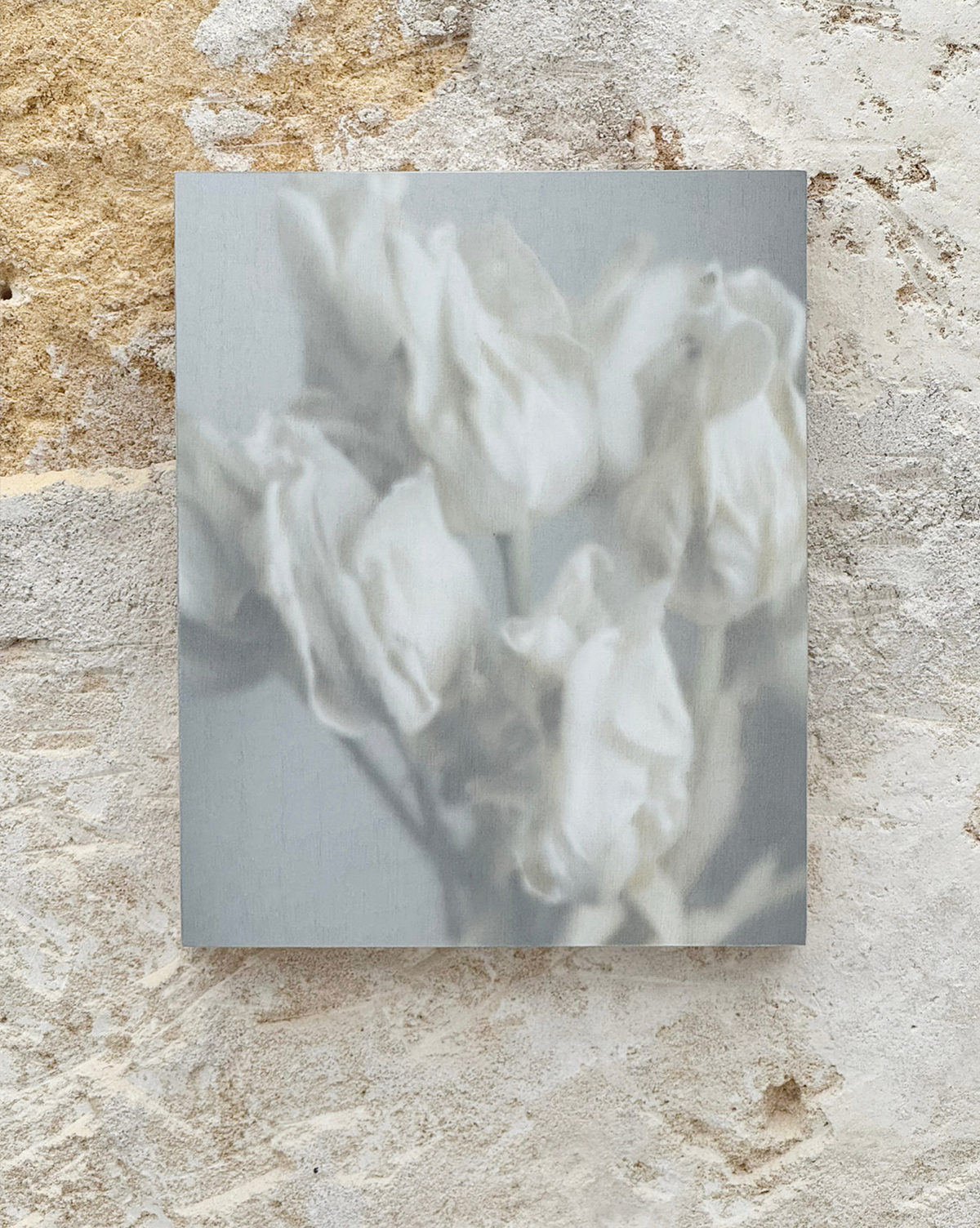
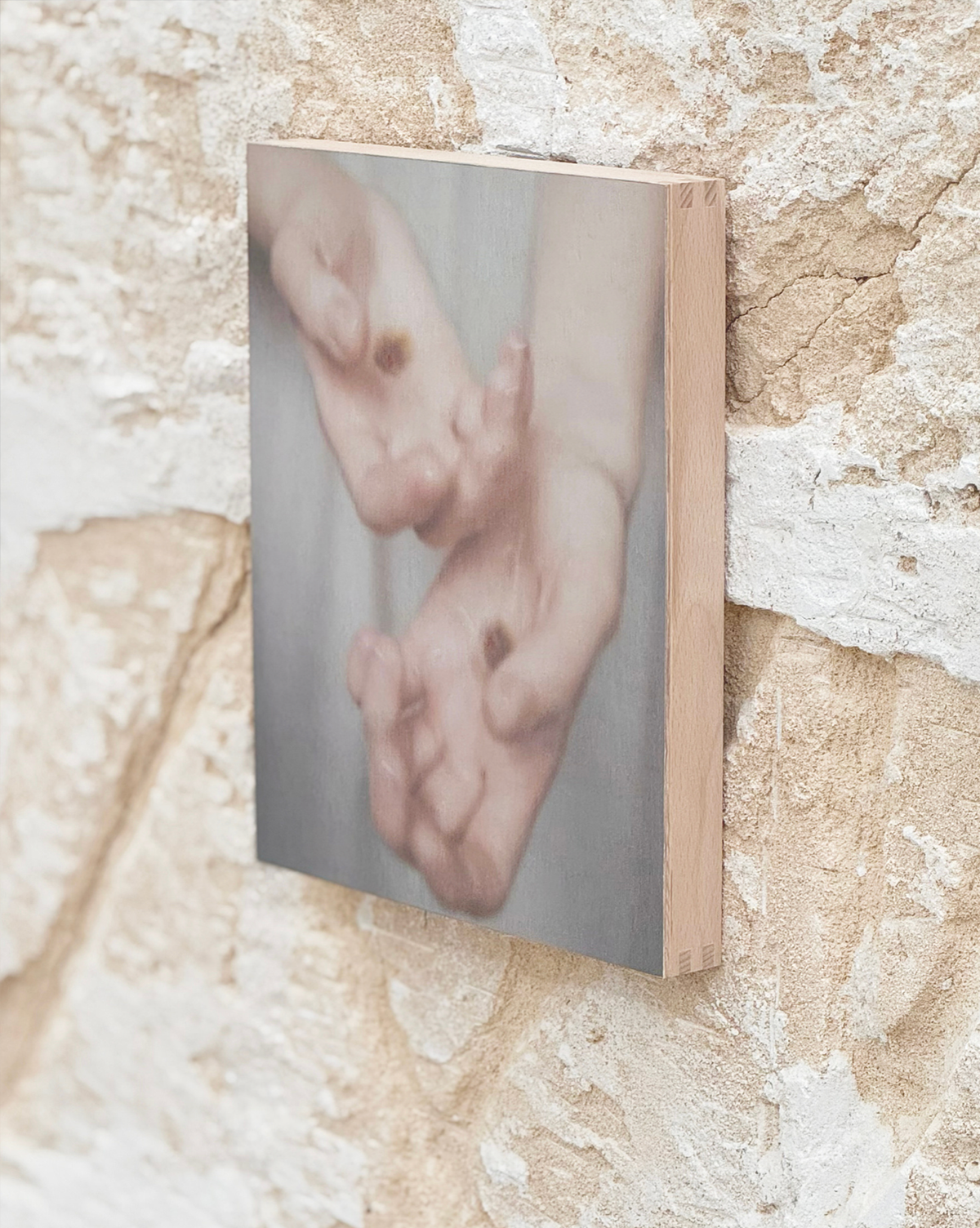
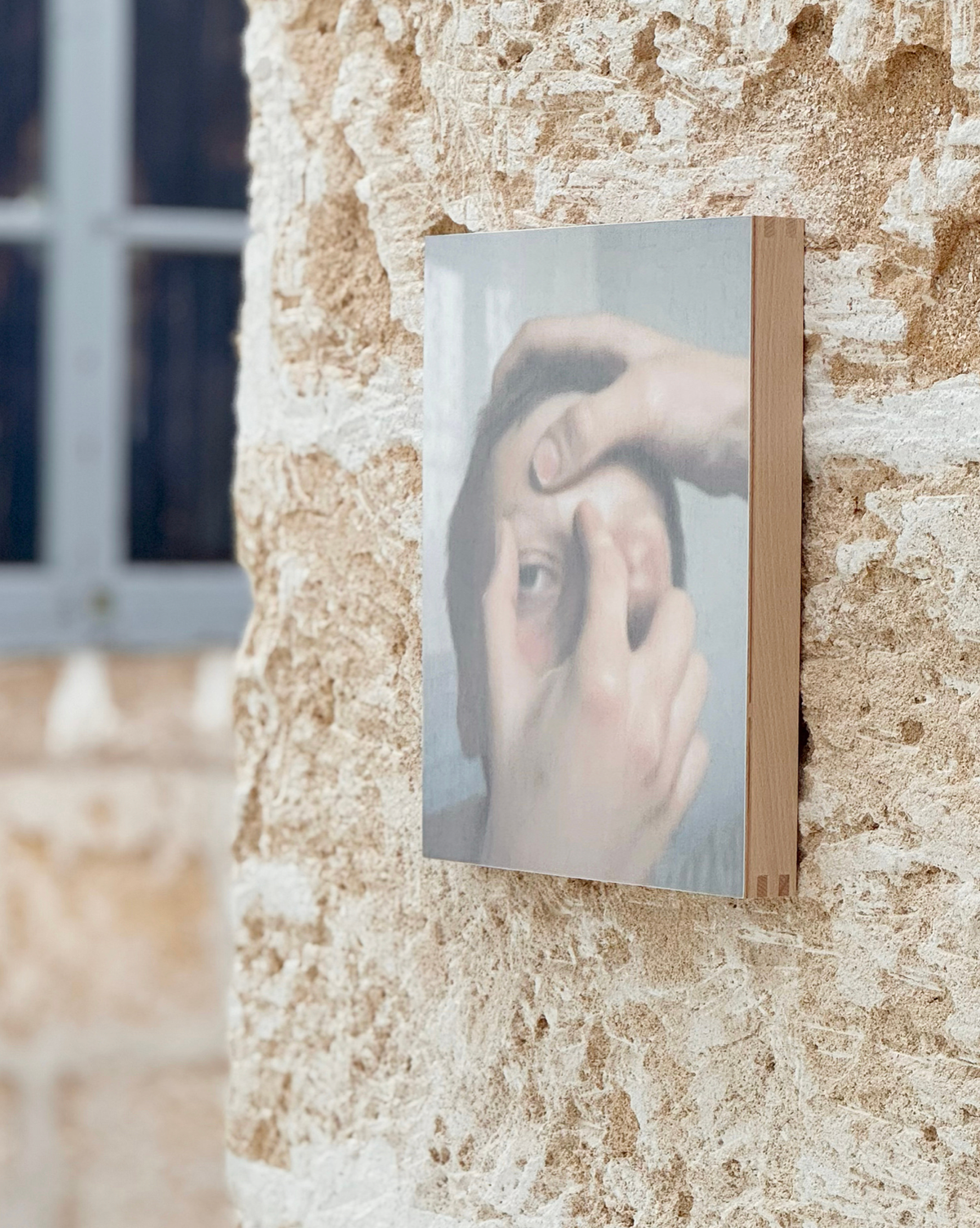
Alejandro Javaloyas, Un cuchillo que no corta, 2025, installation view, Galería Reus, Palma. Courtesy of the artist and Galería Reus.
"What I want the show to speak about is that fragile space between memory and disappearance: how we build symbols, rituals, and private mythologies to hold what is already vanishing."
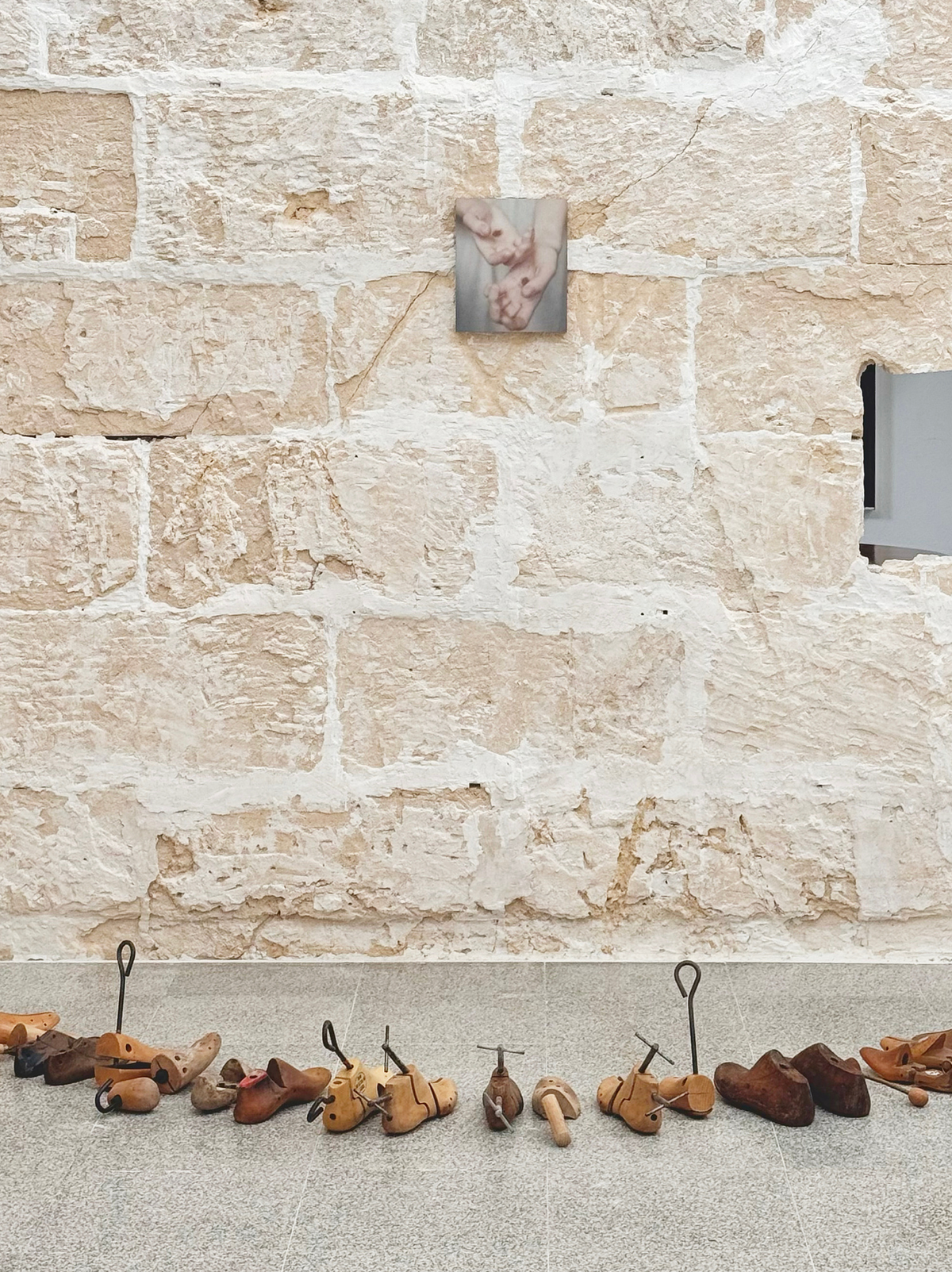
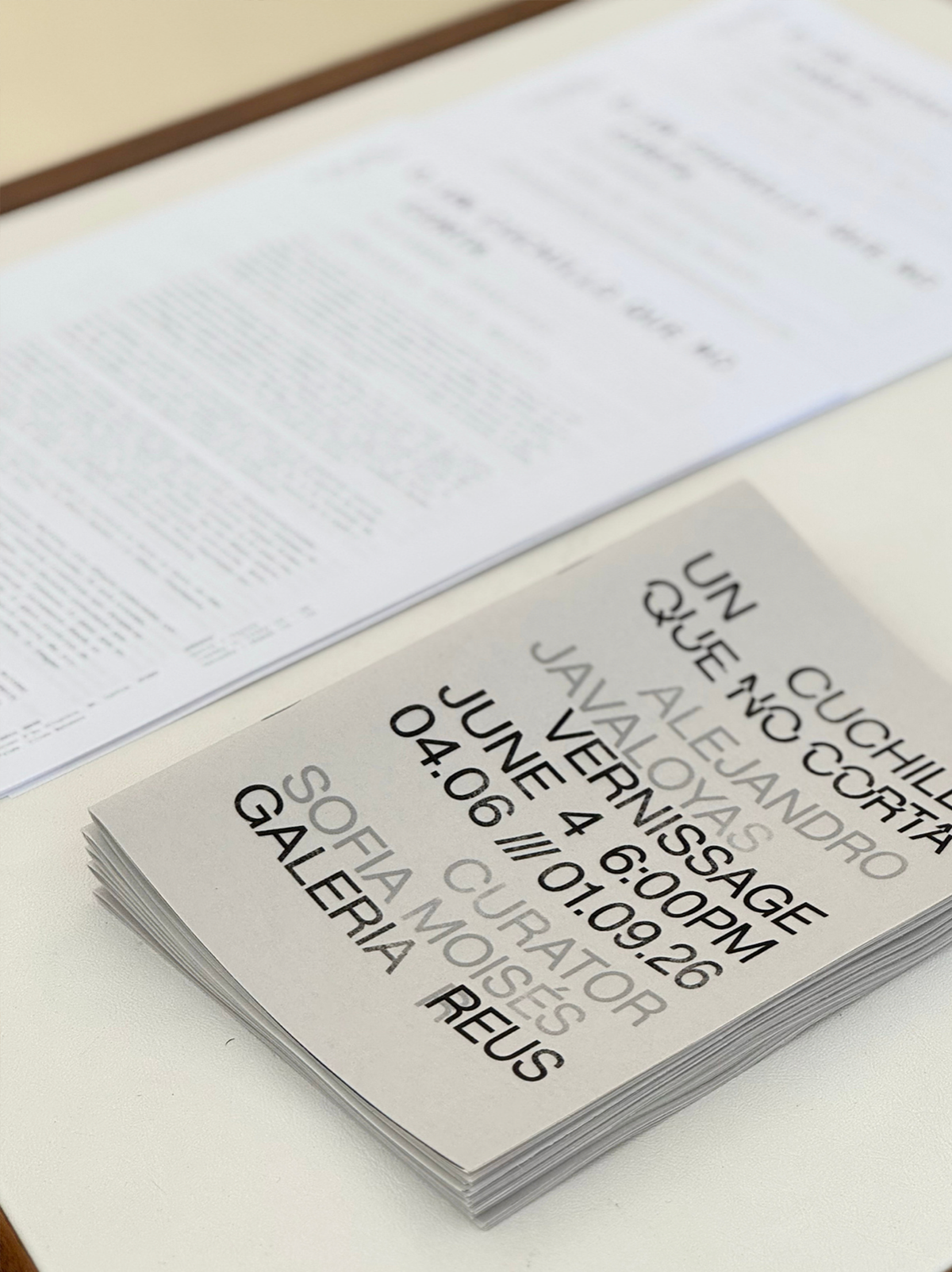
Alejandro Javaloyas, Un cuchillo que no corta, 2025, installation view, Galería Reus, Palma. Courtesy of the artist and Galería Reus.
Memento Mori places photographs of already-dead flowers into water and lets them decompose in real time across the duration of the exhibition. The work destroys itself in public. What are you asking the viewer to witness, and is there a difference between watching something die and being present for it?
Most of my projects revolve around the passage of time, decay, death, and finitude, and Memento Mori was no exception. The installation was displayed almost like a cemetery, where each "tomb" contained photocopies of wilted white lilies. The flowers were both offering and dead body.
But above all, I was interested in shifting the focus of photography away from representation, from what the image shows toward the photograph as a physical object made of paper. I like to think of that paper as a body with memory, also condemned to suffer time, aging, decay, and disappearance.
So the viewer is not only witnessing an image of death, but the death of the image itself. That distinction matters to me. Watching something die implies distance; being present for it involves time, attention, and a form of care. It is close to the Japanese concept of mono no aware, that tender awareness of impermanence: the beauty of things precisely because they cannot last.
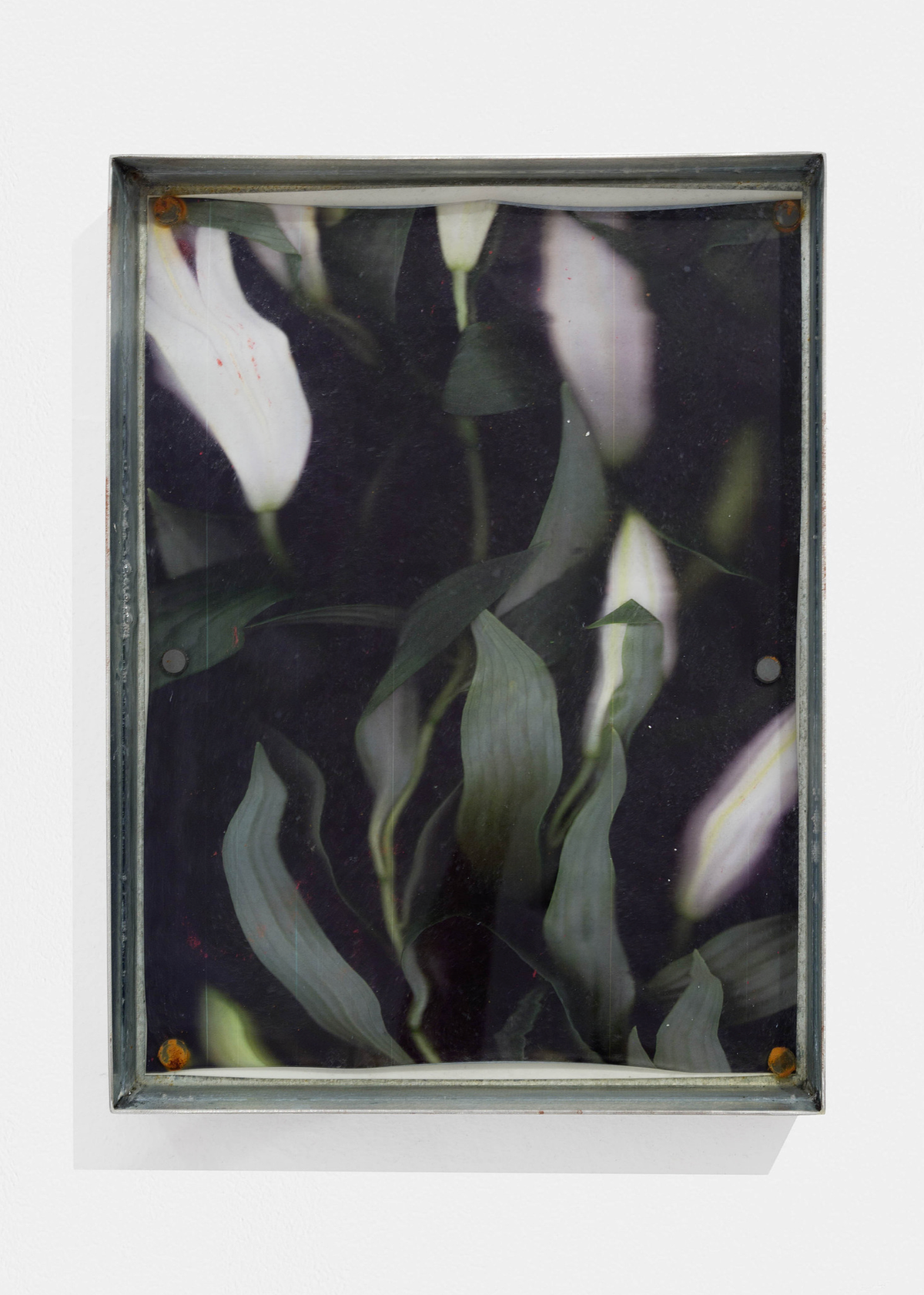
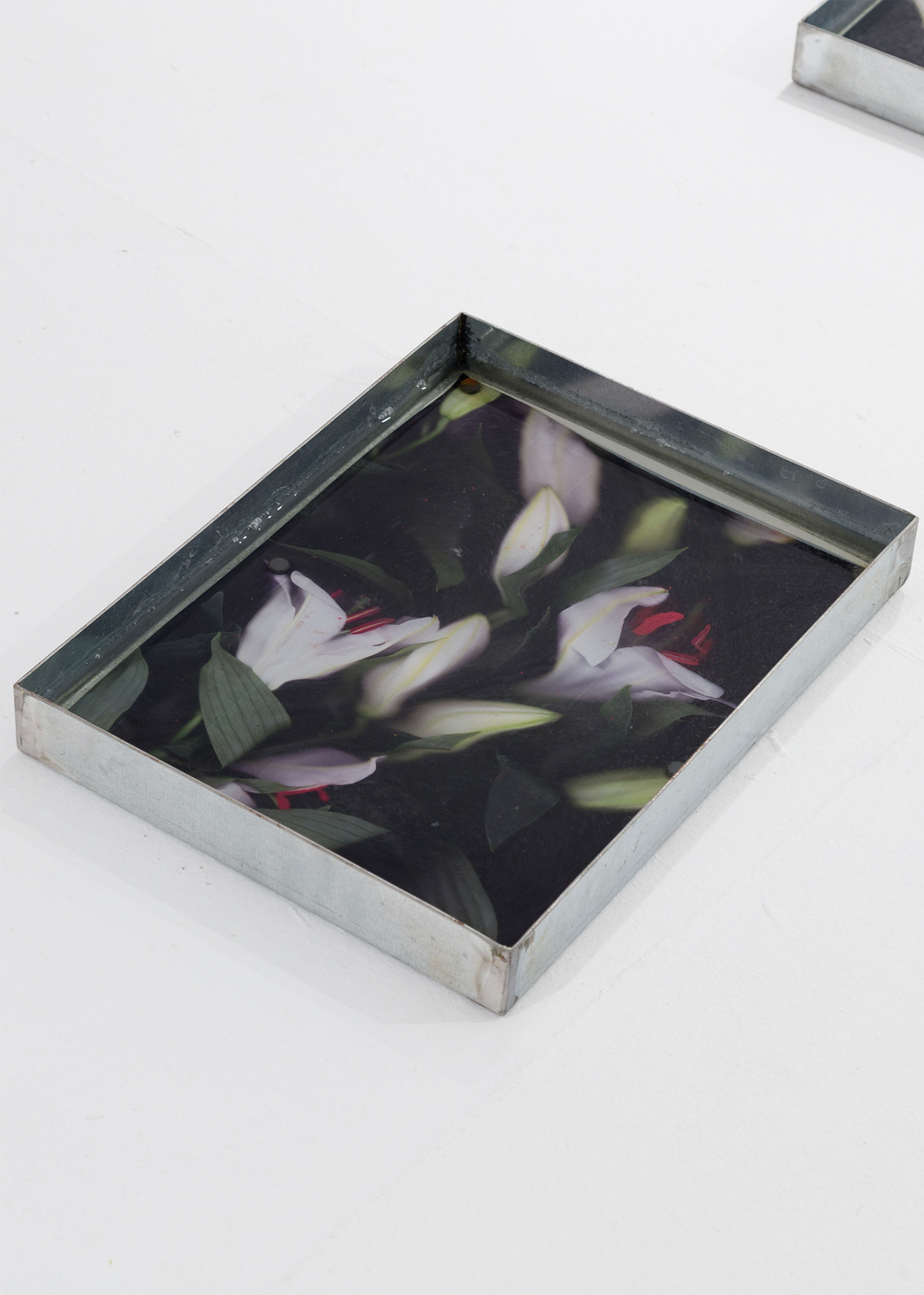
Alejandro Javaloyas, Memento Mori, 2023, fifteen galvanized steel trays, water, and color photocopies on paper.
The symbolic vocabulary across your work: rosaries, virgins, porcelain figures, milk teeth, burning houses is drawn from Catholic visual culture, but it doesn't feel devotional. It feels more like the residue of a belief system that's still present in the body even after the doctrine has gone. Is that a fair reading?
Yes, that feels like a very fair reading.
I went to Catholic school until I was 18. Growing up gay in the early '90s, in a conservative environment with very few positive references, was difficult. As soon as I could, I left for Barcelona, partly to study film, but also to find a place where I could bring my whole self into the world.
For many years, I had a conflicted relationship with my upbringing, my education, and my faith, especially with the guilt I was made to feel for who I was.
Over time, and through living in different countries and meeting people from very different backgrounds, that relationship has softened. I still have serious conflicts with parts of the Catholic Church, and I don't practice, but I recognize that many values I was raised with compassion, forgiveness, non-violence, honesty, selflessness are essential to who I am.
So yes, the doctrine may be gone, but the imagery remains in the body.
There's a tendency in writing about artists to describe the work as if it arrives fully formed from some elevated state of consciousness. But all of it gets made somewhere specific, on an ordinary day, in a room in Toulouse. What does that actually look like, and how much of the work happens before you touch anything?
I currently guide food tours for a living. Every morning, from 10 to 2, I entertain a group of visitors interested in the history and gastronomy of Toulouse. I enjoy it, but I am also deeply introverted, so it drains me.
After work, I need four or five hours of studio time almost every day. That is my safe place: silence, Chet Baker or Phoebe Bridgers, reading, thinking, writing, drawing, sometimes doing apparently nothing. But that "nothing" is very active. I would say most of the work happens there, before I touch anything.
Unless there is an exhibition coming up, there is no strict schedule. A body of work often takes months to become mentally clear. Then, once it is fully conceived, the execution becomes frantic and obsessive, almost like a short burst. I feel close to Luc Tuymans's idea that the hardest part is conceiving the show; by the time the hand starts working, the intelligence has already moved into it.
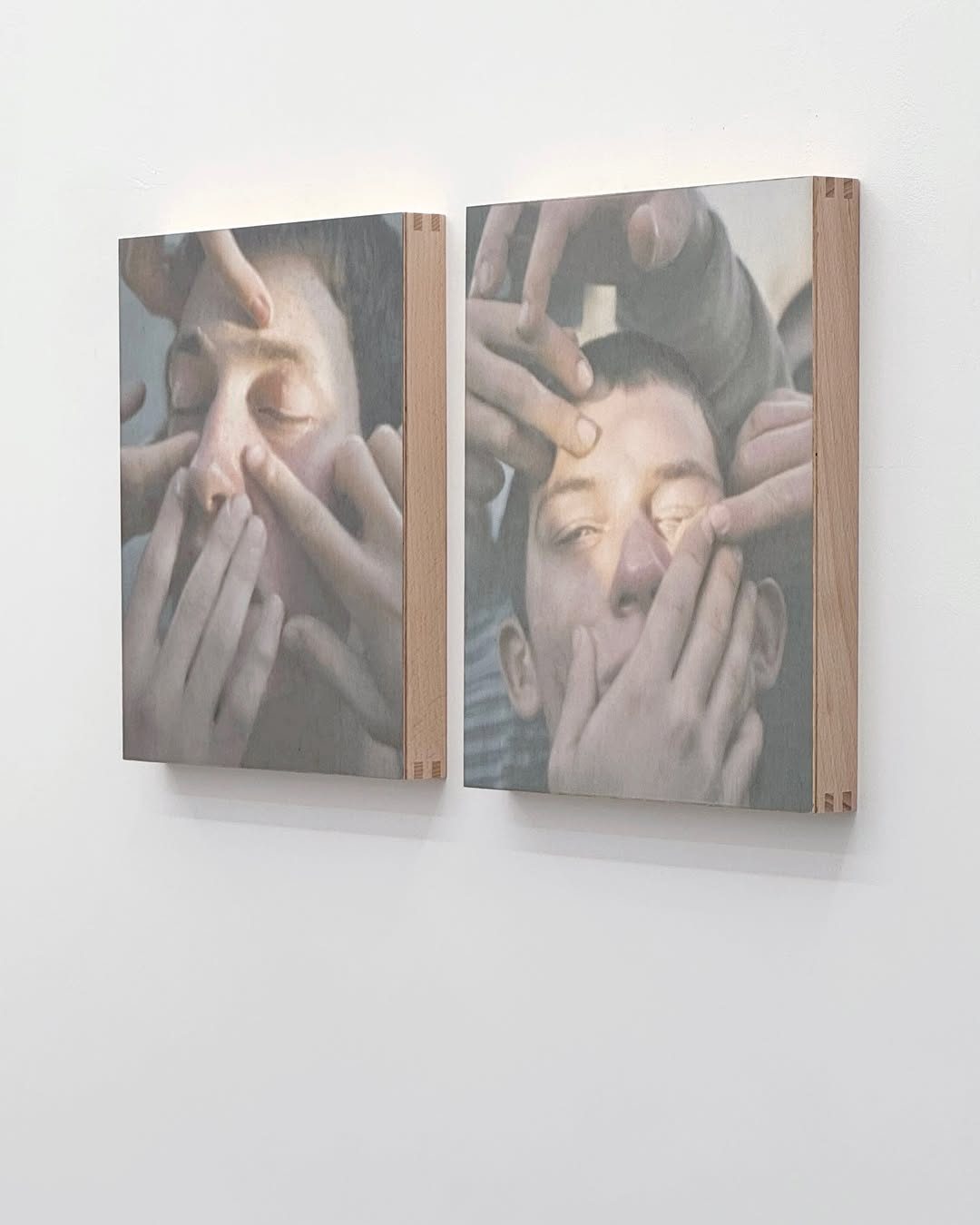
Left: Alejandro Javaloyas, Incredulità di San Tommaso, 2025, colored pencil on cotton paper mounted on board, diptych, 30 × 25 cm each.
Right: Alejandro Javaloyas, Maybe the next time, darling, 2025, colored pencil on cotton paper mounted on board, 30 × 25 cm.
"A body of work often takes months to become mentally clear. Then, once it is fully conceived, the execution becomes frantic and obsessive, almost like a short burst."
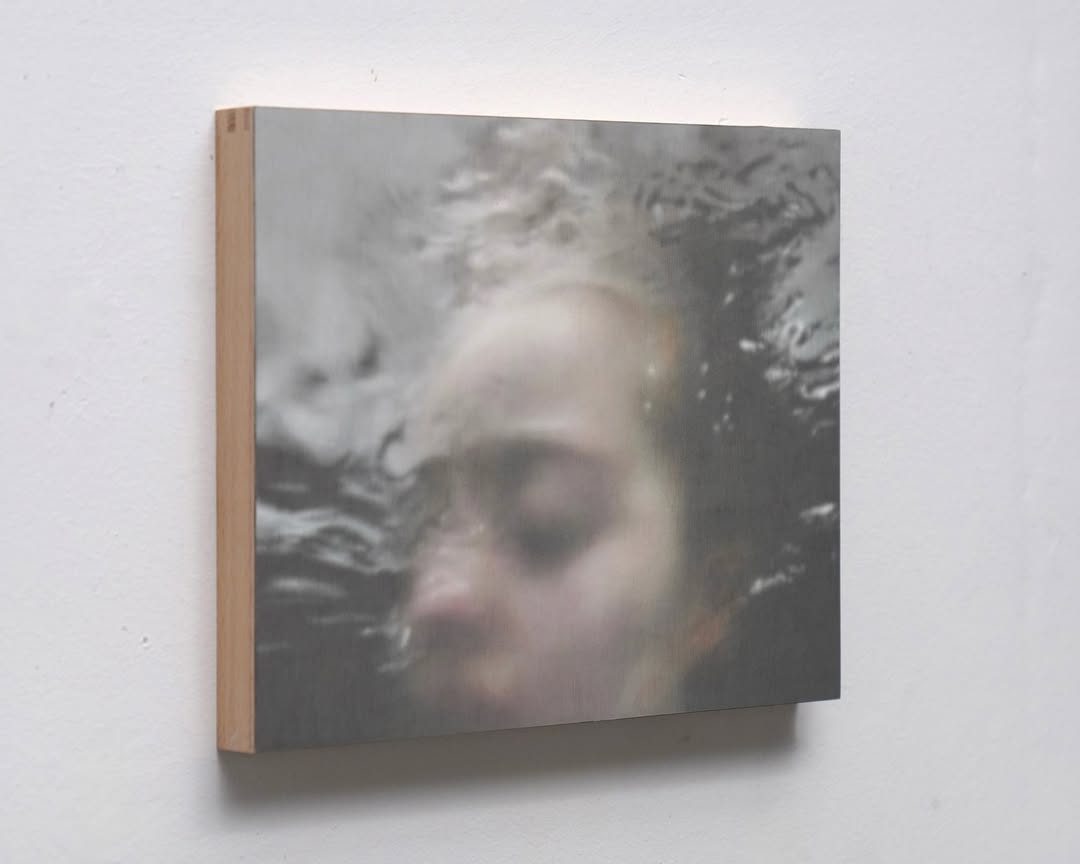
Alejandro Javaloyas, Pulled the poor wretch from her melodious lay to muddy death, 2026, colored pencil on cotton paper mounted on board, 25 × 30 cm.
Your next show is titled Now it's time for monsters. That implies something previously held back, a permission granted, or a threshold crossed. What have you been waiting to make?
The title comes from a sentence often attributed to Antonio Gramsci, although not quite accurately: "The old world is dying, and the new world struggles to be born: now is the time of monsters." What Gramsci actually wrote, in his Prison Notebooks, was closer to: "The crisis consists precisely in the fact that the old is dying and the new cannot be born; in this interregnum a great variety of morbid symptoms appear."
Gramsci was an Italian Marxist philosopher and political theorist imprisoned by Mussolini's Fascist regime in the late 1920s. He wrote the Prison Notebooks while incarcerated, thinking through power, culture, ideology, and crisis.
That idea of the interregnum feels painfully relevant now: a collapsing order, a future that cannot yet arrive, and all kinds of morbid symptoms appearing in between. For me, it echoes the current rise of the far right and the instability around us.
The show is an attempt to give my figurative work a sharper political edge, without becoming illustrative, obvious, or explanatory.
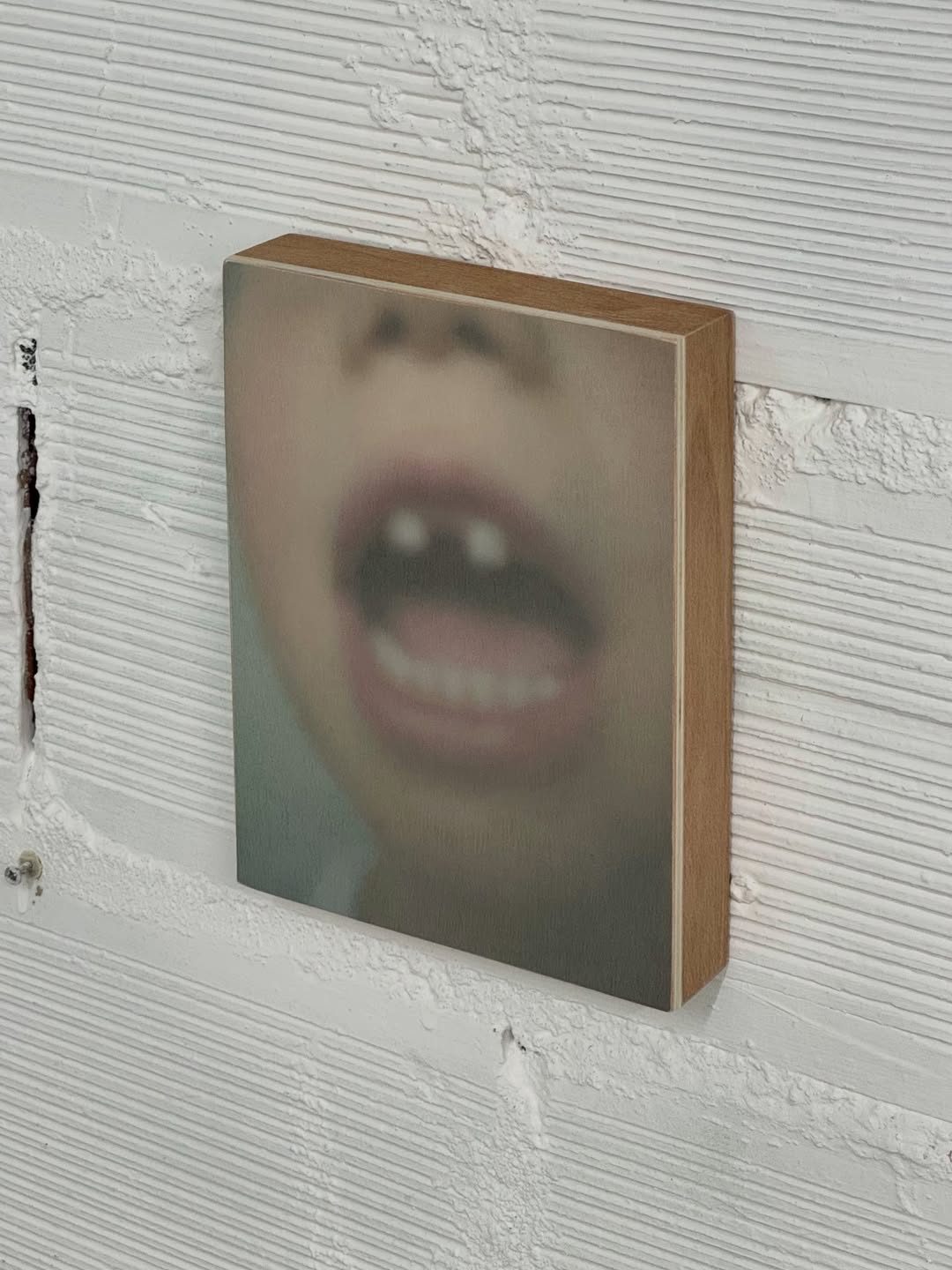
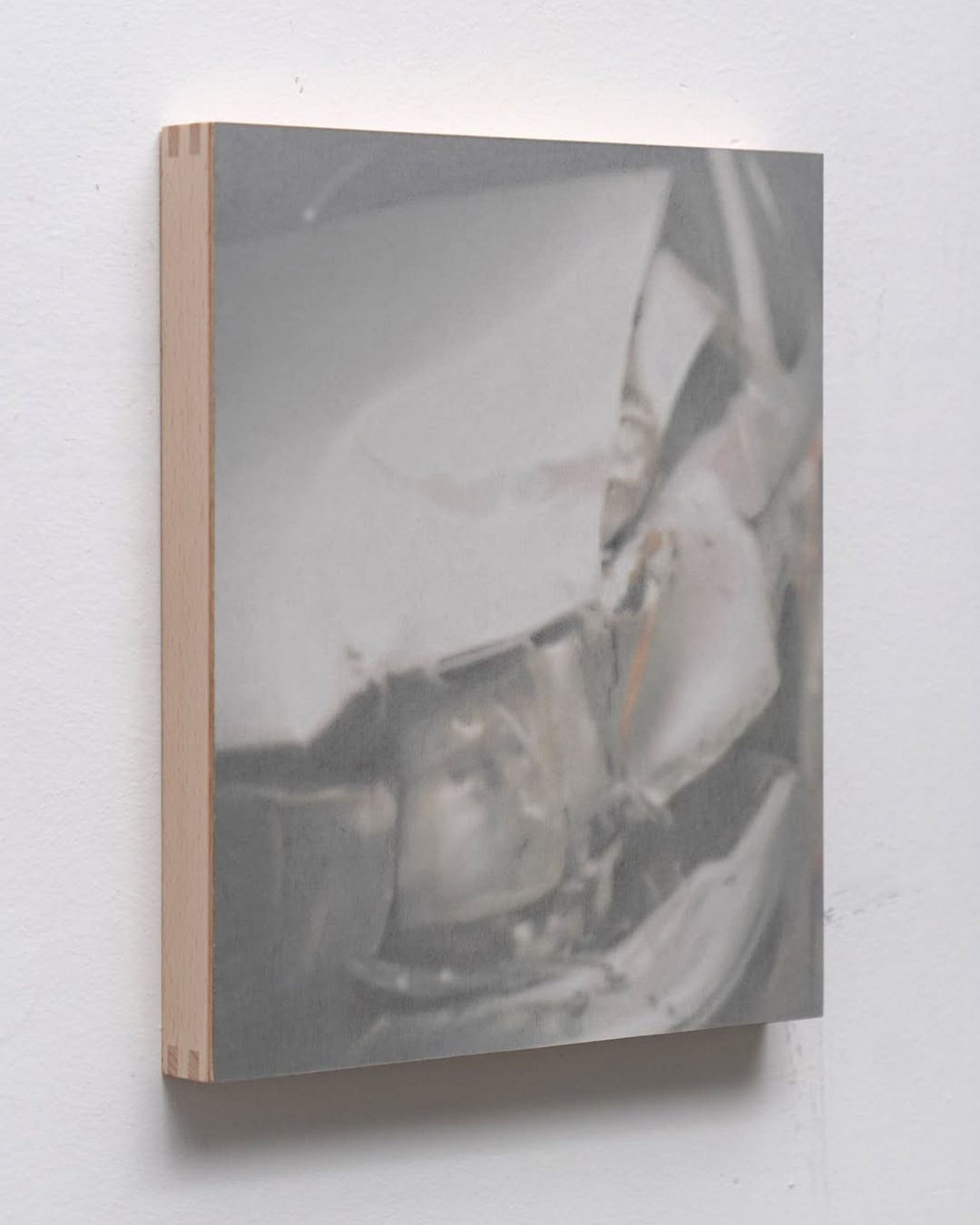
Cover Image: Alejandro Javaloyas, Rien ne se passe, personne ne vient, personne ne s'en va, c'est terrible, 2025, colored pencil on cotton paper mounted on board, 20 x 15 cm.