THE MATTER OF MOVEMENT: IN CONVERSATION WITH PETRICHOR
CONVERSATION BY SELIN KIR
CO-FOUNDER, CURATOR
2 NOVEMBER 2025 — UNITED KINGDOM
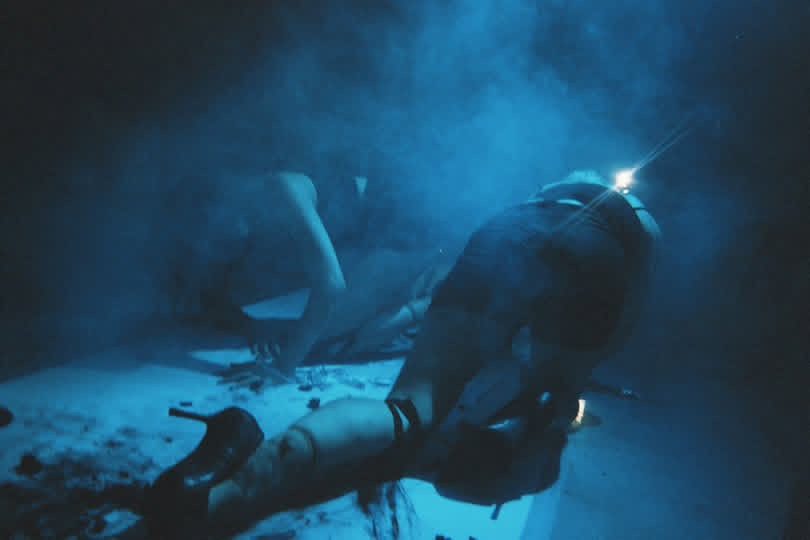
In performance, material is never just a surface. It is a body that thinks back. Every fabric, residue, and sound carries its own nervous system, its own memory of touch. The body moves, but so does the charcoal that fractures underfoot, the ribbon that tightens, the air that thickens with breath. Movement becomes a negotiation between intention and resistance, between the body’s desire to express and the world’s quiet refusal to yield. Through their performance 'RESIDUES', created with FLOWFINCH, we spoke with PETRICHOR about material as a living presence, not a medium to be shaped, but a force that shapes back. Using RESIDUES as a point of departure, our conversation unraveled how ribbon, charcoal, and sound become collaborators in movement; agents that record, resist, and remember.
The white ribbon in RESIDUES shifts from a decorative, fragile association to a restrictive, binding force. How did your understanding of this material evolve through the performance? Did it surprise you in any way once it was in motion?
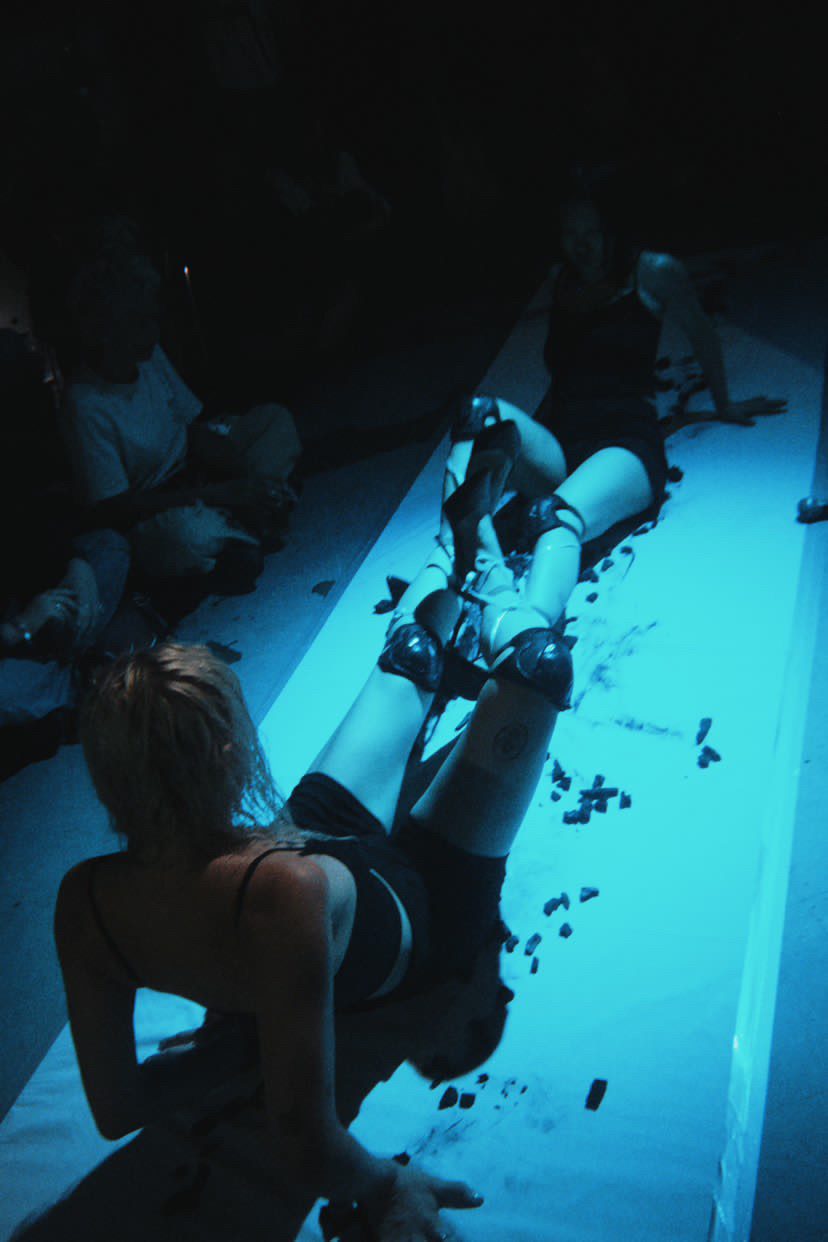
When developing the choreography, we tested a few different materials to tie us together. We were experimenting and initially tested ribbon because it was a material that was close at hand. However, by physically trying it out, we became compelled by its visual qualities and by the idea of something considered “decorative” or unthreatening being deployed in a restrictive way, as an obstacle. Throughout the duration of the piece, it shifted from something decorative, pristine, and restrictive to a cat’s cradle from which we disentangle, then fell into an organic formation on the ground, finally becoming part of the detritus of our bodily movements.

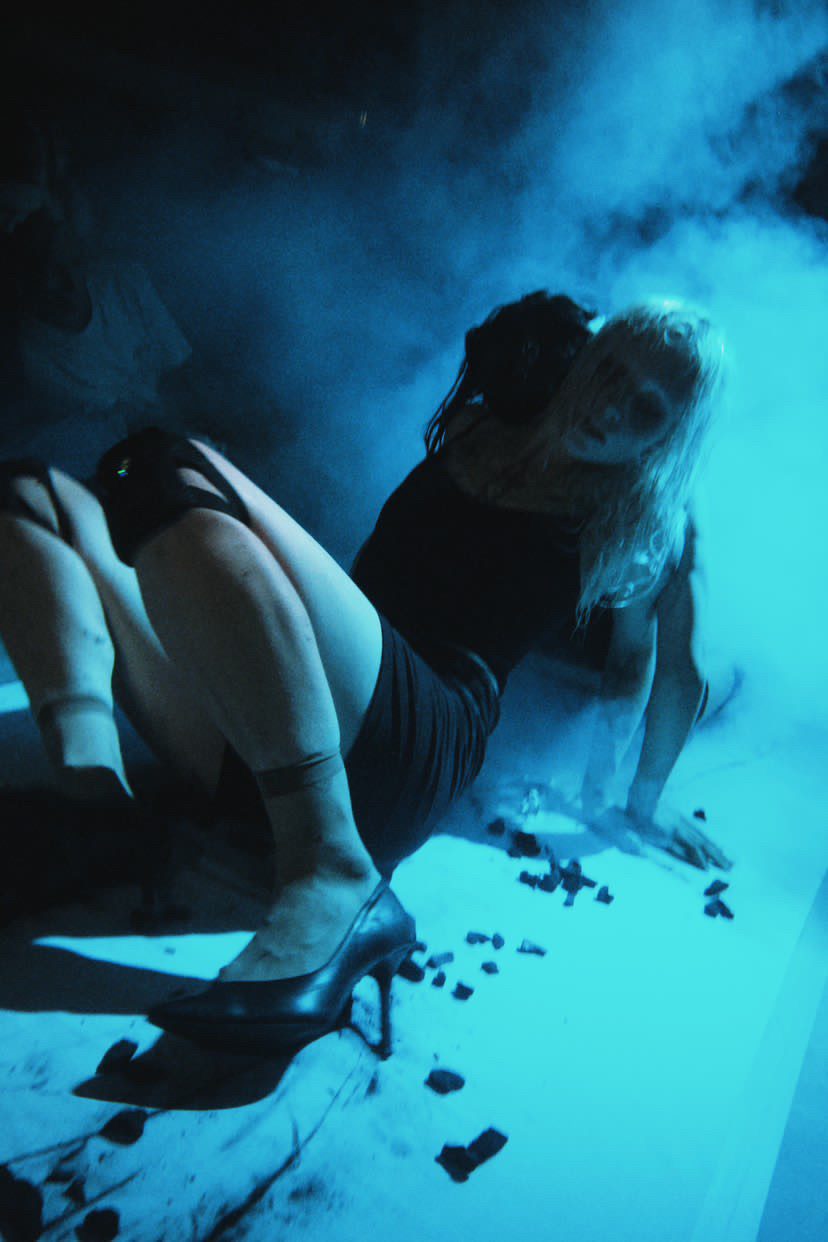
Charcoal in this work leaves a visible residue: a trace of movement, a form of drawing through the body. Can you talk about the relationship between choreography and mark-making here? Was the path of the charcoal more of a score or a constraint?
The charcoal was perhaps more of a score, an extension and an expression of our movements. The use of charcoal, the sound of it cracking and crunching under the stilettos, as well as the marks left behind helped to convey the intense pressure and physical exertion within our movements.
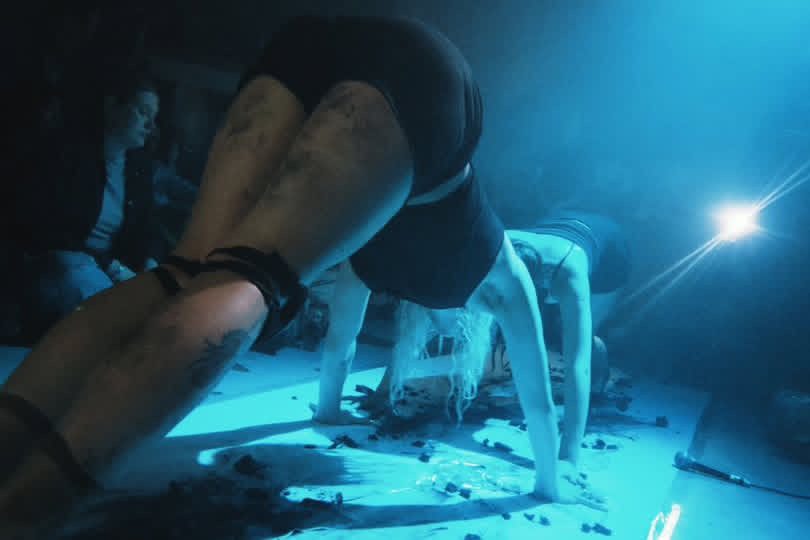
“The charcoal was perhaps more of a score, an extension and an expression of our movements.”
The stilettos seem to oscillate between power and restriction, elegance and violence. How did working in these shoes affect your movement choices, and did the sound they produced influence the atmosphere you wanted to create?
The stilettos definitely moulded how we composed our bodies, it was quite difficult to keep balanced while shifting through different shapes, meaning the movements looked quite stiff and awkward at times. The aim of this was not to “smooth out” the difficulty but to lean into it, creating an uncanny and sinister feeling. This is also why the piece is slow-paced.

You’ve spoken about this piece as a collaborative process between two performers (PETRICHOR & FLOWFINCH). How did you choreograph together, was it tightly structured, or did you leave space for improvisation and negotiation in real time?
We had a really generative process choreographing together, which involved playing with ideas and testing out several different versions of the piece. This work was quite closely choreographed; however, in my practice, I consider choreography to be a loose framework to refer back to. If it changes in the moment, that can be even more interesting, and it’s important to embrace the unexpected in live work.

RESIDUES engages with materials that record and alter the body: ribbons that knot, charcoal that smudges, shoes that scuff. Looking back, what do you feel these residues hold? Are they simply traces, or do they carry a kind of memory or evidence beyond the night of the performance?
For me, they feel like evidence of movement and an invitation to remember or to imagine. Maybe they invite us to question what documentation can be.
The soundscape for RESIDUES, created in collaboration with NONPROFET, feels like another layer of choreography, shaping the atmosphere and the audience’s emotional entry point. How did you conceive this auditory dimension, and did the performance shift once sound and movement met in space?
In creating the soundscape, the aim was to make it feel akin to being in a large cave, sonically, somewhere between foreboding and beautiful. The words are not intended to be entirely decipherable, and the vocal processing gestures toward an otherworldly or not-quite-human presence.
And finally, your practice with Lara G.G. is kind of a dual embodiment, two minds inhabiting one choreographic body. How do you navigate authorship and intuition within this shared space?
Our performances and process of making are a sort of conversation. It’s a back and forth, a push and pull between choreographed and spontaneous gestures. We start with a loose structure, which is then activated by the live context, it’s not so much about ownership as it is about creating a shared experience. The motions are fluid and blend into each other, it is often difficult to know who initiated the movement first. In a way, we start to dissolve authorship through the fluidity of our dialogue.
“Through the duration of the piece, it shifted from something decorative, pristine, and restrictive to a cat’s cradle from which we disentangle, then fell into an organic formation on the ground, finally becoming part of the detritus of our bodily movements.”
PETRICHOR's reflection on the materials used, the fabric, ribbons, and charcoal, offers a brief context for the choices made and the reasons these particular elements drew her in:
White ribbons:
We wanted to complicate associations of this notionally “delicate,” “decorative,” and “whimsical” material by making its function restrictive in this context (literally binding us together initially). The ribbon behaved as a choreographic tool, a way to extend and visualise the push and pull of tension and power within the work; something from which to disentangle. Coating the initially pristine ribbon in charcoal residue, and crumpling and knotting it over the course of the performance through our bodily movements, resulted in another form of mark-making and documentation that felt important somehow.
Charcoal:
We used this to explore mark-making with our bodies while simultaneously generating a form of movement documentation in a material that leaves behind smudges, marks, traces, and residues. This was influenced by Carolee Schneemann’s piece Up to and Including Her Limits (1973–76) from a mark-making point of view. The charcoal was laid in a precise pathway. The path of the charcoal initially determined the movement of our bodies, this was to make the piece feel precarious, like a tightrope walk.
Stilettos:
We wanted to touch on the status of this shoe as both symbol and object, with all its complex, concurrent, and parallel meanings, but also to employ it as a choreographic device. We wanted to play with, and work against, how the architecture of the shoe aggressively shapes, streamlines, and restricts movement and the body, while simultaneously exploring the sensuality and power of how the body fills, shapes, and controls the shoe. The charcoal also added an auditory element, the crushing, crunching, and scraping in relation to the heels of our shoes was jarring and brought out the sinister aspects of our movements.
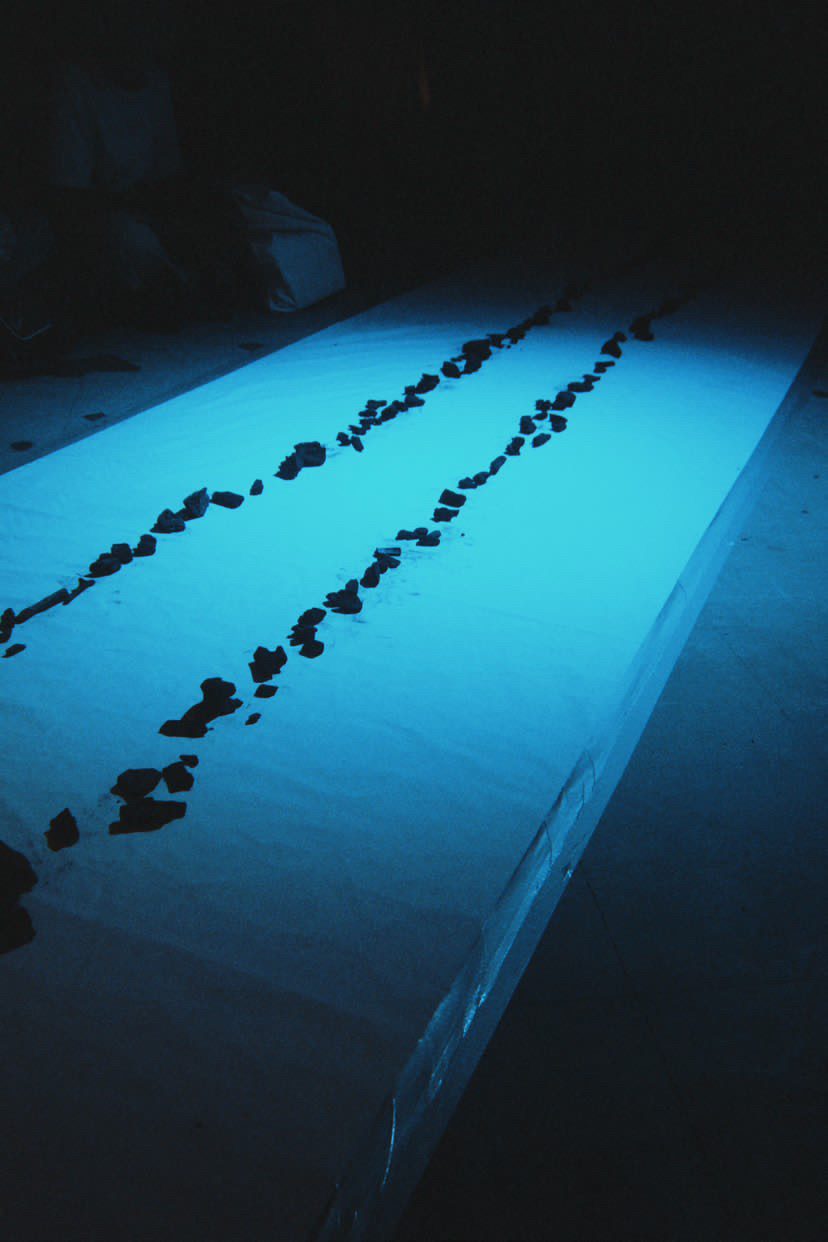
“The aim was not to ‘smooth out’ the difficulty but to lean into it, creating an uncanny and sinister feeling.”
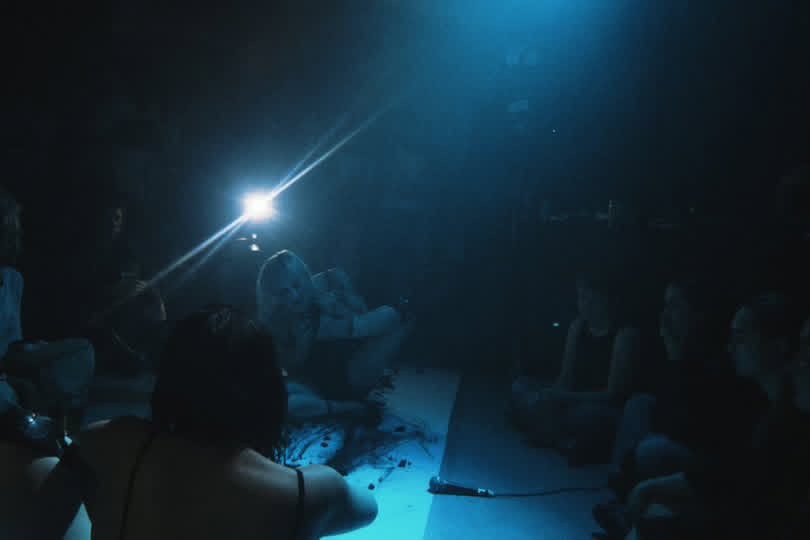
RESIDUES was performed as part of @opsis.ldn at @avaloncafebermondsey on 31/07/2025
Performance and creative direction