NO CREATURES PULLING AT ME ANYMORE: IN CONVERSATION WITH ALESIA CIDA
CONVERSATION BY SELIN KIR
CO-FOUNDER, CURATOR
6 NOVEMBER 2025 — UNITED KINGDOM
In a world of mass production and quiet waste, Alesia Cida works with what’s already here: salvaged fabrics, found textures, discarded traces to tell stories of care, protest, and persistence. Her practice, rooted in post-communist frugality and queer futurity, redefines what making can mean when creation itself becomes an act of resistance. Through textiles, she reclaims softness as strength and repair as rebellion, stitching together memory, survival, and possibility. Each thread becomes a voice: frayed, political, and alive.
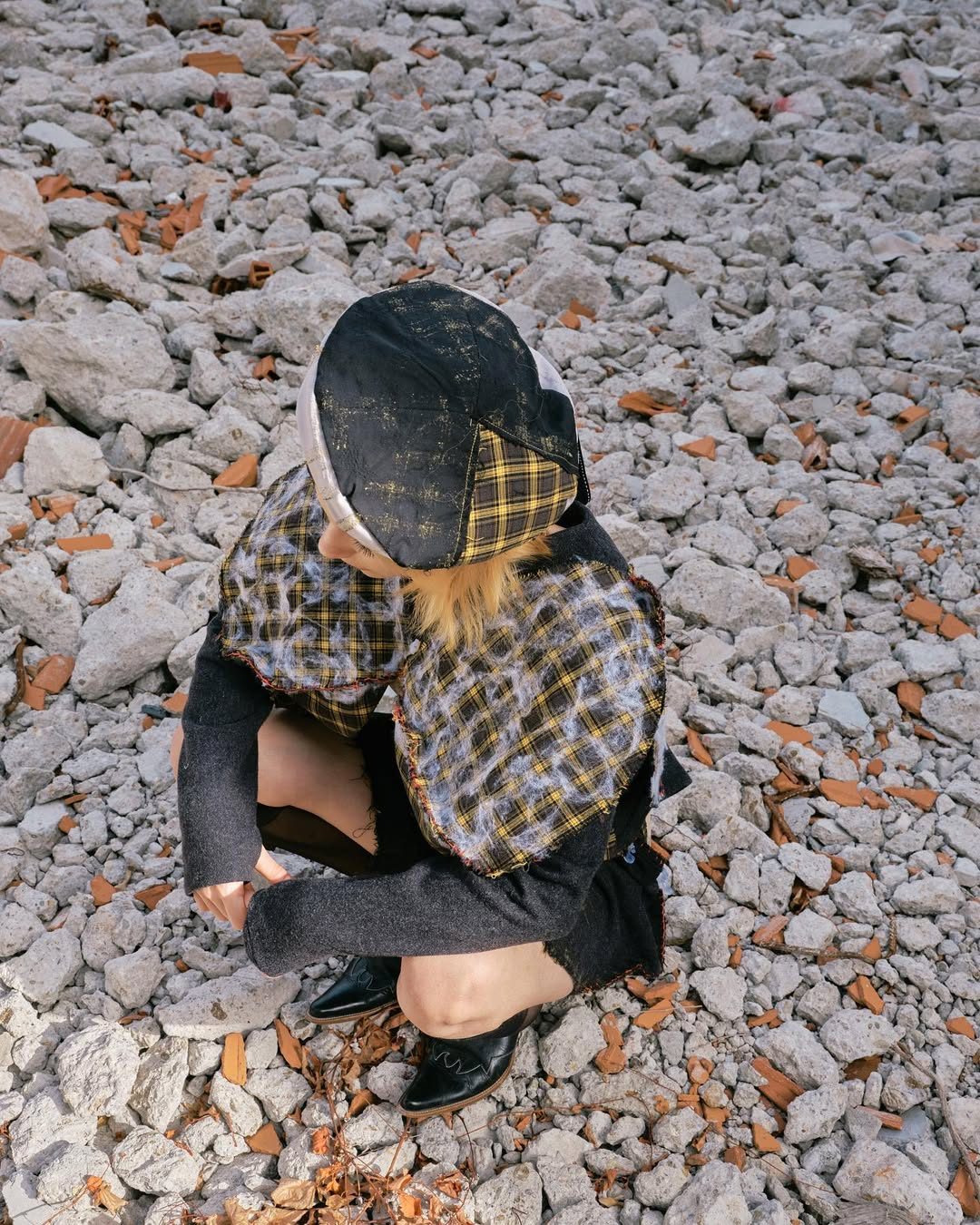
Graduate collection by @ioana.rmn
Captured by @nurstagramx
With @kiana_pascenco @mirunaalinaa
Assist — @cd_gabriell
To begin, can you describe your practice in your ow words? Not just what you make, but how you think. What questions, materials, or gestures stay with you, persisting across time, projects, or forms? What kind of world are you trying to build through your work?
I am a multimedia artist, exploring various methods of conveying my lived experiences; regardless of approach, all projects have the existing resources as the starting point. I collect and interpret found materials according to the current area of interest I want to explore. I let them guide the process, while sticking with the chosen concept. The outcome is an ongoing negotiation between the items that I find in second hand shops and flea markets and my own expectations I set when starting the project.
As a fashion design graduate with an anti fashion industry standpoint, I’ve been pursuing alternative channels of using my knowledge that align with my ethos. Exhibitions featuring my educational textile installation, upcycling workshops and a collaborative showcase from Camden Art Centre’s youth programme are a few of my recent activities.
I create as a form of protest. Through resourcefulness and textiles, I vocalize my stance on general worrying matters such as the climate crisis, traditional gender roles, recycling industry flaws or something as simple as the passage of time.
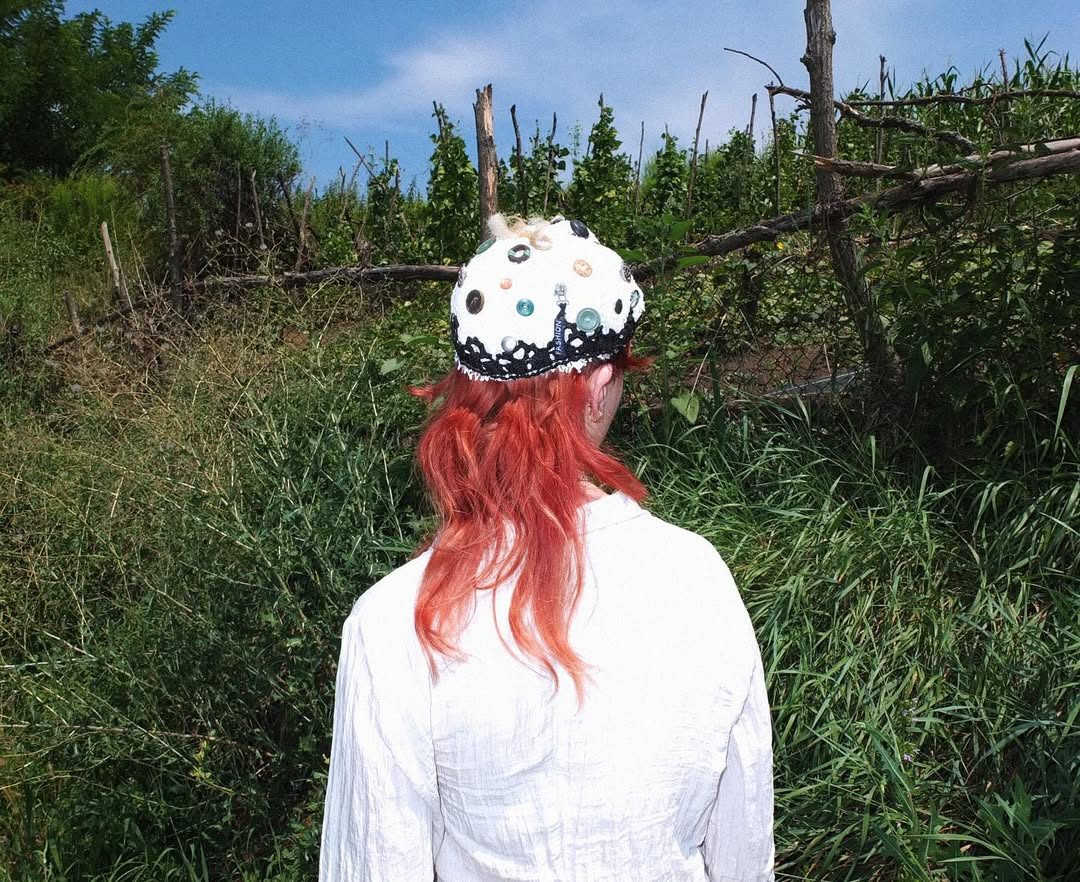
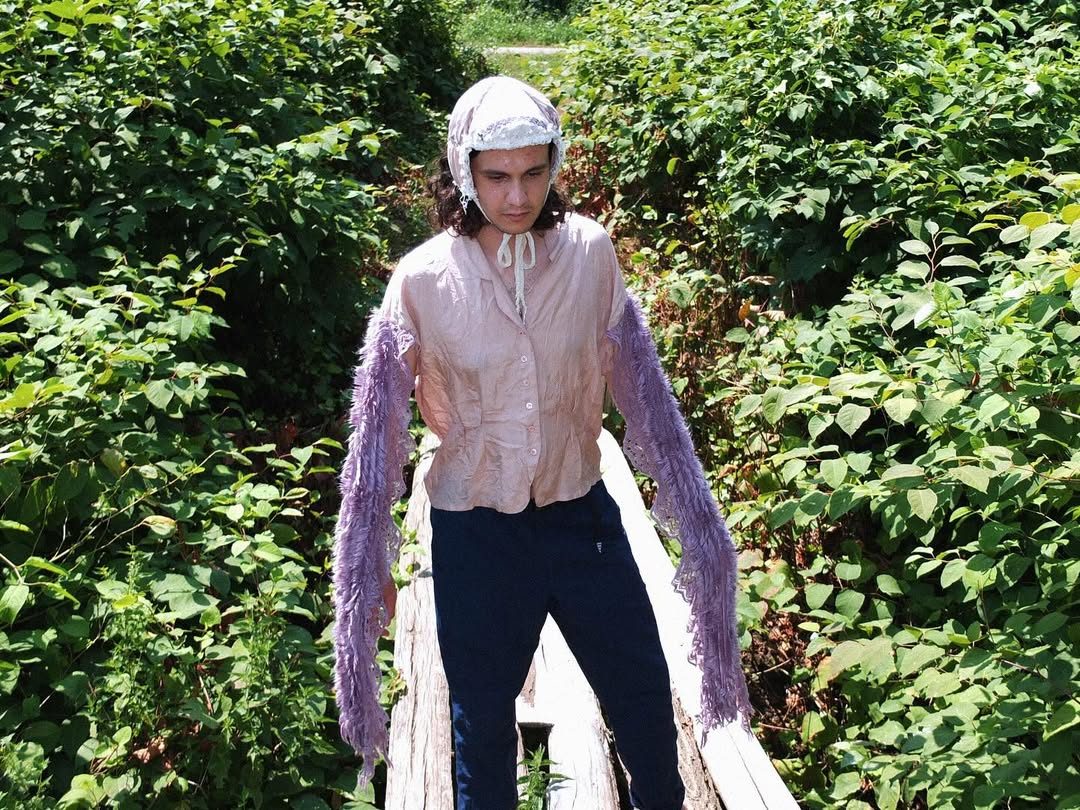
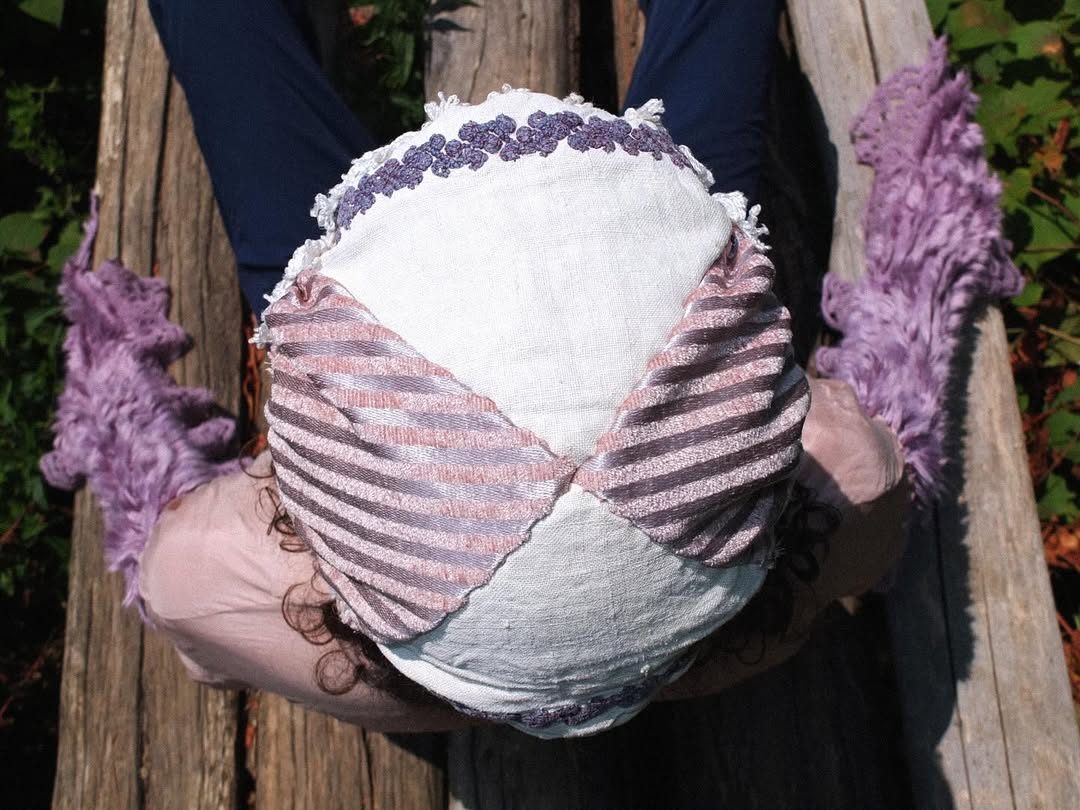
Hats, in Viișoara
Location — @acasalahundorf
Image by: @teodorgeorgescu
With — @szilvaymate @aysunazatalay
“I work a lot with chance. It definitely ends up being a ‘tug of war,’ but that’s what makes my practice distinctive.”
Your work feels like a constellation of parts: found materials, speculative texts, body adornments, worn gestures. How do you think about fragmentation, as a visual language, a narrative device, or a method of resistance?
The only way I could discover my creative calling was by reaching the desired outcome in my own, unique way. I wasn’t particularly good at drawing, but instead of struggling to copy images from the internet, I would look at the reference, use all my colored crayons to depict it as I felt and modify any bits that I found challenging. Even now, I turned my weaknesses into my selling point. I have a general idea of what I want the final product to look like, but instead of sampling the same idea until I resolve the issue, I take every failure and let it shift and inform the process.
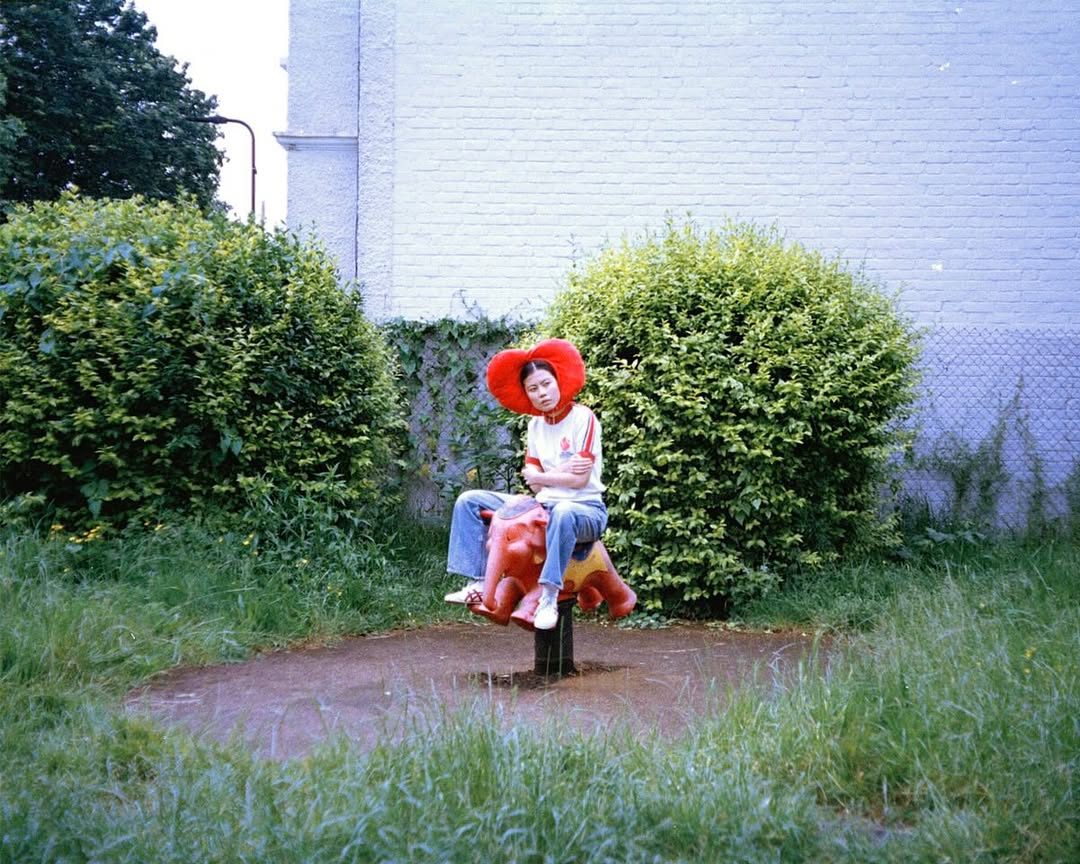
@jirry_ in heart headpiece
Image & Styling — @alicemawk
“Caution! Rotating Blades” unfolds in a children’s playground reimagined as a textile shredder. There’s humor and violence entangled in the same space. What does it mean for you to use play as a critique? Can destruction be a form of care?
I’ve got to a point where I realized that I can’t create just for the sake of doing so. Initially I thought that it’s enough to satisfy this selfish need by using repurposed materials. But given the current climate, I believe that it’s my duty to educate people through my work. ‘Caution! Rotating Blades’ sheds light onto the complexity of textile recycling, in an easily digestible way. I want my work to be reachable by multiple age groups, so telling this story through a kid’s playground and interactive installation was only natural. I do hope that through engaging with the artwork I could bring some attention to the urgency of slowing down consumerism. One of the key points of this project is that although there are promising initiatives towards recycling textiles, this is not the answer to the mountains of discarded garments piling up in the landfills.
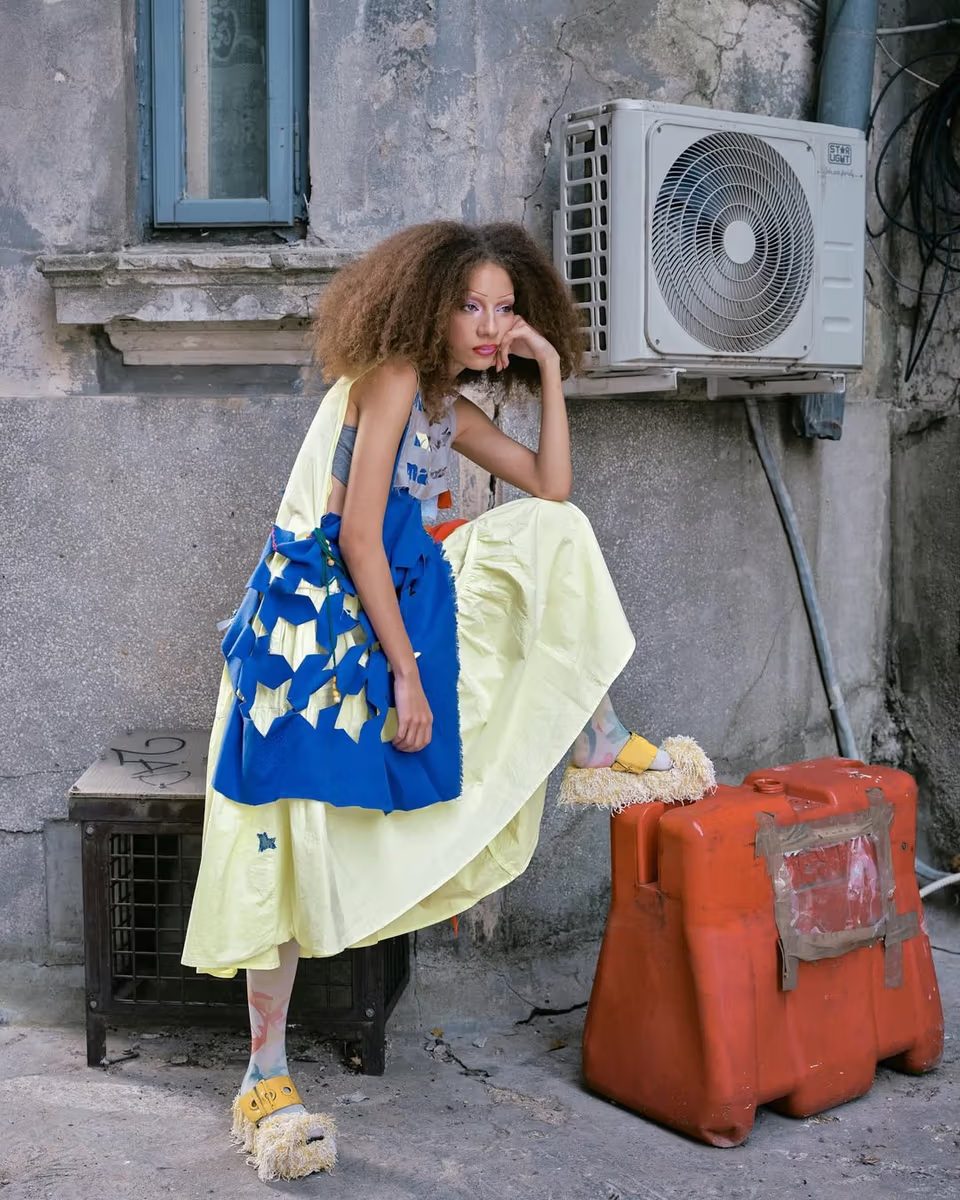
Beatrice in the RCW22 collection — pink tights and knitted pink-purple shoes.
With @dranaugabriel @trashedbarbiee @ioana.rmn @f64studio
In several pieces, the body becomes both archive an interface. From sculptural supports to sci-fi relics, you explore altered anatomies. What draws you to speculative bodies? Are you inventing new species, or revealing what’s already latent in the human form?
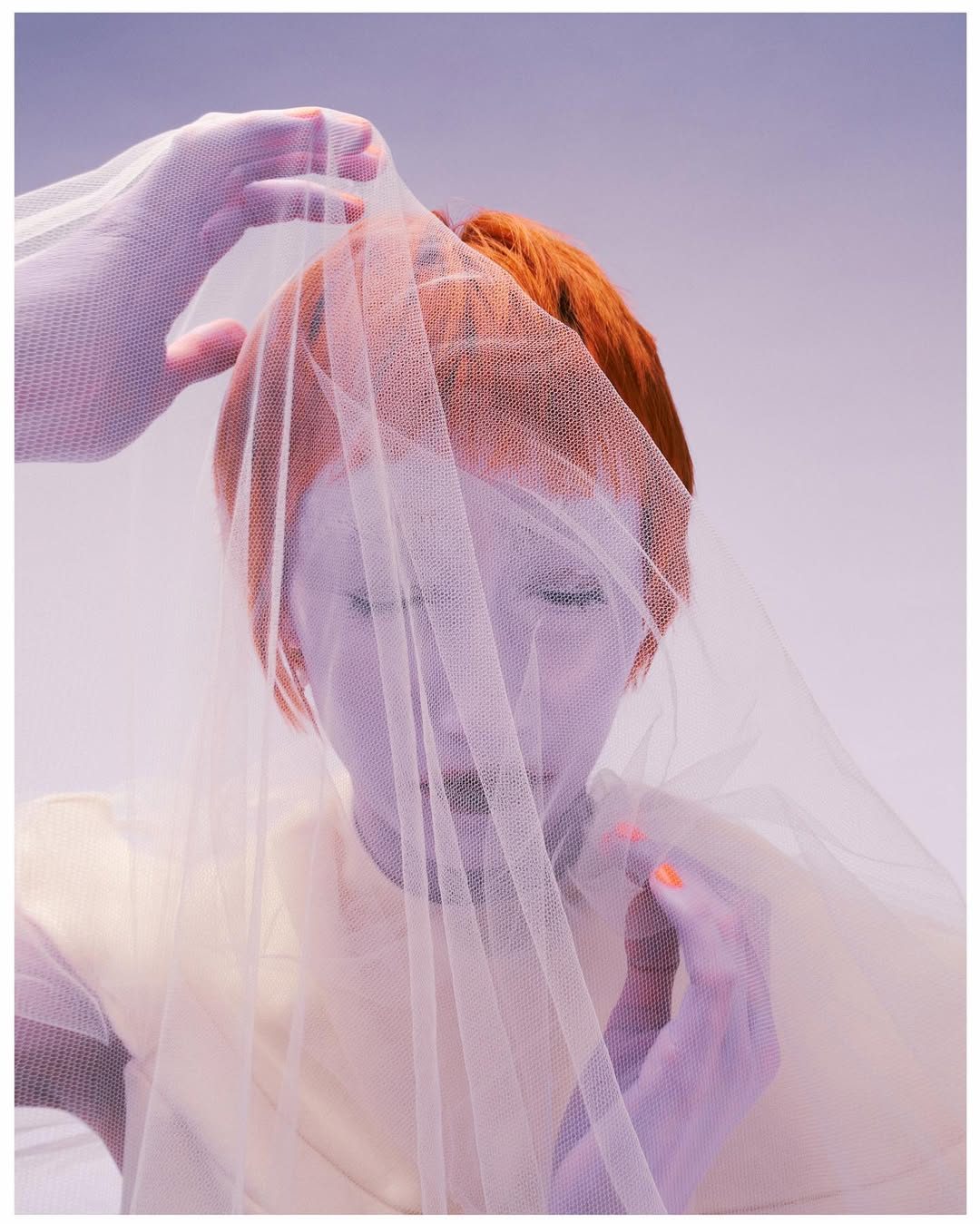
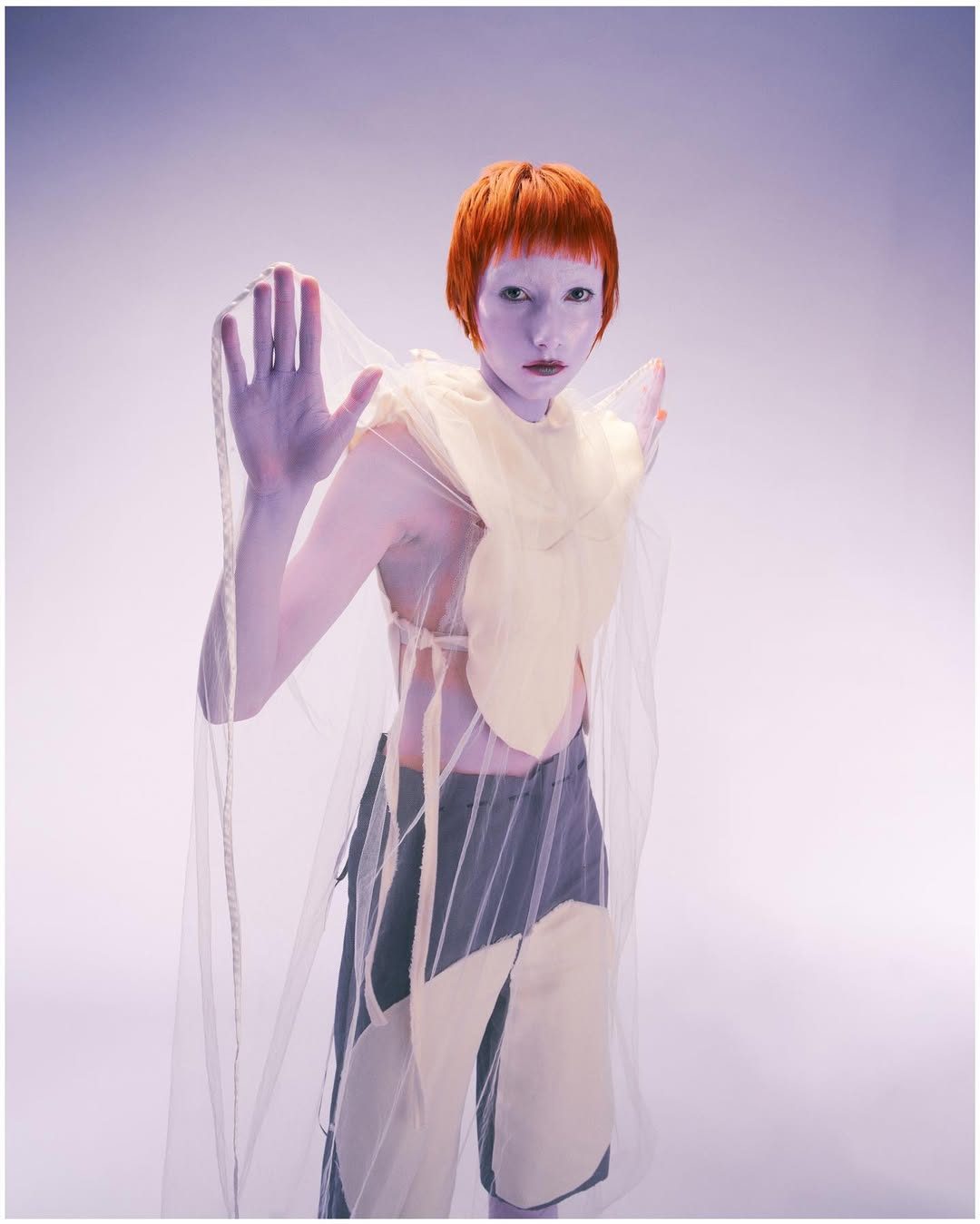
Imagining genderless futures (or should I say a future where someone’s gender is not relevant) gives me hope for a society free of femicides, misogyny and transphobia. Although informed by Sci Fi, my work has a strong gender theory basis. I believe that we are closer to a genderless society than we think. With AI threatening to replace human jobs, I hope we shift our focus from people’s genitals and the meanings attached to them towards what actually matters. The 1% is hoarding all global wealth and accelerating climate change but what toilets trans women can use is apparently a more urgent issue. Spending so many resources and obsessing over ‘imagined problems’ is a way of distracting from but also coping with the dire state of the world. However, at some point it will become impossible to ignore and will be left with no time to spend on sexual and gender ‘minorities’ that will turn out to not be minorities in the end anymore.

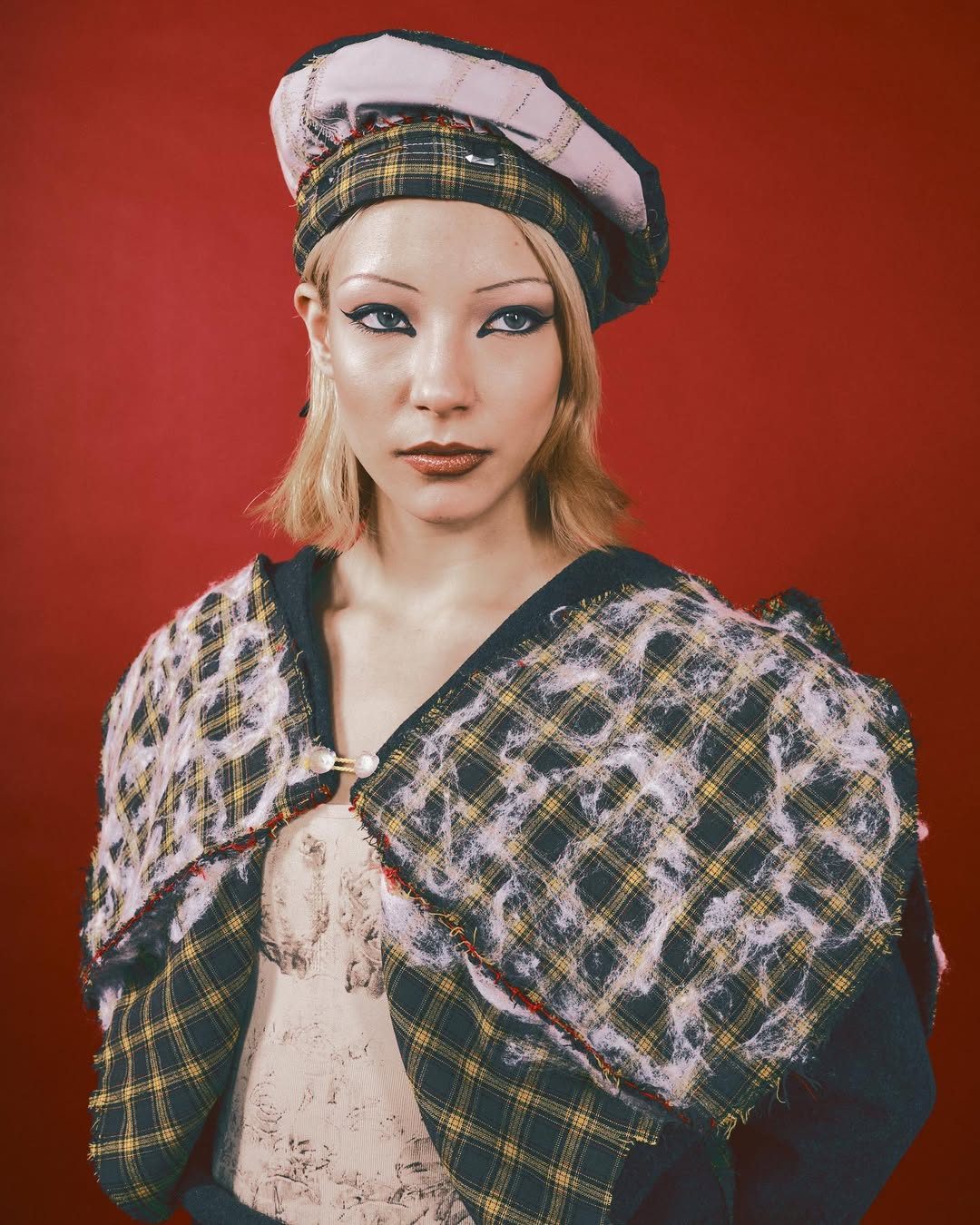
@nurstagramx @ioana.rmn @mirunaalinaa
Assist — @cd_gabriell
@bawwlcf @lcflondon_ @londoncollegeoffashun
You move between fashion, installation, editorial work and research. How do you navigate these modes? Is the garment a research? A proposition? A performance?
I studied fashion design so it took me a second to pivot towards what actually matters to me and start creating my own unique career path. Of course, in this industry everyone strives for glamorous editorials and magazine features. It’s a bit of an ego booster and I still partake in it because if my garments are not to be sold, I want them to at least be worn a lot. However, as time went by I realized that the garments are never my final outcome. All my projects are always very emotionally and conceptually charged so making the garments is part of the process; they will be a component of the final outcome but hardly ever the main piece.
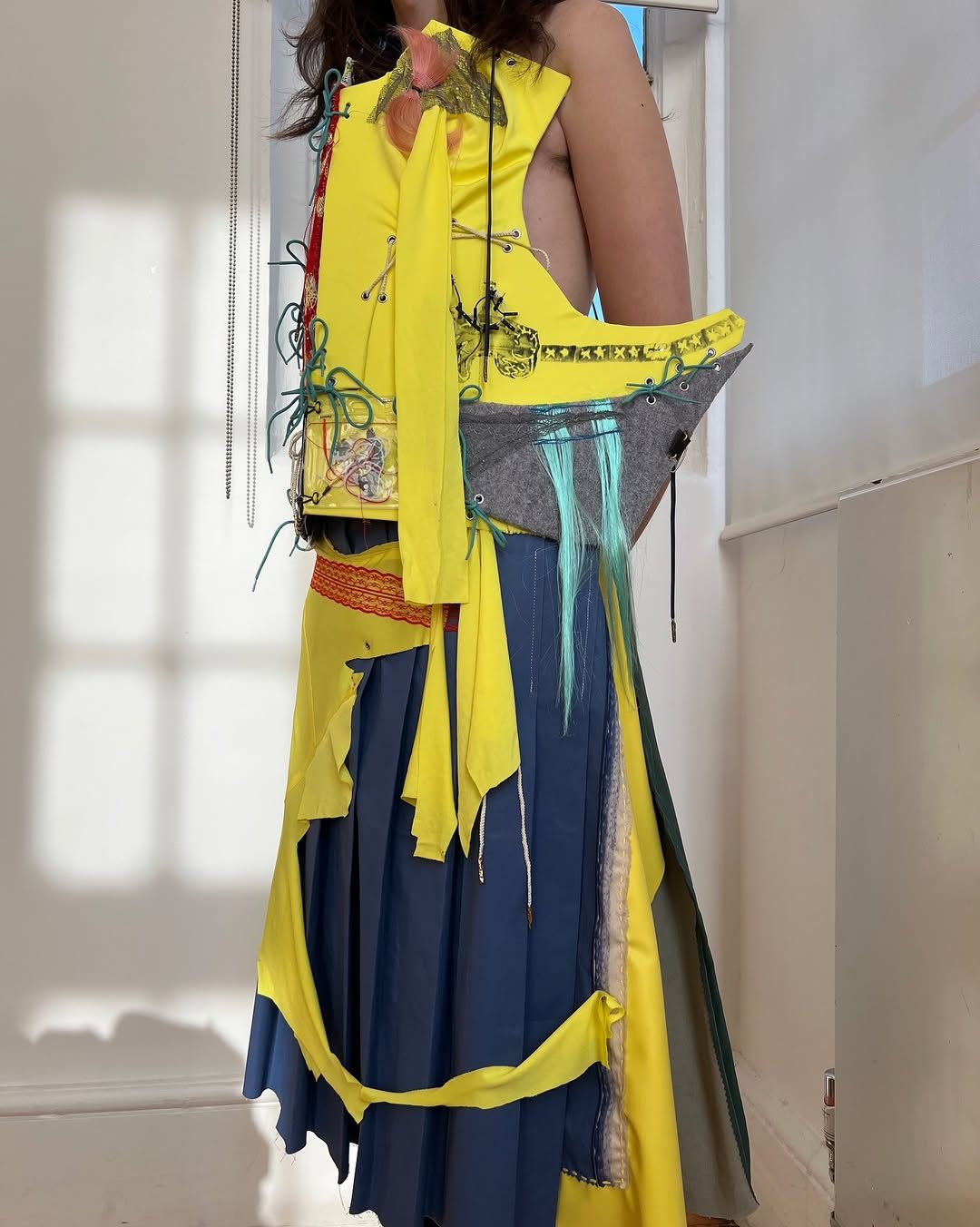
Fittings with Joan @camdenartcentre
Model — @joancase15
Guidance — @ayayaykok
Support — Transformative Futures Team
Materiality in your work is complex, carrying both textur and attitude, leather, foil, fur, cords, and strange adornments that straddle ornament and artifact. How do they come into your process? Do they guide the work, or follow the concept?
I work a lot with chance. I collect unconventional materials and found objects and sometimes I set my mind to use a certain category for a project. But other times, especially when doing a residency, I welcome the new environment and the native resources to lead the way. It definitely ends up being a ‘tug of war’ but that’s what makes my practice distinctive.
“I am currently pursuing some kind of core self, digging deeper into the implications of being a queer Eastern European.”
The “Sexlessness of the 5 Quarters Being” reads like myth from another world, Part poem, part design, part refusal. What’s the cosmology behind this creature or concept? Is it part of a larger speculative fiction you’re building?
I portray my desired future in a caricatured, Sci Fi way. Creating a sexless lizard like human might be less shocking than proposing that we cease genitalia mutilation on cis and intersex babies, socializing kids heavily attached to their assigned gender at birth or encouraging informing people about the existence of all gender and sexual minorities. I don’t have a speculative world that I am building. All projects are informed by my lived experiences and injustices that I believe should be called out.
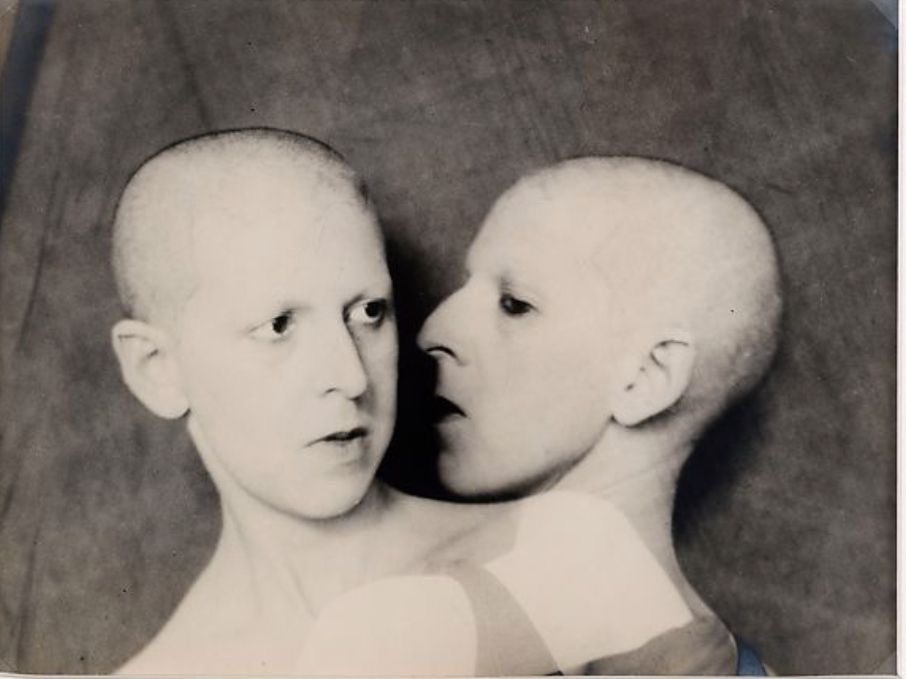
‘Que me veux-tu?’ (1929)
Self-portrait by Claude Cahun
You’ve shown work in design weeks, collectives, and workshops, spaces that merge art wit community. How do you think about participation, especially in moments like your textile recycling workshops or collaborative installations?
Working with the community is essential to my practice. The workshops are based on my work and techniques I developed. What I love about hosting workshops is that although I give them all the materials and steps that I use to make something, people will always reinterpret it in some new, innovative way and that is beyond inspirational for me. I love when they don’t ‘follow my advice’ and just do their own thing. The outcomes are always so beautiful, regardless of creative experience. With collaborative work, there is a lot of negotiation involved; sometimes we completely sync our ideas, sometimes we don’t but along the years I learned how to listen more and chip in when needed. I realized that the lack of initiative is more detrimental than having lots of ideas to work with. A little inconvenience will always be the price of community but it’s always worth it.
“I create as a form of protest.”
And finally, what’s fermenting now? Are there new creatures, concepts, or collisions that ar pulling at you?
No creatures pulling at me anymore, but instead, it’s just me. I am currently pursuing some kind of core self, digging deeper into the implications of being a queer Eastern European. Not looking for any answers in particular, just developing a body of work that serves as a journal that I hope will be relatable to many people.

Fabric research and textile samples for What Comes After Capitalism? (2023)