PROTECT ME FROM WHAT I WANT: IN CONVERSATION WITH LIZA ABRAMISHVILI
CONVERSATION BY MOCO CHEN
CO-FOUNDER, ART DIRECTOR
5 OCTOBER 2026 — BERLIN, GERMANY
Berlin-based artist Liza Abramishvili builds machines that want to be cared for and refuse to obey. She trained in ink and water, a medium she describes as chaotic and uncontrollable, before moving into kinetic robotics, creative coding and audiovisual performance. Across that shift she has kept the same concern: the push and pull between shaping something and letting it act on its own. Her work includes Ultrasensitive Machine, a light-reactive horse's head bolted to an unsettling robotic mechanism; the fragmented Seraphim of Angelic Machinery; and Somewhere Inside the Machine There Is a Face That Looks Like You, which slowly absorbs and reshapes the viewer's own face and voice. In each, technology appears as a living organism, made by us and still part of us. We spoke with her about painting as trial and error, why she would hate to lose malfunction, the long and brutal history of the domesticated horse, and why, in her words, the contradiction at the heart of her practice is "a very human desire."
You trained in classical painting before moving into kinetic robotics and creative coding. What did you carry over from painting into building something like Ultrasensitive MachineM? Is there a version of brushwork in how you program a robotic arm’s movement?
At first glance, painting and my current practice, which includes robotics and digital art, might seem like polar opposites, and in many ways they are. But I think what unites them is how I use and approach both mediums. Whether I’m working with painting or digital art, I always use this mosaic-like way of placing and viewing my work. I rarely create one piece individually; for me, the works always come together as something bigger, almost like one large organism.
This approach began when I was making abstract graphic works with ink. They always had a strong sense of texture and played with contrast, light, and shadow. To me, they felt alive and very human. When I moved into other mediums, such as digital art and robotics, I brought this love of texture, organic forms, and organic feeling into my work. One comment I often receive about my animations is that they look very hand-drawn, even though, in many cases, they are not. I find it interesting to see how that transition happened naturally within my practice.
I think another important thing I inherited from my painting background is intuition. Even though intuition might seem out of place in the context of programming, creative coding, or visual coding, I still work very intuitively. In a way, even the things I program and the way I create digital work are guided by intuition. The tools I use are very important for this. My main tool at the moment is TouchDesigner, which gives me the freedom to work intuitively. So yes, I think there is a version of brushwork in the way I program robotics and movement, but it appears through intuition rather than through a literal gesture.
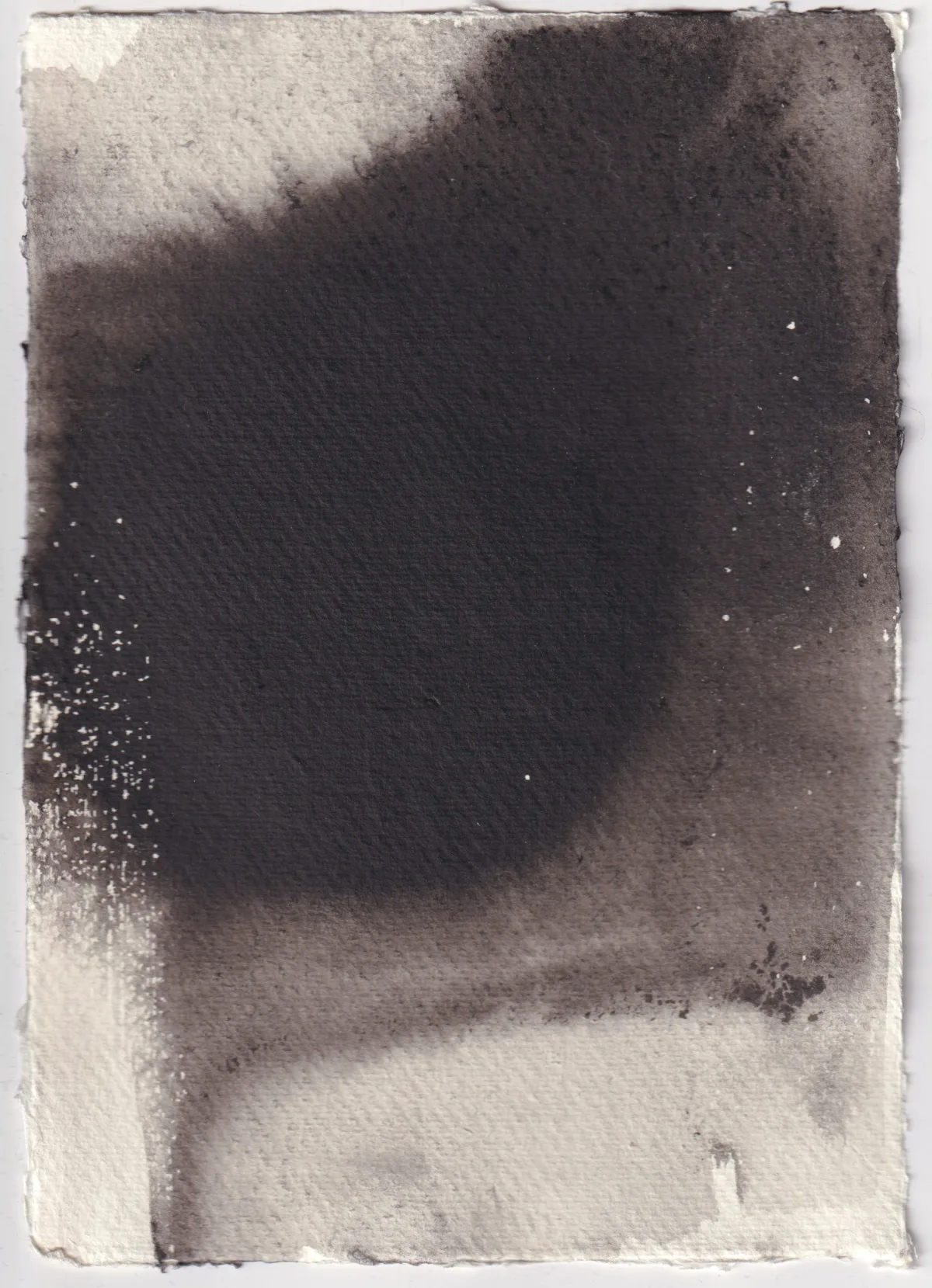
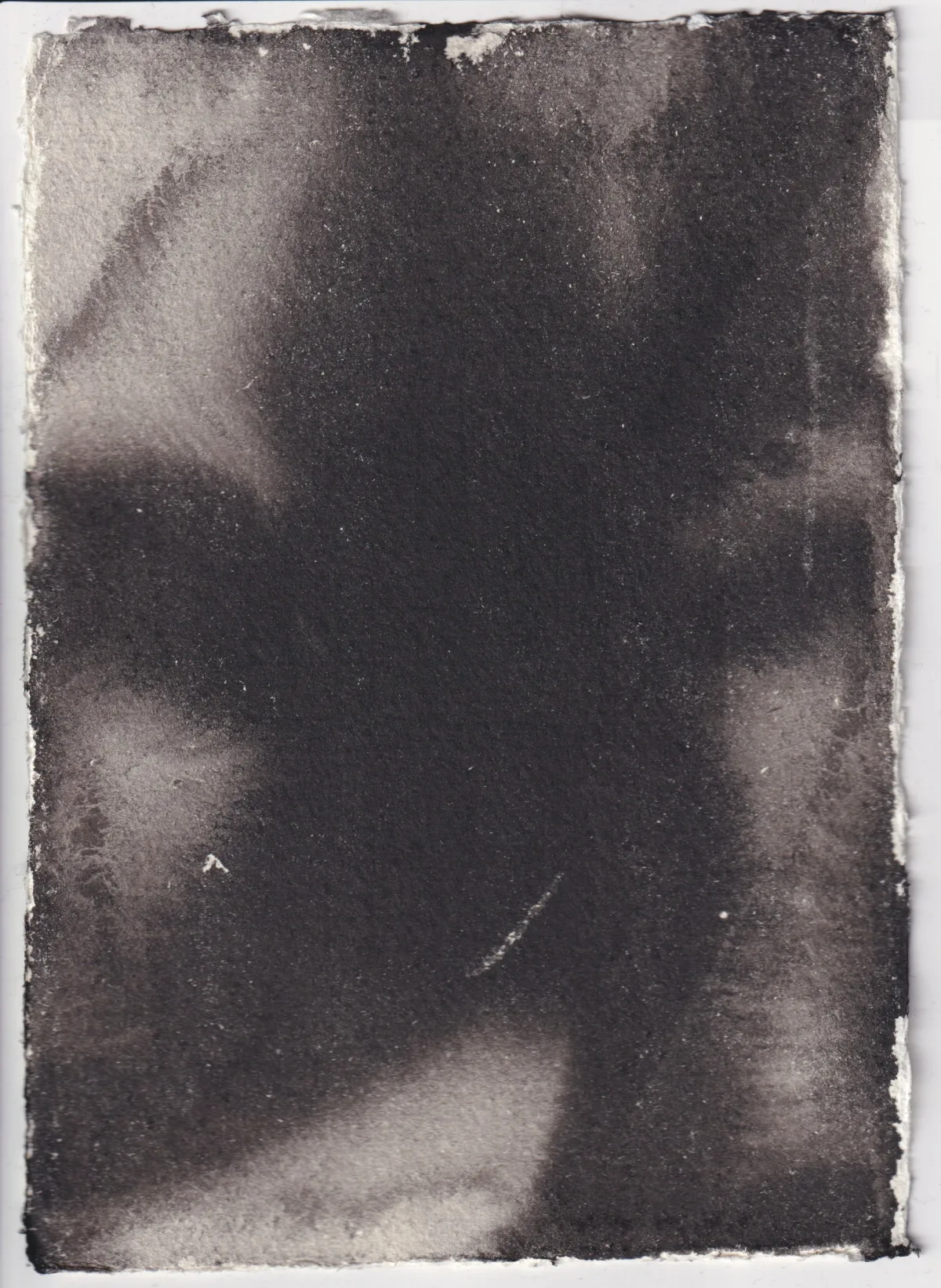
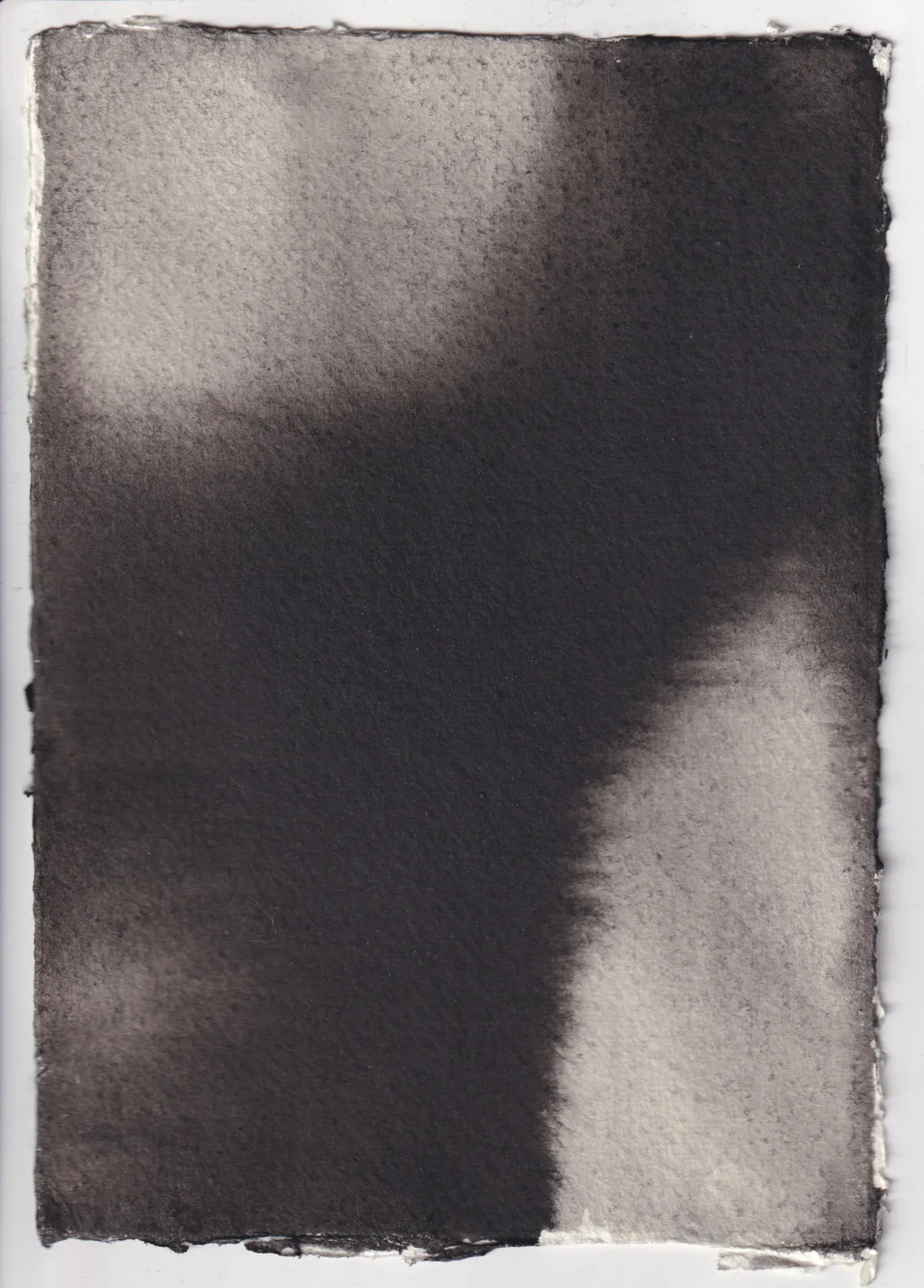
Liza Abramishvili, early works, ink and water on paper.
Painting is a practice of stillness; robotics is a practice of failure and iteration. How did that shift in medium change your relationship to control as an artist, given that control is also the subject of your work?
This question is very interesting to me because painting was never about stillness. In a way, it was actually the opposite. The main medium I used was water and ink, which I think is one of the most chaotic and uncontrollable techniques. To create one work that I liked, I often had to create at least ten that I didn’t like, because I could never fully control how the water or the ink would flow. It was always a process of trial and error, and it required a lot of patience to achieve the result I wanted.
I think it is very logical that this topic is still present in my work, because technology is another deeply uncontrollable medium. Whenever I’m preparing an exhibition, a VJ set, or an audiovisual performance, there is always some technical aspect that I can never fully control. It can begin with something very basic, like a projector suddenly not working, and extend to more complicated problems involving motors or Arduinos.
So I think that shifting mediums has made my relationship with control an even more active topic in my current practice, but it was definitely always present before. The materials may have changed, but I am still working through the same tension between trying to shape something and allowing it to behave in ways I cannot predict.
You’ve written about “the desire to be assisted by machines while fearing their autonomy” and “the impulse to nurture what we also dominate.” Where do you actually feel that contradiction in your own life? Is it in the studio, with the robots you build, or somewhere more mundane?
One of my favorite artists, Jenny Holzer, created the phrase “Protect me from what I want.” I find this quote deeply touching because of the contradiction within it: the desire to create and control something, but also to be controlled by it. I find this tension in technology in many ways, but I also think that, for me, it is a projection of my personal life. I see it everywhere, as part of a very human desire.
I think there is something within us as a species that wants to become godlike. We want to rule the world, create new forms of life, and reach the highest stage of progress. But when this begins to happen, we become terrified. We spread this fear and begin to feel that something we once created may eventually take us over.
This is especially relevant within the current discourse around AI and how rapidly it is evolving. The more functional and human-like it becomes, the more terrified we seem to be. At the same time, we forget that AI and all the robots we see in our Instagram Reels are human creations. I think every human creation is also a continuation of the human being.
That is why technology, for me, is never something artificial. This is also what my work is trying to portray in many ways. I don’t see technology simply as metal; I see it as an organism. It may not be made of flesh and blood, but there is still some form of life within it, because it is our continuation.
I see this dynamic in many different parts of life and in the world around me. Technology is only one of them, and it happens to be the medium I use to portray an idea that I am still exploring and researching. I think my practice exists within this contradiction: between our desire to create something beyond ourselves and our fear of what that creation might become. For me, technology gives this very human tension a body.
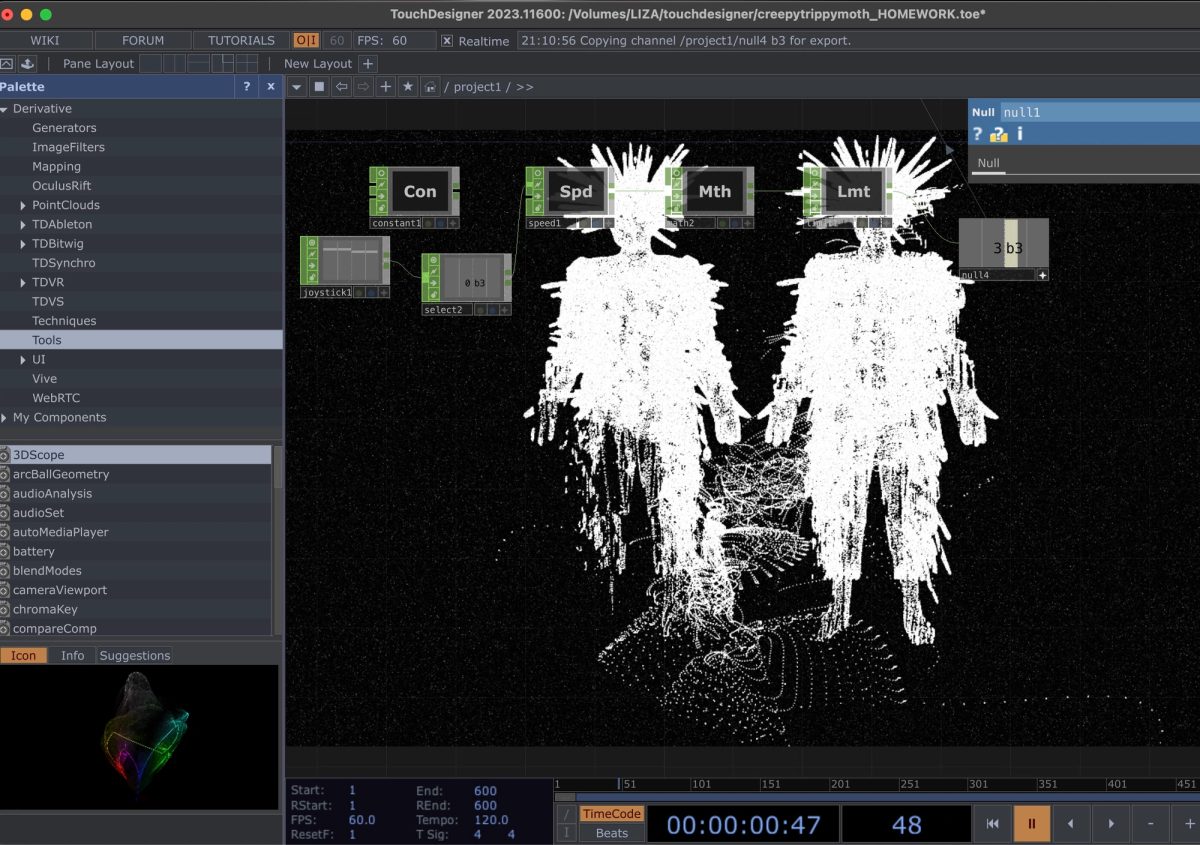
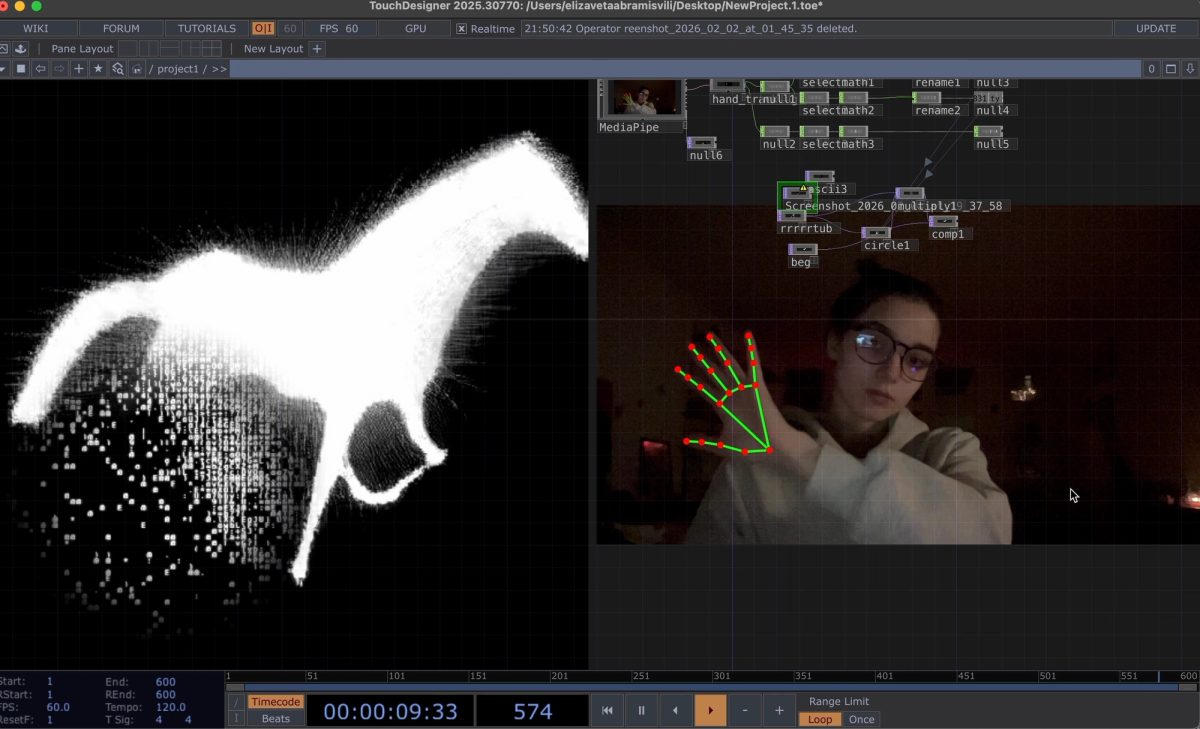
Liza Abramishvili, behind the scenes.
"Care becomes control, control demands obedience, and malfunction breaks that obedience. Then, when something breaks, care begins again."
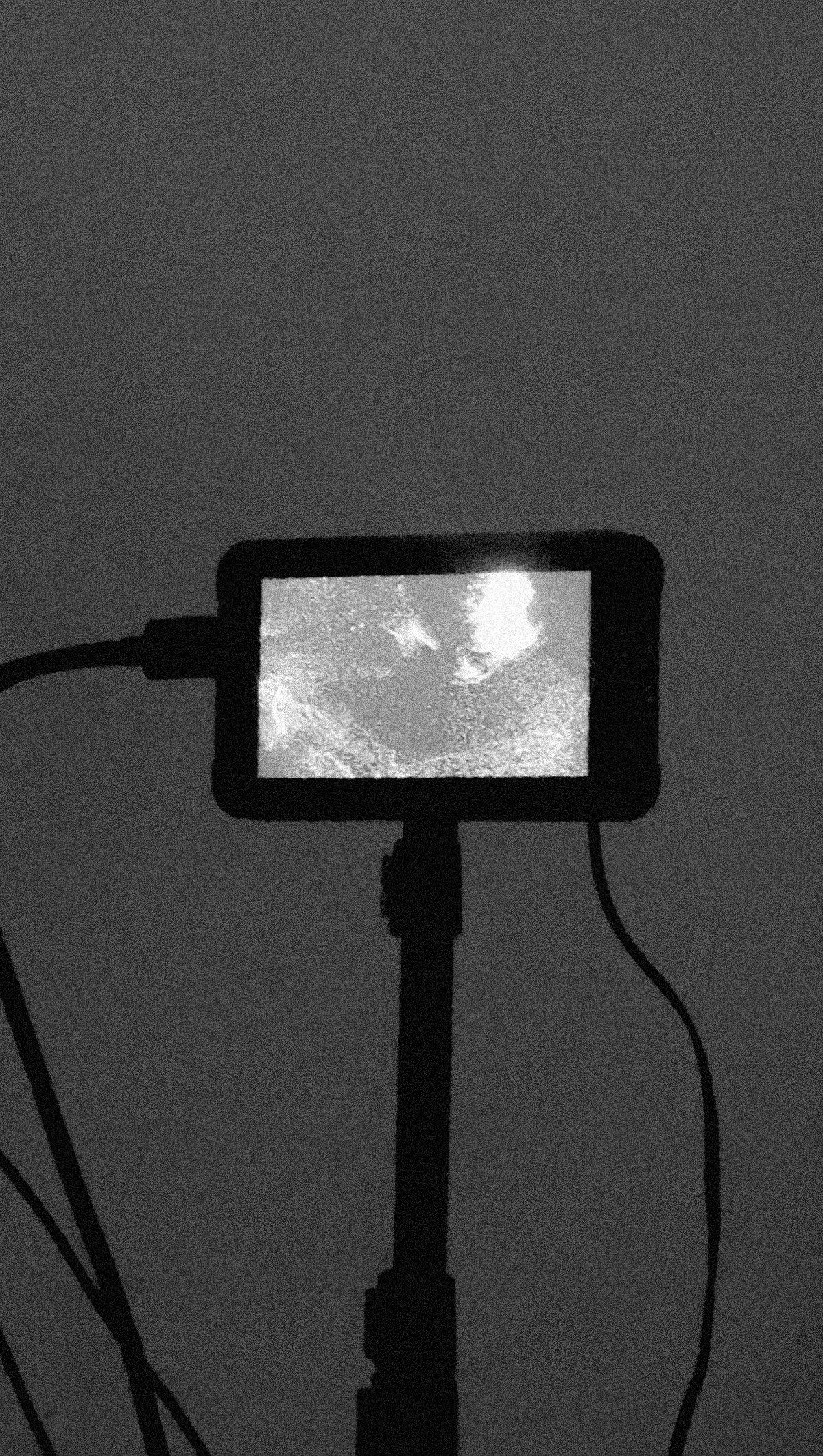
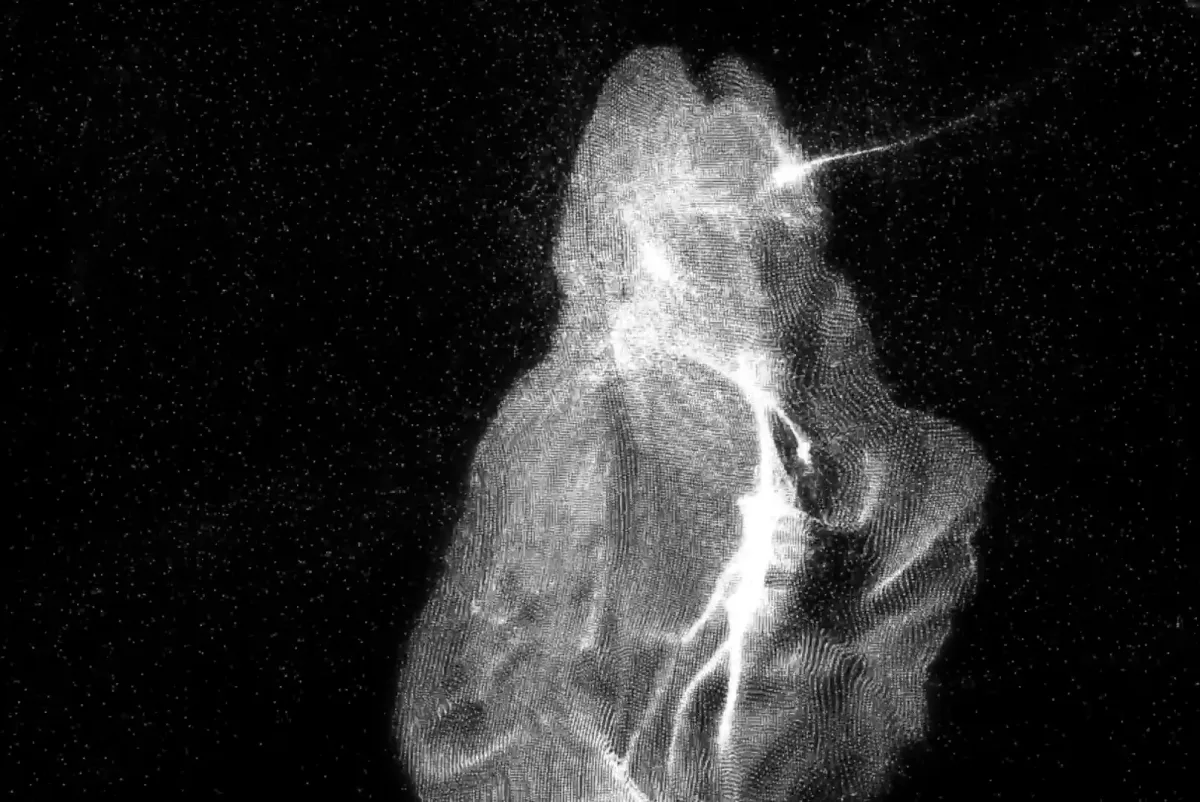
Liza Abramishvili and Dachii, Somewhere Inside the Machine There Is a Face That Looks Like You.
Your language keeps returning to care, control, obedience, and malfunction. If you had to rank those four in a hierarchy of feelings, which one comes first for you, and which one is the one you’re most afraid of losing?
If I had to rank them, I think care would come first. For me, care is usually where everything begins, but it is also never completely innocent. The desire to care for something can very easily become the desire to protect it, shape it, or decide what is best for it. This is where care begins to turn into control.
Then control creates an expectation of obedience. If I build a machine and program its movements, I expect it to follow the structure I have created for it. But complete obedience is not necessarily what makes it feel alive to me. The moment it fails, reacts differently, or does something I did not expect is often the moment when I begin to see it as an organism rather than simply an object.
So perhaps the thing I am most afraid of losing is malfunction. Malfunction interrupts this hierarchy. It is the moment when obedience breaks and my control becomes limited. Of course, in a practical sense, malfunction can be terrifying, especially during an exhibition or performance. But conceptually, it is also where the work gains its own character and appears to have some kind of autonomy.
I think these four ideas exist as a cycle in my work: care becomes control, control demands obedience, and malfunction breaks that obedience. Then, when something breaks, care begins again.
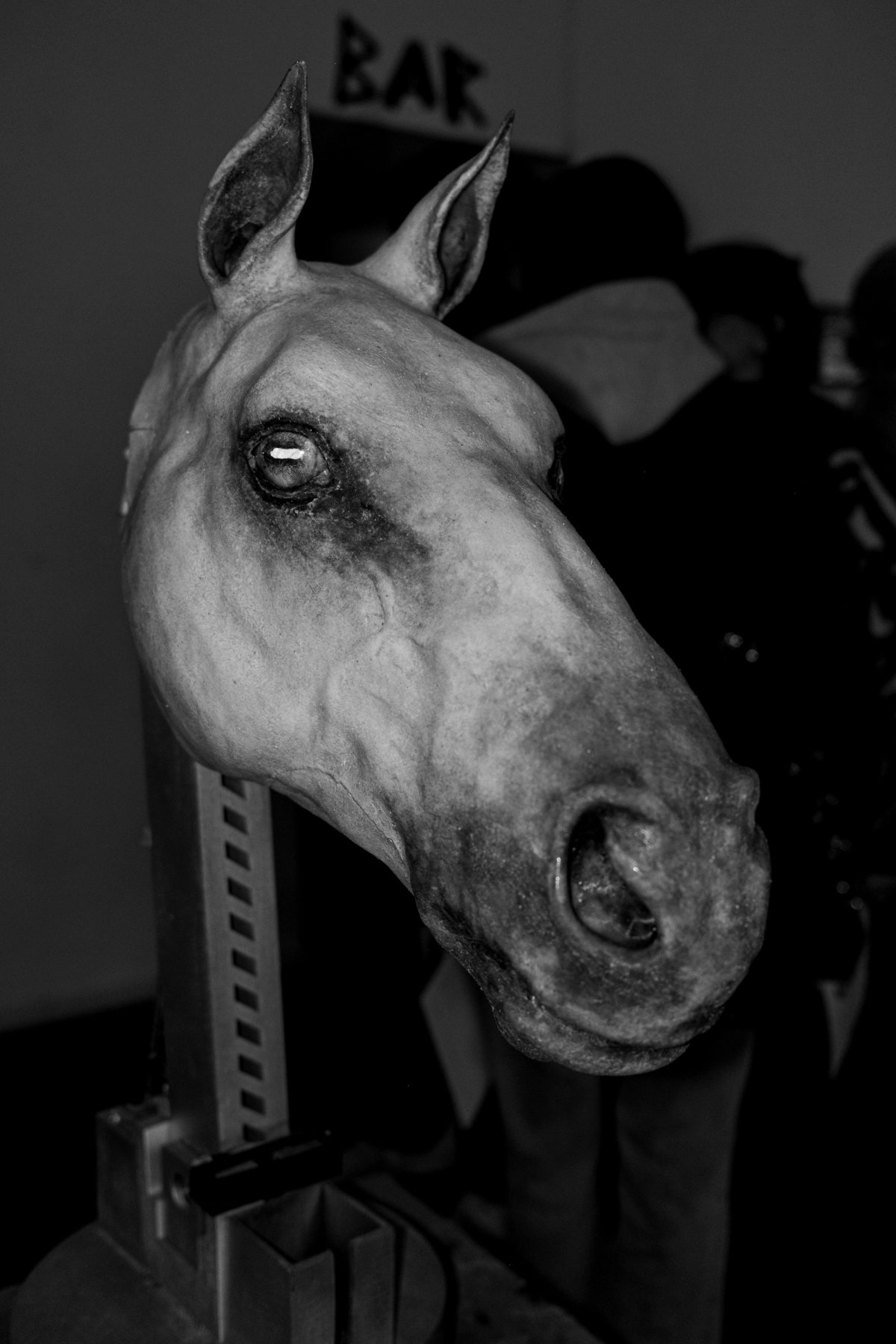
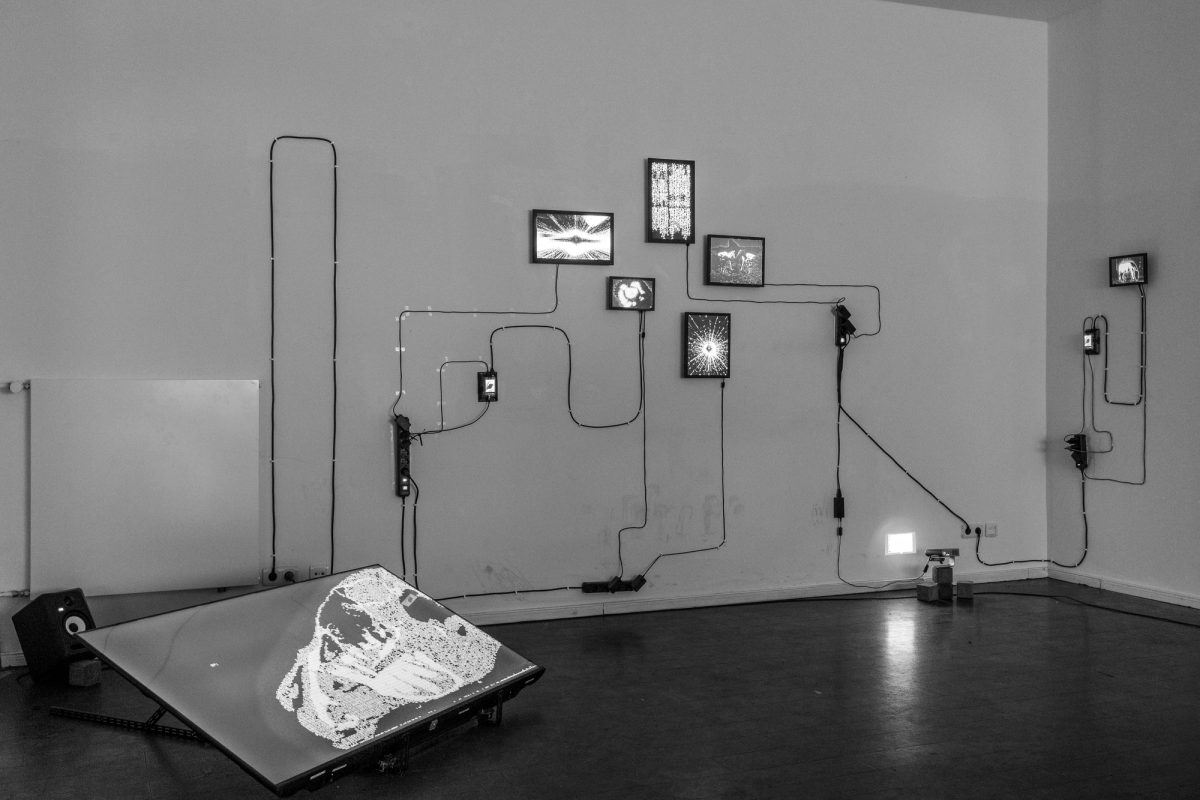
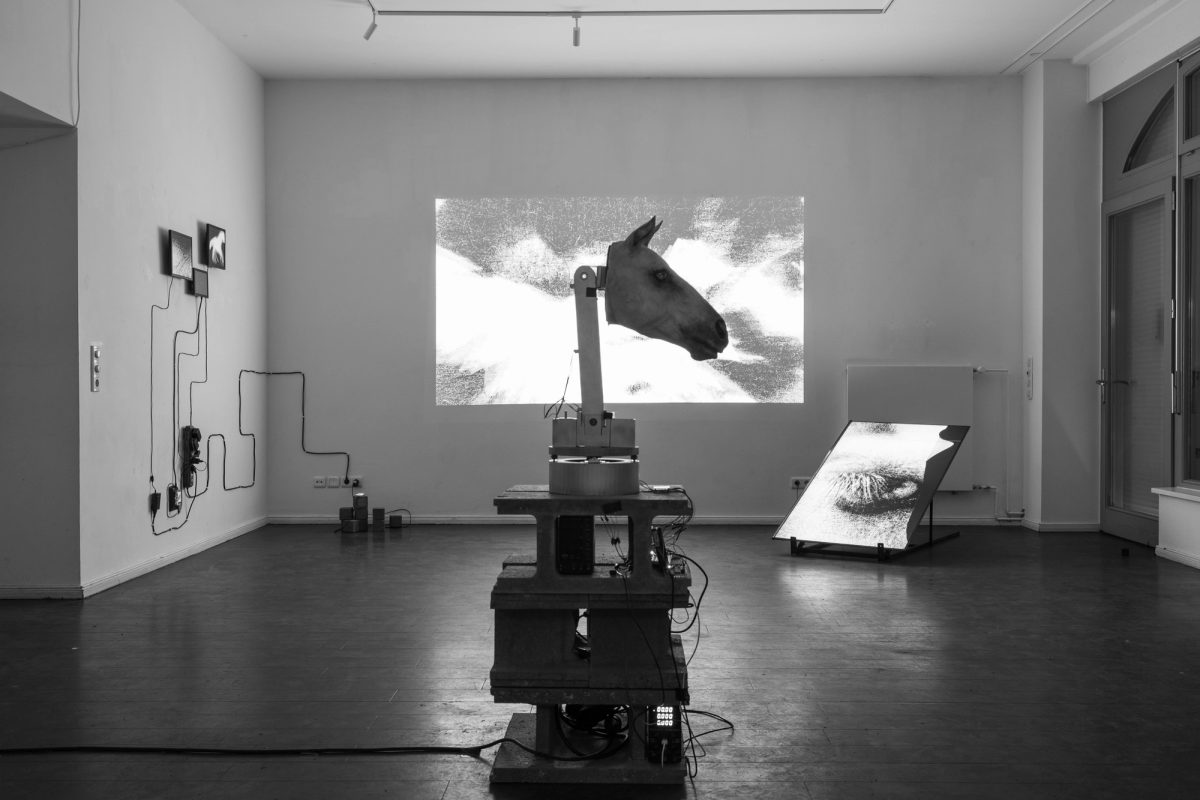
Elizaveta Abramishvili, Ultrasensitive Machine, 2026, mixed media installation, robotics, creative coding, UNTITLED Gallery, Berlin
You call the horse in Ultrasensitive Machine a “fallen mechanical angel,” once divine, now a broken, sacred mechanism. Why a horse specifically, and not a more overtly technological body? What does an animal give you that a humanoid form wouldn’t?
The horse is a very important symbol in this work. When I began developing Ultrasensitive Machine, I knew that I wanted to create a robotic creature, but I didn’t know exactly what it would look like. The idea of a horse came very naturally.
The whole work is about contradictions and contrasts, and I wanted to juxtapose two very different entities: something organic, innocent, and sensitive with something rigid, technical, and mechanical. When I think about a horse, I imagine it running through a field. It is a very basic symbol of freedom and wildness, but also of sensitivity. Horses are extremely sensitive animals, and in order to ride one, you first have to establish some kind of connection with it. Since the work is literally about sensitivity, the horse already fitted the concept on this first level.
But what I also find interesting is that, although the horse represents freedom and wildness, its domestication by humans has been quite brutal. Throughout history, horses were used as weapons of war and later as machines of movement. Before cars, we used their bodies for transport. This transformation of such a beautiful and free spirit into something controlled and functional became a perfect metaphor for what I wanted to stage in the work.
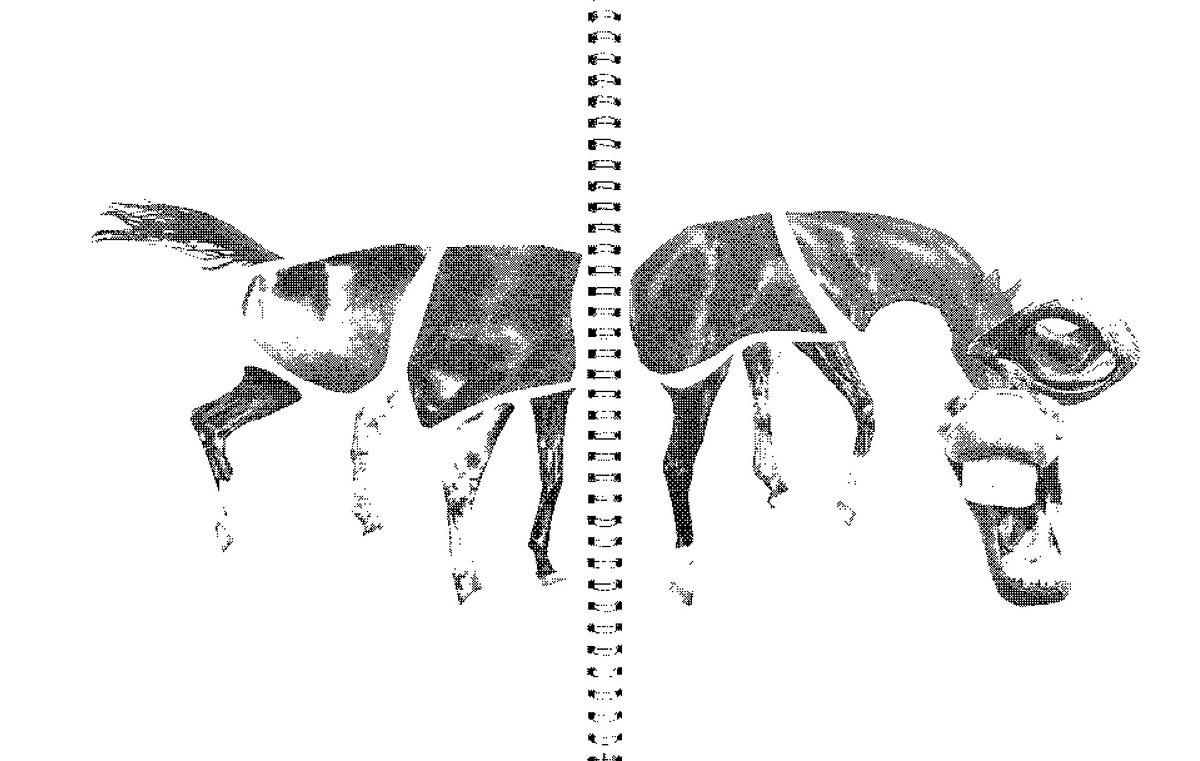
I think the finished work carries the meaning that I initially wanted to place within it. The horse’s head itself looks very alive, almost as if it could simply be eating grass, but it is attached to this unsettling robotic mechanism. Its movement is restricted; sometimes it cannot move at all. It is also constantly exposed to people and to light, because it is light-reactive.
I don’t think a humanoid form could have expressed this contradiction in the same way. A human-like machine would make the relationship more direct, while the horse carries this longer history of freedom, sensitivity, domestication, and service. Its body has already existed between living creature and machine, and in Ultrasensitive Machine, that contradiction becomes physically visible.
You reinterpreted the Seraphim, a being made of eyes and wings, as a metaphor for consciousness “dispersed across systems rather than contained in a single body.” Do you think of that dispersal as a loss (something taken from a unified self) or as a kind of relief?
I think I see this dispersal as both a loss and a relief, but perhaps more as a form of relief. The idea of one unified and stable self can feel quite restrictive to me. We are already made from so many different influences, memories, relationships, and systems, so I don’t know if consciousness was ever truly contained within one fixed body in the first place.
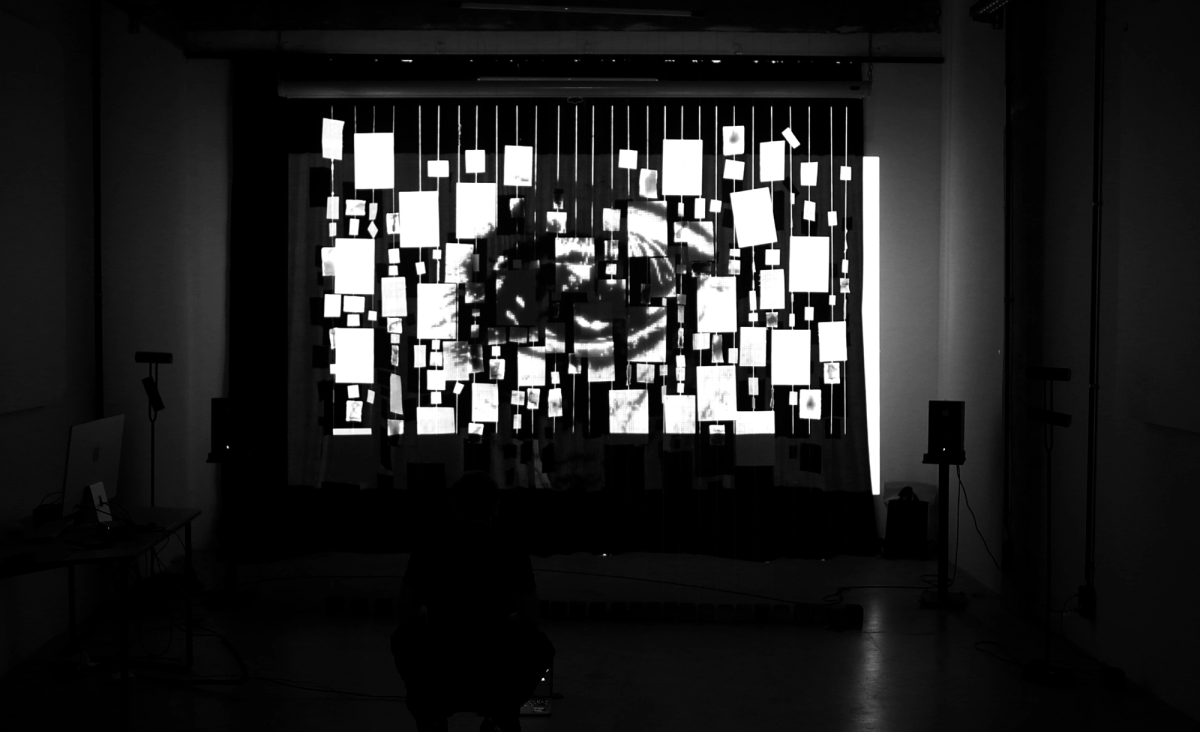
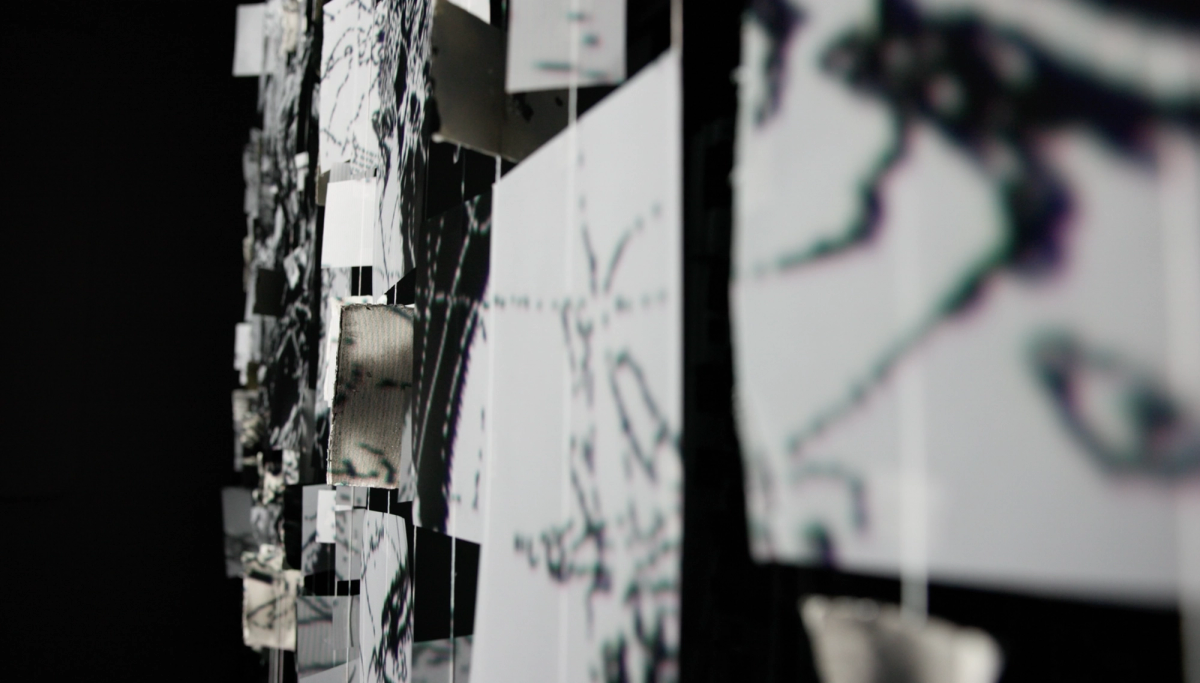
In Angelic Machinery, the image of the Seraphim was physically fragmented across many suspended pieces of paper. Each fragment was incomplete on its own, but together they formed a larger, constantly shifting organism. The projected image was broken apart by the different surfaces and then reassembled through the viewer’s perception. For me, this fragmentation didn’t mean that the being had disappeared. It meant that its existence had become collective.
The audience could also change the work through the interactive system, so no single person, image, or machine had complete control over how the Seraphim appeared. Its identity was produced through the relationship between the projection, the physical drawings, the code, the sound, and the viewer. In that sense, consciousness was not located in one place; it existed between all of these elements.
Of course, there is still a feeling of loss within that. When the self is dispersed, it becomes more vulnerable and impossible to control completely. But I also find something comforting in the idea that we do not have to exist as isolated, self-contained beings. Perhaps becoming fragmented does not always mean becoming less whole. It can also mean becoming part of something larger than yourself.
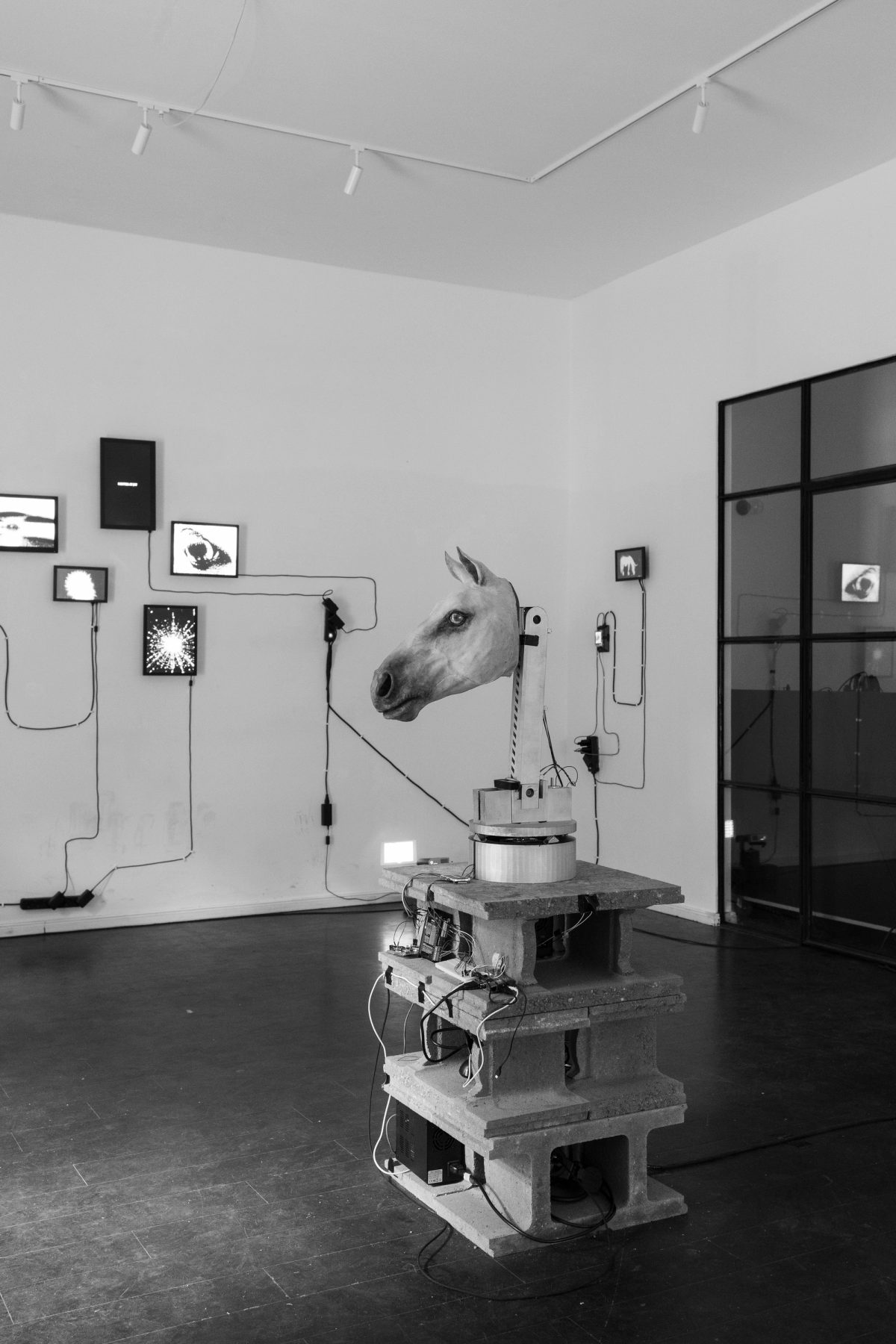
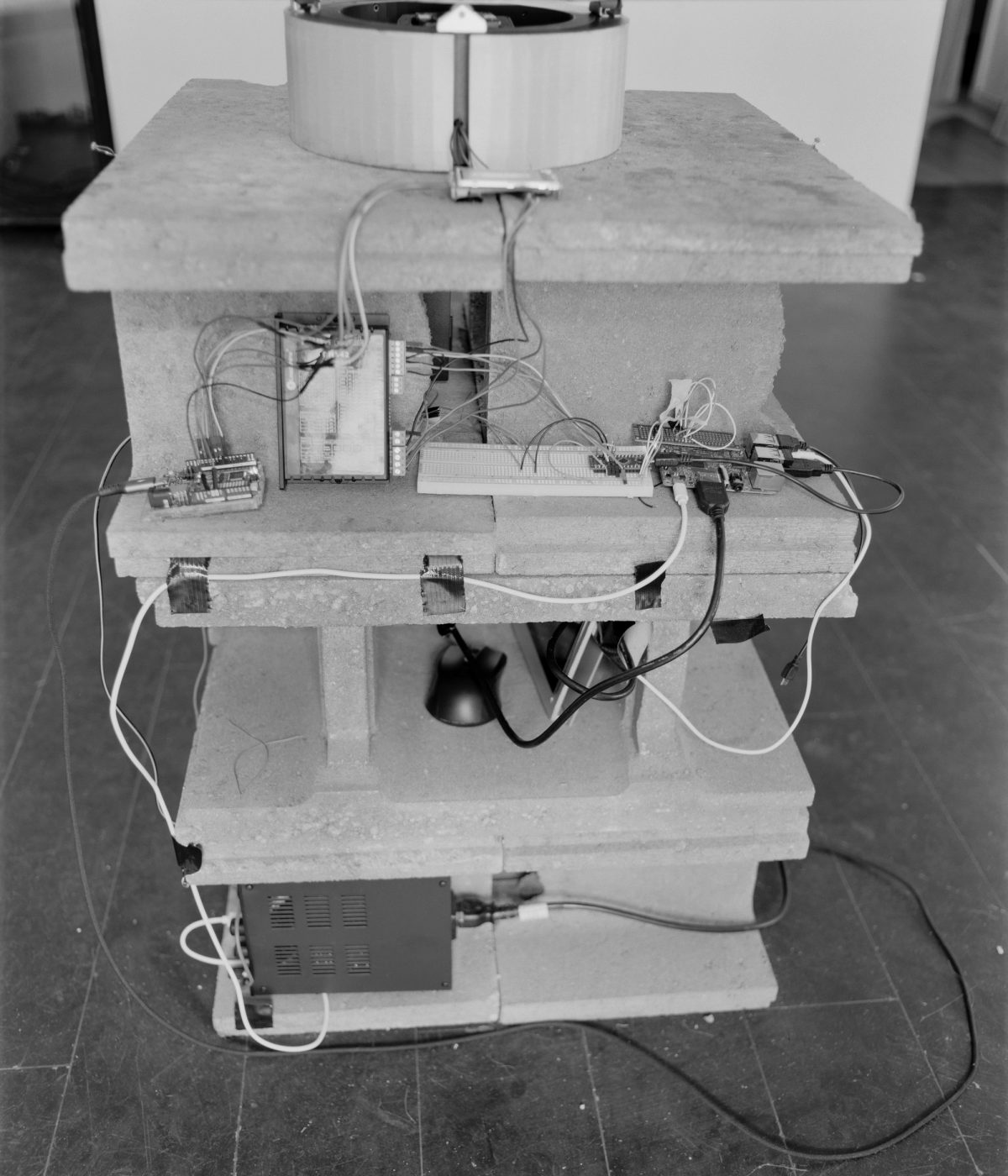
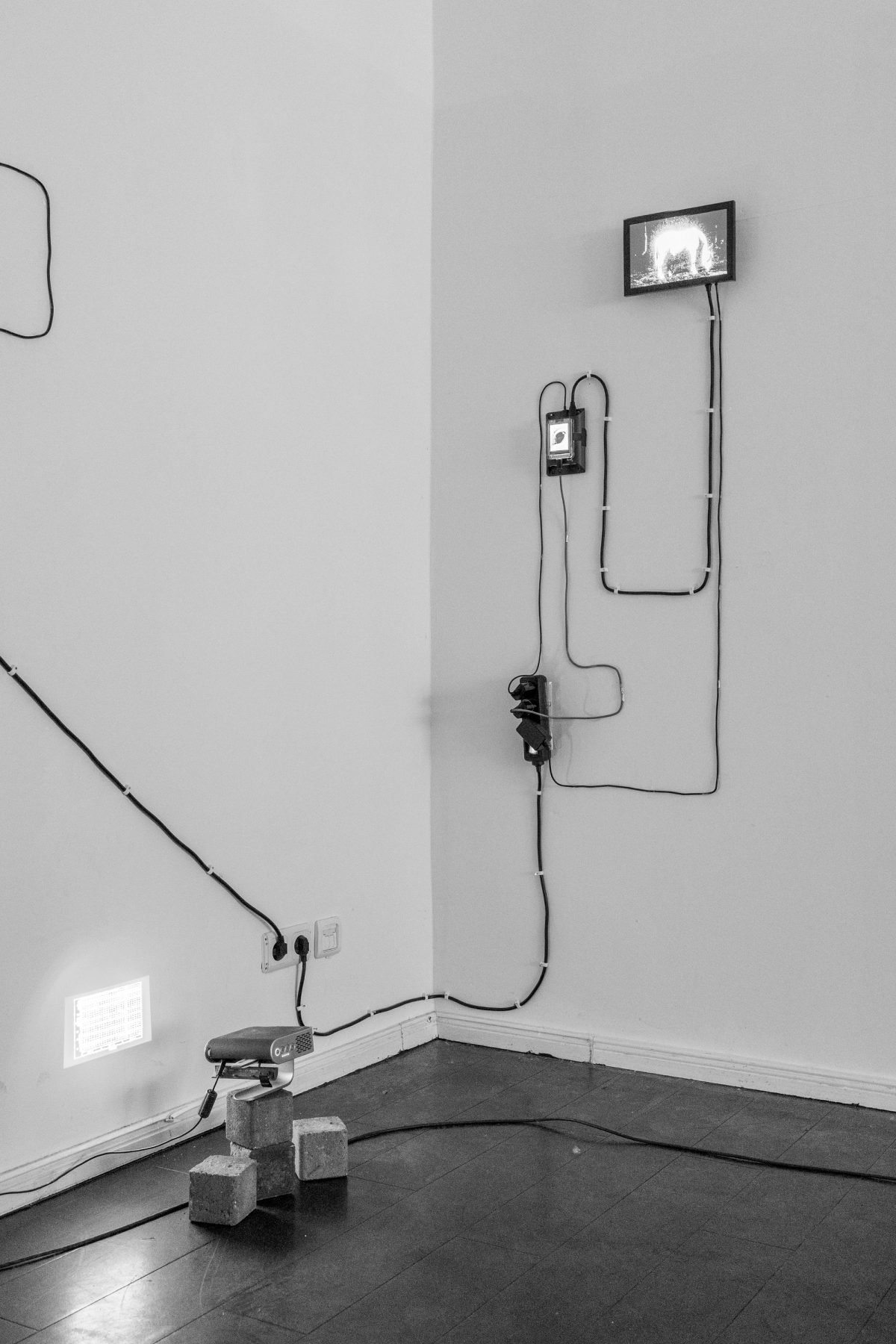
Elizaveta Abramishvili, Ultrasensitive Machine, 2026, mixed media installation, robotics, creative coding, UNTITLED Gallery, Berlin
"I don't see technology simply as metal; I see it as an organism. It may not be made of flesh and blood, but there is still some form of life within it because it is our continuation."
Liza Abramishvili, Angelic Machinery.
Somewhere Inside the Machine There Is a Face That Looks Like You captures a participant’s image and voice and routes them back to them live. What’s the specific moment you’re trying to produce in the room? Recognition, discomfort, or something else? Did you watch people’s reactions differ from what you expected?
I created this project together with my friend, the sound artist Dachii . The specific moment we wanted to create was somewhere between recognition and discomfort. For me, the work is about the moment when technology stops simply observing or reproducing us and begins to internalise us. The machine holds onto traces of the participant for longer than they expect. Their face becomes less like a portrait and more like a residue: something shaped by the system, by time, and by everything that remains after the original gesture or sound has already passed.
The process is slow, and we wanted the discomfort to arrive gradually. The participant has time to recognise themselves, become curious, and then realise that the version of them inside the machine is beginning to behave independently. Dachii’s sound was essential to creating this experience, because the participant’s voice also returned to them transformed, and it in turn transformed their own reflection inside the machine, making the encounter feel both intimate and unfamiliar.
What interested me about people’s reactions was that there was no single response. The same feedback loop could feel playful, intimate, or unsettling, depending on how someone approached it. This difference became part of the work, because the installation did not simply show people an image. It revealed something about how each person responds when their own presence is reflected back to them and no longer feels entirely theirs.
Liza Abramishvili and Rudik Mkrtchyan, INTERLINKED.
With INTERLINKED, you built a system for anonymous, non-verbal intimacy between strangers. What surprised you most about what people asked, once they knew no one could trace it back to them?
INTERLINKED was another collaborative project, created with my friend Rudik Mkrtchyan , a musician and artist based in Berlin. The project happened twice: first as a performance and later as an audiovisual exhibition.
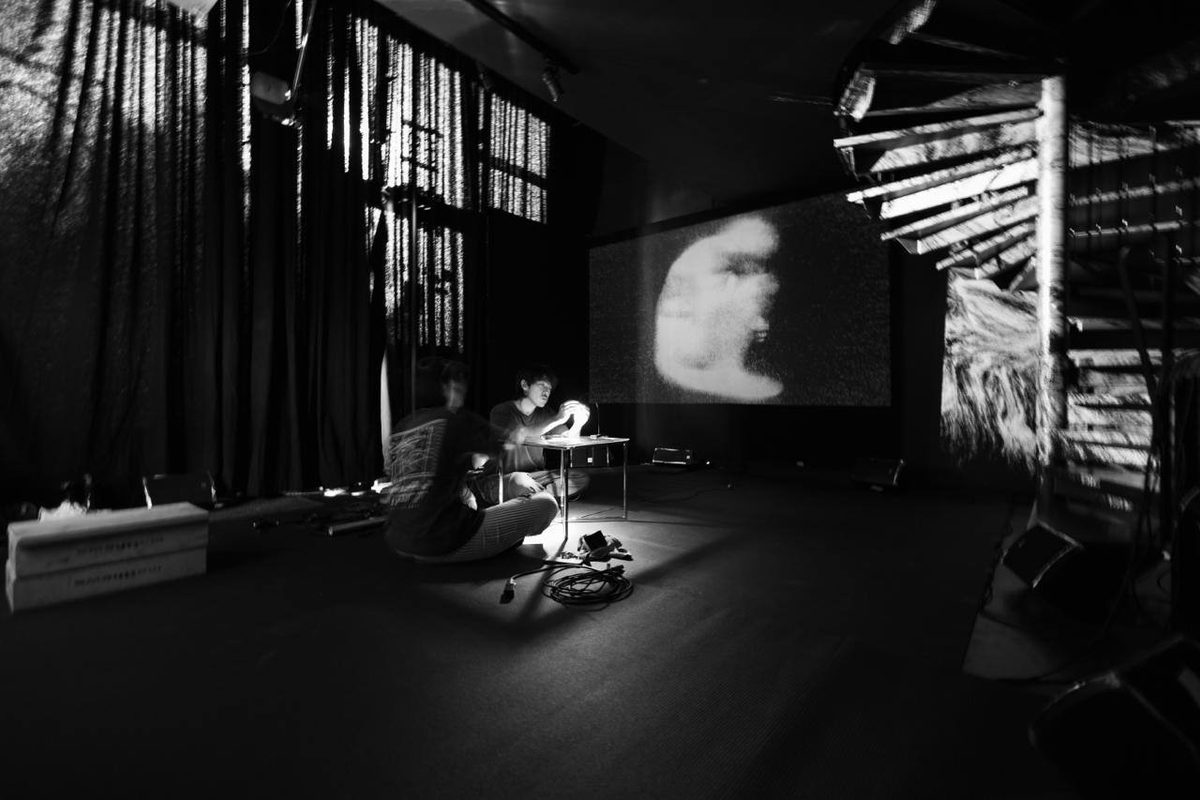
What surprised me most during the performance was the conversation that developed between the audience members. Everyone was sitting very close together in a crowded, dark, intimate room, surrounded by my visuals and Rudik’s music. They were not speaking to each other, but one of the projected surfaces displayed the anonymous questions they submitted during the listening session. So although the room was verbally silent, a very active conversation was unfolding in front of us.
At one point, someone anonymously asked, “What if we kiss right now?” Another person responded with a question, and the exchange began to escalate as more people joined in. It was funny, but also strangely sacred. We didn’t know who was speaking to whom. They might have been sitting beside each other or in opposite corners of the room. They might have been the same gender or different genders.
I think anonymity played a very important role, because it allowed people to express something without shame or self-consciousness. What surprised me was the purity of that interaction: a room full of people who were physically close but verbally silent, creating an intimate public conversation without ever revealing who they were.
You’ve moved through OKNO, Pandora, Better Go South, Kühlhaus, and UNTITLED, a specific slice of the Berlin scene rather than, say, larger commercial galleries. Is that where this work is legible, or is it just where the opportunities have been so far?
I think the field I work in is still relatively unfamiliar to many traditional art institutions and, in some ways, may appear unreliable to them. I have the feeling that many larger commercial galleries still haven’t found a way to approach new media and robotic art. At least, this has been my experience so far.
I recently visited the Venice Biennale and noticed a similar pattern. I barely saw any new media or robotic installations. I think this is understandable. Even though new media art has existed for a long time, it seems to be experiencing another boom now. It is becoming increasingly accessible, while institutions, especially commercial galleries, are still trying to adapt to it.
New media art is also particularly difficult to sell. It often involves electronics and many separate technical components. If these elements are DIY, they need to be produced to a very high standard in order for the work to remain functional and viable over time. This creates practical questions that commercial galleries may not yet know how to address.
So yes, the spaces where I have exhibited are definitely places where my work is legible, and that is also why the opportunities have appeared there. But I haven’t been working in this field for very long, and I still have many spaces to discover, both in Berlin and elsewhere. I also feel that the art industry currently needs some kind of shake-up and is searching for work that feels new and brave. Perhaps it is simply a matter of time before larger commercial galleries begin paying closer attention to this field.
Liza Abramishvili, Purgatorio.
"Perhaps becoming fragmented does not always mean becoming less whole. It can also mean becoming part of something larger than yourself."
Liza Abramishvili, Ultrasensitive Machine.
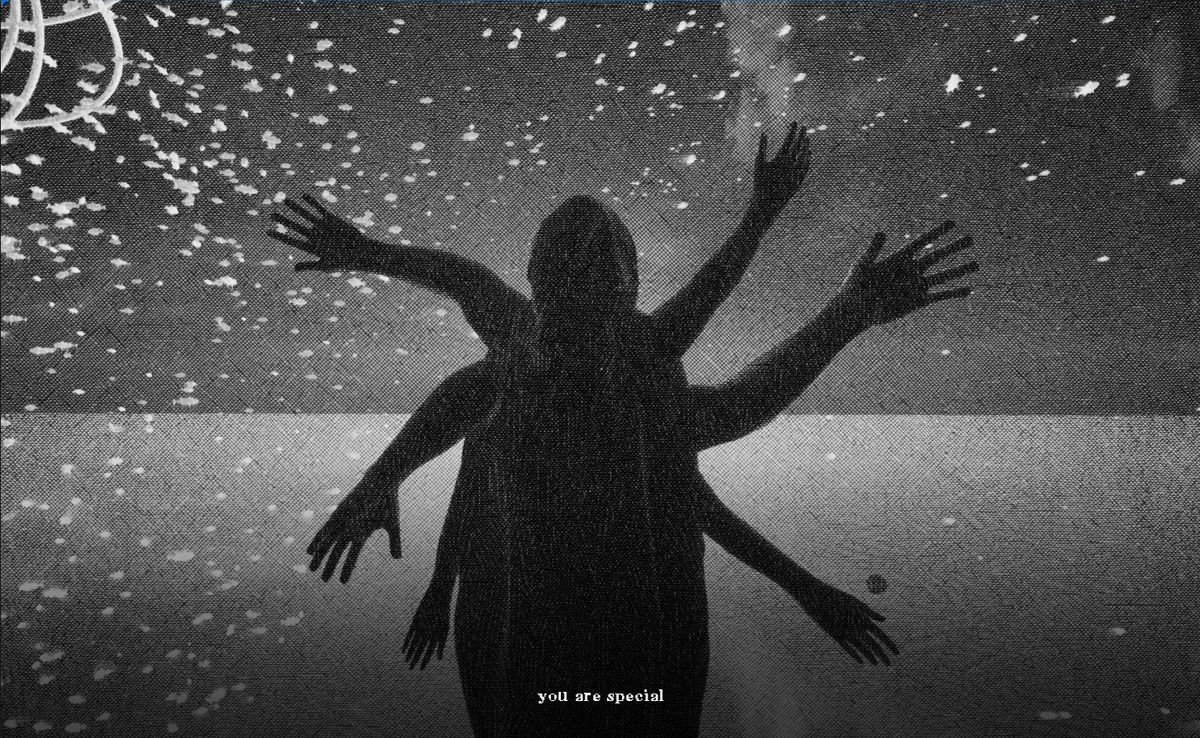
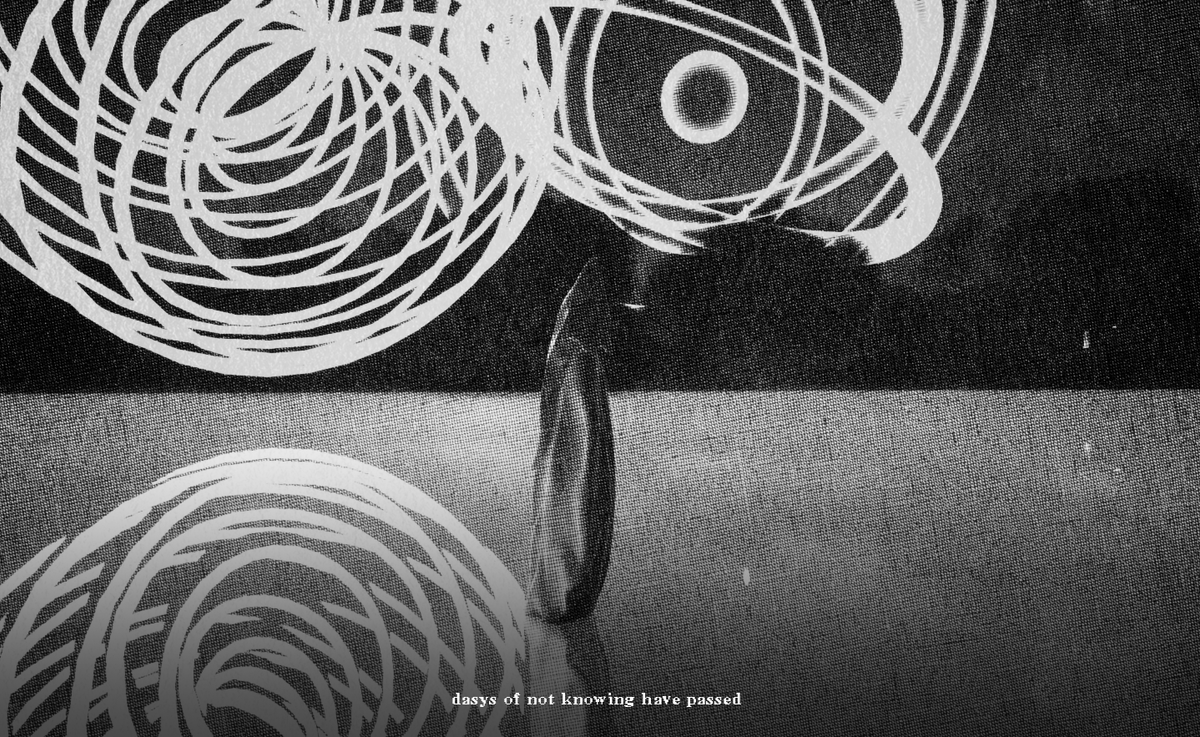
Purgatorio uses a game engine to stage a religious text as an “endless field for quiet exploration” rather than a place of judgment. You’re moving between gallery installation, live performance, and now something closer to game design. Do you see a single practice underneath all of that, or are these genuinely separate instincts you haven’t reconciled yet?
I definitely see one larger practice underneath all the different mediums I use. The strongest connection between them lies in the themes I am working with. The tools might change, but they are always ways of creating a particular level of immersion and producing a certain effect on the audience.
Purgatorio, for example, was created in a game engine. In practical terms, it can be described as a video game, but I see it more as a playable work of art. I think I could define every medium I work with in a similar way. There is always a sense of exploration and experimentation, but each tool eventually finds both a conceptual and a technical meaning within my practice.
This project is especially dear to me. It was inspired by Dante’s Divine Comedy, specifically the section on Purgatory. Right now, it exists as a video game file, but my original intention has always been to develop it further. I think contemporary art has this interesting quality: context can completely transform how we understand a work. As long as Purgatorio exists only on Steam, it may be understood primarily as a video game. But once it is presented as an installation inside a gallery, its context and meaning immediately change.
This flexibility is what allows me to experiment with different media and tools without seeing them as separate practices. I don’t begin by deciding that I want to make a game, an installation, or a performance. I begin with an idea and then choose the form that can communicate it most strongly.
Cover Image: Elizaveta Abramishvili, Ultrasensitive Machine, 2026, mixed media installation, robotics, creative coding, UNTITLED Gallery, Berlin