A PHOTOREALISTIC REPRESENTATION OF AN ABSTRACT STATE: IN CONVERSATION WITH ANJA RAUSCH
CONVERSATION BY SELIN KIR
CO-FOUNDER, CURATOR
3 OCTOBER 2026 — LONDON, UNITED KINGDOM
Look closely at a painting by Anja Rausch and it looks back with unsettling precision. Built from a single intuitive gesture and then refined through layer upon glazed layer, her canvases use the soft, smoky technique of sfumato much as the old masters did, to model the way the eye perceives the world. What they model, however, tells no story: forms that could be a cell under a microscope or a galaxy in formation, an anatomical model or a pulse of pure energy. The finish is almost photorealistic, yet the subject refuses to sit still. Rausch arrived at this paradox by a winding route, from eight years at a private painting school to Visual Communication in Darmstadt and five years designing spatial installations, before returning to the canvas and, now, to Jorinde Voigt's class at HFBK Hamburg. Since Morbid Orbit in 2023, her work has travelled to CICA Museum, the Prisma Art Prize and Enter Art Fair Copenhagen. Here, she speaks about intuition as structural knowledge, the itch of an unresolved painting, and why she is happy to break apart a finished work years later.
Your paintings begin from a spontaneous, intuitive first composition and are then built up through many glazed layers, closer to a slow accumulation than a plan. At what point in that process do you know a painting is 'found', rather than still in search of itself?
For me, it's more like a decision. I decide that the work is finished once every aspect of the painting is embedded in a relationship with its surrounding areas. It's almost like a pseudo-logic of physical parameters, such as which part is in front, which is below, and which is emphasised by light and shadow.
Most painters I know share this experience: when you simply look at your own painting without actively working on it (from a distance, for example, or while doing something else), at some point your brain stops trying to adjust a particular area of the painting. But if there is still something unresolved, you can sense it, almost like an itch. For me, when everything is in some kind of harmony, or in distinct contrast, I feel that I've done my job.
Also, from a technical perspective, the almost photorealistic finish of my work helps me to find this inner logic in the structures I paint. It helps me to acknowledge their kinship with the way I see the world around me, and to make sense of it.
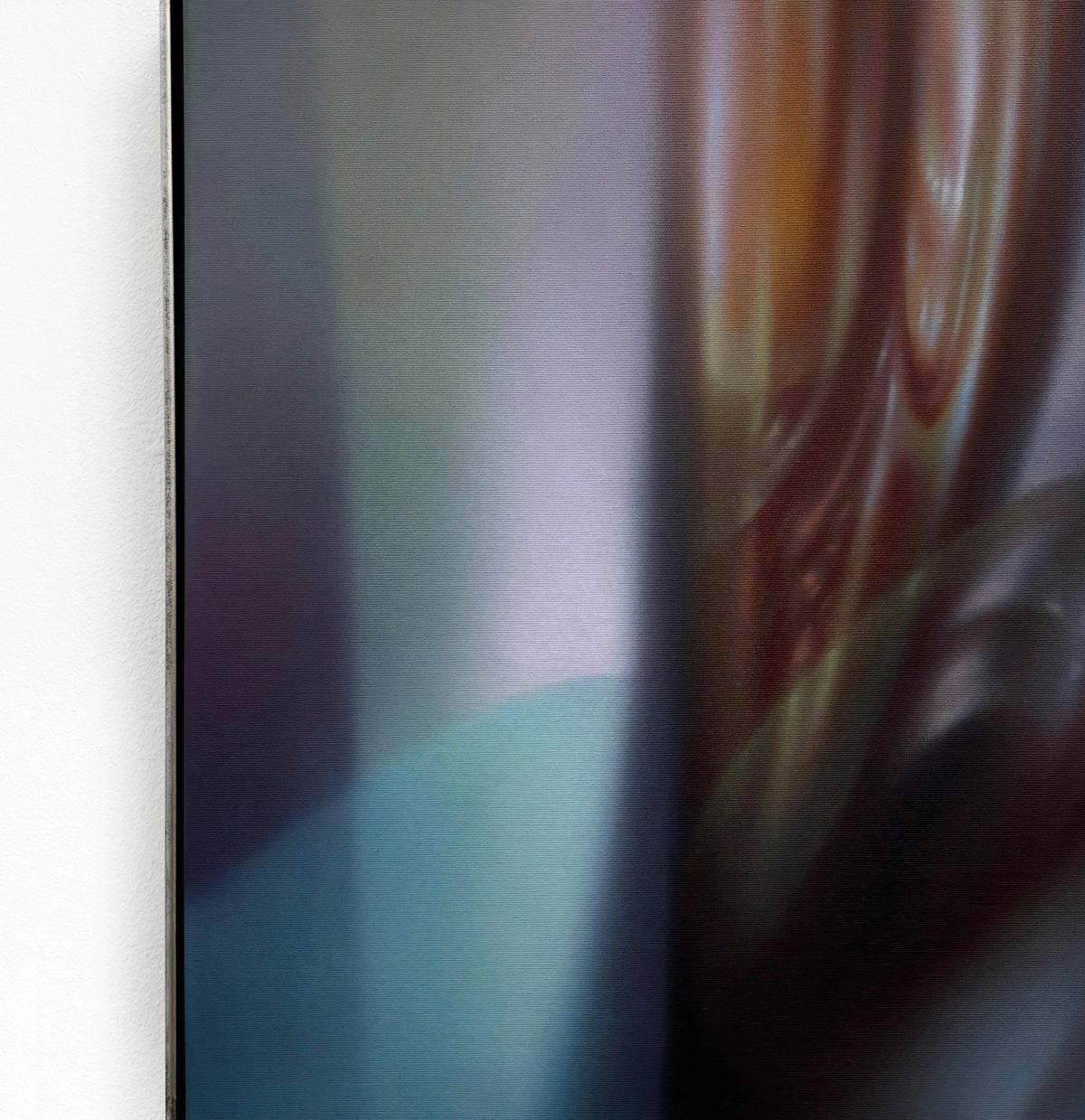
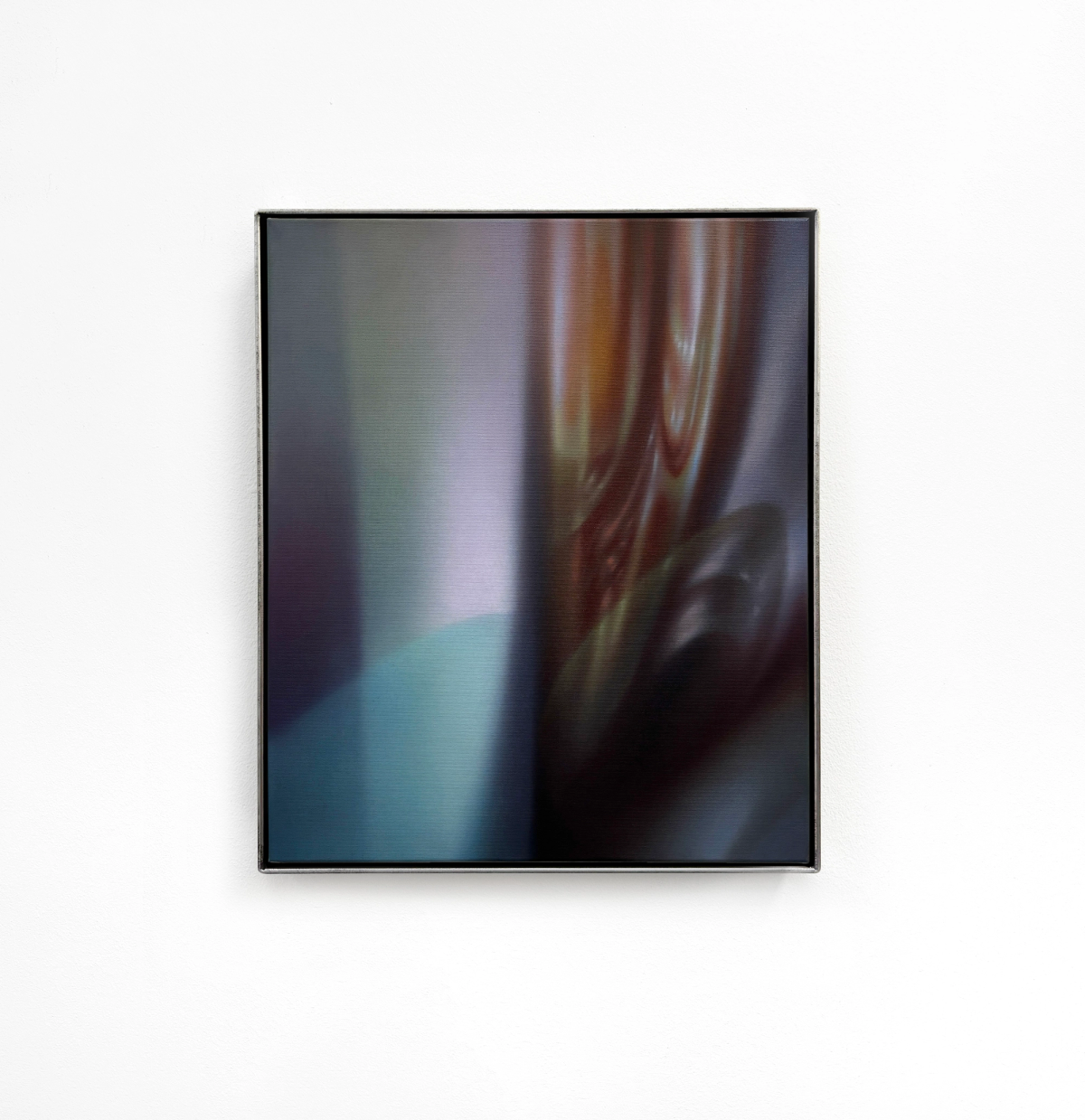
Anja Rausch, LOTOS, 2026, detail
You describe wanting the viewer caught between microscopic and macrocosmic readings: a cell structure or a galaxy, an anatomical model or an energy field. Do you ever paint toward one of those readings, or does the ambiguity have to be built in from the very first layer?
I never think about the outcome, apart from choosing a format. Honestly, even choosing colours is a bit of a black box for me at this point. And my colour scheme also changes tremendously during the painting process. Painting, for me, is really about searching, irritating, and astonishing myself. It is one of the few ways of recognising unknown, and maybe even foreign, aspects of the way my inner mechanisms work.
It's not that I want to construct the viewer's experience or make them have a particular experience. It's just that I am really convinced that how a painting was made is deeply inscribed in its character. And the ambiguity and openness that existed throughout the process will always become accessible again when you look at the work.
The multi-panel works separate elements that were originally painted together, reintroducing chance into an otherwise controlled process. Once a panel is separated and reconfigured, do you ever go back and add or subtract paint to respond to its new neighbour, or does each panel stay a sealed record of the moment before the split?
I don't do it, but not as a dogma. It's more that it's really not needed, because there is always a strong connection or a new relation that one will be able to find. And there are always plenty of ways to rearrange different panels, so there are lots of options.
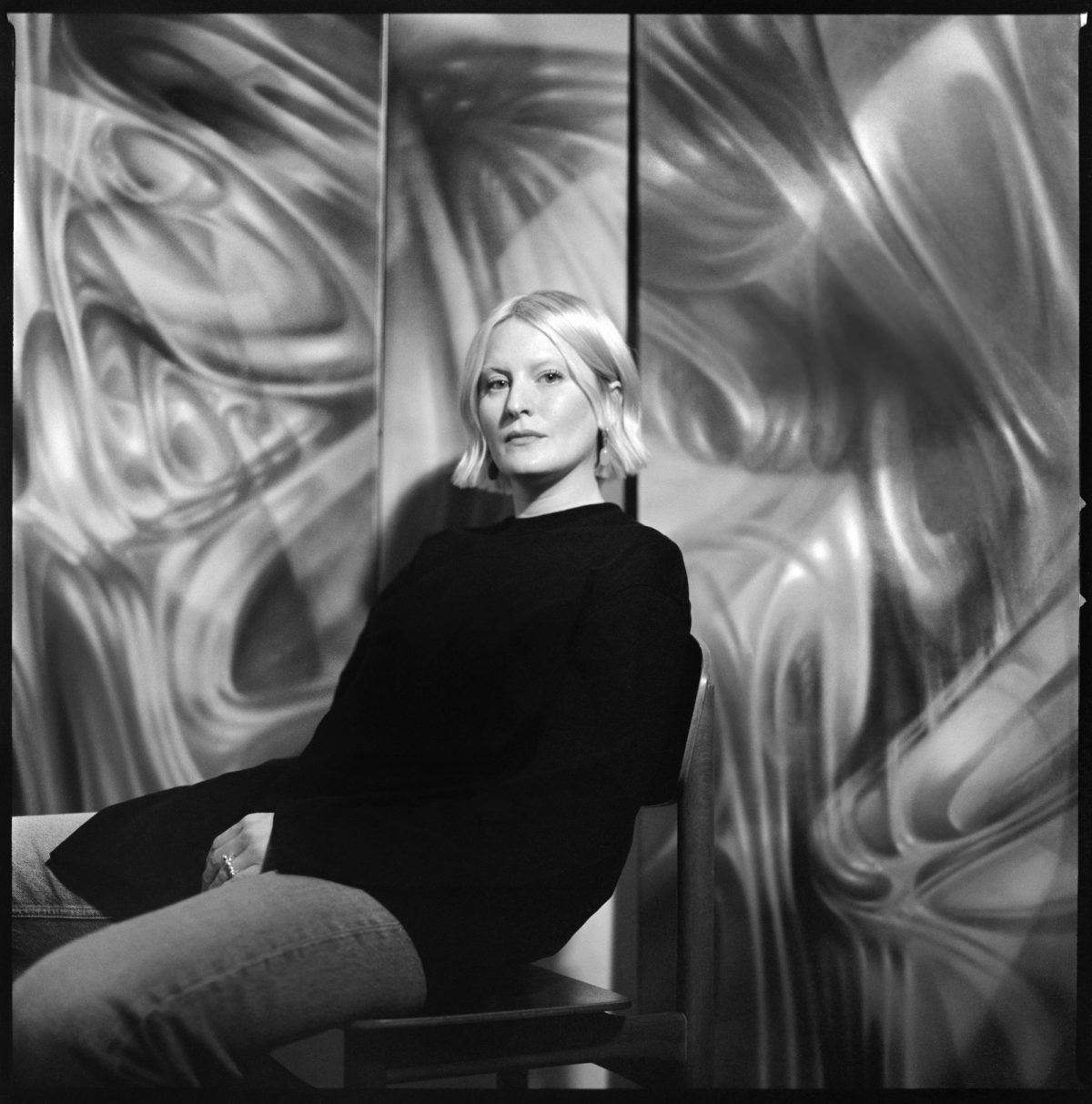
Left: Photo: Alexandre Kurek, 2025
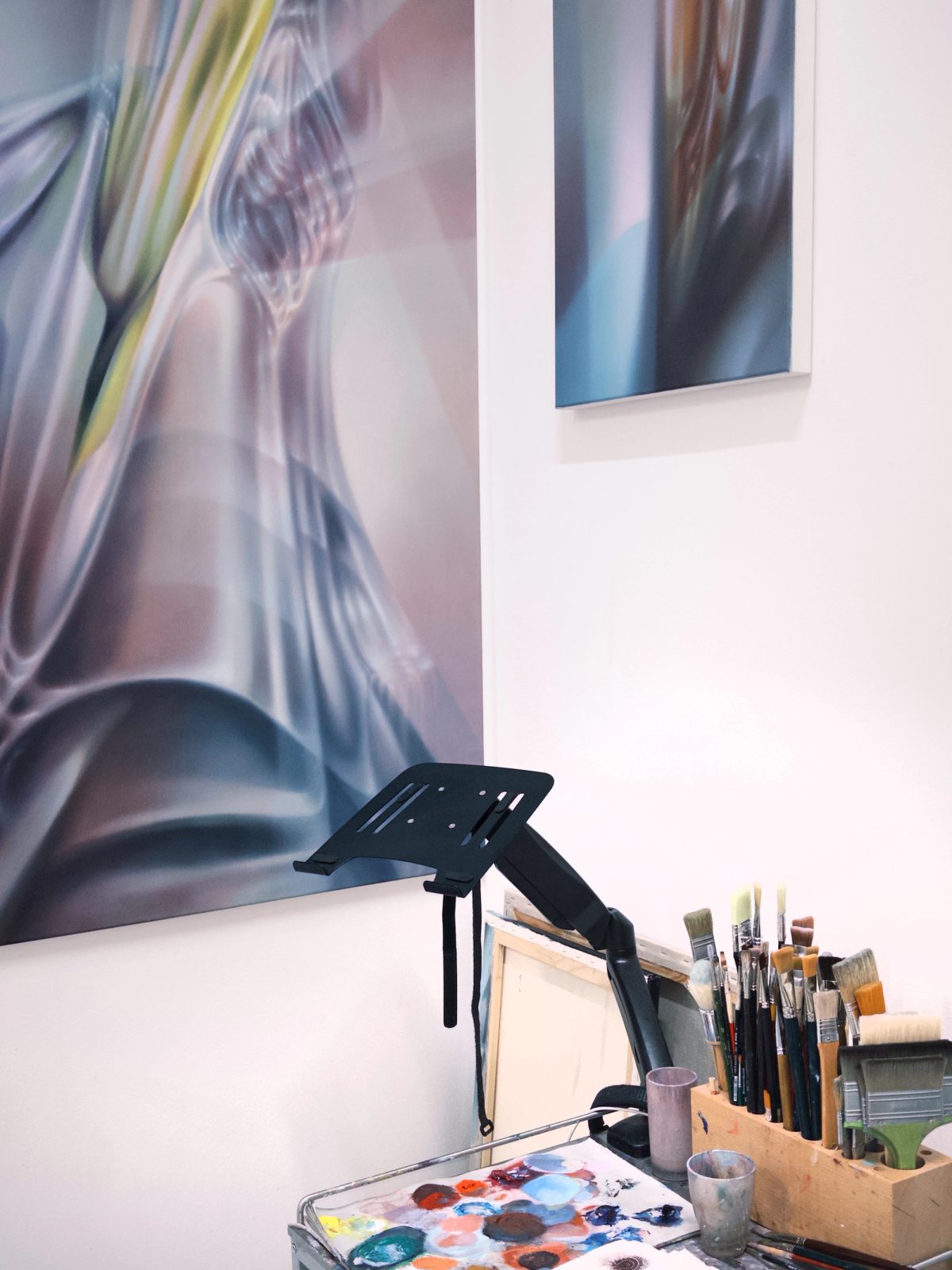
Right: Studio view. Photo: Anja Rausch
"I decide that the work is finished once every aspect of the painting is embedded in a relationship with its surrounding areas."
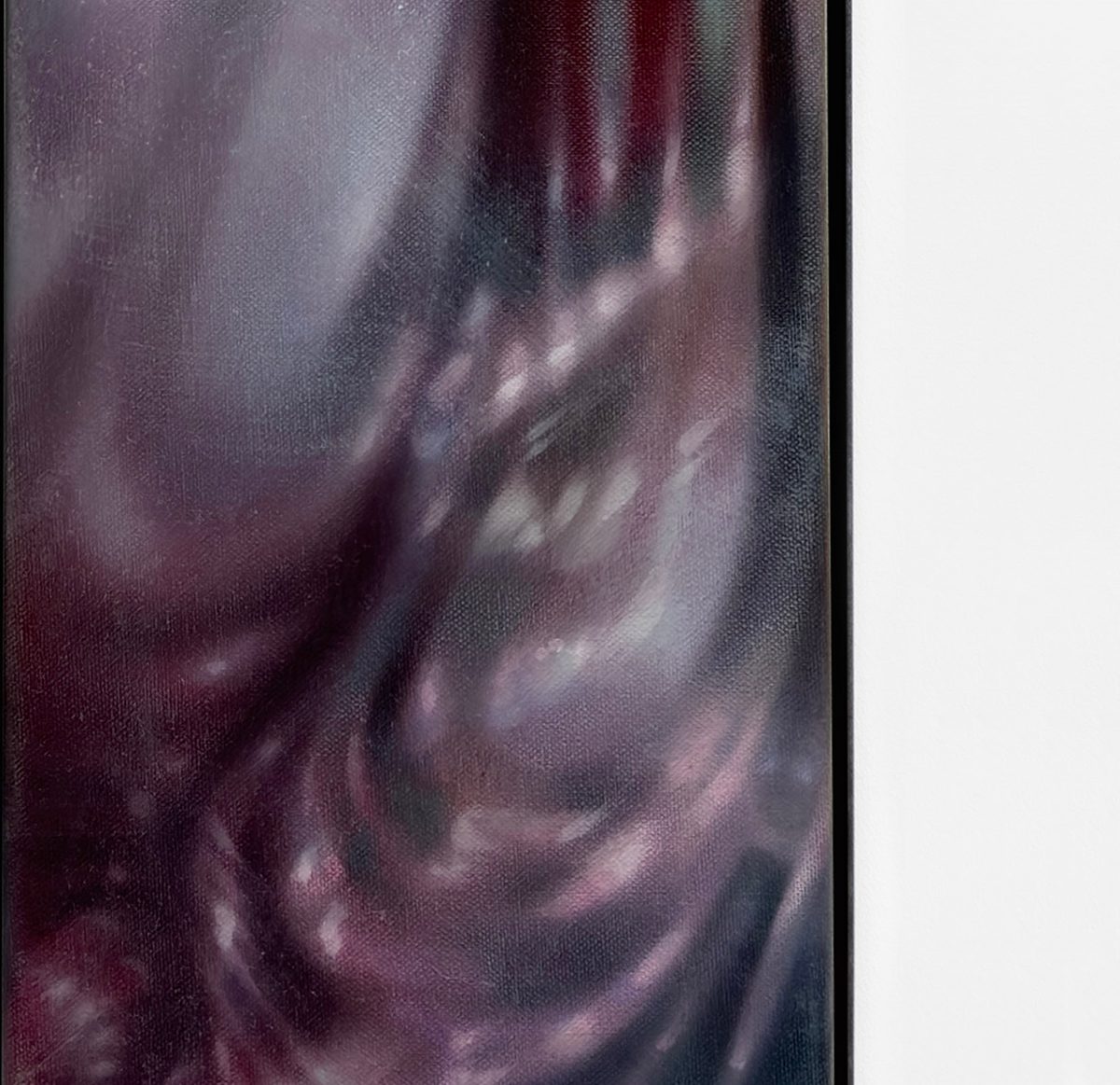
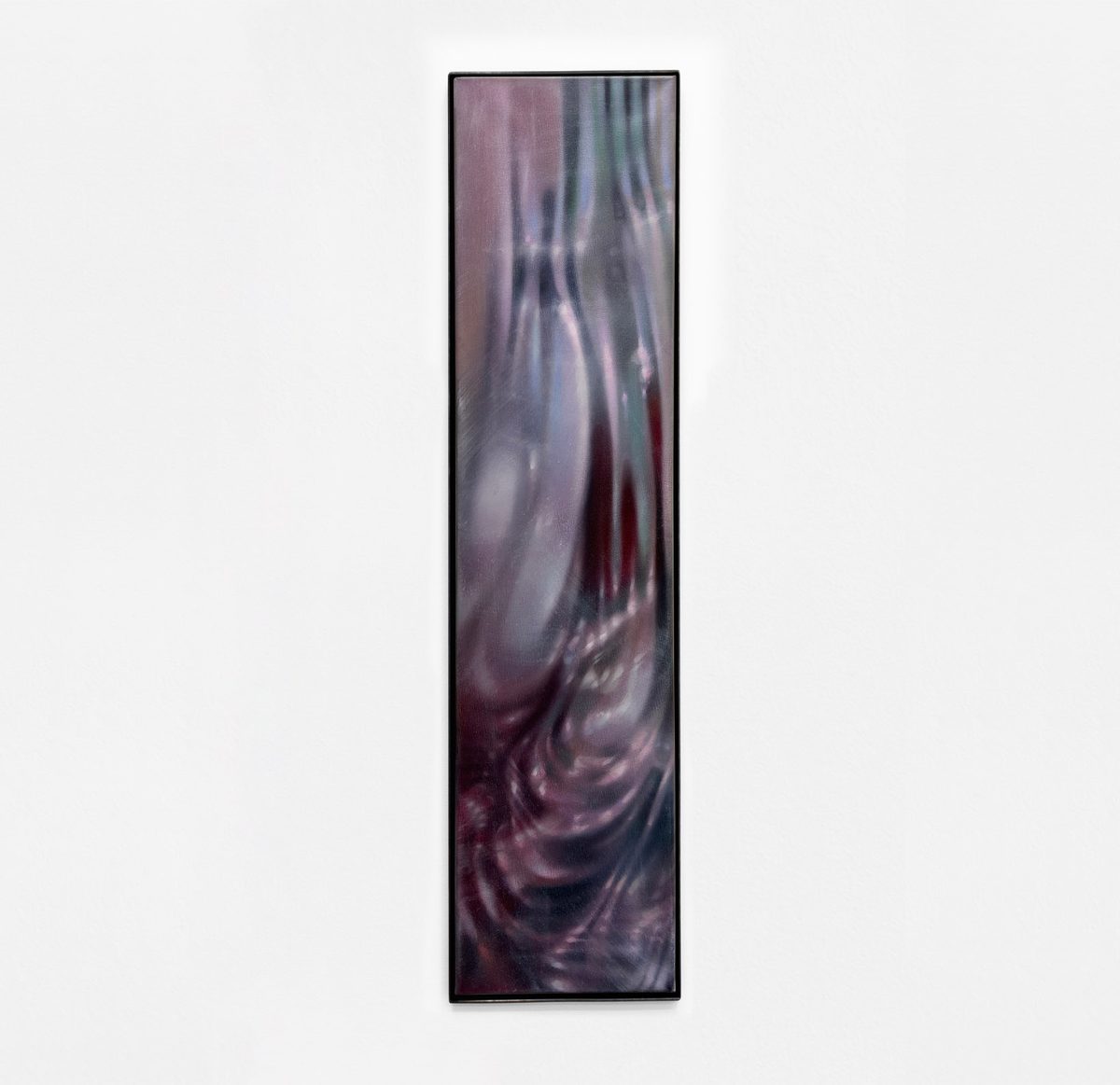
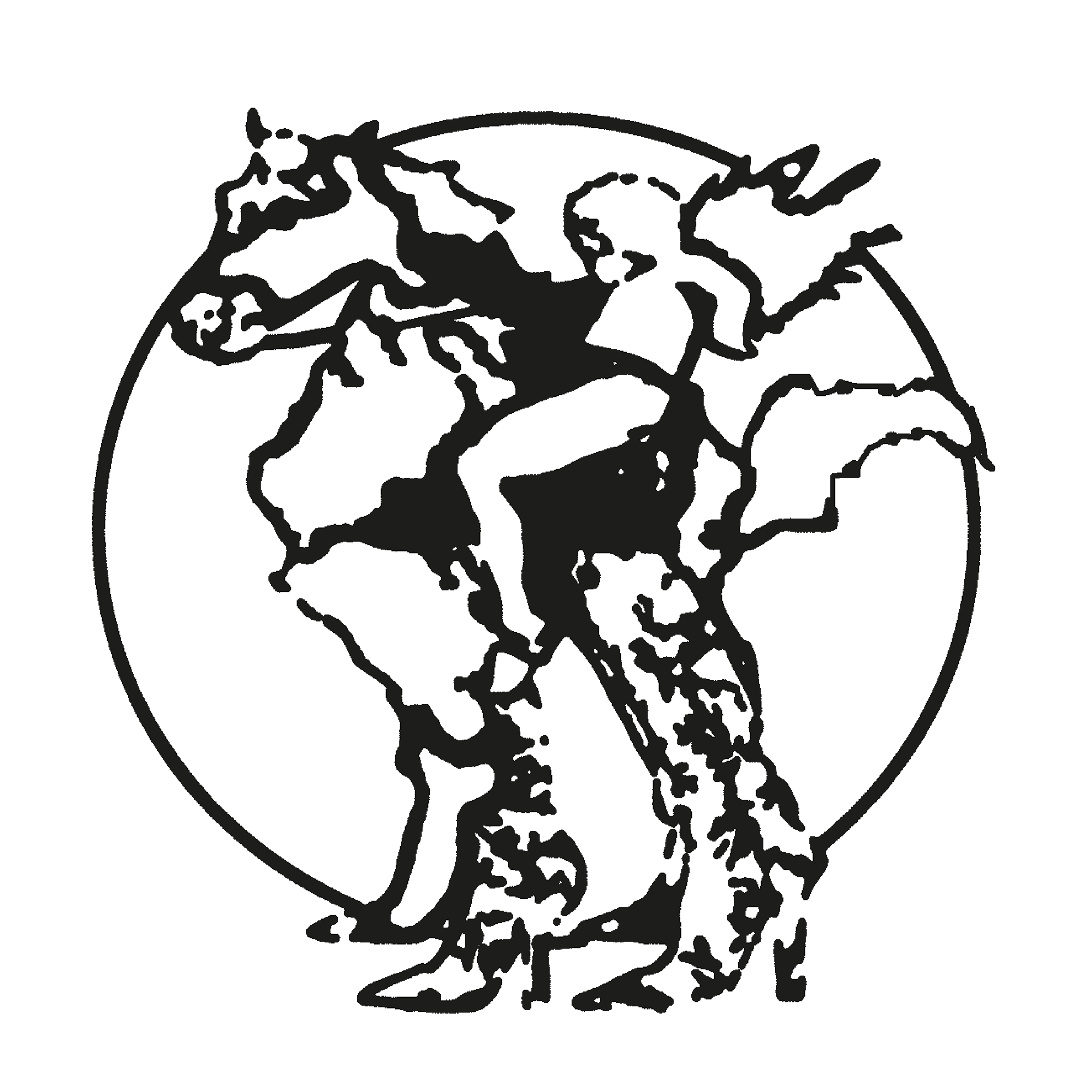
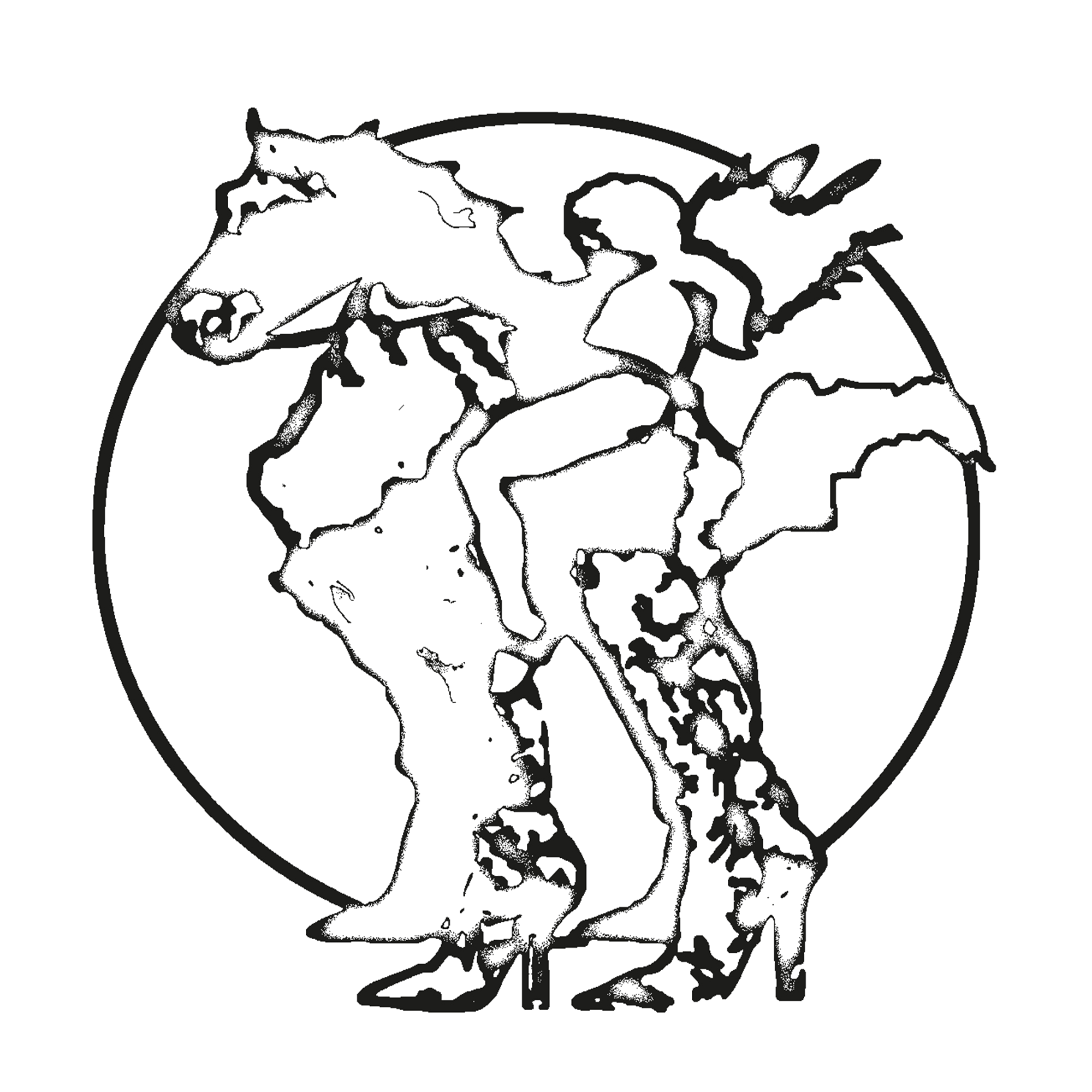
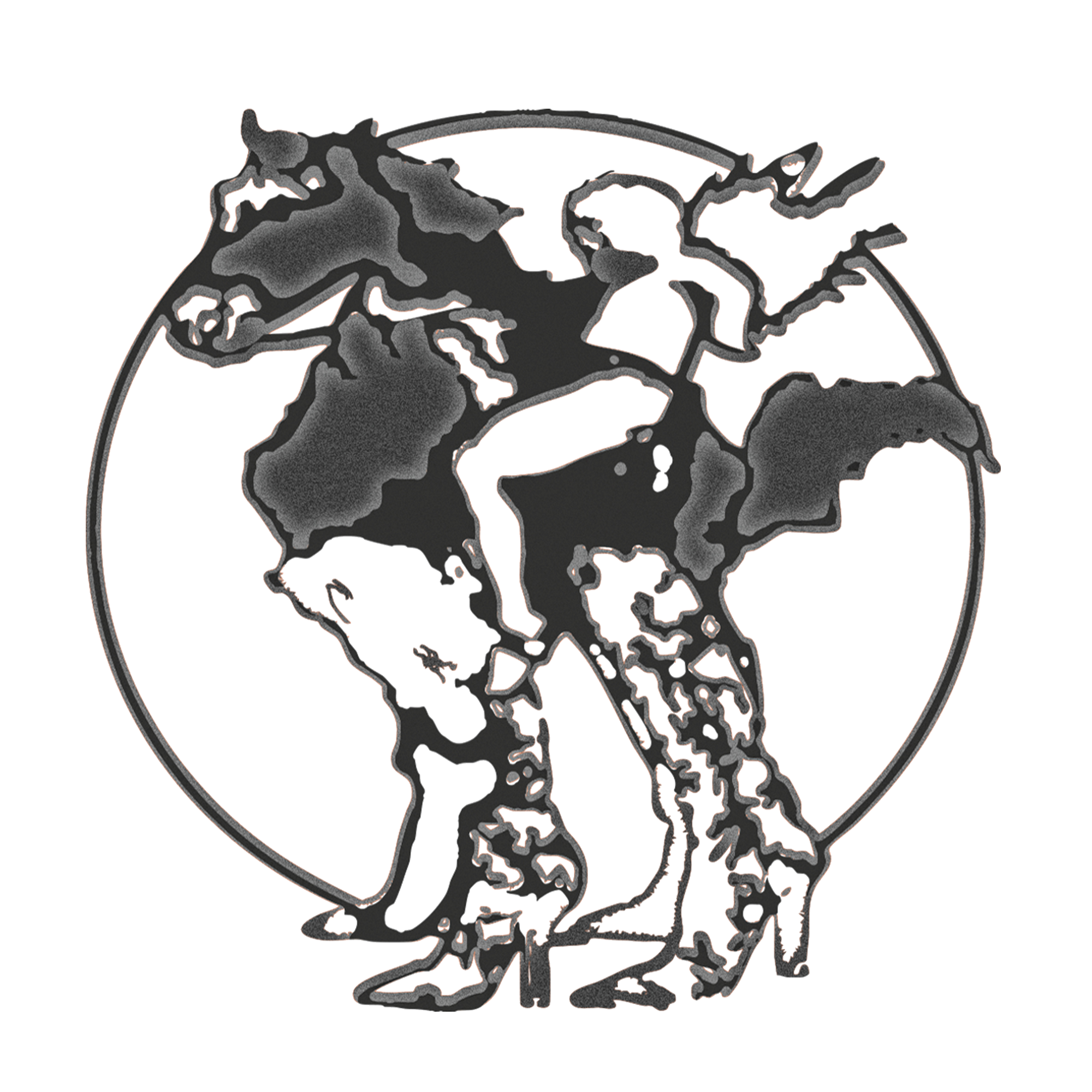
Anja Rausch, GRAVIS, 2023/2026, oil on canvas, 97 × 23 cm
Sfumato is historically a technique for softening and unifying a single, legible form. You're using it to do almost the opposite: to keep meaning suspended. What drew you to borrow a classical technique and turn it against its own purpose?
That's an interesting way to put it. I feel that we are talking about two different things here, in terms of technique and meaning.
Actually, I would disagree with the idea that I am trying to suspend meaning. The way I paint helps me to create harmony and unify the various visual aspects and characteristics of the painting. But in terms of meaning, my work behaves very differently from a Renaissance painting, or at least from the ones you would immediately think of when you hear the word 'sfumato'. This is because there is no narrative aspect to my work, really.
But I totally understand the seemingly paradoxical use of a very precise technique to depict something highly diffuse, like the abstract elements in my motifs. Sometimes I describe it as a photorealistic representation of an abstract state.
So I would say that I use the technique for similar reasons: to model something that resembles human optical perception. But I don't put it in the service of narration.
Anja Rausch in her studio, September 2026. Video: Sebastian Beyrer
Pieces like ALT SOMA-S/M/R (ongoing since 2025) use photo transfer and oil sticks on aluminium, giving a rougher, more damaged surface than your glazed canvases. What does that series let you do that the layered paintings don't?
Thinking in terms of the inherent mechanisms, it works quite similarly: one aspect of my work is about this constant flux and the modelling of the pictorial elements. The starting point for the aluminium works is black-and-white photos of existing oil paintings of mine, and I then remodel these structures all over again by adding black-and-white oil stick, but also by using destructive tools like sandpaper.
With these aluminium works, I don't have to be too careful technically. It almost feels like a stress test of my inherent structures. And I really enjoy the different modes of speed and pressure that these aluminium works require when I build the motifs.
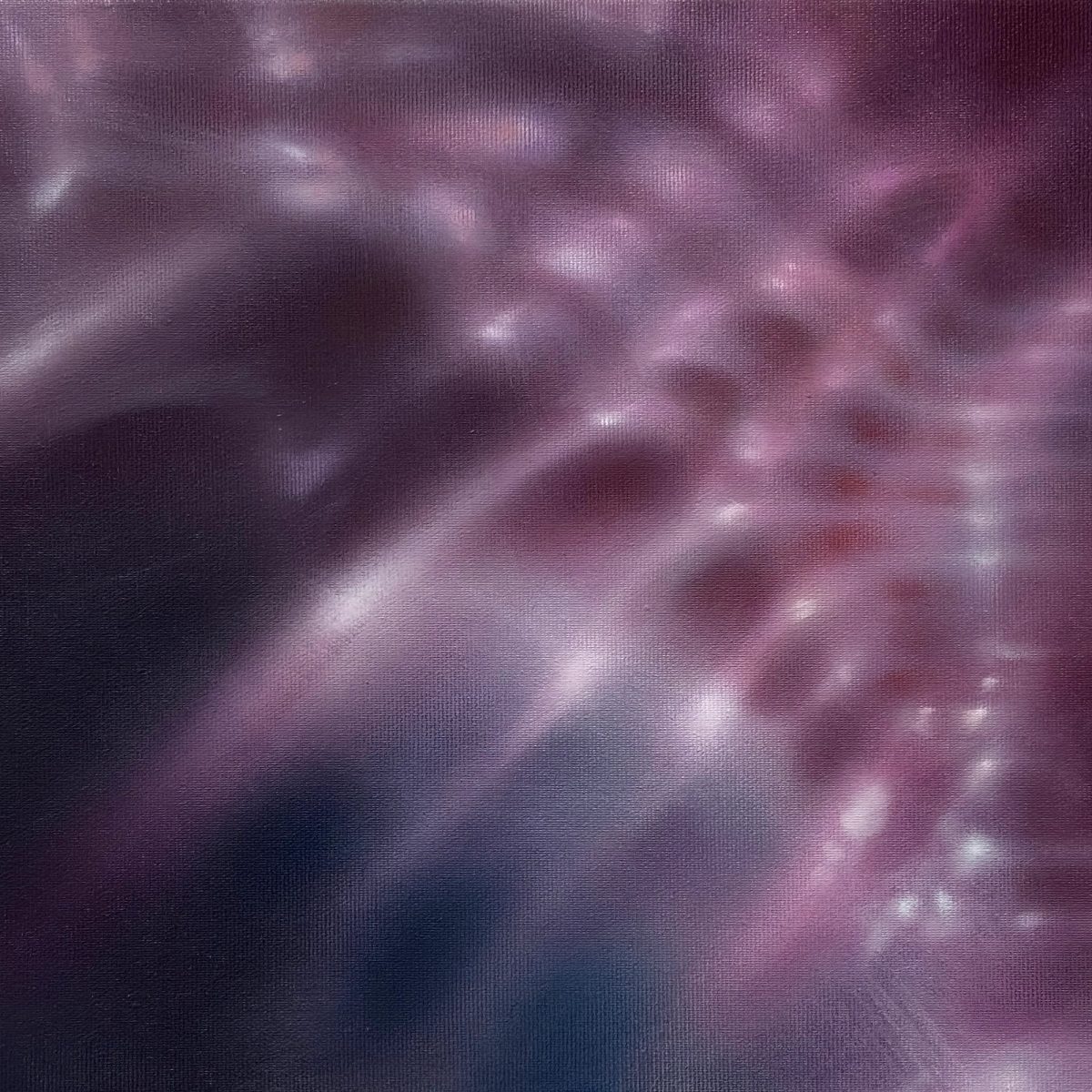
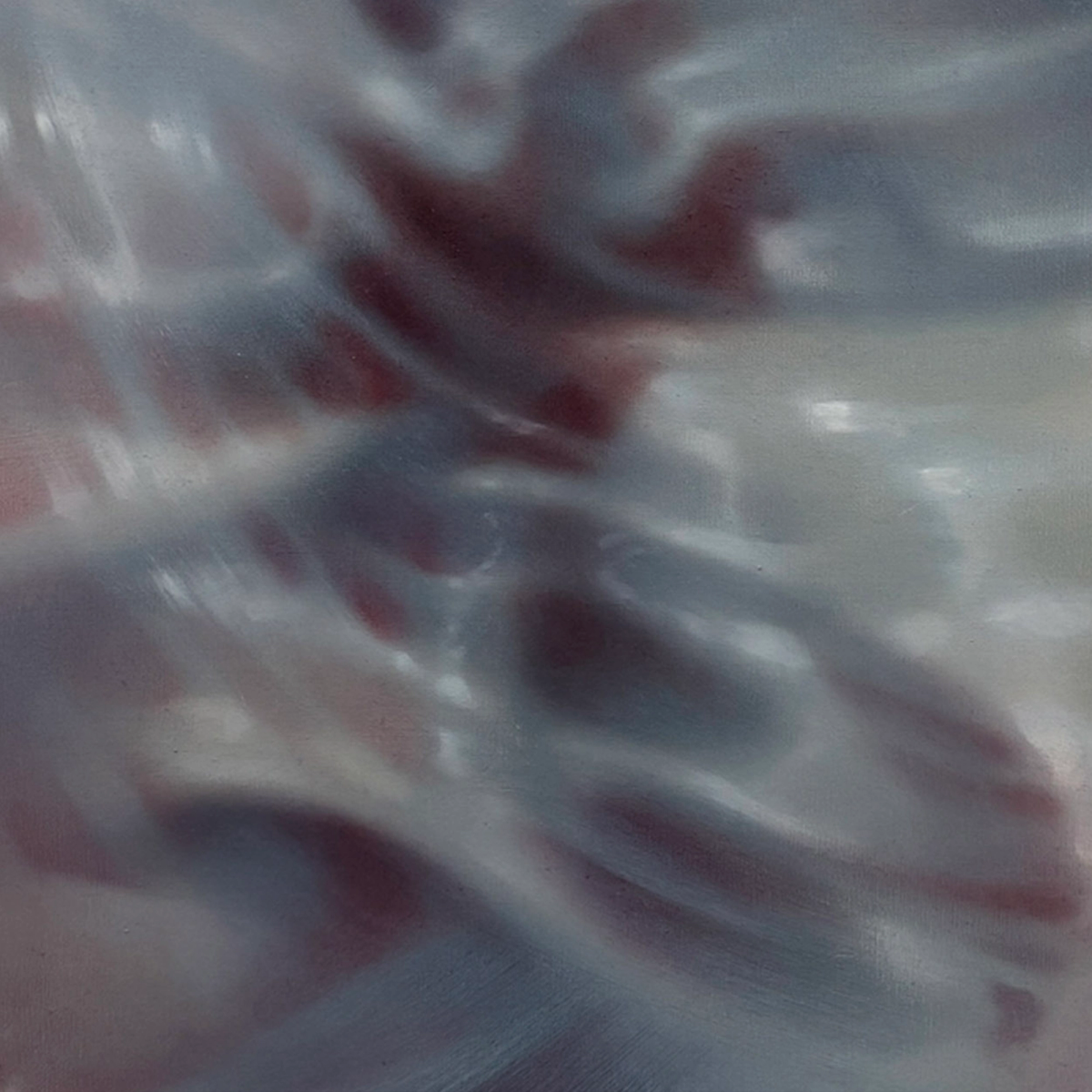
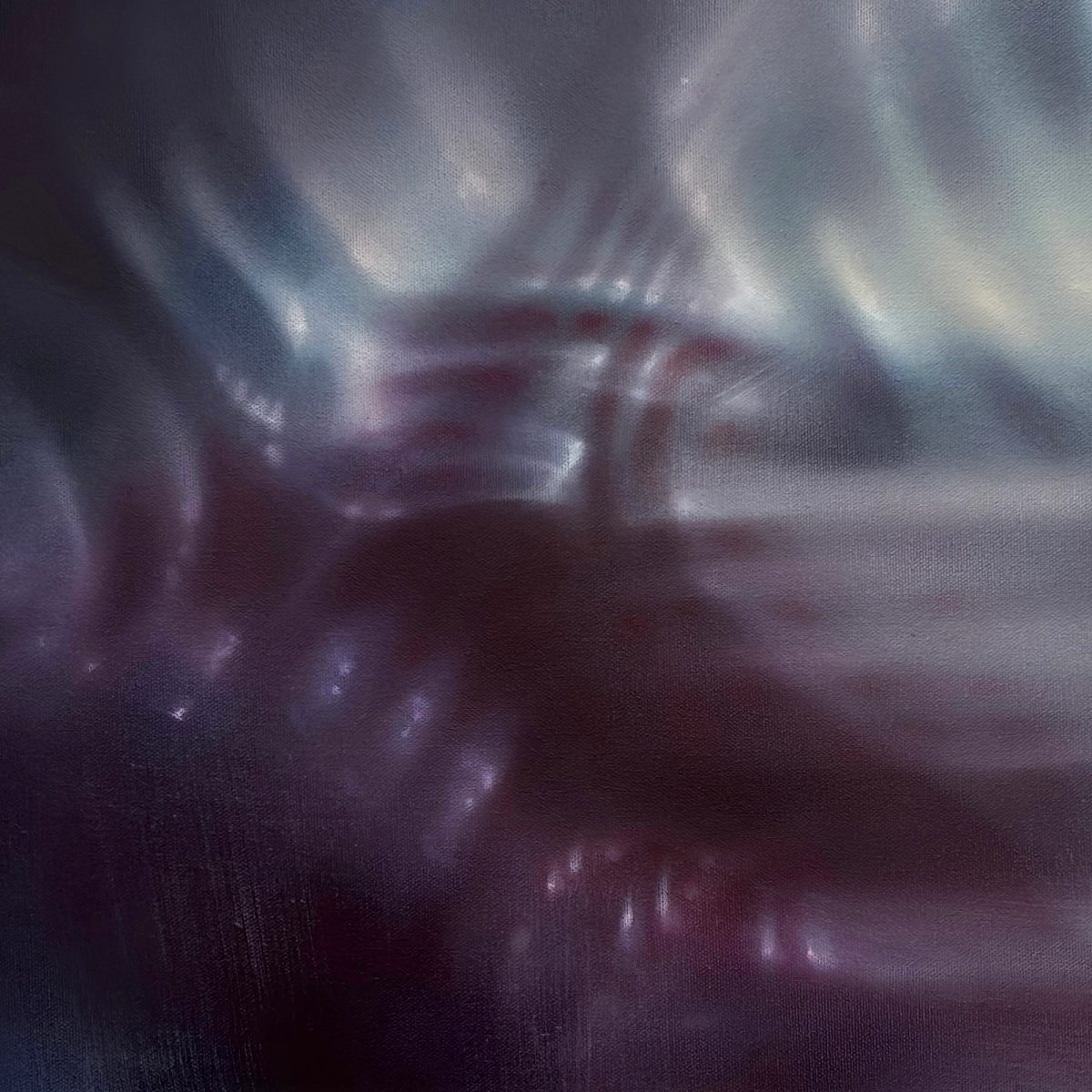
Left: Anja Rausch, VLIESS, 2026, oil on canvas, 30 × 40 cm, detail
Centre: Anja Rausch, ROTA, 2026, oil on canvas, 50 × 40 cm, detail
Right: Anja Rausch, SCARI, 2026, 40x50 cm, detail
You trained for eight years in a private painting school before studying Visual Communication in Darmstadt, then spent five years working in spatial installation and scenography before returning to painting. What did that detour teach you about how a viewer moves through and constructs an image, rather than just looks at it?
Interesting question, thank you. Let me think this through. Maybe I would approach it from a different angle. It often happens that I personally connect more with artists who have a design background. And I asked myself why that is, because it's definitely nothing purely visual. I think it's maybe because designers learn, or have the ability, to think about everything visual structurally, as if every notion has meaning and purpose. And I feel that you can tell when a painter has this capability or background.
I also feel that painting offers similar lessons to work in spatial design and scenography: information and its meaning are very relative when you look at them in isolation. But if you see them in the context of a group of paintings, and also within a spatial environment, the overall meaning offers new possibilities. Everything is interdependent. Working mainly in the museum realm has helped me to sharpen my eye for what makes a strong, well-thought-through exhibition.
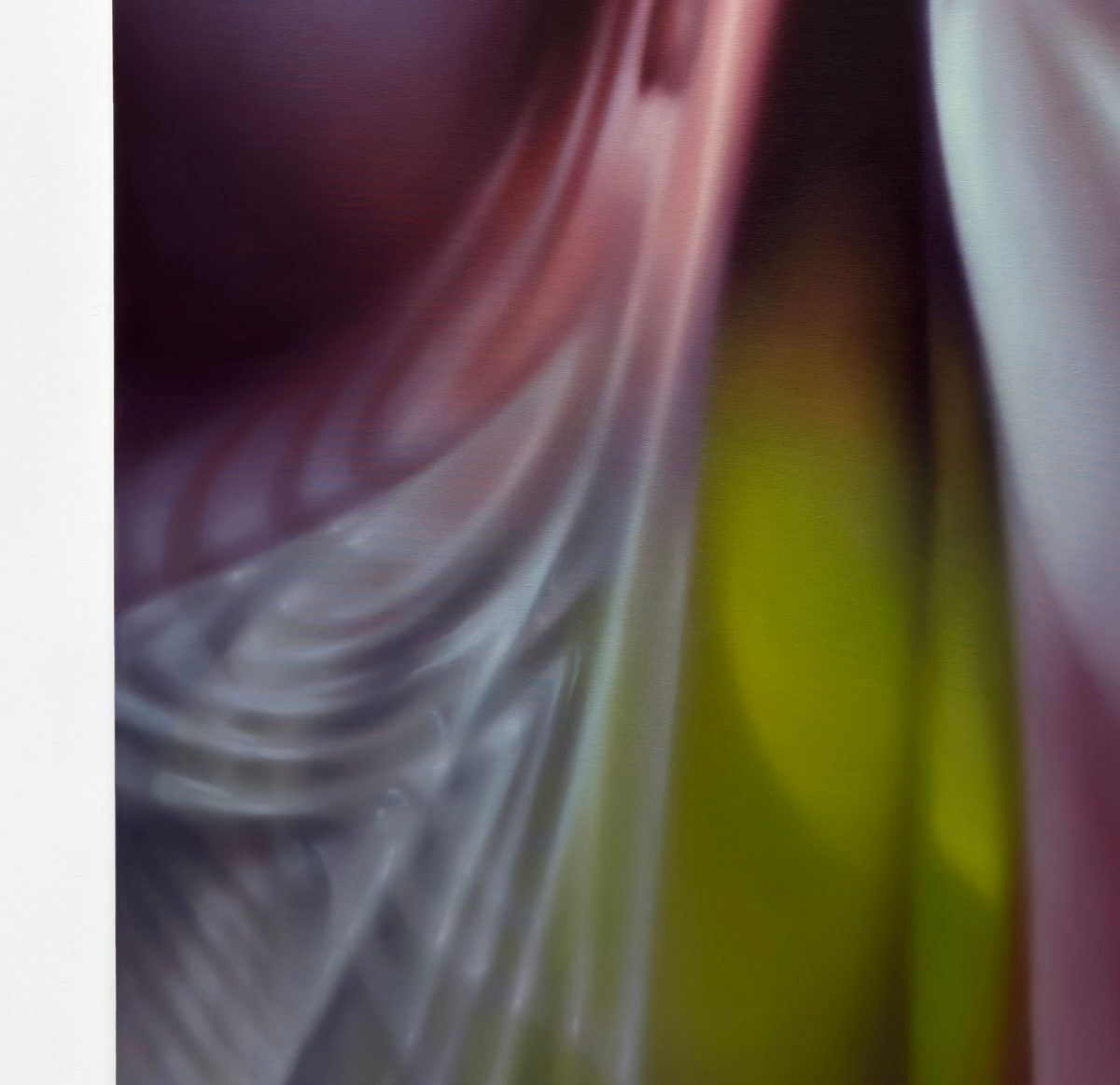
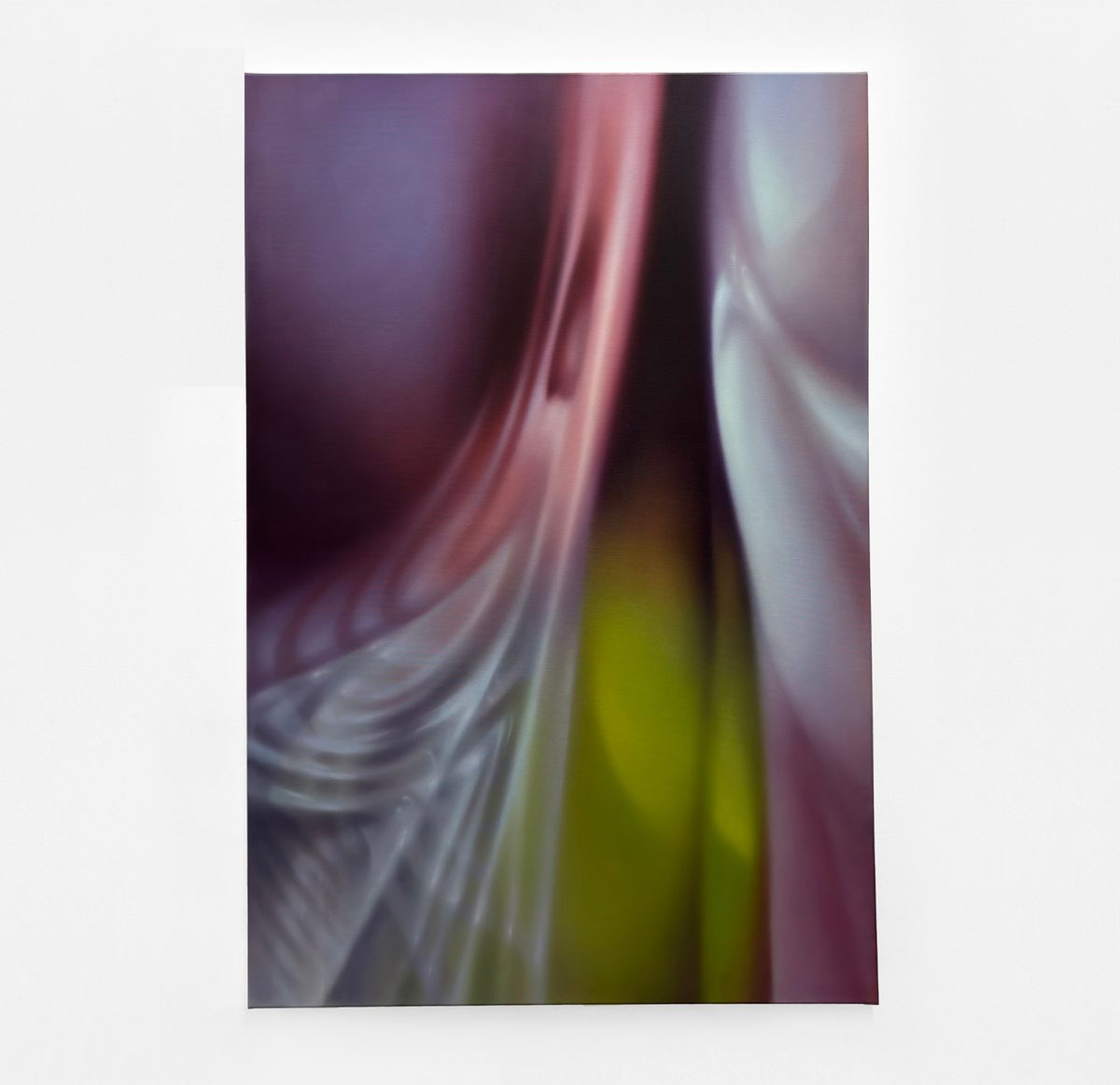
Anja Rausch, THORAX, 2026, oil on canvas, 150 × 100 cm, detail
"I never think about the outcome, apart from choosing a format. Painting, for me, is really about searching, irritating, and astonishing myself."
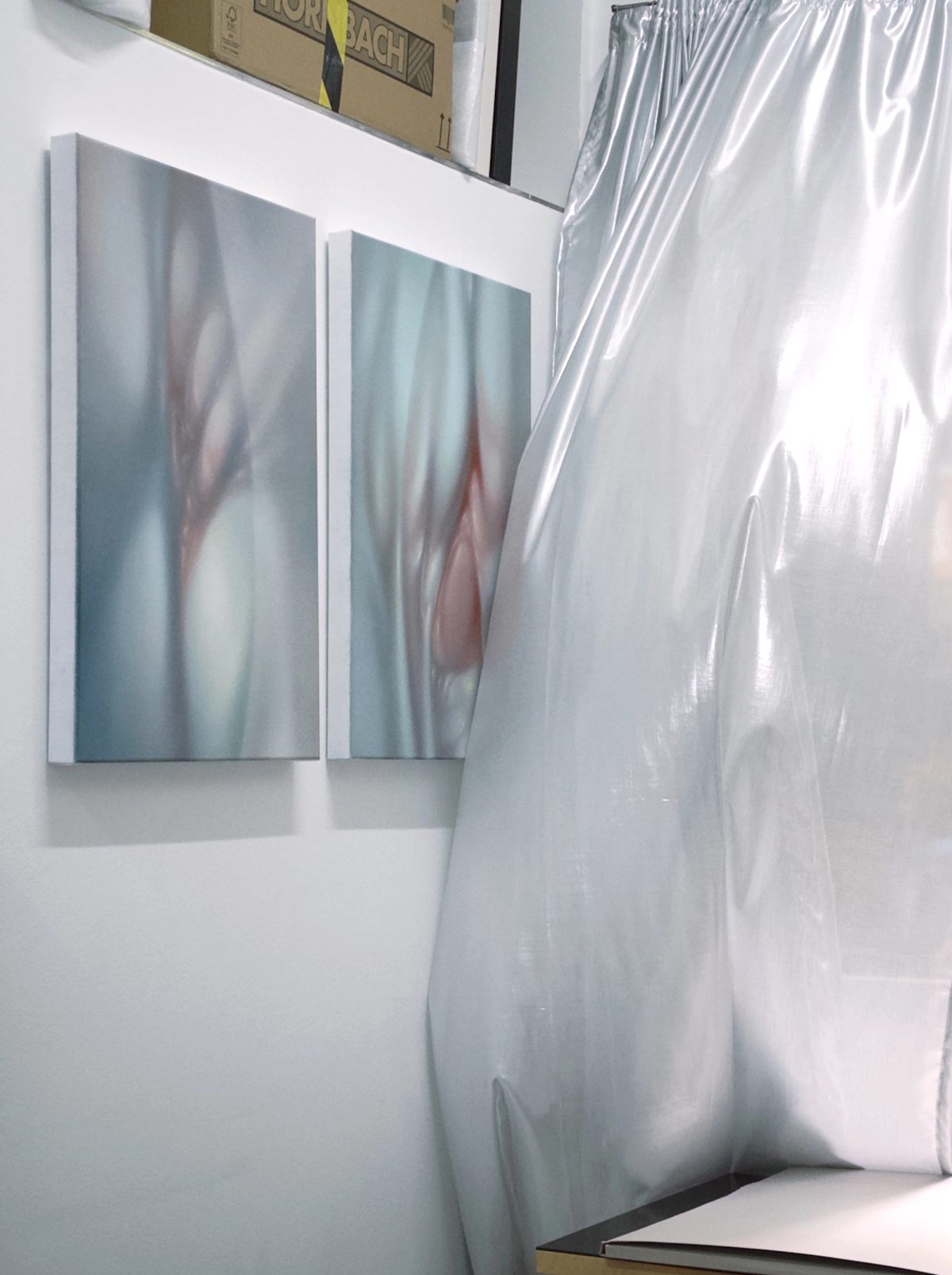
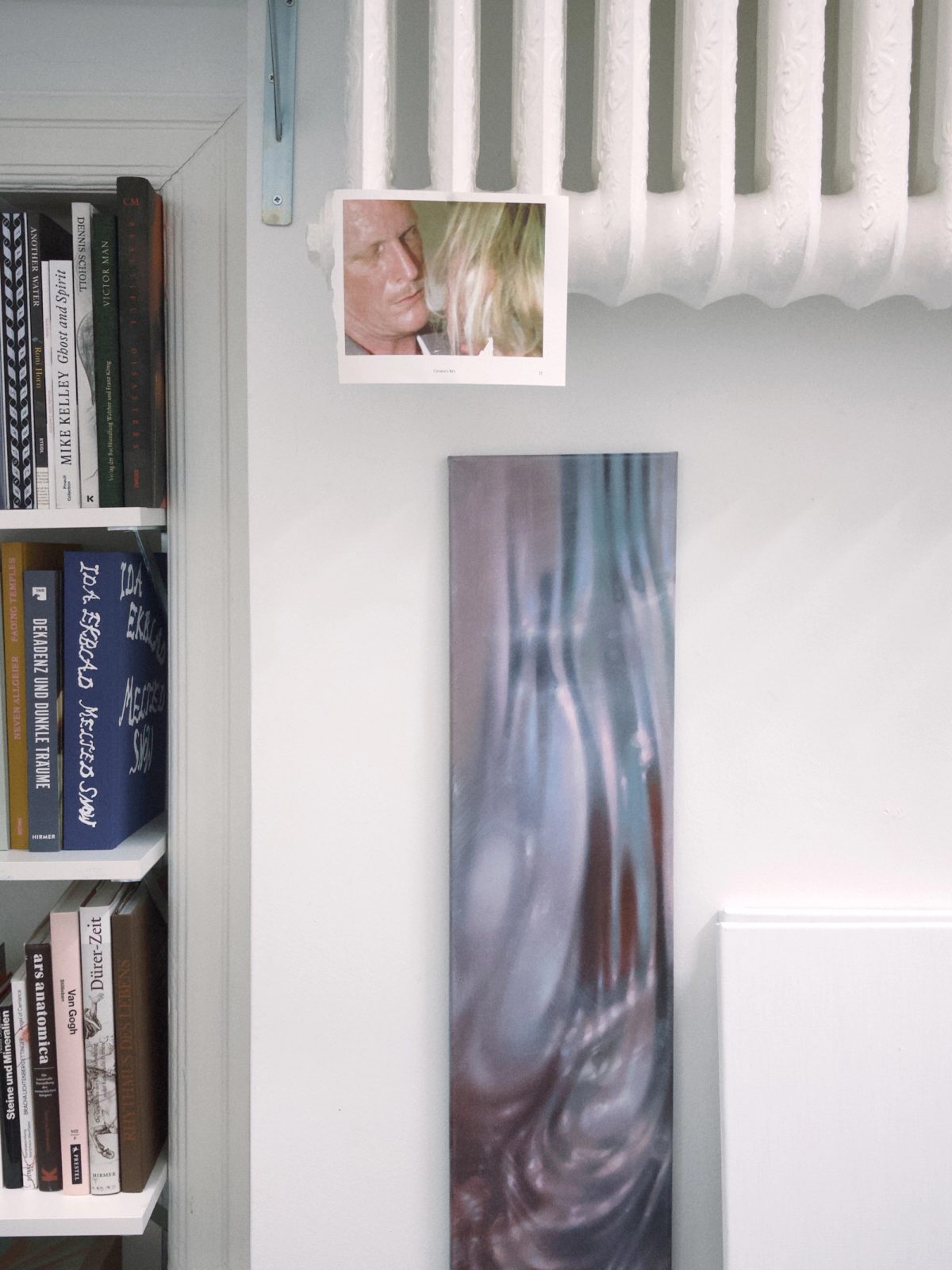
Studio view. Photo: Anja Rausch
Your statement talks about resisting 'narrative closure', even while the surfaces are almost photorealistic. The image promises a legibility it doesn't deliver. Has a viewer's reading of a piece, the story they insisted on finding, ever changed how you approached the next one?
No, I don't think so.
You're currently in Jorinde Voigt's class at HFBK Hamburg, working alongside someone whose practice is so systemic and notation-based. Has that proximity pushed your own, much more intuitive process in any direction: towards more structure or, in reaction, further from it?
I have always felt very close to Jorinde Voigt's way of working, even when I was still studying design. When we got to know each other, and Jorinde saw my work for the first time, I was honestly somewhat surprised by how precisely she recognised my personality through my work. The fact that my work is based on a structural logic, and consequently contains a certain social or psychological consistency, was immediately recognised and understood as a fundamental condition.
Your question implies that intuition and systematic or logical thinking are opposing operations. I would argue, however, that intuition is actually the highest form of structural knowledge. If I had to define the term, I would describe intuition as an interweaving of rational, emotional and instinctive forms of knowledge: knowledge that has been passed down through generations and over which we have relatively little rational control.
In my conversations with Jorinde as our professor, and I think this applies to all of us in the class, I find that she takes our positions very seriously. I experience this as a form of trust, while at the same time she holds us responsible for critically reflecting on our actions. Every situation and every action is based on an underlying structure. I experience this as a great gift. I have never had the impression that the essence of my work needed to change, nor have I felt the need to adapt the intrinsic attitude underlying my work.
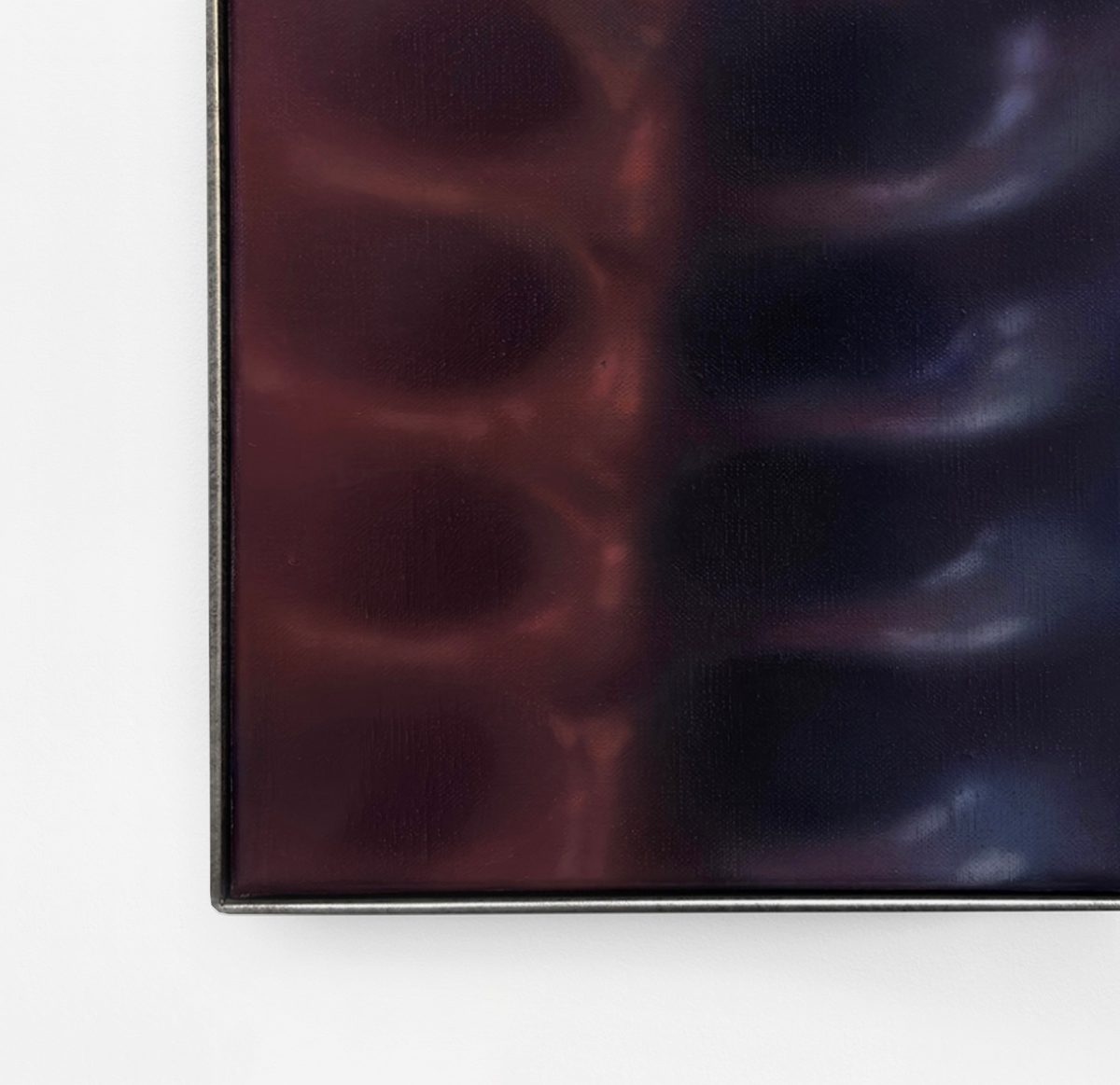
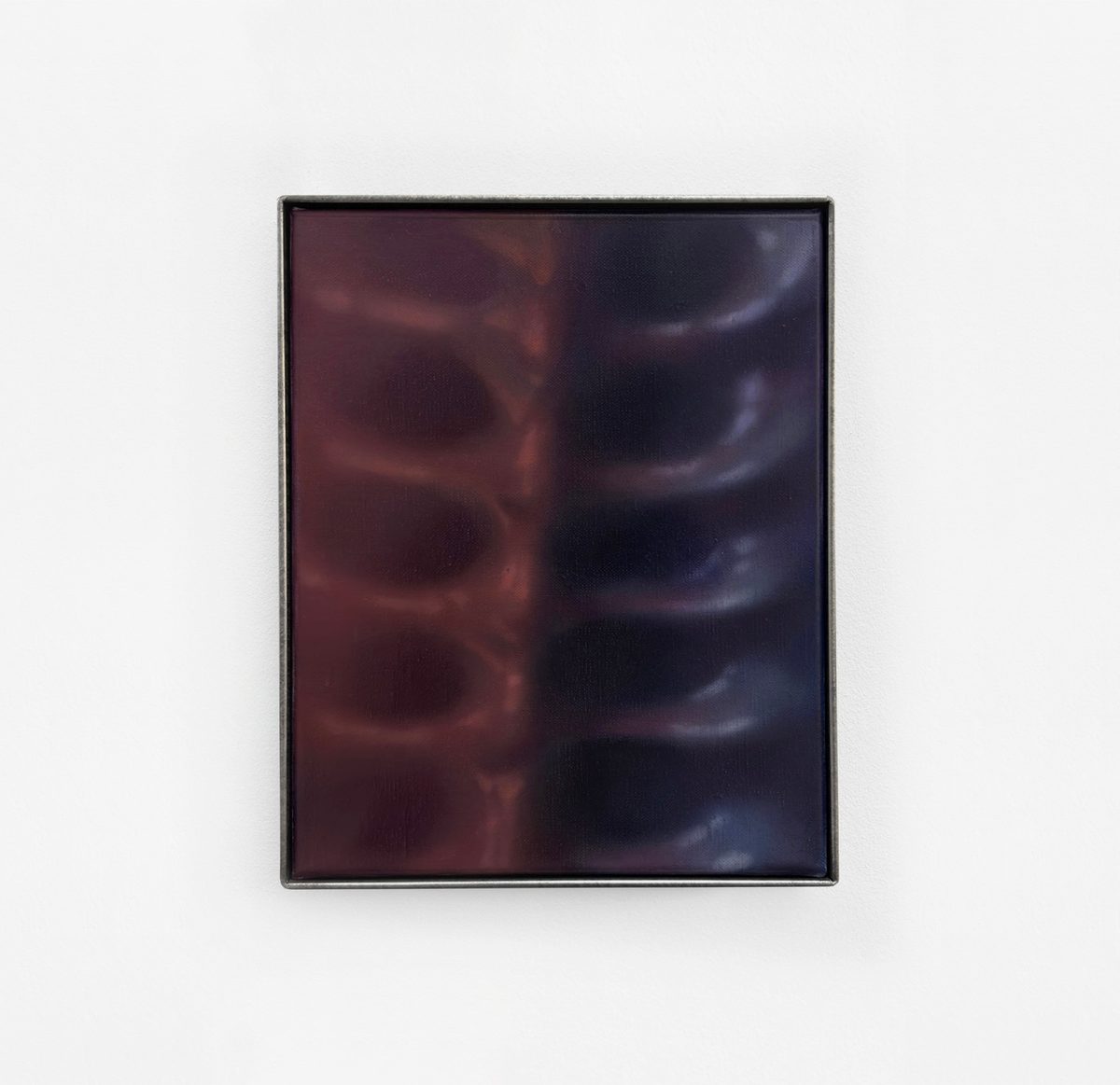
Anja Rausch, IANUS, 2026
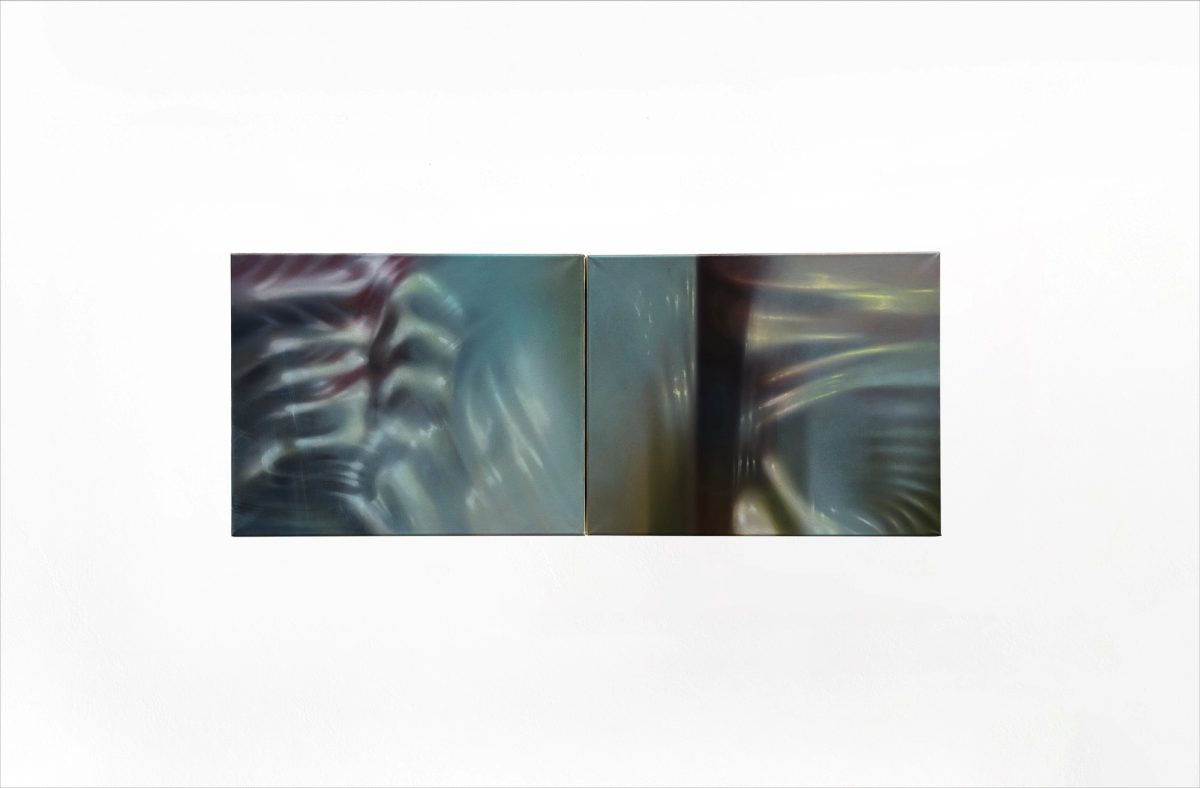
With works like STACCATO, split into two panels within a single frame, or GRAVIS, a 'rework' from 2023 to 2026, you seem willing to return to pieces and physically break them up years later. What makes a painting feel unfinished enough to revisit, rather than simply leaving it as its own record of that earlier moment?
That is a very valid question. When I decide to update a work that I had already considered 'finished' at an earlier point, it is always because I feel that there is still unrealised potential, or an experience that I would like to pursue further.
This often has to do with applying techniques or painting experiences that I have developed since then. I do not feel that a work is ever truly finished. And, honestly, I also appreciate remaining in a state of constant movement. I think this is also connected to the fact that my lived reality is one in which things constantly change in relation to their context and over time. Personally, I have a great deal of trust in the potential of my ability to adapt.
The idea that certain aspects might be lost in the process, or lose their validity, is a valid thought that I also consider. I am aware that, in the process of updating a work, visible aspects are sometimes sacrificed and can therefore no longer occupy the same position in the foreground. At the same time, these aspects are not really lost. They have simply become part of the underlying, and therefore integrated, structure.
The painted gesture is still there, even when it can no longer be seen. And it was, in fact, one of the fundamental conditions for the new experience to emerge.
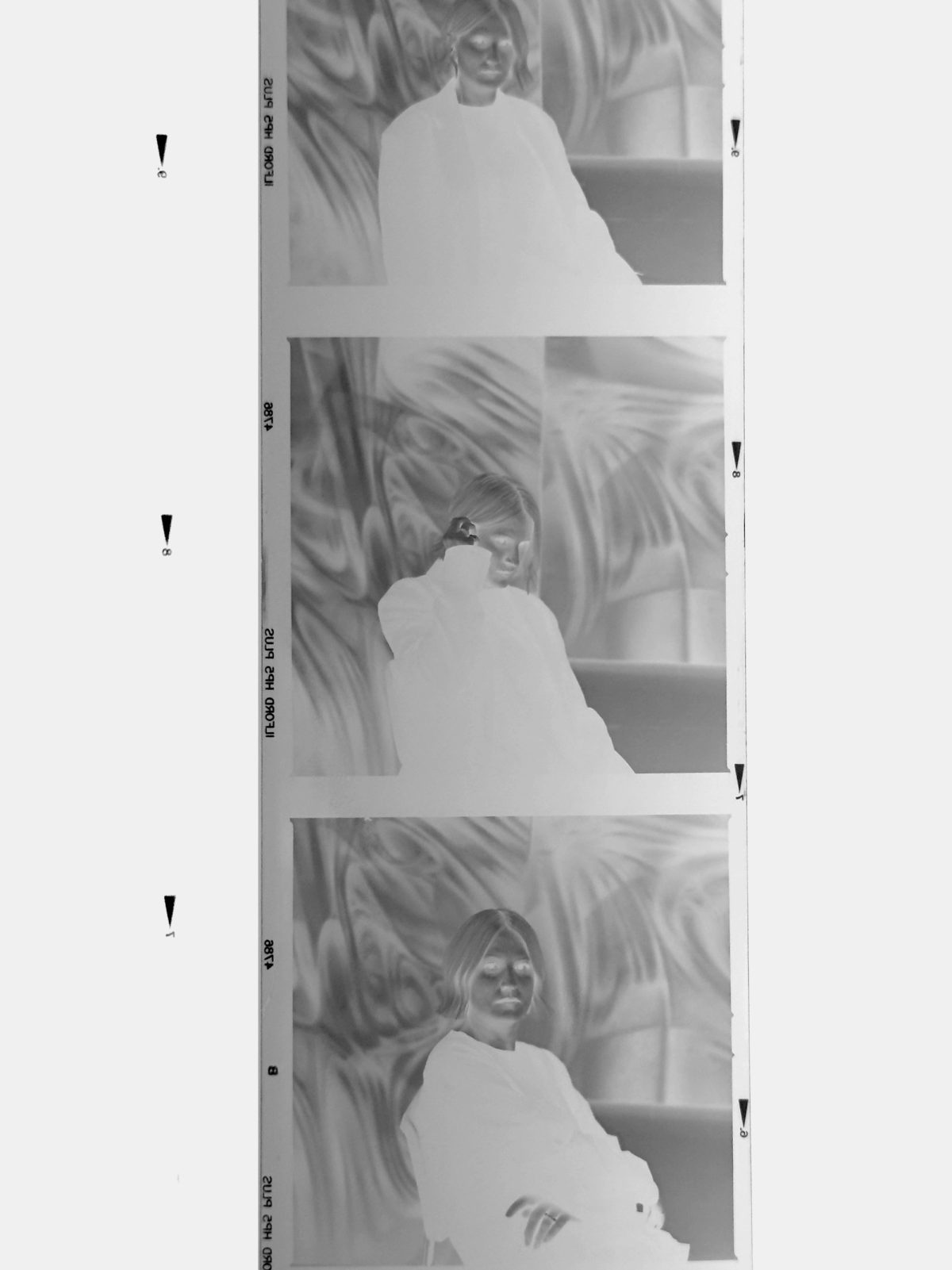
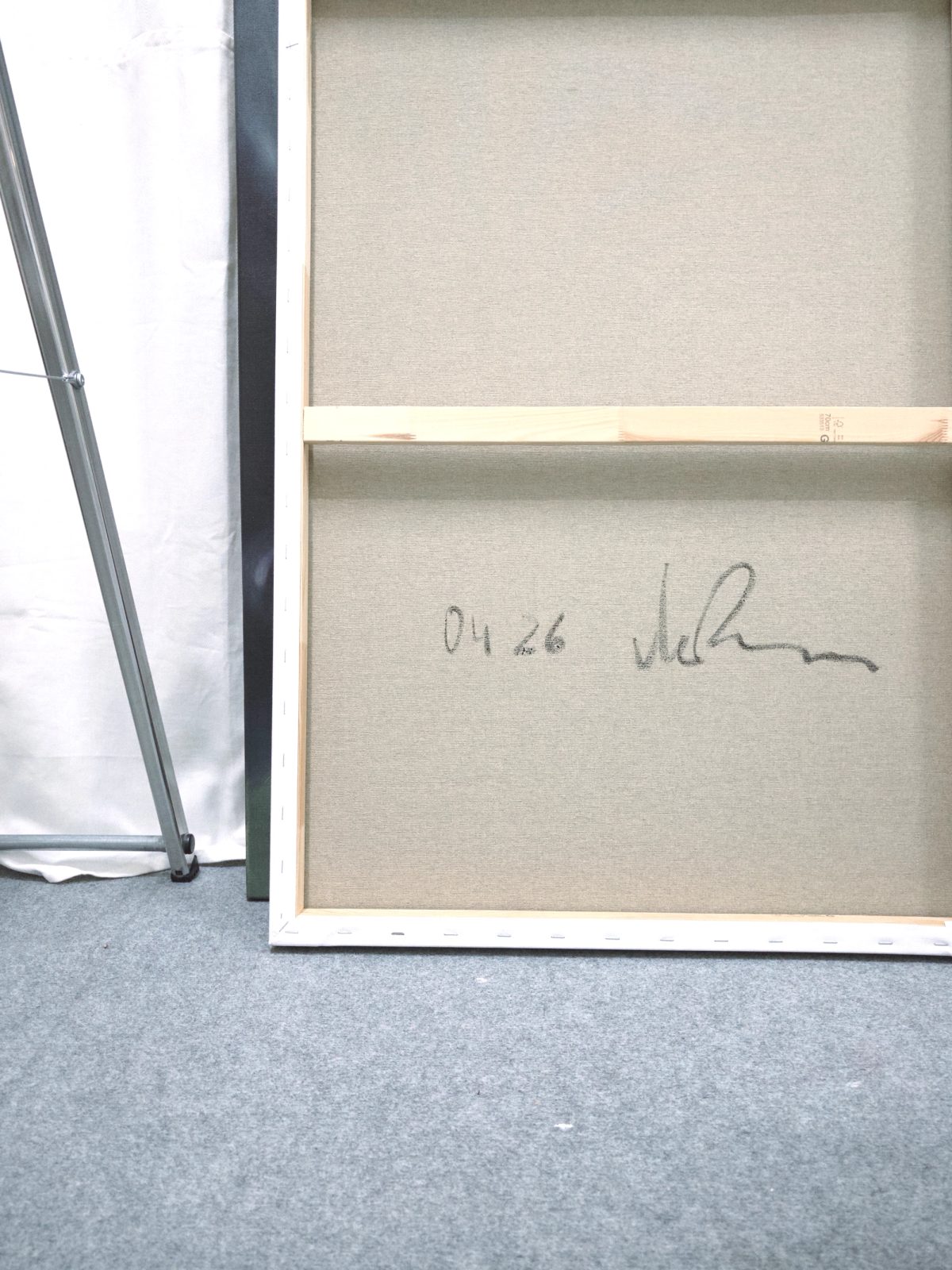
Left: Photo: Alexandre Kurek, 2025
Right: Studio view, detail. Photo: Anja Rausch
"For me, it is more about integrating understanding than deliberately producing ambiguity or mixed messages. But the status quo is that things are perhaps not quite as clearly defined."
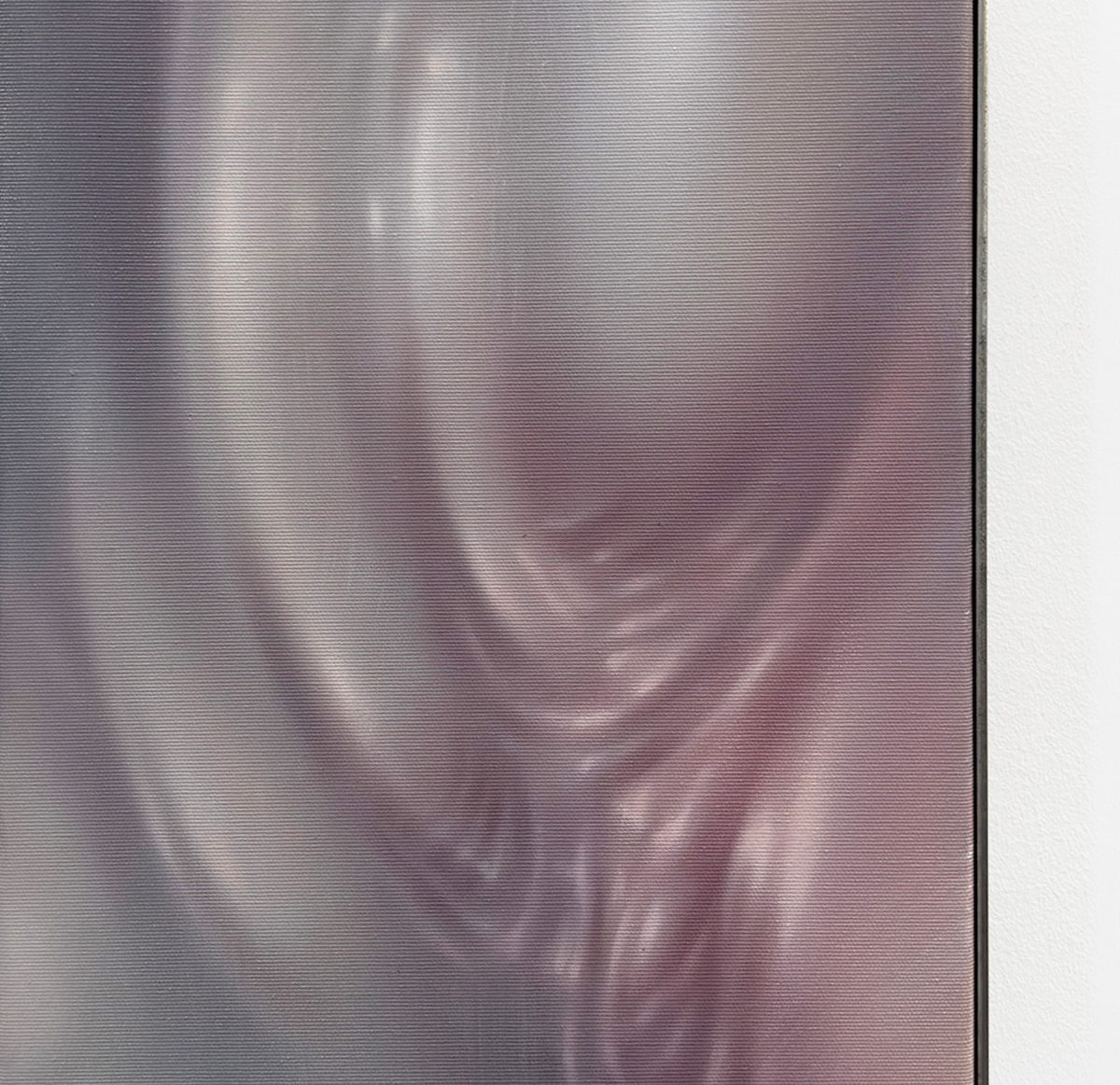
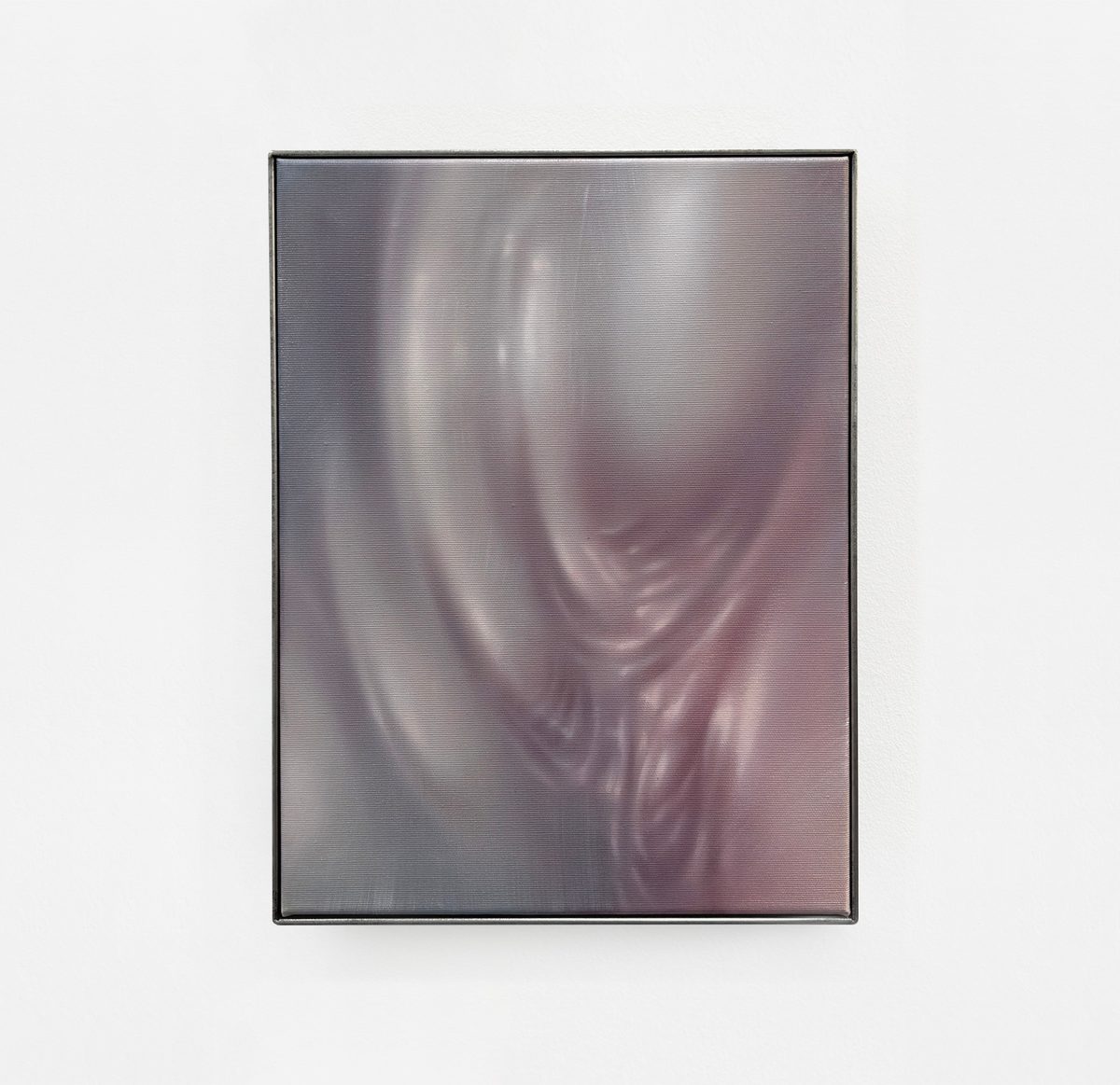
Anja Rausch, CAPSA, 2026
Between Morbid Orbit in 2023 and the institutional shows and art fairs since (CICA Museum, Prisma Art Prize, Enter Art Fair Copenhagen), has the scale or visibility of the audience changed what you're willing to leave ambiguous, or has the work stayed just as resistant to resolution regardless of who's in the room?
Honestly, when I paint, I am only concerned with the dialogue between the image and myself. It is not that I know what I am obscuring or what will remain ambiguous. In the end, the work is simply a representation of my internalised truth, and, obviously, this truth is layered and ambiguous.
For me, it is more about integrating understanding than deliberately producing ambiguity or mixed messages. But the status quo is that things are perhaps not quite as clearly defined.
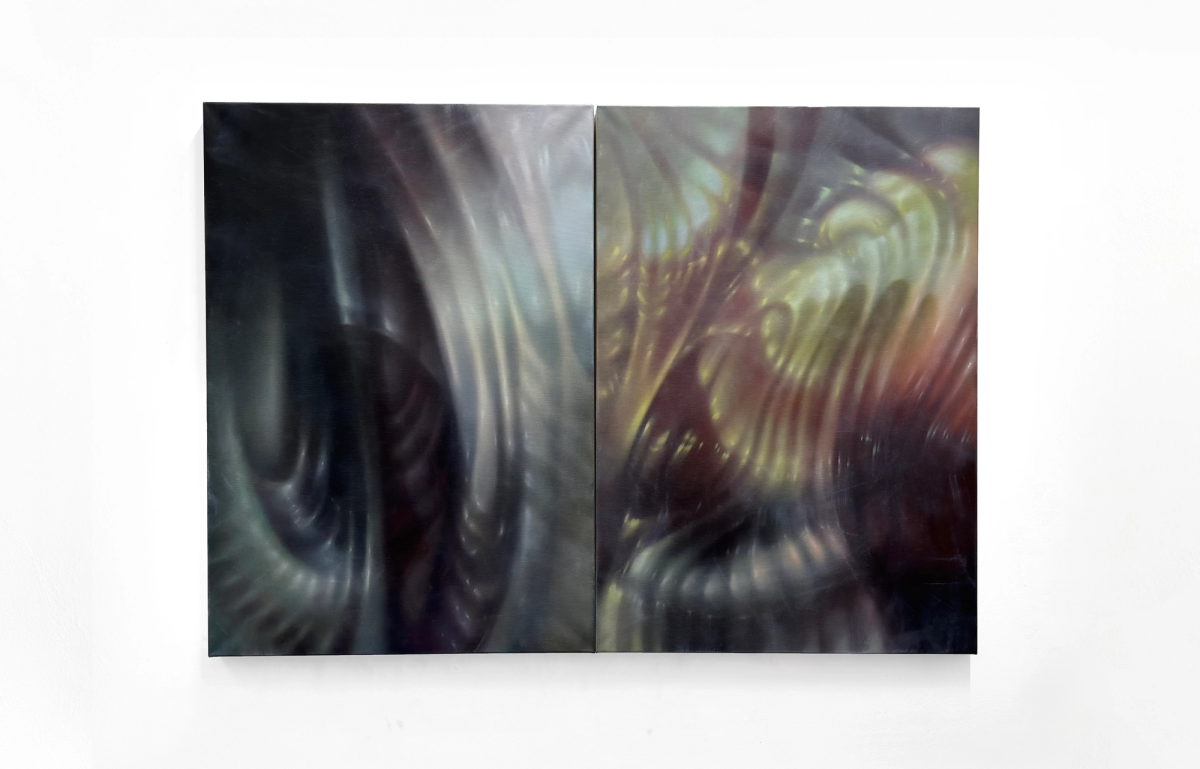
Anja Rausch, VOTIV AUGO, 2026
Cover Image: Anja Rausch, STACCATO, 2026, oil on canvas, two panels in one frame, 50 × 100 cm