BLUE EYESHADOW AND CROP CIRCLES: IN CONVERSATION WITH NICOLINA MORRA
CONVERSATION BY SELIN KIR
CO-FOUNDER, CURATOR
7 OCTOBER 2026 — NEW YORK, UNITED STATES
For Nicolina Morra, painting is an act of devotion: slow, obsessive, and aimed at something just out of reach. Born on Long Island, raised in Florida, and now working in Brooklyn, she builds her canvases from an ever-growing archive of found images, from cult film stills to crop circles, labyrinths, and an enduring fixation on blue eyeshadow. In her hands, Beanie Babies become relics, angels, and UFOs, and a self-portrait can do without a face entirely. Hyper-real details anchor the viewer while everything around them dissolves into a soft, aching blur. Longing is her resting state, and painting is how she gives it form. Here, she talks about magic, devotion, and the strange holiness of mass-produced things.
You studied Studio Art at Florida State and are now based in Brooklyn. What did leaving Tallahassee for New York change about the way you paint, or about what you’re painting toward?
Being in New York City makes everything feel more attainable and real. I was born in New York, on Long Island, but my family moved to Florida when I was in elementary school. I always knew that I wanted to come back, and it feels very natural that I am here now. I'm not sure that the way that I paint has changed much; however, something funny that I've noticed since being here in the city is that I've made more paintings depicting the natural world (trees, landscape, sky) than I ever did before, at least since I was a child.
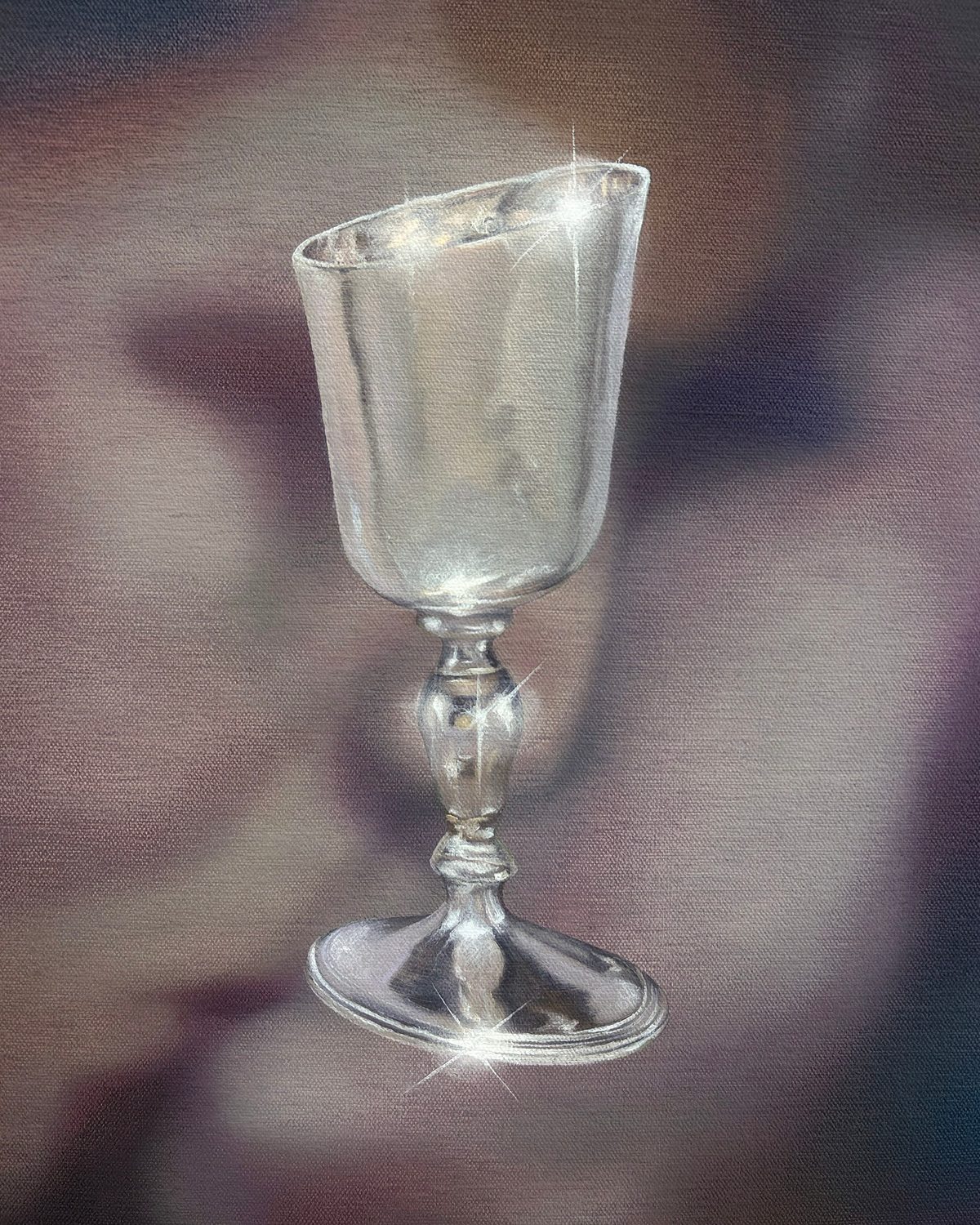
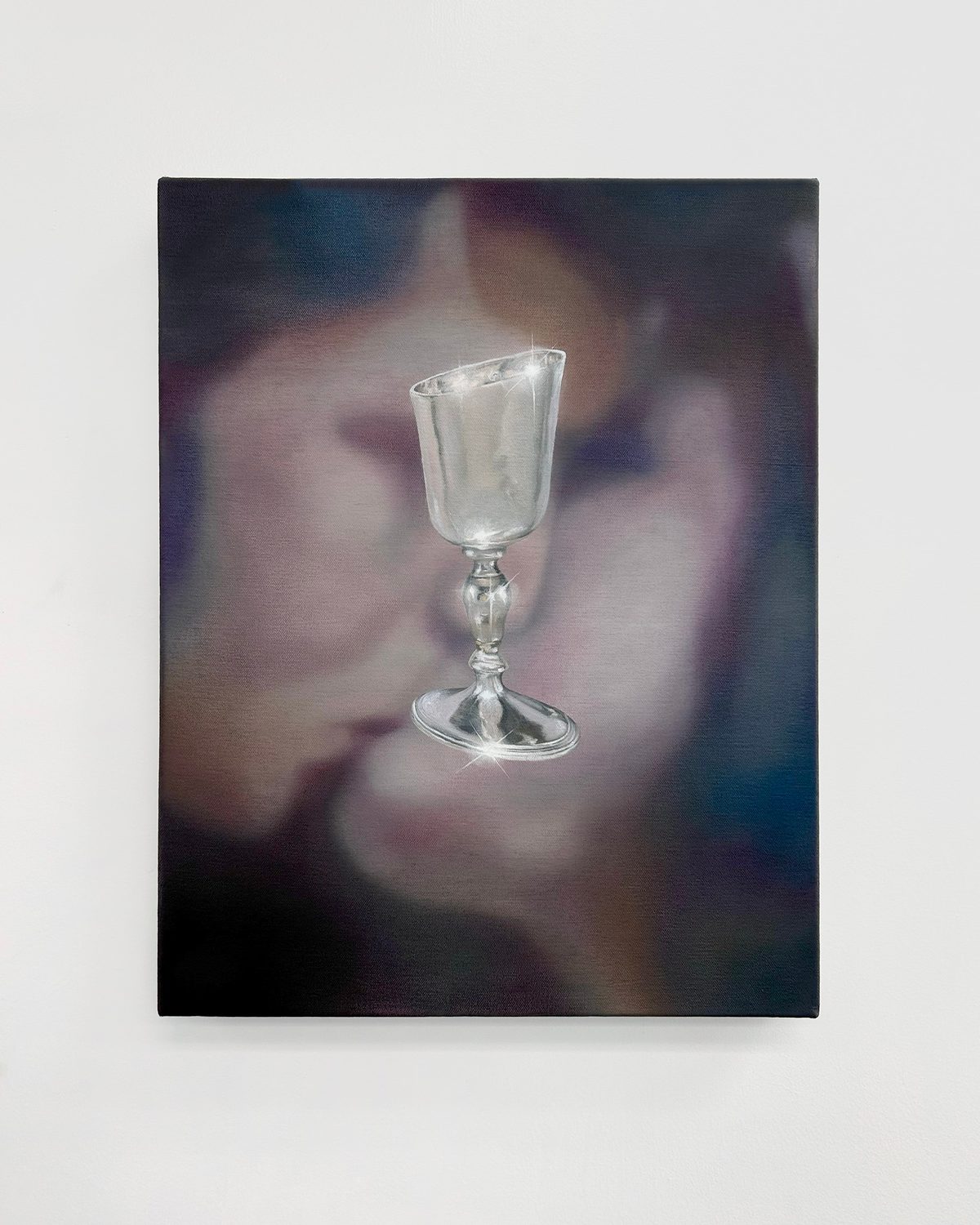
Nicolina Morra, Communion (Love Me Tender), 2025, oil on canvas, 18 x 14 in.
Disillusionment with the present, paired with a pull toward something unattainable, is how you’ve described longing as the engine of this work. When did you first notice that theme organising itself across your paintings, rather than you deciding on it in advance?
Longing is somewhat of a resting state for me, so making paintings that circle the feeling is instinctive and naturally became a theme in my work as I became more comfortable technically. Internally, I'm an extremely sensitive and sentimental person, but I don't really show that externally and have a hard time talking about my emotions. I think the paintings became a way of giving form to a feeling that I carry but don't have the language for.
Stills from cult cinema, pop culture, found photographs of strangers: that seems to be the material of your archive. What makes an image archive-worthy to you? Something about the person, the moment, or just an image that won’t leave you alone?
I usually have a subject or theme in mind, and then I go online and save as many images that catch my eye within that theme as I can. I have endless folders on my computer filled with images from these hunts. My most recent search has been surrounding labyrinths, which has somewhat fused with my existing crop circle folder. I'm also always collecting images that feature blue eyeshadow.
It is hard for me to identify exactly what it is about an image that makes it archive-worthy. I keep coming back to something Patti Smith observed about Robert Mapplethorpe and the way he would use the word "magic" to describe a successful piece of work or something that inspired him: "This is the one with magic." I guess I just try to find the things with magic.
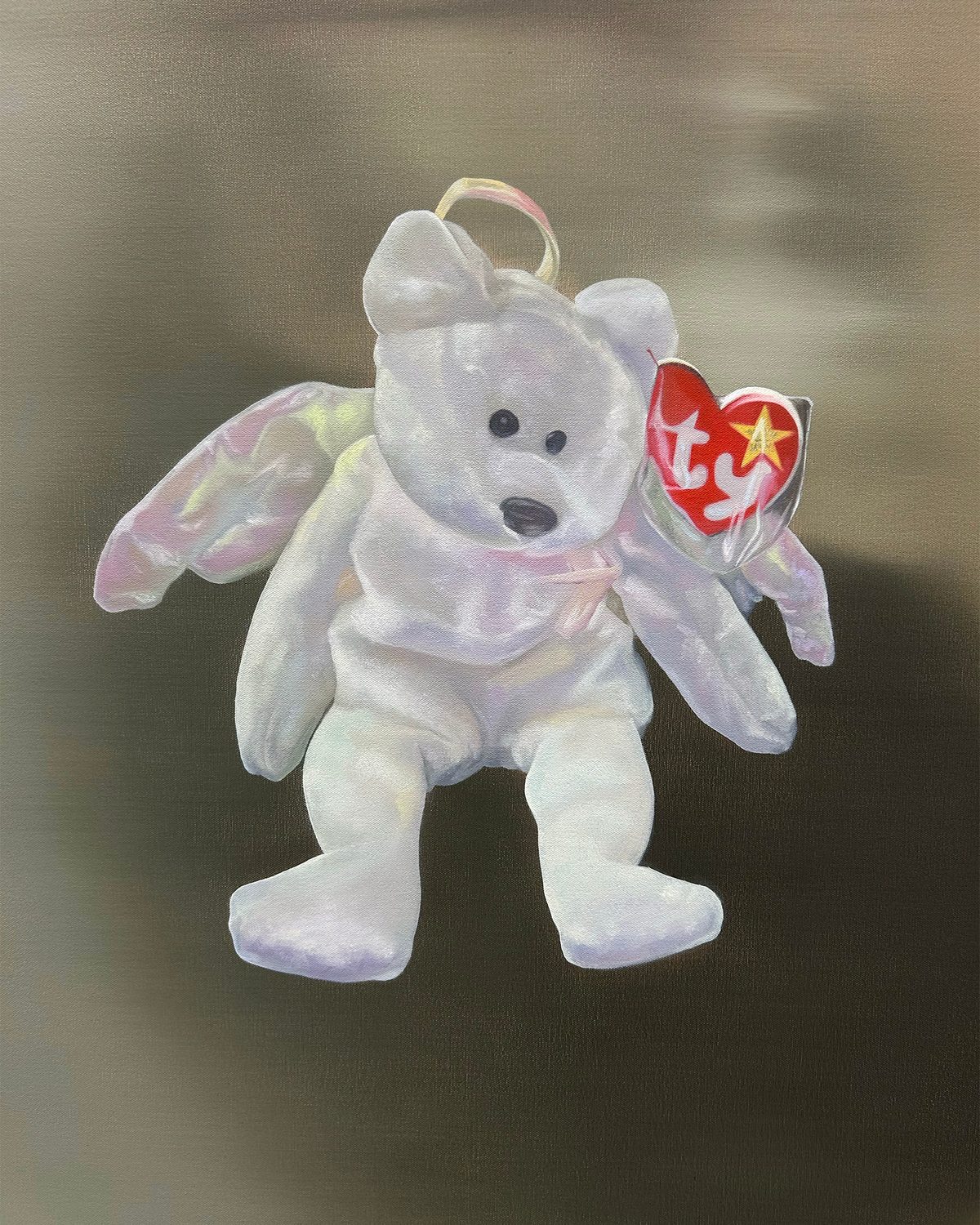
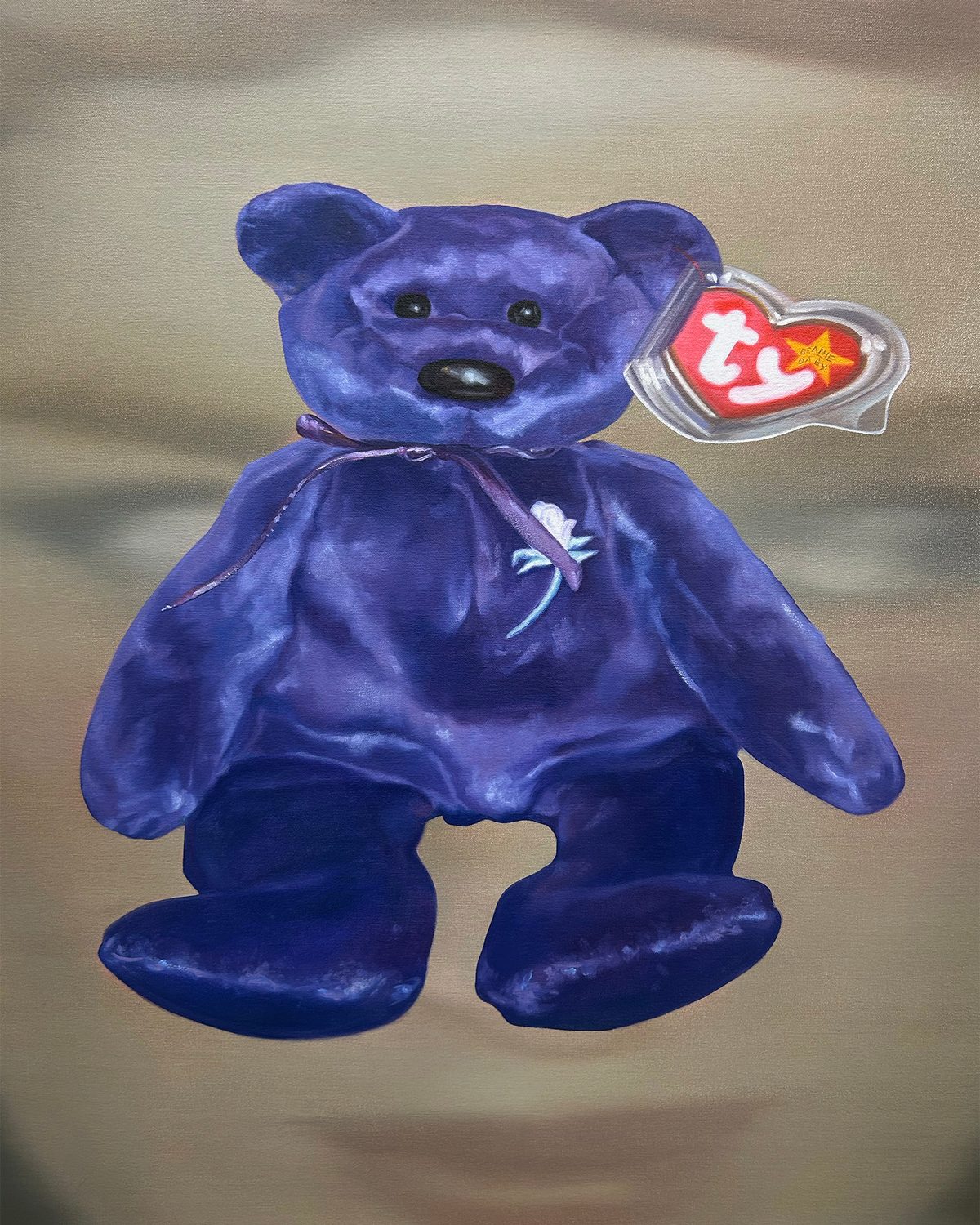
Nicolina Morra, Altar (The People's Princess), 2025, oil on canvas, 63 x 94 in. (dimensions may vary)
"I think the paintings became a way of giving form to a feeling that I carry but don't have the language for."
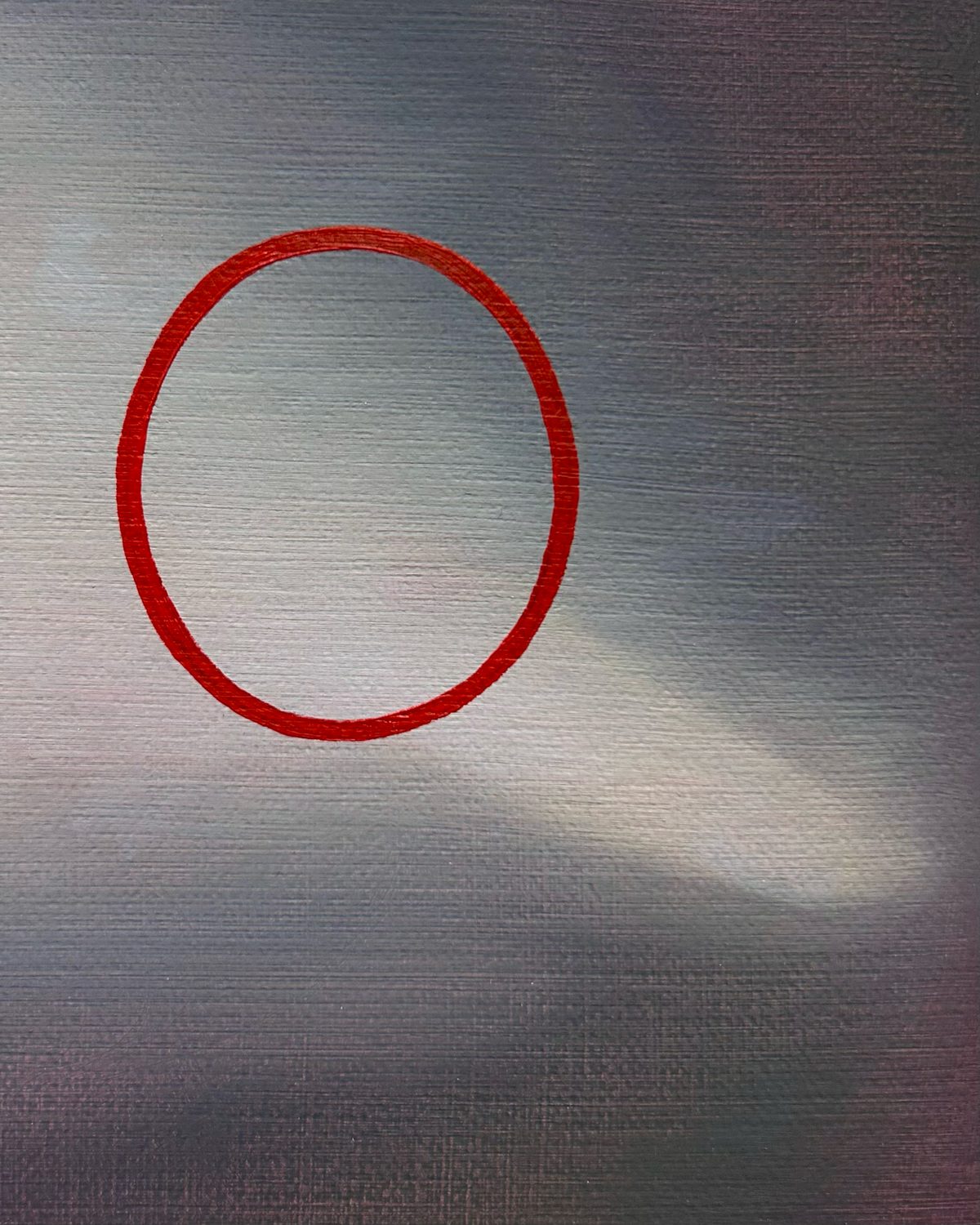
Left: Nicolina Morra, Sighting No. 1, 2026, oil on canvas, 6 x 8 in.
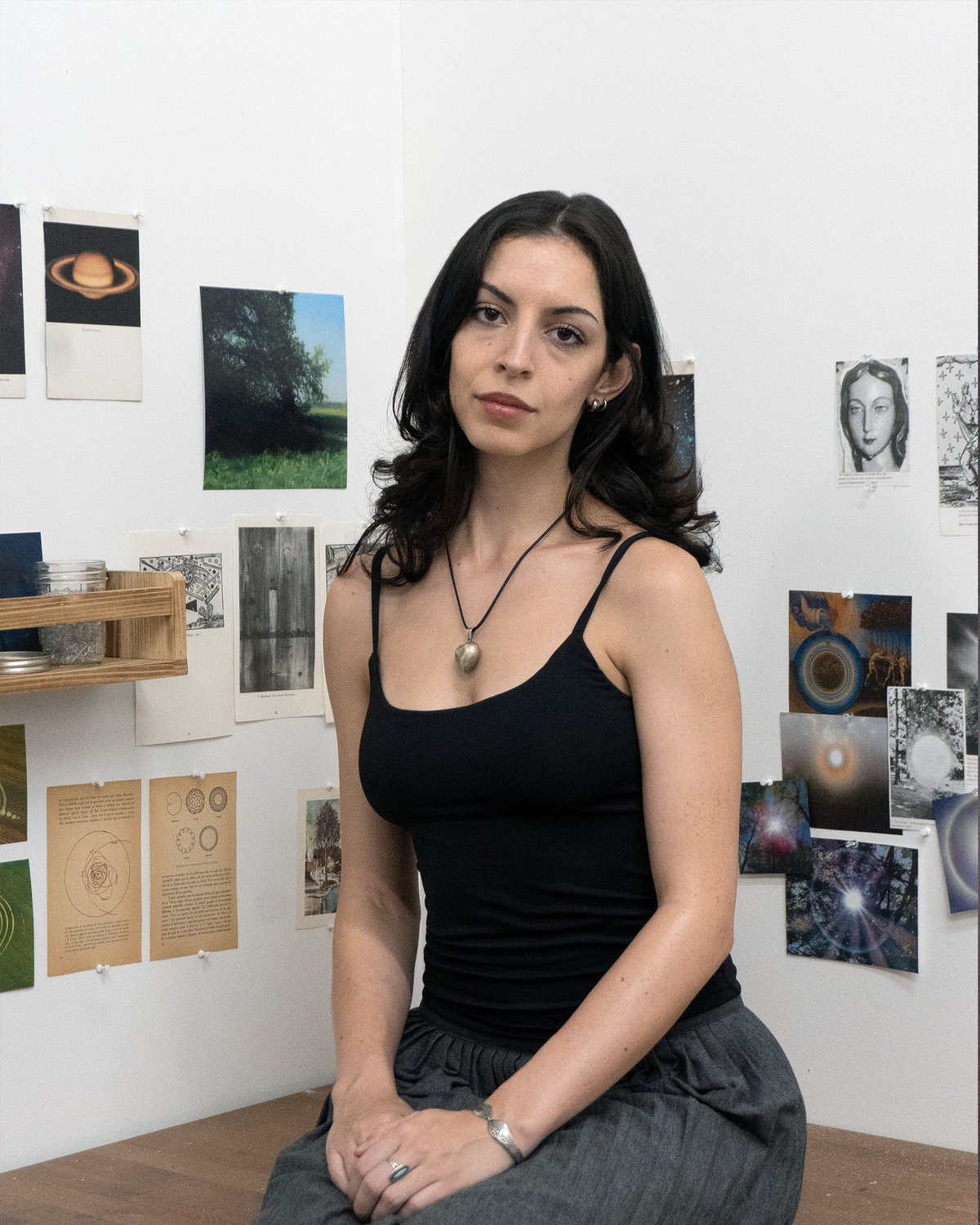
Right: Portrait of Nicolina Morra.
“Between the archive and the altar” is how you’ve framed your process, fragments elevated into objects of secular worship. What tips an image from research material into something closer to sacred?
For me, I think the act of choosing the image and dedicating myself to it through my painting process is what changes it and charges it with a more sacred energy. The process of painting consumes a lot of time and energy, in addition to being very intimate. It is an act of devotion.
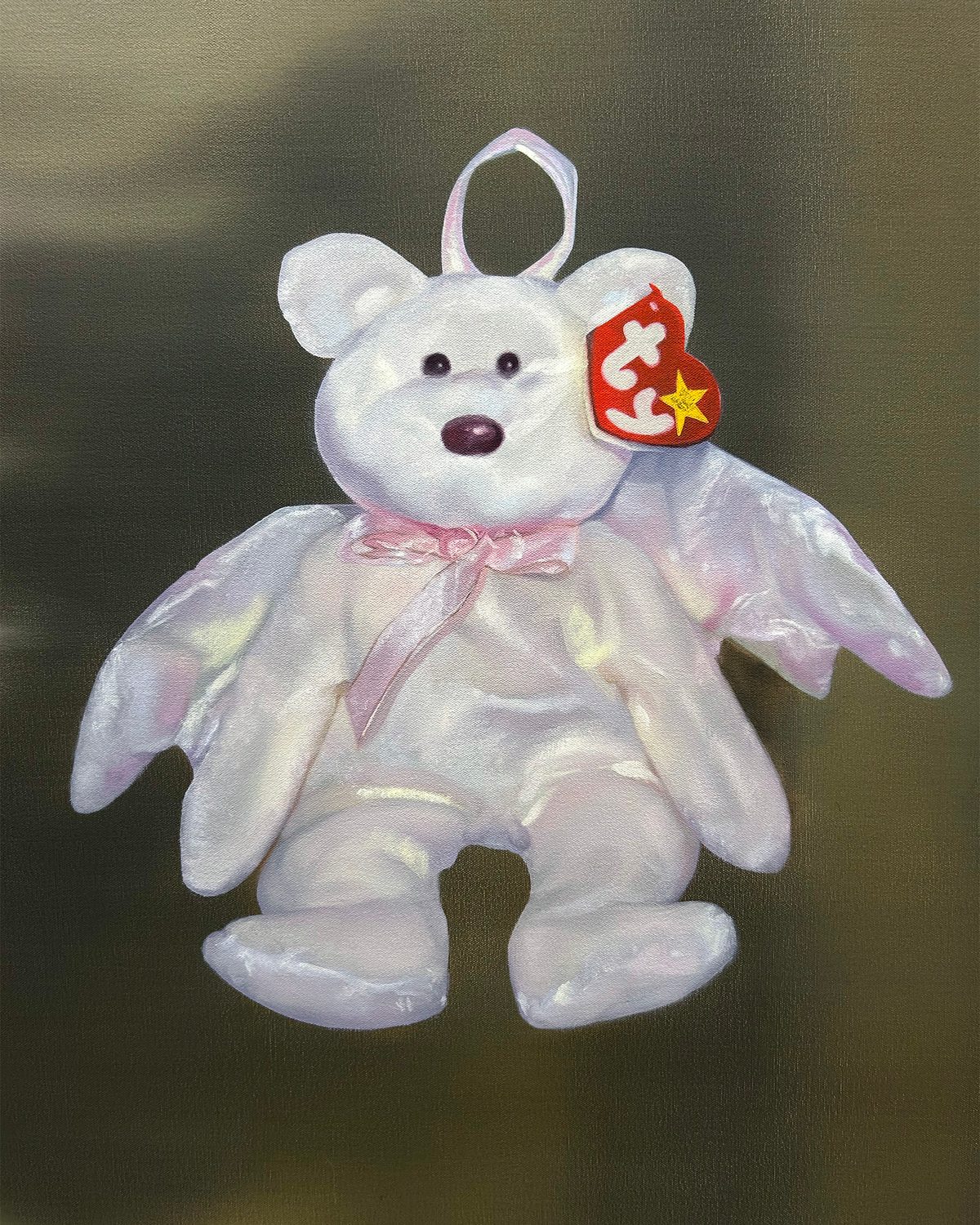
Beanie Babies function as relics around a portrait of Princess Diana in Altar (The People’s Princess). What made a mass-produced toy feel like the right material to sit beside that kind of grief and devotion?
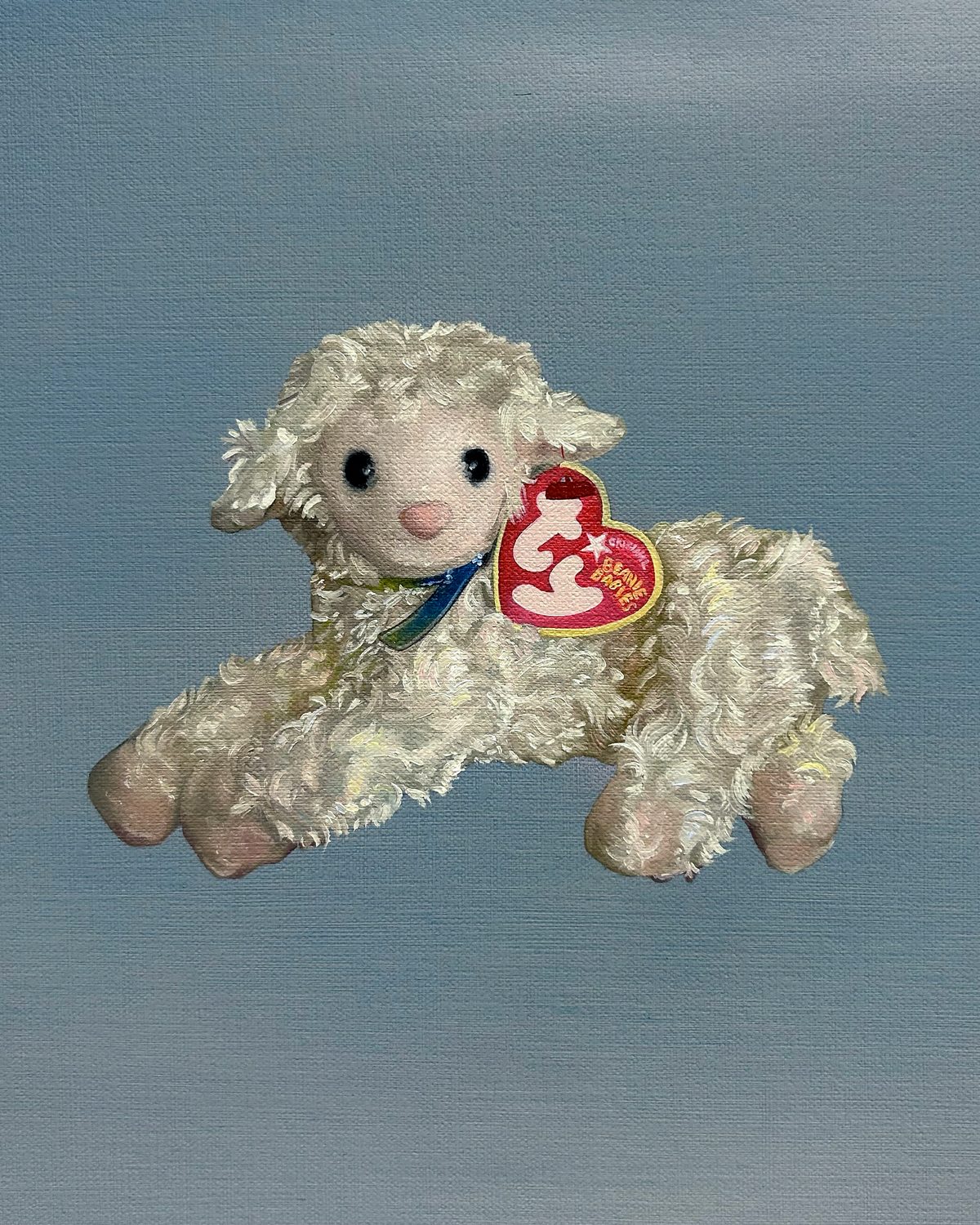
When I made that painting, the Beanie Babies definitely functioned as relics and gestured toward the kind of hope they once symbolised. They were projected to be worth thousands in the future, so they became objects onto which people could project their desires and hopes. Now, they also feel like symbols of broken promises, in conjunction with a certain persistence of faith.
As I've continued painting Beanie Babies, they've taken on a larger symbolic role in my work. They've become a way for me to think about desire and the hope for transcendence. In other paintings, they have taken on the role of a UFO and even the Virgin Mary or the Archangel Gabriel. I also like the humor embedded in the possibility that these toys are vessels for transcendence.
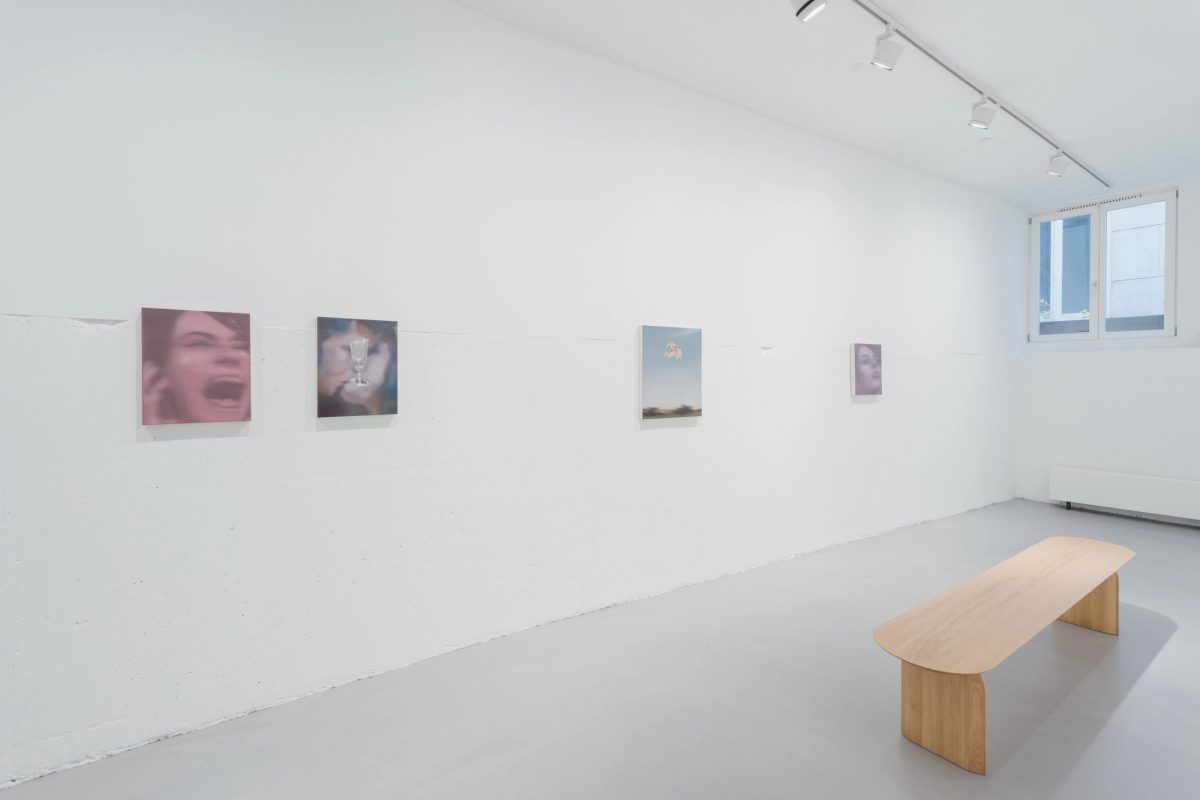
Sweet Surrender, installation view, Enari Gallery, Amsterdam, 2026. Courtesy of the artist and Enari Gallery. Photo by Almicheal Fraay.
"Longing is somewhat of a resting state for me."
A blurred technique sits right next to hyper-realistic renderings of specific objects across your work: a knife and coins in one painting, a ring in another. What decides which parts of a painting get to stay precise and which get to dissolve?
I like to play with the tension between what is within and what is just out of reach, what is tangible and what is formless: a feeling. If there is a precise element, I usually want it there as an anchor for the viewer to interrogate for context, of which there may or may not be any. The blurred aspects are a feeling that is hard to describe.
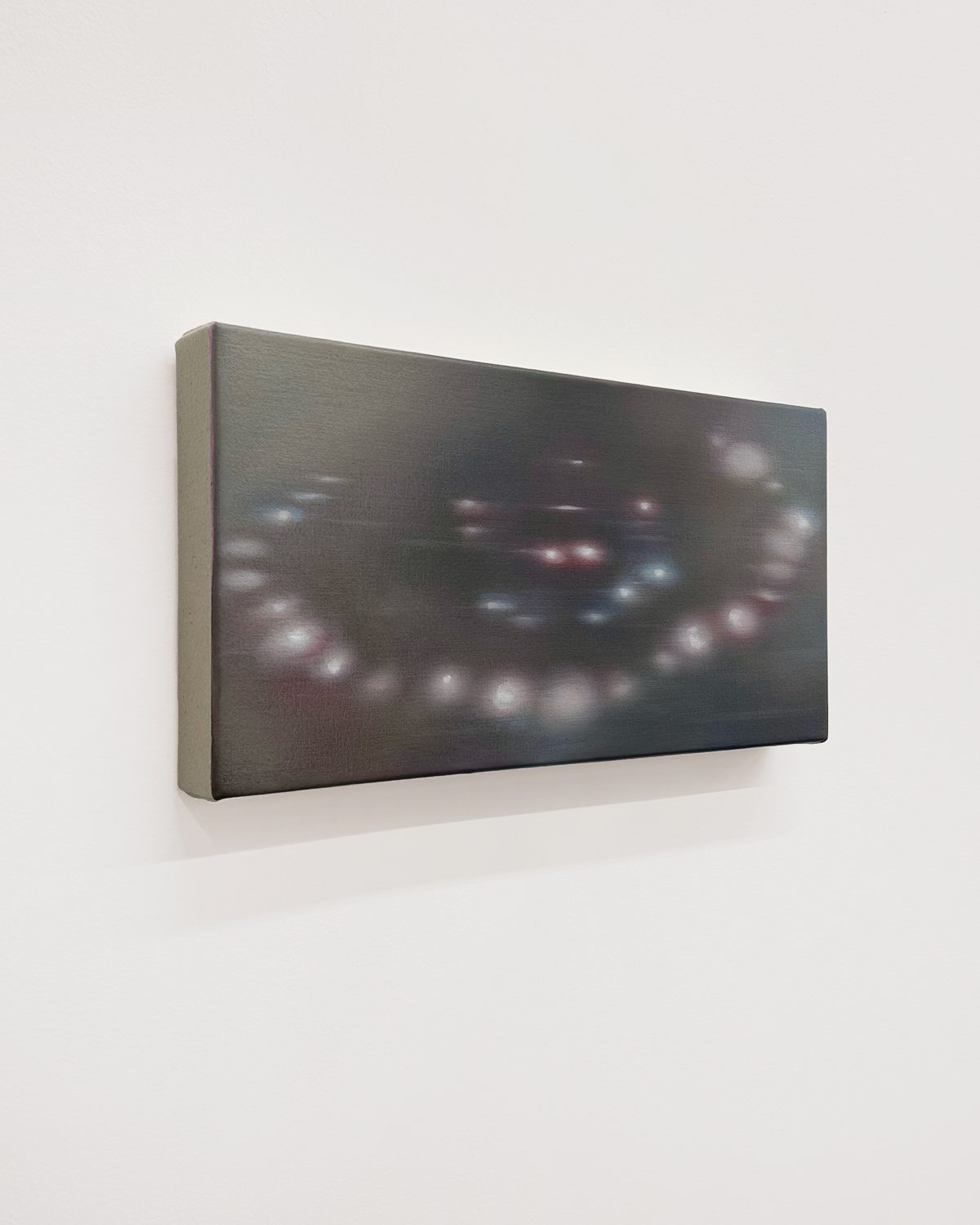
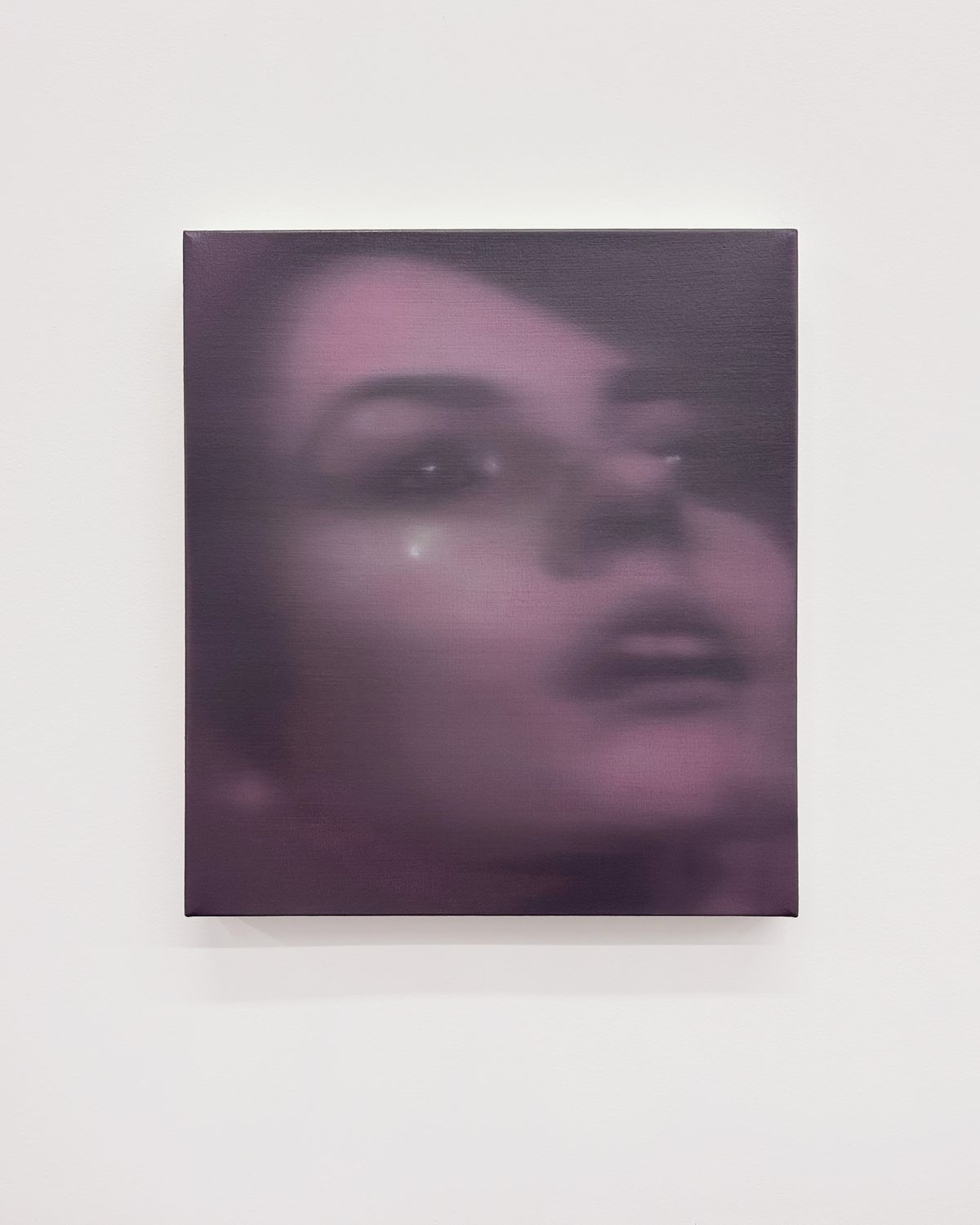
Left: Nicolina Morra, Angel, 2026, oil on canvas, 8 x 16 in.
Right: Nicolina Morra, More Popular Than Jesus I, 2026, oil on canvas, 18 x 16 in.
Rocky Horror, Pink Flamingos: Your Reverie in Blue's title points straight at specific films. Are you painting toward the feeling of the film itself, or toward what the film left behind in your own memory of watching it?
Honestly, neither. For me, my Reverie in Blue series is only about the blue eyeshadow and the act of looking and longing. The first iteration of the series did focus on cult films as a through-line, but I realized upon finishing the paintings that they weren't really about the films or characters at all.
In the second iteration of the series, the references are again mostly drawn from actors and celebrities, but I've kept those references hidden in the titles.
You've had someone comment under one of your posts asking how big your canvases are, calling the effect vast. How much does physical scale matter to the illusion you're building, and does it change depending on the piece?
I think of my small paintings as more devotional works, almost like icons. The large paintings are more about creating a transcendental experience, which I've been experimenting with. With these pieces, I want the viewer to feel absorbed. I've been thinking a lot about the Color Field painters in that regar, reaching for the sublime and a transcendent feeling: something else, something more.
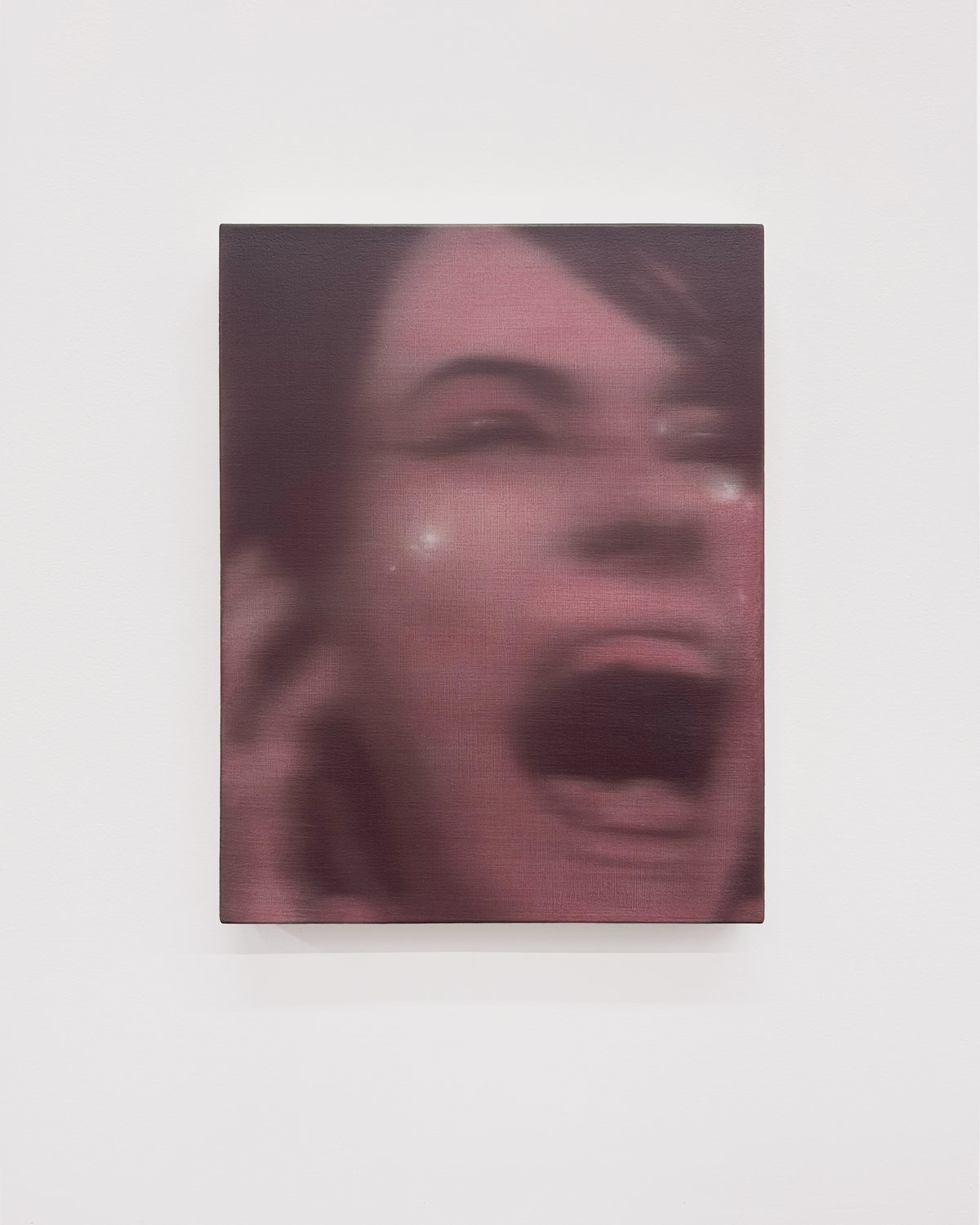
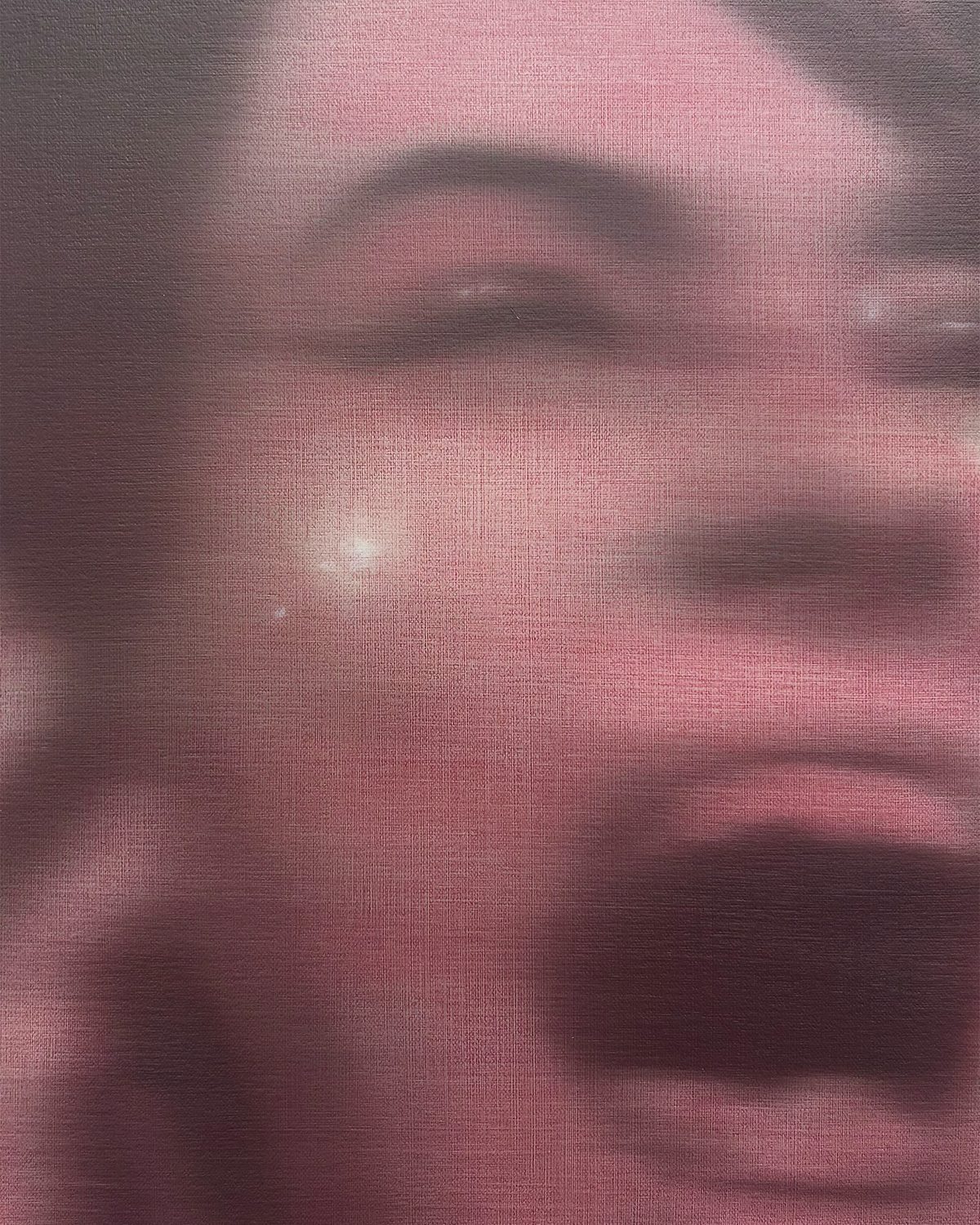
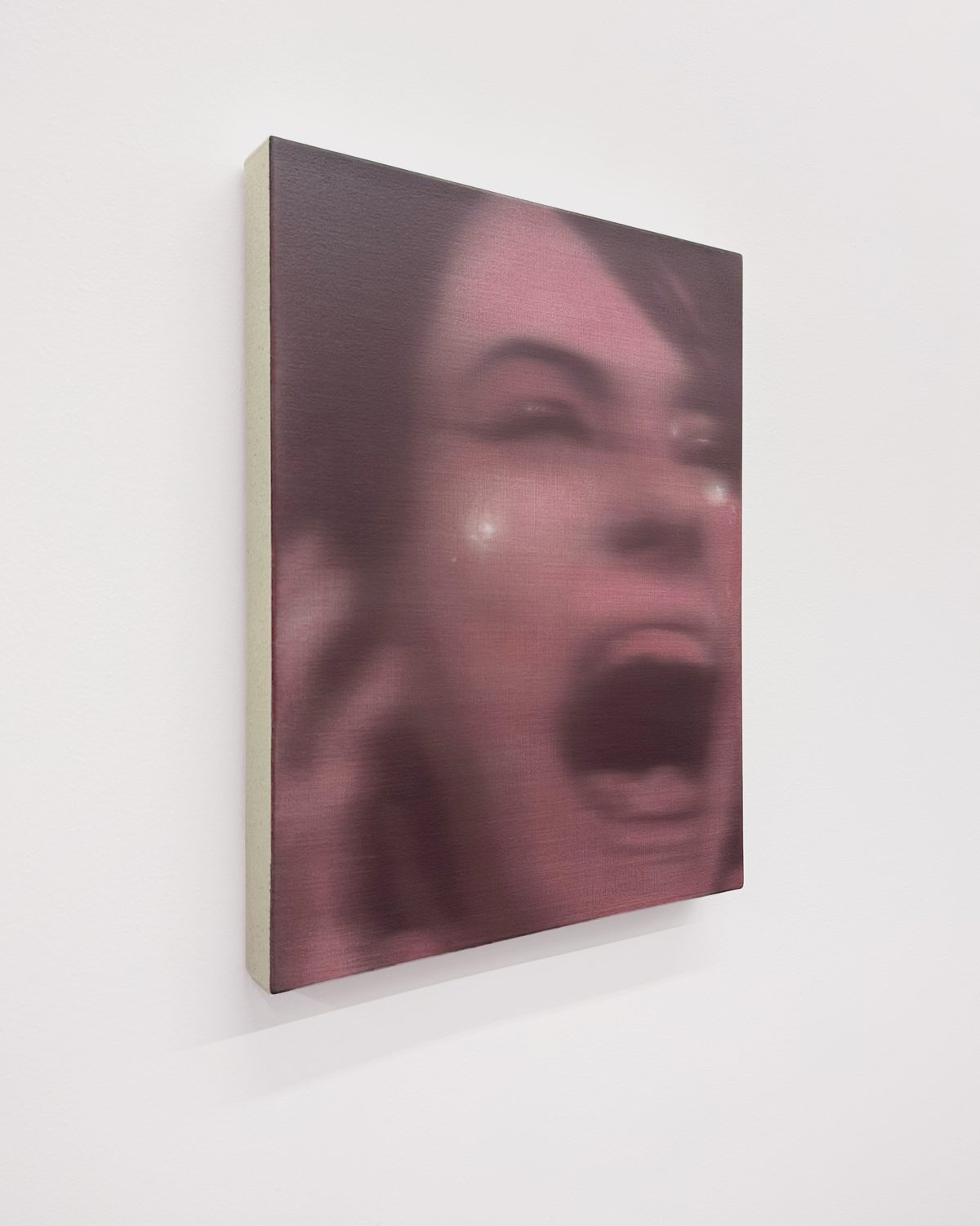
Nicolina Morra, More Popular Than Jesus II, 2026, oil on canvas, 18 x 14 in.
"I also like the humour embedded in the possibility that these toys are vessels for transcendence."
Your group show Sweet Surrender at Enari Gallery and being named a Hopper Prize finalist are recent milestones. What hasn't found its way into the work yet that you're circling?
I'm about to make a Portal… To Somewhere Else.
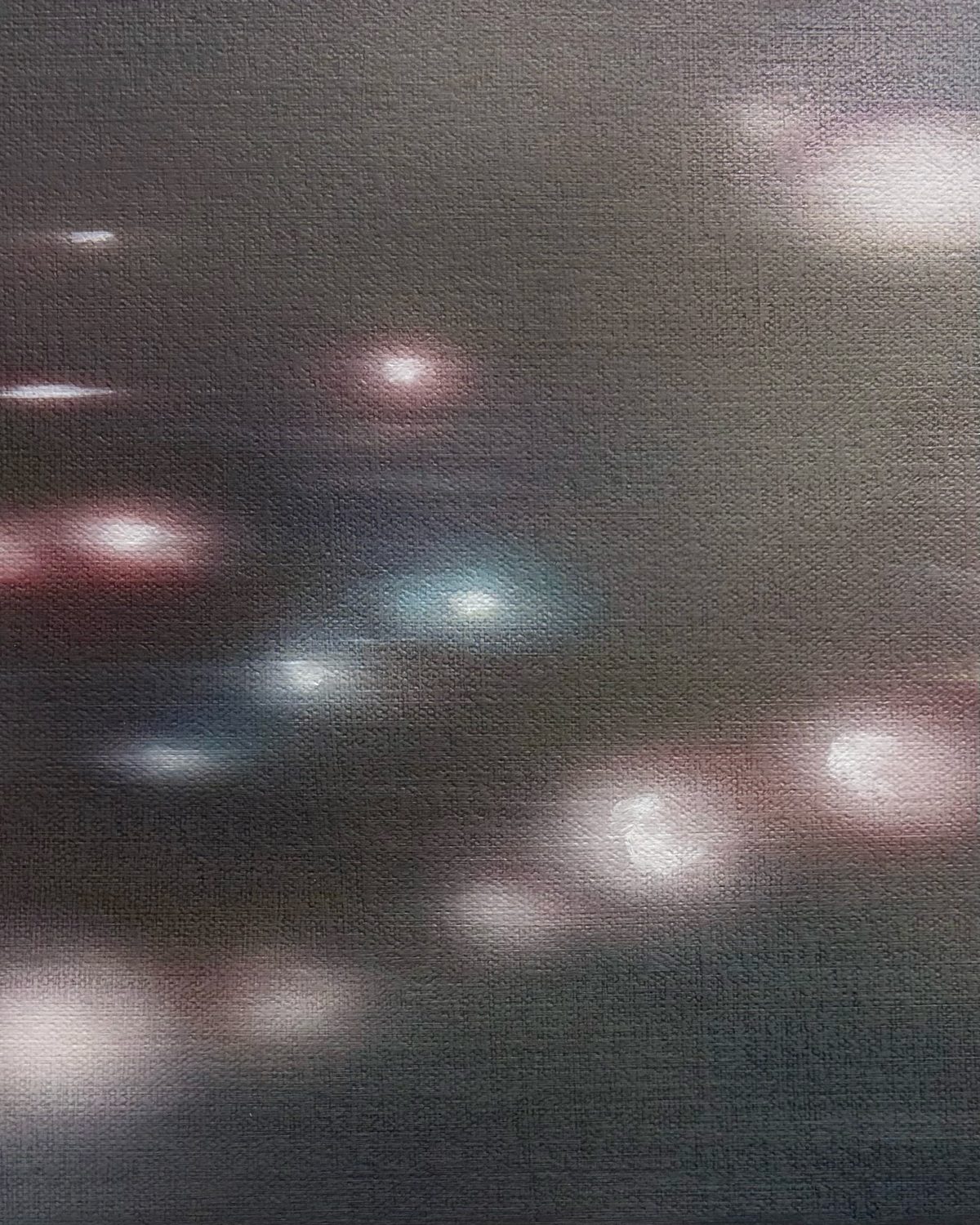
Nicolina Morra, Angel, 2026, oil on canvas, 8 x 16 in.
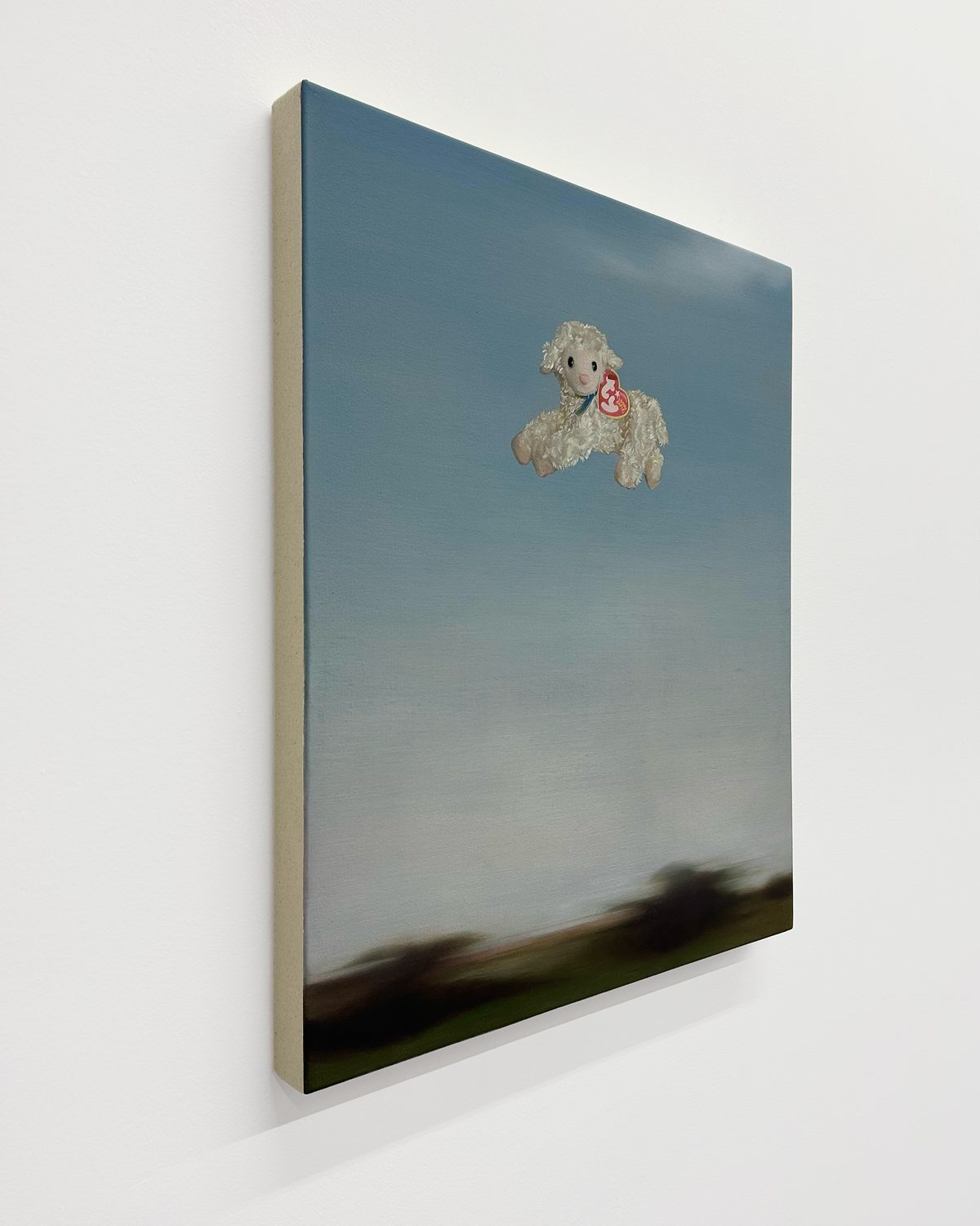
Nicolina Morra, Agnus Dei, 2026, oil on canvas, 24 x 20 in.
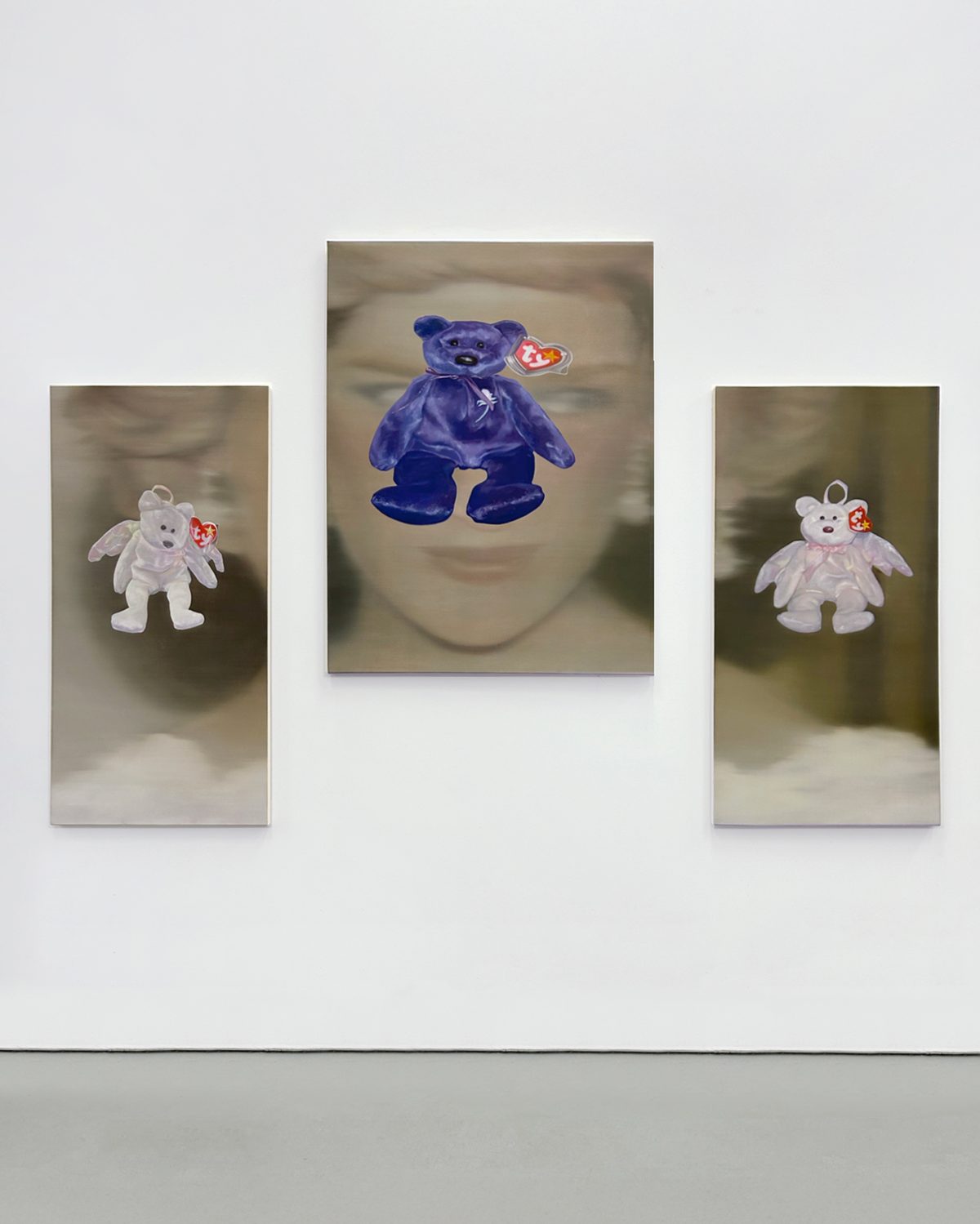
Nicolina Morra, Altar (The People's Princess), 2025, oil on canvas, 63 x 94 in. (dimensions may vary)
Cover Image: Nicolina Morra, Agnus Dei, 2026, oil on canvas, 24 x 20 in.