PRESSING ON THE BRUISE: IN CONVERSATION WITH JIHO KIM
CONVERSATION BY SELIN KIR
CO-FOUNDER, CURATOR
15 OCTOBER 2026 — SEOUL, KOREA
Jiho Kim paints the feelings that never quite earn a name: memories not dramatic enough to call trauma, yet uncomfortable enough to avoid. Now in her third year at RISD, with two solo exhibitions in Seoul behind her, a place on the Jackson Painting Award longlist and work on view at the RISD Museum in Where Nothing Has Ever Happened, she builds her images slowly, in thin layers of glaze laid down again and again, a process she likens to pressing on a bruise. Faces are withheld, bodies are rendered with forensic closeness, and a kitchen is broken into panels on a real wall, its window left white. In conversation, she is candid and quick to laugh, moving between the practicalities of sanding gesso and the harder questions of desire, shame and the idealised images of girlhood she grew up with. Healing, she says, isn’t the point. Digestion is closer, and it takes as long as it takes.
You’re in your third year at RISD; you’ve had two solo exhibitions in Seoul, Beyond the Memory in 2024 and LOVE! PEACE! DOVE! (AND *****) in 2025; and this year you’re on the Jackson Painting Award longlist and showing at the RISD Museum in Where Nothing Has Ever Happened. Where do you feel you are right now, and what is this body of work trying to say?
To be completely honest, I’m not even sure where I am right now. I often feel like I’m lost. Maybe I’m somewhere between being an amateur and an emerging artist? Honestly, I feel like I’ve only just started making work.
My current work is trying to visualise personal, internal struggles, but I also think those struggles are connected to larger social issues. After all, my work begins with personal experiences, but within them are things that often remain invisible in society.
In that sense, I think my role is not so much to deliver a particular answer but rather to offer a different way of seeing things. Even if not everything I’m trying to communicate comes across, I hope viewers can feel something and have something to think about when they stand in front of my work.
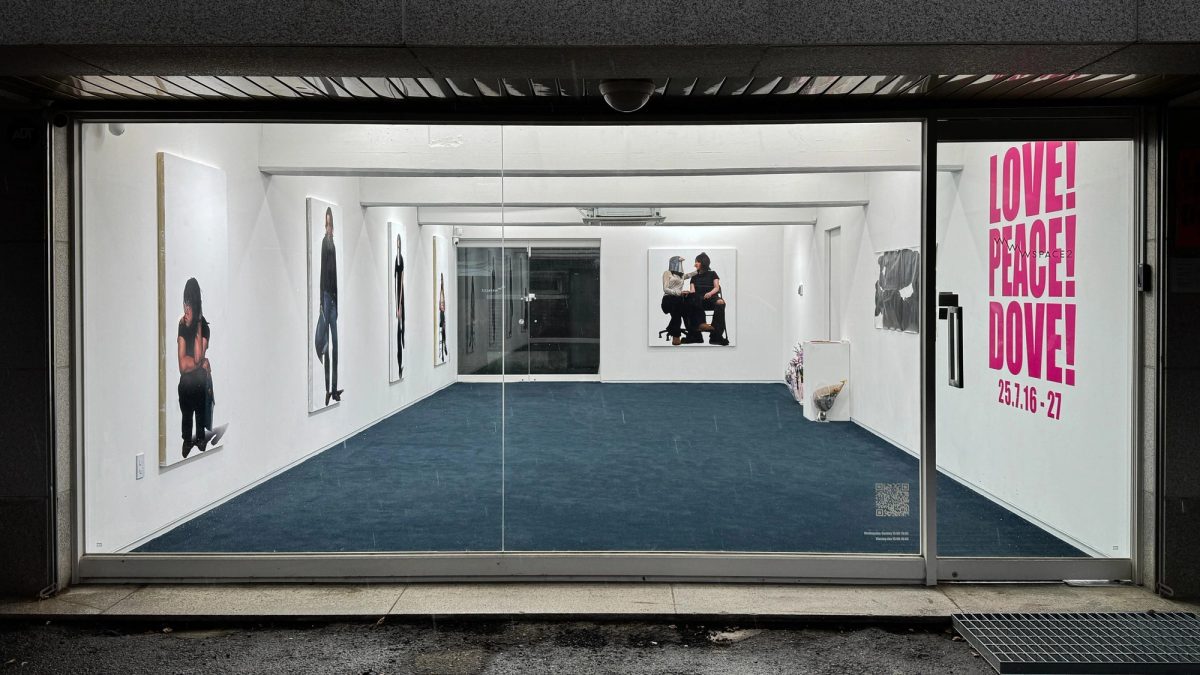
Installation view, Jiho Kim, LOVE! PEACE! DOVE! (AND *****), WWW SPACE 2, Seoul, 2025
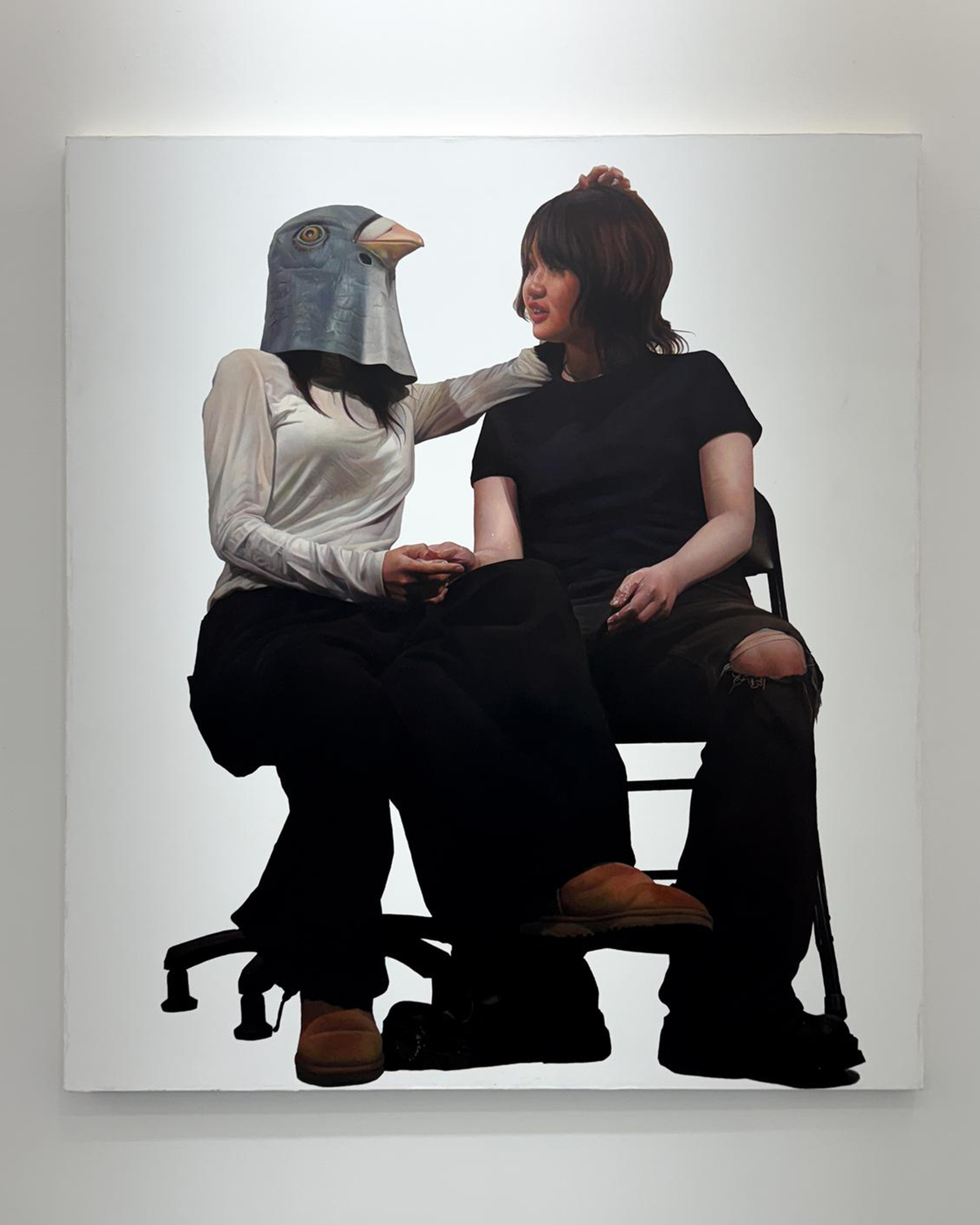
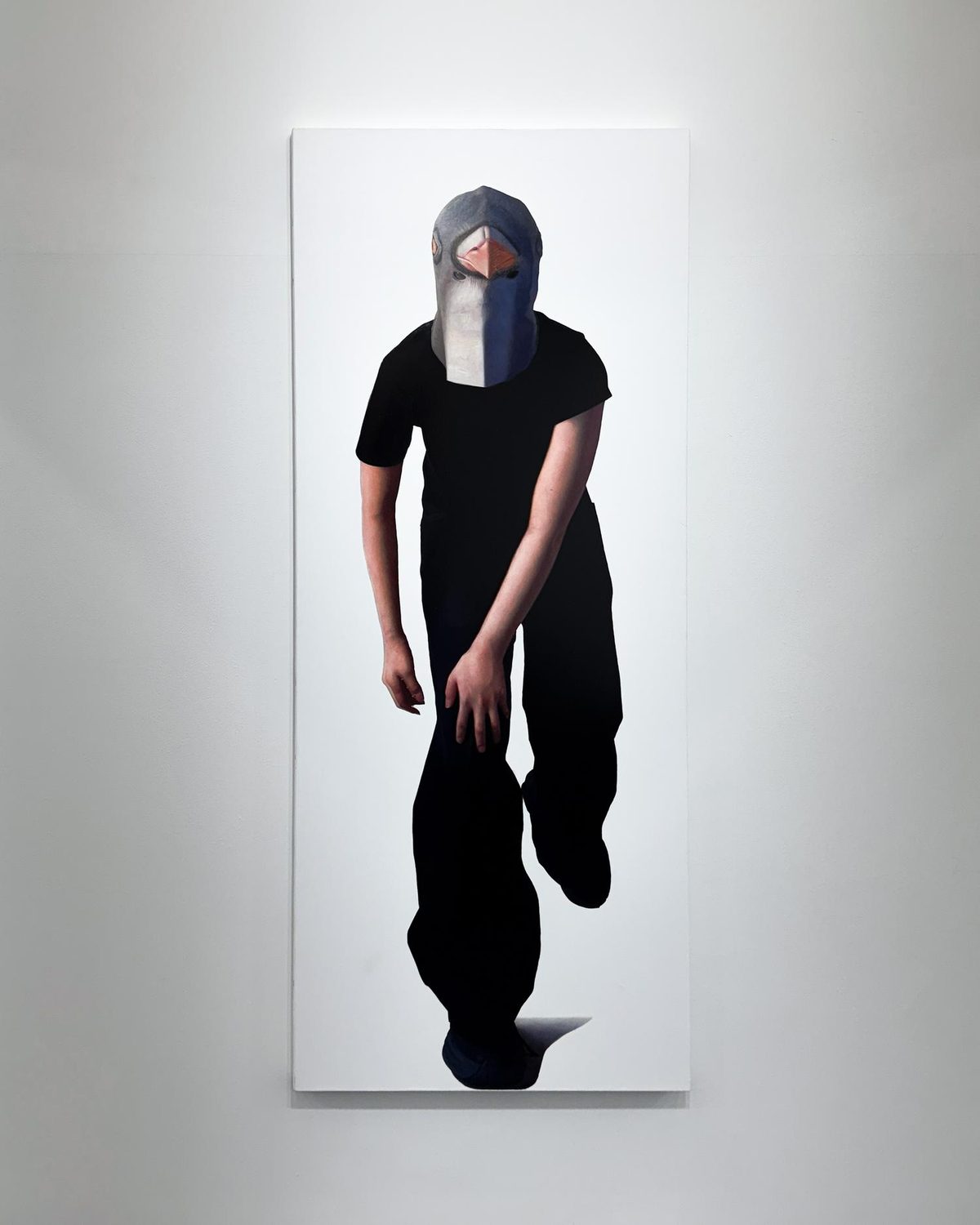
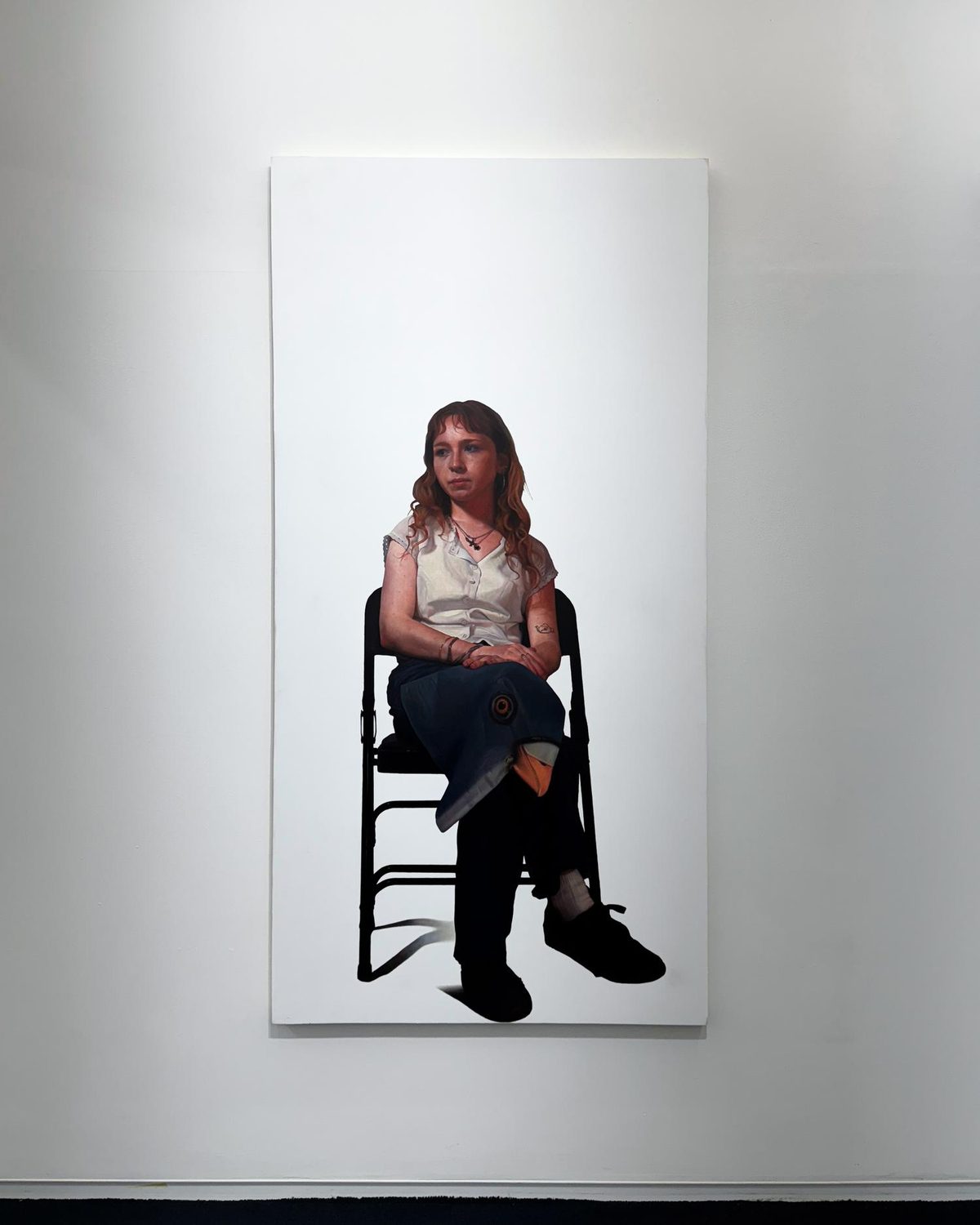
Left to right:
Jiho Kim, 둘기와 나 / Dulgi and me, 2025, oil on canvas, 127 × 142 cm
Jiho Kim, 둘기2 / Dulgi2, 2025, oil on canvas, 70 × 170 cm
Jiho Kim, 아샤 / Asha, 2025, oil on wood, 86 × 170 cm
Your statement says the work begins with experiences that are ‘not quite trauma, but uncomfortable enough to avoid’. We’ve become fluent in the language of trauma and fairly mute about everything just beneath it. Why does that middle register interest you more than the dramatic one?
Actually, it’s not that I intentionally choose emotions that fall somewhere in that middle ground. I think the word ‘trauma’ itself just feels a little overwhelming to me. I don’t really think of those experiences as something that was that dramatically painful. Sometimes I even think they’re not that big of a deal.
But, you know, there are memories or experiences that don’t feel quite emotionally overwhelming enough to call trauma, but when you think about them, you feel suffocated and frustrated, and your hands and feet start tingling. Almost like someone is sitting on top of you? That feeling of wanting to grab onto something but not being able to, or wanting to scream but no voice comes out. Those kinds of feelings.
I think those emotions naturally become the starting point of my work. There are memories that are difficult to explain and somehow stay with me even after time has passed, and I keep finding myself returning to them. Almost like save points in a game.
I’ve realised that avoiding those memories and burying them doesn’t mean they’ll naturally heal over time. Instead, they suddenly come back, like uninvited guests. And the longer I avoid them, the less prepared I am to face those memories and emotions, so when they unexpectedly return, they hit me even harder.
So I think I’m trying to prepare myself to face those memories before they show up uninvited. Painting those emotions is a kind of practice in confronting them for me.
You build large oil paintings from thin, layered surfaces through what you call ‘repeated thinking and looking’. Glazing over the same image again and again sounds almost like rumination. Is the slowness of the technique a way of processing a memory, or a way of keeping it at a safe distance while you look?
Exactly. My work is closer to digestion than healing. It’s like when you have sore muscles: even though it hurts, you have to keep stimulating that area for it to loosen up. When I’m working, I keep touching those uncomfortable parts inside myself.
Muscle soreness isn’t necessarily something seriously painful, but certain positions can make it hurt. In the same way, there are memories or emotions that might seem too much to call trauma, but that I still don’t want to recall. It’s like how you keep pressing on a bruise. When I’m working, I keep pressing on those bruised parts of myself, the places where I feel that soreness. And that stimulation becomes the driving force that keeps me working.
I think the act of repeatedly glazing over the same image is quite similar. Like pressing down on a sore muscle over and over again, it’s a process of consciously facing those memories or emotions for a long time, gradually making myself familiar with them.
In everyday life, I tend to avoid getting too serious or thinking too deeply about uncomfortable emotions. But when I’m making work, I eventually have to think about what I actually want to make, right? And in that process, I end up bringing back the issues I’ve been avoiding. I repeatedly think about how I felt at the time, what I was thinking, and why I felt that way. In that sense, the slow and repetitive labour of painting is also a process of spending a long time facing those memories.
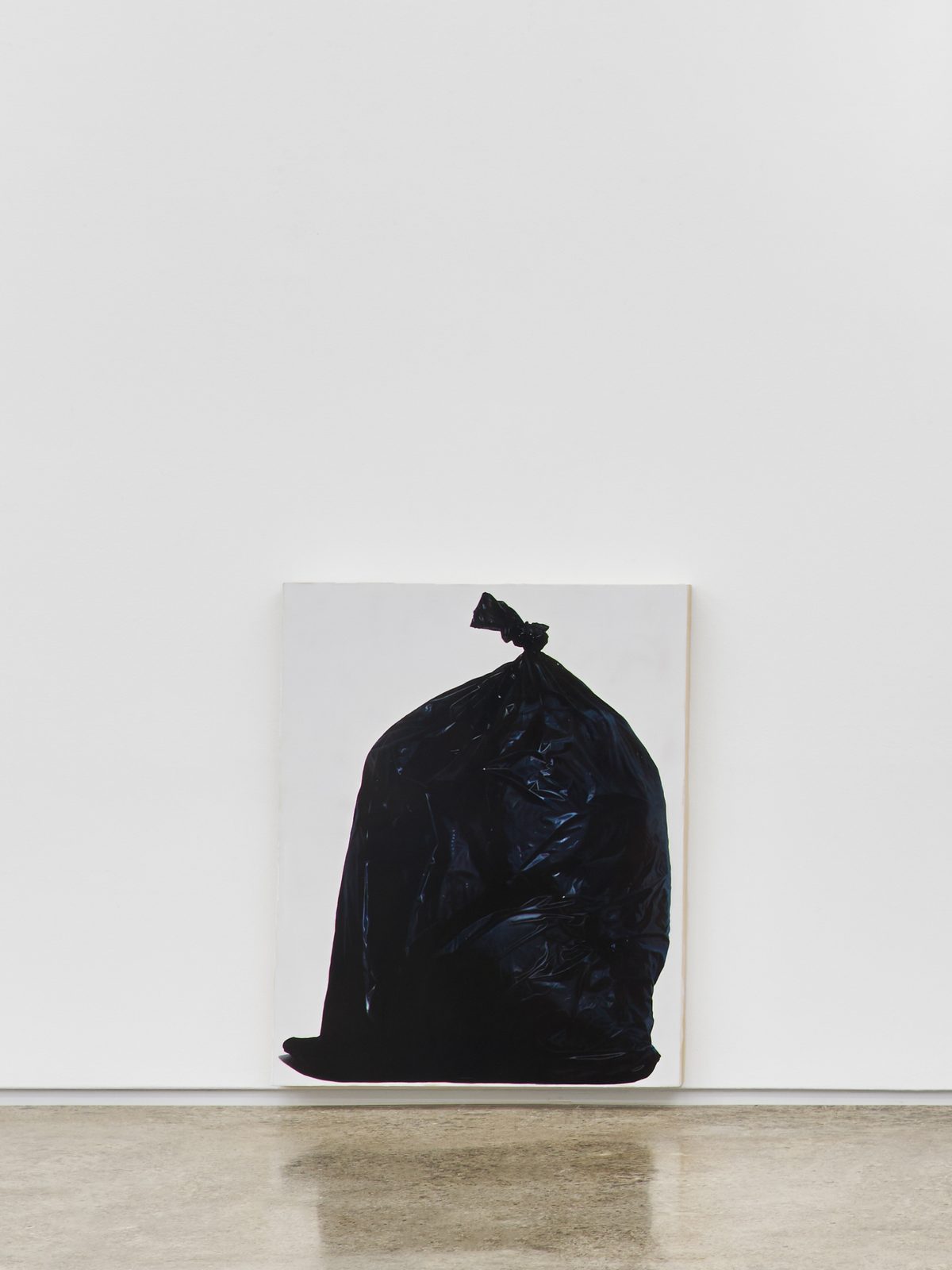
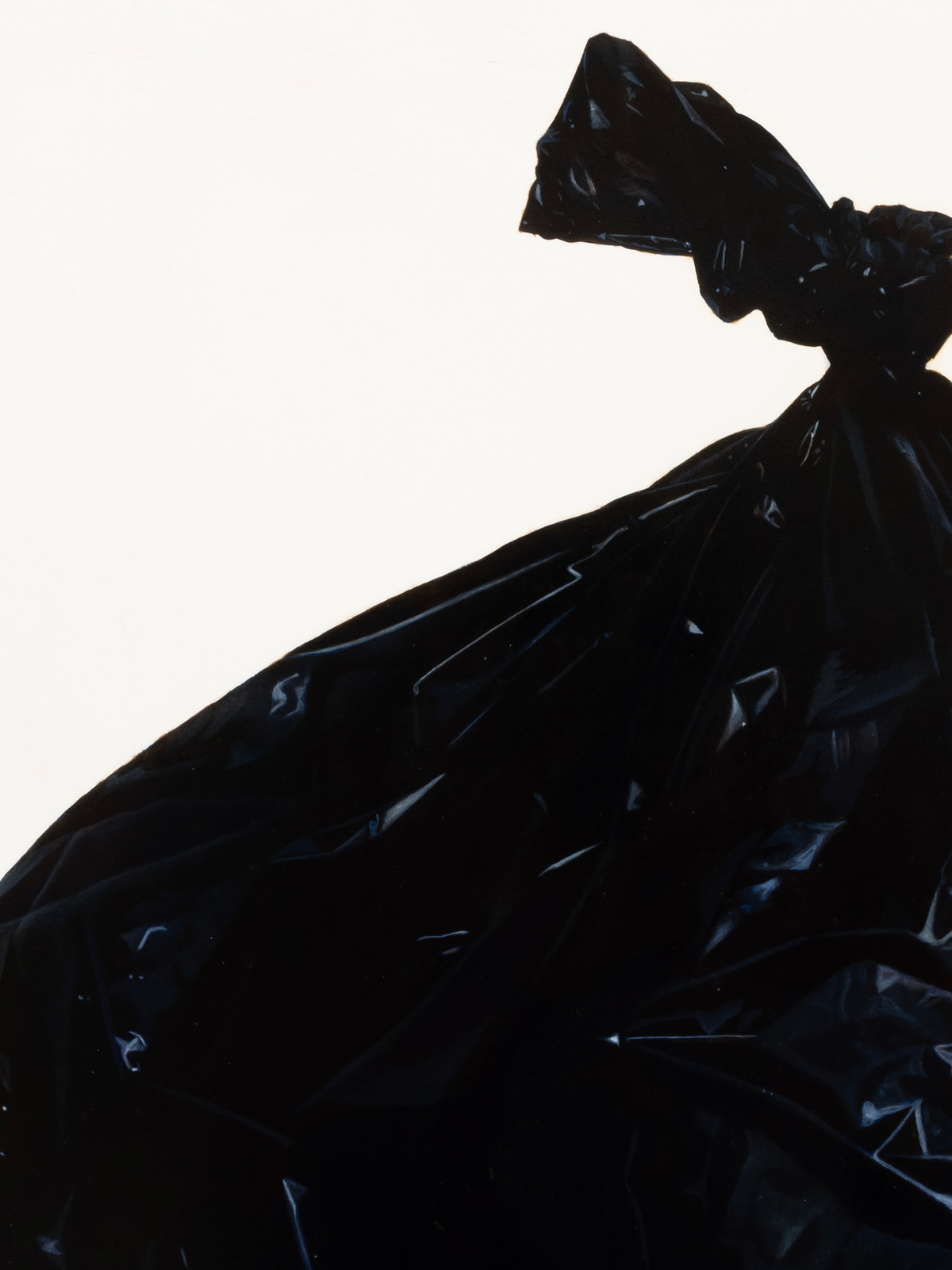
Jiho Kim, Belonging, 2026, oil on wood, 65.1 × 53 cm (25.6 × 20.8 in)
“My work is closer to digestion than healing.”
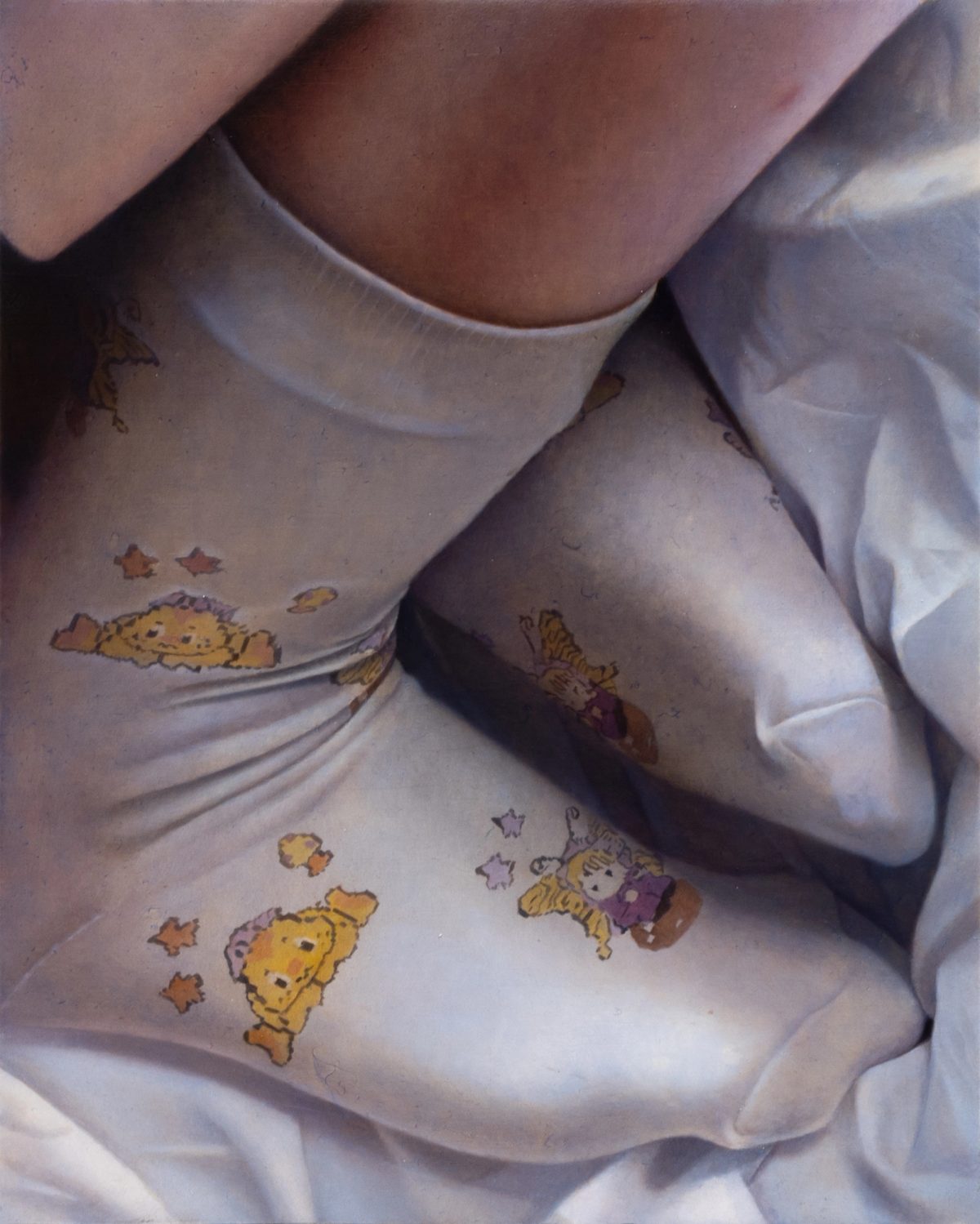
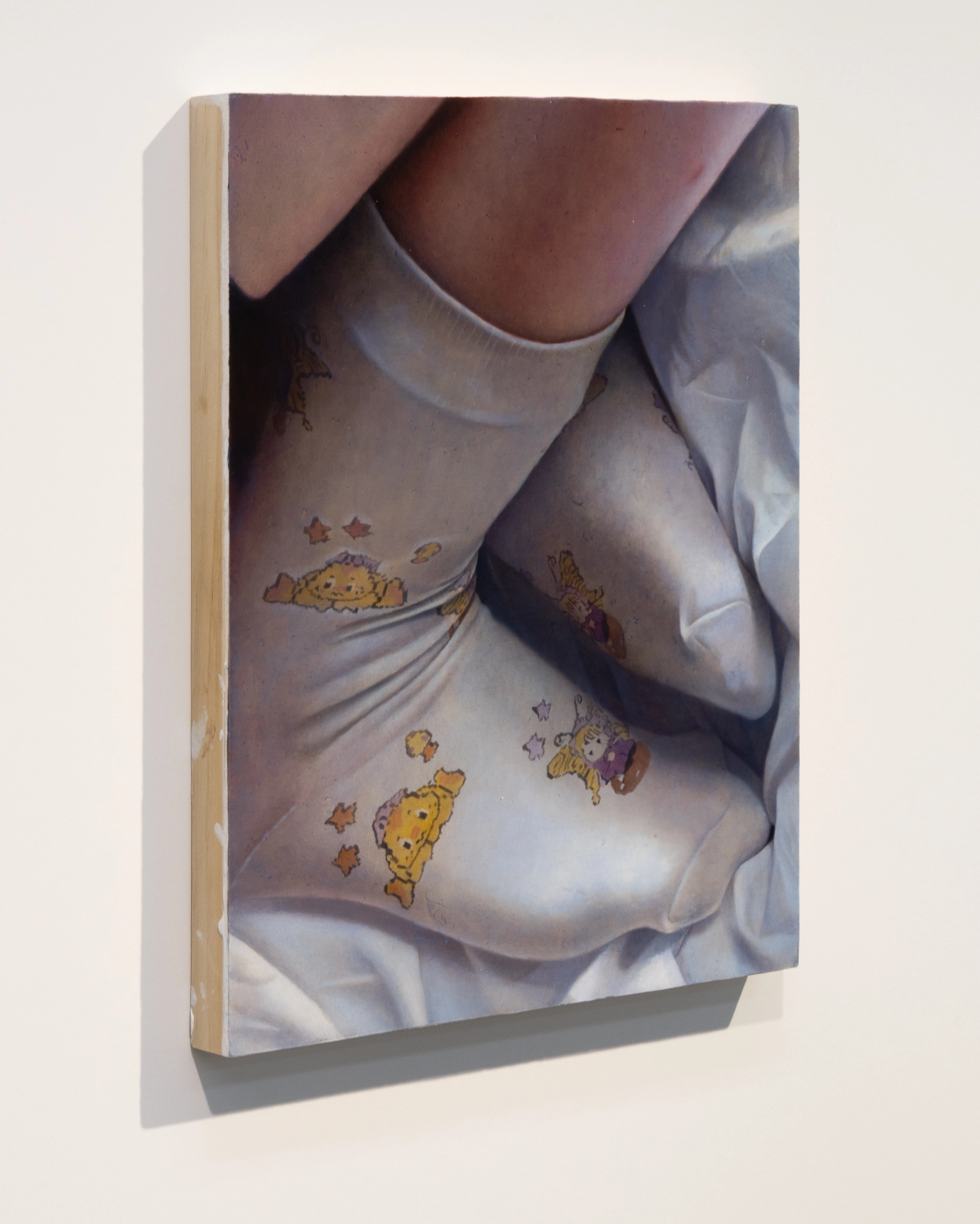
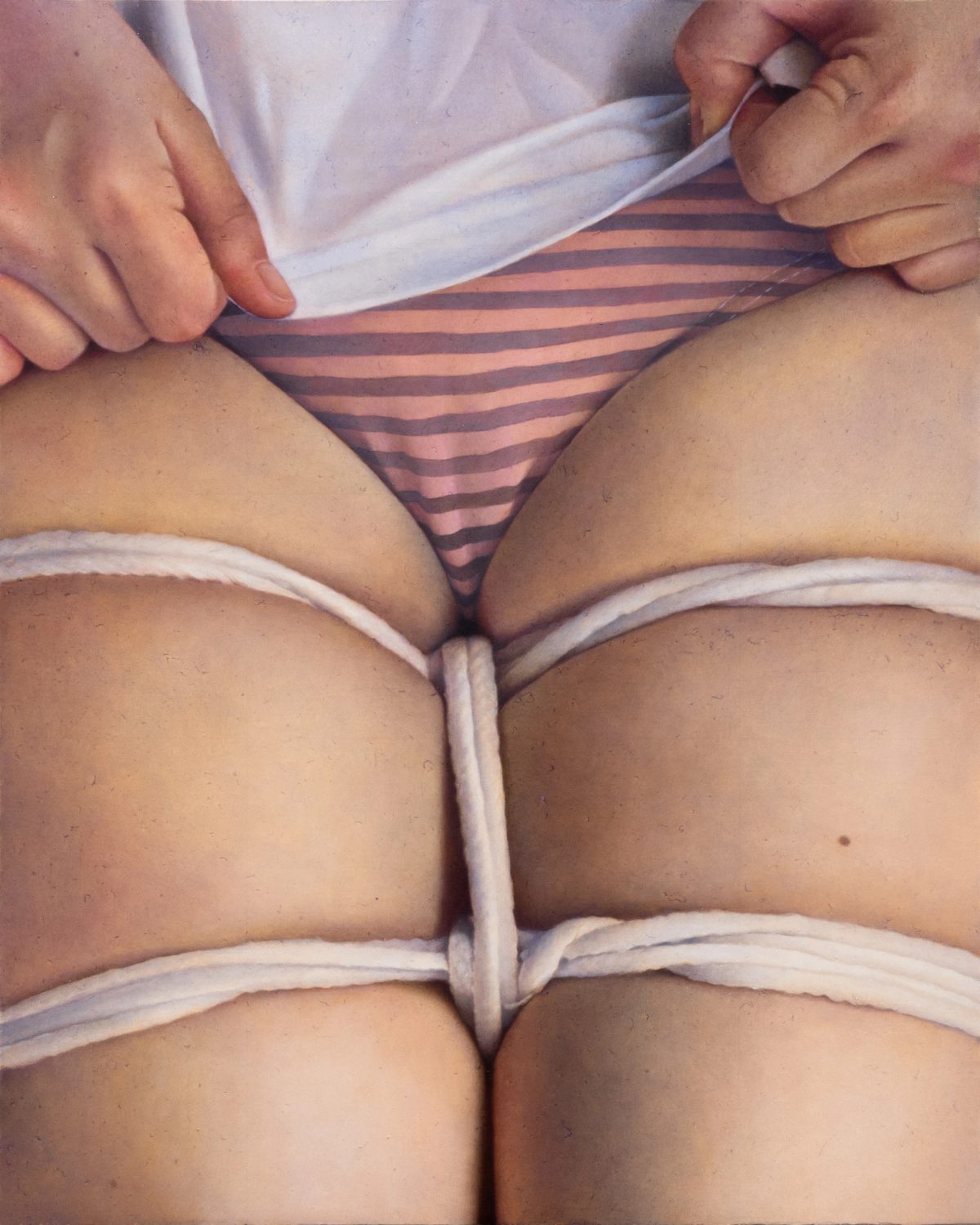
Jiho Kim, Tight, 2026, oil on wood, 25.4 × 20.3 cm (10 × 8 in)
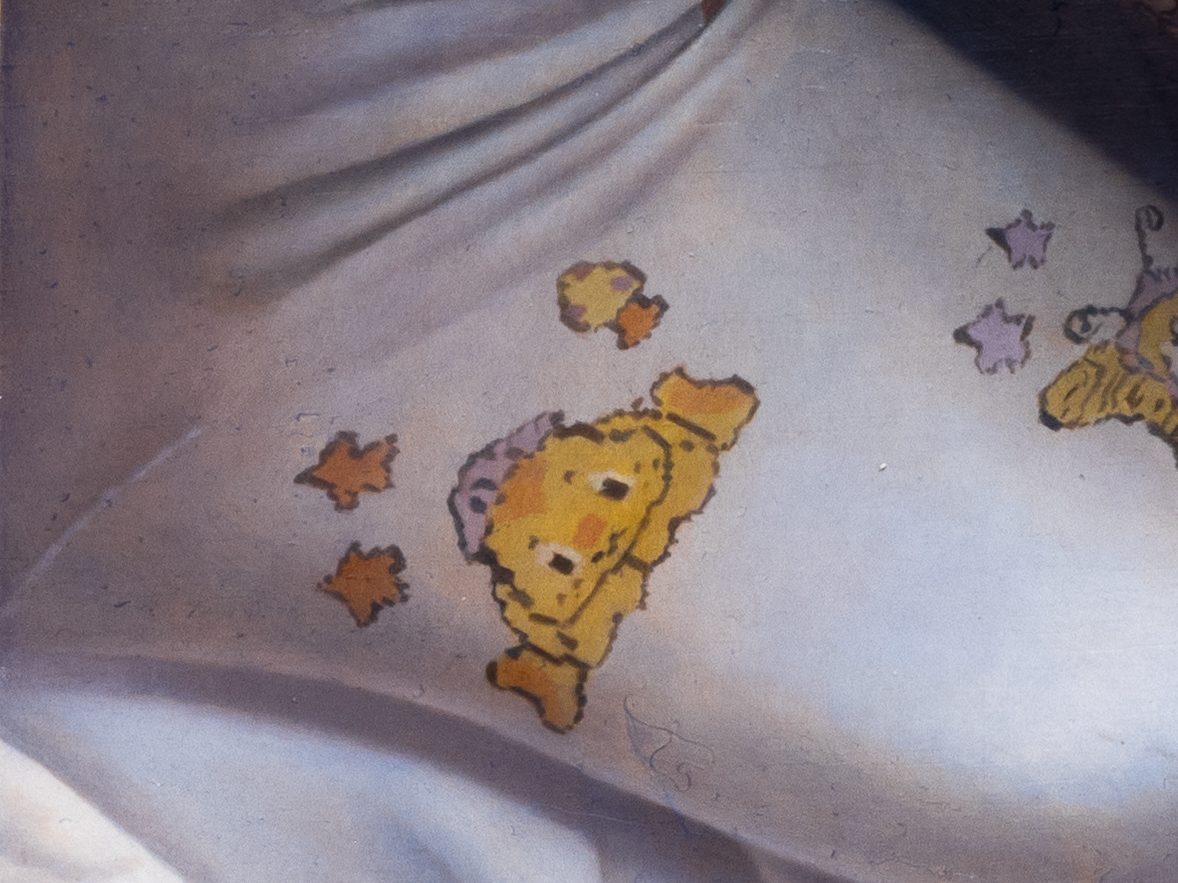
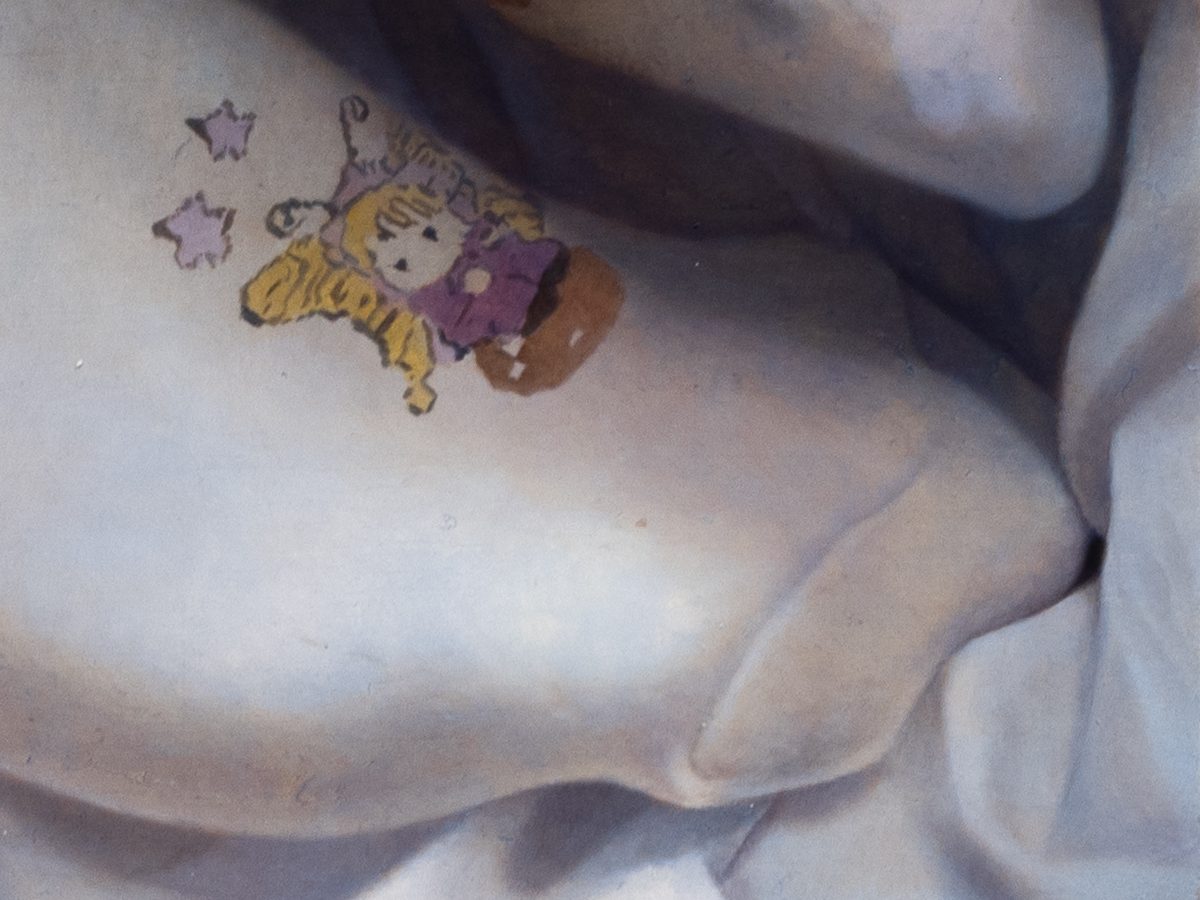
Jiho Kim, Tight (detail), 2026, oil on wood, 25.4 × 20.3 cm (10 × 8 in)
In almost every self-portrait, the face is withheld. In the 2023 self-portrait, three faces are blanked out; in Self Portrait 25, hair and pattern cover yours; in Self Portrait (2026), a hand closes over your nose and mouth; and on your own info page, the face is cut away. Meanwhile, the bodies elsewhere are rendered with almost forensic intimacy. When you hide your face, do you feel more exposed or less?
To answer simply, first of all, I don’t really like spending a long time looking directly at my own face while painting it. And I don’t want people to immediately recognise that it’s me when they see the work. But at the same time, hiding my face doesn’t really make me feel like it’s not me either. Haha, a little contradictory, right?
Feeling more exposed when hiding your face… I think that’s a really interesting question. I think I feel freer when my face is hidden. In that sense, you could say I’m actually revealing more of myself. But that freedom also comes from the confidence of knowing that other people can’t recognise me, right?
So I think externally, I’m revealing less, but internally, I’m revealing more.
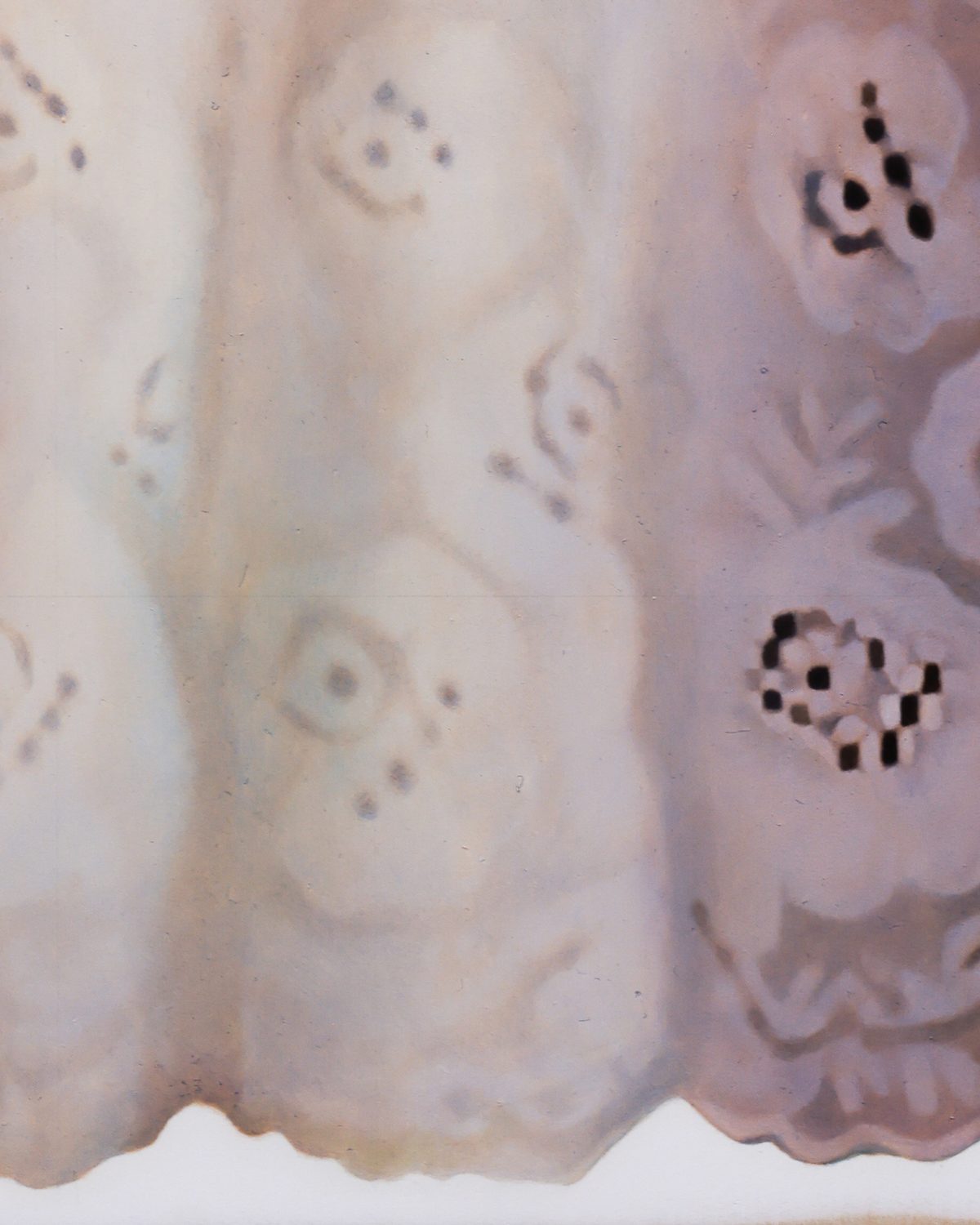
Kitchen splits a room into separate oil-on-wood panels: two curtains, a window and Mamison, a red rubber glove on a rail, with the real wall filling in the gaps. The series opens with a glove packet that reads ‘it’s clean’. Is this a kitchen you know, and why did it need to be broken into pieces instead of painted whole?
Unlike my other works, Kitchen wasn’t made from photographs I took myself. Instead, I collected familiar assets from the internet, assembled them in Photoshop and painted them across several wooden panels. This isn’t a particular kitchen I’ve actually experienced, but rather a scene I assembled by finding sources that matched, as closely as possible, the familiar image of a kitchen I have in my memory.
Whenever I think of a kitchen, I always picture a window. But paradoxically, I was thinking about the reality in which, even though there is a window, a married woman might not be able to get out through it.
At the time I was developing this work, I read an article about the dangers of patriarchy and the recent tradwife trend. What particularly stayed with me was the idea that when a woman becomes trapped in a violent reality, it can be extremely difficult for her to find a way out. That idea also overlapped with some of my own personal memories.
So I left the kitchen window white. But I wanted to leave what that white space actually represents open to interpretation. It could be light coming through, an imaginary white space separate from the wall, or it could simply be the wall itself. I didn’t want to fix its meaning to just one interpretation.
And I decided to divide the painting into separate pieces because I wanted the actual wall to function as part of the image, creating the effect of the viewer encountering an imaginary space that is a kitchen.
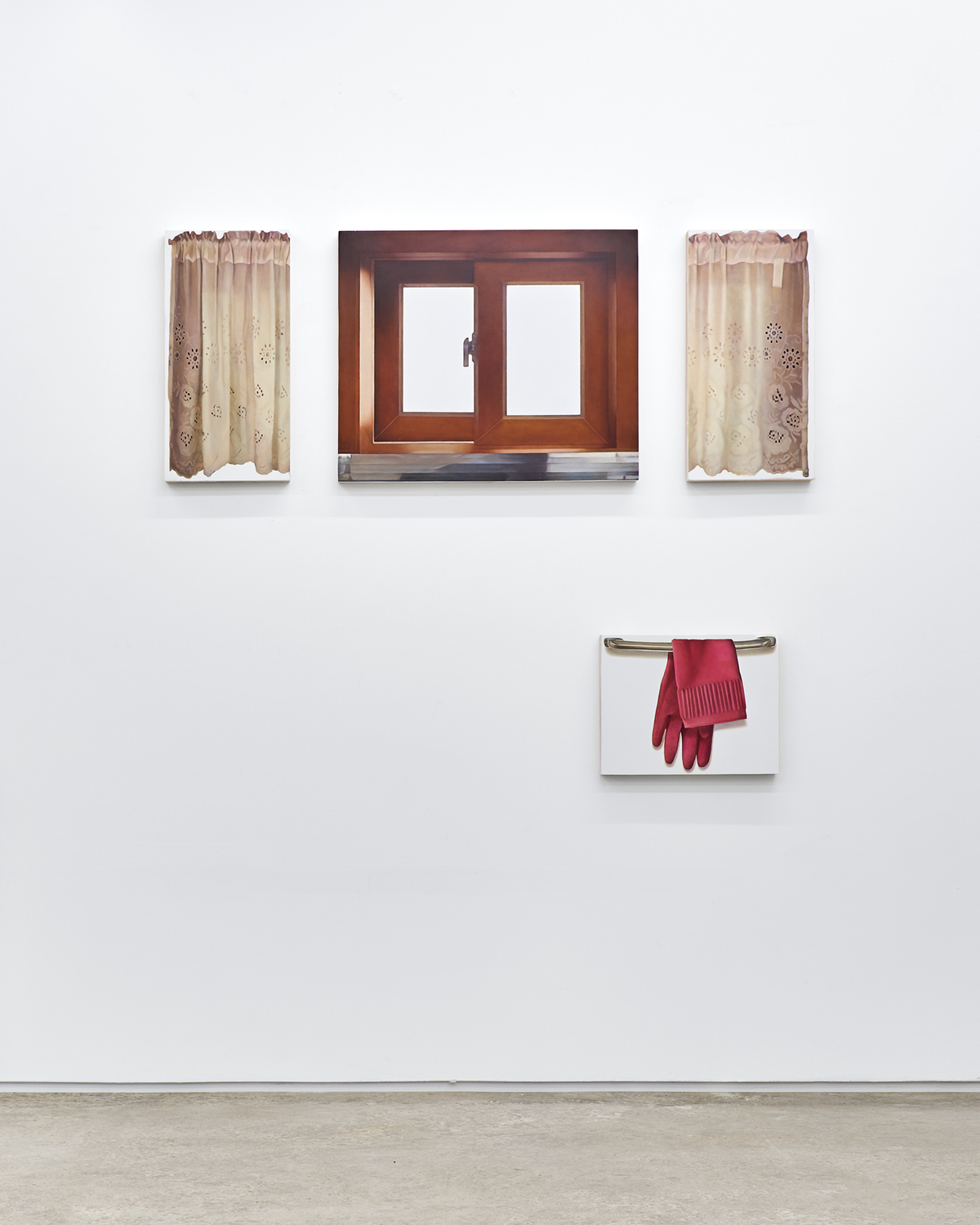
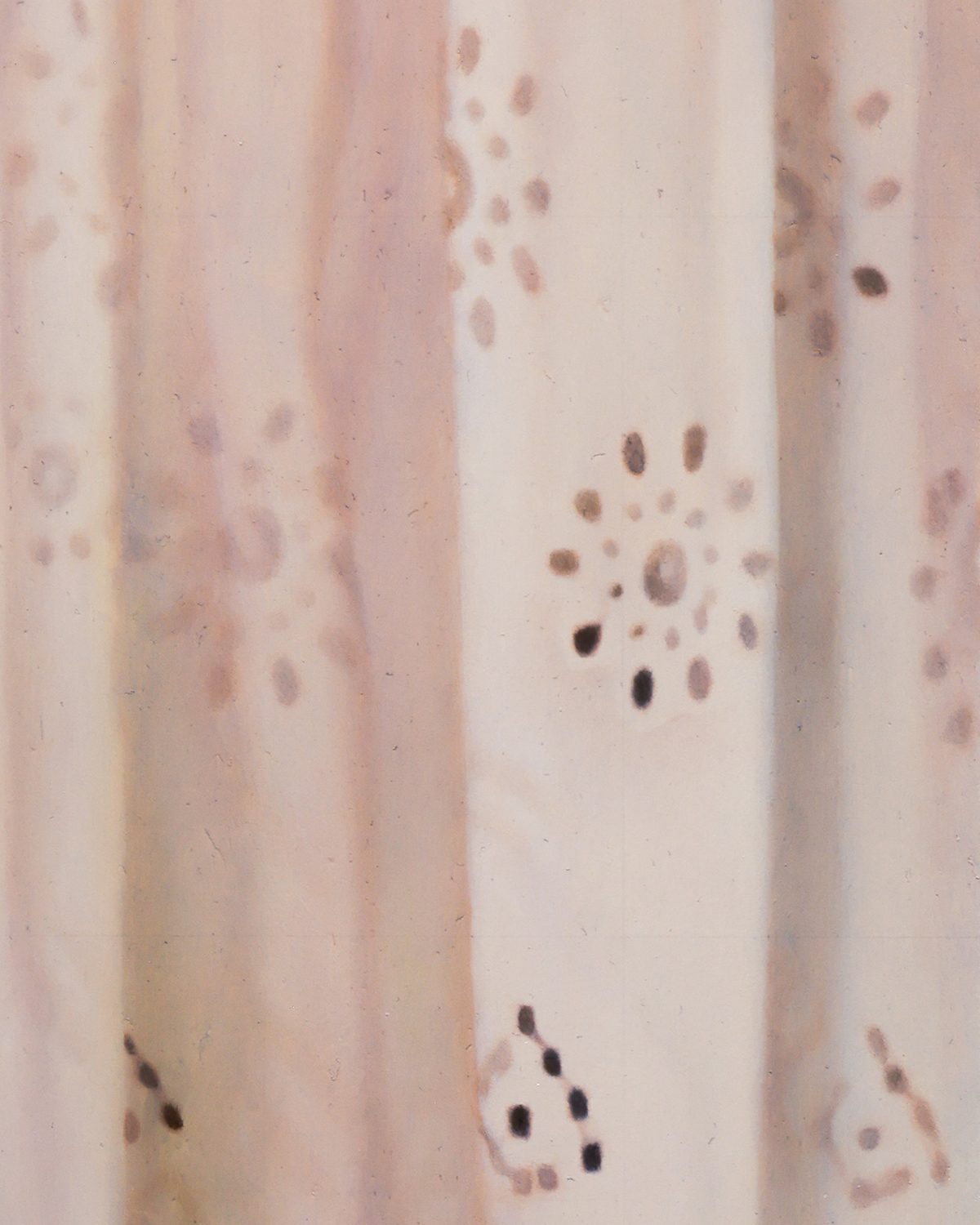
Jiho Kim, Kitchen, 2026, oil on wood, dimensions variable
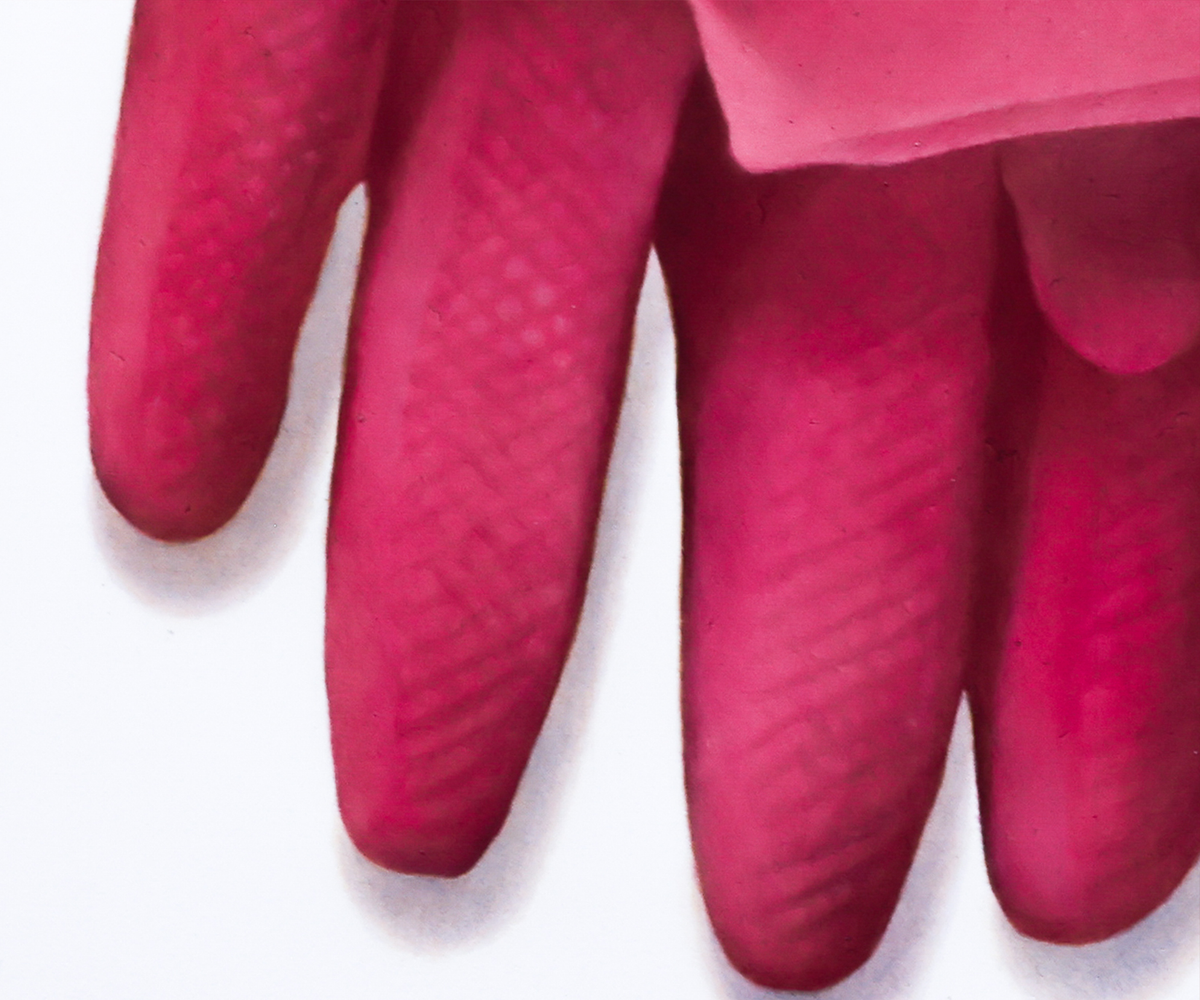
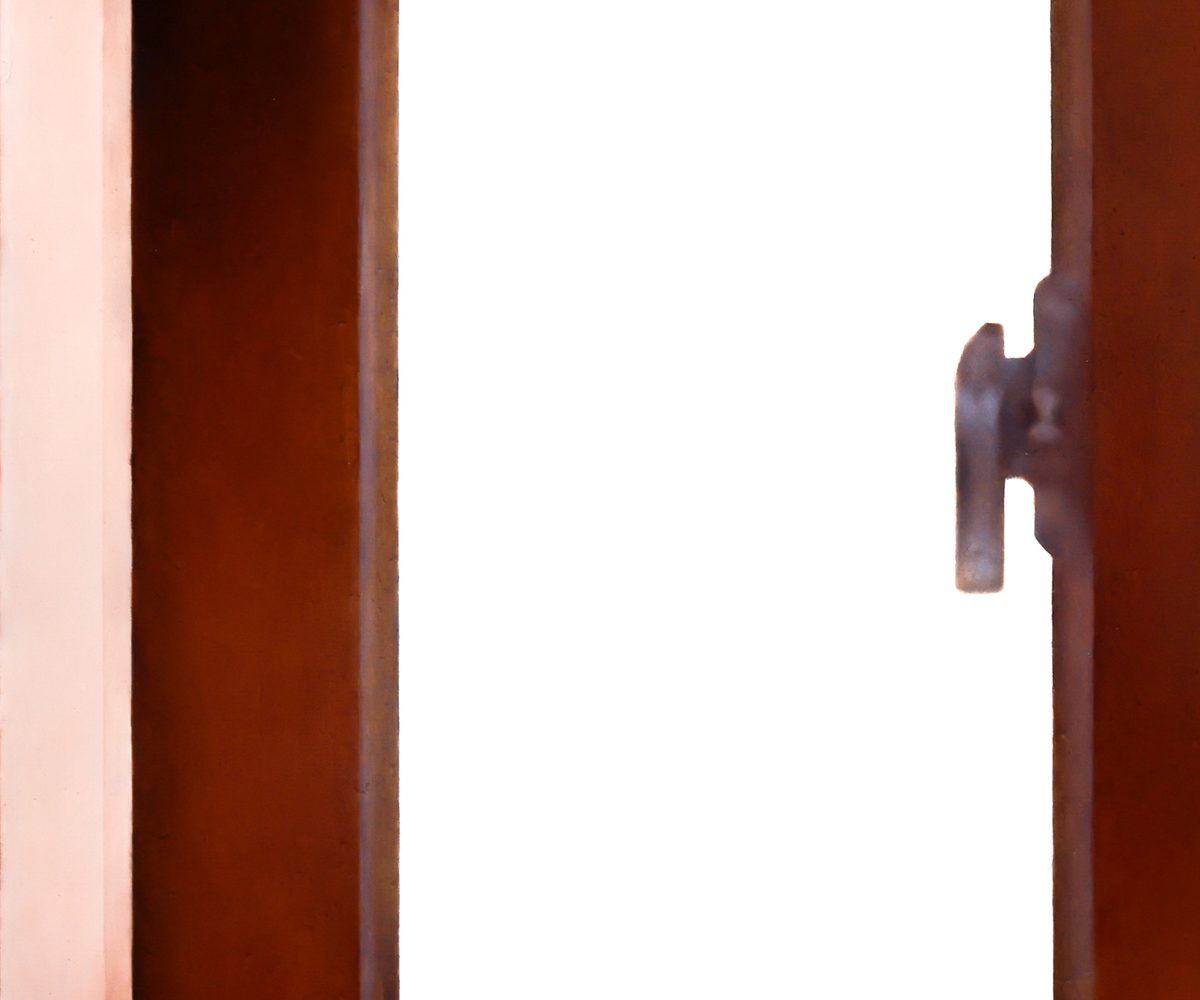
Jiho Kim, Kitchen (detail), 2026, oil on wood, dimensions variable
“When I’m working, I keep pressing on those bruised parts of myself, the places where I feel that soreness.”
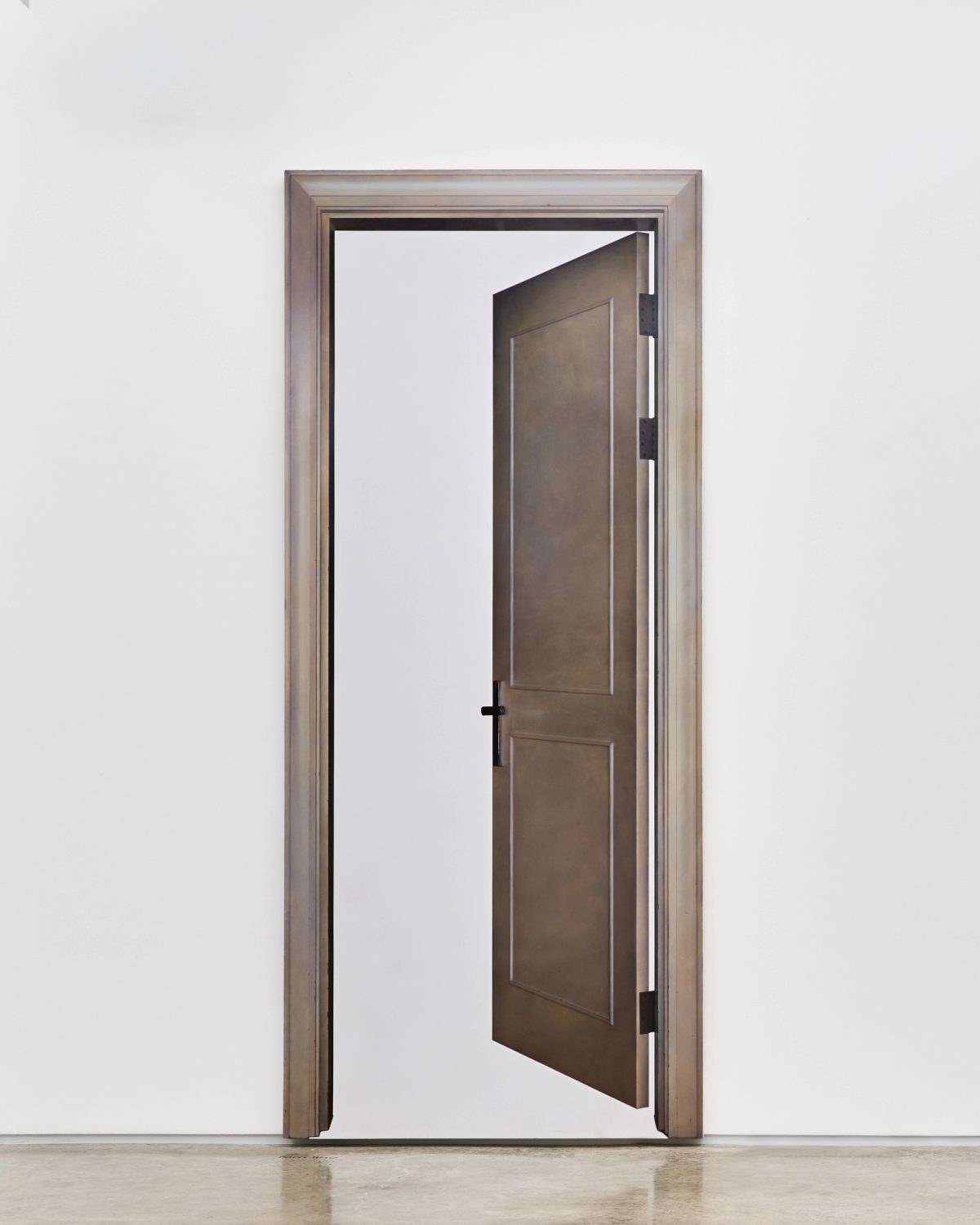
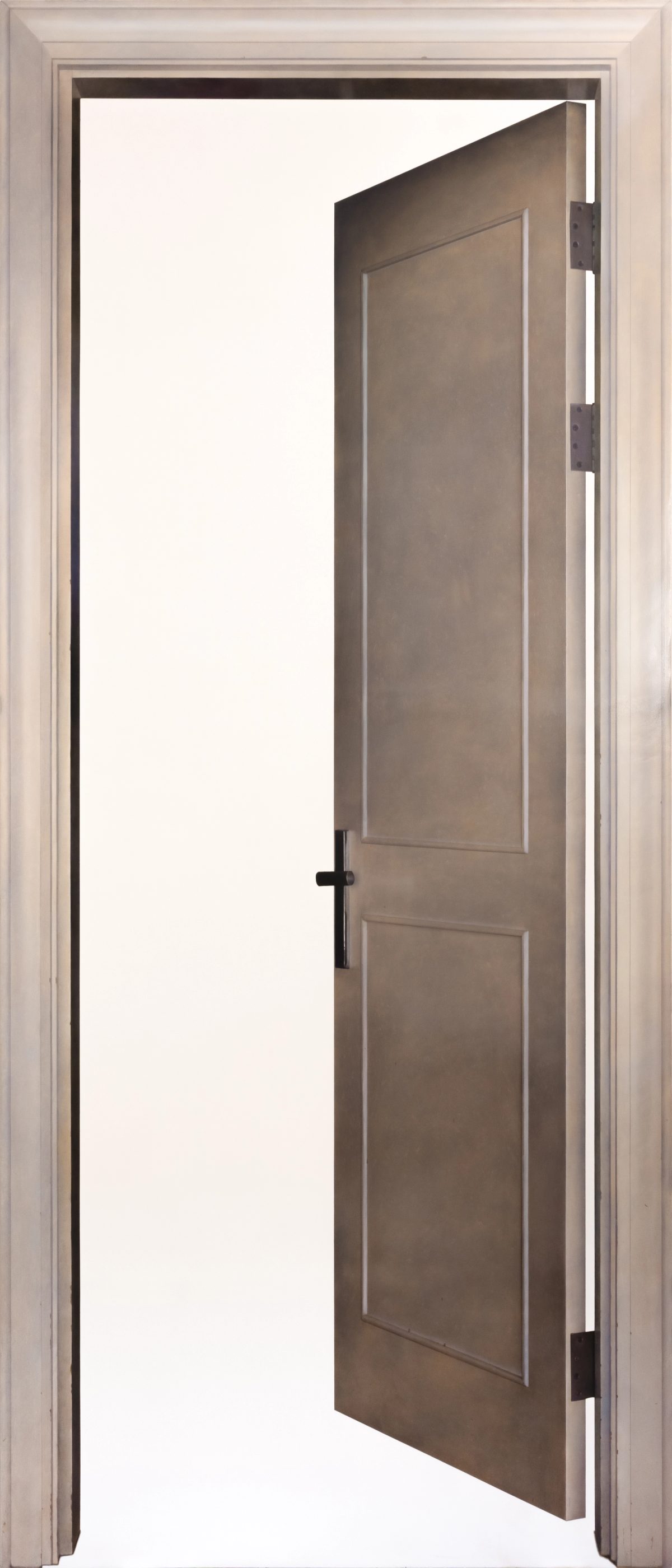
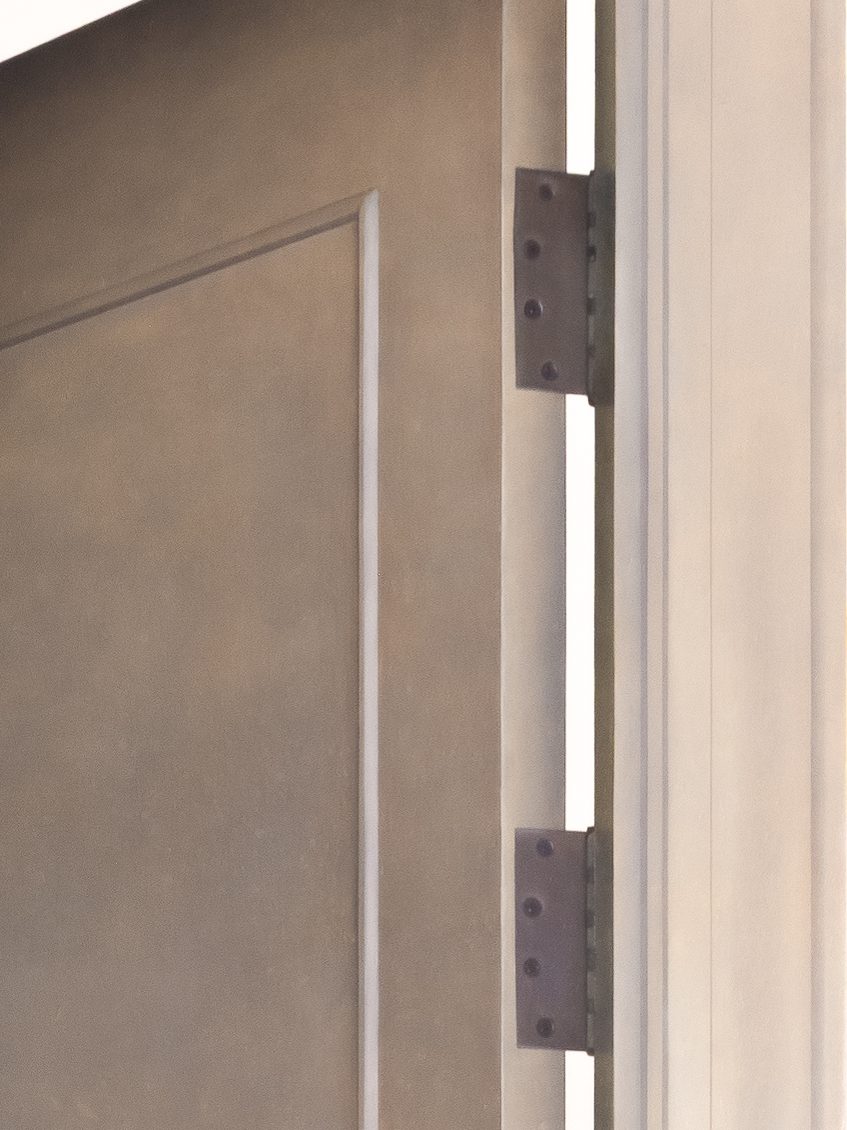
Jiho Kim, Door, 2026, oil on wood, 210 × 95 cm (82.7 × 37.4 in)
Your earlier works, like Peccavi and Hug, are on linen, while most of the 2025-26 work is oil on wood. What drew you to wood panels, and what does the surface give you that canvas doesn’t?
I don’t always paint on wood panels even now. I still use canvas and linen as well. I think each of them has a different appeal when viewed from the side.
Wood panels are more convenient when it comes to preparing the surface. Whether I’m using canvas or wood panels, I sand away all the surface texture and paint on something that feels almost like paper. So when I’m preparing a canvas, I have to spend much more time getting rid of the texture of the fabric weave. I also have to be careful when sanding, because I need to consider the indentations that can happen around the stretcher bars.
Compared to that, wood panels have much less texture than fabric, so I can use less gesso, and sanding is also much easier. Of course, the downside is that they’re more vulnerable to humidity. So for those practical reasons, I’ve preferred to work on wood panels recently.
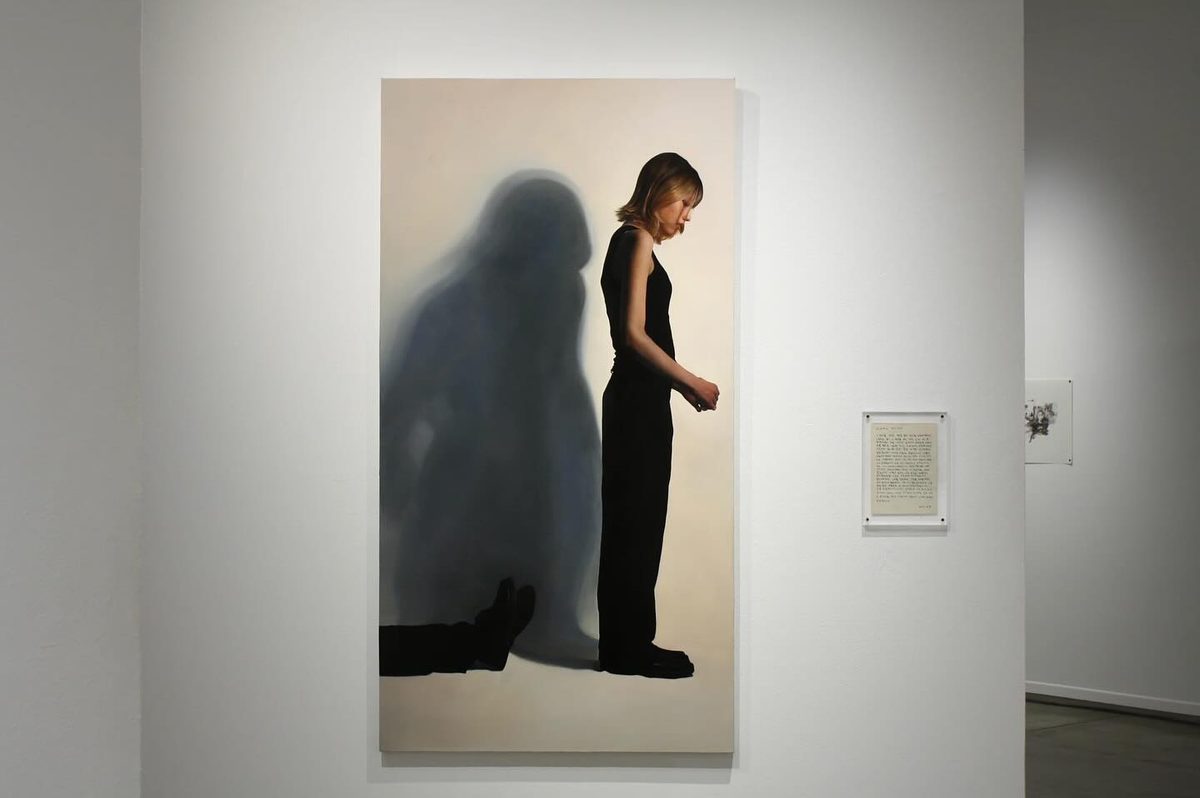
Jiho Kim, Peccavi, 2022, oil on linen, 180 × 95 cm (70.9 × 37.4 in)
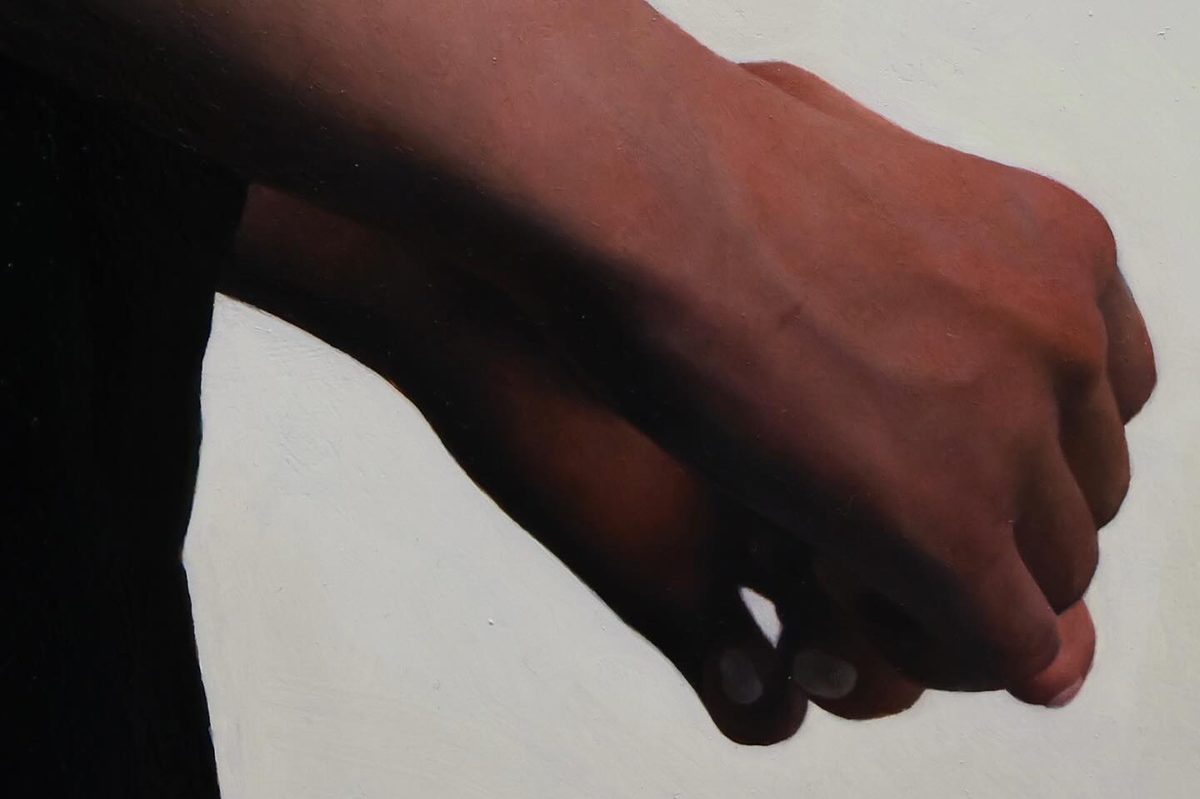
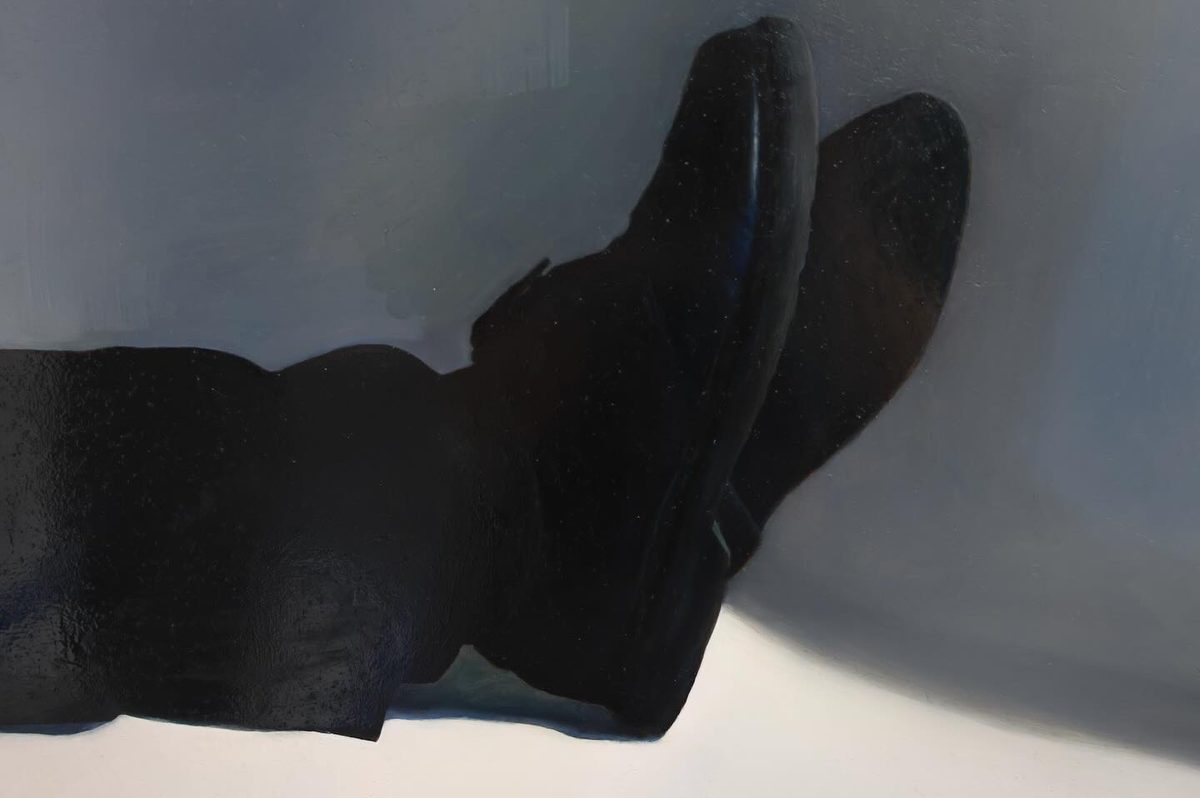
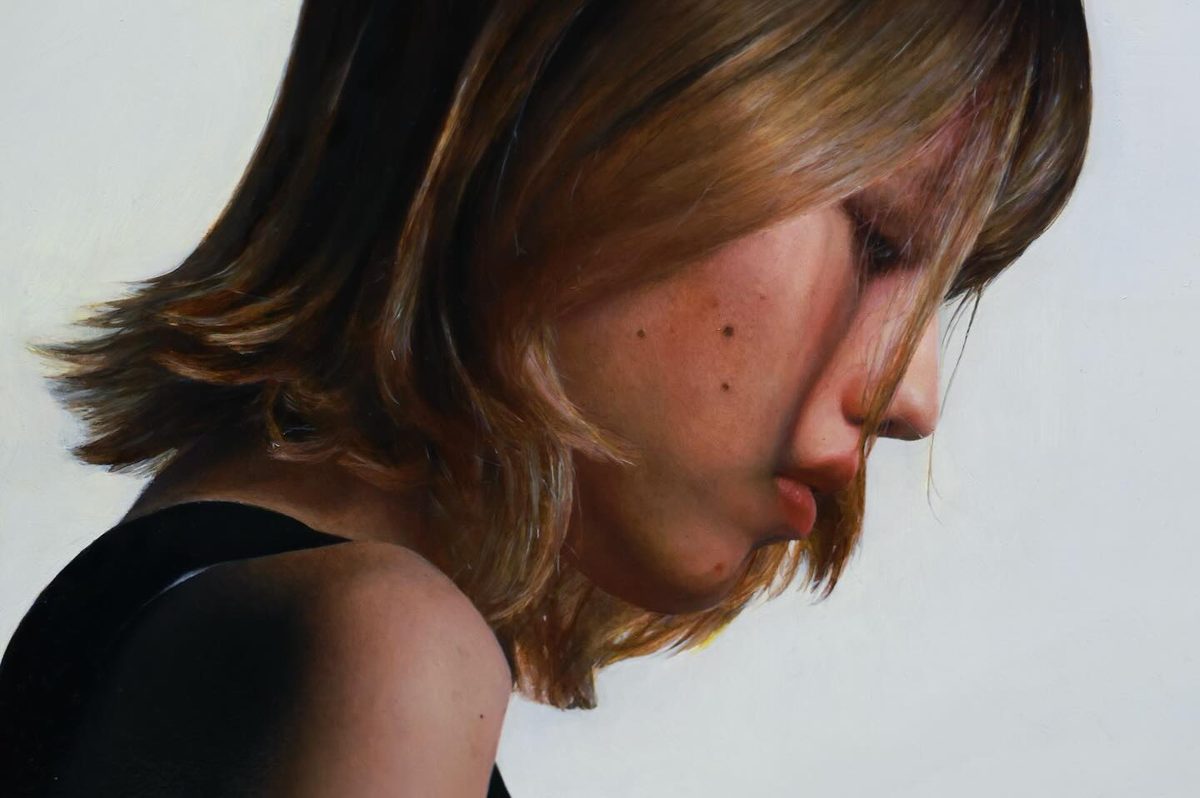
Jiho Kim, Peccavi (detail), 2022, oil on linen, 180 × 95 cm (70.9 × 37.4 in)
You jump between scales: Table is 152.5 × 122 cm, while Tight and untitled (phone) are 25.4 × 20.3 cm. How does working small change the way you paint and the kind of intimacy you’re asking of the viewer?
Actually, whether I’m working on a large painting or a small one, I put the same amount of time and effort into every detail. Almost as if every part of the image is equally in focus. So for me, I don’t think there’s much difference in the way I paint.
But the visual effect changes depending on the size of the painting and how the image is cropped, right? I’ve been thinking a lot about that recently. I think life-sized, uncropped images against a white background create a certain distance, but at the same time, they invite the viewer into a psychological ‘space’. On the other hand, enlarged and cropped images have the power to draw the viewer closer to the work, but I think they also make the viewer look at a particular object through the lens I’ve presented.
So the kind of intimacy is different too. Maybe it’s the difference between external and internal? I think there’s a difference between something that feels personal and something that feels public.
Many of your works behave like objects as much as pictures. The Kitchen panels hang on a real wall as a window and curtains; painted sticky notes sit on blank panels in the ‘..’ works; and Stay Inside, Just like That is a cross-shaped canvas. When did you start thinking about the painting as a physical thing in the room, and not just an image?
I’m not exactly sure when, but I think I started recognising paintings as physical objects existing in a space around the time I began thinking more about the viewer’s experience.
There’s a difference between looking at a painting as an image and actually encountering a physical object in a space, right? After all, a canvas isn’t really a completely flat surface. It’s an object. And I think standing in front of an actual painting and looking at it is a different experience from seeing an image on a screen online.
I want viewers to do more than just glance at my work from a distance and move on. I want them to come closer, spend time looking at it and keep discovering new things. In that sense, I think the way a painting exists within a space is also important to me.
But at the same time, sometimes those forms just happen naturally as I try to find the most appropriate way to realise an image I have in my head. It’s not that I’m trying to give every form a particular meaning.
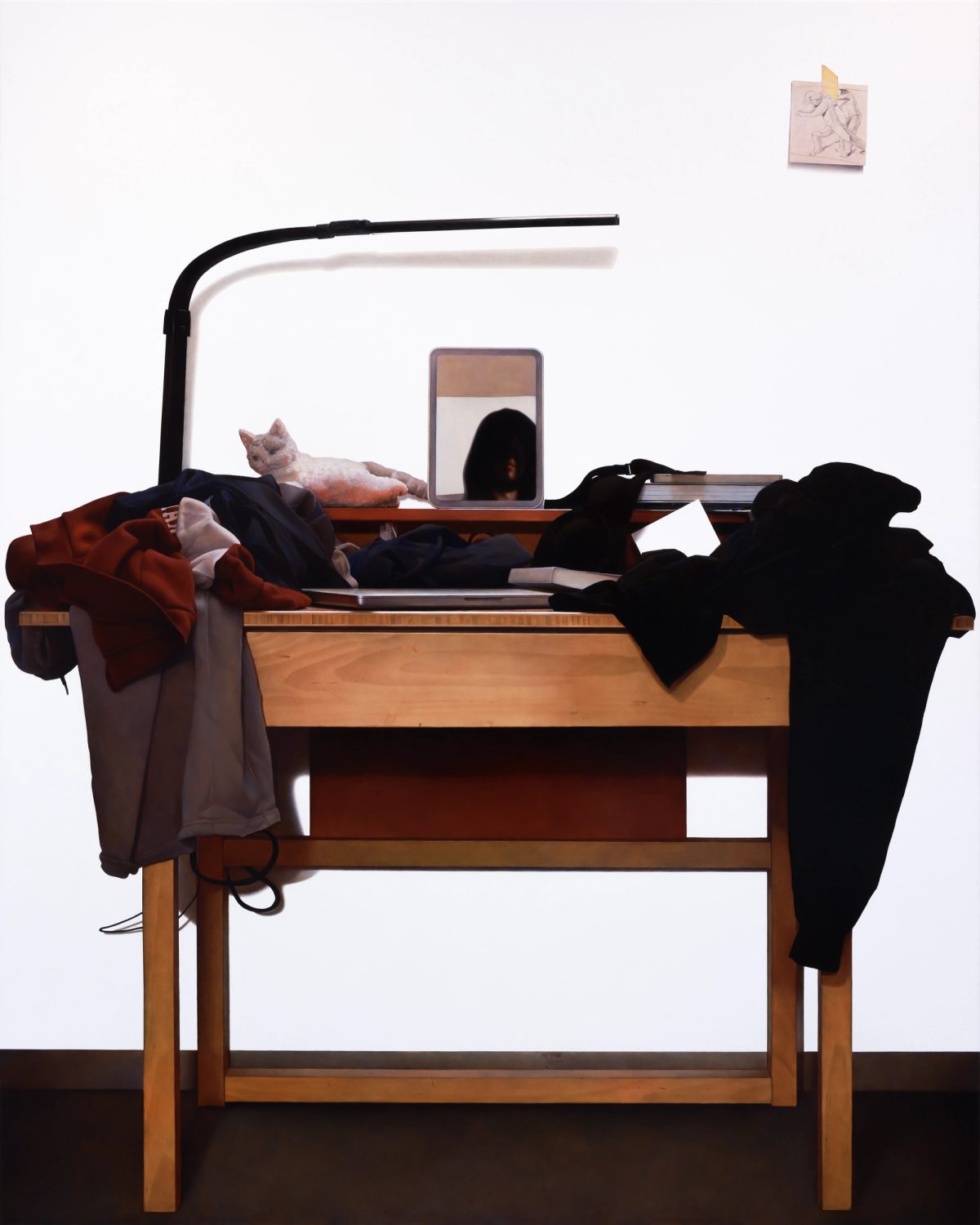
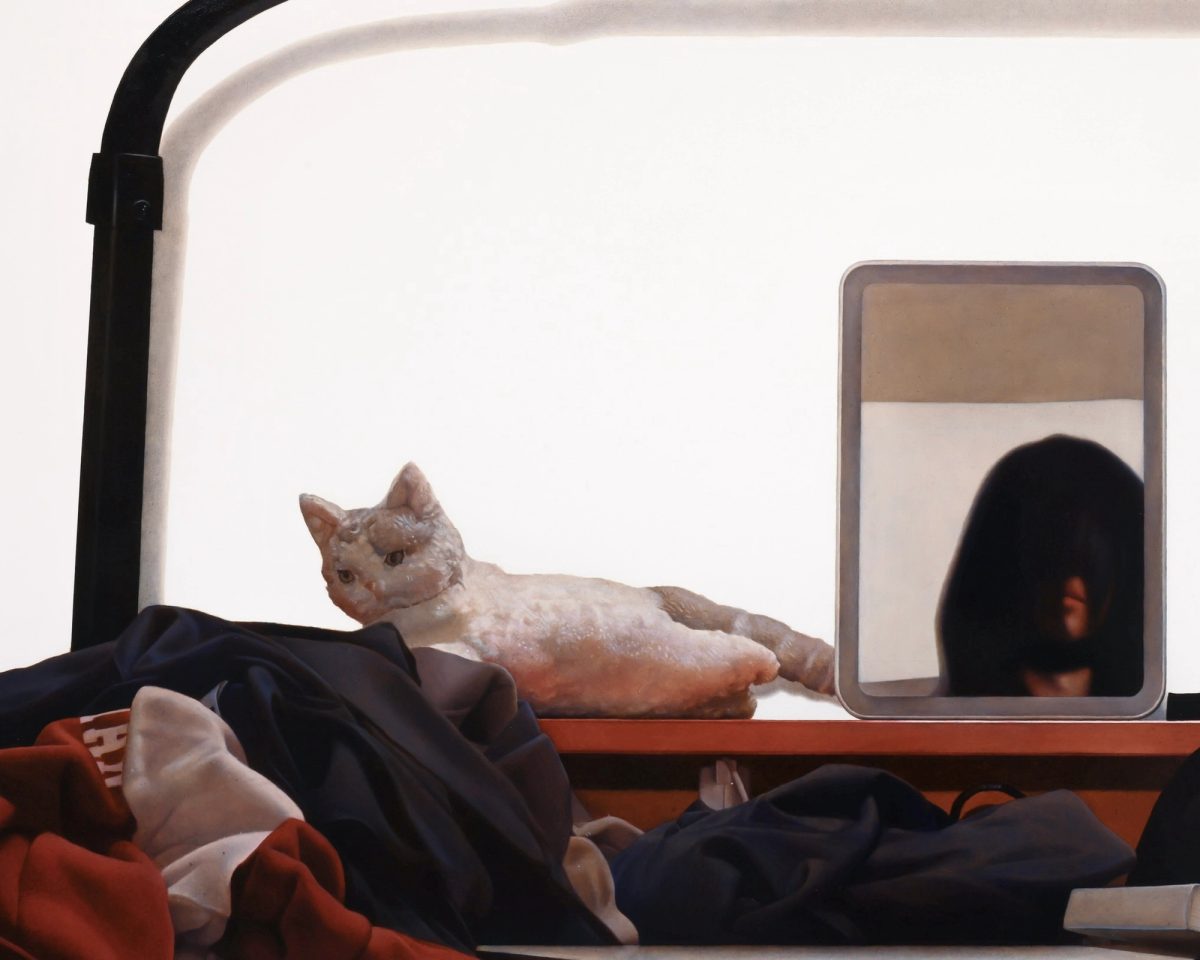
Jiho Kim, Table, 2026, oil on canvas, 152.5 × 122 cm (60 × 48 in)
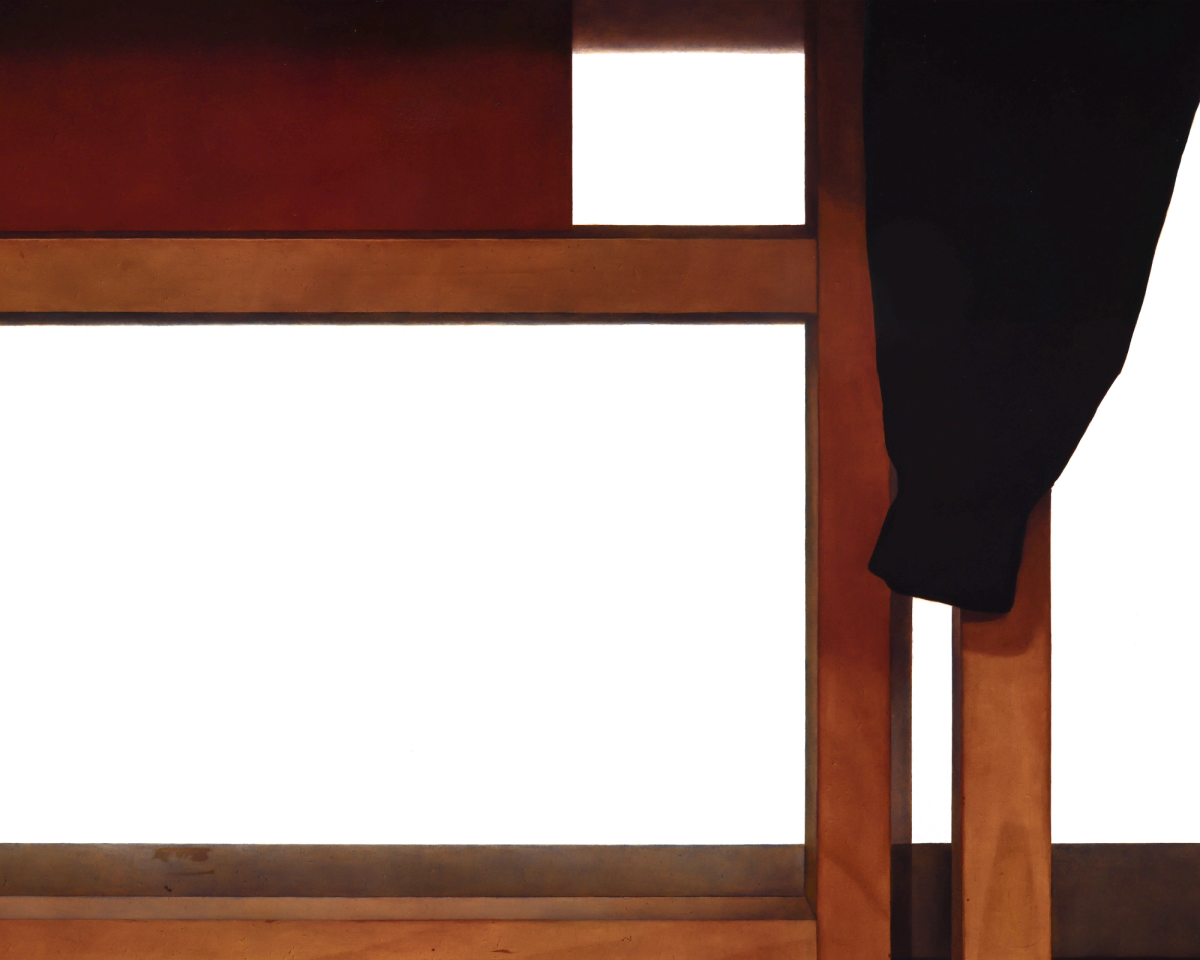
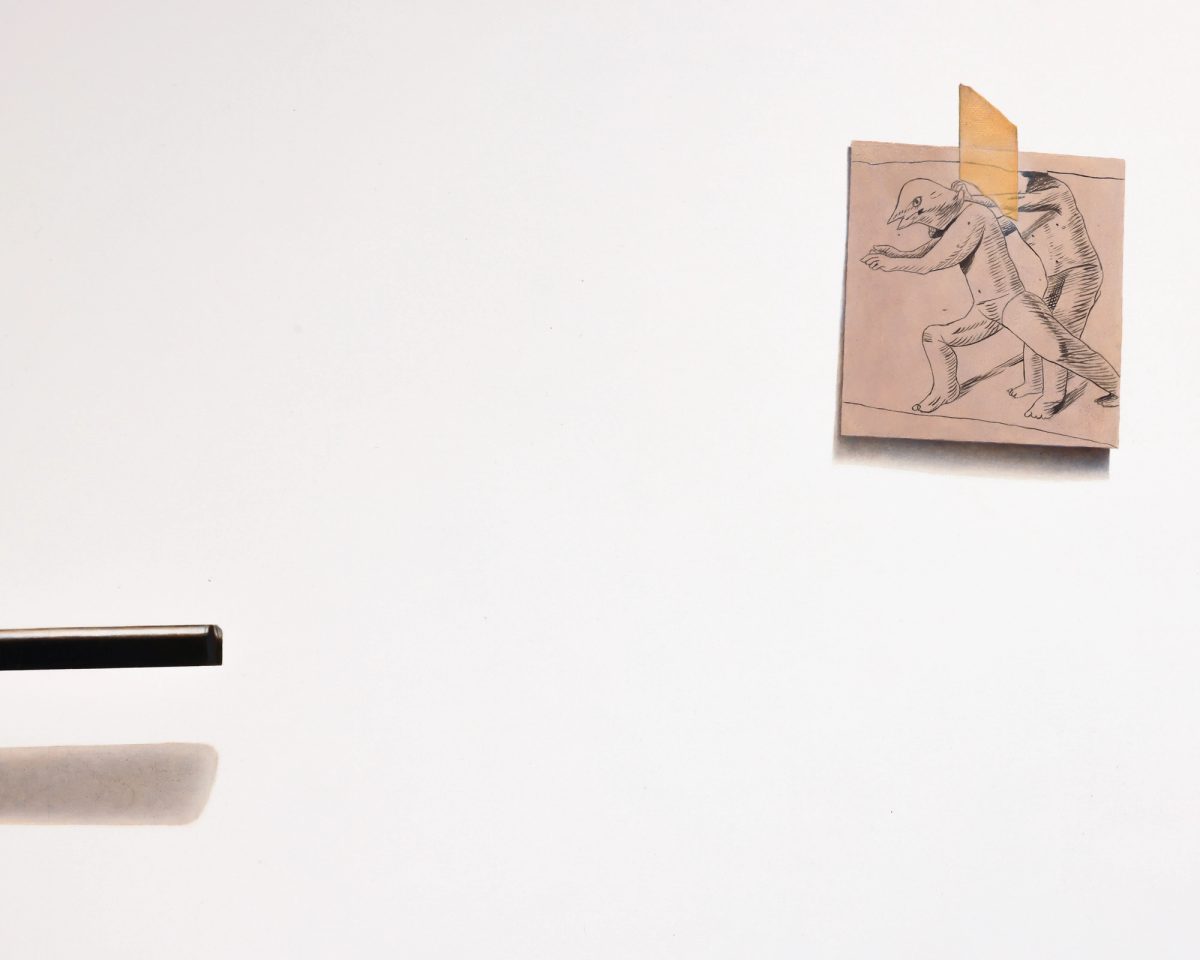
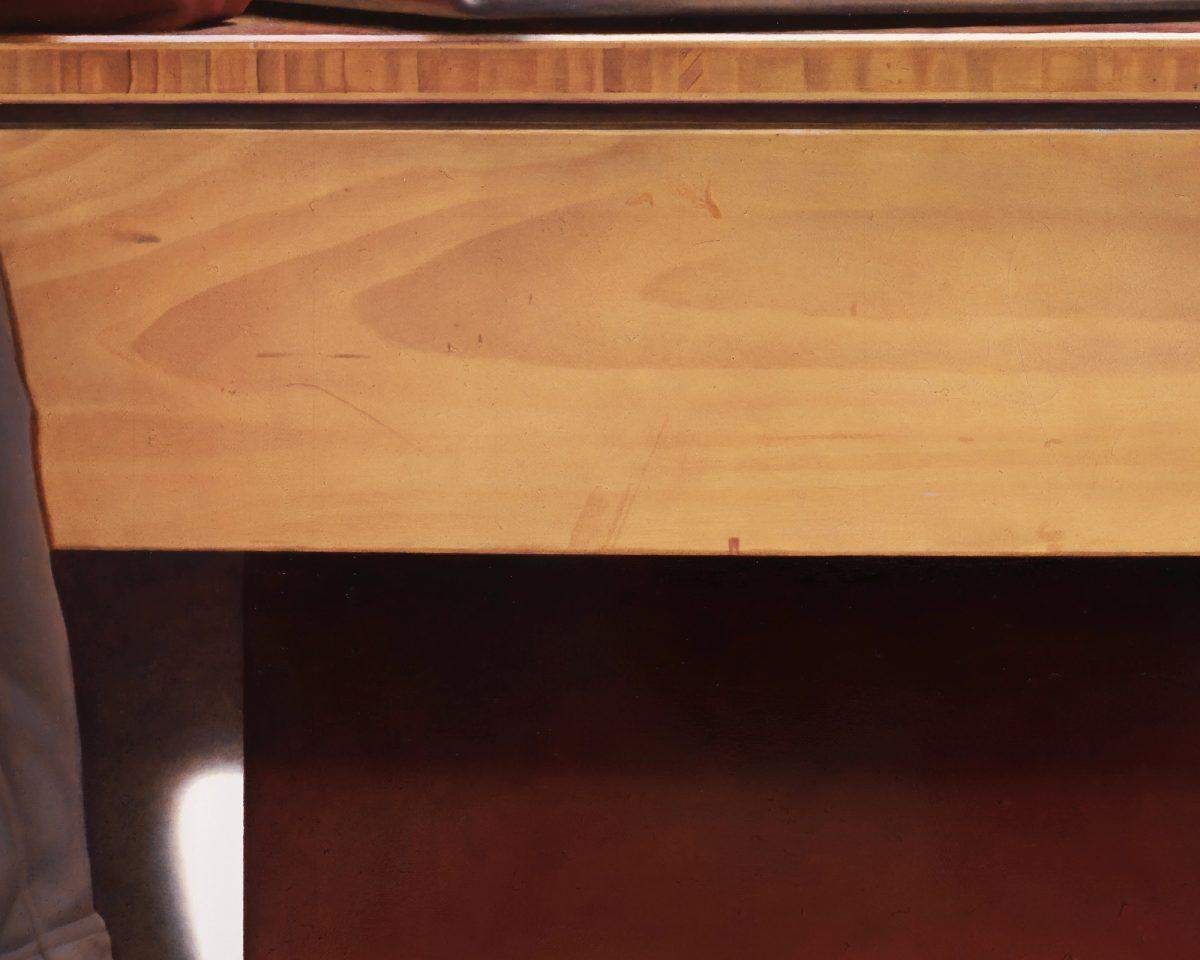
Jiho Kim, Table (detail), 2026, oil on canvas, 152.5 × 122 cm (60 × 48 in)
“So I think externally, I’m revealing less, but internally, I’m revealing more.”
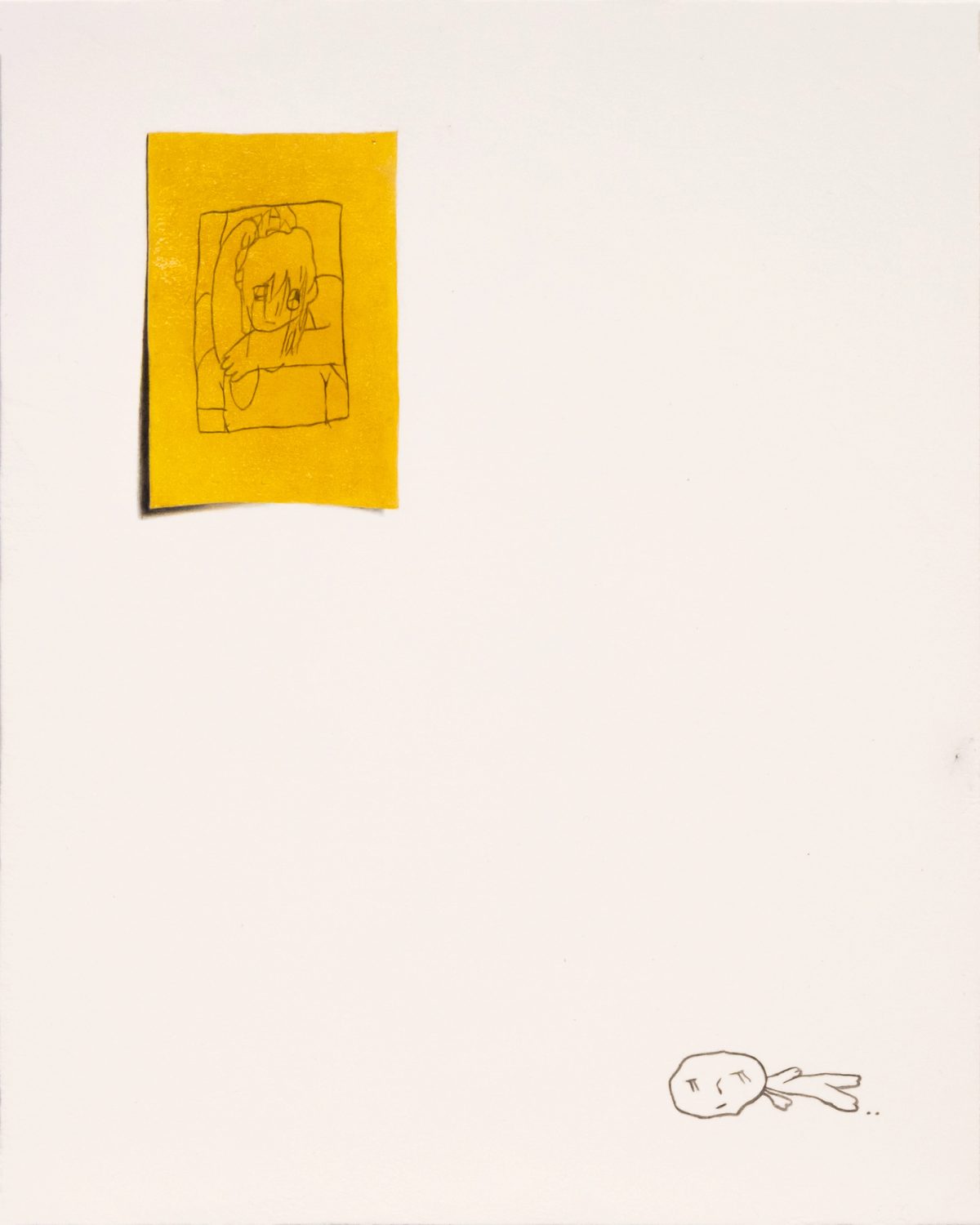
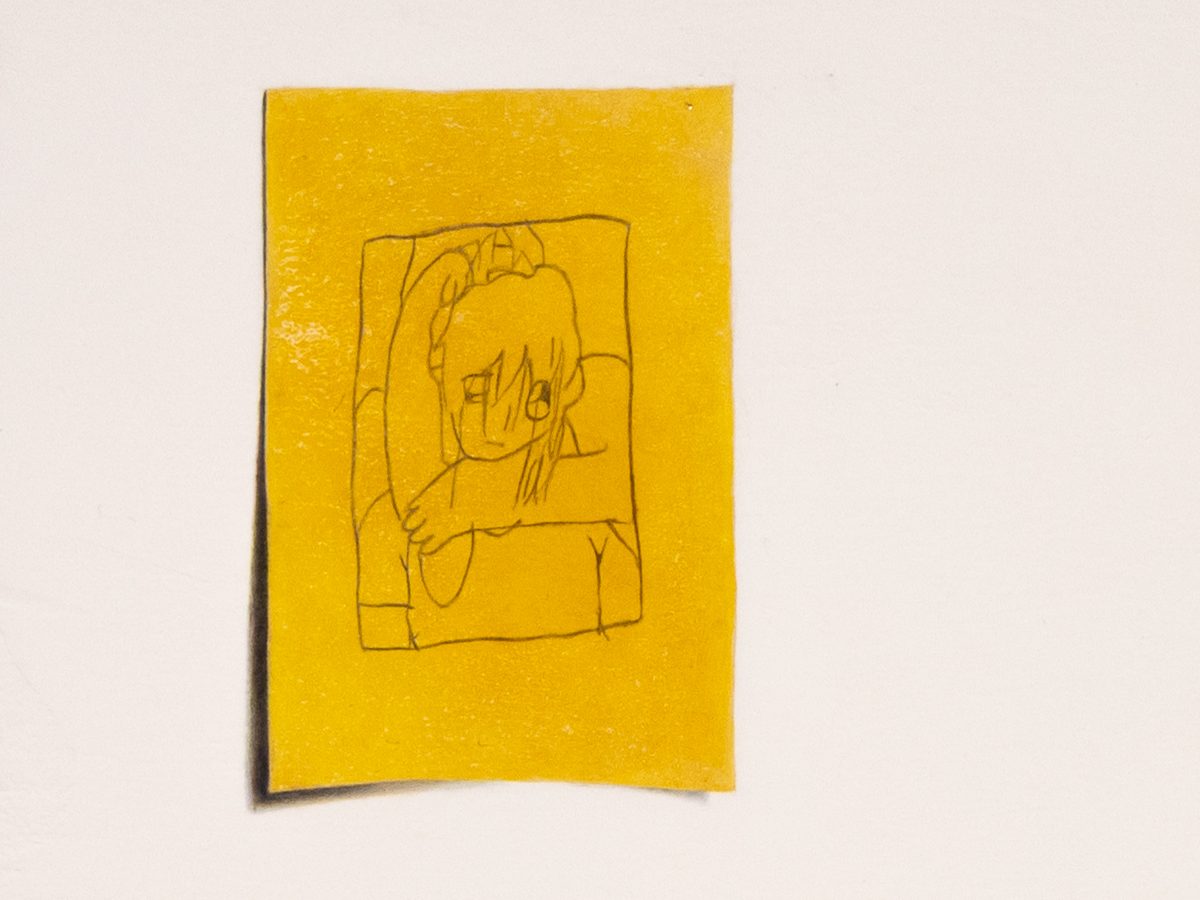
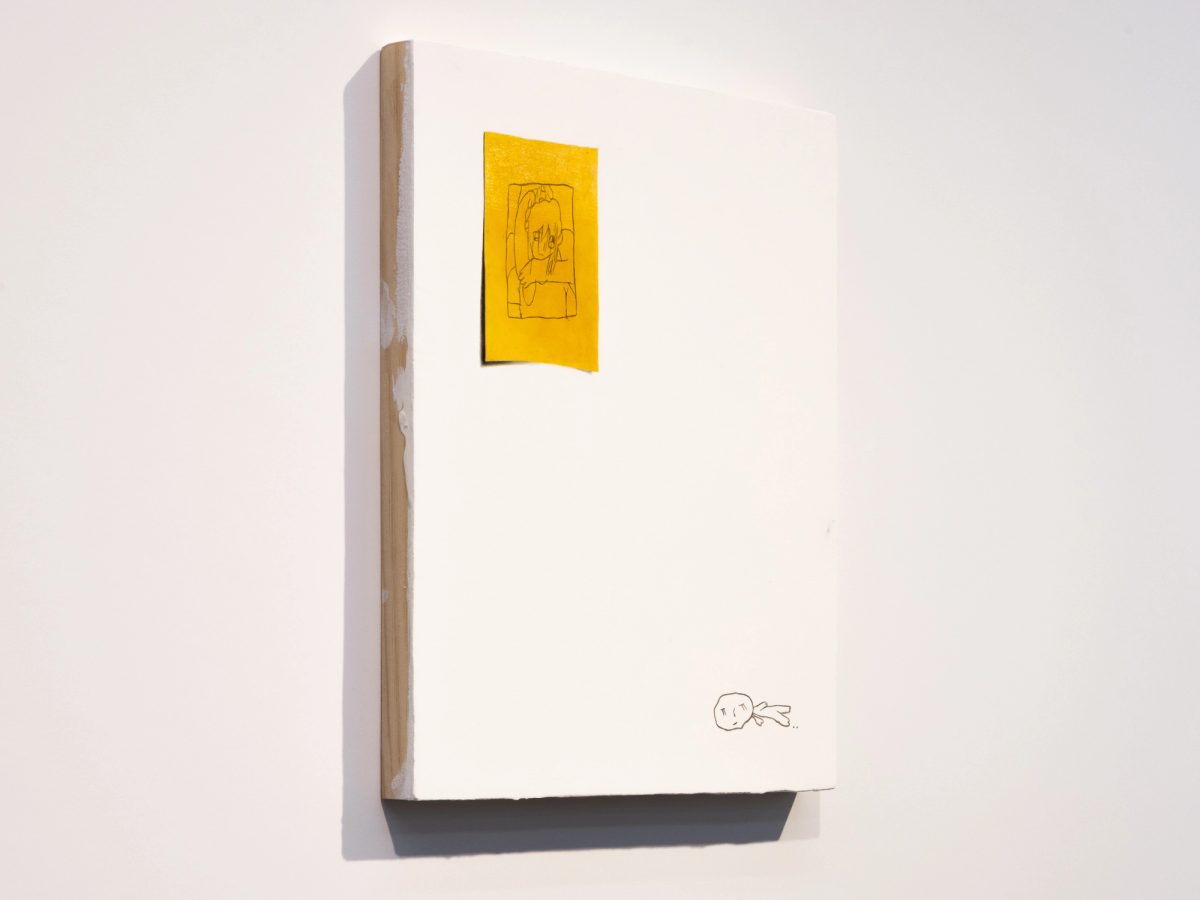
Jiho Kim, .., 2026, oil on wood, 25.4 × 20.3 cm (10 × 8 in)
Your studies look completely different from your finished paintings: anime-styled figures and faces in vibrating, hatched colour. What role do they play in your practice? Are they warm-ups, experiments or a separate body of work?
I think of these works as a kind of experiment, something I do quite casually. As I said before, I don’t really like getting too serious. I tend to laugh things off in most situations and avoid becoming too serious or thinking too deeply about things.
So when I get tired of constantly making serious work, or when I just don’t feel like doing it anymore, these studies are a way for me to refresh myself. I make them spontaneously, without really thinking or making any plans.
But even if I draw them without consciously thinking about anything, I wonder if some of my unconscious thoughts might still be contained in them. That’s why I keep an archive of these works.
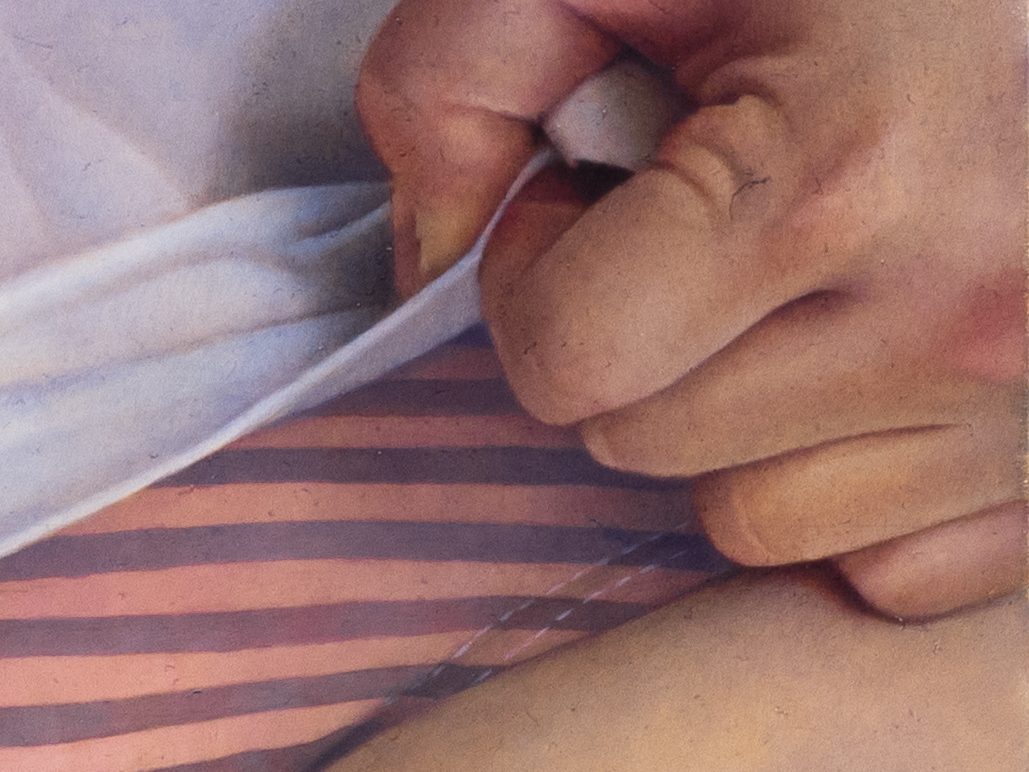
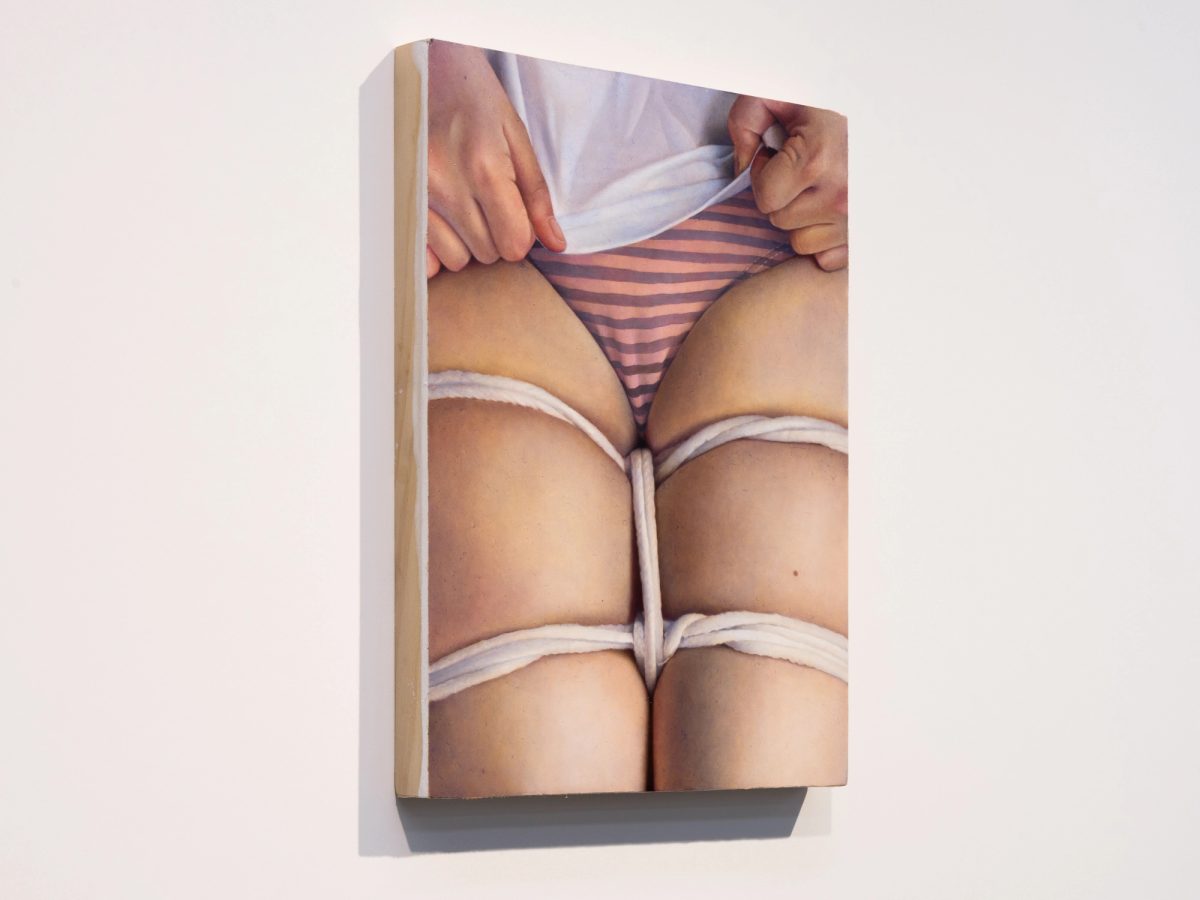
Jiho Kim, Tight, 2026, oil on wood, 25.4 × 20.3 cm (10 × 8 in)
You’re still in the middle of your studies, and the work already spans large-scale oil paintings, small intimate panels, shaped canvases, installation-like series such as Kitchen, and two solo exhibitions. What does the next chapter look like, in the studio and beyond RISD?
Haha, I don’t really know either!
I want to make work a little more honestly and freely. Recently, I’ve also become really interested in making work about desires or urges that I’ve been hiding. In particular, I’ve been thinking about the relationship between sexual objectification and self-objectification, the shame surrounding desire and the things you can’t escape from even when you know they’re wrong.
I’m also interested in the idealised image of women that I’ve repeatedly encountered through media since I was young, especially the image of the so-called bishōjo, or beautiful young girl. The contradiction of recognising that these images are socially constructed and learned, while still feeling attracted to or desiring them. I’m also curious about how those images influence an individual’s desires and sense of self.
These are some of the things I’m focusing on in my current work, but I don’t know how long I’ll continue exploring them. I’m also not really sure what direction I’ll take after graduating from RISD. But I do want to continue making work a little more honestly and freely, about things that genuinely interest me and that I keep finding myself thinking about.
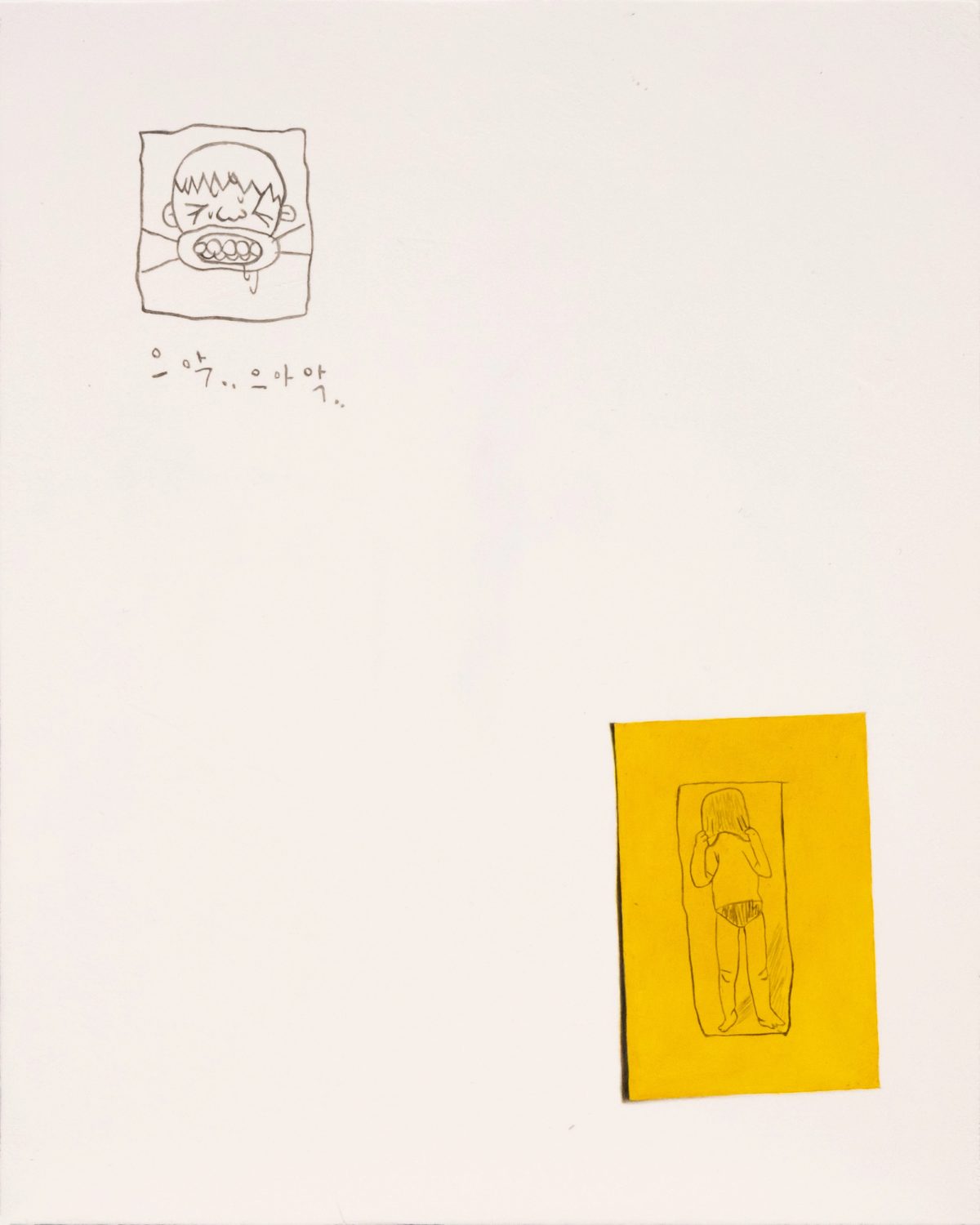
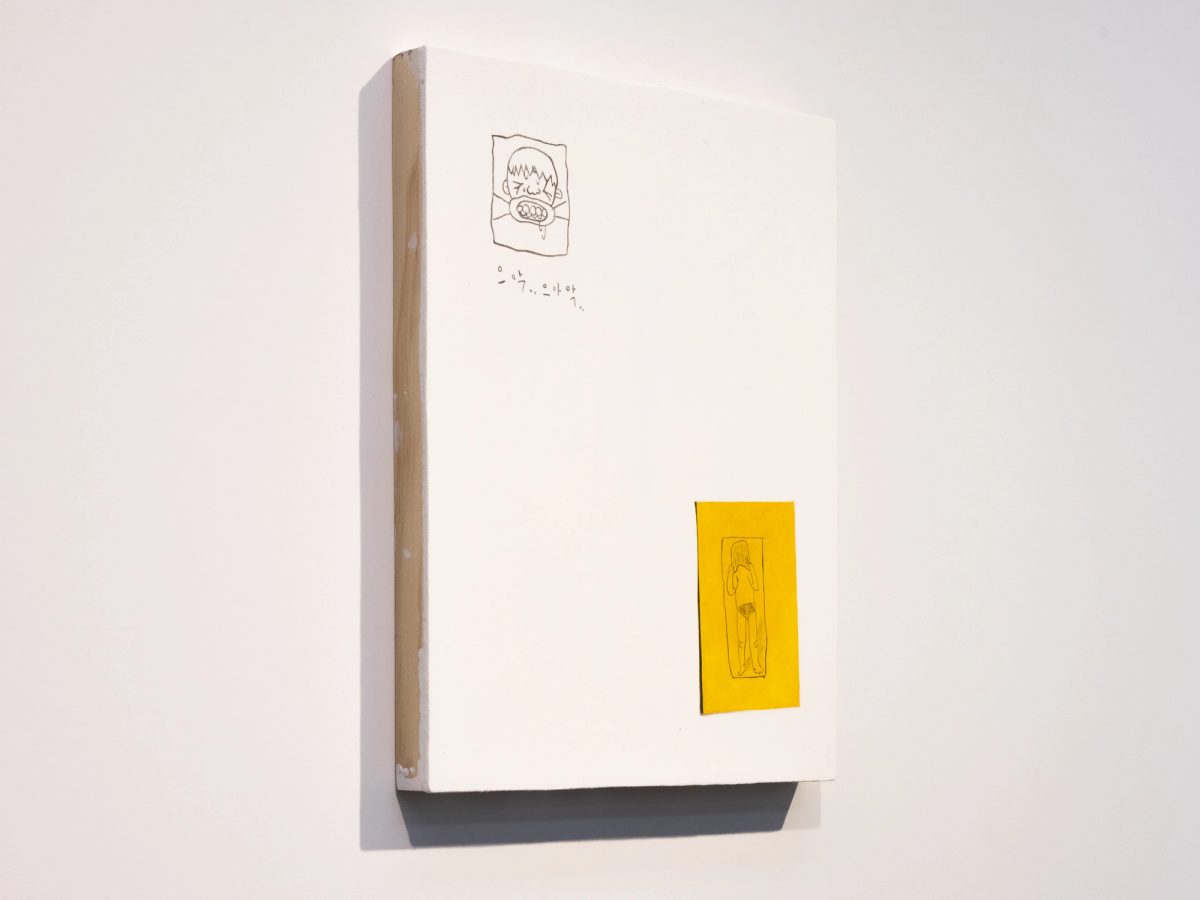
Jiho Kim, ..., 2026, oil on wood, 25.4 × 20.3 cm (10 × 8 in)
Cover Image: Jiho Kim, Tight, 2026, oil on wood, 25.4 × 20.3 cm (10 × 8 in)