I AM SAFE, SO THE WORK DOESN’T HAVE TO BE: IN CONVERSATION WITH KAJA STUMPF
CONVERSATION BY SELIN KIR
CO-FOUNDER, CURATOR
18 OCTOBER 2026 — LONDON, UNITED KINGDOM
Kaja Stumpf paints what we keep hidden: the nape of a neck, a braid falling down a bare back, a thin gold chain resting on the spine. Born in Norway and based in London for the past fifteen years, she trained in fashion at Kolding School of Design before taking her MA in Fine Art at Central Saint Martins, and she has since traded dressing the body for undressing it. Working from staged images and her family’s photographic archive, she crops close enough to make a mouth or an eye turn strange, then stipples her linen with small, patient strokes until the surface shimmers like film grain or half-remembered light. Her figures rarely meet our gaze. They turn away, or perhaps they walk ahead, and the choice of reading is ours. After three consecutive solo shows at Blue Shop Gallery, ending with Chaos Carry Me Gently, a show that sank from light into near-total darkness, Stumpf now brings her work to Paris at Roch 20. Here she talks about desire, memory, talismans and the paintings she hasn’t yet dared to make.
You’ve had three consecutive solo shows with Blue Shop Gallery in London, from Pleasure Is A Far Away Land in 2024 to Chaos Carry Me Gently this June, and now you’re showing in Paris at Roch 20. Looking back across those three shows, how has the work changed, and what did Chaos Carry Me Gently let you do that the earlier shows didn’t? If those shows were chapters of one story, where are we now, and who is the narrator?
These past three solo shows at Blue Shop Gallery have let me slowly expand, both in my ideas and in the scale of the work. As the gallery spans two floors, my first exhibition (Pleasure Is A Far Away Land in 2024) was in the compact space downstairs and consisted mainly of small, tightly cropped works. As my canvases got bigger, I gradually worked my way up to cover both spaces for Chaos Carry Me Gently earlier this year. This move also allowed me to think about the curation differently, i.e., to create an extension of how the work explores the dark parts of ourselves we hide away. I wanted the lighter pieces to greet you as you first walked in, and then, as you moved through the space, the paintings would get increasingly dim, until, in the last painting in the basement, the figure is almost completely hidden, immersed in darkness. To be able to take part in exhibitions internationally is very exciting, and I’m looking forward to connecting with new audiences and seeing how my work evolves through these interactions.
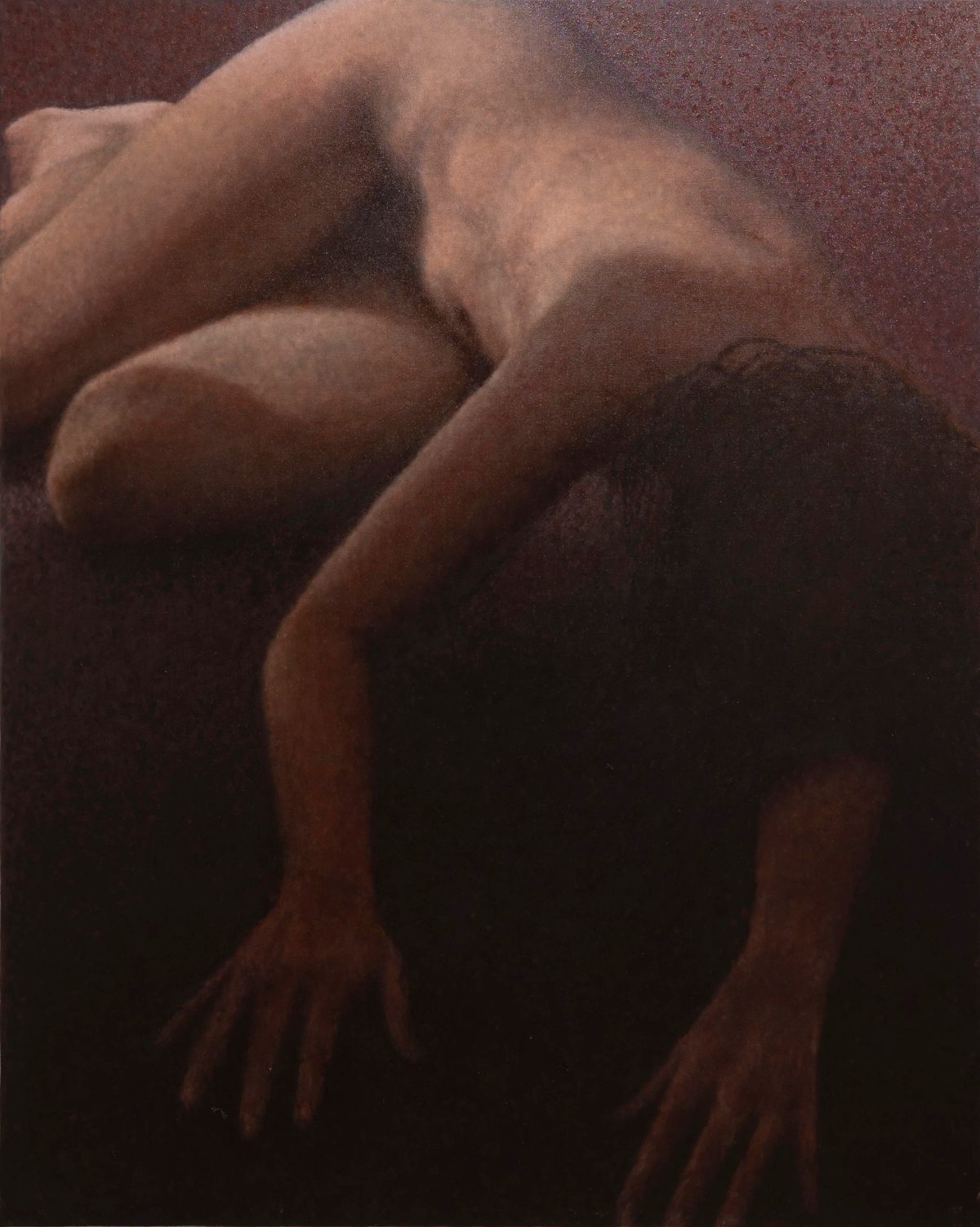
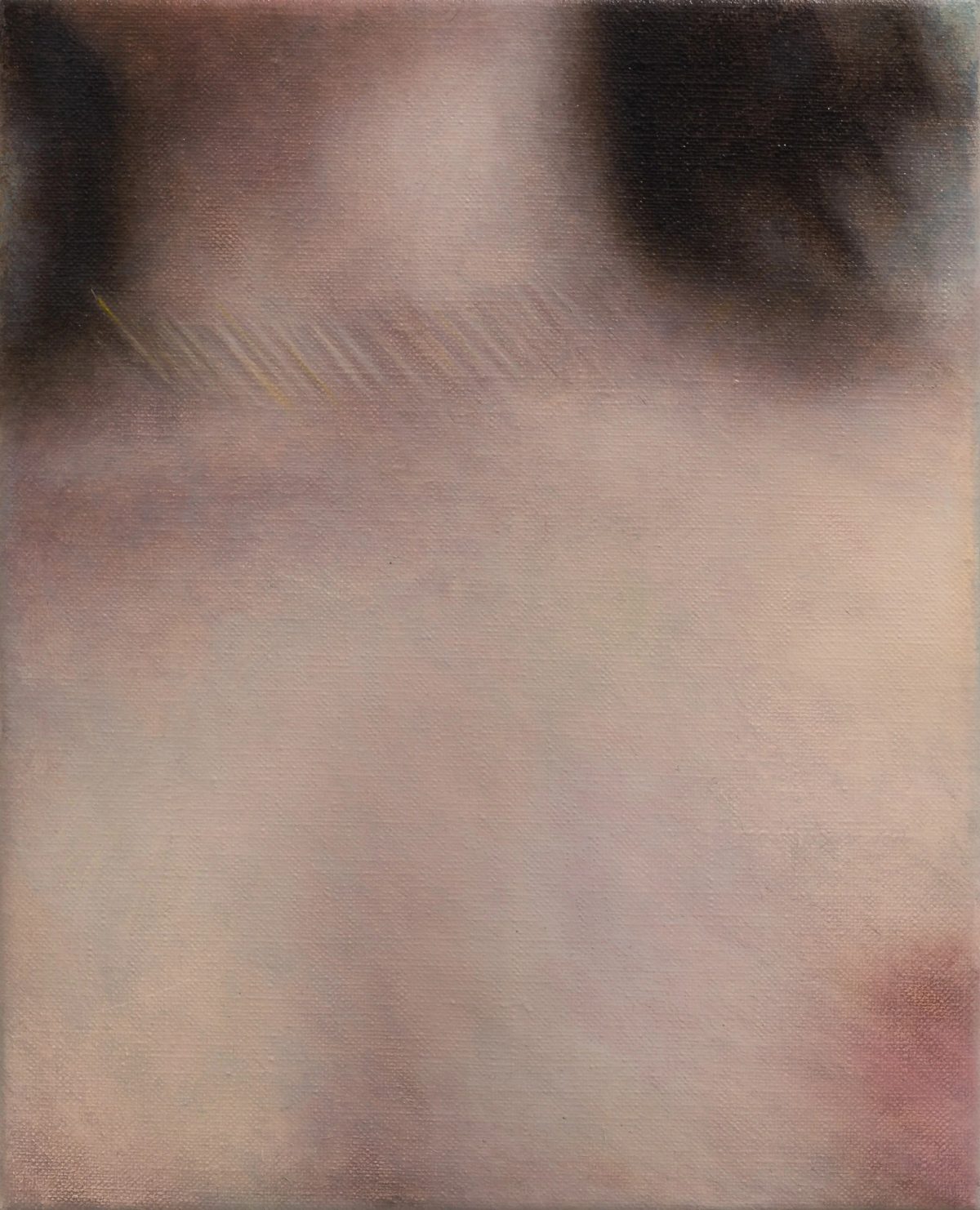
Left: Kaja Stumpf, Let The Light In, 2026, oil on linen, 125 × 100 cm
Right: Kaja Stumpf, Joker, 2025, oil on jute, 20 × 25 cm
You studied fashion at Kolding School of Design in Denmark before your MA in Fine Art at Central Saint Martins more than a decade later. Fashion is the art of dressing the body; your paintings are mostly about undressing it, down to skin, hair and a thin chain. What did fashion teach you about desire, and what did you keep when you took the clothes off?
I find that I am still interested in exploring similar ideas when painting as I was when I was making clothes. The physical body and its malleability are the obvious connection, as well as how our desire to belong and be seen plays out differently depending on external factors like culture and trends, and how our internal sense of self-worth influences behaviour.
What is left when we don’t have these socially structured codes of self-expression? To remove the clothes creates another raw canvas, stripping away the cultural signifiers in an effort to access core emotions, especially those I prefer to hide away.
Your statement says you work from staged images and the photographic family archive. When you’re in the studio, can you still tell which memories are yours and which ones you’ve staged? Does it matter to you?
When I’m in my studio, the physical act of painting relieves some of my tendencies for rumination and grants me distance from the subject. I step outside the event as a neutral observer, which in hindsight leads to a more generous and compassionate understanding of the memory. My black-and-white thinking becomes less rigid as I experience relief from the burden of preconceived ideas and the weight they carry when unresolved.
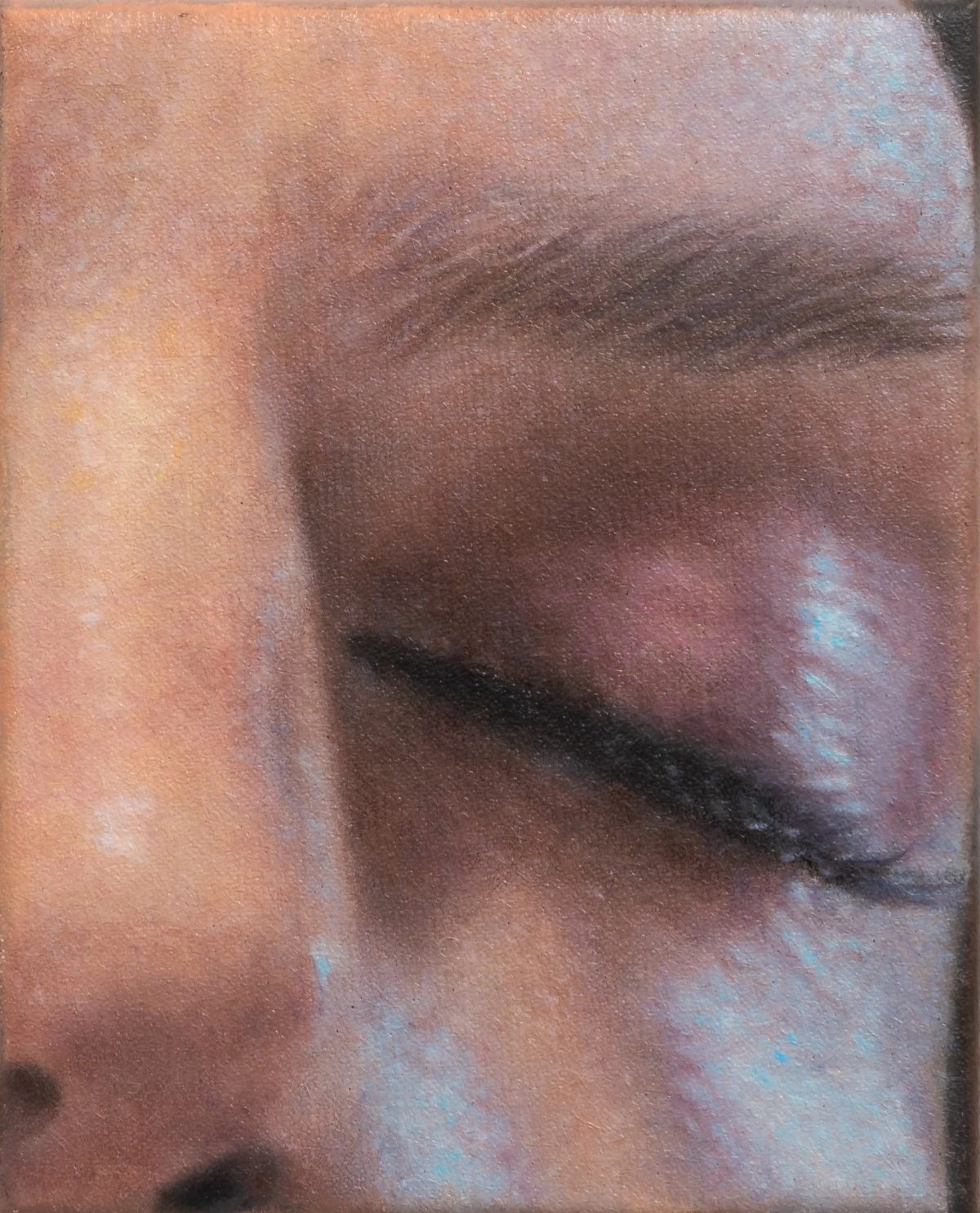
Kaja Stumpf, Over The Edge Lies Another, 2025, oil on jute, 20 × 25 cm
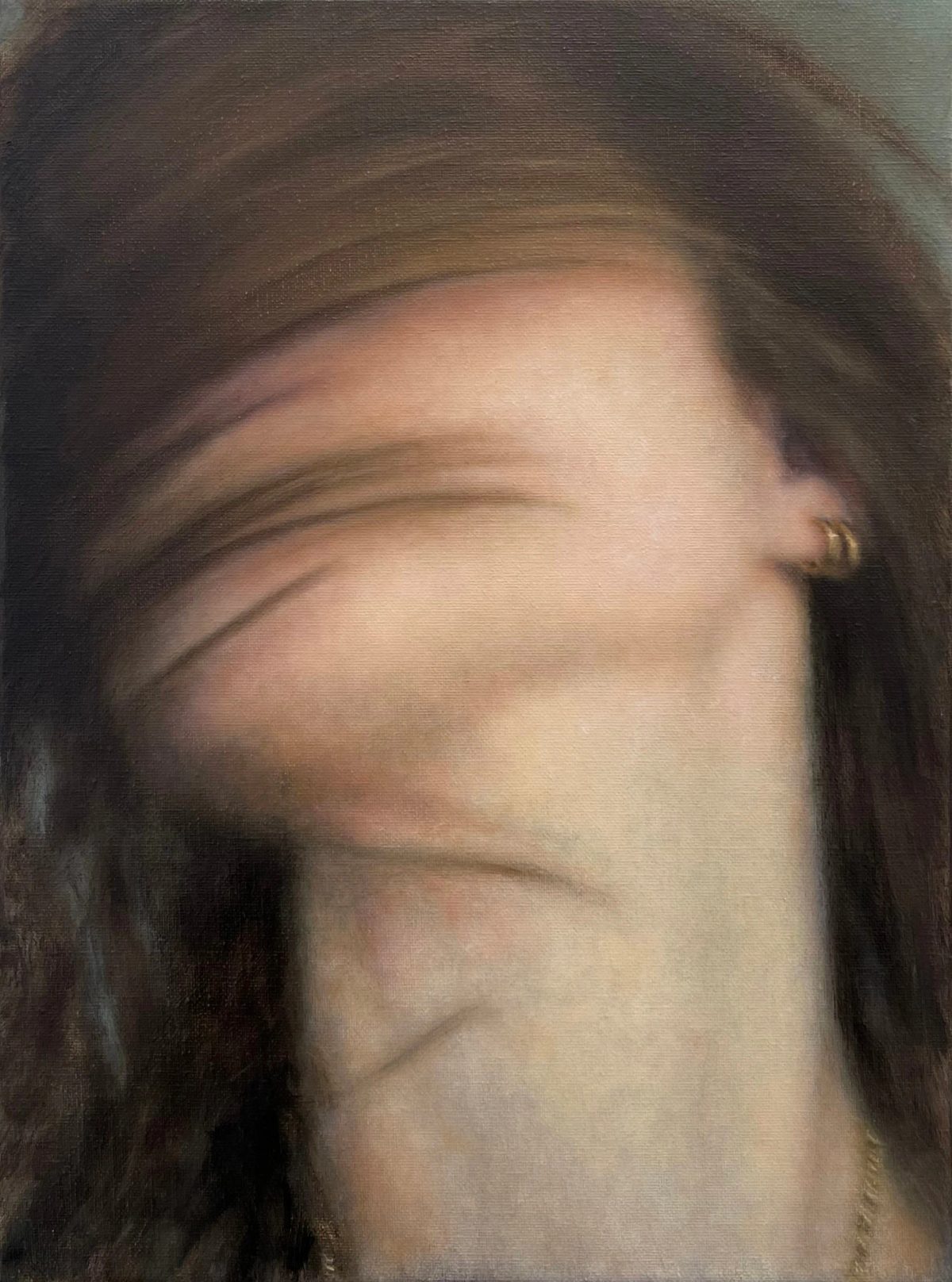
Kaja Stumpf, Out of Chaos, 2024, oil on linen, 36 × 25 cm
“If you imagine yourself as the protagonist, it is the act of moving forwards, towards the future and the unknown."
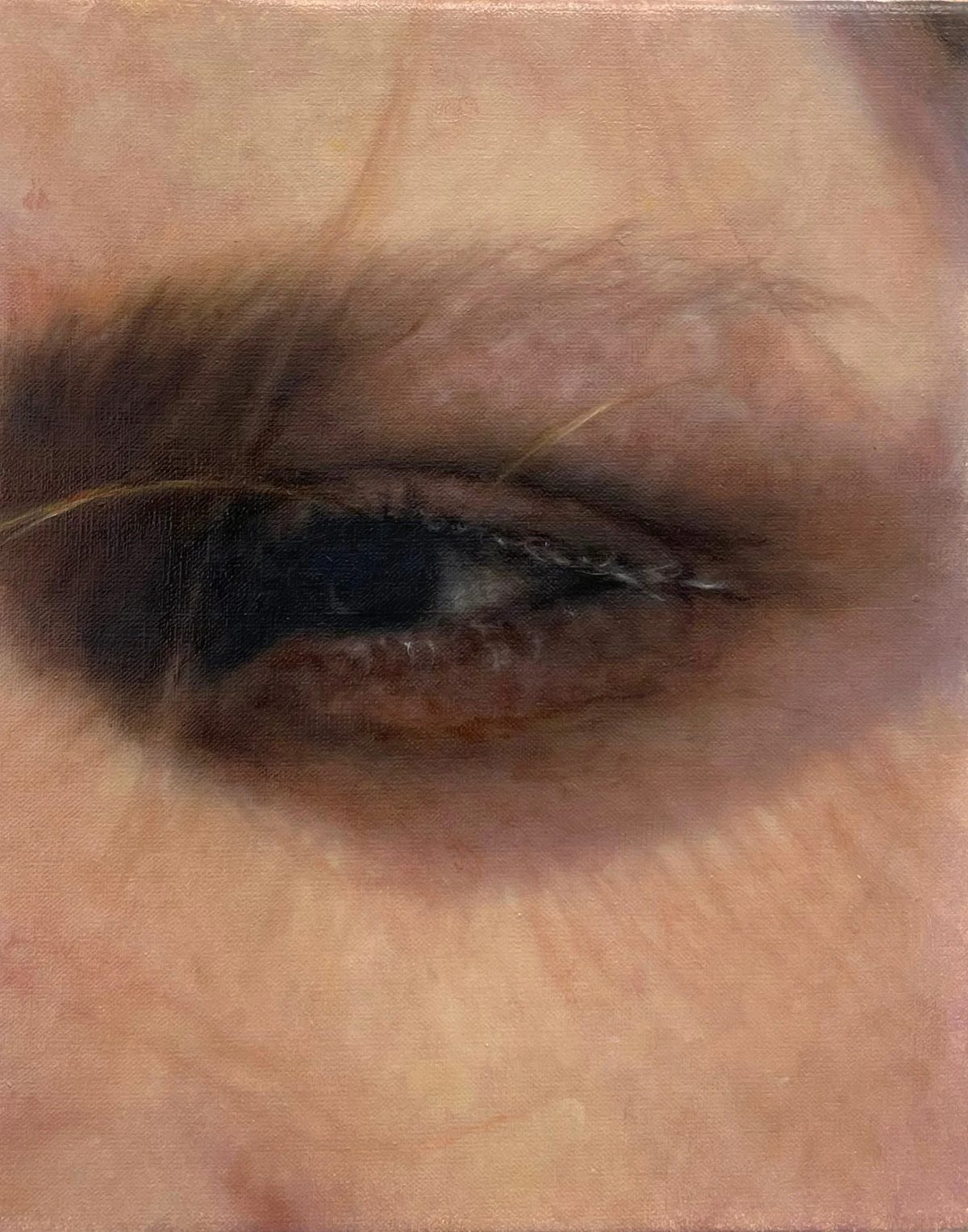
Kaja Stumpf, The Road Ahead Is Here, 2024, oil on linen, 20 × 25 cm
You describe cropping scenes and altering colour to create a sense of “delayed familiarity.” In Only Tears Can Quench These Flames and Pleasure Is A Far Away Land, that crop gets very tight: a single eye, a mouth, the bridge of a nose. Is cropping a kind of seduction, showing just enough that we lean in?
Yes, exactly! The cropping allows me to remove context, to let the image hover between time and space. I enjoy working with the surprising shapes the crop can reveal; sometimes it feels almost abstract. This way, a mouth or an eye can evolve and become something other than what you assumed when you first saw it. A cropped image will also have a level of secrecy and mystery due to the missing information, gaps that the viewer needs to fill in order to make sense of it.
Your surfaces have a grainy, speckled texture, almost like film grain or the static of an old photograph, especially in We Carry Oceans and Chaos Carry Me Gently. How do you build that surface on the linen? Is it about the photograph you’re working from, or about how memory itself looks?
This mottled technique is an effort to create a slightly dreamlike effect, blurring the lines between what is real and what exists outside of logic and reason. It sits closer to the emotional interpretation than to a strictly factual and photorealistic rendition. To achieve this, I repeatedly dab the small brushes across the surface, stippling various versions of hue and adding layers of glazing for depth.
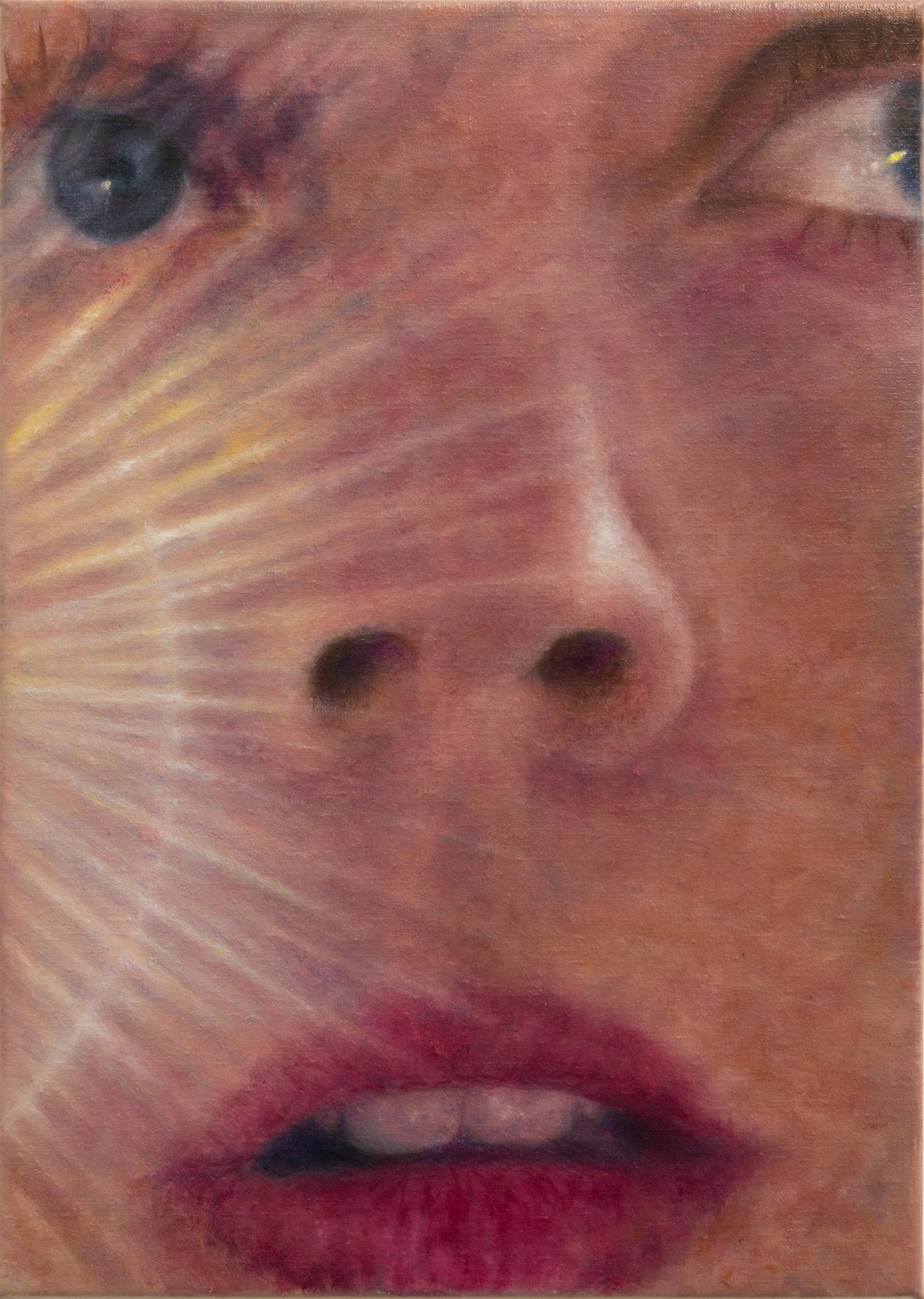
Left: Kaja Stumpf, North Star, 2025, oil on linen, 30 × 25 cm
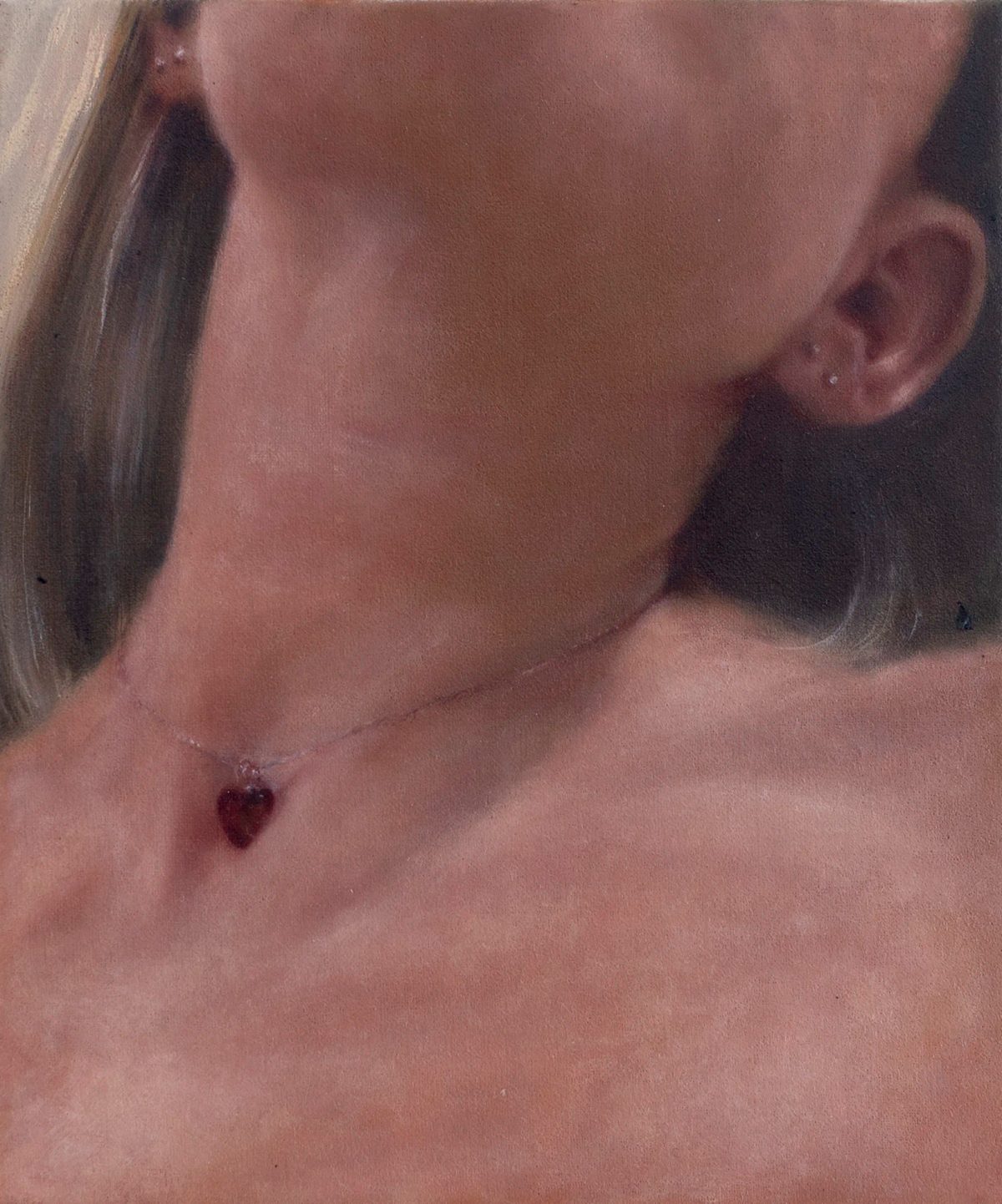
Right: Kaja Stumpf, Now I Know (To Love Is To Let Go), 2026, oil on linen, 30 × 25 cm
Colour shifts a lot across your shows. In 2025, faces are washed in red, green and blue light, while the newer paintings sit in muted blue-greys and warm skin tones. What changed in the temperature of the work, and in you?
I find myself shifting between these two approaches: to either drench the figure in colour or to nearly strip it completely. It is like a pendulum swinging. As I am currently making new works full of colour, I catch myself planning the next one, where it will again be almost gone. This keeps the process interesting to me, both technically and in trying to work out what it means symbolically. Ultimately, these decisions are very intuitive, and I trust my instinct when I have a desire to paint something.
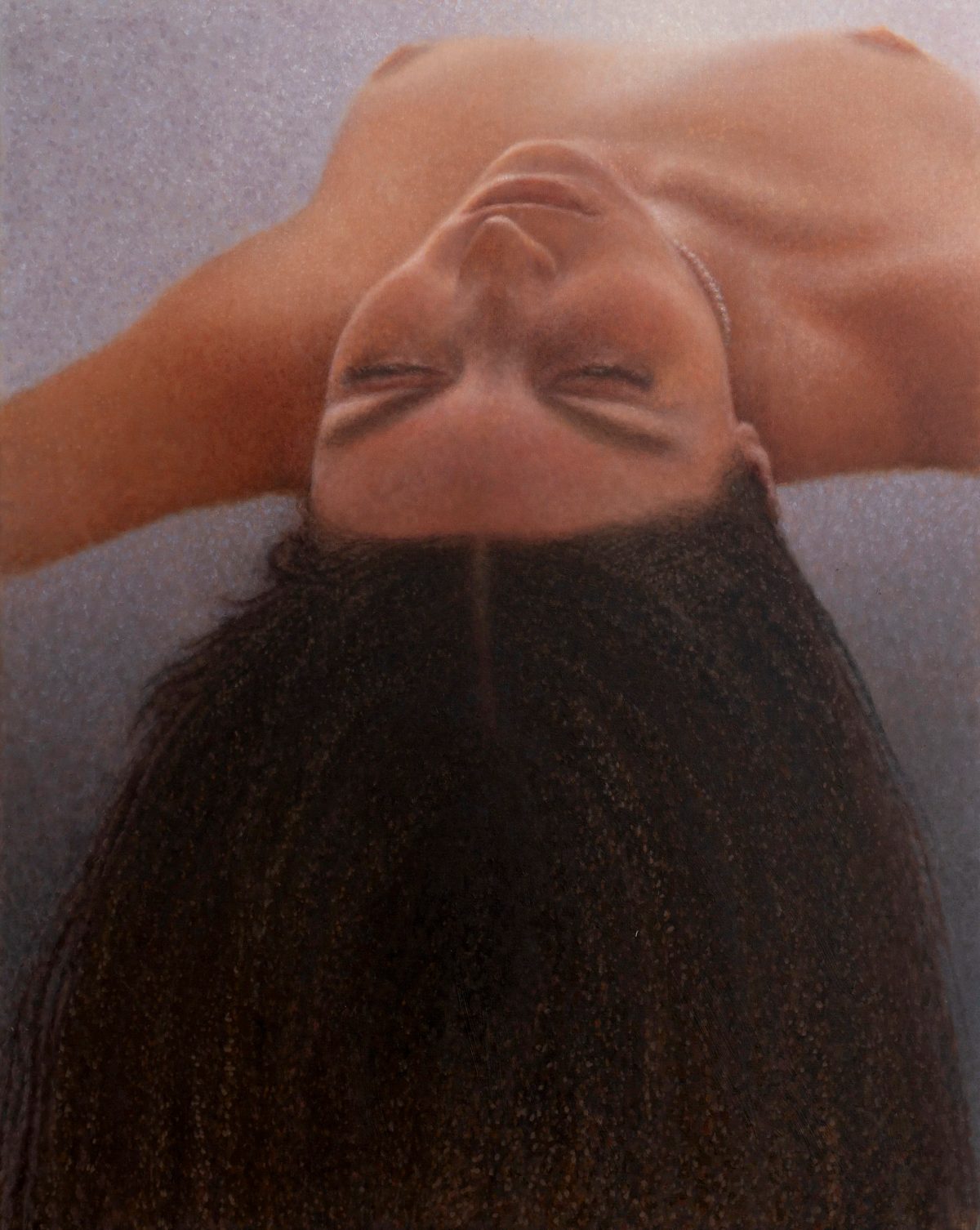
Kaja Stumpf, Chaos Carry Me Gently, 2026, oil on linen, 125 × 100 cm
“I try to push myself to make work even if I find it intimidating or too revealing. When those feelings arise, I know I am headed in the right direction.”
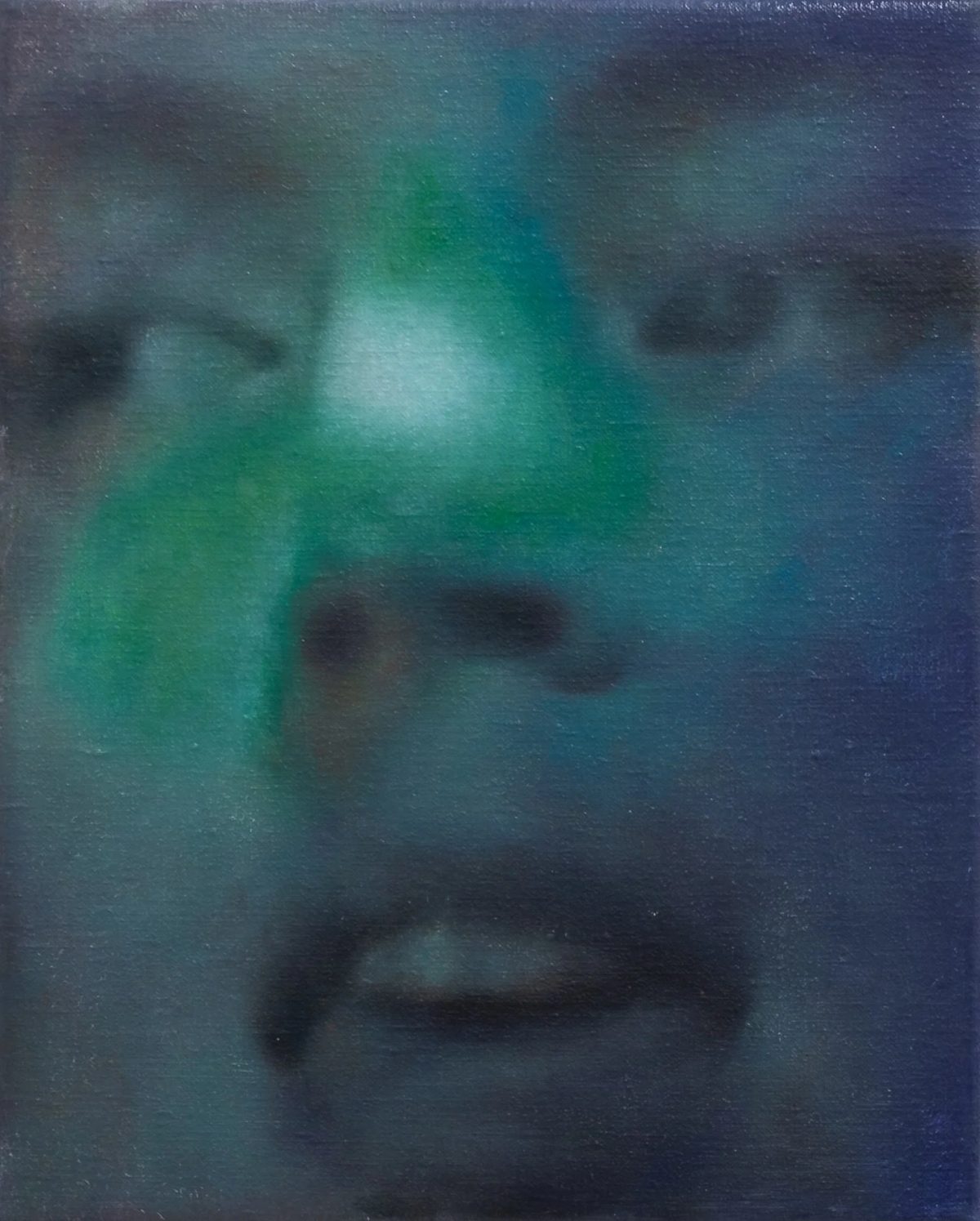
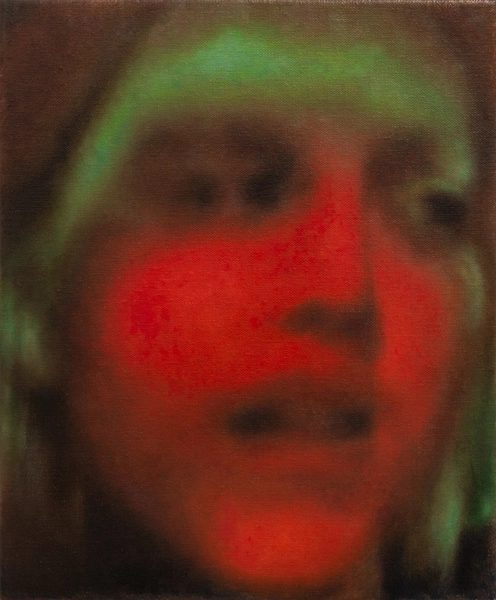
Left: Kaja Stumpf, One of Many (More To Come), 2025, oil on linen, 20 × 25 cm
Right: Kaja Stumpf, Only Tears Can Quench These Flames, 2025, oil on linen, 30 × 25 cm
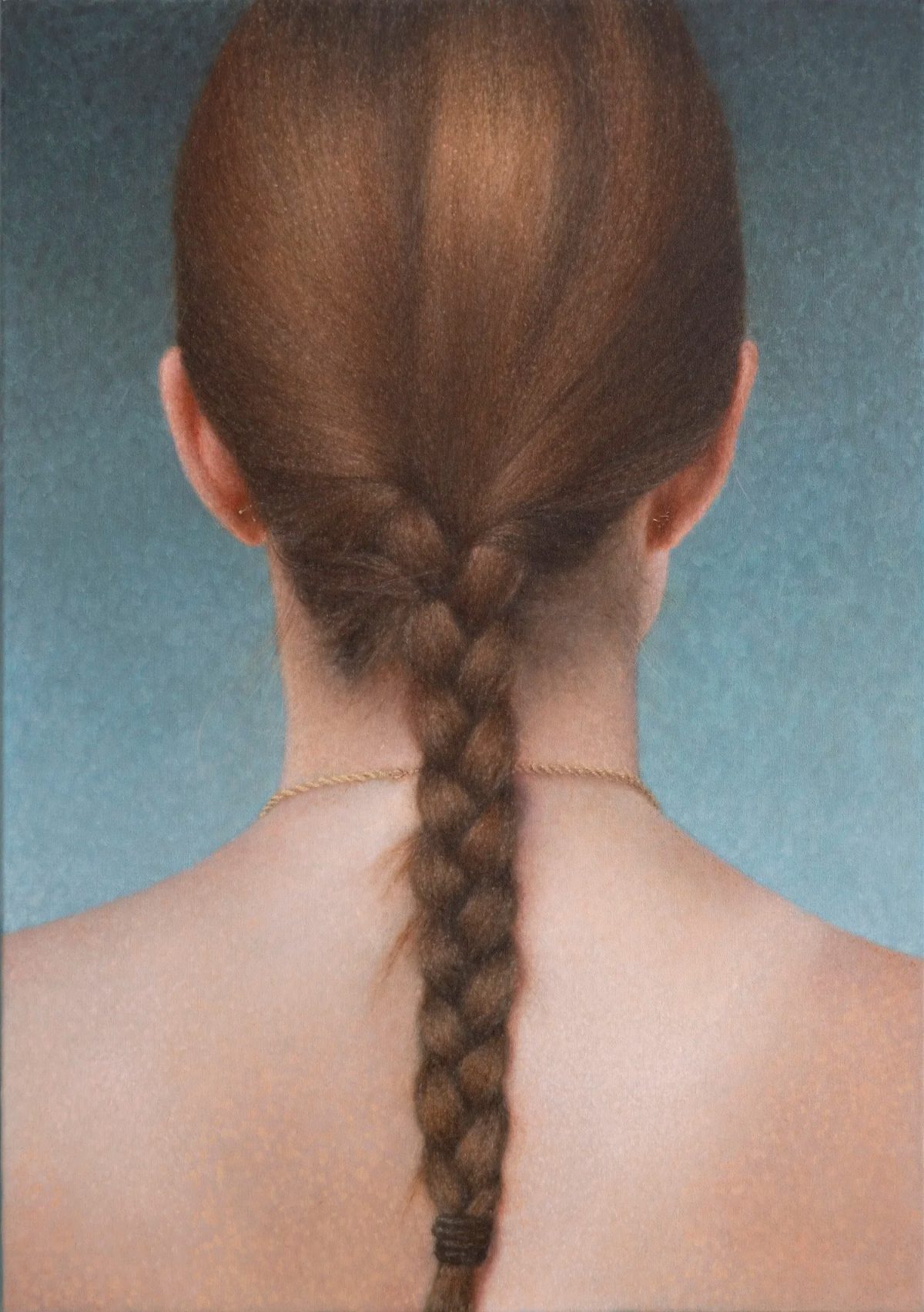
So many of your figures turn their backs to us: the intricate braids in Traveler, There Is No Path, the single long braid in All Is One. A braid is an intimate act, usually done by someone else’s hands. Who braids the hair in these paintings, and why does the back of a neck say more to you than a face?
I am drawn to the duality of interpretation of a back and the nape of a neck; if you view the image as an outside spectator looking in, it will read in a literal way as the act of turning away or someone turning their back on you. However, if you imagine yourself as the protagonist, it is the act of moving forwards, towards the future and the unknown. I think of the braid in these paintings as something powerful, with each lock of hair combined to create this structure. It becomes a symbol of unity and strength. To leave out the face from the image adds to the anonymous identity, a figure onto which you can project your own.
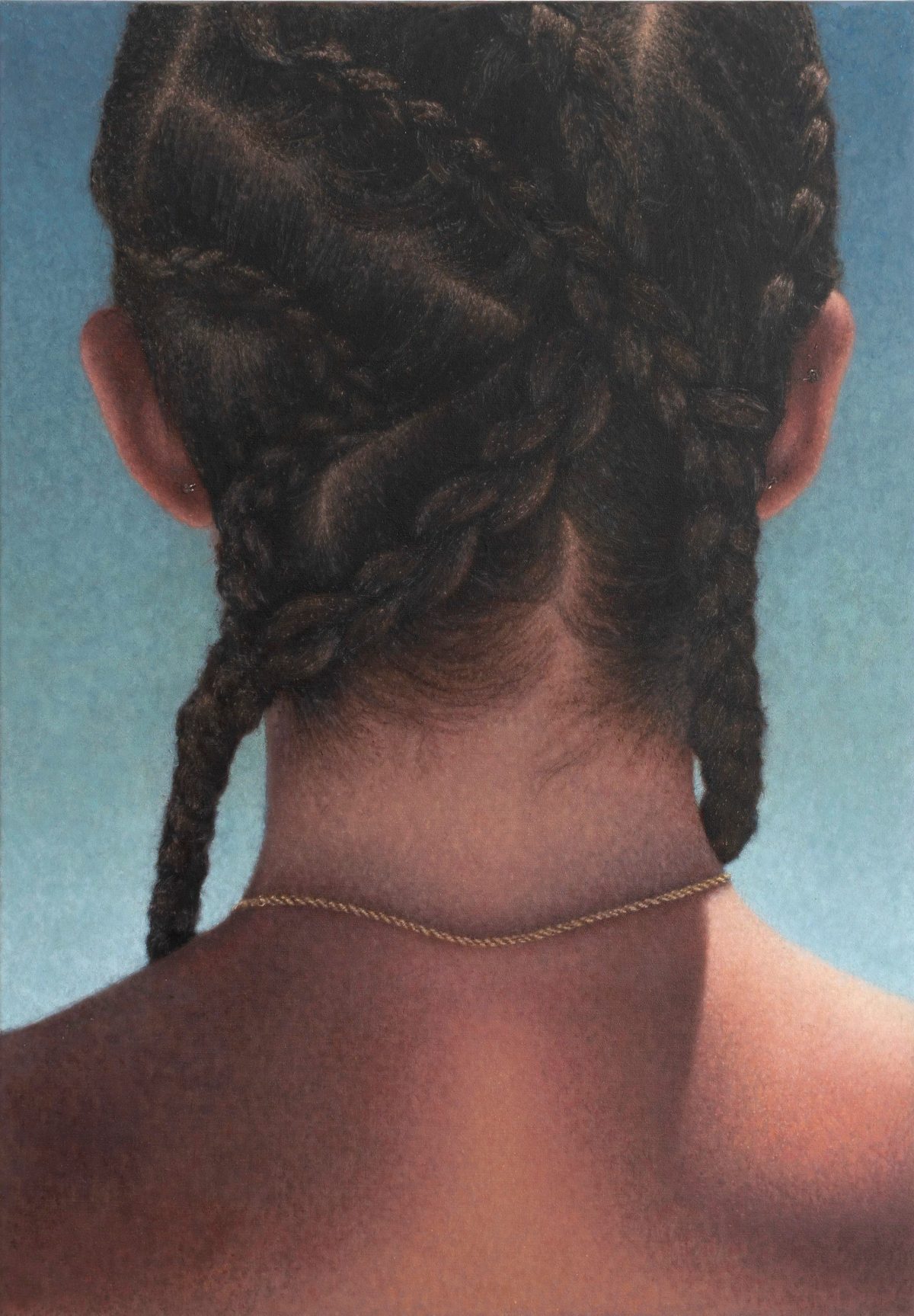
Kaja Stumpf, Traveler, There Is No Path (Veien Blir Til Mens Man Går), 2025, oil on linen, 70 × 100 cm
A gold chain resting on a spine, a small red heart at the throat in Now I Know (To Love Is To Let Go). Jewellery in your paintings feels less like decoration and more like evidence. Whose are they, and what do they remember that the body has forgotten?
I like to think of the jewellery that I put in my work as extensions of the self. Jewellery is often very personal and usually has a story, offering a bridge to the anonymity of the figure. There is also something of the idea of an amulet or talisman in my depiction of jewellery, acting as protection and guidance.
Traveler, There Is No Path carries a Norwegian subtitle, Veien Blir Til Mens Man Går, “the road is made as you walk,” echoing Antonio Machado. You were born in Norway and have made your work in London. Does the Norwegian light find its way onto the London canvas, or do you leave it at home?
I think there is a certain quiet groundedness that feels distinctly Norwegian, which enters my work subconsciously. However, the figures in my work are usually removed from any specific time or place; they exist somewhere in between. Having lived in London for the past 15 years, I do feel a strong sense of belonging here, yet the Norwegian mentality and way of life will always be at the core of what I do.
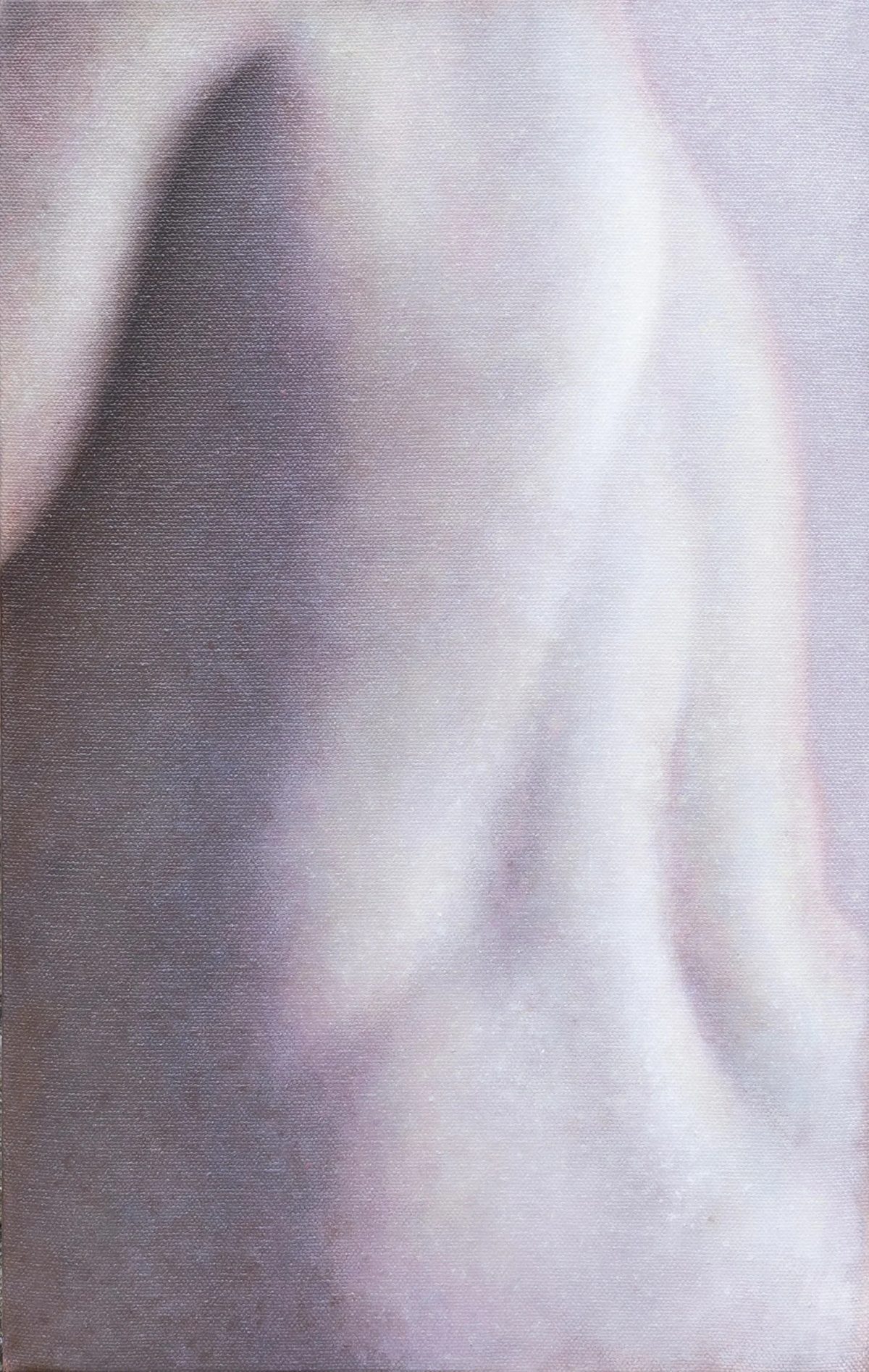
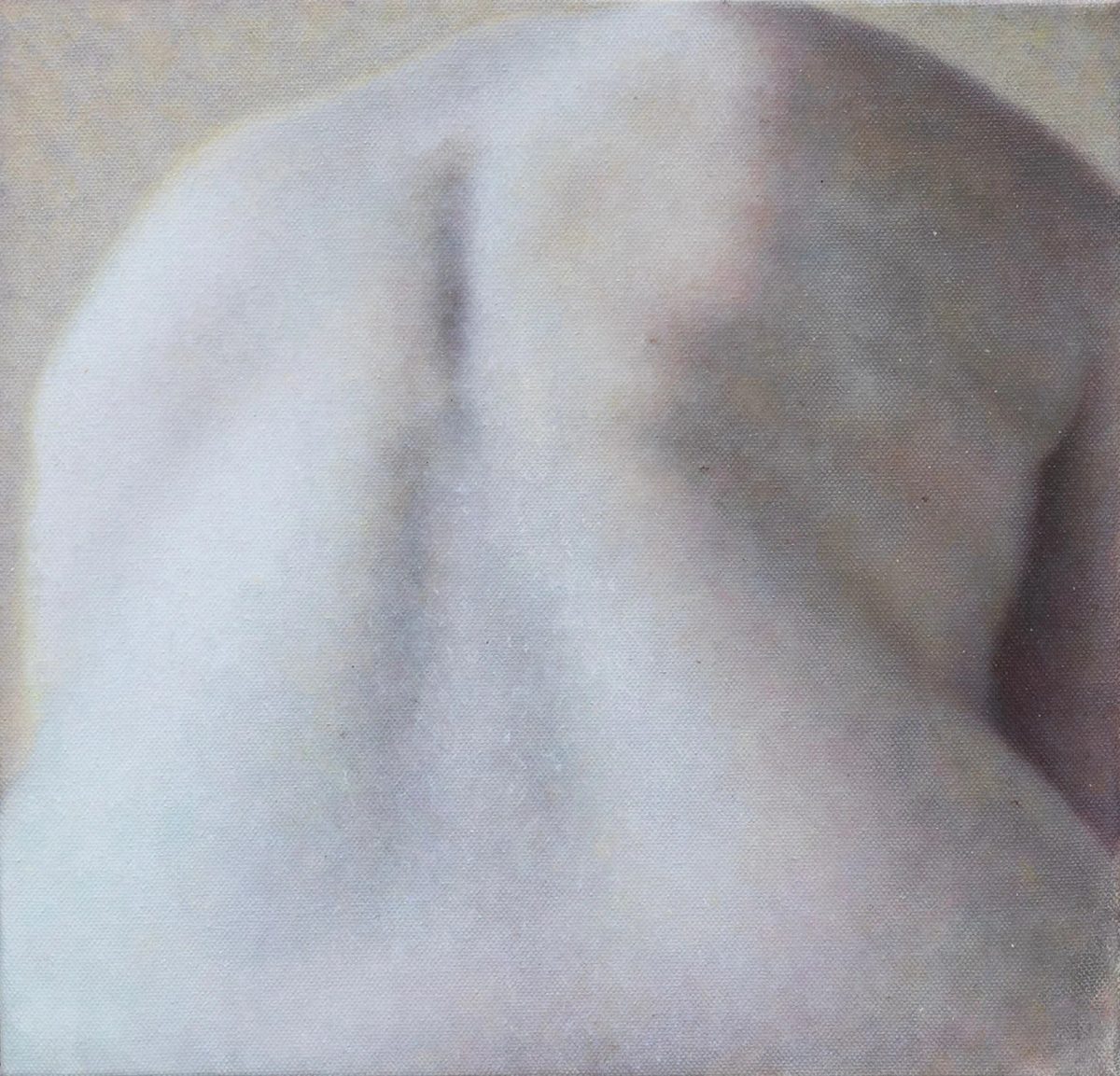
Left: Kaja Stumpf, A Breath Bigger Than Me, 2024, oil on linen, 40 × 21 cm
Right: Kaja Stumpf, Where The Feeling Sits, 2025, oil on linen, 30 × 30 cm
“A cropped image will also have a level of secrecy and mystery due to the missing information, gaps that the viewer needs to fill in order to make sense of it.”
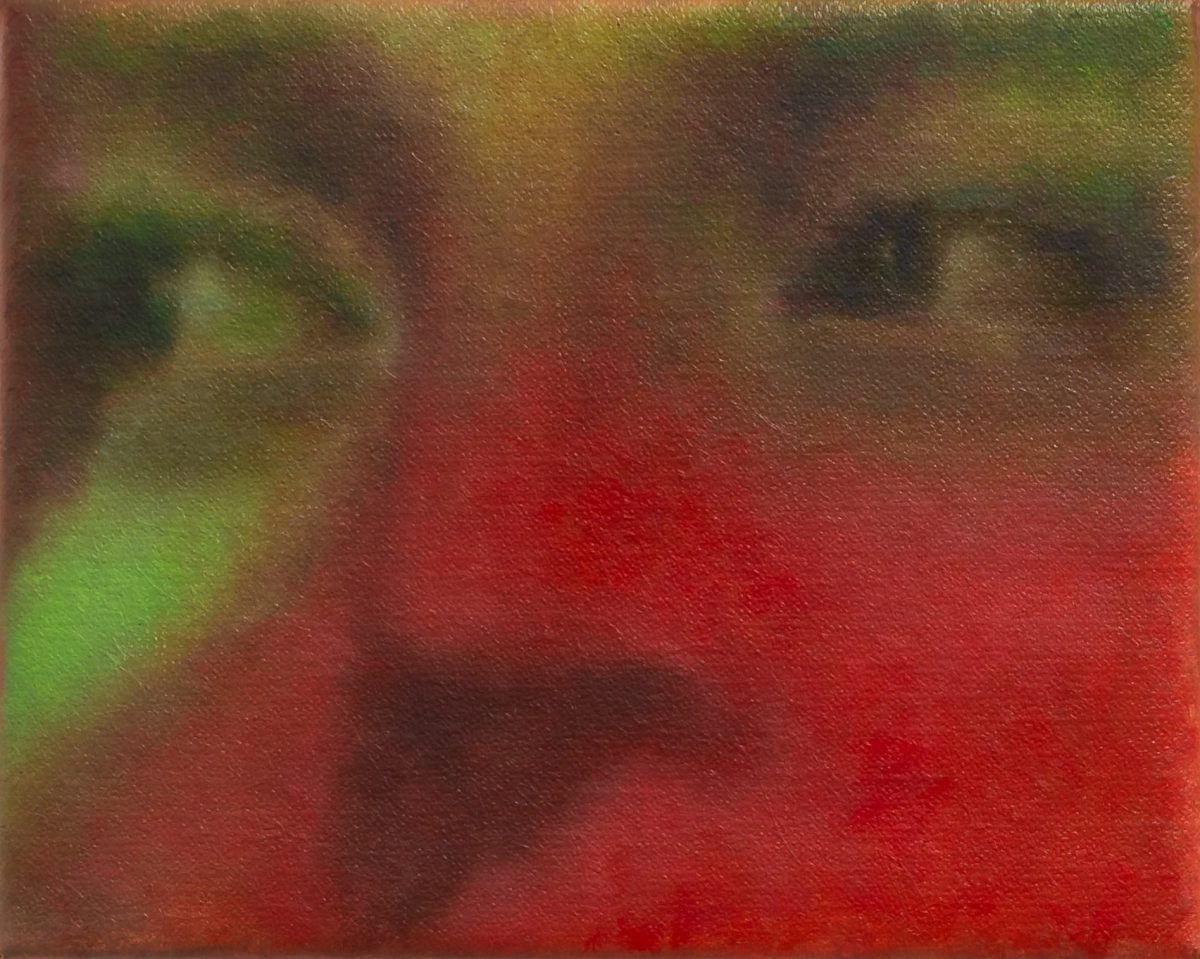
Kaja Stumpf, On Fire, 2025, oil on jute, 25 × 20 cm
Which painters, films, photographs or songs are in the room with you while you work? Who would you invite to the after-party?
In no particular order: Rosalía, Michael Borremans, Edvard Munch and Marlene Dumas. And Fidji Lapios (IG: @fidji.lapios), a great painter whom I’m lucky to share a studio with; being able to have informal conversations about our work is priceless!
Paris is next. If the road really is made by walking, where are you walking towards, and what’s the painting you haven’t dared to make yet?
I try to push myself to make work even if I find it intimidating or too revealing. When those feelings arise, I know I am headed in the right direction. I am safe, so the work doesn’t have to be. This is, of course, easier said than done, but I hope you will find me walking in good faith towards the unknown.
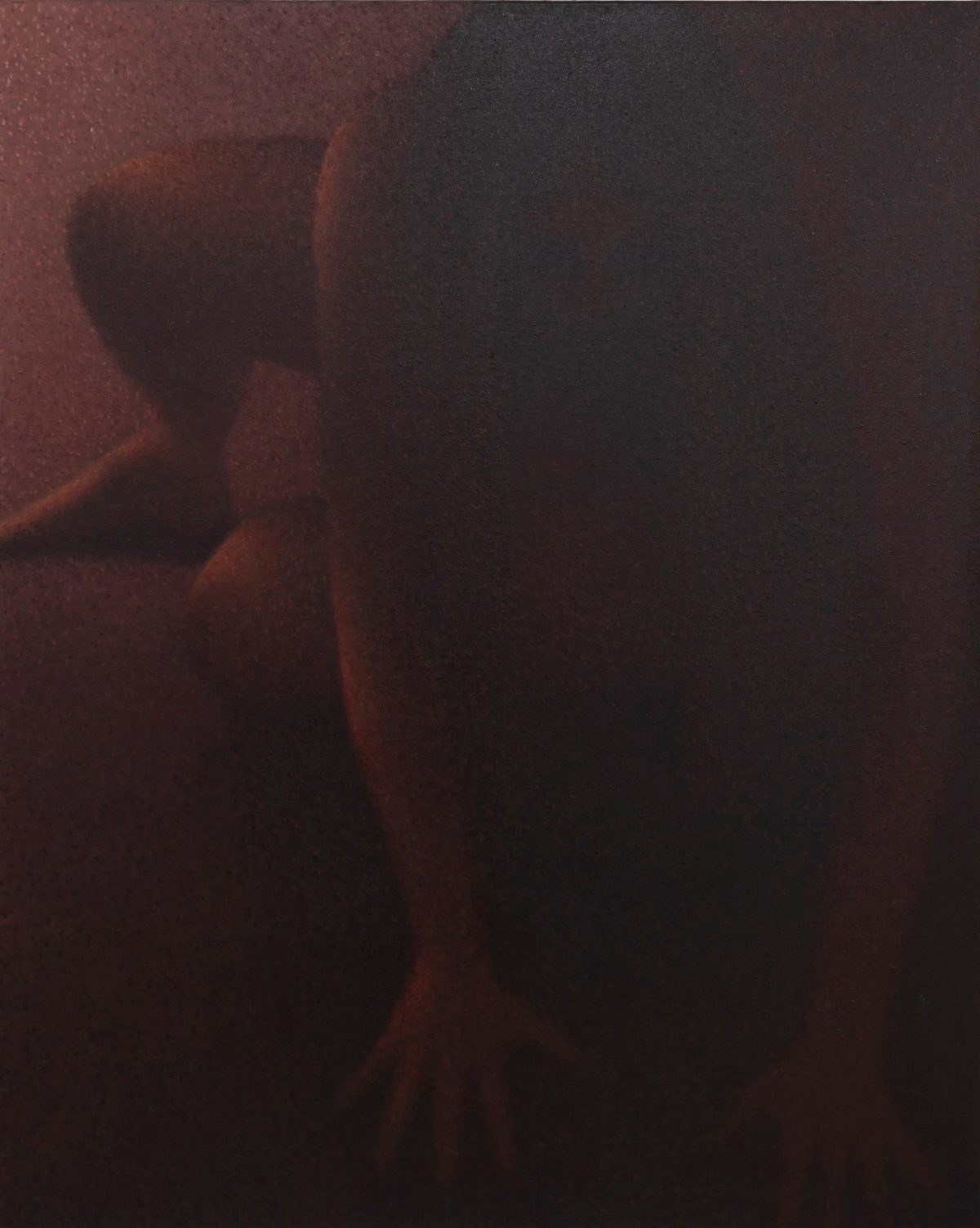
Left: Kaja Stumpf, Joker, 2025, oil on jute, 20 × 25 cm
Right: Kaja Stumpf, She Who Devours, 2026, oil on linen, 125 × 100 cm
Cover Image: Kaja Stumpf, All Is One, 2025, oil on linen, 70 × 100 cm