ON THE VERGE OF DISINTEGRATION: IN CONVERSATION WITH HELENA MINGINOWICZ
CONVERSATION BY SELIN KIR
CO-FOUNDER, CURATOR
21 APRIL 2026 — UNITED KINGDOM
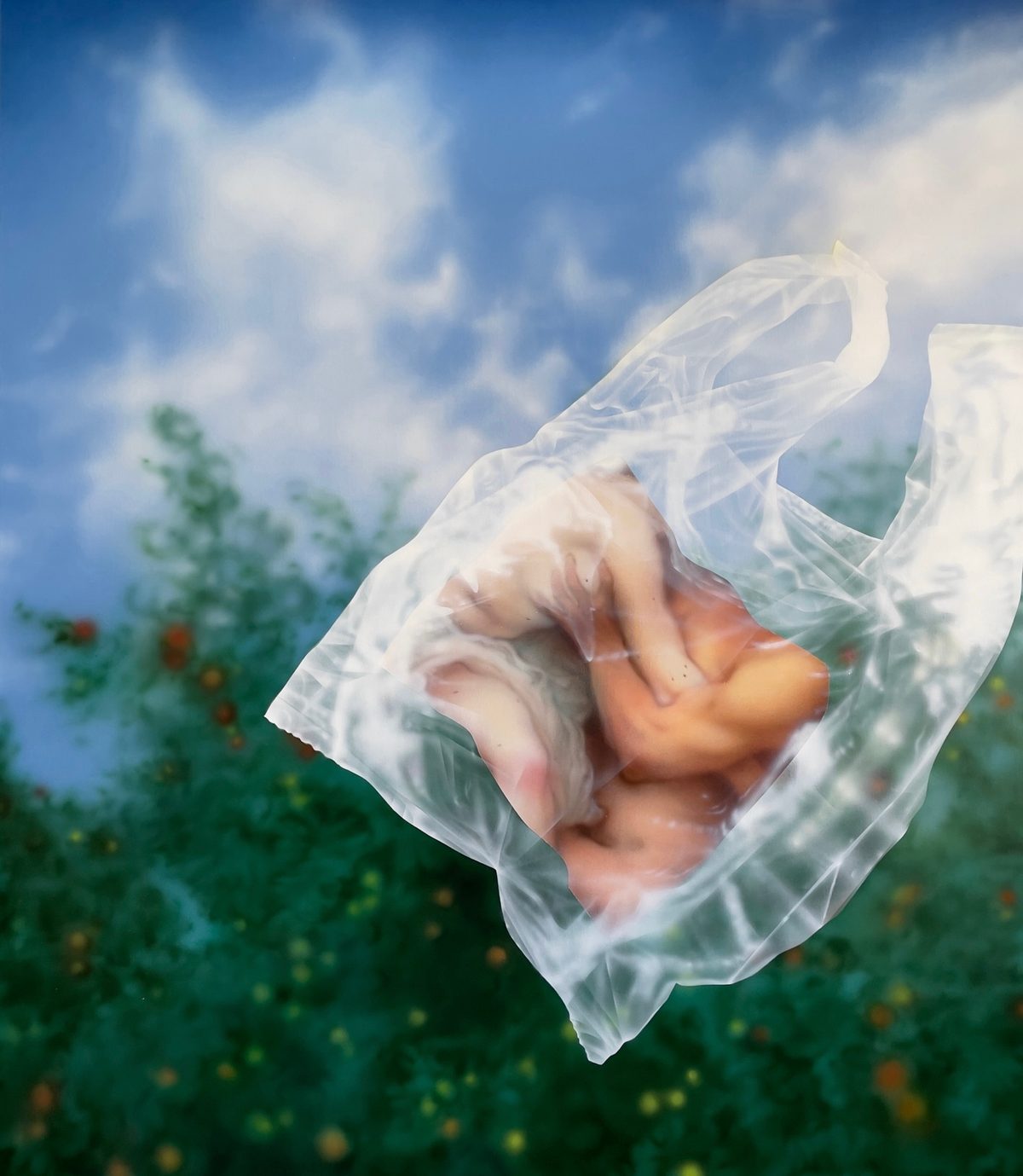
There is a particular kind of image that convinces you it is showing you something before you have had the chance to ask what. Helena Minginowicz works inside that gap. Based in Poznań, she builds paintings of near-seamless surface, borrowing the compositional weight of Renaissance iconography and the devotional logic of light, then quietly redirects them toward a fist inside a plastic bag, a sheet mask, a paper towel. The hierarchy does not collapse so much as hesitate. What holds her practice together is not a subject but a threshold: the moment when something designed for use and disappearance is held in place long enough to become an image, and the moment, just after, when the image begins to come apart. We spoke with her about surface and control, fragmentation and authorship, the symbolic weight of disposable objects, and what comes next when the hand begins to disappear from the work.
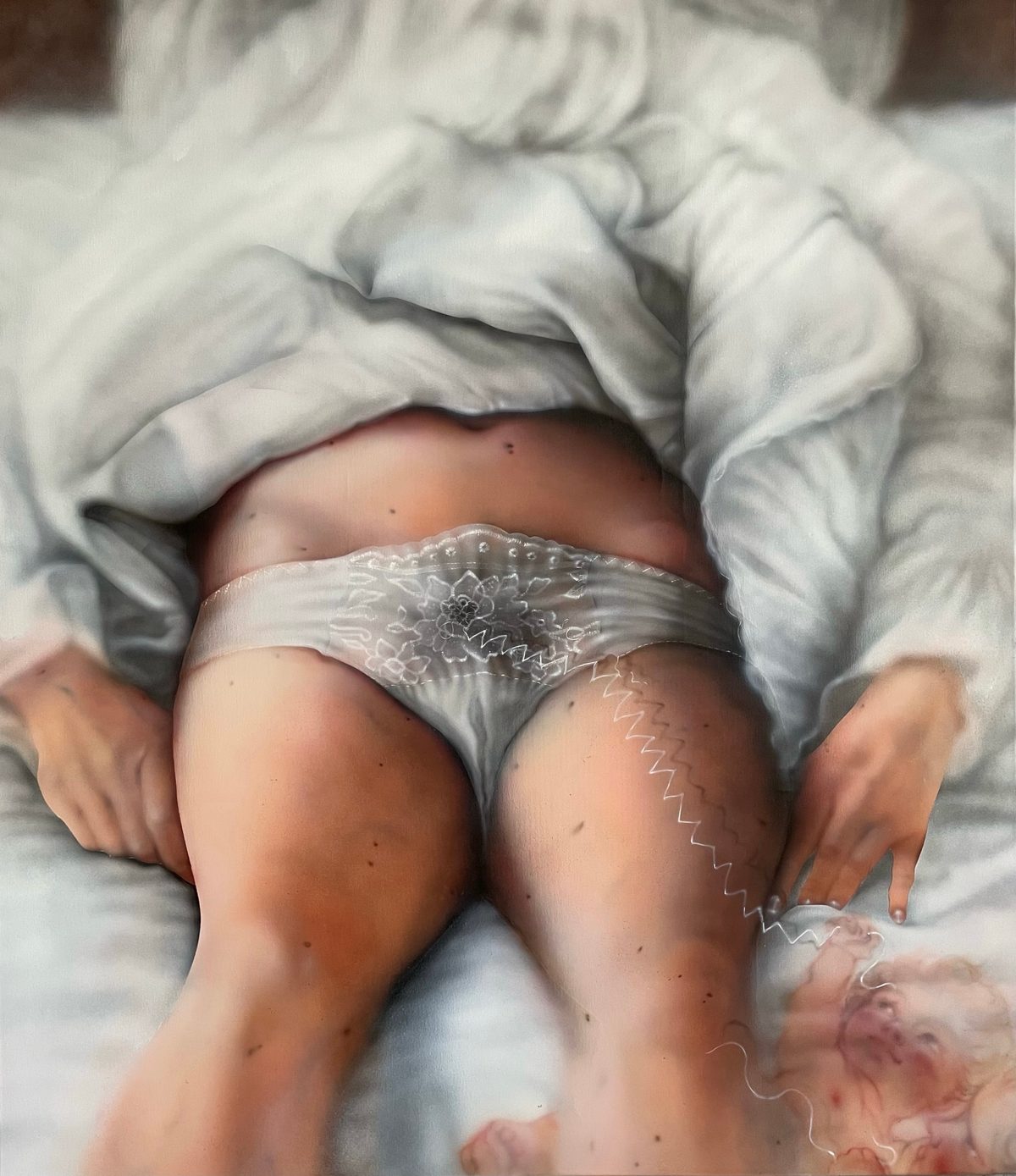
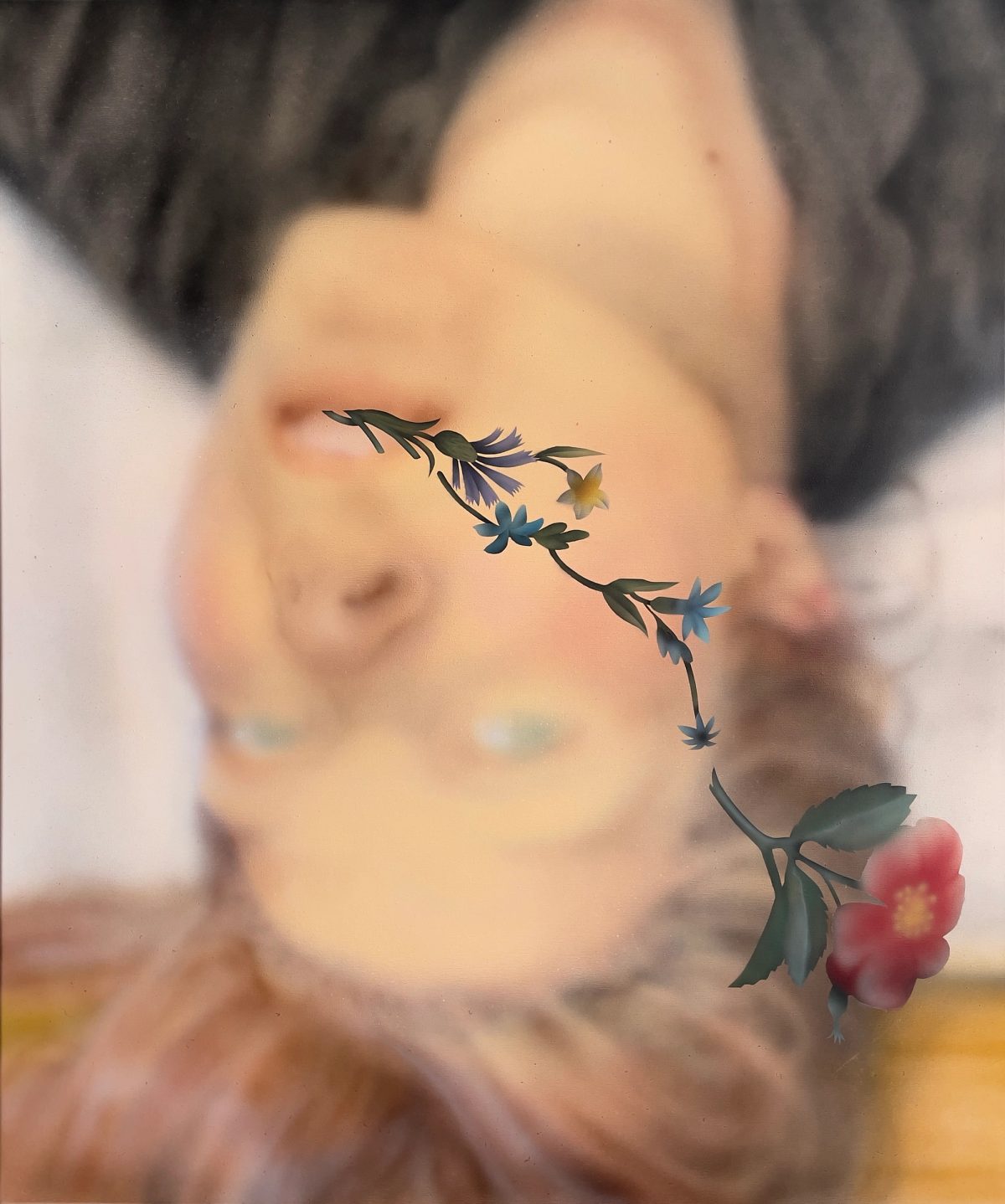
Left: Helena Minginowicz (porn*)GRAPHY, 2026 Acrylic on canvas 130 x 150 cm
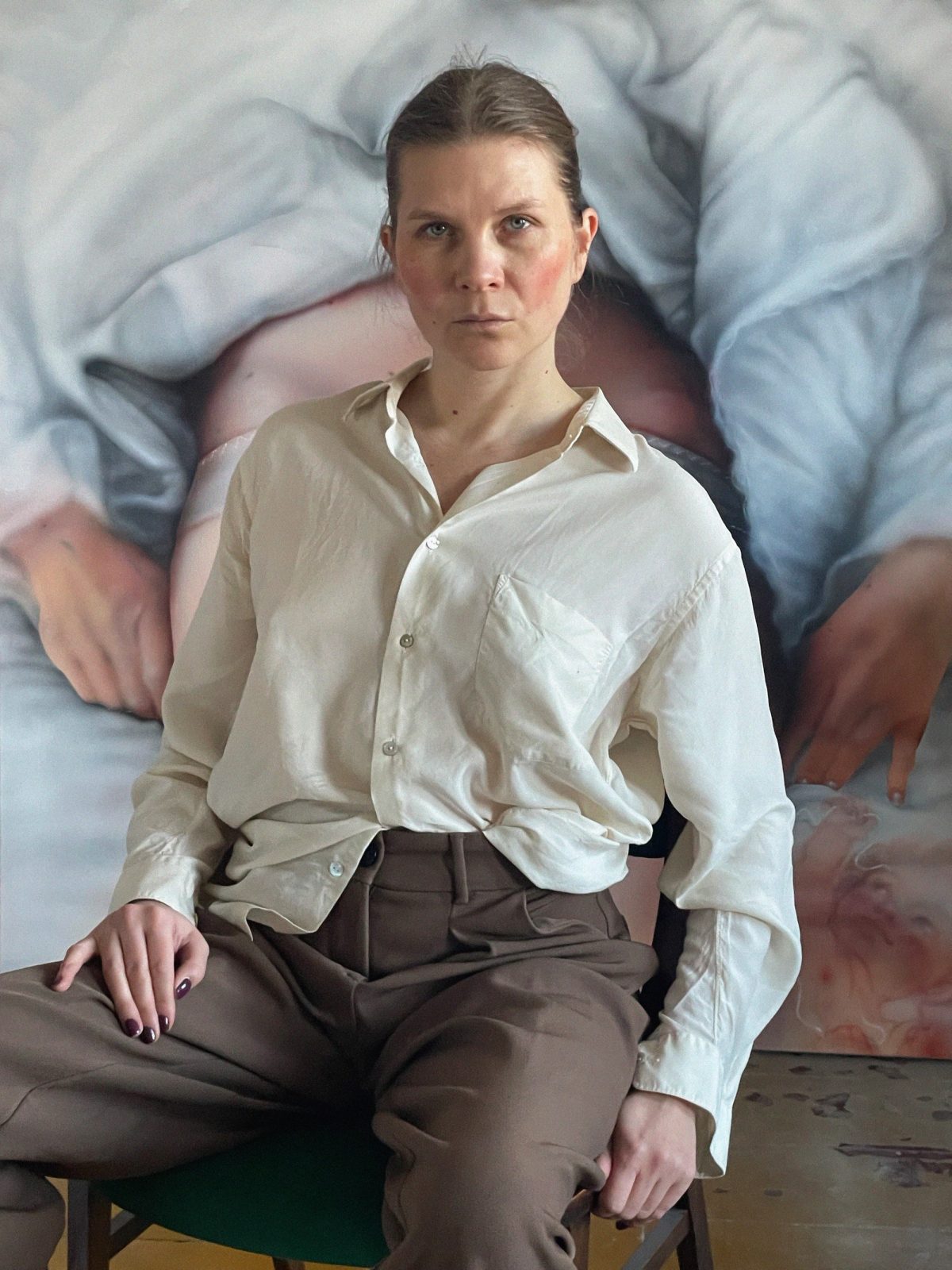
Right: Portrait of the artist
Your paintings often operate through shifts in recognition, presenting highly controlled, seamless surfaces that draw from everyday printed imagery, Renaissance compositional structures, and lived experience. When you begin constructing a work, what becomes the anchor: composition, light, a material surface, a single symbolic object?
The starting point is usually a question that occupies me, a subject I am working through, a narrative I return to. Sometimes literature or music enters the process, gradually forming a surrounding reality for these thoughts. I look for a form for them, and I need space to examine them closely at the beginning.
I am interested in everyday situations and images where small ruptures or disturbances appear, moments when something stops aligning, even if at first glance everything seems entirely ordinary. That tension is the moment when the image begins to take form.
You’ve described beginning with traditional oil painting before incorporating airbrush into your process, deliberately reducing visible brushwork to build a more illusionistic surface and to test whether the work would still feel like yours. What did that technical shift make possible in terms of image construction, and what did it challenge in your sense of authorship?
Airbrush allowed me to reduce gesture to a minimum and shift the weight from expression to perception. The image became quieter, more difficult to attribute to a distinct authorial style.
This was important for me, to test whether a work can still feel like mine when the trace of the hand disappears. At the same time, it questions a conventional understanding of authorship. If an image resembles a reproduction, or something already seen, where does my authorship actually begin?
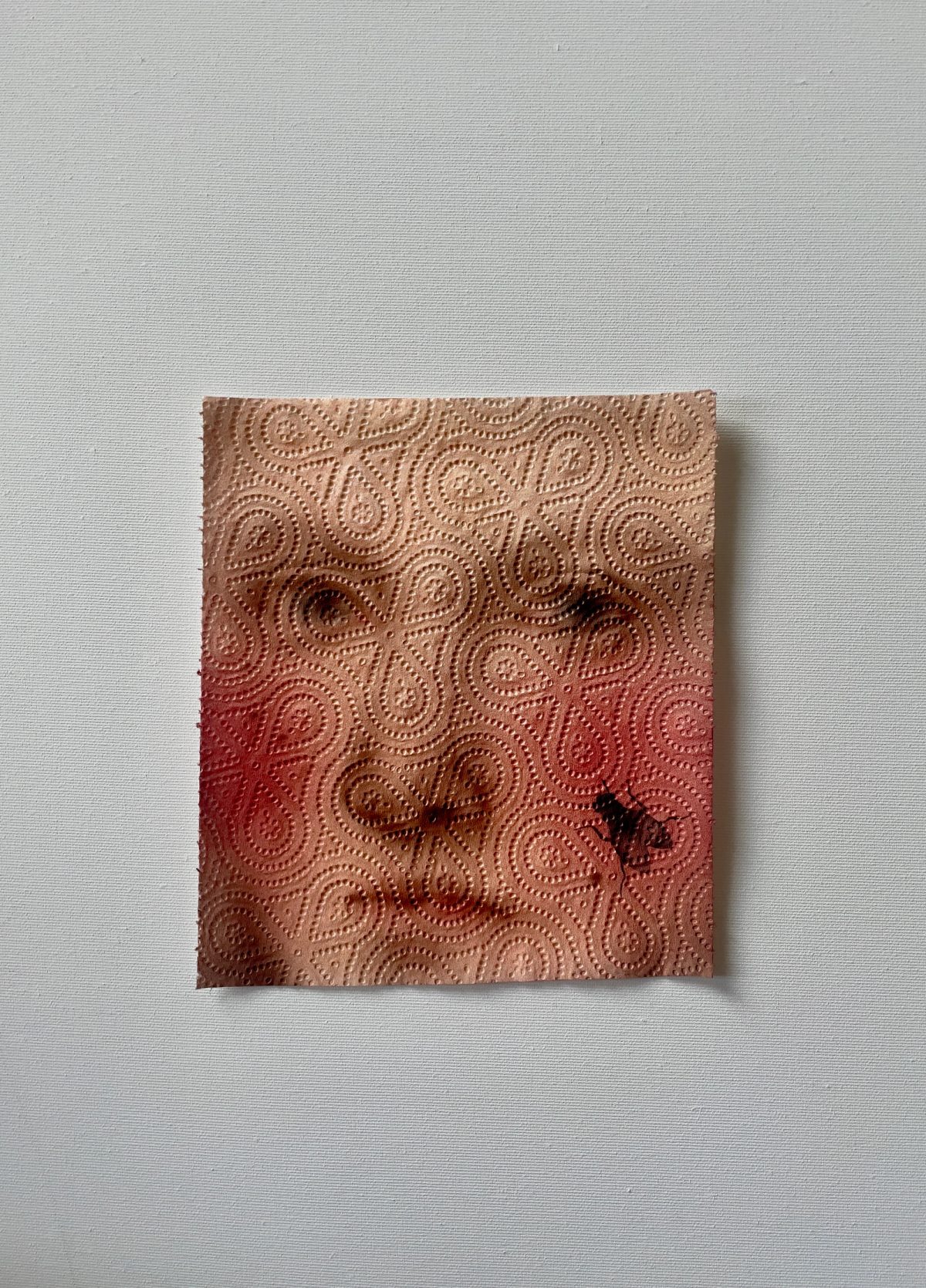
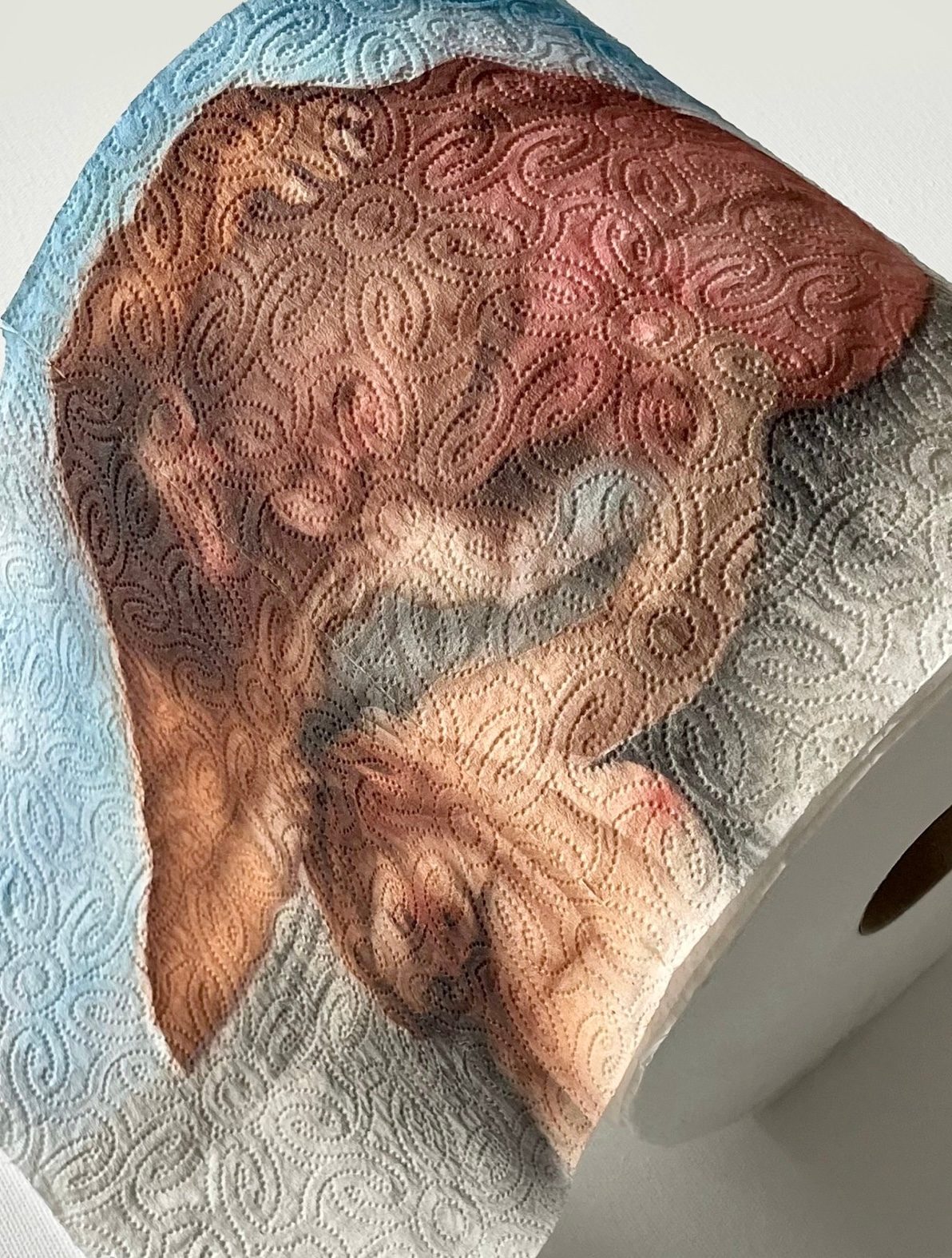
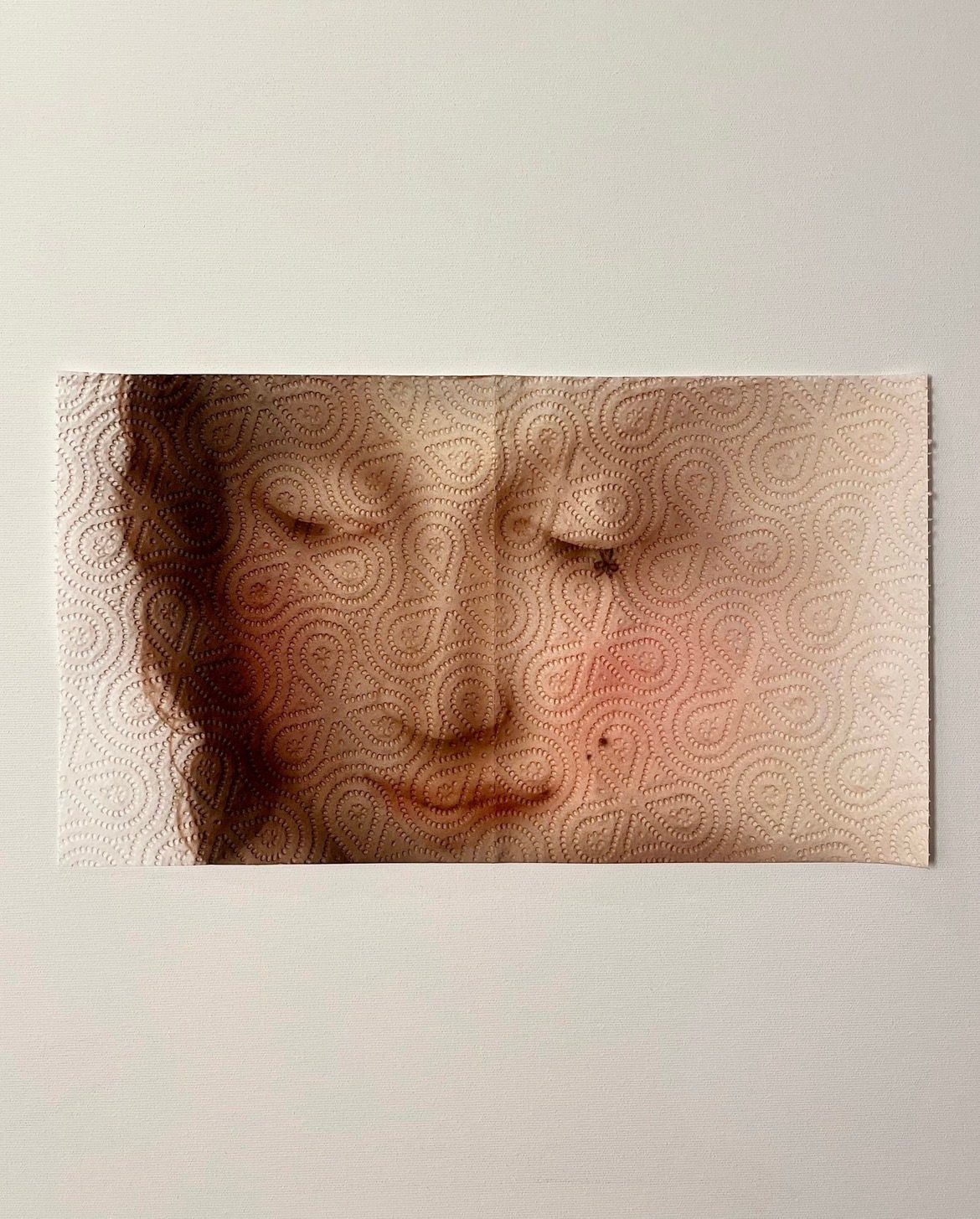
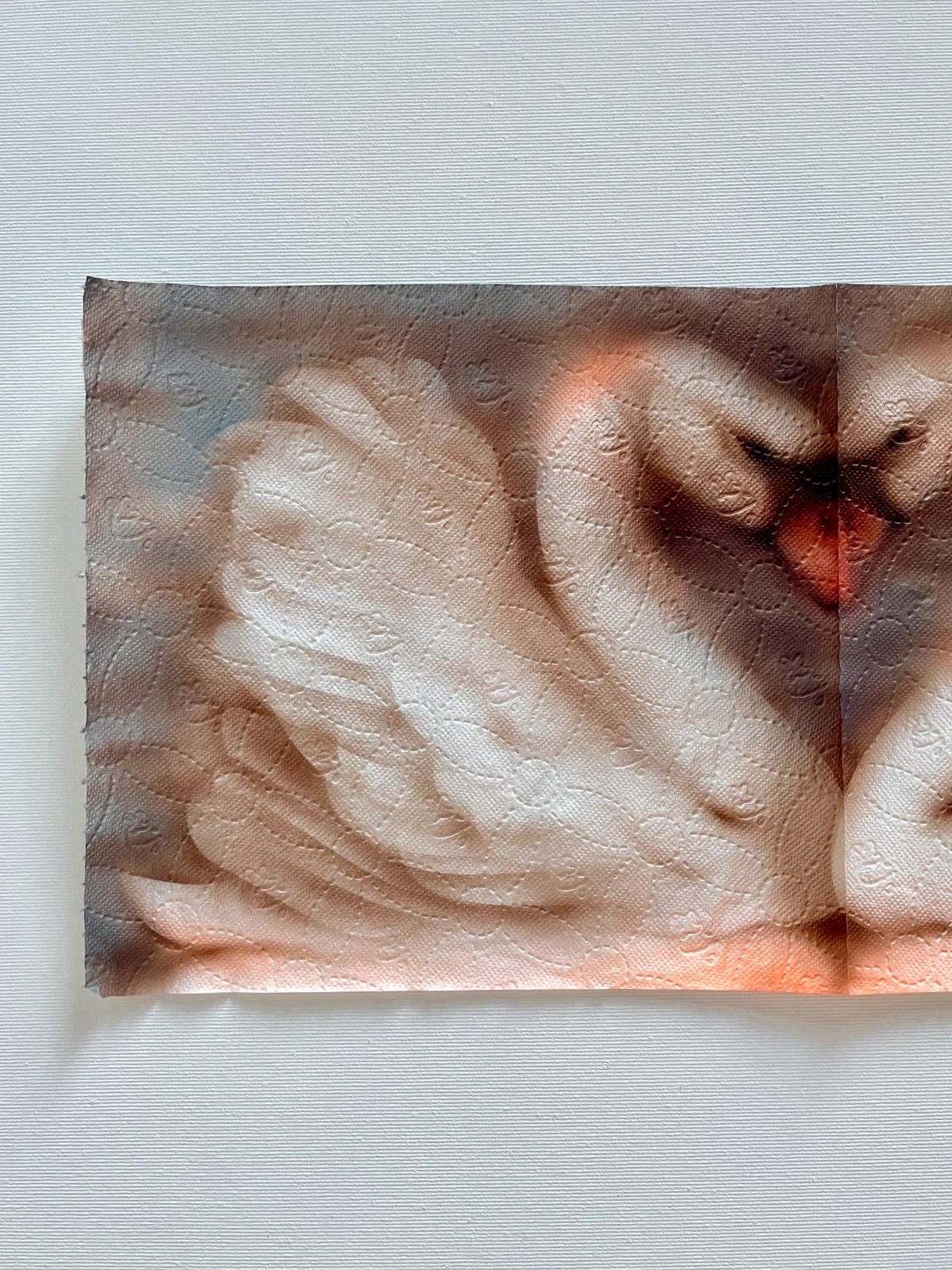
Left: Helena Minginowicz, SHAME, 2026, Acrylic on paper towel, 20 x 22 cm / Middle: Helena Minginowicz, LOST (after Susanna and the Elders by Artemisia Gentileschi), 2025, Acrylic on paper towel with marble holder, 22 cm × Ø 12.5 cm / Right: Helena Minginowicz, MY OWN THOUGHTS, 2026, Acrylic on paper towel, 23 x 48 cm
"Fragmentation is a form of precision, but also a kind of protection. A complete body becomes someone. A fragment remains open to projection."
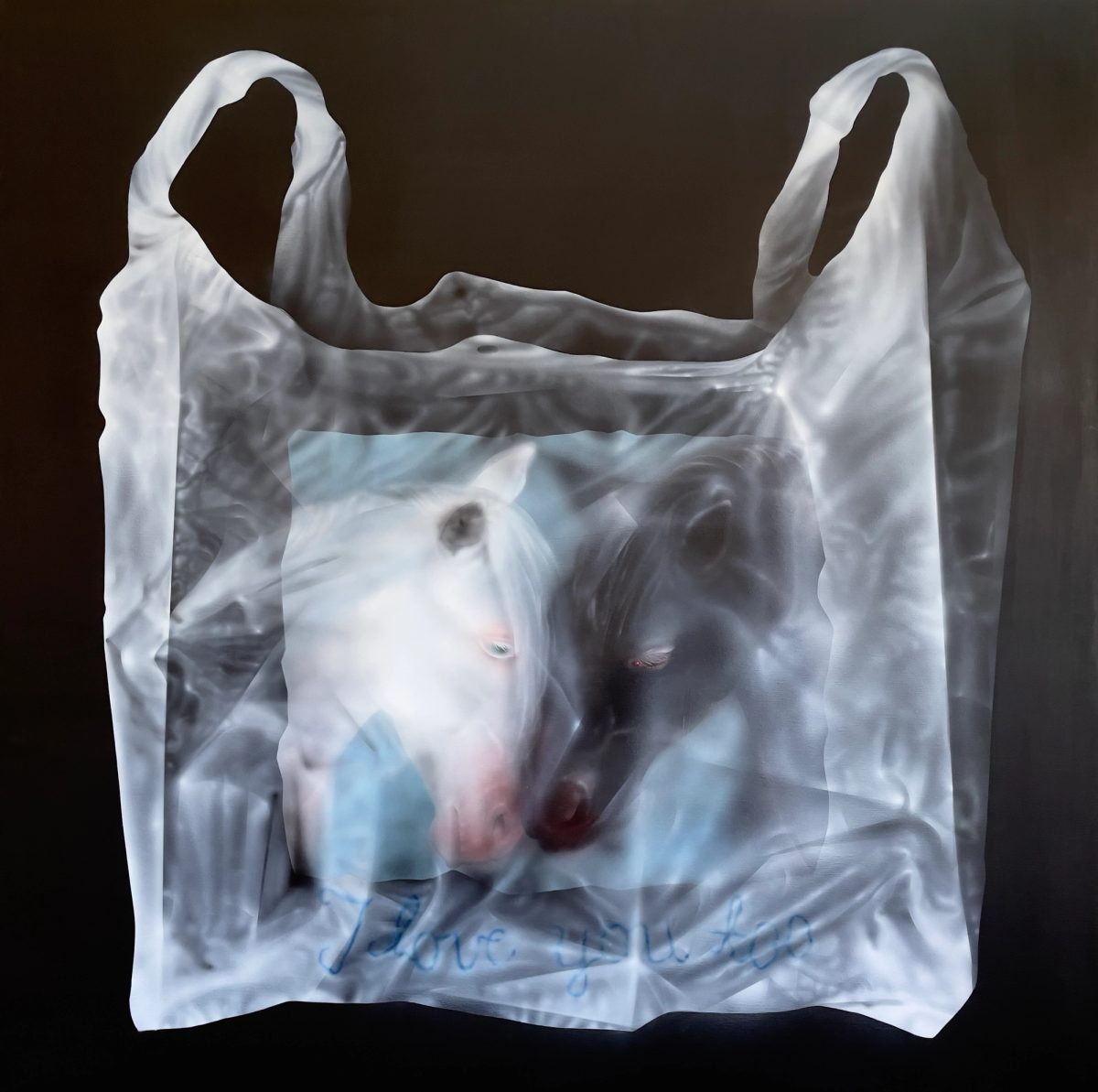
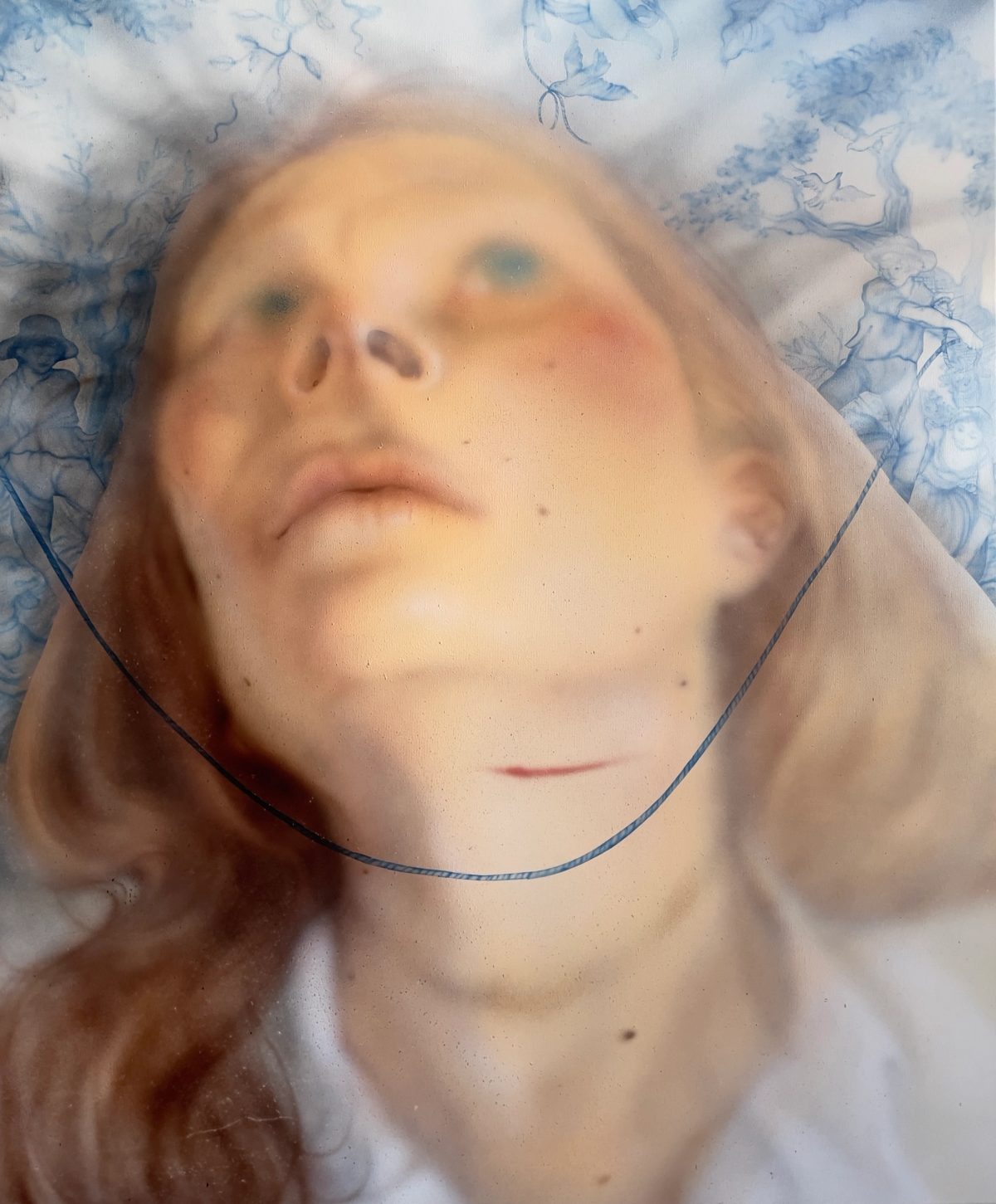
Left: Helena Minginowicz, I (DON'T) LOVE YOU TOO, 2025 / Right: Helena Minginowicz, OTHERS / Liliputland (Part 1), 2025
Your compositions frequently isolate parts of the body: mouths, knees, hands, armpits rather than presenting whole figures. Is fragmentation a strategy of concealment, of protection, or of precision? What becomes visible in a cropped body that would be diluted in a full portrait?
Fragmentation is a form of precision for me, but also a kind of protection. A complete body quickly turns into representation, it becomes someone. A fragment remains more indeterminate, more open to projection.
Cropping allows me to focus on the tension of the skin, gesture, moisture, something very physical that often dissolves within the full figure.
You sometimes paint on single-use materials such as paper towels, Korean sheet mask, and plastic items, objects designed to be used and discarded. Do you see these objects as intimate tools, commercial promises, or contemporary relics? What kind of meaning already exists inside these materials before you intervene, and how does painting onto them alter their status as “temporary”?
These materials are both intimate and impersonal. They carry promises of care, improvement, regeneration, yet they are designed to be disposable, insignificant, almost "unserious."
I am interested in the moment when something intended for use and disappearance is held in place. By painting on them, I do not so much transform their status as complicate it. They remain fragile and temporary, yet begin to function as an image, as a kind of message, somewhere between a relic and waste.
In a way, I treat them as carriers of sensitivity, something that is easily consumed and just as easily overlooked.
This condition is never stable, they remain on the verge of disintegration, both materially and perceptually. I am also interested in the moment when something considered insignificant begins to demand attention, subtly destabilizing hierarchies of what is deemed "worthy" of an image.
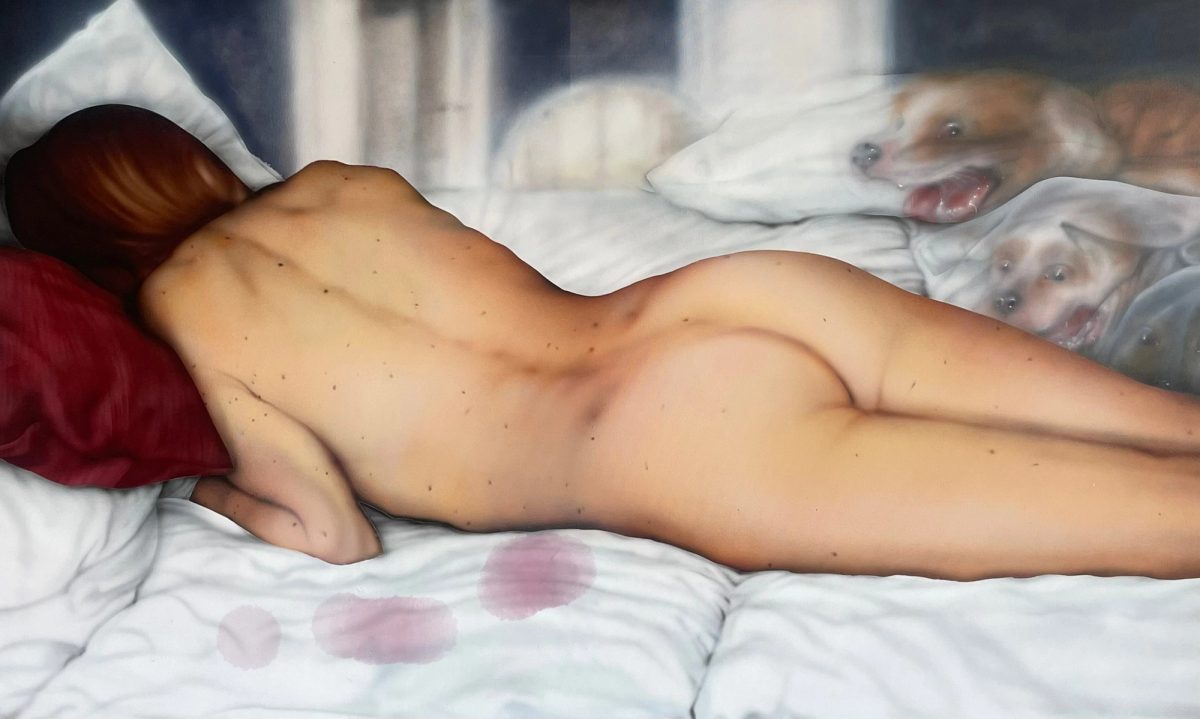
Helena Minginowicz, Sleeping Venus, acrylic on canvas, 150 x 90 cm, 2025
"They remain fragile and temporary, yet begin to function as an image, as a kind of message, somewhere between a relic and waste."
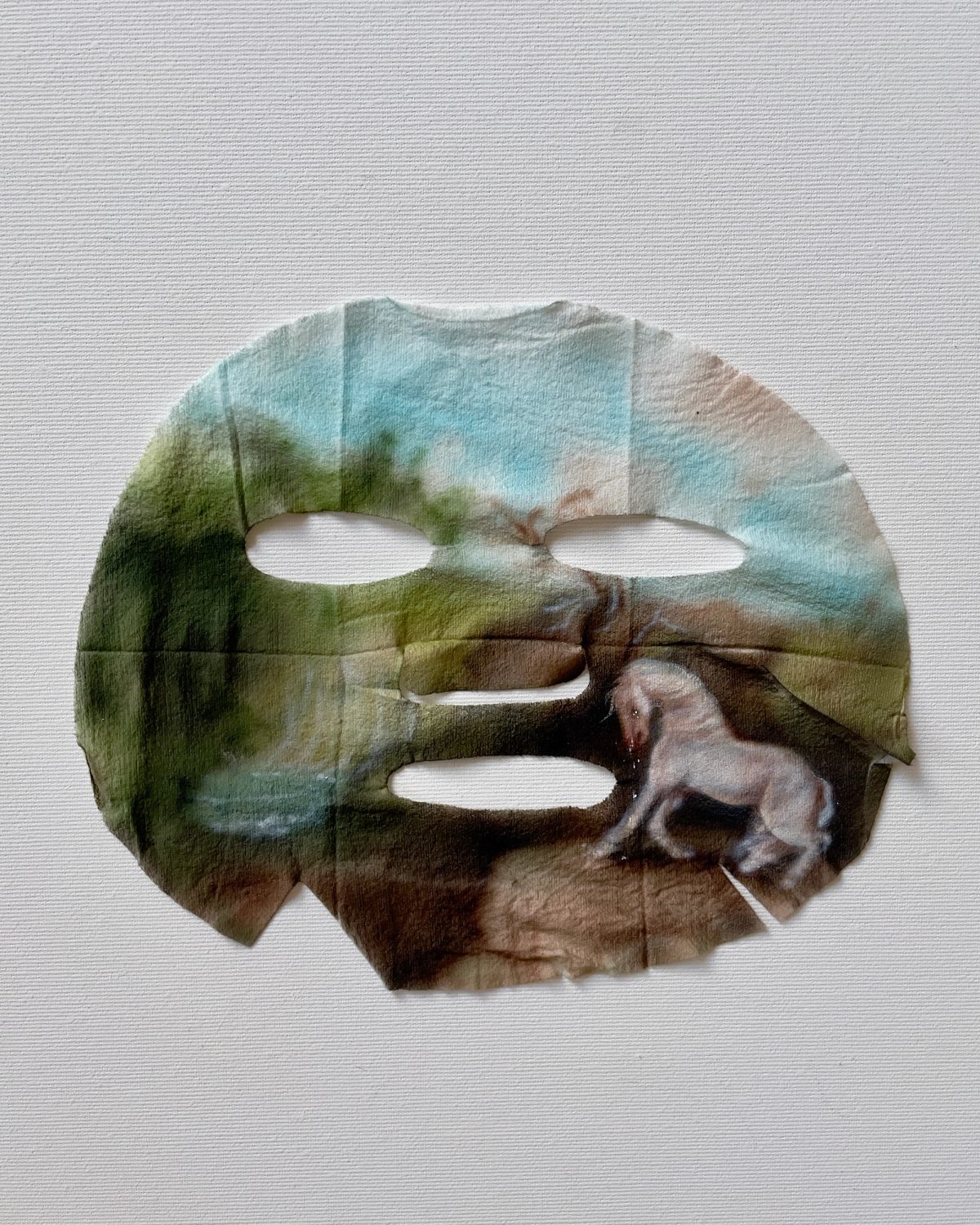
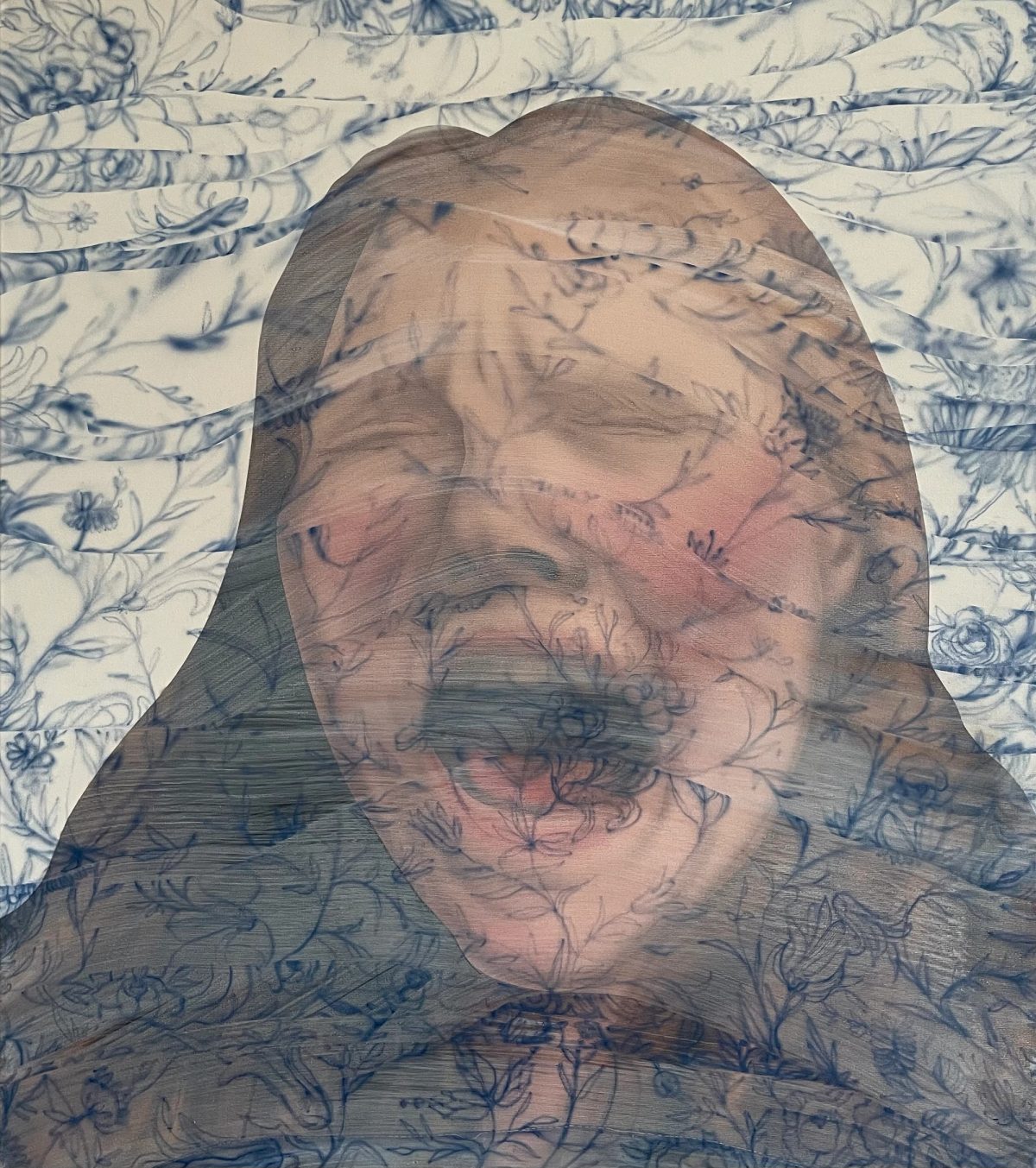
Left: Helena Minginowicz, (UN)CALMING MASK / cycle, 2025, Acrylic on sheet mask, 22 x 24 cm / Right: Helena Minginowicz, UNDERCOVER, 2024, Acrylic on canvas, 100 x 100 cm
Your animals often arrive as images-within-images. Prints on towels, blankets, packaging, secondary images that are already designed and already disposable. They are more narrators than mascots in your work. What interests you about working with these secondary images? Why do they function so persistently in your visual language?
In my work, I consciously draw on classical iconography, where animals function as symbolic figures. This historical charge of meaning, present for centuries in art, becomes a material for constructing my own narratives.
At the same time, these animals already exist as images before I begin. They belong to systems of reproduction, decoration, and product design. I am interested in their secondariness and in how easily they become carriers of emotion, often reduced, flattened, or emotionally overdetermined. What interests me is the tension between their historical meaning and their contemporary, worn-out image.
In my work, they function more as narrators than motifs, narrators that are never entirely reliable.
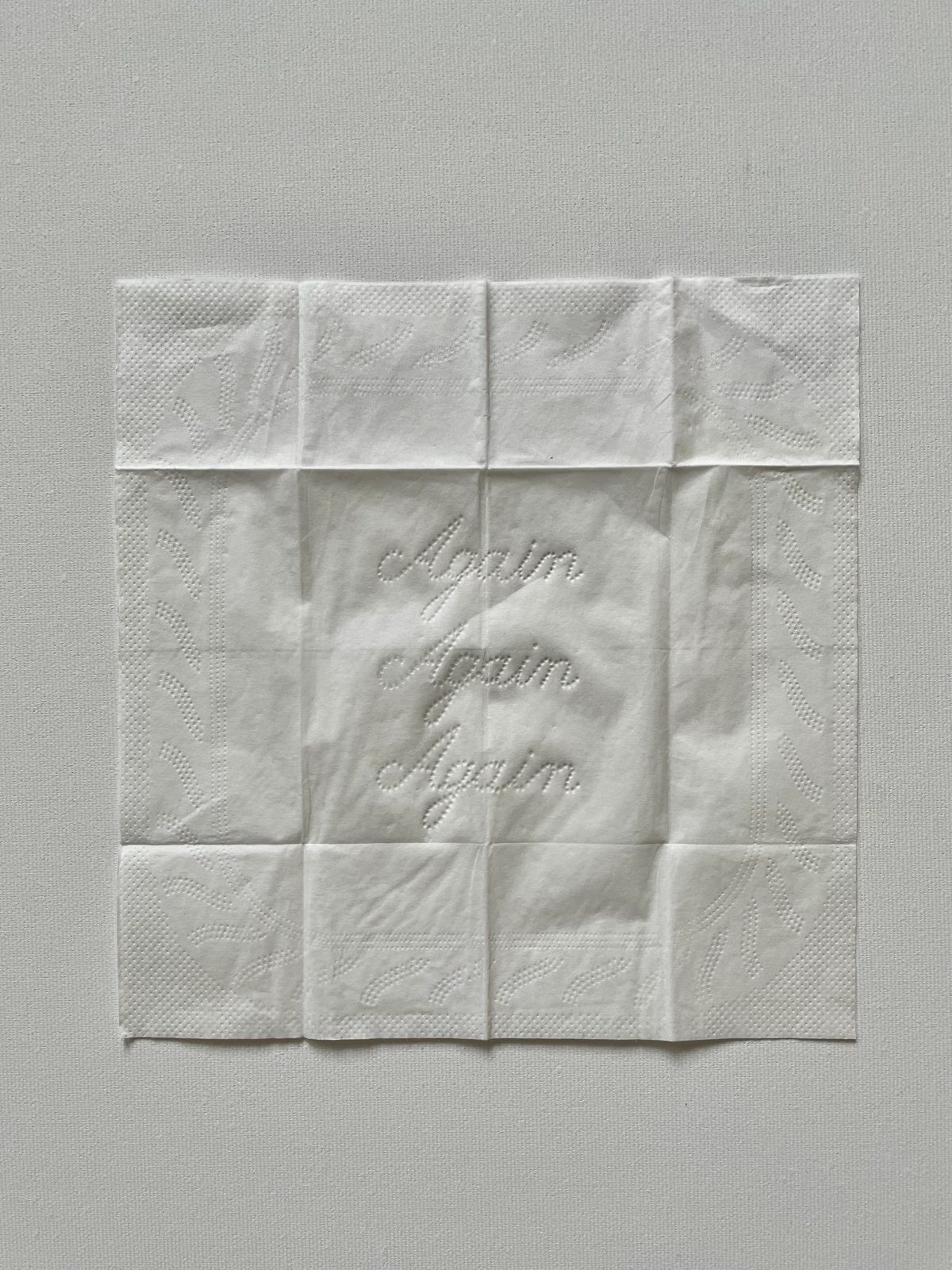
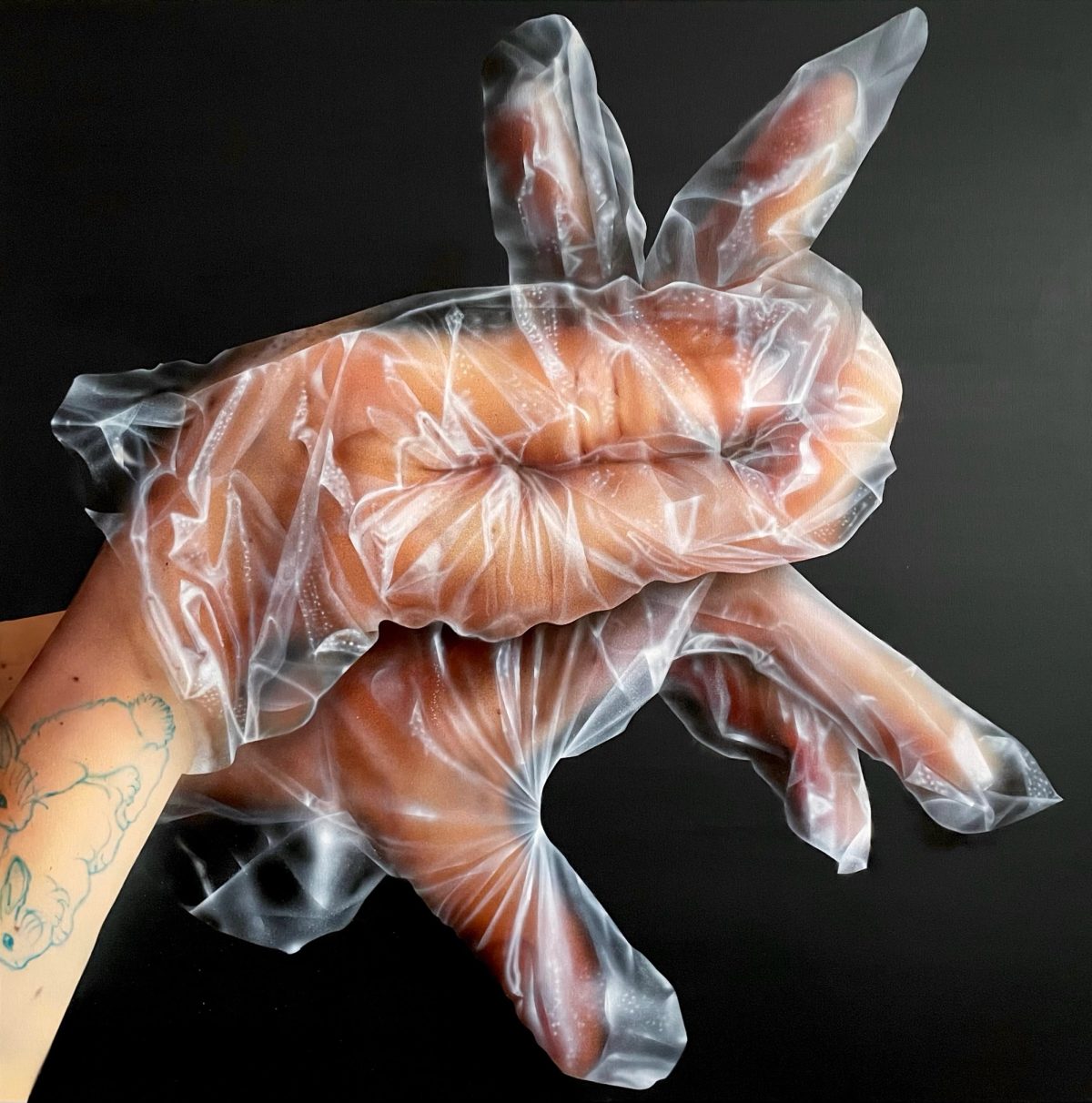
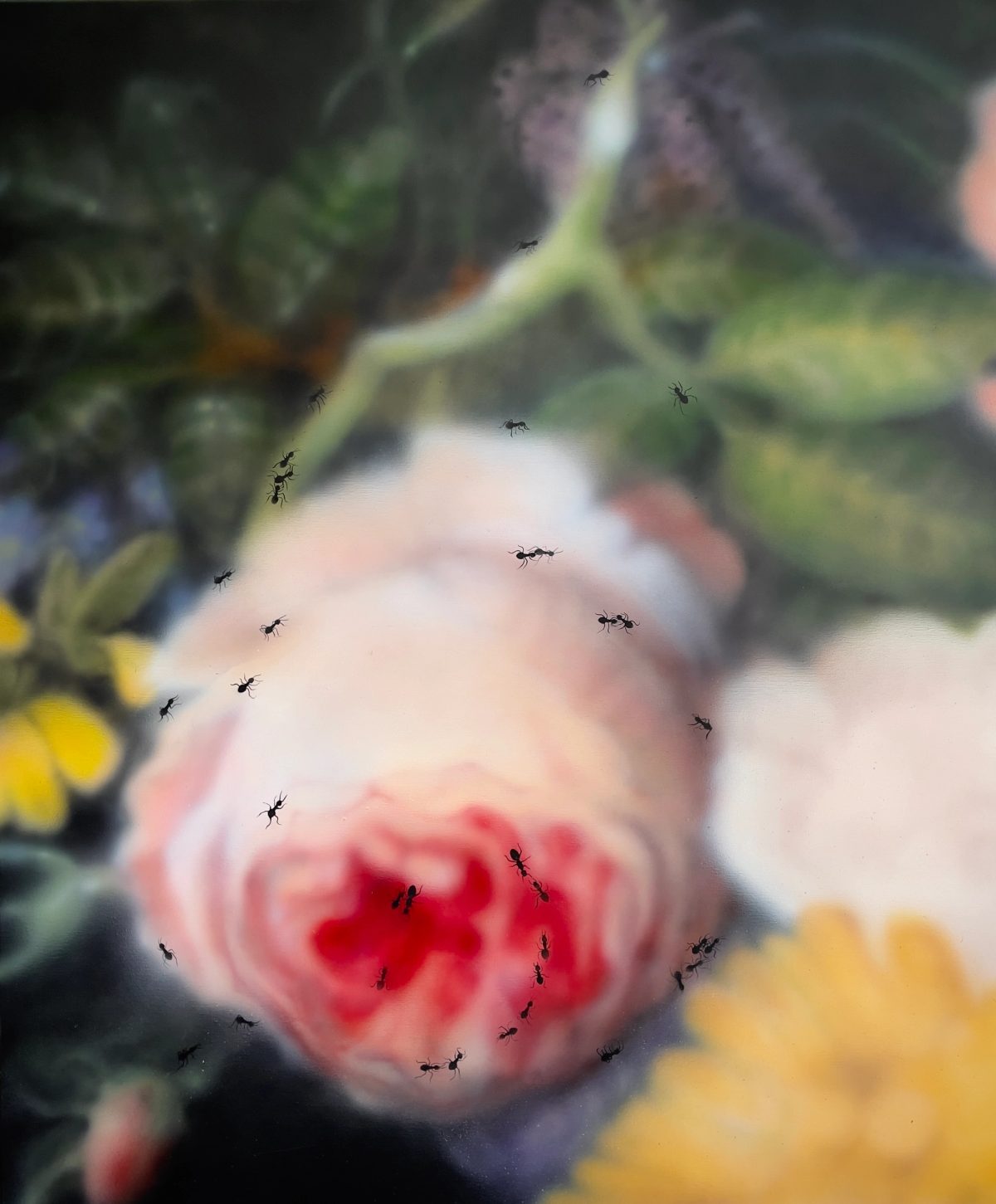
Left: Helena Minginowicz, (Nothing without) PAIN, 2025, Embossing on paper tissue / Middle: Helena Minginowicz, (UN) FOLLOW THE WHITE RABBIT, 2025, Acrylic on canvas, 100 x 100 cm / Right: Helena Minginowicz, NAUSEA diptych (Part II), 2025
Writers have drawn connections between your soft-focus surfaces and Renaissance sfumato, as well as devotional iconography. You’ve spoken about the influence of old masters alongside contemporary art. What aspects of historical painting remain structurally important to you, composition, light, symbolism? And what did you need to unlearn from that lineage?
From historical painting, I still rely on structure, ways of constructing an image, guiding the gaze, working with light.
What I had to unlearn was the belief in its stability. These systems were designed to be coherent and convincing. For me, it is important that an image remains both seductive and uncertain.
Your paintings often read as evidence before they read as image. What do you want the viewer to trust first: the surface, the subject, or the illusion?
The surface comes first. If it does not hold, nothing else matters.
But that trust is only temporary. I am interested in the moment when the viewer realizes that what seemed evident is no longer reliable.
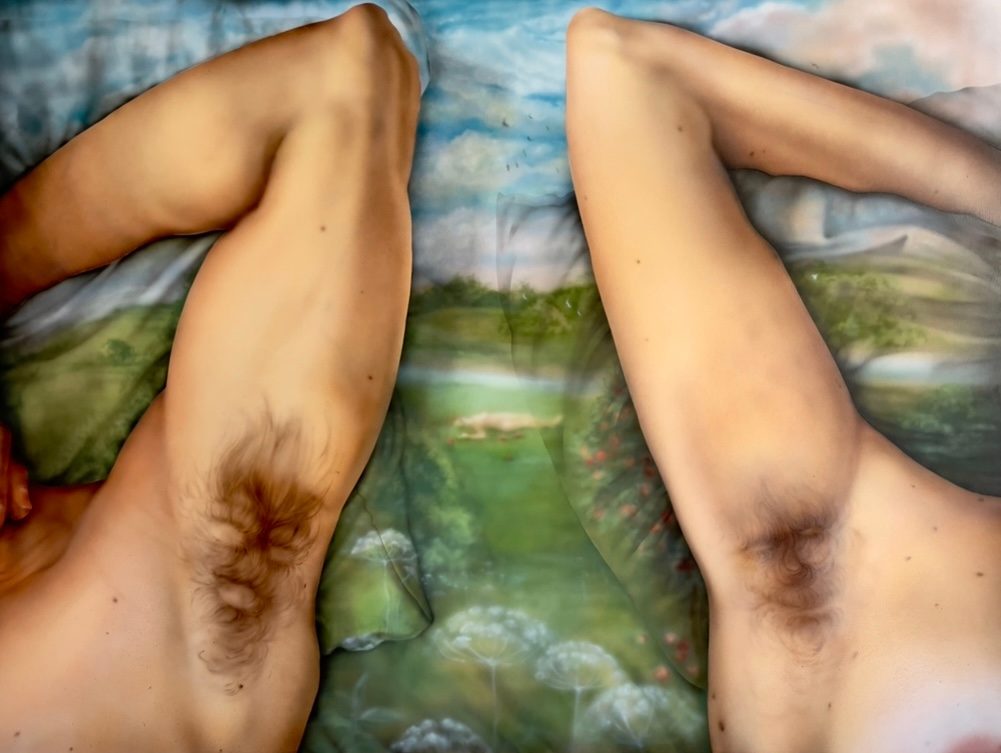
Helena Minginowicz, (Not) Friends, 2025
"I am interested in the moment when this language becomes inadequate to what it attempts to contain."
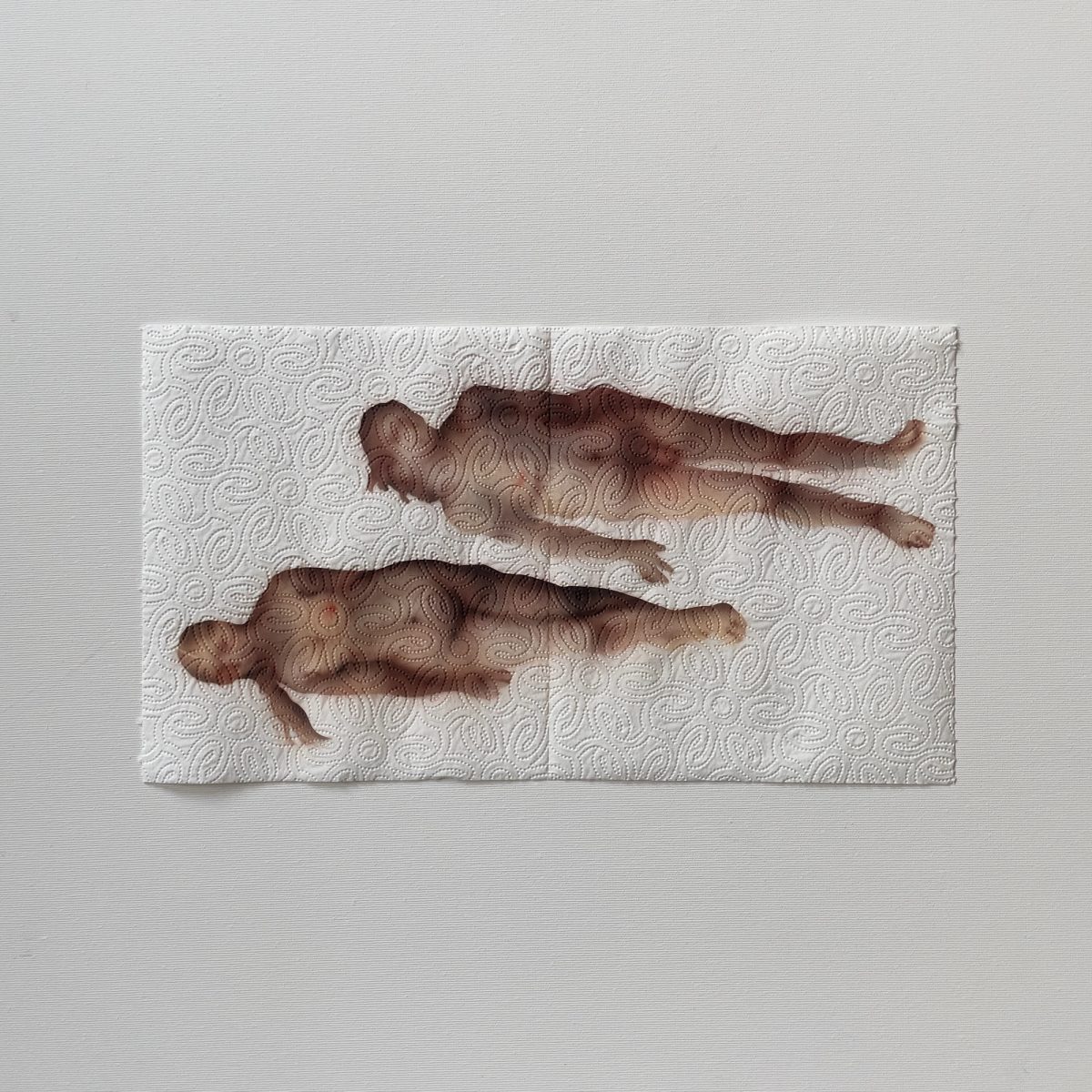
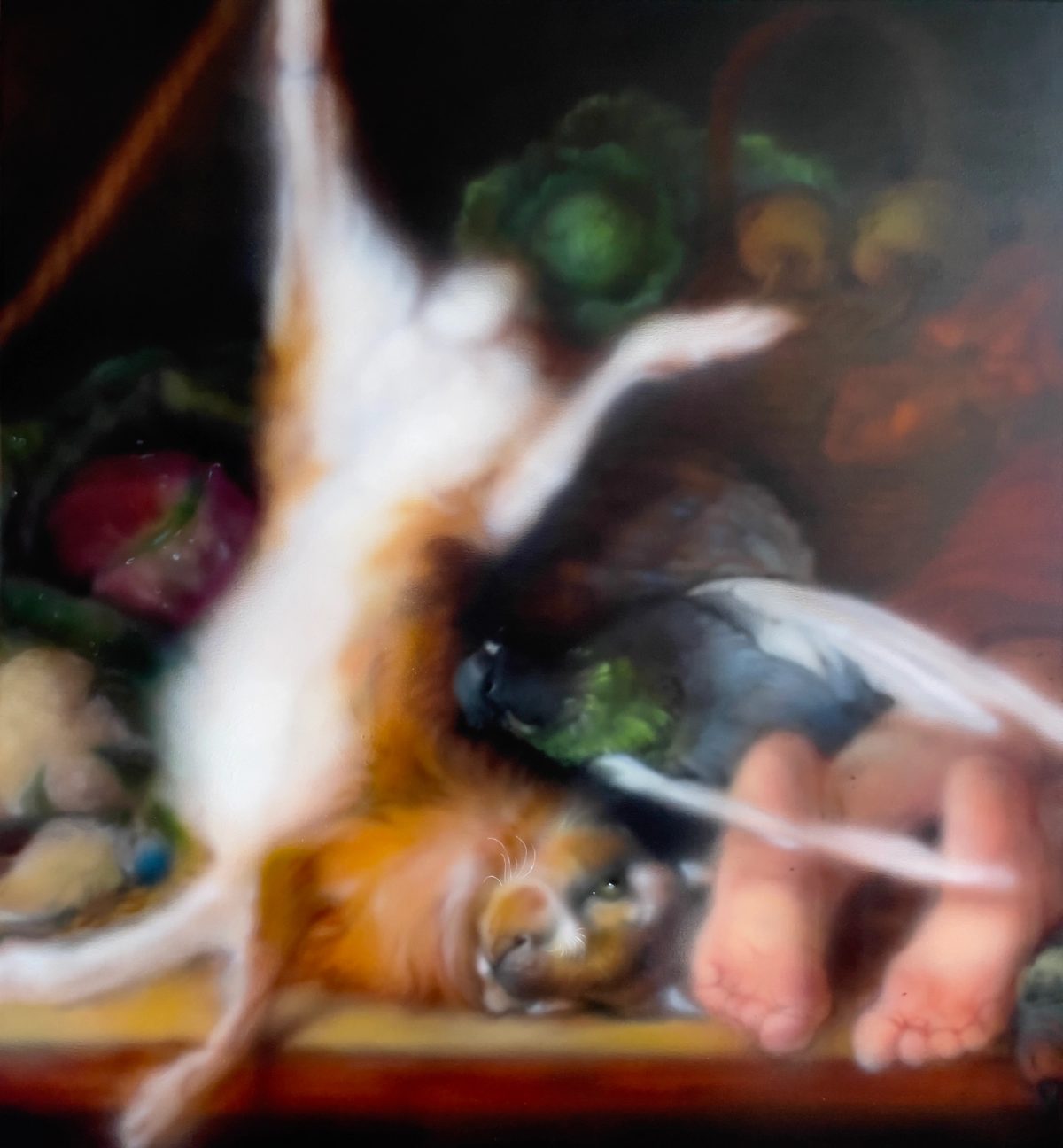
Left: Helena Minginowicz, (HUMAN)KIND / Disposable, 2025, Acrylic on paper towel / Right: Helena Minginowicz, MARKET DAY / after Icarus, 2026, Acrylic on canvas, 120 x 130 cm
You borrow visual languages that historically legitimise painting (Renaissance composition, devotional light) and attach them to “low” motifs (kitsch prints, supermarket aesthetics). What kind of hierarchy are you trying to short-circuit?
The language of "high" painting has historically conferred importance and gravity onto what was considered meaningful or beautiful.
I am interested in using that same language of classical beauty to speak not only of triumph, but also of failure; not only of joy, but also of pain. I am interested in the moment when this language becomes inadequate to what it attempts to contain.
Across the current presentations in Marbella, Toruń, and Poznań, your work enters different architectural and institutional contexts. Following this current cycle of exhibitions, what tension or constraint feels necessary for the next phase of your practice?
After this cycle, I feel a need for greater material risk, something that genuinely threatens the stability of the work.
Control has been very important to me so far. Now I am interested in the moment when that control begins to slip. Not as an act of destruction, but as a way of testing where the image actually ends.
Perhaps this is where the work truly begins, when it begins to exist independently of my intention.
Left: Helena Minginowicz, Nausea, 2025