GLORY, EXCESS, AND UGLY TRUTHS: IN CONVERSATION WITH MIKE SHULTIS
CONVERSATION BY MOCO CHEN
CO-FOUNDER, ART DIRECTOR
22 APRIL 2026 — UNITED KINGDOM
Mike Shultis does not paint the world so much as ingest it. Trained in the tradition of academic oil painting, he arrived at assemblage through frustration, the kind that clarifies rather than paralyzes, and has spent the years since building canvases that function less like pictures than like crime scenes: sites where taxidermy, consumer detritus, art historical quotation, and synthetic kitsch converge under conditions of deliberate excess. The result is work that refuses the cleanness of influence, sourcing Fragonard and Dumbo with equal conviction, sealing difficult imagery behind garish plexiglass, and hunting thrift stores and estate sales for objects whose previous lives are part of the point. Shultis is interested in America, specifically its mythology, its waste, and the uncomfortable distance between the two. His paintings document both.
Looking at your work, it feels like painting has exploded outward. The canvas becomes crowded with objects: taxidermy animals, toys, wigs, fragments of furniture, bits of landscape. It almost reads like a painting that has absorbed the physical world around it. Could you talk about the path that led you here?
The path to my form of assemblage started with a shoe. I was trained as an academic oil painter, and after a while I became increasingly frustrated with traditional painting. I loved making images but the process was becoming dull. The hidden beauty of creative frustration is it often leads to a moment of clarity. Why paint a shoe on my figure when instead I can deconstruct or flatten a real shoe and then affix it to my surface?
This sparked everything. Next, hair became wigs, clothing was made of actual clothing, foliage was plastic plants, animals were taxidermy, fur, or stuffed animals, dirt and rocks were made with real dirt and rocks, grass was AstroTurf, and so on. This transition wasn't instantaneous and would take years to fully develop. Through this gradual evolution of material process, I incrementally found a corresponding relationship to what I was depicting visually with the actual or somewhat representative material.
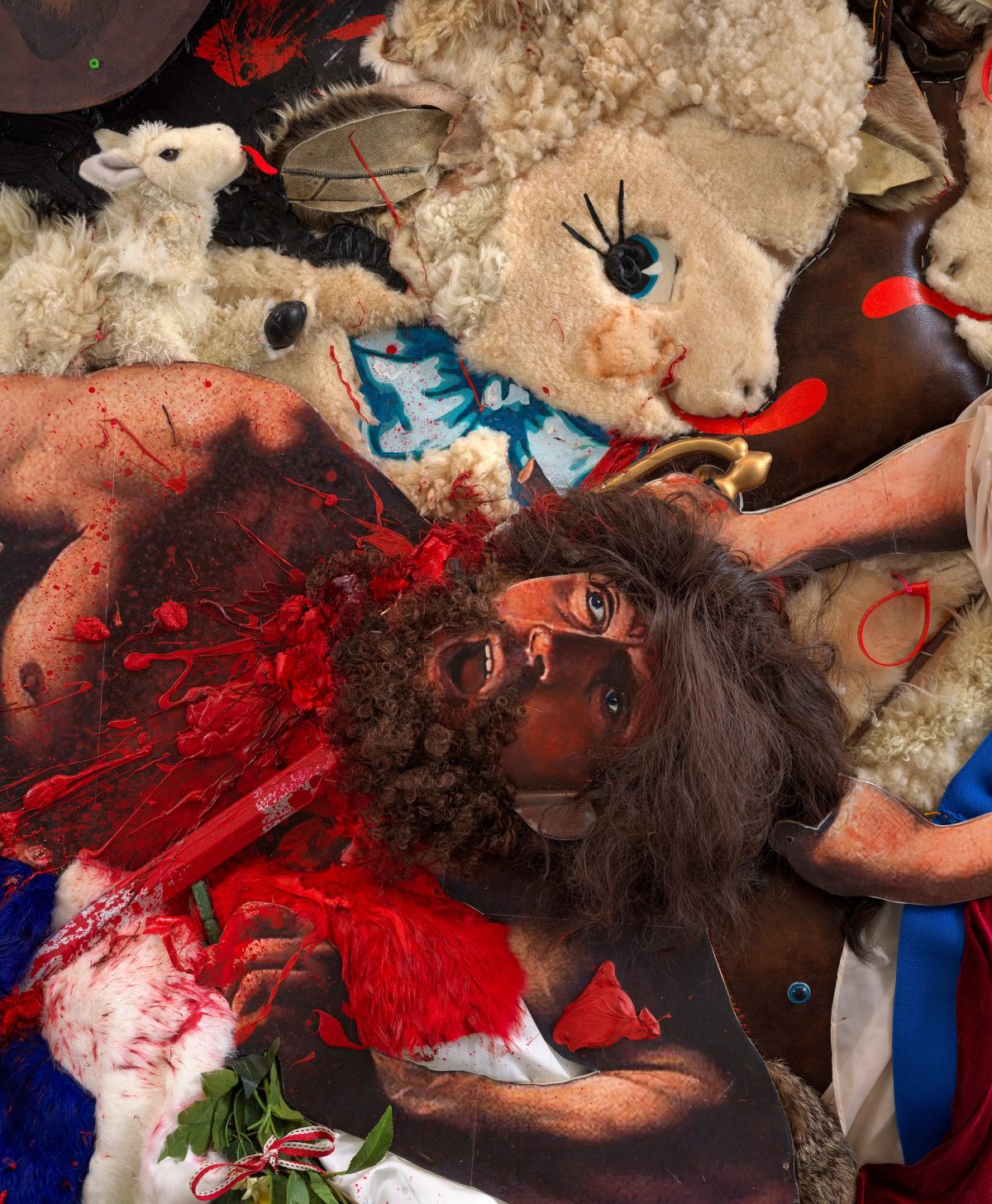
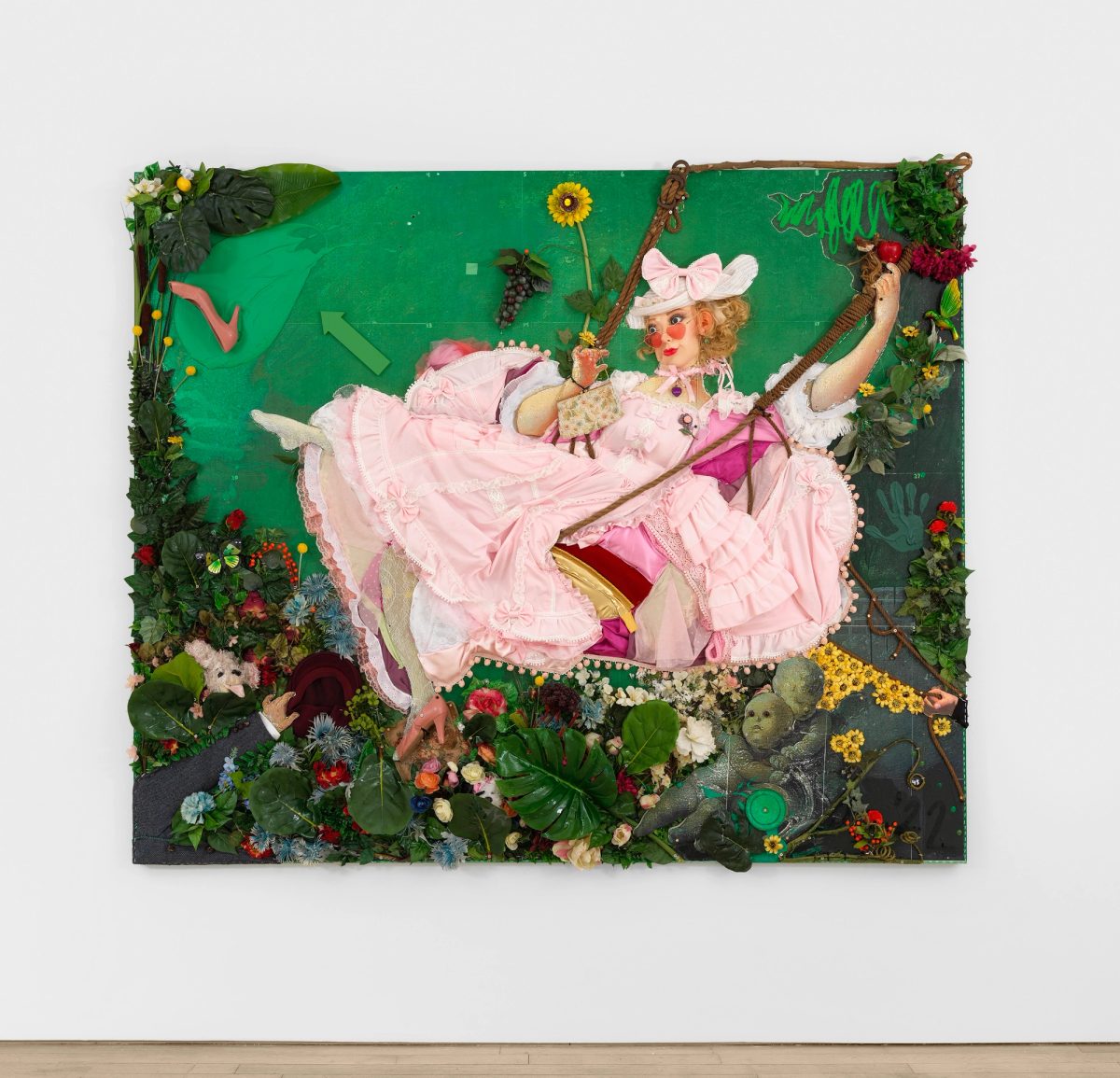
Left: Mike Shultis, 3 Sheep (detail), 2024
Right: Mike Shultis, La Di Da, 2022
There’s something theatrical about your compositions. Bodies, animals, cartoons, historical figures, consumer objects, all collide inside one frame as if they’re actors on a stage. When you’re building a work, do you think in terms of composition the way a painter might, or more like staging a scene? Or is the process something else entirely?
There are two phases when I'm constructing a composition. In the first phase I start with a digital mock up. This is very time-consuming and I work out the imagery and conceptual framework that will dictate the starting point of the piece. Sometimes I'm editing/reworking a classical painting; other times I'm referencing a found photograph or digital collage I've made.
The second phase is once the painting has begun. During the physical process of making, the initial plans for the piece always change. Often it's through a newly acquired material or object that must live in the picture, and other times the painting is screaming for a new pictorial direction. These modifications and content shifts are what I live for.
It's spontaneous, chaotic, and intuitively driven. Most paintings are hostile and often require a fight. The only solutions, while battling a painting, arrive in the moment and are led by my subconscious. I still think like a classical painter while realizing my compositions, but instead of putting in those final layers of paint, I'll attach a life size vintage Cowardly Lion plush from The Wizard of Oz to my picture.
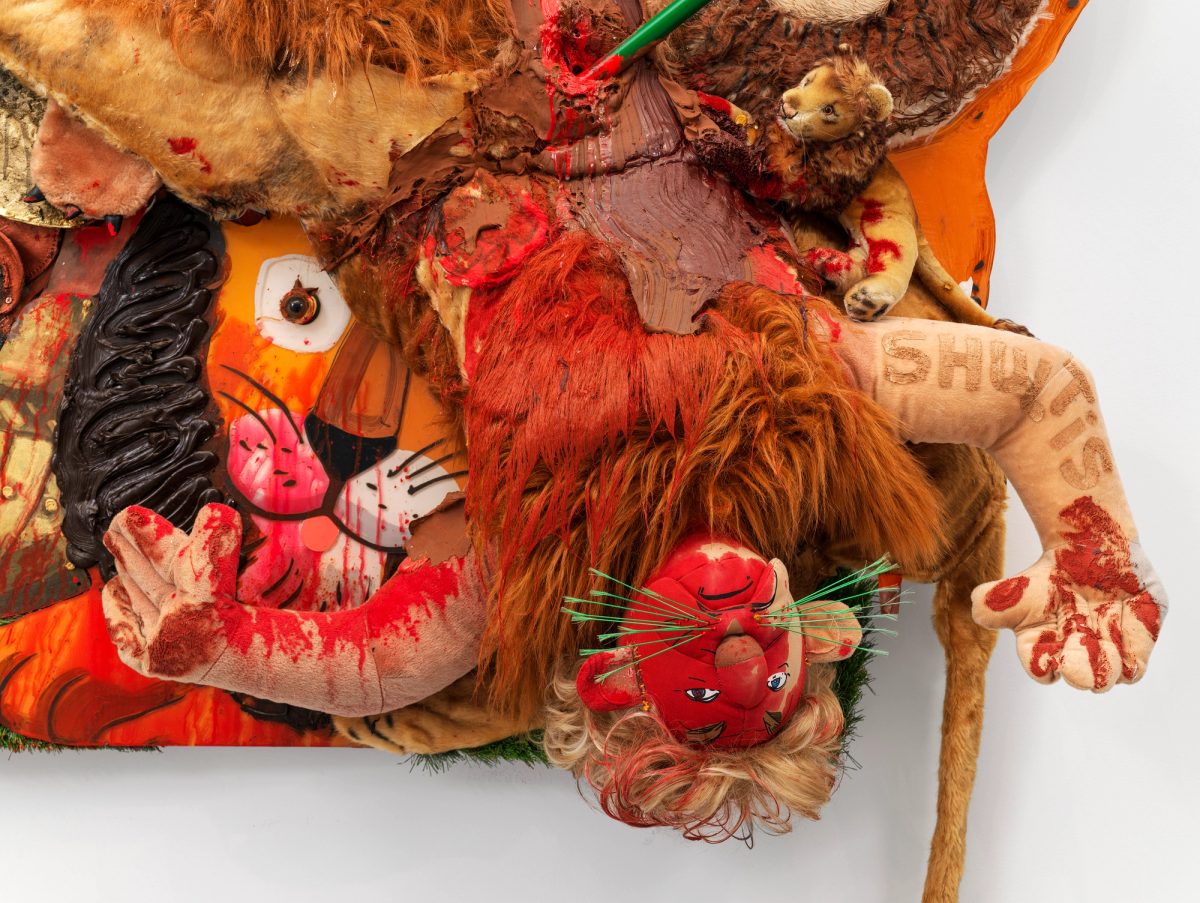
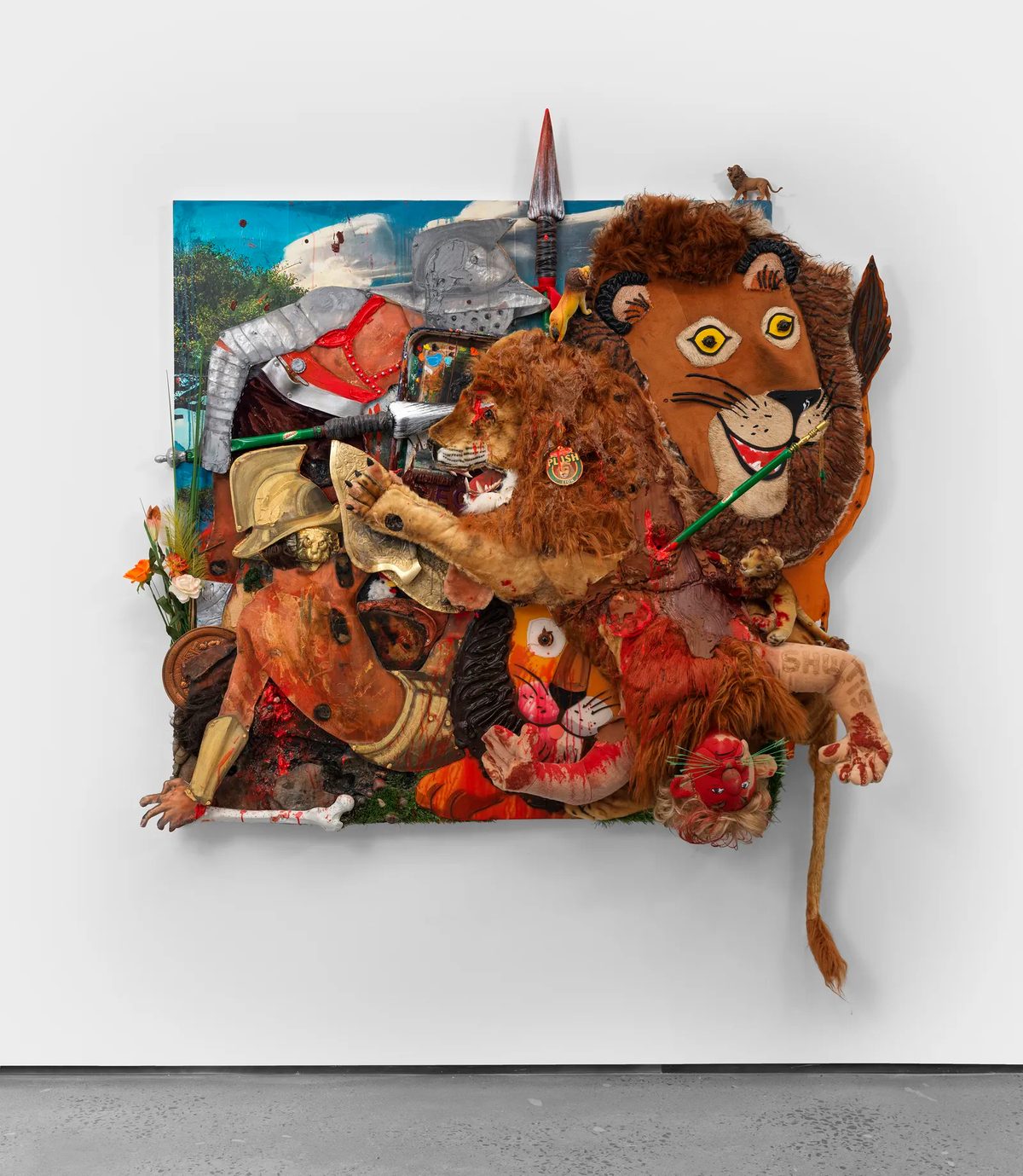
Mike Shultis, Leo, 2026
"I honor their past lives before our union and it directly impacts the soul of my studio and the subsequent gravitas of my finished paintings."
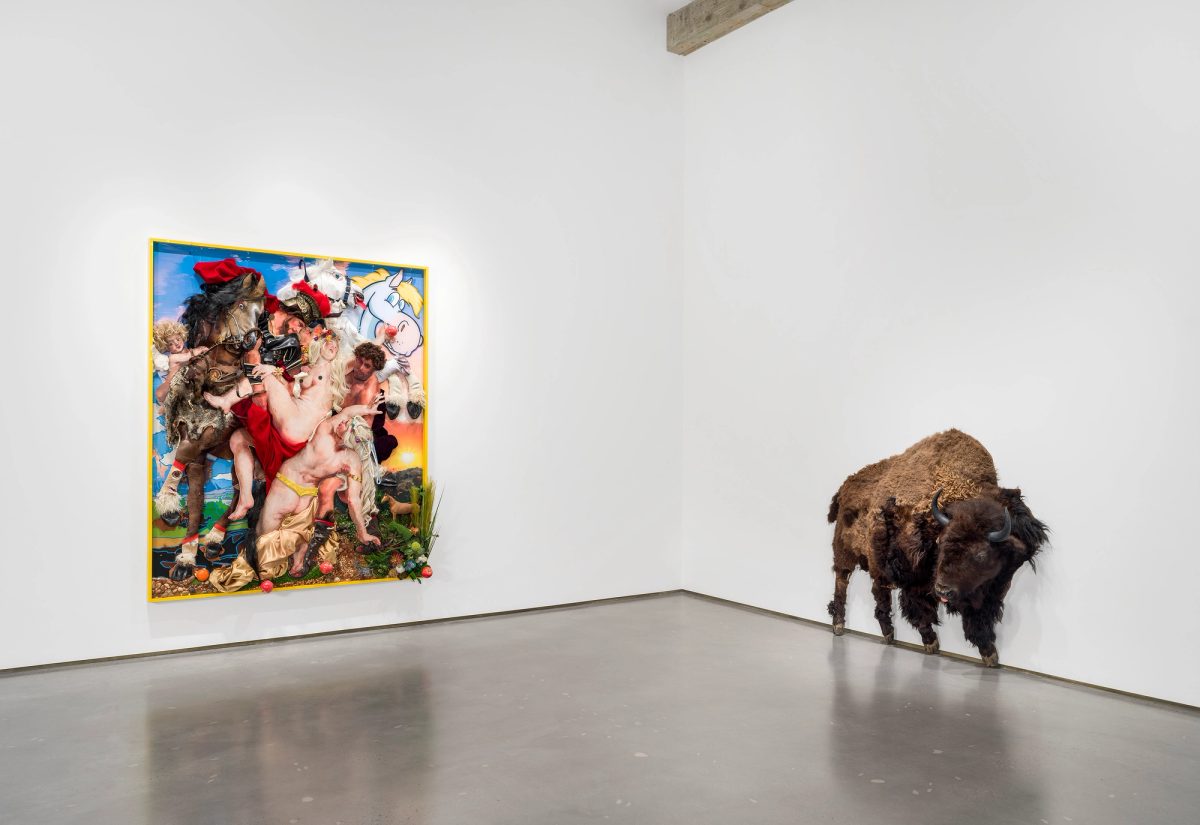
Mike Shultis, Deja Vu (installation view), 2019
A lot of the objects you use feel familiar. They’re things that carry a kind of cultural memory, almost like leftovers from everyday life. When you’re collecting materials, what draws you to something? Is it visual, emotional, symbolic, or something harder to explain?
Collecting materials is the most important part of my process. Often I know exactly what I need and I'll purchase it from a store or online via Amazon, eBay, and Etsy. Then there's the all-important not yet discovered materials. These random materials tend to create the decisions that dramatically change the trajectory of my work.
I'm always hunting for stuff at thrift stores, yard sales, local auctions, estate sales, and tips from friends and family. My Mom frequents the Goodwill bins in Albuquerque, NM where you buy things by the pound and it's very cheap. She will send me boxes of objects that I keep in the studio and constantly rummage through while working. I recently had a colleague lead me to 5 free taxidermy black bears from a contact she had. It was a no brainer, yet I have no clue where the bears will end up.
With the random materials, I just know when I see it. They can be ugly, beat up, ornate, beautiful, expensive, plastic, cheap, dirty, broken, truly anything. I can't fully explain why I gravitate to certain objects but I trust my gut and the immediacy of my attraction. Most likely I won't have a use for it right then, but while it lives in the studio something will fall into place and that object will find a home on one of my paintings. These materials reflect my taste and surroundings. I honor their past lives before our union and it directly impacts the soul of my studio and the subsequent gravitas of my finished paintings.
In several pieces you rework compositions from art history, Rubens, Titian, Rococo painting but the figures appear alongside cartoon characters or synthetic materials. The effect is both absurd and convincing. What interests you about placing these classical images inside such a “chaotic” contemporary environment?
I consider these reworked compositions to be "edits." It initially started with Rococo paintings focused primarily on Fragonard and Boucher compositions. I detest the Rococo period and I felt that reworking these paintings from a place of hatred was an interesting starting point. I also wanted to highlight a conceptual thread between contemporary American class inequality and late 1700s France. This allowed me to record my contempt for the visual period and insert my political stance of the moment.
Cartoons and other contemporary iconography are integrated to reflect my American experience, allowing for an excessive fusion of time, aesthetics, and humor. I'm very attracted to mixing high and low culture in my work. Juxtaposing Manet's "Olympia" with crude cartoon cats, a taxidermy boar bursting through a Rothko, and pairing Titian's "Venus of Urbino" with Dumbo are recent examples of this duality. I love the contrast and I feel it resonates beyond my own interests into something more universal and reflective of the chaotic now.
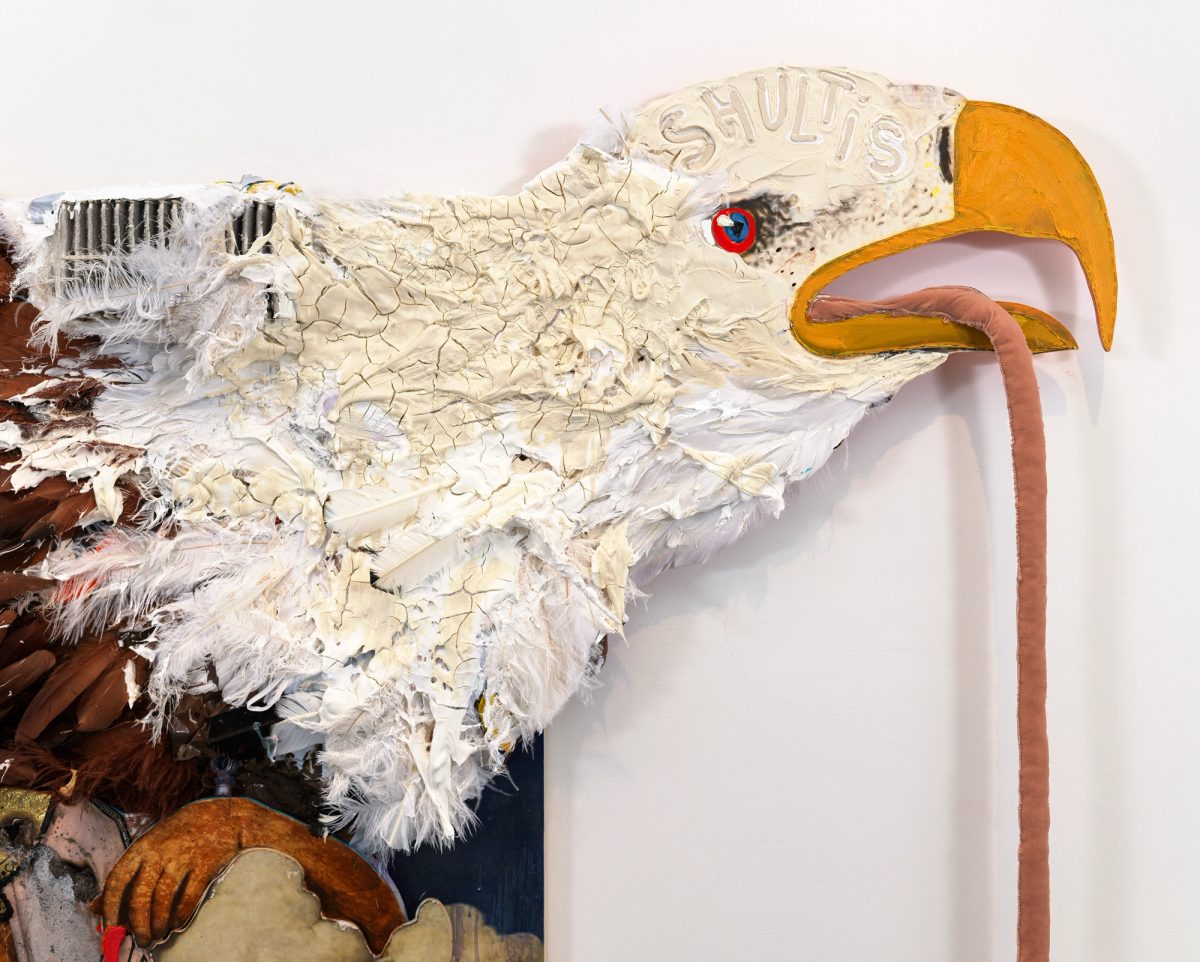
Right: Mike Shultis, Big Bones, 2019
Middle: Mike Shultis, Auqilae (detail), 2026
Left: Mike Shultis, Animal Crackers (installation view), 2019
"Most paintings are hostile and often require a fight. The only solutions, while battling a painting, arrive in the moment and are led by my subconscious."
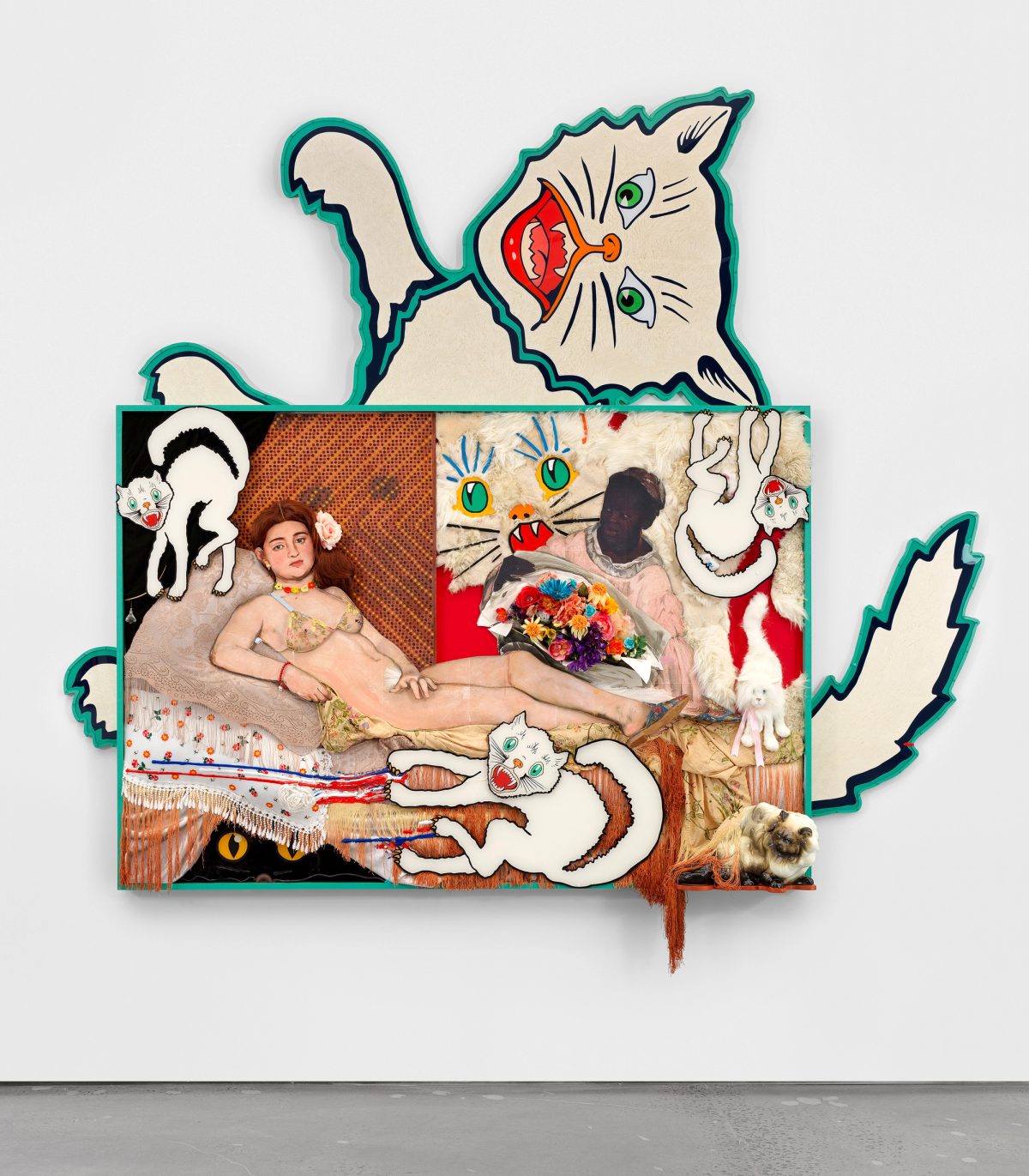
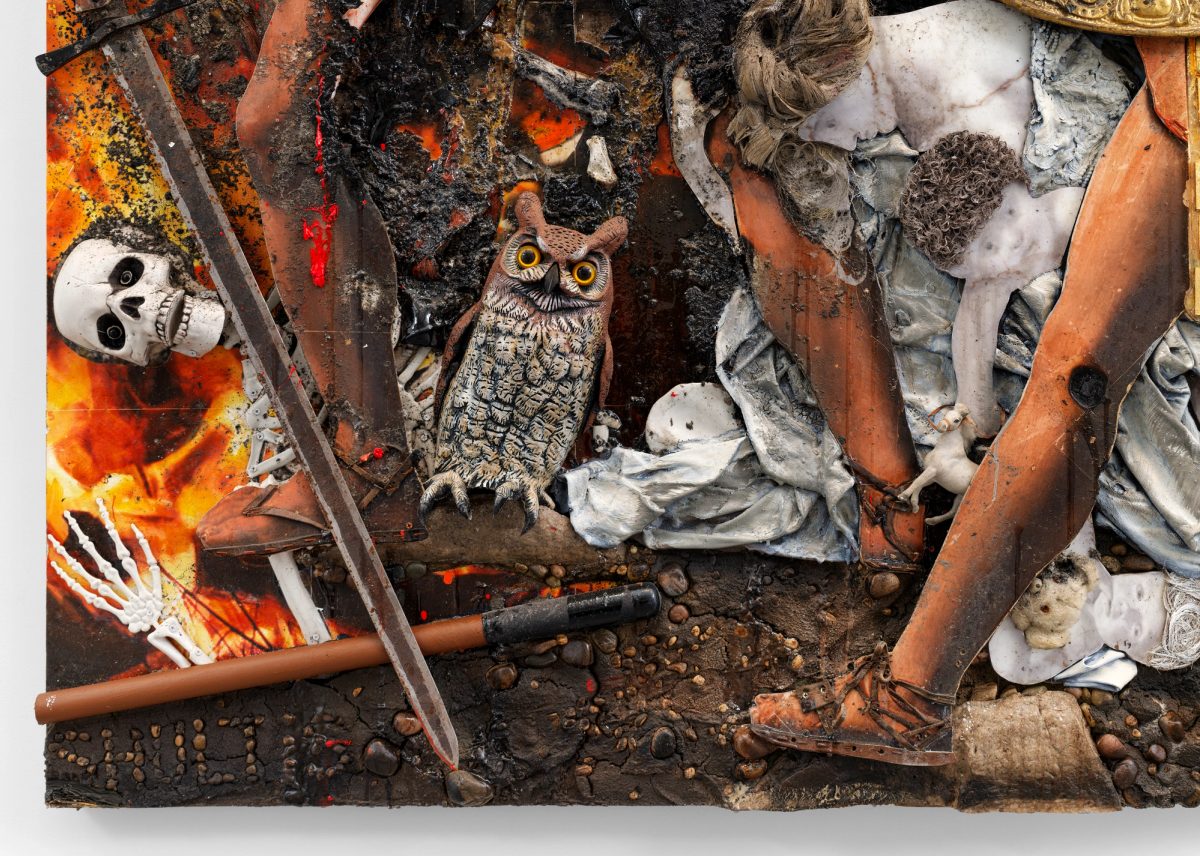
Left: Mike Shultis, Cats, 2024
Right: Mike Shultis, Bellum (detail), 2026
Your works are dense, layered, excessive, almost overwhelming. In an art world where minimalism often dominates, your pieces feel unapologetically maximal. Do you see excess as part of the meaning of the work?
Absolutely! My work feeds off American excess and I'm very interested in how my paintings reflect this ugly reality. This commentary is planned but I must admit my creative impulse gravitates towards the overwhelming anyway. In the studio and while material hunting, my thoughts, actions, and intuition are often a mess. With time and accumulation, this same disorder will unearth a clarity. The excessive materials, layers, and overall density of the work showcase the process of discovery and the eventual understanding that completes the work.
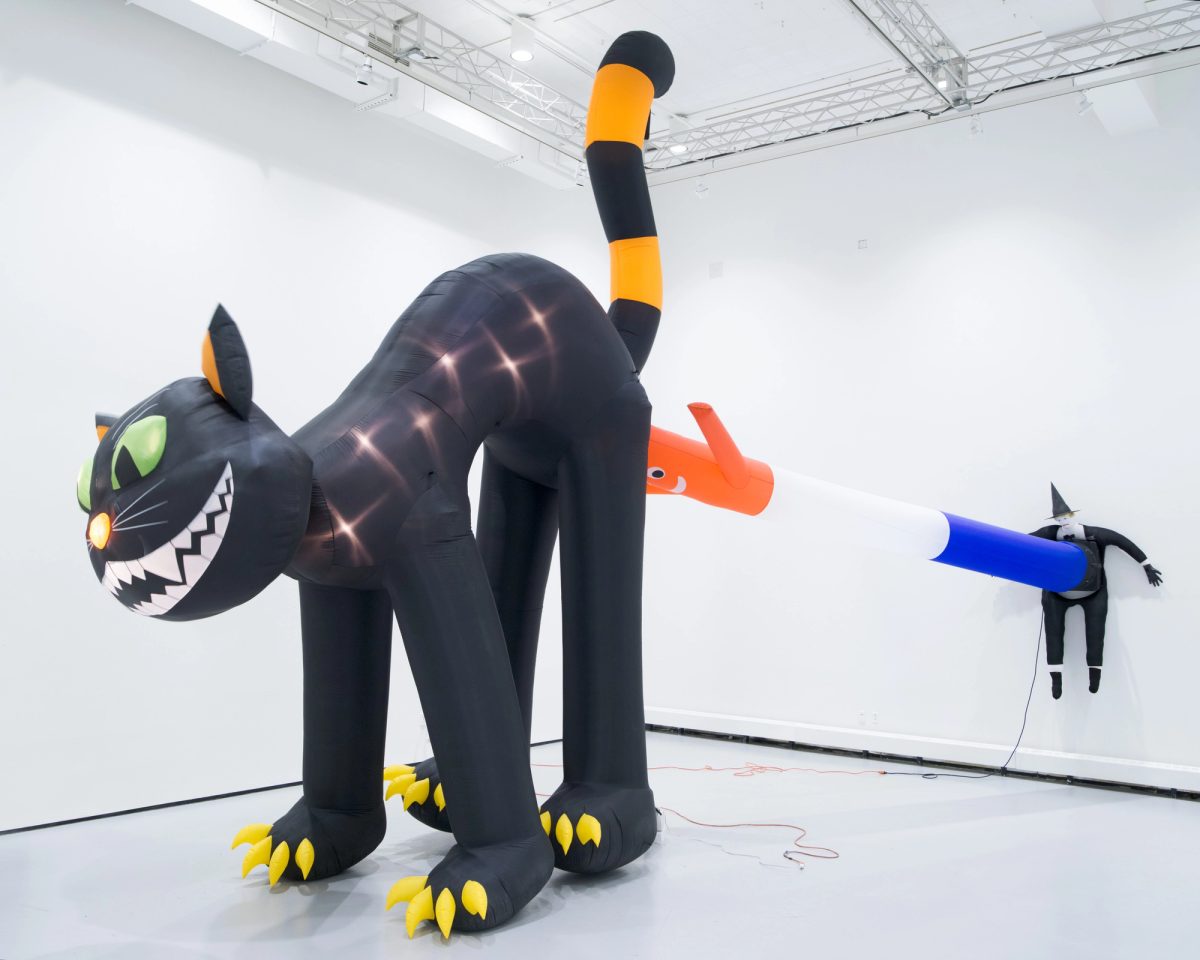
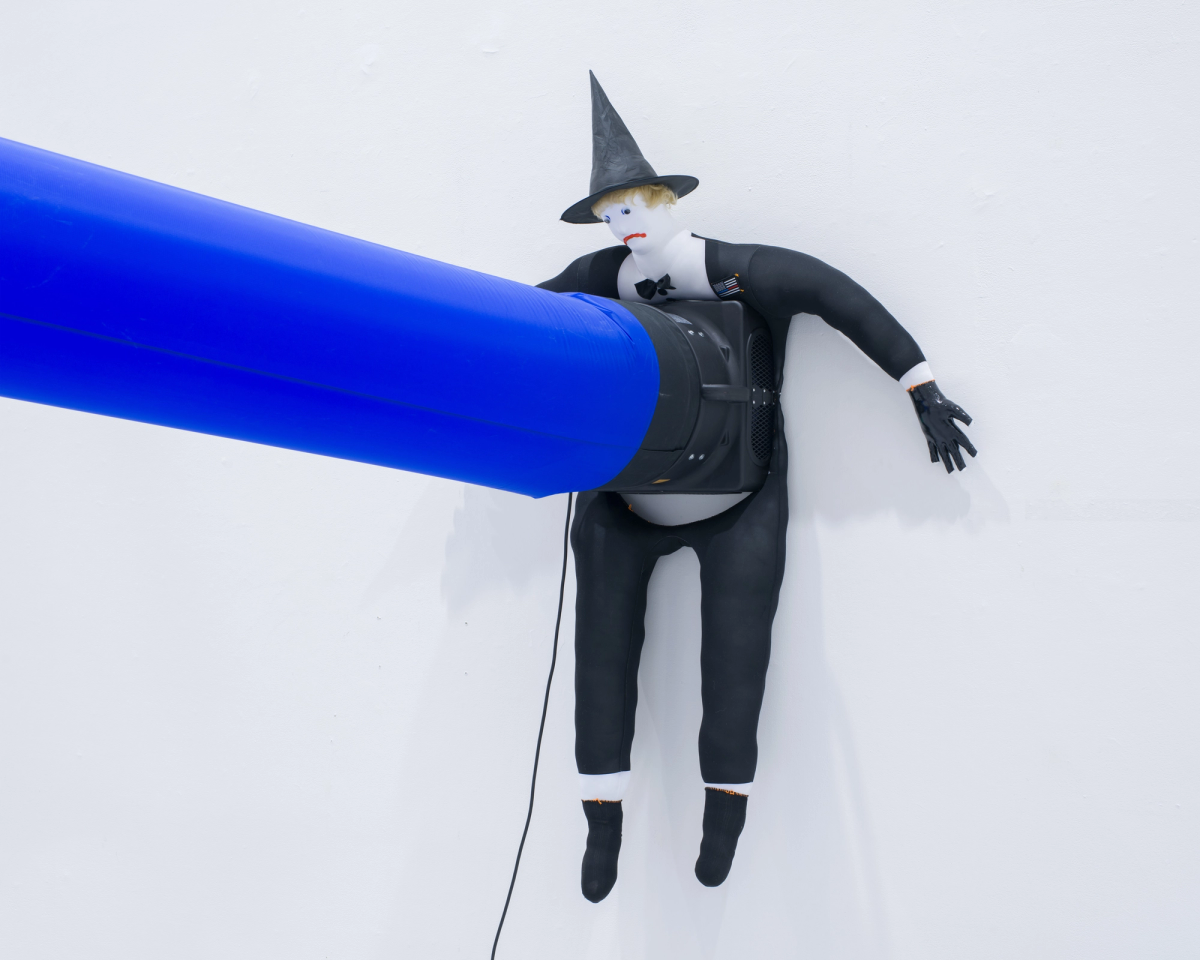
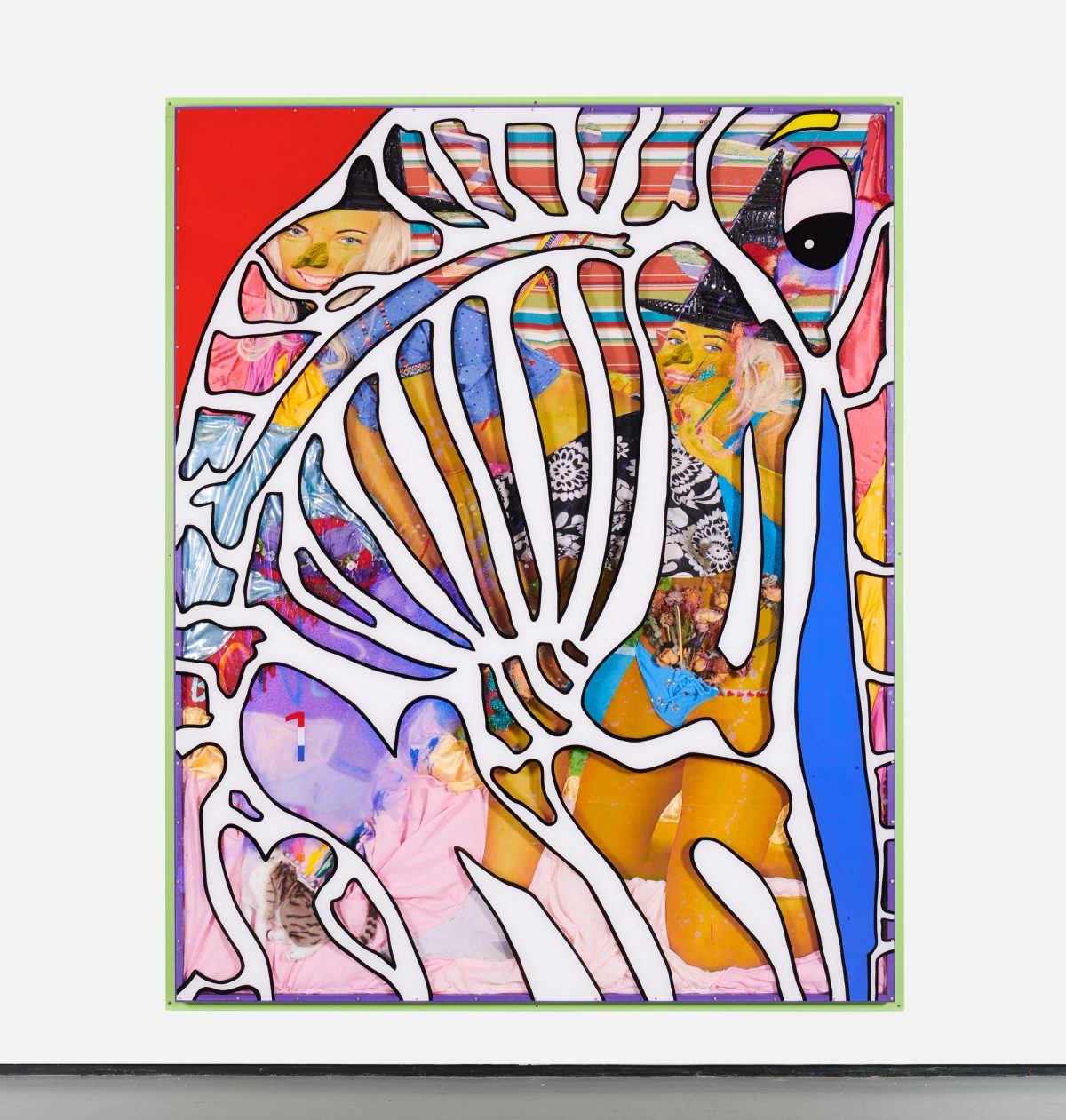
Mike Shultis, Witch Hunt (Inflated), 2018
"I'm diligent in my American pursuit of glory, excess, and ugly truths."
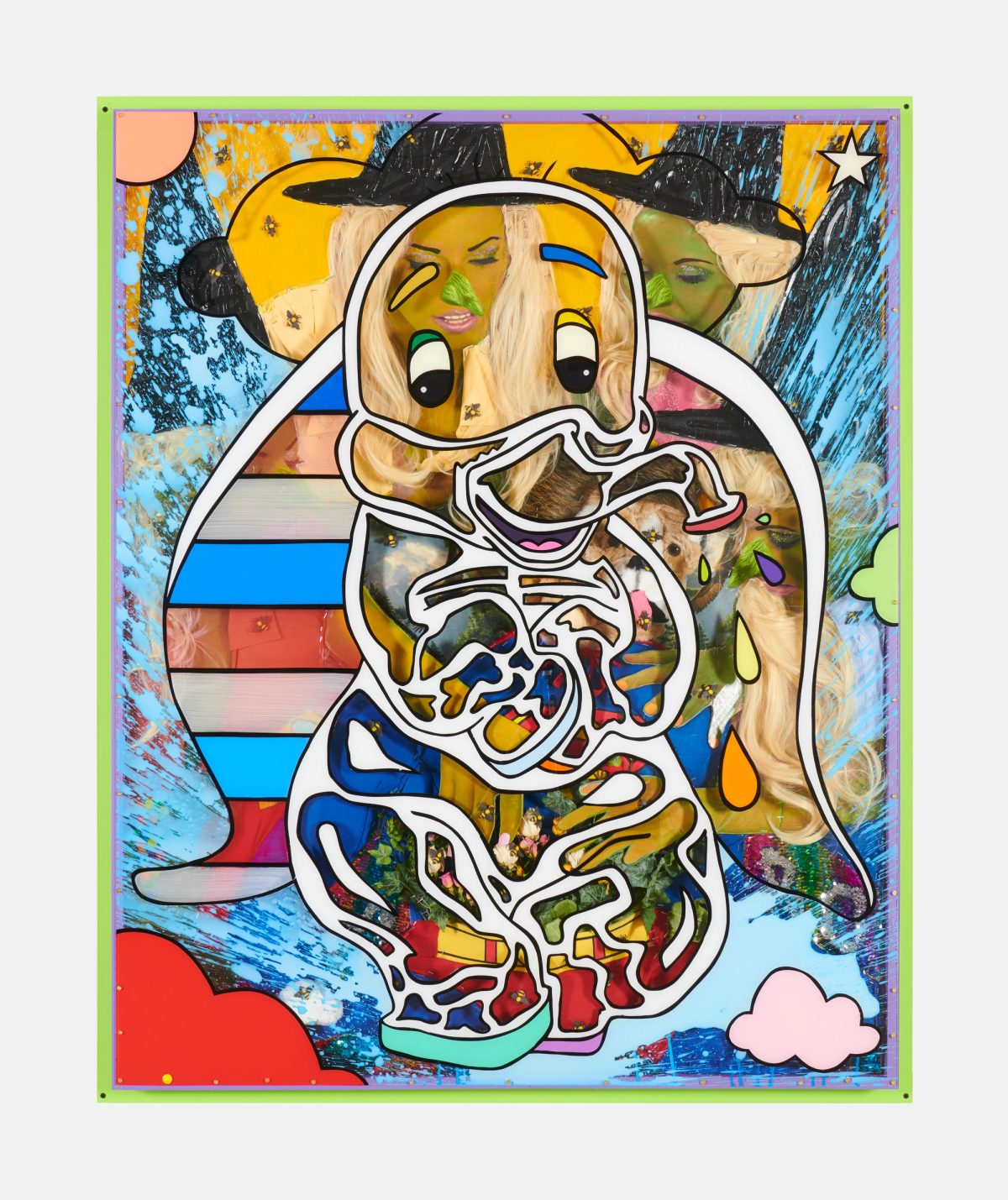
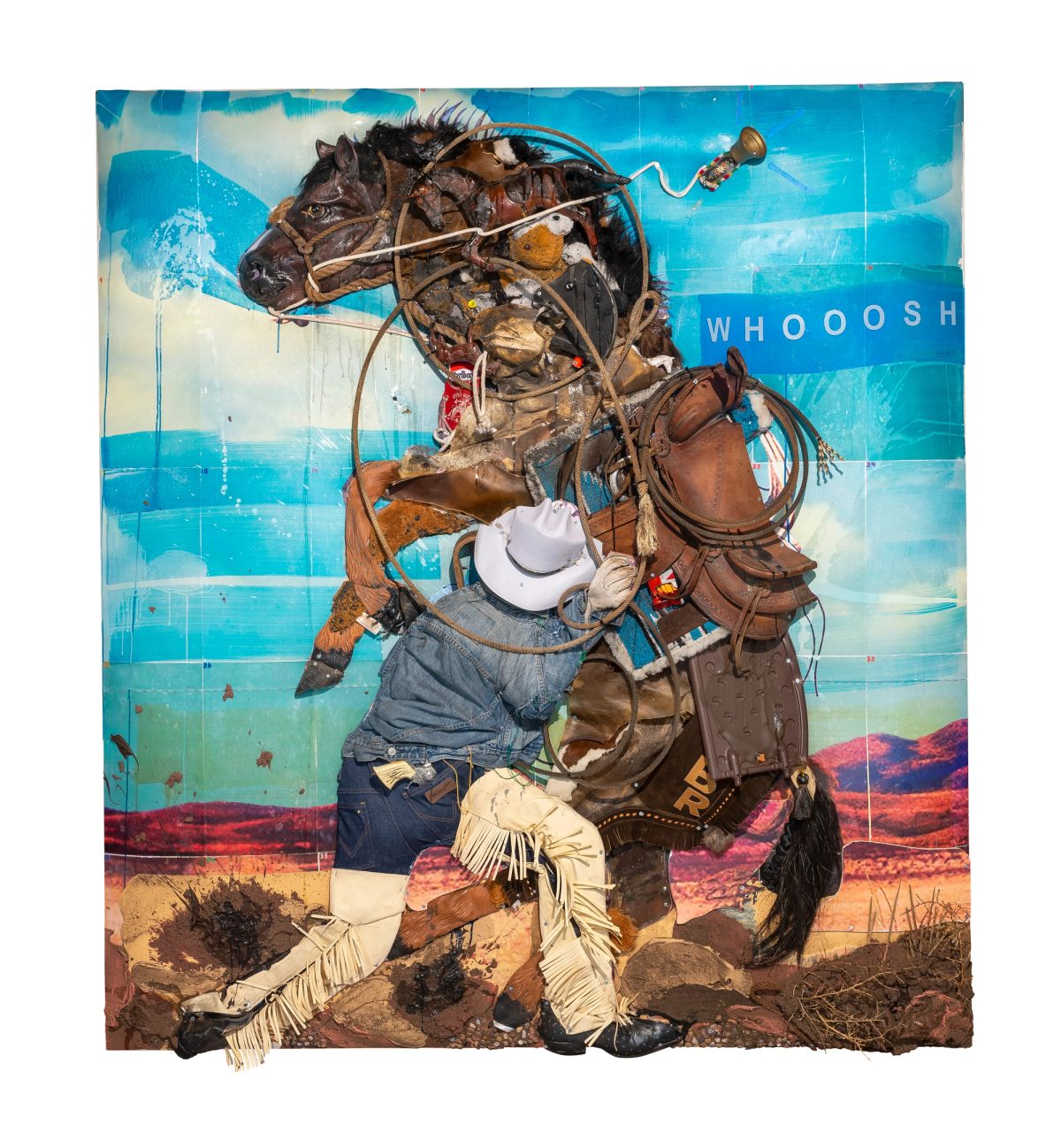
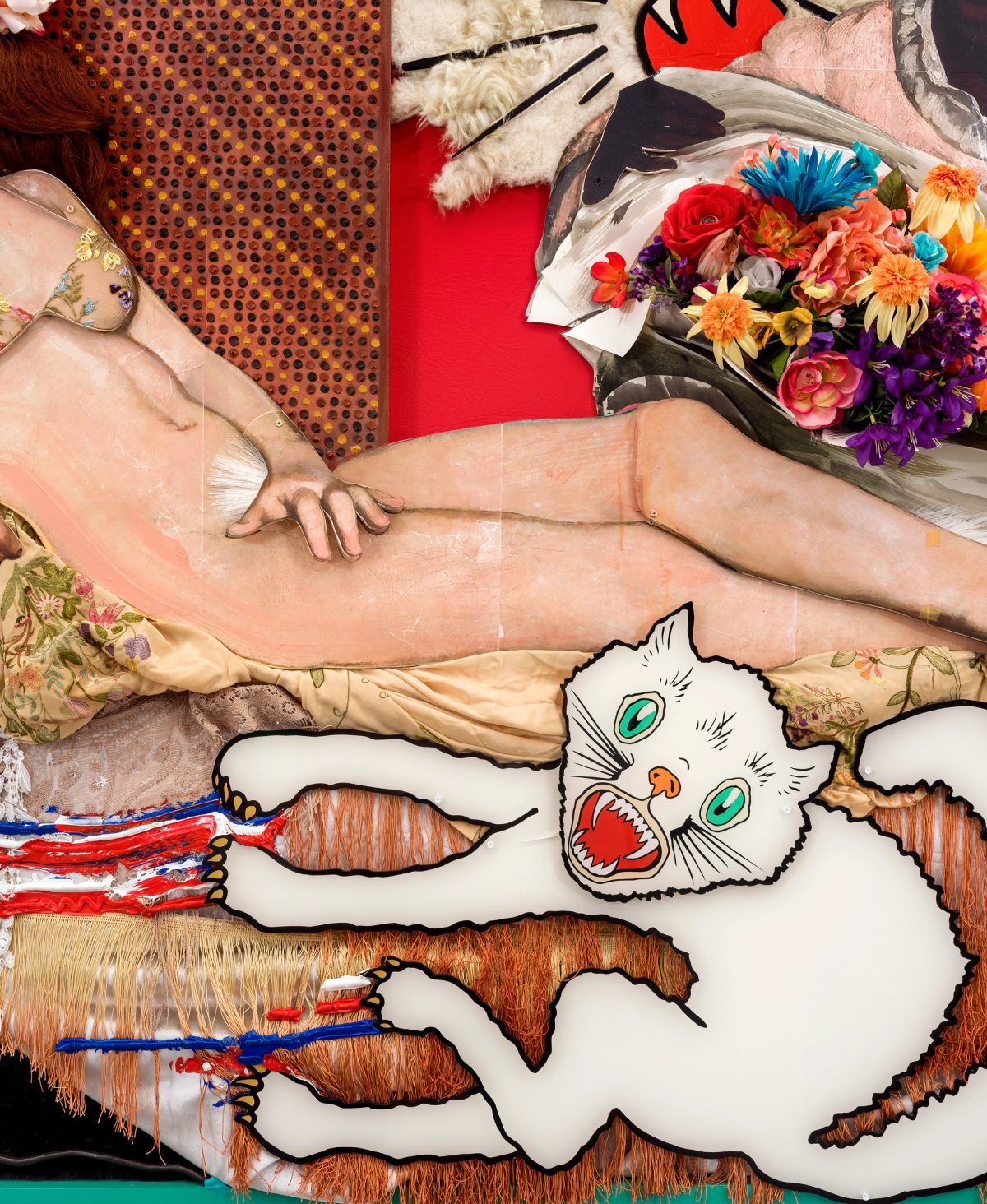
Left: Mike Shultis, Dumbo, 2019
Middle: Mike Shultis, Wrangler, 2022
Right: Mike Shultis, Cats (detail), 2024
The plexiglass layer in many of your pieces creates an interesting distance. It seals everything inside, almost like the objects are preserved behind glass. Do you think of the works as containers in some way, like archives, tombs, or vitrines?
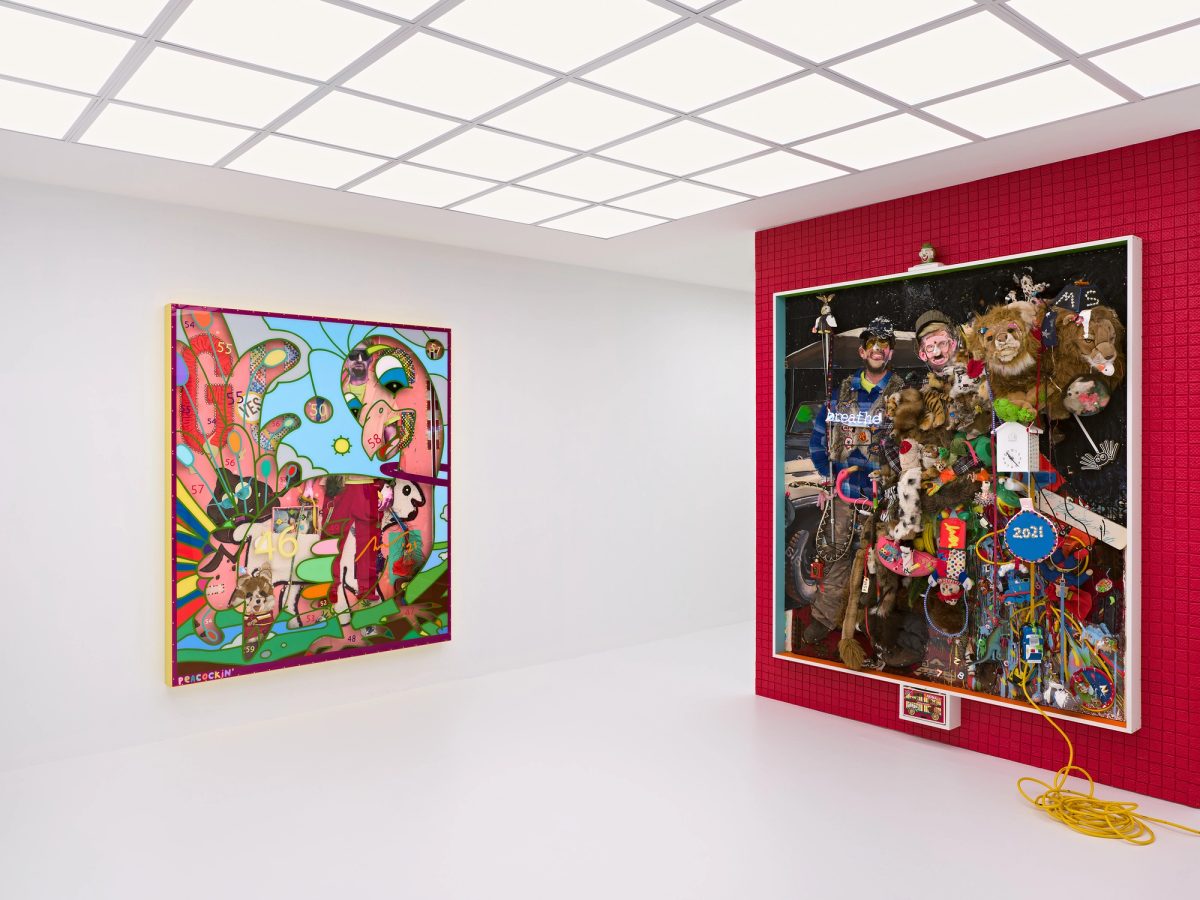
I think of these sealed works as time capsules. The background assemblage is created like any other painting I make, except the subject and imagery is often difficult and dark, something I don't want the viewer to fully confront. But once finished and sealed, it suffocates, distorts, and preserves while crushed behind the garish cartoon plexiglass surface.
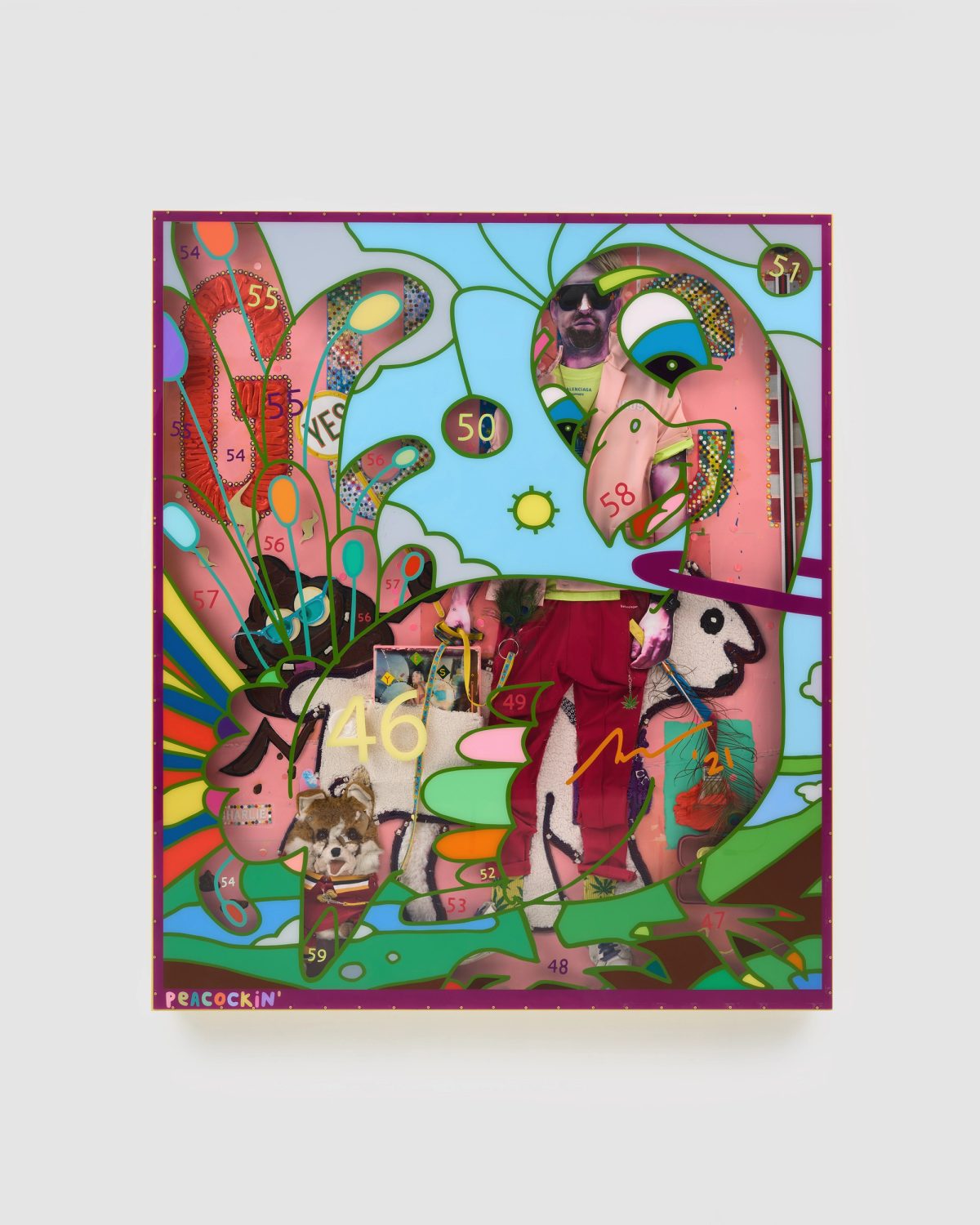
In the first iterations, the plexiglass imagery was hand-drawn paint-by-numbers. Partially filled to expose the assemblage underneath but also left in progress to allow the "option" to fill/erase the remainder at a future date. Later the plexiglass imagery would evolve into coloring book cartoons, old master drawings, Disney characters, and more. I want these vitrines to operate like bug traps. The cute, fun, slick, and shiny plexiglass surface lures you in, only to zap you once discovering the reality of the background. At some point in my career I would like to give the option to collectors and collections to open these boxes and unearth what's hidden behind.
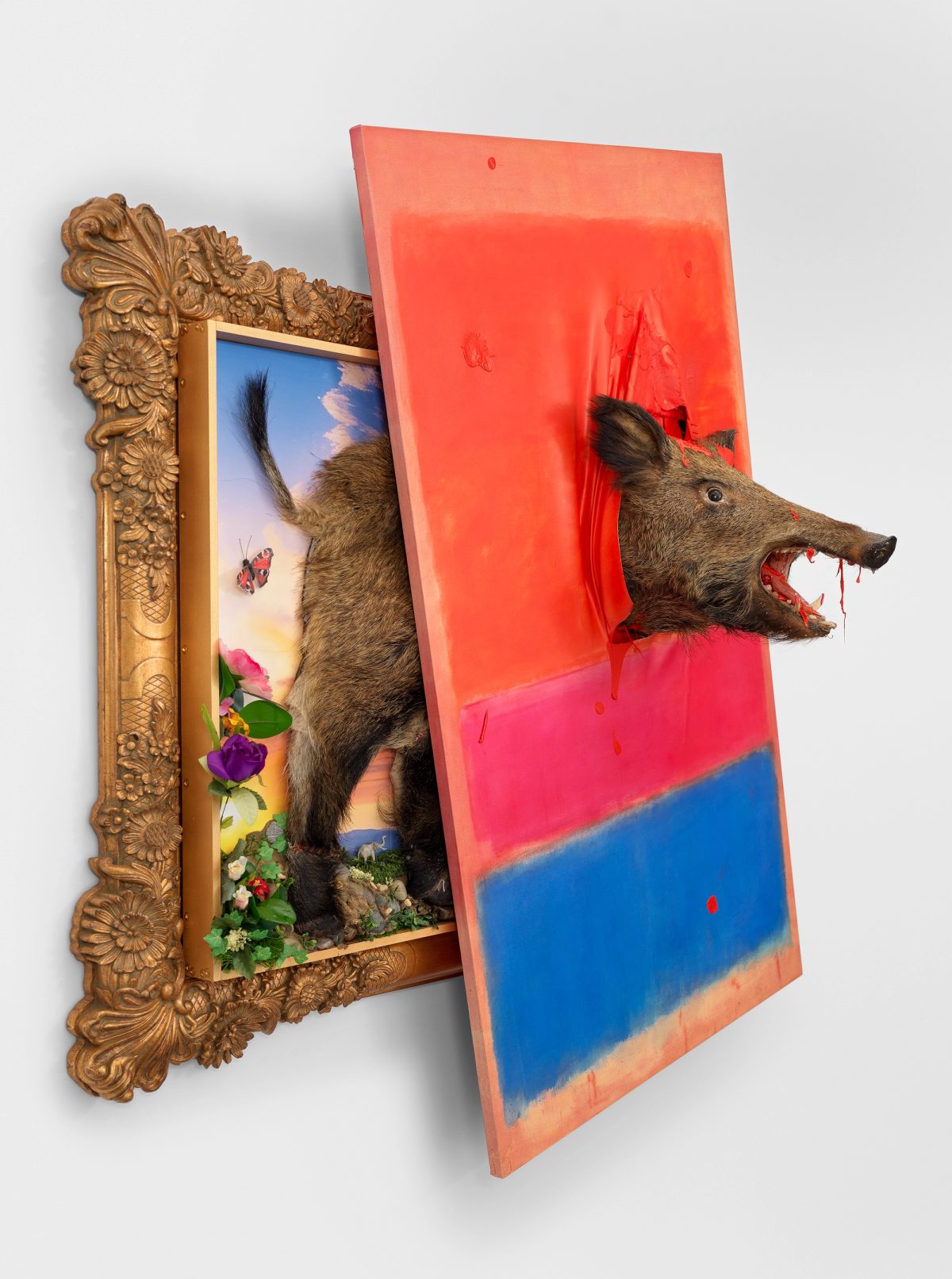
Left: Mike Shultis, Europe (side), 2024
Right: Mike Shultis, Peacockin', 2021
Many of the objects in your work, cowboys, taxidermy, consumer toys feel tied to very specific American imagery. It’s like fragments of national mythology scattered across the surface. Do you think of the work as a portrait of American culture, or are those materials simply the world you happen to be surrounded by? Do you think about your pieces as documenting a certain time or atmosphere?
I believe the role of the artist is to document, comment, and reflect on how they fit in the world. I am American, I live in America, my materials and found objects are sourced in America, so naturally I feel it's my duty to identify, critique, and mirror my America. Given the time and circumstances, this feels more important than ever.
Would my work change drastically if I lived in Berlin or London? I'm sure it would. My store-bought materials would change and my material hunts would deliver discarded objects from an entirely different culture and history. At some point I would like to move around the globe and make work in different settings. I do think my paintings document the time and atmosphere in which they were created and I'm very interested in how the work would evolve in both form and subject. However, until that time, I'm diligent in my American pursuit of glory, excess, and ugly truths.
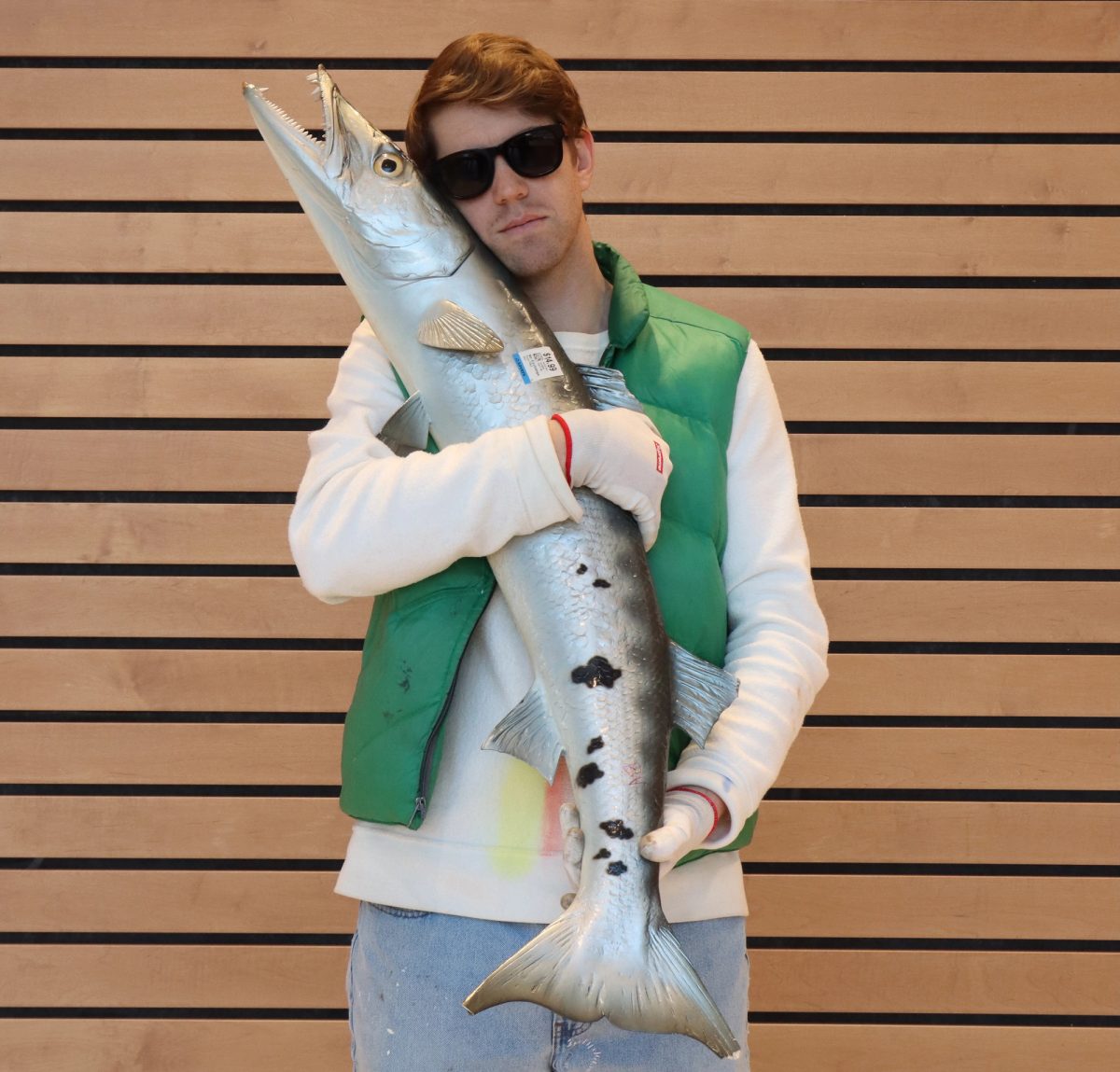
Left: Portrait of the Artist
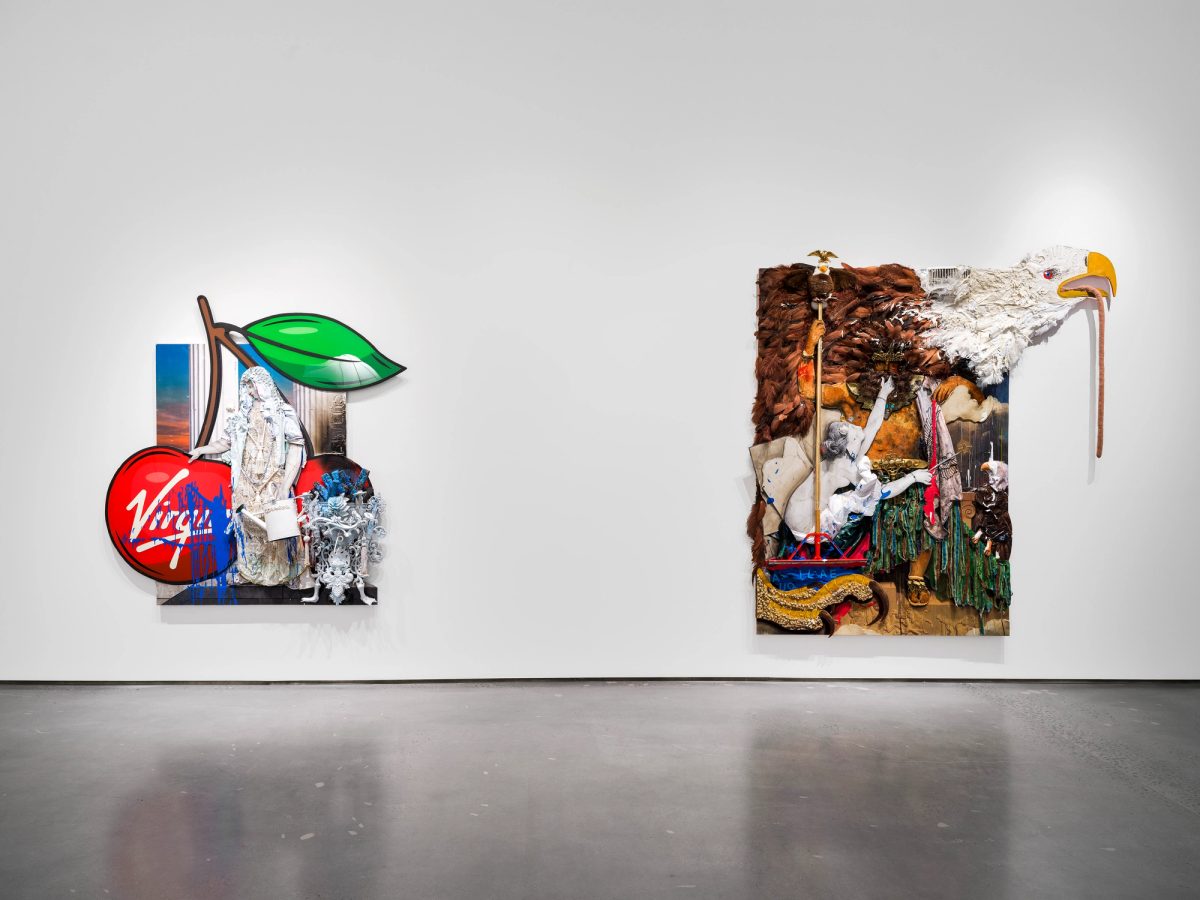
Right: Installation view, Rome
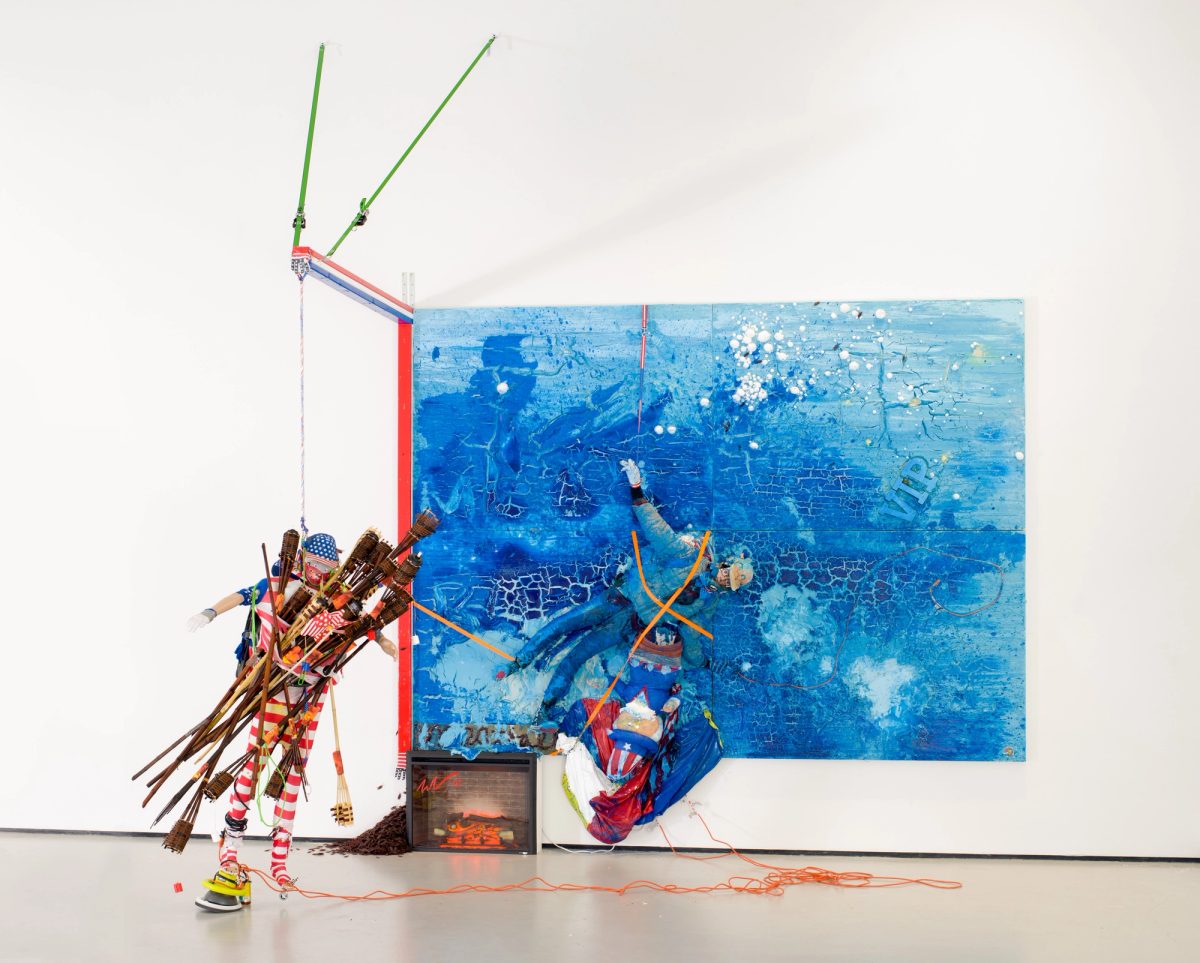
Cover Image: Mike Shultis, Burning Man, 2018