GROWN, NOT BUILT: IN CONVERSATION WITH JOHANNES THIEL
CONVERSATION BY SELIN KIR
CO-FOUNDER, CURATOR
7 JULY 2026 — UNITED KINGDOM
Something in Johannes Thiel's work is always waiting to be switched on. His sculptures sit in standby, bodies without a maker's fingerprint, surfaces so sealed they seem grown, not assembled, relics of a present that already feels like the future. On the occasion of Unbothered. Moisturized. In My Lane. Focused. Flourishing., his first solo exhibition at Förderverein Aktuelle Kunst (FAK26) in Münster, Thiel talks turbines that waste energy on purpose, memes as material, and why he'd rather build a system than sign a surface. What follows is less an artist statement than a diagnosis of his own instincts, organic, ironic, and entirely unbothered by whether we're watching.
Your first solo exhibition opened in Münster in May 2026, and looking at your trajectory, you've moved through group shows, club bunkers, online platforms, and institutional spaces, and now a room that is entirely yours. A solo show is also a kind of statement about where you are and what you stand for at this specific moment. What do you want this one to say?
It is a repivot. The organic side never fully left my work, but with this show, I wanted it weirder and more bodily again. I am coming out of a long stretch of material experimentation, and those new processes and materials are now finding their way into the works: back toward organisms, grown bodies, things that feel half-living, even slightly disgusting.
For the first time, I could think installatively at a bigger scale, so I did not treat it as a set of objects in a room but as one organism, where the pieces relate to each other like parts of a larger system. A lot of the aesthetic decisions came out of a new tool I built that visualizes proportions and exponential growth, and its shapes and patterns run through the whole show.
The title, Unbothered. Moisturized. In My Lane. Focused. Flourishing., is borrowed from the self-optimization meme, so the whole thing is sincere and ironic at once. It also describes the works themselves. They lie and stand there unbothered, fully in their own lane, indifferent to us. They seem to sit above both the people looking at them and the technology they are made of, as if they have outlasted both and do not need either to keep going.
If it says one thing, it is that I am done keeping the work clean and technical, and more interested in something that breathes and could not care less whether we are watching.
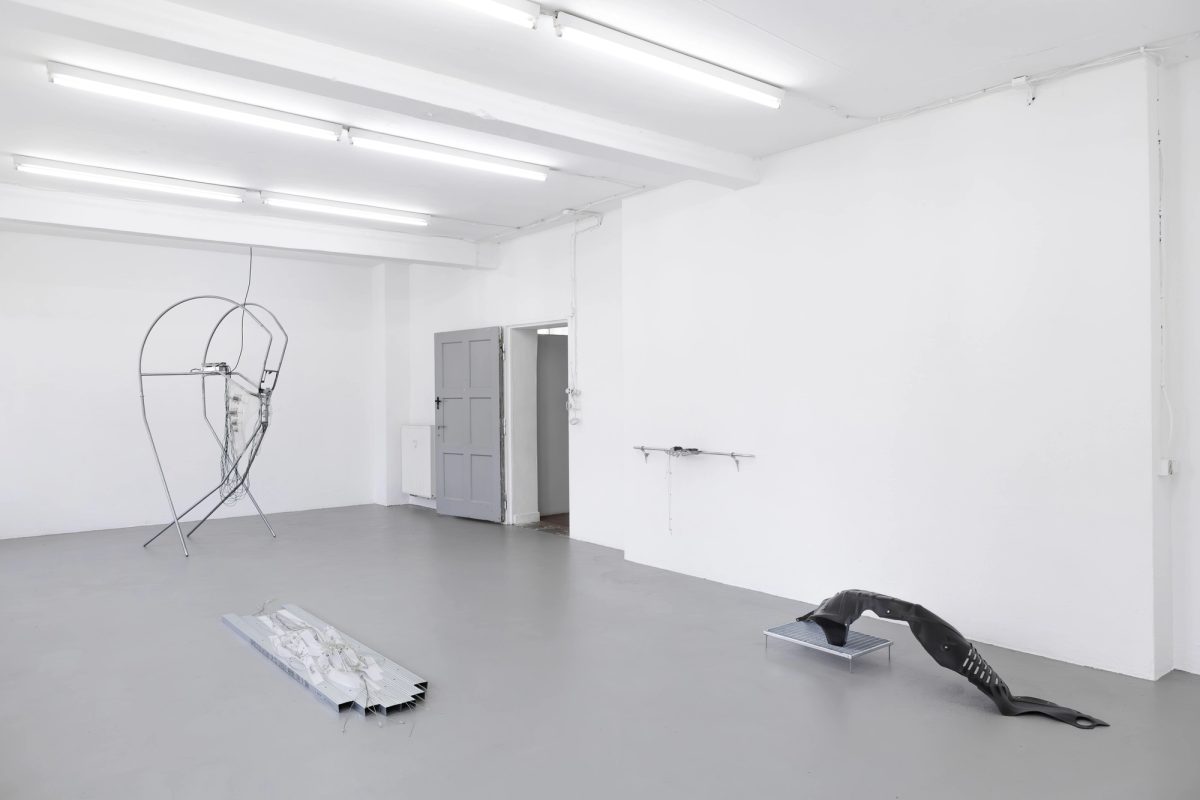
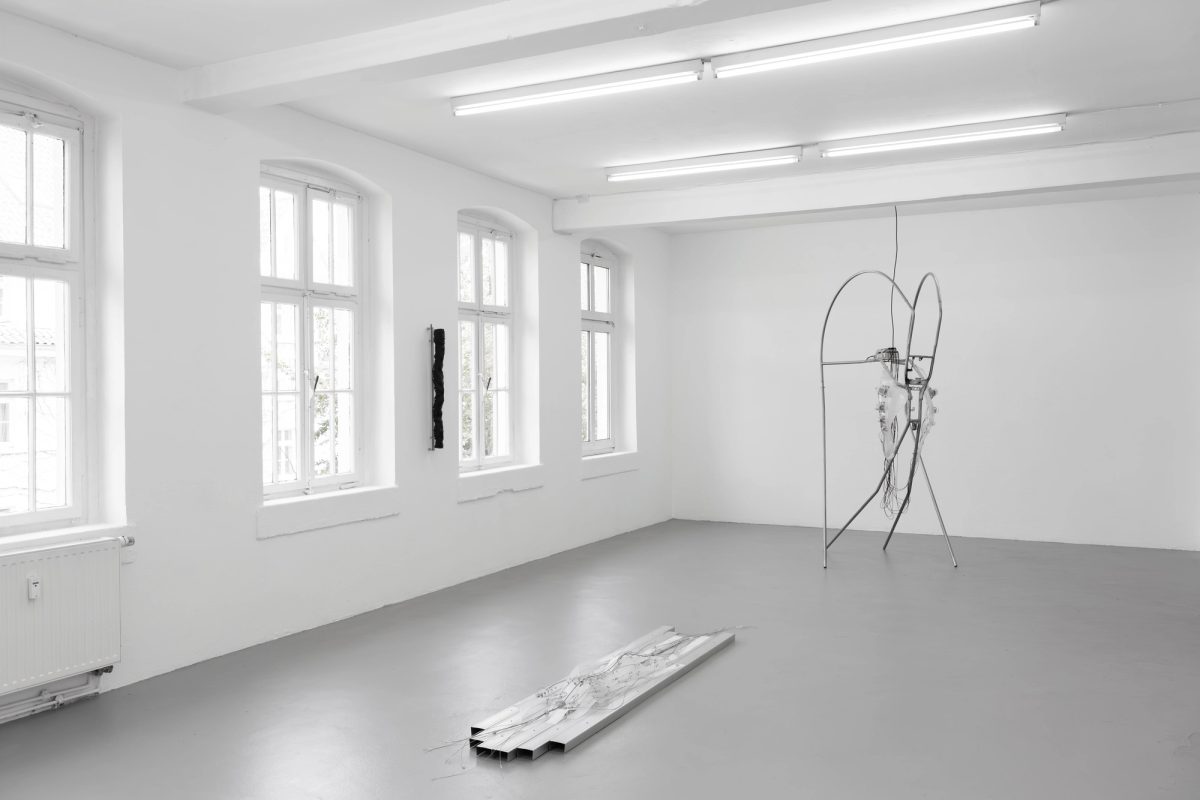
Unbothered. Moisturized. In My Lane. Focused. Flourishing., installation view, Förderverein Aktuelle Kunst (FAK26), Münster, 2026
The Vertically Rotating Turbine draws reference from wind turbine technology. Yet instead of generating energy, it consumes it. Is that inversion a deliberate stance for you?
Yes, completely deliberate. The starting point was really the turbine itself. I was looking at vertical-axis turbines in urban space, and the helix just looked absurdly futuristic and spacey to me, so I wanted to rebuild it: three translucent fiberglass blades on a stainless steel frame, driven by a motor that simulates wind and modulates between calm, even rhythms and abrupt, unpredictable impulses until it feels almost autonomous.
A lot of the right-wing rejection of renewables is really an aesthetic argument, that turbines are ugly and ruin the landscape, so I found it interesting to build one that is overly aestheticized and then invert its function. Instead of producing energy, it wastes it, spinning only around itself, removed from the whole debate it references. The pointlessness completes the joke, and the humor is the part that carries the political comment without a raised finger.
The German brainrot meme of the rotating fish came in later, as a hidden reference. Funny enough, the fish in that meme actually rotates horizontally, not vertically, but it was everywhere in Germany a few weeks before, so it fit the piece perfectly and slipped in. I reference memes a lot, simply because they surround me in my everyday life and shape how I think. I live half on the internet, so that material ends up in the work whether I plan it or not.
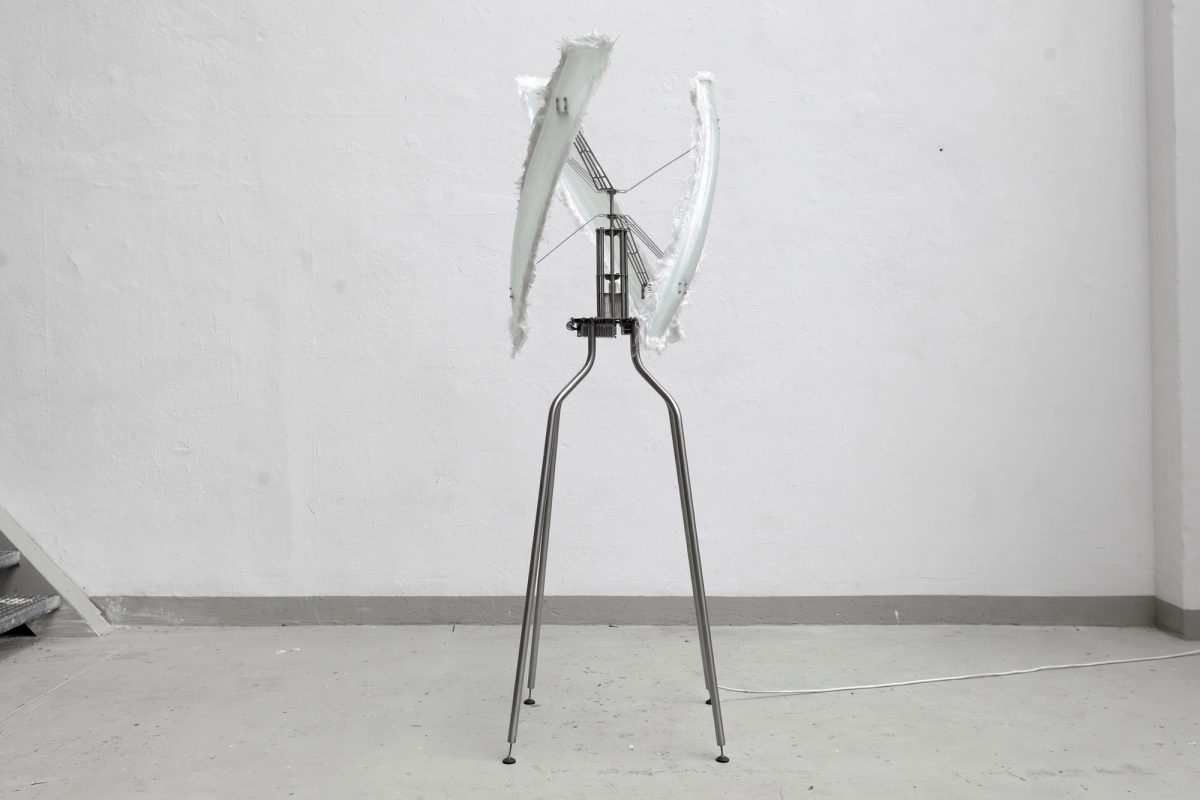
Vertically Rotating Turbine, 2025, stainless steel, fiberglass, resin, electronics, Arduino, gearmotor, 220 × 70 × 70 cm
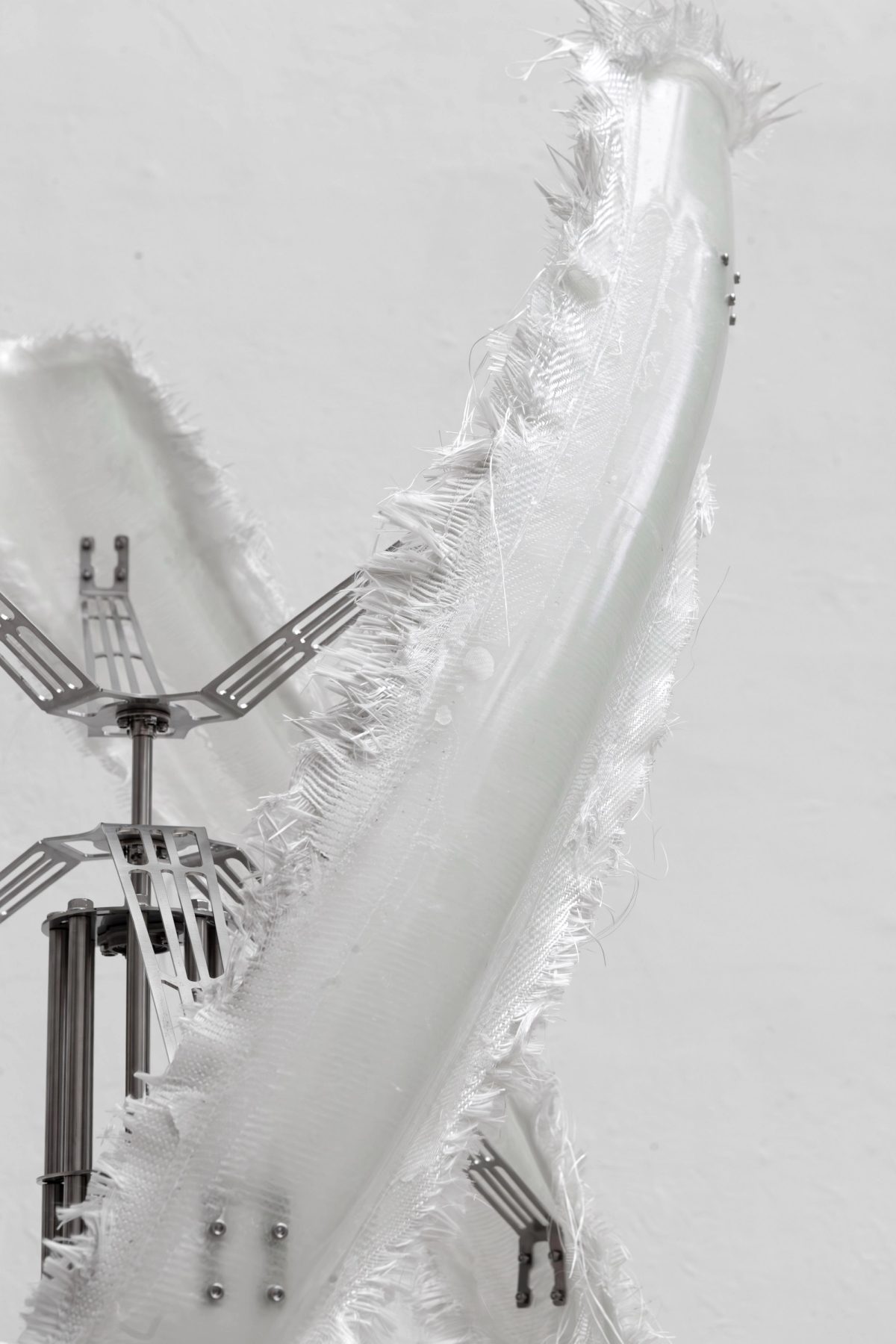
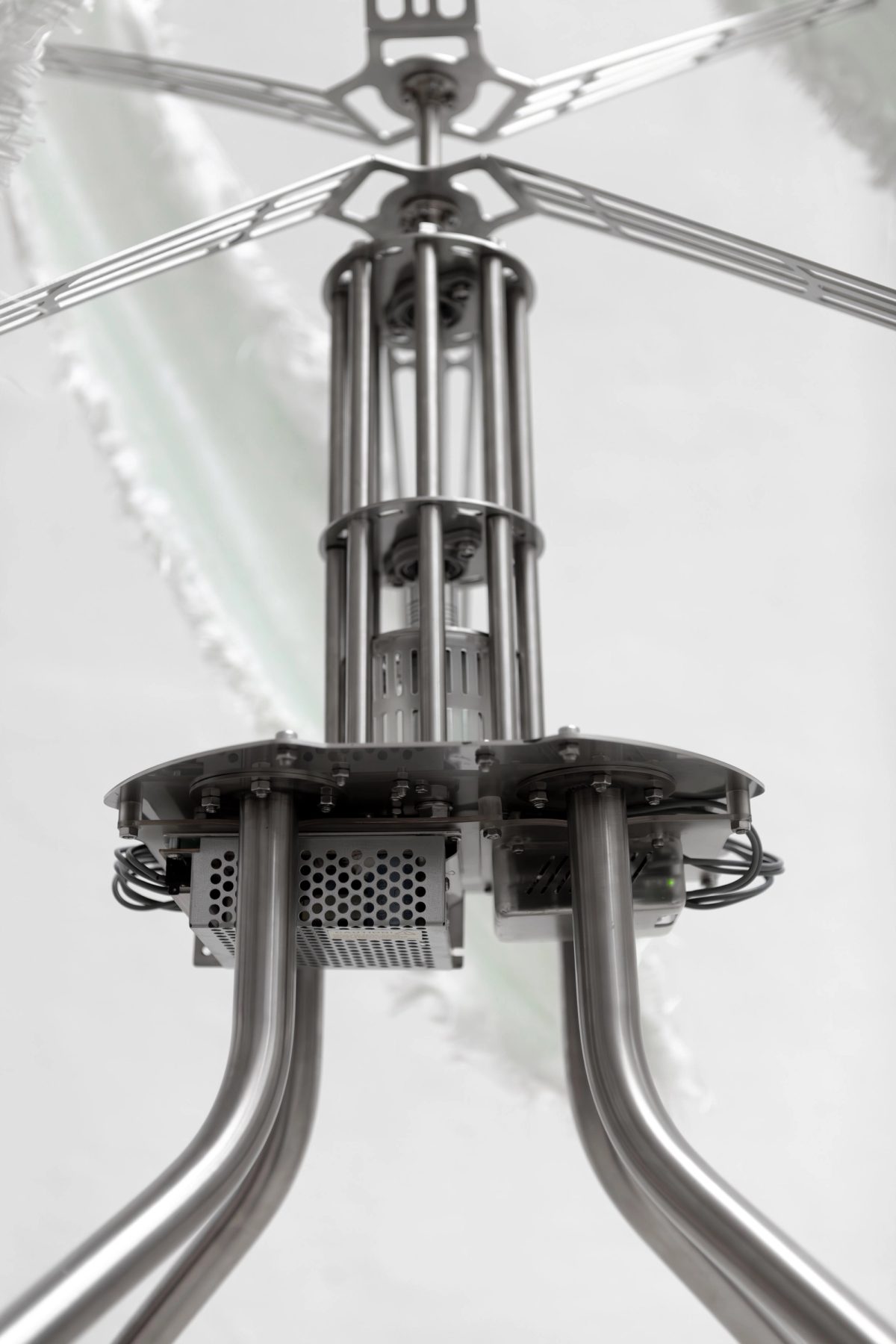
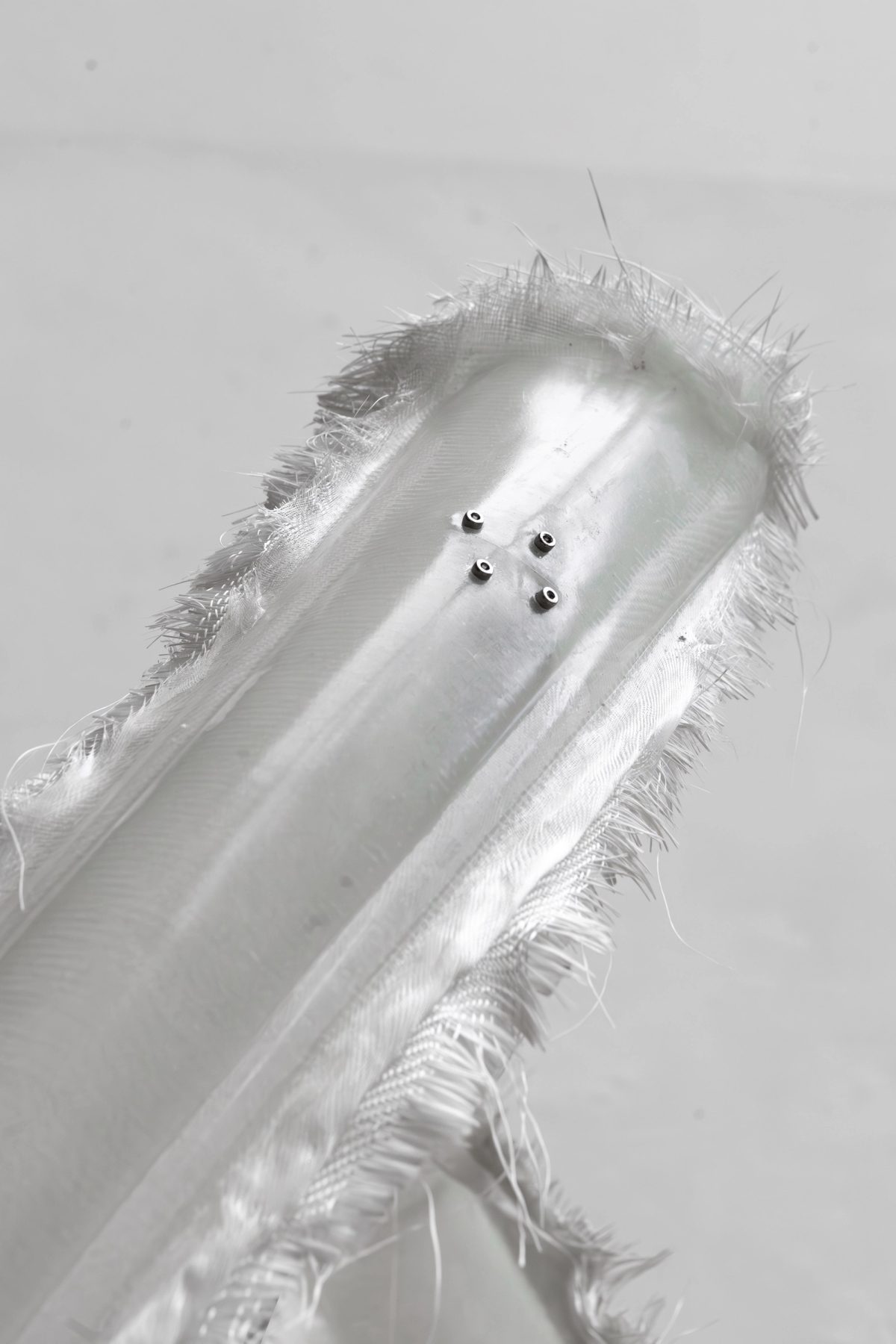
Vertically Rotating Turbine, 2025, stainless steel, fiberglass, resin, electronics, Arduino, gearmotor, 220 × 70 × 70 cm
You work across 3D printing, CNC milling, Arduino, laser cutting, and stepper motors. At what point does the technical process become the artistic decision?
Honestly, always, and I try to work against it. These tools can produce almost any geometry if you know the hacks, and it is amazing how little effort complex shapes take now. But every means of production has its limits, and that is exactly where it gets interesting for me.
The moment the machine resists, or the material does something I did not plan, the technical process turns into an artistic decision. I design rules, paths, and constraints, and then let the process introduce an unpredictability I could never fully author on a screen.
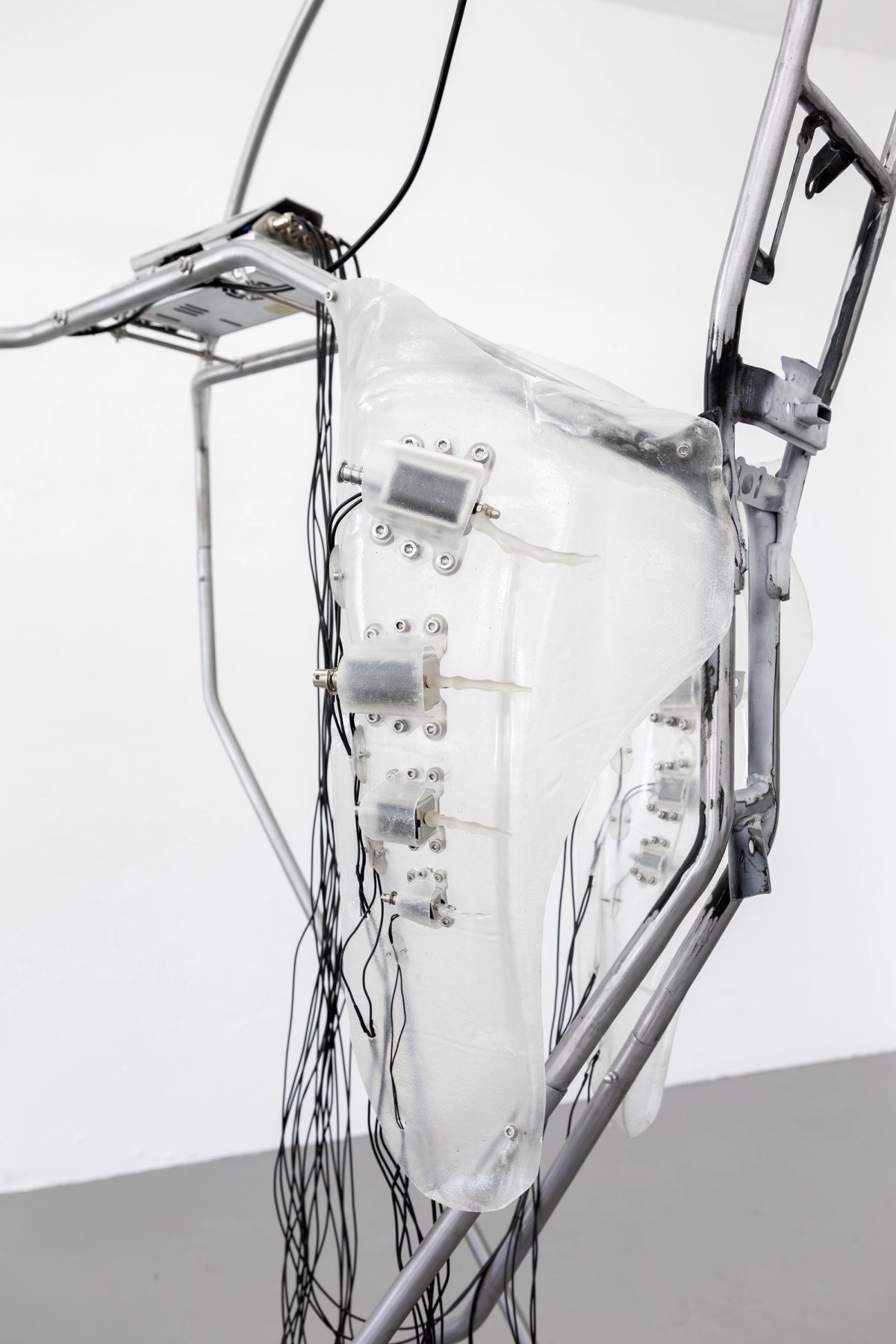
With ON-OFF STATE, for example, the electronics are just binary on-and-off solenoids, but through software, PWM, and easing curves, you can coax very organic movement out of something that brutal.
So the decision is rarely a single gesture. The handwriting in my work is the structure, the system itself, not a personal mark on the surface. I keep control over the parameters, not over the result.
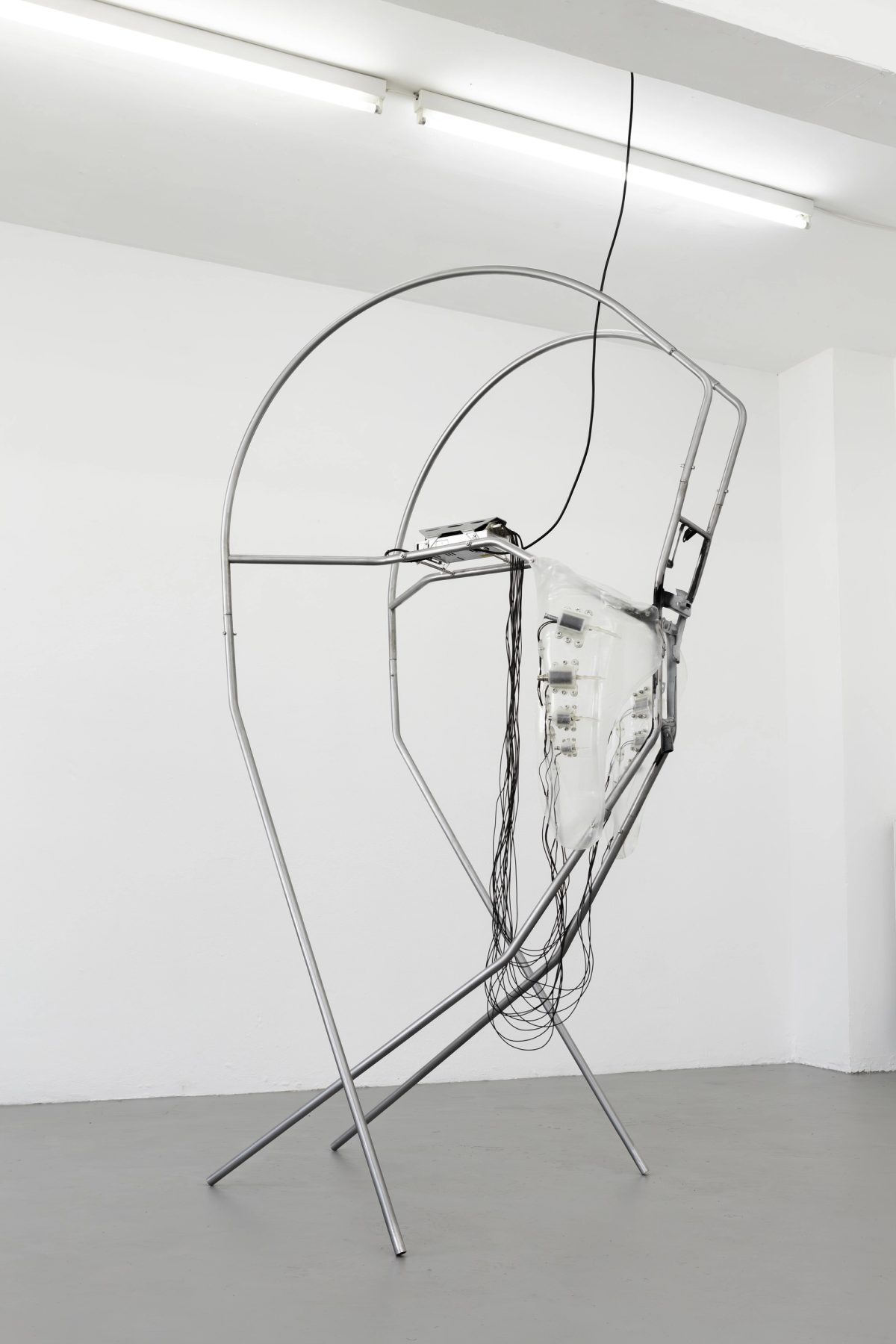
ON-OFF STATE, 2026, polished steel, motorcycle frame, aluminium, resin, fiberglass, solenoid actuators, electronics, 240 × 140 × 120 cm
"I am done keeping the work clean and technical, and more interested in something that breathes and could not care less whether we are watching."
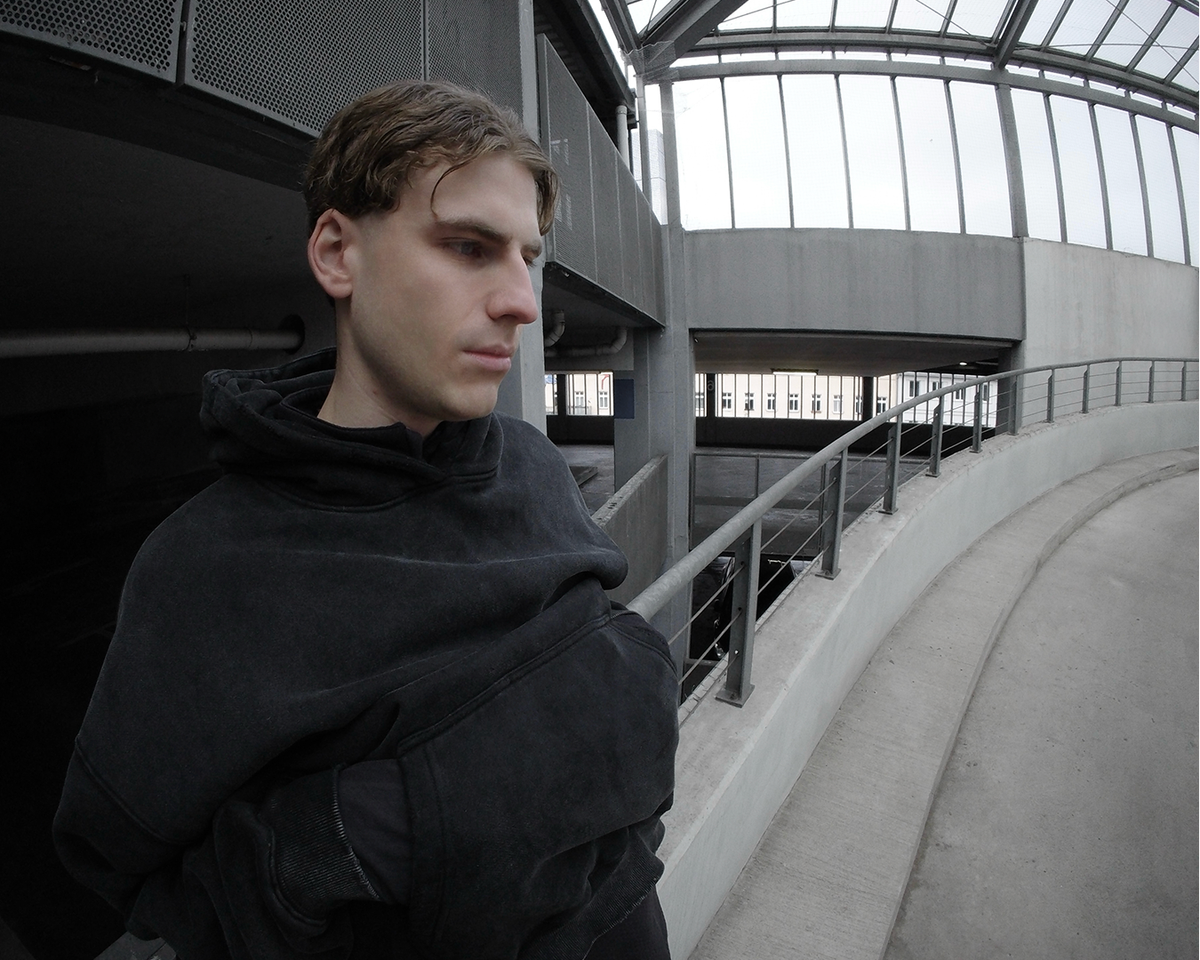
Johannes Thiel, Portrait by @ouvlad
Weak Synaesthesia starts with a piece of music, Seed Net by Windowseeker, and translates its MIDI data into graphic notations, which then become physical reliefs on transparent polycarbonate sheets. You even built the conversion tool yourself. What does it mean to make music visible, and what gets lost in that translation?
Translating sound is genuinely hard. There is no perfect mapping that works for everyone, and trying to find one taught me how subjective listening really is. Nobody hears a track the same way; everyone focuses on different things and pictures it differently.
So a lot gets lost at every step, but a lot also gets added. The piece breaks the linear way we usually read a notation: patterns, chains, and loops form, connect, overlap, and become spatial, until the reliefs carry their own sense of time. Building them on transparent polycarbonate turns the score into something you move around and almost touch, not something you read left to right.
At its best, it can change how you imagine sound and how you listen; at worst, it just does not land for someone, and that gap is the point. It is an artistic, non-scientific translation, not a measurement, and the tool that makes it is as much part of the work as the reliefs.
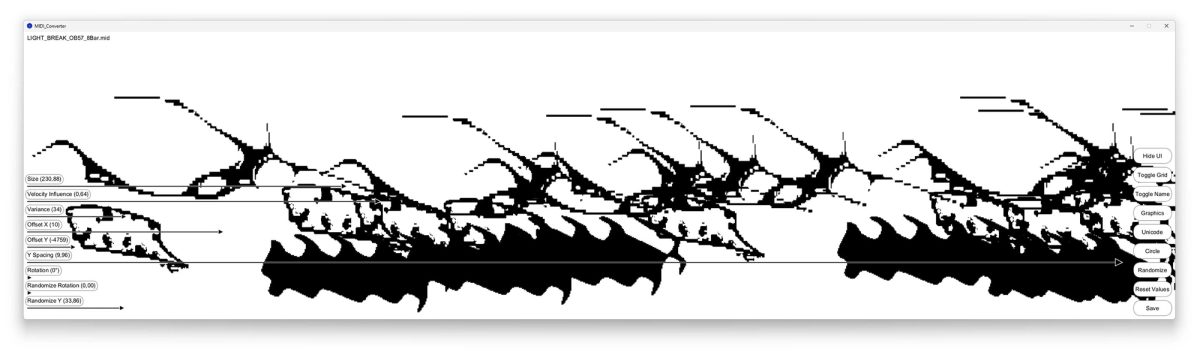
Weak Synaesthesia, 2024, polycarbonate, screws, 120 × 150 × 60 cm
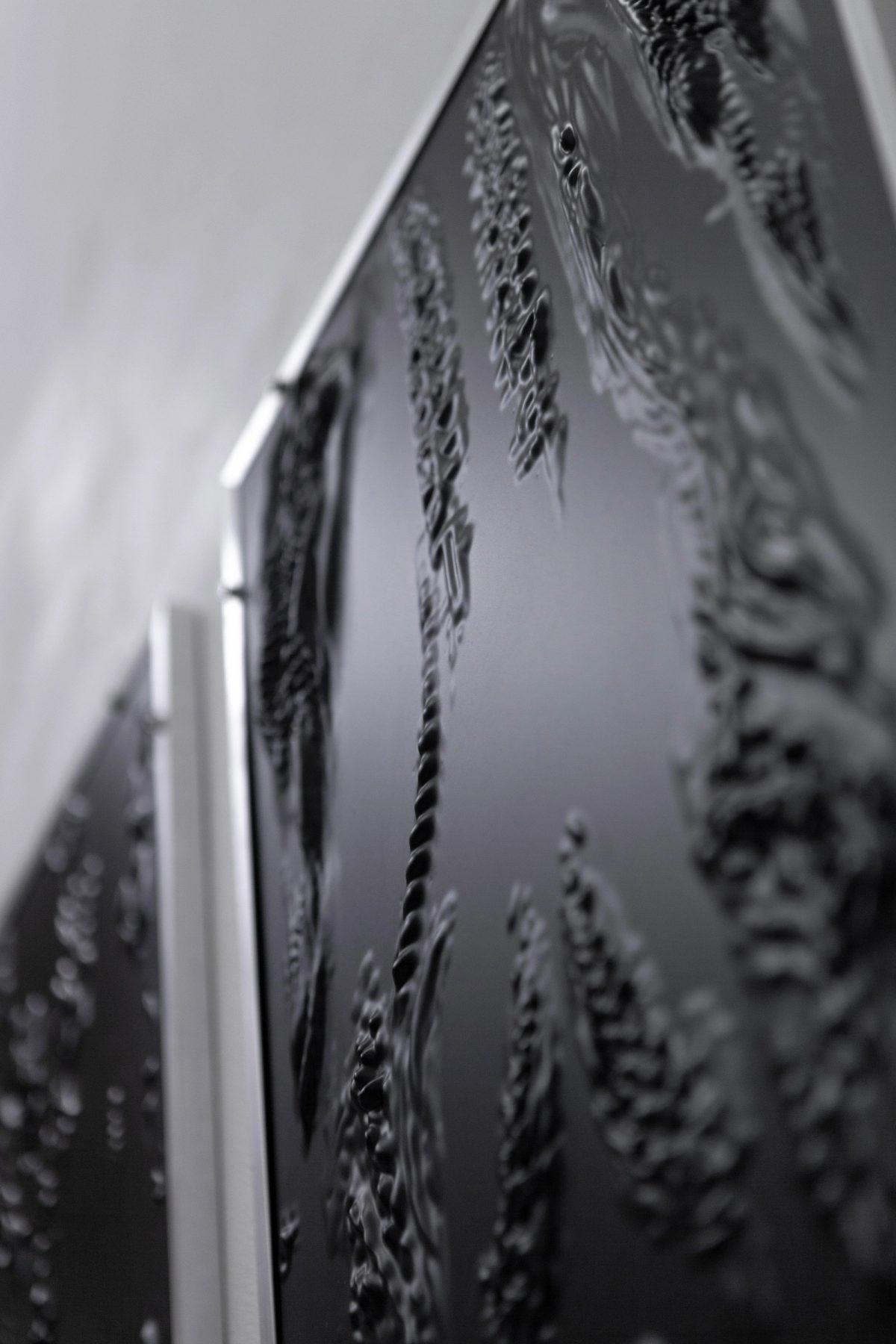
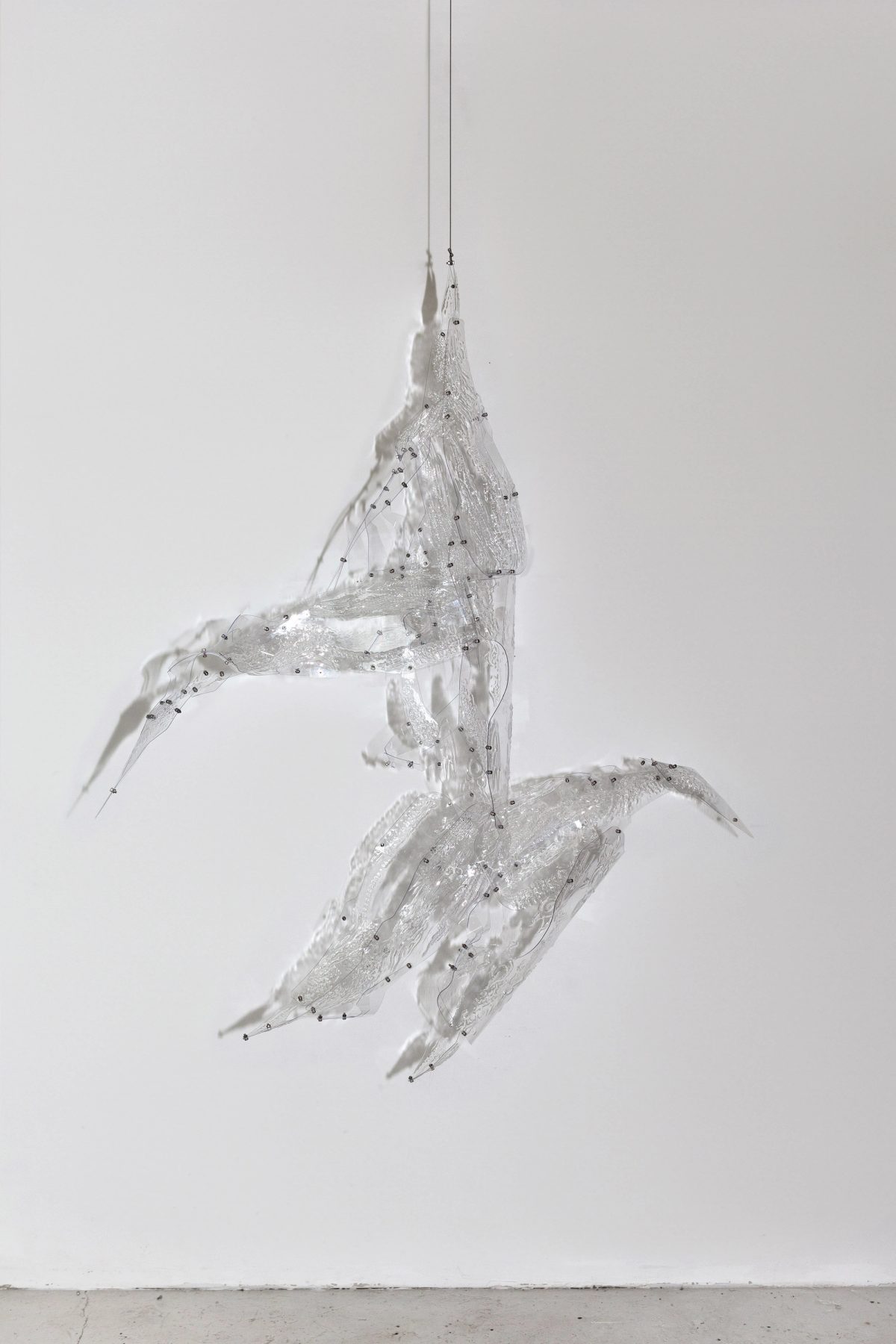
Weak Synaesthesia, 2024, polycarbonate, screws, 120 × 150 × 60 cm
The Neoliberal Urge to Curate a Friendgroup, you co-curated this show with your own work inside it. Is curating your friends a political act, an aesthetic one, or just how things actually get done?
The title began as a joke, a nod to the memes about neoliberalism seeping into every part of life, including friendship. I co-curated it with Luka Naujoks, and what surprised us was how many people said they felt seen and understood by it. It clearly touched a nerve, and it connects to ideas like Isabel Graw's on the use of friendship, the way closeness and usefulness get tangled up under these conditions.
But the title is also honest. Curating the people around you is, to a large degree, just how things get done in the art world, and that is not necessarily a bad thing. The irony was a way to name that openly instead of pretending a show assembles itself neutrally. The scene and the friend group are a real production space, where works, help, and shows actually happen, so putting my own piece inside the show was a way to admit my position rather than hide it.
So it is all three at once: political, aesthetic, and pragmatic, and I would rather hold that contradiction than resolve it into a clean answer.
There is a funny anecdote attached to this project. We applied for funding from the UdK and got rejected because they found the subject genuinely interesting but expected us to solve the problem, or at least present a proposed solution. We are not in a position to do that; it would be tilting at windmills. To me, the rejection captures the whole thing at once: the resonance, the dissatisfaction with the situation, and the impossibility of really fixing it on a large scale. I do think it is possible to build a community around yourself where you feel good, that part is absolutely doable. Breaking out of the system entirely and solving it is not.
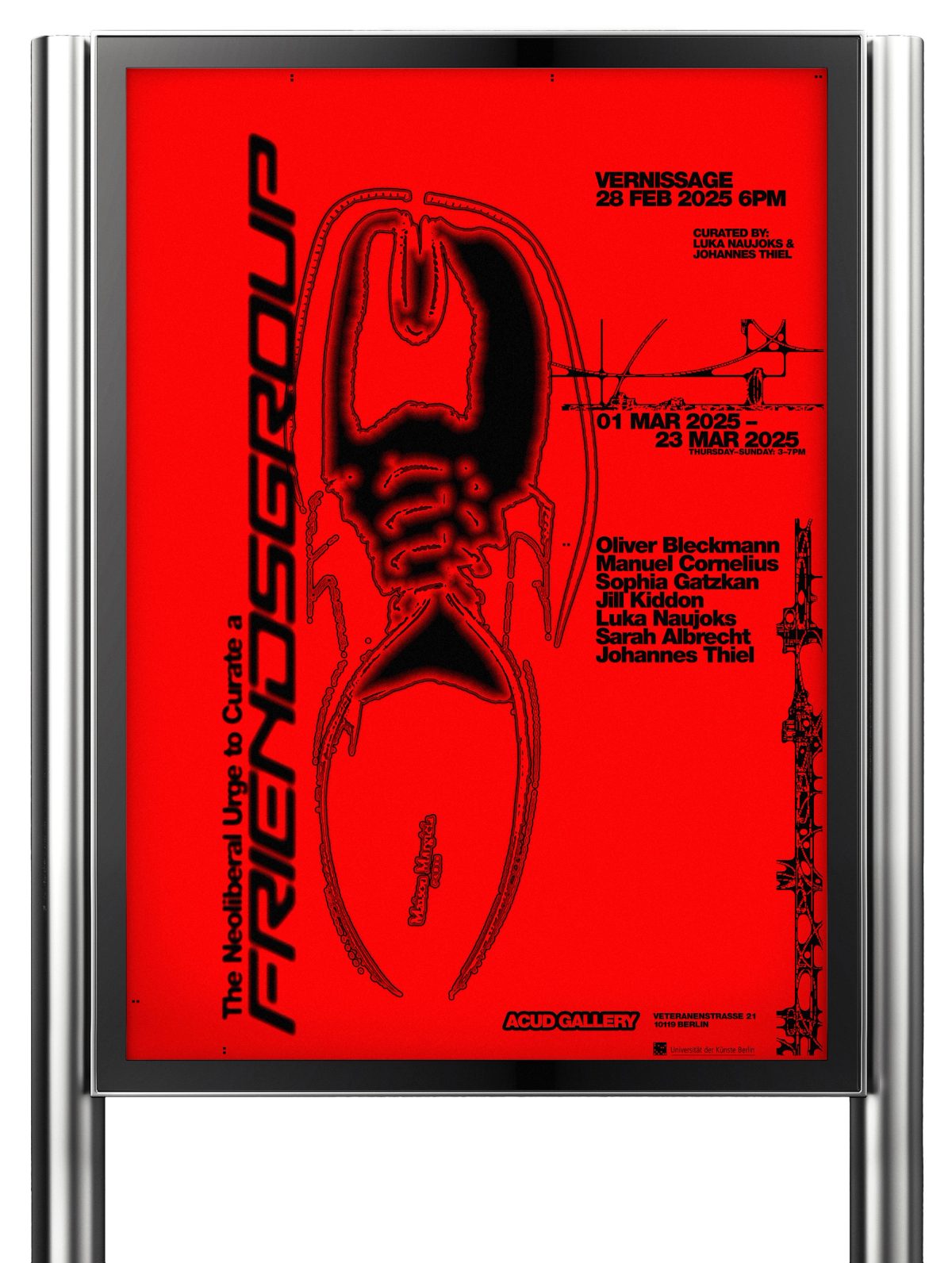
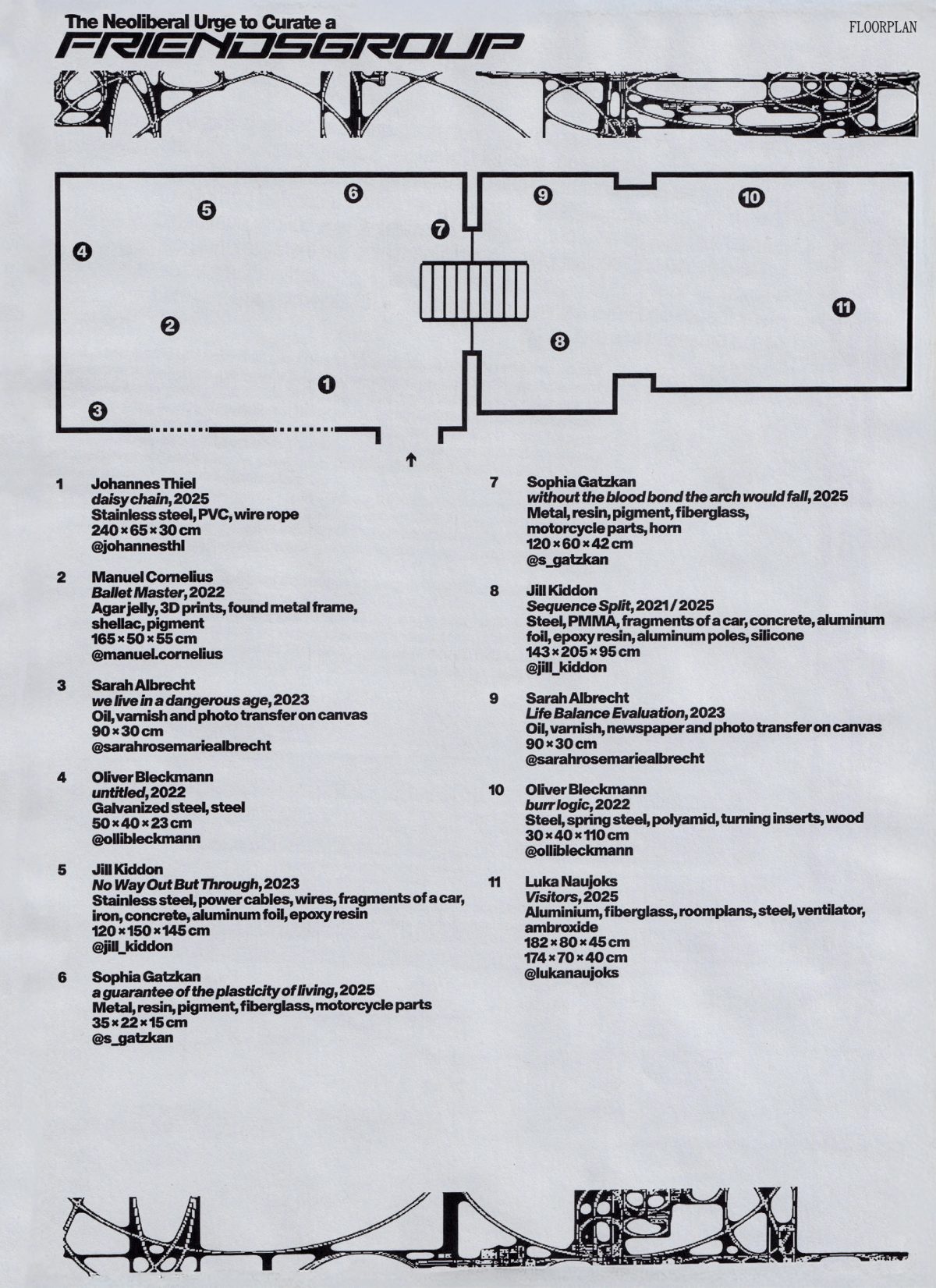
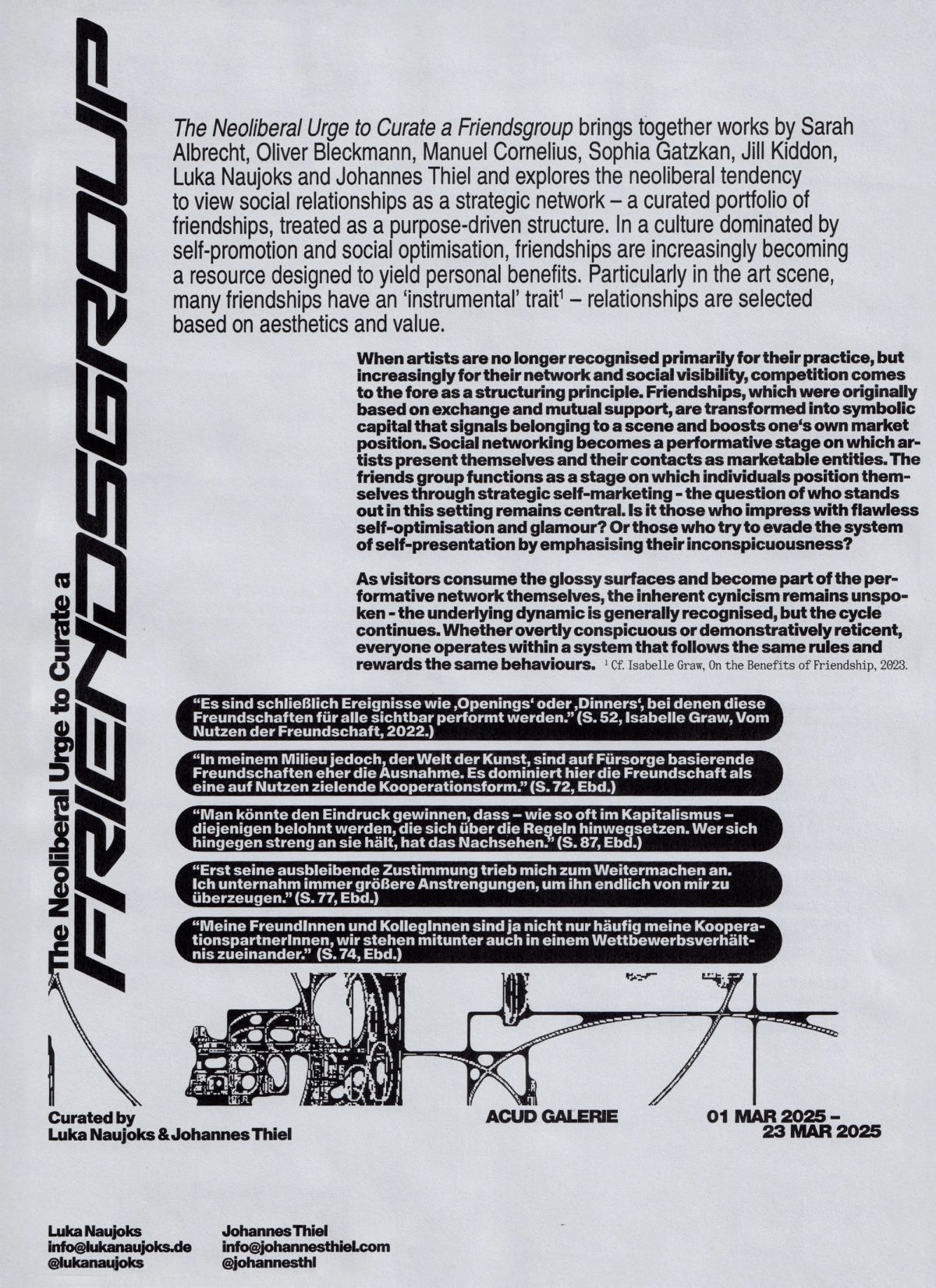
The Neoliberal Urge to Curate a Friendgroup, 2025, group exhibition co-curated with Luka Naujoks, ACUD, Berlin
"What is left are bodies without origin, things that point at the living without being alive, relics of a present that has already become futuristic."
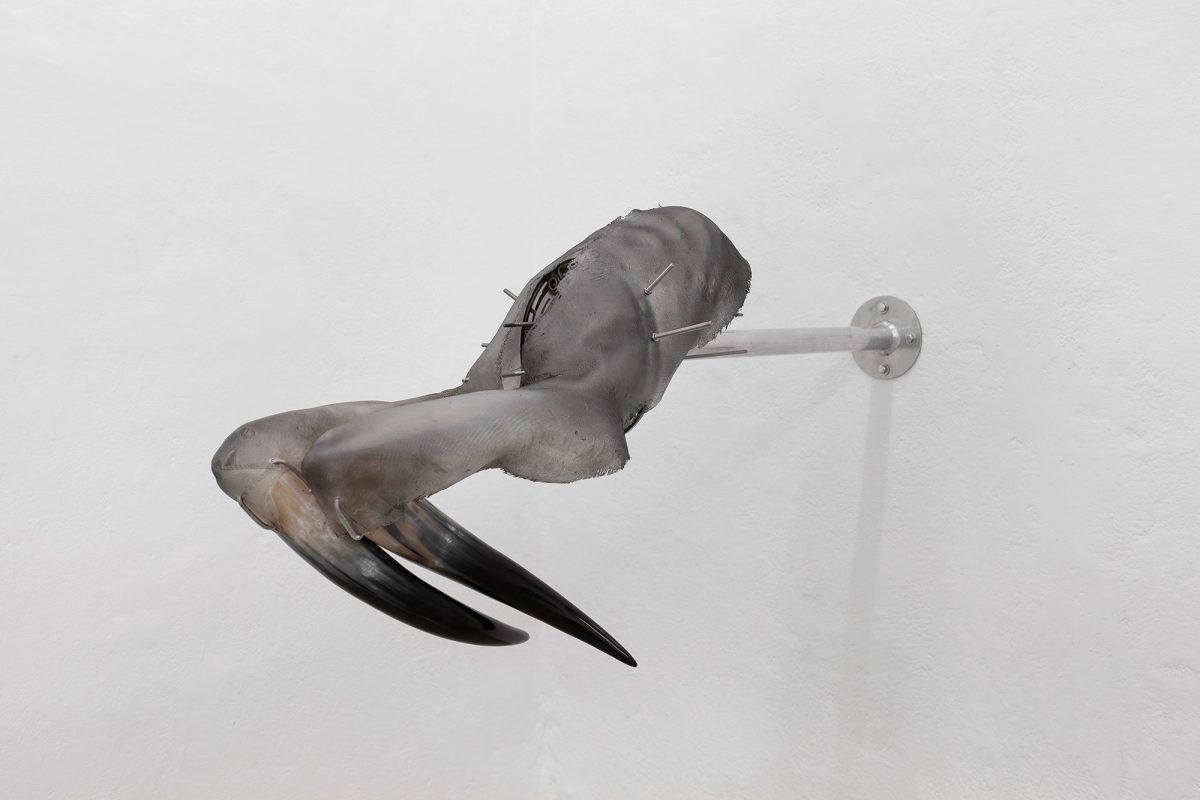
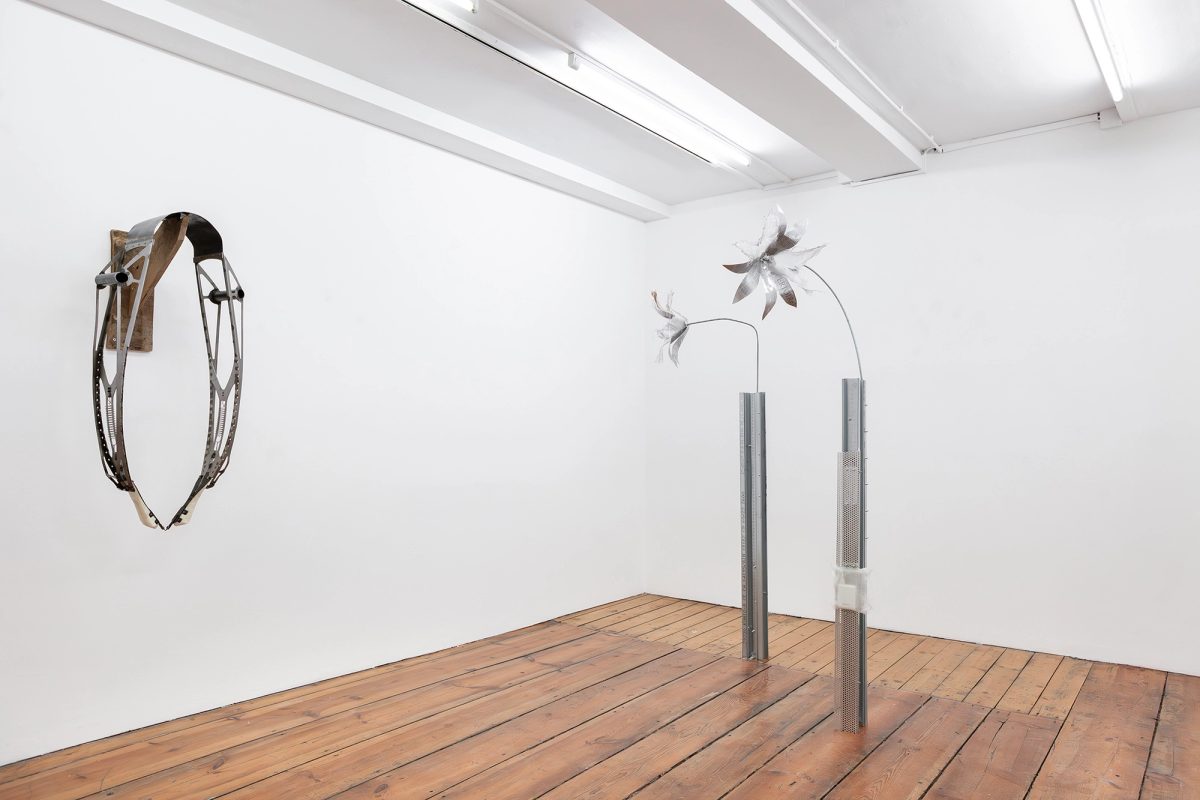
The Neoliberal Urge to Curate a Friendgroup, 2025, group exhibition co-curated with Luka Naujoks, ACUD, Berlin
You describe your sculptures as "technoid relics that speculate on posthuman presence." A relic implies something left behind. Who or what has already disappeared in your work?
The maker, first of all. I deliberately erase the human hand. The surfaces are sealed, smooth, produced by impersonal protocols, so the author disappears into the process and the objects look grown rather than built. What is left are bodies without origin, things that point at the living without being alive, relics of a present that has already become futuristic.
So nothing has disappeared in a dramatic, post-apocalyptic sense. It is more that the human, as the obvious center of the work, has quietly stepped out of the frame, and the system, the structure, keeps running without them. That absence is the actual subject.
The work is not nostalgic for a lost human; it just takes seriously that we already live among technologies that operate with their own logic, and it lets the objects behave like a body in standby, waiting, without anyone there to switch them on.
(siehe Selbstsubtraktion & Posthumane Körperlichkeit und Artist Statement).
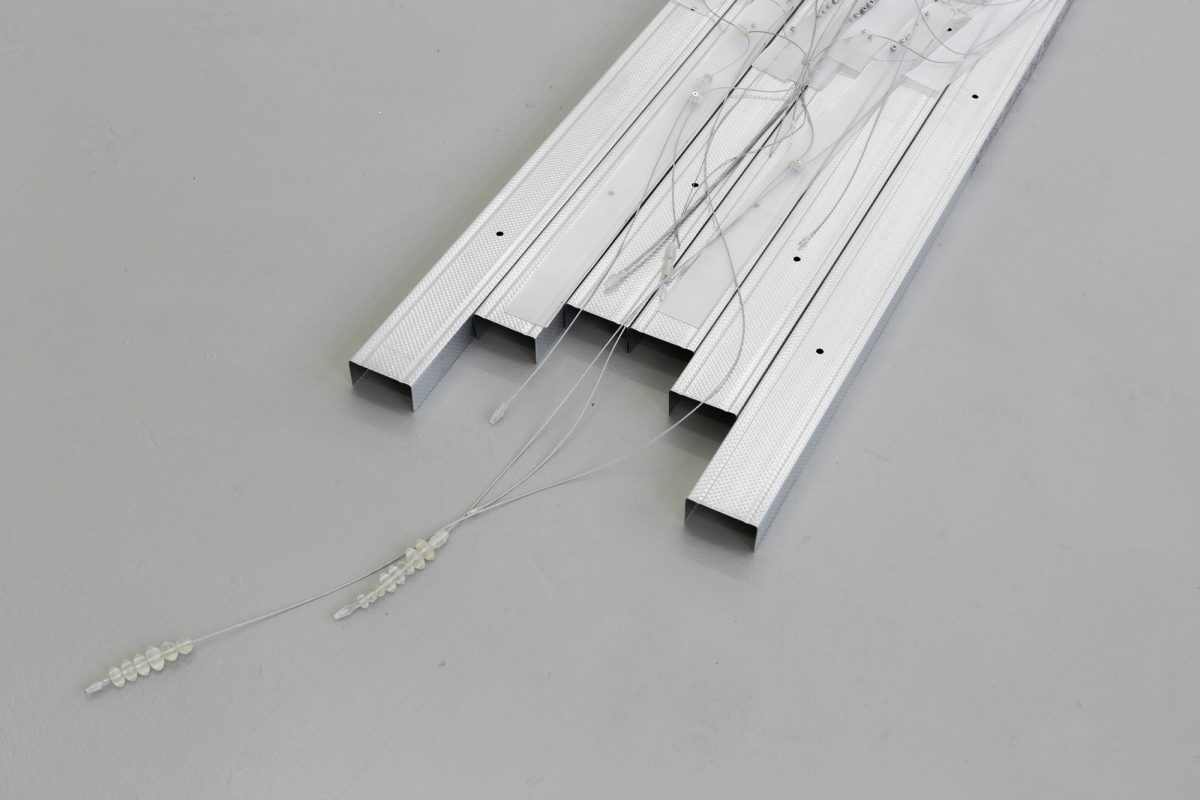
SOFT NULL, 2026, PVC, resin, lightweight profile, metric cylinder head screws, wire rope, 250 × 60 × 25 cm
You built a MIDI-to-Graphic-Notation Converter in Processing and made it publicly downloadable. Where does a tool like that sit in your practice? Is it a work in itself, or a means to an end?
Both, and I like that it refuses to settle. As a means to an end, the converter produced the notations behind Weak Synaesthesia, and the new proportion and growth tool did the same for the solo show.
But the moment I make a tool public and downloadable, it becomes a work in its own right. I am no longer just showing an object; I am sharing the method that generates it, and someone else can run it and get their own results.
That fits how I think anyway, because the handwriting in my practice is the system, not the single output. A tool is just that system made explicit and handed over. Releasing it openly is also a small stance: I would rather pass on a way of doing something than guard a finished look.
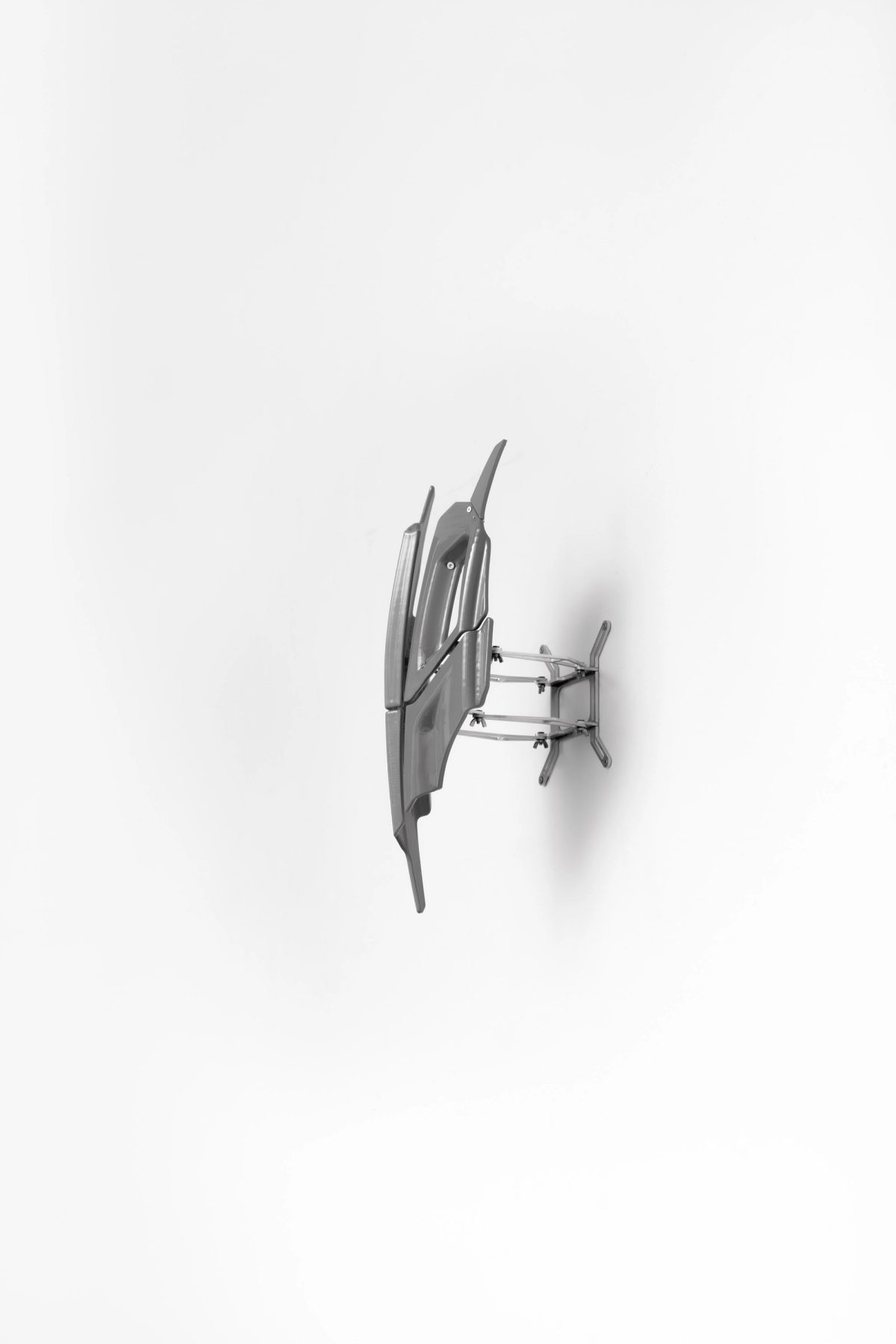
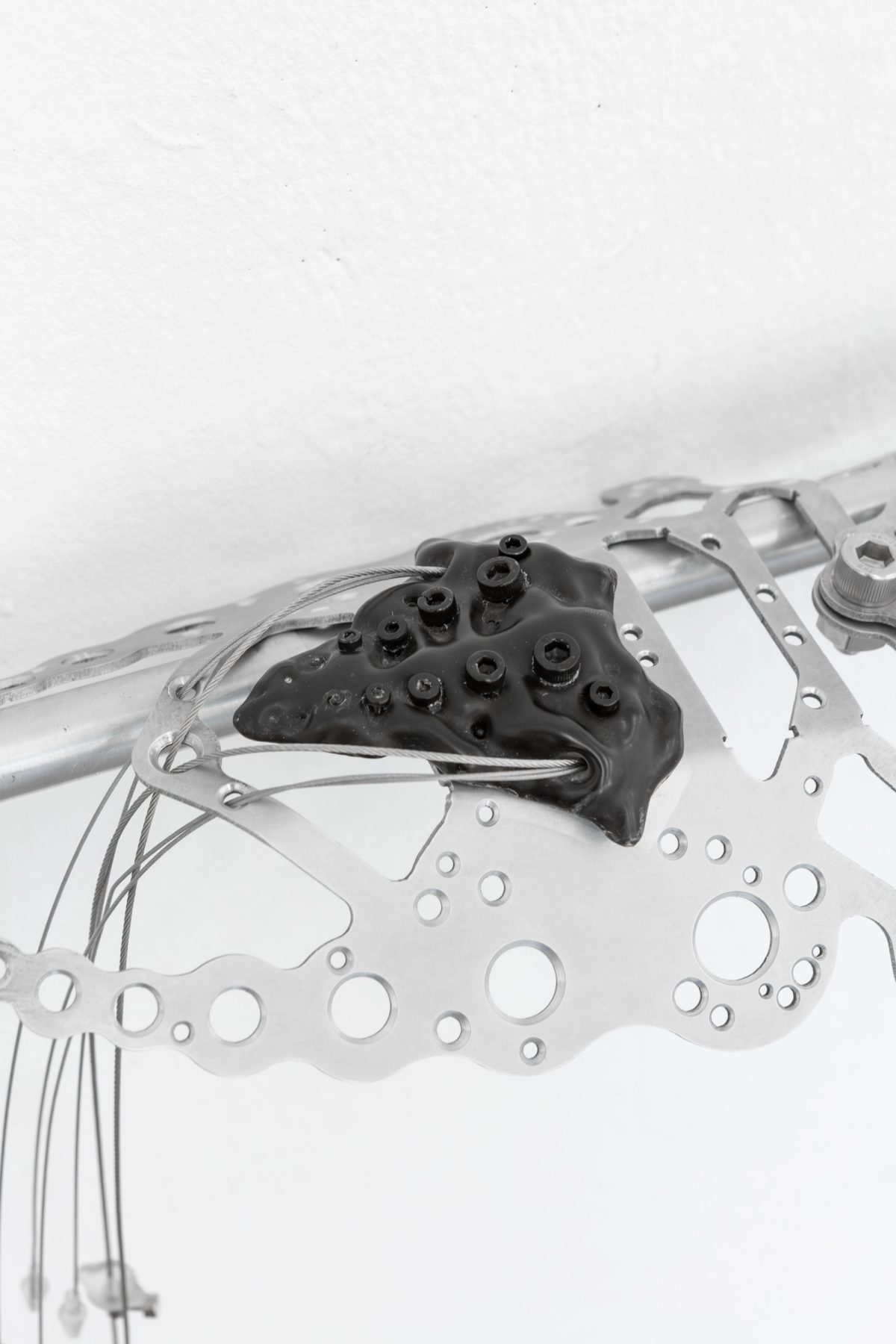
Left: Aero SHIELD, 2025, ASA, aluminium, 45 × 25 × 20 cm
Right: Biostatic Frame, 2026, aluminium, polymer concrete, basalt, wire rope, resin, mesh, 60 × 40 × 20 cm
"I am no longer just showing an object; I am sharing the method that generates it, and someone else can run it and get their own results."
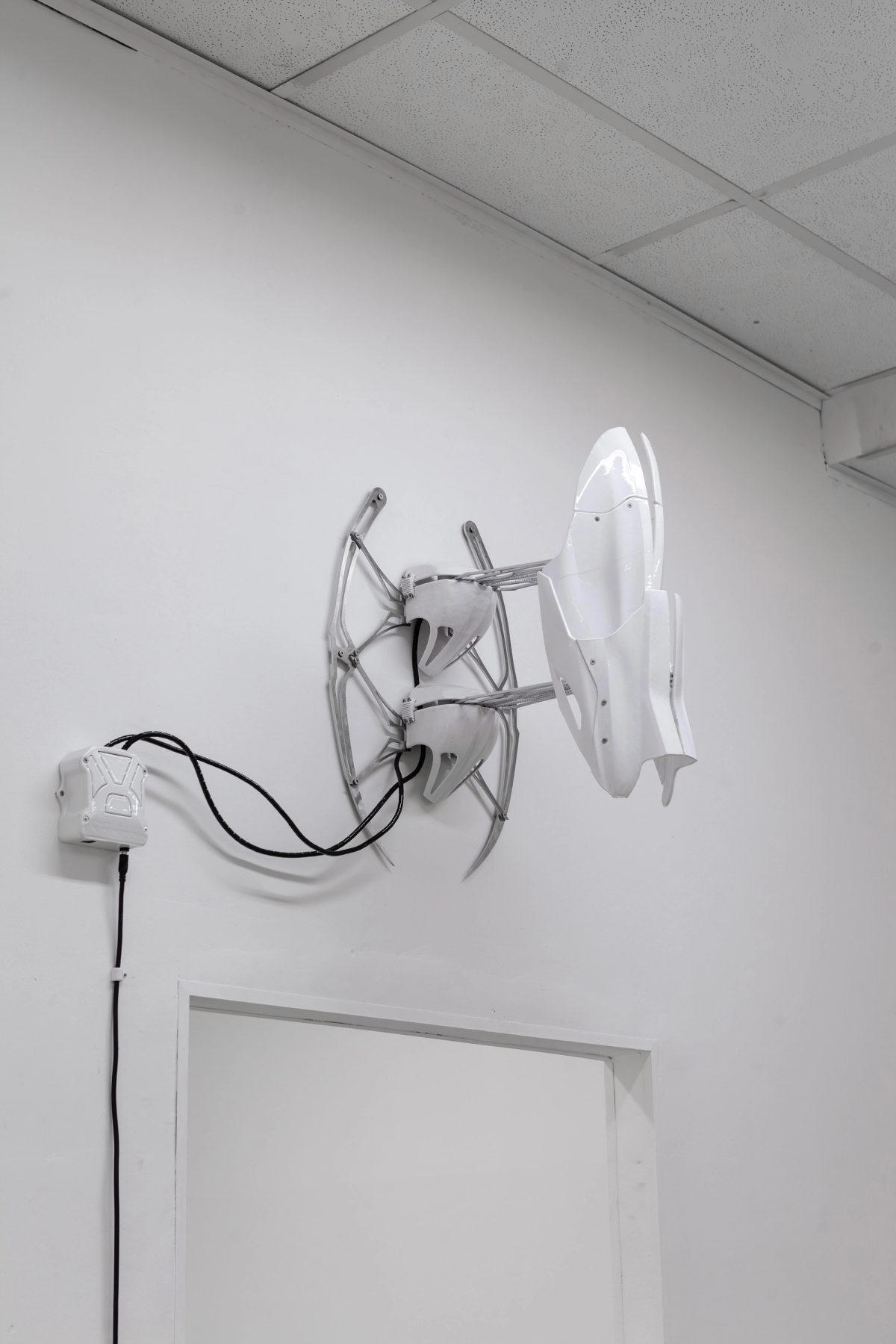
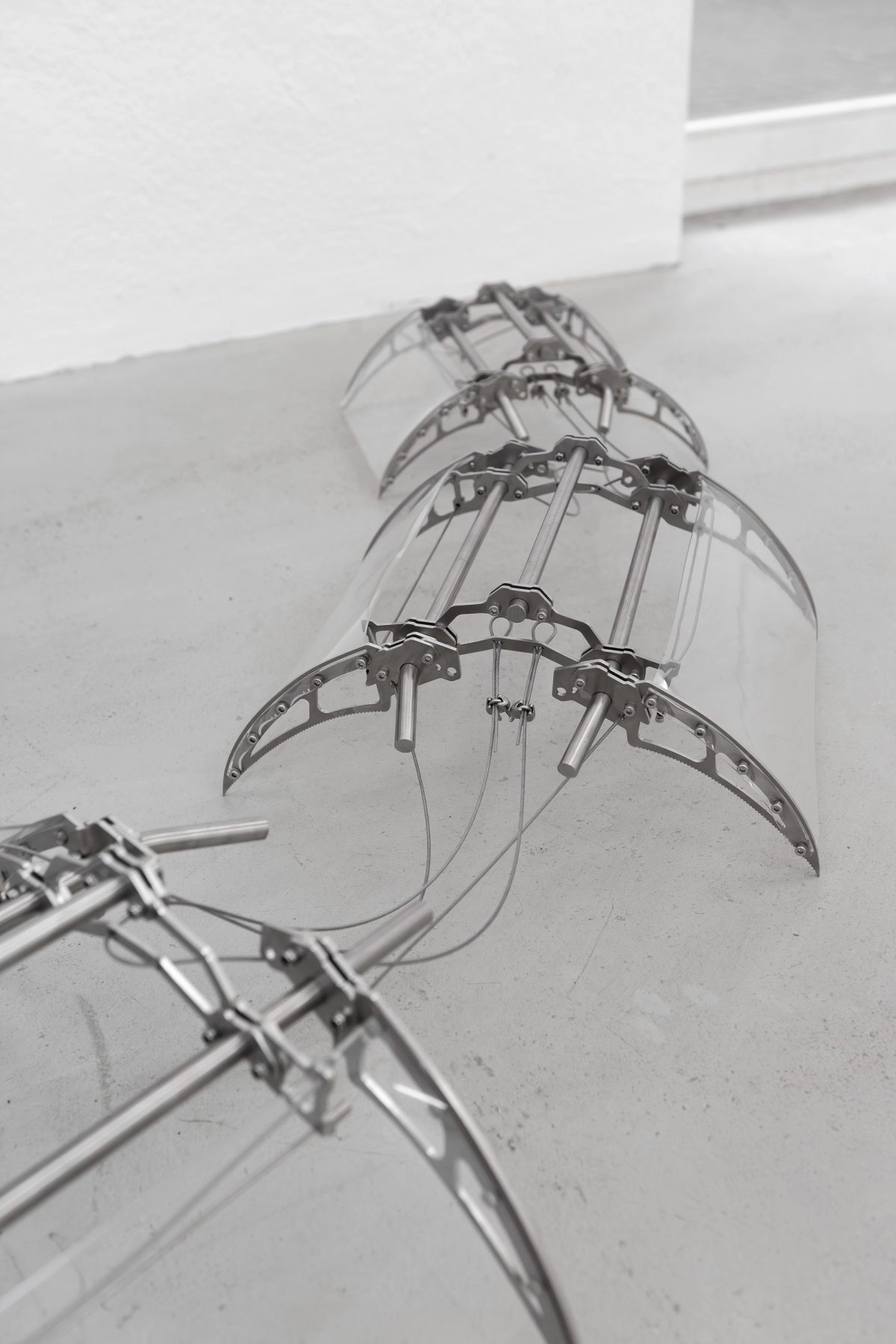
Left: Convex SHIELD, 2024, ASA, aluminium, stepper motor, Arduino, 65 × 50 × 42 cm
Right: Daisy Chain, 2025, stainless steel, PVC, wire rope, 220 × 60 × 40 cm
There is a recognizable European design tradition, rooted in the Bauhaus, the Swiss International Style, and the Vienna Secession, carried through institutions like the UdK, defined by strong typography, a precise relationship between form and idea, and a tension between function and experimentation. It's so dominant that there's active academic criticism about how Eurocentric design education is globally. Where do you see your graphic work sitting within all of that?
I am clearly a product of that lineage. I studied Visual Communication at the UdK, and the Swiss and Bauhaus reflexes are in my hands whether I want them or not: strong typography, a tight relationship between form and idea, function as a starting point.
For me, design and sculpture are not separate disciplines anyway. Both are about composition and structure, whether I divide a page for a poster or organize an installation of several pieces into one coherent whole.
What I mostly do is use that precision as something to push against. I take the functional, technical look and let it run into the useless, the organic, the slightly disgusting, so the tradition becomes a surface I can destabilize rather than a set of rules I obey.
I am aware of the Eurocentrism critique, and I do not think I can step outside my own training. What I can do is stay honest that the neutral, objective look is itself a historically coded aesthetic, and treat it as material rather than as truth.
The same goes for the white cube, which I had to unlearn as well. It feels like a neutral container, but it is really a strongly shaped way of presenting art, with its own history and assumptions, and it is far from neutral. Once you see both the Swiss grid and the white cube as conventions rather than defaults, you can actually start to play with them.
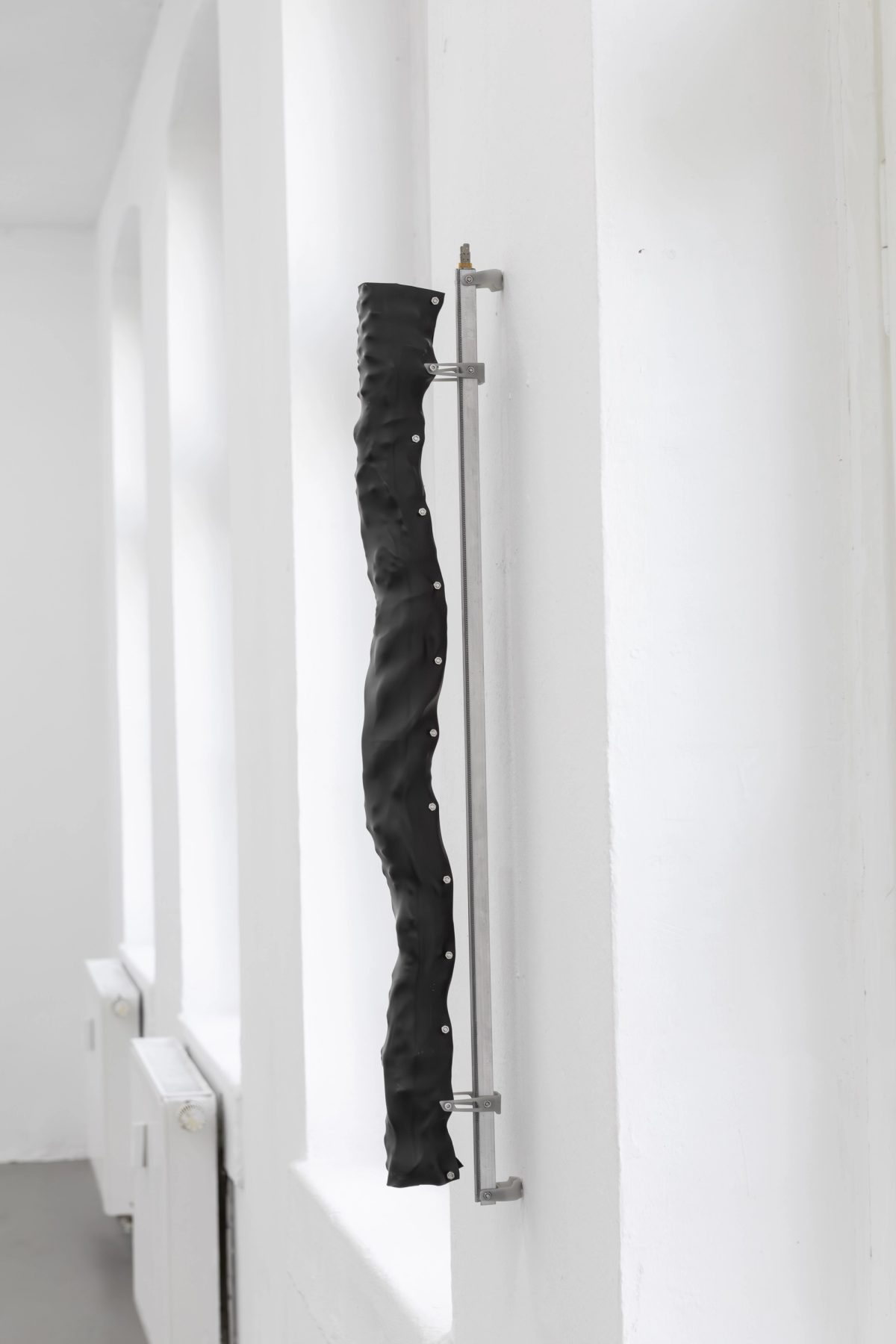
Rage Quit, 2026, polyolefin, aluminium heat sink, resin, 95 × 15 × 10 cm
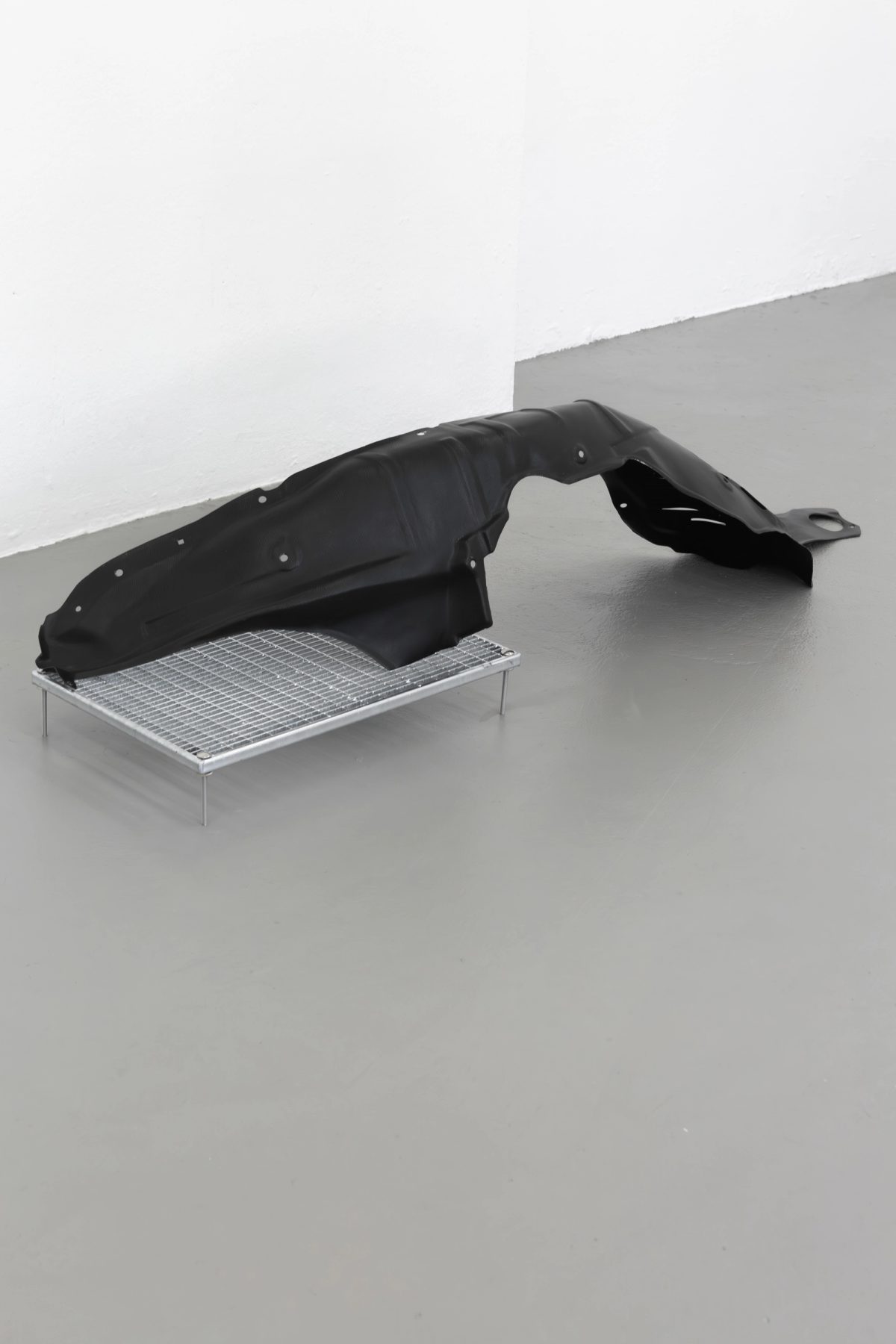
Stating the Obvious, 2026, car body panel, aluminium, carnauba wax, 140 × 40 × 60 cm
You're in the middle of your studies, your first solo show is about to open, and the work already spans sculpture, installation, editorial design, kinetic objects, and curatorial practice. What does the next chapter look like?
Weirder and more alive. Coming out of the solo show, I want to push the organism direction further: grown, half-living bodies, more weathering and surface transformation.
I also feel drawn toward the feeling of disgust. I am interested in where aesthetics, beauty, and disgust overlap, and why we find things disgusting that are actually just really alive. Decay and the breakdown of material fit right into that for me, the point where something falls apart and starts to look alive again.
On the practical side, I have a lot of material prompts I have not experimented with yet, so this will probably be my winter, finding new and interesting processes. Something that is genuinely new for me is that I now capture all my ideas and processes thoroughly, so documenting and a kind of research have become part of the work itself.
I also want to work much bigger. There is really no limit here. Beyond that, I am very intuitively driven by whatever comes next, and I rarely plan more than one or two months ahead, so I cannot say it exactly yet. But there is more than enough interest. I have more ideas than I have time.
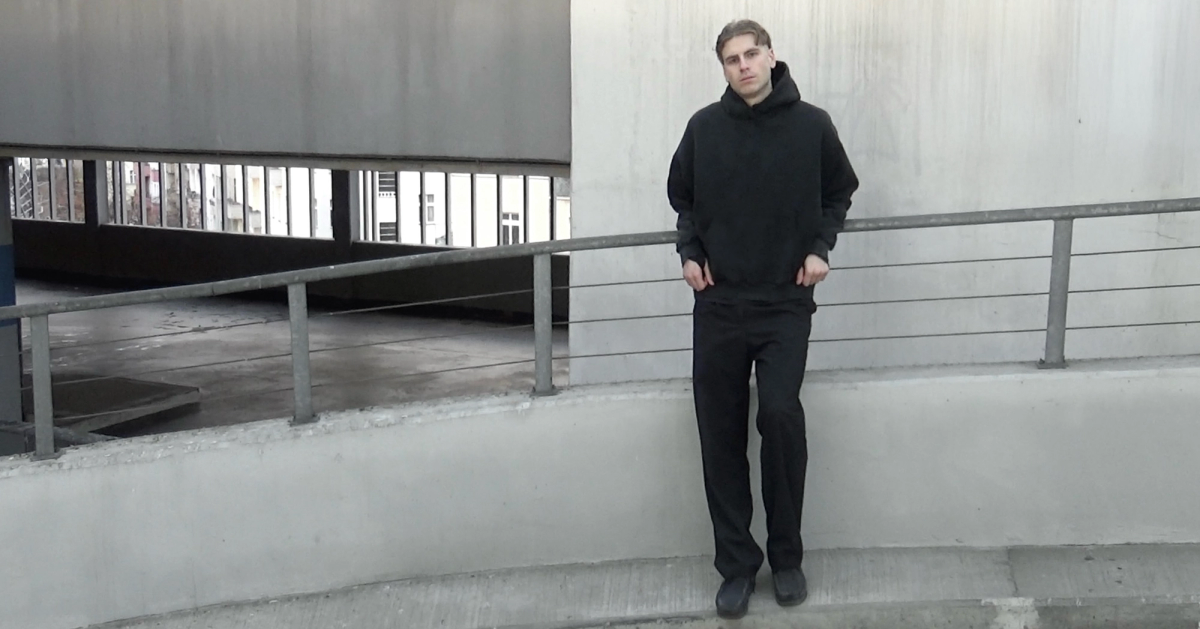
Johannes Thiel, Portrait by @ouvlad
Cover Image: ON-OFF STATE, 2026, polished steel, motorcycle frame, aluminium, resin, fiberglass, solenoid actuators, electronics, 240 × 140 × 120 cm