FICTIONAL SOUVENIRS, FAULTY PORTALS: IN CONVERSATION WITH LÉA PORRÉ
CONVERSATION BY SELIN KIR
CO-FOUNDER, CURATOR
15 JULY 2026 — UNITED KINGDOM
Léa Porré does not so much make objects as excavate them, pulling forged steel and stained walnut, Jacquard thread and rendered stone, from a past that never quite occurred. Working between London and the granite thresholds of Brittany, she assembles what she calls fictional souvenirs: relics of a civilisation with no coordinates, myths with no origin, gates that open onto nothing you could name but everything you half remember. Her sculptures sit somewhere between archive and altar, her tapestries somewhere between propaganda and prophecy, and her worldbuilt CGI renders an elsewhere so plausible it unsettles more than any obvious fiction could. Ahead of her upcoming show "Pending Response" with INKU x Somers Gallery, we spoke with Porré, dream archaeologist, unreliable narrator, about liminality, mnemo-history, and the fine art of getting lost on purpose.
Your practice moves between London and France, across sculpture, installation, and CGI worldbuilding, and you position yourself explicitly as a "dream archaeologist and unreliable narrator." Before we get into the work itself, who is Léa Porré, and what's the story that got you here?
Let's get into it!
I was born in Paris and moved to London at 15, so there has been a lot of back and forth over the years, but I'm now strictly based in London. The UK is and will be my home by choice.
I am actually from Brittany, a region located in the northwest of France, one of the six Celtic nations, and the only one south of the English Channel. It's quite similar culturally and topographically: stones, natural and standing, moss, an odd palm tree, an ominous sense of the persistence of folklore, and the long-lost idea of Finis Terrae, of being at the end of the Earth, are common traits. It's undoubtedly at the heart of my cultural heritage.
I studied at Central Saint Martins and then the Royal College of Art, where I graduated in 2021. Over the years, I've been refining the aims and peculiarities of my practice, but my primary fields of research have remained the same: history, memory, and myth.
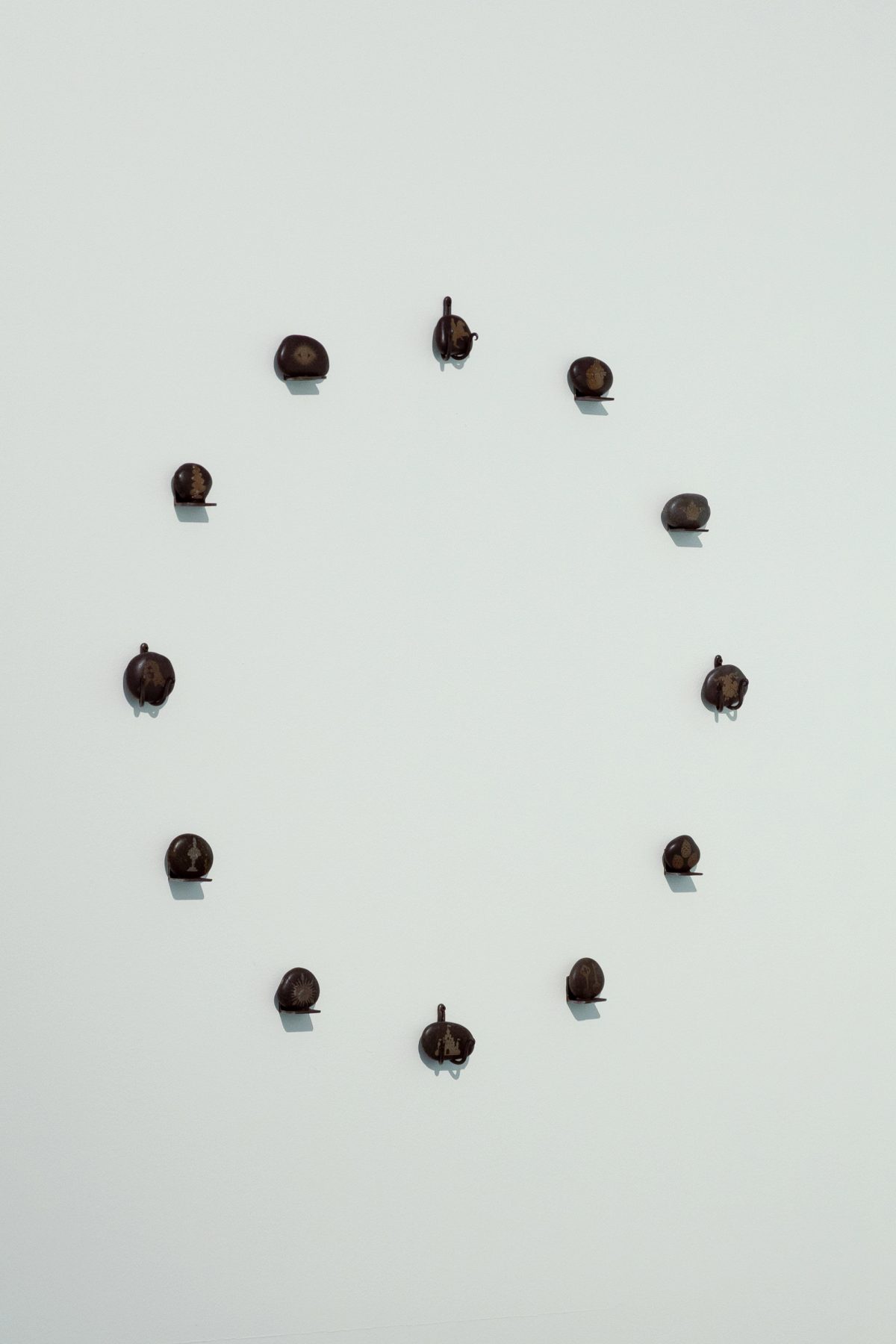
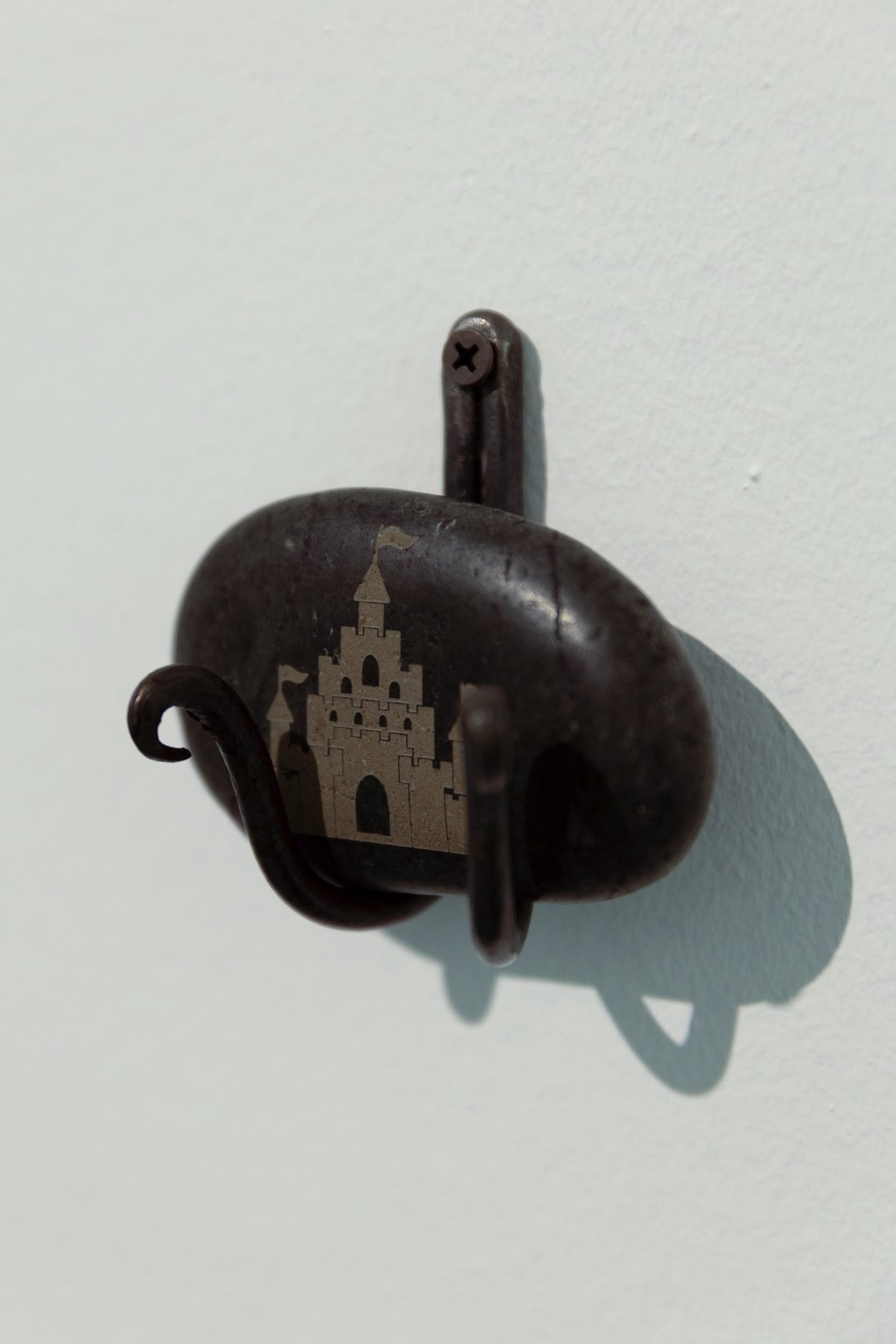
Léa Porré, Versaliae, Talismans, 2023.
'Trophaeum' and 'Armour Bright' combine forged steel with carved and stained walnut, oak, and MDF, described as "fictional souvenirs held in suspension, between archive and altar." That's a fairly specific material palette: hard metal against warm, worked wood. What draws you to that particular combination, and how do you decide which material carries which part of the meaning in a piece?
Over the recent years, it took me a while to figure out the right balance of digital and physical tools and techniques to produce sculptures. As I've been collecting ancient craft skills along the way, especially in 2025 when I devoted a large part of my time to that objective, I've experimented with different materials and settled on wood, both walnut and oak in different ways, and forged metal for 'Trophaeum' and 'Armour Bright'.
The imagery on the MDF is digitally constructed through worldbuilding. That process involves creating 3D worlds in a video game engine, from which I shoot a series of images, then featured on what I call the "frames."
If these frames operate as portals to that alternate constructed world, all of the materials used perform as remains. Detached from their original context, they confront each other, bringing their own sets of meanings and references. The focal point is finding a balance in that juxtaposition.
Practically, this involves a lot of mockups, digital and in real life: adding, removing, duplicating, switching up elements until the work reaches a relative point of completion. I'm still allowing myself to alter the assemblage and try to propose different "iterations" of works for different shows. I'm currently working on new 'Armour Bright' sculptures, so the series itself is still evolving.
'Corn Spirit: Awakening' is a 220 x 220cm Jacquard-woven tapestry, meaning the image had to be built as a digital file before it became fabric on an industrial loom. What survives that translation from image to woven structure, and what doesn't?
In a similar fashion to my "frames," the image was shot within a 3D world. Building that environment takes place first, and the shooting later. It functions not too dissimilarly to a photo or film set. If at first the project began as a video piece in 2023, it only made it to the physical plane through wood and textile.
I have been working with tapestries since 2019, only finding their appropriate place in 2024 when I paired them with forged metal as a hanging device. Jacquard is the ancestor of computing, programmable weaving as 0s and 1s; it is fundamentally the original binary system.
Historically, tapestries have been used as authoritarian devices, symbols of power that framed events: warfare losses woven into victories, tales laced as events, myths intertwined as memories. Constructing a virtual world, weaving a fictional narrative on a grand scale, it was perfectly clear.
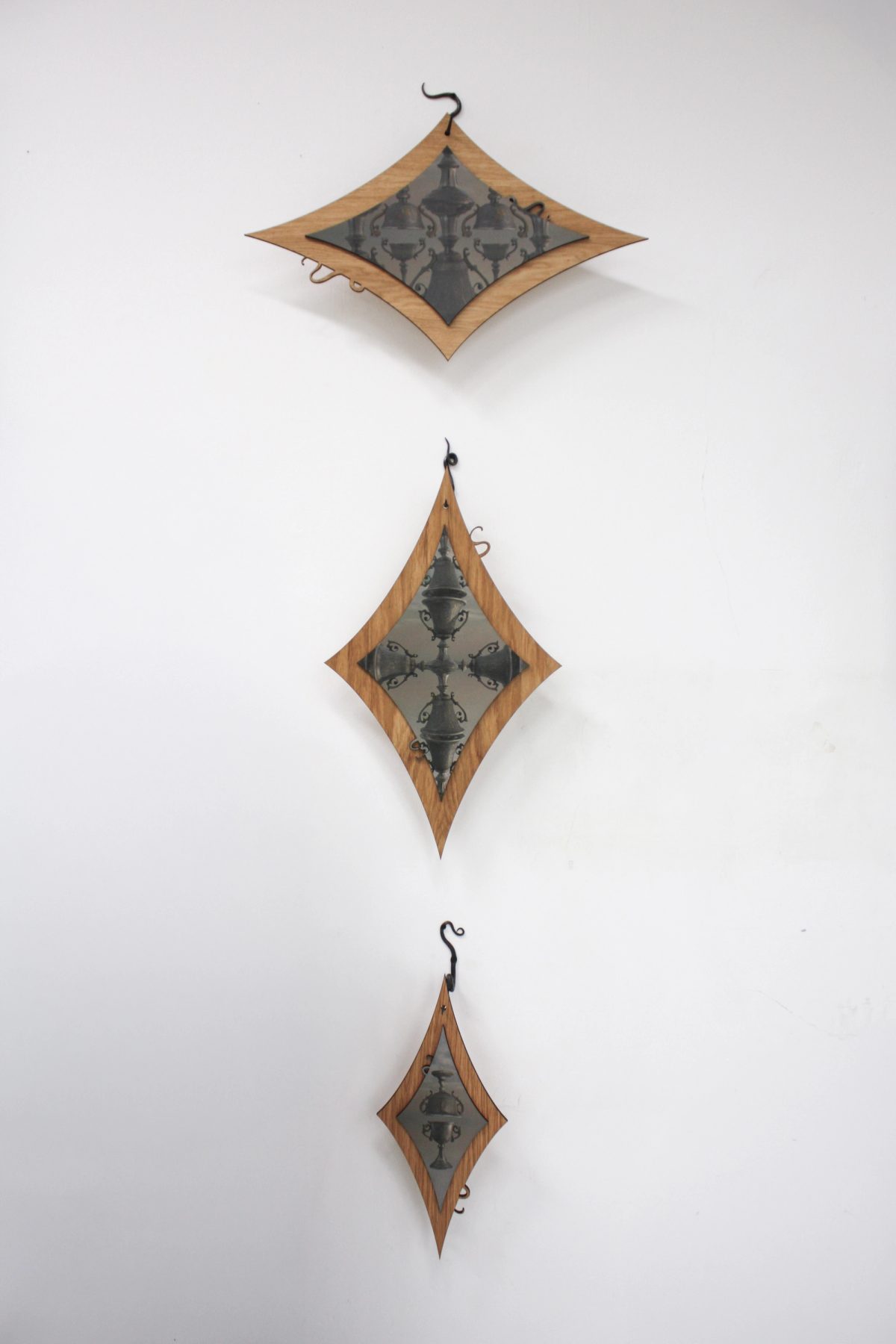
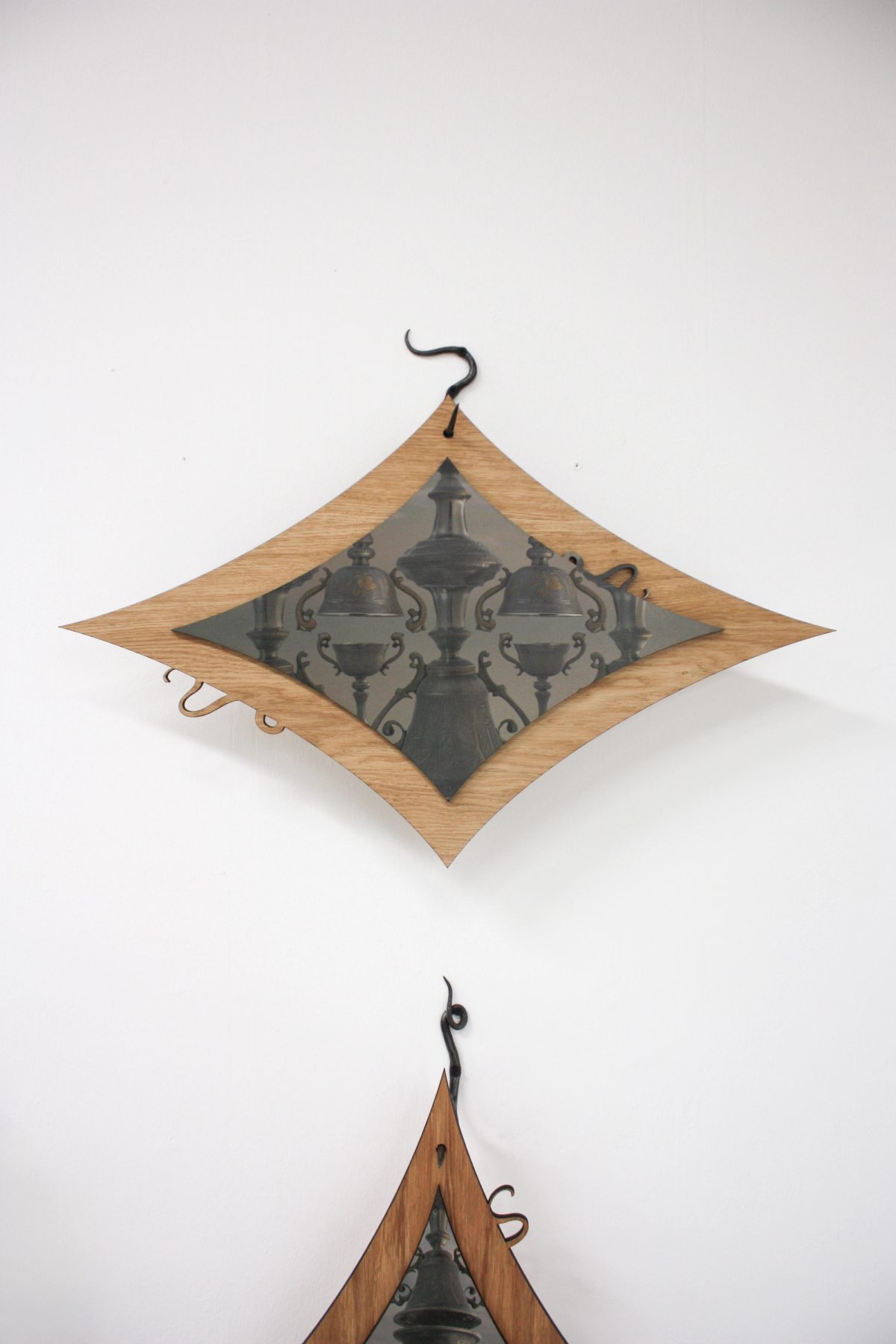
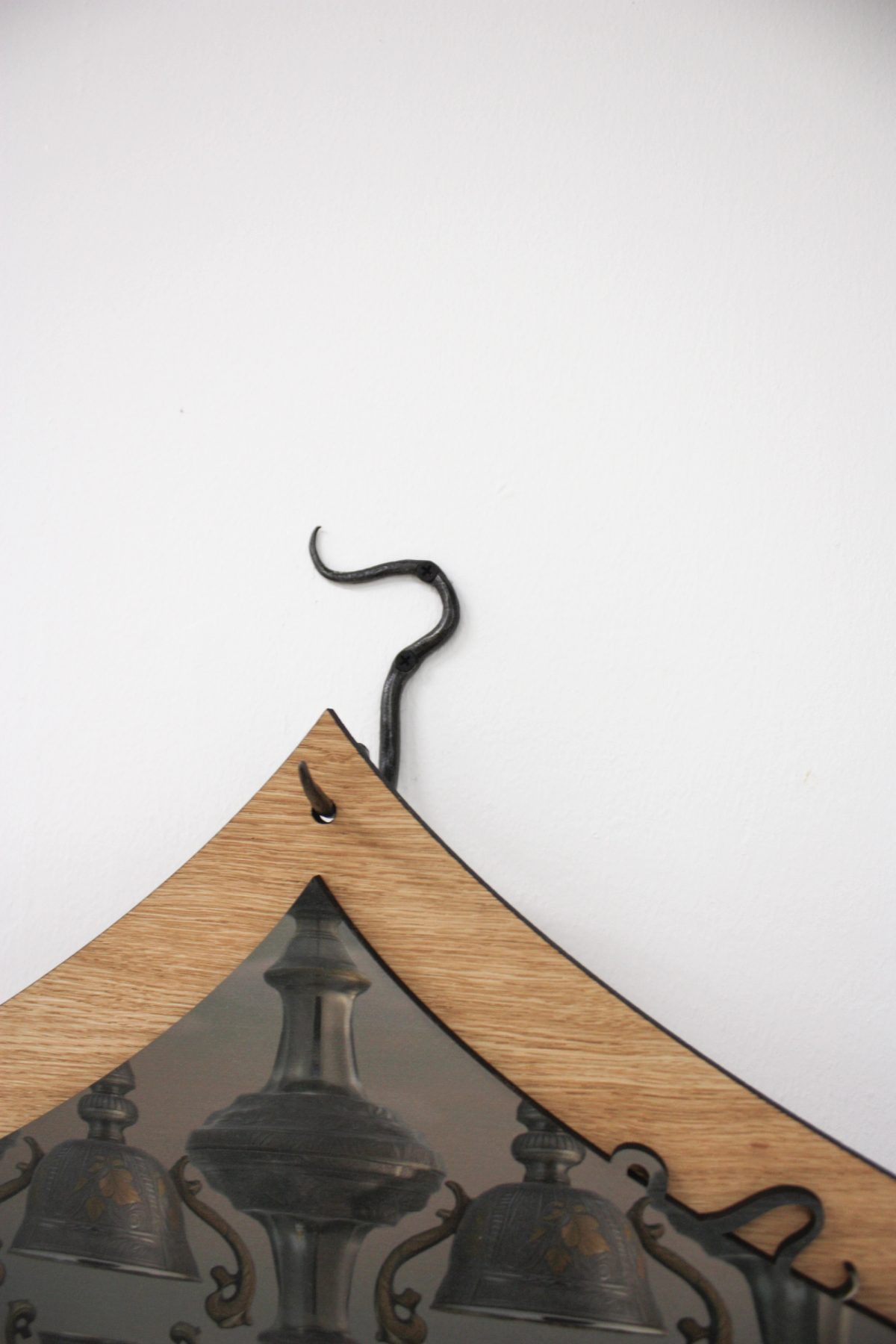
Léa Porré, Trophaeum, 2026. Sculpture, forged steel, oak, MDF, walnut oil, ink, acrylic. 180 x 60 x 15 cm.
"The main aim behind each work is to produce a fictional souvenir, a trace of a dream that you couldn't remember. Something I speak a lot about is the idea to create an 'impossible encounter.'"
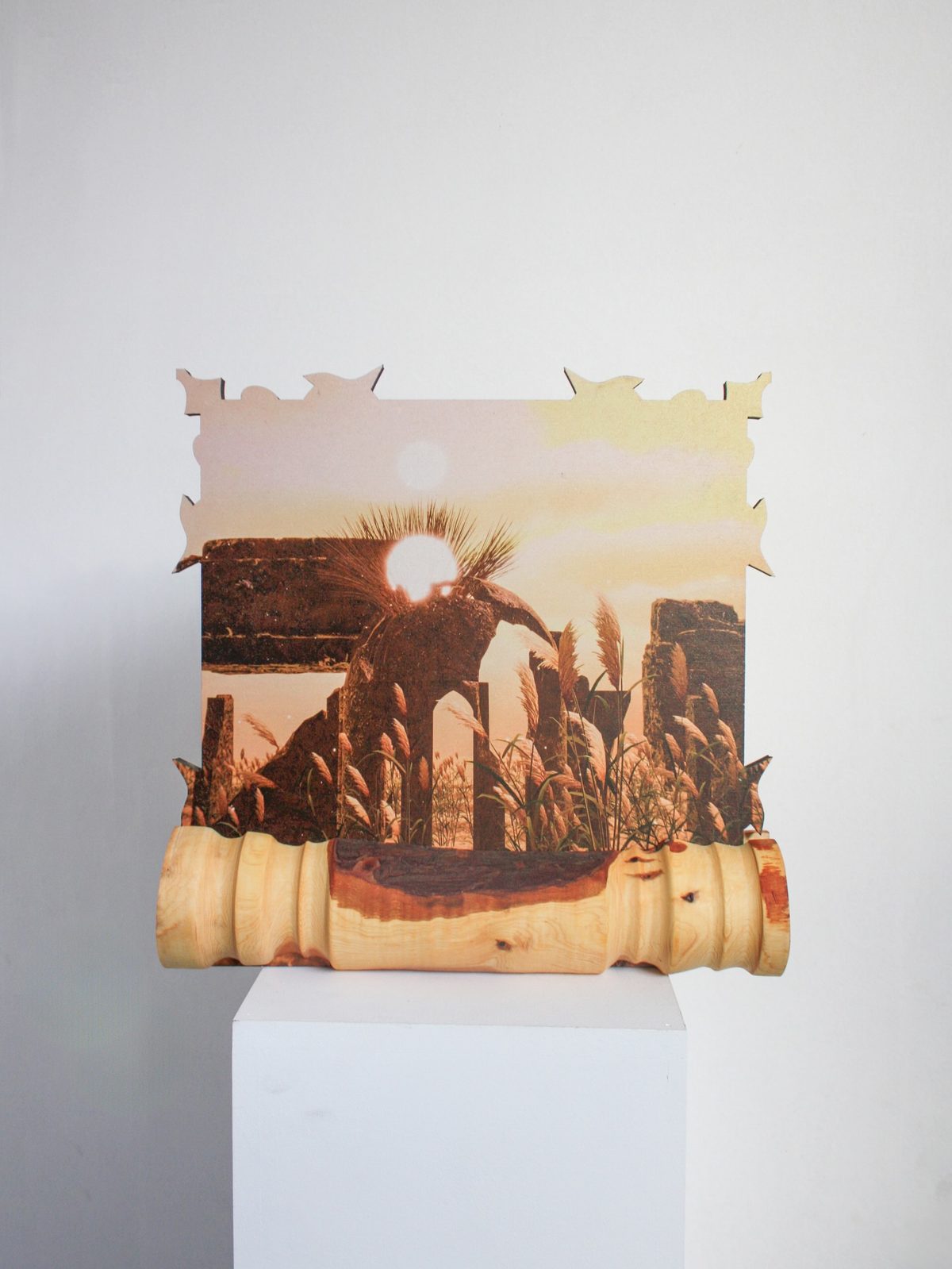
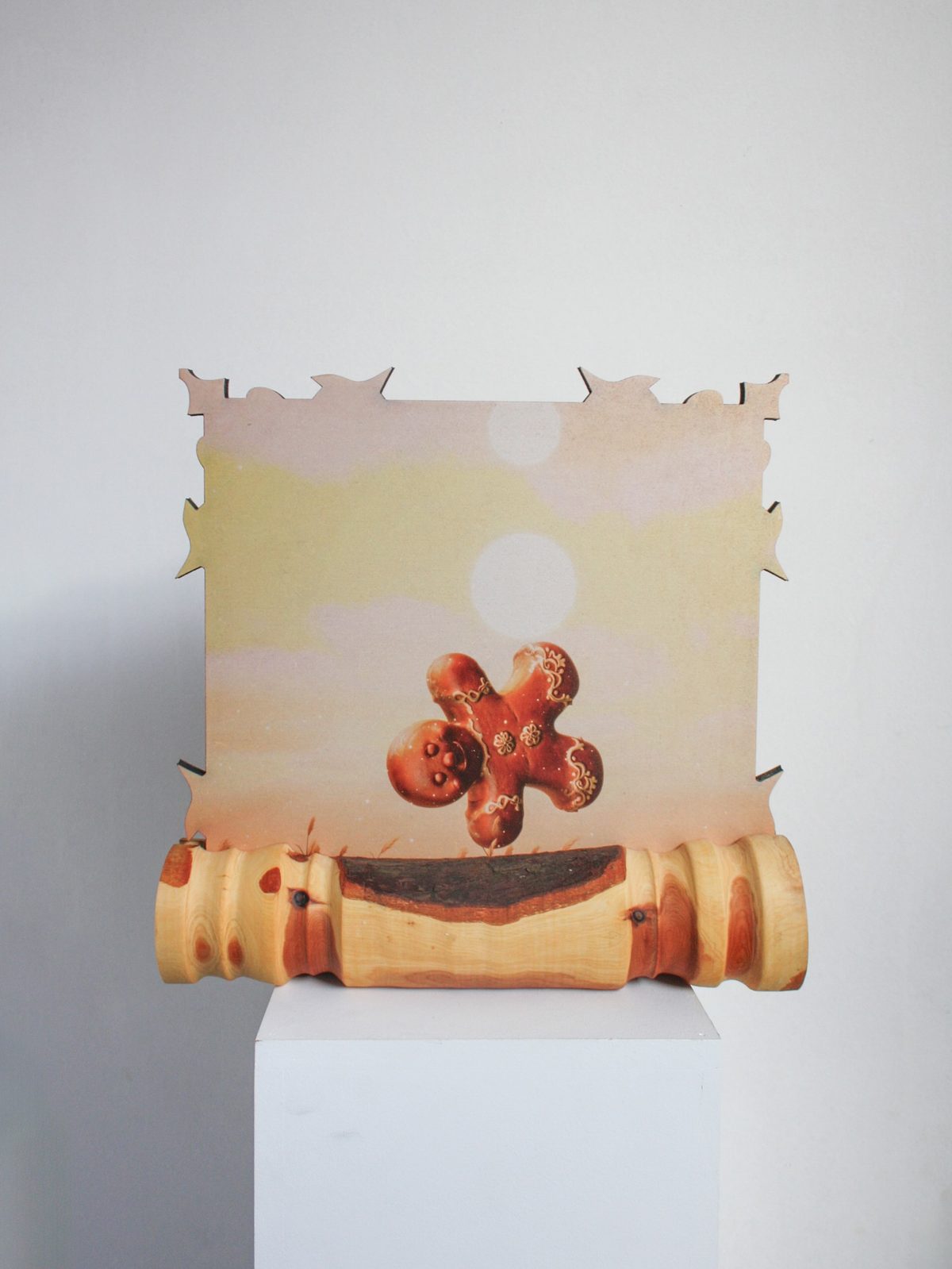
Léa Porré, Corn Spirit: Offerings, 2025. English yew, walnut oil, MDF, acrylic and ink on MDF, 30 x 30 cm (approx.)
You've worked with real inherited myth (harvest and corn spirits) and with invented heraldry that never belonged to any actual family or territory. Does a symbol behave differently in your hands depending on whether it once meant something to someone, or is that distinction irrelevant once it's in your system?
It's a very interesting wording: real myth, invented heraldry, versus what we traditionally think is invented myth, real heraldry.
In regard to our past, I don't think I clearly draw a line between what's deemed part of official history and what's shared folklore, between a dream that keeps recurring and a memory that's been passed through generations. It's all a blurred construction, a subjective vision that evolves across time and place.
Your solo shows in 2020 and 2021 (Dear One, Versaliae) existed entirely online, with no physical room for anyone to walk through. Did that absence of a body in space change what you thought sculpture was for?
In 2020 and 2021, we could say that I was already drawn to creating environments. If they first unfolded digitally, using video game engines and video, it made a lot of sense to embrace online exhibitions as a medium, especially during those Covid days. Yet I never allowed anyone to walk through the digital worlds using tools such as AR or VR. I only offered snapshots, constructed snippets of the worlds.
Maybe it goes back to how I view our past. Flashes, visions, partial recollections, missing manuscripts, eroded inscriptions, dismembered sculptures, scripts copied and copied again. Our understanding of our past is based on a series of limited perspectives, of bizarre re-enactments, and yet utterly influenced by our own background.
At the same time, it had always been my intention to bring the work into physical space. It was just a matter of time.
In the end, my physical exhibitions are not so differently constructed from how the online exhibitions were. The wallpapers, the frames, the sculptures: they only give clues and partial access, like a faulty portal. Keeping with the logic of the video game, or the estranged idea of a quest, I'm giving the viewer an occasion to collect fragments and build their own vault of remains along the way.
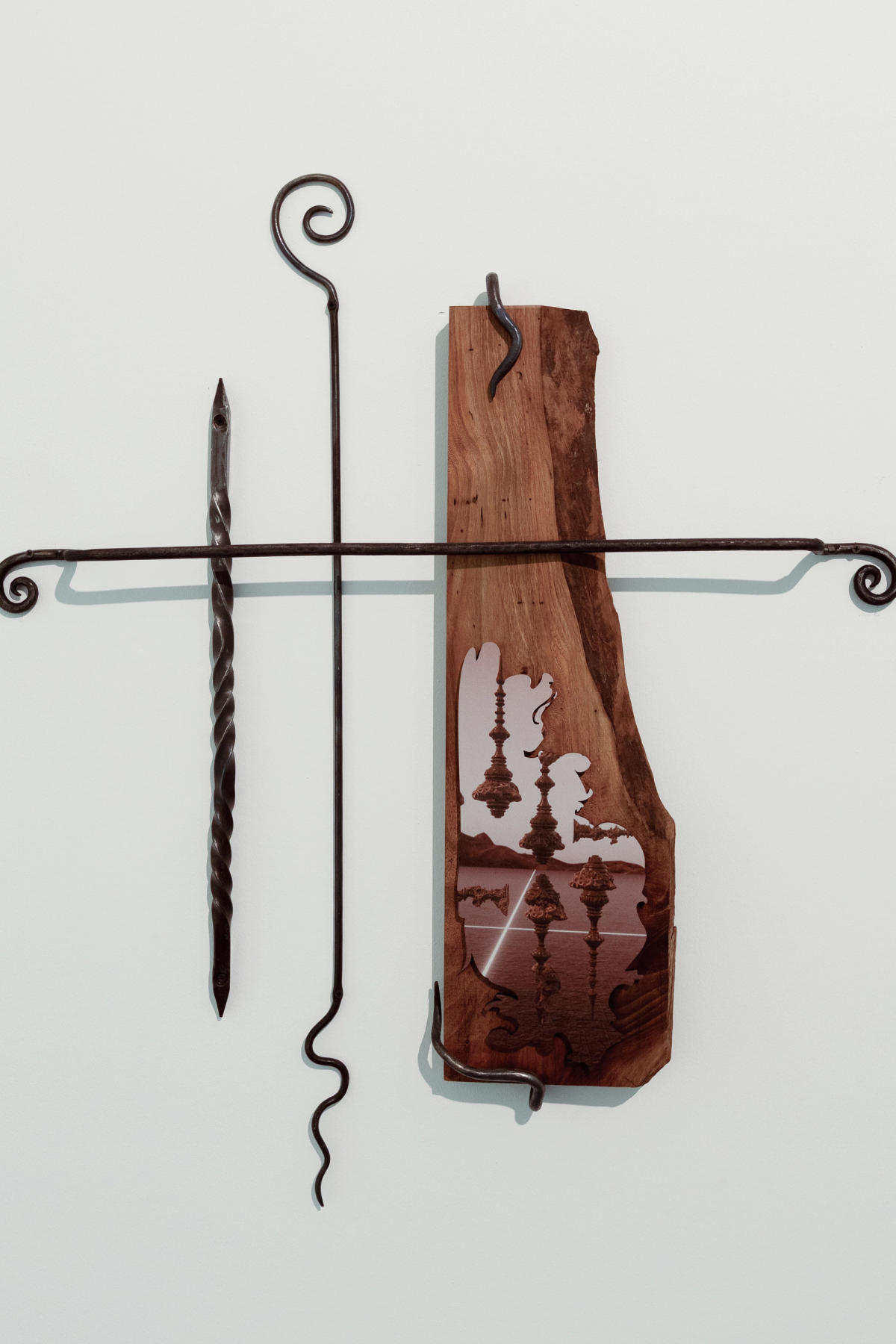
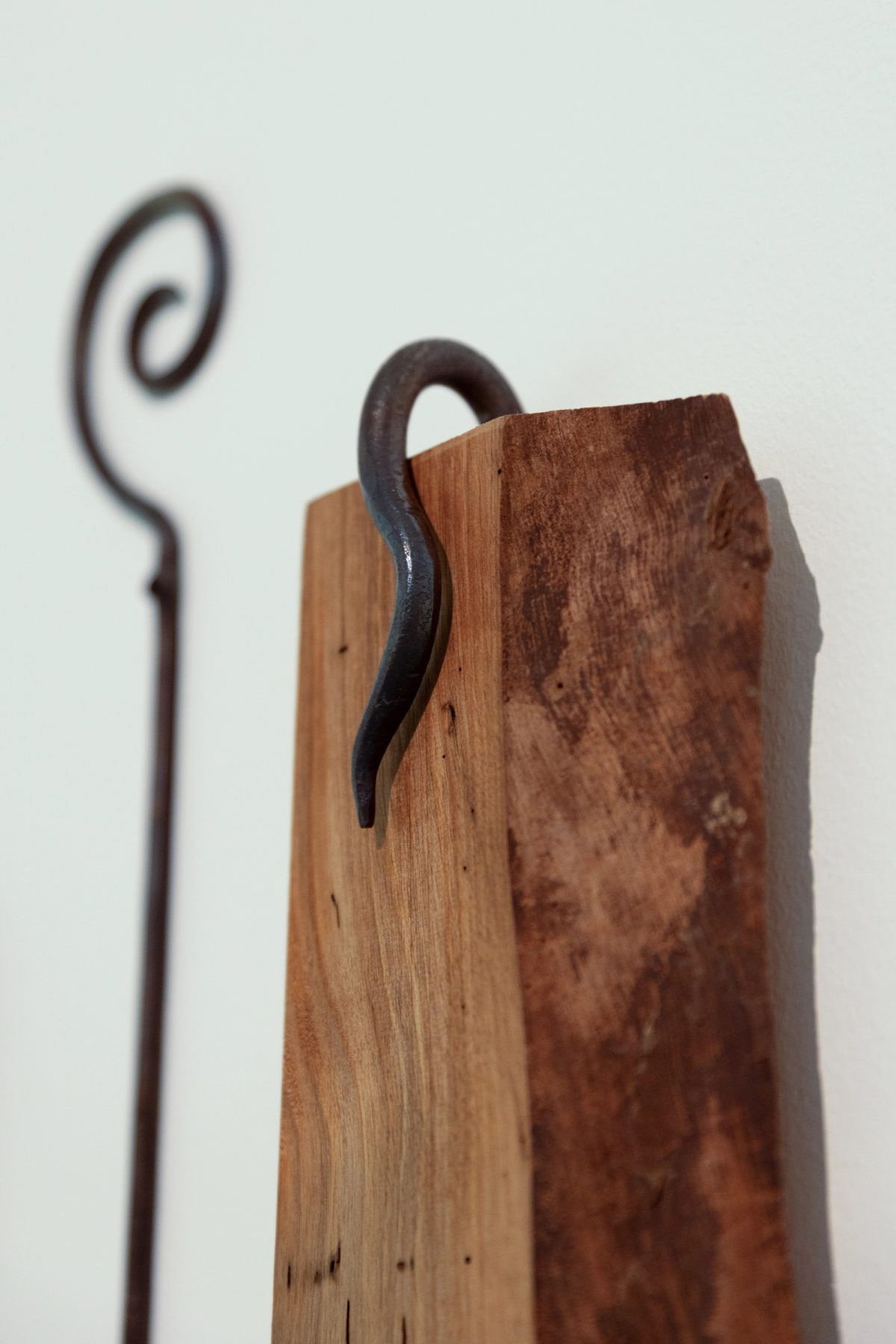
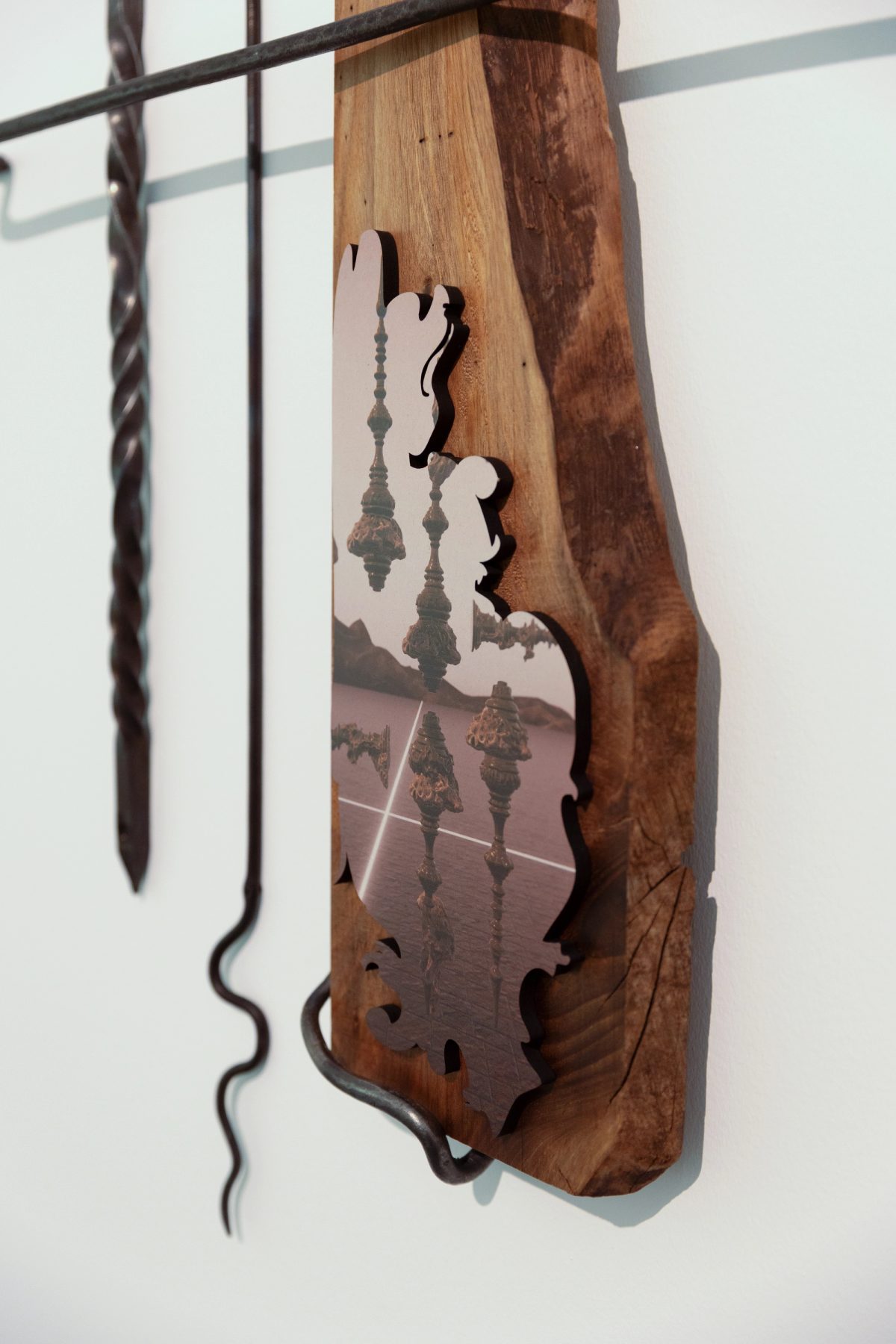
Léa Porré, Armour Bright I, 2025. Sculpture, forged steel, oak, MDF, walnut oil, ink, acrylic.
'Ianitores Terrestres' translates to "earthly gatekeepers," and doorways, arches, and thresholds recur across Rules of Encounter, the Ujazdowski installation, and elsewhere. A gate implies two states and a decision to cross. What is on the other side, in your own account of the work?
My work is very much rooted in this sense of liminality; thresholds, portals, they are lexicons and motifs that return cyclically in my works, but the notion of "liminal" is also at the core of how the works behave.
For the PATARA Gallery installation, I have used wallpapers in that way, as fragmented portals to the fabricated digital world, and the wood sculptures purposefully didn't quite function as locks and keys.
For the Ujazdowski Centre of Contemporary Art installation, I specifically hinted at the "hellmouth" motif. Portraying a giant monster's mouth as a gate to hell, it appears in Medieval scenes and depictions in both 2D and 3D, from painting and illumination to stained glass and bas-reliefs. In a sense, it is a fictional portal used as a fear device, an interesting counterpoint to churches' portals representing Gates of Heaven (Porta Coeli), or pearly gates.
In my version, the ornate shape of the wallpaper's cutout frames the doorway, underlining the symbolic history of sites of passage, as well as the power of frame and ornament in the construction of meaning.
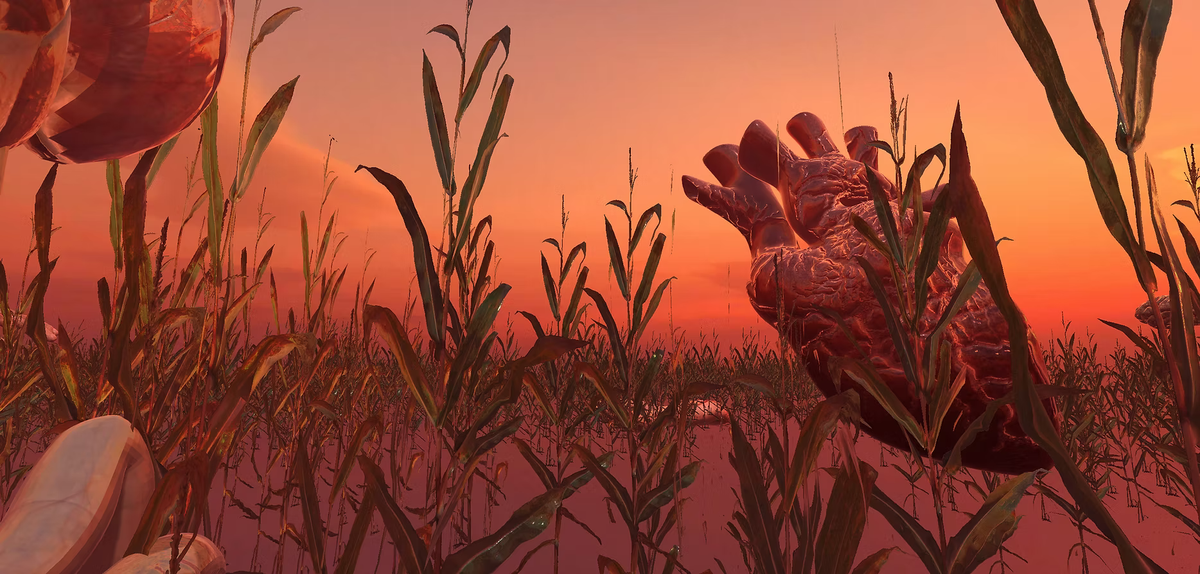
Léa Porré, Dear One, 2020. CGI prints. Produced for Dear One, Virginia Bianchi Gallery (online), 2020.
"Drawing the viewer in closer through a recognisable shape or object, yet something feels amiss, it is present, yet, not fully here. An uncanny sentiment of being out of time, out of space, out of use."
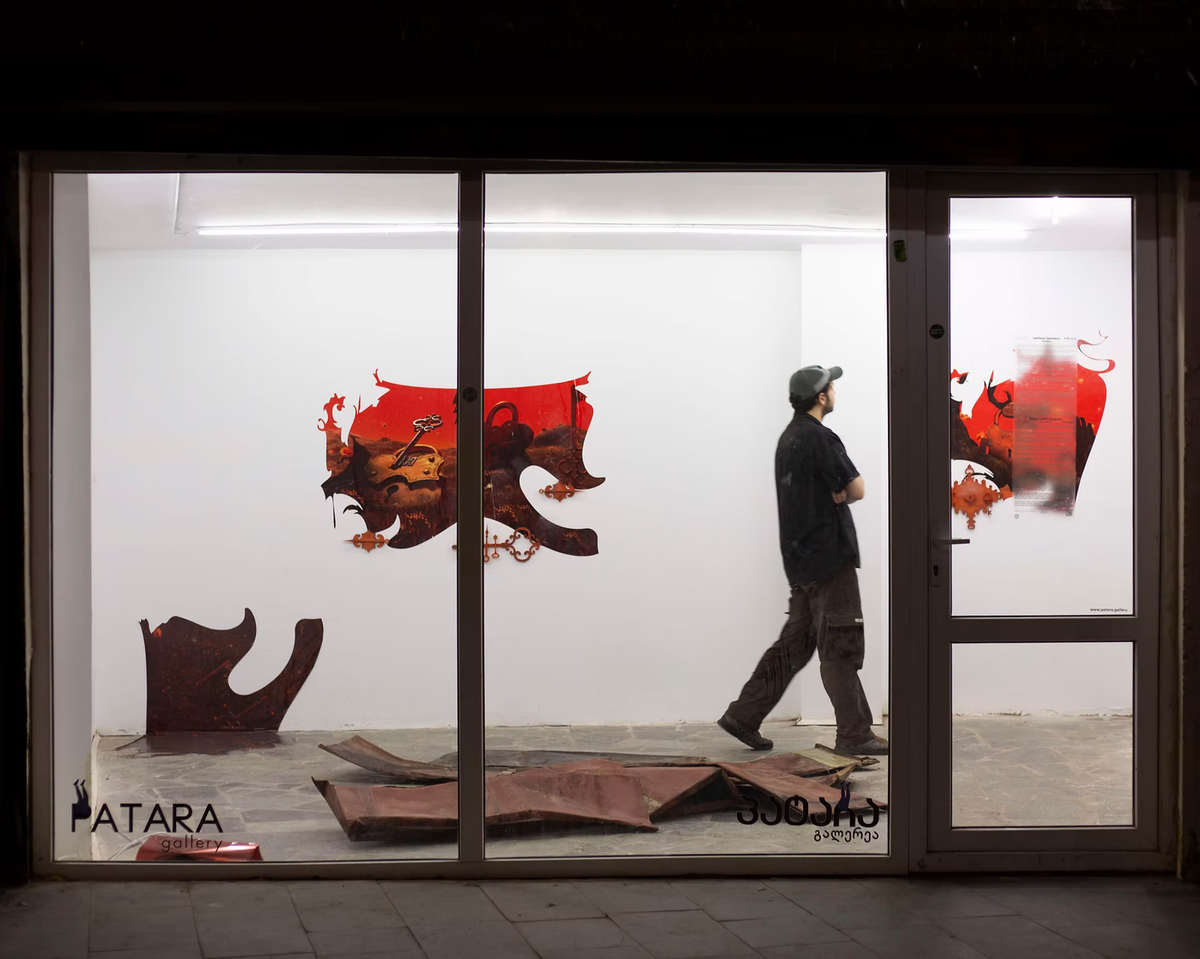
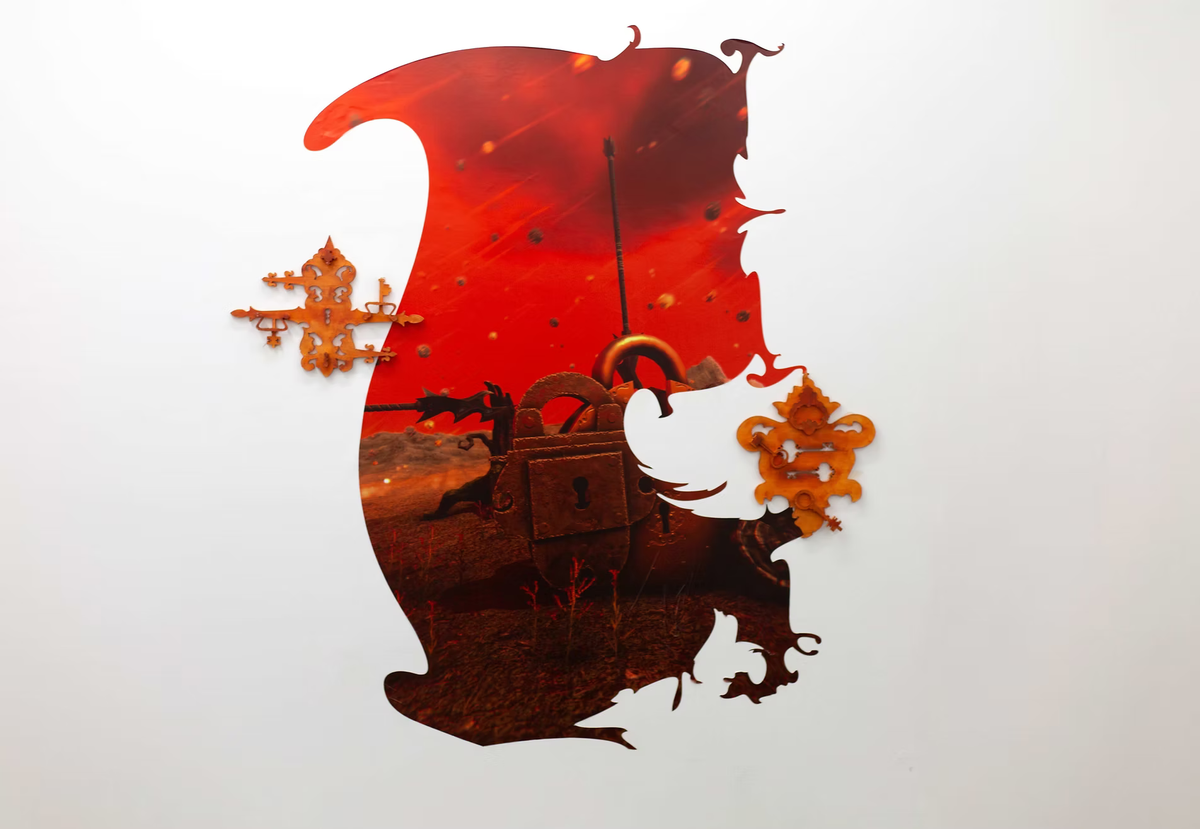
Léa Porré, Ianitores Terrestres, PATARA Gallery, Tbilisi, Georgia, 2024. Solo show curated by LAVA Project. Digital prints, wooden sculptural doors, oxidised sculptures. Photography by Vato Bakradze.
Your bio states the work invites viewers to question "how memory, belief, and cultural narratives are continually formed and transformed." Do you think your objects are actually revealing something true about how collective memory gets built, or is that resemblance more coincidental, a byproduct of the materials and forms you're drawn to?
My work directly speaks to how collective memory gets built. Accumulation, trace, remain, relic, a faint memory, an idea: the works are composed of accumulated layers of how the past is remembered.
I'm tracing this practice to the idea of mnemo-history developed by Jan Assmann, which looks at the afterlife of events rather than events themselves, how figures and events of our past are remembered, reimagined, and twisted.
Our collective memory is built on that, built on traces rather than on the exactitude of our past, and that's how I build all aspects of my practice.
'Pending Response', your upcoming show with INKU x Somers Gallery, took its title from the line "nothing is denied, only delayed." Walk us through the piece that anchored that show for you. What is it physically, what's it made of, and how did the title come out of that specific object rather than the other way around?
'Pending Response' will open this August at Somers Gallery with INKU. The team got in touch and expressed interest in the 'Armour Bright' series being featured, and I was intrigued by the show's focus on "intervals, returns, and suspension."
For 'Armour Bright' specifically, I have been examining fragmented gates and finials. Traditionally positioned atop sacred structures to signify protection, ascension, or authority, the finial is here fractured, multiplied, and reoriented, no longer directed upward but toward all cardinal directions. I thought it was particularly fitting in the context of this show: out of its original usage, adrift, floating, hovering.
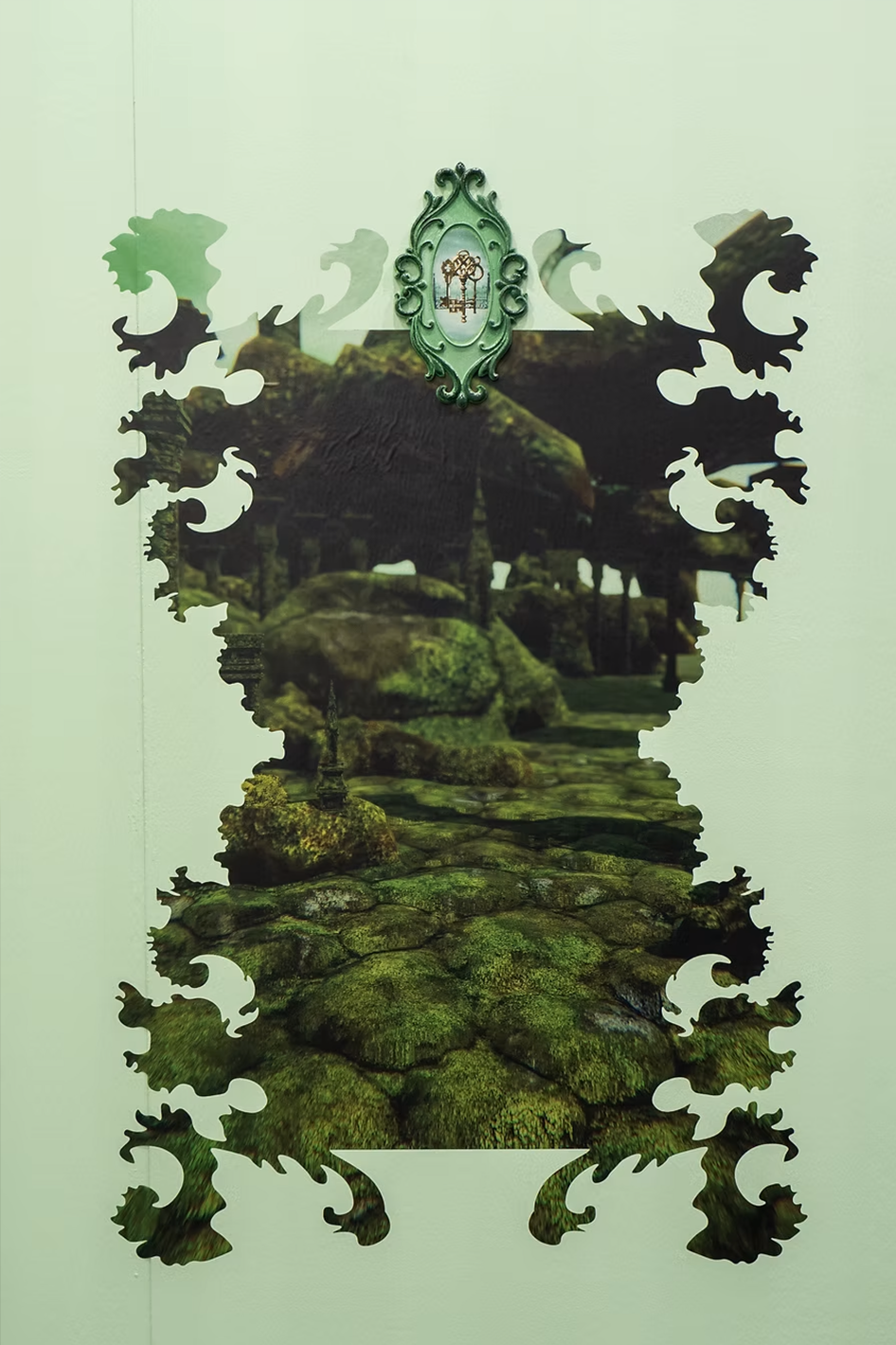
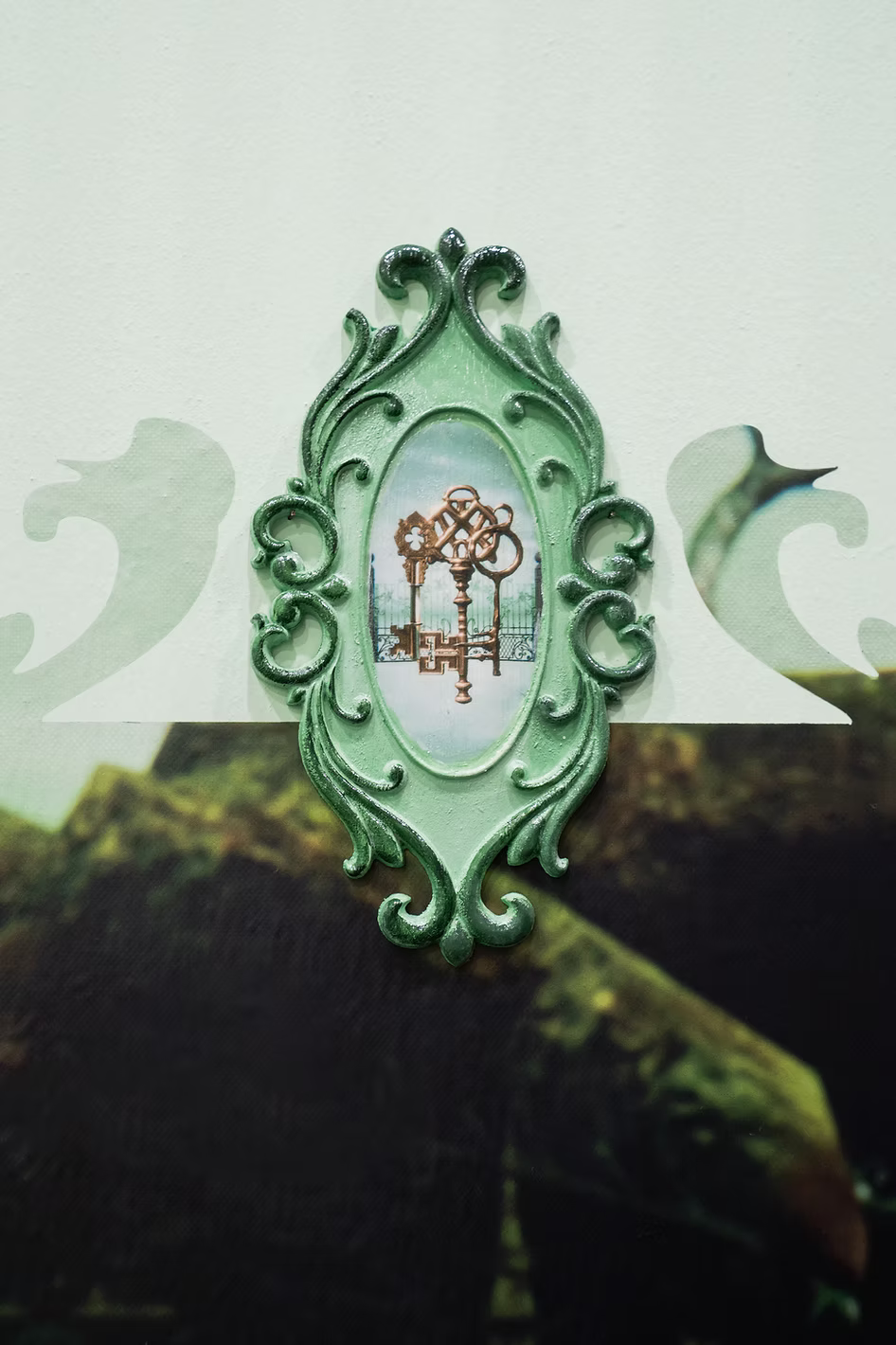
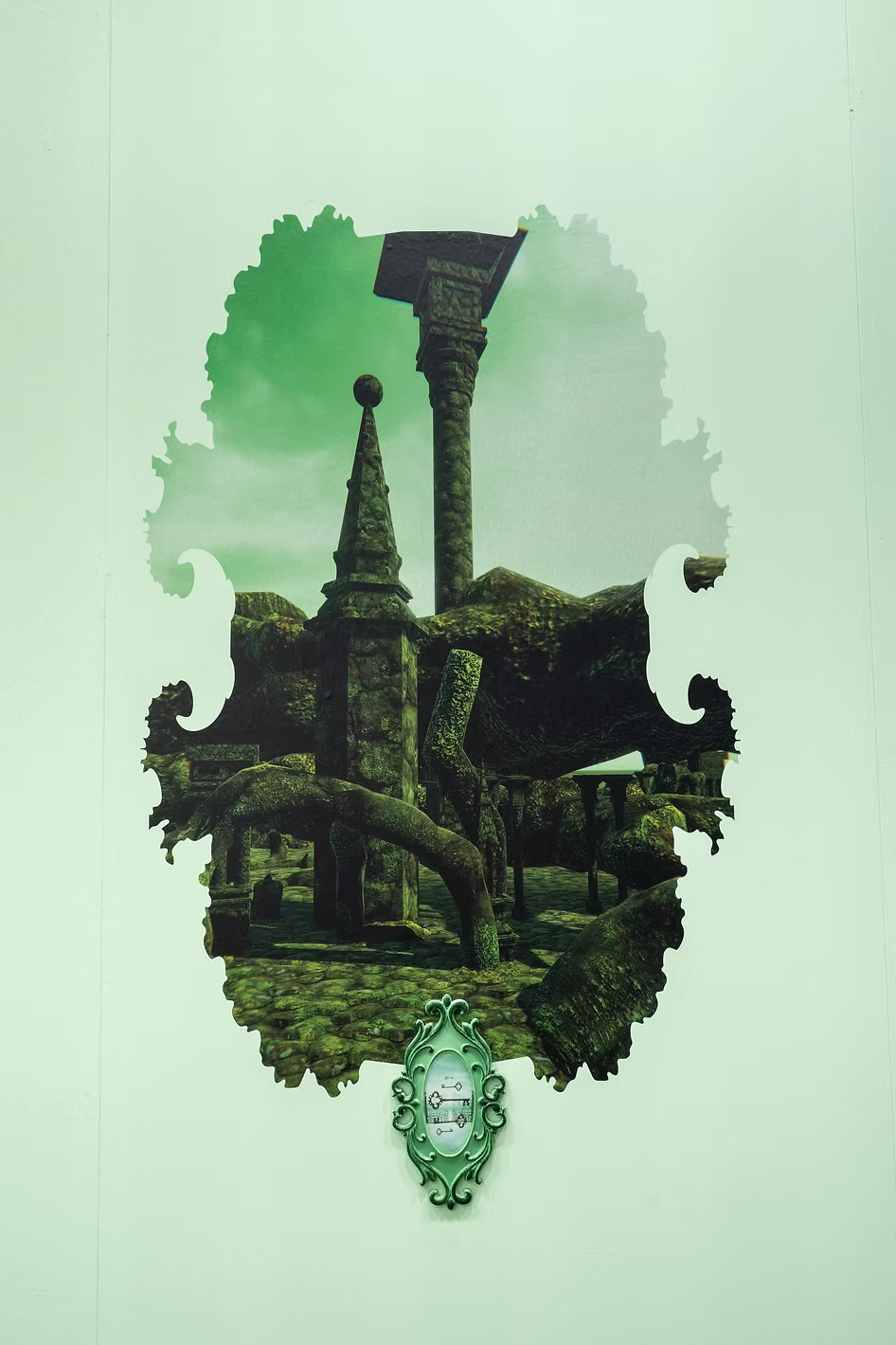
Léa Porré, Tis the Beginning of All Moist Things, 2022. Series of sculptures, wood, acrylic, print, varnish, 26 x 14 cm, plus wallpapers, 150 x 100 cm. Produced for ArtVerona Fair with Virginia Bianchi Gallery, Verona, Italy, 2022. Shown at Ice Blink Luck, Generation & Display, curated by Kollektiv Collective, London, UK, 2024.
The CGI worldbuilding renders invented civilizations with total visual conviction, no stylistic hedging that says "this is fake." Is the goal for the viewer to briefly believe it, or to feel the invention and the plausibility at exactly the same time?
I think you've exactly pinpointed the incentive behind the works. It's exactly that moment of rupture I'm interested in, the uneasiness created by the constellation of symbols that feels familiar yet eerie at the same time. Drawing the viewer in closer through a recognisable shape or object, yet something feels amiss: it is present, yet not fully here. An uncanny sentiment of being out of time, out of space, out of use.
Between the CGI, the forged sculpture, the woven tapestries, and the site-specific wallpapers, your practice keeps changing its material register but not its underlying question. What is the one thing you're actually trying to find out, that all of these different mediums are just different attempts to get at?
Thank you for underlining that. Indeed, the underlying question, as you phrased it, and the research, is always ingrained in each work: they are moving parts of a connected inquiry.
The main aim behind each work is to produce a fictional souvenir, a trace of a dream that you couldn't remember. Something I speak a lot about is the idea of creating an "impossible encounter."
To go back to your first question, I do position myself as a dream archaeologist and an unreliable narrator. Now, if these terms seem complex, they are simply here to point to the enchanting, labyrinthine path within these larger and abstract notions of real and virtual, of truthful and fake, of digital and physical, of set and site.
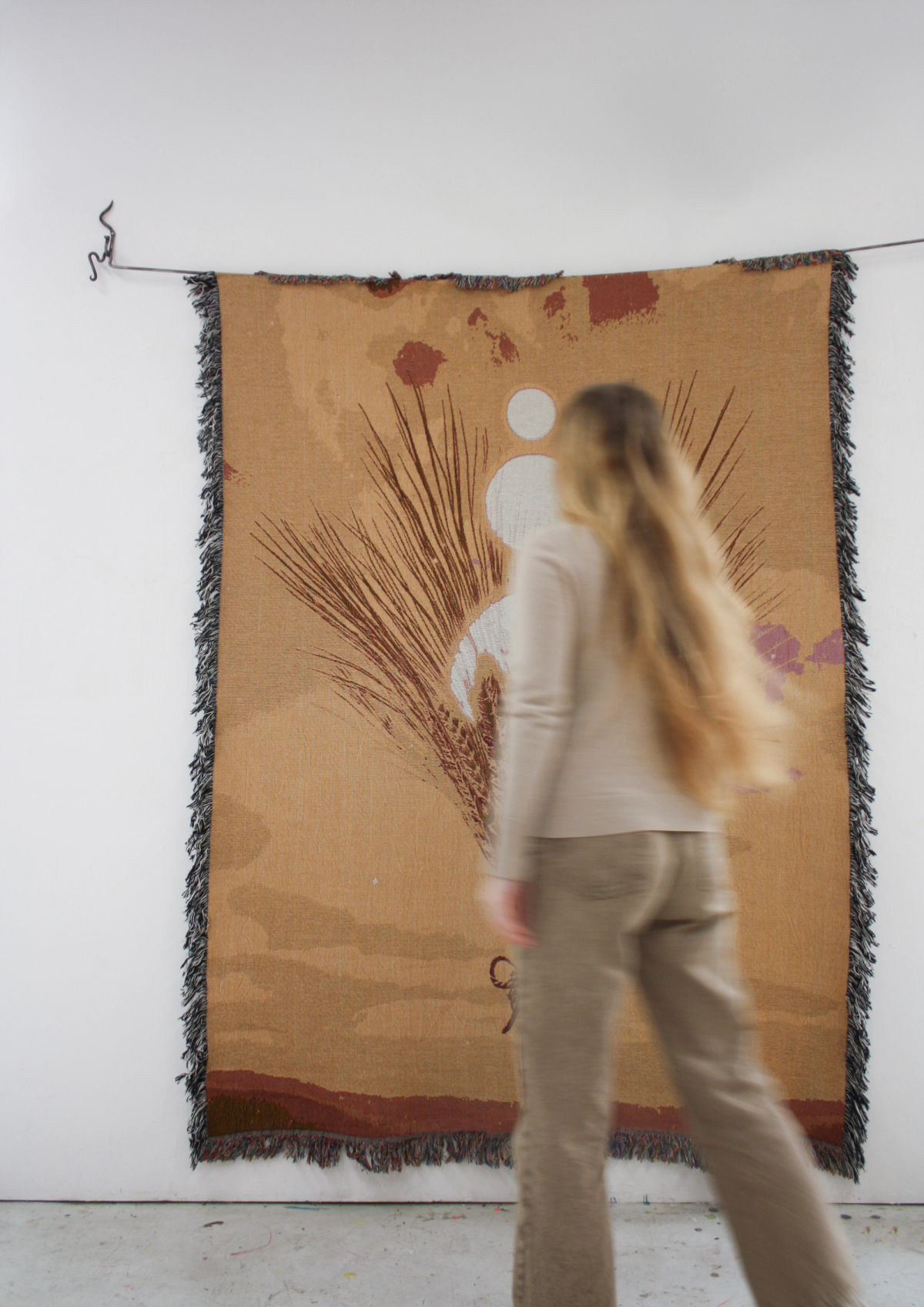
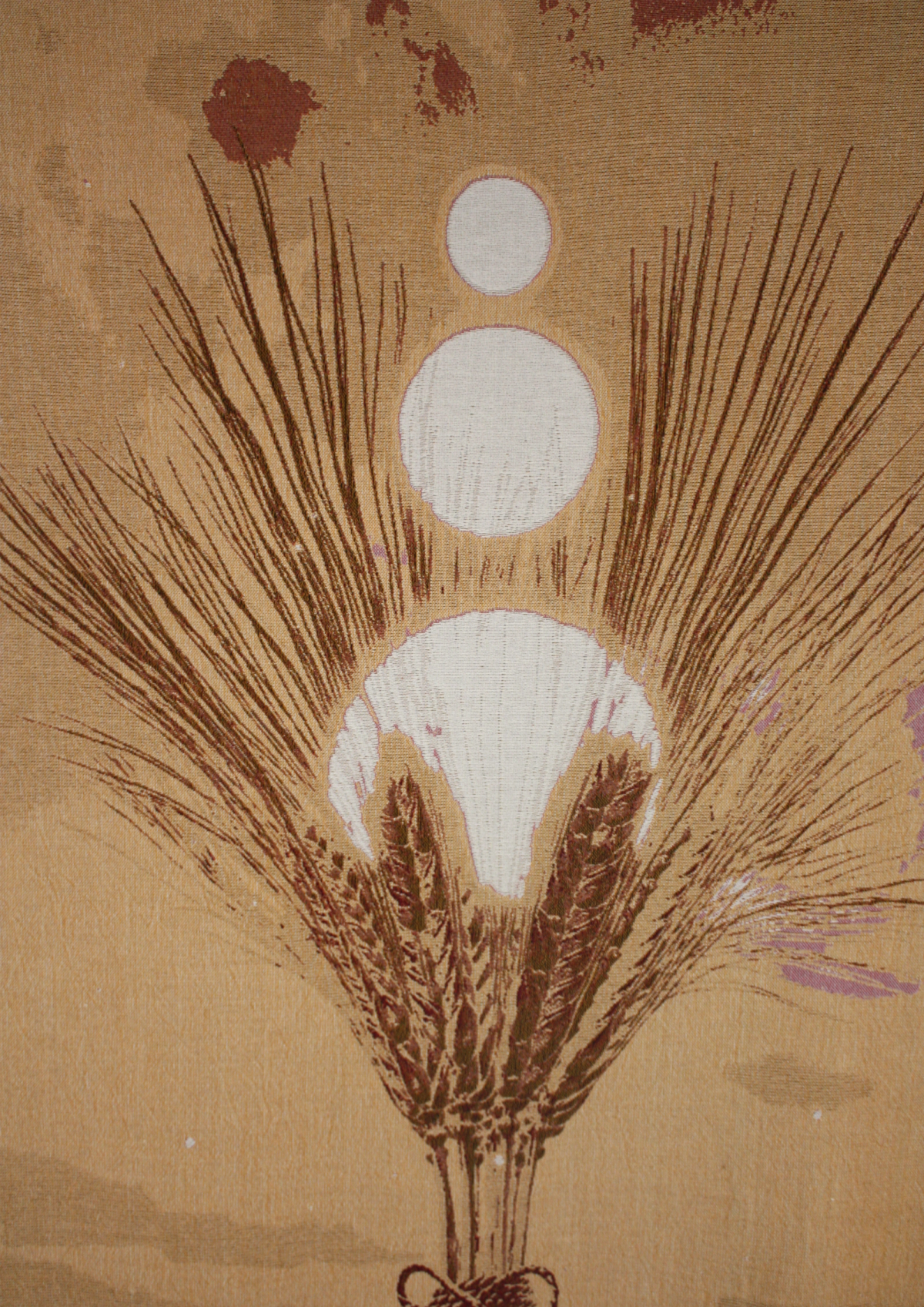
Léa Porré, Corn Spirit: Awakening, 2026. Jacquard-woven tapestry, 220 x 220 cm.
"Our understanding of our past is based on a series of limited perspectives, of bizarre re-enactments, and yet, utterly influenced by our own background."
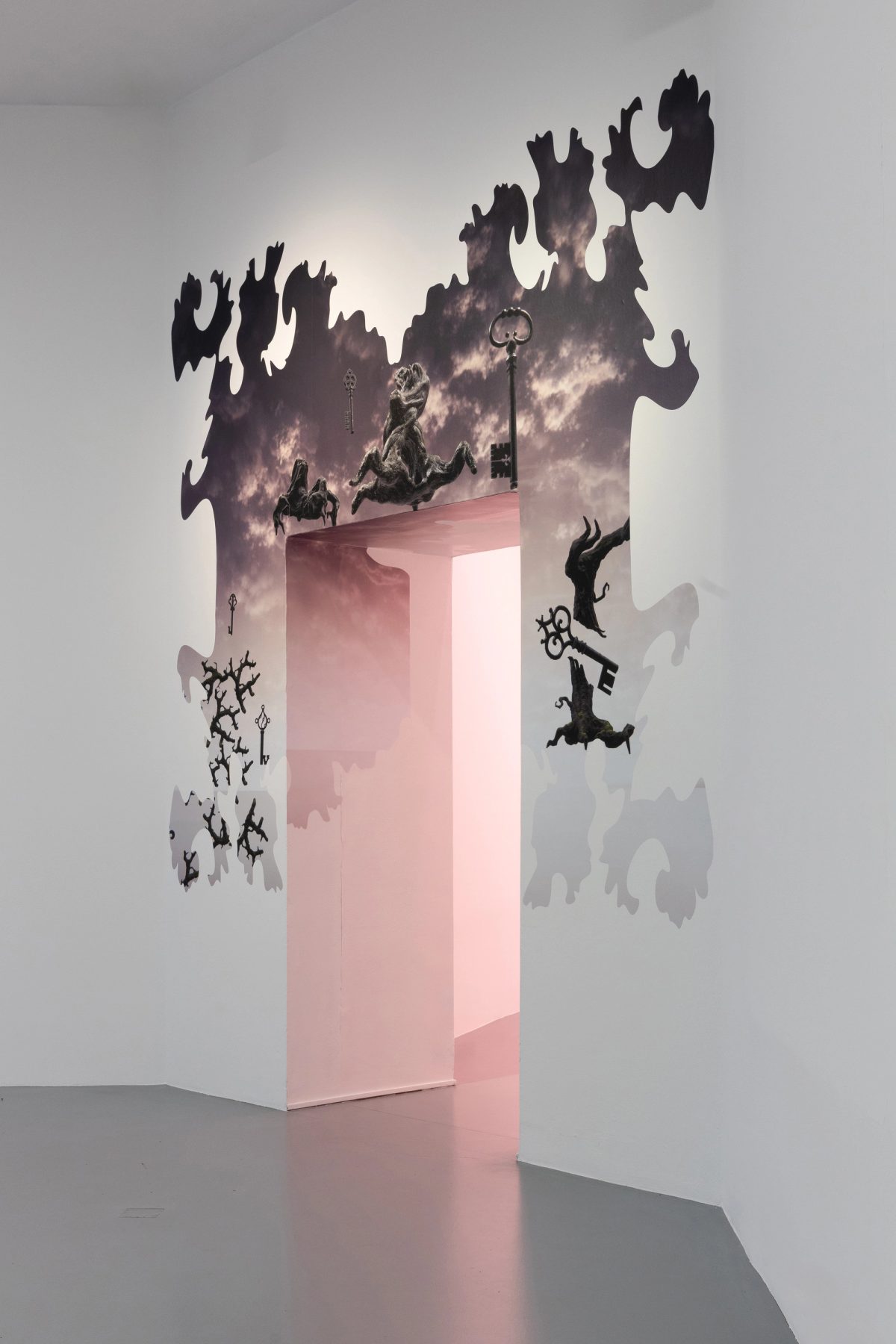
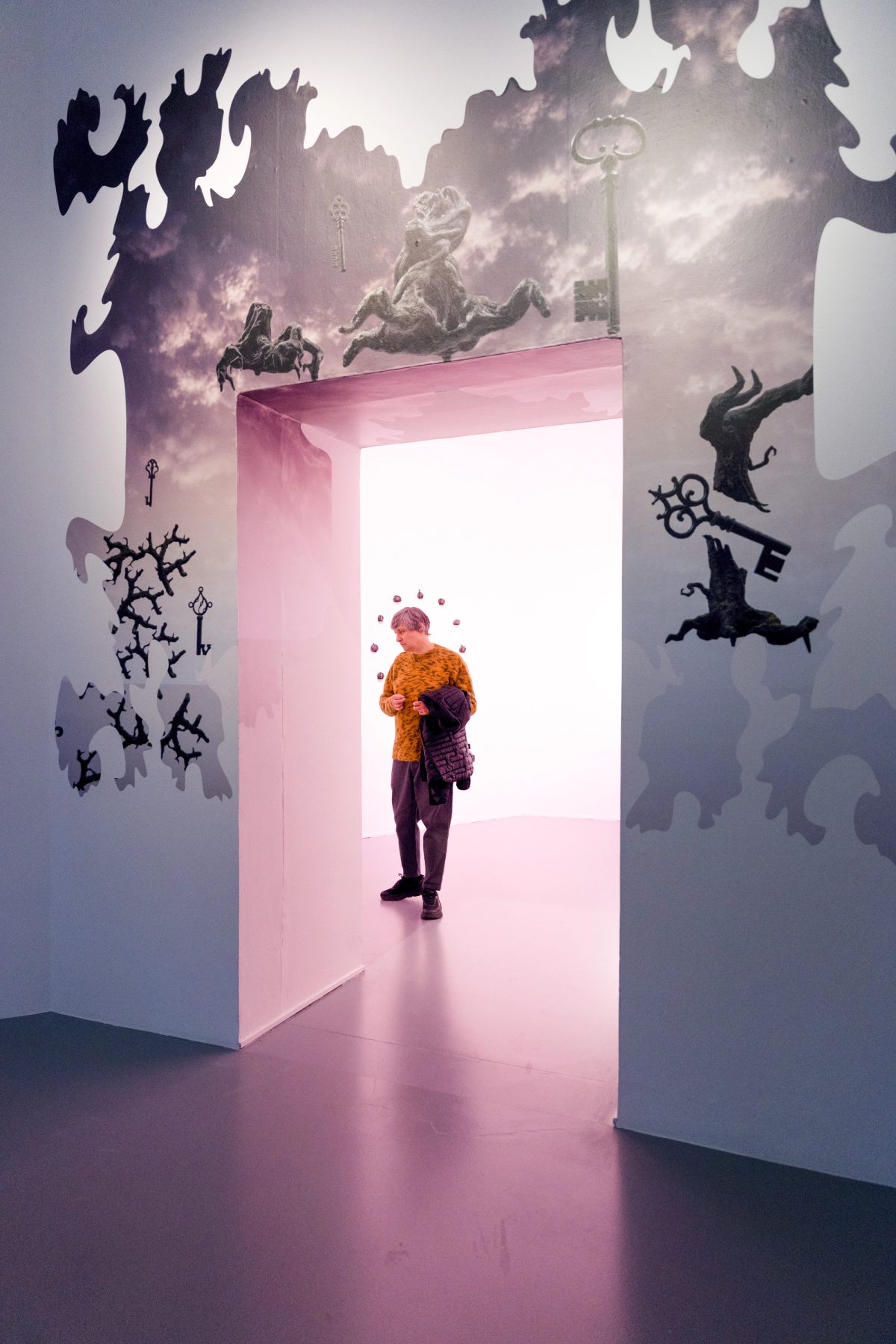
Léa Porré, Ianitores Terrestres, Ujazdowski Centre of Contemporary Art, 2026.
What's next for you? Is there a medium or scale you haven't touched yet that you're pulling toward, or a show on the horizon you can tell us about?
Materially, I've been experimenting with glass, stained glass, through both foiling and leading. But the beauty and pain of attempting to tame so many different crafts is that inevitably some will not always work out or find their way. Let's see. This year, I've been working on a firescreen that involves glass, and I would like to attempt to complete it towards the end of the year, after more pressing deadlines.
Medieval illumination and gilding, besides a small feature in 'Topia' hasn't found a central place in any of the works as well.
I'm also learning more about Gothic tracery, from where fragmented shapes have already found their place in works I'm currently producing.
I'm taking the time to learn, to unlearn, and make each craft, but also each specific research interest, my own. They might find a natural place in upcoming works, or not, and if so, that's okay as well.
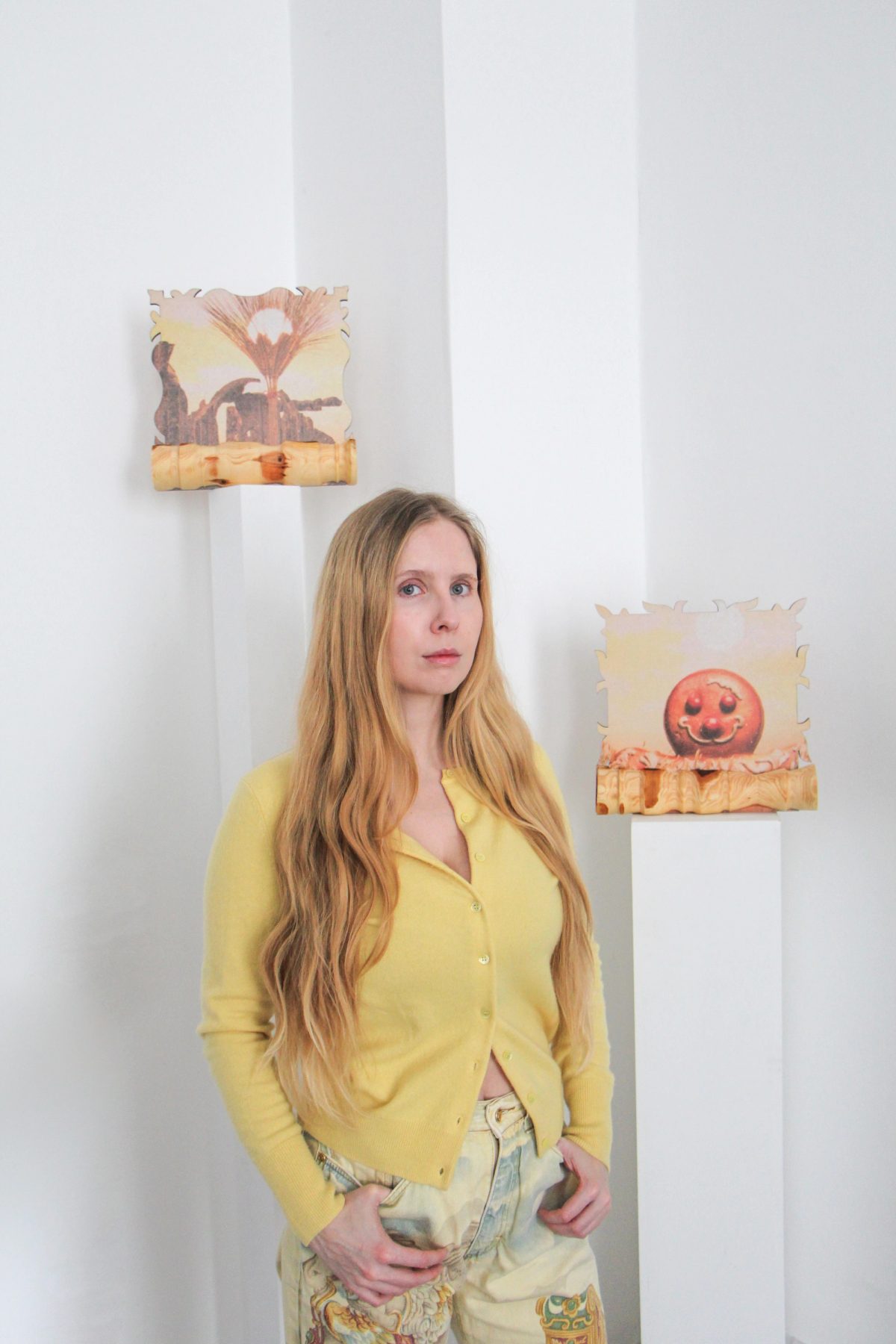
Léa Porré, Corn Spirit: Offerings, 2025.
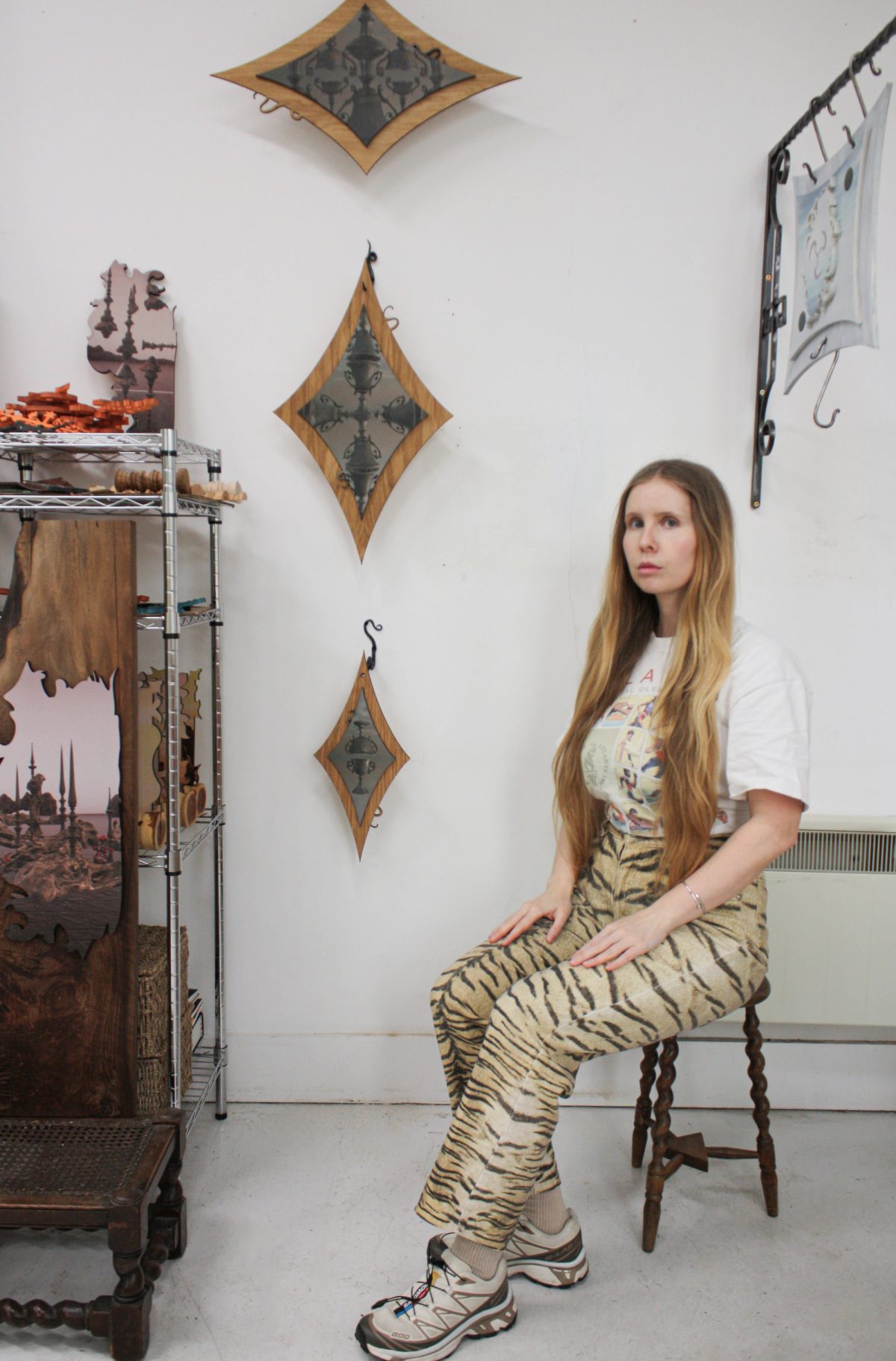
Cover Image: Léa Porré, studio view, 2026. Work in progress: Trophaeum.