BUILDING FROM THE CUT: IN CONVERSATION WITH TRUONG THE THIEN
CONVERSATION BY SELIN KIR
CO-FOUNDER, CURATOR
5 MARCH 2026 — UNITED KINGDOM
Truong The Thien is a filmmaker and visual director working across music videos, commercial projects, and experimental moving-image work. Originally starting in post-production before moving into directing, he approaches filmmaking with an editor’s mindset, treating footage as material that can be reshaped, distorted, and reassembled long after the shoot. His projects often balance careful visual construction with moments of improvisation, moving between high-production sets and more spontaneous, low-budget experiments. In this conversation, he discusses how ideas evolve into visual worlds, the role of editing in shaping narrative, and why he’s constantly searching for unexpected ways to work with the image.
I first became aware of your practice through the videos you directed for System108, and immediately felt we had to talk. Before we turn to the work itself, it would be interesting to trace the formation of your practice. How did you arrive at filmmaking as your primary medium? Were there earlier disciplines or visual interests that shaped your approach before you moved into directing?
I’ve been studying filmmaking since 2014. Before that, I wanted to become an animator, but animation required a lot of patience, and I eventually moved into filmmaking because it felt like a faster, more immediate process. I worked as a videographer for a while before going to university to study film directing. My graduation film later won an award at the Hanoi International Film Festival. After that, I moved into commercial and music video production, starting as an editor before eventually transitioning into directing.
Truong The Thien, the artist himself.
Across works ranging from “Ai mà biết được” for Sơn Hoàng Nguyễn to “Psycho” for Errorrica & Reptiloid, and even the iPhone-shot “BOMZH”, there is a consistent attention to atmosphere as structure: light, fog, negative space, digital interference operating almost as narrative engines. When you begin a project, are you thinking first in terms of mood as architecture? Or does atmosphere emerge as a consequence of something more conceptual: a lyric, a persona, a production constraint?
Every project starts with an idea. It can be a theme, an image, or just a feeling. From there, we build a visual story around it. Sometimes the idea comes first; sometimes it’s the atmosphere or emotion that leads the process.
For Ai ma biet duoc, the core idea was the contrast between the couple. That’s why we used the moon and the sun as symbols for the man and the woman. We also introduced minimalistic white-background scenes to represent the inner side of the relationship, visualising distance and tension. The goal was to make the audience feel like they were standing right in the middle of the conflict.
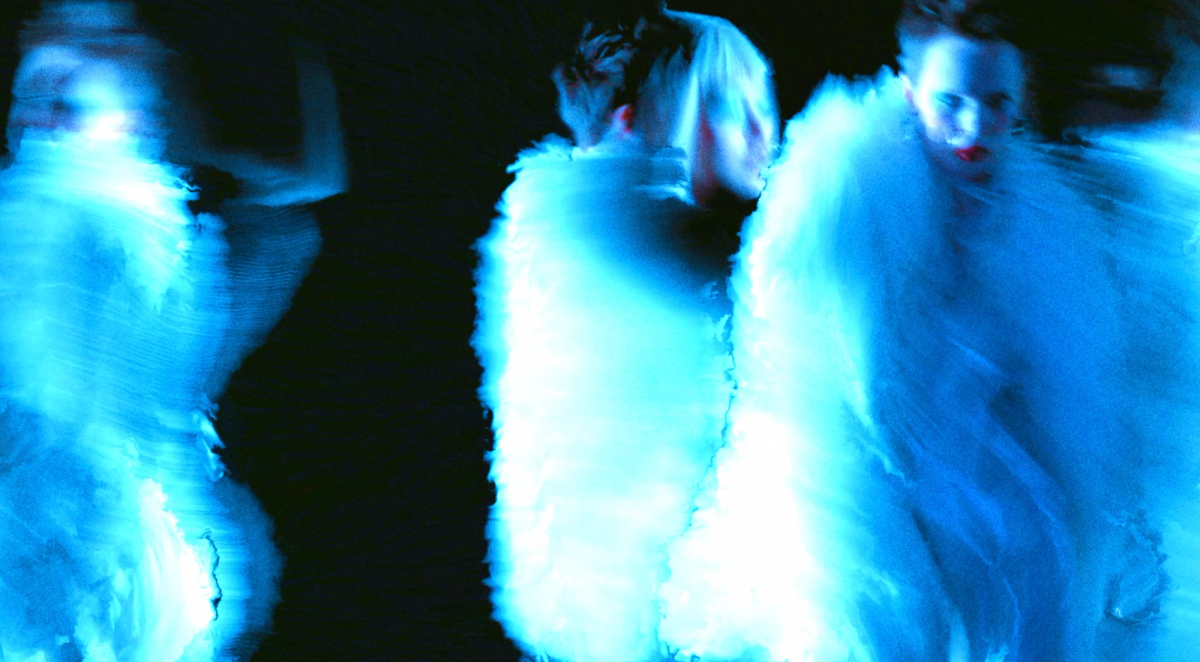
For Psycho, the starting point was an old black-and-white, Hollywood golden-era atmosphere. Hitchcock was one of the inspirations. From there, we expanded the concept by combining the artists’ ideas, the label’s expectations, and my own vision. I like when different perspectives merge into one unified result.
For Bomzh, it was simpler. I really loved the music and wanted to make a video for it. We storyboarded the story, the artists prepared costumes and makeup, and we shot everything around the block on an iPhone. Then the story was rebuilt again in the edit.
In general, I treat production as collecting material for post-production. When you’re alone with the footage in the editing room, you can reshape everything. Even imperfect material can become something strong in post. So mood and atmosphere can either come from the main idea or become the starting point themselves.
“Ai mà biết được” for Sơn Hoàng Nguyễn
“In general, I treat production as collecting material for post-production. When you’re alone with the footage in the editing room, you can reshape everything.”
Your practice moves between high-production commercial campaigns (Samsung Vietnam, Artlist Original) and music videos embedded in more subcultural ecosystems (System108, Luxe Video Club). How does crew size alter your directing method? Do you find yourself more experimental in constrained conditions, or more precise when resources expand?
In every project, I try to bring everything toward a clear vision. Reaching 100% of that vision is always difficult, regardless of budget, but larger productions give you a higher chance of getting closer.
On high-budget sets, it’s easier to focus on directing because you have strong departments and an AD managing logistics. That allows me to concentrate on the bigger picture.
With lower budgets, you often have to handle multiple roles at once: camera, lighting, everything. I treat those projects as a playground for experimentation. They’re less controlled but often more fun and spontaneous.
There is a recurring oscillation in your work between hyper-controlled composition and moments of rupture, pixelation, digital distortion, exposure shifts, fragmentation. Do you see digital interference as aesthetic texture, as commentary on image culture, or as a way of destabilising visual certainty?
When I first discovered After Effects, it completely changed the way I thought about images. I realized you could do much more than simply cut shots together. I started experimenting heavily with distortion and digital manipulation.
You can see this in my early Reels. They were mostly experiments, but that period was important because it taught me that even a single shot can become a complete story.
For example, I once filmed myself spinning on a chair, cut out my head in the edit, and built a small narrative around it. It was simple, but it showed me how flexible images could be.
Over time, though, effects started feeling overused. I became more selective and now use them only when they serve an idea rather than just looking interesting.
Recently, for example, I created a wavy visual effect by quickly scrolling through footage to the music, screen-recording the playback, and then slowing it down. The result matched the rhythm in a way that felt organic.
Не забивай свои корни for Outcuts
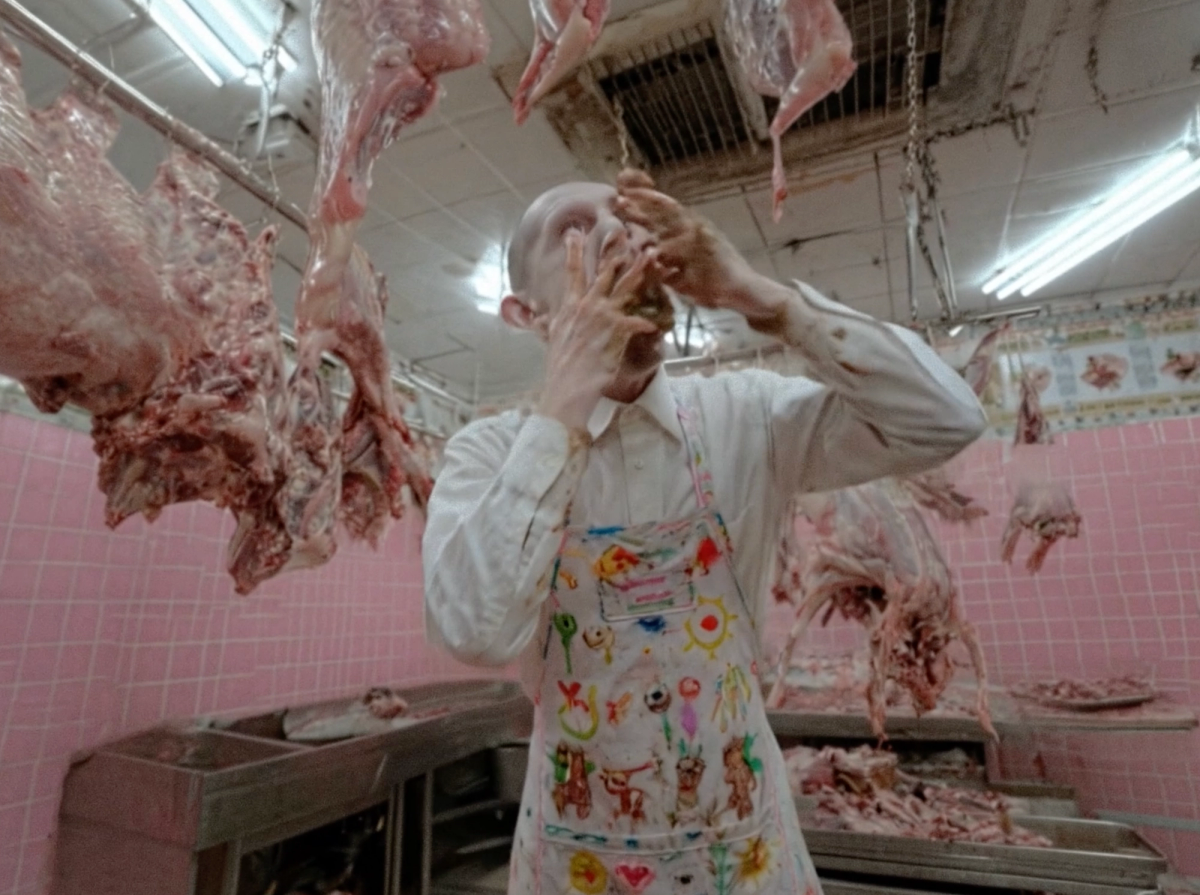
In the System108 video, you construct a very contained world: the small house with the exposed butcher display, the neon “прогрев” text, the narrow corridor, the exaggerated knife gesture, it feels almost like a dark fable staged inside a domestic space. What drew you to this particular setting and tone? Were you thinking in terms of narrative, a character moving through a psychological space, or were you more interested in building a self-contained visual universe that operates symbolically rather than literally?
The visual world I work with originally came from a personal side project. I imagined an internet persona living in a miniature house, sharing everyday life like a social media character. The idea was to create a parallel universe that felt familiar but slightly strange.
Later, when System108 asked me to direct a music video, I couldn’t find an idea that excited me, so I decided to use this world. Interestingly, the video ended up being about a butcher turning into a pig because of karma, while the artist turned out to be vegan, which I didn’t know at the time. Somehow everything connected naturally.
In my work, narrative is important, but I prefer it to remain subtle. I like symbols and metaphors that aren’t too direct. Usually I build the visual universe first, and the narrative grows inside it.
Right now I’m focused on surprising both the audience and myself. There’s an overwhelming amount of visual content today, and much of it feels similar. I’m always searching for something unexpected.
Арчанга — Прогрев
“Sometimes spontaneous ideas end up being stronger than planned ones.”
Арчанга — Прогрев
Editing appears to be foundational to your practice. You are often credited as both director and editor. When you carry a project through to post-production yourself, what changes? Do you shoot with the cut already in mind, or does the narrative truly reveal itself only once you begin assembling material?
Starting my career in post-production helped me a lot as a director because I understand what’s possible later in the process.
For commercial or high-budget work, preparation is essential. Storyboards, pre-shoots, and previs help reduce uncertainty, and usually I know from the start how the project will come together in post.
Low-budget music videos are different. I leave more space for improvisation and discoveries on set. Sometimes spontaneous ideas end up being stronger than planned ones. I treat these shoots as collecting raw material.
For example, in my work for Errortica, Copy Me, we only had about 3–4 hours to shoot the entire music video, and most of the narrative had to be created in post-production. It took me quite a while to come up with something interesting, and I decided to go with a minimalistic style on a white background. I used different visual techniques to find harmony between the music and the visuals, which, in the end, created something interesting, in my opinion.
Another example is when I created a series of visuals for a nightclub in Vietnam. I was sent a bunch of footage and had to build the visuals entirely in post-production. I based them on the vibe of a nightclub and how I imagined they would look on a big screen. I wanted the feeling to be harsh, so I experimented a lot with the imagery to find the right mood.
Editing is where everything can change. A completely new storyline can appear, and sometimes you discover meaning in details you didn’t even notice during filming. For me, it feels like playing with Lego without instructions, pure creative freedom.
Ultimately, people experience visuals emotionally. My goal is always to make the viewer feel something, even if that feeling isn’t clearly defined.
Psycho — Music Video for Errotica
Copy Me for Errortica
Many of your projects operate within music culture, yet they rarely rely on literal storytelling. Instead, they construct a kind of visual tension that parallels the track rather than illustrating it. When approaching a new song, do you begin by analysing structure, tempo, dynamic shifts, repetition, or do you detach from the music to build an independent visual world?
When working with artists, we usually go back and forth discussing how the work should look or feel. From there, I start building the world, the narrative, and the visual language.
I try not to make visuals too literal. They should evoke emotion rather than explain everything. Removing strict logic from the visual narrative often creates something more interesting.
Sometimes I don’t listen to the song too much during development. If you hear it too many times, it can lose its emotional impact. I prefer focusing on the artist’s intention and building a world around that.
The tonal palettes in your work are often extreme: saturated reds, deep blues, dense blacks, sterile whites. How do you decide on a colour logic? Is it emotional, symbolic, or purely formal?
Color and lighting decisions are mostly emotional for me. I enjoy working closely with the DP because they help shape how the world should feel visually.
BOMZH for СТЕРЕО ШИРИНА
“Usually I build the visual universe first, and the narrative grows inside it.”
BOMZH for СТЕРЕО ШИРИНА
Working across geographies, vietnam, Paris, collaborations with Russian labels and artists, you operate within distinct cultural image economies. Does your visual language shift depending on context, or are you pursuing a consistent internal system that travels with you regardless of location?
I started working in Vietnam, where there are more censorship limitations, so I learned how to work around them and find creative solutions. In Russian or international collaborations, I feel freer to push things further. At the same time, there’s probably an internal impulse that keeps my work consistent regardless of context.
Looking across your recent projects, where do you feel your practice is evolving next? Are you moving toward larger narrative forms, more experimental short formats, or a deeper interrogation of the image itself?
I’ve definitely become more experimental.
Technology keeps opening new possibilities. When photography appeared, painters moved toward more surreal and emotional styles because realism was no longer necessary. I think something similar is happening now in visual media.
New tools allow artists to rethink how images work, and that’s what interests me most, finding new ways to use technology to create surprising visuals.
“In general, I treat production as collecting material for post-production.”