BECOMING THE SECOND BODY: A VISUAL ESSAY BY SHUMAIYA KHAN
VISUAL ESSAY BY SHUMAIYA KHAN
23 FEBRUARY 2026 — UNITED KINGDOM
Shumaiya Khan reflects on a body of work where painting becomes a site of rupture and re-formation, tracking the moment a “second body” begins to surface from within the first. Moving through myth, memory, and lived systems of behaviour, she frames each work as a threshold: a shedding of inherited armour, a renegotiation of flesh and psyche, and a slow, deliberate making of another self. In this visual essay, Khan writes alongside the paintings, treating the canvas as both witness and vessel where transformation is not symbolic but bodily, spiritual, and irreversible.
THE SECOND BODY
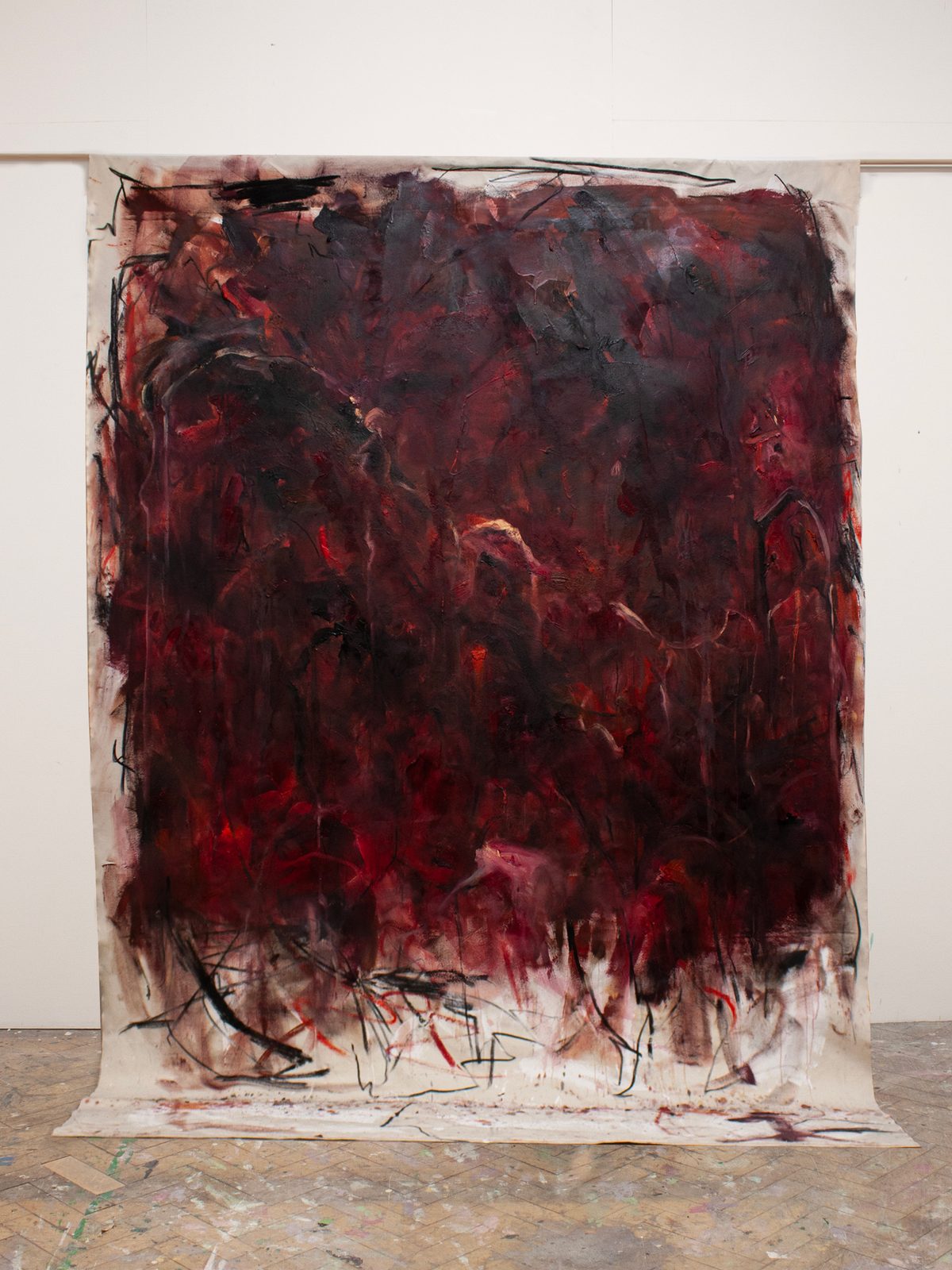
While wearing the skin and flesh of my first body, the second body emerges. This painting was the second of two works and signalled the beginning of a recognition of my own human predisposition, and of the internal realisation that all the systems I had been led to live within, and I myself, who had gladly gone along with them (perhaps out of fear, because we do not know the alternative until we have walked a line or been shown the moment), were not the life that worked for me, but rather the lie that was sold to keep me subdued.
The Second Body
2024
Oil, oil stick, salt, madder dye and charcoal on loose canvas
180 × 230 × 38 cm
At this time, I was reading tales of the Sumerian goddess Inana, in particular her descent, of her own accord, to the underworld to take the crown from her sister Ereshkigal, where, after three days, she fails and is placed on a meat hook to die.
The main premise of doing my master’s was so that I could make the work I had within me. My practice and I are linked in many ways, mirroring one another and revealing what the other is capable of without becoming the other.
The paintings that followed would mirror the seven gates Inana passes through, each time being required to surrender a worldly piece of armour, something we might describe as linked to surface level or taught behaviour. Each time I unveiled something in a new work, I wondered what remained of the person or body I once knew. I knew there was no going back. The old world was dying.
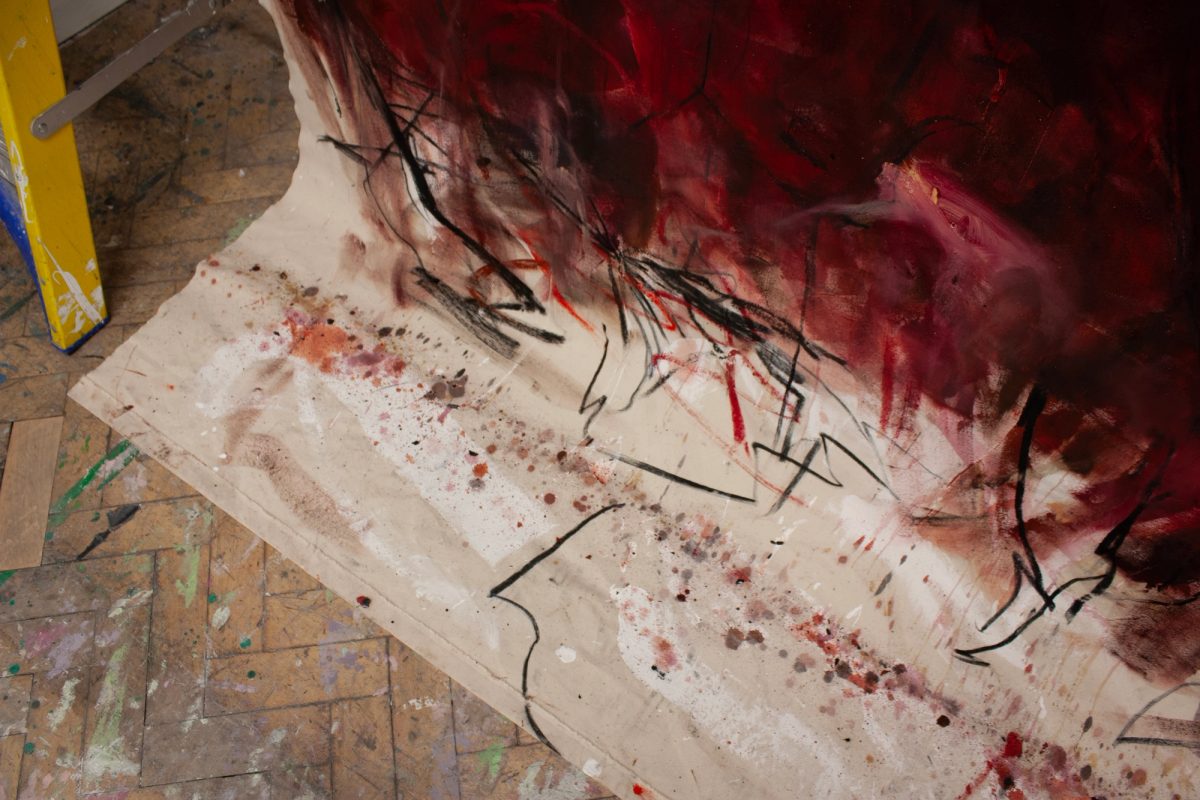
Even though I was making work that was extremely bodily, this ‘body’ referred more to a metaphysical state rather than a three-dimensional physical one, however, both remain forever connected. This work shows the beginning of a new ‘body’ forming through the emergence of growing forms within a pool that resembles blood.
“While wearing the skin and flesh of my first body, the second body emerges.”
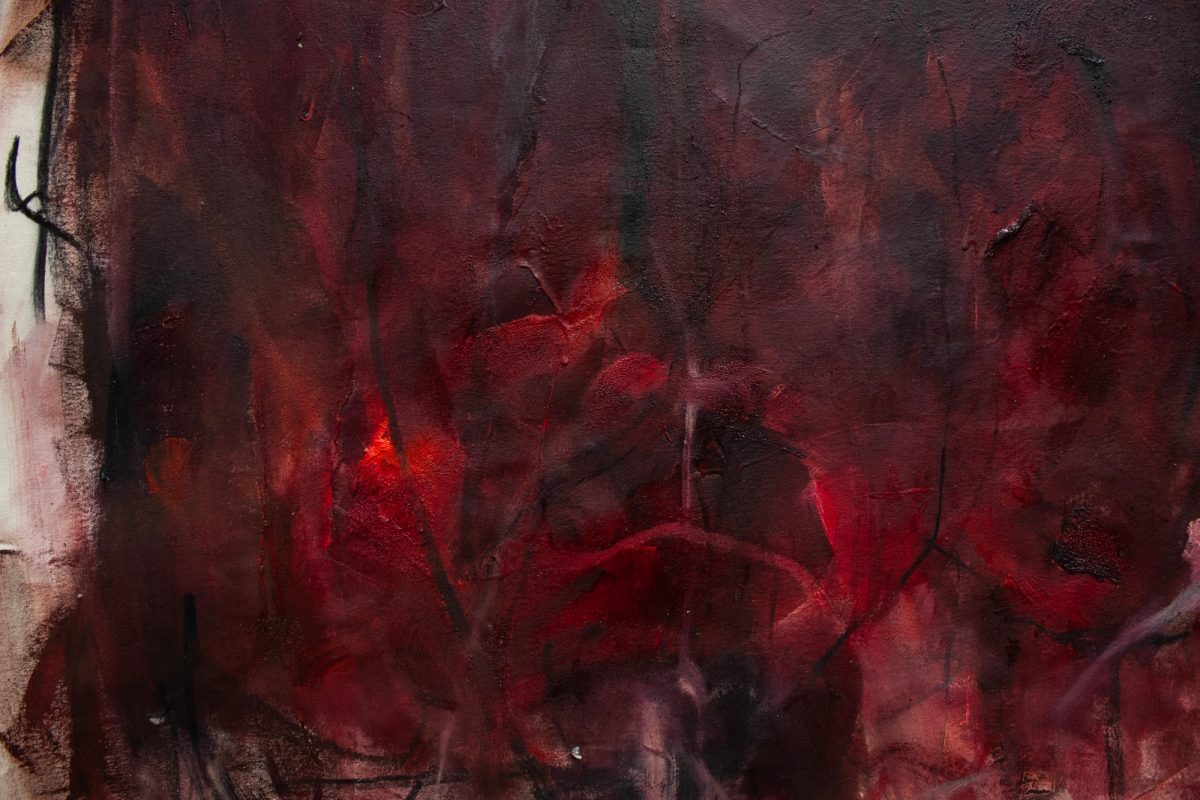
The Second Body
2024
Oil, oil stick, salt, madder dye and charcoal on loose canvas
180 × 230 × 38 cm
THE FIFTH BRANCH, NO. 2
Veins and new roots on a different skin. It takes, on average, one year for 10mm of nerve endings to grow in the human body. Trying to build a new body while making sense of how the previous one was made, and which parts still exist.
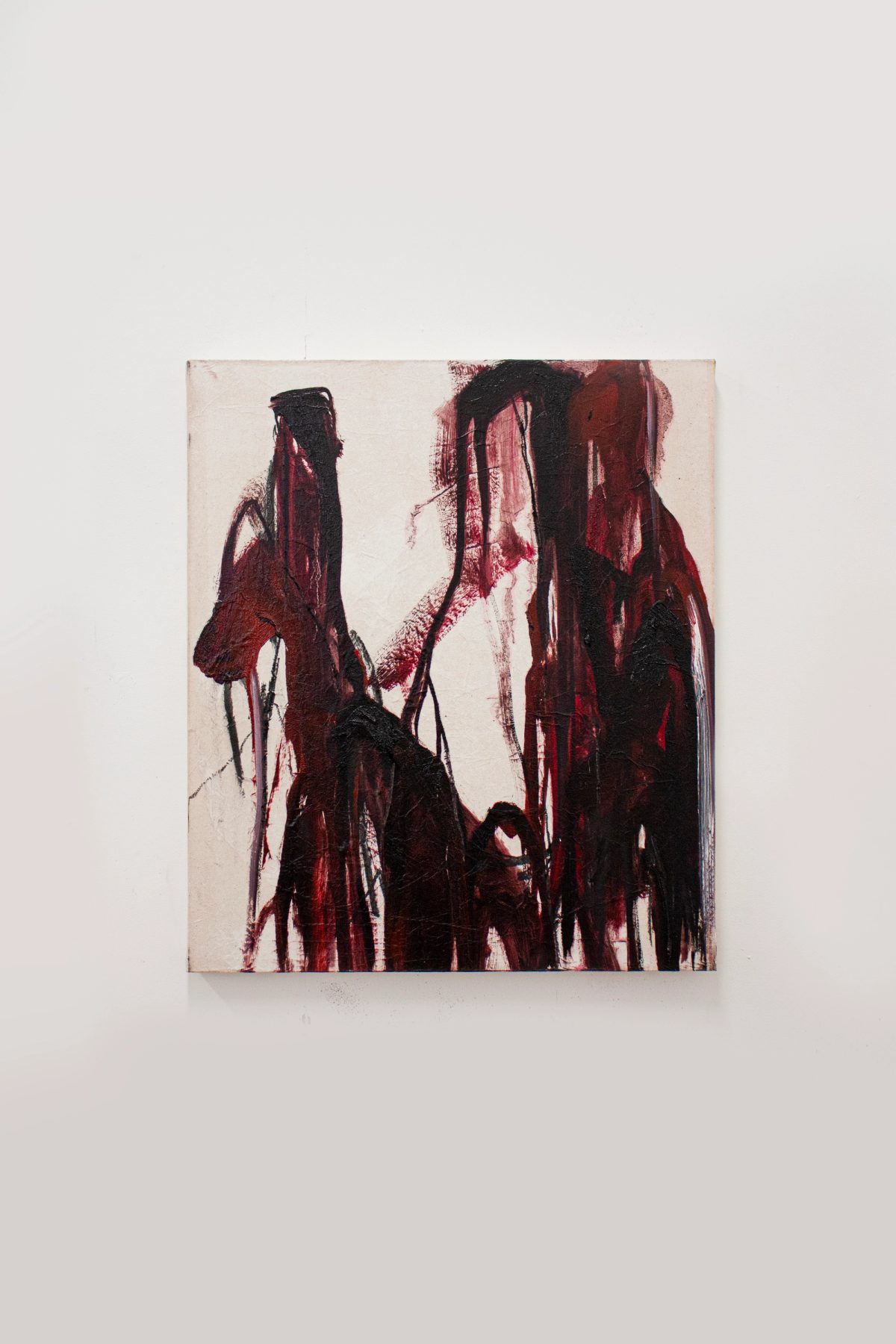
The Fifth Branch, No. 2
2025
Oil, salt and charcoal on canvas laminated with paper
60 × 70 cm
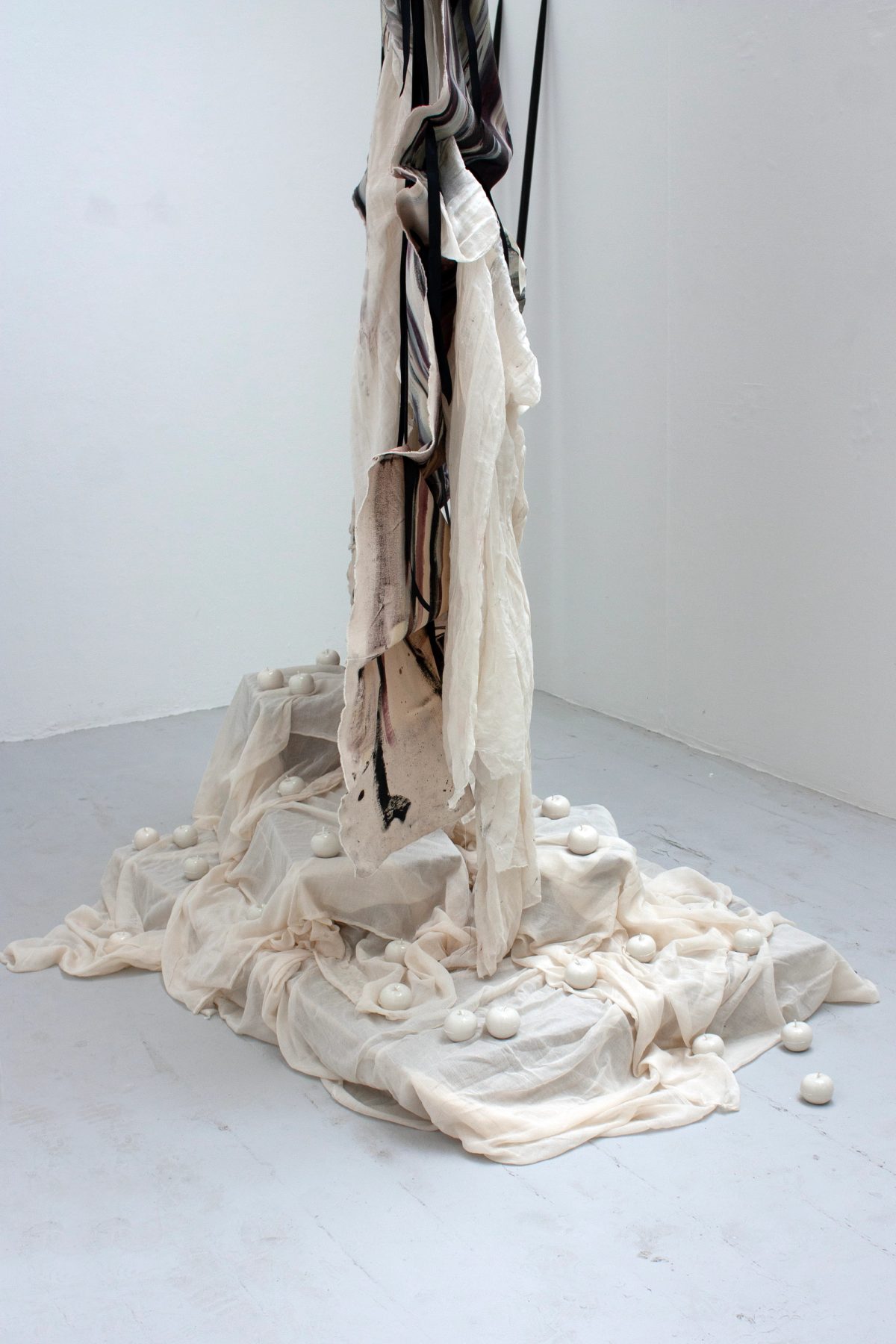
THE MOUNTAIN OF MANY SIDES TAKES TWO DAYS TO CLIMB
Taking inspiration from Inanna’s (Ishtar’s) ascent up Mount Ebih, I like to view pre-Abrahamic ancient goddesses as archetypes that resemble experiences typically encountered by a woman (on the path of ‘womanhood’) through different phases of life.
Before our current time, these phases of life, for example childbirth, ageing, and changes in how functional the female form was, were honoured. As one phase of life came to an end, it was mourned and also held to be celebrated.
Today, we miss that celebration. We lose out on the excitement for the future for what has yet to be learned, felt, and experienced. We are told we can only have one moment of life for eternity, when in reality we are constantly changing, whether of our own accord or through some cosmic or expected force.
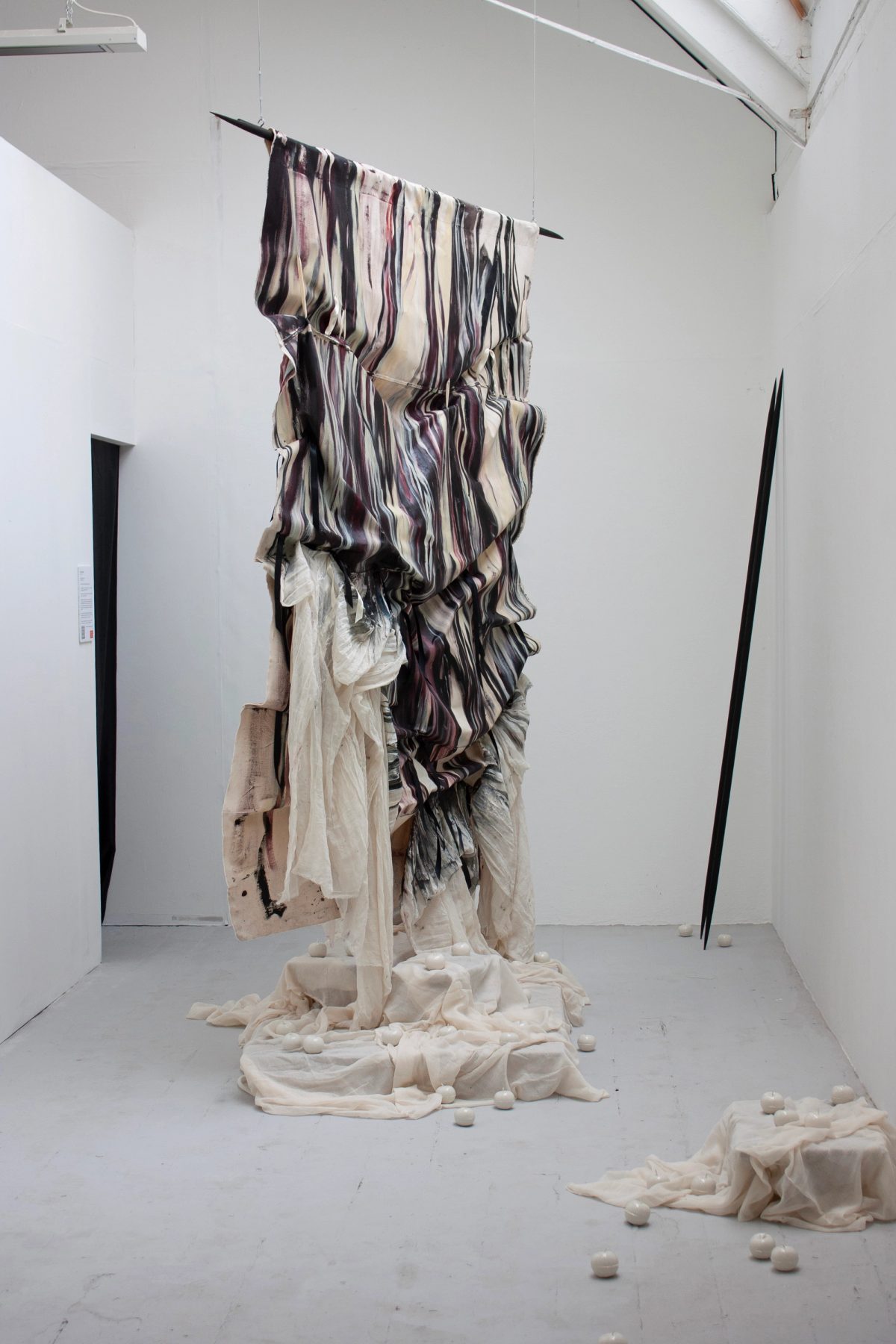
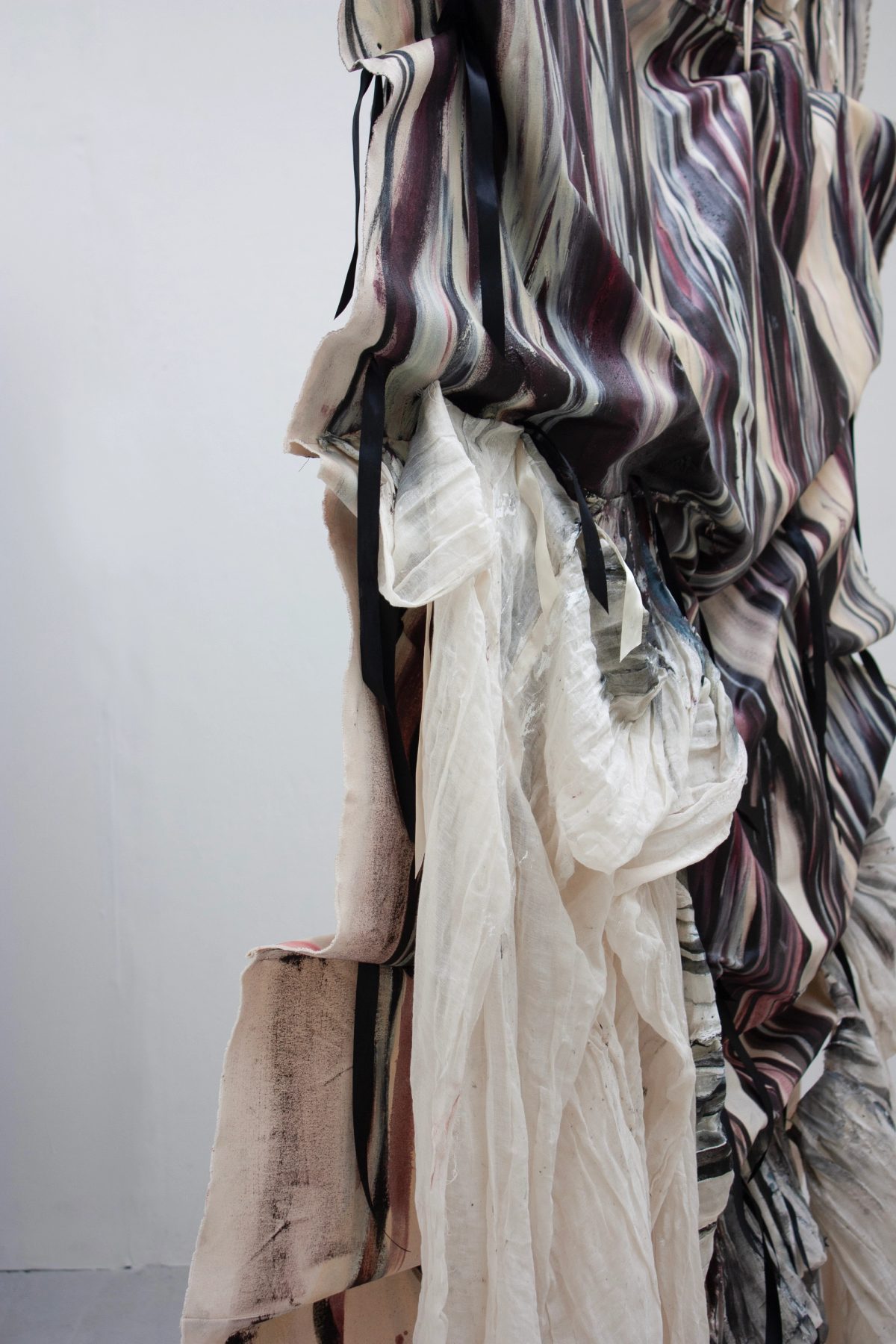
The Mountain of Many Sides Takes Two Days to Climb
2025
Double-sided painting
Oil, salt, ribbon and cotton muslin drape on suspended folded canvas
Hangs on Devonshire steel-reinforced burnt birch spear
240 × 320 × 25 cm (including support)
180 × 320 × 25 cm (main body)
Shown with Seven Apples for Seven Heavens
"What I love about Inanna’s ascent is that she took all the knowledge gained in her passing through the seven gates of the underworld and brought it back to the upper, waking world, becoming stronger in her resolve."
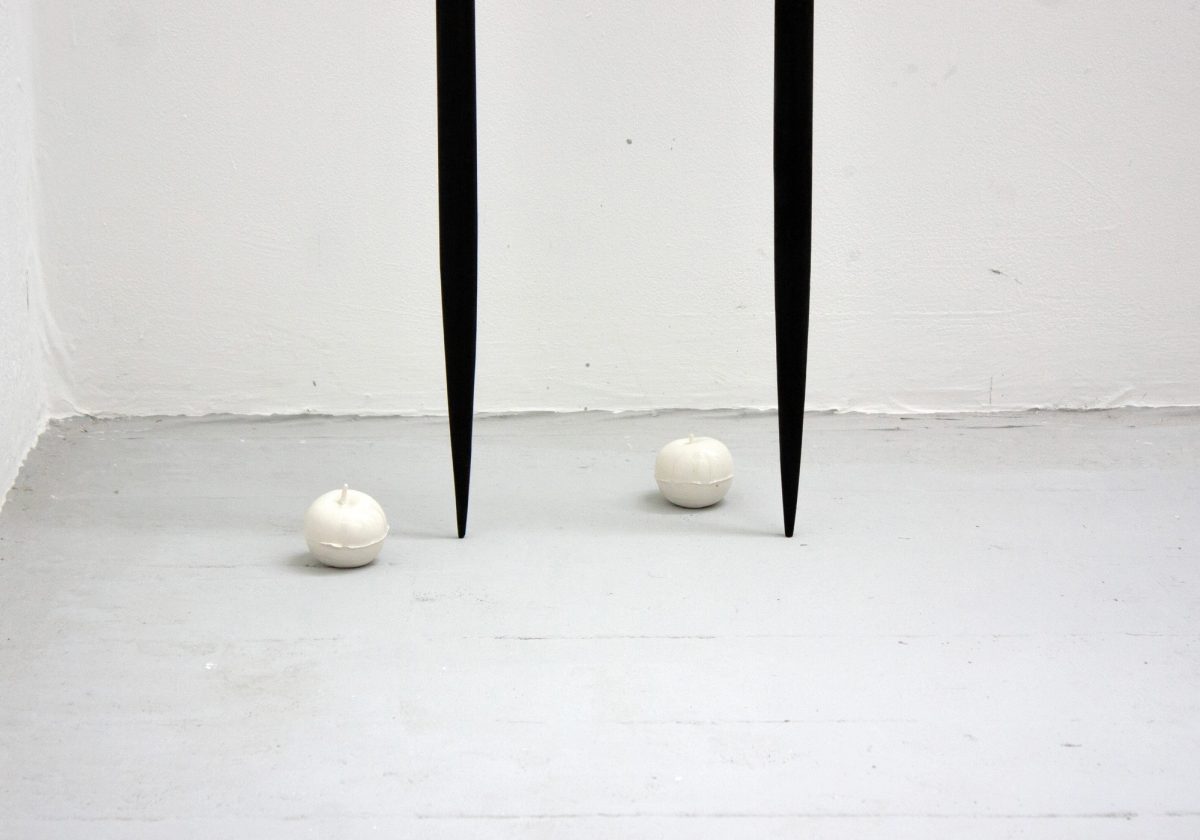
Two of Wands
Detail, installation view
Unexpectedly, much of the form I was creating in this work shifted from mimicking internal bodily systems (although still quite bodily in some elements, considering tone, colour, and hidden textures) to something that sits outside the body.
The forms became more elemental, structured with far more solid direction in the gestural marks present in the work. The marks no longer play with a fluid journey; rather, they form a more determined system, which in a way still echoes what was the metaphysical existence of me at the time of making the work.
All of a sudden, the body I was once in was lost for a moment, and there I was at the foot of this mountain I had made, looking for a way to ascend again.
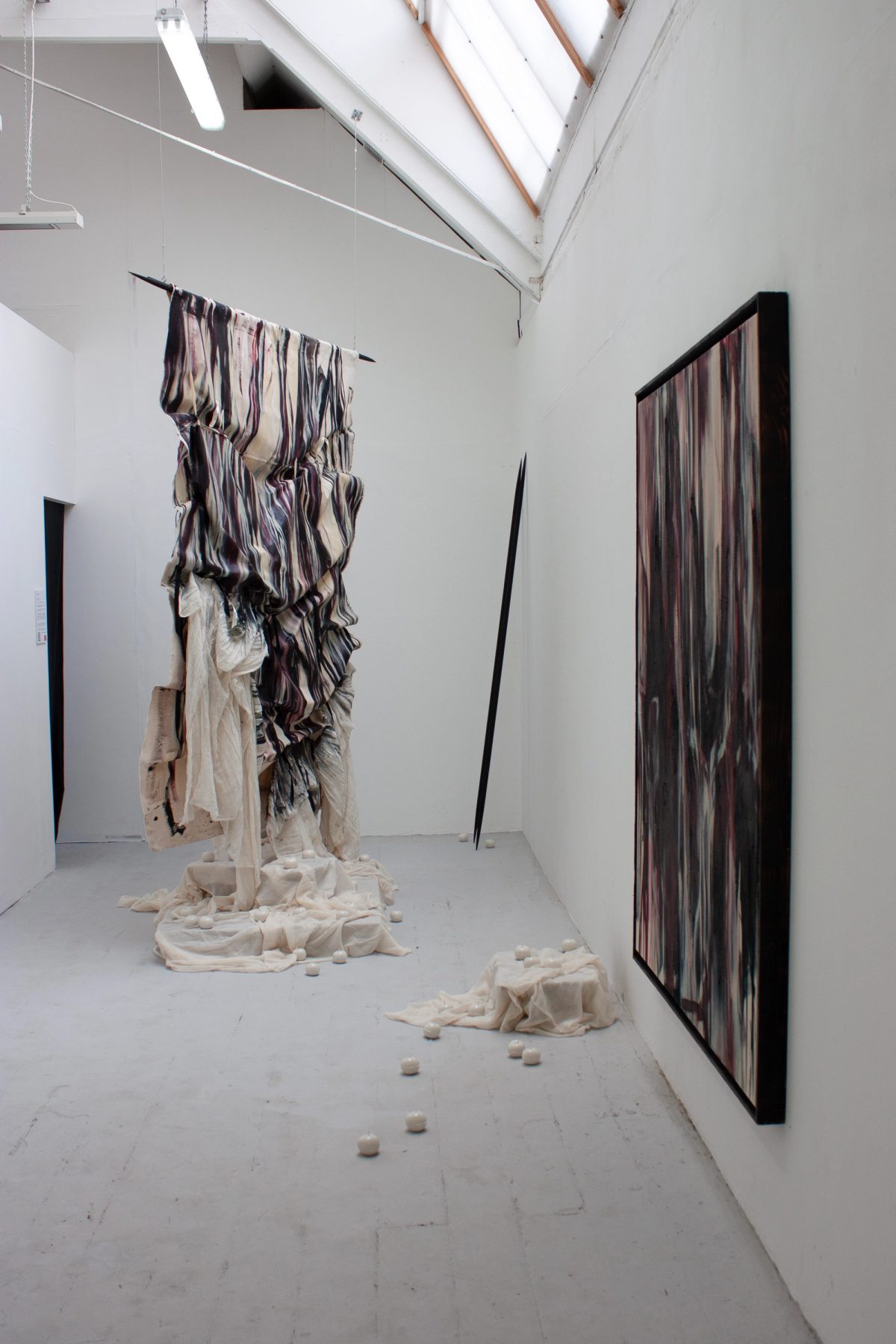
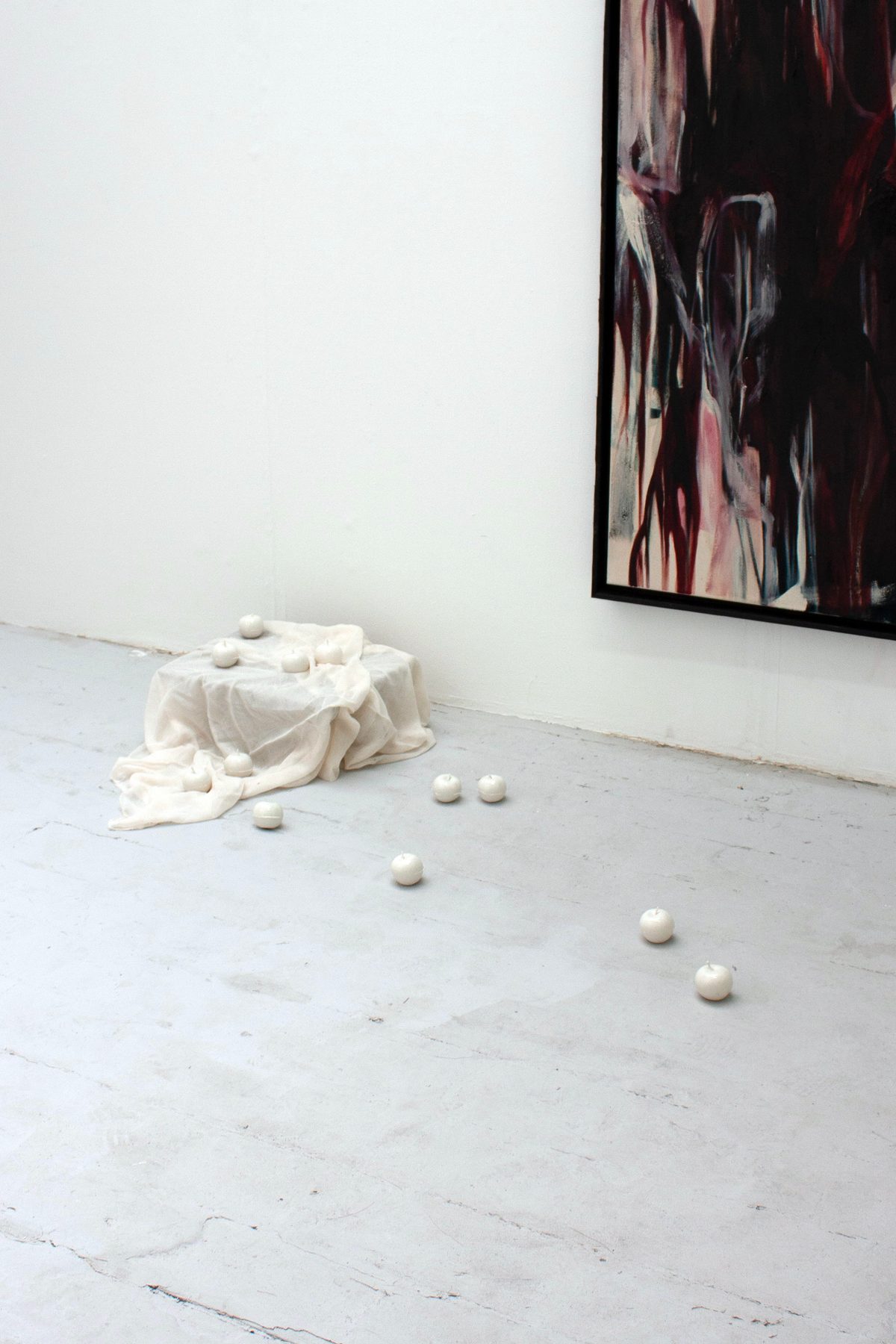
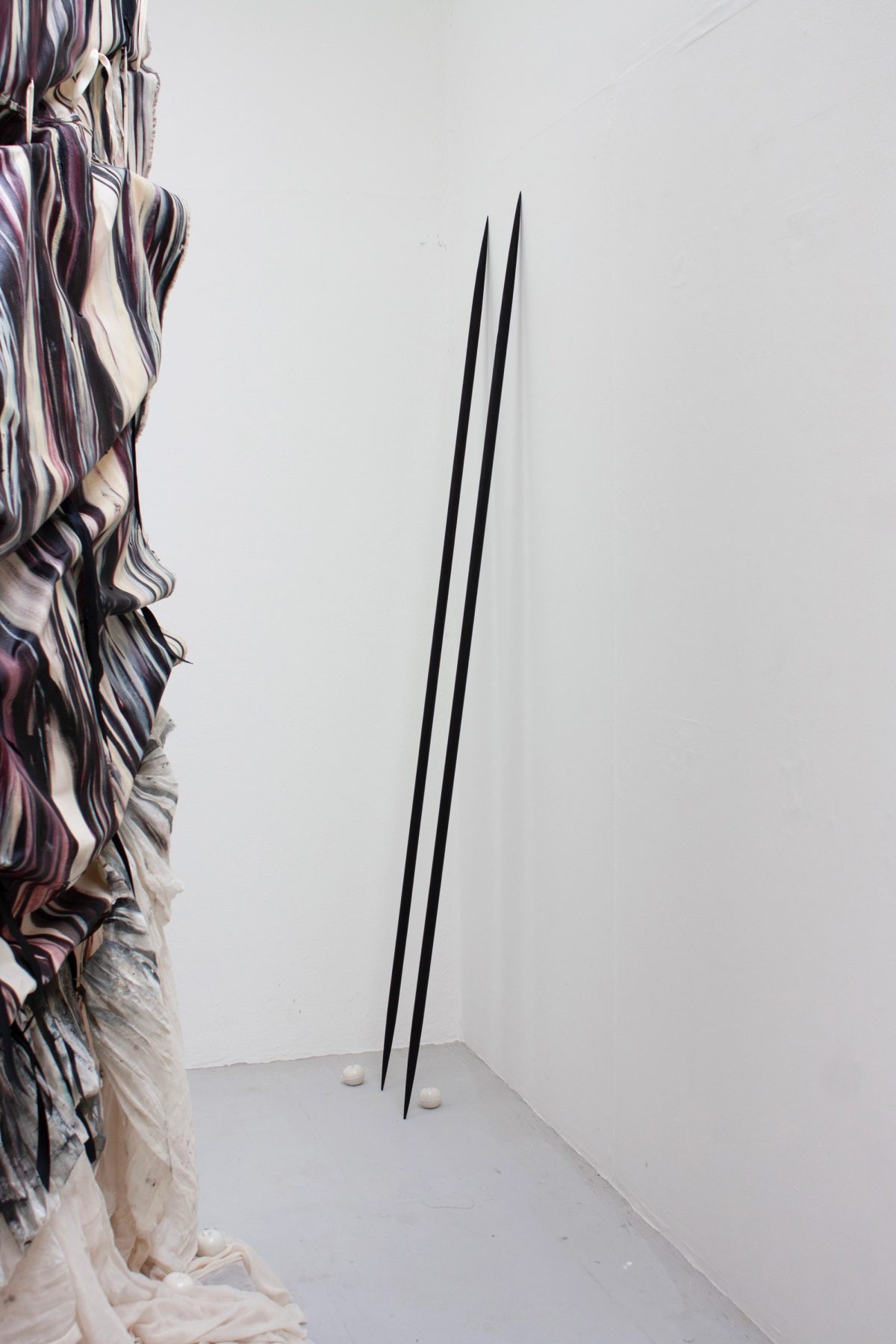
The Mountain of Many Sides Takes Two Days to Climb
2025
Double-sided painting
Oil, salt, ribbon and cotton muslin drape on suspended folded canvas
Hangs on Devonshire steel-reinforced burnt birch spear
240 × 320 × 25 cm (including support)
180 × 320 × 25 cm (main body)
Shown with Seven Apples for Seven Heavens
SEVEN APPLES FOR SEVEN HEAVENS
At the foot of The Mountain of Many Sides Takes Two Days to Climb lie 49 apples (seven sets of seven). Each apple proposes a new myth, a starting point for its audience while removing a binary in all its forms.
When we have so many choices, we take on the responsibility of our own undoing and rising. We do not have to take a bite from an apple if we do not feel comfortable within its reality. However, sometimes the bitter taste of a moment is needed for the next phase of life, whether to succeed or to live in another, more beneficial way.
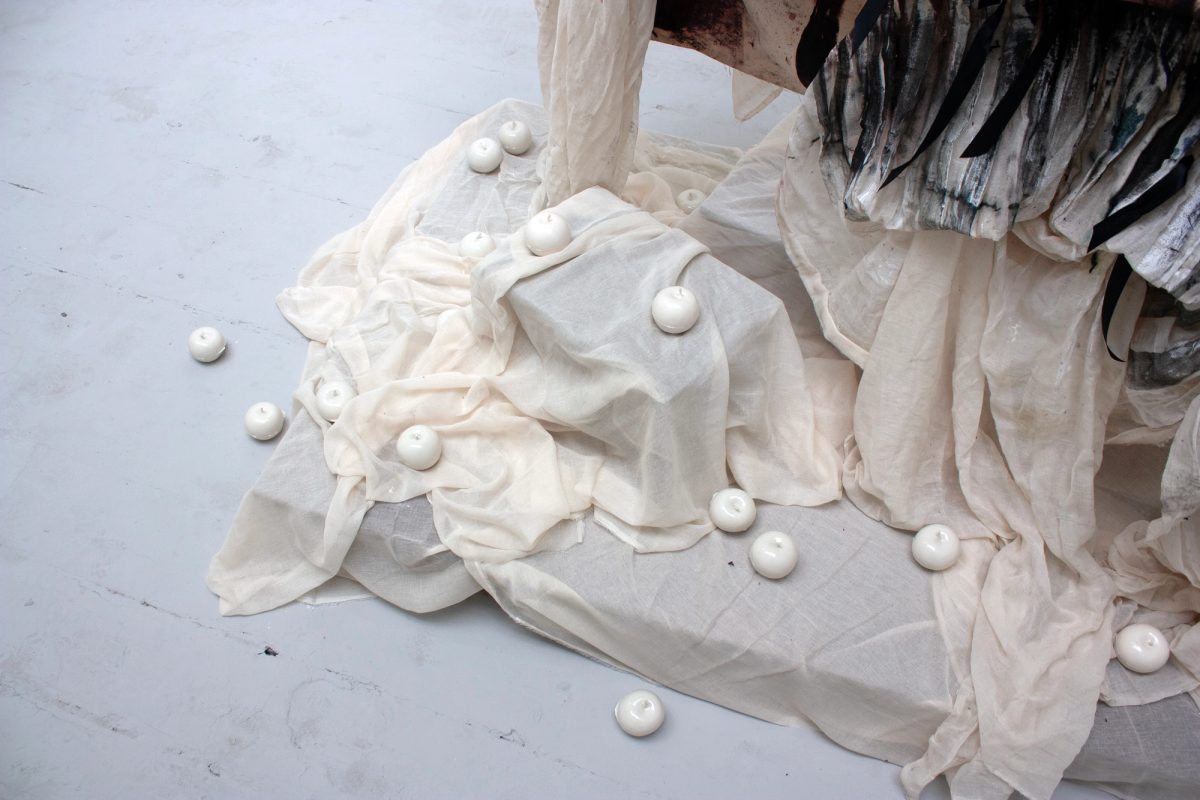
Seven Apples for Seven Heavens
2025
Porcelain on muslin
55 × 70 × 60 mm (each)
Edition of 49 (seven sets of seven)
“Each apple proposes a new myth. A starting point for its audience while removing a binary in all its forms.”
THREE WISE WOMEN:
The stretcher bars for this work originally belonged to three interconnected separate pieces, The Three Sisters: Eros, Athene, and Eris.
Three Wise Women, the three panels, were intended to be three separate works, although there was always a pull for them to coexist, and midway through making them I realised they all followed one from another.
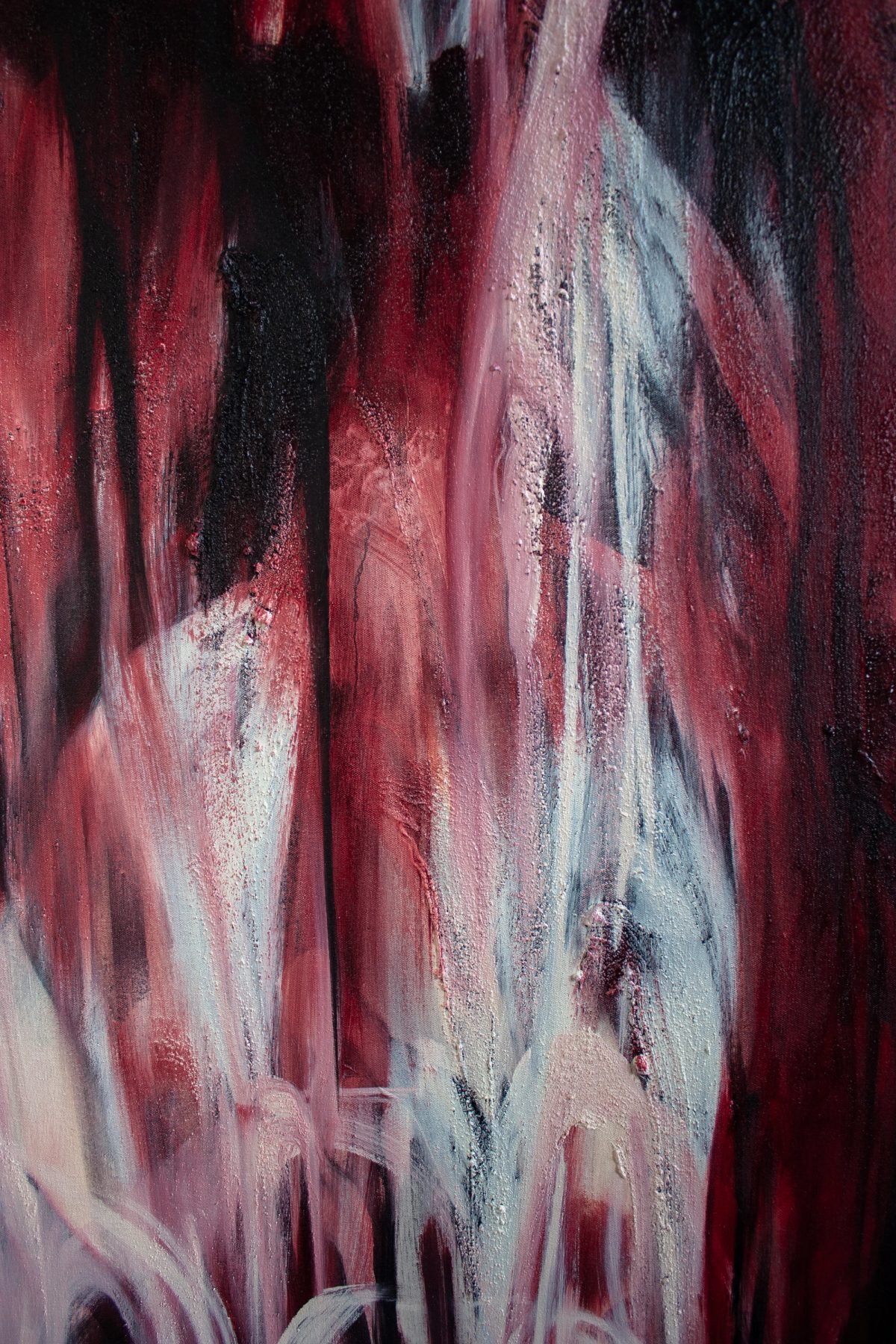
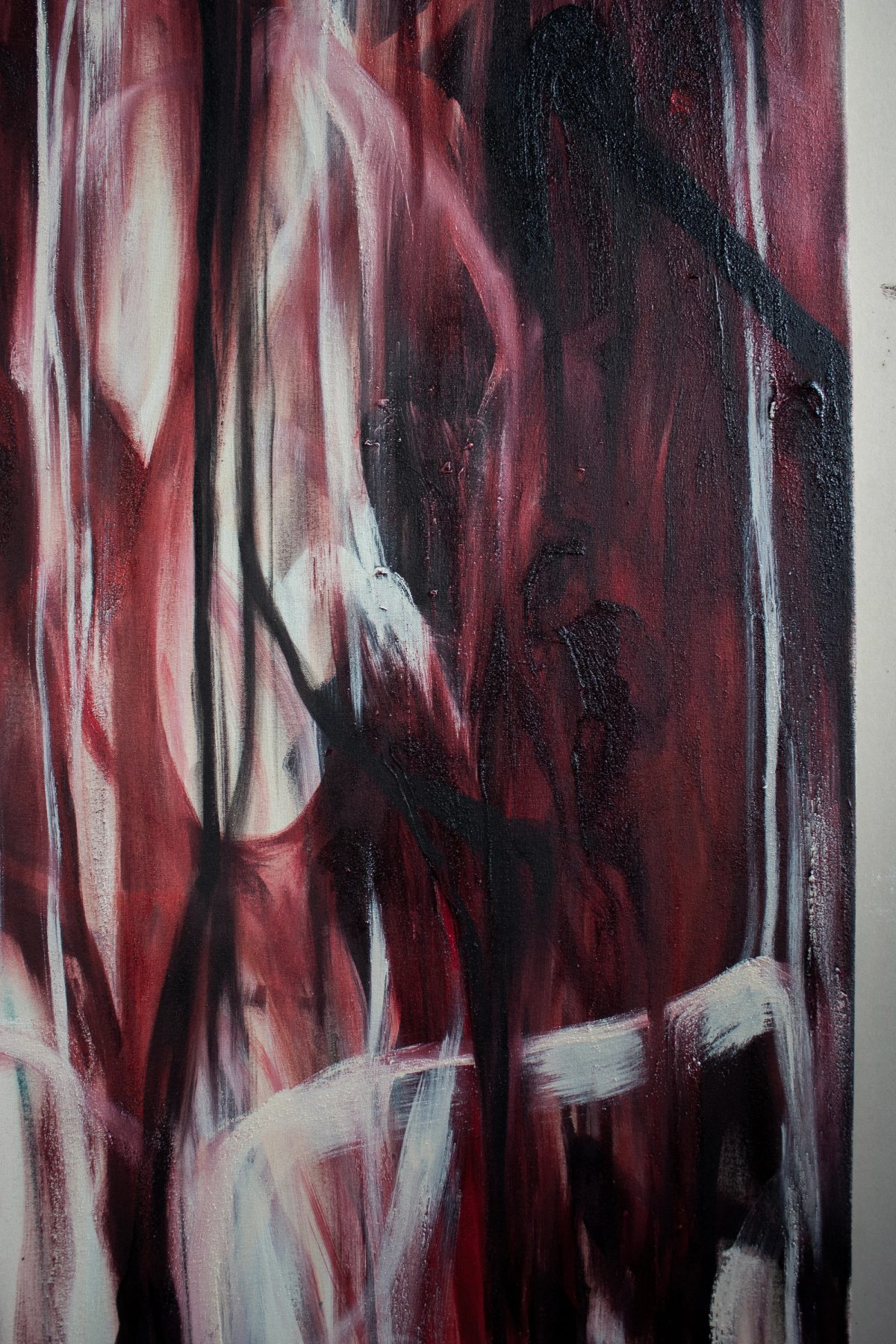
Three Wise Women
2025
Oil and salt on canvas
Triptych: 60 × 170 cm; 55 × 70 cm; 60 × 170 cm
Overall dimensions: 185 × 170 cm (including 5 cm hanging gap)
Three Wise Women takes inspiration from the past, present, and future of a singular entity, as well as a restructuring of the Christian mythos of the Three Wise Men who come bearing gifts. Neither of these sets of figures are the main protagonists in their stories; instead, they come bearing gifts and reminders. We can never forget what we once were, for it has shaped the future we walk towards.
“We can never forget what we once were, for it has shaped the future we walk towards.”
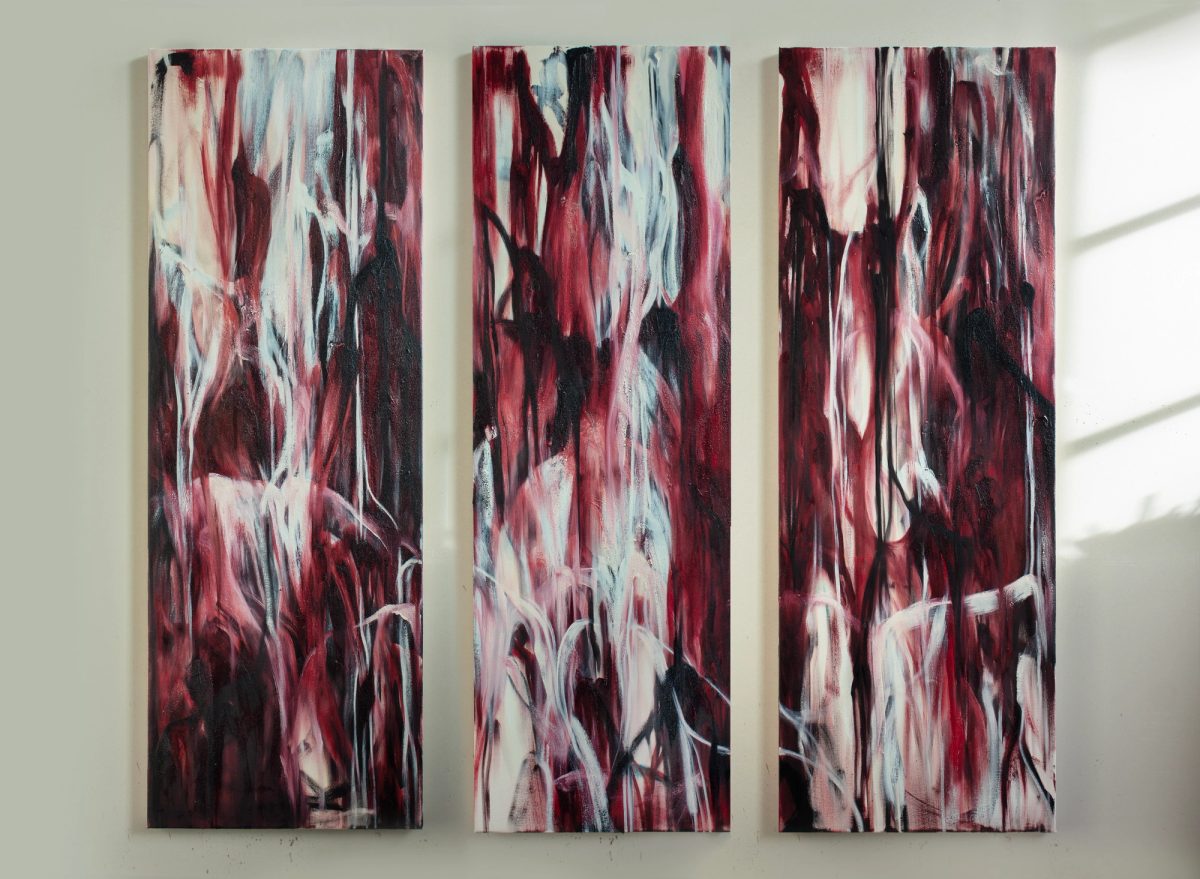
Three Wise Women
2025
Oil and salt on canvas
Triptych: 60 × 170 cm; 55 × 70 cm; 60 × 170 cm
Overall dimensions: 185 × 170 cm (including 5 cm hanging gap)
A BRIDGE BETWEEN MY RIBS
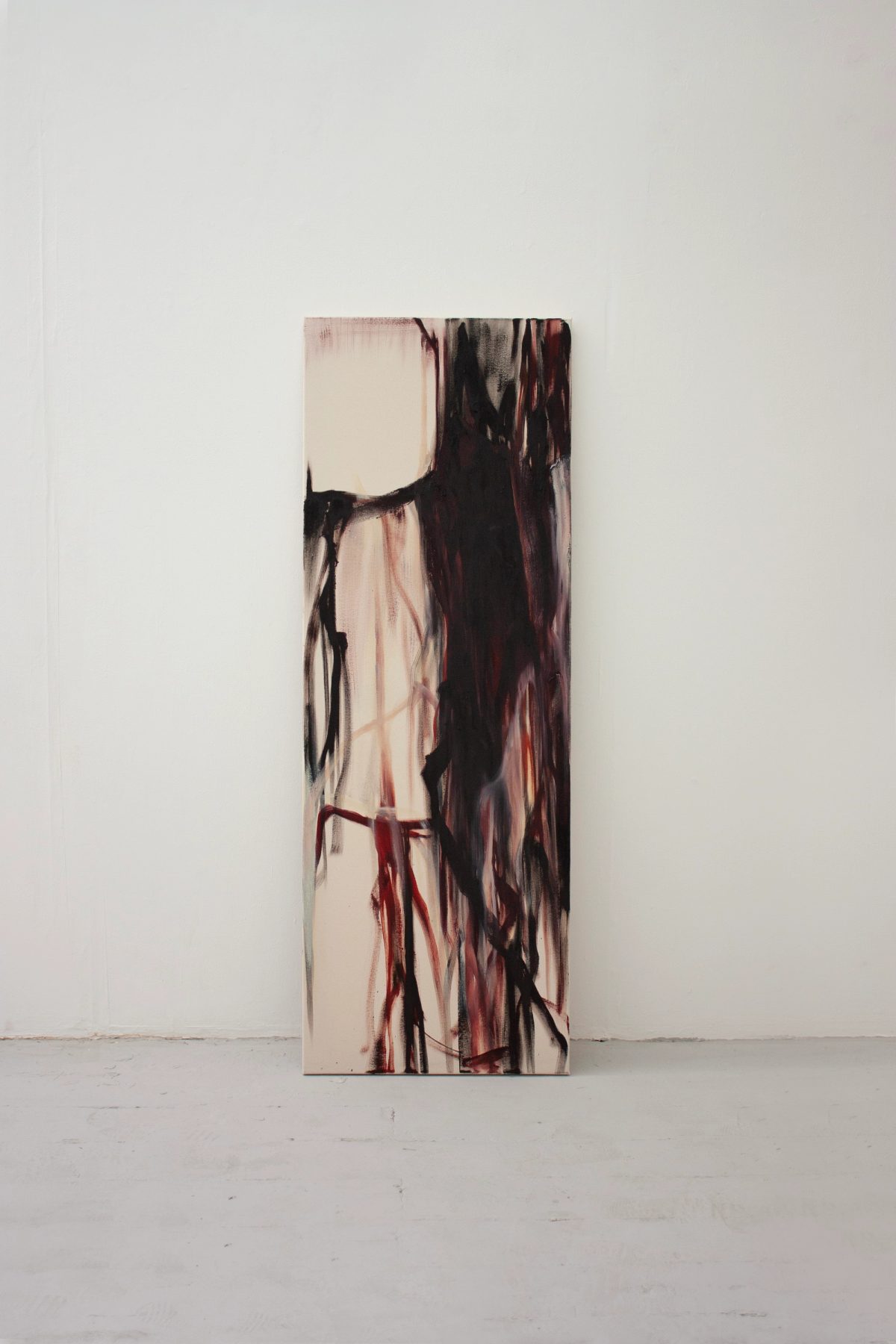
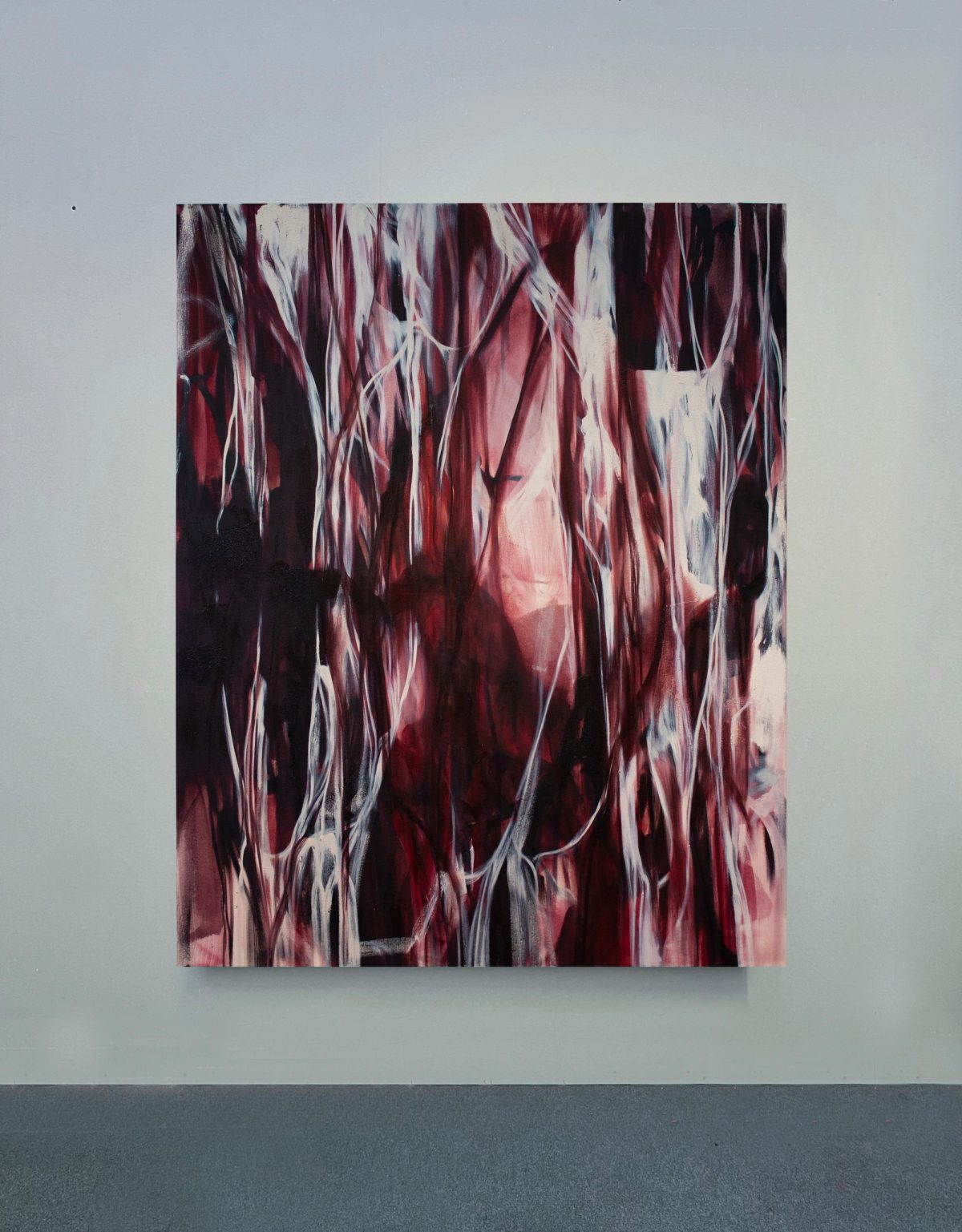
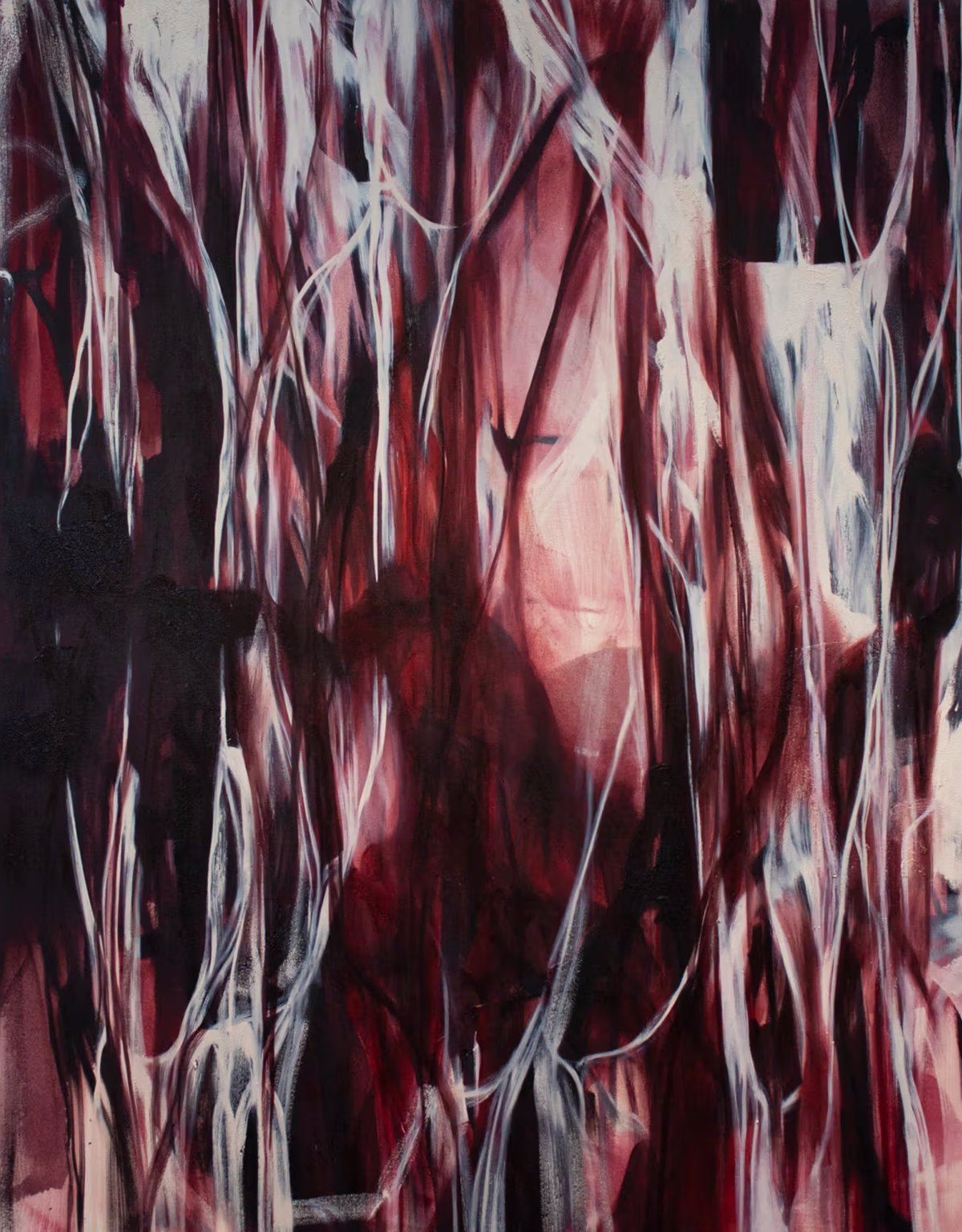
First of three works centring the bone and muscle structure of the rebuilding body. The ribcage holds the heart and lungs. In Islamic mysticism, it is believed that the heart is the centre of all gnosis (knowledge), and this particular muscle has multiple layers that can only be accessed through the pursuit of enlightenment. The metaphysical heart is directly linked to the physical one. The ribcage is the first layer of the heart.
A Bridge Between My Ribs
2026
Oil and salt on canvas
150 × 120 cm
A SPINE AND DANCING HANDS
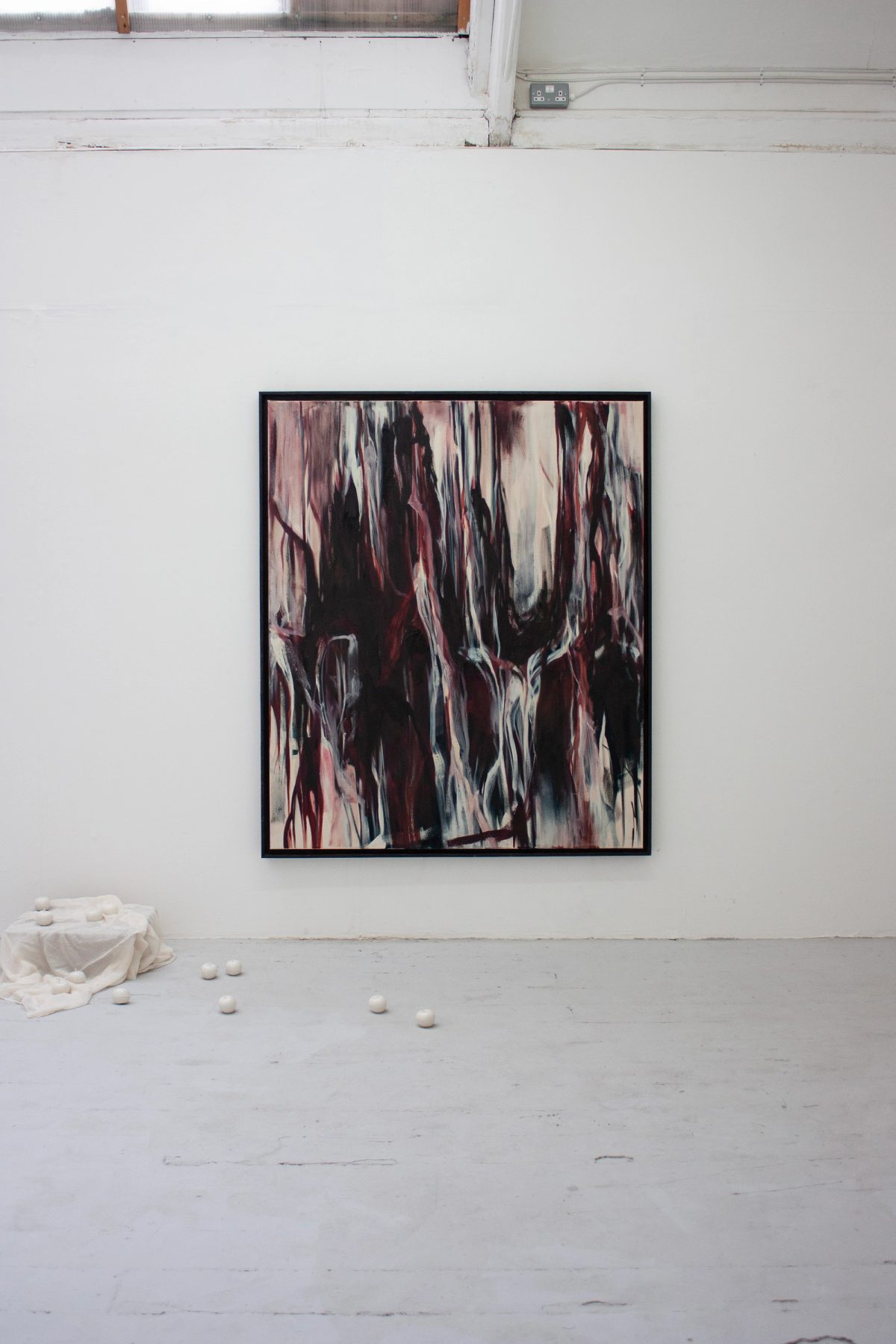
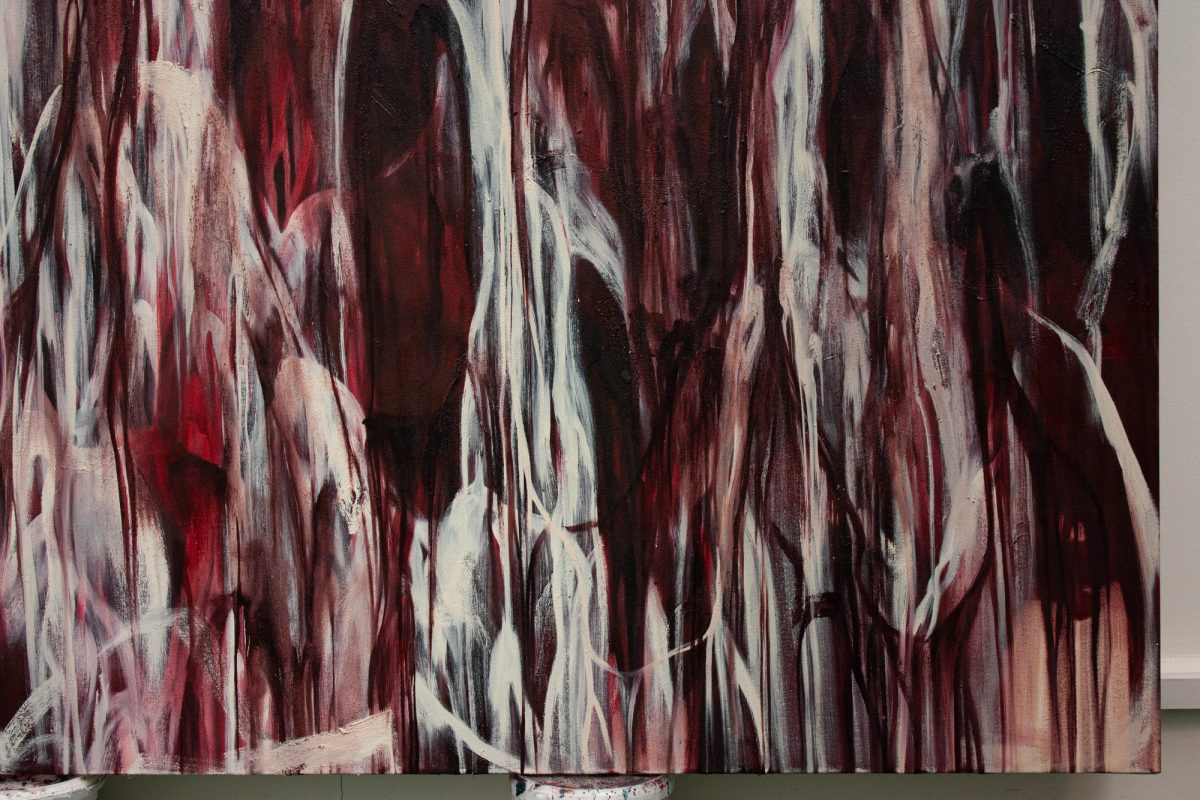
Second of three works centring bone structure and anatomy. The stitching of a spine together, almost as though pulling layers of skin towards it, and each gestural mark in the work suggests the constant effort to maintain momentum in birthing the new body.
A Spine and Dancing Hands
2026
Oil and salt on canvas
200 × 150 cm
BIO OF THE ARTIST:
Shumaiya Khan, b. 1990. Paint, sculpture and installation. My practice is informed by reoccurring instinctual forms received via symbiotic and somatic release, often referencing a mirroring between the metaphysical and physical human bodies, as well as concealed landscapes such as the inner depths of forests, caves, flesh, veins and quarries. Pieces often embody hidden elemental surfaces or entities, bodily shaped and heighted. Forms and environments that appear grow, erode or age. I build out these internal worlds to interact with our external realms. Works are produced with oil, salt, ceramic and textile. My practice is both research and a physical, hands-on process.
Paintings and sculptures emerge through repeated layering, washing away, and rebuilding oil paint mixed with salt, creating visceral, full-bodied and textured surfaces. The resulting works are installed as immersive environments, combining stretched and folded paintings, suspended with ribbons or supported by treated wood structures, alongside ceramic sculptures.
Explorations within feminine-origin ancient mythologies, mysticism and animism consider my past self’s journey within spiritual realms, affecting my everyday position on the current socio-political landscape the feminine I am finds herself in. A personal release of facades inherited from industrialised patriarchal worlds, content on upholding external accolades over human care and condition.
BA from Goldsmiths University of London (2013) and MFA from City and Guilds of London School of Art (2025). Held residencies at London’s Design District (2023–24) and Soho House (2022). Named one of 99 Future Blue Chip Artists by Artsted (2023), listed in Lucy Donovan’s 107 Female Artists You Need to Know in 2023 and Studio Blup’s BLUP50 2022cohort. Featured in The Sunday Times (2023) and Spaces Magazine (2023), shortlisted for the VOA21 and longlisted in the VOA23. Exhibited at London Art Fair 2026 with Zarastro Art (Istanbul).