THE STRAIN OF CONSTANT PRESENCE
VISUAL ESSAY BY KAPTAN OZGAN
12 JANUARY 2025 — BERLIN, GERMANY
There comes a moment when stopping feels heavier than continuing. It settles in gradually and doesn’t announce itself. Disguised as momentum, it makes you feel that it would take more effort to pause than to move forward.
At the beginning of a night out, dancing is an invitation. It first asks little of you beyond showing up and letting your body follow the room. The music pulls you in, loud enough to drown out hesitation, familiar enough to feel safe. Faces blur into a shared rhythm. You are there because it feels right to lose yourself and be found again somewhere in the crowd.
Stay long enough and something shifts. Faces change. People change, and so do their expressions. Some drift closer while others retreat into private worlds, all standing on the same floor. Every so often, something keeps you moving. A beat, a glance, a memory.
There comes a moment when staying on the floor becomes a decision rather than a reflex. A decision not fully conscious, yet memorable. By the time Mother Earth completes one of her fastest laps around the sun, you realize dancing has become an obligation. You are still moving, though no longer driven by desire, but because stopping feels riskier than carrying on.
"At the beginning of a night out, dancing is an invitation."
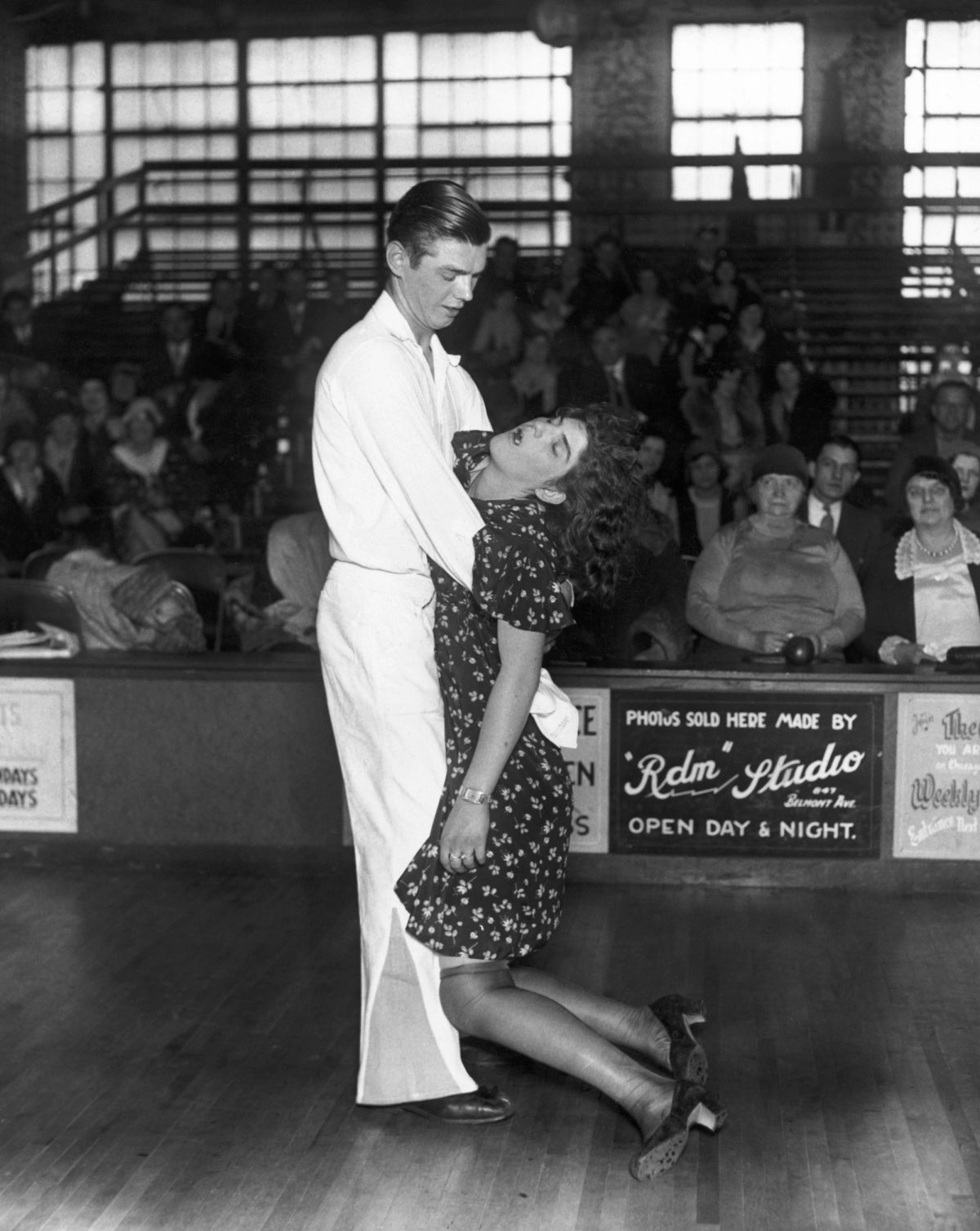
LEFT: CONTESTANTS IN A DANCE MARATHON, CHICAGO, ILLINOIS, USA, 1930.
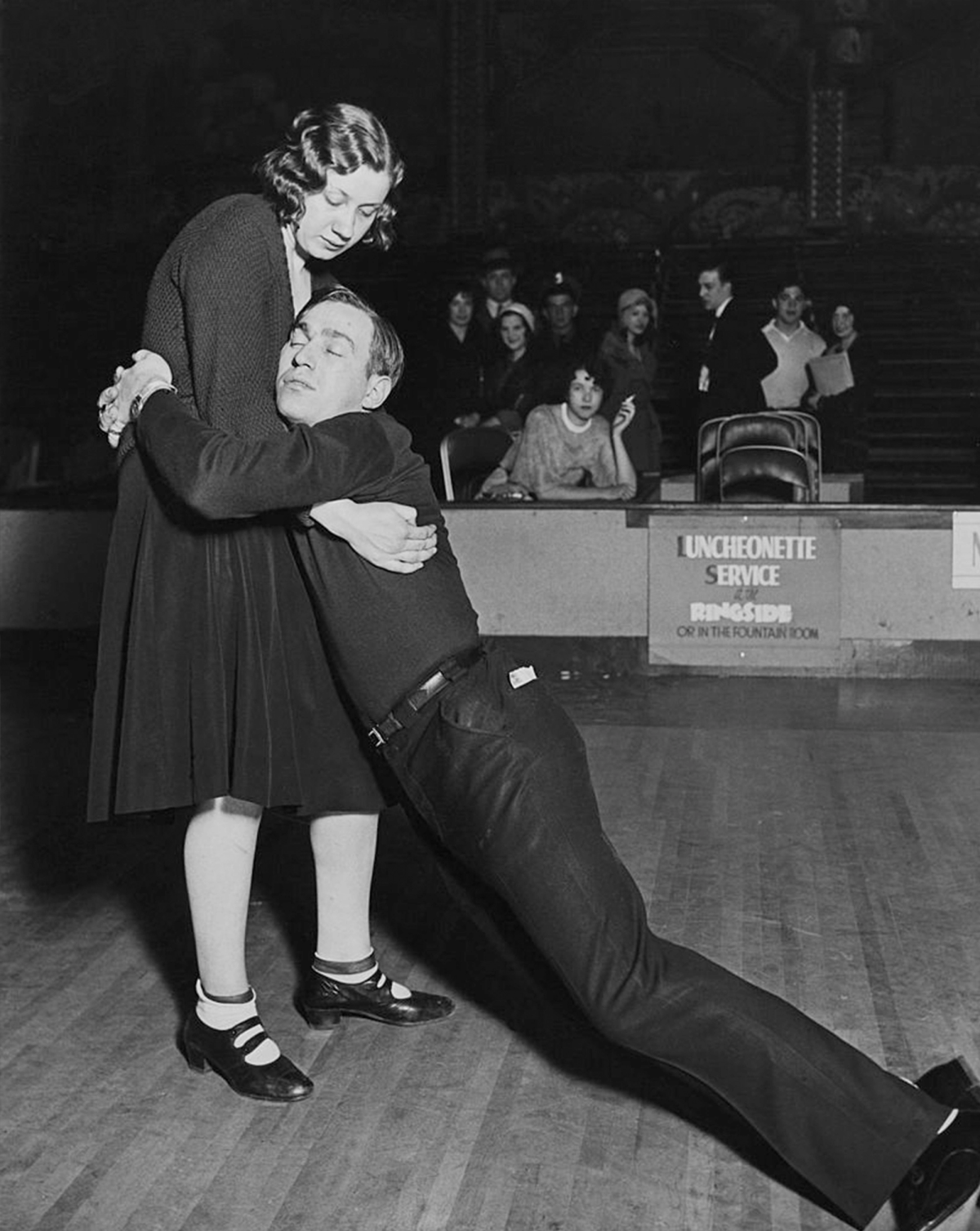
RIGHT: ANN LAWANICK AND JACK RITOF DURING A MARATHON DANCE, CHICAGO, ILLINOIS, USA, MAY 29, 1930 — PHOTOGRAPH BY KEYSTONE-FRANCE.
In crowded halls of 1920s America, couples danced for hours as jazz filled the room and spectators watched in awe. What began as a novelty, a playful test of endurance, captured public attention through spectacle, entertaining everyone involved. By the 1930s, as the Great Depression tightened its grip, the meaning of dance marathons had changed. Couples began dancing for meals, for beds, for prize money. The floor essentially became a site of survival. What once felt unconventional came to reflect human resilience under physical pressure.
The joy of dancing left the room and what remained was endurance. An activity meant for spectacle began feeding on the bodies performing it. Movement became a form of currency, a real one that dancers relied on. Stopping carried more risk than continuing, but at a cost.
Stopping carried more risk than continuing, but at a cost.
I learned about the past of dance marathons through a Turkish copy of Horace McCoy’s They Shoot Horses, Don’t They?. It was one of many books on Kleinanzeigen I bought from a Turkish woman in Bremen without knowing much about them, other than the books having been lying around in her apartment for a long time before she decided to sell them. The book was first published in 1935, later adapted to film in the ’60s, receiving more critical success.
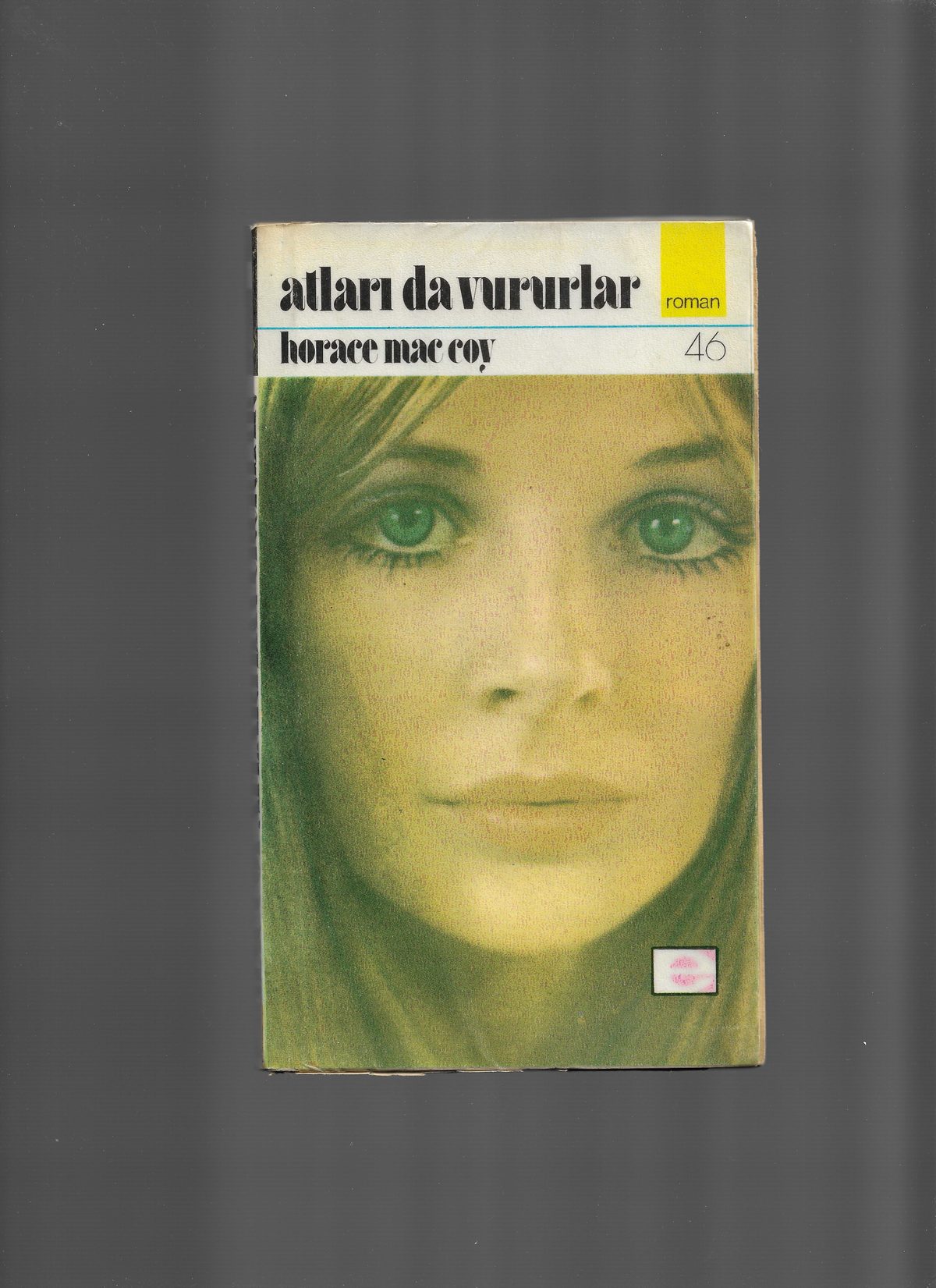
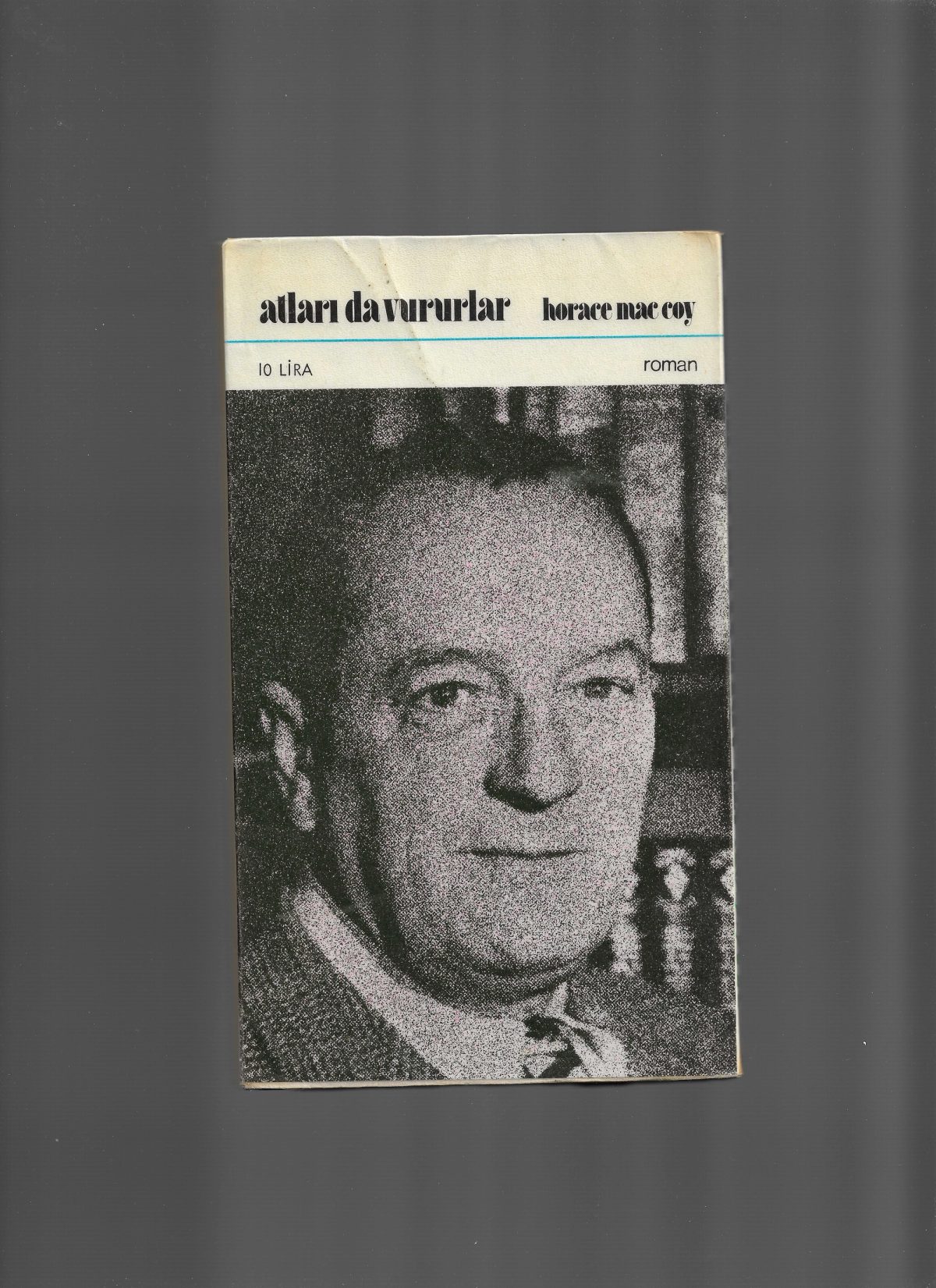
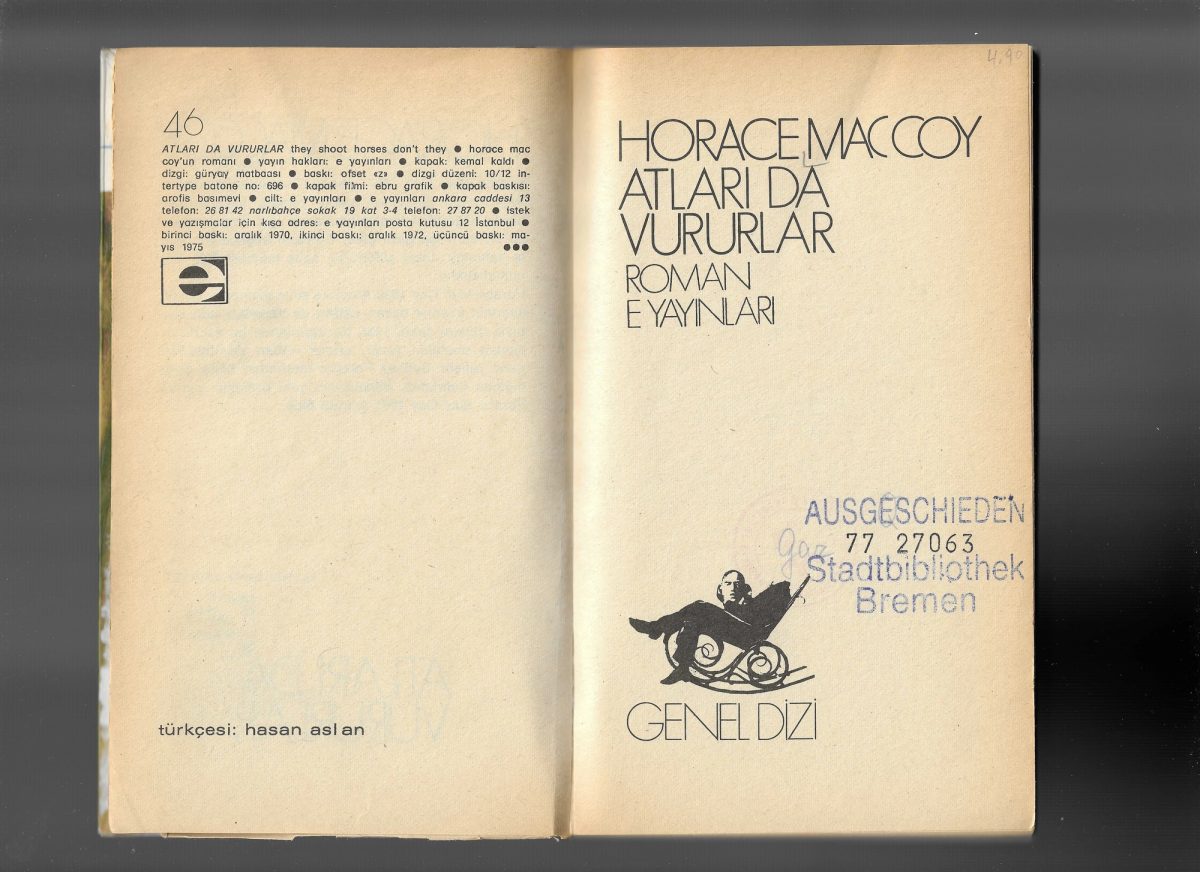
It was one of the first books I read from the batch, as I was drawn in by its cover. Gloria, a young Depression-era woman shaped by poverty and failed Hollywood dreams stares out from it. Her eyes speak for herself, slightly bitter, yet strikingly beautiful. In the right corner, the logo of the publishing house, now defunct, is printed. The typeface of the title and author name evokes the late ’60s and ’70s with thick, stylish finials and upward serifs that are particularly distinctive. A stamp on the sixth page indicates the book was once part of the Stadtbibliothek (State Library) Bremen collection. It is the third edition published in 1975, printed in Istanbul.
The novel opens abruptly with Robert’s trial for Gloria’s murder, his death sentence already pronounced, as he faces the judge’s final words. A flashback to his childhood recalls the mercy killing of a horse. It then moves back into the dance marathon on the Santa Monica pier. Contestants remain constantly on their feet, allowed only short, highly regulated breaks. Staged derbies and stunts heighten the spectacle and deepen the physical and mental strain. As Gloria grows more hopeless, drawn to the idea of death, the story moves toward an ending the reader already knows.
Because it feels existential, dancing stops being expressive. It becomes cautious and empty, repetitively tiring, less about saying something and more about attempting to remain present. The act itself, catching up to the pace of the present, remains unchanged, the systems that reward constant relevance, but the meaning thins until it barely exists.
It reveals a problem at the heart of our belief in how brands should interact and how the feed functions, or is being made to function. The belief that constant motion according to trends equals relevance and success in the long run. Pausing, even briefly, risks disappearance. So we keep moving. We repurpose. We respond to the same moments with slight variations. We call it culture, though it is upkeep at most.
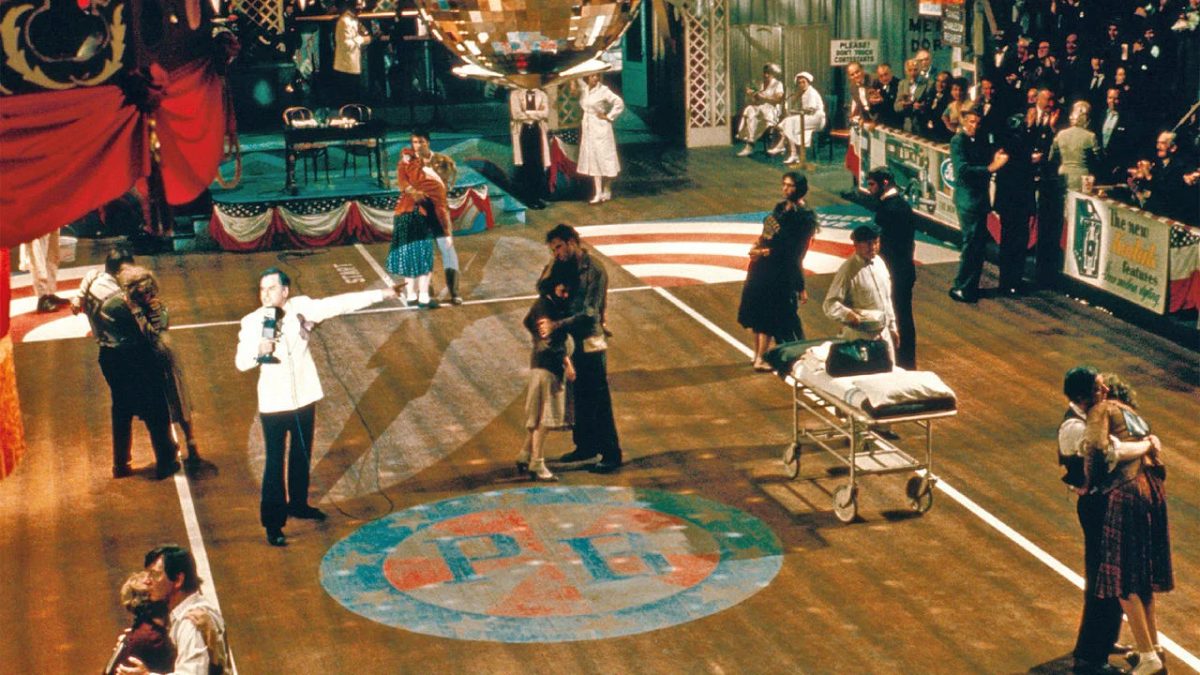
SCENE FROM: THEY SHOOT HORSES, DON’T THEY? (DIR. SYDNEY POLLACK, 1969).
I notice this, so do others. Just as marathon audiences eventually did and grew sick of it. The strain becomes visible and the repetition settles in. Feeds blur into a continuous sequence where everyone remains present, yet little feels alive and entertaining. At times, it feels uncomfortable to scroll for the next variation of the same thing. The next micro-moment appropriated with no additional value to conversation or culture.
What becomes clear is that this collapse in value of upkeep does not come from a failure to adjust. The dancers do not stop because they lack skill. The system weakens once endurance reveals itself as endurance, and no longer joy. Similarly, our contribution to culture does not disappear when the feed stops moving. It thins when the movement replaces the meaning.
It disappears when showing up becomes the goal, when survival passes as participation.
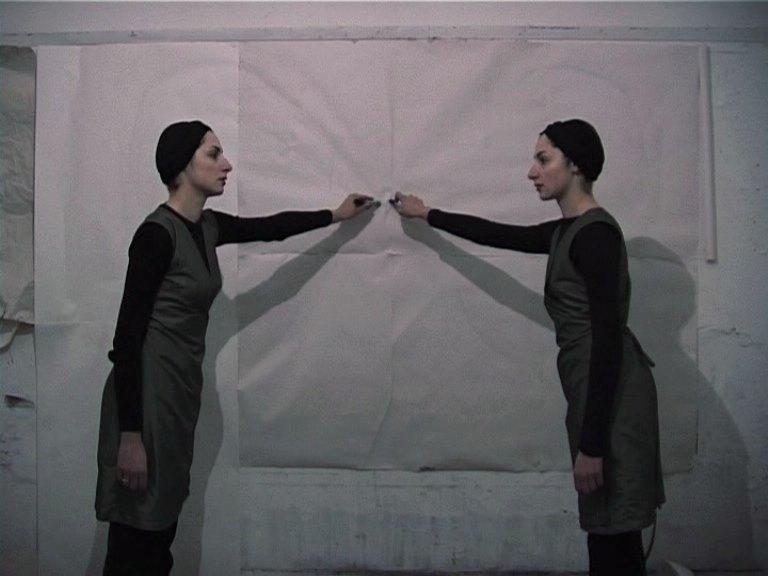
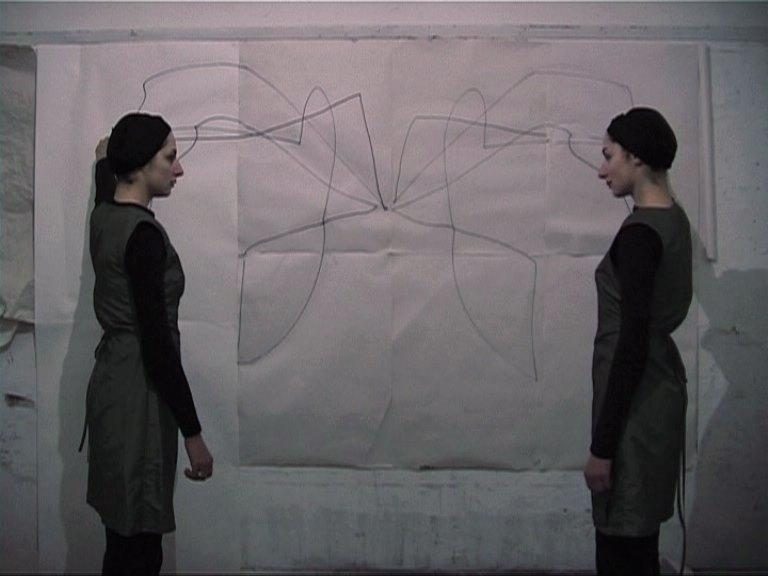
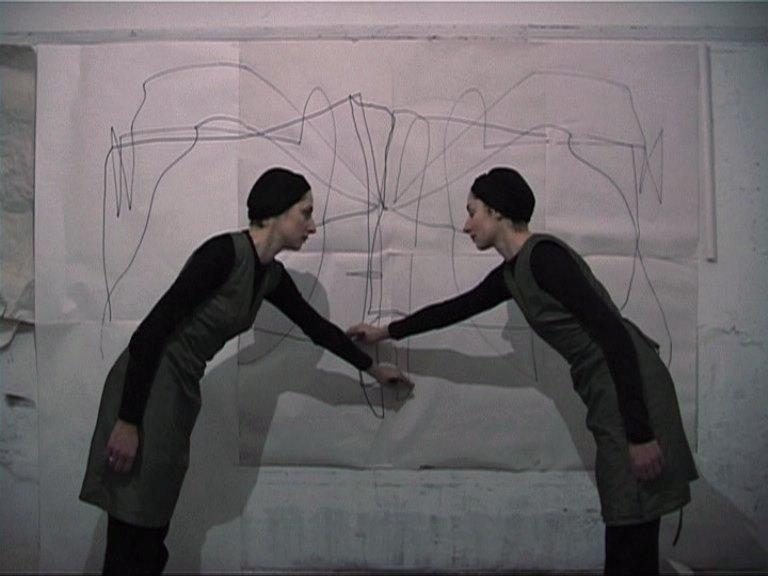
DRAWING 1 (2001). SINGLE-CHANNEL VIDEO, STANDARD DEFINITION (SD), 4:3, COLOUR, STEREO SOUND, 6 MIN 26 SEC.
BY: GABRIELLA MANGANO AND SILVANA MANGANO.
COLLECTION: CHARTWELL COLLECTION, AUCKLAND ART GALLERY TOI O TĀMAKI (2009).
If you know what to say, your task is not to survive, but to speak clearly, creatively and confidently. So when you feel like dancing, it leaves a mark, it contributes to something and its mutually entertaining. But if you don’t, you feel the need for constant upkeep, so you keep dancing without a clear purpose. As for those dancing to survive, time tells its own lessons.
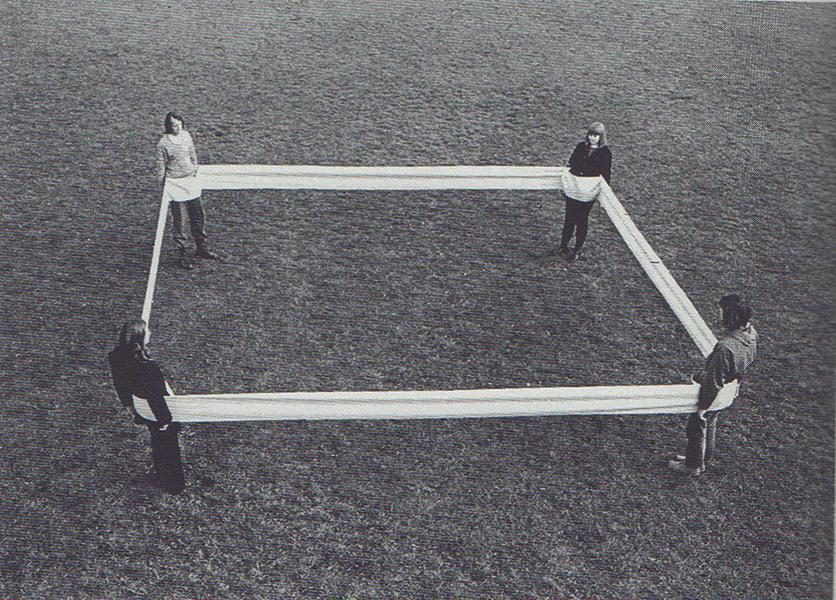
ROLU, DESIGNERS. PRIMARILY / PRIMARY — A FURNITURE-BASED INQUIRY INTO “SITTING AS SEEING,” DRAWING FROM FRANZ ERHARD WALTHER’S LATE-1960S HANDLUNGSSTÜCKE, EXPLORING THE BODY’S AWARENESS OF GRAVITY, MEMORY, TEXTURE, AND PHYSICAL PRESENCE THROUGH USE.
COVER IMAGE:
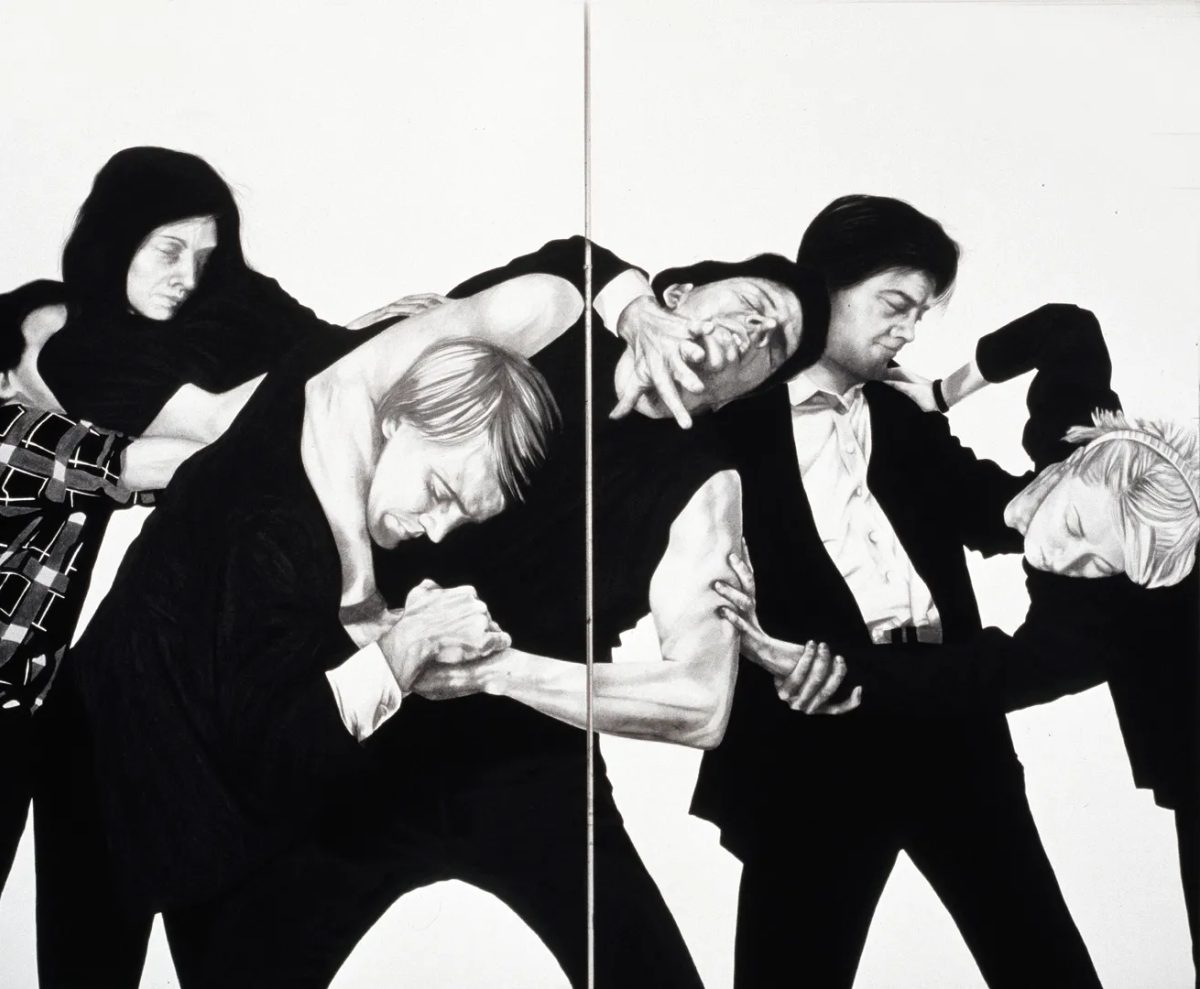
© ROBERT LONGO, UNTITLED (WHITE RIOT), 1982. CHARCOAL, GRAPHITE, AND INK ON TWO PAPER PANELS. COURTESY OF THE ARTIST AND THE BROAD, LOS ANGELES.