SOFTNESS AND THE OMINOUS, SIDE BY SIDE: IN CONVERSATION WITH SUN PEI MAO
CONVERSATION BY SELIN KIR
CO-FOUNDER, CURATOR
24 NOVEMBER 2025 — UNITED KINGDOM
Sun Pei Mao moves through the quiet thresholds where innocence slides toward unease, where a luminous surface carries the faint shadow of something darker. His worlds are built from the everyday: girls caught mid-gesture, familiar Taiwanese streets, light glancing off skin yet they pulse with a strangeness that resists certainty. Nothing is fully real, nothing fully imagined; instead, each image lingers in the delicate tension of the “in-between,” where sweetness sharpens horror and the ordinary becomes unexpectedly charged. In this conversation, Sun traces the origins of his aesthetic language, from anime and childhood fear to local memory, fictional bodies, and the quiet details that persuade a scene into being.
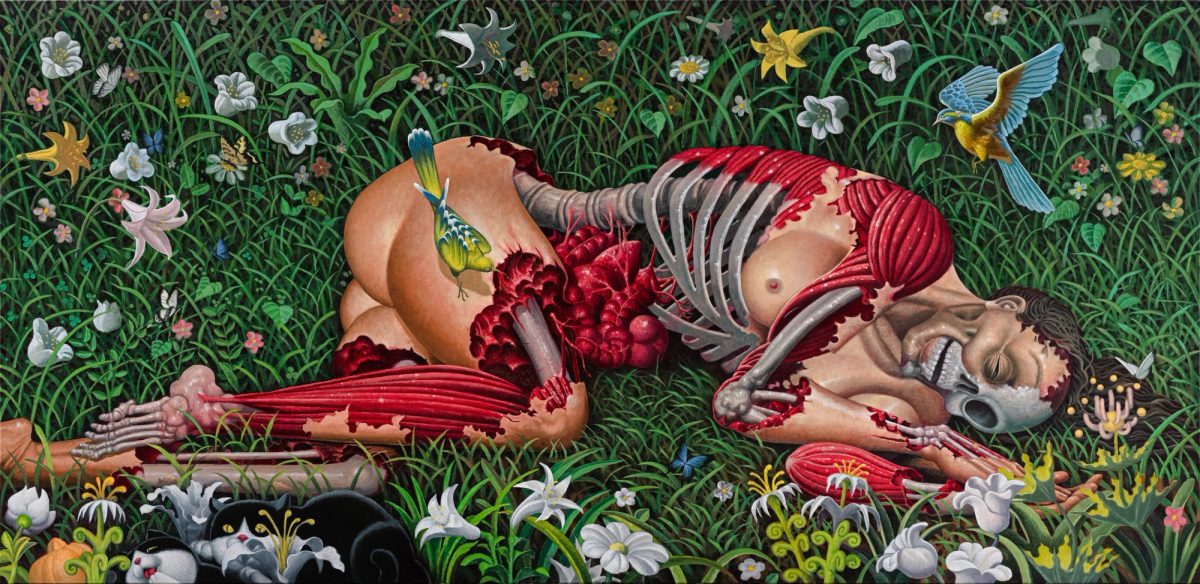
幸福快樂死 (Die Peacefully), 2025, Oil on canvas, 185 × 90 cm
Your paintings move between hyper-cute and hyper-visceral, soft girls with enormous eyes, next to bodies peeled open, organs exposed, muscles rendered lovingly. What draws you to this proximity between sweetness and brutality?
A large part of my aesthetic comes from contemporary film and anime. Hell Teacher: Jigoku Sensei Nube was essentially my childhood gateway into the world of horror. In this manga, the young female characters are drawn with such vividness and cuteness that their presence heightens the impact of the terrifying moments. This tension, where sweetness and horror coexist, left a deep impression on me. I also hope to bring these two extremes together in my own work, using their contrast as a way to understand the boundaries of my own aesthetic.
Many of your works feel like alternate realities of Taiwanese life, night markets, buses, temples, supermarkets but filtered through anxiety, fantasy, or satire. How do you think bout your relationship to everyday Taiwan as both subject and stage? How do you understand the visual noise of contemporary life?
Taiwan is the place where I was born and raised. I am familiar with its people, landscapes, accents, and ways of life. Yet it is precisely because I know it so well that I sometimes struggle to clearly see the unique value of Taiwanese culture with my own eyes.Even so, I continue to paint scenes that leave a strong impression on me in everyday life. These images may feel ordinary and unremarkable to me, but they often receive responses far beyond what I expect. Through this contrast, I gradually realized that the power of the local may lie in its simplicity. The more familiar and commonplace a scene is to me, the more it reveals its irreplaceable cultural character to those who encounter it from the outside.
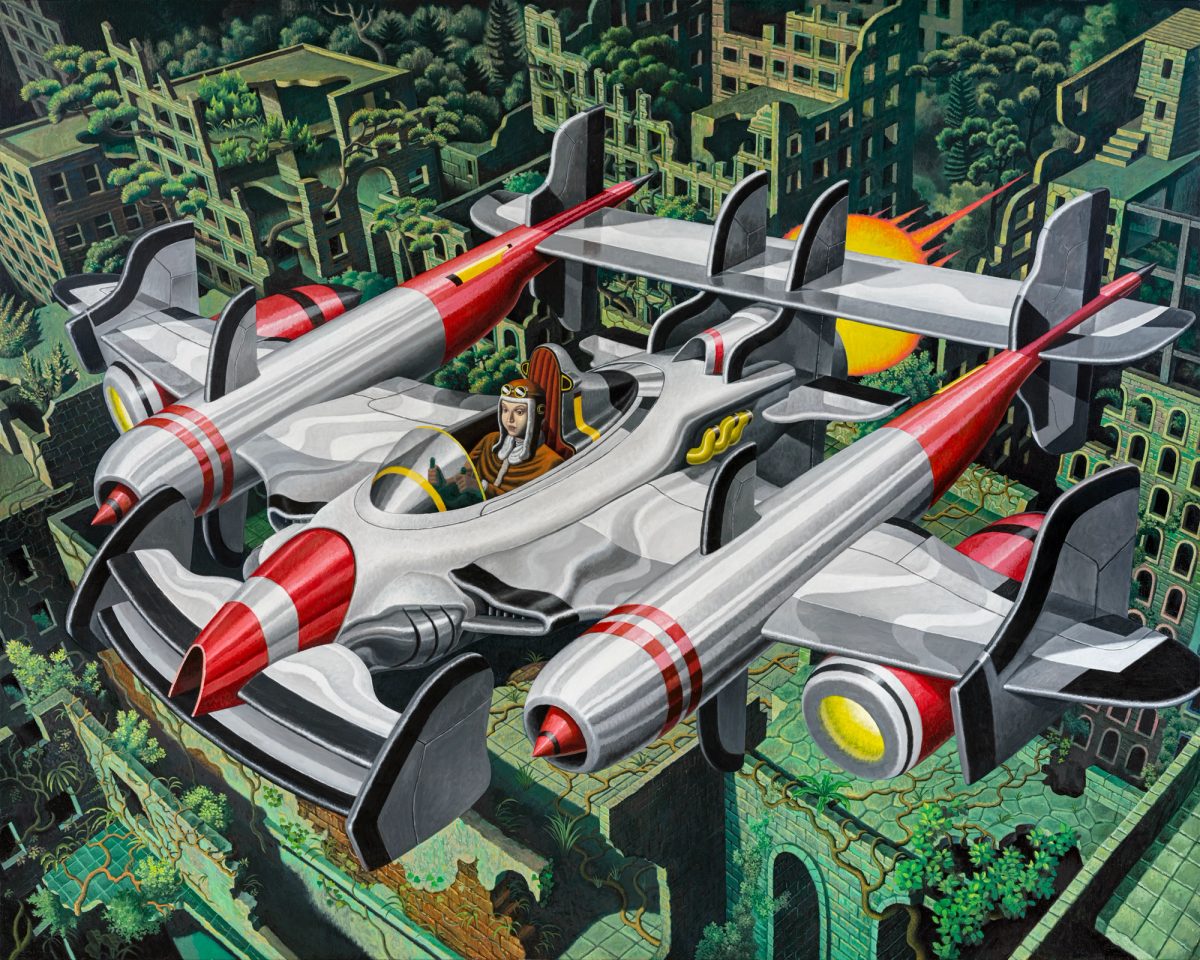
獨行者 (Maverick), 2022–23, Oil on canvas, 227 × 182 cm
“They feel both unfamiliar and intimate, like dreams waiting to take form.”
Your characters often pose as if caught mid-performance, showgirls on rooftops, shop assistants holding menus, girls frozen in panic or delight. Are these figures avatars, actors, or mirrors of parts of yourself?
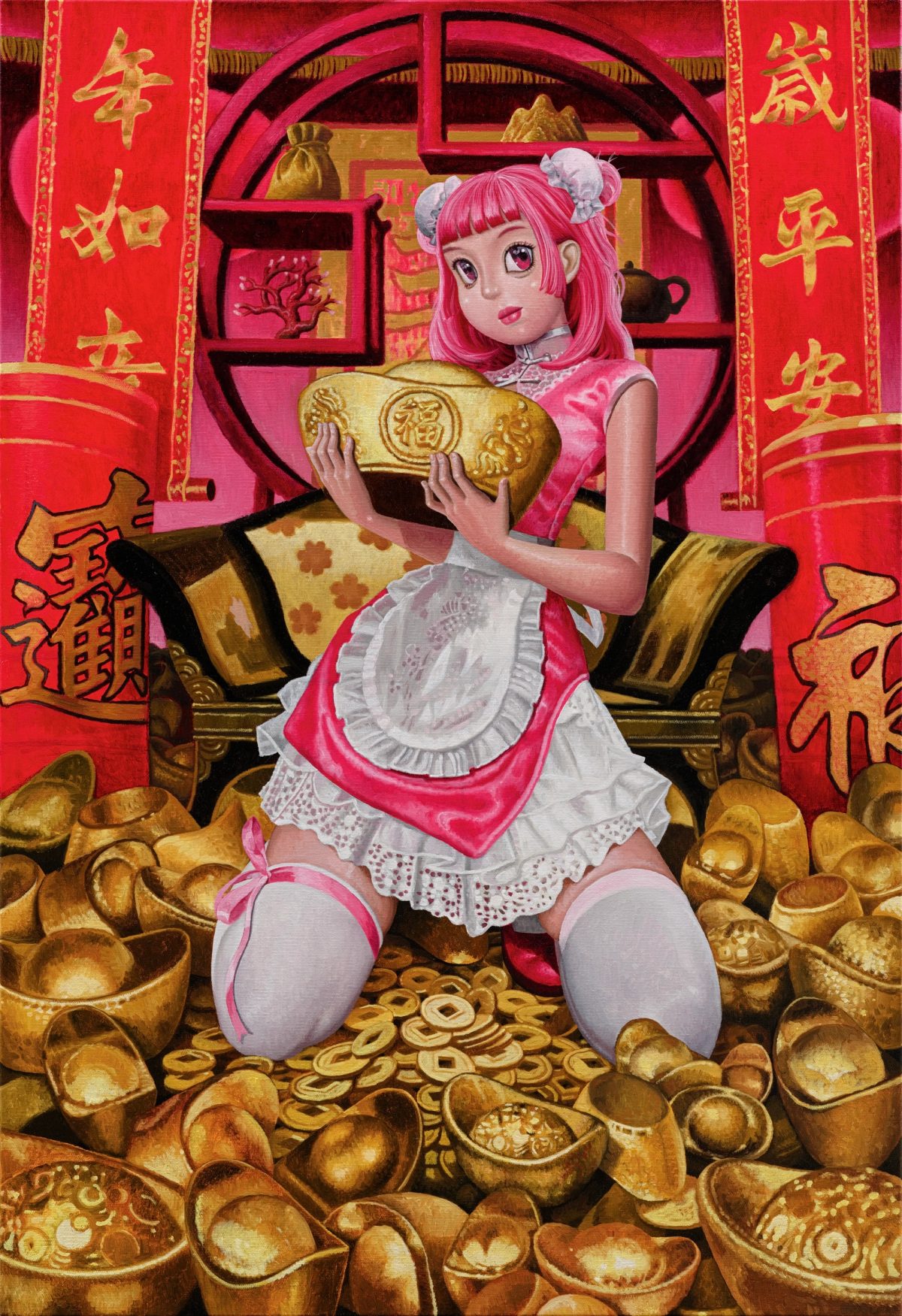
In recent years, I have depicted many female characters. The main reason is that this was a subject I rarely explored in the past. I wanted to challenge myself by painting themes I was less familiar with, because doing so helps me better understand my own tendencies and attributes as a painter, and allows me to move toward a direction that suits me more naturally. Most of the girls in my works are fictional, which relates to the fact that many of the artworks that inspire me also center on fictional characters. Perhaps one day, the figures I paint will gradually grow into themselves, and slowly develop stories that belong uniquely to them.
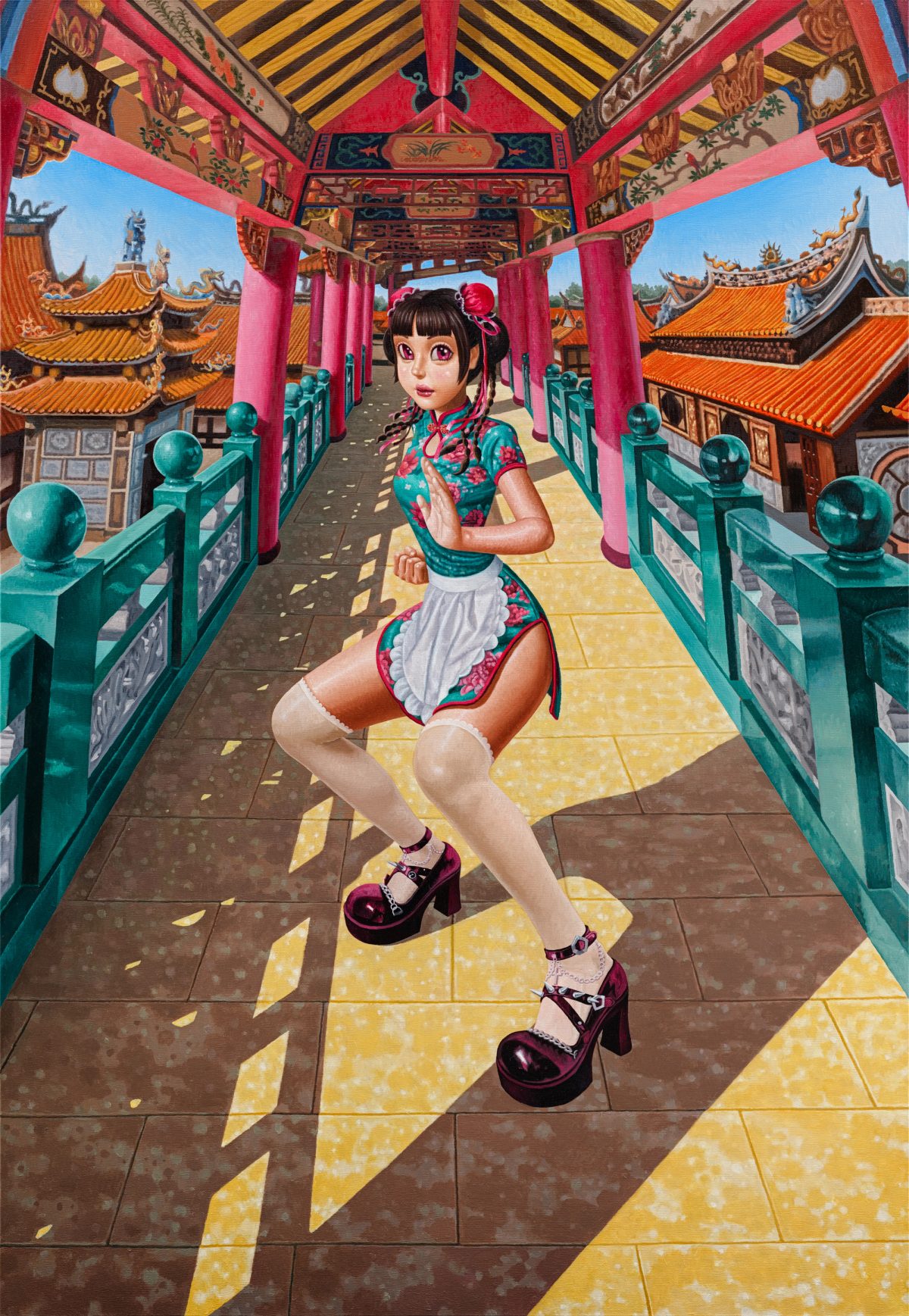
Left: 戰鬥天使 (Battle Angel), 2025, Oil on canvas, 162 × 112 cm
Right: 恭賀新禧 (Happy New Year), 2024–25, Oil on canvas, 72.5 × 106 cm
Your use of color is intense and specific: neon pinks, deep greens, glowing blues, glossy skin, plastic textures. How do you think about color? Does color arrive before the narrative, or after?
Light and color are often the very reasons I begin a new work. Through light and hue, we can sense the era of a place and recognize the qualities that define its atmosphere. To portray these characteristics, I usually start by exploring the light and color within the scene. In portrait photography, I sometimes notice that beyond using strong direct lighting, photographers will apply a layer of transparent gel on the model’s skin. This creates an intense, almost exaggerated shine, giving the figure a distinctly “futuristic” texture. That strange sense of temporal displacement fascinates me, and it is one of the aspects of image-making that I most enjoy engaging with.
Many of your images feel like warnings wrapped in cuteness, a kind of visual sugar-coating over something far darker. Do you see your work as commenting on the pressures we place on youth, femininity, beauty, or consumption, or on something else entirely?
I wanted to depict my own understanding of “sensuality” in a straightforward way. This led me to portray girls who are just beginning to feel desire and become aware of their attraction to others. Through their clothing and gestures, I introduce subtle elements that allow their youthful innocence to coexist with a gentle but unmistakable sense of eroticism.
“This tension, where sweetness and horror coexist, left a deep impression on me.”
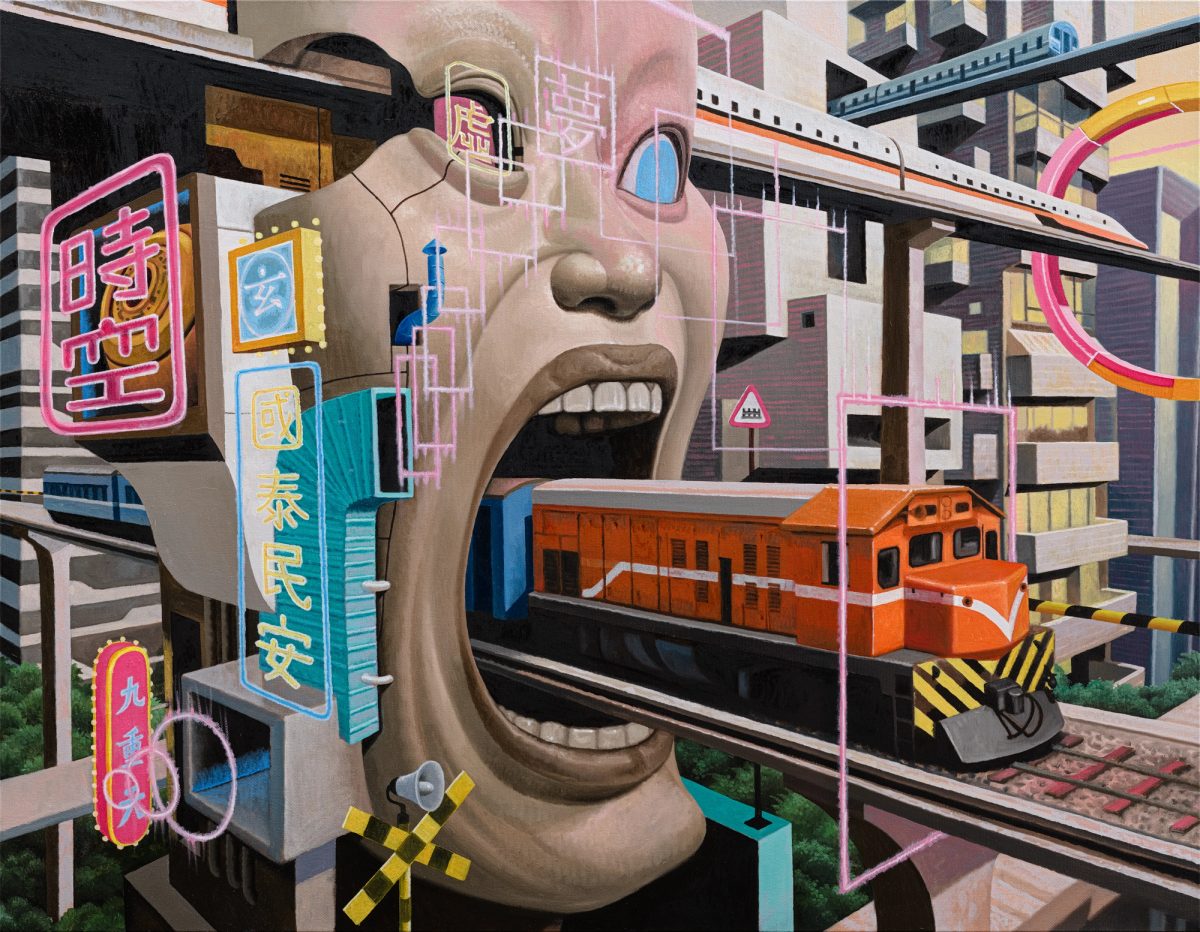
文明的落日餘暉 (The Direction of Civilization), 2025, Oil on canvas, 116.5 × 91 cm
You move fluidly between large narrative paintings, detailed graphite drawings,ceramics, and almost cartoon-like characters. What tells you which medium a particular idea needs?
I maintain different creative logics for each medium I work with. A drawing on paper remains a drawing on paper; it does not necessarily evolve into an oil painting. My oil paintings build on the experiences and decisions accumulated from previous paintings, and my ceramics follow a separate system and language of their own. When I want to have a relaxed day but still feel like making something, I choose to draw on paper. When I have a clear creative goal to accomplish, I turn to oil painting. And when an idea goes beyond the limits of a flat image and calls for a more physical or spatial expression, that is when I work with clay.


Your scenes are full of symbols: signage, objects, foods, animals, machines, patterns. How do you build a symbolic vocabulary? Are these pesonal references, cultural references, or a mix of both?
I paint those details that may seem like small, peripheral components of the scene because they make the overall image more convincing. To convince myself first, I have to carefully construct these elements that are often regarded as unimportant. Only then can the environment and atmosphere of the painting fully come together. Since most of my scenes are fictional, these details not only echo different cultural forms but also reflect my own aesthetic sensibilities.
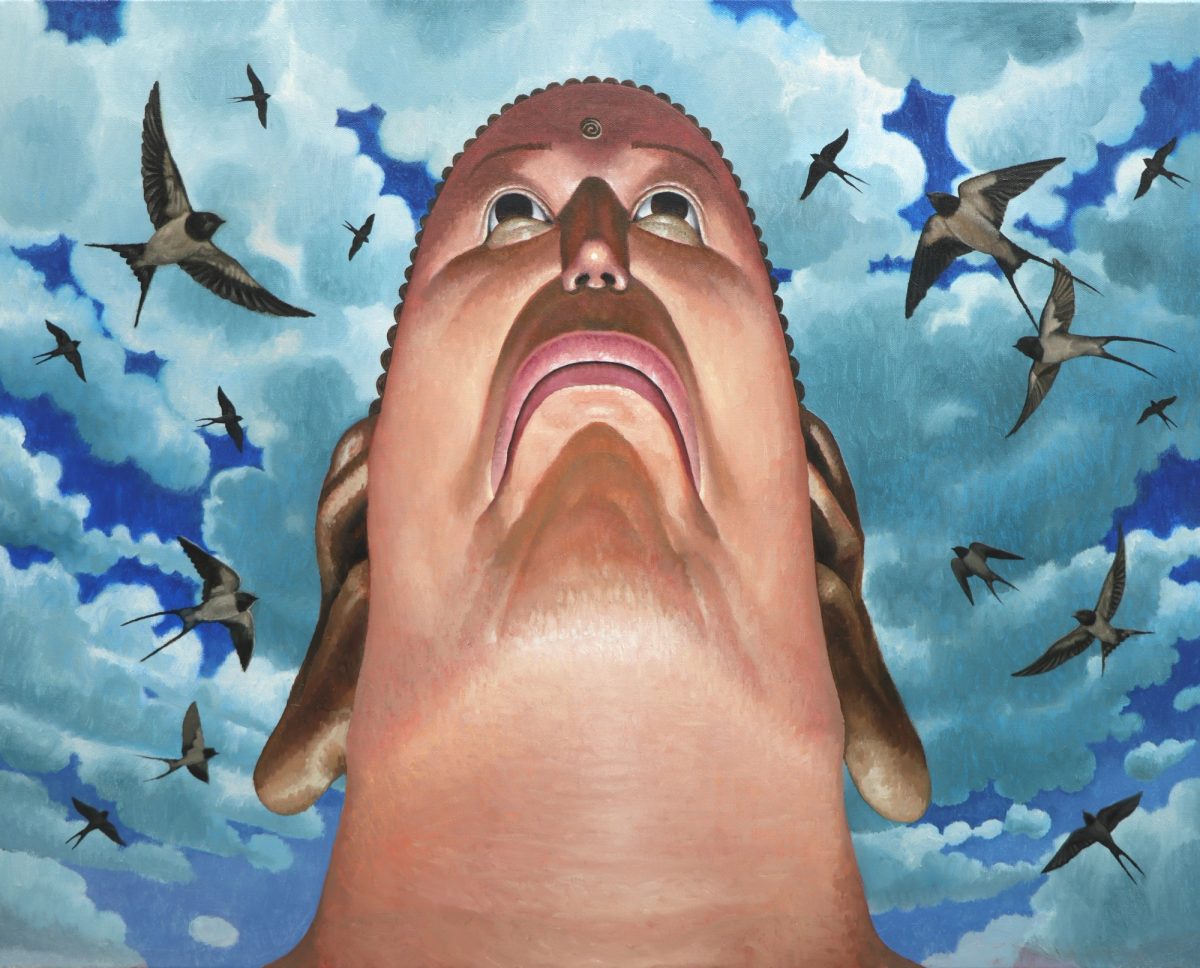
唯我獨尊 (I Alone Am Honored in the Universe), 2025, Oil on canvas, 90 × 72.5 cm
“The power of the local may lie in its simplicity. The more familiar and commonplace a scene is to me, the more it reveals its irreplaceable cultural character to those viewing it from the outside.”
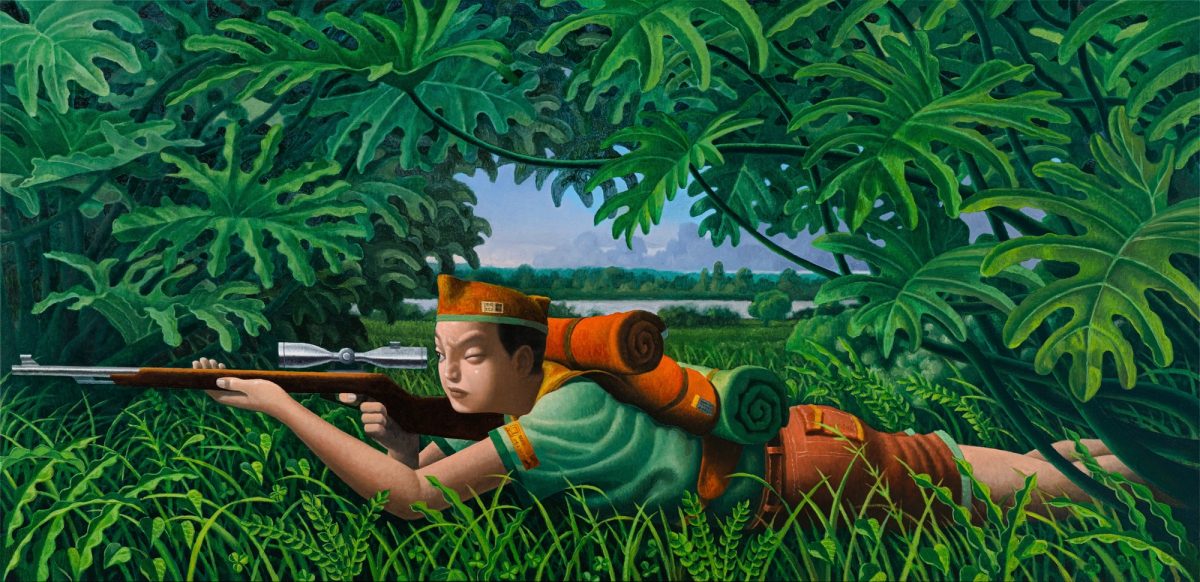
大敵當前 (Enemy at the Gates), 2024, Oil on canvas, 185 × 90 cm
Viewers often feel both amused and unsettled by your images. They’re funny, familiar, and disturbing at once. Is ambiguity something you cultivate deliberately, or does it emerge naturally as you work?
I don’t actually know what emotions or interpretations viewers might take from my work. For me, every element in the image has its own reason for being there, even if explaining each one out loud might sound a bit absurd. In the end, these feelings mostly arise naturally during the creative process rather than from any deliberate intention.
Finally, what direction is opening for you now? Is there a new figure, landscape, creature, or emotional terrain you want to explore next?
There are still many directions I want to explore, and I’m gradually moving toward subjects that feel more instinctively my own. I hope to depict both real and fantastical themes through my own perspective and painterly language. Some of these images come from fragments of daily life, while others surface suddenly from deep within my mind. They feel both unfamiliar and intimate, like dreams waiting to take form.I’m not sure whether this kind of work holds meaning for viewers, but for me, spending a long time shaping a vague idea into something clear and complete is the most grounding sense of achievement. In the future, I hope that the characters, settings, and narratives in my work will develop a more unified language, allowing me to build a world that truly belongs to me.
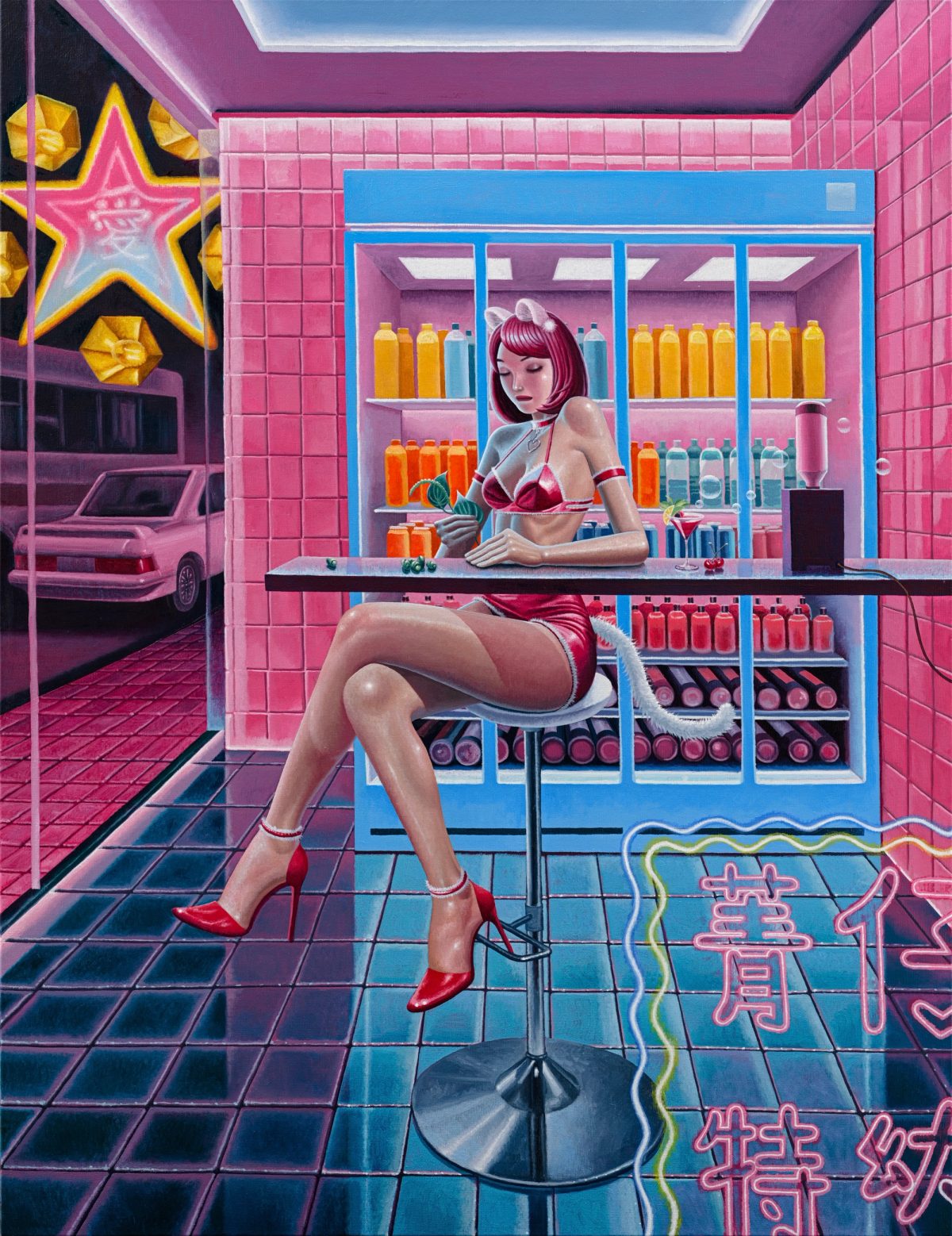
Left: 檳榔西施 (Betel Nut Beauty), 2024, Oil on canvas, 145.5 × 112 cm
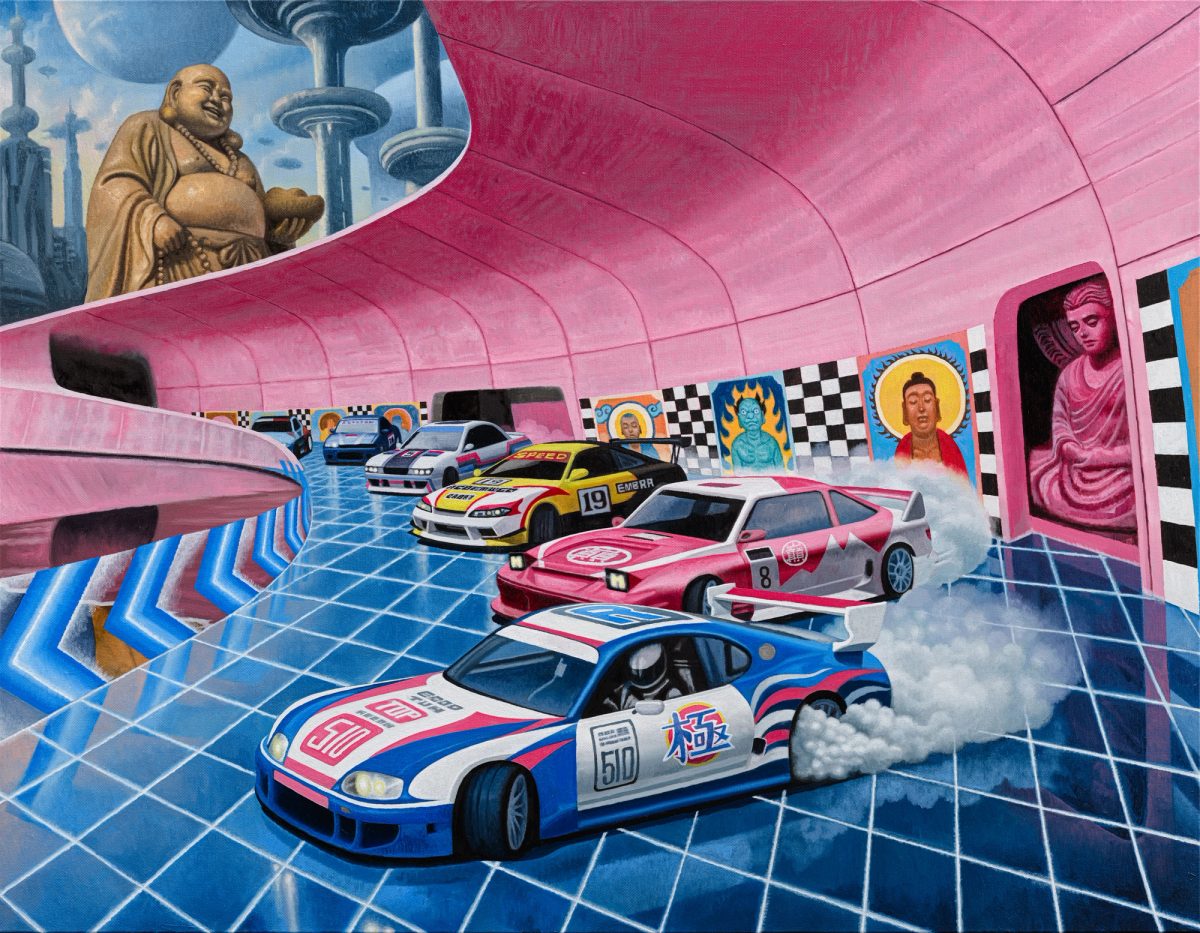
Right: 風馳電掣 (Speed Demon), 2025, Oil on canvas, 116.5 × 91 cm
Cover Image: 愛的教育 (Love Education), 2025, Oil on canvas, 162 × 130 cm