PLACING THE SKIN BACK ON TOP: IN CONVERSATION WITH ABIGAIL NORRIS
CONVERSATION BY SELIN KIR
CO-FOUNDER, CURATOR
12 FEBRUARY 2026 — UNITED KINGDOM
In Abigail Norris' practice, the body is rebuilt from within. Bone by bone, ligament by ligament, structure gathers weight and coherence before the final gesture arrives: placing the skin back on top. The act carries an intensity that is both physical and devotional. Reclaimed hides pass through her hands; skeletal forms are assembled in a sustained encounter with matter. Within this process, violence and care exist in close proximity, held together through labour. The sculptures register as presences rather than depictions: bodies that retain the memory of touch, of time, of having once been alive.
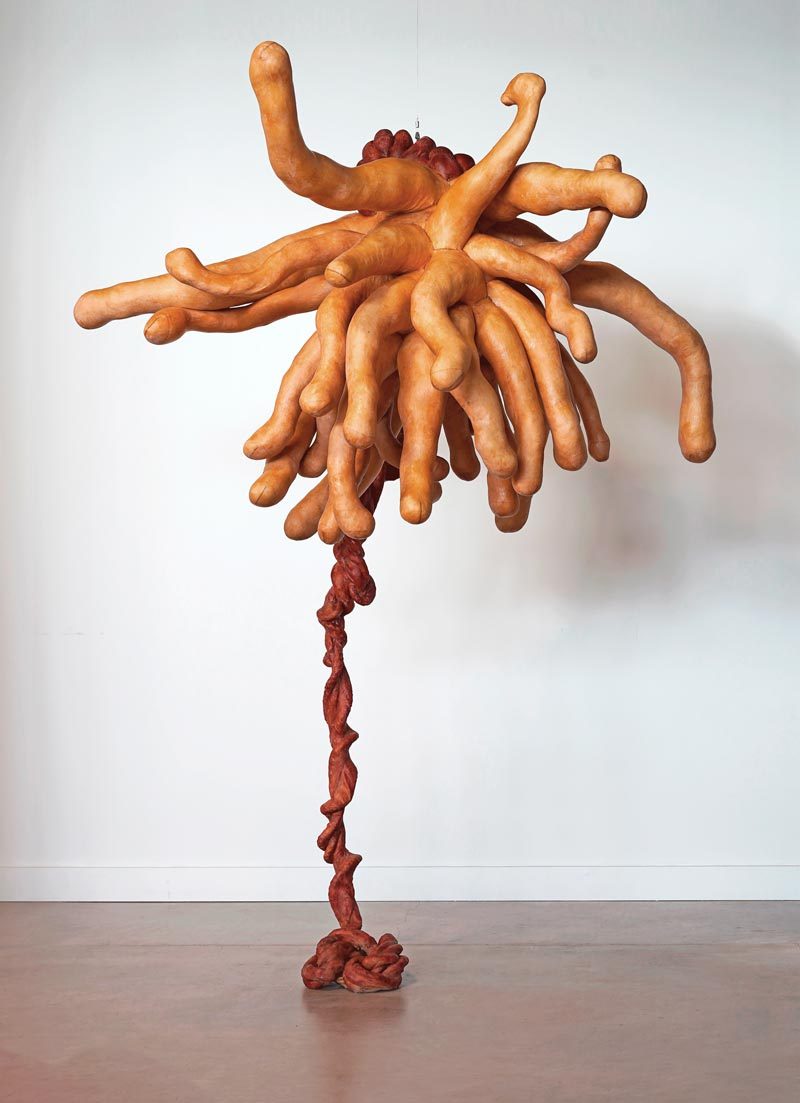
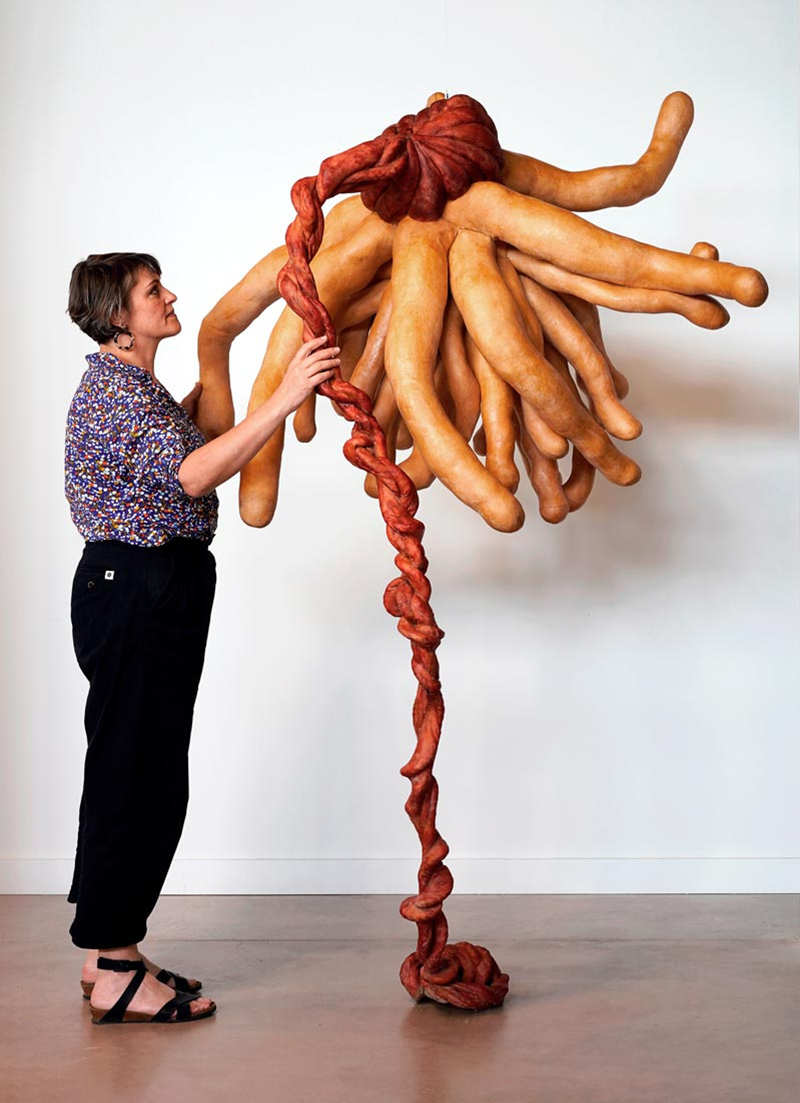
Mother Tongue
2022
Latex, tights and domestic materials
250 × 175 × 175 cm
Your background spans digital arts, multimedia, and film before moving decisively into sculpture. What shifted for you in that transition from screen-based work to physically heavy, bodily materials, and what did sculpture allow you to do that other mediums didn’t?
I am a maker at heart, and I found myself increasingly dissatisfied with the demands of being a digital filmmaker. I began to feel anxious about quality and about the work disappearing through a glitch, a power cut, or technological failure. I found a better way of earning money through textile design that wasn’t as demanding and didn’t involve such a heavy financial outlay; it also freed up my time. That space allowed me to return to physical making.
In retrospect, it was almost an accident that I fell into sculpture. I think I was searching for a particular sensation: the way encountering a large dead animal can reduce the viewer to the size of a child. Sculpture felt like the only way I could approach that experience. You only really understand these shifts after the fact.
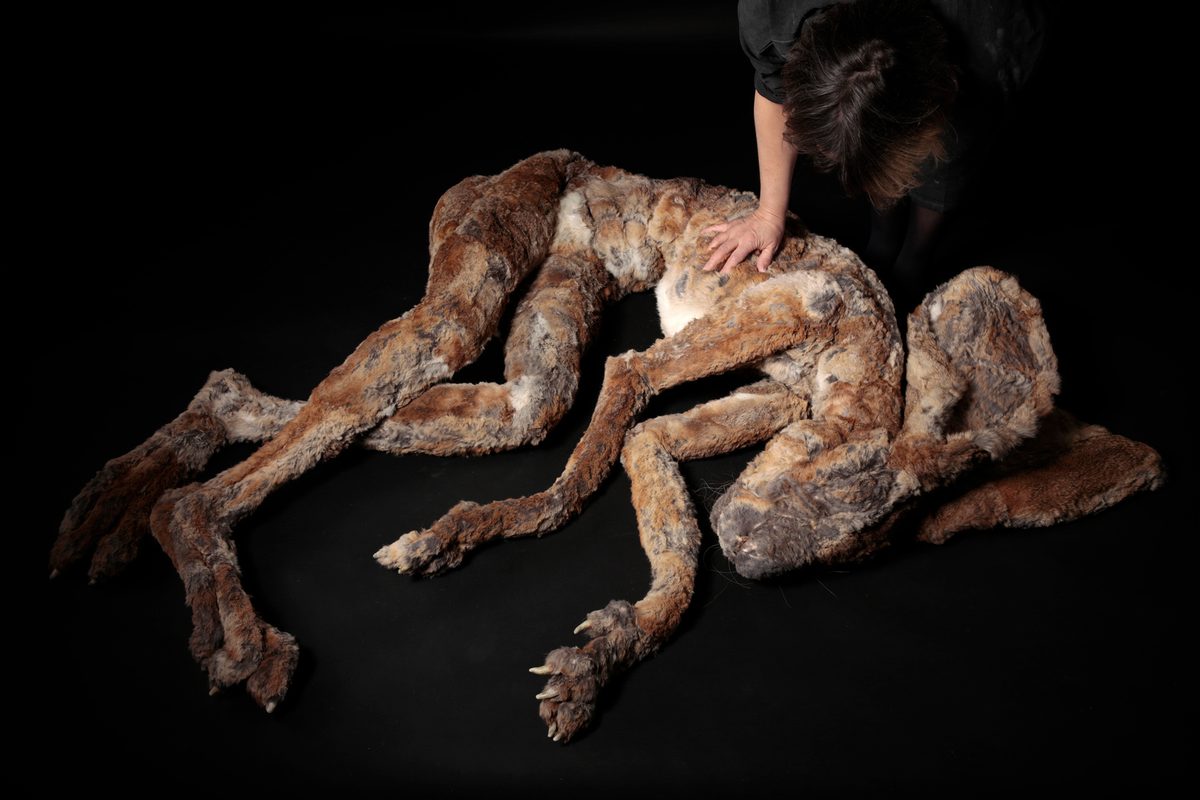
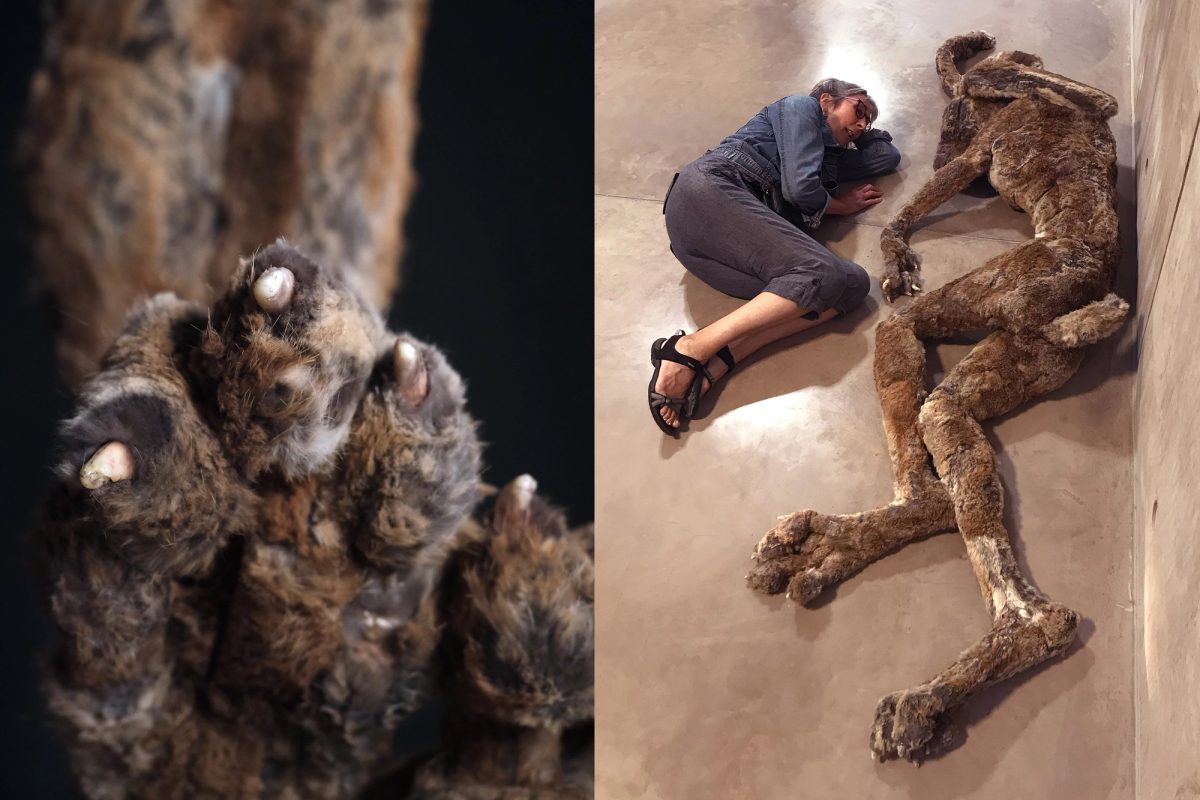
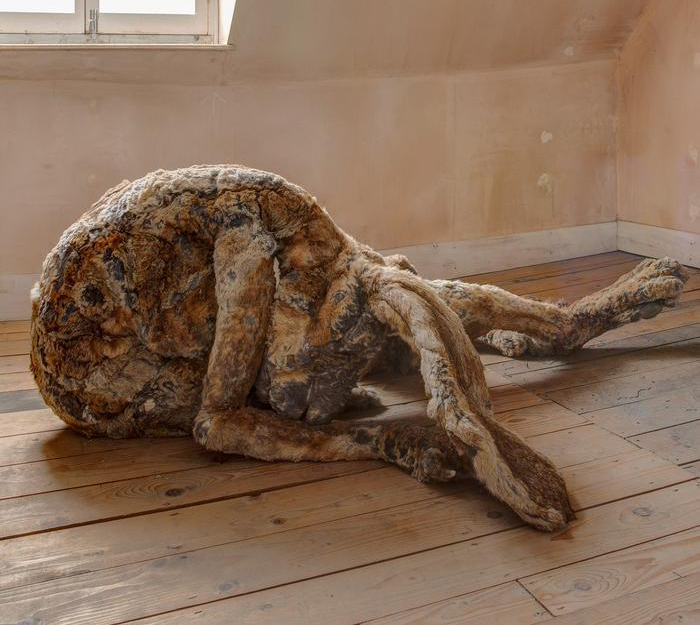
Hare (Wyrd Sister, Betwixt Me and Her)
2020–21
Reclaimed vintage coats and domestic materials
40 × 300 × 60 cm
“When stitching reclaimed hide or fur, I become acutely aware that I am piercing someone’s skin, and I feel connected to the story that led that pelt or hide into my hands.”
Your sculptures often sit somewhere between animal, plant, and human: musculoskeletal armatures wrapped in skin, fibre, hair, or fabric. When you begin a work, do you start with a specific species or body in mind, or does the form emerge through making?
Different works demand different approaches. Sometimes forms emerge in my hands through the combining of materials, or through picking up pre-made bones around the studio, like Ode to a Cello. I’m drawn to certain materials and feel an urge to make something out of them. Other times, a thought comes into my mind that I can’t step around. If the idea is large-scale, or likely to take a long time, then there has to be a fair amount of planning, research, and organisation.
Many of your works involve processes of repair and reassembly: stitching hides back onto skeletal frames, binding fragments together, or remembering what has been cut apart. What draws you to acts of reconstruction rather than representation?
I see reconstruction as a way of touching on deep intimacy, body to body. This can be read literally or metaphorically. We absorb such levels of violence and atrocity in our everyday lives through media that this act of reconstruction almost feels like a ‘bursting out’ of that pain, but in a gentle, nurturing way. There is also a profound disconnect between humans and other species within this cosmos. When stitching reclaimed hide or fur, I become acutely aware that I am piercing someone’s skin, and I feel connected to the story that led that pelt or hide into my hands. I believe we are living in an era where repair and care are among the most anti-capitalist statements I can personally make.
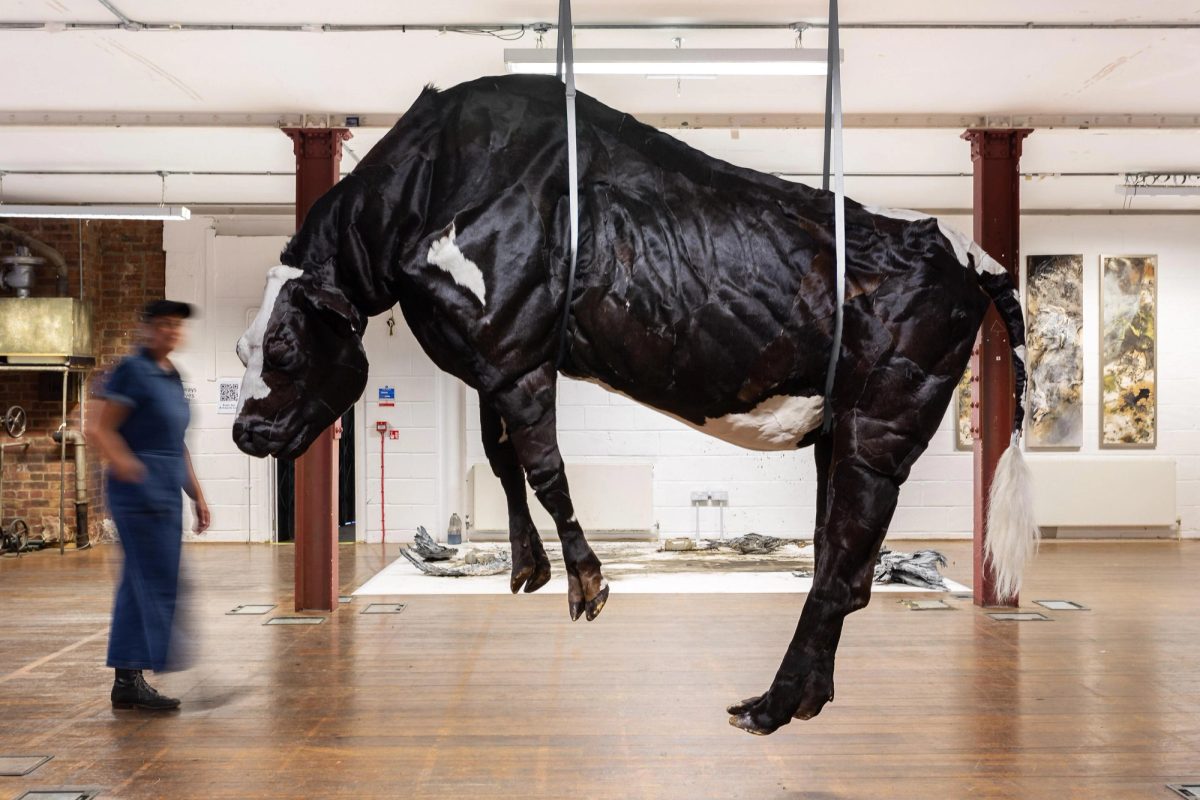
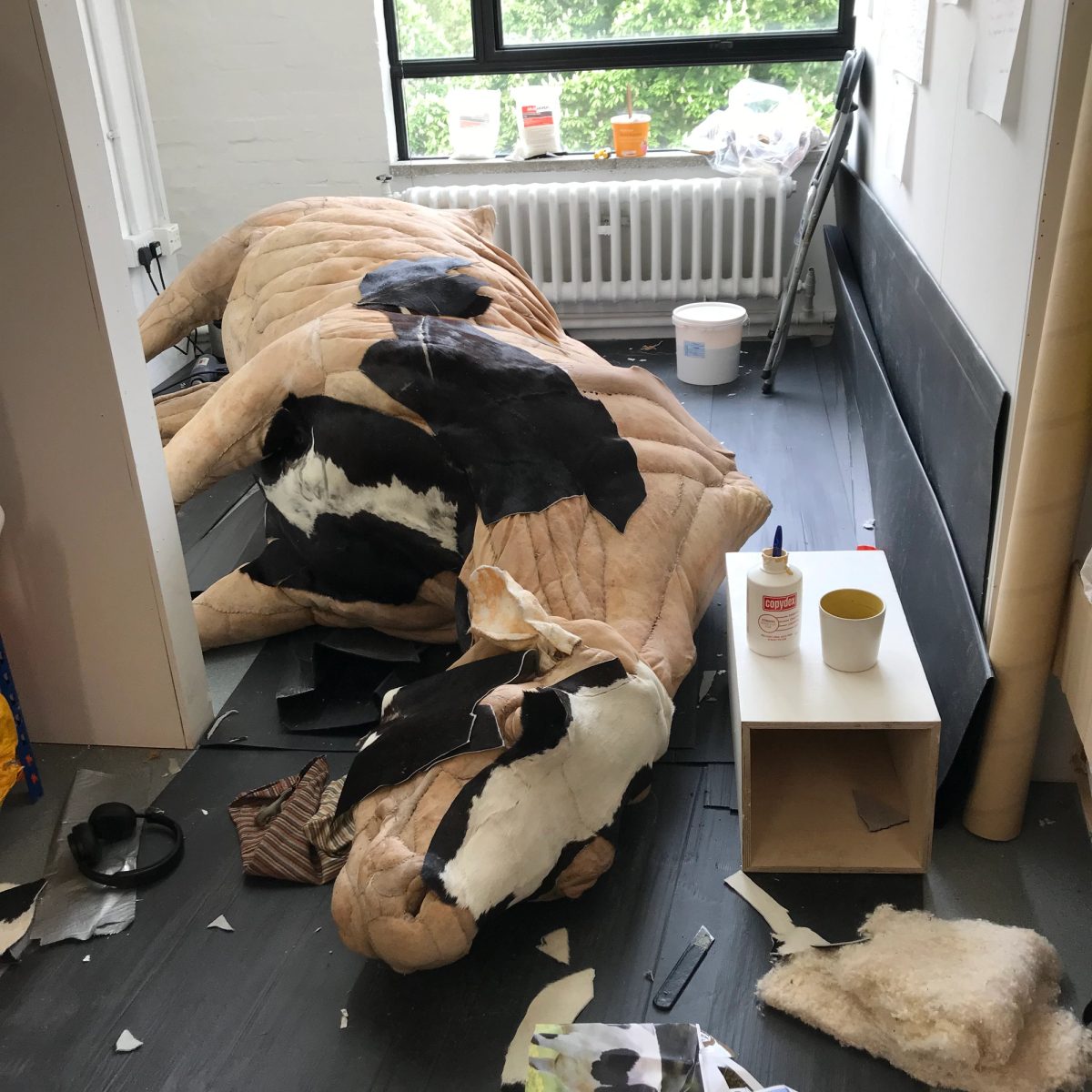
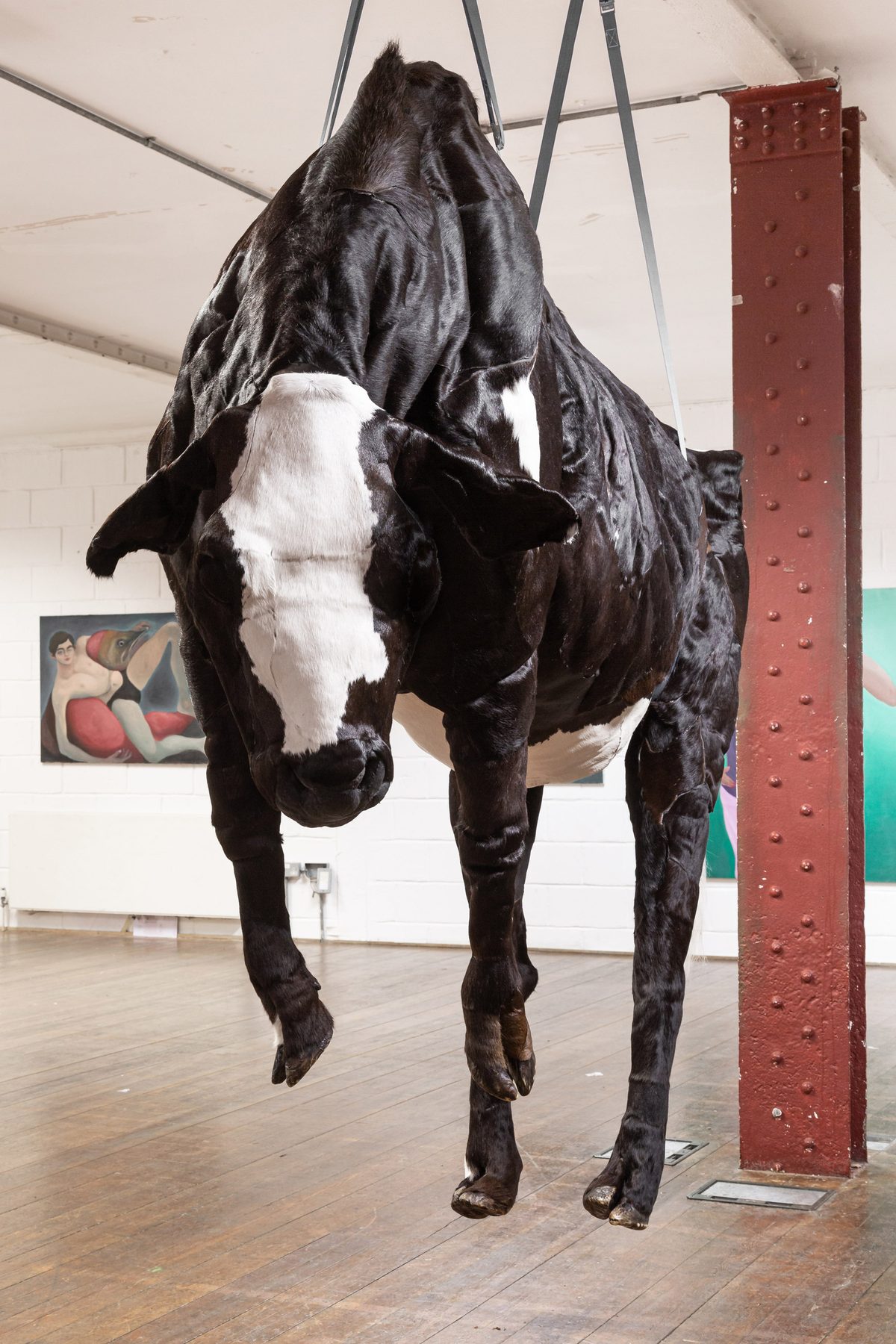
Cow
2022
Reclaimed floor rugs and domestic materials
85 × 288 × 215 cm
You frequently work with reclaimed or domestic materials, vintage coats, tights, rugs, hair, silk gloves, materials that already carry bodily and social histories. How do these prior lives shape the emotional tone of the finished sculptures?
The presence of former histories within clothing, accessories, and domestic materials is essential. They bring a sense of spirit to the work, traces of time, and a fusion of life and death that cannot be fabricated.
“You cannot create myth. I approach my work by tapping into something that wants to come into being.”
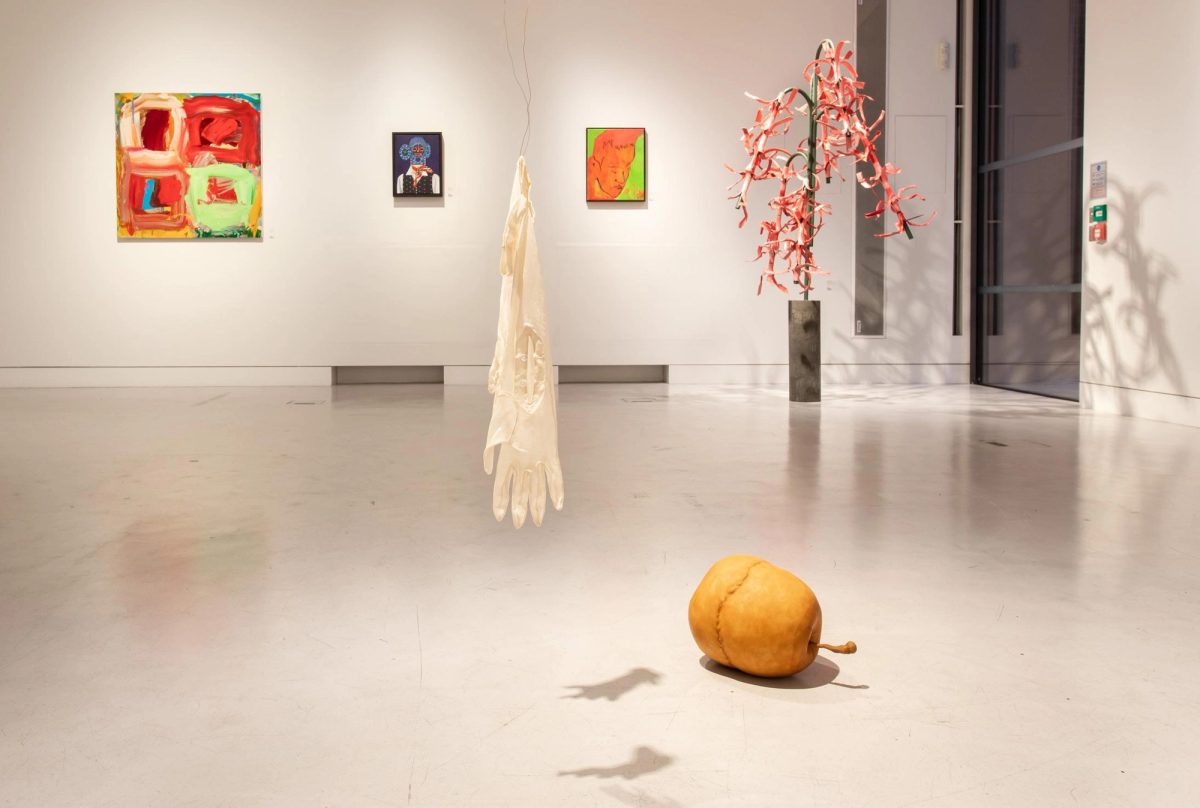
The Faellen Aeppel
2023
Ingram Prize Winner
Exhibited at Cromwell Place, London
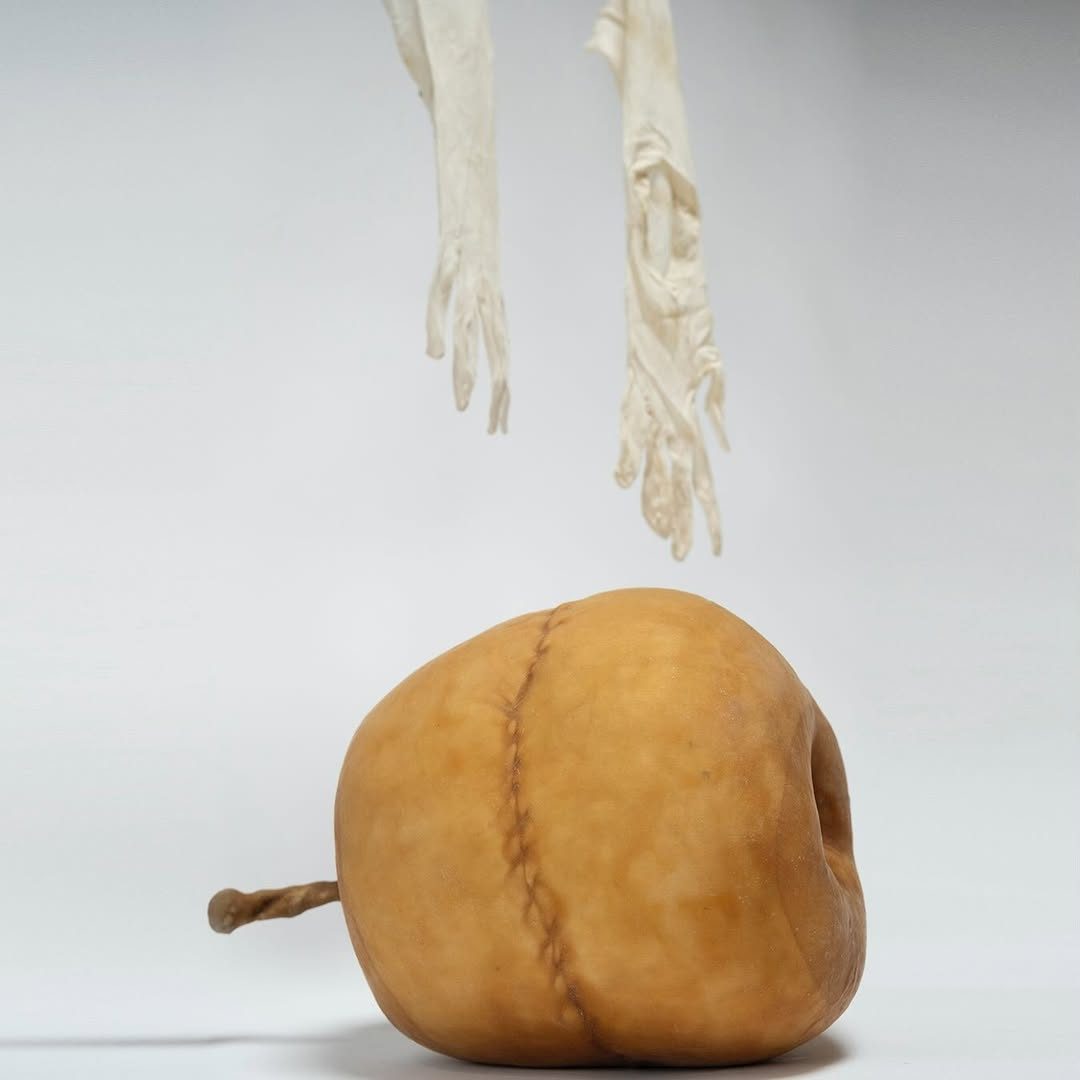
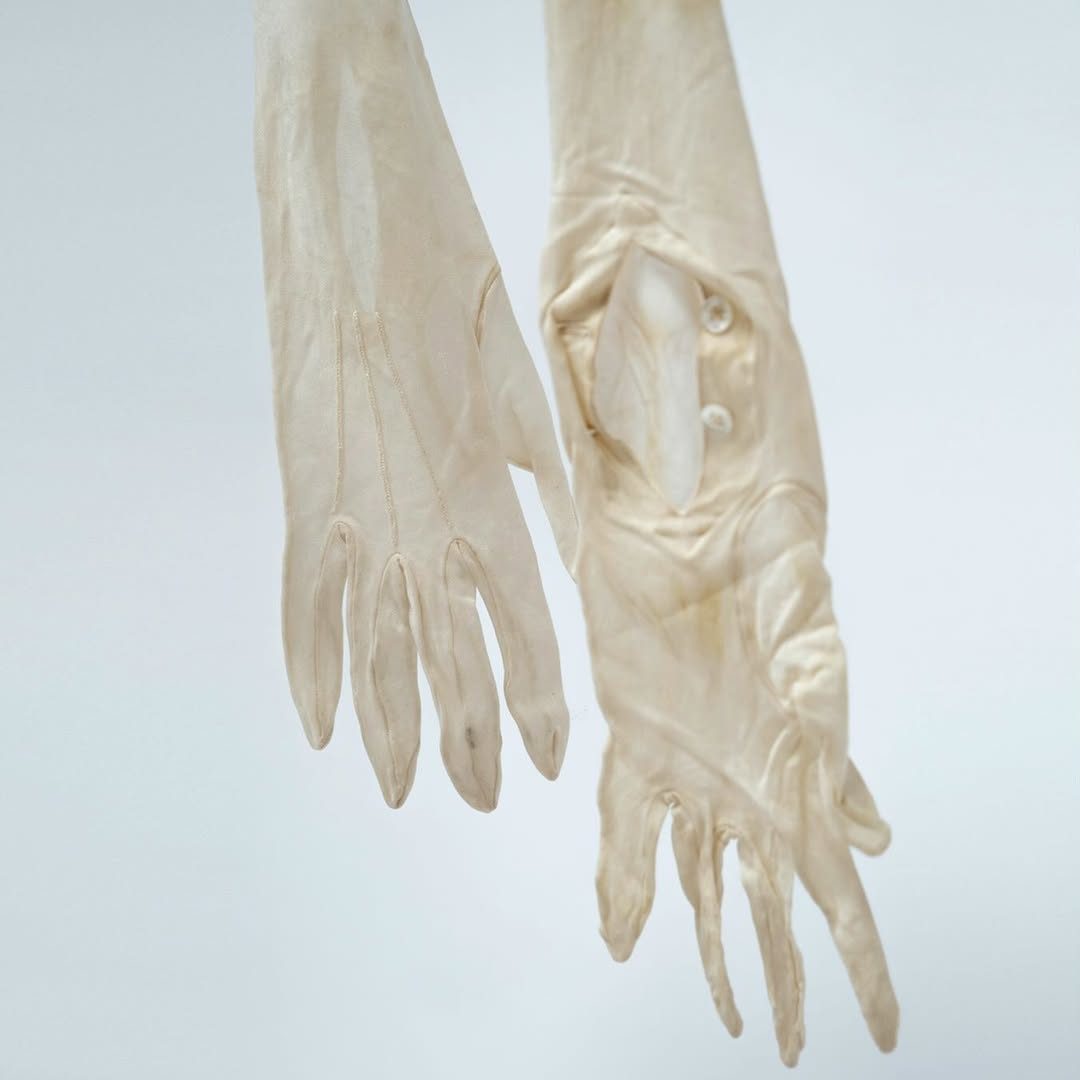
The Faellen Aeppel
2023
Latex, wadding, tights, copper wire, vintage silk gloves
150 × 120 × 100 cm
Animals appear repeatedly in your work, but rarely as symbols or trophies. In pieces like Cow (Abiding the Æther) or Hare (Wyrd Sister, Betwixt Me and Her), what responsibilities do you feel when working with animal forms and animal remains?
I feel a huge sense of responsibility with Cow and Hare; something strange and real happened for me while making these works. There is something profoundly affecting about making every bone of an animal’s body, stitching ligaments and muscles, and then placing the skin back on top. I have a deep connection with them that still surprises me each time they come out of storage.
My most recent beast, Cat, is different. It does not hold the ‘spirit’ of an animal in the same way. This absence allowed me to explore notions of cruelty; something I could not have approached with Cow or Hare because of the responsibility I carry with them.
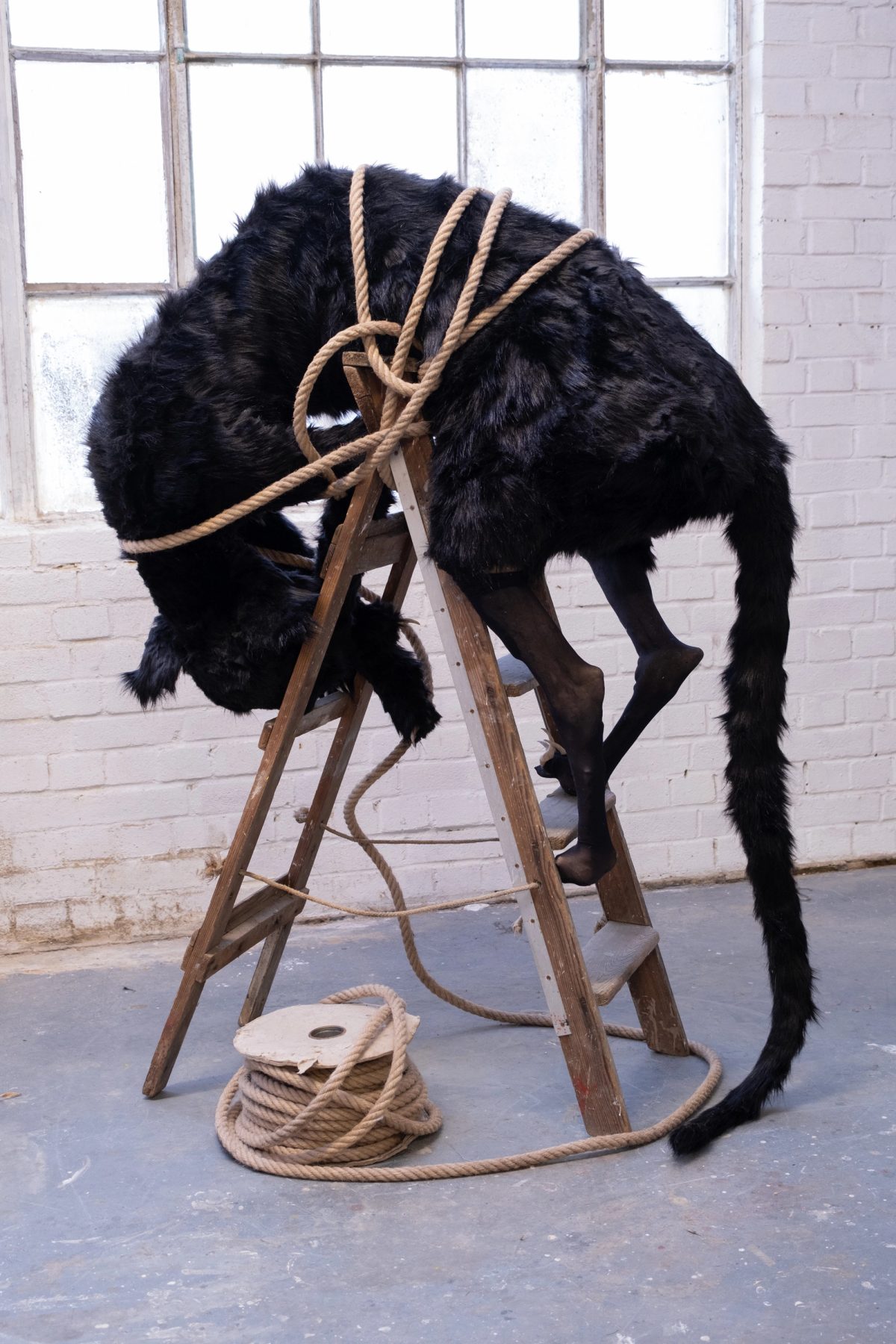
Cat
2026
Faux fur, bio polymer, wire, string, nylon tights, wadding, rope on spool, ladder, child’s handkerchief
110X 150 x 125cms
Myth and folklore: witches, hares, pagan cosmologies, medieval ideas of the cosmos, quietly structure much of your thinking. How do you approach myth as a working tool rather than as illustration or narrative?
I see myth as a kind of ‘spirit of being’, something that comes into existence under its own steam. You cannot create myth. I approach my work by tapping into something that wants to come into being. If I have an ‘idea’ rather than something that genuinely ‘comes to mind’, my hands will not comply. I have to be patient and wait for thoughts that sit comfortably within my whole body. This feels close to a medieval model of being, where the mind is understood as part of a collective of organs. For me, it’s about learning to listen to your whole self.
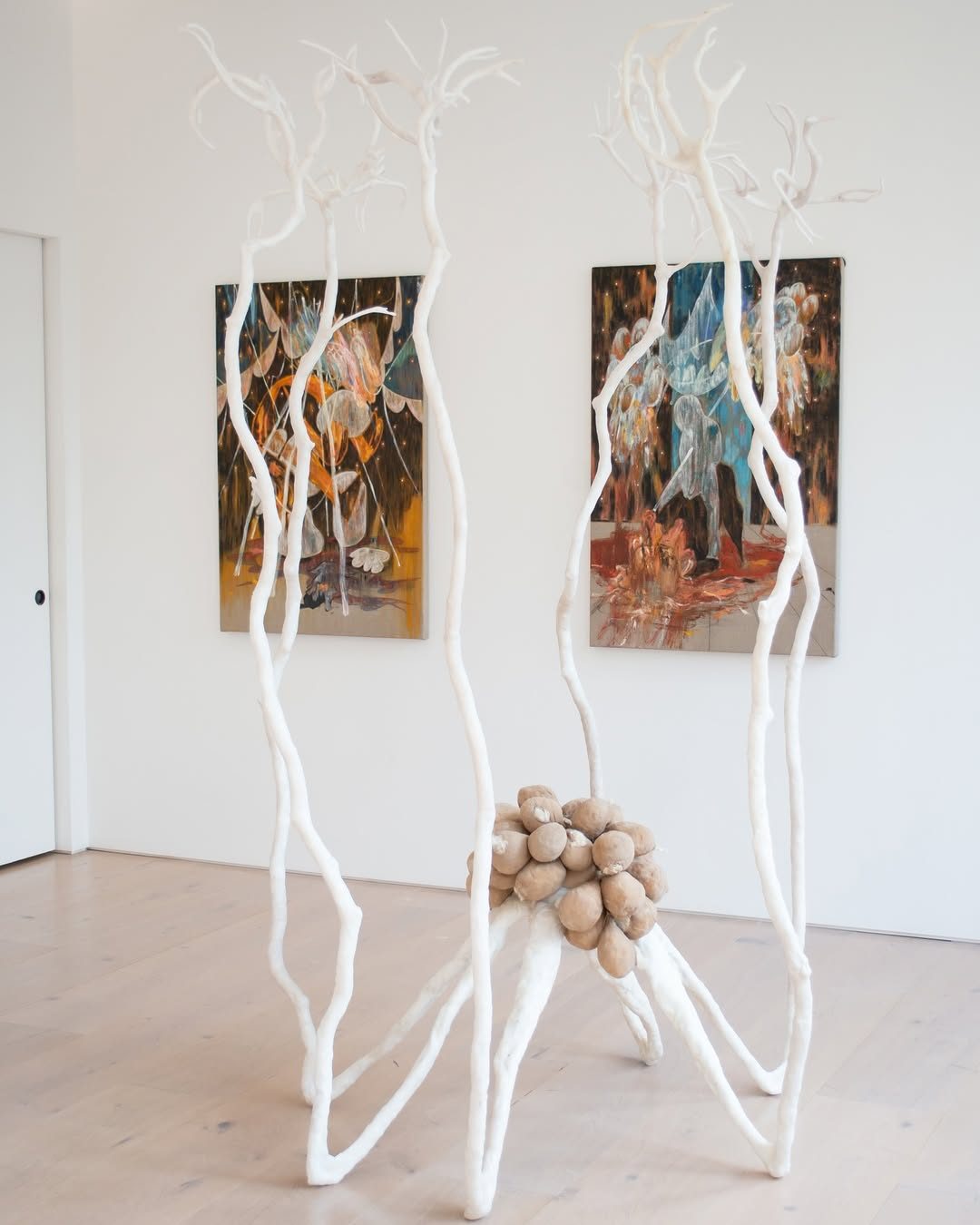
Mythopoeia (Ecdysis)
2025
Bio polymer, tights, alpaca fibre, string, conduit, latex
Approx. 2.3 × 2.5 × 2 m
“I think I was searching for a particular sensation; the way encountering a large dead animal can reduce the viewer to the size of a child.”
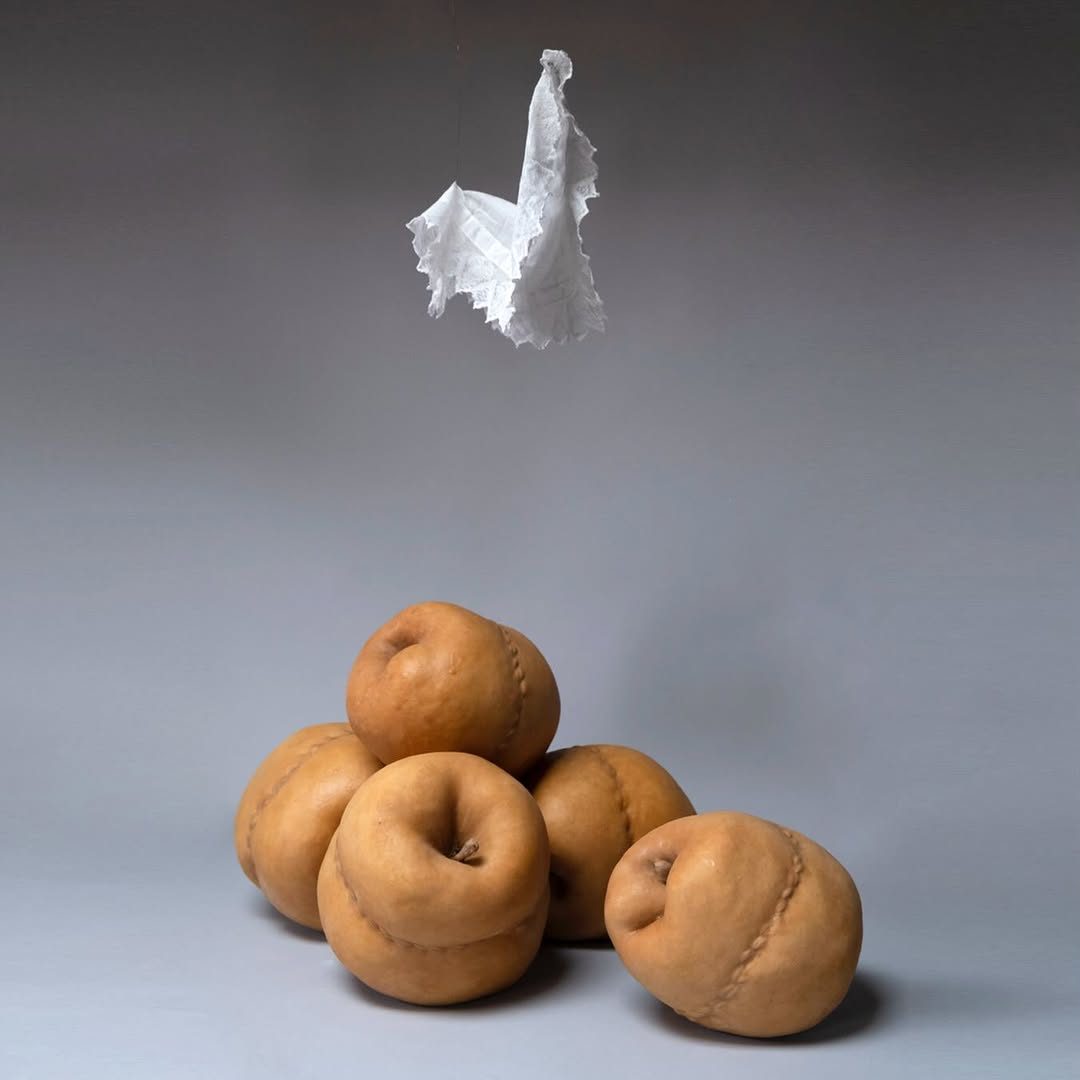
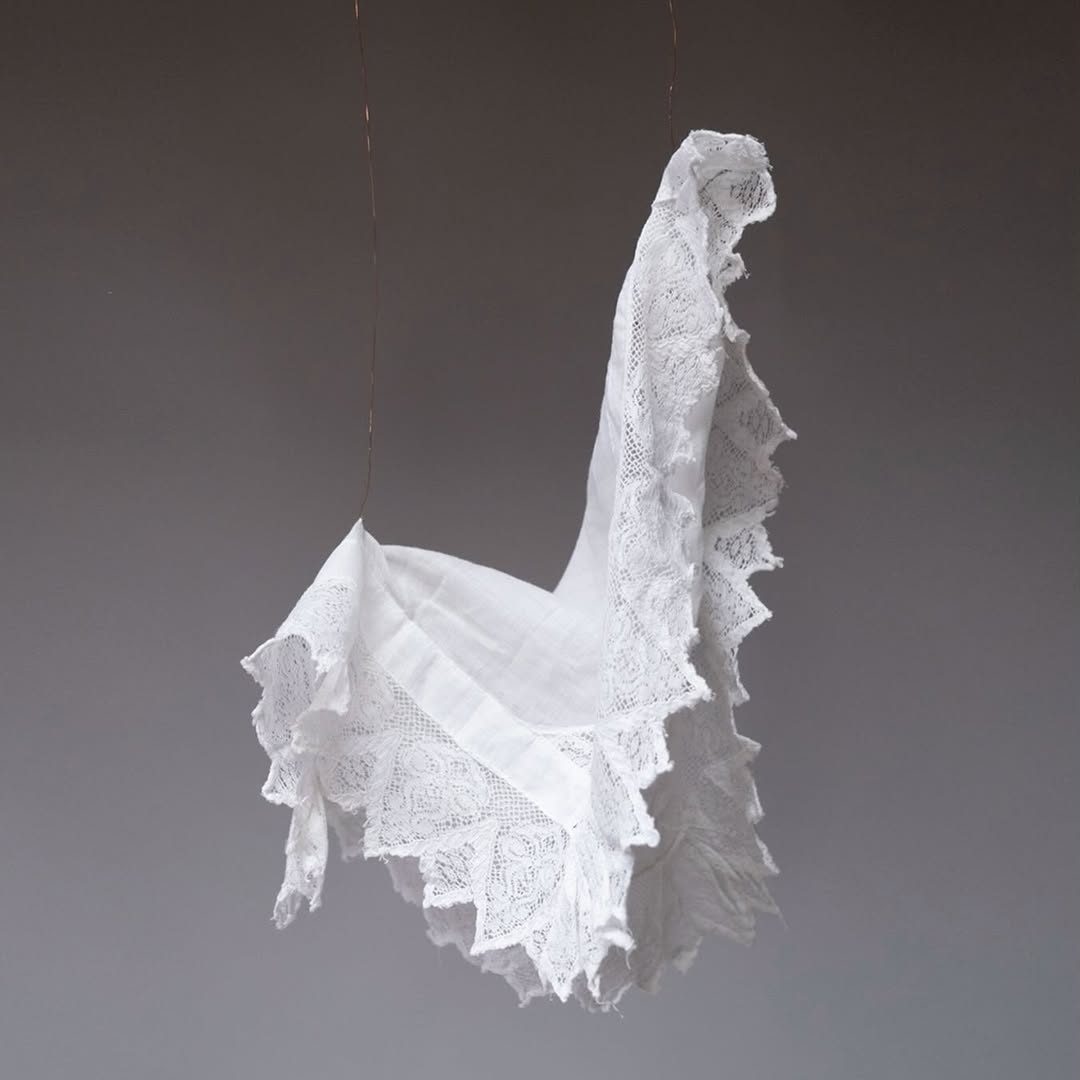
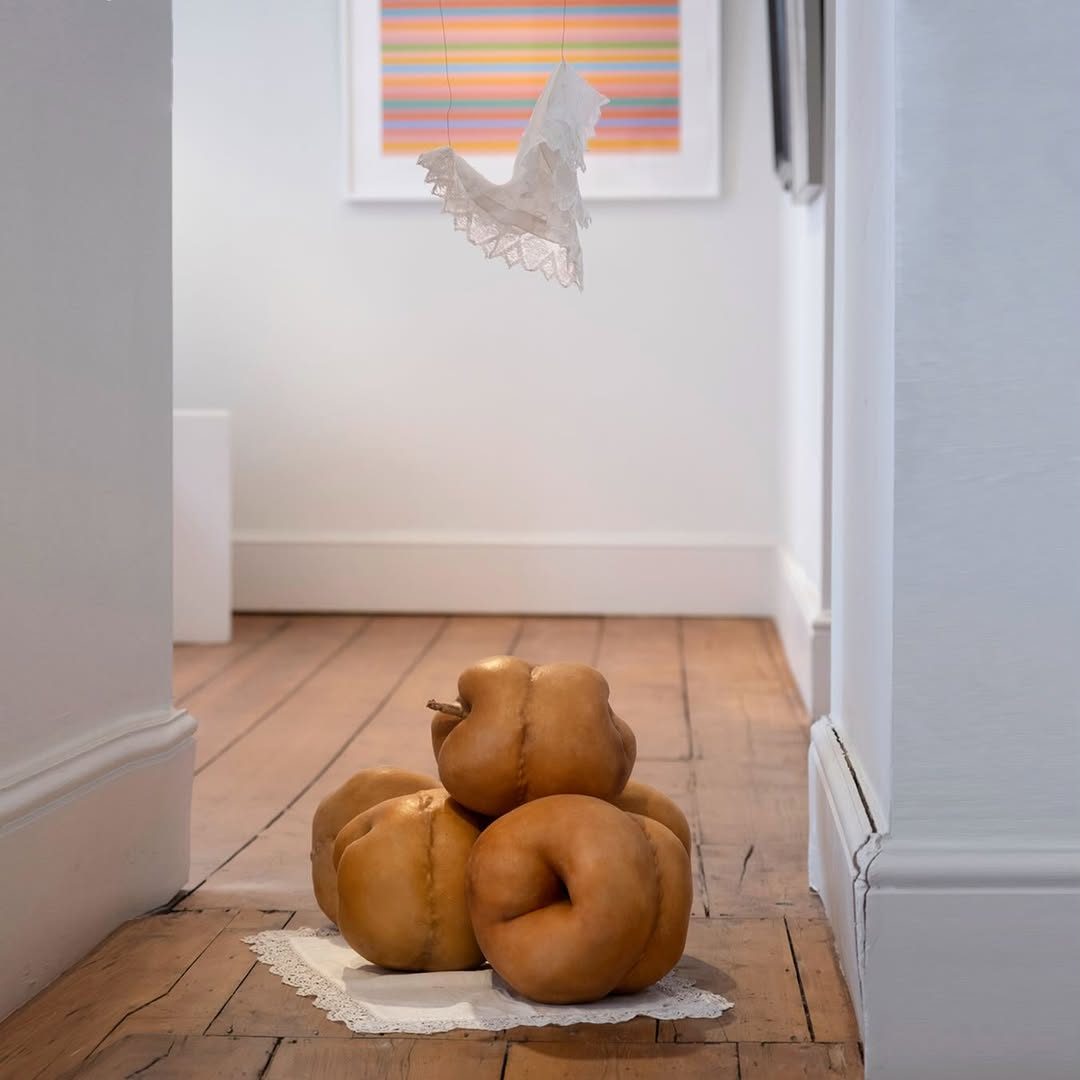
Stille Lif wiþ Aeppels and Læc
2023
Mixed media, vintage lace doily and copper wire
75 × 40 × 40 cm
Several of the works shown in the OBTUSE (°) exhibition: Epibiont, Commensal, Symbiont, and Ode to a Cello that explore forms of coexistence and interdependence. What drew you to these biological relationships as a framework for the exhibition? And, these works are physically modest in scale compared to some of your larger sculptures, yet they feel intimate and charged. How do you think about scale when you want a work to invite closeness rather than awe?
Within the curatorial text for Obtuse, the statements ‘where a form begins to tilt beyond its own balance’ and ‘a choreography of inclinations, a space that never quite settles, becoming a singlegesture composed of many partial ones…’ resonated deeply with me. This shifting, uncertain, unknown, and yet familiar, place is where my work naturally rests.
It is a space where objects become subjects, shifting between states while existing in relation to one another. Scale is considered in terms of how the viewer stands in relation to these subjects; they may feel small or large depending on which bottle they have drunk from!
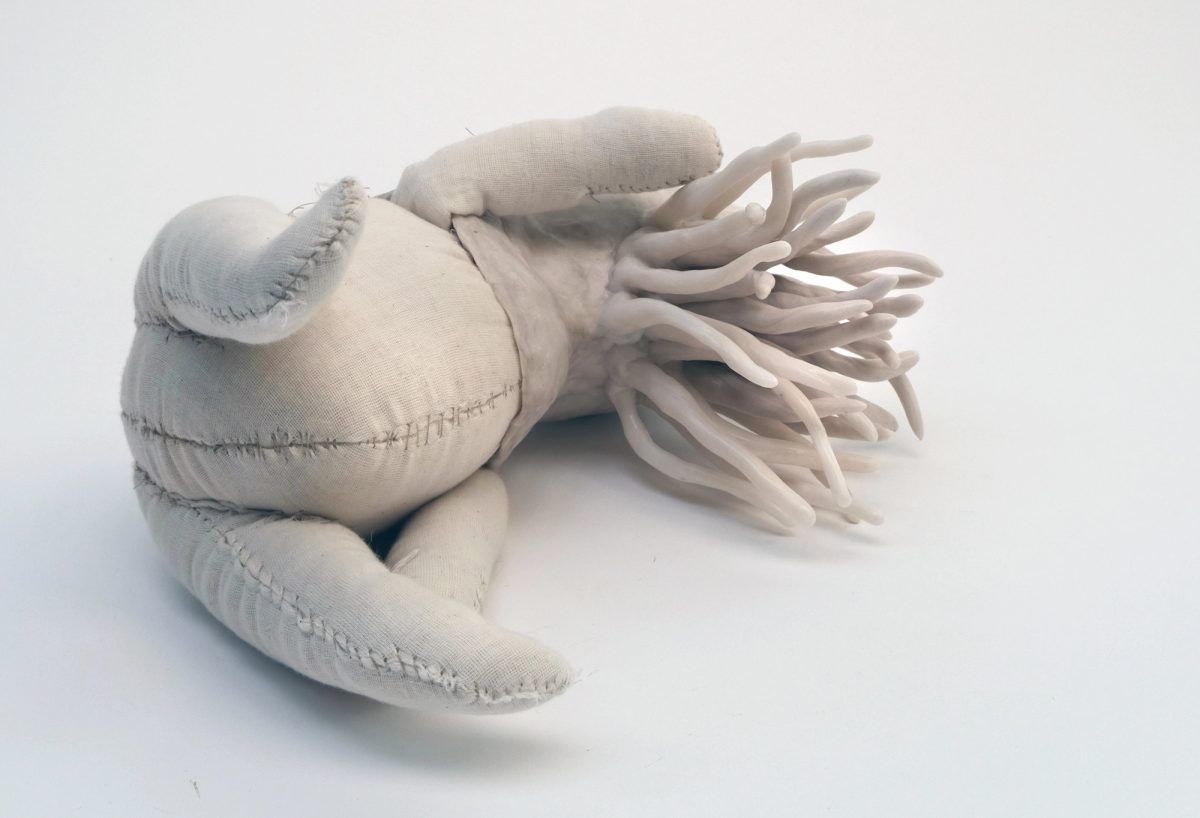
Psychopompette
2026
Muslin, kapok, bio polymer, polyester thread
38 × 32 × 18 cm
Stitching, binding, and moulding recur as core techniques in your practice, often linked to histories of care and so-called “women’s work.” How conscious are you of that lineage when you’re in the studio, and how does it shape the way you value labour?
I had children at a very early age, which profoundly shaped how I experienced the world. While many people were exploring themselves in relation to the wider world, my life became bound to the domestic space. I learned early on to value the intense labour required to raise children, and to respect the materials of domestic life. This kind of work is rarely valued within society, and I feel compelled to give it a voice.
From my perspective, it takes enormous strength to survive the societal pressures placed upon mothers and women. From another angle, I find it intriguing that at this later stage of my life, I am stitching and binding bodies together just as my own body has reached the end of its ability to bear children. I love this possible coincidence.
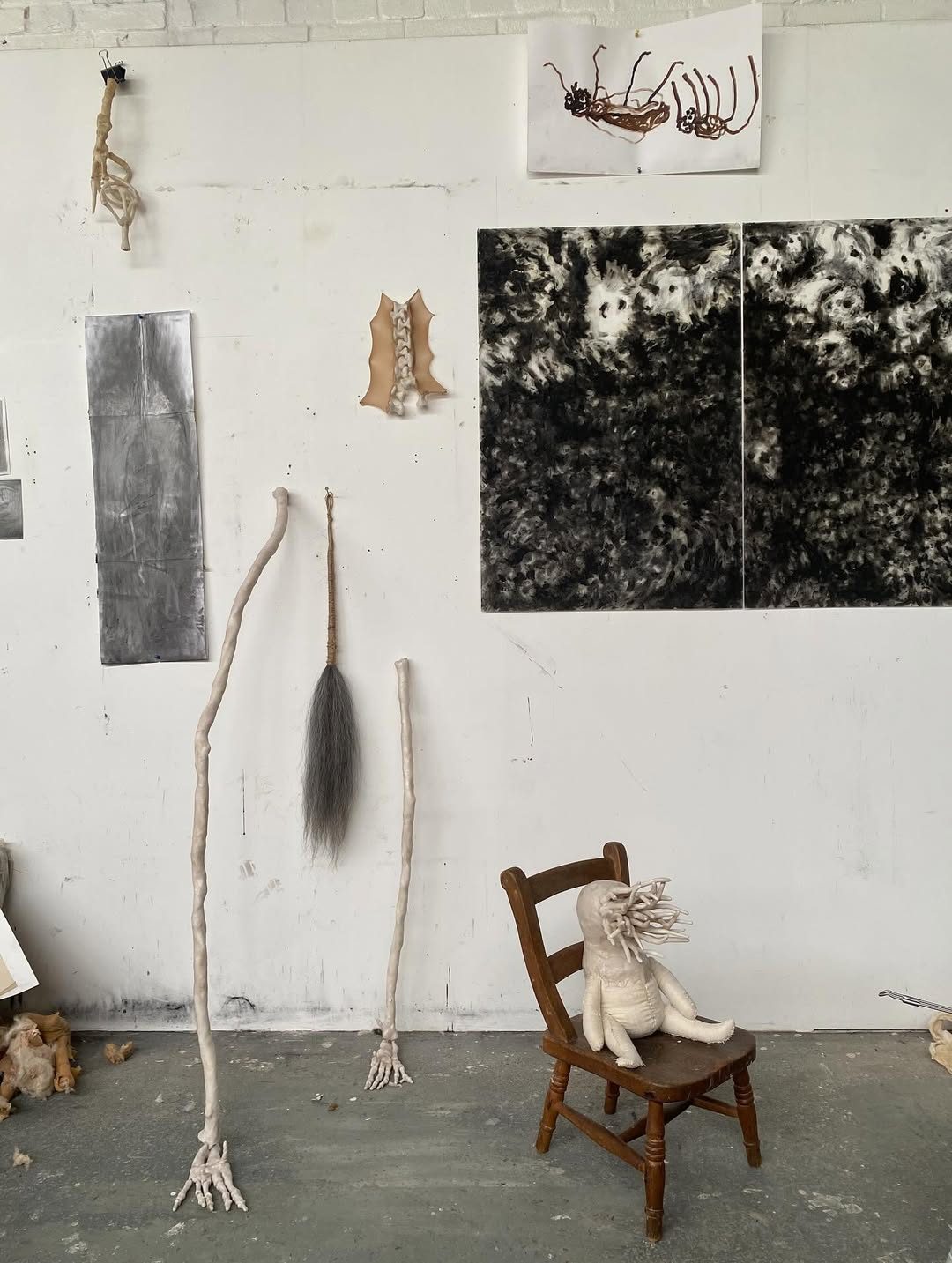
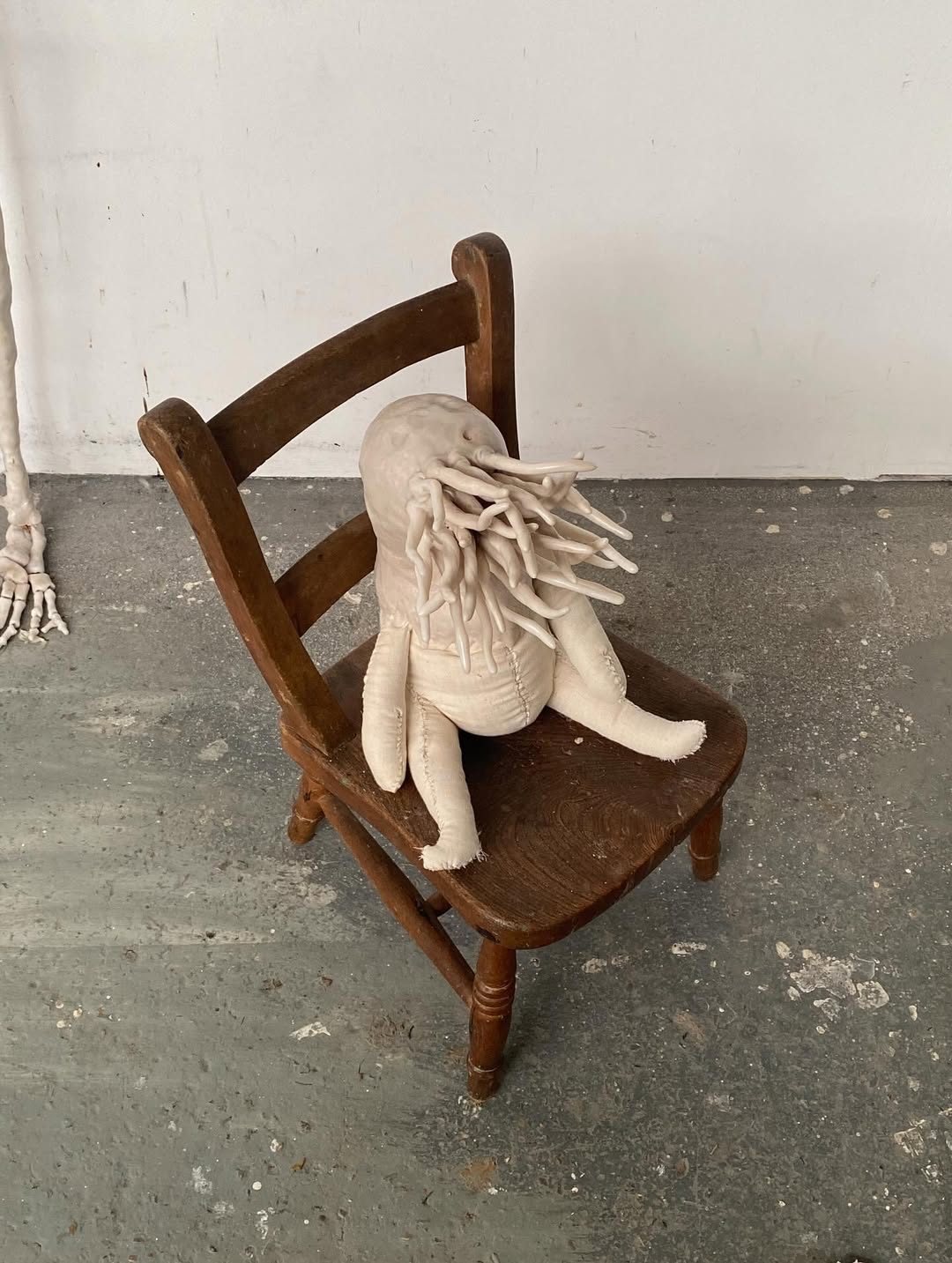
Finally, as your practice continues to develop across sculpture, drawing, research, and writing, what kinds of bodies, materials, or relationships are you most compelled to explore next?
I’ve recently begun working with linseed oil, powdered pigment, and wooden panels to create imagery. This has opened up a new form of expression for me, and I’m excited to see where it leads. I have an upcoming solo show at Julian Page Projects in Chichester, which brings together my large animal works as an installation alongside paintings that explore an interior landscape connected to it. As mentioned earlier, I have to wait for something to come to mind. I’ve had a visitation in the form of an image, but now I need to see how I physically respond to it over the coming weeks.
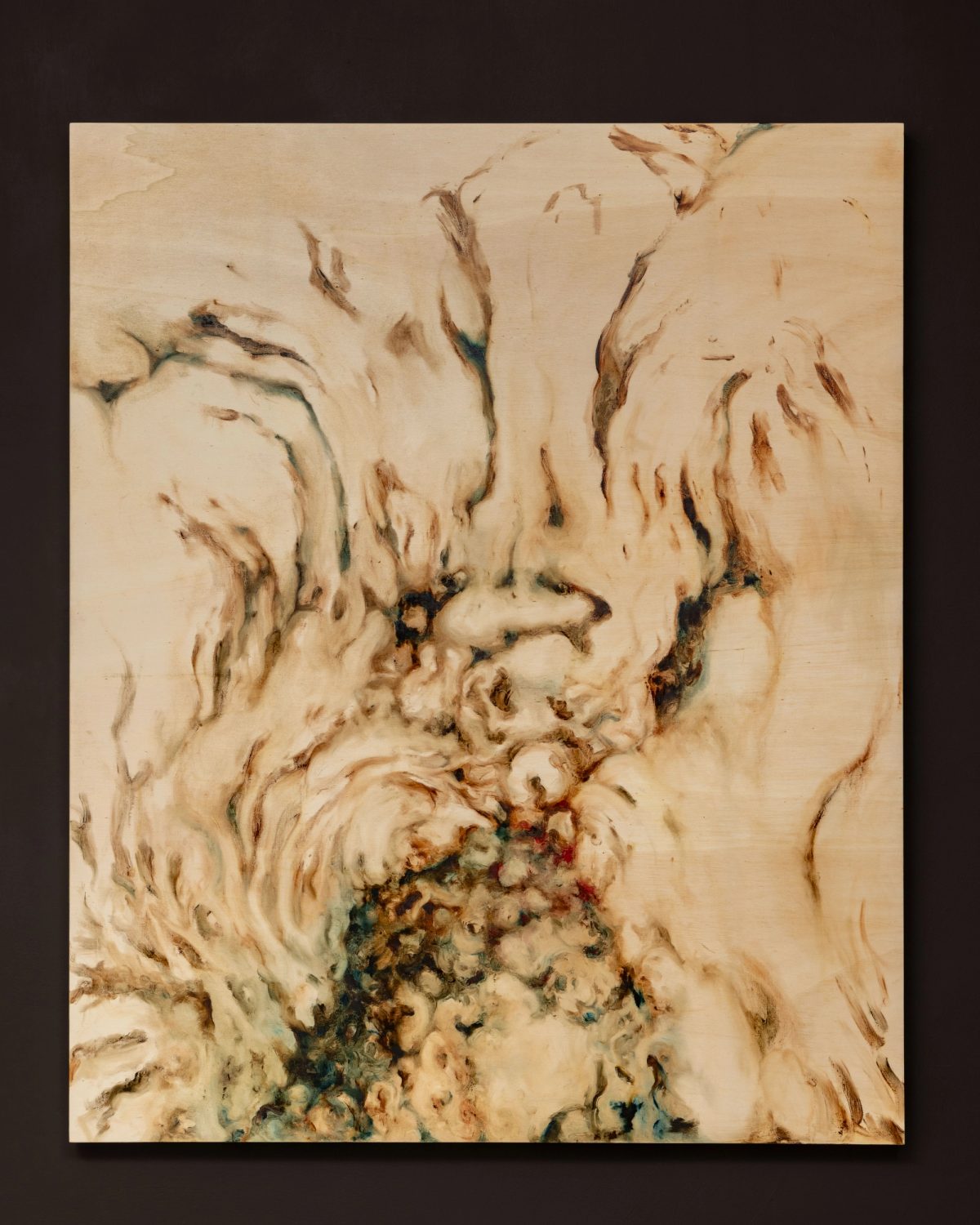
Untitled 1 (Psyche of Relation)
2025
Photograph by BJ Deakin
Cover Image:
Hare, 2020–21
Reclaimed vintage coats and domestic materials
40 × 300 × 60 cm