ON THE FANTASY OF THE MUNDANE: IN CONVERSATION WITH LEO COSTELLOE
CONVERSATION BY SELIN KIR
CO-FOUNDER, CURATOR
18 JANUARY 2026 — UNITED KINGDOM
In this conversation, Leo Costello reflects on the quiet systems of belief embedded in everyday objects: how use, repetition, and collective agreement shape meaning. Moving between fragility and permanence, hard and soft, doing and undoing, the discussion traces a practice rooted in transformation and recontextualisation rather than novelty. Objects are approached not as inert tools, but as carriers of memory, function, and imagined spirit, forms that only become what they are through shared understanding and continual maintenance.
Your work orbits kitchen tables, ladles, perfume bottles, ribbons, cutlery, objects that usually disappear into routine. What draws you to these quiet things? How do you know when an ordinary object is asking to be transformed?
I’m interested in the fantasy surrounding the mundane. I think the longer I’m alive, the more complex the world feels. It’s the simplicity and understanding of these objects that I’m drawn to most. There is a sense of knowing the world around you when you can recognize the things in it, and that’s what I like the most about working with these types of materials.
It is not so much a sense of knowing when an ordinary object is asking to be transformed; I think it’s more about finding objects that work with what I’m trying to communicate. I usually work backwards from the “phrases” or “concepts” I’m thinking about.
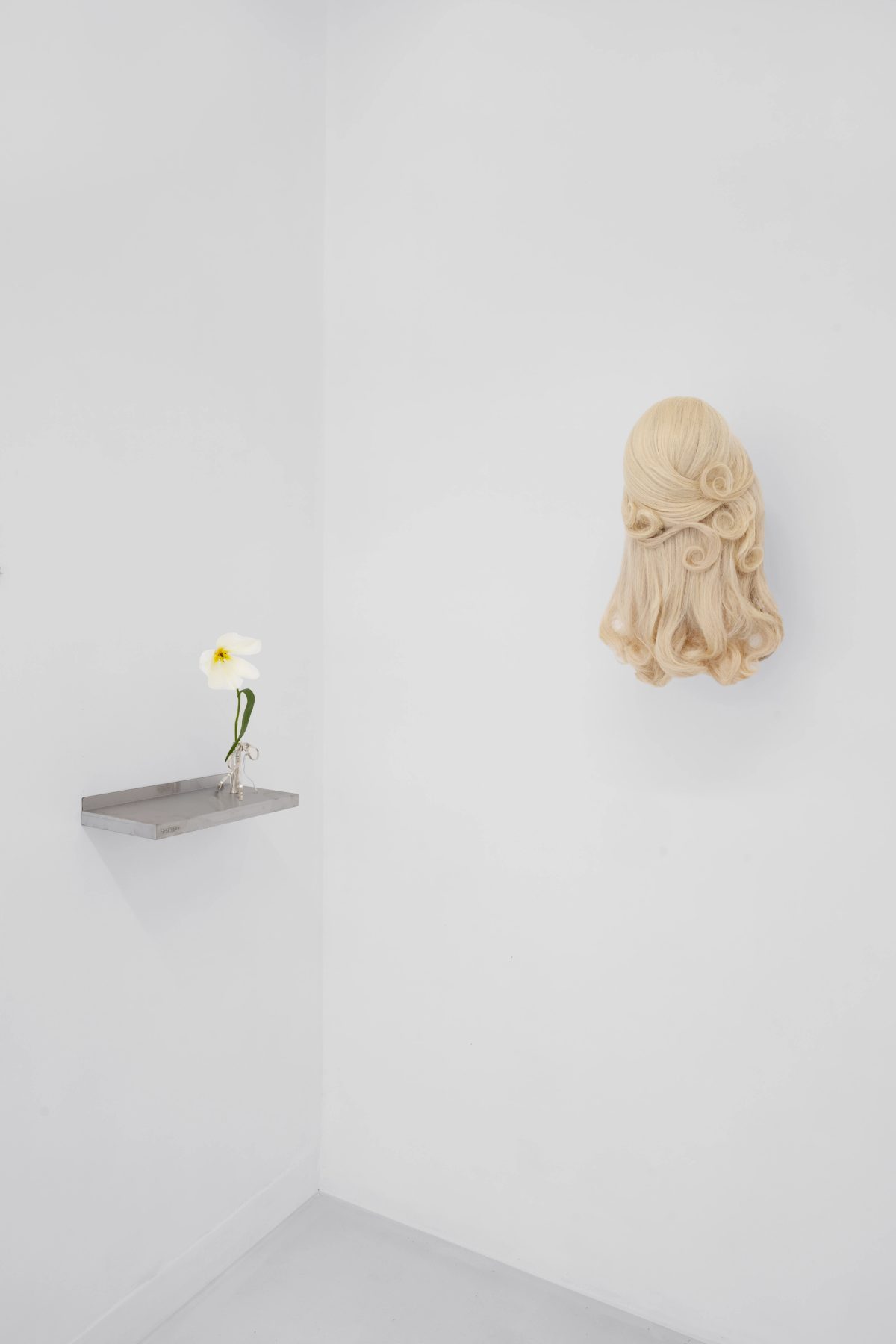
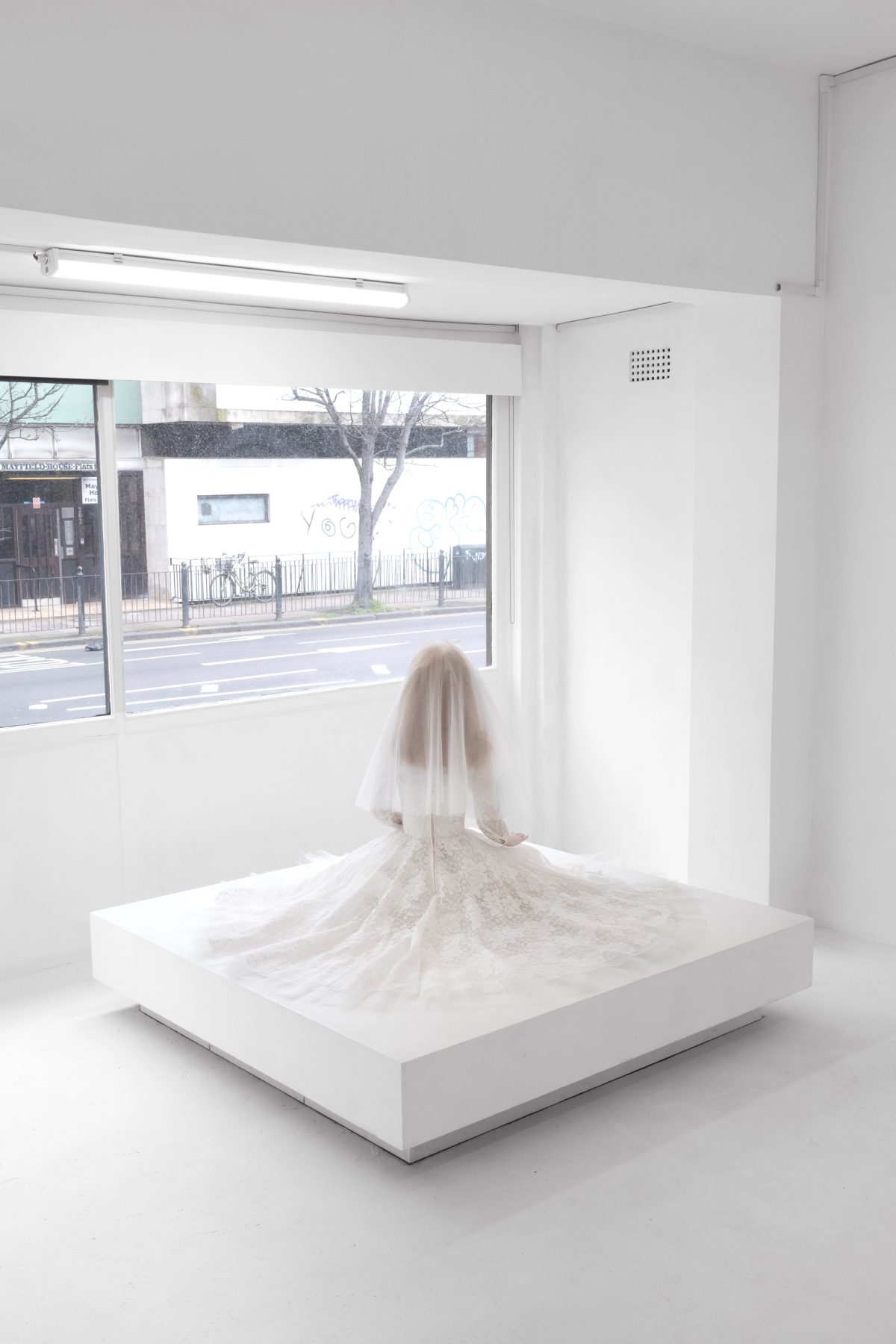
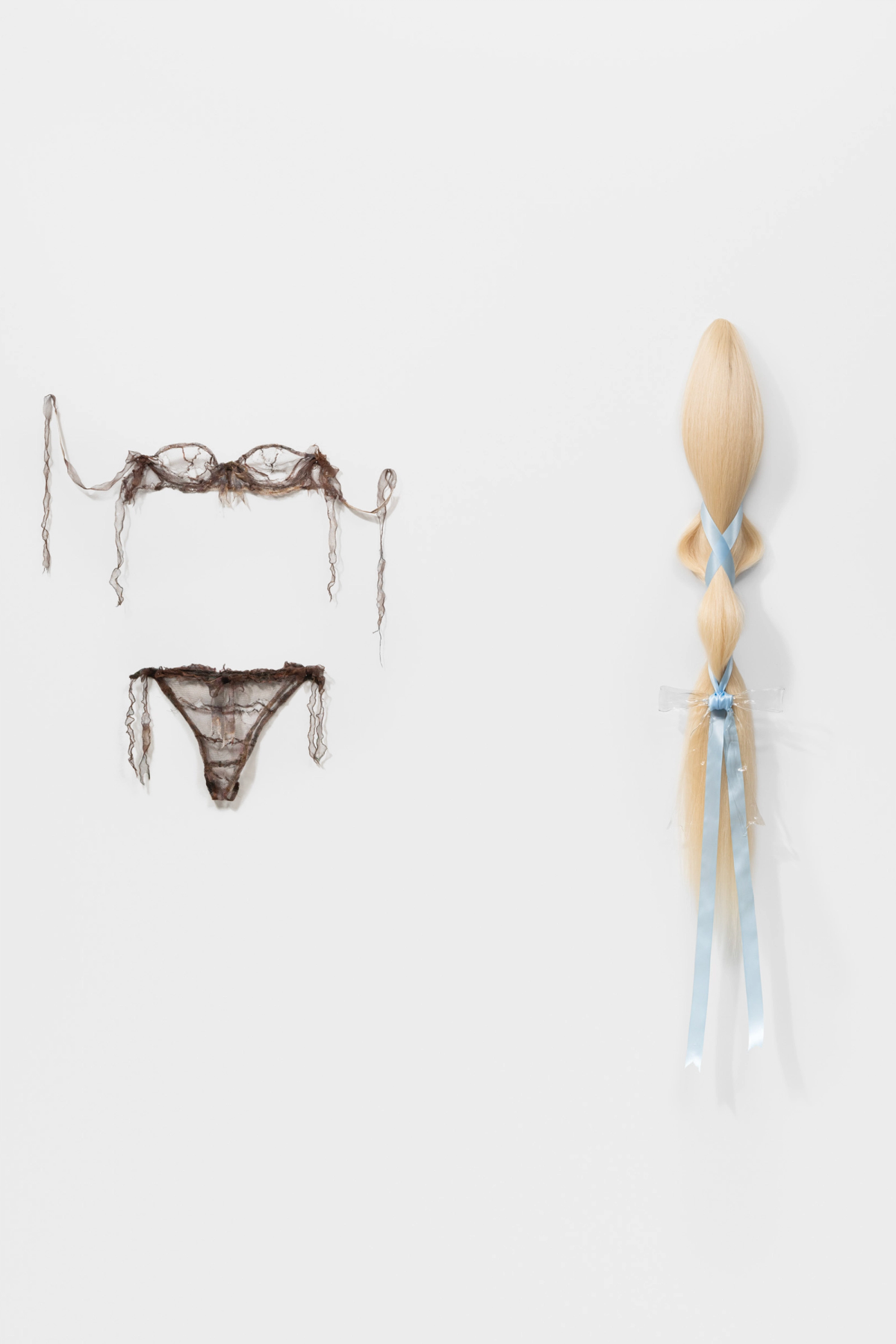
You sculpt through materials that preserve, harden, or record touch, glass, silver, brass, metal. Yet many of the gestures you capture (ribbons, folds, loops, dangling forms) come from softness and transience. How do you think about the tension between fragility and permanence in your material language?
I don’t know that there’s one particular answer to a question like this. The implications around fragility suggest vulnerability and a type of dependence on conditions to survive, which is sort of what it’s like to be alive. Permanence isn’t an absolute state; it relies on a degree of maintenance and belief and, even then, is easily compromised. I think, on a level, I’m trying to reflect on these two ways of being through engaging with the materials in the way I do. I like the incongruity and oxymoron of hard and soft, and how these two ways of existing are possible at the same time.
"I’m interested in the fantasy surrounding the mundane."
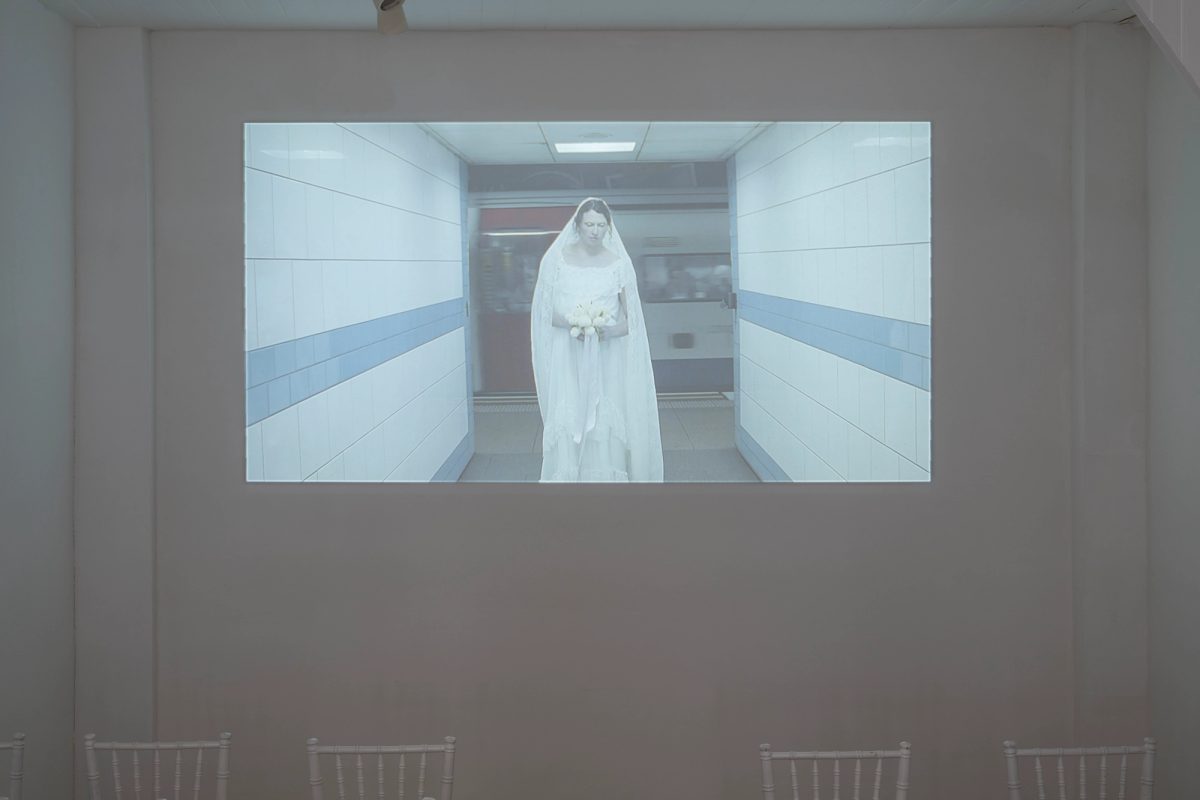
In “Kitchen,” scent, memory and ritual become a sculptural vocabulary. What does the kitchen represent for you, emotionally, spatially, or sensorially?
I like the idea of a heart or catalyst in a space. I think the kitchen is the most obvious “heart space” outside of the human body, in the sense that across most contemporary cultures it exists to sustain life. A lot of my work centers around subtle subversions and reframings of cultural ideas, and the kitchen feels so synonymous with the home for me, so it was the natural place to start with that body of work.
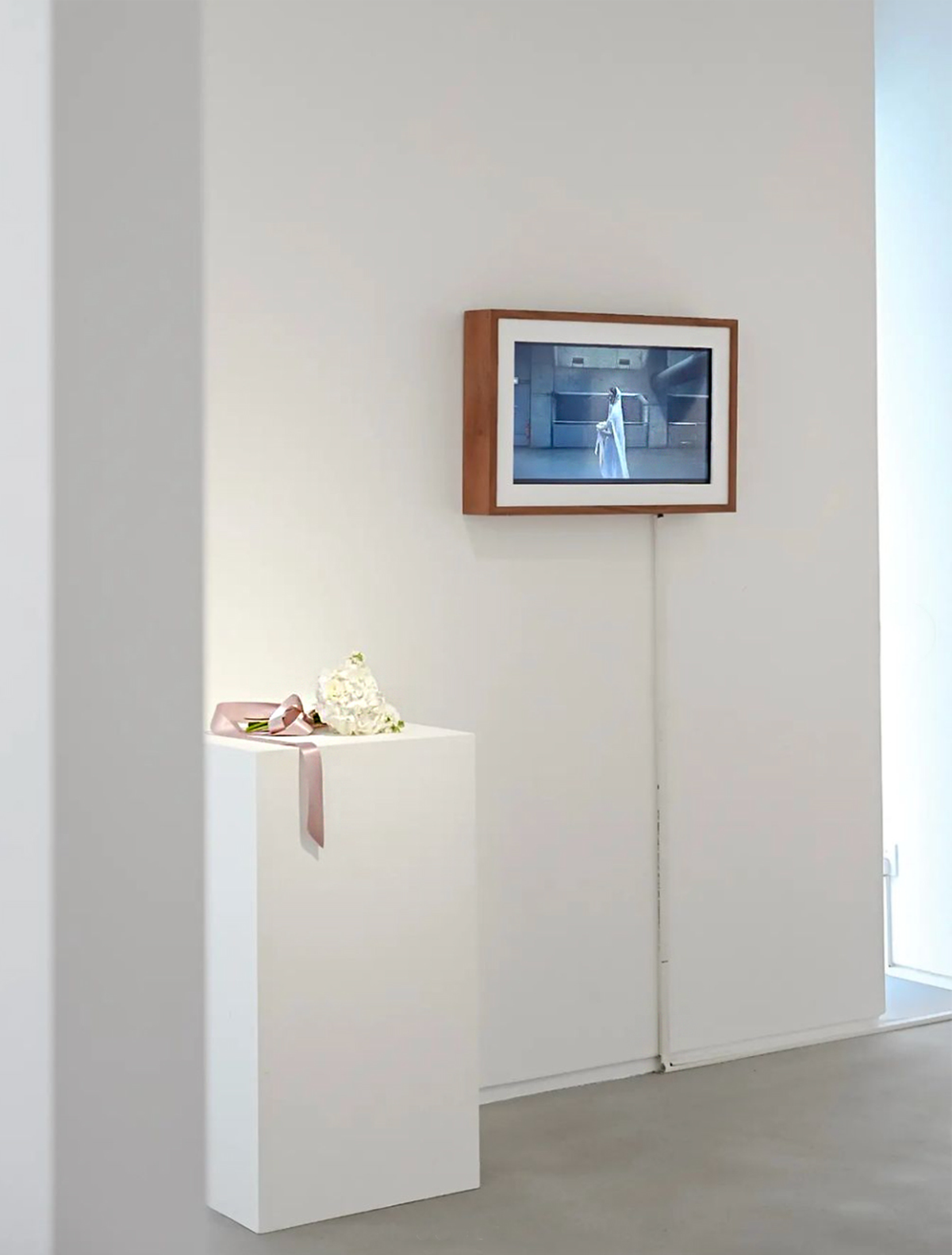
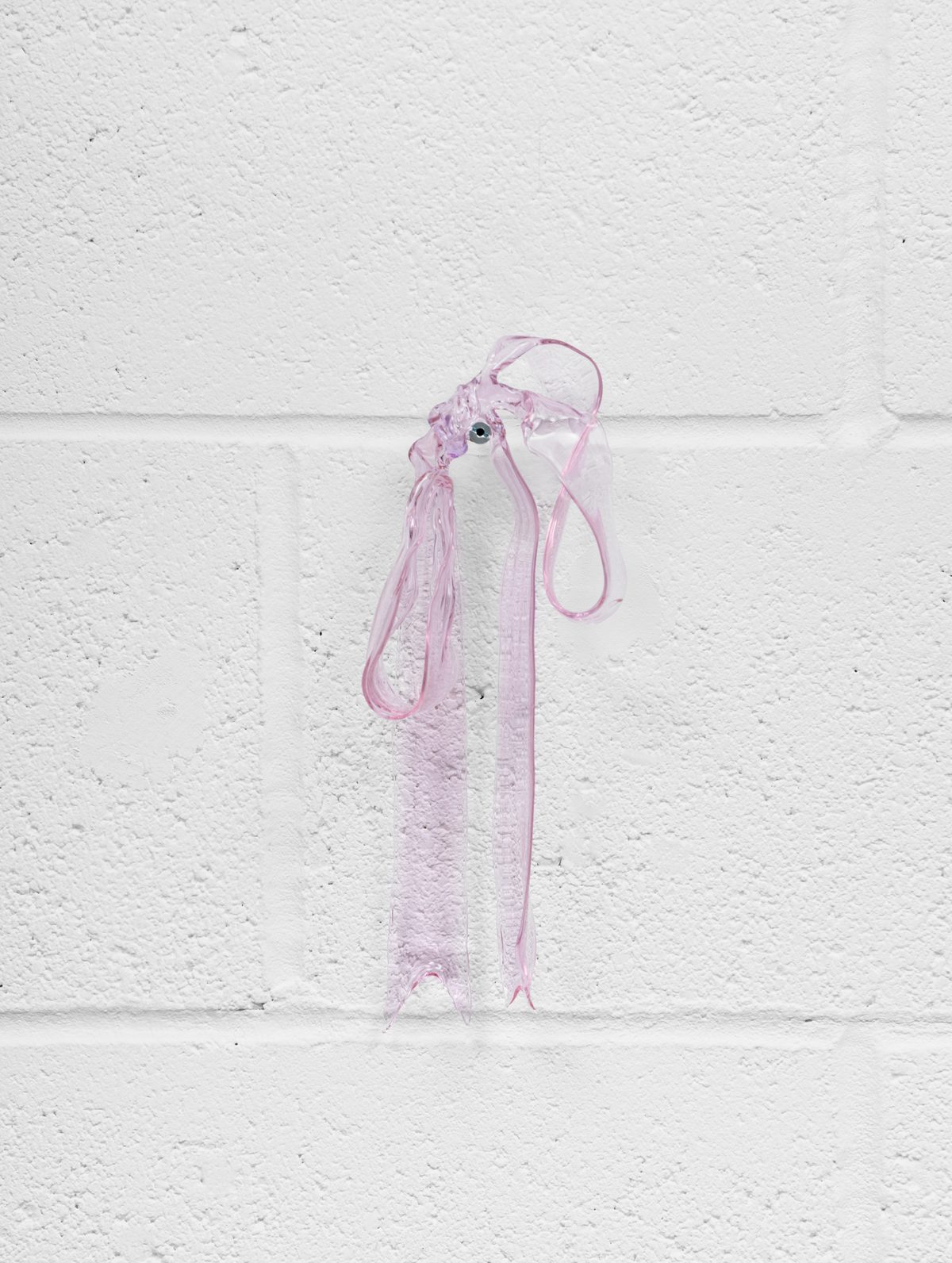
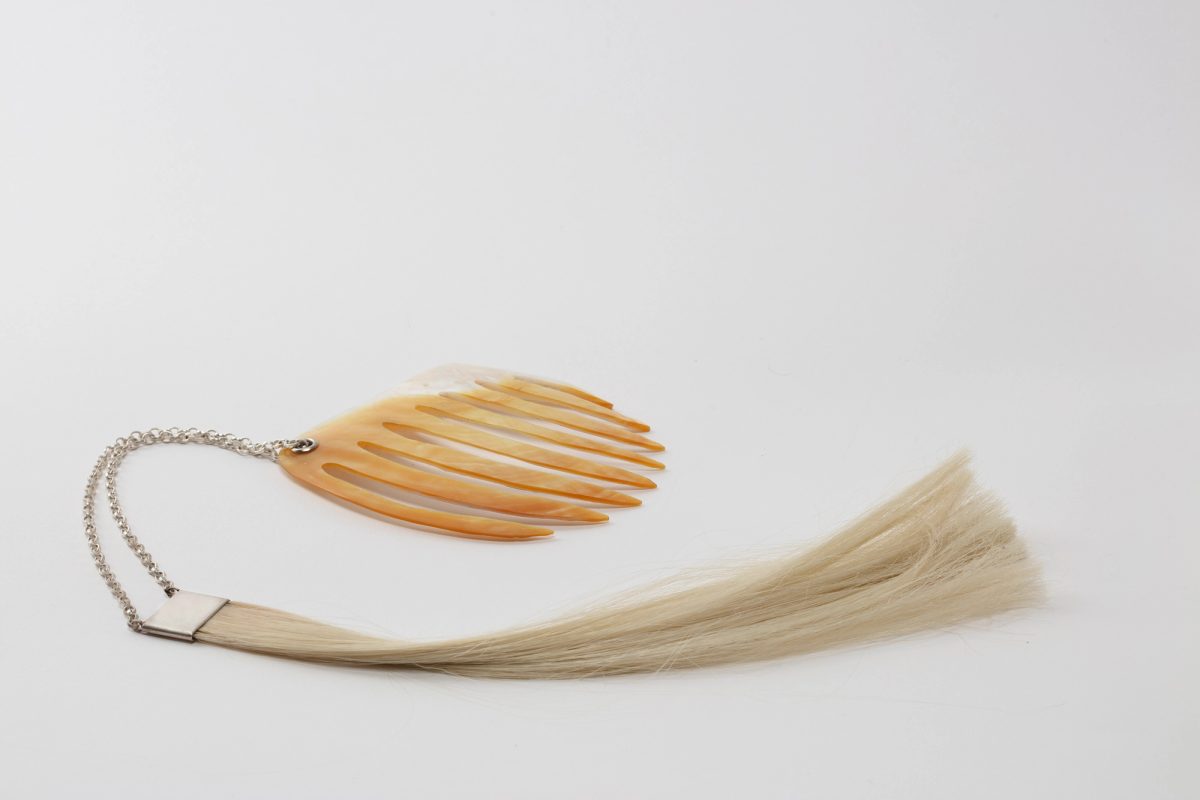
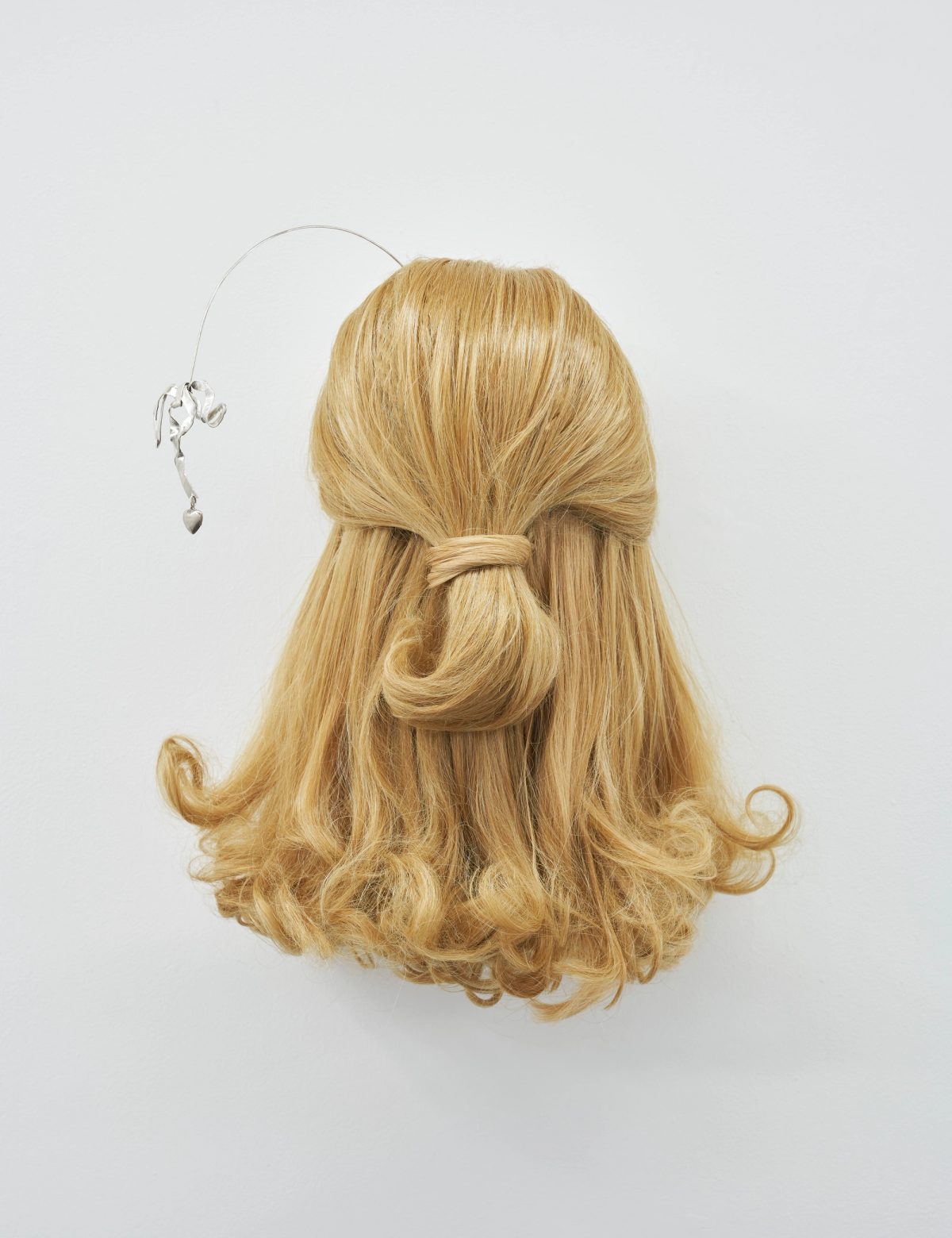
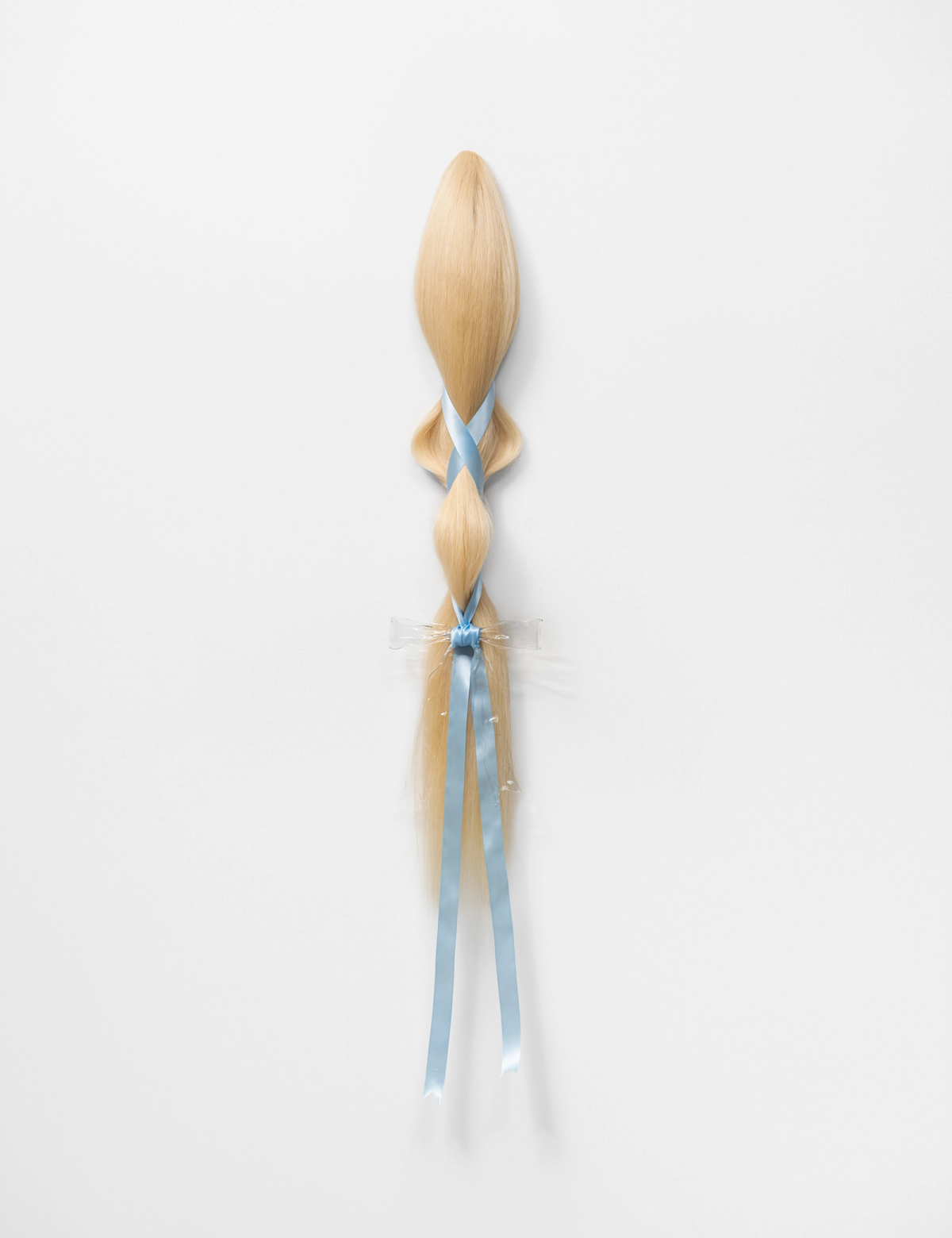
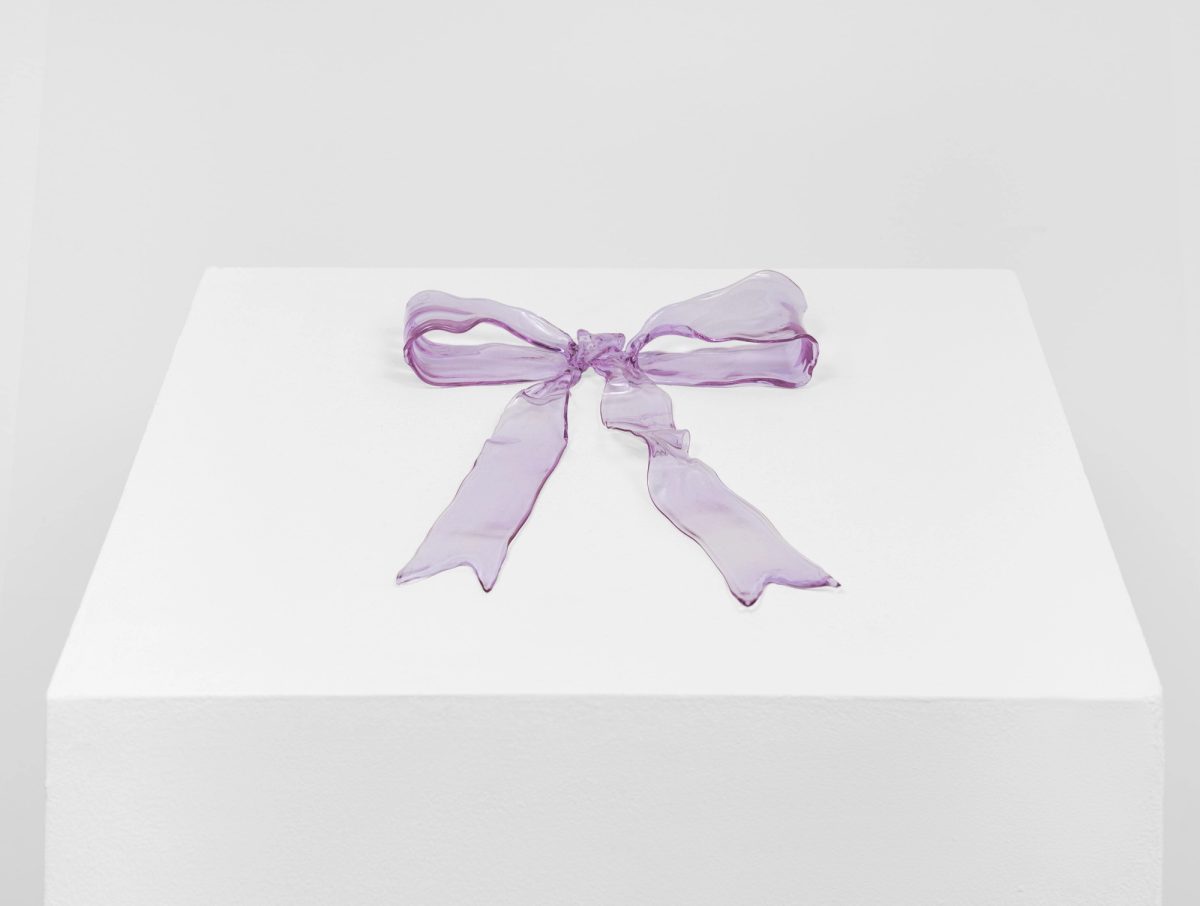
You often return to the bow, a knot, a loop, a form that ties and unties. What is a bow to you: ornament, script, refusal, spell?
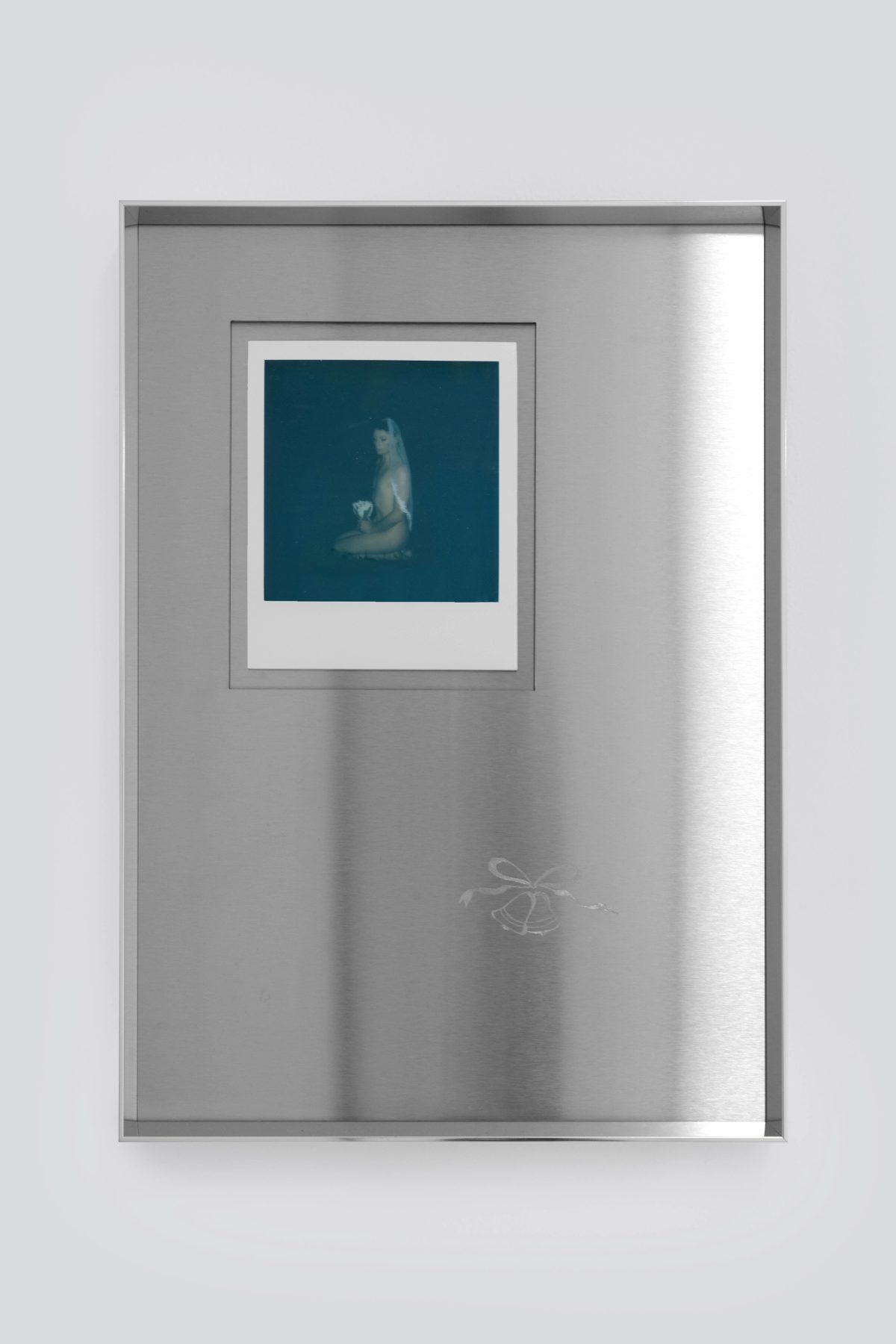
The most beautiful thing about the bow is its freedom in doing and undoing, in the sense that it’s such a transformational motif. A ribbon into a bow into a knot into a ribbon. There’s something sort of infinite about it, and I love that. I think over the years I’ve had some difficulty with it and the way it was sort of digested in the online zeitgeist to become this online symbol, when really it exists historically in such a great esoteric way.
"Permanence isn’t an absolute state; it relies on a degree of maintenance and belief and, even then, is easily compromised."
Repetition appears throughout your work, repeated utensils, repeated bow forms, iterative studies in glass. What does doing something “again” allow you to see that the first attempt hides?
I’m beginning to understand that there’s a number of codes that I like to work to. I think it’s natural to repeat yourself when you’re trying to work honestly. We are living in a time when the demand for something new is so strong. I refute the idea that to always be growing you need to change. You can grow a lot by staying the same, too.
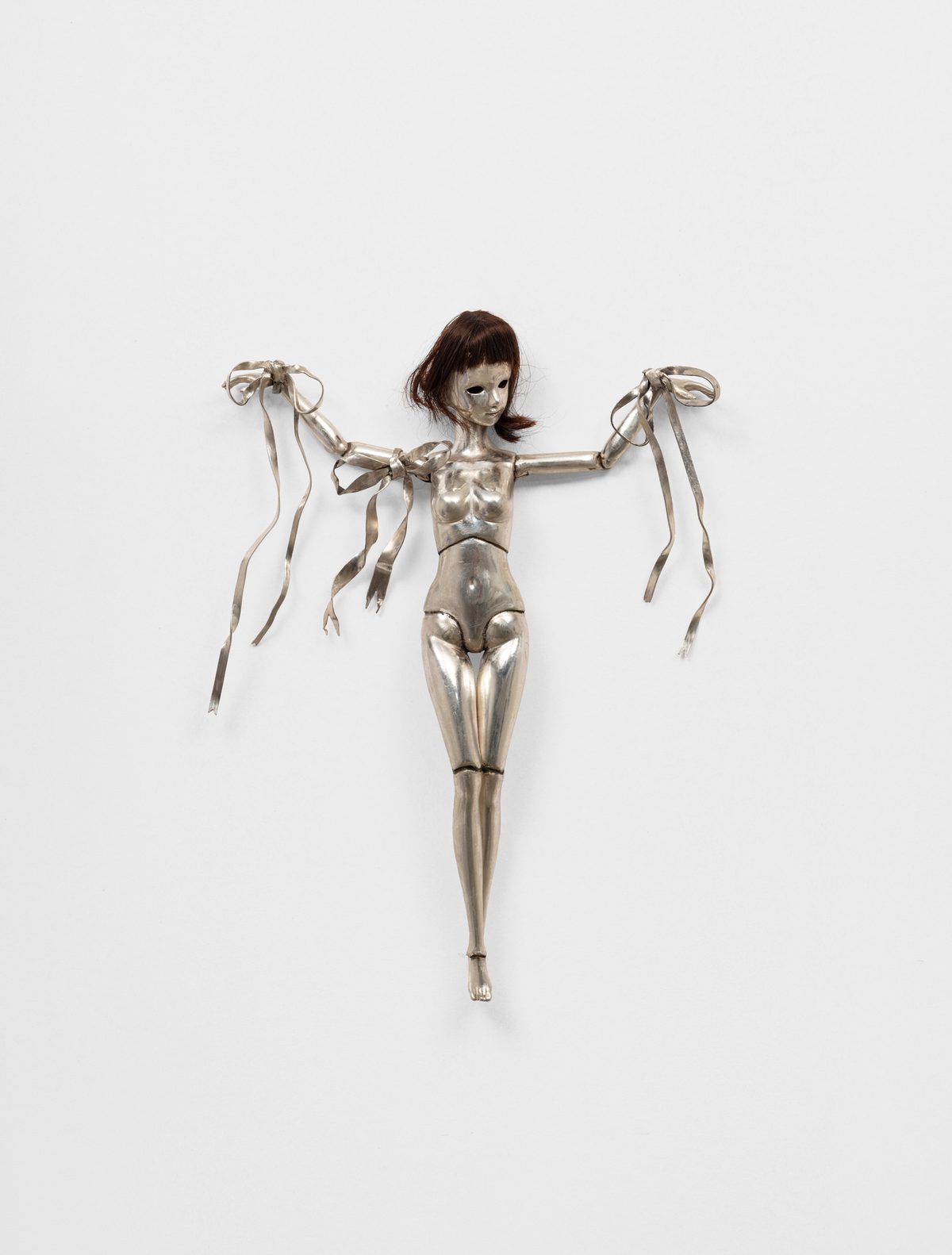
Your silver “dolls” and articulated utensils animate domestic objects into characters or spirits. Do these figures belong to a larger imaginary world? Or do you see them as extensions of the objects they’re built from?
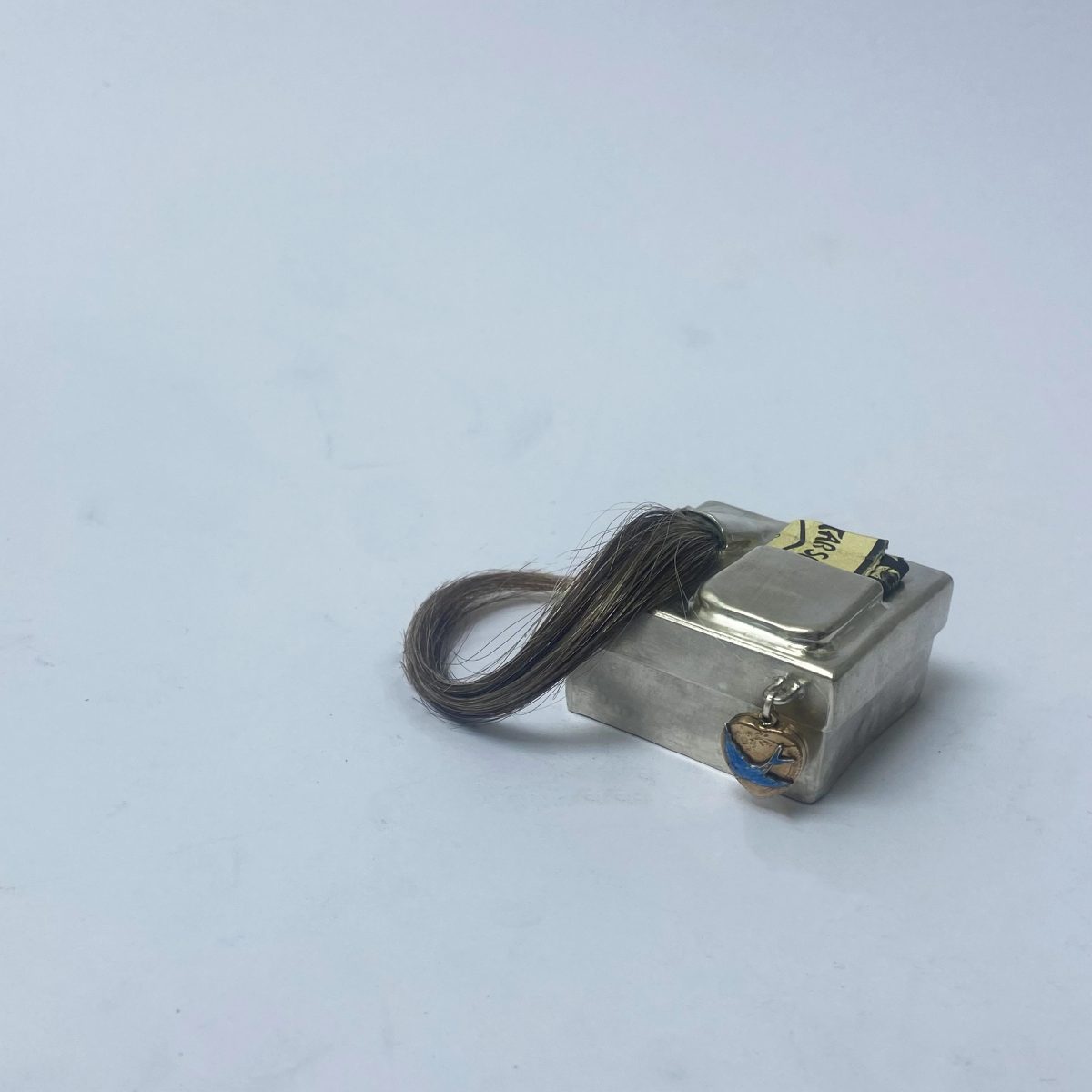
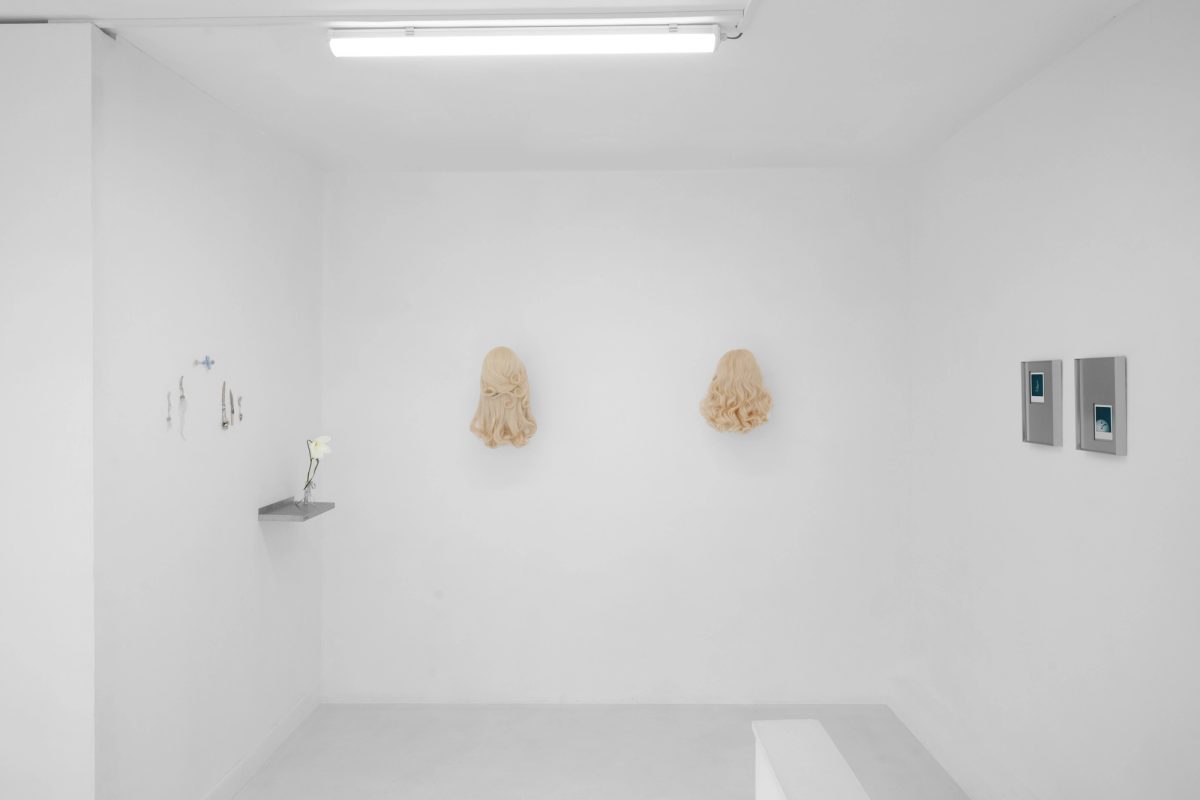
I think both these things are true. A lot of what I’m trying to do is exploration through the transformation and recontextualization of objects. I do harbour some belief that objects carry spirit, whether it be personally attributed or imbued, I don’t know. I mean, if everyone believes a fork is for eating with, that has to mean something. A fork is only a fork because our idea of a fork is that its aesthetic function is tied to our need to eat. It’s interesting exploring what else a fork might be, or what else a fork might mean, or how else we might think about the tools we need to sustain our lives.
Your practice drifts across jewellery, sculpture, object-making, and installation. How do you think about the role of scale in your work , the shift from something worn to something inhabitable?
I tend to try not to think about this. Scale is an interesting word because, as a noun, it can suggest a system of measuring or grading something, which is something I really try to avoid. There are parts of my practice I enjoy more than others, but I think every aspect of it is equally valuable to me. In terms of scale in relation to the size of works and the ways in which they can be handled, this isn’t something I tend to let dictate how I work. I naturally consider function where necessary and then make decisions that will lead to the best outcomes for the work.
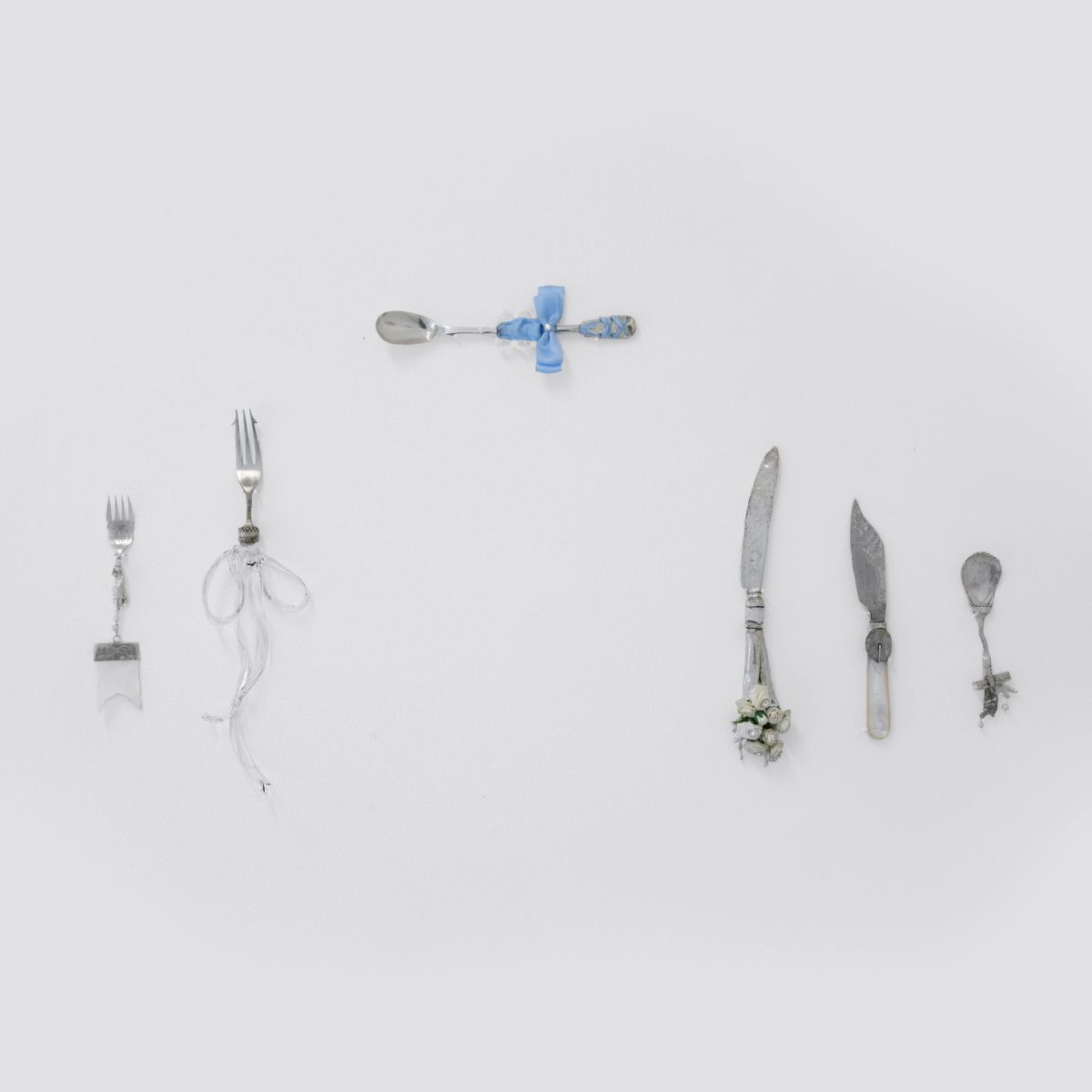
"A fork is only a fork because our idea of a fork is that its aesthetic function is tied to our need to eat."
Finally, what materials or directions are calling you next? Is there an object, a memory, ides, or a process you haven’t yet touched but feel drawn toward now?
I feel excited about dresses. I think I would like to make a dress this year, but we will have to wait and see.