HIGHER SELF: IN CONVERSATION WITH FEYZA BERCA
CONVERSATION BY SELIN KIR
CO-FOUNDER, CURATOR
29 SEPTEMBER 2025 — UNITED KINGDOM
Feyza Berca’s practice emerges from the orthopedic atelier where she grew up, a space thick with leather glue, plaster dust, and improvised machinery. Out of this terrain of fragments and repairs, she learned to see constraint as potential, and scraps as material charged with possibility. Her designs collapse armour into fragility, twist corsets into warped spines, and build heels that seem designed to splinter. Bodies in her work are not corrected but reconfigured, attentive to asymmetry, refusal, and the memory of braces once worn against the skin. The Higher Self series extends this logic: garments that move between intimacy and spectacle, carried from studio floors to BLACKPINK’s global stage. Feyza is part of a generation of designers whose practices are still in motion: expanding, mutating, and it feels urgent to watch where she goes next.

Let’s begin with space. Your work often emerges from your parents’ orthopedic atelier, a place of both healing and machinery. What does it mean to craft in that environment? Can you describe the textures, smells, or routines that shape your making there?
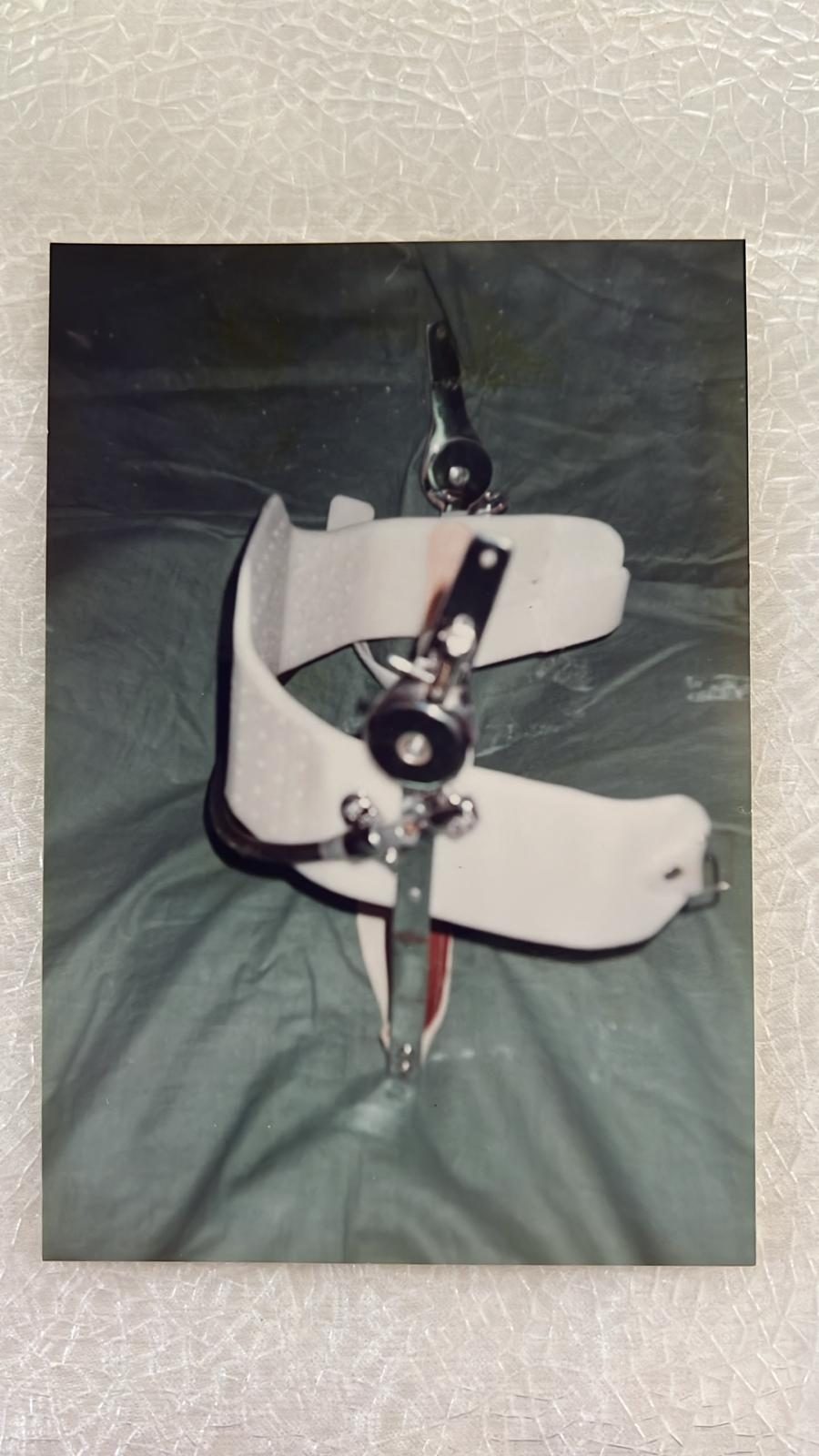
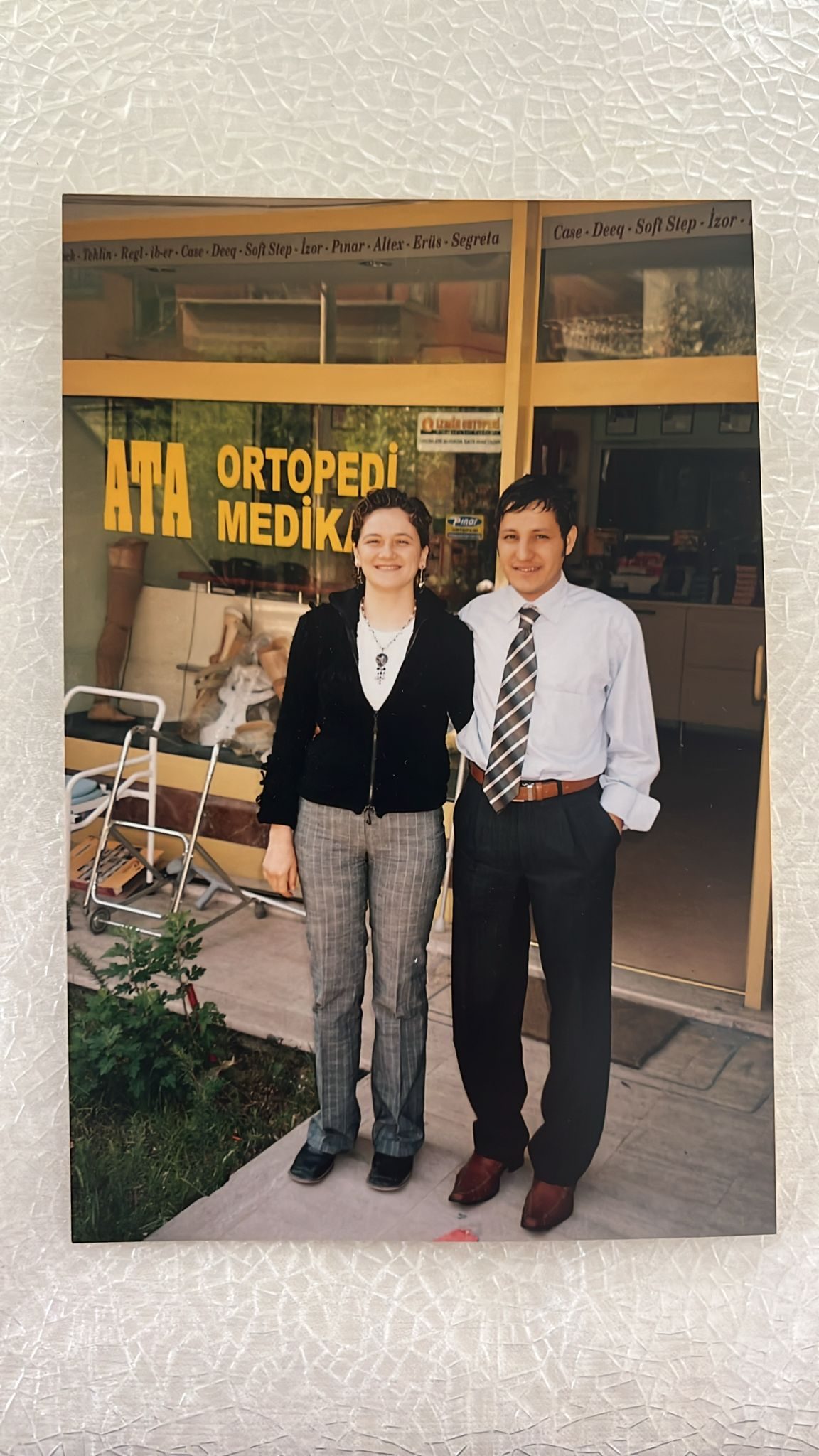
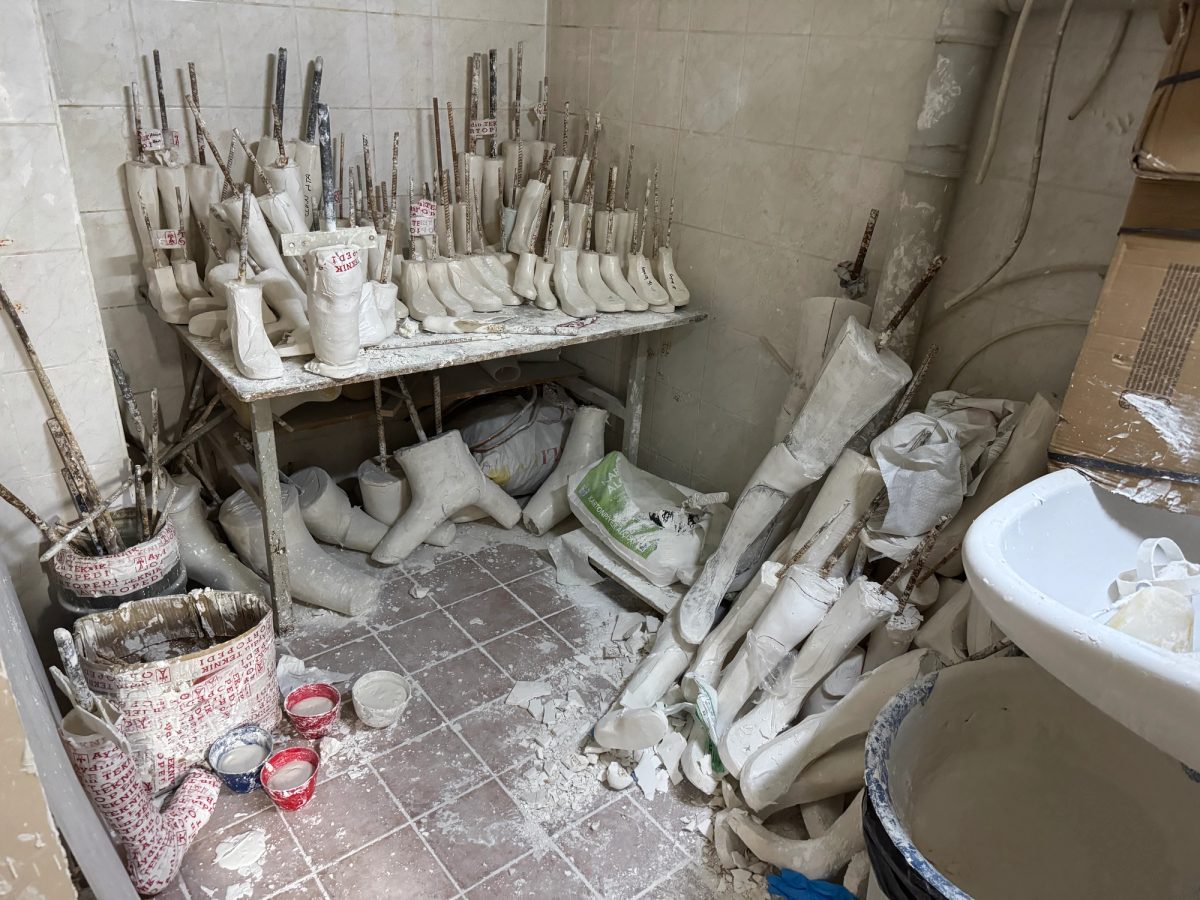
I basically grew up in that atelier. It’s a chaotic yet inspiring space. It’s not a clean or sterile environment at all, but that’s what makes it feel alive. It definitely smells like cigarettes and glue. I honestly think everyone is high on leather glue there. You’re surrounded by layers of texture: leather scraps, plaster dust, orthopedic molds, old machines, aluminum, tools that have been repurposed or made from scratch. I get a lot of my inspiration from the materials and the scraps that exist there. There are many eyelids, studs, buckles, and a lot of hardware that goes into making orthopedic stuff. Most of the storage units are DIY; everything is built out of necessity, and it shows. Being there taught me how to improvise and problem-solve through making. People are warm, but as a younger woman, you definitely run into mansplaining or get told, “That’s not possible.” I’ve learned how to push through those moments.

The ‘body’ in your work is sculpted, supported, restrained. How do you navigate the tension between function and vulnerability when working with orthopedic materials? Do you ever feel your pieces “correct” the body, or is it more about listening to its asymmetries?
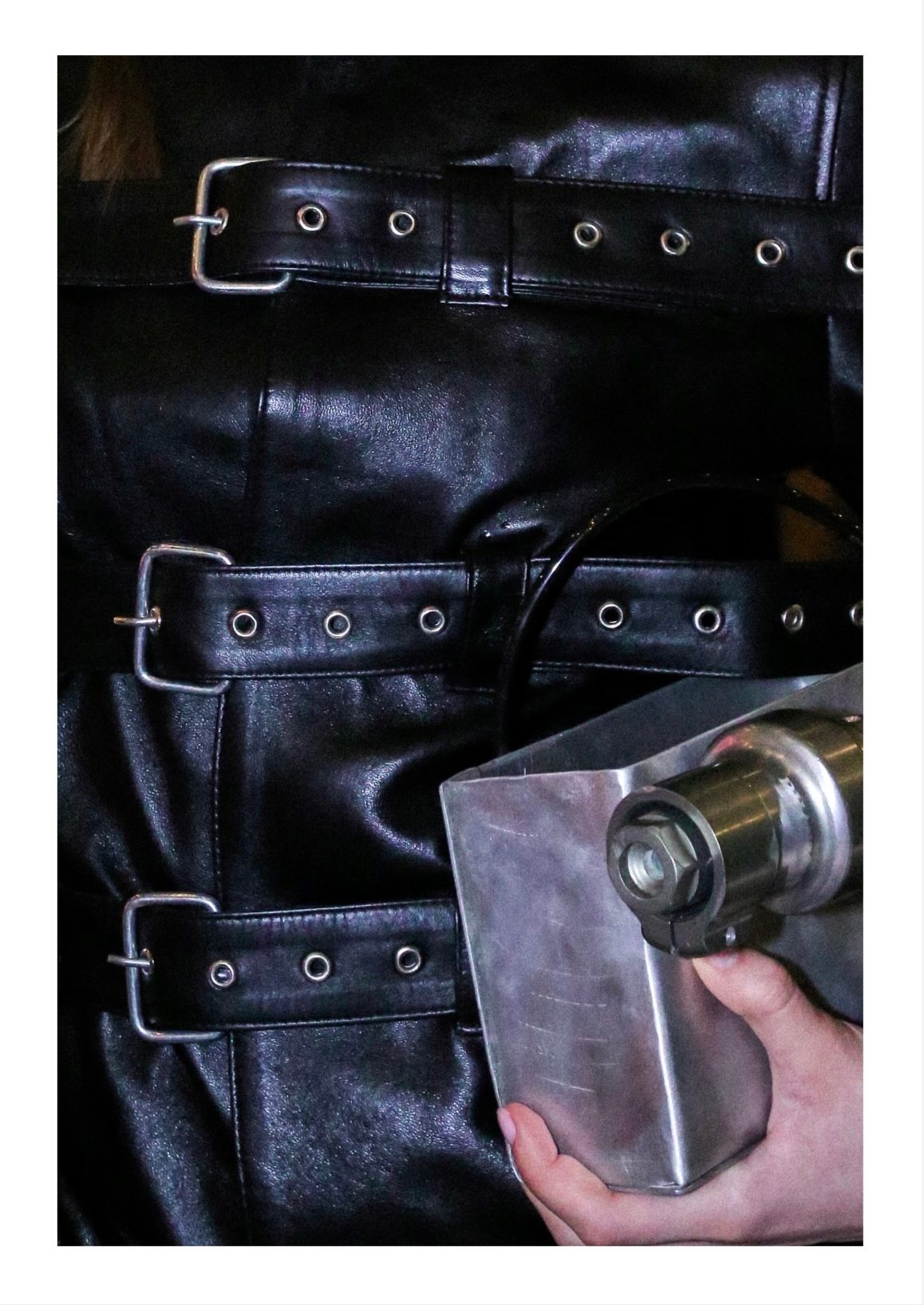
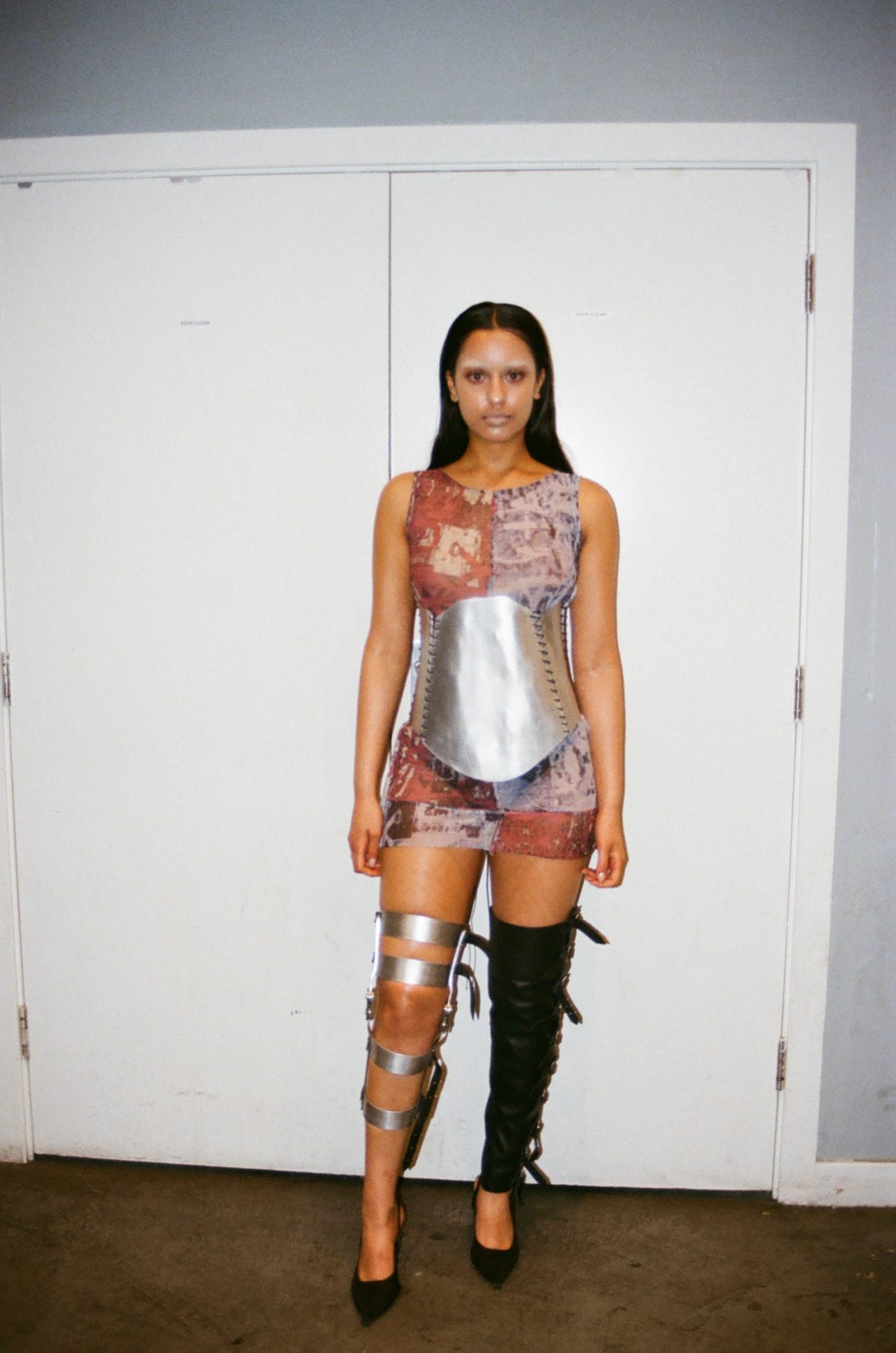
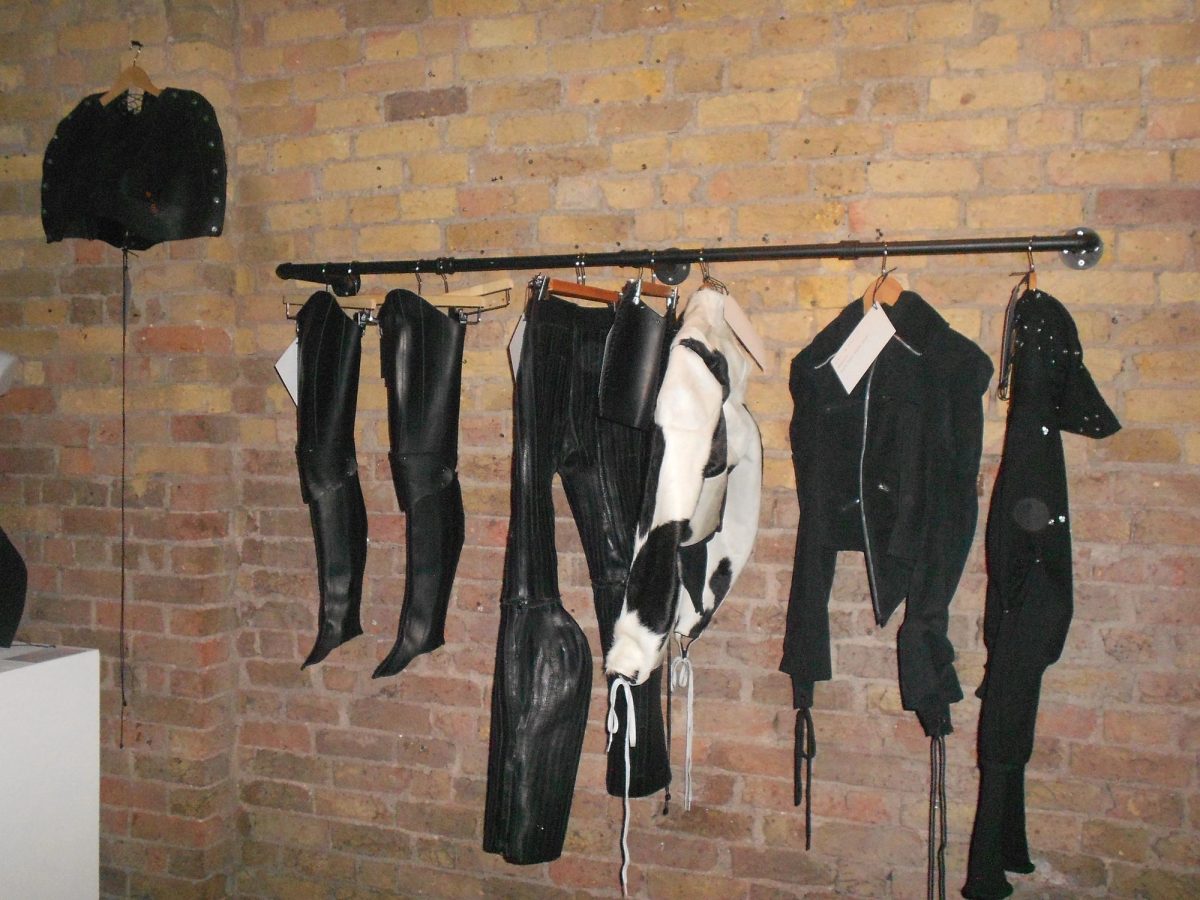
The body itself, especially the female body, is a big inspiration in my work, but I would say it’s all about juxtaposition. I like exploring the contrast between restriction and liberation. I’m obsessed with Frida Kahlo and her wardrobe, not just because of how it looks, but because of what it means. Her relationship to pain, the way she turned restriction into expression and resilience, really resonates with me. For example, I’ve made scoliosis corsets. I wouldn’t say they’re as functional as the original ones because of the material, even though I worked with professionals and used the exact same procedure. But they definitely shape how you stand; they made anyone with a straight spine stand a bit funny and crooked, intentionally. Over time, the molded leather stretches and shifts with sweat, and I let that be part of the piece. I’m not interested in correcting the body. I want to listen to it, work with it. I care about asymmetry, its beauty and vulnerabilityas someone who used to wear scoliosis braces
You’ve used materials like leather, bacterial cellulose, aluminum, even discarded orthopedic fragments. How do you approach material selection? Do materials ‘speak’ to you first, or is the conceptual frame already in place when you begin?
The conceptual frame is always there, but the design part always starts with the material. Especially with upcycled or experimental materials like bacterial cellulose, I don’t pre-plan. You don’t know how big it will grow or whether it’ll work at all, so I let the material lead. I respond to what’s there: its limitations, its texture, with leather, too... I usually have a palette or a reference in mind. For Higher Self Pt.2, I had Bosch’s Garden of Earthly Delights pinned to my wall the entire time. Every day it revealed something new: a shape, an uncomfortable tension, a colour palette. It definitely shaped the way I approached texture and layering in the collection.
“Letting something fall apart feels radical. What breaks often reveals something deeper underneath to expose, metaphorically and literally.”
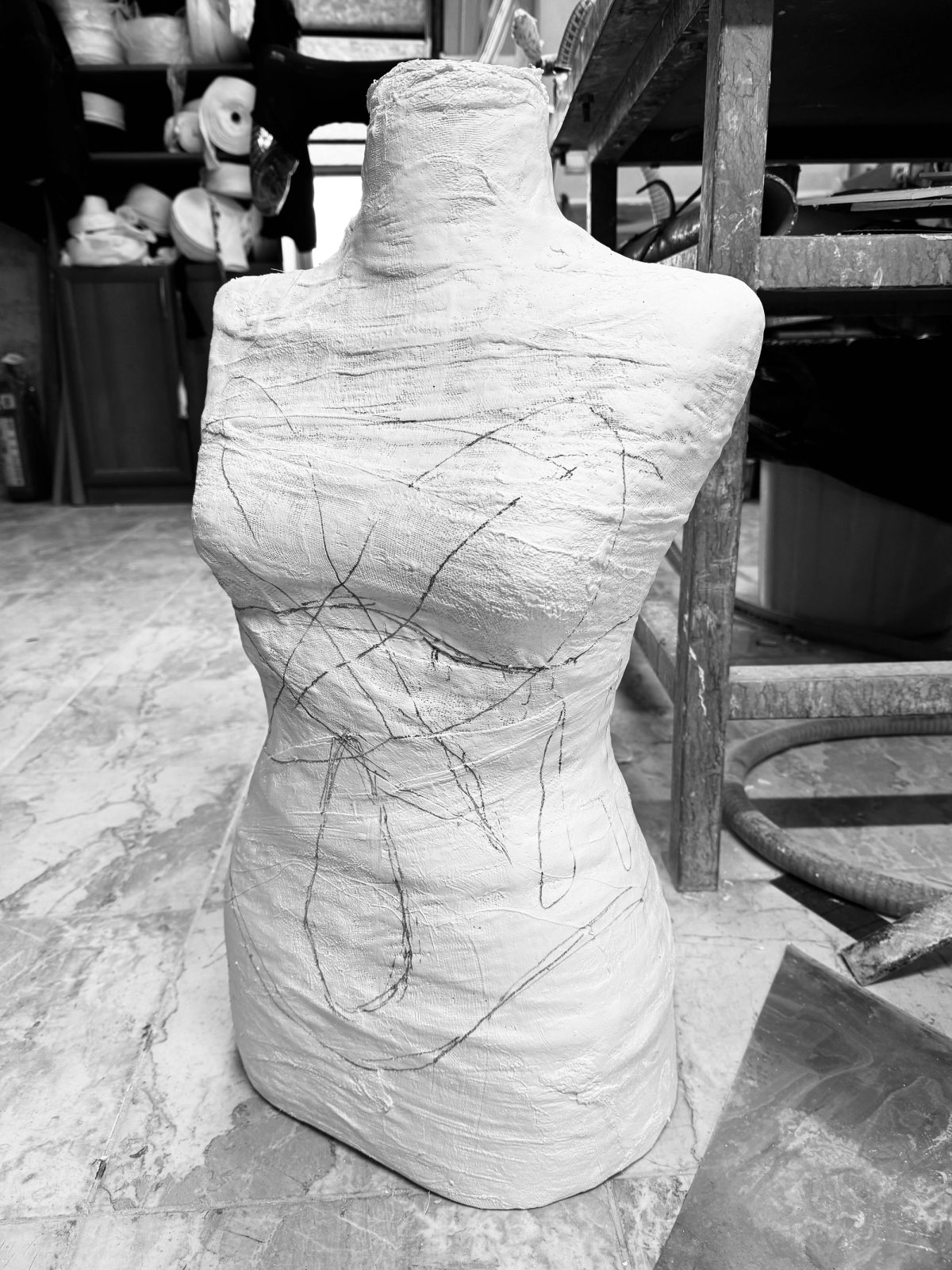
Your Higher Self series evokes armour, but it’s not about protection in the traditional sense. There’s a collapse, an exposure, a disobedience built into these structures. Can you tell us about the collection as a whole? Where it began, what it holds, and what it’s reaching toward?
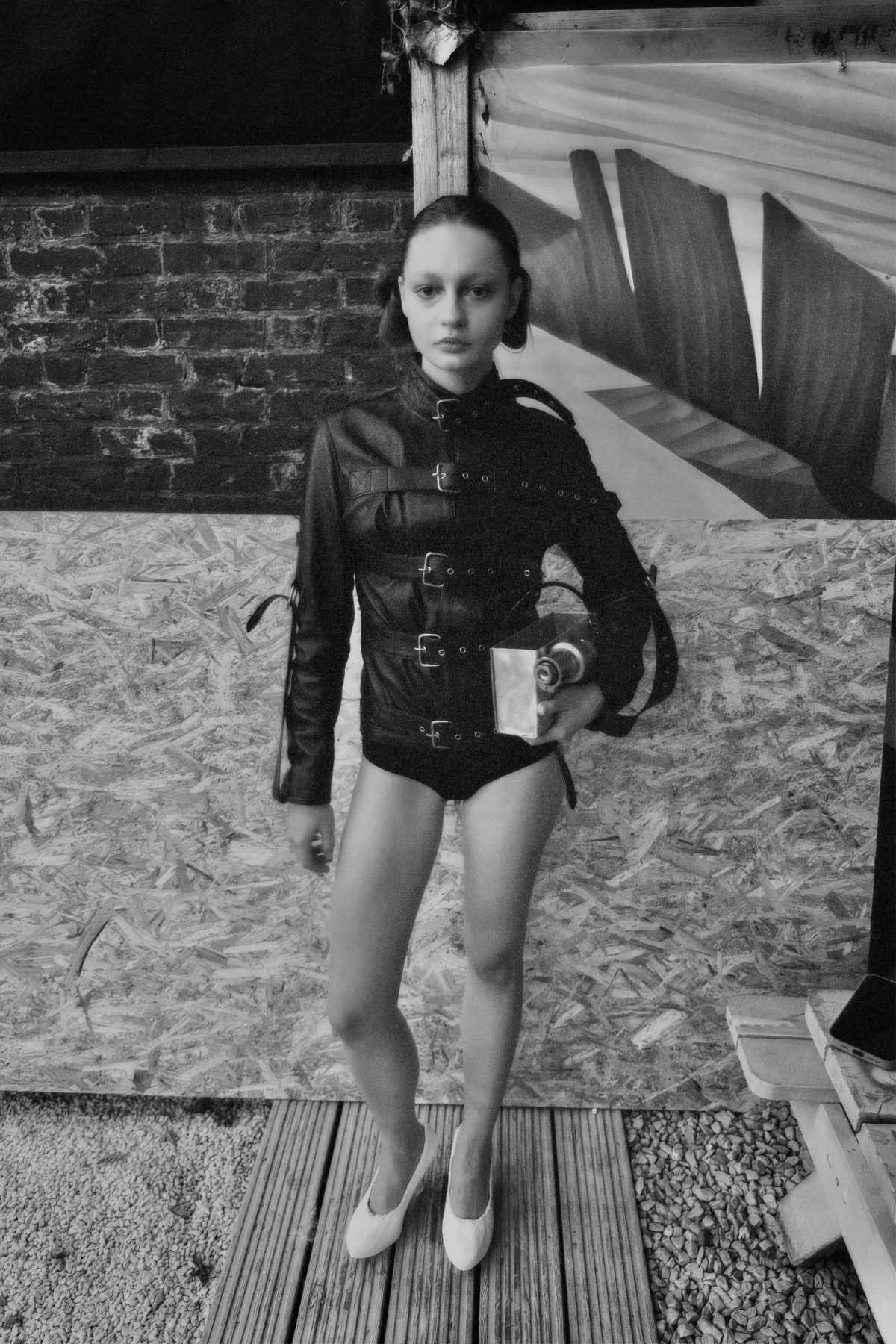
You explained it so well. I definitely wanted to create collapse, exposure, and disobedience. Higher Self is my postgraduate dissertation collection, and it brings together academic research on feminism, the supply chain in fashion, psychoanalysis, and surrealism, alongside personal experience and material experimentation. It started with me conducting a focus group with women textile workers in Turkey, because you can’t talk about feminism in fashion without actually addressing the position and struggles of women in the garment industry. It continued with me exploring surrealism’s position in feminist discourse, but it grew beyond that. I used materials like cast, leather, and aluminum, but also mesh, jersey, lace, chiffon, and biomaterials. As I said, I like a little contrast in order to create a conversation or social commentary in my personal life as well. Some garments definitely feel like armor, but they’re collapsing. These pieces expose more than they protect. There’s a strong contrast between restrictive and stretchy materials to expose and disobey the system and its rules.
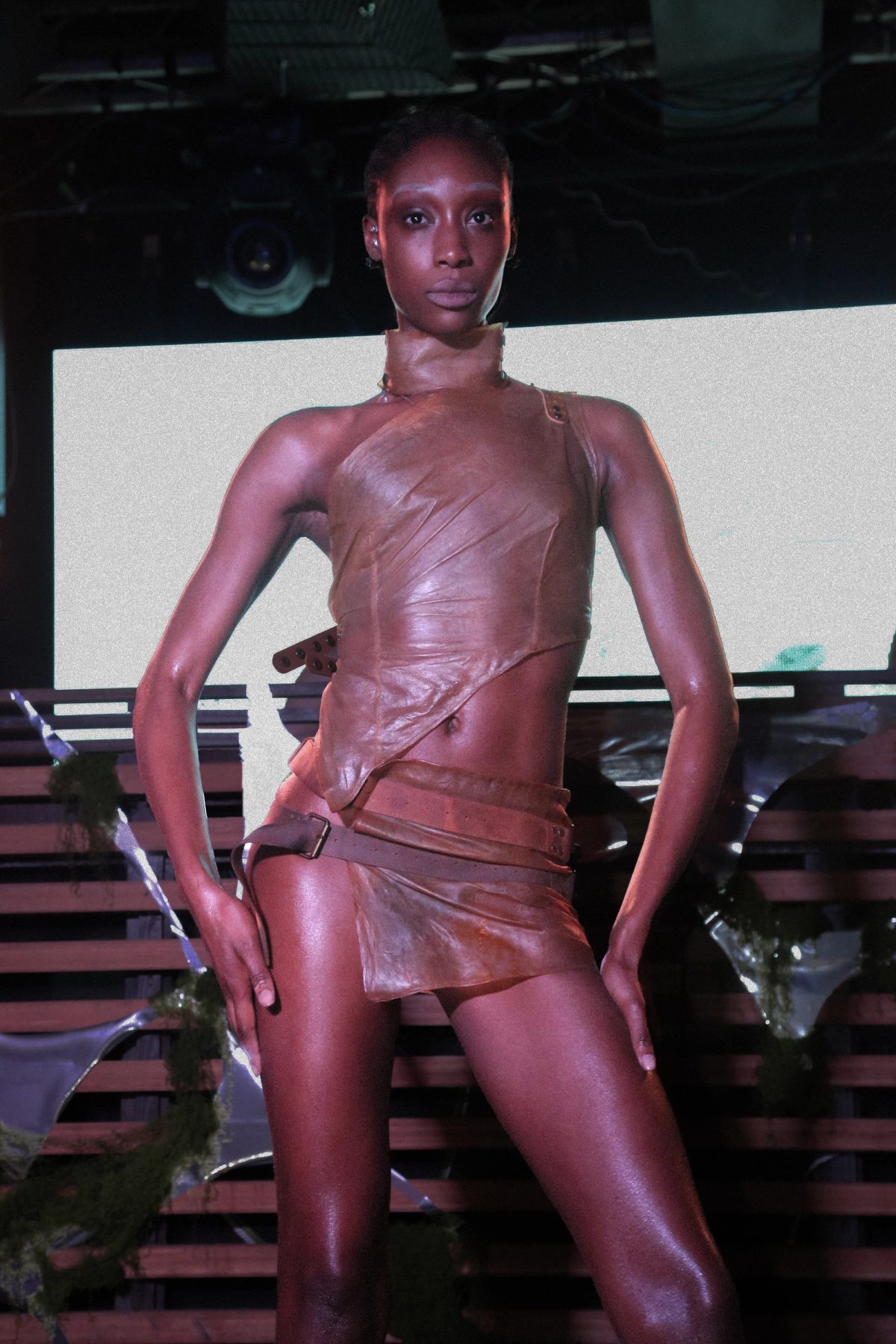
Many of your garments feel like relics from a speculative body, part sci-fi, part autobiographical. Does your work imagine future anatomies, or is it more about rendering invisible pasts visible again?
Definitely, but not speculative in a sci-fi sense. Even though I’m very interested in fantasy bodies and sci-fi, I’m not trying to invent a fantasy body. I’m trying to show what’s already here but often ignored or hidden. The garments feel like relics because they’re part of my story, but also part of a larger, shared experience of being shaped by systems as a woman from Turkey. As part of the process, I interviewed people who live with chronic pain, orthopedic conditions, or physical restriction. I got their permission to draw from those conversations and let their voices inform how I began shaping orthopedic-inspired, restrictive forms to honour and empower.
Can you tell us about your relationship to the tactile side of making? Do you build by hand, mold directly on the body, or plan through sketches and technical designs? What’s your relationship to precision?
About precision...I’m a bit of a perfectionist, but I’m working on it because it’s not helping my mental health. Considering the fact that I came to fashion a bit later, I’m an architecture major, and I think it shows a lot in my work.I usually don’t start with traditional pattern cutting. I mostly design through molding, draping, and building directly on the body. I always move between 2D and 3D. I drape, sculpt, return to sketches or digital work like CLO3D, and then go back to the body again. That back-and-forth is everything. In my postgraduate collection, that’s how I figured things out, not by planning perfectly, but by feeling through mistakes. It’s a loop. Even when I go digital, it’s still tactile in my head, I would say.
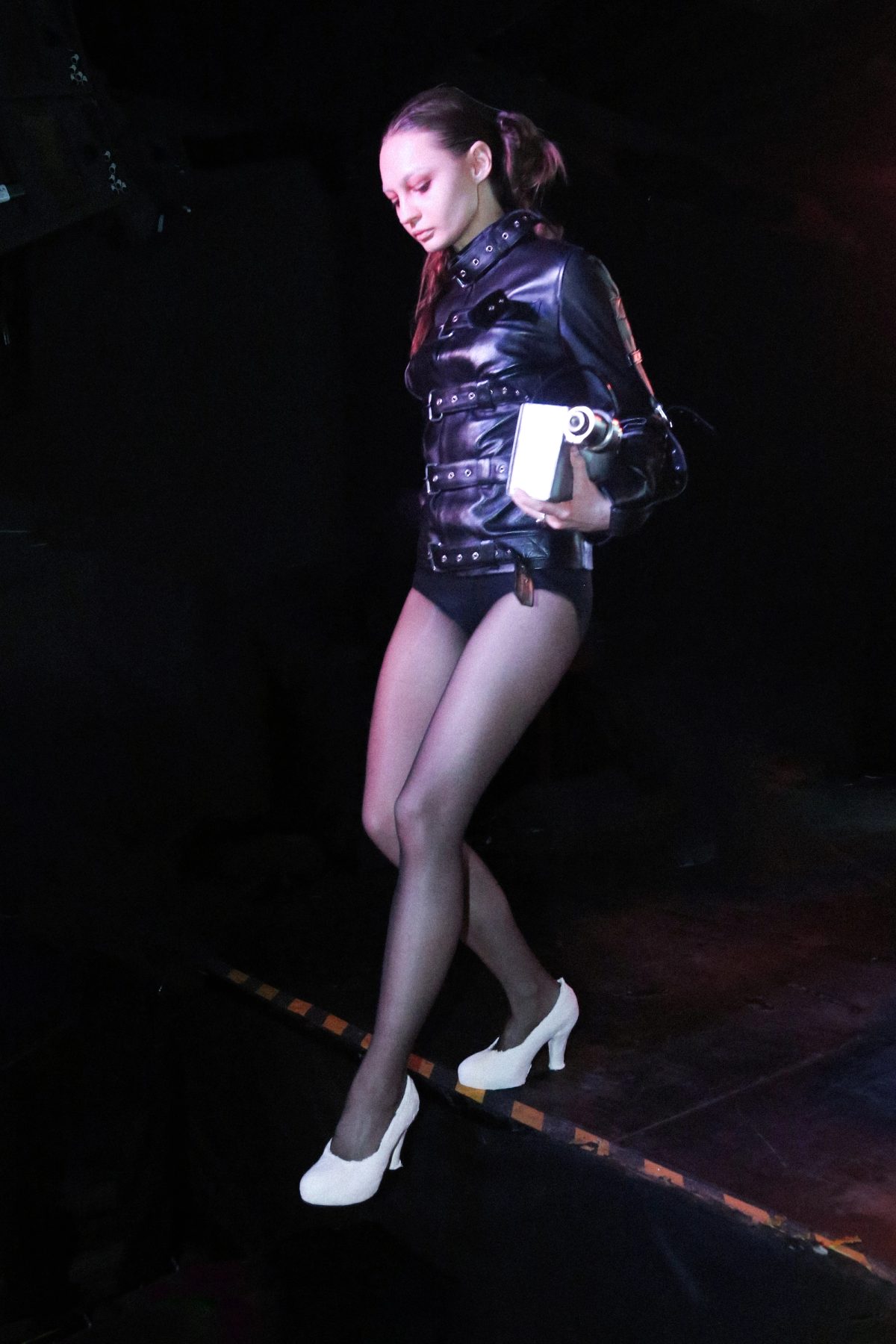
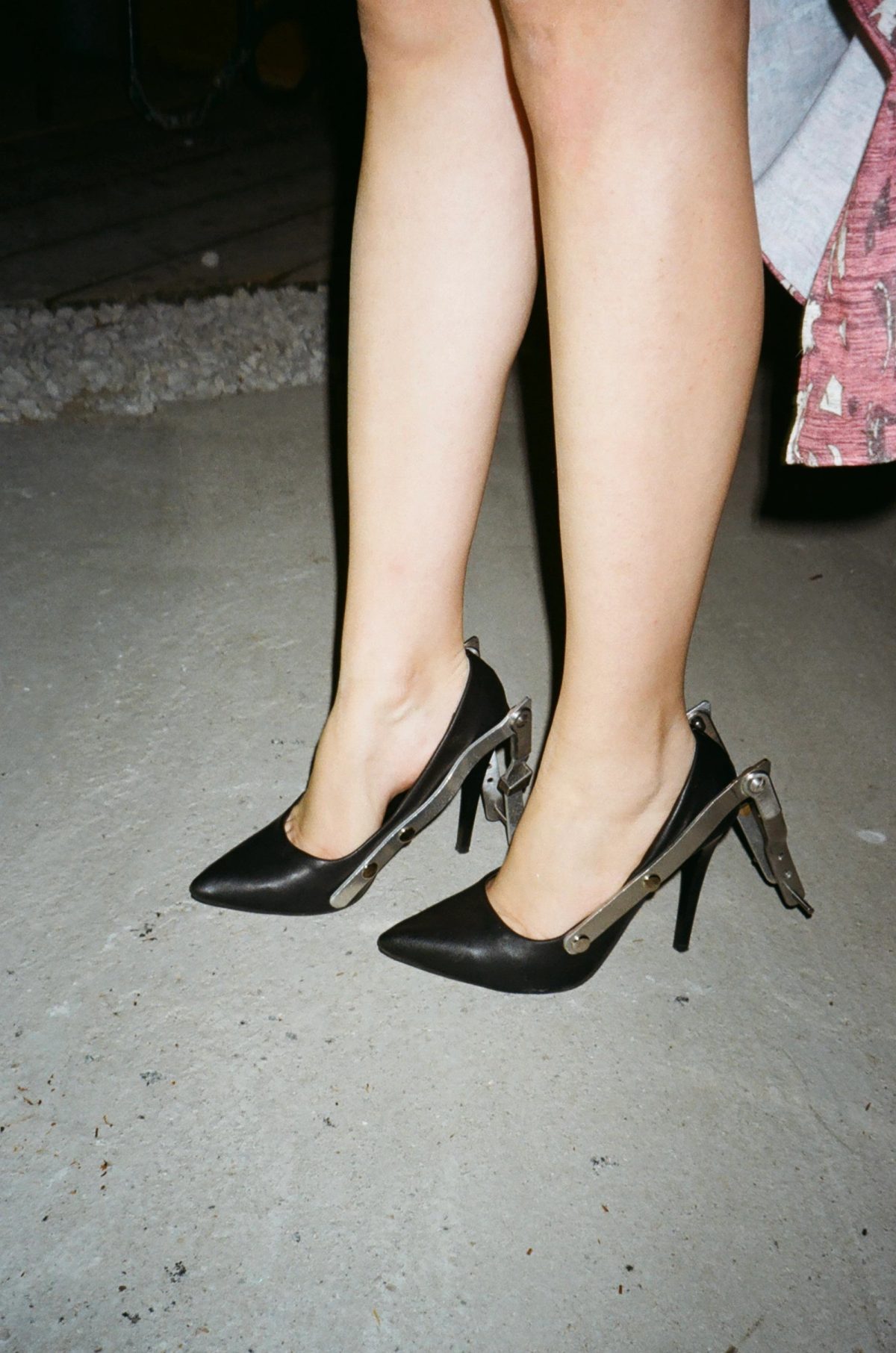
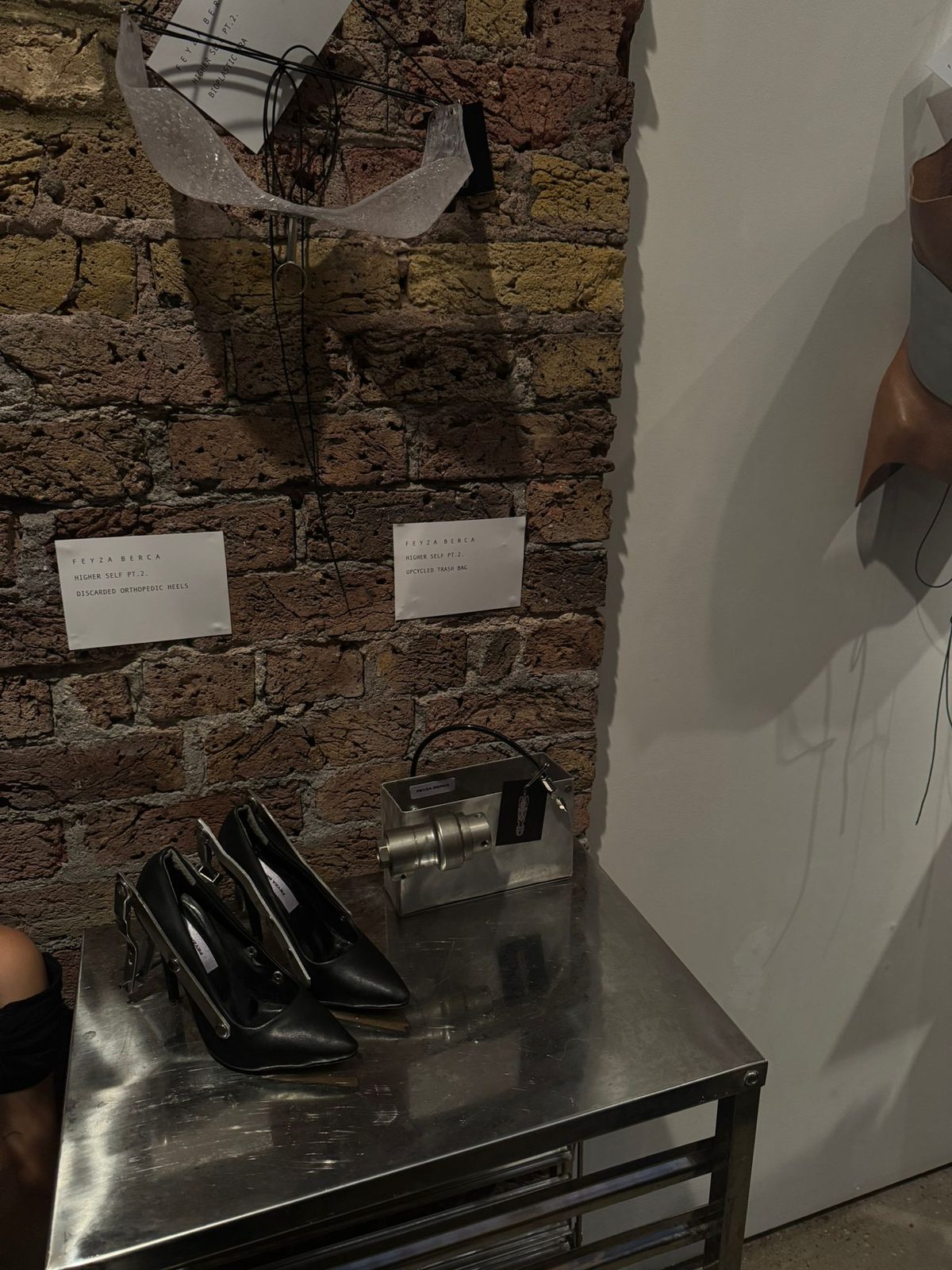
In Higher Self Pt.2, the buckled jacket and upcycled heels flirt with collapse. Can destruction be a method? What do you find generative in the act of undoing?
Destruction is definitely a method, as seen in all the greats in fashion. Upcycling is one of the ways to do it. The collapse in my work is very intentional. Even some of the garments, such as plaster heels, are built to break over time, the buckles, the upcycled heels. I use destruction as a method in a system that celebrates polish, overproduction, and overconsumption; letting something fall apart feels radical. I want to show where things come undone. Maybe a bit cringey, but it’s about finding the perfection in imperfection. What breaks often reveals something deeper underneath to expose, metaphorically and literally.
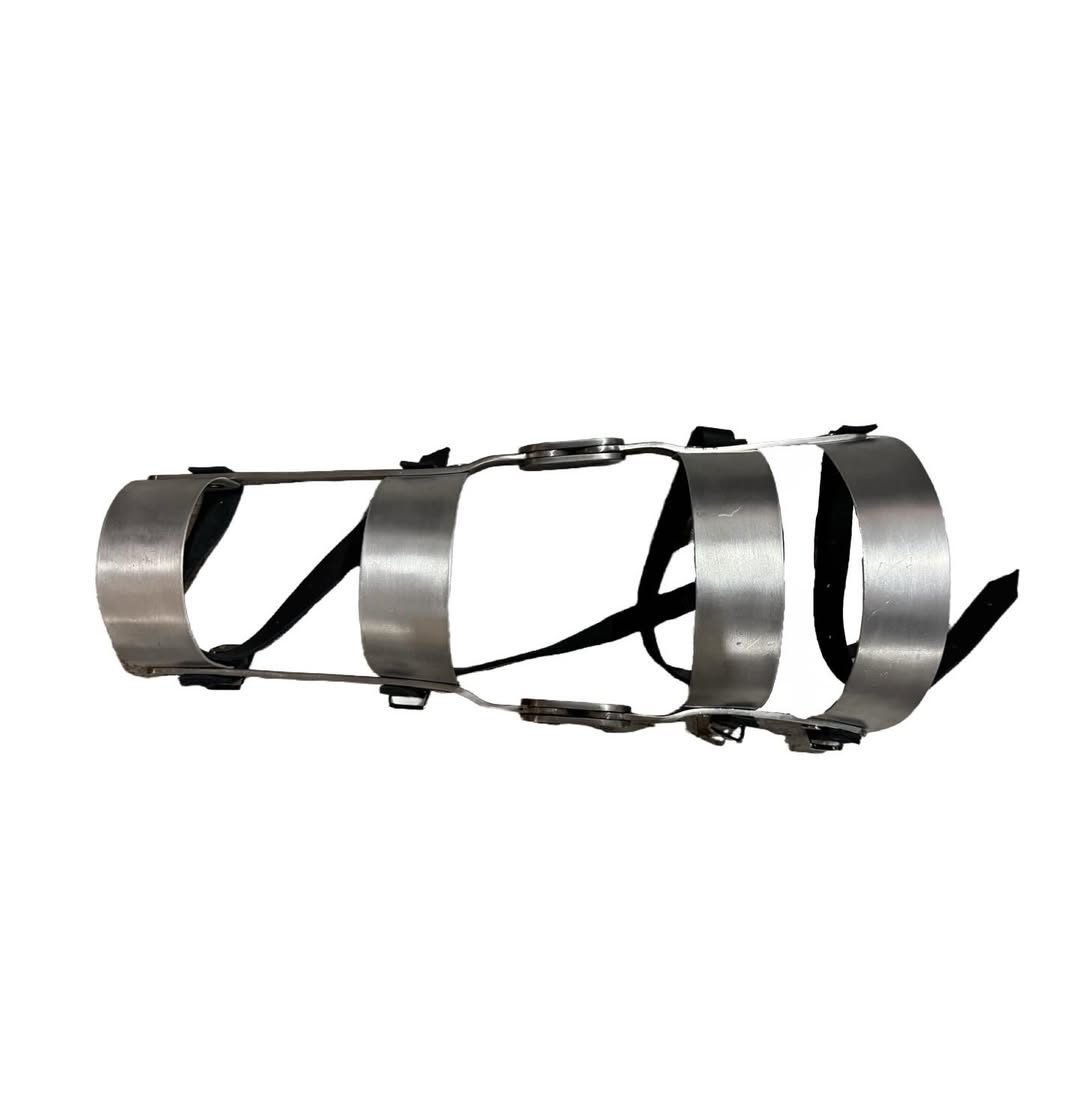
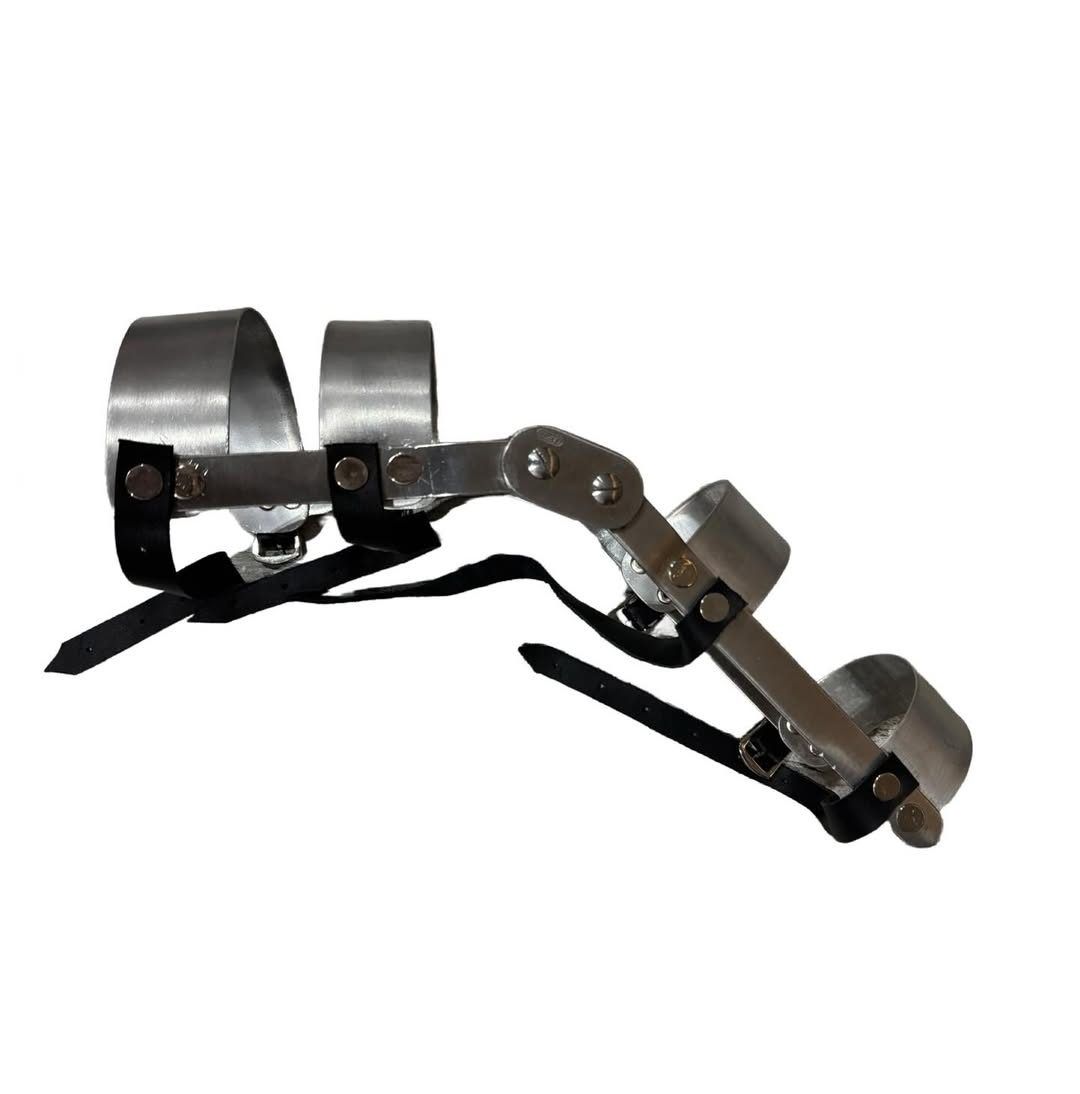
“Seeing Rosé wear the orthopedic leg brace I designed, especially as part of their comeback after three years, was surreal. It made me realize just how far these ideas can travel from my parents’ atelier in Denizli to the biggest pop stage in the world.”
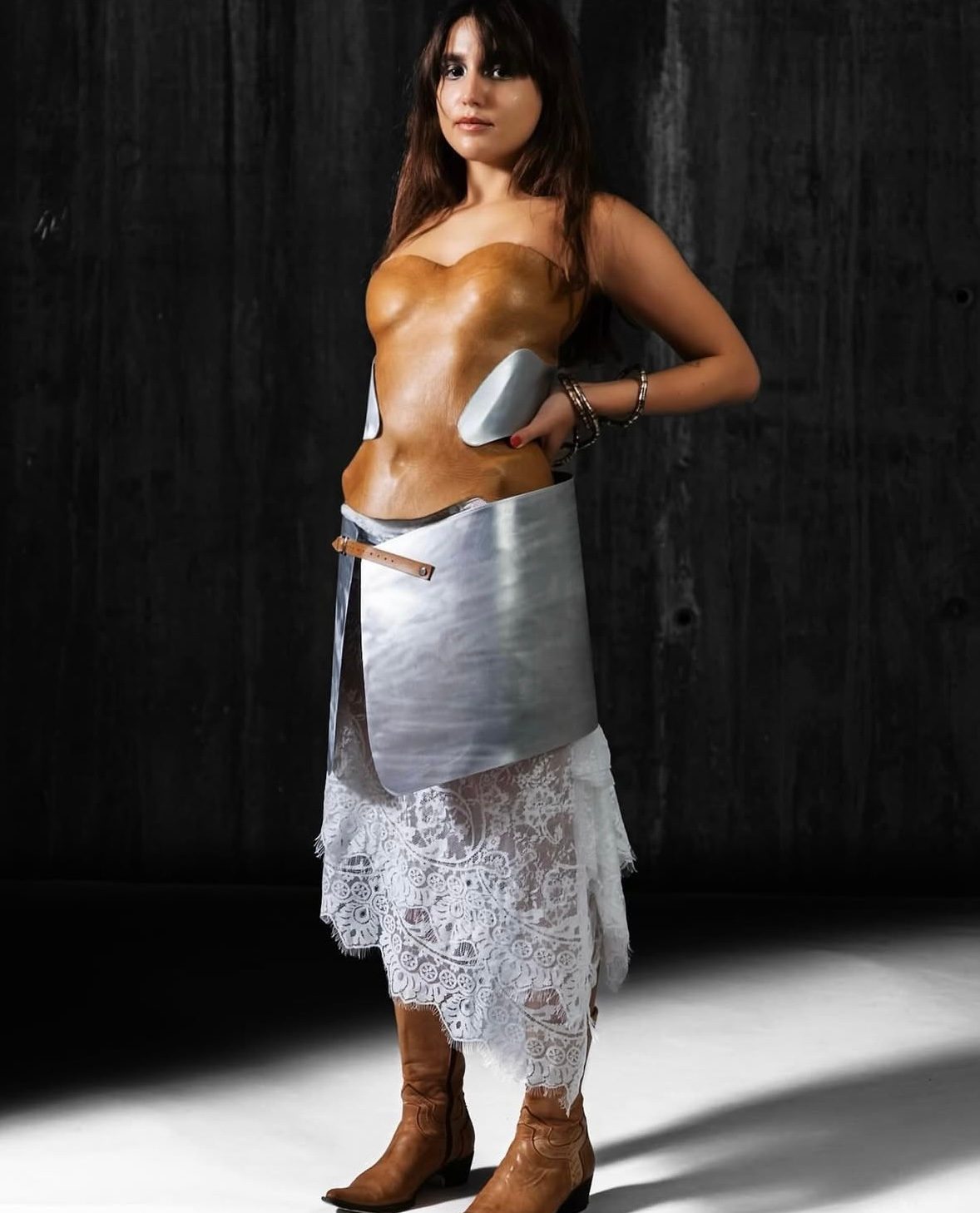
There’s a quiet radicality in the way you bring lived experience into your design, particularly your scoliosis journey. How do you balance the personal with the universal? Is there a point where the work stops being about you?
I think we are a generation that has a lot of shared memories and experiences since the growth of media. But when I design, it starts from me and my lived experiences, which I believe can become universal, not in a sense that’s egoistic, but more vulnerable. Because once you go deep into something personal, it starts to feel universal. I don’t try to make the work universal; I just want my people to feel seen, and isn’t that all we want? And I’ve had people tell me they relate, I do it for that exchange. Because when I was a kid, that’s how fashion made me feel. Then I went on to interview and also collaborate with people, which made the story and the work collective. I don’t believe in separating the personal from the political; most of our lifestyles are political. Especially now, with the way the world is and the growing racism.
Let’s talk about the BLACKPINK collab. Higher Self Pt.2 entered the world not just through fashion, but through movement, choreography, and the amplified lens of global pop culture. How did the collaboration come about? What did it mean for you to see your work embodied by BLACKPINK, to watch it worn, performed, multiplied across screens? Did that moment shift your relationship to the collection, or reveal something new about its reach?
Honestly, I still can’t believe it happened. I’m so, so thankful to HARD STYLE for everything, and I’m forever grateful they saw something in my work. With collaborations like this, you never really know what will make it through, so I didn’t expect the piece to actually be featured this much. This was my first big collaboration, and it’s been incredible. I’ve been a BLACKPINK fan since I was 16, since their very first album. My best friends and I used to meet up after school to learn all their choreos together, so this moment is beyond personal. Seeing Rosé wear the orthopedic leg brace I designed, especially as part of their comeback after three years, was surreal. Higher Self Pt.2 is rooted in memory, care, and bodily restriction; it’s about transforming personal history into armor, into performance. Watching that piece move on a global stage, multiplied across screens and fan edits, felt like the collection took on a new life. It made me realize just how far these ideas can travel, from my parents’ atelier in Denizli to the biggest pop stage in the world. It shifted something in me. It showed me that art, especially when it carries story and emotion, really can transcend its own context.
And finally, what’s next? Where is your practice pulling you now, materially, emotionally, or otherwise? What gestures are you drawn to following 'higher self'?
Higher Self is still continuing, but recently, after finishing my postgraduate, I’ve been taking time to travel, read, and reflect, doing some spiritual and inner work. For example, I was in Morocco recently. I’m becoming more interested in working slower and more experimentally. I want to try more with biomaterials; I’ve been growing some things back home. I’m thinking more about softness, not just as a texture but as a method. Slowness, decay, care, repair, those are ideas I want to work into next. Whatever it is, it’ll still be material-first, still be personal, but maybe even more collaborative. I want to keep making work that creates space, for healing and for conversation.
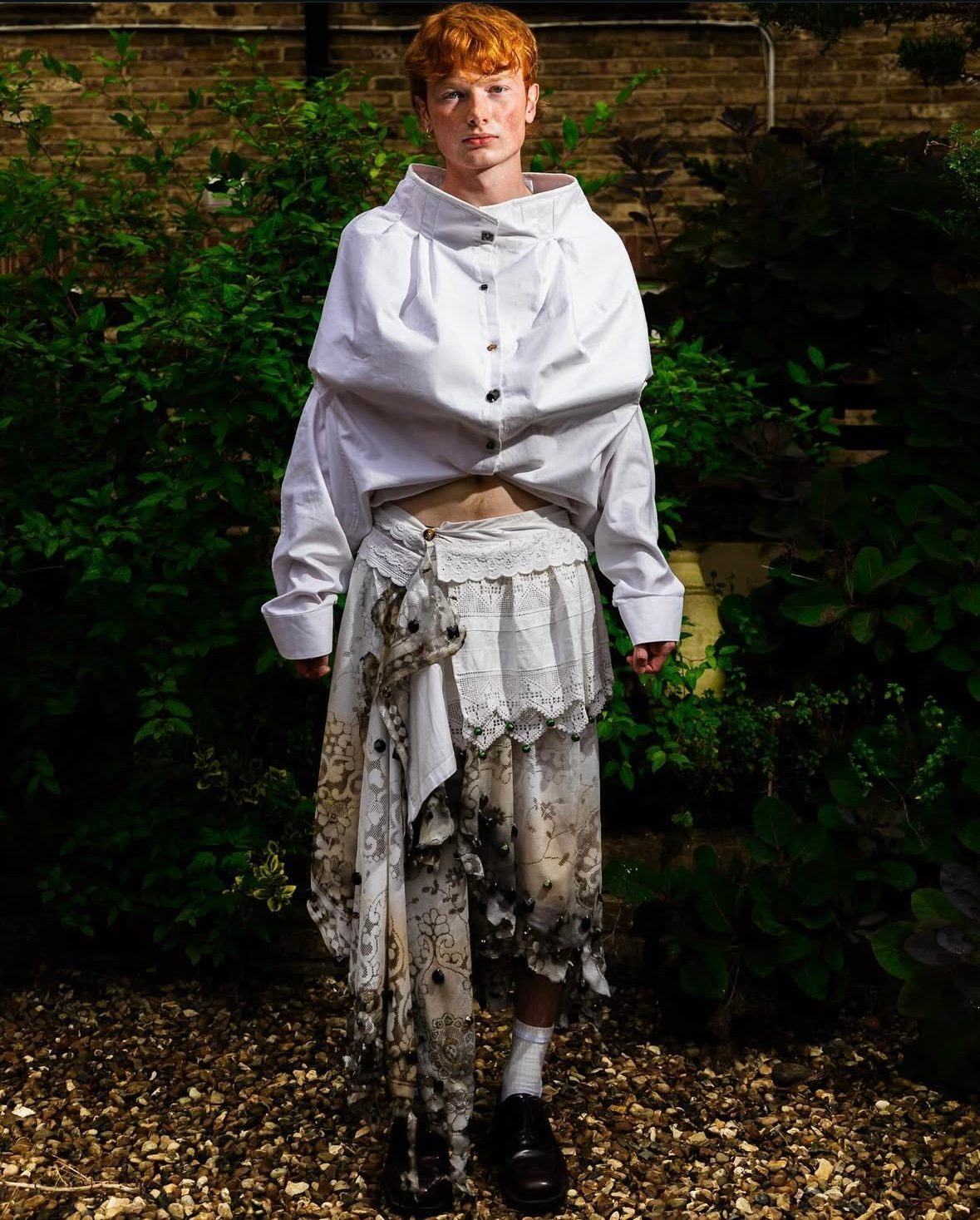
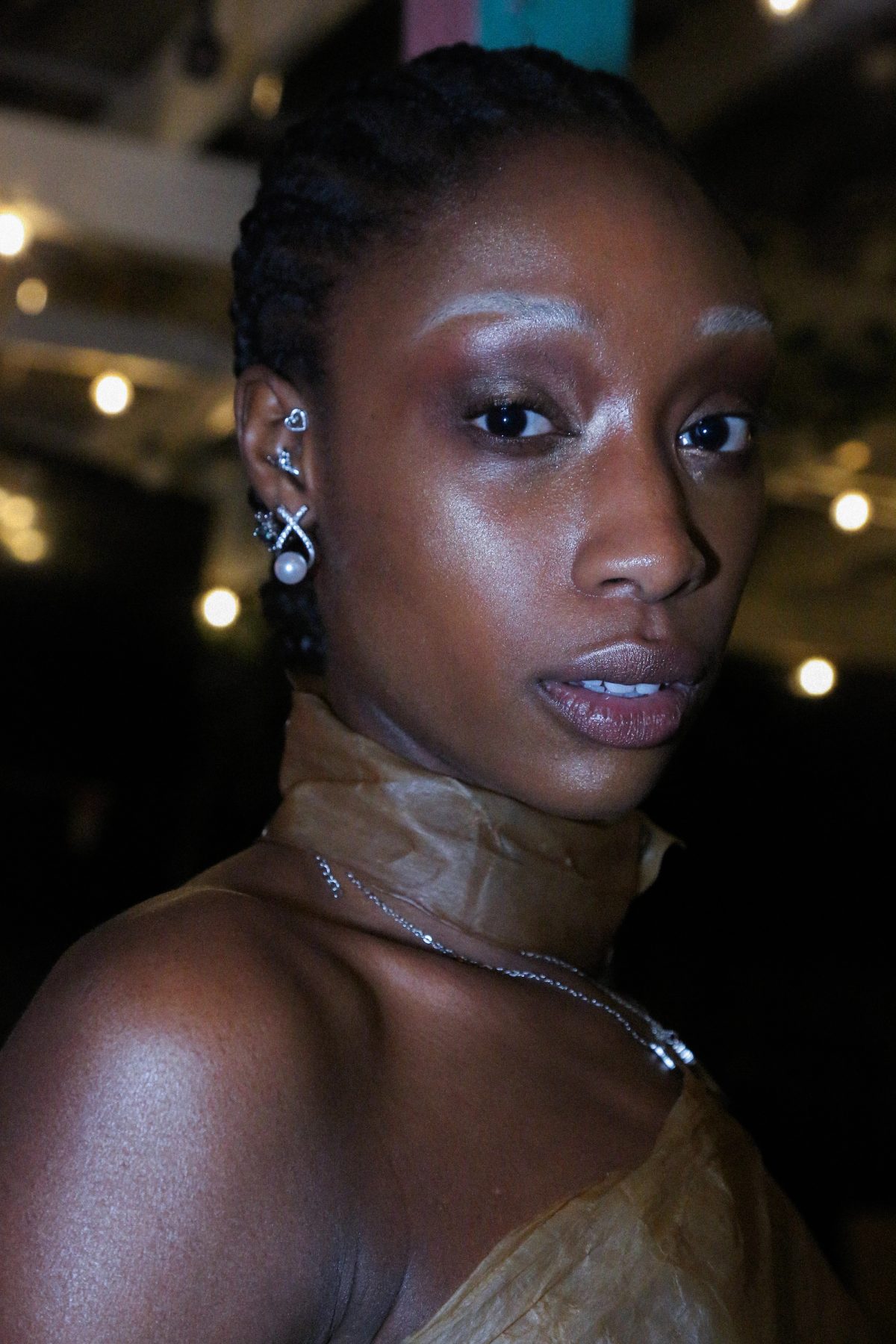
Expanding on the world introduced in Higher Self Pt.2, Feyza Berca turned research into collective experience with ECHOES, a collaborative showcase and series of live performances. Staged at East London’s Galleria Objets, the exhibition brought together designers, performers, and musicians in an environment that blurred the lines between disciplines.
Where the Higher Self collection does so through wearable sculpture, ECHOES repositions those same ideas in a communal setting. Rather than a static display, the showcase unfolds as a living archive of Feyza Berca’s practice merging clothing, performance, and music into an urgent, one-day-only ecosystem.
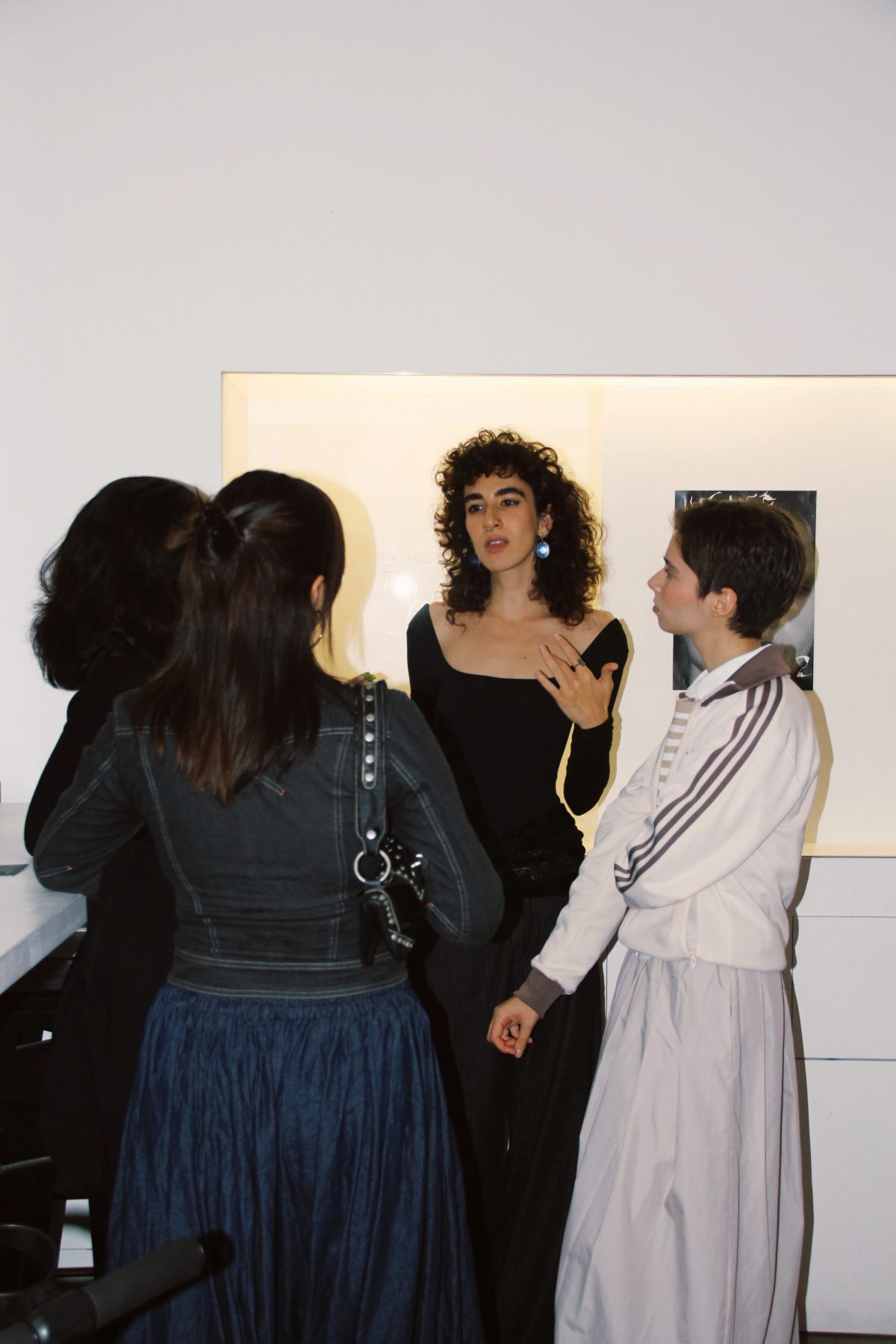
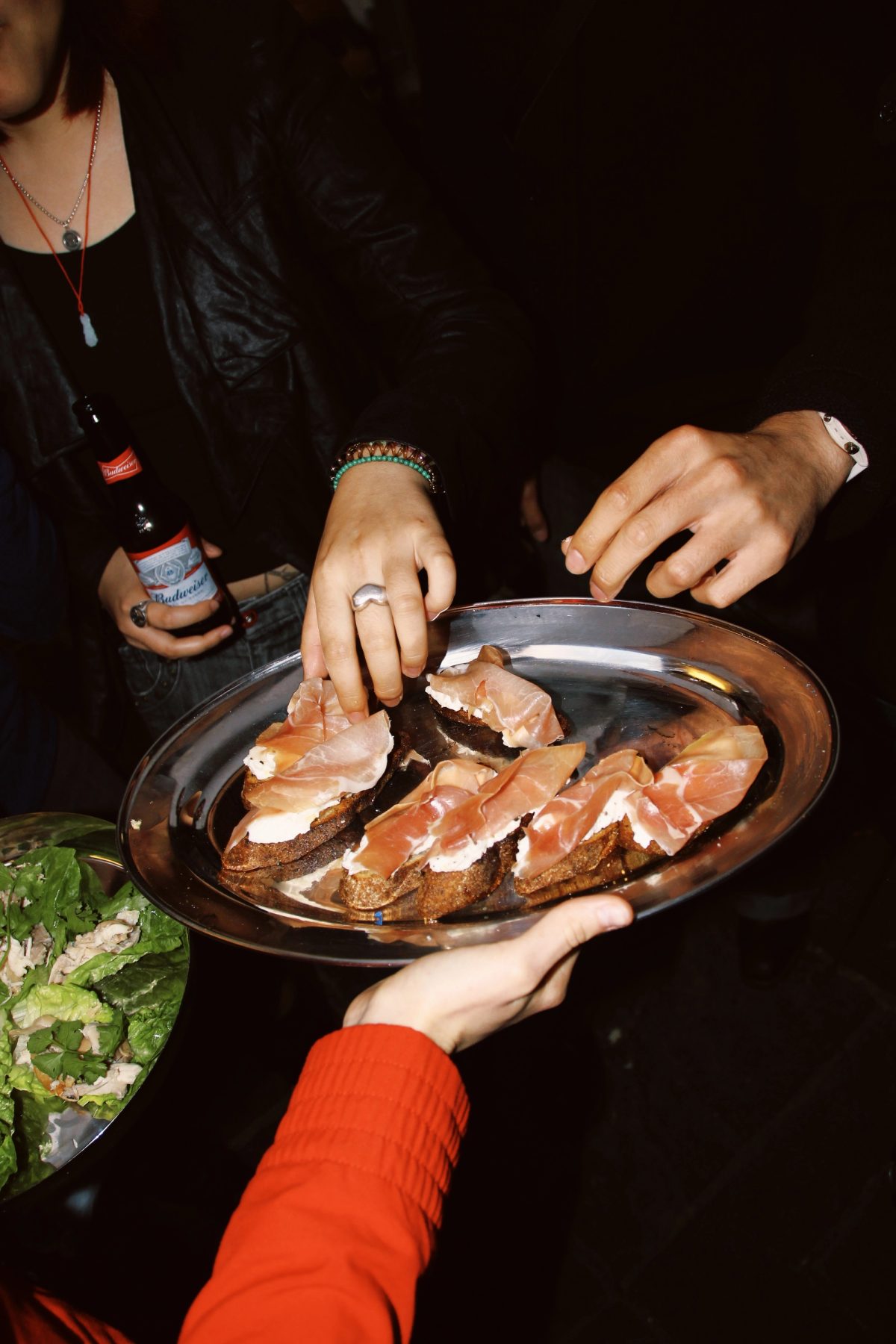
By inviting peers across disciplines, ECHOES extends the central questions of Higher Self. The evening features innovative fashion from designers HSIAH and Erika Kaija alongside Feyza Berca, with food and hospitality by TROS.
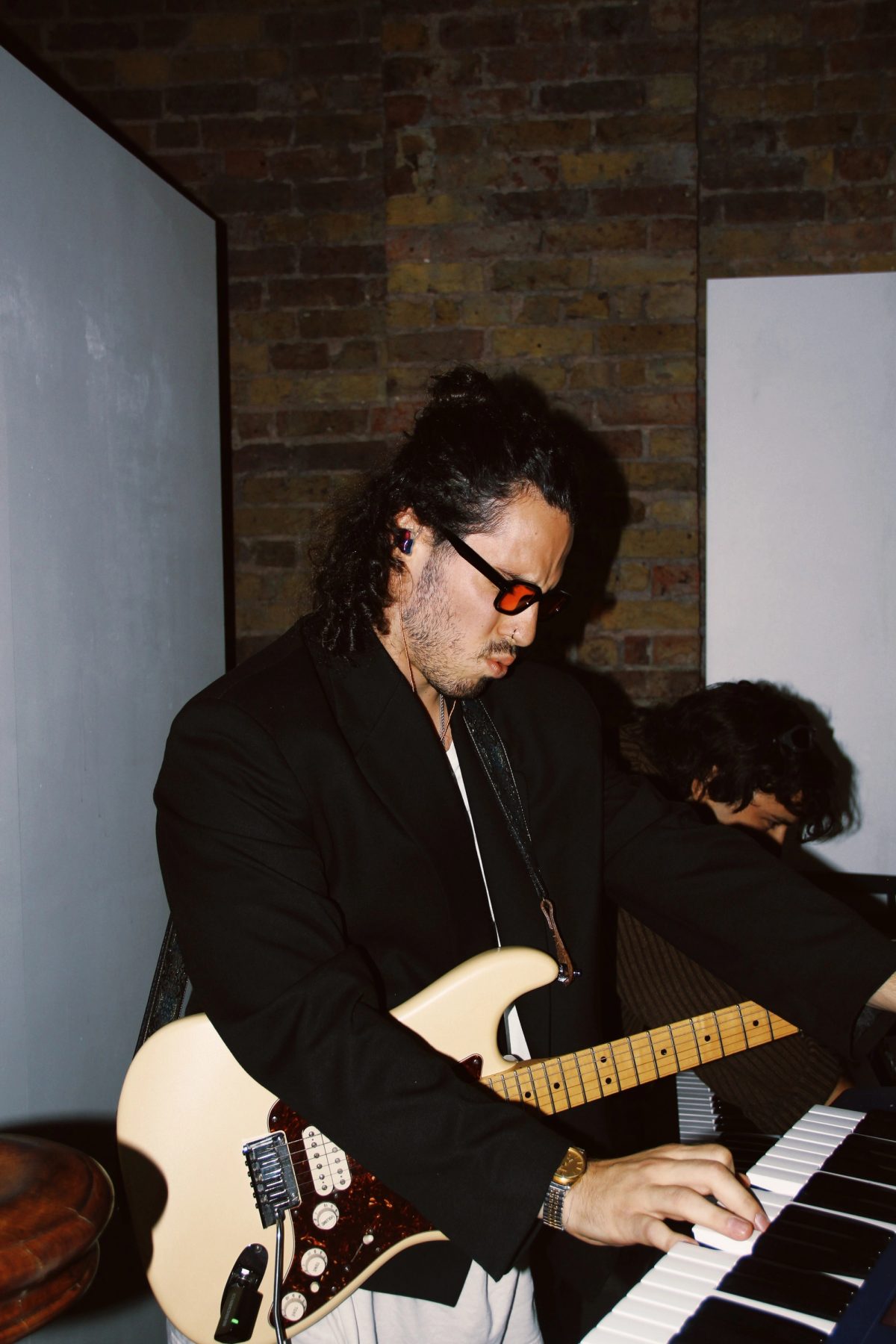
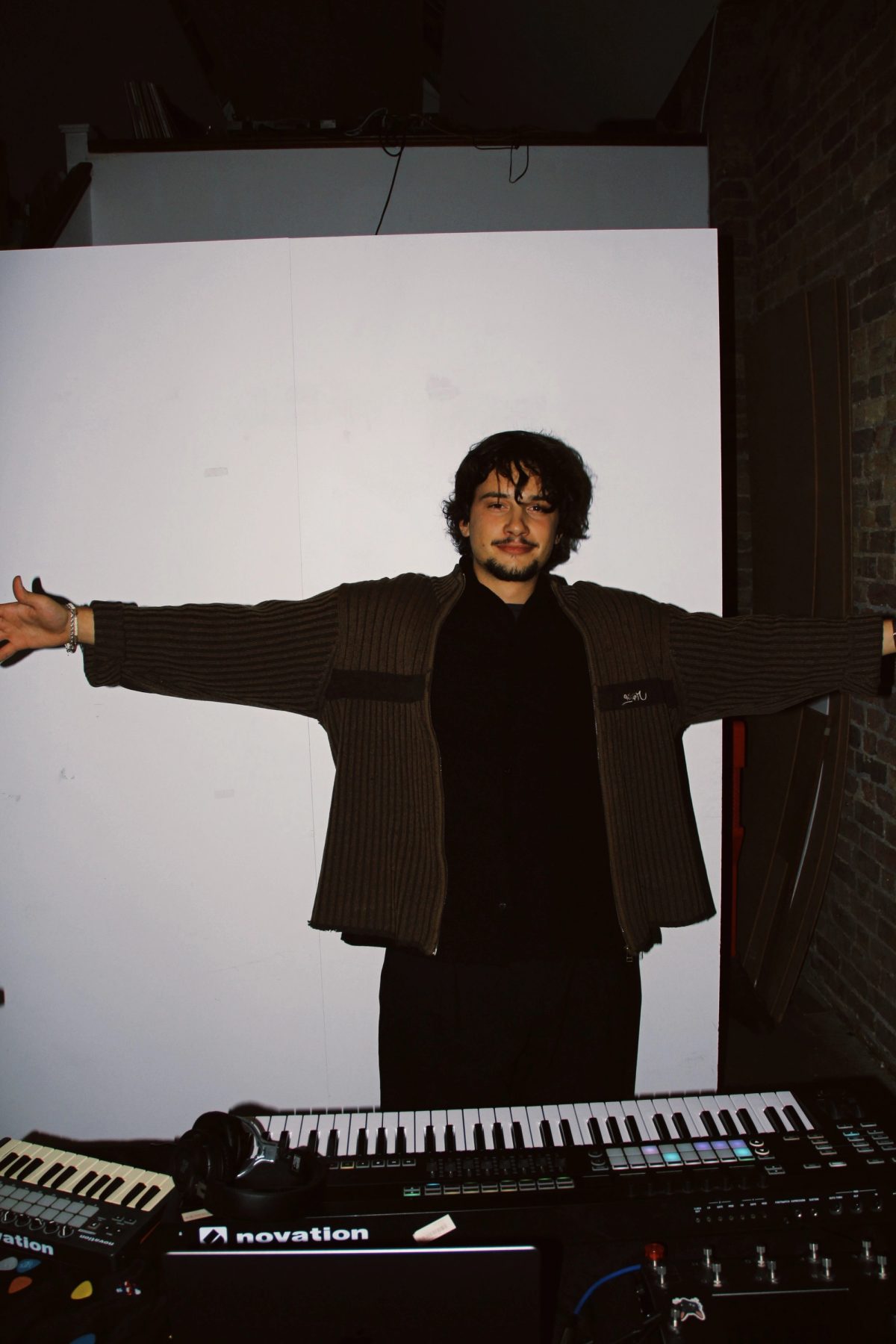
Performances are carried through by LARU (Ural Turan) and güya, whose immersive live set fuses experimental electronic sound with poetic atmosphere; singer-songwriter Nisan Akdağ with Fede Rico; and performance artists Petrichor and Lara G.G., whose collaborative practice transforms the body into a site of resistance and storytelling.
Together, they form a community-led constellation of voices, echoing into and through one another, an exhibition less about singular authorship than about collective resonance.
Contact for requests and customs: feyzabercasenturk@gmail.com