FOOD AS A MEDIUM OF SUBVERSION: IN CONVERSATION WITH BARNEY PAU
CONVERSATION BY YANGRUNG CHEN
CO-FOUNDER, ART DIRECTOR
29 APRIL 2026 — UNITED KINGDOM
What does it mean to eat against the grain? For Barney Pau, food has never been a neutral material: it ferments, provokes, suspends, and unsettles, operating somewhere between the body and the institution, the domestic and the obscene. In this conversation, they trace a practice built on the conviction that the most familiar things, the rituals we enact daily without thinking, are precisely where subversion becomes possible. From bread that bends to ecology that teaches, from the queered kitchen to the gallery wall, what emerges is a way of working that treats rot as methodology, humour as politics, and the dinner table as a site yet to be fully reckoned with.
You studied illustration and graphic communication long before food became central to your practice. Looking back, what threads connect that early training to the work you're making now, and when did it become clear that what you were doing wasn't cooking but art?
Looking back, I see a lot of things that I learned in my BA still impacting the work I do today. Principally, relearning how to see the world around me, and that anything can be a medium of communication. The work I was doing then was as much fine art as graphics, and I'm still interested in many of the same subjects which pervade my work today. If one thing has changed majorly, it is the scope of my work and the understanding with which I create, but that is also to do with the decade of experience I've gained since then.
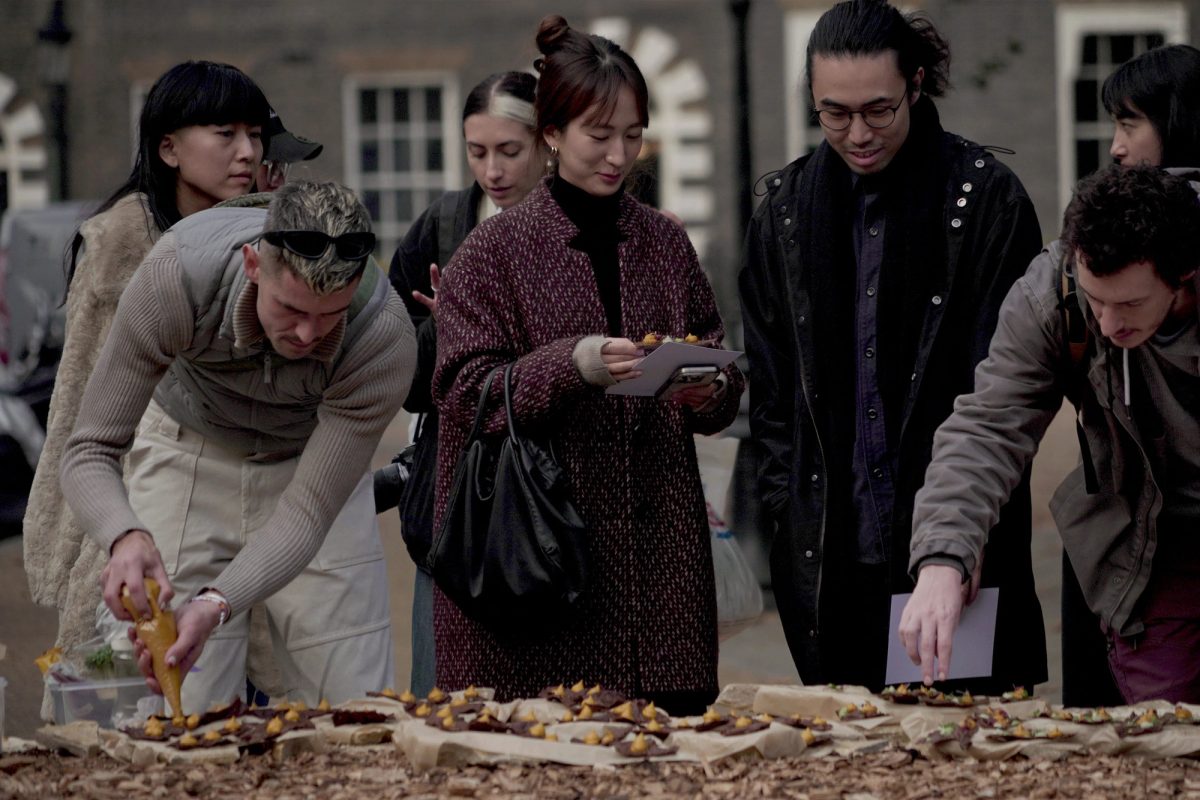
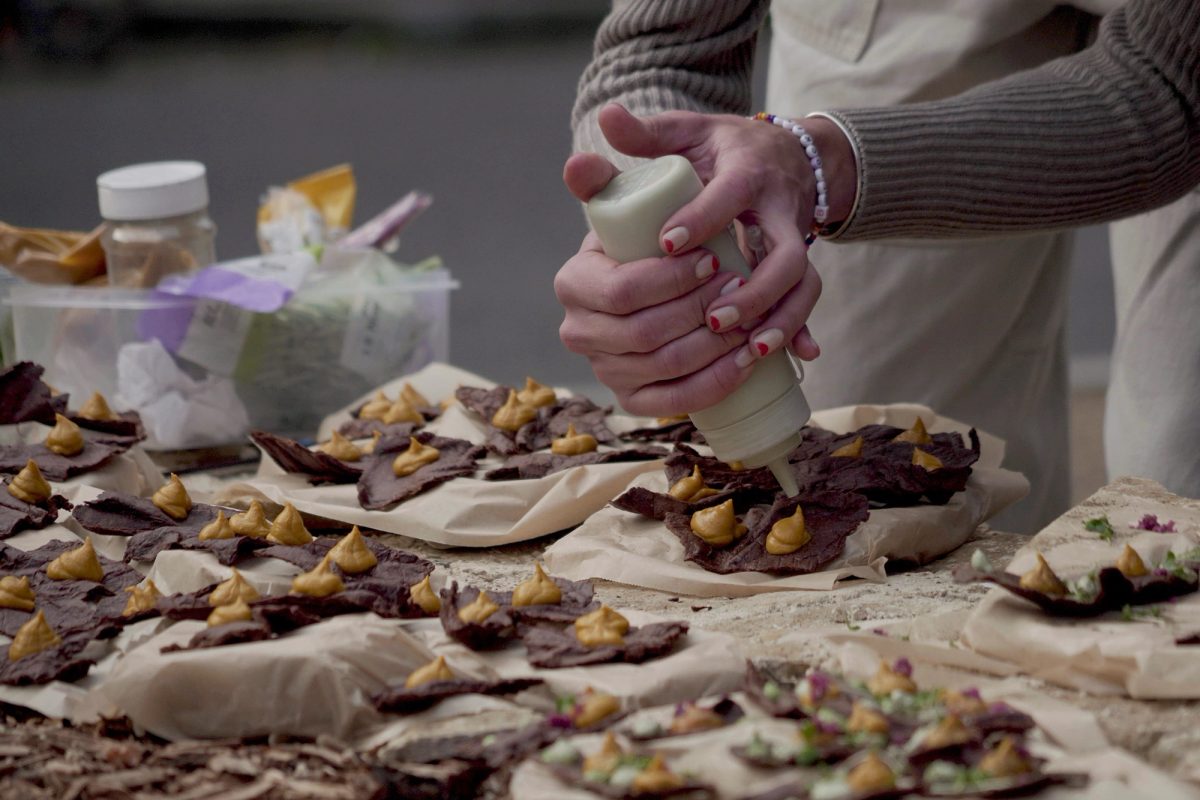
Reflexive Food Gathering (2024), edible installation, commissioned for Ripple Ripple Rippling, Architectural Association School of Architecture, London. Photo: Chen Zhan.
Food in your work is rarely neutral or comforting: it hangs from wires, mimics condoms, stains tablecloths, ferments past recognisability. How do you decide when food should nourish, provoke, repel, or confuse?
I think one of the most intriguing things about food as an art medium is its ubiquity. Everyone eats (hopefully every day), making food an incredibly familiar thing with which each of us has a very intimate and unique relationship. So when someone understands that the artwork they're seeing is edible, it becomes a rich material to subvert and challenge. I believe art should challenge, provoke, and incite new thought and creativity, and for me, food presents the perfect way to do so.
Foraging, fermenting, and decay recur across your practice, not as background processes but as active agents. How do time, rot, and transformation function as collaborators in your work rather than techniques to be controlled?
One of the things I get really excited about is what rot can teach us. Fermentation, composting, and decay are all rich sources of inspiration, for each repurposes, reuses, and reconstitutes that which already exists into a completely new form. When you apply this function as a methodology, it revolutionises the way we think about the world. It teaches us that many of the systems by which we work (social, agricultural, economic) have everything they need to function better; it's a matter of breaking them down into their constituent parts and rebuilding them anew.
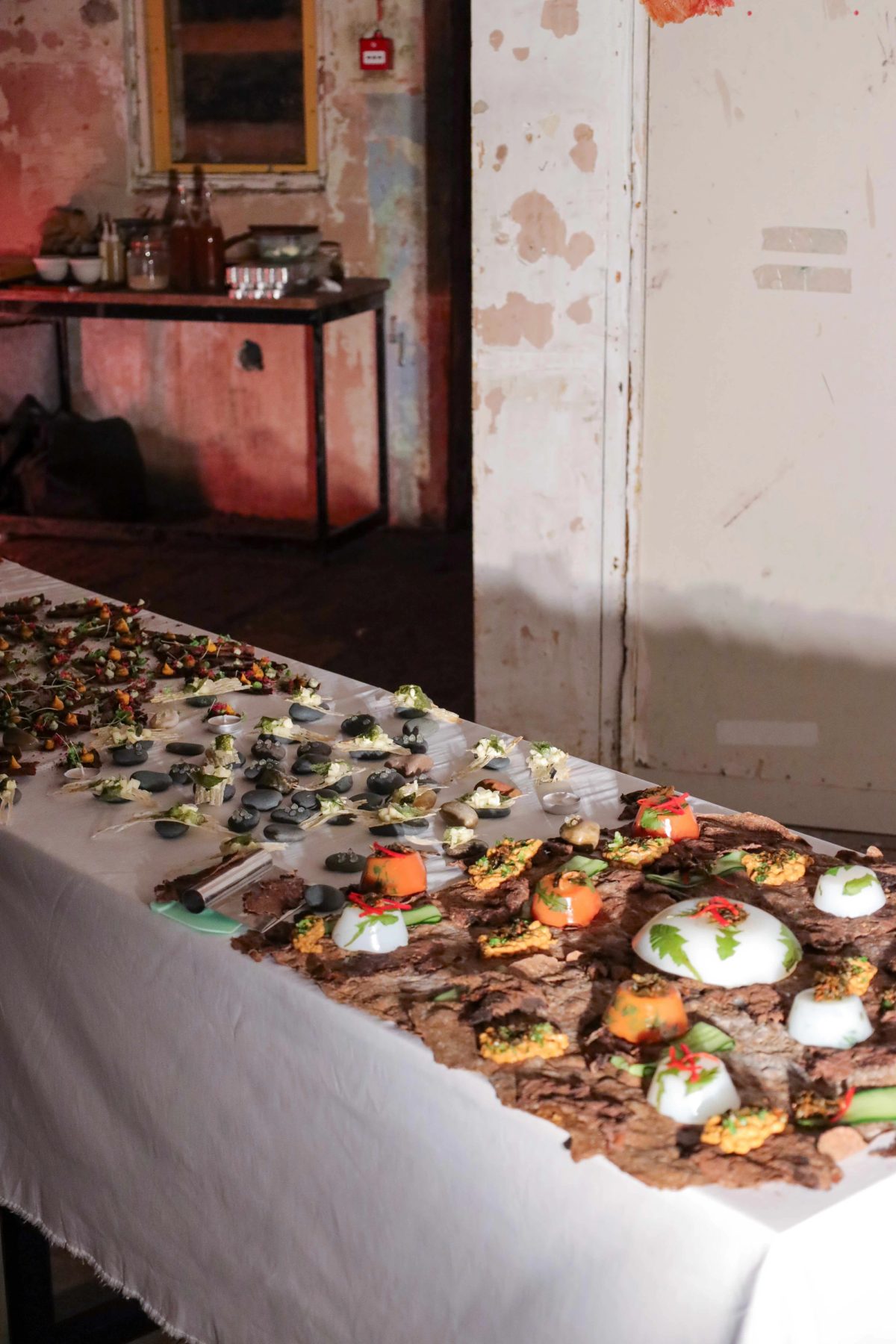
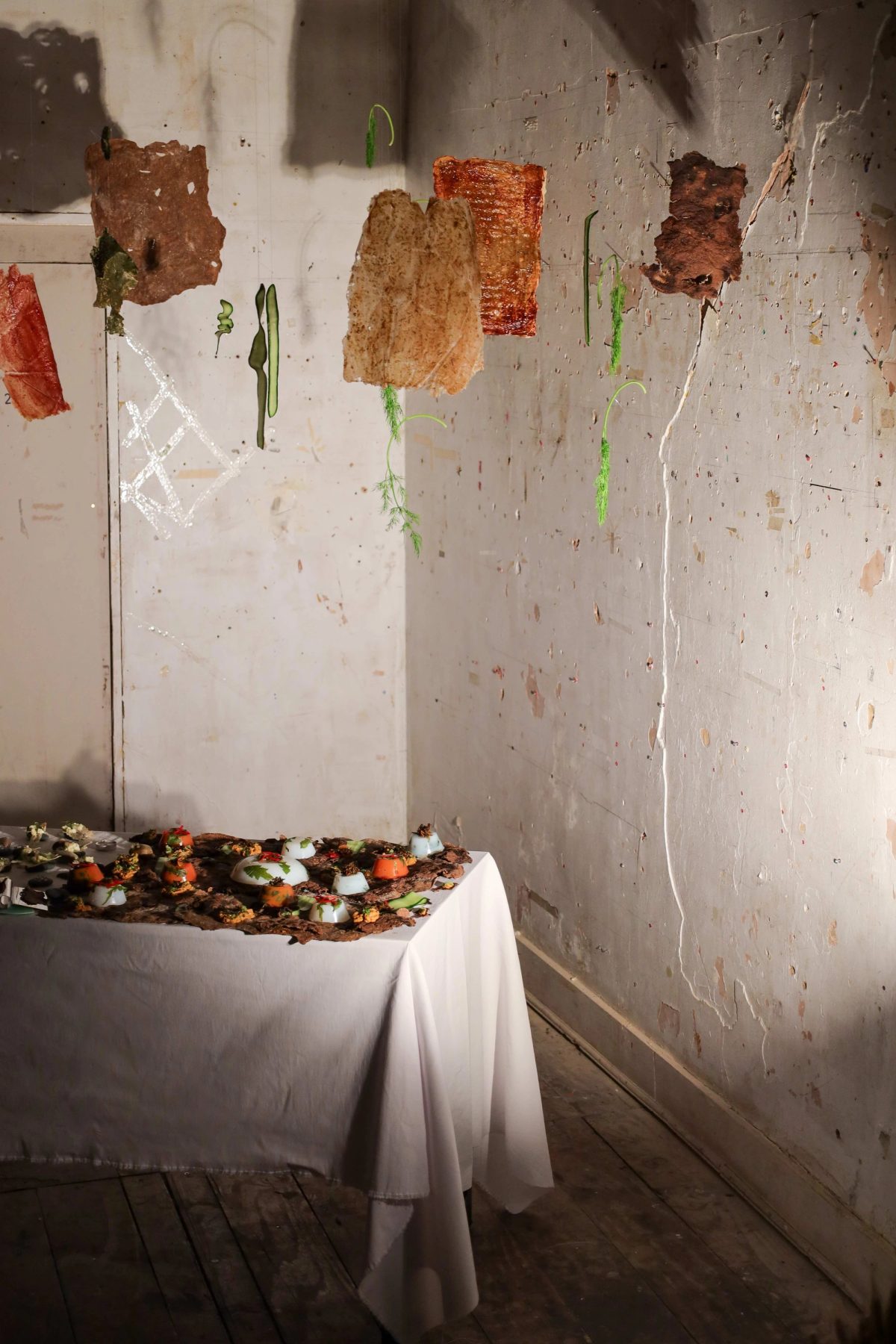
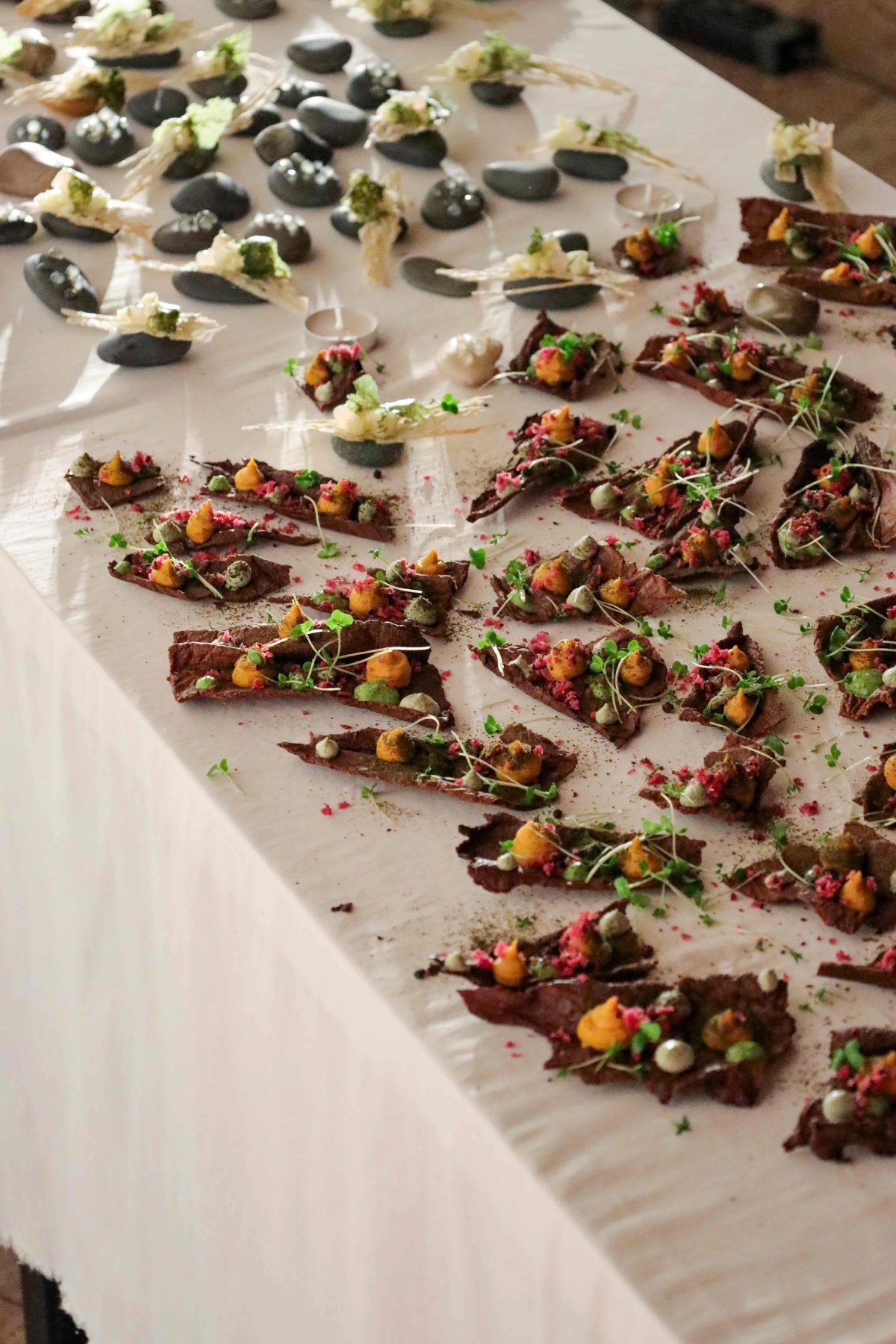
(Bio)cultured (2024), group exhibition, Safehouse 1 and 2, London, curated by Carolyn Chang. Photos: Barney Pau and Francisco Fidalgo.
"Fermentation, composting, and decay each reconstitute that which already exists into a completely new form. Apply this as a methodology, and it revolutionises the way we think about the world."
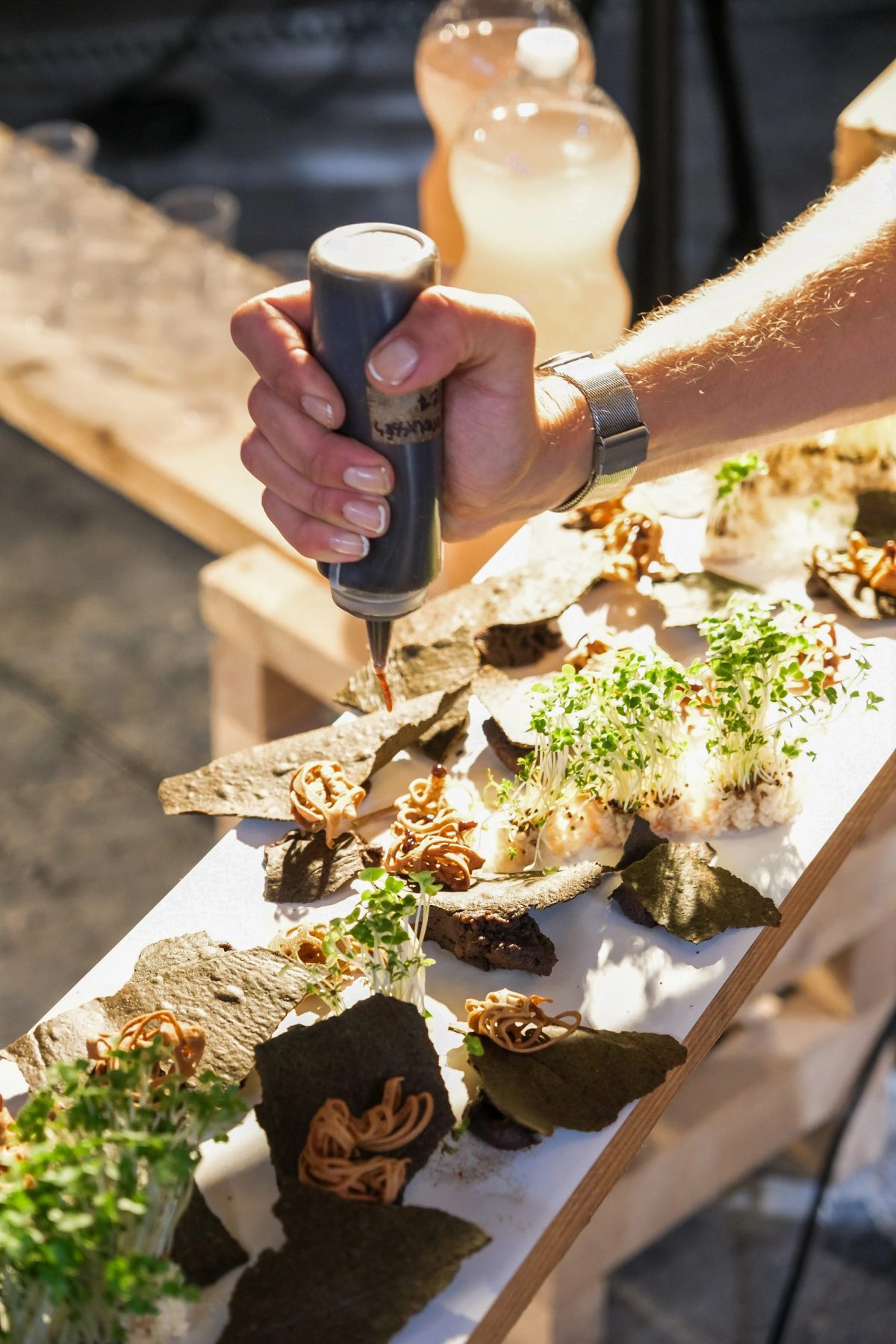
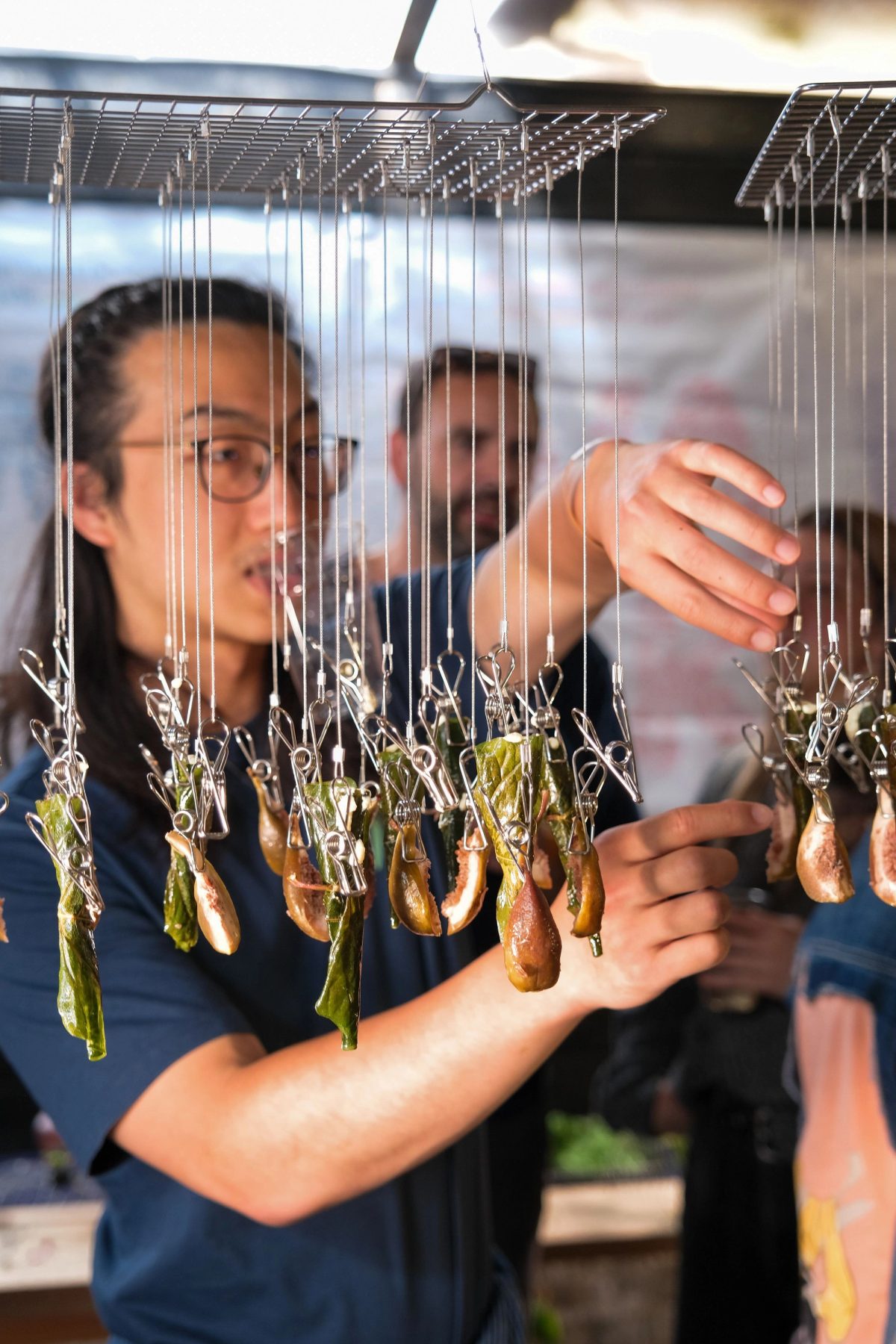
WALK (2025), edible commission in response to work by Alisa Oleva, for Build Hollywood, London. Photos: the artist.
Many of your events invite people to eat, touch, pick, forage, or lean in, often in ways that feel slightly awkward or exposed. How do you design these moments, and what do you hope they unlock socially or sensorially?
Another really interesting aspect of food is the rituals that have sprung up around it. Over millennia, across the globe, myriad ways of eating and interacting have developed into cultural and social norms. Many of these arise from sanitation or other logical ways of preserving our health, but many more still are to distinguish us from others, whether by class or culture. As per my previous point on the malleability of food as an art medium, this means that a simple change in how one eats or interacts with their food can become a huge social challenge.
Domestic space appears frequently in your writing and installations, not as a safe haven, but as something to be queered, bent, and re-scripted. What does the home make possible as a site of subversion that public or institutional spaces do not?
The home is fraught with hidden tropes and conventions in a way that I feel public spaces are not. Sure, there are many rules for how to comport yourself in public, but in these spaces, we're aware that we are around others. In the home, we are led to believe we can be our natural selves, away from the prying eyes of society, making the norms which invade this space all the more interesting. I find it fascinating how both the demonisation of queer bodies and the normative expectations of heterosexual bodies dictate so much of what we do at home. Food's central role in the traditional home makes it a playful way to challenge preconceived notions.
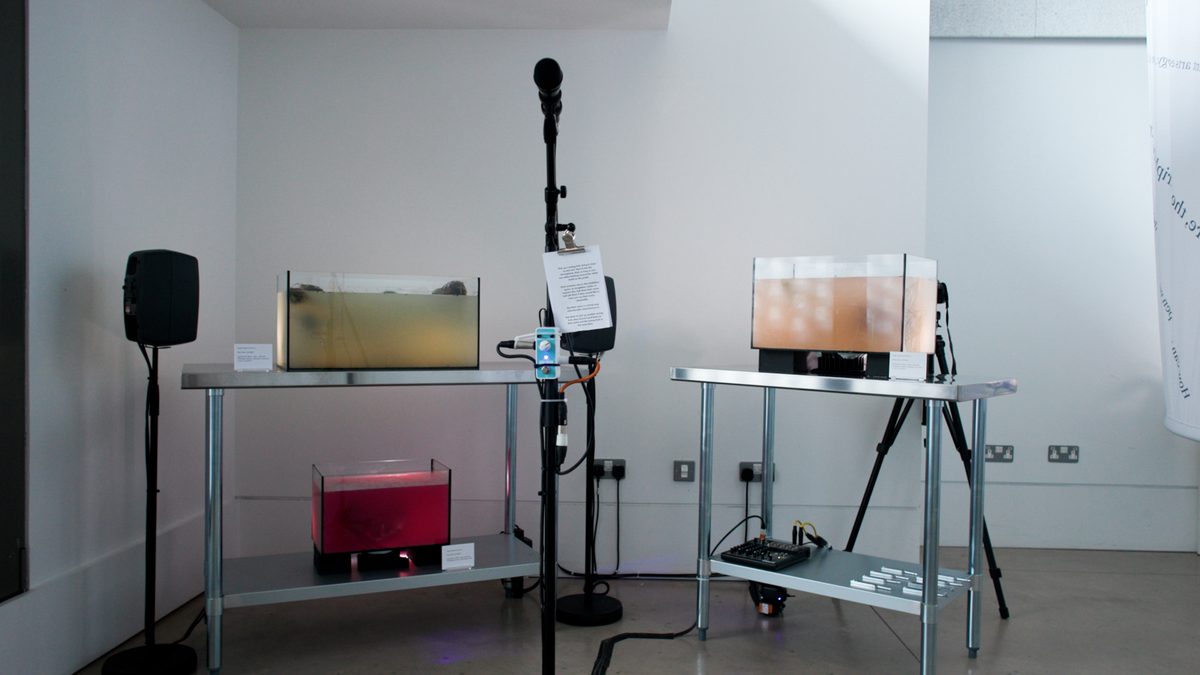
Bodies of Knowledge (2024), installation in collaboration with Bint Mbareh, presented for Curating Contemporary Art MA, Royal College of Art, London. Photos: Chris Lee, Barney Pau, and Isabelle Enquist.
"Both the demonisation of queer bodies and the normative expectations of heterosexual bodies dictate so much of what we do at home. Food's central role in the traditional home makes it a playful way to challenge preconceived notions."
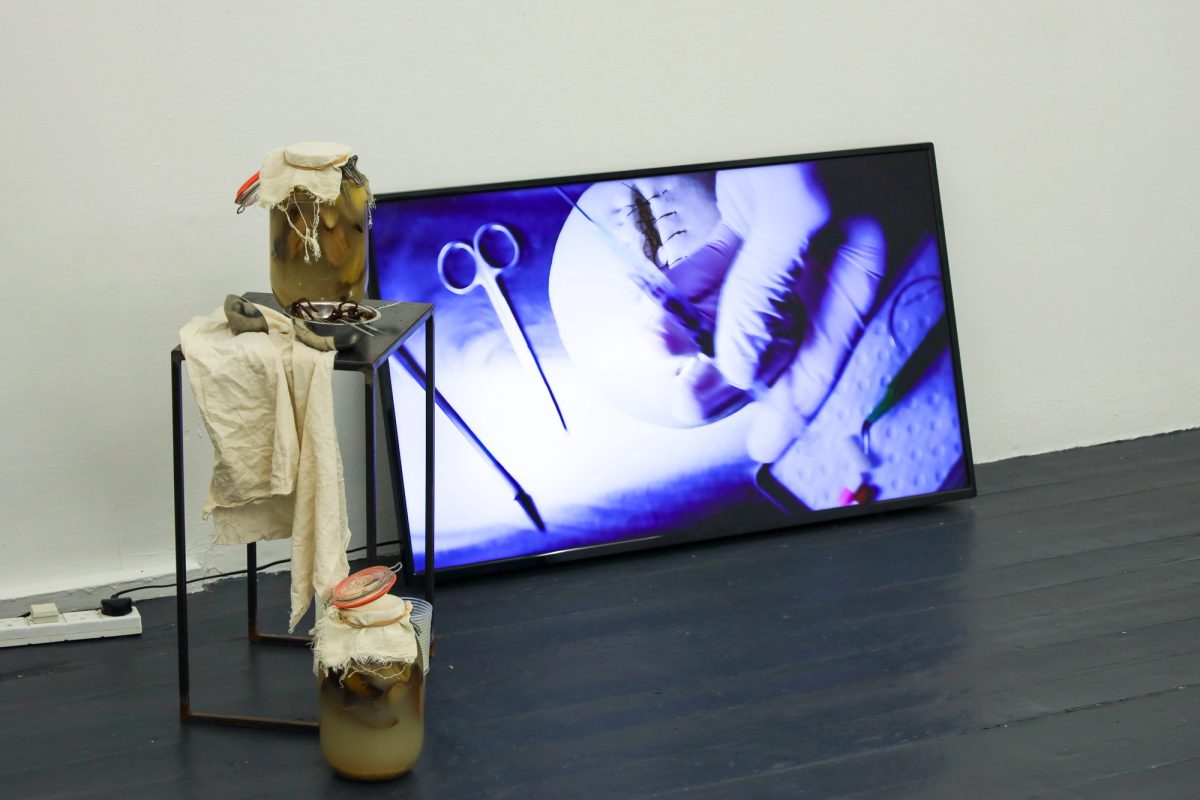
[dis]tasteful (2024), participatory installation with film and ferments, presented at Reel Yummy, Somers Gallery, London. Photos: the artist.
In works like Arcadia and Bent Bread, you use humour, camp, and exaggeration alongside heavy material and political concerns. How do comedy and theatre help you approach subjects like monoculture, heteronormativity, and food systems without flattening them?
In my work, I find humour a really powerful tool in broaching subjects which would otherwise be too overwhelming to consider. By making light of something, it makes it more approachable, and thus an easier conduit through which to communicate the heavier subject matter which undercuts the work. It's a really interesting point of how to use comedy without detracting from the more serious elements of the work, and I think it's a very fine line. A lot of my work looks into how queerness has been subdued and affected by normative society. By bringing humour, albeit dark and/or sexual, into the work, I'm inviting others to laugh with me, and thus hopefully more readily relate to the work.
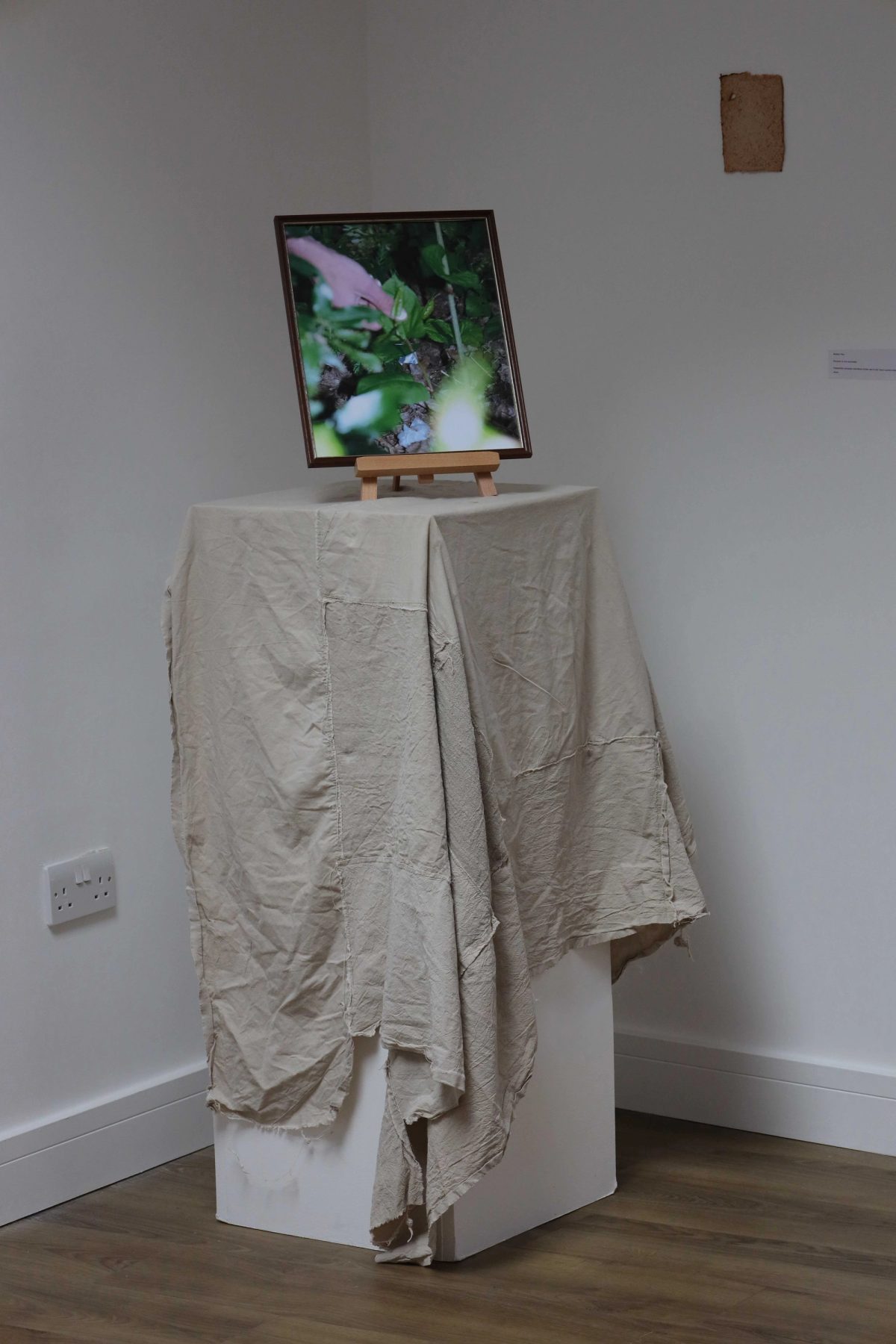
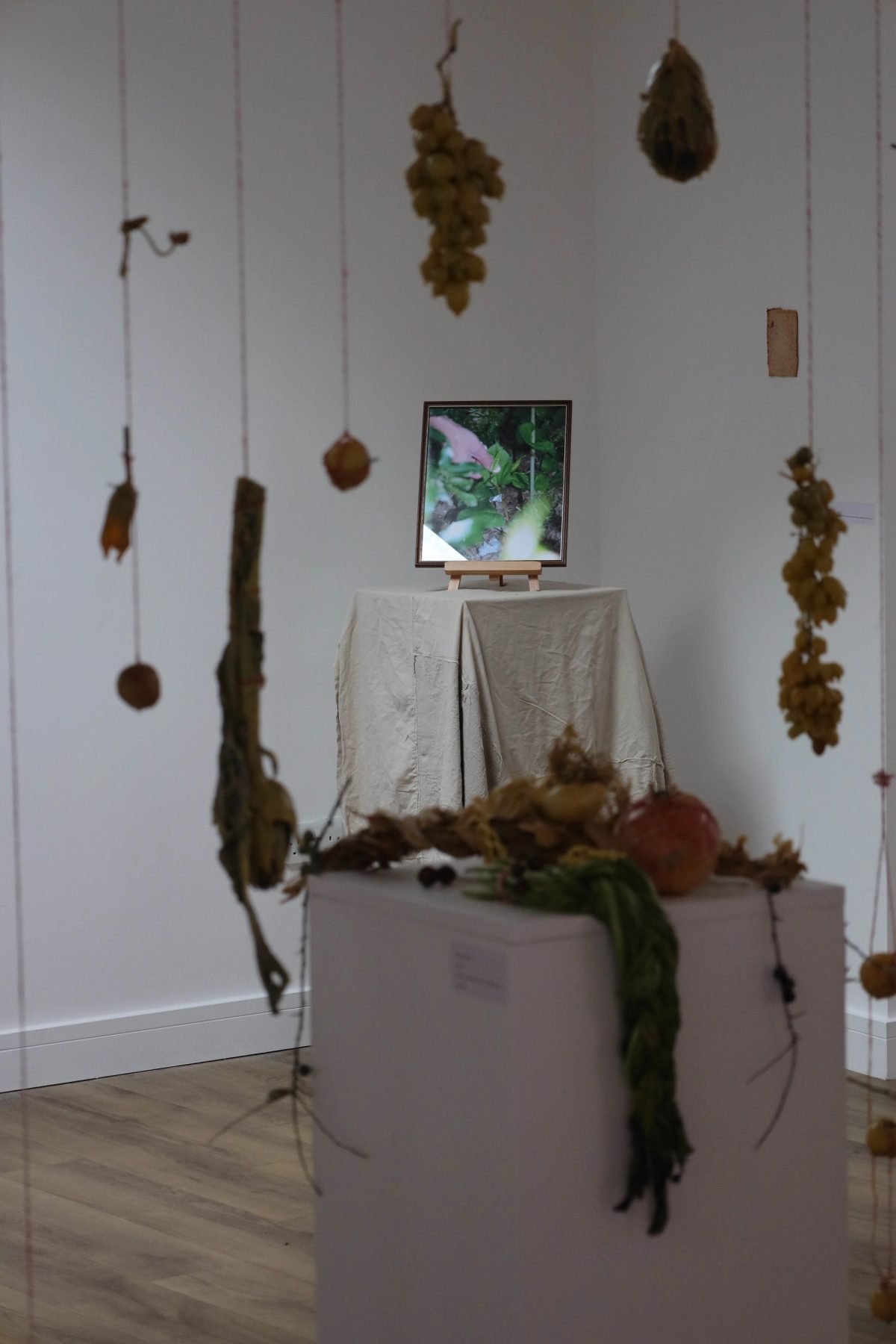
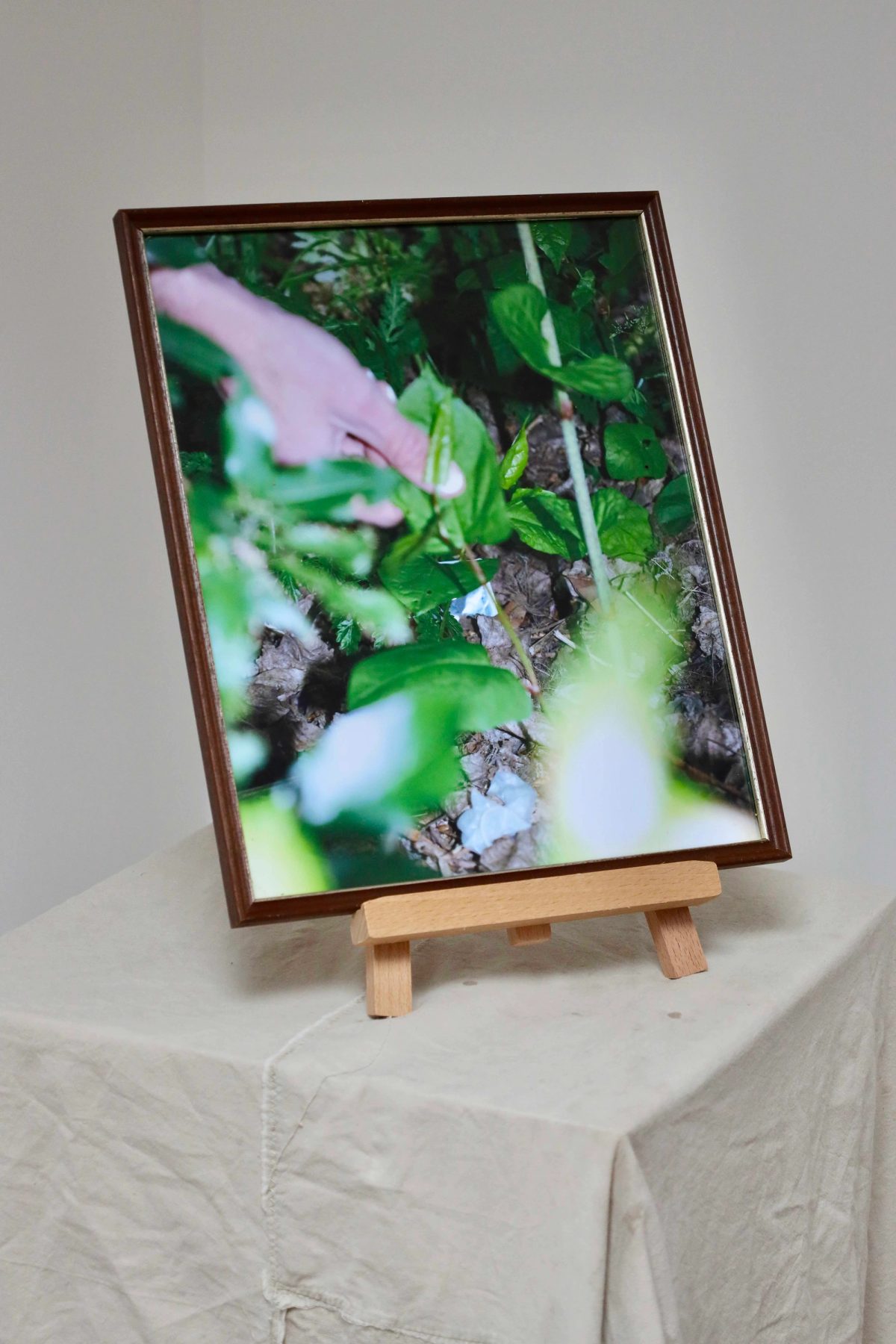
Fucking in the Knotweed (2025), mixed media, presented in Apetite, Maxillimian Wolfgang Gallery, London. Photos: the artist.
Your manipulation of dough, gluten, and bread often echoes bodily or art-historical gestures, stretching, tearing, massaging, suspension. When working with these materials, how conscious are you of their proximity to flesh, sex, and violence?
I think there's something wonderfully uncomfortable and sexual about food. We have an exceedingly intimate relationship with what we eat and drink, and which orifices it enters/exits, so I think it's only natural to compare food to flesh and sex. Most of us will have grown up in societies that see sex as something of a taboo: not to be spoken about directly, to be conducted out of sight, and never to be expressed. I feel this even more so as a queer person, so I think this repression makes for a wonderful way to challenge people, bring them out of their comfort zones, and expose them to more open thinking (within reason...).
Writing runs parallel to your edible and spatial practice, from critical essays to zines and journals. What does writing allow you to slow down, complicate, or make explicit that performance and food alone cannot hold?
I find writing a way for me to untangle and elaborate on my ideas in a way that no other form of creativity does. I don't think this is peculiar to me, but I have always found that by writing something down, it enters into a space in my mind where I can create, elaborate, and regurgitate my ideas in ways that open up new vistas and ways of thinking for myself. I find a lot of satisfaction and inspiration in using this creative process to try and disseminate my thinking in ways that I believe more practical forms of expression might overlook.
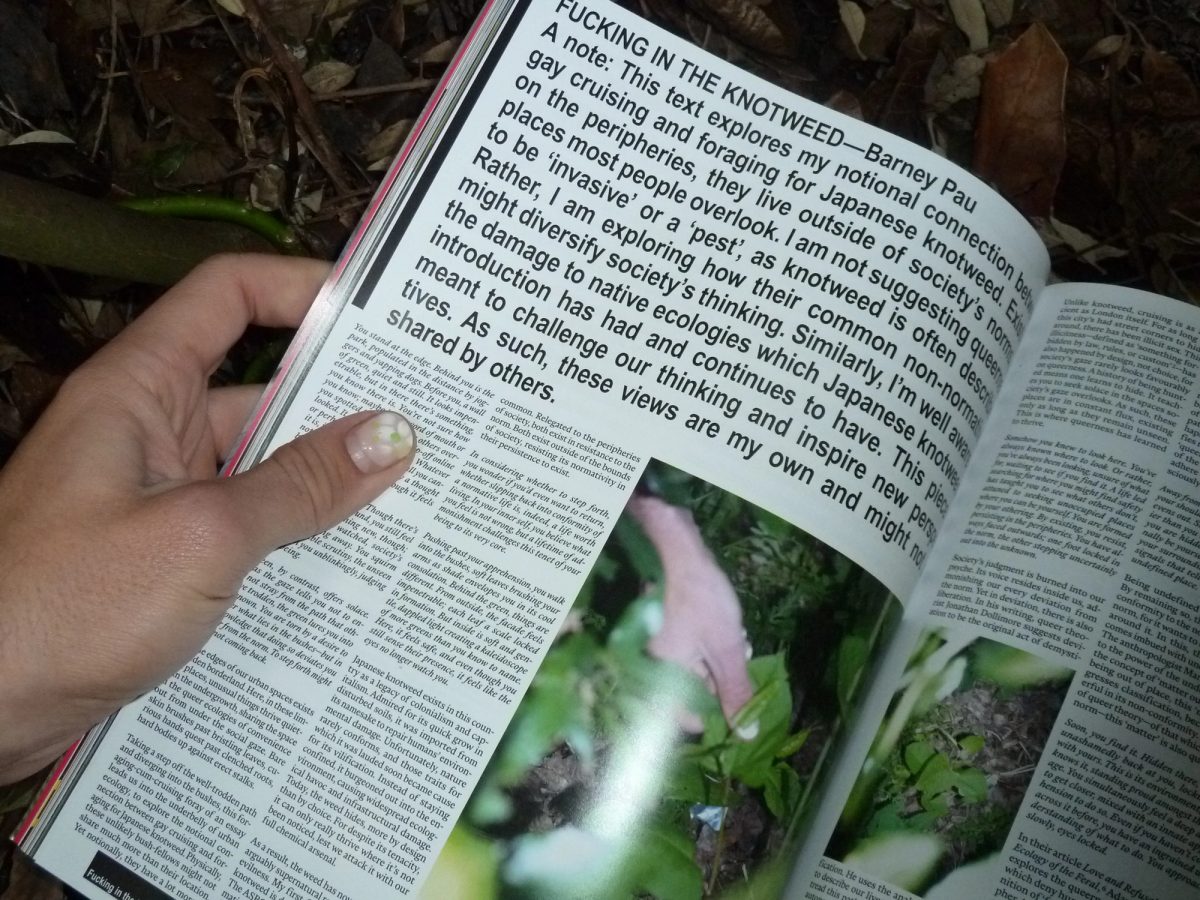
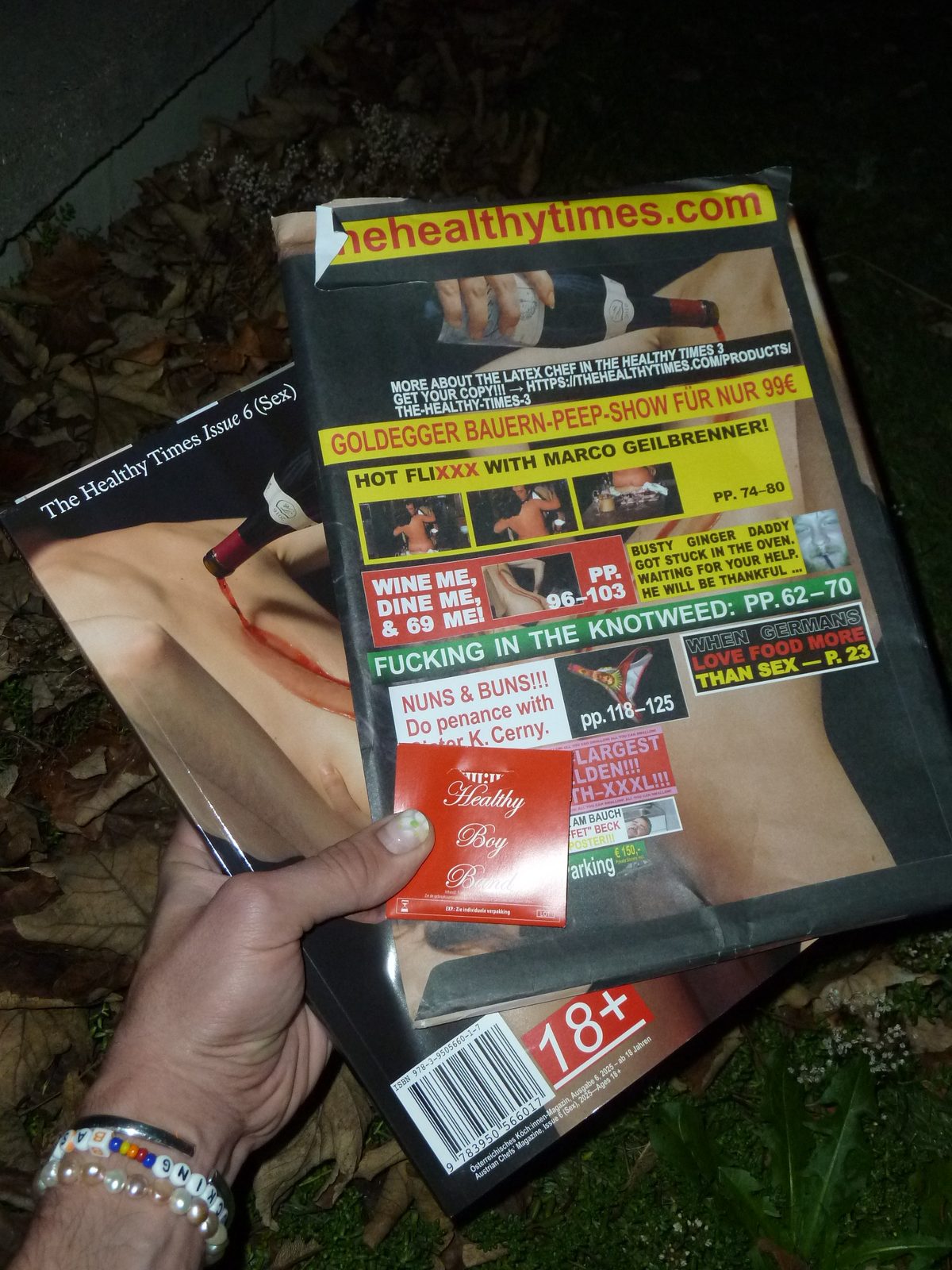
The Healthy Times, issue 6 (2025). Photos: Barney Pau.
"So when someone understands that the artwork they're seeing is edible, it becomes a rich material to subvert and challenge.""
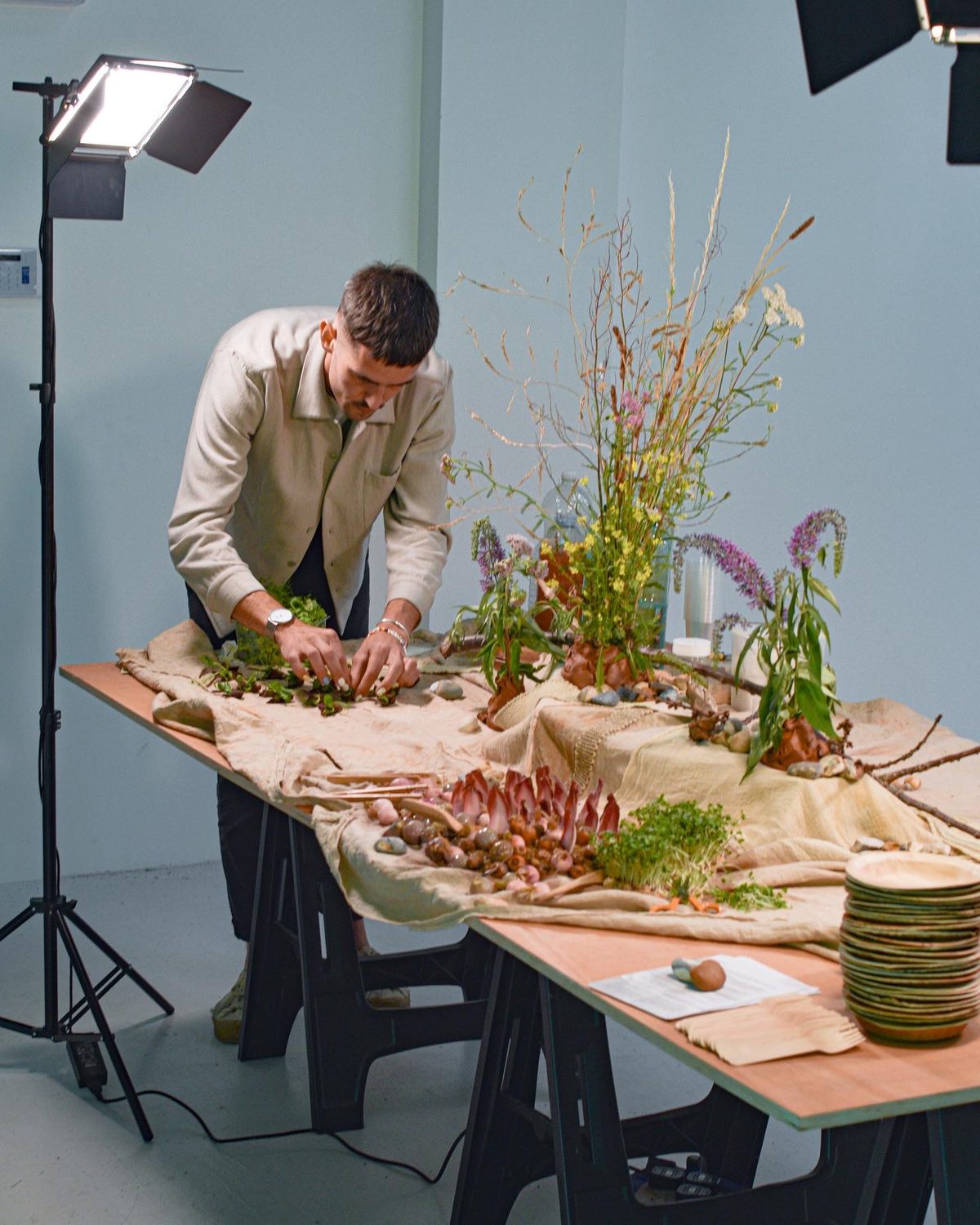
Out of the Peat (2023), edible installation and tasting menu, in response to Djuna O'Neill's The ground is kind, black butter, Flatlands Projects, London. Co-produced with Can Host.
For our inaugural exhibition OBTUSE (°) at Galleria Objets, you created a food installation that responded directly to the curatorial text, working with suspended mirrors, reflections, and light to fracture and multiply the food across the gallery walls. How did translating a written curatorial framework into an edible and spatial work shift the way you approached composition, temporality, and audience movement?
The brief for this particular project spoke to me straight away. The idea of the 'obtuse' is something I find fascinating: that which sits uncomfortably outside our norms. I wanted to communicate this by creating unsettling dishes which had no clear indication what they were, their taste, or how they were made, and the curatorial text provided the perfect basis upon which to build.
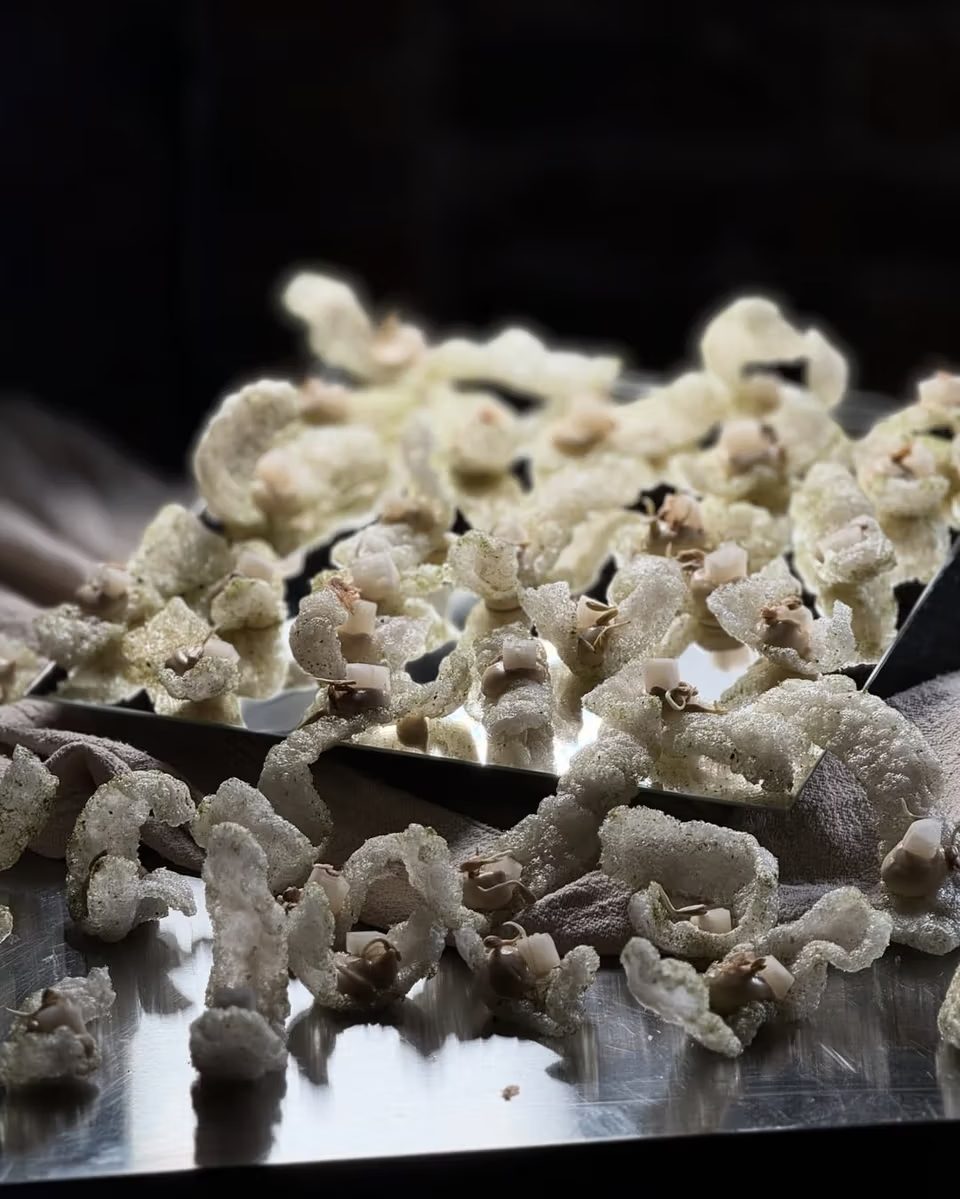
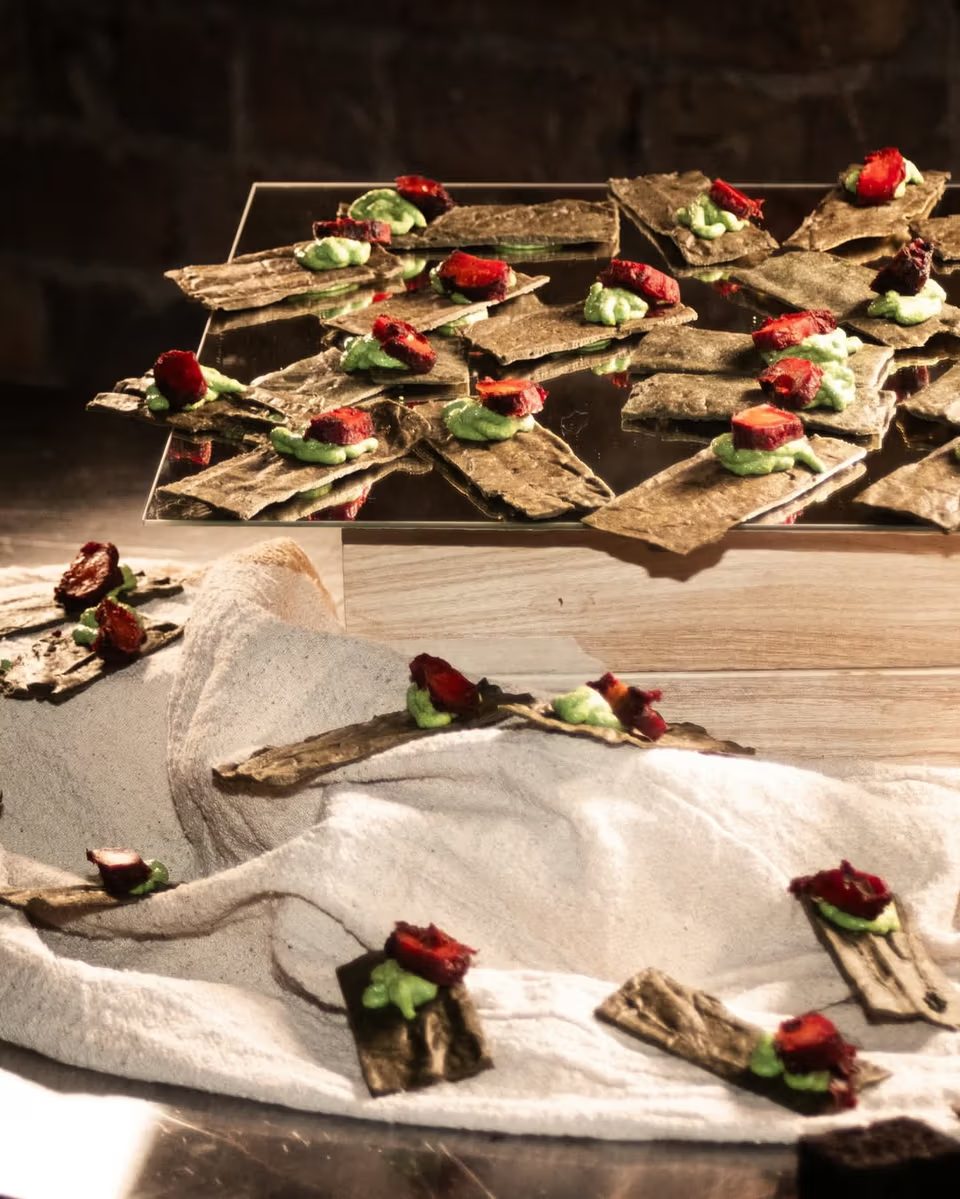
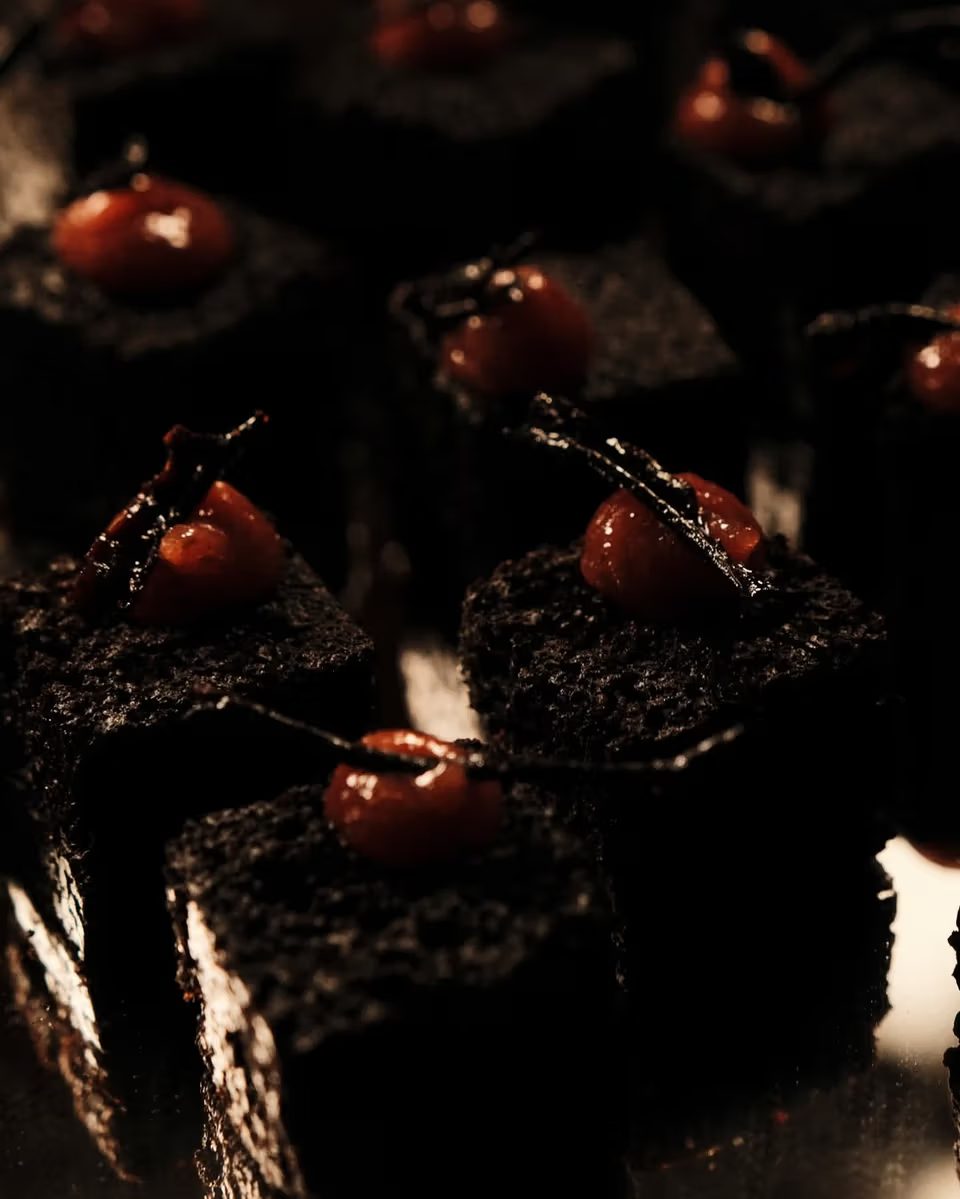
OBTUSE (°) (2025), culinary intervention, Galleria Objets, London. Curated by Selin Kir and Yangrung Chen for Obtuse Archive. Photos: Veronika Butkevich.
Finally, as your practice continues to move between food, ecology, writing, and collective experience, what kinds of spaces, encounters, or materials are you currently circling, and what feels most urgent to push further?
At the moment, I'm fascinated by the 'obscene.' This, in fact, bears many similarities with the idea of the 'obtuse', in that it doesn't conform, but instead fights convention. My interest in the obscene is through the lens of ecology and queerness, in both of which, in my opinion, obscenity becomes a form of expressive reclamation. I see this as a way to keep my food connected to my art, so I'm excited to see where it leads…
I'd like to note that food heritage and culture are hugely important aspects of people's identities. When I play with food, I do so in the culture of food I was raised in, and with respect to those which I have learned, but which are not mine.
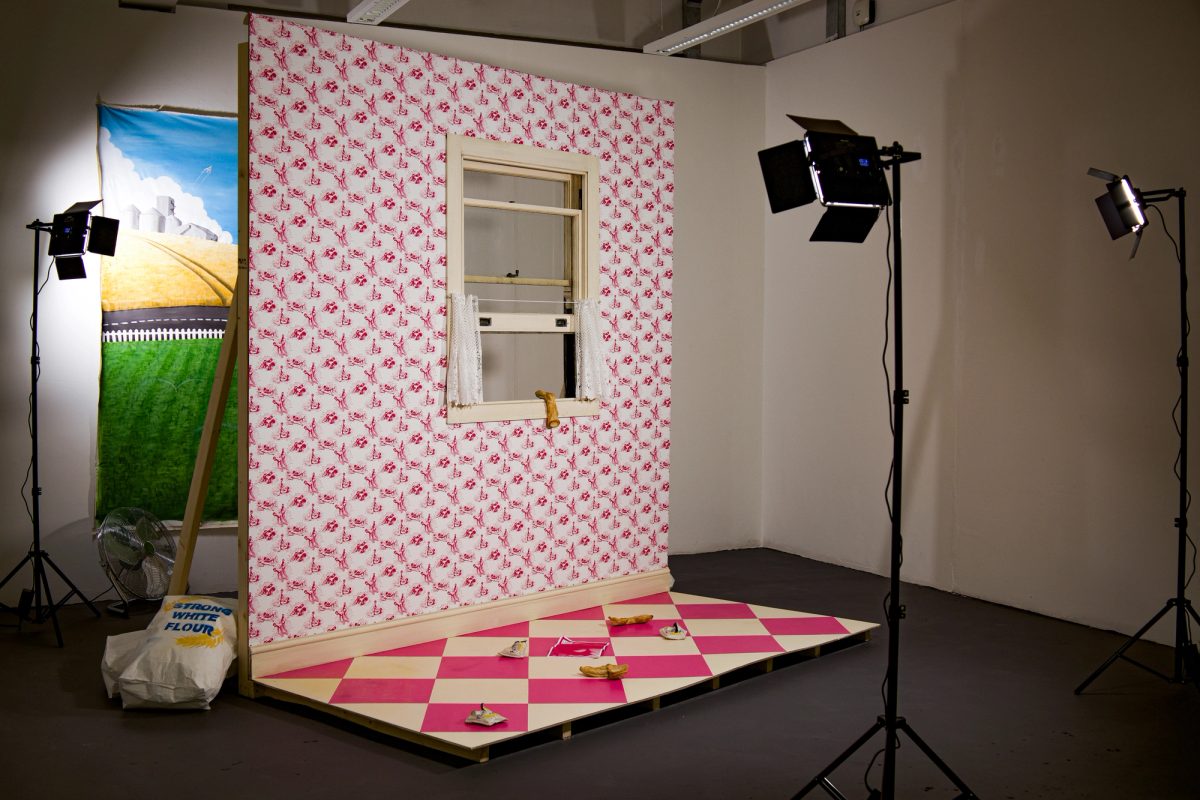
Arcadia (2022), mixed media installation, Goldsmiths Degree Show. Photo: Barney Pau.
Cover Image: [dis]tasteful (2024), participatory installation with film and ferments, presented at Reel Yummy, Somers Gallery, London. Photos: the artist.