BITE MARKS AND THE KEY THAT REMAINS: IN CONVERSATION WITH TORI GLOOM
CONVERSATION BY SELIN KIR
CO-FOUNDER, CURATOR
20 SEPTEMBER 2026 — LONDON, UNITED KINGDOM
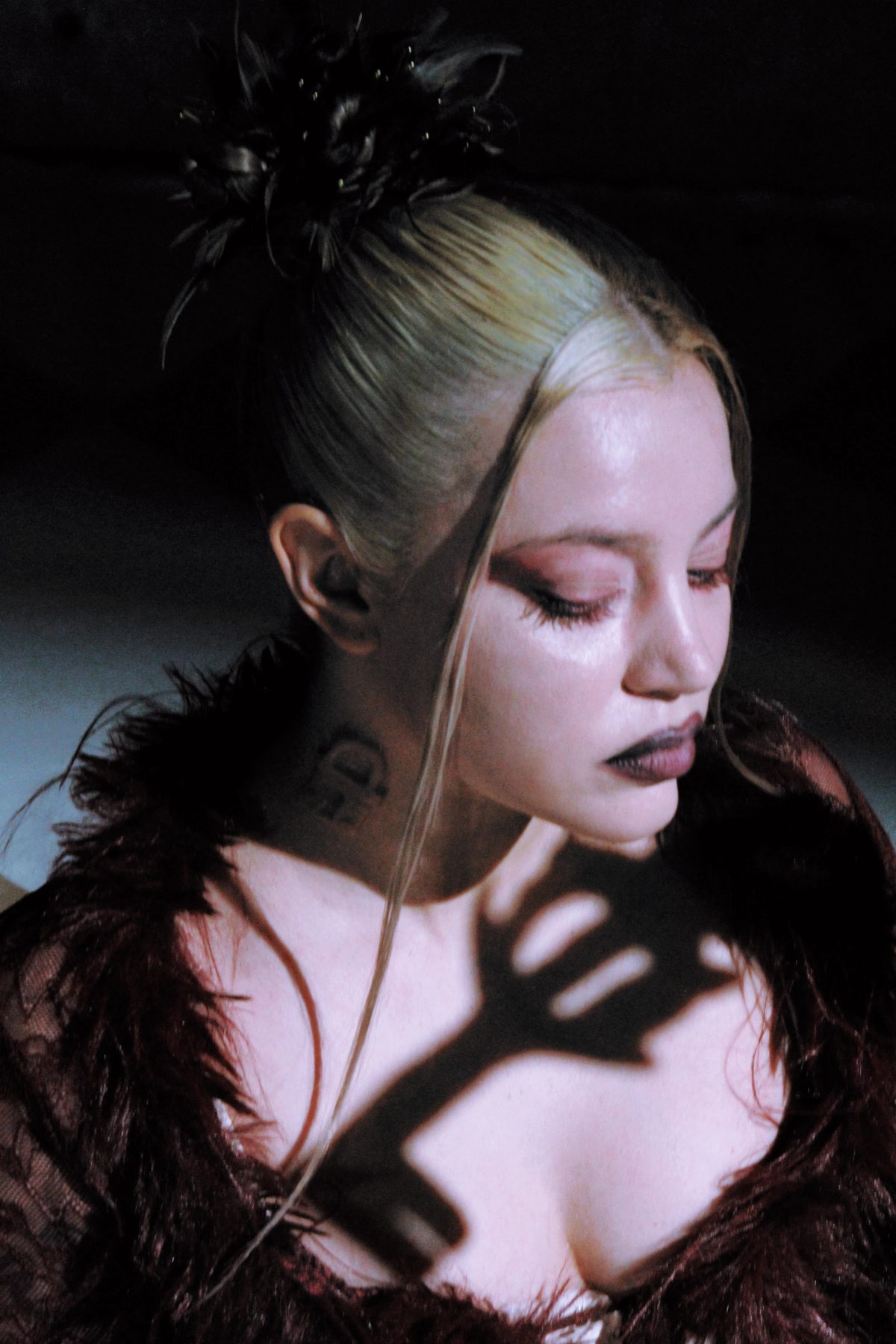
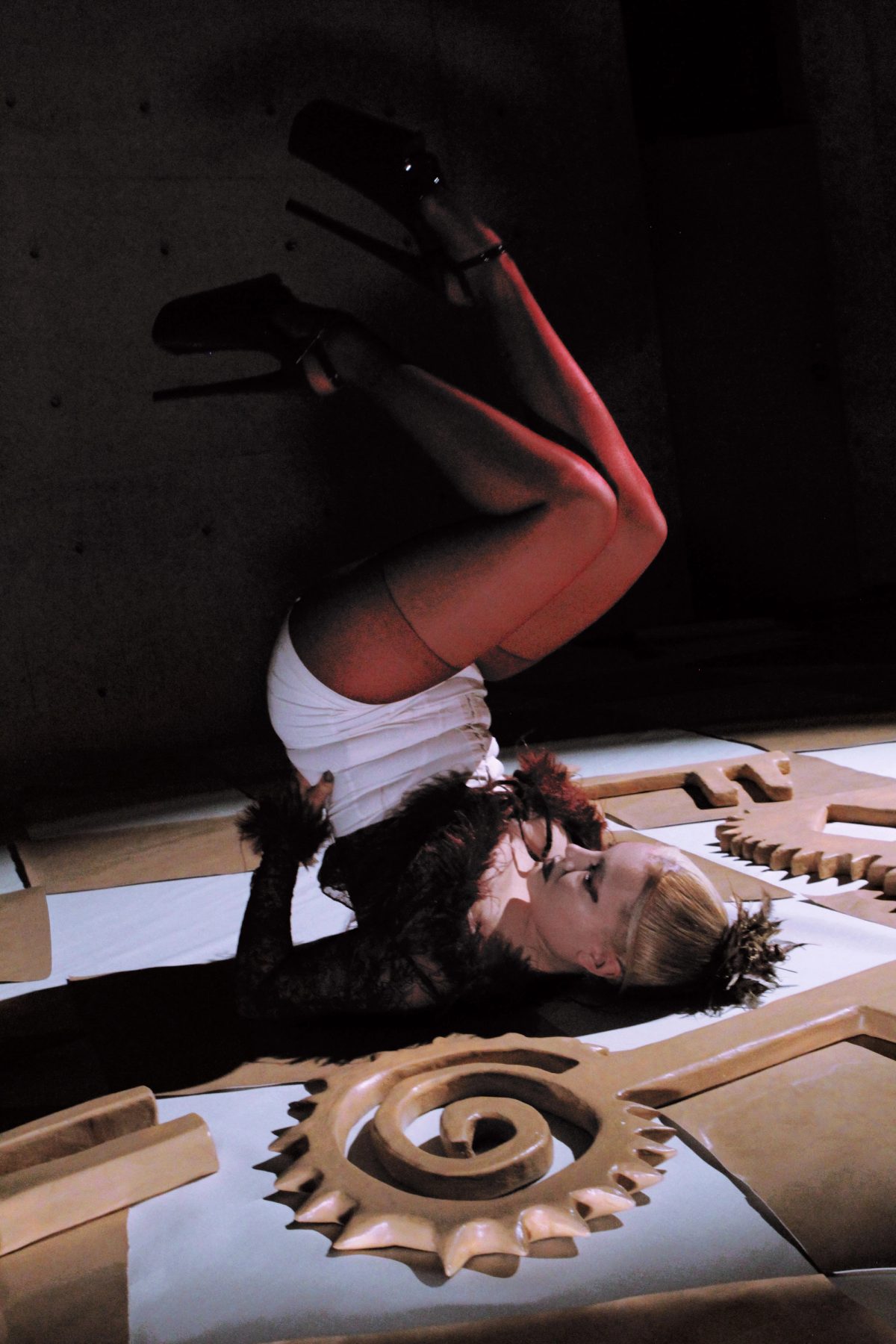
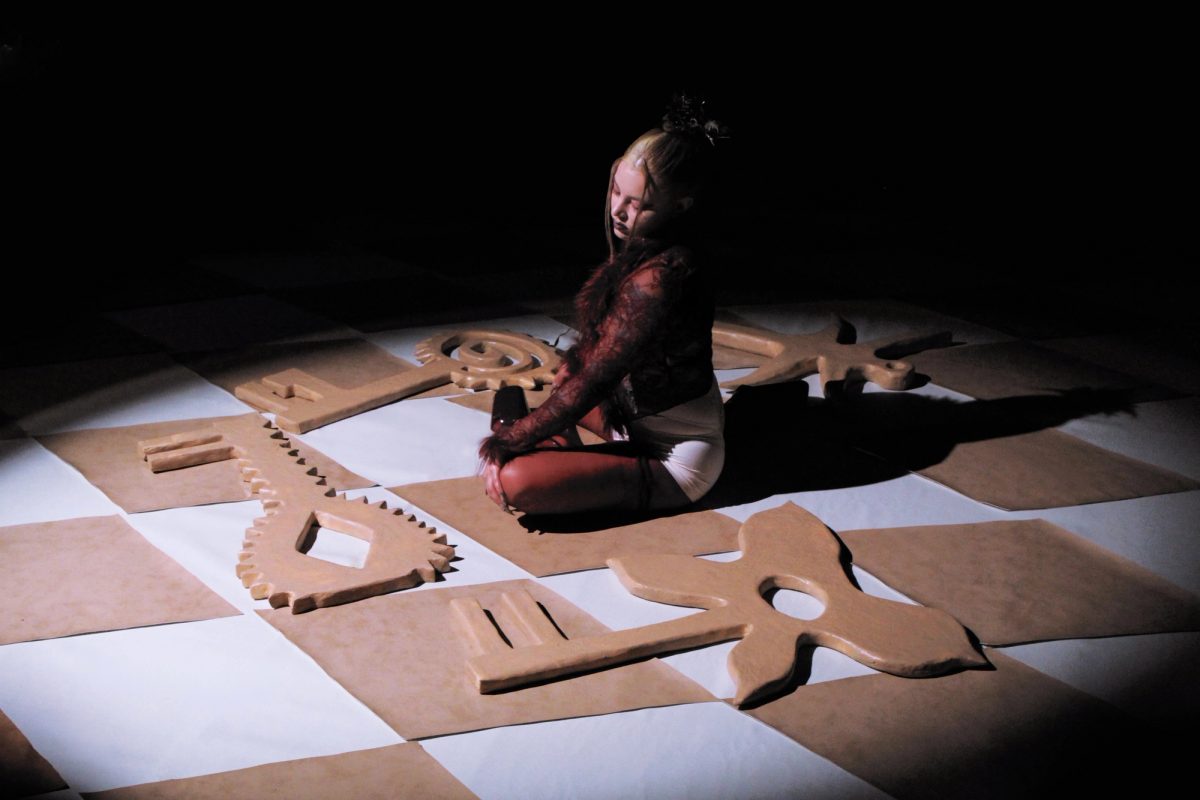
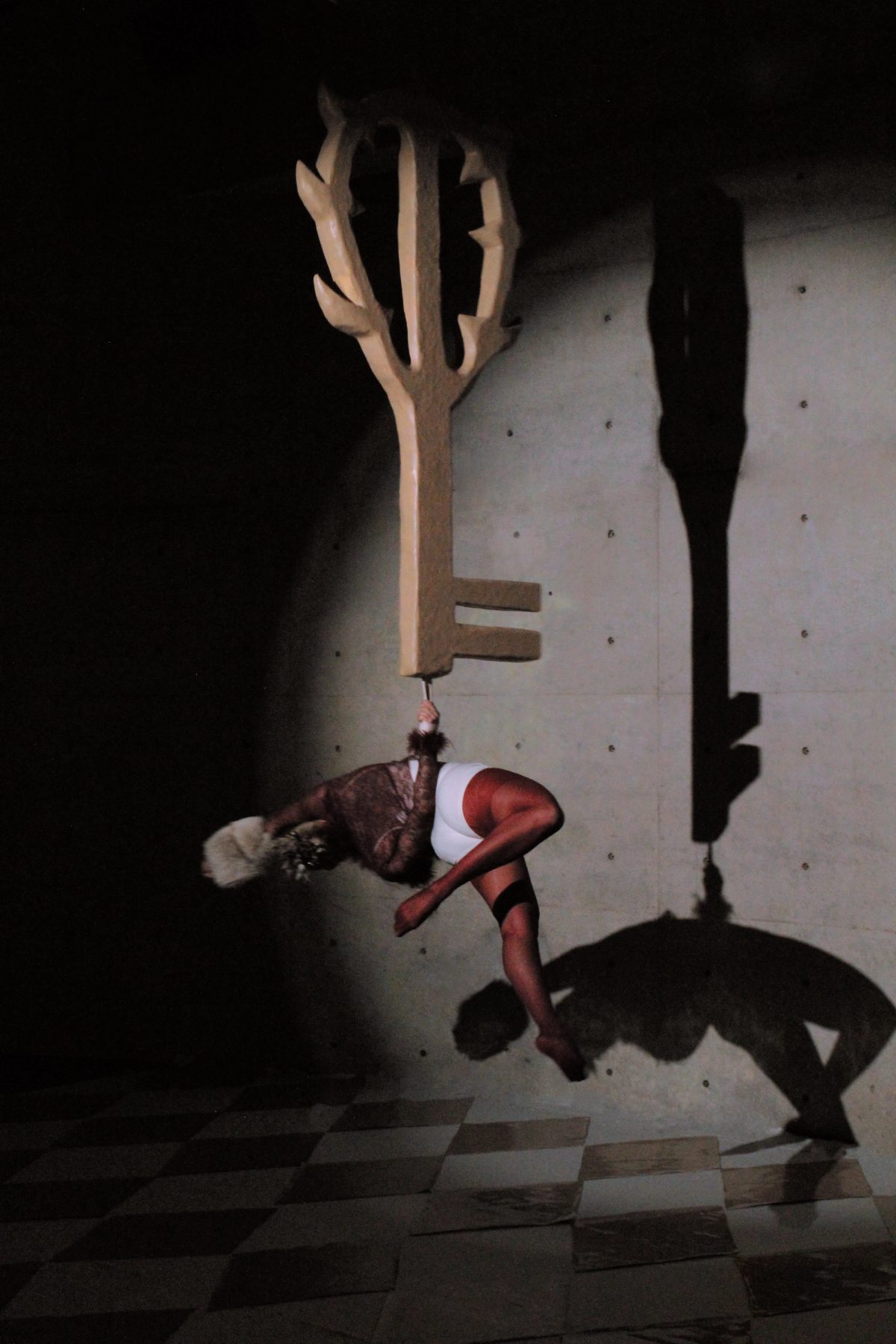
A key is the most quietly political object we carry: it promises entry, withholds it, and implies that someone, somewhere, decided who belongs on the other side. In Bite Marks, Tori Gloom takes that small piece of metal and asks what it costs to want a door opened. The answer arrives in five sculpted keys, one of which doubles as the rig point that holds her upside down on aerial straps; in a chessboard floor where she kneels among key fragments like a piece waiting to be moved; and in a tiny padlock placed exactly where a bite mark might land. The title borrows its logic from locksmithing, where the "bites" are the cuts that engage a lock and the marks are what stay behind. What follows is a conversation about access, guarding, and surrender, about a year spent mastering a single aerial move so that one image could exist, and about why the most intimate work is often built alone before it is shared with a crowd.
Let's start with the project itself: what is Bite Marks, and where does that title come from? What first pulled you toward the key as its central image?
A key is already such a loaded object: it promises entry and can deny it. It implies that there is something worth protecting on the other side and suggests that someone, at some point, decided who gets access and who doesn't.
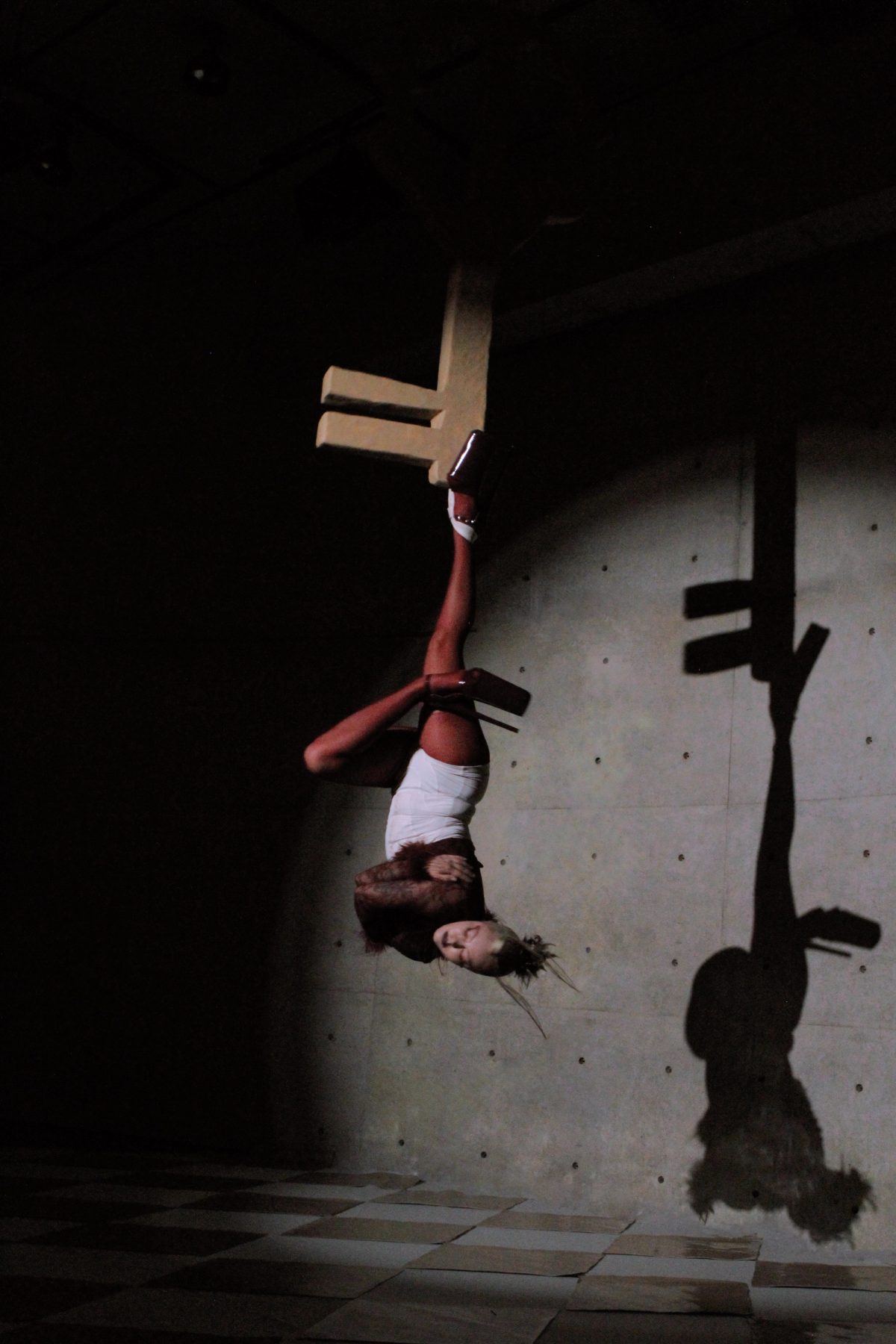
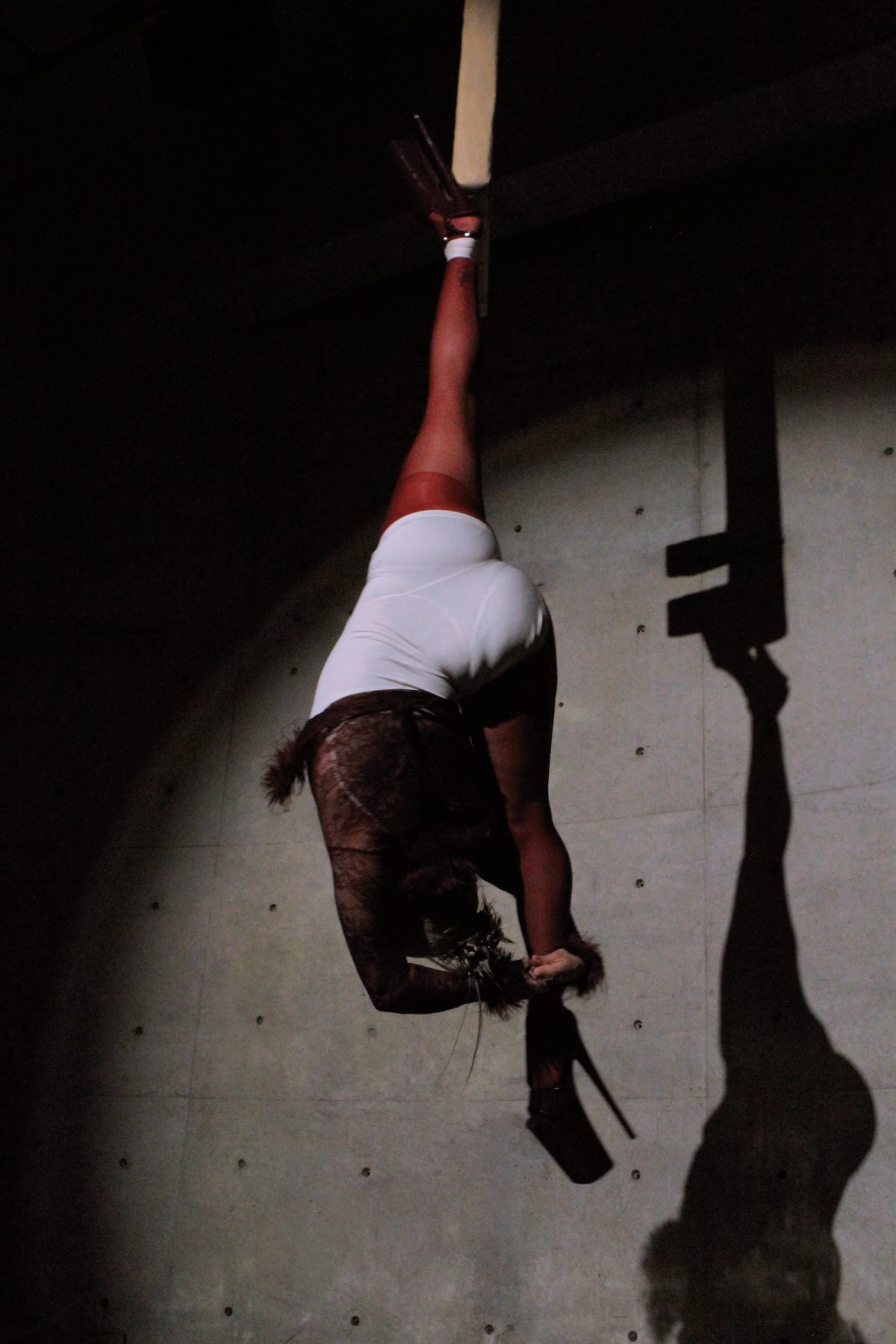
For this project, I designed five keys, four smaller ones and one large one that the aerial straps go through. Each had to read as a key from the first look, but I tried to give every one its own shape and personality.
The title came from research: the part of a key that engages the lock is called the bites, so Bite Marks as a title felt right. Bites is what opens; marks is what stays behind. The emotional core of Bite Marks is the effort of wanting to be let in: to a space, a relationship, a version of yourself you've been reaching for.
"Bites is what opens; marks is what stays behind."
In your statement you write that Bite Marks explores "the intimacy of access, what we unlock, what we guard, and what we surrender just to be chosen." That's a lot for one title to carry. How did you arrive at that specific framing of access, guarding, and surrender?
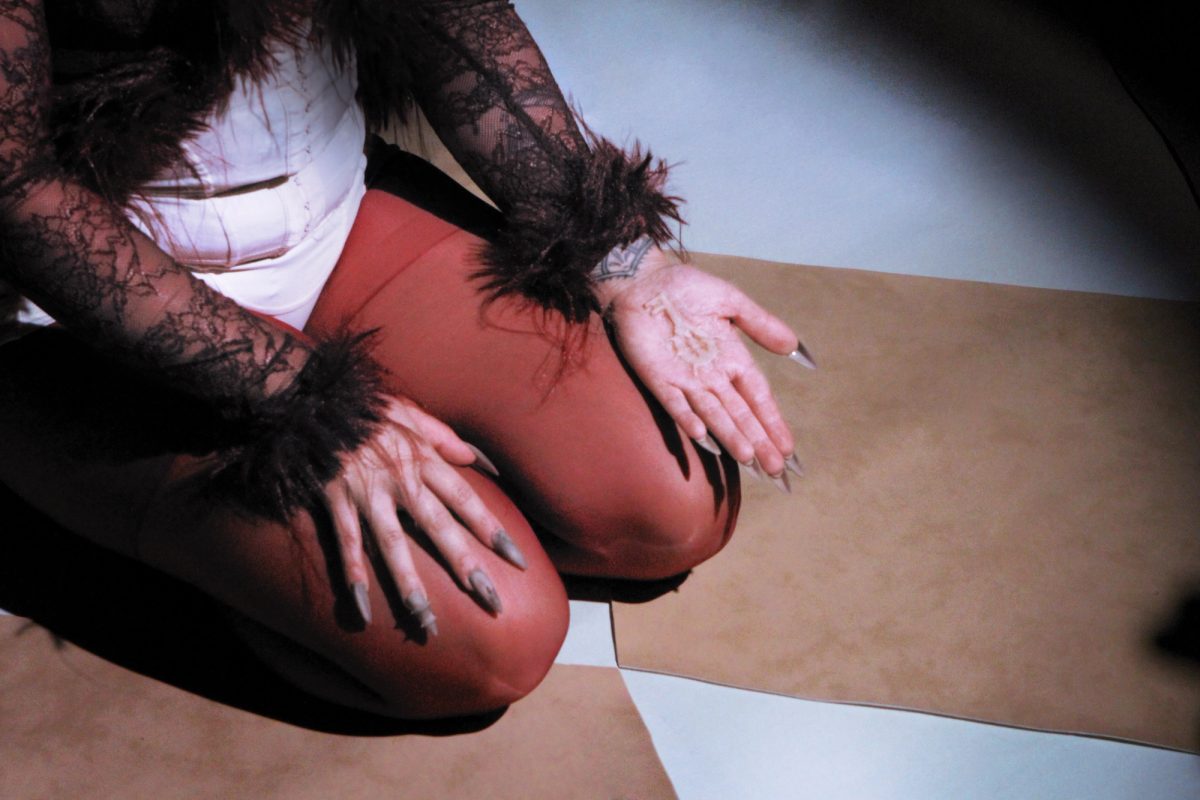
To hold, you must first open your hand and let go.
Access is what you want, guarding is what you do when you're afraid of losing it, and surrender is what happens when you've exhausted both of those options and you just...open?
I've moved through all three in the same relationship, the same creative process, the same conversation. I grew up playing chess, and it taught me to think in terms of prediction and defense: how to stay ahead of what might fall apart. That way of thinking follows me everywhere, including into how I create and how I connect with people.
But what if I stopped trying to calculate my way out? What if I just opened my hand?
Elsewhere in the work, you're hanging upside down on aerial straps, and the rig point is the key sculpture itself rather than a plain ceiling anchor. What led you to make the object that grants entry the same thing holding your body up?
I learned aerial straps specifically for this project, as I often have a visual vision first and then learn the skill to execute it, which unfortunately sometimes takes me a very long time (here, I really wanted to do a one-arm aerial flag, which took me a full year to master, haha). So when I imagined the key holding the body, I had to first make myself capable of doing the one specific move for it.
There's a reversal in it that felt important. Normally, you hold the key. Here, the key holds you. And the thing about aerial straps is that suspension is not passive, because it requires an active grip and constant negotiation between weight and resistance. The key holds you only because you're holding it back! That felt like the truest image of what access actually feels like. It's never just given, and access can be taken at any time.
"The key holds you only because you're holding it back! That felt like the truest image of what access actually feels like. It's never just given, and access can be taken at any time."
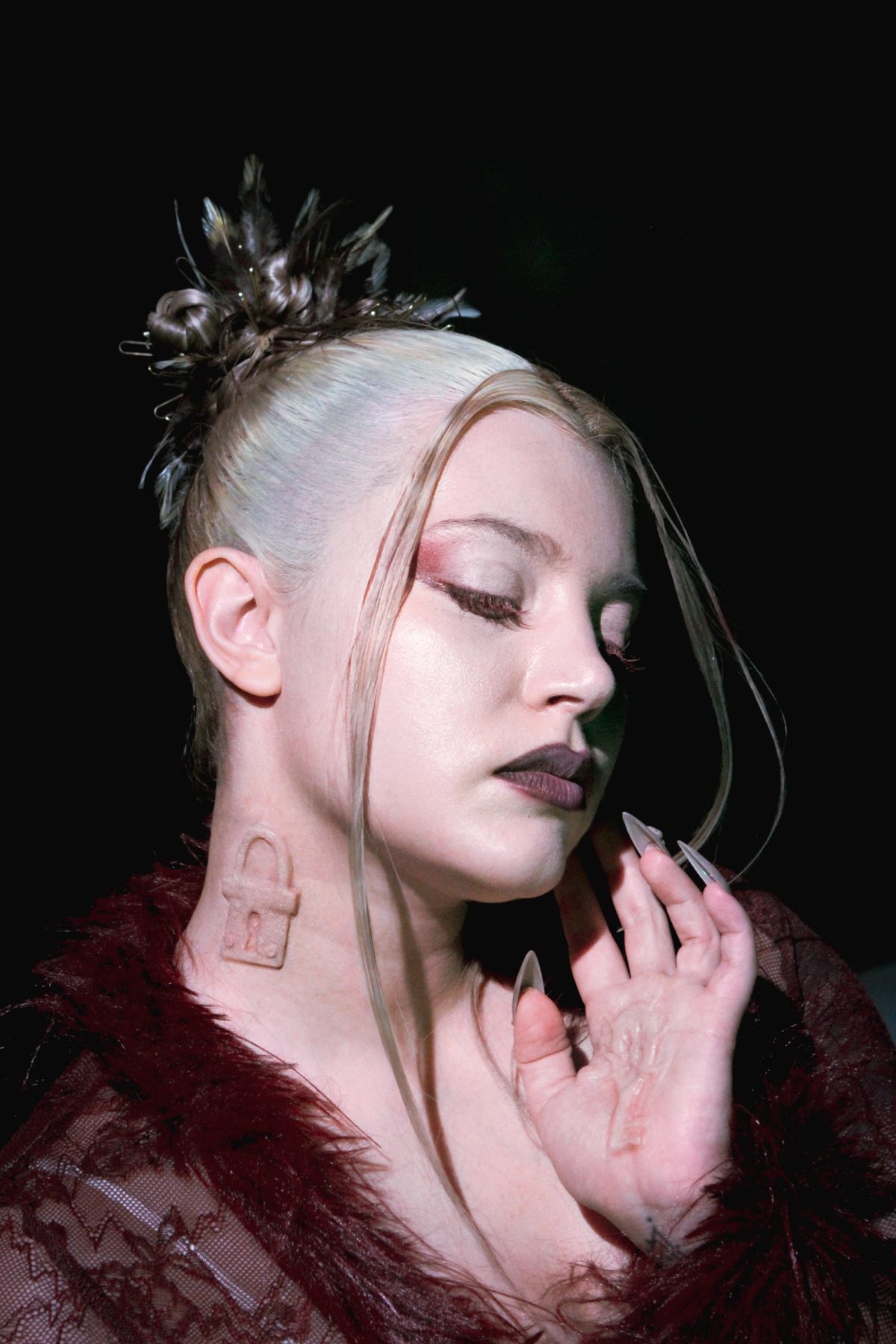
There's a small padlock shape at your throat in one of the portraits, placed exactly where a bite mark might land. Is that meant to be read literally, as the title made visible on skin, or is it doing something else?
It's a cute detail, and I'm happy it's being recognized. Placing a lock there felt very direct: a portrait of someone who has locked something in a vulnerable place. But it also sits exactly where a bite mark would land. So yes: it's the title made visible on my skin, my body finding its own architecture of protection.
Your statement ends with the line "the marks left behind on everything we tried to enter." For someone seeing this series for the first time, what are those marks actually referring to? The body, the person who was let in, the door itself?
All three. I don't think they're separable! The mark on the door is evidence that someone tried to enter; the mark on the body is evidence that every entry costs something.
Nothing is free, not the love, not the grief. Everything that has happened to you changes you, and the marks in BITE MARKS are the record of that: of having wanted something enough to have left evidence of the wanting! But it's also asking: Have you ever handed over a key just to be chosen?
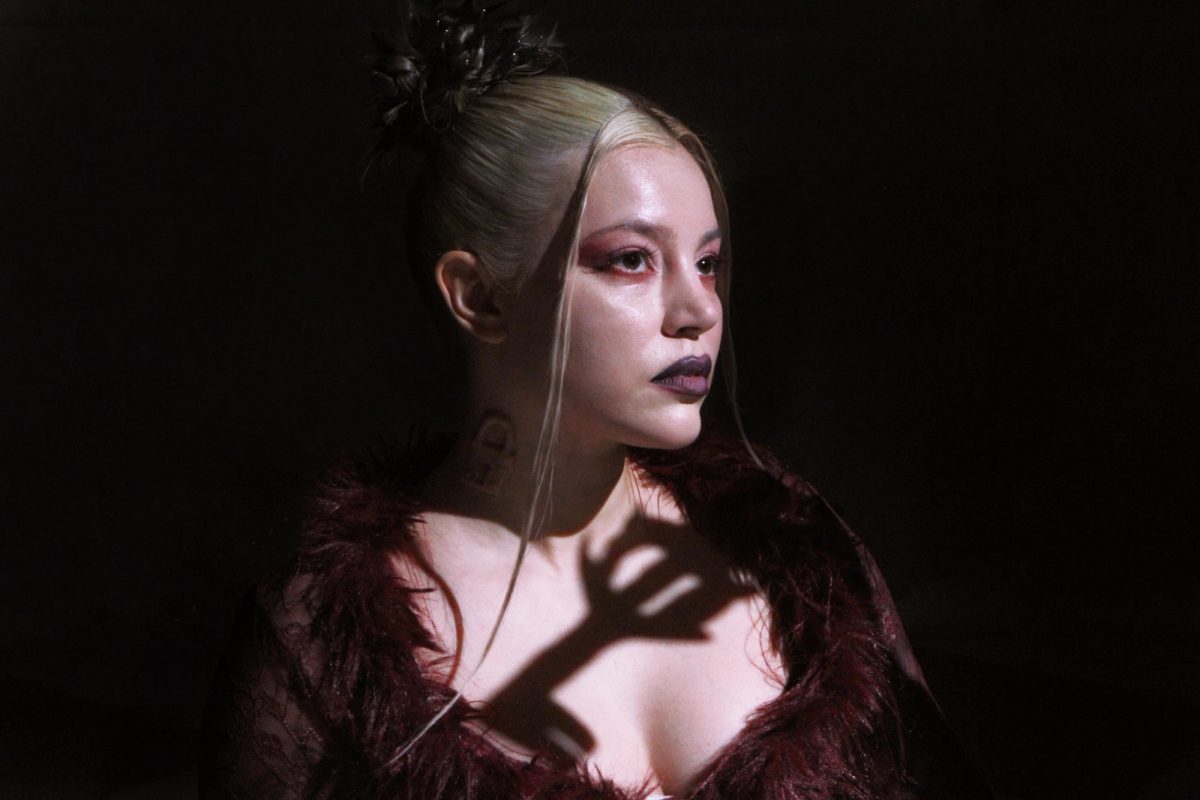
In the voiceover for the project, I wrote: "When we don't get closure, we can't lock the past away. And so sometimes we hold keys to rooms that no longer exist. The rooms are gone, but the key remains, warm in your hand."
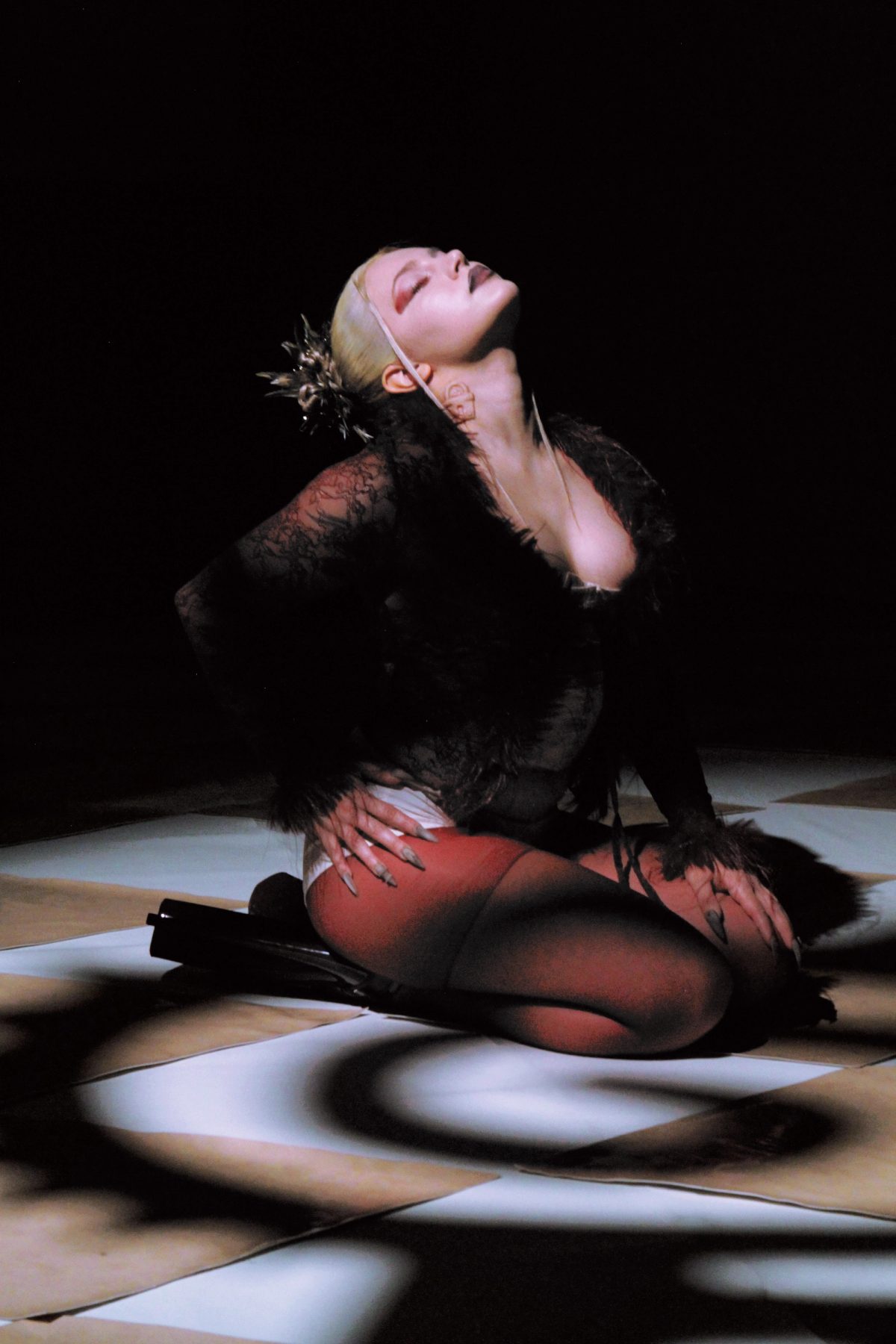
The floor throughout is a chessboard, and you're kneeling in the middle of it surrounded by these key fragments like game pieces. Is there a logic of strategy or being chosen at play, or is the board doing something more purely visual?
It's deeply personal, as I spent most of my childhood playing chess, and it shaped the way I think: how I view my surroundings, analyze situations, and predict outcomes.
The chessboard in BITE MARKS is a small detail that connects to a previous project of mine. I always try to carry a small detail from one project into the next, just as a reminder that everything is connected.
"The rooms are gone, but the key remains, warm in your hand."
You've talked about wanting your work to create what you call "intimate spheres." On a shoot with a full crew (photographer, makeup, hair, nails, SFX, a second director), what actually makes a space feel intimate to you, as opposed to just being well executed?
I always say it's a one-woman show, and in many ways it is! The buildup of each project is a long, solitary process: conceptualizing the idea, building the installation, learning the skills. For BITE MARKS, that meant months of aerial straps training before anyone else was even involved. By the time shoot day arrives, I've been living with the work for a long time by myself.
But then everyone comes together, and that's where the magic happens! I execute my vision with a team that has its own creative language that I trust. And while I'm always the one in control, I'm also the one surrendering control. I design the sets, I direct the shoot, and I perform, while also being open to others' ideas for the SFX, nails, makeup, etc.
I have a core group of people I return to across projects, a lot of them my friends, but I also love inviting new people in. It always brings something unexpected, and that energy is such an inspiration to me. But I also think there's something about contradiction that creates intimacy in this work specifically. I want to be seen, and I struggle with being seen. Those two things coexist in me constantly, and I think that tension is actually what makes the projects feel close and intimate.
You've said the ideas in Bite Marks (access, longing, the body as both medium and subject) run through everything you make. For someone just discovering your work through this project, is this a chapter in something larger you're already building, or the first time these ideas have found their full shape?
Definitely a chapter! All of my ideas have been moving through my artistic journey for a long time before I decide to visualize them and give them a shape outside of myself. That's honestly the only way I know to keep something from consuming me: to let it live outside of me.
I'm building a larger body of work around what I like to call "intimate spheres": contained worlds where personal imagery opens into something universal. Each project is one sphere, and all of them are connected.