A SPIRITUAL KIND OF SOUP: IN CONVERSATION WITH SHANNON DELANEY RYAN
CONVERSATION BY SELIN KIR
CO-FOUNDER, CURATOR
6 SEPTEMBER 2026 — PHILADELPHIA, PENNSYLVANIA
Shannon Delaney Ryan grew up around a church and a living room lit by one lamp at a time. Both left their mark. Trained in illustration, a discipline that sharpens craft in service of someone else's assignment, she has since built a practice around a different instinct: making the object first and asking what it means later, sometimes much later. Clay figures are sculpted, photographed, dismantled, and folded back into oil paint; hands and eyes and small hardened relics get threaded onto rope like devotional objects with no fixed liturgy behind them. What survives from her theater background isn't the drama so much as the staging, every scene built to be viewed from one angle, held still the way a set is held still before the actors arrive. The paintings that come out the other side just sit there, glowing faintly, daring you to remember something you can't quite place.
You grew up in Philadelphia, and you've said that upbringing shapes what you're drawn to. What specifically from that childhood keeps resurfacing in the work now? Is it a place, an object, a feeling?
Mayfair, which is in the northeast section of Philly, wasn't really a place that produced artists. It was a middle/working-class neighbourhood that people commuted into the city or New Jersey to work from, pretty plain, just chain stores on the strips and row after row of houses. There was, however, a church nearby, and one day I ran away from home and went inside and asked if I could join its congregation. I was probably around 8 years old. I don't think I was particularly interested in being a disciple of God, but I was affected by the visual drama contained there. It was a dimly lit space with a big golden altar, and there were these interesting wooden relief stations of the cross and jewel-toned stained glass windows. I was drawn to the stories of the saints and the sculptures and paintings that accompanied them. There was a darkness to it that I found romantic as a child, and it had an effect on what I am attracted to and what I would be possessed to create.
That environment of the church was echoed in my childhood home, where my mother would light the house with one or two lamps, it was so difficult to see anything, but it was warm and had a comforting, almost spiritual presence. She had a giant poster of Michelangelo's cherubs, and black candlesticks, and wooden plague masks; we watched horror films; my dad had instruments everywhere. It was quite a colourful space we inhabited, and when you walked outside you were on a city block, grey and cemented, screen doors, cars lining the street. I am actually able to see the beauty there now. In my memories, the sun is shining and there are many blooming trees, and our elder neighbour Tom is showing my sister and me old photos of his family.
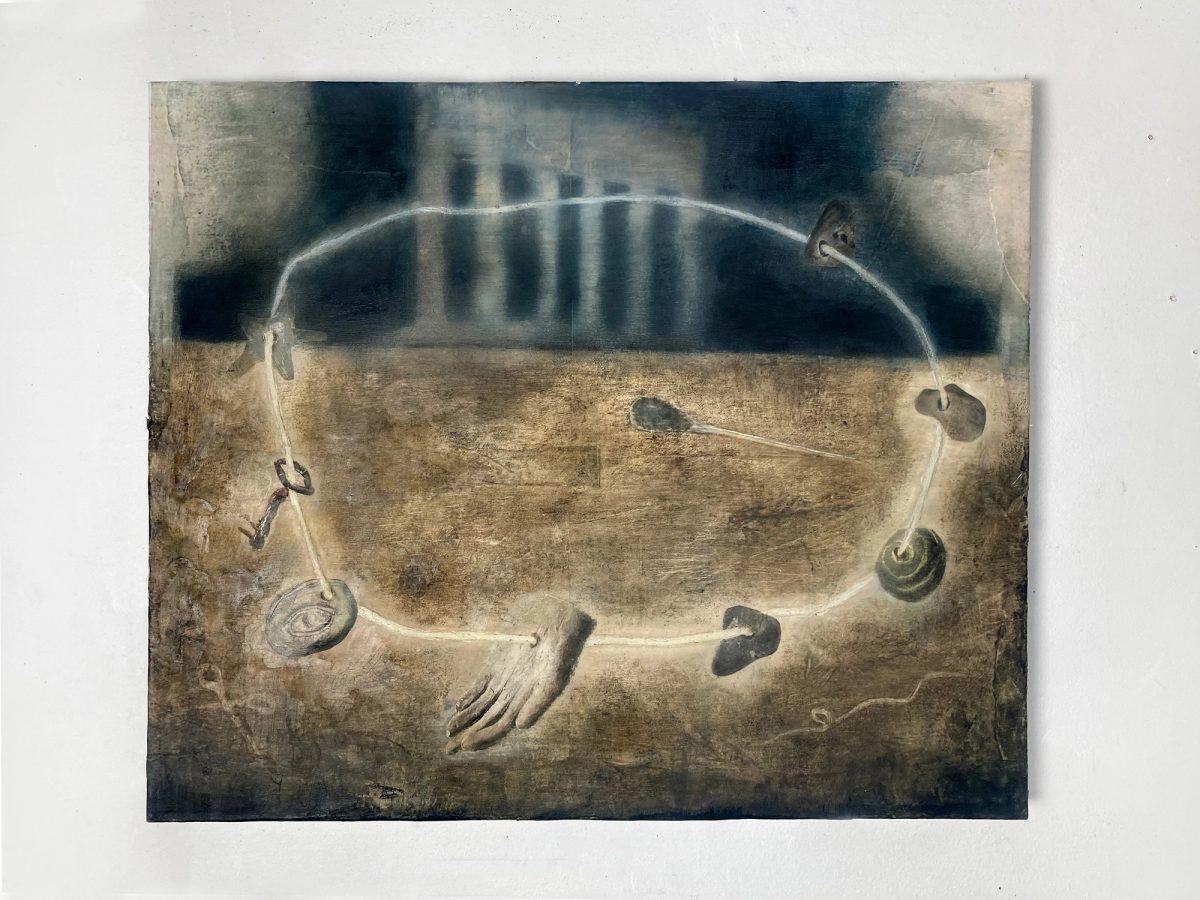
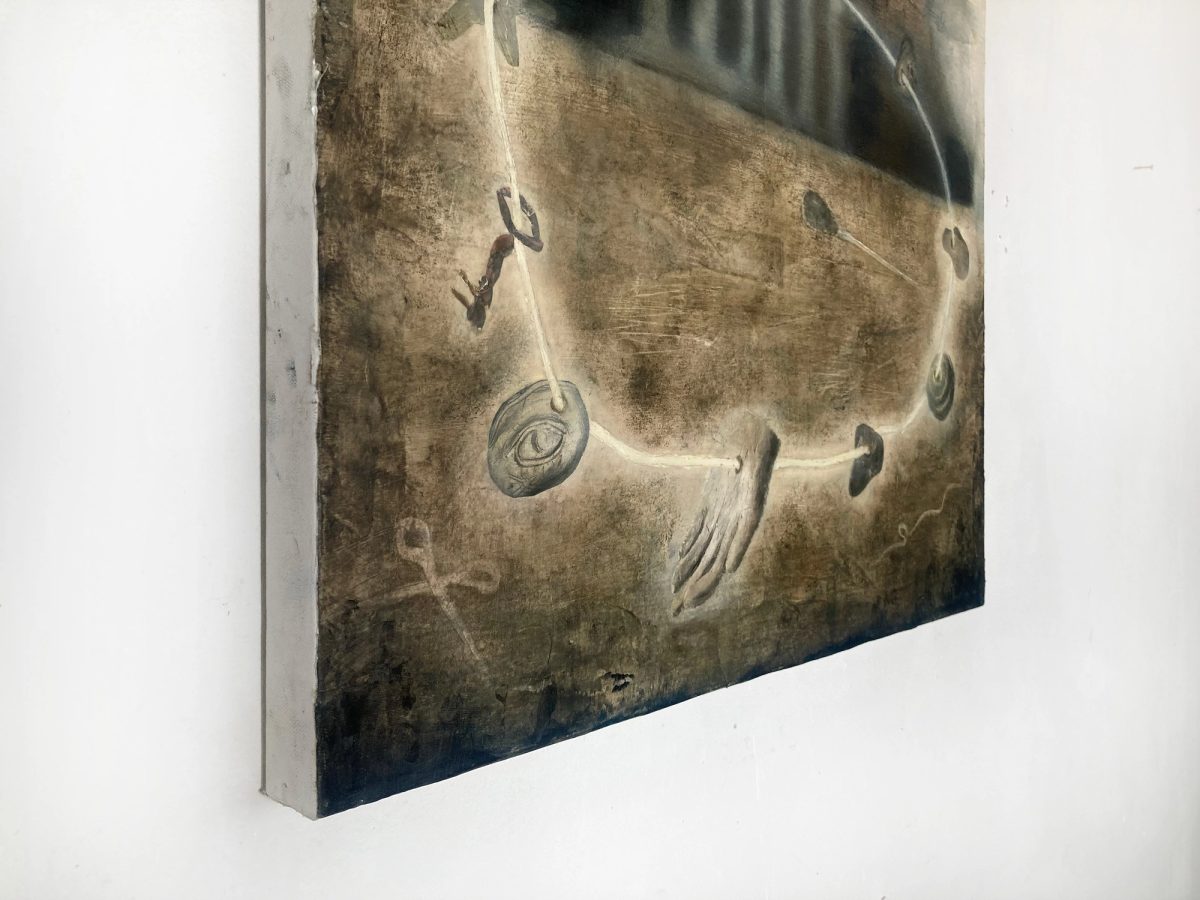
String of Life, Shannon Delaney Ryan, oil, collage and wax on canvas, 22 x 24 in.
Your bio describes the work as "a theatrical reconstruction of memories and dreams" and objects that "hold power over reality when we are no longer here." Are you building relics for a future that doesn't include you, or is that afterlife framing more about the objects outliving the memories themselves?
I had been thinking about the objects in my life, things that were passed down to me and things that I've made. My apartment is filled with so many of these treasures, and I grew up in a similar environment in my childhood home. As I was painting this recent work, it was revealing that these objects have a hold over me in terms of their importance and the human tradition of making, and the desire to hold onto those items. What happens when those things and people are placed out of context, or in a dream version of the space you remember them in, and how does that elevate them to a higher power or meaning? When people in my life have died, the objects are what is left; the memories fade and warp. Those relics and memories, however, cohabitate in this spiritual kind of soup, and I began imagining them inhabiting a life of their own in this magical way.
Phantom Mom shows two ghostly, disembodied hands cupped around an empty blue void. Who or what is missing from the center of that painting?
I don't view it as what is missing, but rather what was a defining characteristic of that person and what they are remembered by. That piece was inspired by a friend who had lost his mother some time ago; she was a scientist and visual artist, and he had said a part of her that stood out to him was her hands. It made me think of the work and love mothers show with their hands, so I have essentially stripped the person down to their most beloved trait. The blue void is everything she came in contact with in the life of the people around her.
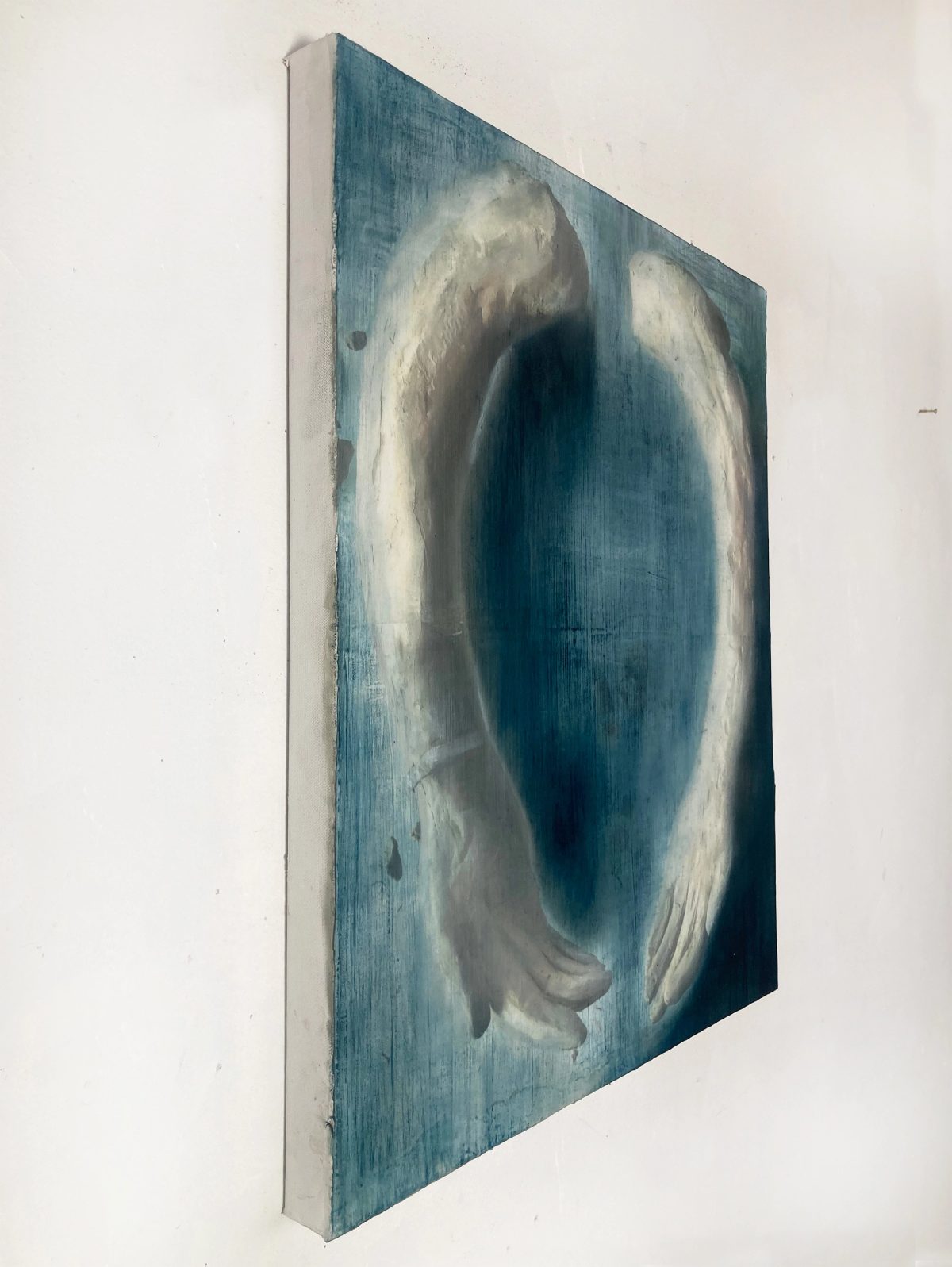
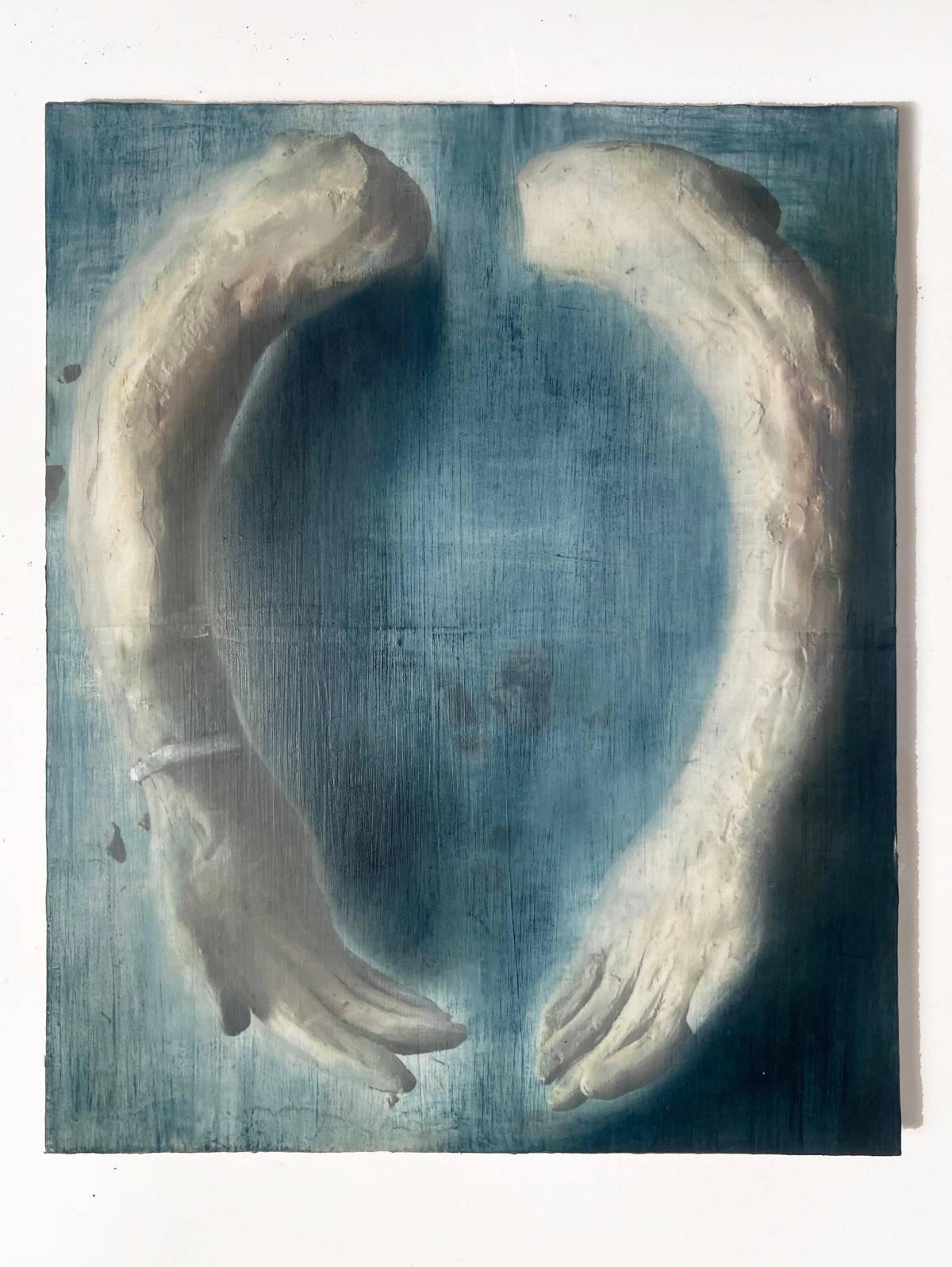
Phantom Mom, Shannon Delaney Ryan, oil and collage on canvas, 24 x 22 in.
"I actually think the painting is way more alive than the sculptures, this has to do with the fact that sculpture is always influenced by the room it's in, and a painting is a world."
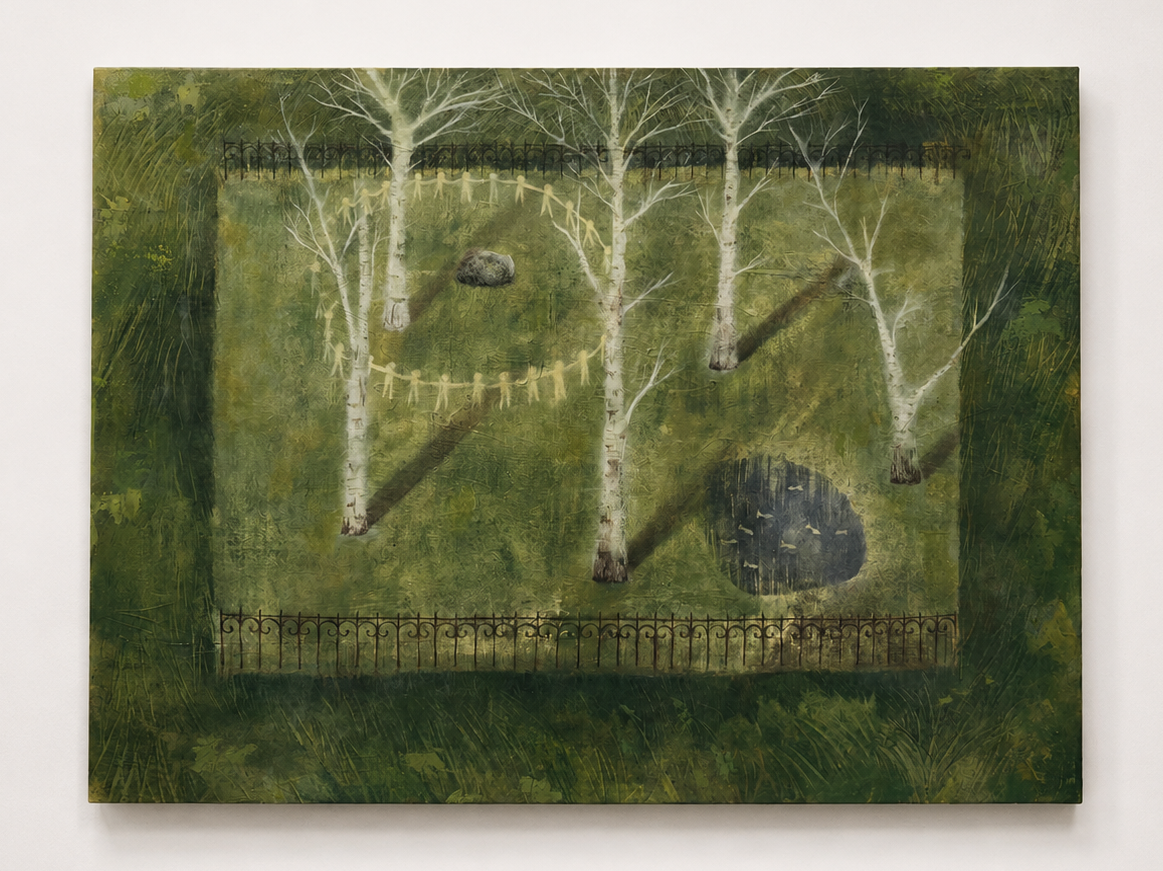
Resting Field, Shannon Delaney Ryan, oil on canvas, 30 x 40 in.
Your solo shows have all been in Philadelphia so far: Removing the Groundpiece and Unusual Victories, both at Fairmount House. Does showing outside that context for the first time, in Portland and Paris, change how much you feel you need to explain versus what can stay private?
In some ways, yes. Both of those shows were in Philadelphia and were attended by people who know me and my work, so showing in other places outside my city, I do feel pressure to communicate more so what I am doing. I went to school for illustration, which is a commercial art, so putting the throughlines in my work into words wasn't something I really spent time doing, because in that program you were given a topic or assignment and set out to make an accompanying piece. I did a painting residency at SVA in New York City this past summer and got some amazing feedback about the conceptual elements in my work and how to nourish that with research. Sometimes the work tells me what it is after I make it, so I've been very active in mythologizing my practice and getting to the bottom of why I return to certain symbols. Of course, there's the age-old battle of wanting to toe the line of saying just enough while leaving room for the viewer to just feel its presence, that persists.
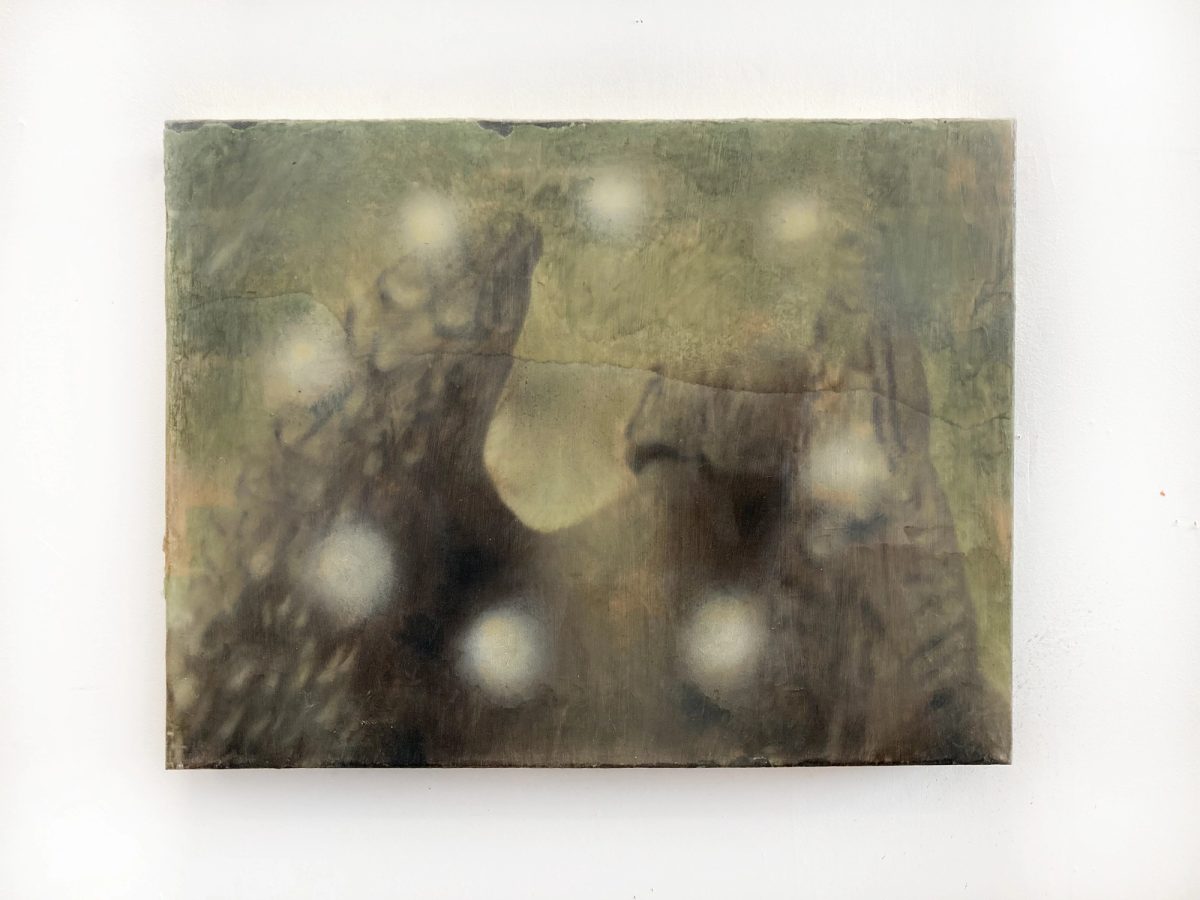
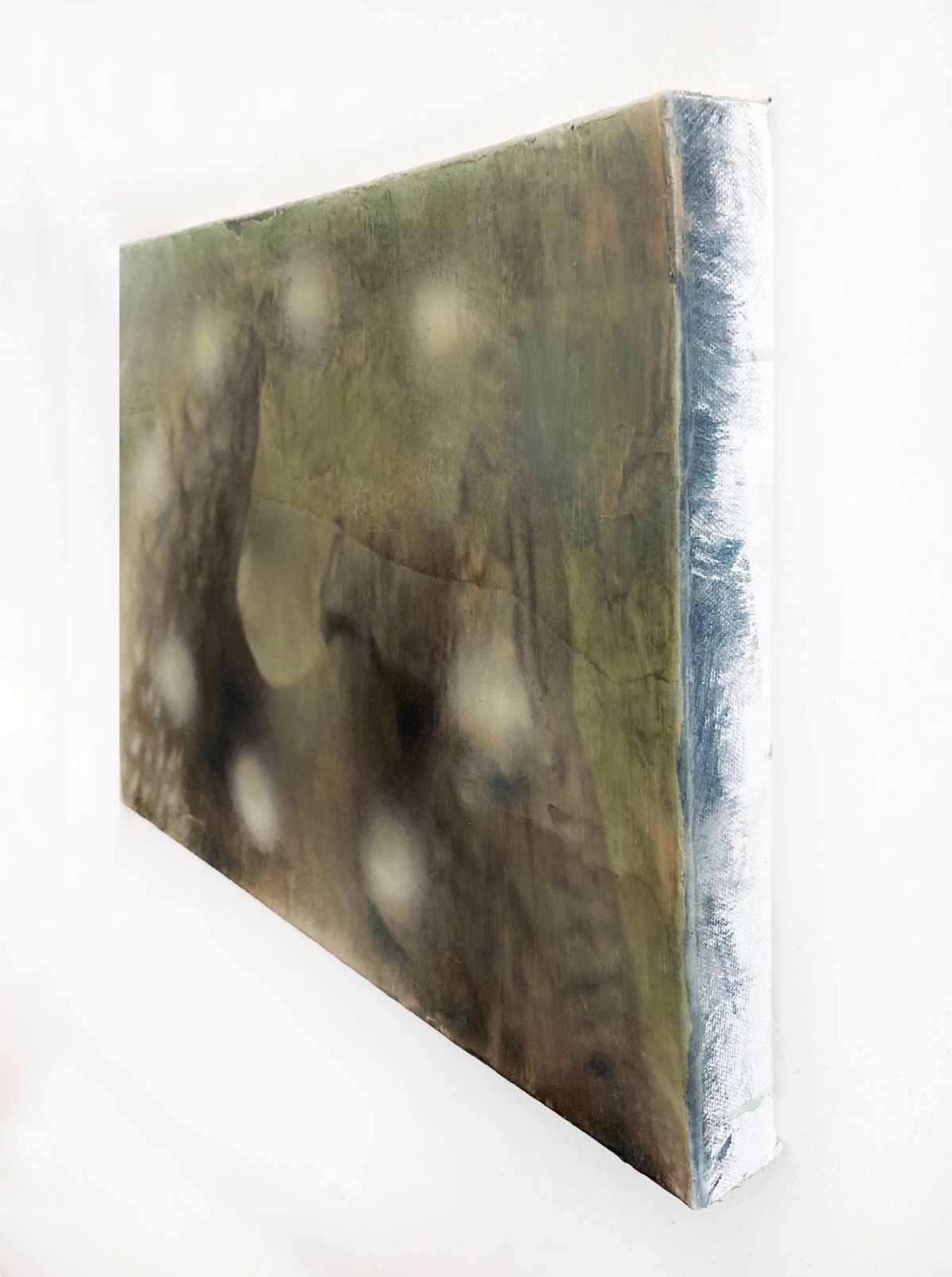
Daimon, Shannon Delaney Ryan, oil, wax and transfer on canvas, 12 x 16 in.
You have a background in props mastering and set painting, and you feel it's shaped a flattened, almost staged perspective in how you paint landscapes and objects. When you're building a scene now, are you still thinking like someone constructing something to be viewed from one fixed angle, the way a stage set is?
I think of theatrical sets as being stripped down to only the essential items a character uses, or one or two elements of nature, a moon, or grass. It's a way to communicate to the audience what is important without too much clutter, but of course practically, because theater storage is limited. Beyond having worked at a theater for a short time, I watch many films and take inspiration from cinematography, which is essentially the same idea. The films of Roy Andersson, specifically his film Songs from the Second Floor, I always found interesting. I read that he bolted the camera into the ground and built up the sets around it, so every shot is fixed and characters and furniture are meticulously placed in its scope, most often in the center, like a painting. It created this surreal stillness that amplified every movement of the character, even a bird flying. That stillness is something we really don't experience in our lives too often, which I find exists in painting.
When I have an idea for a figure, animal, or object, I like building the world around it. I will usually construct a sculpture first and then build up the surrounding environment, and if it makes sense, I will crop in on one area with the right information, so yes, it is fixed. Though I have been playing around with the idea of creating multiple angles of the same scene, which is a future series I would like to make. I like to display the sculptures with the paintings sometimes; it's fun to see some people make the connection, but often the painting changes so much around it that many don't notice.
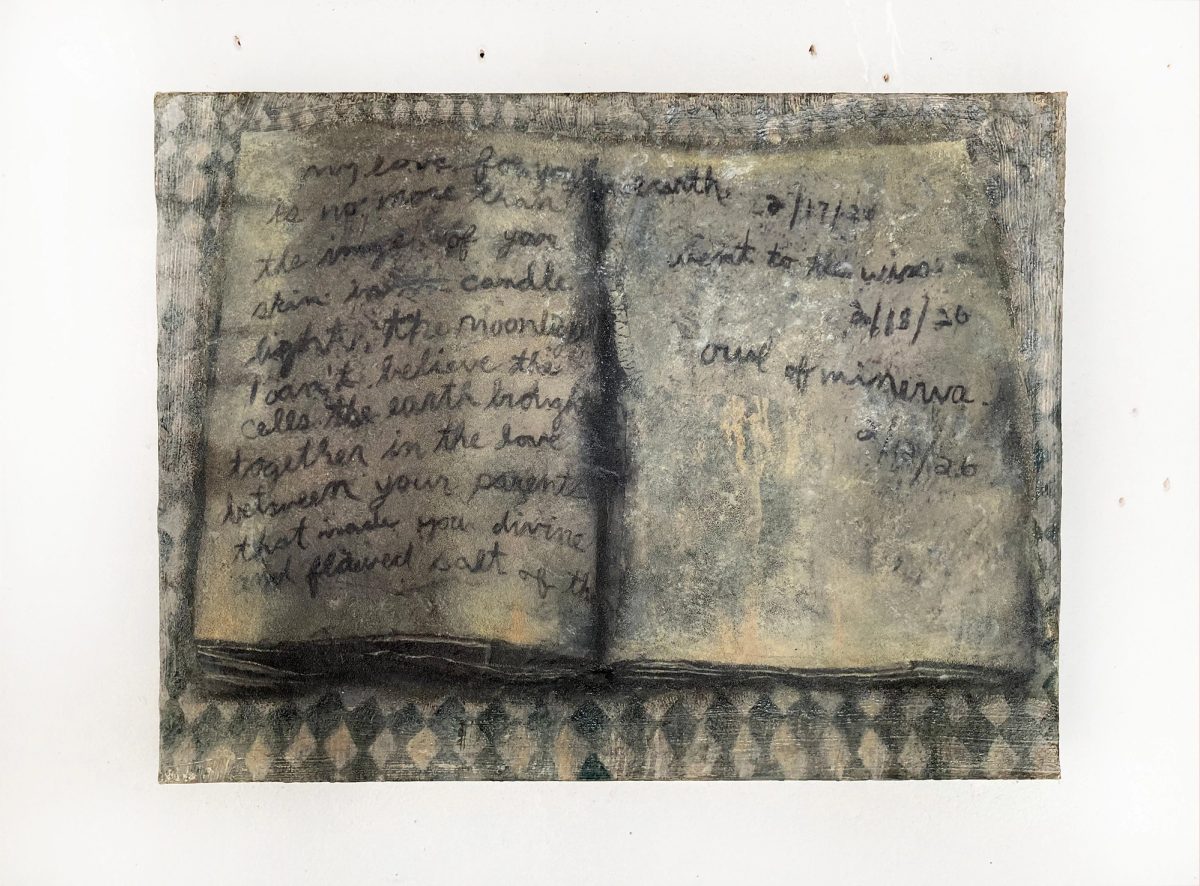
Diary on Kitchen Table, Shannon Delaney Ryan, oil, sand and uv transfer on canvas, 12 x 16 in.
"Those relics and memories however cohabitate in this spiritual kind of soup and I began imagining them inhabiting a life of their own in this magical way."
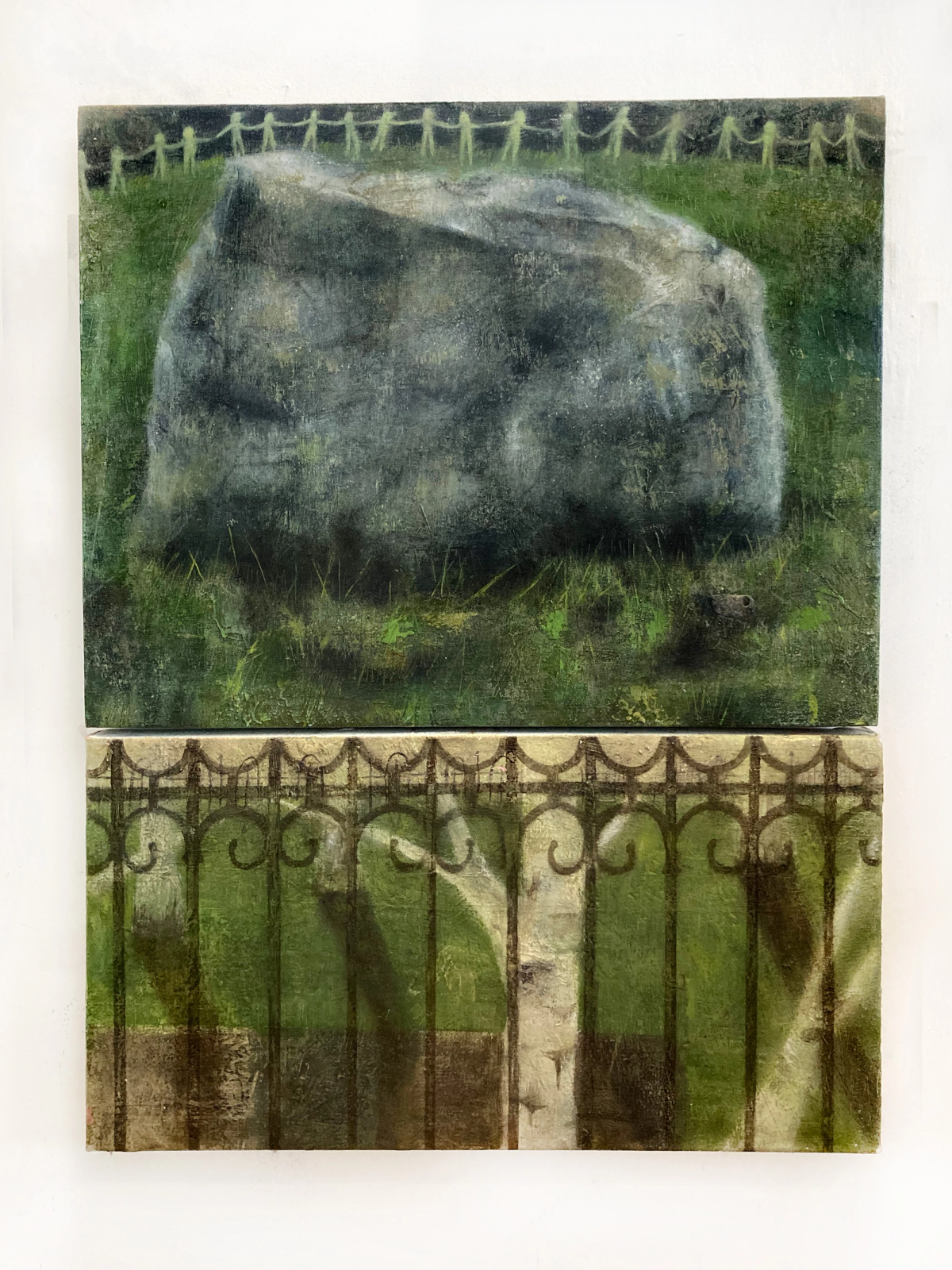
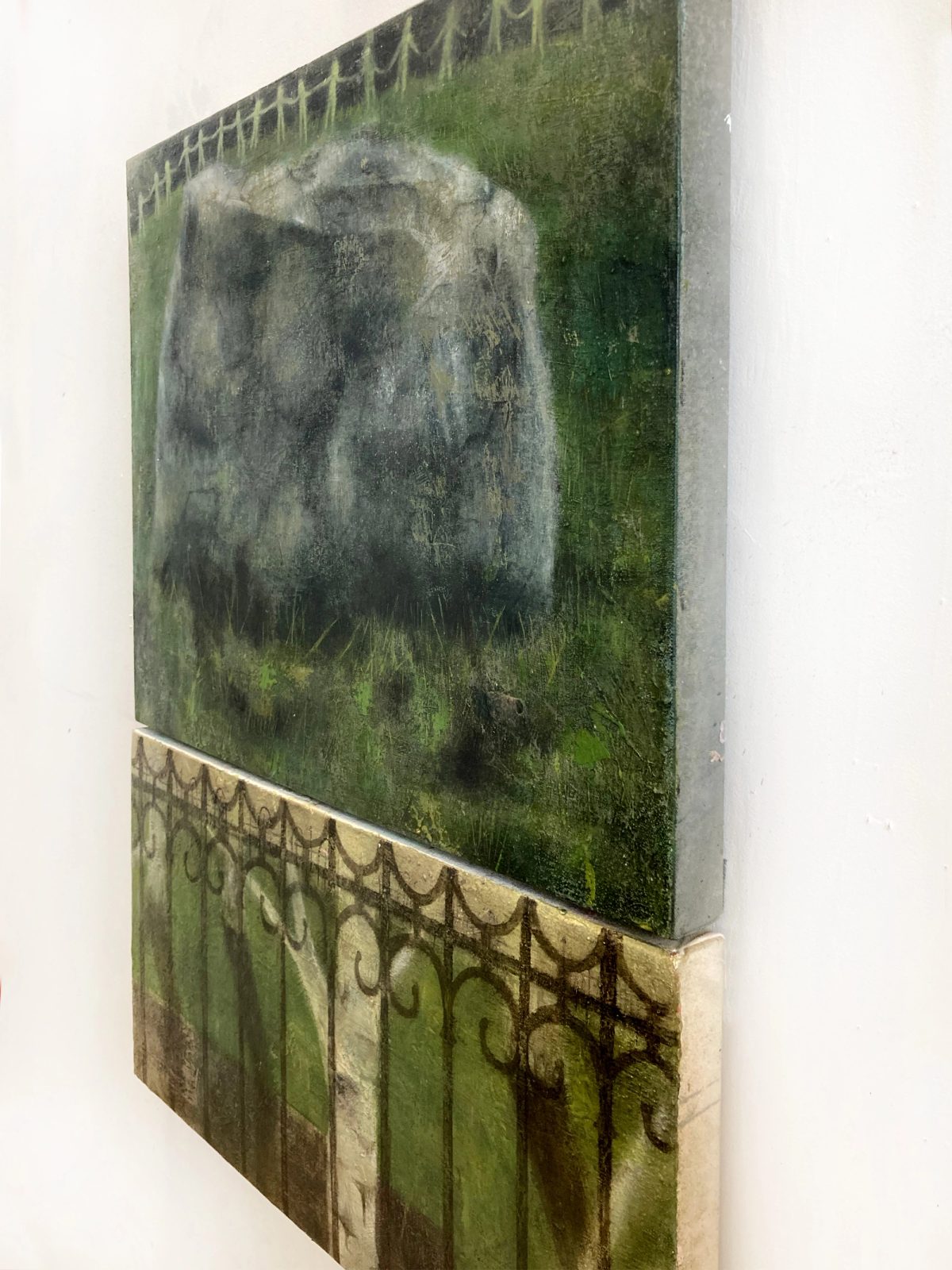
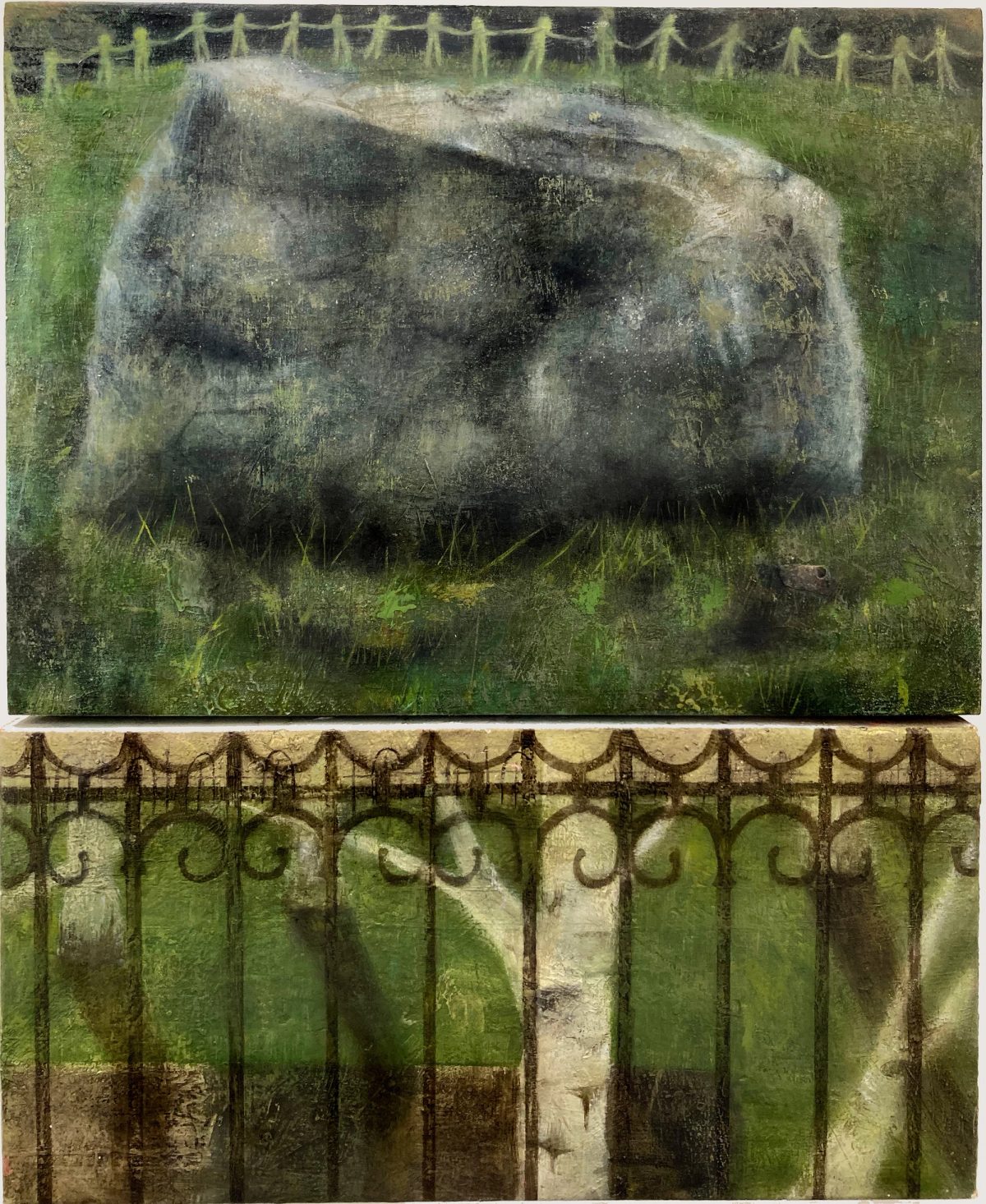
Hole and Celebratory Stone, Shannon Delaney Ryan, oil on panel and canvas, 24 x 30 in.
Your process starts with clay sculptures, which you photograph and transfer onto the painted surface, where they merge alchemically with other mediums. At what point does a piece stop being sculpture and start being painting for you? Is there a moment mid-process where you feel it change hands?
It stops technically being sculpture when the image is captured by my phone camera and when I then transfer it onto a flat surface. However, the images aren't simply flat, because of the impressions of the sculptures and the dislocated space that occurs between the paint and those transferred images, it creates this mysterious dance between the two that I feel gives them the quality of being alive and tangible. I actually think the painting is way more alive than the sculptures; this has to do with the fact that sculpture is always influenced by the room it's in, and a painting is a world. I still make pieces using just oil paint. I feel you can get lost in a work that is just one medium, as opposed to the more architectural and planned approach of image transfer and collage, and I still try to achieve this tangible experience, though I feel I haven't gotten there just yet. At this point in my career, I'm not in total control of where my work is shown, but I would love to make immersive sets to accompany the paintings one day if the setting is right.
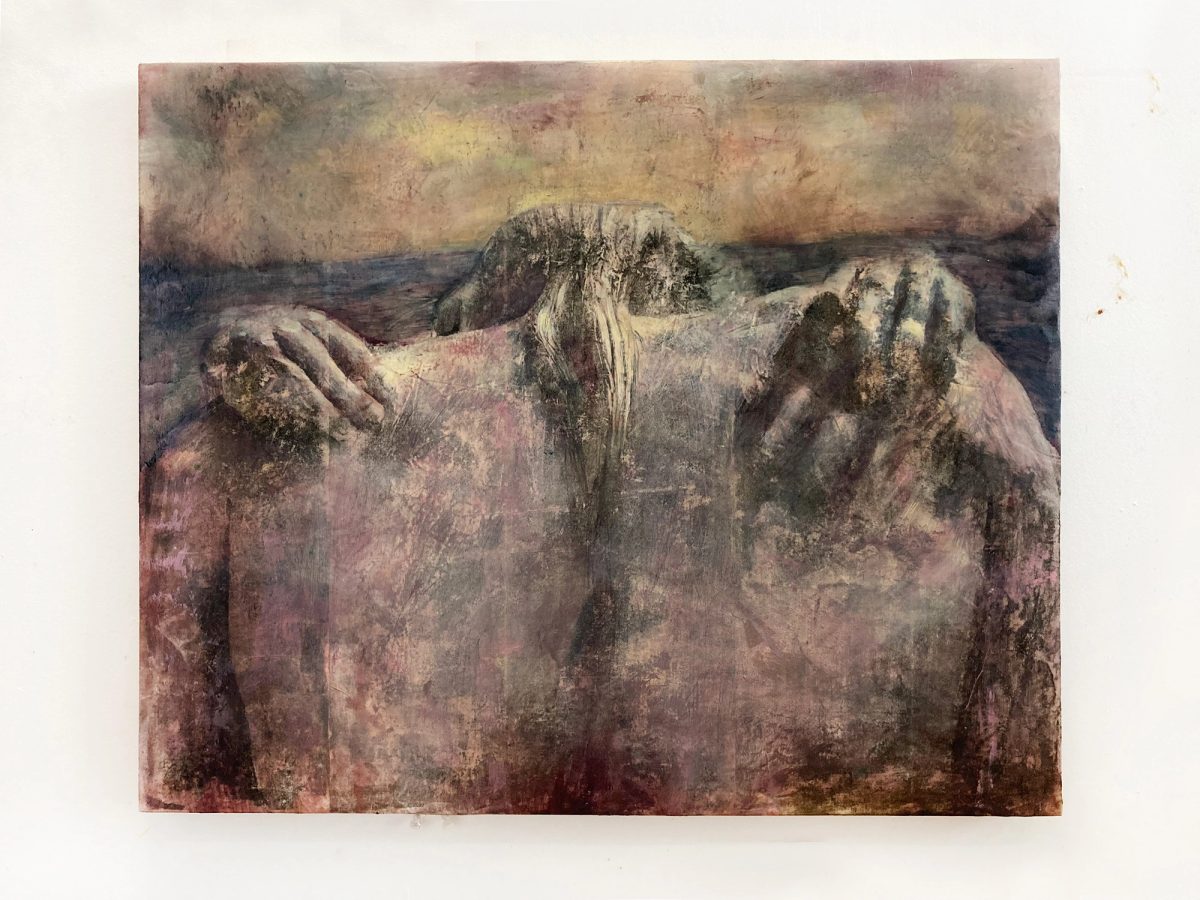
Receiver, Shannon Delaney Ryan, oil and hand transfer on cloth and panel, 24 x 28 in.
"You might associate that object to a bad time and it may just exist as a mere 'thing', but years later you might laugh over your youthful woes and admire it for its beauty."
Your influences include magical realism, symbolism, and ancient artifacts: traditions that treat objects as vessels for something beyond themselves. When you're deciding whether a painted object in your work is a relic, a memory, or just a thing, does that distinction actually matter to you, or is the ambiguity the point?
That's an interesting question to ponder. At this moment, I don't believe there is a distinction. Memories and dreams are ambiguous; their meaning changes based on what stage of life you are in. It's about what energy the object or room or figure has absorbed, and it can be forever shifting. I think some relics and memories are quite mercurial, and their meanings blend into one another. I try to achieve this vision with magic, whether that's depicted by the light in a painting or an off-kilter landscape. The distinction between a relic and something that's just a thing is dependent on time and the circumstances. If you found a shell on a beach that you thought was beautiful and took it with you, but had a terrible fight with a friend or lover later that day, you might associate that object with a bad time, and it may just exist as a mere "thing." But years later, you might laugh over your youthful woes and admire it for its beauty and the time in your life you inherited it, which maybe then allows it to become a sort of relic. I think everything in our lives, even life itself, is puzzling and ambiguous.
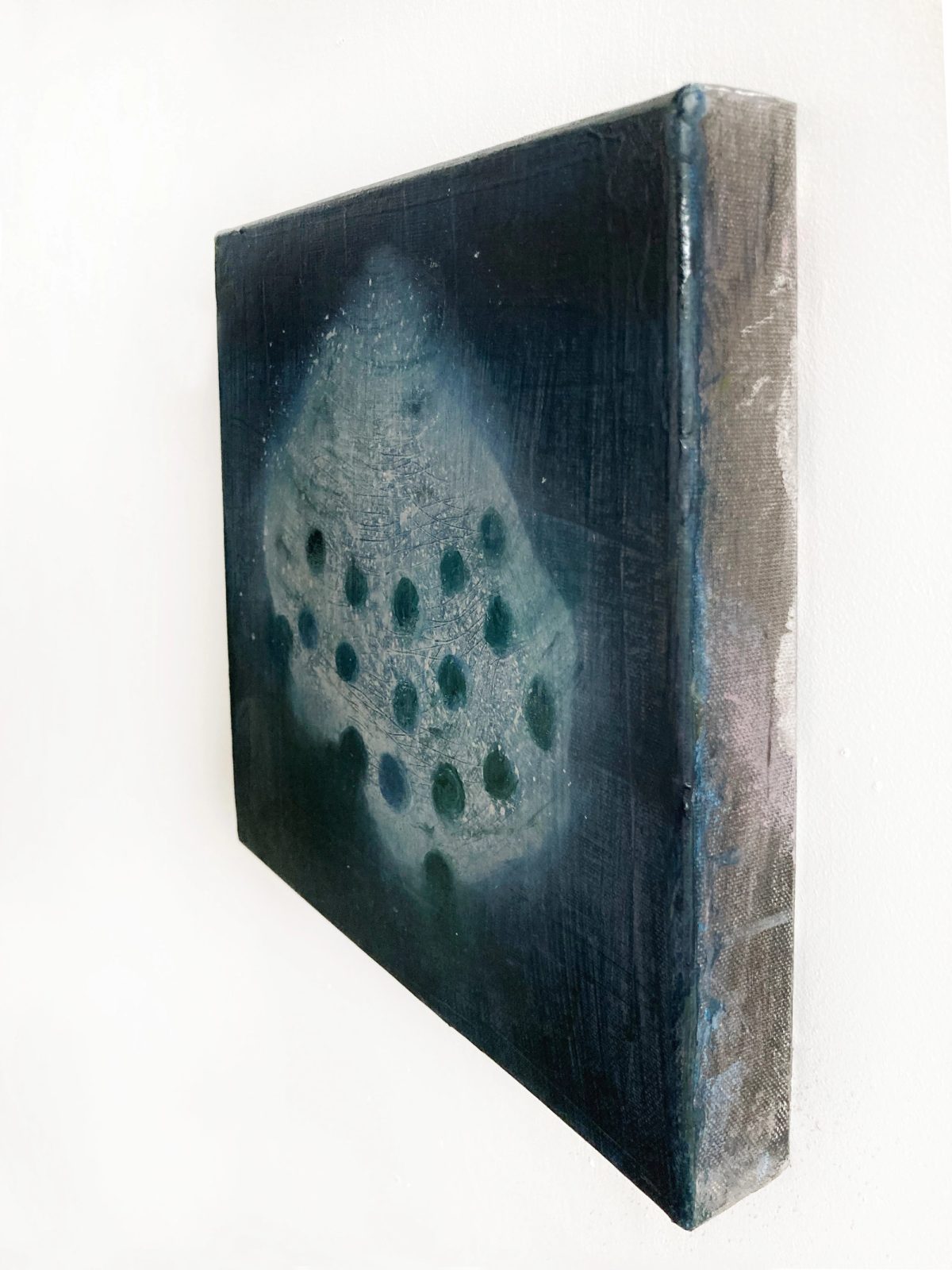
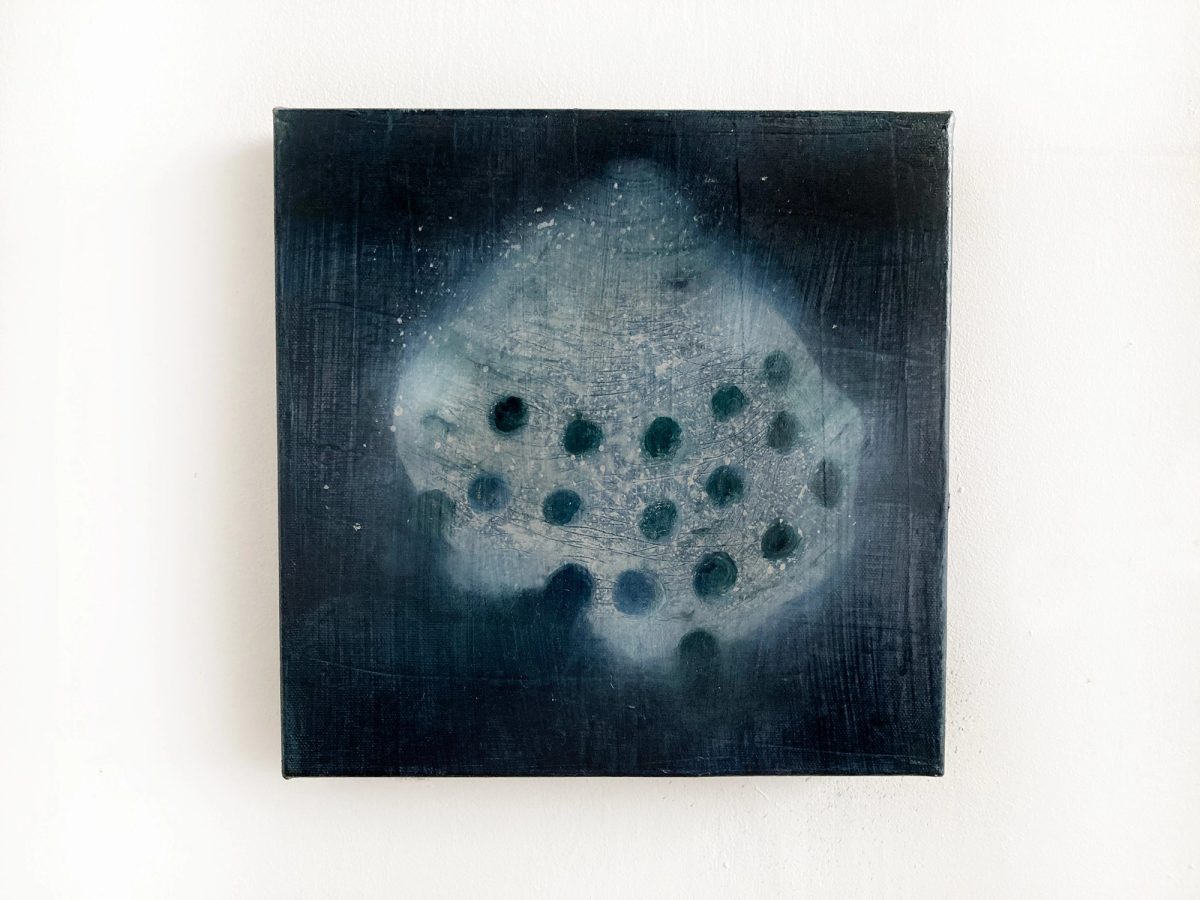
Button Shell, Shannon Delaney Ryan, oil on canvas in artist's frame, 12 x 12 in.
String of Life threads a rope through disembodied hands, eyes, and small objects looped in a circle, almost like a charm bracelet or a rosary. How do you choose which objects get to join that string, and is there a logic to the order they appear in?
When I make the sculptures for my work, I often will repurpose the clay, after I capture the image of them, into new sculptures. The charms on that string were made with sculptures from the past I had decided to let harden and not reuse. They were just sitting there on my workbench, and I hadn't done anything with them. I looked at them for a while and couldn't figure out a more appropriate context for them other than a connected strand where they could simply coexist together. We had iron keys for our rooms as kids. The hagstones are a symbol of protection; I sculpted those after giving up on trying to find them on the beach. I have an infatuation with hands, our ability to work and show love with them, and also inflict violence. An eye as a reminder to look at the sky, to see the good in people around you, but still watch out for yourself.
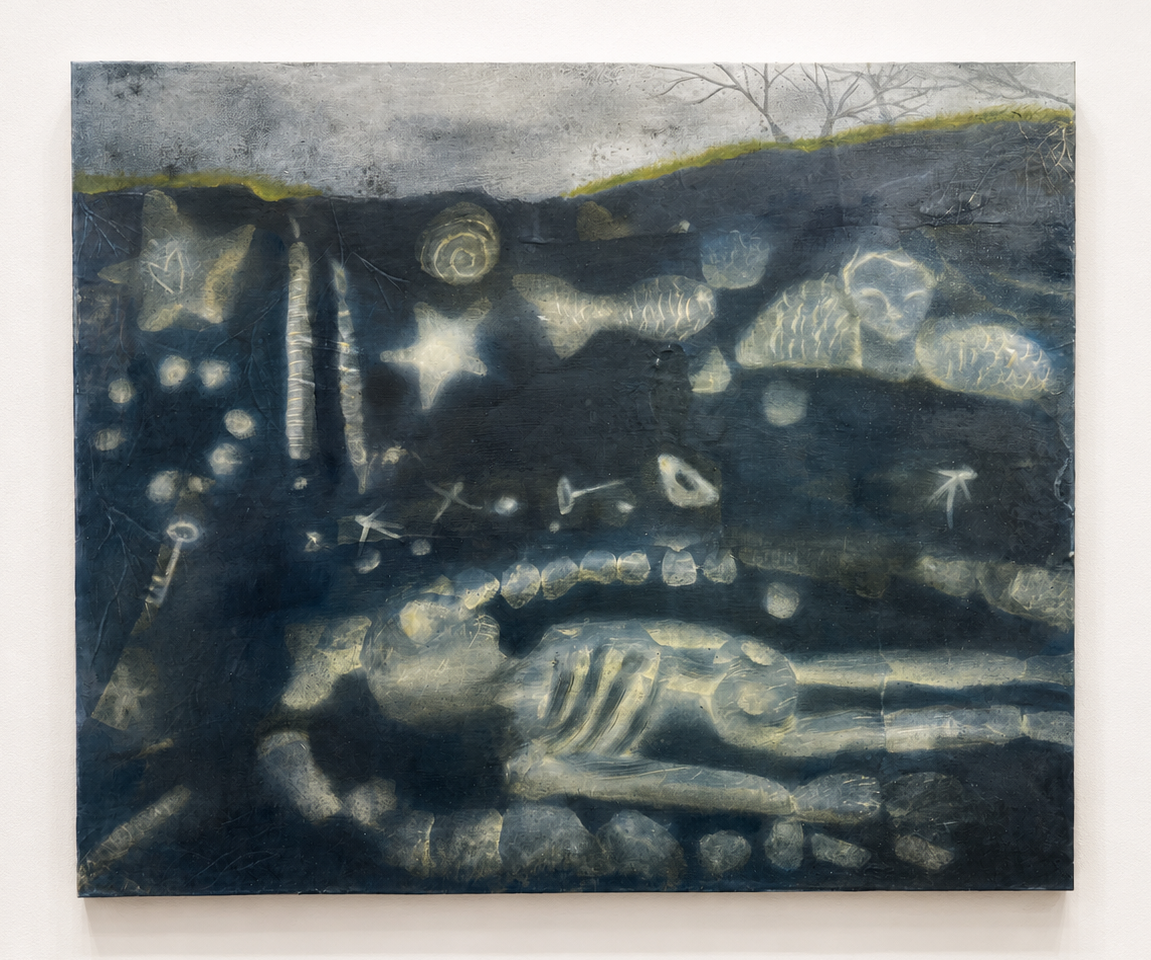
Spirit Show, Shannon Delaney Ryan, oil and collage on canvas, 22 x 24 in.
Cover Image: Hole and Celebratory Stone, Shannon Delaney Ryan, oil on panel and canvas, 24 x 30 in.