THE PIG IS SYMBOLIC IN A THOUSAND WAYS: IN CONVERSATION WITH LOLA DUPRE
CONVERSATION BY YANGRUNG CHEN
CO-FOUNDER, CURATOR
5 FEBRUARY 2026 — UNITED KINGDOM
Lola Dupre works with images that already circulate, returning them to the hand. Photography, archival material, and familiar visual codes are cut, folded, and physically reworked, slipping between humour and disturbance. Paper becomes a site of softness and resistance, where faces stretch, symbols loosen, and meaning refuses to settle. What appears is both intimate and unsettled, bound by seams, shadows, and gestures that bear the weight of touch, time, and material presence.
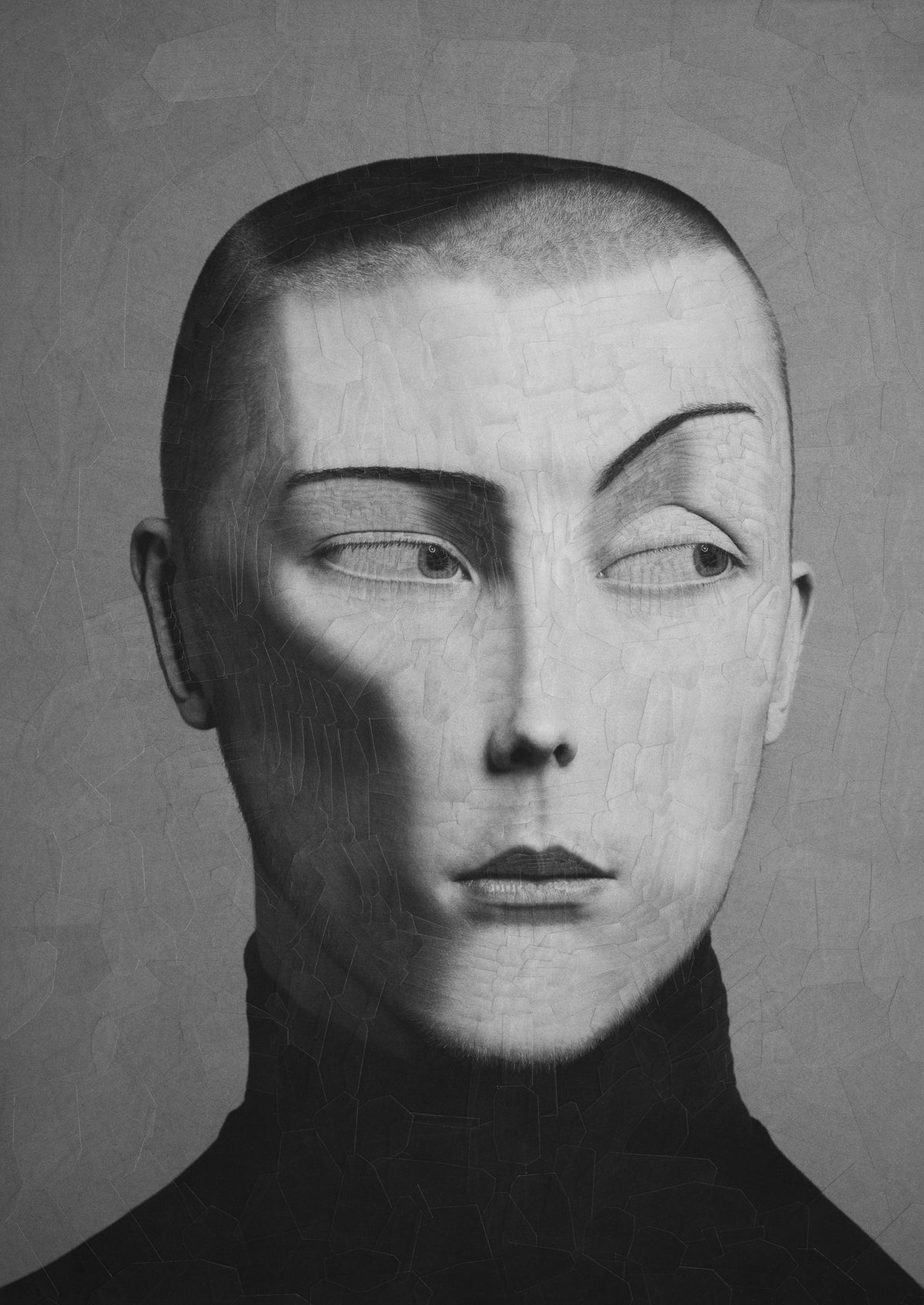
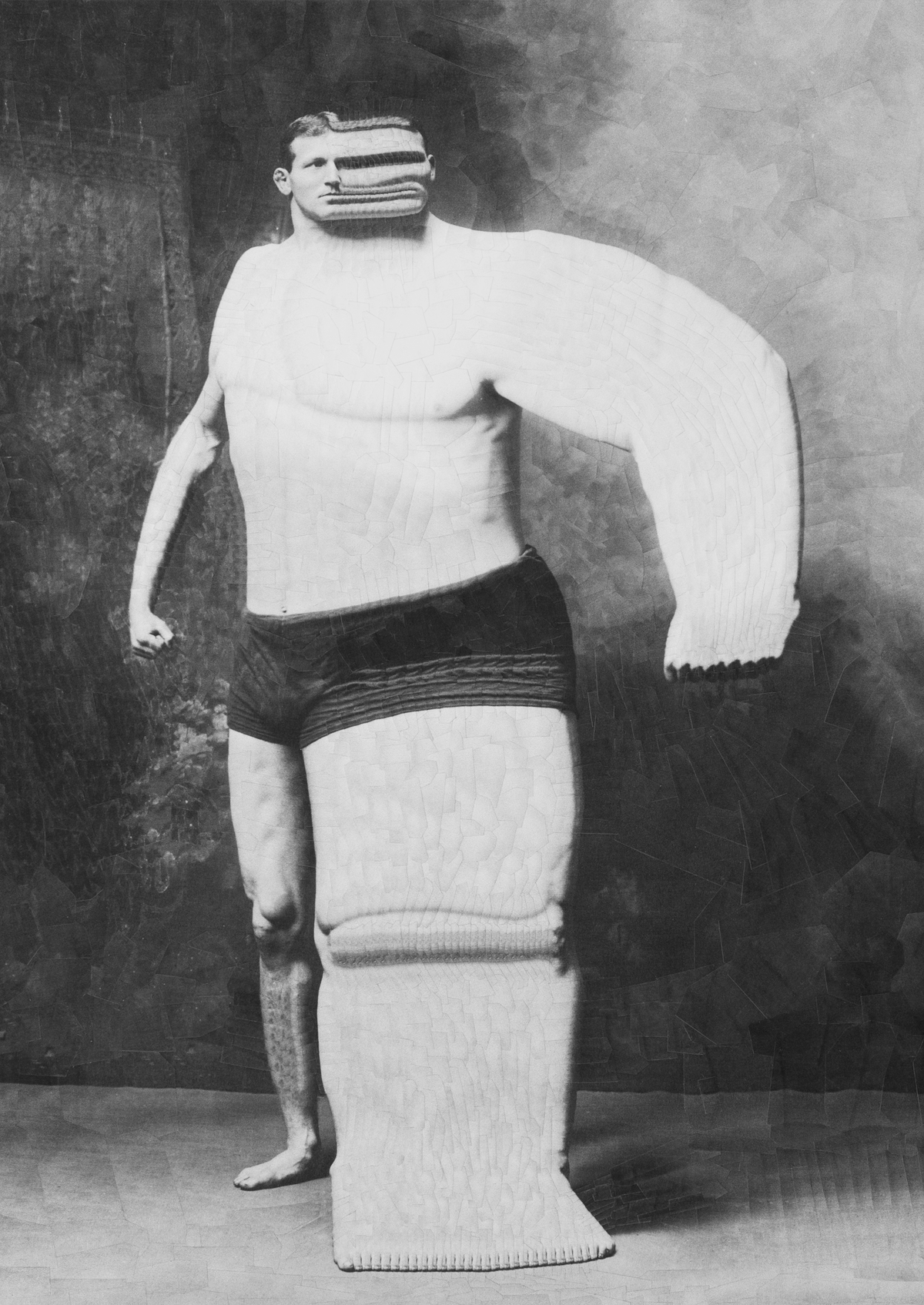
LEFT: Lola Dupre, After Jordan James Bridge, photograph by Luke Unsworth.
RIGHT: Lola Dupre, Just a Phase I Am Going Through.
You showed Divine Swine in OBTUSE (°), the inaugural exhibition by Obtuse Archive, curated by myself and Yangrung. The exhibition was curated around relationships allowing works to lean into one another through proximity, material tension, and shared uncertainty. How did that curatorial approach register for you as an artist, particularly in how Divine Swine sat in relation to the other works in the exhibition?
I appreciated the curation for its openness, relationships manifest in the space between things. Interesting relationships form when contrasting things sit side by side. This approach I find delightful because I think it encourages a playful exploration, almost a free hand. This space where uncertainty might force assumptions is where I wanted Divine Swine to sit.
The pig in Divine Swine is a figure loaded with contradiction: domestic and abject, sacred and expendable, familiar and culturally overdetermined. Rather than using it as a symbol, your work seems to let it exist as a presence. Why a pig, why now? And, how do you approach working with images that already carry so much meaning without allowing them to collapse into commentary?
I don't like to overcomplicate things. I don't like to question every moment and every visual to the point where you are unsure of the purpose, or even the right of something to exist. Maybe even to the little sadness where you abandon an idea. I try not to concern myself with the commentary of others; let the pieces fall where they may, I think. If a pig is symbolic, then it is symbolic in 1000 ways, each valid to someone. The pig is your lover, your nightmare, your secret desire, your truth or your lie. Maybe it is a meaningless triviality. I can't navigate the inner workings of another’s head and anticipate such things. I can only grasp one idea of my own and pursue it to my personal logical end.
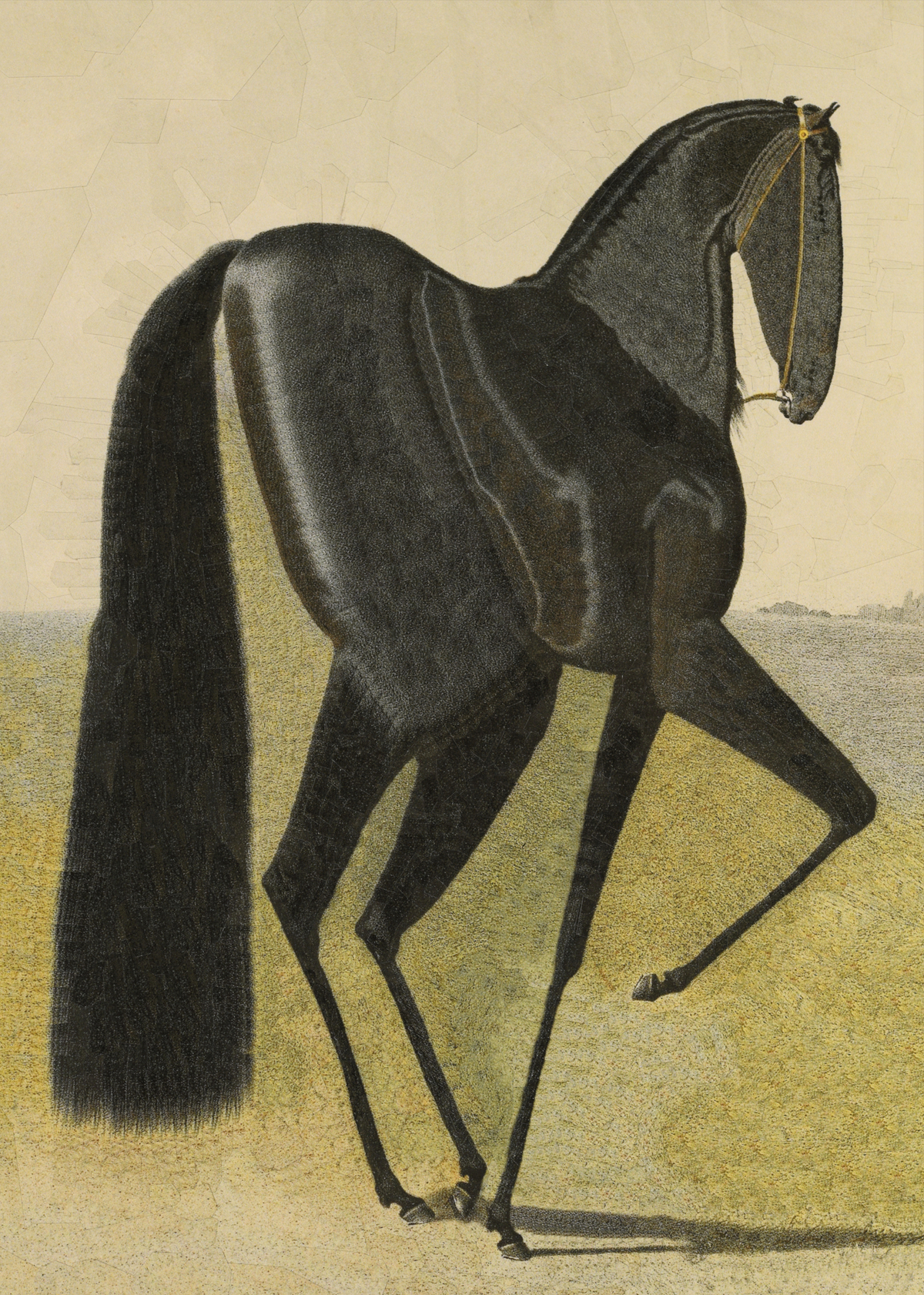
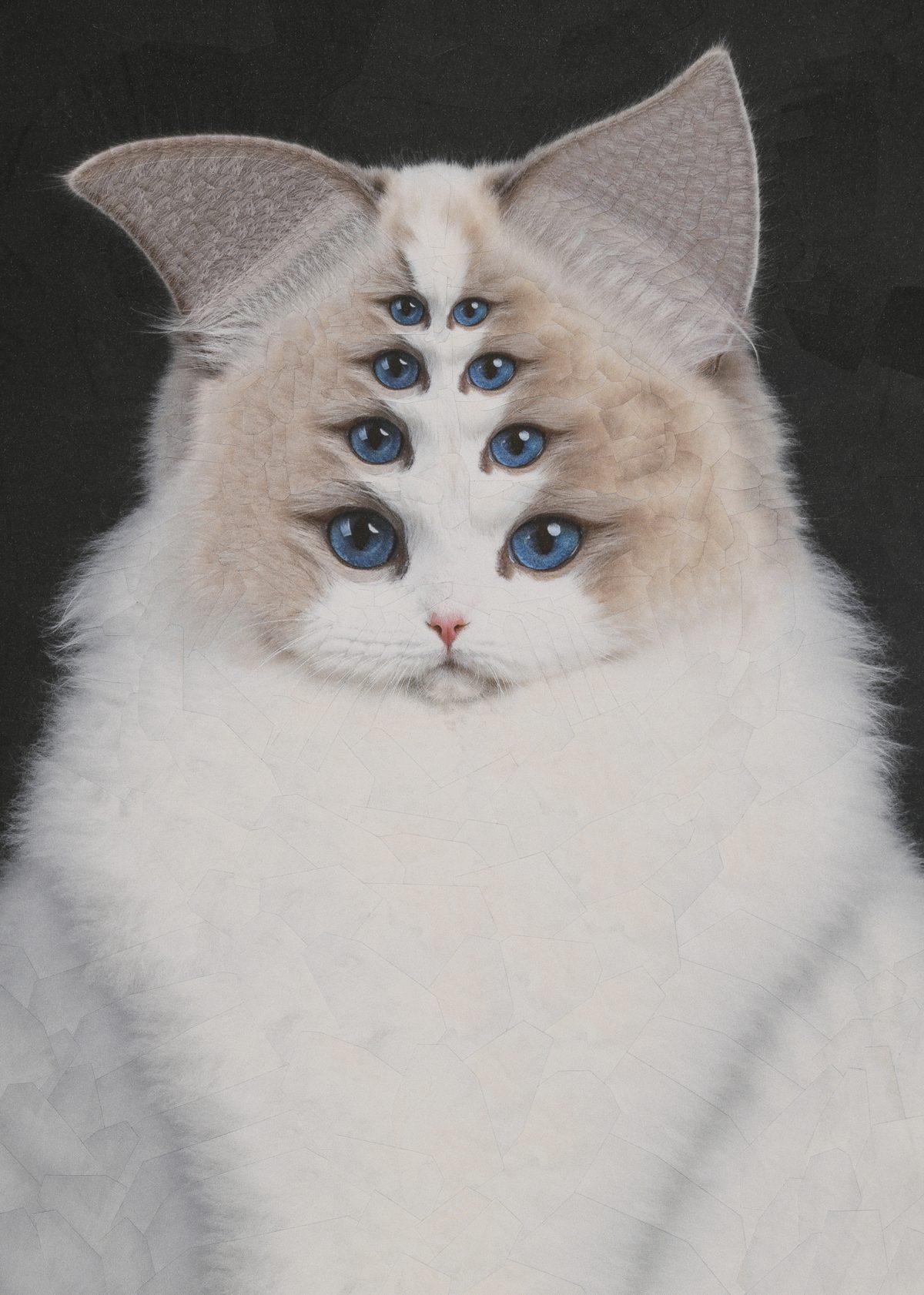
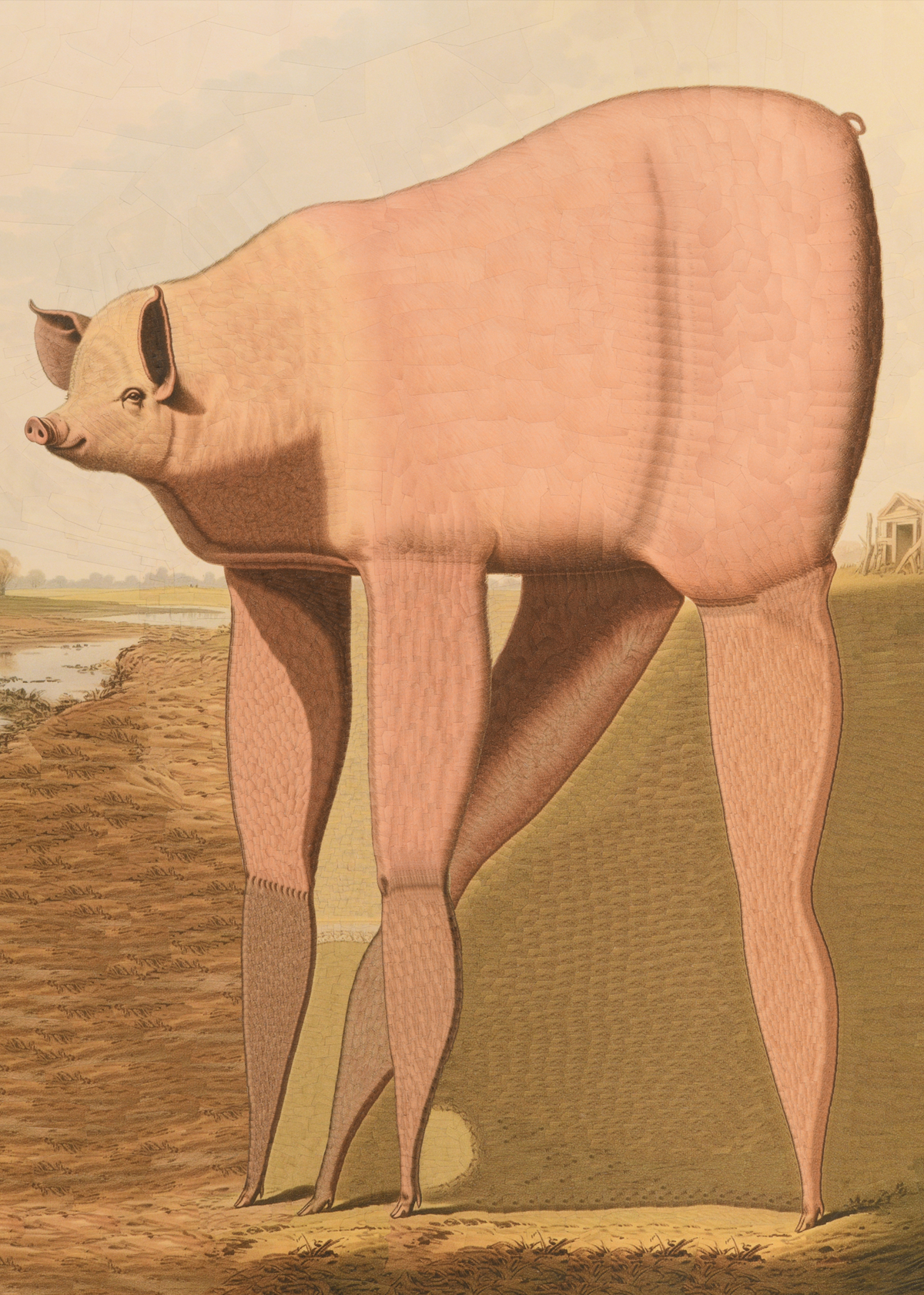
LEFT: Lola Dupre, Spectral.
MIDDLE: Lola Dupre, Dominique.
RIGHT: Lola Dupre, Divine Swine.
“If a pig is symbolic, then it is symbolic in 1000 ways, each valid to someone.”
Your distortions rarely feel aggressive. Even when bodies are stretched, repeated, or structurally impossible, they retain a certain calm. Do you think of distortion in your work as an act of disruption, or more as a form of reorientation, something that asks the image to inhabit itself differently?
It feels like the objects distorted were infinitely soft and yielding. There is no violence, just a willing medium, infinitely extendable in all directions. Absolutely, the image can inhabit itself differently. You could imagine everything as being like the water inside a glass: remove the glass and there is no limit to the forms, from a fine invisible mist to a sharp fragment of ice. Or like a page of dense writing could be shaken and the words rearrange themselves into something new. There is no violence, only the flowing of one thing between one form and another.
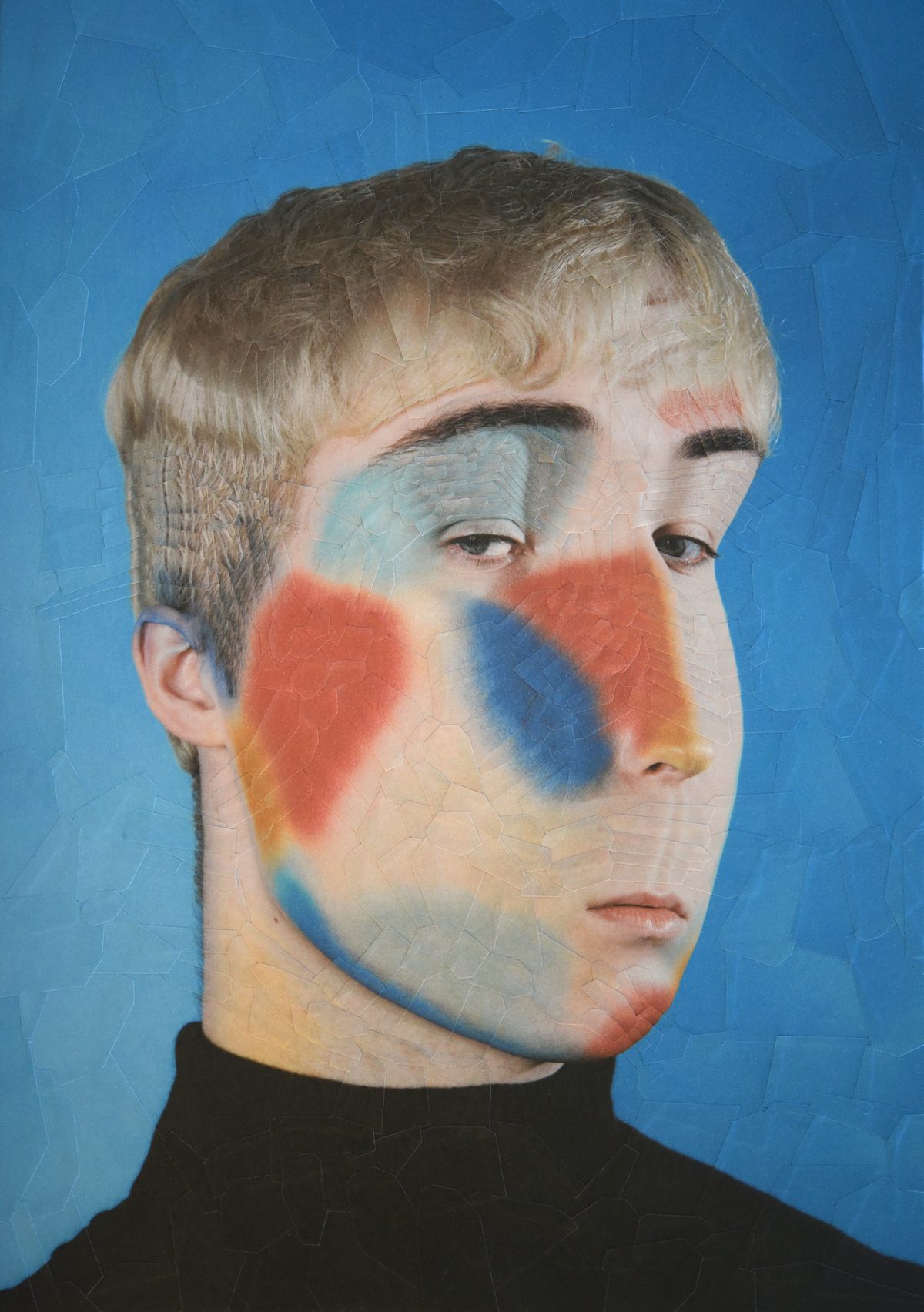
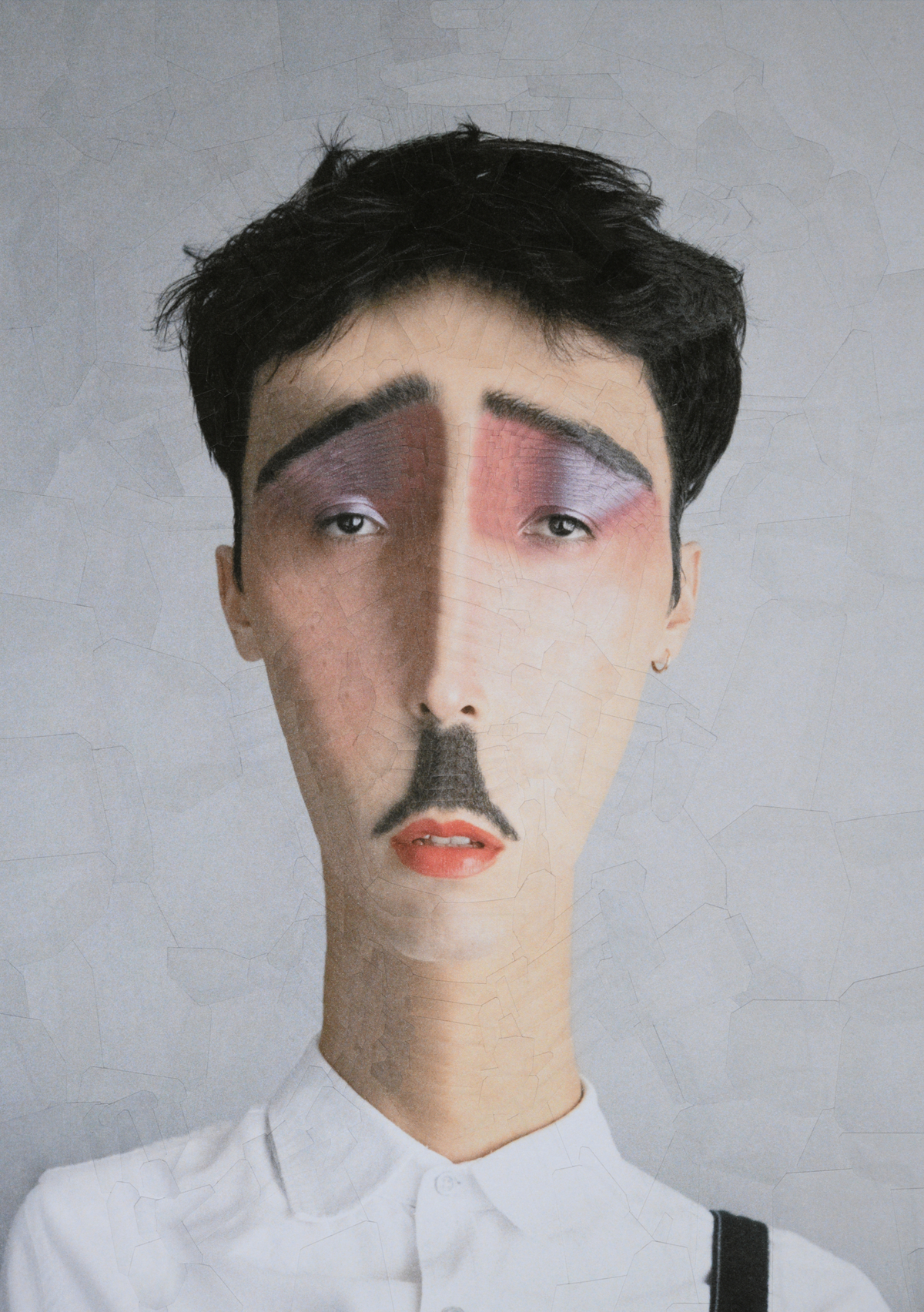
LEFT: Lola Dupre, Jake with Brian Vu.
RIGHT: Lola Dupre, David, photograph by David Sierra.
Paper is central to your practice, not in a nostalgic way, but as a living, contemporary material. In a moment dominated by digital speed and frictionless production, what does working slowly, physically, and irreversibly with paper allow you to protect or preserve within the image?
This I do not know. I began working with paper maybe 20 years ago. As a medium, I enjoyed the accessibility of it, the fact that it was everywhere. Today I could be talking about web pages and not pages of paper. I never work with digital manipulation, but not by any real choice; if I fall into this way of working one day, then so be it. Digital images, AI-generated images, none of this repels me. Change is good. Paper holds a certain truth. Editing with scissors leaves traces, shadows of the original. Edits have a texture which catch the light and change in appearance as you walk around the physical object.
Animals recur throughout your work, often occupying a space that feels neither fully anthropomorphised nor purely animal. They seem to operate in a third register, recognisable but emotionally opaque. What do animals make possible in your practice that human figures do not?
It is an interesting question, what are we able to see in one subject and not in another. We are so familiar with the human form, especially the face, that some things must become somehow either impossible to see, or impossible to un-see. Like how a farmer can recognize the face of every cow, but you can likely not tell any of them apart. Familiarity with a form breeds notions, norms, and truths that are difficult to get away from. The faces and bodies of animals are much more mysterious and impenetrable. It takes familiarity to know if you are facing something dangerous or friendly.
“There is no violence, just a willing medium, infinitely extendable in all directions.”
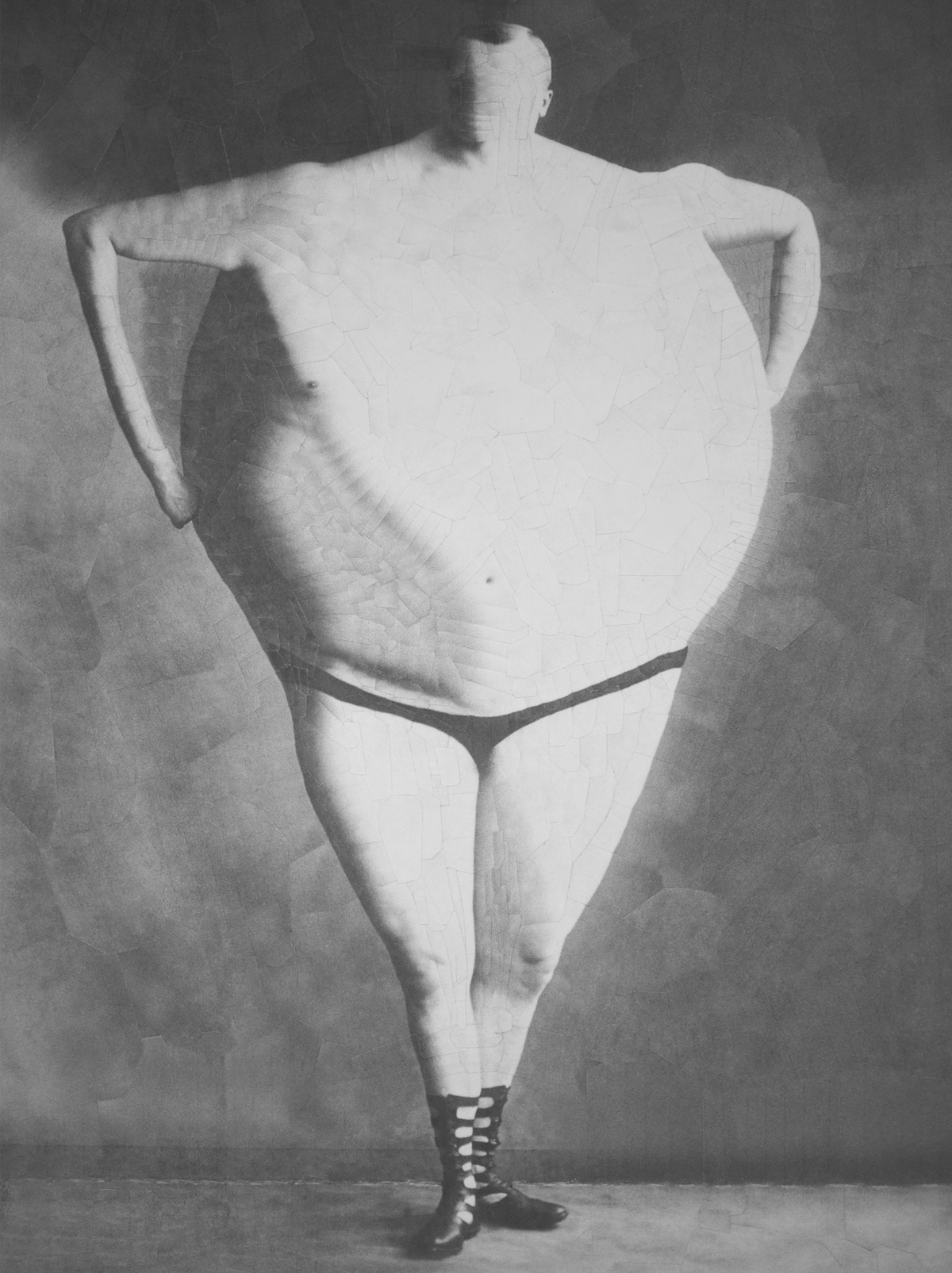
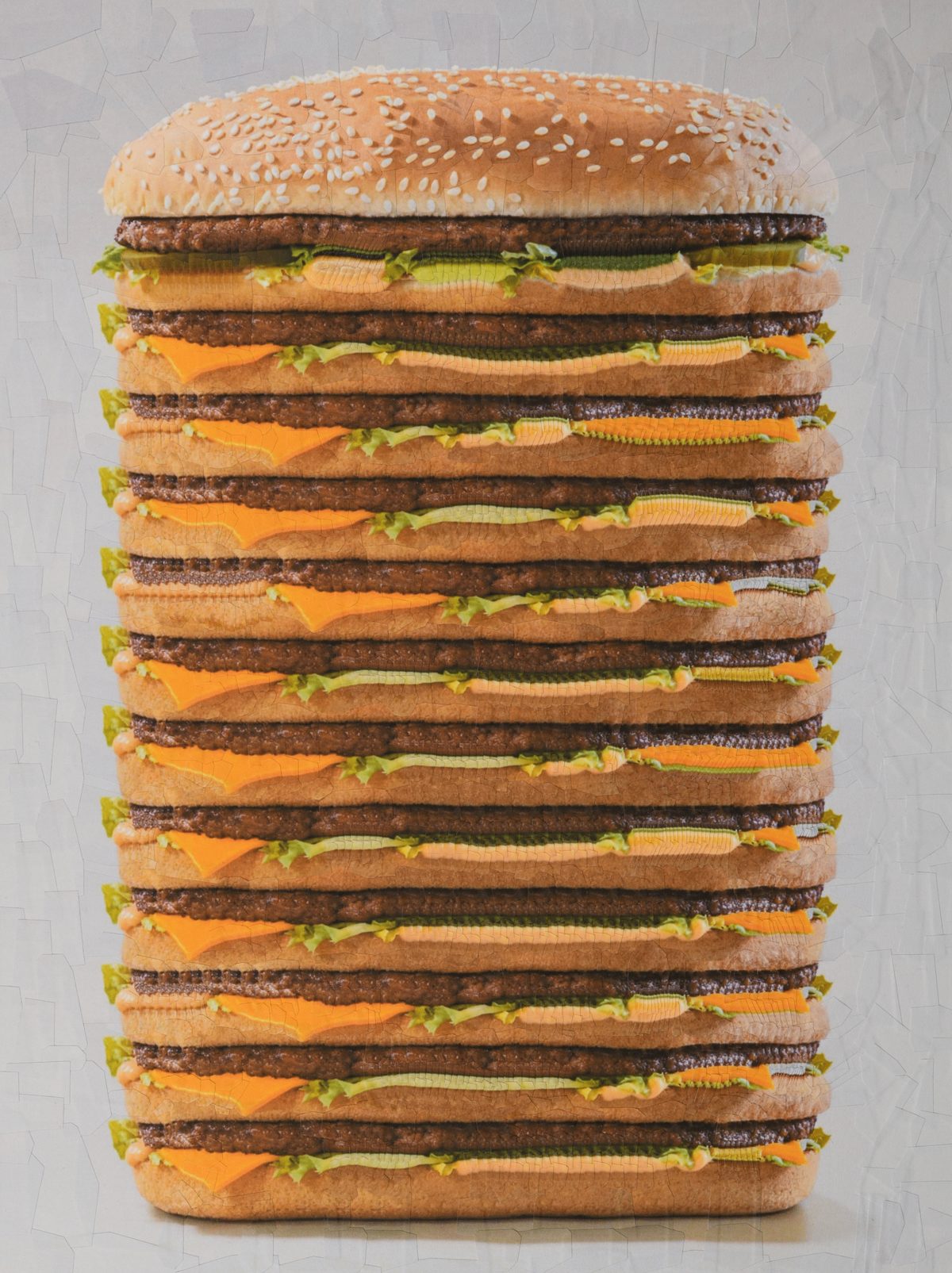
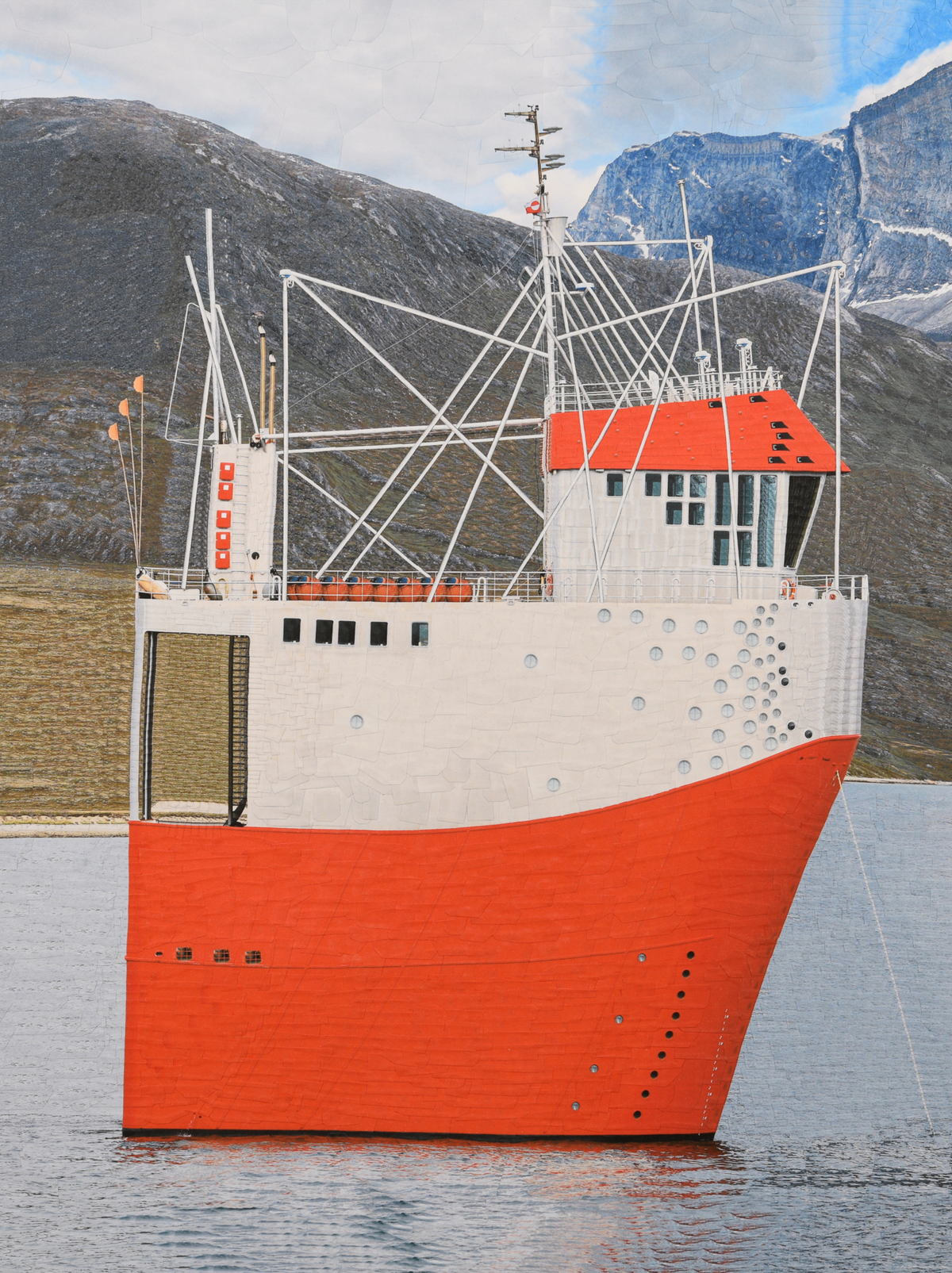
LEFT: Lola Dupre, The Moon Revealed.
MIDDLE: Lola Dupre, Burger.
RIGHT: Lola Dupre, The Intrepid.
Humour seems to play an important role in your work, but it never feels like a punchline. It opens the image rather than closing it. How do you understand humour as a structural tool, something that disarms the viewer just enough to allow more complicated or uncomfortable readings to follow?
I think humour is an instinctual reaction to something; you feel it before you really understand why something has amused you. I think it is as fundamental as disgust or desire. Once your initial reaction has been felt, you delve deeper into things. Humour takes your attention, and you have no choice but to observe at least a moment longer, helplessly searching the material not for a punchline but for answers to questions you do not know. I have always been pleased to make something I find humorous, because to me that is always the beginning of another thought or conversation.
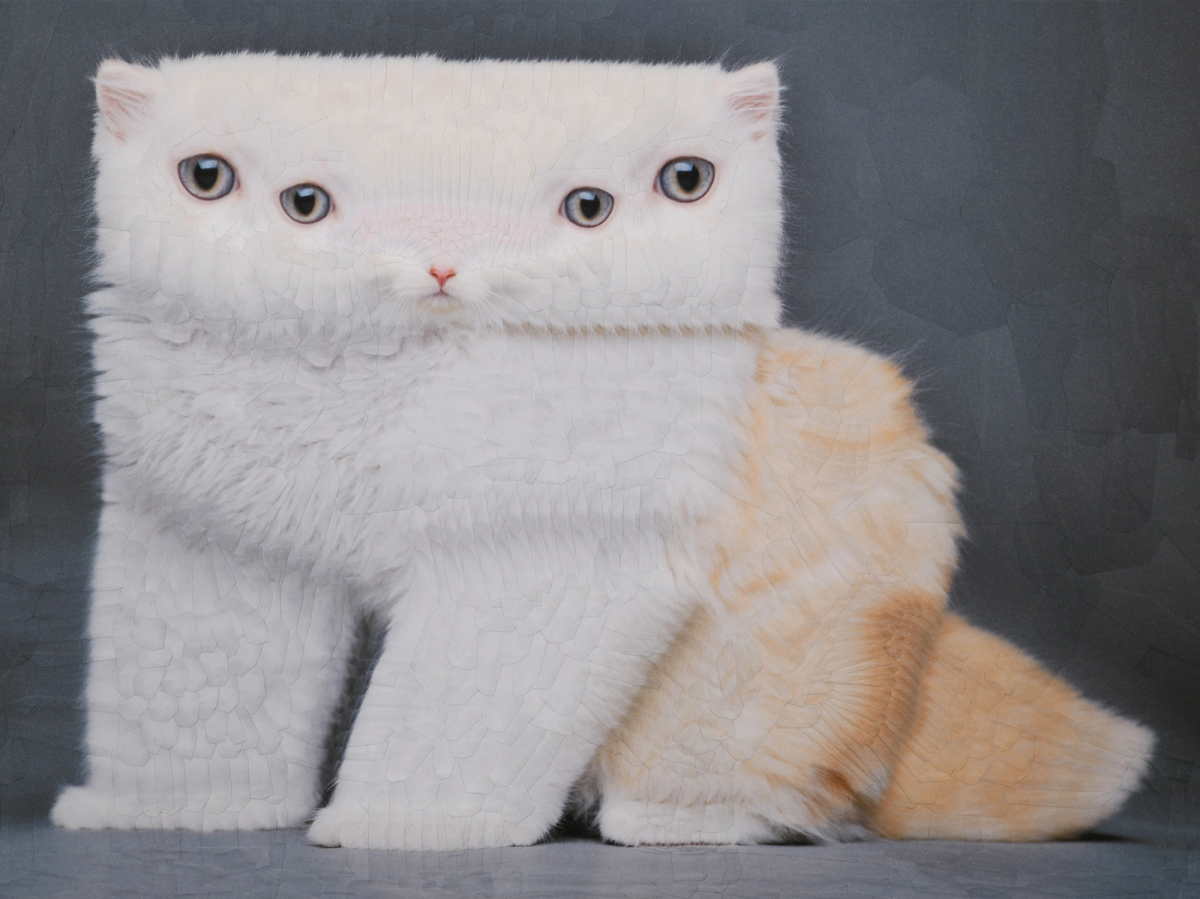
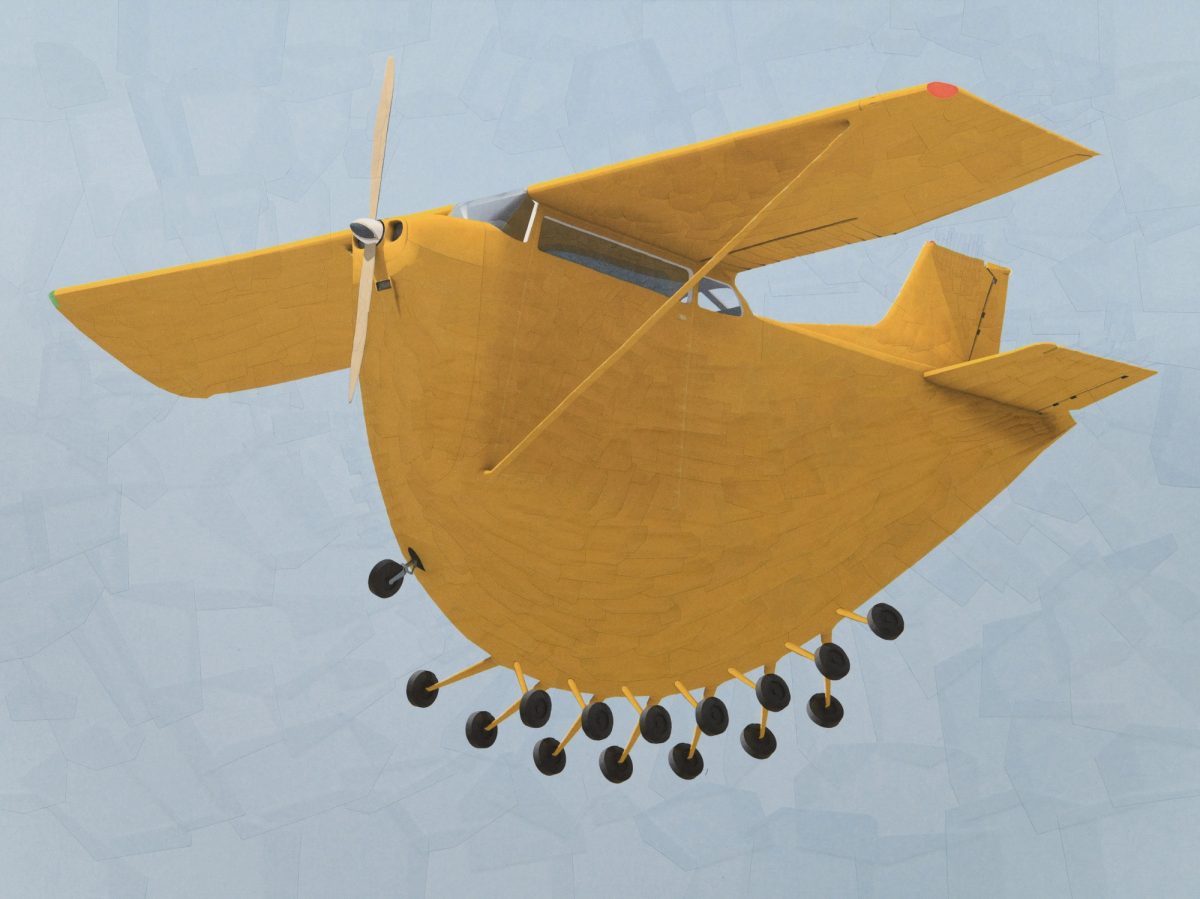
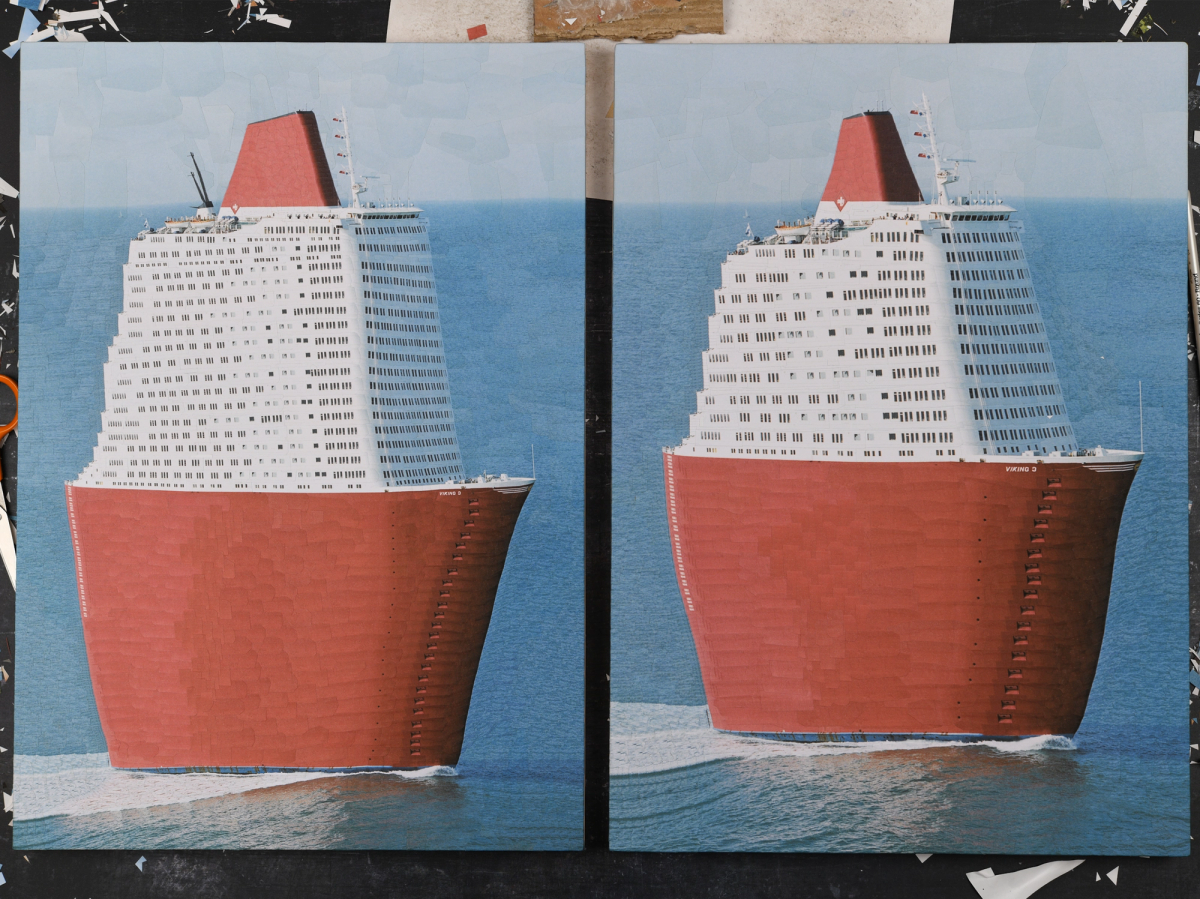
LEFT: Lola Dupre, Peaches.
MIDDLE: Lola Dupre, Tweety Pie.
RIGHT: Lola Dupre, Viking Stockholm and Helsinki Studio.
Your images are built from fragments that once belonged elsewhere: magazines, photographs, printed matter that had their own original contexts. What’s a “good” source image for you: high-resolution perfection, or something already damaged, noisy, low-grade?
It depends; sometimes it is a polished fashion photograph, sometimes it is a scratched and blurred vintage image. “Good” is in the content of the image, a certain shadow or a smile. A musician makes magic with simple tools, not with expensive recording equipment. A good visual is about the content, not the camera; everything that points at something else is not the important thing. I try to choose original subjects that inspire me, but I am compelled by my humanity to follow the patterns and obsessions of my own individuality.
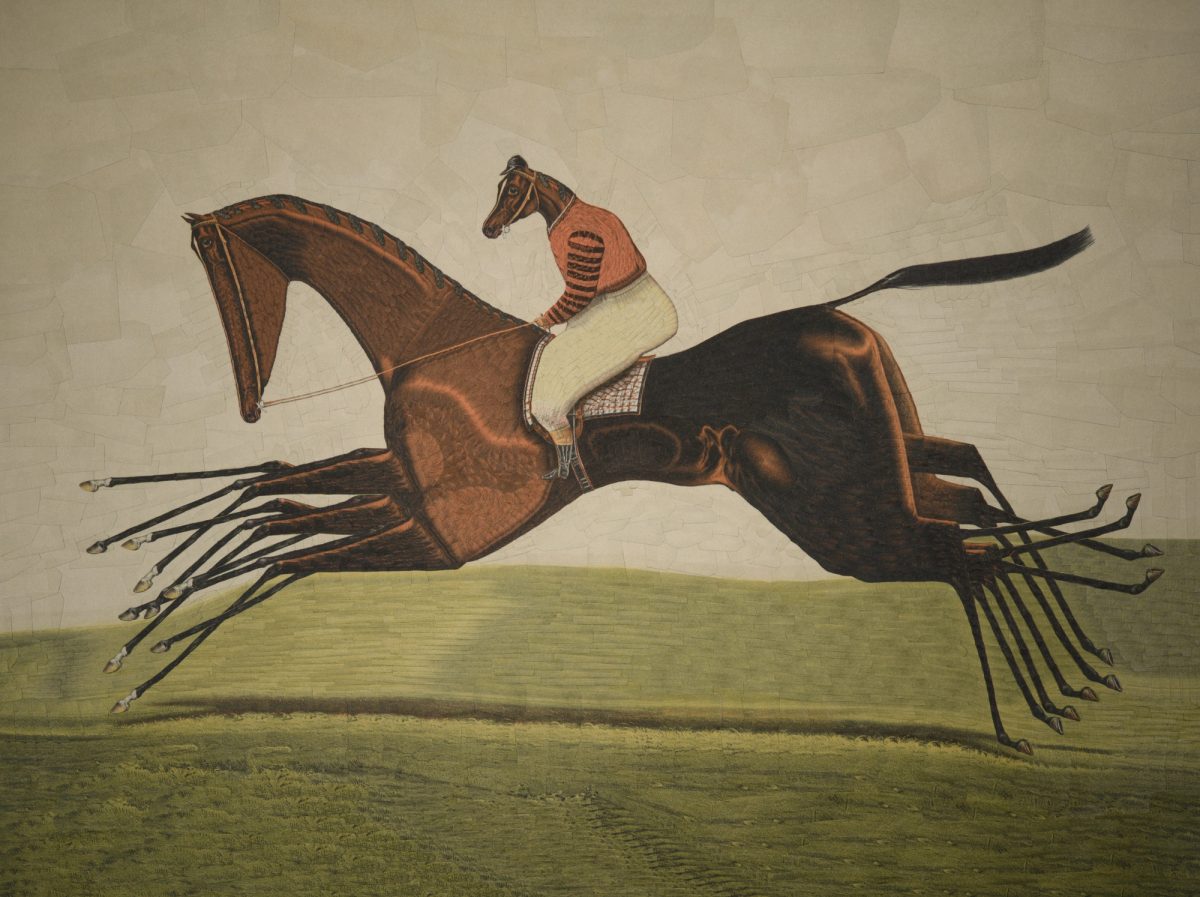
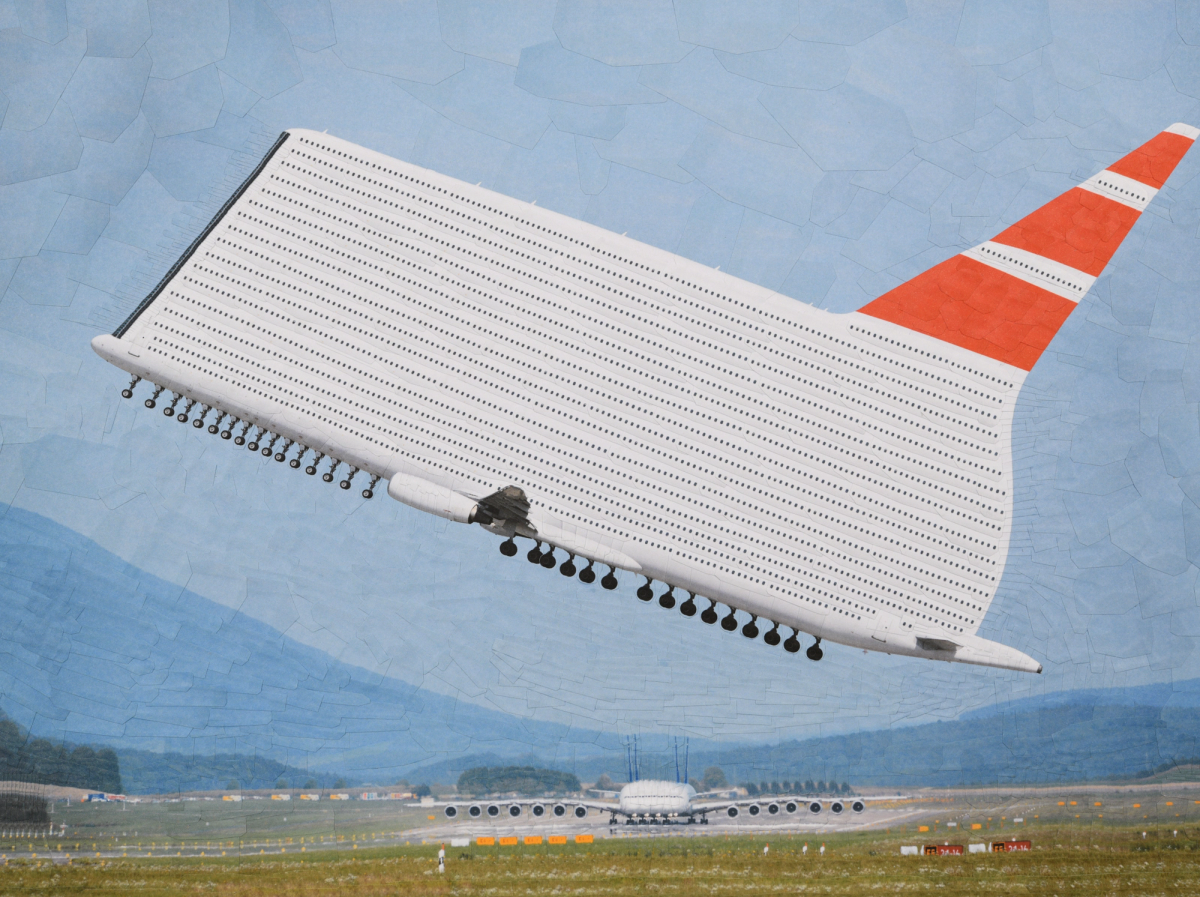
LEFT: Lola Dupre, Iroquois, after unknown.
RIGHT: Lola Dupre, Airbus A319 XL.
“Humour takes your attention, and you have no choice but to observe at least a moment longer.”
You’ve spoken before about wanting to continue making work for as long as you can physically hold scissors. After so many years of repetition and refinement, what still feels unresolved or alive in your practice, and where do you feel your work is currently leaning next?
I believe there will always be new ground to explore in any practice, and anyway technique always takes a back seat to imagination. I suppose as the years pass, your hands begin to shake, and your mind starts to slip, and this will force new directions. But your ability to come up with an original idea will always be the most powerful thing, and the execution second to this. Working with paper is important to me, but I might be forced to work with another medium. And this would only be a bad thing if I made it a bad thing.
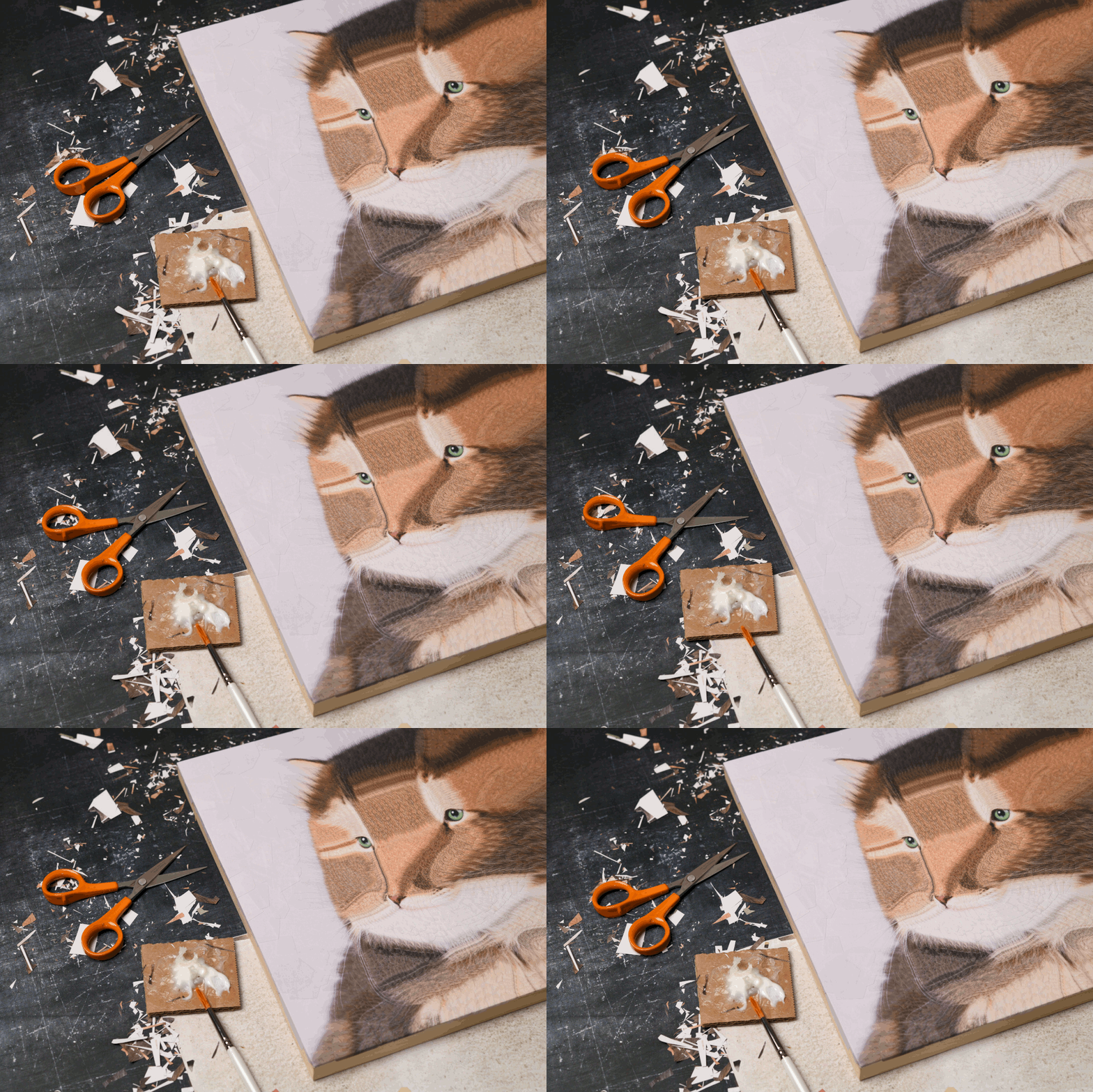
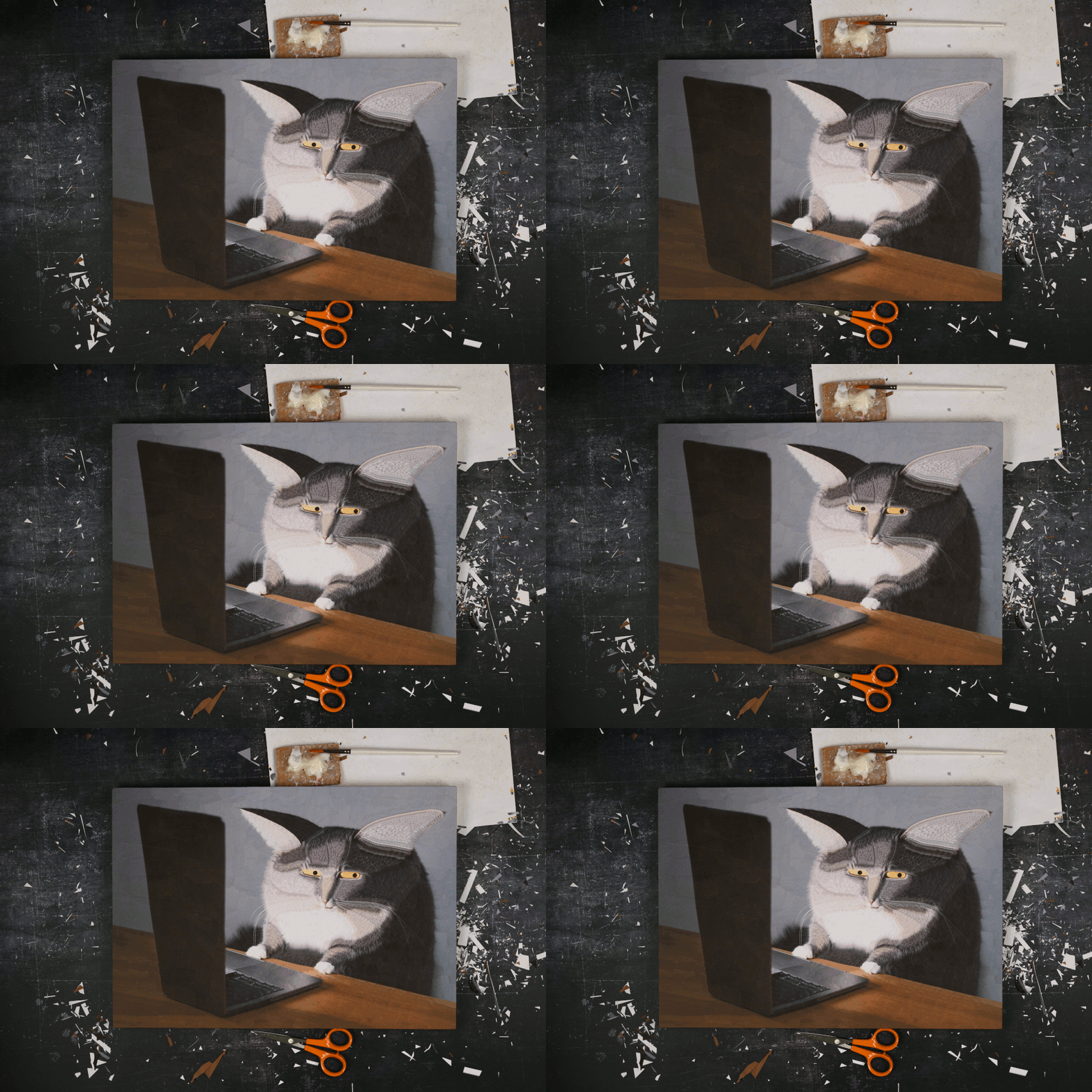
LEFT: Lola Dupre, Mondo Studio.
RIGHT: Lola Dupre, Linus Studio.
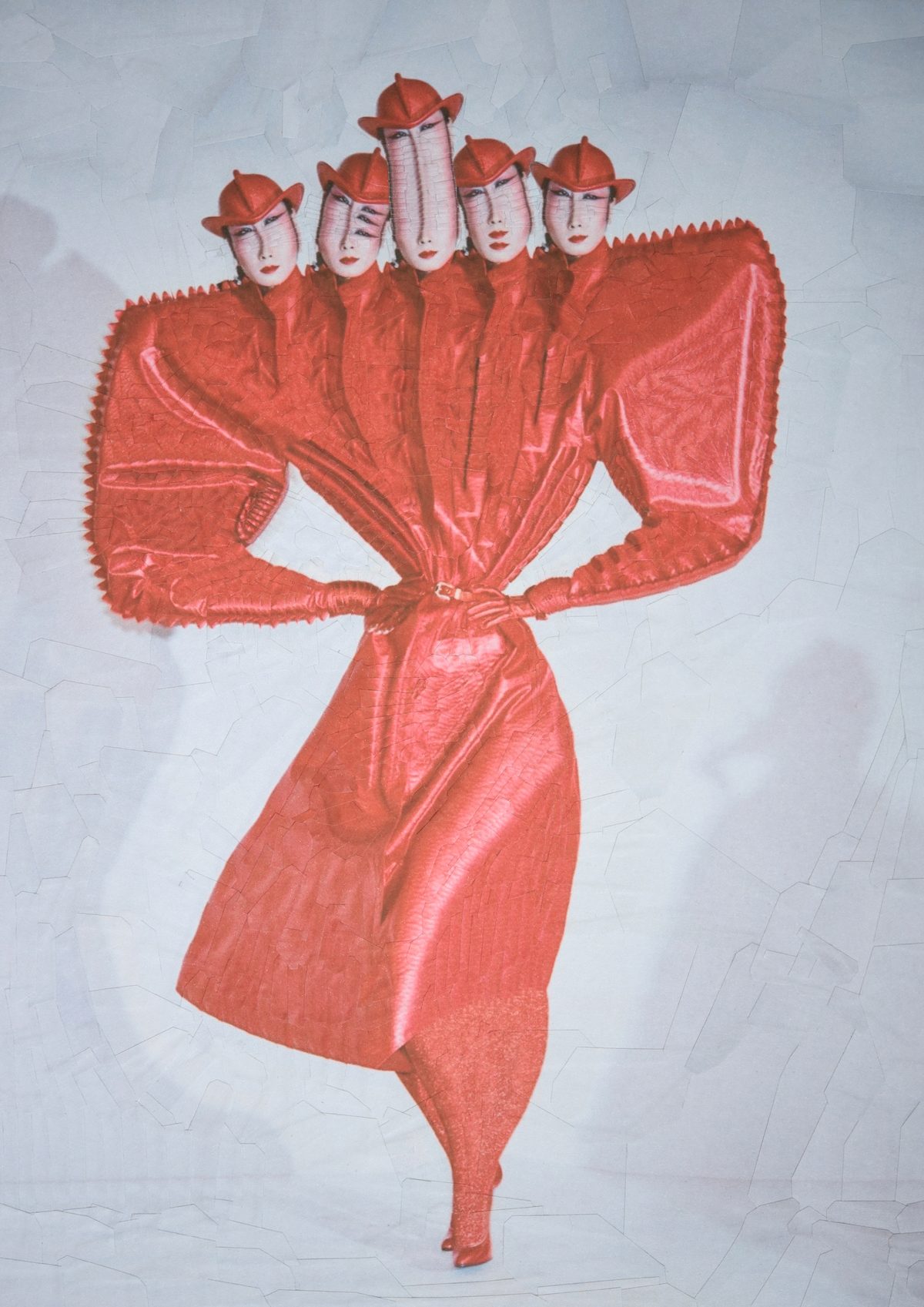
COVER IMAGE: Lola Dupre, After Kansai Yamamoto, Autumn/Winter 1979–1980, worn by Sayoko Yamaguchi, photograph by Paul van Riel.